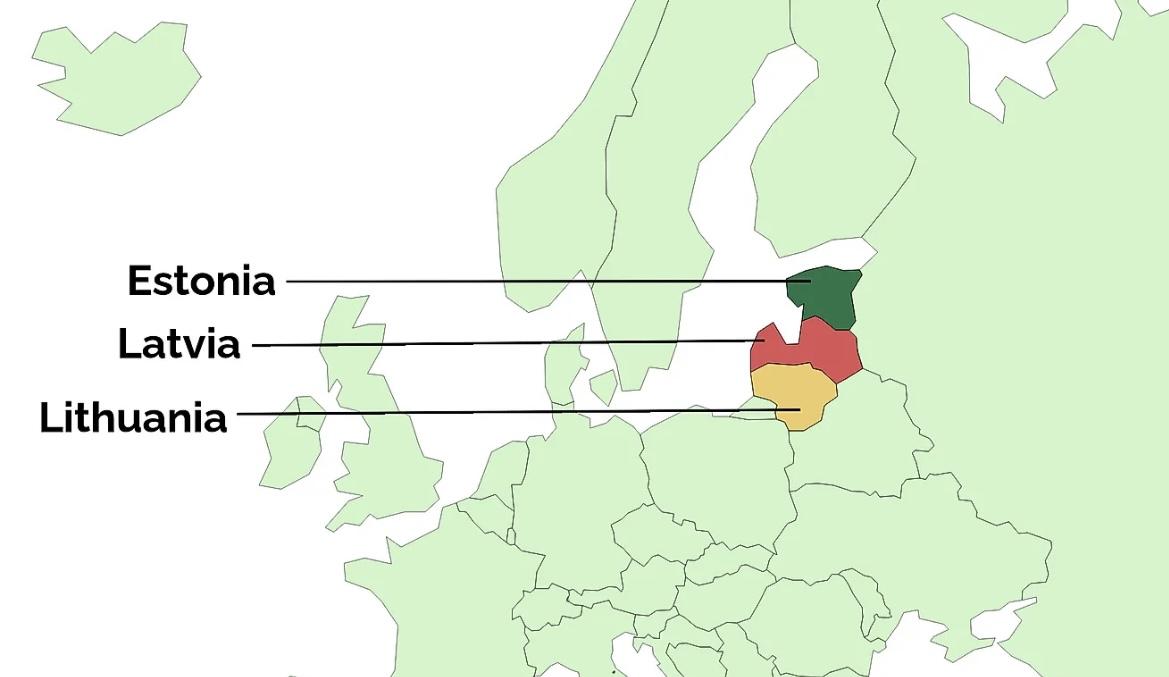
The European Union (EU) has a population of 450 million people, yet its foreign policy is determined by a country with a population of 1.3 million people—Estonia.
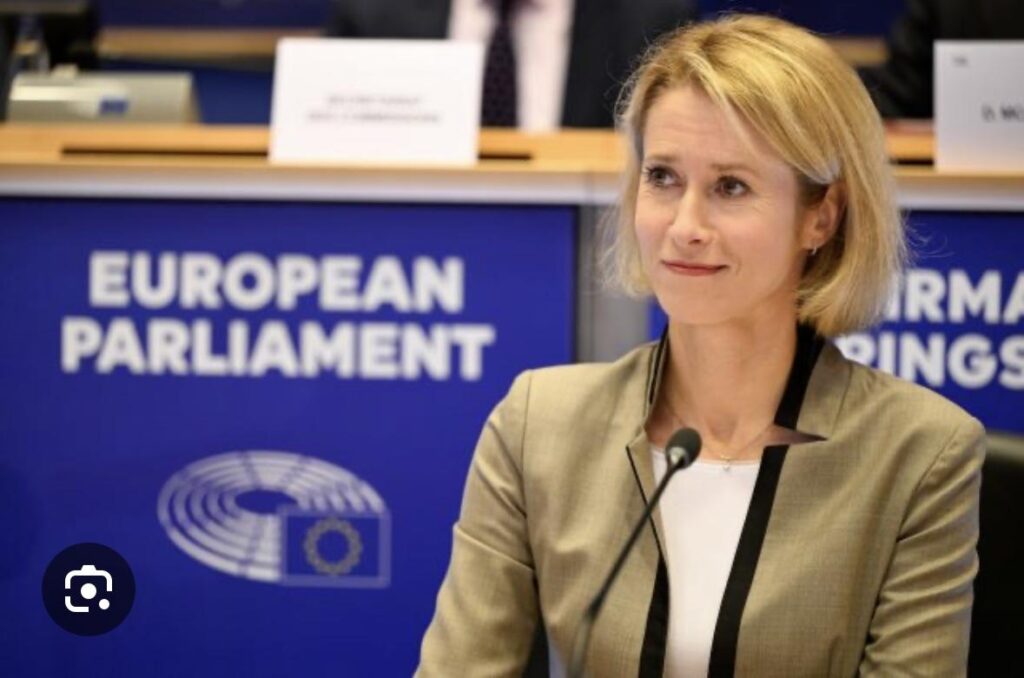
The High Representative of the European Union for Foreign Affairs and Security Policy is Kaja Kallas, the former prime minister of Estonia. Her agenda is an Estonian obsession writ large: Hate Russia. In her own words: “Russia can’t be trusted” and should be “broken up.” She has committed “the European Union to the victory of Ukraine” in its war with Russia.[1]
Meanwhile in Latvia—population 1.8 million—Russian culture has been banned despite the fact that 36% of the people speak Russian as a first language.
Segregation based on ethnicity is government policy.
The United Nations has described these laws as “discriminatory because they limit jobs for Russian-speaking and other minorities.”
But the EU doesn’t mind.[2]
And in Lithuania—population 2.8 million—the government rewrote history so as to strengthen this Baltic anti-Russian bias.
Its version of World War II blames the Soviet Union rather than Germany for that catastrophe.
In this revision of history Lithuania claims that it was a victim in a “double genocide”—instigated by Stalin.
The implication is that the Soviets were equal to the Nazis. The EU does not disagree.[3]
This cocktail of Russophobia has intoxicated Europe so much that war with Russia is now seen as the solution to all of the continent’s problems. Rearmament for this coming war is now Europe’s only purpose. It is the panacea for its stagnant capitalism.
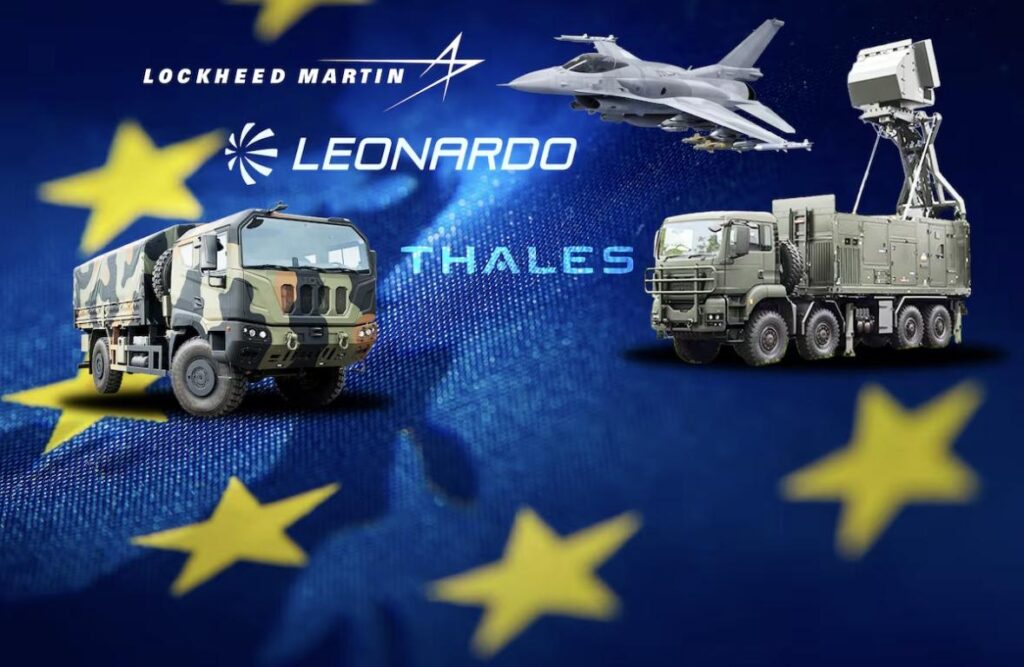
The Baltic States—not Ukraine—planted this irrationalism deep inside the structures of Europe. As a result, the emotions of six million Estonians, Latvians and Lithuanians are determining the fate of the continent, if not the world.
From the Politics of Neo-liberalism to the Politics of Hate
Estonia, Latvia and Lithuania have been on an emotional roller coaster ever since they returned to capitalism. Economic “shock therapy” in the 1990s was followed by the great financial crash of the 2000s. The result was depopulation in each country. And ultranationalism. Emigration and hate became survival tactics.[4]
American economists with links to the White House, like Jeffrey Sachs, set the agenda for Eastern Europe in the 1990s. Privatization, free markets and the end of state subsidies—the Washington Consensus—strangled the former socialist bloc.

And the new bosses in the Baltic—people like Vytautas Landsbergis in Lithuania, Ivars Godmanis in Latvia and Mart Laar in Estonia—were only too happy to assist. Hiding behind catchphrases like “the Baltic Model,” “the Baltic Tigers” and “the Baltic Miracle,” the new ruling class sacrificed their countries on the altar of Western finance capital.[5]
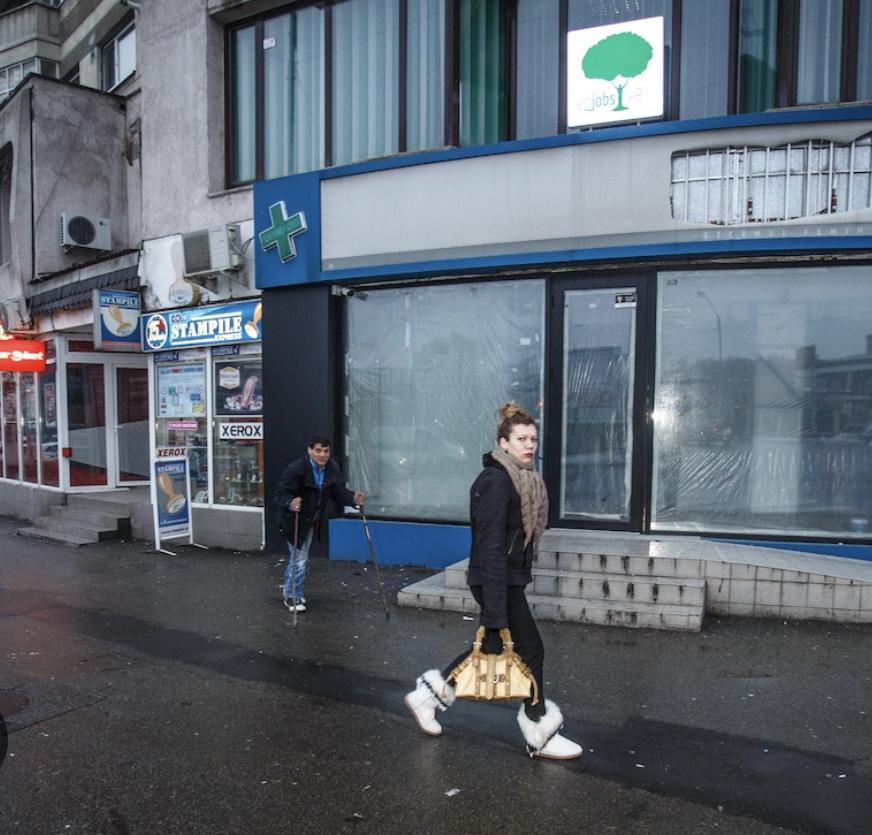
By 2010 the results were in. Michael Hudson summarized them as follows—with special attention to Lithuania—Latvia and Estonia, however, were comparable:
“As the economic crisis intensified, unemployment grew from a relatively low level of 4.1 per cent in 2007 to 18.3 per cent in the second quarter of 2010 with a concomitant increase in emigration from 26,600 in 2007 to 83,200 in 2010. This was the highest level of emigration since 1945 and comparable only with the depopulation of the country during World War II. Since the restoration of independence in 1990, out of a population of some 3.7 million 615,000 had left the country; three fourths were young persons (up to 35 years old), many of them educated and with jobs in Lithuania. By 2008, the emigration rate from Lithuania became the highest among the EU countries (2.3 per 1,000), and double that of the next highest country, Latvia (1.1 per 1,000).”
Hudson continued: “Forecasts for the period 2008-35 suggest a demographic decline by a further 10.9 per cent, one of the highest rates in the EU (following Bulgaria and Latvia). The 2011 population census seemed only to confirm these grim prognostications. Demographers previously proved to have been too optimistic in their forecasts (the latest issued in 2010) and had overestimated the size of the Lithuanian population by about 200,000. Instead of the forecasted 3.24 million, the census found that by 2011 Lithuania’s population was only just over 3 million (3.054 ml).”
According to Hudson, “These grim numbers suggest a kind of euthanizing taking place of [sic] the small Baltic nations. This, ironically, after having survived two World Wars, two occupations [sic], and several economic collapses in the 20thcentury. Indeed, at the end of the Soviet occupation [sic], Latvians and Lithuanians were replacing themselves through natural reproduction. By contrast, today, the twin forces of emigration and low births have conspired to create a demographic disaster.”[6]
In this social wasteland ultra-nationalism took root. The academics Kristen Ghodsee and Mitchell A. Orenstein have labeled this the “patriotism of despair.”[7]
Ethnic nationalism became the major factor holding each Baltic state together. Not only did the defeated and humiliated working class need an external enemy, a scapegoat, but so too did the new capitalist class: anything to deflect blame from themselves.
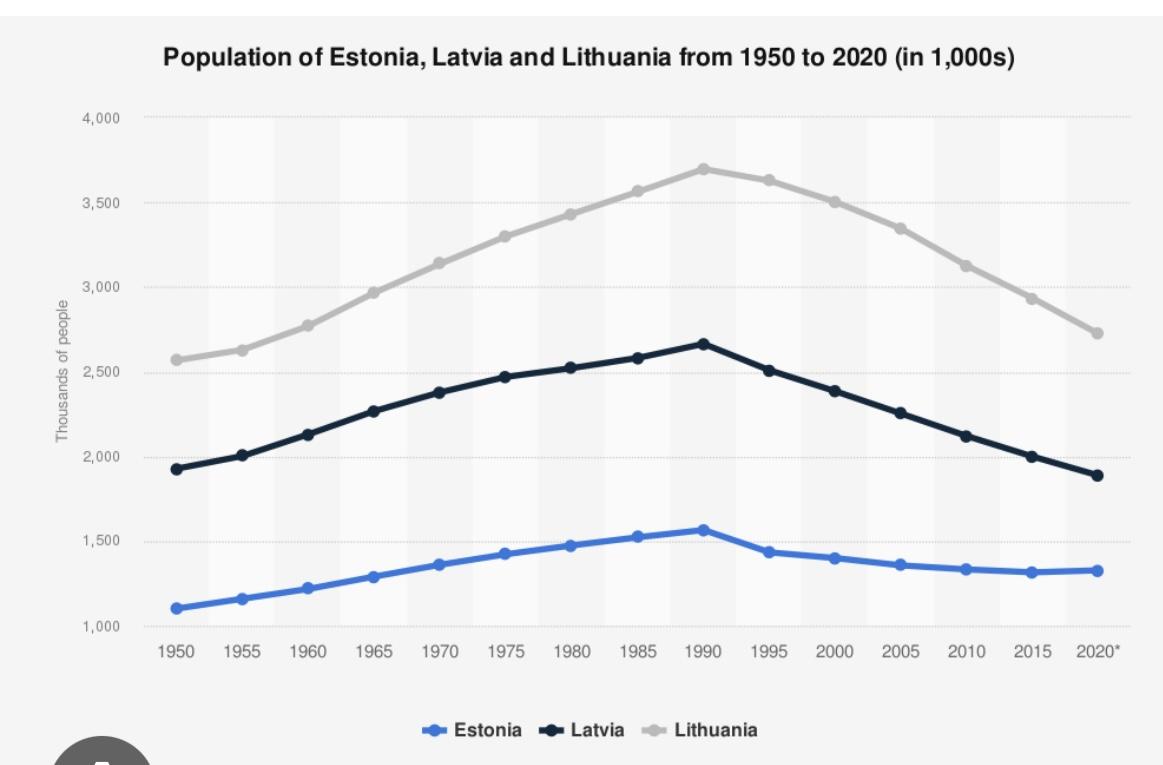
The Baltic States had to be reinvented on the ruins of neo-liberalism; they had to be remade in opposition to an “other.” And for the myth-makers there was a convenient “other” at hand: the Russians.
In each Baltic state there was—and still is—an ethnic Russian minority ripe for demonizing. In Estonia and Latvia, that minority equals 25% of the local population, while in Lithuania it equals 5%.
The obvious sign of the rising hate in the Baltic States was the growth of the far right. After 2010, the popularity of the Conservative People’s Party of Estonia (EKRE) and the National Alliance in Latvia accentuated the pre-existing ethnic tensions in the region.
Instead of being outliers—as usually happens with the far right—these xenophobic political parties were embraced by the Baltic mainstream. In 2011, National Alliance became a part of Latvia’s government. And in 2019 EKRE joined the government of Estonia. [8]
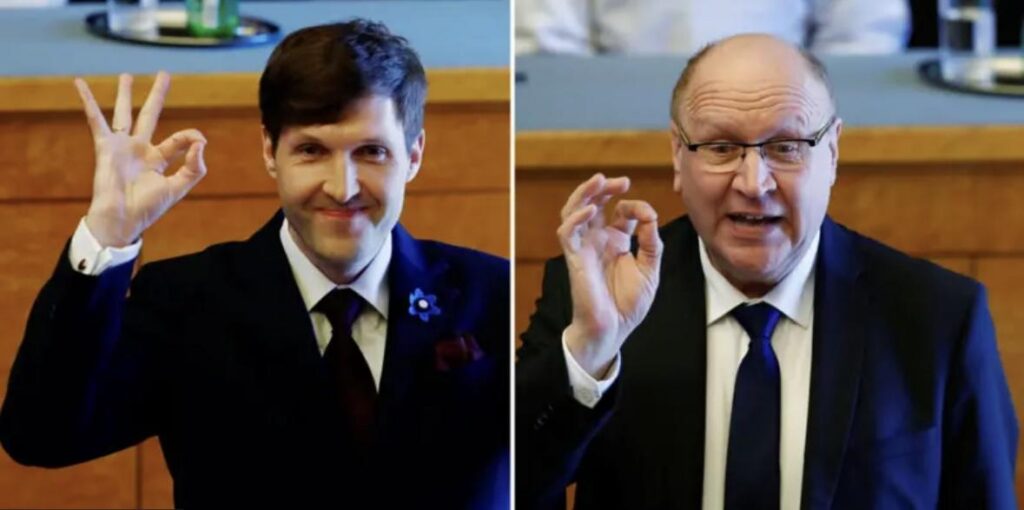
In short, after the financial crash of 2008, the Baltic States removed their liberal masks and doubled down on ethnic nationalism. Official anti-Russian policies hardened. In particular, the citizenship and language rights of the Russian minorities were curtailed.
The Organization for Security and Cooperation in Europe (OSCE) noted the danger signs in 2014: “In the wake of the collapse of the Soviet Union a wave of nationalism swept over [the Baltic States]….Most disconcerting are the persistent restrictions on citizen rights for Russian speaking minorities in both Latvia and Estonia….The situation…has left many Russian speakers …essentially stateless.”[9]
In 2018, the EU itself noted the systematic bias against Russians inside the Baltic States: “…the Baltic states (particularly Estonia and Latvia) faced considerable challenges to build national identity-based homogeneous societies, re-establish the comprehensive use of their national languages and avoid the possible tensions with Russian-speaking minorities. This approach has received criticisms for non-compliance with European human rights standards from international organizations, particularly in the EU.”[10]
The Politics of Memory
Between 1991 and 2010, the Baltic States were struggling with themselves. They had surrounded themselves with the trappings of democracy but their demons were coming to the fore.
In Riga, in 2010, The Guardian reported: “In deep snow and bright sunshine, war survivors and their relatives trudged from the 800-year-old redbrick Lutheran cathedral in old Riga to the Freedom monument to lay white roses in tribute to the 140,000 men of the Latvian Legion, the two Waffen-SS divisions established in 1943…”[11]
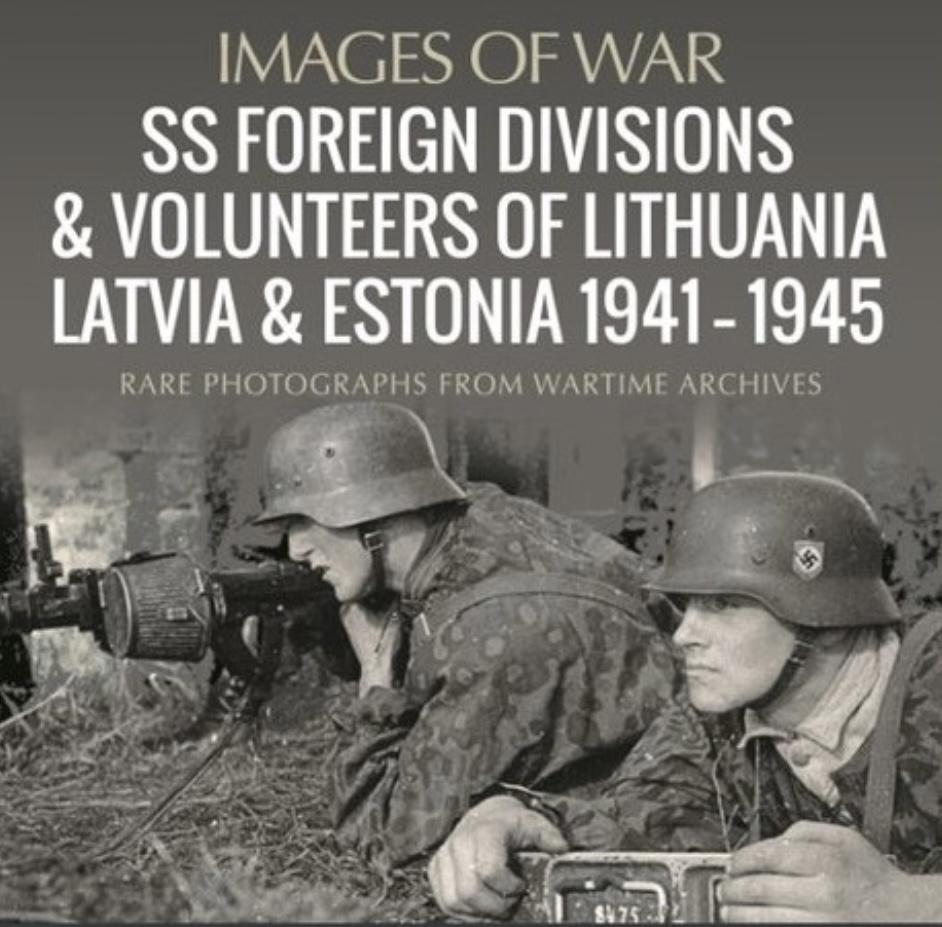
And in 2018, The Times of Israel reported: “A town in Estonia unveiled a plaque honoring a Waffen SS officer, spurring protests from the Jewish community. A nonprofit unveiled the plaque in Mustla for the local Nazi collaborator Alfons Rebane, who fought with the Germans against the Russians as part of the Nazi armed force.”[12]
Lithuania is even more brazen about honoring Nazi collaborators. The website Defending History noted in 2018 that a “Nationalist march in central Vilnius on Lithuania’s 100th birthday ends up in usual neo-Nazi spirit” with the unfurling of a “huge banner…entitled (…in translation) WE KNOW WHO OUR NATION’S HEROES ARE…All six men on the banner are alleged Nazi collaborators…”[13]
The Baltic governments have tolerated, condoned and defended these frequent displays of fascism because they fit the new narrative and new memories being manufactured in the region today. According to Baltic revisionism, the fascists were not too bad because they were fighting something worse: communism. Germany was not the real problem—it was the Soviets/Russians.
The collapse of communism in the Baltic area meant the collapse of the anti-fascist understanding of World War Two. For the Baltic nations today, there was no allied victory in 1945. The “war,” they believe, only ended in 1991 when the Soviets departed from the Baltic States. And ultra-nationalism triumphed.
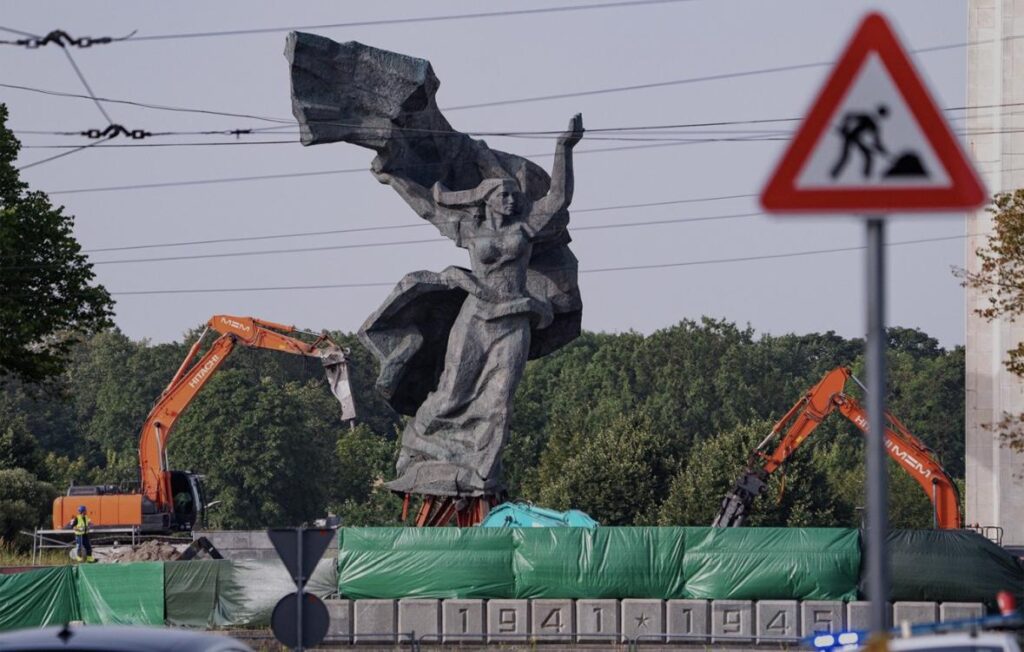
The big lie in Lithuania, Latvia and Estonia is that there was no difference between the Nazis and the Soviets. Forget that the former were racist and the latter were universalist. One was as bad as the other. They were both “occupiers.” So the period between 1939 and 1990 was one never-ending injustice. Indeed, because the Soviets ruled Vilnius, Riga and Tallinn for nearly all of this time, they were definitely as bad as the Nazis.[14]
The obvious problem with this revisionism is the Holocaust; it doesn’t fit. So the Baltic States downplay the genocide of the Jews by claiming that there was in fact a “double genocide” in the Baltic region. The Soviet repression of the local bourgeoisie and local nationalists, it is now argued, was equal to the Nazi destruction of the local Jews. The Baltic States are not denying the Holocaust, but they are obfuscating it in order to defend themselves against history.
The Baltic nationalists in fact were not the victims of a genocide but the perpetrators of a genocide. By acting the victim, the nationalists now hope to distract from the essential part they played in the destruction of their Jewish neighbors.
The Nazis needed the Baltic nationalists to pull the trigger in this “Holocaust by bullets.” The German occupation of the Baltic States (1941-44) was low maintenance because the local nationalists were enthusiastic collaborators—especially when it came to shooting Jews.[15]
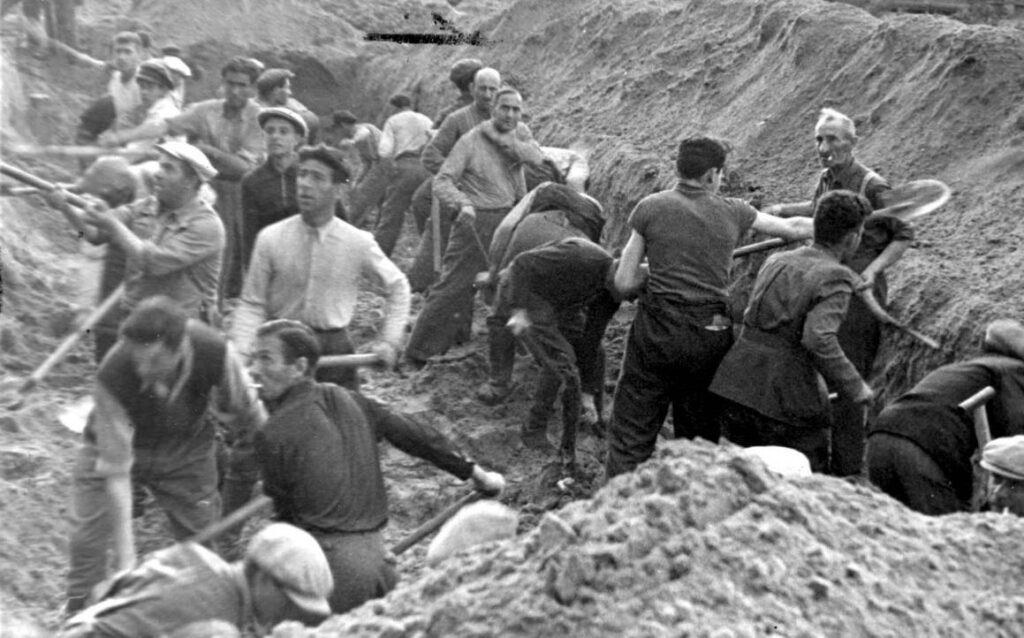
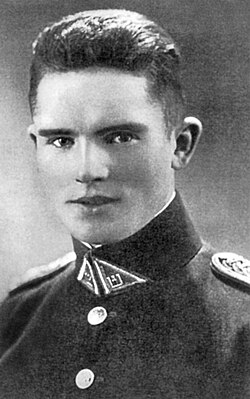
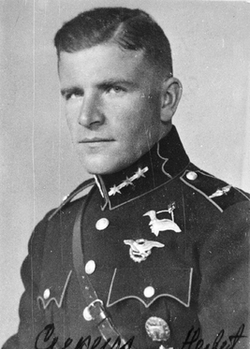
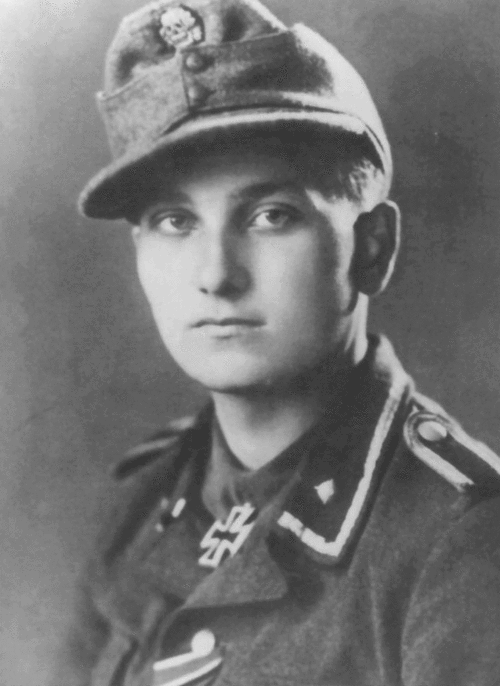
Some 97% of the Jewish population of Lithuania (around 200,000) were murdered under German rule. And similar genocides took place in Latvia and Estonia. And now, in the independent Baltic States, the génocidaires are national heroes. People like Jonas Noreika in Lithuania, Herberts Cukurs—“the butcher of Riga”—in Latvia, and Harald Nugiseks of the Waffen-SS in Estonia. [16]
The EU and NATO Absorb Baltic Revisionism
This neo-Nazism would not be so alarming if it were confined to the tiny Baltic States. But it is not. In 2004 Lithuania, Latvia and Estonia joined the EU and the North Atlantic Treaty Organization (NATO).
Baltic revisionism was planted in the heart of the West. And has since mushroomed.
The 2008 Prague Declaration on European Conscience and Communism placed Baltic revisionism on the center of the European stage. Teaming up with the Czech Republic and Poland, Lithuania insisted that the EU equate Nazism and Communism.
This “Red equals Brown” thesis led to the 2009 European Day of Remembrance for Victims of Stalinism and Nazism (Black Ribbon Day). August 23 was the day chosen to remember annually the “crimes of totalitarianism.”
Why? Because the 1939 Molotov-Ribbentrop Pact between the Soviet Union and Nazi Germany was signed on this day. The latter became the touchstone for Baltic/European revisionism.[17]
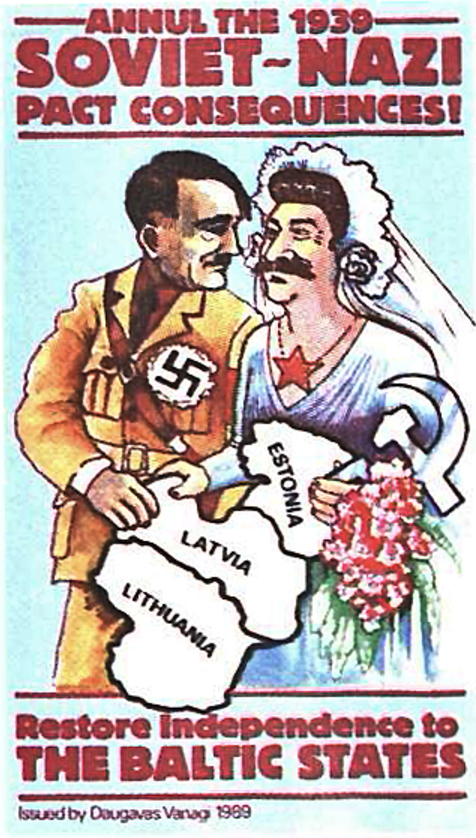
According to Eastern European nationalists, the 1939 Molotov-Ribbentrop Pact alone started World War Two.
What happened prior to 1939 is of no importance—for example, the West’s silence when Germany rearmed, the West’s appeasement of Hitler in Munich, the West’s abandonment of the Spanish Republic, and the West’s refusal to form a solid anti-fascist pact with the Soviet Union.[18]
The War as a result is portrayed as a Nazi/Soviet conspiracy. Nazi guilt is therefore halved and, in the view of the Baltic States, Europe’s history books must now reflect this. As Dovid Katz says, a “post-modern mush” in which truth is lost is the conclusion.[19]
The EU and NATO have absorbed this post-modern Baltic version of World War Two and, consequently, have become ambiguous about Nazism. And more antagonistic toward the memory of the Soviet Union and the existence of its successor state: the Russian Federation.
The president of the European Parliament in 2009, the German Hans-Gert Poettering, explicitly thanked Estonia, Latvia and Lithuania for giving “Europe the knowledge about the totalitarianism of the Soviet Union.”[20]
And in a statement in 2022, on the anniversary of the Molotov-Ribbentrop Pact, another German, Ursula von der Leyen, president of the European Commission, drove home the political point of Baltic revisionism when she connected Nazi Germany and the Soviet Union with contemporary Russia: “The painful memory of the past is not just a distant recollection, but has found an echo in Russia’s illegal and unjustified war against Ukraine.”[21]
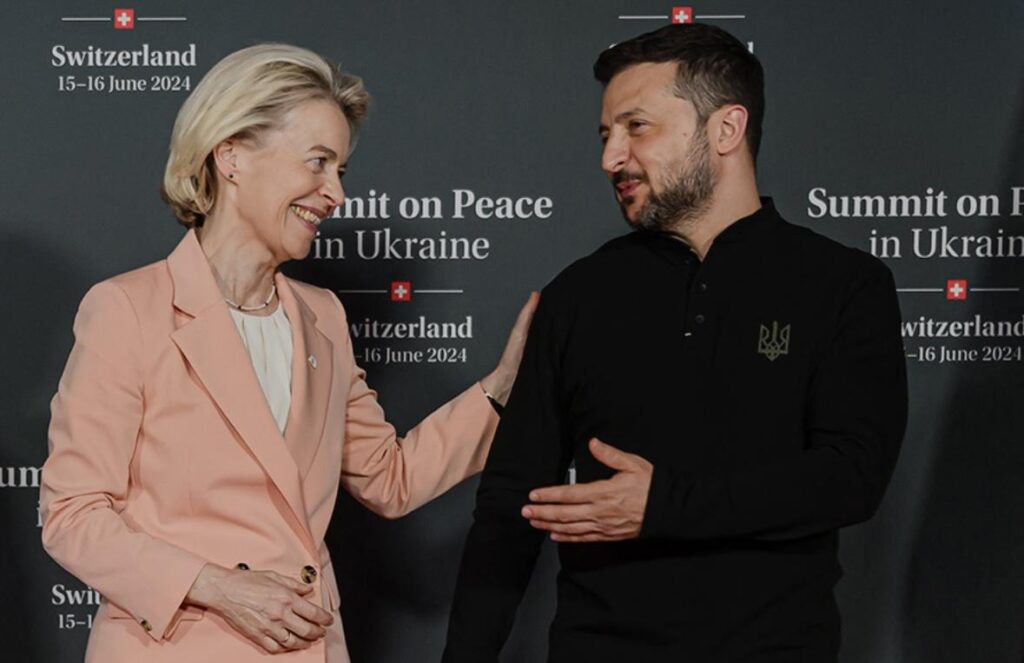
Memory has been twisted to fit a confrontation in the present. Baltic revisionism had a purpose: It helped set the stage for war with Moscow.
The Politics of Imperialism
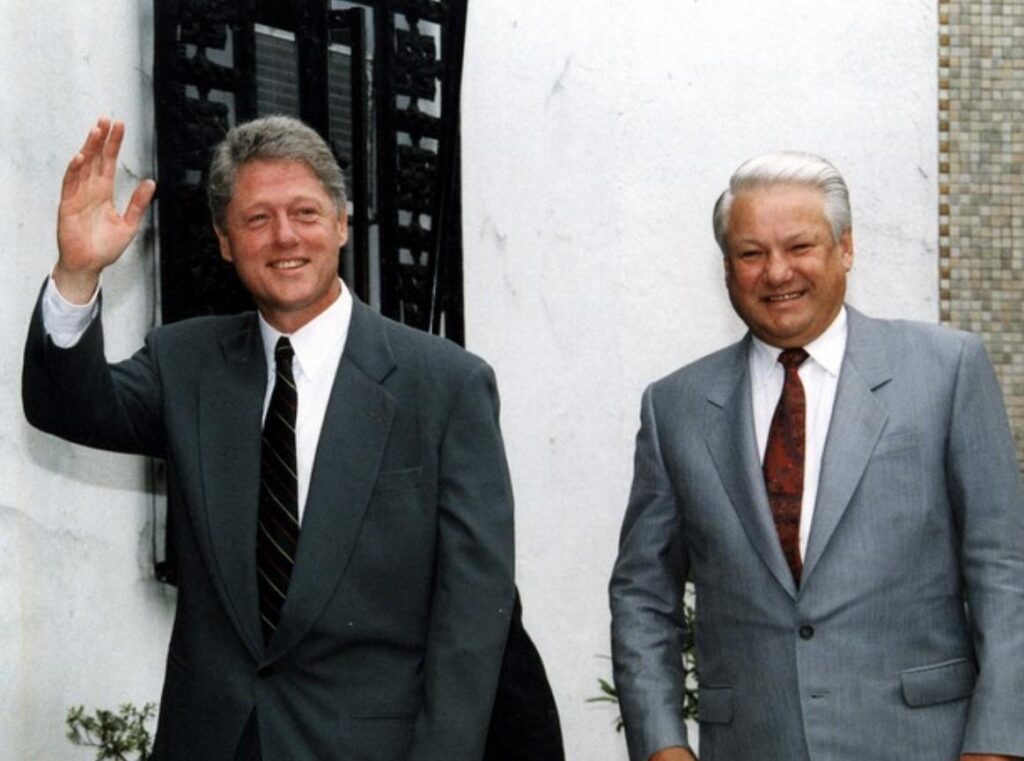
After the demise of the USSR, America was in search of an “enemy.” And the Baltic States were in search of an “empire.” The interests of America’s “national security state” and those of the ultra-nationalists in the Baltic coincided perfectly.
The self-righteous victim-hood on show in Lithuania, Latvia and Estonia offered America a new mission: to defend the “vulnerable” Baltic States from Russia.
In January 1998, the United States, Lithuania, Latvia and Estonia signed the Baltic Charter. This locked the Baltic States into the American orbit.
In America’s provocative move into Eastern Europe, the Baltic States—NATO members since 2004—were a convenient “flashpoint” justifying America’s “military-industrial complex.”
If the Baltic States did not exist, America would have had to invent them. They were a ready-made casus belli. It did not matter if the Russian Federation was not the USSR. “Full spectrum dominance” was America’s only concern regardless of the nomenclature.[22]
The Baltic States strongly supported America’s invasion of Afghanistan in 2001 and the subsequent American invasion of Iraq in 2003. In the eyes of Washington, D.C., Lithuania, Latvia and Estonia represented a “New Europe”—a Europe which unconditionally accepted American hegemony. And America’s massively violent imperialism. To prove the point, Lithuania “hosted” Central Intelligence Agency (CIA) “black sites” (America’s secret torture centers).[23]
By contrast, “Old Europe,” consisting of France, Germany and Russia, refused to support the U.S. war on Iraq. In 2007 Russian President Vladimir Putin continued his criticism of America’s unipolar foreign policy in a landmark speech at the Munich Security Conference.
But he was alone. France and Germany had returned to the fold—both again were under the American umbrella. And they supported America’s destruction of Libya, Syria and Palestine in the following years.[24]
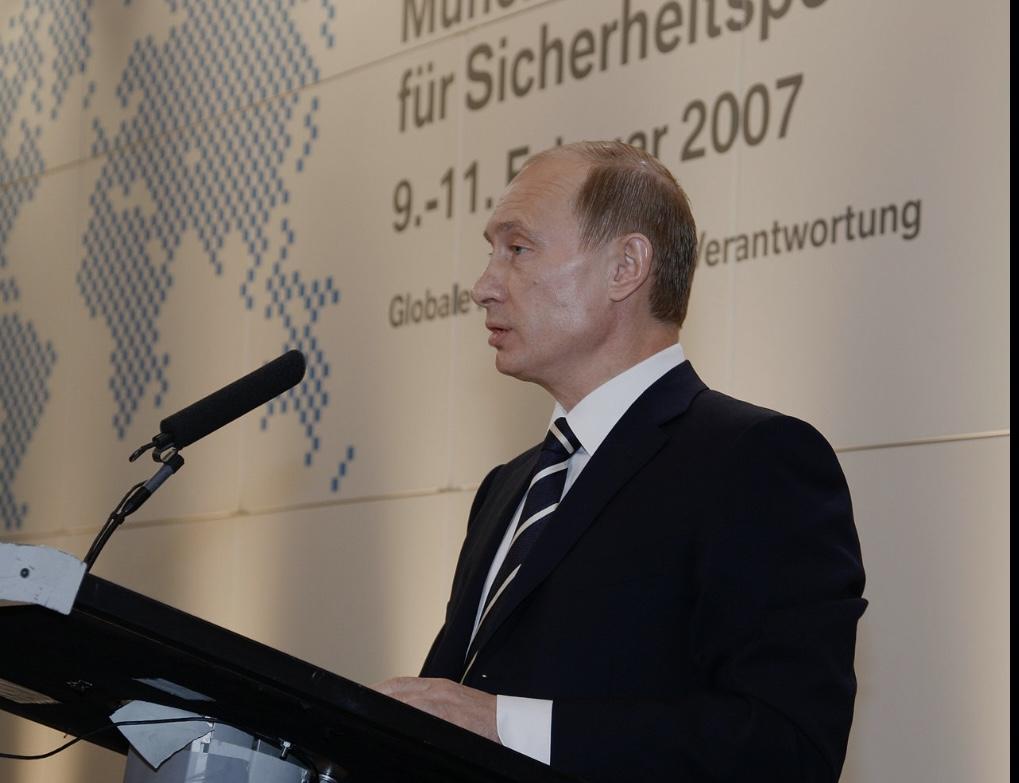
The U.S. had pushed “New Europe” to the fore. The Baltic States had eclipsed “Old Europe.” Russian opposition to U.S. imperialism was isolated. And the Russophobia emanating from Lithuania, Latvia and Estonia proved most useful for Washington.
The ideas that Russia is an inherent threat to its neighbors, that Russia is marked by the stain of totalitarianism, that Russia is responsible for World War Two, that Russian people and the Russian language are incompatible with freedom and democracy, and that Nazism isn’t the problem—it’s Russia—are not ideas that originated in Ukraine circa 2020, but in the Baltic States circa 2000.
America adopted and endorsed this Baltic narrative because Russia was out of sync: It did not support the American war machine in Iraq (2003), Libya (2011) and Syria (2011-24).
Indeed, in 2008, Moscow went to war with Georgia, one of America’s partners in Iraq. And in the same year, Russia emphatically said “no” to the expansion of NATO into Georgia itself and Ukraine.[25] Russia’s independent foreign policy was challenging “the new American century.”
It contradicted the Wolfowitz Doctrine, that strategic decision to destroy any competition to U.S. global power in the 21st century, a doctrine that materialized in the RAND Corporation’s 2019 brief, “Overextending and Unbalancing Russia.” The Russophobia originating in the Baltic States fed into and justified this belligerent U.S. foreign policy.[26]
The most recent and most crass examples of this Baltic/U.S. Russophobia at play in the West include:
- The 2025 refusal, 80 years after the war against Nazism, to invite Russia to the ceremonies commemorating the end of World War Two and the liberation of Auschwitz.[27]
- The 2024 (and in previous years also) refusal to support Russia’s resolution in the United Nations to combat the glorification of Nazism.[28]
- The 2023 applause, inside the Canadian parliament, for a veteran Nazi who fought against Russia.[29]
- And, most egregiously, the training and arming of Nazi elements on the Ukrainian / Russian border after the 2014 EU/U.S. coup in Kiev.[30]
America’s Structural Nazism and CIA Fronts
The United States and NATO are no strangers to Nazism: After World War Two they integrated Nazis into their structures of power and knowledge; Operation Paperclip brought Nazi scientists to America for employment; and Operation Gladio built up secret Nazi-like networks throughout Western Europe to fight progressive politics.[31]
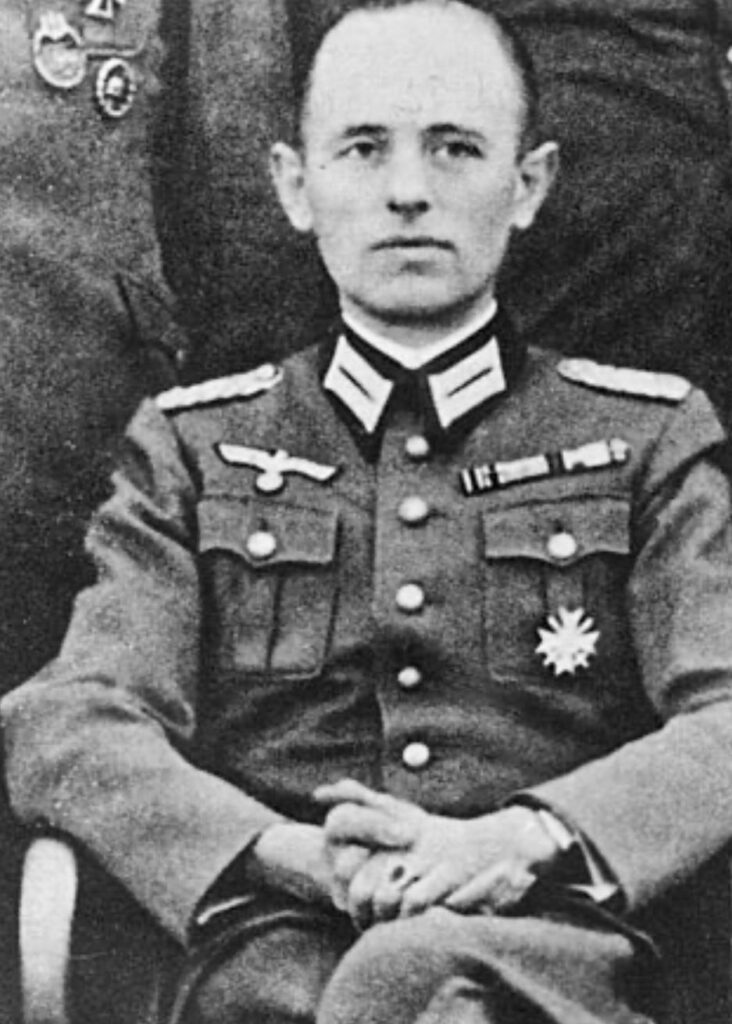
In the same vein, one of the top Nazis operating in Eastern Europe during the war, Reinhard Gehlen, was recycled by the CIA and given the top job in West Germany’s secret service. And in light of the strategic importance of Ukraine today for NATO, thousands of Ukrainian Nazis were allowed to settle in Britain, Canada and the U.S. after the fall of Berlin in 1945.[32]
Therefore, in the 1990s and 2000s, the Nazi-tinged Baltic States were not beyond the pale for the U.S. Like the post-World War II Nazis, the post-Cold War Baltic represented an opportunity for the triumphalist United States.
In the first years of “Baltic independence,” America’s strategic governmental and non-governmental agencies, the National Endowment for Democracy (NED), the Agency for International Development (USAID) and Open Society Foundations (OSF), penetrated Lithuania, Latvia and Estonia with the intention of solidifying and directing the Russophobia present in these countries.[33]
The Baltic-American Partnership Fund, created in 1998, combined money from USAID and OSF. Its mission: Pump civil society with American money and American ideas (neoliberalism).[34] Meanwhile, NED was “[helping] to develop [Baltic] activists with trade union organizing, independent publishing, and other valuable democracy-building [sic] skills.”[35]
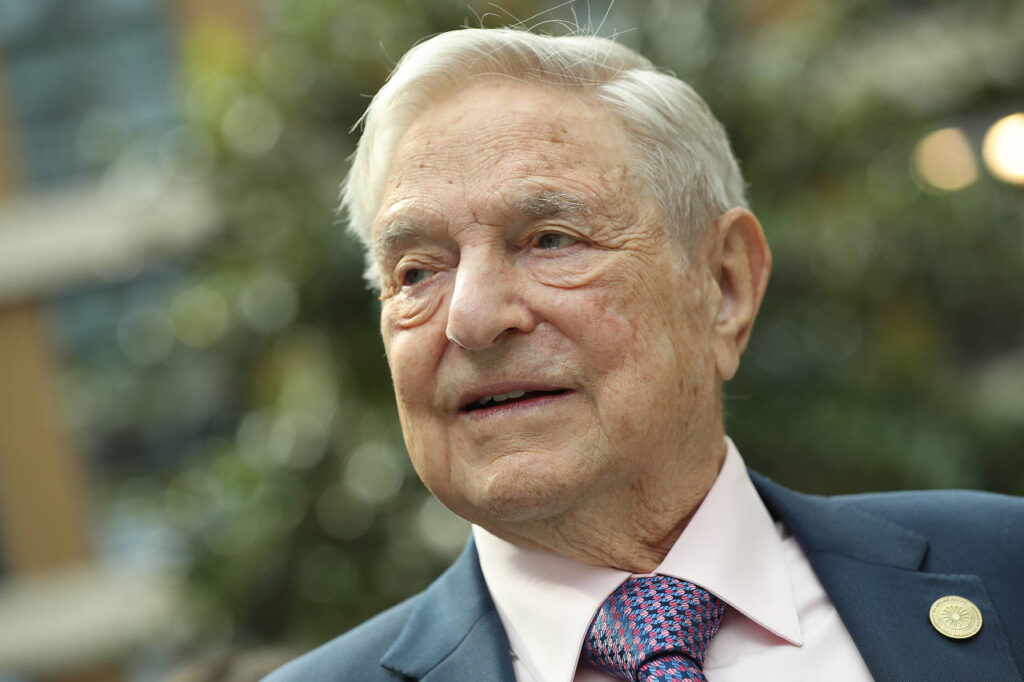
Russophobia, however, was the subtext. As George Soros—the founder of OSF—and Carl Gershman—the founding president of the NED—never stopped saying: Russia was/is an existential threat to the Baltic States and Eastern Europe[36]
Brainwashed, or simply bribed, the Baltic States were soon signing the “Vilnius letter,” a 2003 statement supporting America’s genocidal plans in Iraq and, by extension, in the entire Middle East.[37]
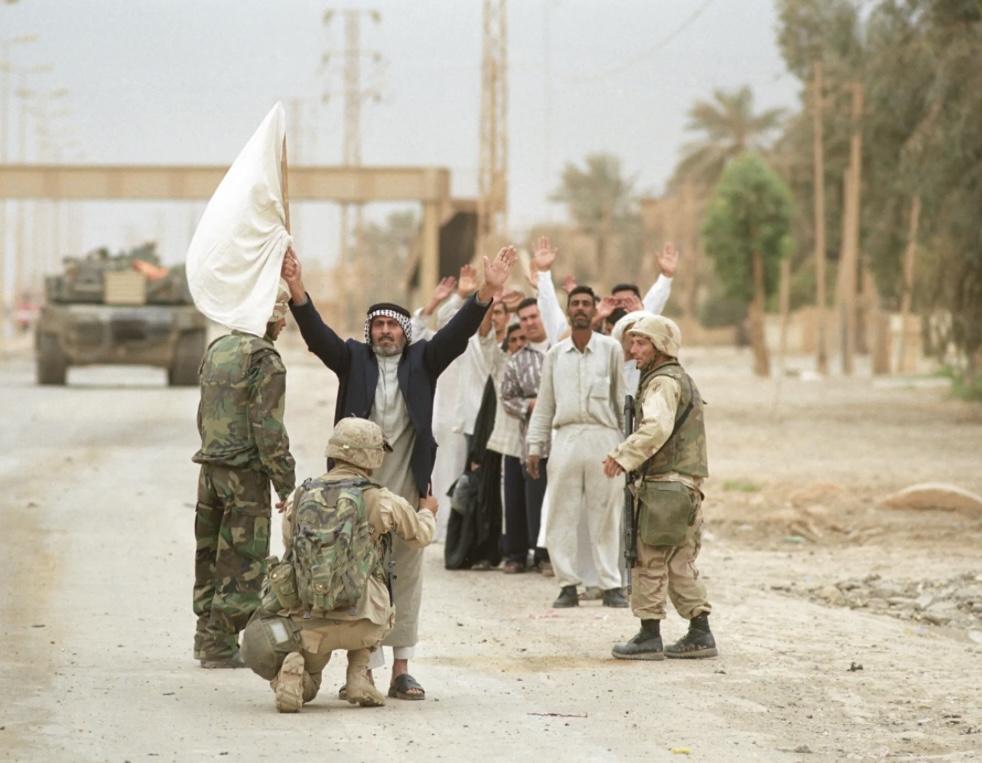
Genocide—whether against the Baltic Jews in the 20th century or the Arabs in the 21st century—is once again an acceptable concept. Race hate is back in the Baltics with a bang.
And Now?
The problem for the Baltic States is that the race they have decided to hate the most—the Slavic Russians—inhabit the biggest country in the world and possess thousands of nuclear weapons.
And it is not willing to go the way of the Jews and Arabs. The Russians are pushing back. Nonetheless, inflated Baltic egos are determined with the help of America to hate their neighbor. The result is war fever in contemporary Lithuania, Latvia and Estonia.
The result is that the Baltic States today are hosting German soldiers. For the second time in 100 years, the ultra-nationalists in the Baltic are teaming up with Germany to fight Russia. History is repeating itself. This time however, Britain, France and America are with Germany.[38]
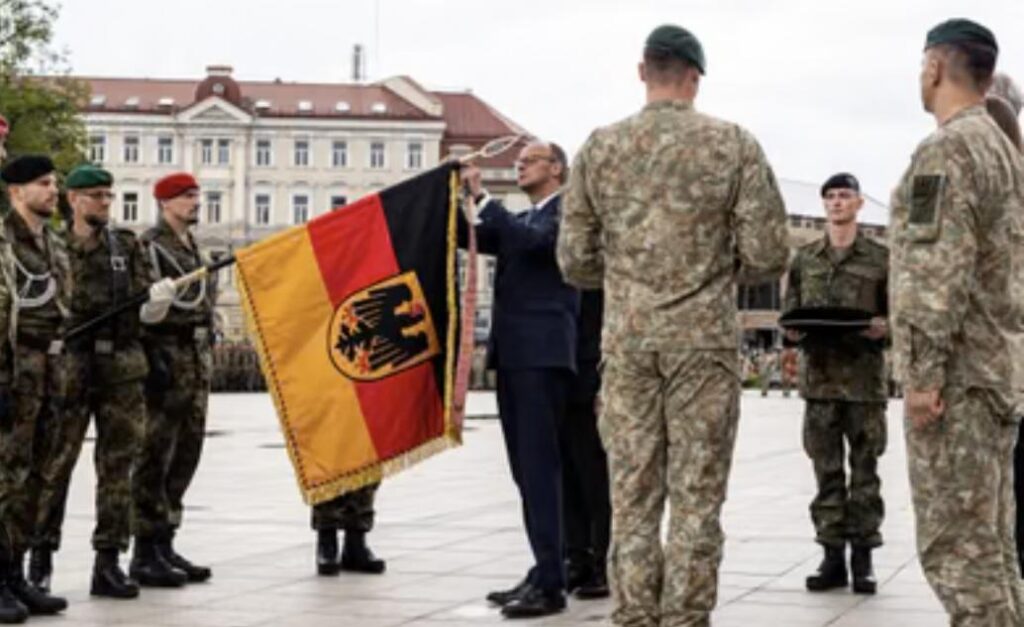
In what is called an “enhanced Forward Presence (eFP),” the U.S./NATO are on Russia’s Baltic border, less than 200 kilometers from St. Petersburg.[39]
Unless there is a sudden end to home-grown and American Russophobia, the Baltic States will be destroyed in a war with Russia.
And the world will not be surprised. Because the provocation is clear. Today, Ukraine should be the foremost lesson for the Baltic States. All the evidence suggests, however, that they are ignoring it.

Billy Haller, “Incoming EU Foreign Minister Approves Of Breaking Russia Into Smaller States,” The Organization for World Peace, August 6, 2024. ↑
AFP News, “UN says Latvia’s language rules are discriminatory,” Yahoo! News, March 27, 2014. ↑
Leena Hietanen, “President of Germany Hails Baltic Double Genocide Revisionism,” Defending History, July 11, 2013 ↑
Joachim Becker, “Extreme Free-Market ‘Shock Therapy’ in Postcommunist Eastern Europe Was a Disaster,” Jacobin, June 16, 2022. ↑
See Naomi Klein, The Shock Doctrine: The Rise of Disaster Capitalism (New York: Holt, 2008). ↑
Michael Hudson, “The Baltic Tigers’ False Prophets of Austerity,” CounterPunch, December 6, 2011. ↑
Becker, “Extreme Free-Market ‘Shock Therapy’ in Postcommunist Eastern Europe Was a Disaster.” ↑
“Estonia: Far right set to enter government,” dw.com, July 4, 2019. ↑
Human Rights Without Frontiers Int’l, OSCE Human Dimension Implementation Meeting, osce.org, Warsaw, September 29, 2014 ↑
Tanel Kerikmäe, Archil Chochia, Thomas Hoffmann, “Minorities in the Baltic and [sic] countries and Finland and their participation (rights)—Finland, Estonia, Latvia, LIthuania,” EU-Citizen: Academic Network on European Citizenship Rights, 2018. ↑
Ian Traynor, “Patriots or Nazi collaborators? Latvians march to commemorate SS veterans,” The Guardian, March 16, 2010. ↑
Cnaan Liphshiz, “Jewish community protests after plaque honoring SS officer unveiled in Estonia,” The Times of Israel, June 30, 2018. ↑
“‘Nationalist’ March in Central Vilnius on Lithuania’s 100th Birthday Ends Up in Usual Neo-Nazi Spirit,” defendinghistory.com, February 18, 2018. ↑
Seumas Milne, “This rewriting of history is spreading Europe’s poison,” The Guardian, September 9, 2009. ↑
Dovid Katz, “Halting Holocaust obfuscation,” The Guardian, January 8, 2010. ↑
Gil Skorwid and Patrick Smith, “How a Chicago teacher sparked a ‘memory war,’ forcing Lithuania to confront its Nazi past,” NBC News, April 4, 2021; Zev Stub, “Yad Vashem condemns Latvia’s exoneration of ‘the butcher of Riga,’” The Times of Israel, April 22, 2025; Leena Hietanen and Petri Krohn, “Estonia’s Last ‘Knight’s Cross’ Waffen SS Man Gets Full-Honors Military Funeral,” Defending History, January 13, 2014. ↑
Dovid Katz, “Prague’s declaration of disgrace,” The Jewish Chronicle, May 21, 2009; Taylor C. Noakes, “Black Ribbon Day Is an Ahistorical, Antisemitic Fraud,” Jacobin, August 23, 2023. ↑
David Carlin, “World War II: How Western Leaders Failed To Stop the Nazi Rise,” Forbes, September 4, 2019; Eoghan Gilmartin, “Britain Helped Franco Destroy Spanish Democracy,” Jacobin, April 1, 2024; Jeff Rich, “Stalin’s Failed Alliance & Munich 1938,” Substack – Burning Archive, September 29, 2025. ↑
Dovid Katz, “Why red is not brown in the Baltics,” The Guardian, September 30, 2010. ↑
Permanent Representation of Lithuania to the European Union, “BNS: Baltic States opened Western Europe’s eyes on Soviet Union totalitarianism – EP Chairman in Vilnius,” April 28, 2009. ↑
Statement by President von der Leyen on the Europe-Wide Day of Remembrance for the victims of all totalitarian and authoritarian regimes, enlargement.ec.europa.eu, August 23, 2022. ↑
U.S. Department of State, “A Charter of Partnership Among the United States of America and the Republic of Estonia, Republic of Latvia, and Republic of Lithuania,” January 16, 1998; U.S. Department of Defense, “Joint Vision 2020,” May 30, 2000; Ajamu Baraka, “The Delusional Commitment to the Doctrine of ‘Full Spectrum Dominance’ is leading the U.S. and the World to Disaster,” Black Agenda Report, November 23, 2021. ↑
Heather Conley, “The Baltic States in the World,” U.S. Department of State, April 24, 2004; Matthew Cole, “Report: Two CIA Black Site Prisons in Lithuania,” ABC News, December 22, 2009. ↑
Vladimir Putin, “Speech and the Following Discussion at the Munich Conference on Security Policy,” February 10, 2007, en.kremlin.ru. ↑
J. D. Leipold, “Milley: Russia No.1 threat to US,” army.mil, November 10, 2015; Ambassador William J. Burns, “Nyet Means Nyet: Russia’s NATO Enlargement Redlines;” wikileaks.org, February 1, 2008. ↑
See “Statement of Principles,” Project for a New American Century, June 3, 1997; see also James Dobbins et al., “Overextending and Unbalancing Russia: Assessing the Impact of Cost-Imposing Options,” RAND Corporation, April 24, 2019. ↑
AFP, “Russia Barred From 80th Anniversary of Auschwitz Liberation,” The Moscow Times, September 23, 2024. ↑
“54 states voted against UN resolution on combating glorification of Nazism,” en.topwar.ru, November 12, 2024. ↑
Chloe Kim, “Justin Trudeau apologises after Nazi veteran honoured in parliament,” BBC News, September 27, 2023. ↑
Tom Parfitt, “Ukraine crisis: the neo-Nazi brigade fighting pro-Russian separatists,” The Telegraph, August 11, 2014; Jerusalem Post Staff, “Western countries training far-right extremists in Ukraine – report,” October 19, 2021. ↑
NPR Staff, “The Secret Operation To Bring Nazi Scientists To America,” npr.org, February 15, 2014; See Daniele Ganser, “NATO’s Secret Armies: Operation Gladio and Terrorism in Western Europe,” Contemporary Security Studies (London: Routledge, 2004). ↑
Gaither Stewart, “Our Nazis: the Gehlen Org,” counterpunch.org, January 2, 2020; Lev Golinkin, “Monuments to Nazis hiding in plain sight near Philadelphia and Detroit,” forward.com, August 28, 2023; Ukrainian “ SS ‘Galicia’ Division allowed to settle in Britain,” web.archive.org, August 2005; Alex Cosh, “How Canada Helped Whitewash The Nazi SS Galicia Division,” readthemaple.com, September 28, 2023. ↑
See Efe Can Gürcan, “The Nonprofit-Corporate Complex: An Integral Component and Driving Force of Imperialism in the Phase of Monopoly-Finance Capitalism,” monthlyreview.org, April 2015. ↑
See “The Baltic-American Partnership Fund: Ten Years of Grantmaking to Strengthen Civil Society in Estonia, Latvia and Lithuania,” opensocietyfoundations.org, November 2008. ↑
See “Case Study: Successful NED Grantees Share Their Experiences, Replicate Programs,” ned.org ↑
George Soros, “Wake Up, Europe,” The New York Review of Books, November 20, 2014; Carl Gershman, “Remarks by NED President Carl Gershman at the Conference on ‘Ideas for Lithuania’s Future,’” ned.org, February 1, 2018. ↑
Jeffrey Donovan, “Eastern Europe: Vilnius Group Supports U.S. On Iraq,” Radio Free Europe/Radio Liberty, rferl.org, February 6, 2003 ↑
Jakub Krupa, “Germany boosts NATO’s eastern flank with new Baltic brigade amid threat from Russia – Europe live,” The Guardian, May 22, 2025. ↑
Press Association, “British troops land in Estonia for NATO mission to deter Russia,” The Guardian, March 18, 2017.
CovertAction Magazine is made possible by subscriptions, orders and donations from readers like you.
Blow the Whistle on U.S. Imperialism

Click the whistle and donate
When you donate to CovertAction Magazine, you are supporting investigative journalism. Your contributions go directly to supporting the development, production, editing, and dissemination of the Magazine.
CovertAction Magazine does not receive corporate or government sponsorship. Yet, we hold a steadfast commitment to providing compensation for writers, editorial and technical support. Your support helps facilitate this compensation as well as increase the caliber of this work.
Please make a donation by clicking on the donate logo above and enter the amount and your credit or debit card information.
CovertAction Institute, Inc. (CAI) is a 501(c)(3) non-profit organization and your gift is tax-deductible for federal income purposes. CAI’s tax-exempt ID number is 87-2461683.
We sincerely thank you for your support.
Disclaimer: The contents of this article are the sole responsibility of the author(s). CovertAction Institute, Inc. (CAI), including its Board of Directors (BD), Editorial Board (EB), Advisory Board (AB), staff, volunteers and its projects (including CovertAction Magazine) are not responsible for any inaccurate or incorrect statement in this article. This article also does not necessarily represent the views the BD, the EB, the AB, staff, volunteers, or any members of its projects.
Differing viewpoints: CAM publishes articles with differing viewpoints in an effort to nurture vibrant debate and thoughtful critical analysis. Feel free to comment on the articles in the comment section and/or send your letters to the Editors, which we will publish in the Letters column.
Copyrighted Material: This web site may contain copyrighted material the use of which has not always been specifically authorized by the copyright owner. As a not-for-profit charitable organization incorporated in the State of New York, we are making such material available in an effort to advance the understanding of humanity’s problems and hopefully to help find solutions for those problems. We believe this constitutes a ‘fair use’ of any such copyrighted material as provided for in section 107 of the US Copyright Law. You can read more about ‘fair use’ and US Copyright Law at the Legal Information Institute of Cornell Law School.
Republishing: CovertAction Magazine (CAM) grants permission to cross-post CAM articles on not-for-profit community internet sites as long as the source is acknowledged together with a hyperlink to the original CovertAction Magazine article. Also, kindly let us know at info@CovertActionMagazine.com. For publication of CAM articles in print or other forms including commercial internet sites, contact: info@CovertActionMagazine.com.
By using this site, you agree to these terms above.
About the Author

Aidan O’Brien is a hospital worker in Dublin, Ireland.
Aidan can be reached at: ado1968@hotmail.com.



lol mia is the most reasonable balt
Kazakhstan on an Irreversible Collision Course with Russia?
By Andrew Korybko
Global Research, December 19, 2025
Region: Europe, Russia and FSU
Theme: Intelligence
print
Translate Website
The production of NATO-standard shells hints that Kazakhstan plans to follow in Azerbaijan’s footsteps by having its armed forces conform with the bloc’s standards ahead of what its leadership might have been duped by the West to believe will be an inevitable crisis with Russia after the Ukrainian Conflict ends.
Background Briefing
Sputnik reported in early December that Kazakhstan will build four factories that’ll produce Russian- and NATO-standard shells, which prompted First Deputy Chairman of the Duma Defense Committee Alexei Zhuravlev to harshly condemn this development. In his words,
“We try to ignore how a seemingly fraternal republic has swiftly abandoned not only the Russian language but also the Cyrillic alphabet. How they’re creating ‘yurts of invincibility’ while supporting Ukraine.”
.
Kazakhstan | History, Culture, Facts, Map, & People | Britannica
.
He added that “now they’re switching to NATO ammunition standards, clearly intending to abandon Russian weapons in the future, replacing them with Western ones. Astana may not have been the largest buyer of Russian military-industrial complex equipment, but the move itself is certainly unfriendly and must be responded to accordingly. We all know what such cooperation with NATO has meant for Kiev.” This is the latest manifestation of Kazakhstan’s pro-Western pivot that accelerated in recent months:
30 September 2023: “Kazakhstan’s Pro-EU Pivot Poses A Challenge For The Sino-Russo Entente”
2 July 2025: “Why’d Erdogan Decide To Expand Turkiye’s Sphere Of Influence Eastwards?”
9 August 2025: “The TRIPP Corridor Threatens To Undermine Russia’s Broader Regional Position”
2 November 2025: “The West Is Posing New Challenges To Russia Along Its Entire Southern Periphery”
12 November 2025: “A US Think Tank Considers Armenia & Kazakhstan To Be Key Players For Containing Russia”
13 November 2025: “The US’ Central Asian Minerals Deals Could Put More Pressure On Russia & Afghanistan”
23 November 2025: “Why’d Kazakhstan Join The Abraham Accords When It Already Recognizes Israel?”
2 December 2025: “The ‘Community Of Central Asia’ Could Reduce Russia’s Regional Influence”
19 December 2025: “Turkish Curriculum’s Renaming Of Central Asia To Turkistan Is Turkiye’s Latest Soft Power Flex”
In brief, the “Trump Route for International Peace and Prosperity” (TRIPP) will turbocharge the Turkish-led injection of Western influence along Russia’s entire southern periphery by creating a military logistics corridor between NATO member Turkiye and the Central Asian Republics. Kazakhstan and Kyrgyzstan are part of the Russian-led CSTO mutual defense bloc and the Turkish-led “Organization of Turkic States” (OTS) socio-economic one that’s recently begun discussing a joint military structure and drills.
Azerbaijan, whose armed forces completed their conformation to NATO standards in early November, will help those two follow suit through its role in the “Community of Central Asia” (CCA, the newly rebranded annual Consultative Meeting of Heads of State) that it joined later that same month. The CCA is therefore expected to function as the means for the NATO-backed OTS to “poach” Kazakhstan and Kyrgyzstan from the CSTO for irreversibly shattering Russia’s “sphere of influence” in Central Asia.
Grand Strategic Context
The context within which these newly accelerated processes are occurring, which were unleashed by TRIPP (and its origins in turn stem from Nikol Pashinyan seizing the Armenian premiership in 2018 after his successful Color Revolution that later led to the next Karabakh Conflict), is the Ukrainian peace talks. The US is essentially relying on the Azeri-Turkish Axis (ATA) to jointly pressure Russia along its entire southern periphery for raising the odds of Putin agreeing to a lopsided peace deal in Ukraine’s favor.
He’s thus far refused, but Kazakhstan’s planned production of NATO-standard shells adds a sense of urgency to ending the special operation so as to refocus Russia’s strategic attention towards its entire southern periphery in the hopes of averting the irreversible shattering of its “sphere of influence” there. Ideally, the US would help manage Turkish-Russian tensions in this space through the five means described here as part of a grand deal detailed here, here, and here, but that can’t be taken for granted.
Kazakhstan’s Anti-Russian Plans
Russia must therefore prepare itself for the possibility of an inevitable crisis with Kazakhstan, and also ATA by extension that might then come to involve NATO as a whole due to Turkiye’s membership therein, after it just decided to build NATO-standard shells. Its new factories’ purpose is to stockpile these shells ahead of what Kazakhstan appears to have already concluded will be an inevitable crisis with Russia sparked by the undeclared plan to have its armed forces conform to NATO standards.
The only reason why it’s setting this scenario sequence into motion is because its leadership has been duped by the West (including ATA and Ukraine) to believe that Russia will set its sights on historically Russian territory within Kazakhstan’s Soviet-drawn borders after the special operation ends. Kazakhstan thus no longer wants to be dependent on Russian military-technical equipment and has instead quietly decided to transition to NATO wares instead with ATA’s help.
This is expected to occur in parallel with its armed forces conforming with NATO standards under the cover of closer cooperation within the OTS or at least within the CCA, which includes Azerbaijan with whom it, Kyrgyzstan, Tajikistan, and Uzbekistan now jointly drill and consult each other. Conforming with NATO standards, transitioning to its wares, and stockpiling its shells are meant to help Kazakhstan’s armed forces hold out long enough in a conflict with Russia for more NATO-backed ATA support to arrive.
ATA In Action
If Turkish and/or Azeri troops (respectively formal and informal NATO troops who have mutual defense obligations) aren’t already deployed to Kazakhstan by the time that a crisis erupts, and such an advance deployment could also trigger a crisis, then they’d have to speedily be dispatched there afterwards. The only realistic way in crisis conditions is by air over the Caspian Sea, possibly under the cover of civilian airliners to deter Russia from shooting them down, but another supplementary route is also possible.
Casual observers don’t know that ATA is allied with Pakistan, which can be considered an unofficial member of the OTS, so any troops that they might have already deployed there by that time could be airlifted from there to Kazakhstan. This could also be done under civilian cover to deter Russian jets from shooting them down from their airbase in Kyrgyzstan’s Kant. If Afghan-Pak ties stabilize and the PAKAFUZ railway is built by then, Pakistan could also ship military equipment to Kazakhstan that way too.
As a means for either “deterring” or at least “restraining” Russia, ATA might also try to stir trouble in the North Caucasus, which could provoke a Russian response for invoking their mutual defense obligations and thus draw NATO member Turkiye and “Major Non-NATO Ally” Pakistan into the fray. A multi-front conflict with Turkiye in the Black Sea, Azerbaijan in the North Caucasus, it and Kazakhstan in the Caspian Sea, and Kazakhstan in Central Asia (with aid from ATA and Pakistan) could easily overextend Russia.
Trigger Events
The following events could contribute to sparking the worst-case scenario of a Russian-Kazakh crisis:
Kazakhstan making tangible progress on conforming its armed forces to NATO standards;
Its increased import of US, Turkish, Azeri, and/or Pakistani weaponry (all increasingly standardized);
More drills between its armed forces and the aforesaid countries’;
Freezing its membership in the CSTO just like already “poached” Armenia has done;
The deployment of US, Turkish, Azeri, and/or Pakistani advisors/troops (even under PMC cover);
The passing of Ukrainian-like discriminatory legislation against Kazakhstan’s Russian minority;
Pogroms against them;
And/or meddling in the “Orenburg Corridor” amidst the external revival of “Idel-Ural” separatism.
Depending on what happens, Russia’s kinetic response could be framed as preventive or preemptive.
Concluding Thoughts
The Kazakh leadership’s threat perception of Russia that’s responsible for its decision to produce NATO-standard shells is based on the false premise that the Kremlin has revanchist plans for re-incorporating historically Russian land within Kazakhstan. This shows that they never took seriously Russia’s reason for the special operation, namely to neutralize Ukrainian-emanating threats from NATO precisely of the sort that Kazakhstan is now on the path to produce in the same mistaken belief that this will “deter” Russia.
So long as Kazakhstan doesn’t pose a security threat to Russia and treats its minority with respect, Russia doesn’t care what else Kazakhstan does, but its decision to produce NATO-standard shells indisputably poses a latent security threat to Russia as explained. Kazakhstan therefore risks creating the same crisis with Russia that its aforesaid decision and consequent military-strategic trajectory are meant to avert all because it let itself be duped by the US, Turkiye, Azerbaijan, and Ukraine unless it soon changes course.
*
Click the share button below to email/forward this article. Follow us on Instagram and X and subscribe to our Telegram Channel. Feel free to repost Global Research articles with proper attribution.
This article was originally published on the author’s Substack.
Andrew Korybko is an American Moscow-based political analyst specializing in the relationship between the US strategy in Afro-Eurasia, China’s One Belt One Road global vision of New Silk Road connectivity, and Hybrid Warfare. He is a regular contributor to Global Research.
The collapse of the traitorous Jewish Russia is closer than anyone can even think. They will pay for their betrayal of Syria, in the bloody collapsed Moscow the destruction of Putin’s traitorous Russia will begin. The OKA River will flow all bloody and will carry thousands of Russian and traitorous Alawites severed heads. They listened to Putler, the son of a Jewess, and betrayed their Syria. Did they really think they would be safe in RUSSIA?
They won’t be! Never! Payday is closer than they can even imagine.
Not a rat will be safe in Moscow, not even a fat Maher (or skinny Bashar) al-Assad. NATO will strike Russia from all sides and there will be no Prigozhin to defend them.
All of NATO is preparing for the final showdown with Russia.
When NATO strikes from all sides, there will be a just payment for the betrayal of Syria.