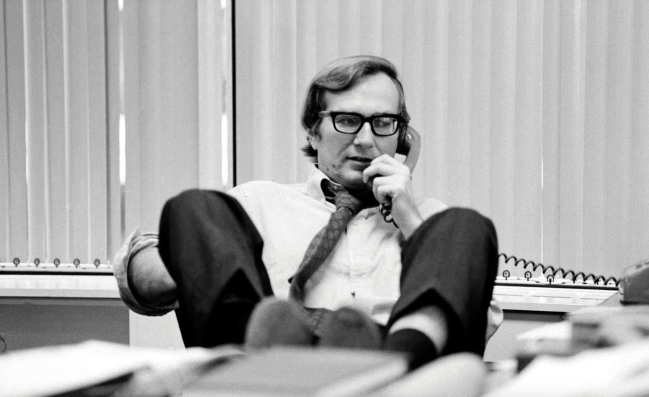
Cover-Up is nothing less than a masterpiece about investigative reporting, co-directed by one of today’s greatest documentarians, Laura Poitras, who earned a Pulitzer and Academy Award for her reportage on NSA leaker Edward Snowden, featured in 2014’s Citizenfour.
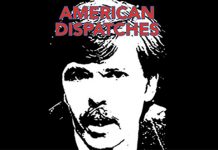
Following a screening of Cover-Up at the recent AFI Film Festival, Poitras described Cover-Up not as a “biopic” per se but as a “portrait” of its subject: muckraker Seymour Hersh who, likewise, won a Pulitzer, as well as five George Polk Awards and other prestigious accolades, for his pull-no-punches exposés of some of Washington’s worst war crimes and crimes against humanity.
Throughout this almost two-hour documentary, co-directed by former Hersh collaborator and two-time co-Emmy Award winner Mark Obenhaus, the Chicago-born Hersh, who is almost 90 now, comes across as irascible, diffident and brash, which caused him to be in frequent conflict with the powers that be, in the government as well as the mainstream media.
But it was this prickly pear’s contrarian streak and edge that spurred him on down the road to what is arguably the most horrifying single story this side of Apocalypse Now to emerge out of the Vietnam War.

My Lai: They Lie
Cover-Up opens with footage of what is presumably a news conference that President Lyndon Johnson is addressing about the war in Vietnam. The film also has clips featuring Secretary of Defense Robert McNamara and General William Westmoreland, Military Commander of Allied Forces in Vietnam.
The military’s daily press briefings during the Vietnam War were derogatorily dubbed “the Five O’Clock Follies” because of the Pentagon’s steady stream of lies, misinformation and disinformation. As a freelance reporter, Hersh instinctively knew not to accept as the gospel truth the word of these Indochina apologists.
Instead, in 1969, Hersh doggedly followed a news tip that led him to Lt. William Calley, who was facing a court-martial for killing more than 100 Vietnamese at My Lai in South Vietnam.
Most of the slain villagers were women, elderly men, children, plus—as a slogan and devastating poster featuring Vietnamese corpses powerfully put it—“And Babies” (derived from a harrowing quote wherein one of the My Lai mass murderers confessed that the casualties shot, bayoneted, etc., by the platoon did indeed include infants, too).
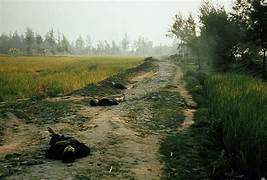
Hersh’s reportage, which unearthed and exposed what the military tried to bury, went on to reveal the horrific depths of the March 16, 1968, My Lai massacre by Lt. Calley and other soldiers of Charlie Company. Despite the fact that they had entered My Lai unopposed, the platoon slaughtered up to 500 Vietnamese civilians, and Hersh’s dauntless investigative reporting shocked the conscience of the world and spurred on America’s growing anti-war movement.
Tracking down the story, Hersh interviewed one of Calley’s co-exterminators, 22-year-old Paul Meadlo, at a farm in rural Indiana. His 57-year-old mother Myrtle gave Hersh one of the most memorable, chilling quotes of the entire Vietnam debacle: “I sent them a good boy and they [the U.S. military] made him a murderer.”
His revelations about the American cruelty and atrocities in Vietnam led Hersh to muse on-screen in Cover-Up: “How did it happen, this descent into madness?”
The publication by various press outlets of color photos shot by eyewitness and U.S. Army combat photographer Ronald Haeberle provided irrefutable evidence that buttressed Hersh’s reporting. The freelancer’s dogged pounding of the pavement in pursuit of the story paid off. For unveiling this cause célèbre, Hersh went on to win the Pulitzer Prize for International Reporting, his first Polk Award, and was propelled to the front ranks of investigative journalism.
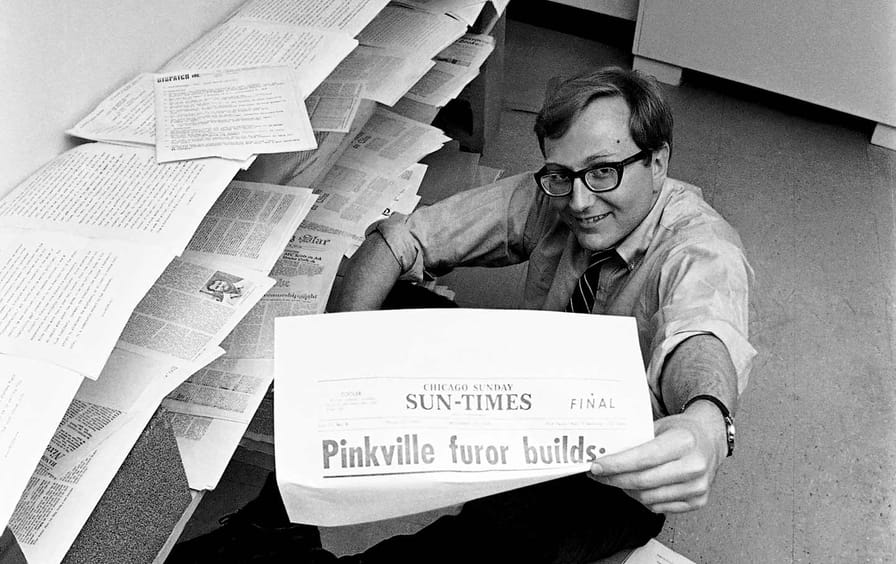
Nixon, Watergate, Kissinger and the Price of Perfidy and Perdition
Hersh’s growing reportorial prominence brought him lots of attention. While the war was still raging, he made a trip to Hanoi in March 1972 which, according to the documentary, prompted Henry Kissinger, then Nixon’s National Security Adviser, to want to meet with Hersh ASAP after he returned stateside.
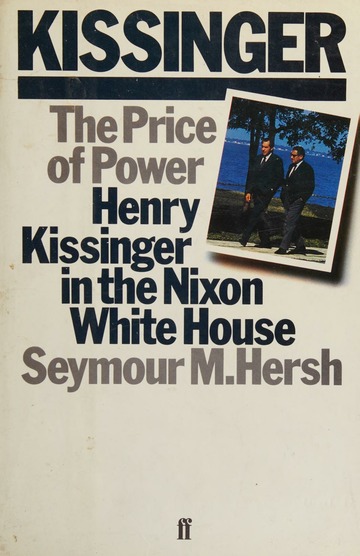
Hersh, of course, went on to write the 1983 landmark book The Price of Power: Kissinger in the Nixon White House, which won the National Book Critics Circle Award for, among other things, exposing Kissinger’s role in the bloody overthrow of the democratically elected socialist president of Chile, Salvador Allende. Pinochet is glimpsed in Cover-Up meeting with Kissinger, who contends: “We didn’t do it [the coup d’état]. But we helped.”
Hersh also did not escape the notice of The New York Times, which hired him in April 1972 as an investigative reporter in the daily’s Washington, D.C., bureau. About two months later, the Watergate break-in at the Democratic National Committee’s headquarters in the nation’s capital triggered one of the most colossal scandals in U.S. political history, and Hersh was providentially well-positioned, at the right place at the right time.
Although the rival Washington Post’s fabled reportorial team of Bob Woodward and Carl Bernstein are the journalists best known for covering (and uncovering) Watergate, until Tricky Dick finally resigned from office and slunk away from the White House in disgrace, Hersh wrote 40-plus, mostly front-page stories for the Times about the brouhaha that sunk the Nixon regime.
Cover-Up notes that, among Hersh’s revelations, was the fact that, six months after the bungled break-in, the Watergate burglars were still being paid hush money.
Presumably in one of those infamous Watergate tapes, wherein Nixon idiotically bugged himself (as well as others, which contributed to his own undoing), the president is heard on-screen deriding Hersh as “a son of a bitch” who, however, Tricky Dick grudgingly admits, “but he’s usually right.”
The CIA
In addition to having numerous sources at the Pentagon (which would have caused Secretary of “War” Pig Hogslop to jump off the wagon), Hersh also assiduously cultivated sources in the intelligence community.
CovertAction Magazine readers will be especially interested in Cover-Up’s eye-opening section on the Central Intelligence Agency.
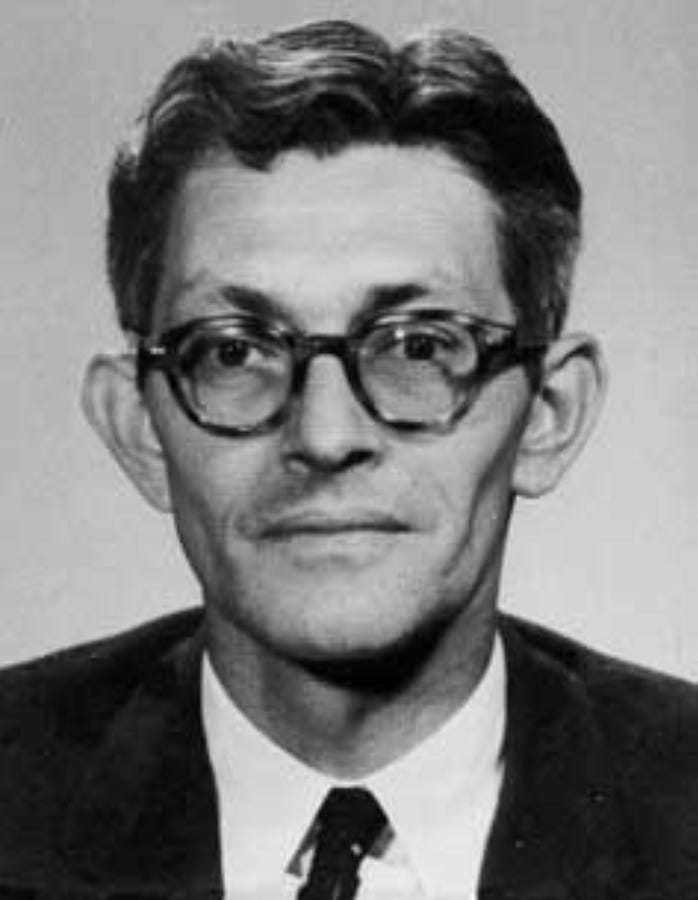
In particular, there is rare footage of one of the spookiest spooks of all time, James J. Angleton, that provides a rare, tantalizing glimpse of the CIA’s infamous chief of counterintelligence.
The truly despicable Angleton’s role in Operation CHAOS, which surveilled the anti-war and civil rights movements (it did so separately from the FBI’s COINTELPRO), comes under Cover-Up’s magnifying glass, as it was the documentary’s protagonist, our man Hersh, who exposed it in a 1974 story published in the Times.
On-screen, Angleton, after being fired by the Agency, discusses his termination with a gaggle of reporters arrayed outside of what is presumably the fanatical agent’s home.
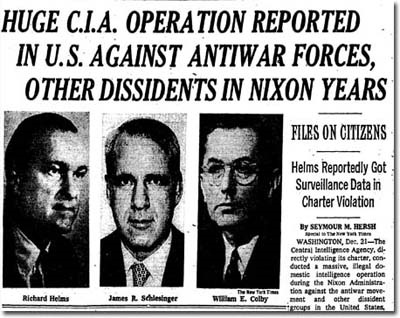
Bob Kiley, who reportedly spied on student activists and was manager of intelligence operations and executive assistant to Richard Helms when he was CIA director, is mentioned in the film, too. Cover-Up also covers the firings of one-time CIA chief, then-Secretary of Defense James Schlesinger, and CIA Director William Colby.
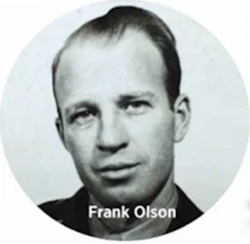
As are the Company’s “Family Jewels,” a never fully publicly released, lengthy catalogue of the CIA’s wrongdoing and lawbreaking. Hersh also discusses the death of bacteriologist Frank Olson, who mysteriously “fell” to the pavement from a window high up in Manhattan’s Statler Hotel in 1953 during the period of the Agency’s MK-ULTRA mind-control project, which Hersh strongly doubts is, as the Agency claimed, a “suicide.”[1]
Abu Ghraib and More
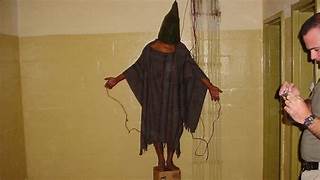
Having been through the Vietnam meatgrinder of mendacity, Hersh was extremely skeptical of the Bush administration’s claims about Saddam’s alleged Weapons of Mass Destruction. His reporting also exposed one of the most notorious scandals of the Iraq War: the torture of Iraqi inmates by their U.S. military captors at the notorious Abu Ghraib prison, located about 20 miles west of Baghdad. Once again, shocking photographic evidence backed up Hersh’s claims of abusive treatment by American personnel.
In its almost two hours of archival footage, news clips, and original interviews with Hersh himself and other sources, Cover-Up covers the waterfront, so to speak, citing other important stories on which Hersh reported.
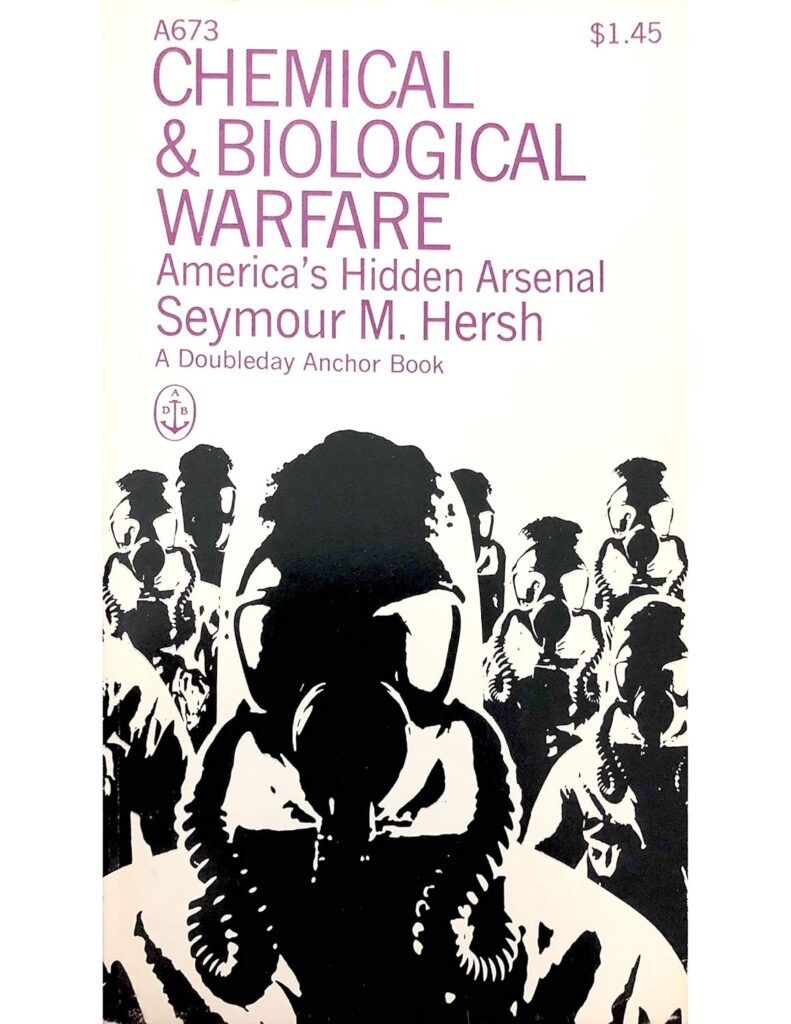
One of them is the subject of the first of Hersh’s 10-plus books, Chemical and Biological Warfare: America’s Hidden Arsenal, published in 1968.
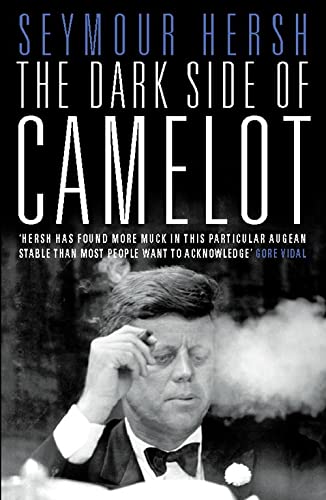
Another is Hersh’s tell-all about the Kennedys, 1997’s The Dark Side of Camelot, wherein Hersh was duped by forged documents, which he discovered before the book was published, removing a chapter from the manuscript and references to the forgeries.
Calling it a “misstep,” the Los Angeles Times noted in its review of Cover-Up that Hersh also “questioned the Assad regime’s responsibility for chemical-weapons attacks in Syria” circa 2013.
In fact, it was not a “misstep” at all; rather, Hersh provided yet another important scoop about a false-flag operation that was used to justify the U.S. bombing and regime-change operation in Syria that brought to power al-Qaeda.[2]
Hersh was similarly ignored for other reporting over the past decade, including that which exposed the covert U.S. arms pipeline from Libya to Syria.
Despite his amazing record, Hersh has faced neo-McCarthyite attacks and blacklisting because of his continued exposure of U.S. government crimes—including those of Democratic Party administrations—in an era of growing censorship, political tribalism and authoritarianism.
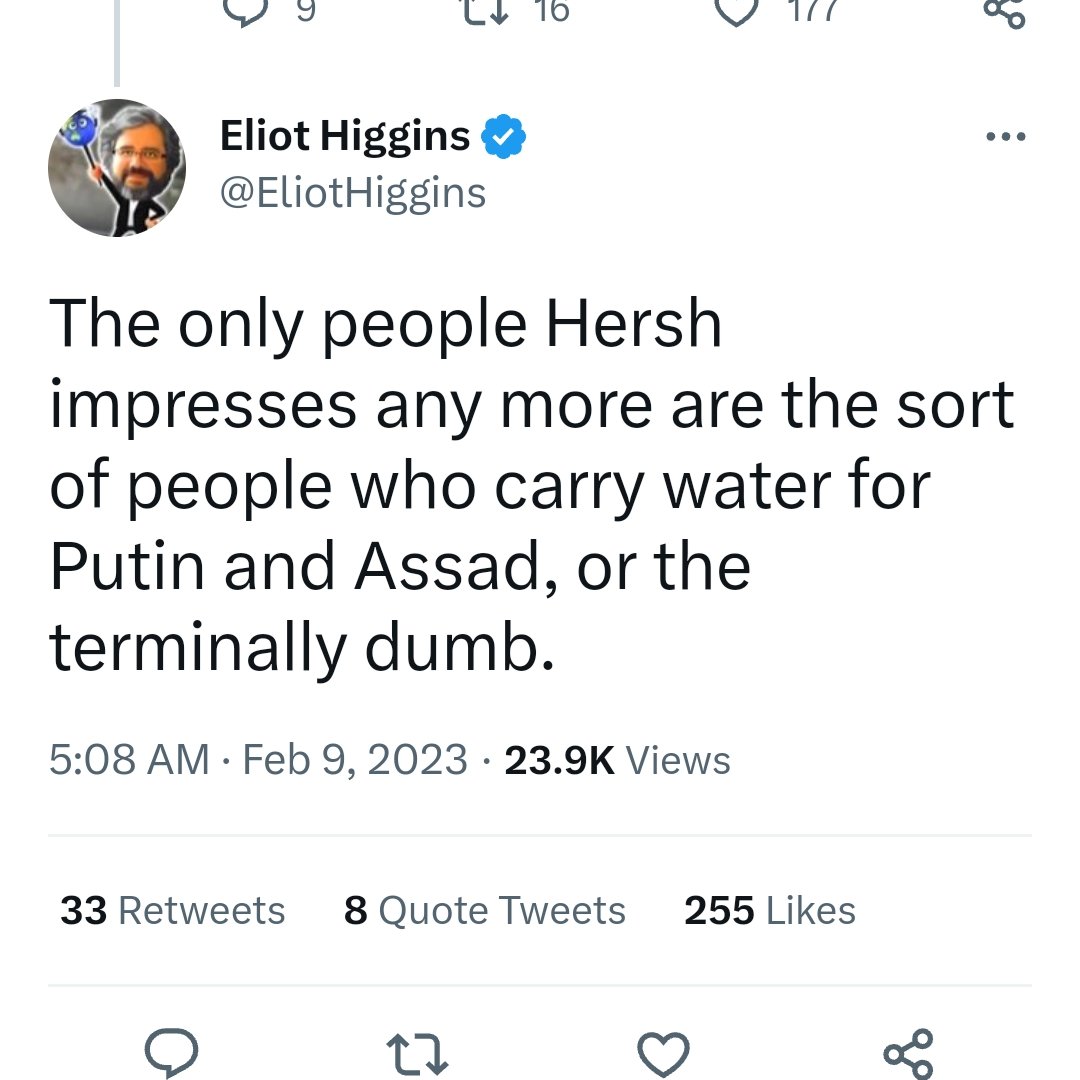
The Poitras film would have been strengthened by discussing Hersh’s marginalization today and what it says abot the state of investigative journalism in the U.S.
That it does not do so is a major shortcoming and lost opportunity.
What Makes Sy Tick?
Poitras’s film generally provides insight into its cantankerous subject, that scourge of the status quo. The aptly named Seymour was the man who wanted to “see more,” but why? What makes this ink-stained wretch kvetch and tick?
According to the Chicago Tribune, “Hersh’s parents immigrated to Chicago by steerage in the 1920s, his father, Isidore, from Lithuania and mother, Dorothy, from Ostrov, Poland.”
They were Yiddish-speaking Jews who likely fled the “mother country” in order to escape oppression. Inside Story maintains that, “in 1941 the entire Jewish population of his father’s birthplace, the village of Šeduva in Lithuania, had been executed by a German commando unit aided by Lithuanian collaborators.”
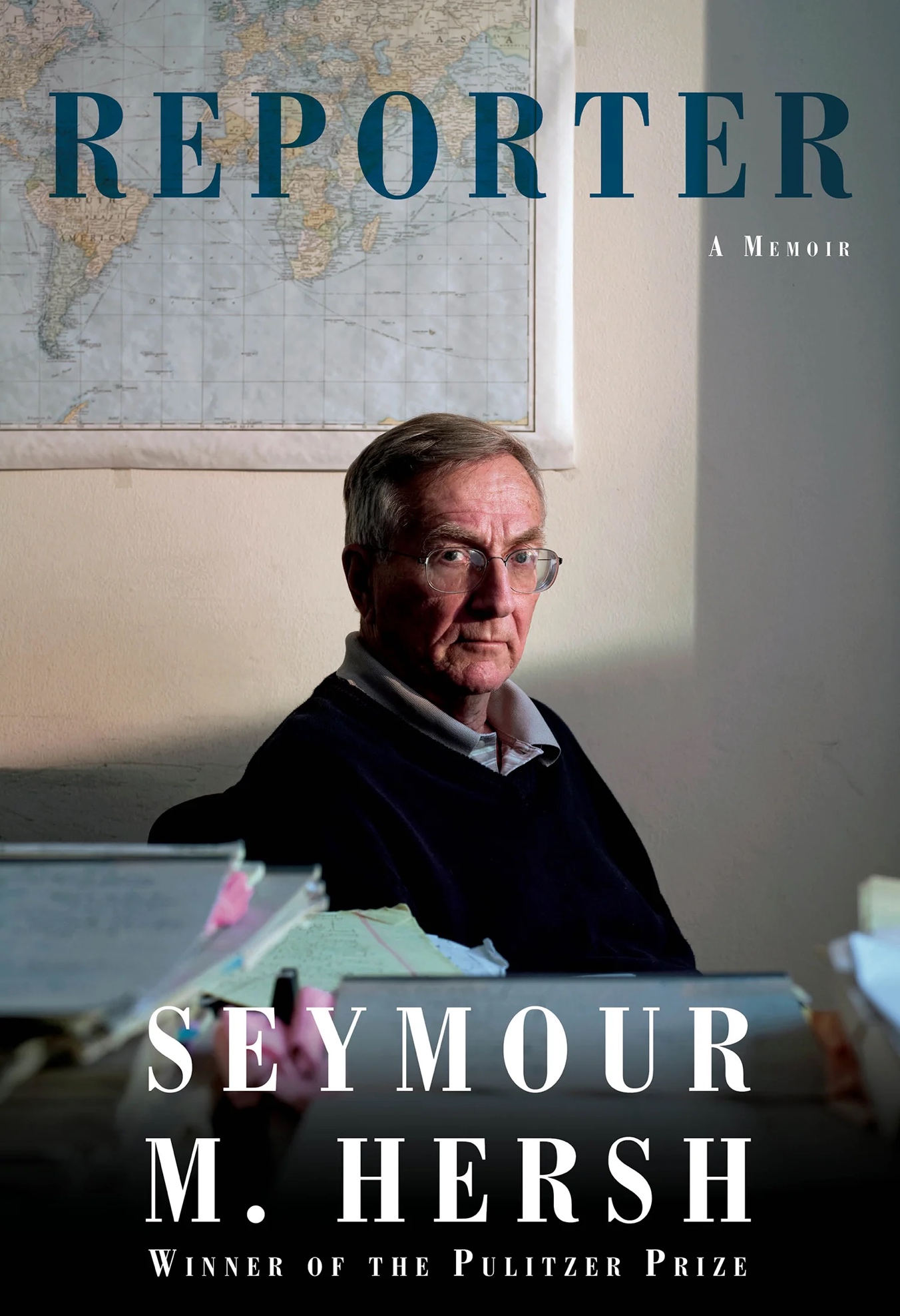
In his 2018 memoir Reporter, Hersh refers to his father as “a Holocaust survivor.”
Hersh’s origin story explains his lifelong revulsion against the abuse of power and persecution. It is also likely the reason why Sy is so damn cranky.
Throughout Cover-Up he is repeatedly conflicted about talking about himself, doing extensive on-camera interviews with co-directors Poitras and Obenhaus, regretful that he provided them with his notes, and at one point argumentatively declaring that he is quitting the documentary.
I suspect that Hersh’s anger, which is often expressed as righteous outrage, aiming his reportage against those who egregiously misuse power, is part of a protective persona for someone who is actually extremely sensitive and attuned to inhumanity and cruelty.
Despite his temperamental behavior in public, Hersh has remained married to his wife Elizabeth, a psychoanalyst, for 60-plus years, and they have parented three children.
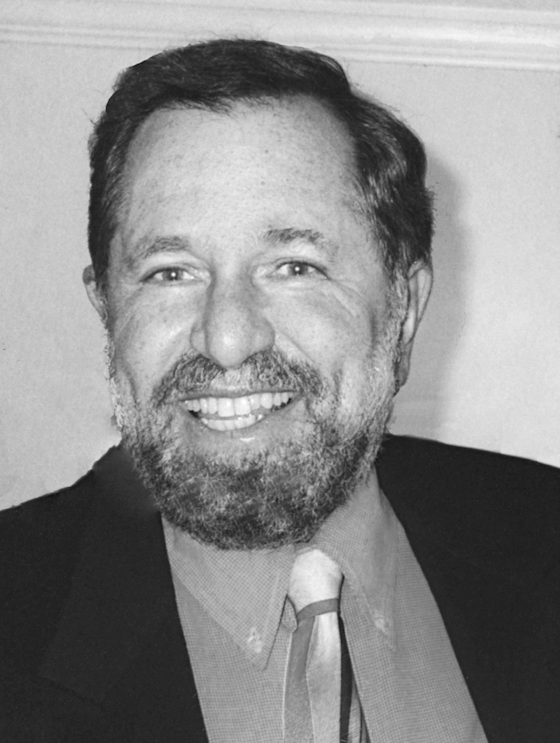
One of the interviewees presumably shot as original material in Cover-Up is David Obst, who assisted Hersh in getting his early My Lai stories published. He represented Woodward and Bernstein, but went on to dispute an important aspect of their Watergate sleuthing.
In 2005, Time reported: “David Obst, the agent for Woodward and Bernstein’s best seller about Watergate, All the President’s Men, told Time, ‘There was no Deep Throat. I’m sorry. It was a construct put together to give the book and the movie a dramatic tale.’”[3]
Whatever the case, Hersh has had a agnificent career and sets a great standard for inevstigative journalism.
Cover-Up premieres on Netflix on December 26.
For more info see: https://seymourhersh.substack.com/.
For more information to validate Hersh’s suspicions, see Jeremy Kuzmarov, “‘There’s Something Rotten in Denmark’: Frank Olson and the Macabre Fate of a CIA Whistleblower in the Early Cold War,” CovertAction Magazine, November 28, 2023. ↑
See Jeremy Kuzmarov and Dan Kovalik, Syria: Anatomy of Regime Change, with foreword by Oliver Stone (Montreal: Baraka Books, 2025). ↑
After his death, Woodward claimed that the real Deep Throat was FBI Deputy Director Mark Felt. ↑
CovertAction Magazine is made possible by subscriptions, orders and donations from readers like you.
Blow the Whistle on U.S. Imperialism
Click the whistle and donate
When you donate to CovertAction Magazine, you are supporting investigative journalism. Your contributions go directly to supporting the development, production, editing, and dissemination of the Magazine.
CovertAction Magazine does not receive corporate or government sponsorship. Yet, we hold a steadfast commitment to providing compensation for writers, editorial and technical support. Your support helps facilitate this compensation as well as increase the caliber of this work.
Please make a donation by clicking on the donate logo above and enter the amount and your credit or debit card information.
CovertAction Institute, Inc. (CAI) is a 501(c)(3) non-profit organization and your gift is tax-deductible for federal income purposes. CAI’s tax-exempt ID number is 87-2461683.
We sincerely thank you for your support.
Disclaimer: The contents of this article are the sole responsibility of the author(s). CovertAction Institute, Inc. (CAI), including its Board of Directors (BD), Editorial Board (EB), Advisory Board (AB), staff, volunteers and its projects (including CovertAction Magazine) are not responsible for any inaccurate or incorrect statement in this article. This article also does not necessarily represent the views the BD, the EB, the AB, staff, volunteers, or any members of its projects.
Differing viewpoints: CAM publishes articles with differing viewpoints in an effort to nurture vibrant debate and thoughtful critical analysis. Feel free to comment on the articles in the comment section and/or send your letters to the Editors, which we will publish in the Letters column.
Copyrighted Material: This web site may contain copyrighted material the use of which has not always been specifically authorized by the copyright owner. As a not-for-profit charitable organization incorporated in the State of New York, we are making such material available in an effort to advance the understanding of humanity’s problems and hopefully to help find solutions for those problems. We believe this constitutes a ‘fair use’ of any such copyrighted material as provided for in section 107 of the US Copyright Law. You can read more about ‘fair use’ and US Copyright Law at the Legal Information Institute of Cornell Law School.
Republishing: CovertAction Magazine (CAM) grants permission to cross-post CAM articles on not-for-profit community internet sites as long as the source is acknowledged together with a hyperlink to the original CovertAction Magazine article. Also, kindly let us know at info@CovertActionMagazine.com. For publication of CAM articles in print or other forms including commercial internet sites, contact: info@CovertActionMagazine.com.
By using this site, you agree to these terms above.
About the Author
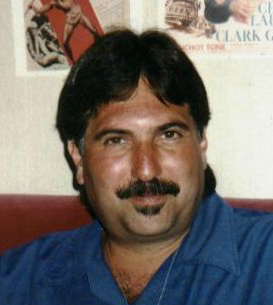
Ed Rampell is an L.A.-based film historian and critic who also reviews culture, foreign affairs and current events.
Ed can be reached at edrampel@gte.net.

Excellent article.
Vladimir Putin’s invasion of Ukraine has a number of important parallels to the Vietnam War. For one thing, it is a war based on lies—in the Vietnam case, the idea that the U.S. was saving the Vietnamese from Communism; in the Ukraine case, the idea that Putin was “de-Nazifying” the country. Both could be called wars of aggression in which the invader performs more poorly than expected, in part because of a belief in the myth that the occupied country would welcome them. Both were cases of hubris against a perceived weaker adversary, and in both cases the adversary had a major morale advantage. Vietnamese resistance to the U.S. was made fierce by the desire to expel an invading army, while the morale of U.S. troops collapsed, as many became bitter at the prospect of dying in a war that nobody could justify
Vladimir Putin would have done well to read up on the history of the Vietnam War before launching his invasion of Ukraine. Apparently, he doesn’t realize that it’s difficult to convince a population you are occupying them “for their own good” when you are dropping bombs on their cities. Furthermore, the more bombs are dropped, the more resistance to the occupation there will be. As Putin has destroyed villages, cities, and towns in Ukraine, even people who were formerly pro-Russia have come to hate Russia, which is precisely what we’d expect