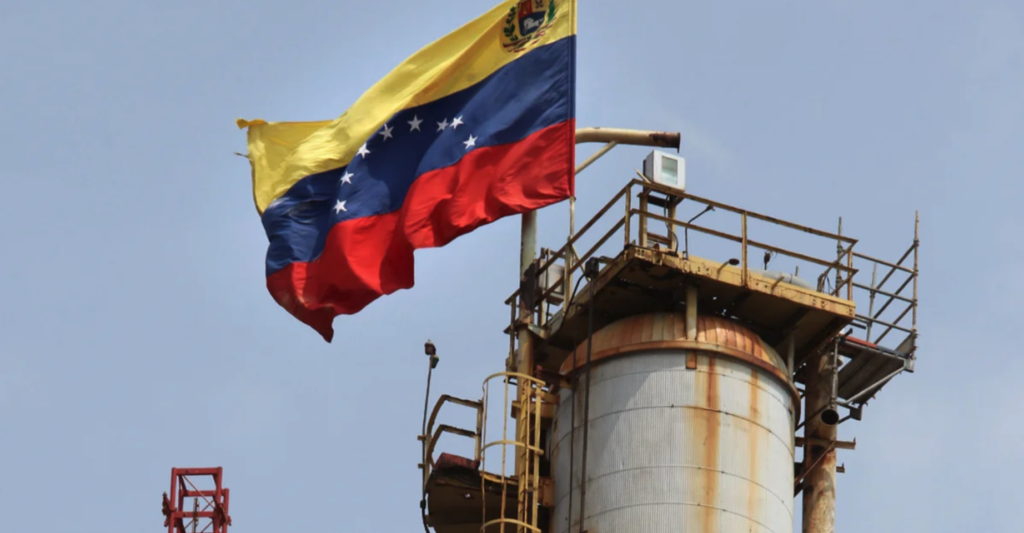
Like most Americans I was “shocked but not surprised,” as the saying goes, by the Trump administration’s decision to snatch Venezuelan President Nicolas Maduro from his bed and render him to New York to face international narcotics trafficking charges. Whether Maduro has committed any crime or not is yet to be seen. But that will play itself out. In the meantime, while many commentators are shouting (rightfully) about American overreach and the commission of international crimes, there are broader international issues at play here.
The coming week or so—figuratively or literally—represents a crucial turning point in the global order. If the United States manages to secure dominant influence over Venezuela and, by extension, over the world’s largest proven oil reserves, it will signify far more than a regional political victory. It will point to a reassertion of U.S. global dominance through control of strategic energy resources, the preservation of the petrodollar system, and the recalibration of Washington’s coercive diplomacy.
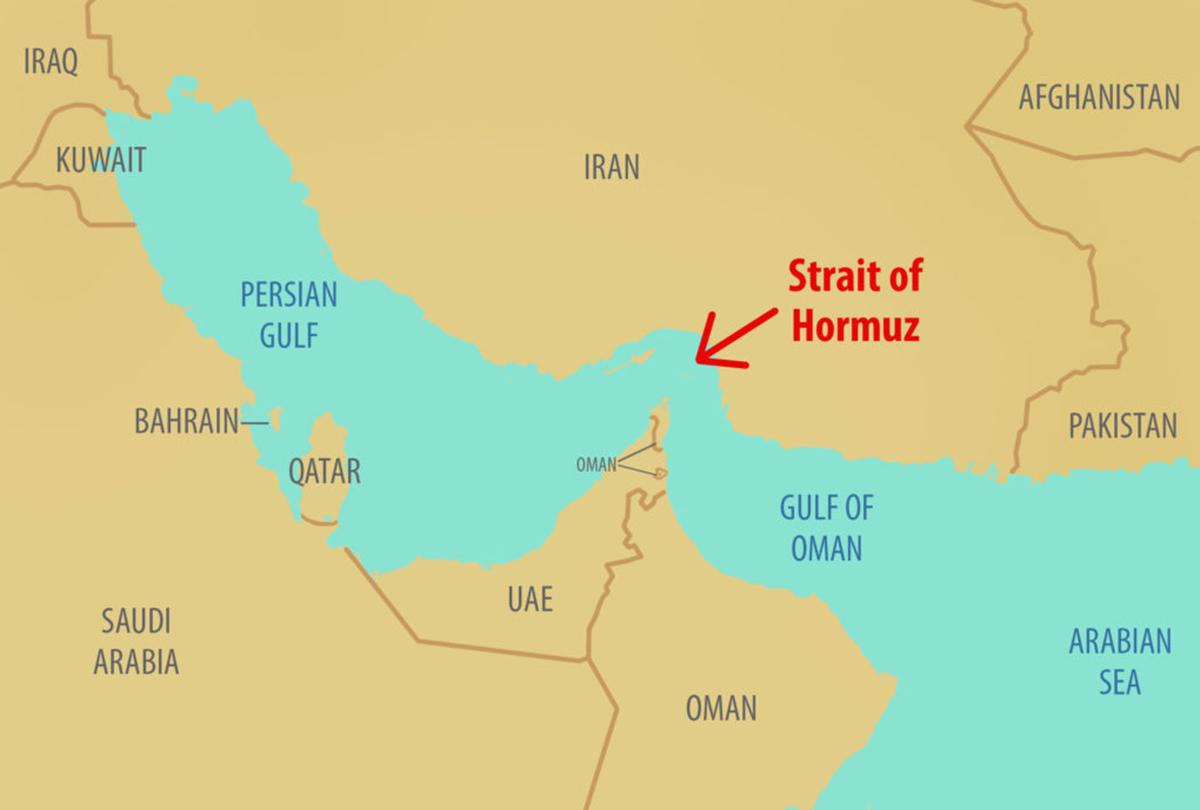
The implications of such control reach well beyond Latin America. They extend to the Persian Gulf, to the energy arteries of global capitalism, and to the shifting architecture of international power in the 21st century. Think of it this way: How much leverage will Iran have by threatening to close the Strait of Hormuz when the U.S. controls the world’s greatest proven oil reserves?
Venezuela’s 300 billion barrels of proven crude oil reserves represent the single most concentrated energy resource on earth. Historically, these reserves have been both a blessing and a burden for Caracas.
The United States, which once derived a steady flow of heavy crude from Venezuelan wells, saw its influence wane sharply after Hugo Chávez’s Bolivarian Revolution reoriented the country toward a nationalist and anti-imperialist framework.
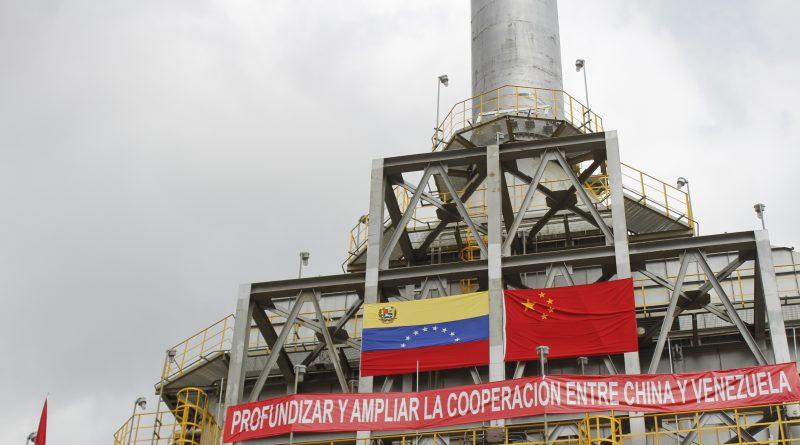
Subsequent U.S. sanctions beginning in 2017 further severed Venezuela’s ability to export efficiently, allowing China, Russia and Iran to step in through barter arrangements and gray-market channels.
(The 2017 sanctions were a serious miscalculation on Washington’s part. Venezuela’s oil is famously high in sulfur, so high that heavy infusions of chemicals are necessary to make it usable. Until 2017, the only refineries able to do that were located in south Texas. But the sanctions forced the Chinese and Indian governments to quickly build refineries that could handle Venezuelan oil. And as a result, those countries became the saviors of the Venezuelan economy.)
For Washington, regaining leverage over Venezuelan oil would not merely restore supply chains; it would restore strategic control over a global choke point in the energy-security hierarchy. Oil is not simply a commodity—it is a tool of statecraft.
Having the ability to regulate or influence its flow allows a nation not only to cushion itself from shocks but also to exert transactional pressure on allies and adversaries alike. This return to energy geopolitics underlines that the U.S. drive in Venezuela is far less about democracy and far more about the architecture of economic control.
Control over Venezuelan oil directly intersects with America’s long-standing vulnerabilities in the Persian Gulf. The U.S. presence in the Middle East has always been underpinned by two imperatives: ensuring the free flow of oil and maintaining Israel’s strategic superiority.
Yet, as American public opinion turns against prolonged overseas entanglements, Washington faces an energy dilemma—how to maintain coercive capacity against Iran without risking catastrophic market disruptions. Control of Venezuela’s oilfields would do exactly that.
If Washington succeeded in bringing Venezuelan production under friendly oversight, the strategic equation would shift, threatening new wars in the Middle East, and especially against Iran. Venezuelan crude could substitute for Gulf heavy oil in global markets, insulating Western economies from spikes should conflict erupt in the Strait of Hormuz or against Iranian infrastructure.
With an alternative supply base, U.S. policymakers would face less domestic pressure to restrain military options. The cost of confrontation with Iran—economic, political and psychological—would be lower. That in turn would embolden hardline strategies aimed at permanently reshaping the Middle East in alignment with American and Israeli interests.
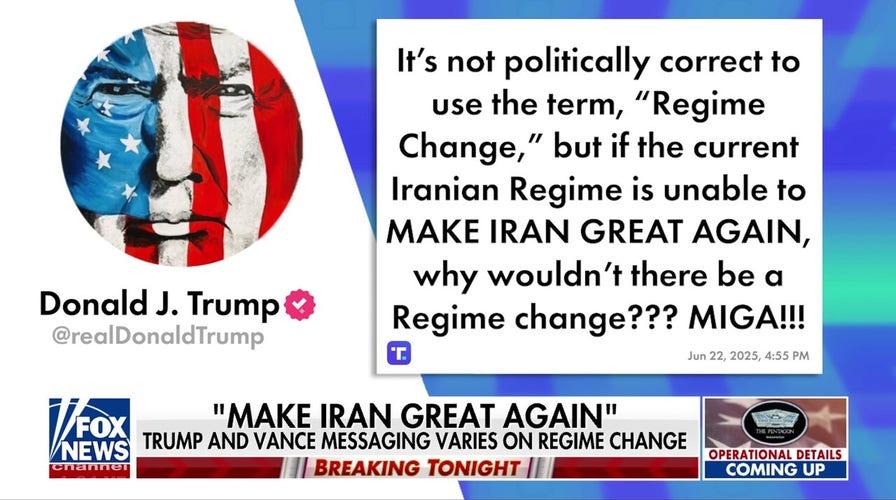
From Tehran’s perspective, such a development would represent a grave strategic setback. It would mean that Washington had reduced one of Tehran’s strongest deterrents: its ability to disrupt global energy markets. Iran’s leverage stems from the asymmetry of vulnerability—its capacity to impose global pain through regional instability. If the U.S. can mitigate that vulnerability via Venezuelan reserves, Iran’s deterrence weakens, and the threshold for escalation drops. The consequence could be a more volatile regional balance, one no longer stabilized by mutual economic interdependence.
A second layer of consequence lies in monetary geopolitics. Since the early 1970s, the U.S. dollar has been anchored to global energy transactions, forming what economists call the “petrodollar system.” As long as oil is traded globally in dollars, demand for U.S. currency remains high, enabling Washington to finance deficits and maintain unparalleled financial leverage. However, that system faces growing challenges. China’s increasing use of yuan-denominated energy contracts, Russia’s alternative payment channels, and the gradual erosion of Western financial dominance have all threatened to erode dollar primacy.
Bringing Venezuela back into the fold could slow or even reverse that erosion. If Caracas’s oil were reintegrated into dollar-based markets under U.S. auspices, the global oil economy would remain tethered to American financial institutions. The result would be a reinforcement of U.S. economic hegemony at a time when Beijing and Moscow are constructing parallel systems—such as the BRICS payment mechanisms—to bypass sanctions and SWIFT-based constraints. Venezuela thus becomes a global test case: Can Washington still engineer the world’s most strategic resources back into its monetary orbit?
Yet the inverse scenario carries at least equal weight. If the United States becomes ensnared in Venezuela’s political and humanitarian quagmire, the costs could exceed the gains. History provides ample warning. From Iraq to Afghanistan, Washington’s attempts to forcibly realign distant states often produced prolonged stalemates that drained political capital and eroded global credibility. Venezuelan society, already fragmented and impoverished by years of sanctions, inflation and emigration, presents a uniquely combustible environment. Any attempt to reshape it through coercion risks igniting nationalist resistance and guerrilla-style attrition, which in turn could make the Venezuelan experience another like Afghanistan or Iraq for the Americans.
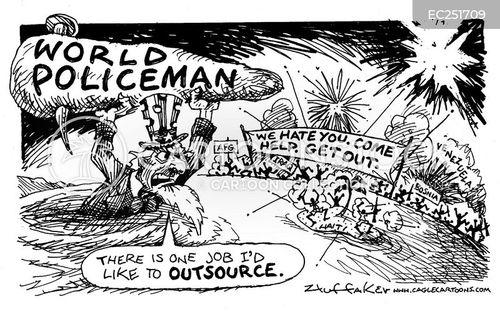
Moreover, a prolonged Venezuelan crisis would stretch U.S. diplomatic, economic and intelligence resources—especially at a moment when competition with China is escalating across the Indo-Pacific. The Pentagon cannot simultaneously sustain forward postures in Eastern Europe, help the Israelis in the Middle East, deter China in the Taiwan Strait, and manage a complex intervention in Latin America without risking strategic fatigue. Even if direct military occupation is avoided, the requirement to maintain surveillance, sanctions enforcement, and covert stabilization could erode U.S. flexibility worldwide.
Israel’s strategic posture is tightly tethered to American power projection in the Middle East. Its deterrence and regional freedom of action rest on guaranteed U.S. military, logistical and diplomatic backing. A distracted or overstretched Washington would complicate Israeli calculations.
Should the U.S. become mired in Venezuela, its ability to apply consistent pressure on Iran, coordinate sanctions, or underwrite Israeli security initiatives might decline. Jerusalem’s leaders would face a dilemma: adopt greater unilateralism by attacking Iran again and, presumably, on a more major scale, or seek limited rapprochement with regional rivals—both potentially destabilizing choices.
At stake is not just the fate of Venezuela, but the precedent it would set for international norms. If Washington successfully combines economic strangulation, political interference, and coercive diplomacy to restructure a sovereign petro-state, it signals a return to raw power politics—what some analysts call “geo-economic warfare.”
Such a model, if normalized, could justify similar strategies by other great powers. China could apply it in the South China Sea or against resource-rich African states; Russia could invoke it to justify interventions under the banner of economic or ethnic security.
This would further erode the so-called “rules-based international order,” transforming sovereignty into a conditional privilege determined by resource value and strategic alignment.
The geopolitical dividing line would no longer be ideological but infrastructural—who controls the material networks of energy and trade. Venezuela, in this sense, becomes both a battlefield and a blueprint.
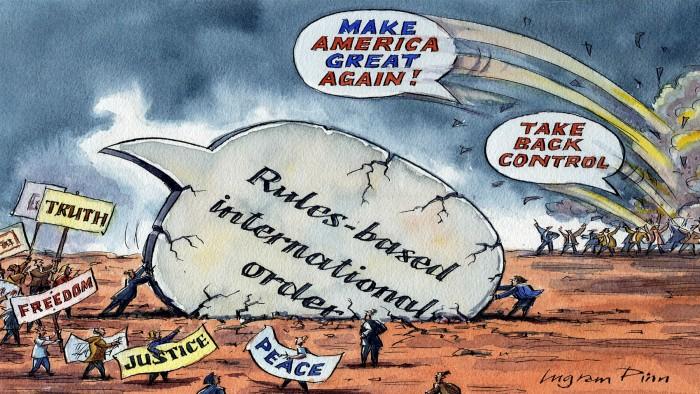
Ultimately, what happens in Venezuela reverberates far beyond Caracas. The control of oil—its extraction, currency of exchange, and flow—remains the foundation of geopolitical influence.
Whether the next couple of weeks refer to literal diplomacy or symbolic urgency, they encapsulate a broader truth: The struggle for energy dominance is the struggle for world order itself.
Should Washington succeed, a new era of U.S. strategic reassertion could begin, underpinned by the restoration of the petrodollar and renewed coercive freedom against adversaries like Iran or even Cuba. Should it fail, the opposite will unfold—a diffusion of power across multiple centers, accelerating the world’s transition toward multipolarity.
Either way, Venezuela’s fate is no longer confined to Latin America. It sits at the heart of the contest over the future—of energy, sovereignty and the very meaning of power in the twenty-first century.
CovertAction Magazine is made possible by subscriptions, orders and donations from readers like you.
Blow the Whistle on U.S. Imperialism
Click the whistle and donate
When you donate to CovertAction Magazine, you are supporting investigative journalism. Your contributions go directly to supporting the development, production, editing, and dissemination of the Magazine.
CovertAction Magazine does not receive corporate or government sponsorship. Yet, we hold a steadfast commitment to providing compensation for writers, editorial and technical support. Your support helps facilitate this compensation as well as increase the caliber of this work.
Please make a donation by clicking on the donate logo above and enter the amount and your credit or debit card information.
CovertAction Institute, Inc. (CAI) is a 501(c)(3) non-profit organization and your gift is tax-deductible for federal income purposes. CAI’s tax-exempt ID number is 87-2461683.
We sincerely thank you for your support.
Disclaimer: The contents of this article are the sole responsibility of the author(s). CovertAction Institute, Inc. (CAI), including its Board of Directors (BD), Editorial Board (EB), Advisory Board (AB), staff, volunteers and its projects (including CovertAction Magazine) are not responsible for any inaccurate or incorrect statement in this article. This article also does not necessarily represent the views the BD, the EB, the AB, staff, volunteers, or any members of its projects.
Differing viewpoints: CAM publishes articles with differing viewpoints in an effort to nurture vibrant debate and thoughtful critical analysis. Feel free to comment on the articles in the comment section and/or send your letters to the Editors, which we will publish in the Letters column.
Copyrighted Material: This web site may contain copyrighted material the use of which has not always been specifically authorized by the copyright owner. As a not-for-profit charitable organization incorporated in the State of New York, we are making such material available in an effort to advance the understanding of humanity’s problems and hopefully to help find solutions for those problems. We believe this constitutes a ‘fair use’ of any such copyrighted material as provided for in section 107 of the US Copyright Law. You can read more about ‘fair use’ and US Copyright Law at the Legal Information Institute of Cornell Law School.
Republishing: CovertAction Magazine (CAM) grants permission to cross-post CAM articles on not-for-profit community internet sites as long as the source is acknowledged together with a hyperlink to the original CovertAction Magazine article. Also, kindly let us know at info@CovertActionMagazine.com. For publication of CAM articles in print or other forms including commercial internet sites, contact: info@CovertActionMagazine.com.
By using this site, you agree to these terms above.
About the Author
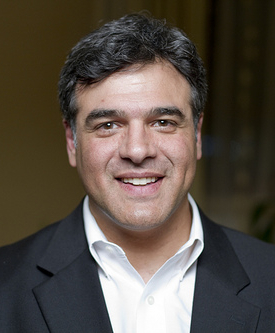
John Kiriakou was a CIA analyst and case officer from 1990 to 2004.
In December 2007, John was the first U.S. government official to confirm that waterboarding was used to interrogate al-Qaeda prisoners, a practice he described as torture.
Kiriakou was a former senior investigator for the Senate Foreign Relations Committee and a former counter-terrorism consultant. While employed with the CIA, he was involved in critical counter-terrorism missions following the terrorist attacks of September 11, 2001, but refused to be trained in so-called “enhanced interrogation techniques,” nor did he ever authorize or engage in such crimes.
After leaving the CIA, Kiriakou appeared on ABC News in an interview with Brian Ross, during which he became the first former CIA officer to confirm the existence of the CIA’s torture program. Kiriakou’s interview revealed that this practice was not just the result of a few rogue agents, but was official U.S. policy approved at the highest levels of the government.
Kiriakou is the sole CIA agent to go to jail in connection with the U.S. torture program, despite the fact that he never tortured anyone. Rather, he blew the whistle on this horrific wrongdoing.
John can be reached at: jkiriakou@mac.com.

Russia has turned off the S-400, as it did in Iran and Syria. Putin is a dirty Jewish merchant like Dump. It’s easy to kill Cubans in their sleep. Dump and Putler will have to explain this to the devil after they die.