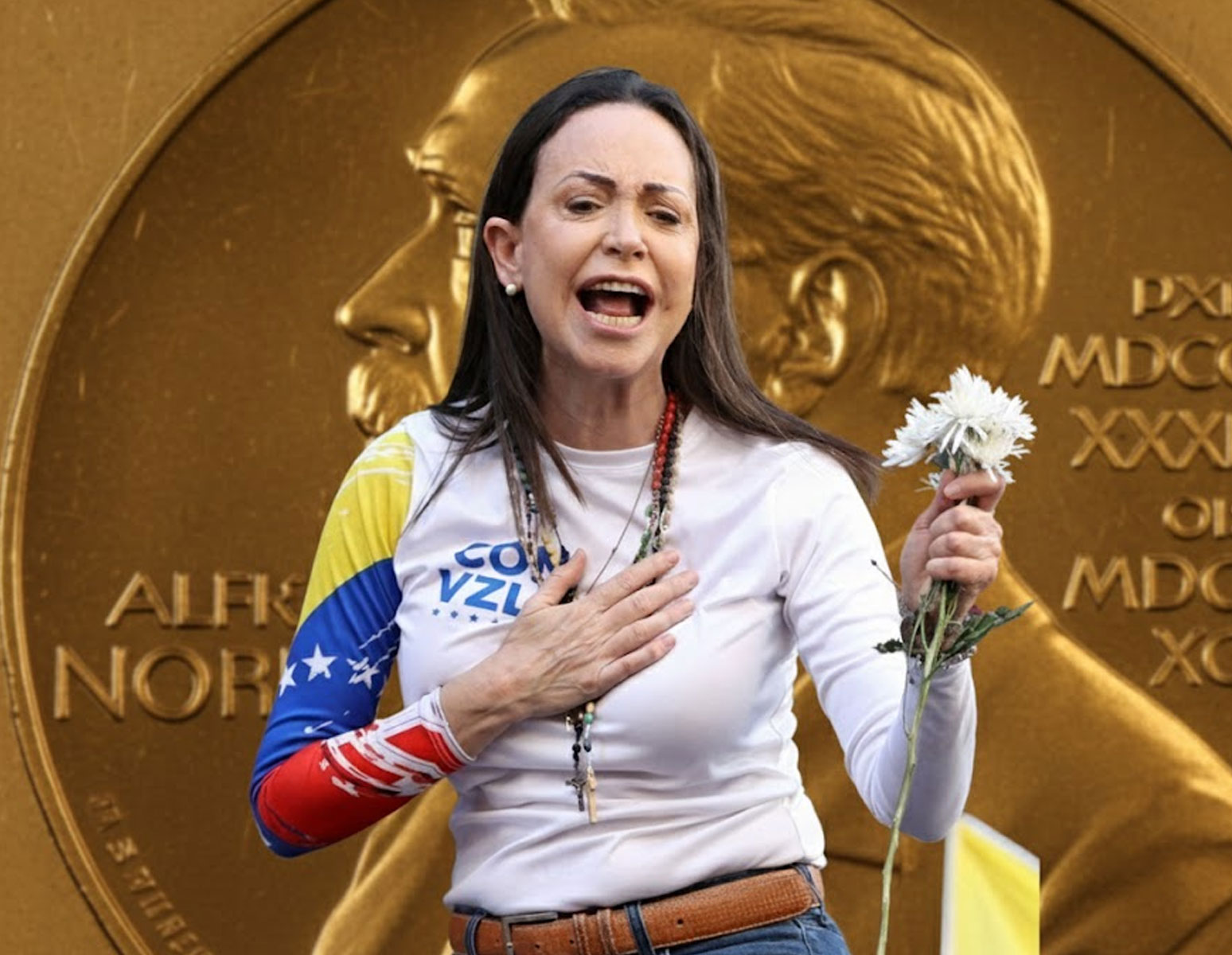
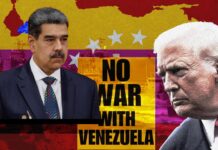
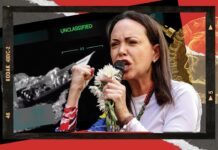
After the Trump administration’s kidnapping of Nicolás Maduro, the legitimate president of Venezuela, Trump held a press conference in which he was asked about María Corina Machado, the most visible face abroad of the Venezuelan opposition.
He responded: “I think it would be very tough for her to be the leader.” He continued: “She doesn’t have the support within, or the respect within, the country. She’s a very nice woman, but she doesn’t have the respect.”
For Western mainstream media outlets these comments came as a surprise; for her supporters, these comments were odd and confusing.
That Trump sidelined Machado so quickly is not surprising, odd, or confusing at all, I contend. A comprehensive understanding of Machado, her politics, the role of the U.S. in her political career, and her political standing among Venezuelans, especially among the opposition to Chavismo, makes it clear that her political demise is inevitable, regardless of what happens in Venezuela.
The widely condemned U.S. abduction of a head of state simply hastens Machado’s inevitable political collapse. Regardless of what she does—or her supporters do on her behalf—the beginning of Machado’s political death is upon us. And all for the better.
Machado and Her Tenuous Relationship to Democracy
Before Trump’s dismissal, Machado was being sold to the international community—especially by the Trump administration—as a “democratic” alternative to Chavismo. Some of her supporters continue to make this claim; however, Machado has a tenuous relationship to democracy.
Machado comes from Venezuela’s elite, whose interests she has advanced throughout her political career. Historically, elites in Venezuela work at the behest of the U.S. empire and the corporate capital they serve, pillaging the country’s resources—especially oil—while receiving kickbacks for their subjugation.
Chávez’s rise to power ended this. Machado and her ilk are the most vociferous opponents to Chavismo because they lost political control of the country, which they had come to believe was an anointed right. Consequently, they can no longer exploit Venezuela’s resources and assets for personal enrichment.
Although corporate media depict Machado as a Venezuelan opposition leader, she is no more than a glorified U.S.-genuflecting influencer, whose limited reach inside and outside Venezuela is largely a result of U.S. funding.
For example, in 2002, she was the founder of Súmate, an NGO funded by USAID and the National Endowment for Democracy, a CIA cutout.
A recent investigation found that, in the last five years, USAID provided $213 million to Venezuelan opposition groups, including $18 million in 2024, whose recipients include Machado. Despite considerable economic backing from the U.S., she has never been popular inside Venezuela, even among the political right. In 2012, for example, in primaries among the opposition, she lost badly, receiving only 3.8% of the vote, coming in third place, after Pablo Pérez (30.7%), and the winner Henrique Capriles, who received more than 64% of the vote.
Due to her disapproval, she engages in anti-democratic means to get rid of political opponents, Chavistas and non-Chavistas alike. In 2023, through the Comisión Nacional de Primarias (CNP), the opposition ran elections to choose the person to run against Maduro in the upcoming 2024 general elections. After voting, CNP announced that Machado had won over 93% of the vote, which was not credible, especially since she had performed so poorly in previous elections.
Opposition figures accused Machado of electoral irregularities, including stacking the CNP with loyalists, using undeclared and foreign funds in her campaign whose origin was unknown, and participating in the stealing of Venezuelan assets abroad—among other concerns.
Importantly, Machado was banned from holding public office prior to 2023 due to her illicit behavior, so she was unable to run for president. Her detractors claim she ran in the opposition primary to hand-pick and control the frail opposition candidate, Edmundo González. Throughout the campaign and afterwards, Machado made it clear that she was top dog.
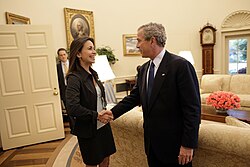
When election rigging does not work, due to her unpopularity, Machado reverts to fascist practices to purge political opponents. As has been widely reported, Machado has directed, planned, and/or supported efforts to destabilize Venezuela, including a scheme to assassinate President Nicolás Maduro.
In 2014, for example, Machado was an architect of the U.S.-funded La Salida, an extreme right-wing, violent, and bloody campaign using guarimba tactics in which 43 individuals were killed.
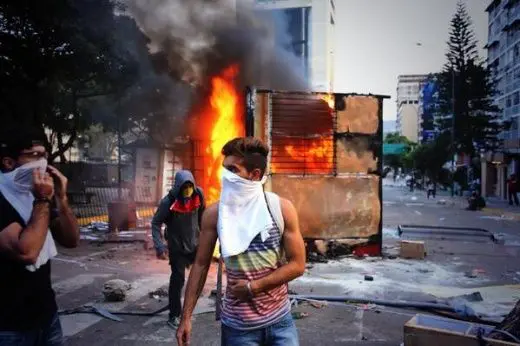
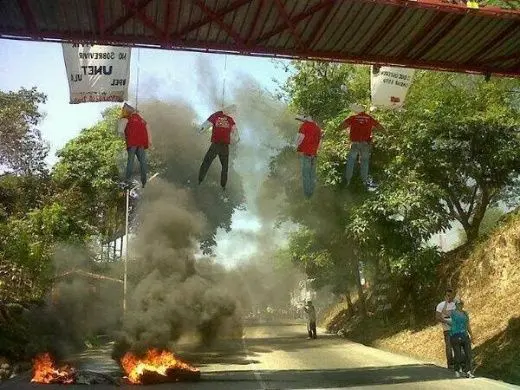
She said that, to oust the president, it was imperative to “[create] chaos in the streets.” Years later, Machado, once again, supported guarimba tactics to destabilize the country, which caused the deaths of 126 Venezuelans, many of whom were Chavistas, including Orlando Figuera, a working-class Afro-Venezuelan who was doused with gasoline and burned alive.
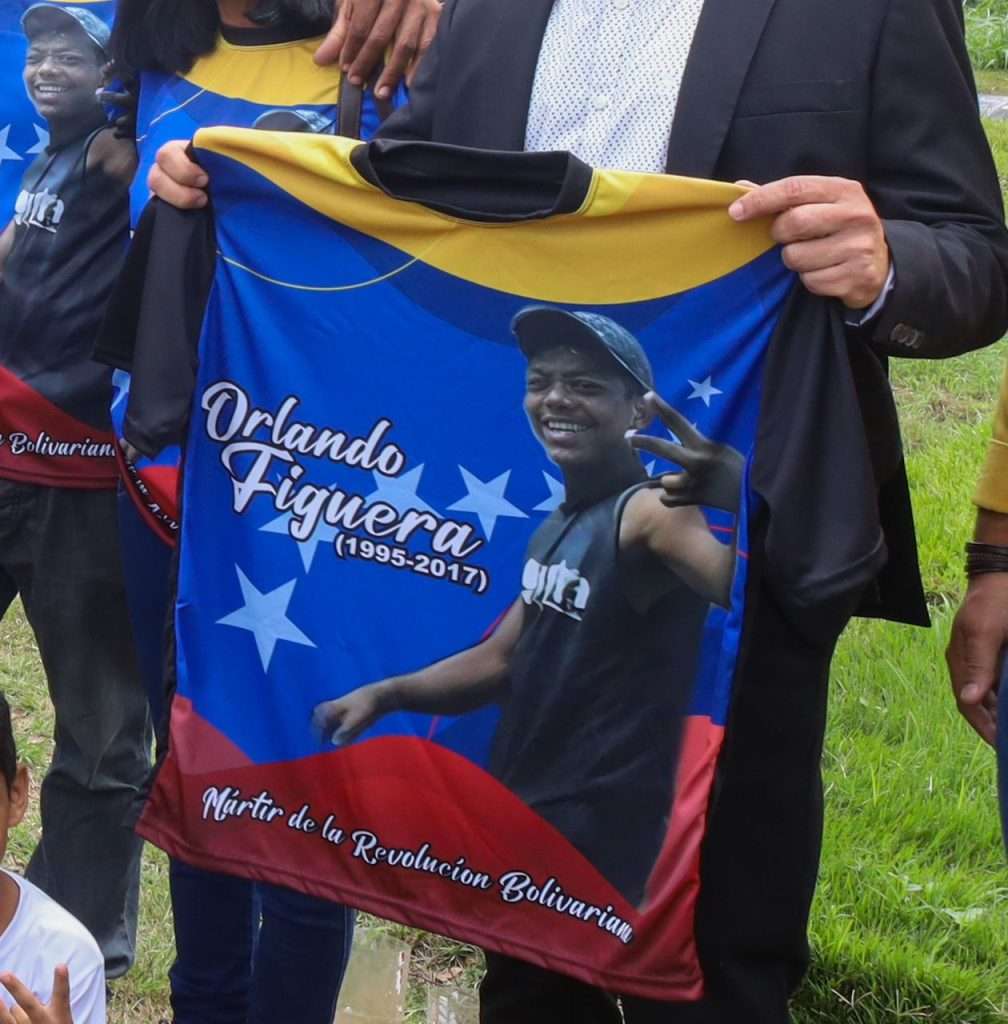
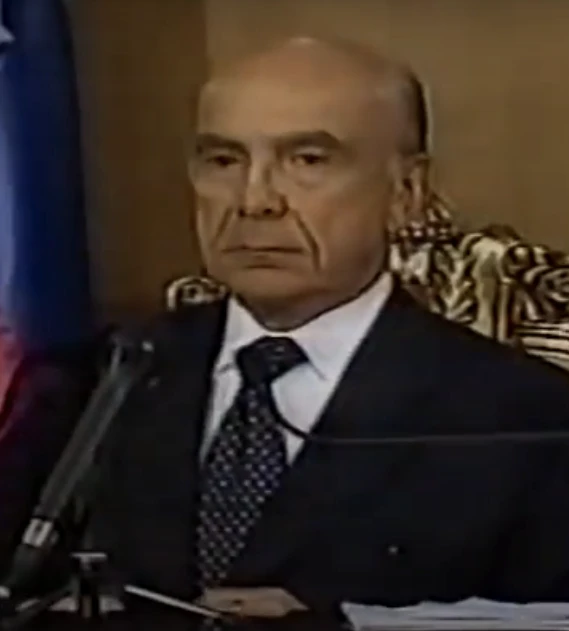
Machado’s authoritarianism was evident even before she formally entered politics. After Hugo Chávez won the presidency in 1998, which no one disputes, elites in Venezuela launched a U.S.-backed coup in 2002.
Machado signed the “Carmona Decree” that upended democratic order in Venezuela through which elites installed, by force, Pedro Carmona as de facto dictator of Venezuela, whose rein only lasted 47 hours after the public demanded Chávez’s return.
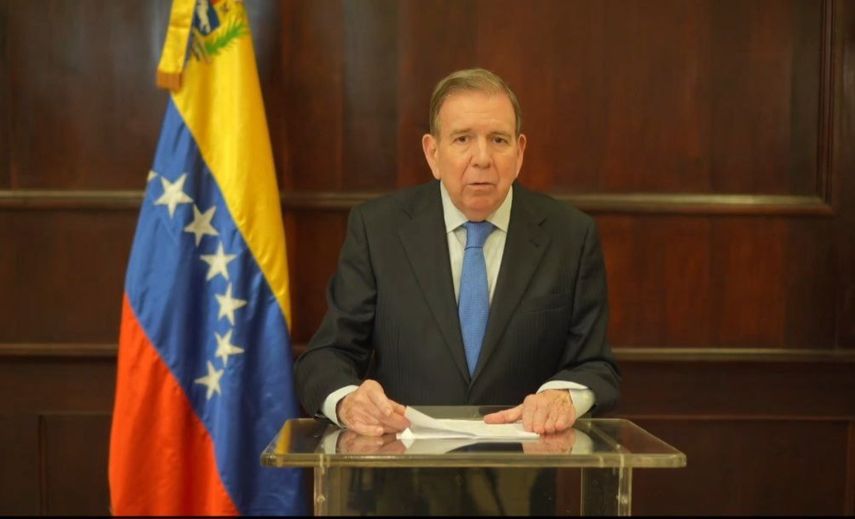
Most recently, after receiving her Nobel “peace” prize, Machado announced that Edmundo González[1] “asked [her]” to be his vice president. Note that no Venezuelan voted for her to be vice president. She installed herself as (vice) president, laundering the Nobel to do so. Because González is a mere Machado proxy, she essentially installed herself dictator, under what she believed at the time to be a forthcoming U.S.-sponsored Machado presidency.
During the Nobel ceremony, Machado’s daughter read her speech, which included Machado’s oft-repeated claim that González won the elections in 2024. The evidence? Incomplete data that she provided to friendly Western media, not to authorities in Venezuela whom the opposition agreed to recognize in the Barbados negotiations, which would have scrutinized her claims—and data—for legitimacy.
Analyses show that the data Machado provided had a range of grave irregularities, undermining her claim that González won the presidency. In fact, González distanced himself from the actas electorales (vote records) that, according to Machado, show a González win.
These cooked-up data are part of a massive operation she deployed during the 2024 elections with U.S. funds, which she outlined in her Oslo speech, to undermine the credibility and legitimacy of a Chavismo victory.
Machado’s Disgust for the Working Class
Machado’s unpopularity in Venezuelan politics is only matched by her Machiavellian, self-aggrandizing ambition, whose ideological motor seems to be a palpable disgust for the largely non-white working class that constitutes the majority of the country.
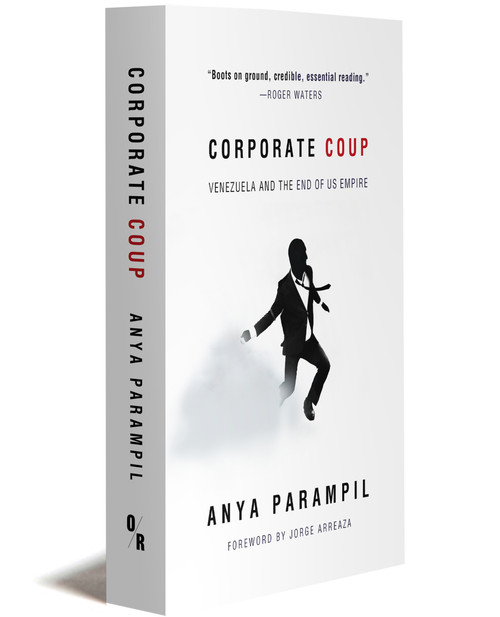
In her book Corporate Coup: Venezuela and the End of US Empire, Anya Parampil documents her observation that the much wealthier U.S.-backed opposition is typically “much fairer in appearance than the mostly black, brown, and mestizo Venezuelans [she] met at pro-government demonstrations.”
Public events in which Machado engages with everyday Venezuelans reveal her repugnance for the working class. One video, for example, shows Machado wiping her cheek after kissing a poor person. She is not popular with the armed forces, either, whose ranks largely come from the working class. In another viral video, a female rank-and-file member of the armed forces refuses to shake Machado’s hand on her entrance at a public event. From Machado’s perspective, the armed forces’ role—and, by extension, that of the working class—is to remain subservient to the bourgeois state to which she and her elite brethren are the rightful owners.
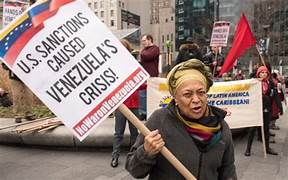
In addition to brazenly subverting the constitutional order, Machado has caused considerable economic damage to Venezuela’s population, especially the working class. She lobbied for—and received—U.S.-led economic warfare against her birth country, including the targeting of the oil sector, which crippled the economy.
Abundant research shows that economic sanctions harm populations subjected to them, especially the most vulnerable. According to economist Francisco Rodríguez, the U.S.’s unilateral coercive measures—otherwise known as “sanctions”—were the decisive factor in Venezuela’s rapid [oil] production collapse between 2017 and 2021, which destroyed its economy.
The reduction of oil revenue was the “key driver of the decrease in caloric intake” among the Venezuelan population, a devastation in health and nutrition most severely felt by the working class. Predictably, the financial collapse of the Venezuelan economy due to U.S. economic sanctions induced a range of negative consequences that triggered emigration to a range of countries, including the United States.
Machado’s Faux Leadership: The Case of U.S. Military Intervention
Machado is not a legitimate leader even among the opposition to Chavismo in Venezuela. A nationalist opposition has grown louder in recent years to challenge the U.S.-aligned and supported Venezuelan extreme right-wing sector, whom Machado represents.
This nationalist opposition points to Machado’s incompetence, vengefulness, authoritarianism, and arrogance as key to her failures against Chavismo. According to this sector, support for U.S. military intervention is the latest in a long string of Machado’s terrible ideas, dumb mistakes, and self-inflicted wounds.
Machado’s support for Trump’s regime-change operation is overwhelmingly rejected in Venezuela, a rejection that only deepened with Maduro’s abduction, so much so that Maduro detractors have joined in the condemnation of the attack. The vast majority of the population says “no” to military intervention, including the extrajudicial killings in the Caribbean, which the United Nations and the U.S. military’s own lawyers argue are clear violations of international law.
Machado’s arguments for U.S. military intervention never resonated with the Venezuelan public, especially because they require relinquishing the country’s sovereignty. To address this criticism, Machado had concocted laughable marketing schemes, including branding U.S. military intervention a “reclaiming” of Venezuelan sovereignty from a criminal organization (Chavismo) and a narco-trafficker (Maduro) who holds Venezuelans hostage.
As with her previous arguments, this one fell flat, even among the opposition. In the latest marketing scheme, she suggested that military intervention was not regime change but “principled alignment” of the U.S. and Venezuelan people, an odd argument since the latter overwhelmingly reject U.S. military intervention. One failed marketing scheme after another revealed her desperation, and lack of substantive support among the Venezuelan population.
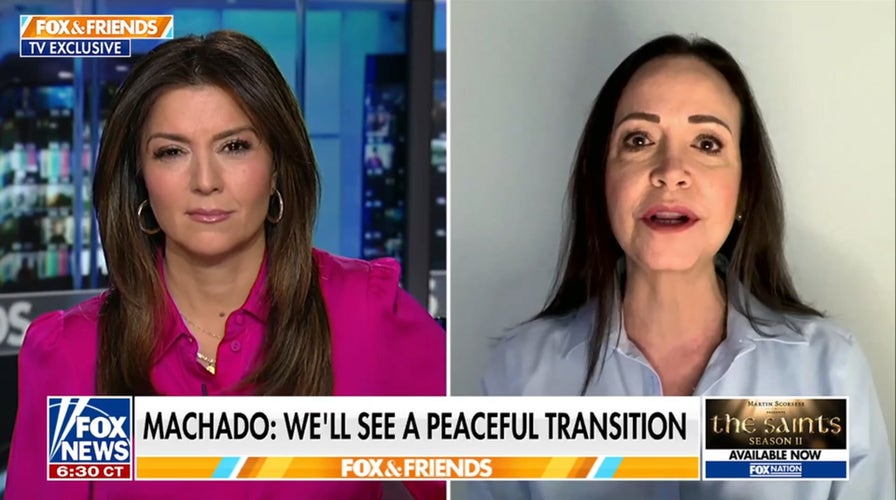
Unable to sell U.S. military intervention to Venezuelans, Machado tried to sell it to the U.S. public, often through alarmist op-eds or stilted appearances in U.S. corporate media, especially Fox News. Machado’s argument for military intervention rested on the claim that Maduro is an enemy of the United States.
In other words, Maduro is not only bad for Venezuela, but for everyone else, especially the U.S. Building on the “illegitimate leader” and, therefore, “dictator” argument, Machado claimed—in lockstep with the Trump administration—that Maduro is a narco-trafficker and, by consequence, that Venezuela constitutes a significant route for drugs headed for the United States.
This is not true, as abundant reporting shows. Subsequent to Maduro’s kidnapping, for the trial, the U.S. finally jettisoned the claim that Maduro led the non-existent “Cartel de los Soles,” a tacit admission that they knew it was a lie all along—and so did Machado.
The “drug-trafficking” argument failed to mobilize U.S. public support for military intervention in Venezuela, especially because Trump pardoned Juan Orlando Hernández, the U.S. puppet and previous president of Honduras, who was serving a 45-year prison sentence for trafficking cocaine to the United States.
Machado doubled down, claiming, without providing evidence, that Venezuela is endangering the United States by supporting and providing safe haven for the United States’s designated terrorists, enemies, and foes (al-Qaeda, Cuba, China, Russia, Iran, Hezbollah, Hamas).
More recently, Machado had accused Maduro of election interference across the Americas, including in the United States. Machado’s every accusation is, in reality, an admission of her conduct.
In an interview on CBS’s Face the Nation after receiving her Nobel “peace” award, Machado said that she will turn Venezuela into a “security shield” for the United States, demonstrating her subservience to the U.S., and also for the “rest of the region,” suggesting interference into other countries.
Machado has been explicit about her desire to topple the Cuban and Nicaraguan governments, a project she said she would commit to if she were to be installed as president of Venezuela.
Before Maduro’s abduction, despite Machado’s unhinged claims, the U.S. public, including the important “America First” sector of Trump’s base, was largely opposed to war with Venezuela.
For example, thousands of people protested in more than 65 cities against U.S. military intervention.
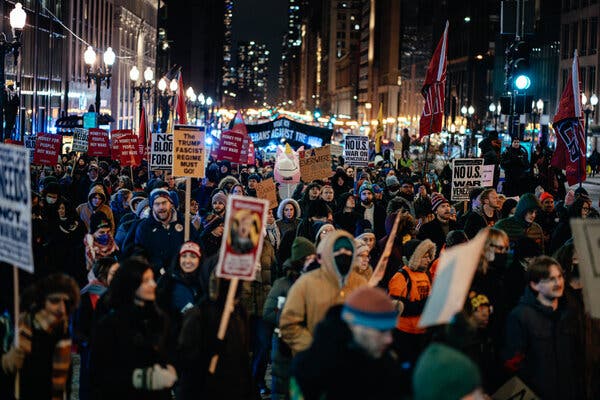
Maduro’s kidnapping has not changed U.S. public rejection of a war with Venezuela. Only about one-third of the American public approves of the military strike that led to the kidnapping of President Maduro, and 72% worry that the U.S. will become “too involved” in Venezuela, though Republicans are more supportive than Democrats.
Nevertheless, Secretary of State Marco Rubio’s obsession with destroying revolutionary socialist governments in Latin America—along with support from those who stand to benefit from a war—results in a continued push for regime change.
For this reason, Rubio, along with a few other current and former Republican legislators from Florida, signed a letter encouraging the Nobel Prize Committee to award Machado the Nobel Peace Prize, even as his own boss, President Trump, was campaigning to receive it himself.
Once Machado was announced the winner, she dedicated the award to Trump (and to theVenezuelan people). When talking about Machado and the award, Trump responded similarly to Mariah Carey when asked about JLo: “I don’t know who she is.”
Machado’s Abandonment of Compatriots Abroad While Embracing the Dictatorship of (Foreign) Capital in Venezuela
Machado’s unpopularity among Venezuelans reached new lows due to her staunch support for Trump policies that target Venezuelan immigrants in the United States. She loudly supported Trump’s deportation of Venezuelans—under unproven claims—to El Salvador, where they were tortured and subjected to other abuses.
Machado has refused to condemn the removal of Temporary Protected Status (TPS) by the Trump administration for her compatriots. As of this writing, about 600,000 Venezuelans in the United States are in legal limbo; some will be reduced to living “in the shadows” as undocumented immigrants, subject to Trump’s ICE raids and deportation regime.
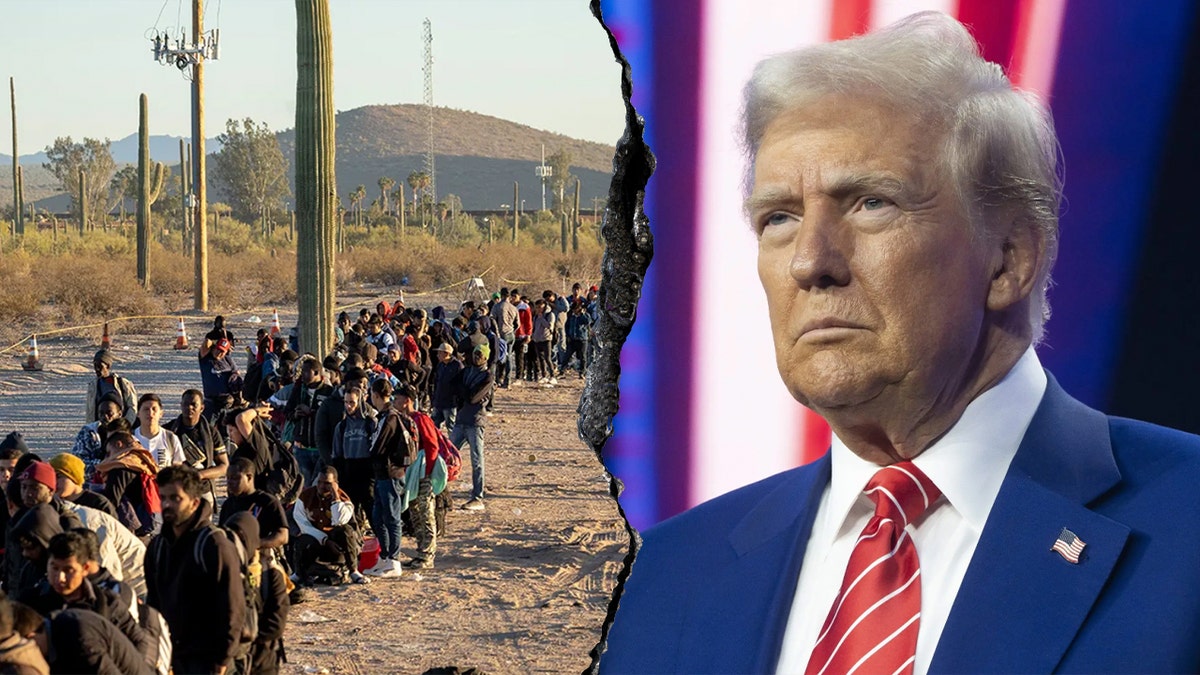
After Maduro’s illegal kidnapping, Pam Bondi, the U.S. Attorney General, suggested that Venezuelans in the United States could apply for refugee status, a largely ceremonial and marketing move that will likely be of no use to most Venezuelan immigrants.
Machado’s genuflection to the Trump administration’s attack on Venezuelan immigrants was so widely condemned, including by the nationalist opposition, that she was compelled to issue a statement (November 7, 2025) in which she claimed to be working on behalf of Venezuelans in the United States. No specifics were provided. The statement was as bland as Machado’s political career, careful not to name the Trump administration as the aggressors or condemn their vitriol, behavior and policies against Venezuelan immigrants.
Machado’s failure to denounce Trump’s targeting of Venezuelan immigrants occurred as she loudly and repeatedly vowed to impose a neo-liberal–on–steroids political economy in Venezuela at the behest of foreign U.S.-aligned multinational corporations, if installed as “president.”
For example, in a recent appearance at the American Business Forum, she said: “Venezuela has 2,800 kilometers of pristine Caribbean coastline ready to be developed. So, this is going to be huge. We will bring rule of law. We will open markets. We will have security for foreign investment. And a…massive privatization program that is waiting for you.”
In the past, this approach—the privatization of resources, deregulation of the economy, guarantees for foreign capital, elimination of taxes on wealth, to name a few initiatives she has proposed—has generated massive economic inequality in Venezuela, relegating large swaths of the population to economic duress, which is the reason for the rise of Chavismo.
Needless to say, pilfering the country’s assets through neo-liberal schemes, including privatization, is not supported by most Venezuelans, especially the working class, who repudiated these programs in the 1989 “Caracazo” uprising and for which many were massacred.
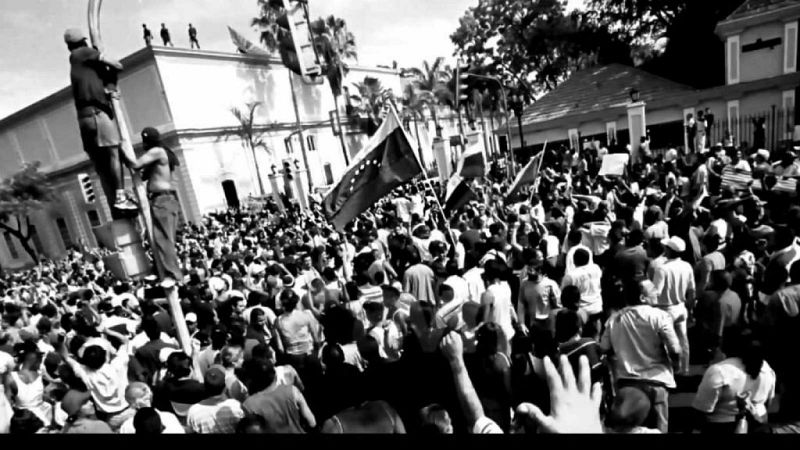
Instead of democracy, Machado loves dictatorships, so long as it is a dictatorship of capital at the behest of the U.S. empire and its corporate masters.
For years now, Machado has aligned herself with Latin American leaders who impose severe neo-liberal policies in their countries that prioritize foreign capital, dismantle the welfare state, impoverish their populations, widen economic gaps, increase crime and insecurity, and subvert the rule of law to maintain subservience to the U.S. and its corporate capital interests.
In Venezuela, Machado wants to head a dictatorship of capital that purges Chavismo from Venezuelan politics, as she has repeatedly vowed to go after Chavistas and “cobrar.”
The working classes, from which Chavismo draws its strength, will be persecuted for advocating for their political project.
Following in her political predecessors’ footsteps, it is clear that any opposition to the neo-liberal program she is vowing to impose will be severely and violently oppressed, as the Caracazo was. This is the “democracy” that Machado hoped to install with U.S. support.
Machado’s Political Demise and Enduring Privilege
Understanding Machado and her political project makes it clear why she is unlikely to have a political future, especially now that the U.S. attacked Venezuela militarily. As the Trump administration built a case for military intervention, it needed Machado to mobilize the opposition, preferably through guarimba-style mayhem, that could hand the U.S. an excuse for intervention.
But Machado’s unpopularity made her unable to deliver. Years of unrealized promises have rendered her calls for mobilization largely unheeded, a fact that even opposition members acknowledge. Chavistas and non-Chavistas alike have long mocked the fact that she vende humo (sells clouds of smoke), selling outlandish claims and promises she cannot keep, thereby chronically deflating enthusiasm among the opposition rank-and-file.
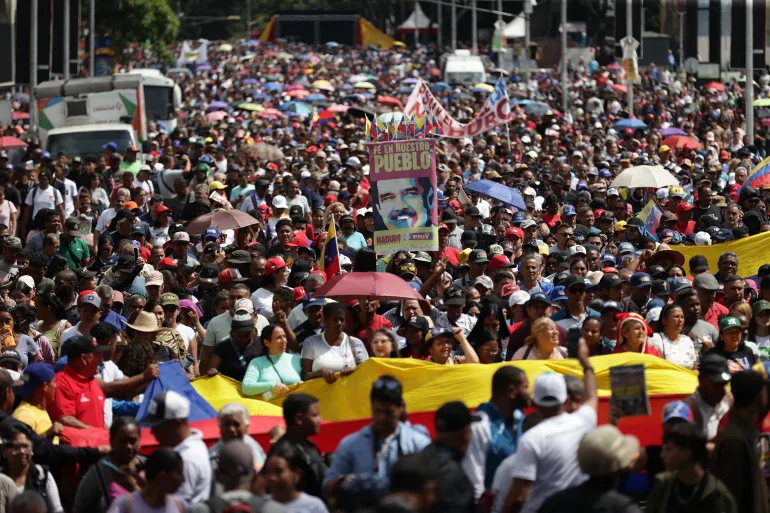
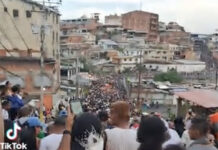
Machado’s inability to mobilize opposition is painfully clear when her political rallies are compared to Chavismo demonstrations, which are magnitudes bigger (and rarely shown in Western media).
Now that the U.S. engaged in a military attack, the Trump administration has admitted that Machado is unable to govern, a fact widely understood inside Venezuela prior to the illegal incursion. While pretending that Machado “led a successful election against Maduro in 2024,” The New York Times reported that the opposition, including Machado, would have “trouble leading the government.”
According to this report, the Trump administration soured on Machado for a number of reasons, including her troubled relationship with some of its members, CIA intelligence that concluded the opposition could not maintain stability in the country, Machado’s categorical rejection of talks with the Chavista government and, notably, a “feeling that she provided inaccurate reports that Maduro was weak and on the verge of collapse.” There is another description for “inaccurate reports”—lies.
Machado’s unpopularity (even among the opposition), which was clear to any close observer of Venezuelan politics, was finally admitted during Trump’s initial press conference after U.S. military strikes on Venezuela. To reiterate, Trump said: “She doesn’t have the support within, or the respect within, the country.”
Later, on NBC’s Meet the Press, which continues to gaslight the American people by stating that Machado has the support of “70% of Venezuelans,” Rubio pretended that the Trump administration did not abandon Machado but was instead “dealing with the immediate reality.”
Neither The New York Times nor the Trump administration acknowledge that Machado’s long-standing bitter rivalries among the opposition would undermine her reign and help dislodge her from power if she were installed as president, or that Machado would be deposed by the Venezuelan military, especially if her reign were to include foreign military or a mercenary presence as a “stabilizing force.”
Installing Machado as “president” will embroil the country in a protracted civil war, a quagmire that could easily turn into Trump’s Vietnam whose inevitable outcome would include massive emigration to the United States. Chavismo has vowed to fight for 100 years if the United States invades the country.
The end of Machado’s political career in Venezuelan politics is by no means the end of her privilege. She will join her family abroad to live in the lap of luxury, agitating alongside right-wing peers who live off looted Venezuelan assets and funds gathered to depose Chavismo from power.
Carrying the neo-liberal flag has been spectacularly lucrative for Machado and her ilk. Machado’s “peace prize,” for instance, includes a one-million-dollar reward. Although she claimed she was targeted by the Venezuelan government and, therefore, was unable to move in and out of the country, she departed for Oslo to receive her award and the cash prize while Maduro was still in the country.
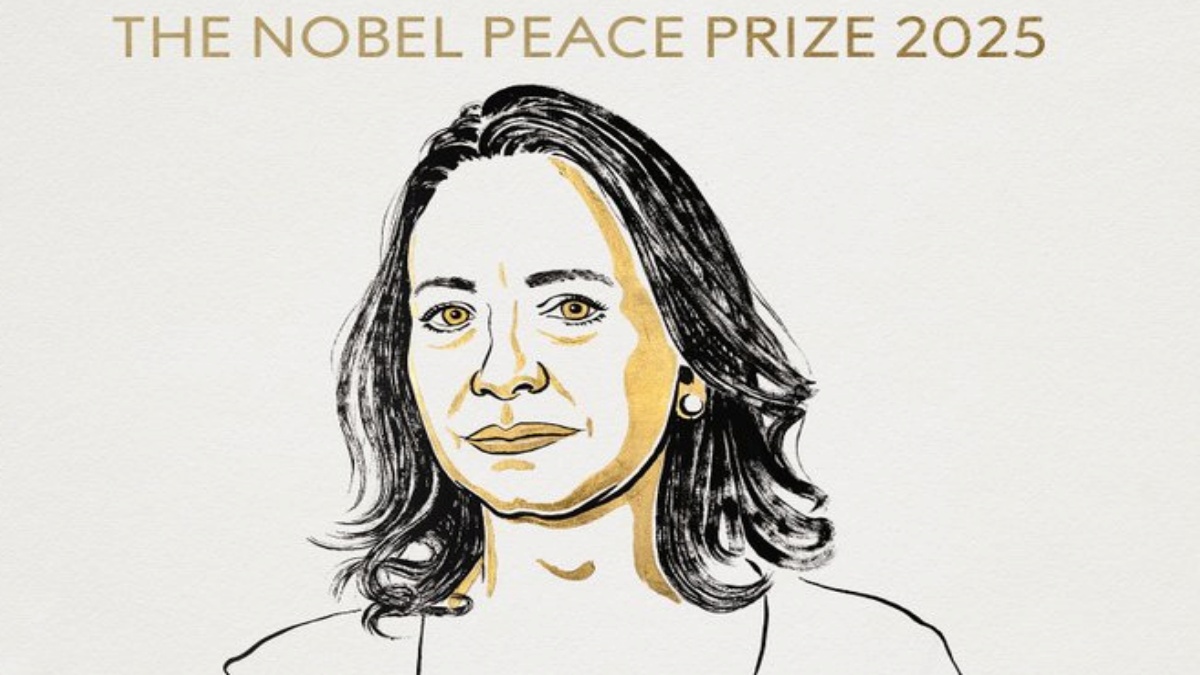
Although Machado had vowed to “never” leave Venezuela, upon receiving her award, she could not leave the country—and her few supporters—behind fast enough.
U.S. recognition of Guaidó as “interim” president of Venezuela in 2019 led to the looting of Venezuelan assets with no accountability. Machado was a key political player supporting Guaidó’s fake “interim” government.
Although few Venezuelans thought Machado deserved to win the Nobel award, Oslo provided her a platform to launder her peace prize to argue for war. In the addition to most of the Venezuelan people, disapproval for Machado’s Nobel included the Norwegian Peace Council, a fellow Nobel winner, civil society, and the Non-Aligned Movement, the largest block in the UN (121 countries), which rejects U.S. aggression against Venezuela, signaling international condemnation for the U.S. intervention that Machado has spent years advocating. The Nobel scheme to sell Machado to the “international community” did not work as the Trump administration had hoped.
Whatever momentary burnish the Nobel Peace Prize provided Machado, it is fading quickly. Most recently, Julian Assange filed a criminal complaint against the Nobel Foundation, which awards the prize, alleging that, in awarding Machado, the Nobel Committee violated its own charter as well as Swedish law.
Assange argues that, due to Machado’s past actions and current statements, the funds may be “diverted from their charitable purpose to facilitate aggression, crimes against humanity, and war crimes.” Assange is seeking to freeze all remaining funds associated with the award and a full criminal investigation into the committee for foul play.
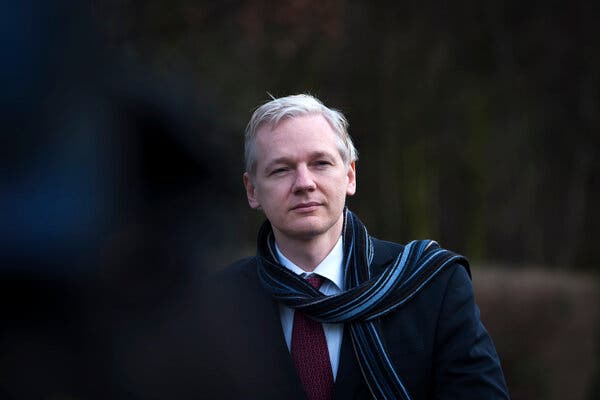
Although prosecution is unlikely, at least for now, the lawsuit and its related reporting reveal the nefarious and politically motivated circumstances surrounding Machado being chosen as this year’s peace awardee. The Nobel prize was a marketing tool for imperial gain.
Venezuelans do not trust Machado because she is not planning to build but to exploit her birth country to the detriment of Venezuelan and U.S. citizens alike, both of whom will sacrifice money and blood if a military confrontation occurs. With Trump’s abduction of Maduro, Machado’s dreams have been fulfilled and have turned into Venezuelans’ nightmares, as they suffer the consequences of her calls for intervention.
Machado’s Last Political Breath
Instead of the “Iron Lady,” as The New York Times once called her, Machado is an imperial Trojan horse, hoping to launder failed and destructive neo-liberal policies against Venezuela under the guise of democracy. She is an empty imperial vessel, a 21st century traitor to Simón Bolívar’s dream of a Gran Colombia.
As the Argentine writer Arturo Jauretche reminds us: “Si es malo el gringo que nos compra, pero es el criollo que nos vende.” [If the gringo who buys us is bad, worse is the criollo who sells us.] When the United States dropped the “democracy” farce as reasoning for its intervention, proudly boasting that stealing Venezuela’s oil is its primary goal, Machado and the Nobel “peace” sham was no longer needed. She was dropped like a hot potato.
In an act of poetic justice, Machado has achieved two things inside Venezuela. First, she has energized Chavismo. In the wake of U.S. military attacks, which Machado had long called for, huge rallies erupted in Venezuela in support of the socialist government.
U.S. intervention—pre- and post-abduction—has strengthened Chavismo’s civil-police-military fusion to defend Venezuela’s sovereignty; it has generated a massive increase in militia participation to support the Chavista government; and it has deepened the transition toward what the government calls a Communal State, advancing Chavismo’s socialist project.
Secondly, Machado has united Chavistas and non-Chavistas alike under the banner of Venezuelan sovereignty. Some ardent anti-Chavista members of the opposition have explicitly said they will stand with Chavismo to defend Venezuela.
This rally–behind–the–flag effect reached a fever pitch after Maduro was kidnapped. The trauma and fear that the U.S. military strike caused inside Venezuela deepened rank-and-file Chavista commitment to its revolutionary government and stimulated support for the socialist government, even among non-Chavistas.
Trump’s illegal kidnapping of President Maduro hammered a definitive nail on Machado’s political coffin. Her outspoken dream for U.S. military intervention against Venezuela materialized.
For this reason, rejection of Machado inside Venezuela could not be more resounding, including among opposition forces. For instance, some members of the opposition point out that Machado’s total and absolute genuflection to the Trump administration was not only bad for Venezuela but, ultimately, undermined her credibility.
Machado’s flagrant bootlicking of Trump, after all of his attacks against Venezuela and even after she was summarily dismissed, one opposition legislator argued, is precisely the reason why Machado lost respect and credibility within the Trump administration, even if they agree with her vision for Venezuela.
To manage the terrible optics of the snub, Trump has agreed to meet Machado, after a groveling plea in which she said she would hand Trump her Nobel Prize. No matter. He already said the damning truth about her out loud.
Trump’s assertions against Machado are the logical conclusion of her own campaign, which prioritized U.S. interests and relied on Trump to dictate who governs—and, therefore, who owns—Venezuela.
The aftermath of Trump’s illegal military aggression made it clear that Machado’s campaign is unacceptable to Venezuelans, regardless of political leanings. Therefore, both the Trump administration and the Venezuelan population reject Maria “Golpista” Machado, ushering in her irrelevance in Venezuelan politics and her inevitable political demise.
As Venezuela’s response to U.S. aggression shows, socialism is Venezuela’s only hope to safeguard its sovereignty, which Chávez emphasized.
This is his legacy, his greatest accomplishment, and the most enduring obstacle to capital pillaging of Venezuela through vendepatrias like Machado.

For more on González’s dubious background, see Gloria Guillo, “Venezuela – Edmundo González, a fake president with a controversial past,” Tortilla Consal, January 9, 2026.
CovertAction Magazine is made possible by subscriptions, orders and donations from readers like you.
Blow the Whistle on U.S. Imperialism
Click the whistle and donate
When you donate to CovertAction Magazine, you are supporting investigative journalism. Your contributions go directly to supporting the development, production, editing, and dissemination of the Magazine.
CovertAction Magazine does not receive corporate or government sponsorship. Yet, we hold a steadfast commitment to providing compensation for writers, editorial and technical support. Your support helps facilitate this compensation as well as increase the caliber of this work.
Please make a donation by clicking on the donate logo above and enter the amount and your credit or debit card information.
CovertAction Institute, Inc. (CAI) is a 501(c)(3) non-profit organization and your gift is tax-deductible for federal income purposes. CAI’s tax-exempt ID number is 87-2461683.
We sincerely thank you for your support.
Disclaimer: The contents of this article are the sole responsibility of the author(s). CovertAction Institute, Inc. (CAI), including its Board of Directors (BD), Editorial Board (EB), Advisory Board (AB), staff, volunteers and its projects (including CovertAction Magazine) are not responsible for any inaccurate or incorrect statement in this article. This article also does not necessarily represent the views the BD, the EB, the AB, staff, volunteers, or any members of its projects.
Differing viewpoints: CAM publishes articles with differing viewpoints in an effort to nurture vibrant debate and thoughtful critical analysis. Feel free to comment on the articles in the comment section and/or send your letters to the Editors, which we will publish in the Letters column.
Copyrighted Material: This web site may contain copyrighted material the use of which has not always been specifically authorized by the copyright owner. As a not-for-profit charitable organization incorporated in the State of New York, we are making such material available in an effort to advance the understanding of humanity’s problems and hopefully to help find solutions for those problems. We believe this constitutes a ‘fair use’ of any such copyrighted material as provided for in section 107 of the US Copyright Law. You can read more about ‘fair use’ and US Copyright Law at the Legal Information Institute of Cornell Law School.
Republishing: CovertAction Magazine (CAM) grants permission to cross-post CAM articles on not-for-profit community internet sites as long as the source is acknowledged together with a hyperlink to the original CovertAction Magazine article. Also, kindly let us know at info@CovertActionMagazine.com. For publication of CAM articles in print or other forms including commercial internet sites, contact: info@CovertActionMagazine.com.
By using this site, you agree to these terms above.
About the Author

Yader Lanuza is a professor of sociology at the University of California, Santa Barbara.
Dr. Lanuza’s research examines the causes and consequences of social inequality in three domains: education, family and the criminal justice system.
He focuses largely, though not exclusively, on the experiences of immigrants and their offspring from Latin America and Asia.
Yader can be reached at: yaders@gmail.com.



How did she fail? Isn’t she in the Epstein files? Is she too old for Trump? How old would she have to be for him to like her?https://www.express.co.uk/news/world/2164879/epstein-files-trump-released-news