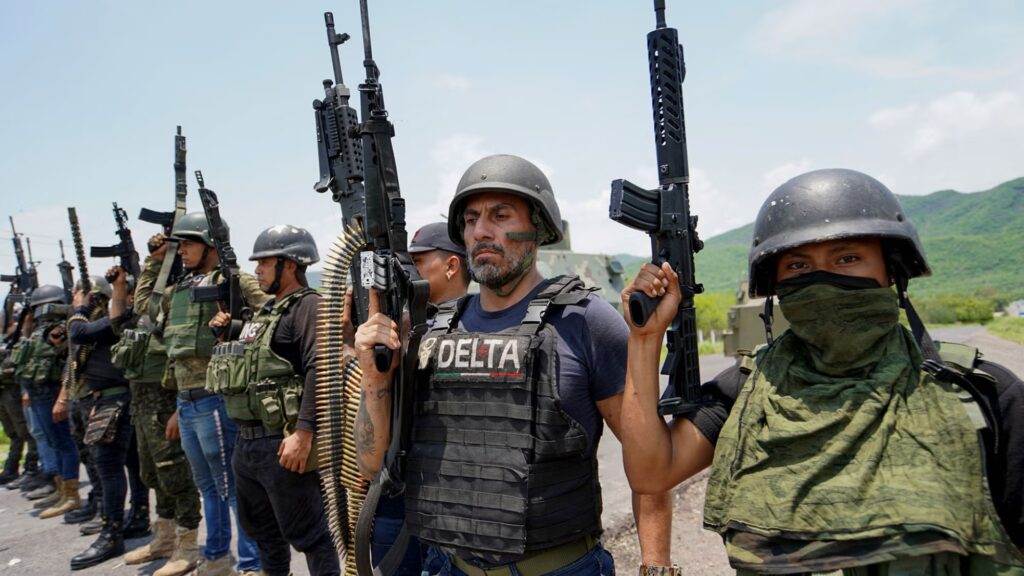
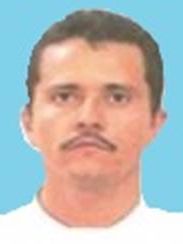
On February 22, 2026, the Mexican military mounted an operation, assisted by the CIA, that killed Nemesio “El Mencho” Oseguera Cervantes, the 59-year-old head of the Jalisco New Generation Cartel (CJNG) who had a $15 million bounty on his head.
A few hours later, Donald Trump tweeted “We’re Winning too much, it’s just not fair!”
The New York Times further quoted from a Mexican security analyst who claimed that the killing of “El Mencho” was “undoubtedly the most important blow that has been dealt to drug trafficking in Mexico since drug trafficking existed in Mexico.”[1]
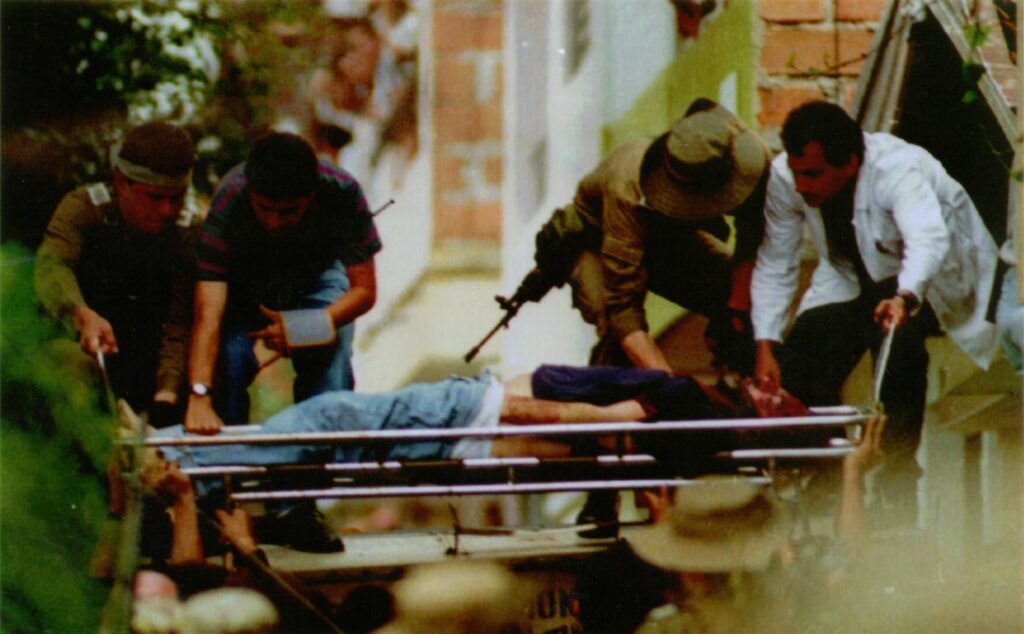
This latter assessment is put in doubt by the fact that, going back to the days of Pablo Escobar, the strategy of killing drug kingpins has done nothing to curtail the drug demand patterns and underlying structural inequalities fueling the growth of the worldwide drug trade.[2]
Additionally, we know that many of the weapons used by drug cartels that foment violence in Mexico come from the U.S. military.
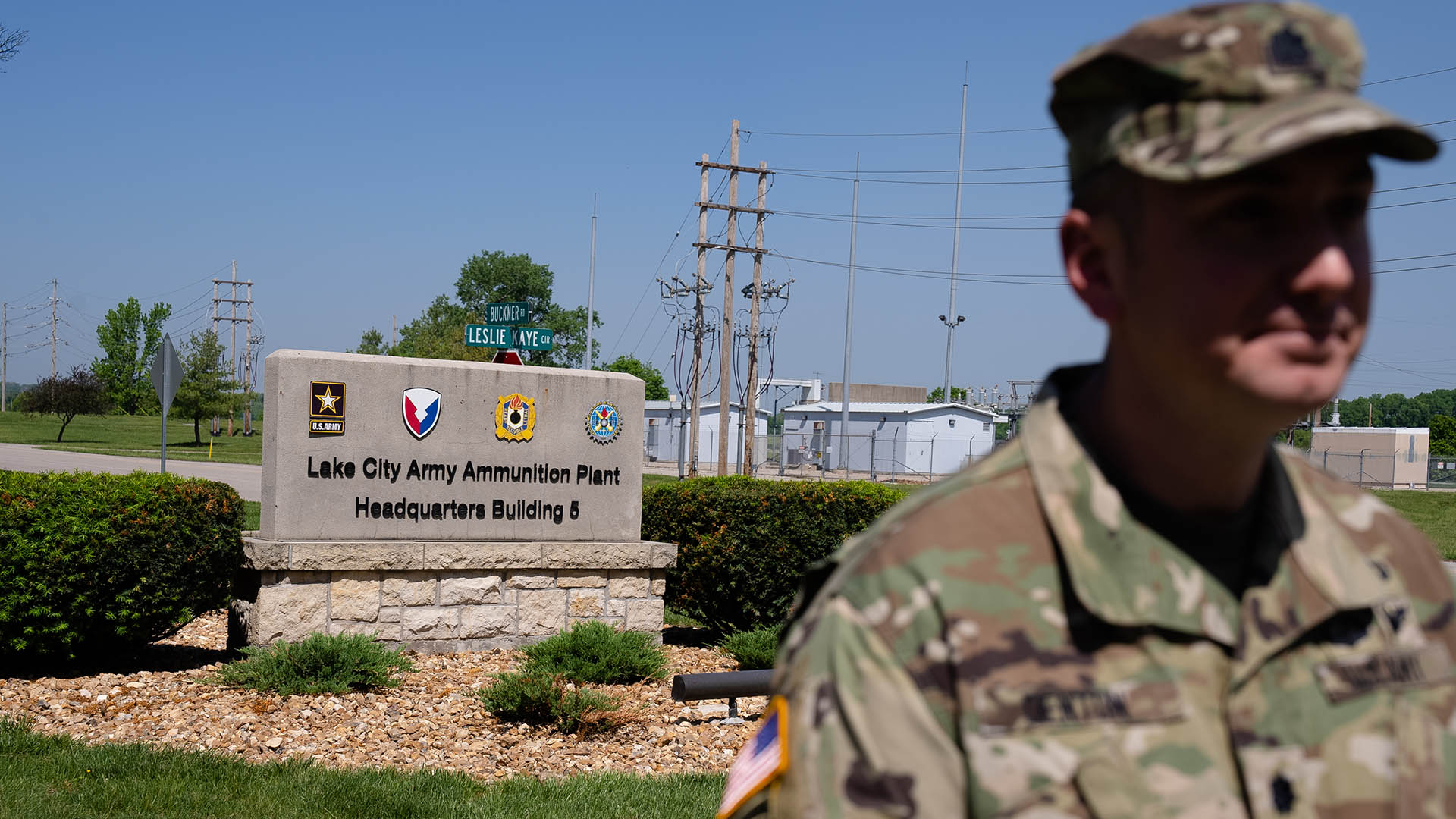
Two weeks before the killing of “El Mencho,” a consortium of journalists released a report detailing that about half the high-powered .50-caliber cartridges Mexican authorities have seized from cartels since 2012 were traced to an ammunition factory outside Kansas City, Missouri, owned by the U.S. government, the Lake City Army Ammunition Plant, the largest manufacturer of rifle rounds used by the American military.
The ammunition made its way to the cartels via private smuggling networks that flourished as a result of systemic law enforcement corruption on both sides of the U.S.-Mexico border.[3]
Investigators documented at least 87 attacks using this ammunition since 2003—121 dead, including police massacres, helicopter shoot-downs, and government assassinations.
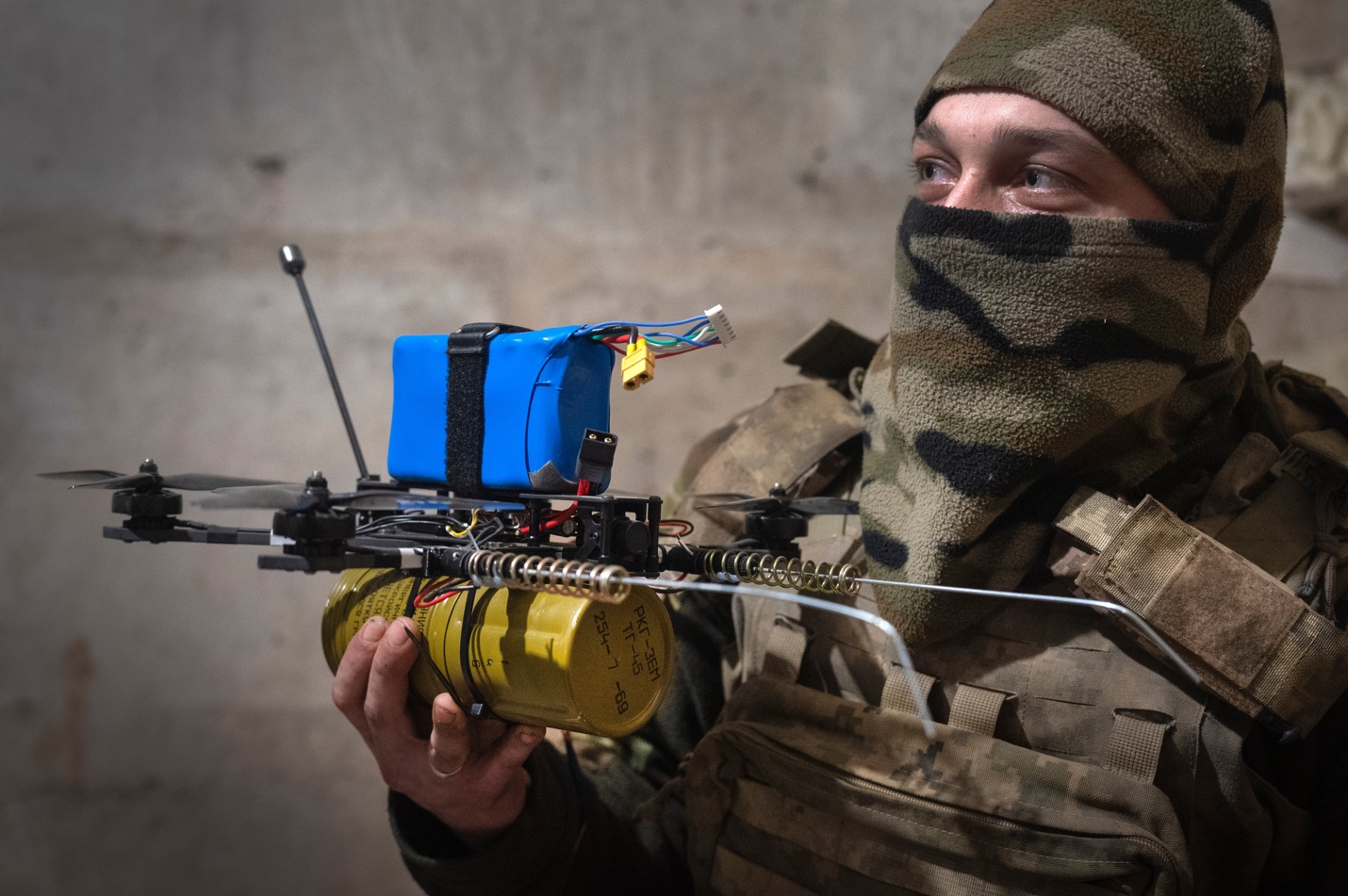
Mexican drug cartel operatives, including from the CJNG, have also infiltrated the U.S./British/Canadian-subsidized Ukraine International Legion in order to obtain know-how in the use of drone weapons that they have used to attack law enforcement officials.[4]
Meanwhile, buried inside a December 2025 federal indictment is the name Robert M. Sensi—a former CIA agent now charged with laundering $750,000 for the CJNG and offering to sell them explosive drones, rocket-propelled grenades, and fentanyl production advice.
This is not an aberration. The Obama administration’s Operation Fast and Furious provided 2,000 firearms into cartel hands under a poorly conceived sting operation.
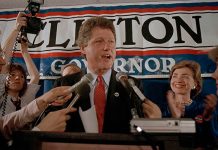
A generation earlier there was the Iran-Contra scandal by which a CIA network that included Sensi financed the arming of right-wing counter-revolutionaries in Honduras attacking Nicaragua through illegal drugs and arms trafficking carried out under the oversight of then-Arkansas Governor Bill Clinton.
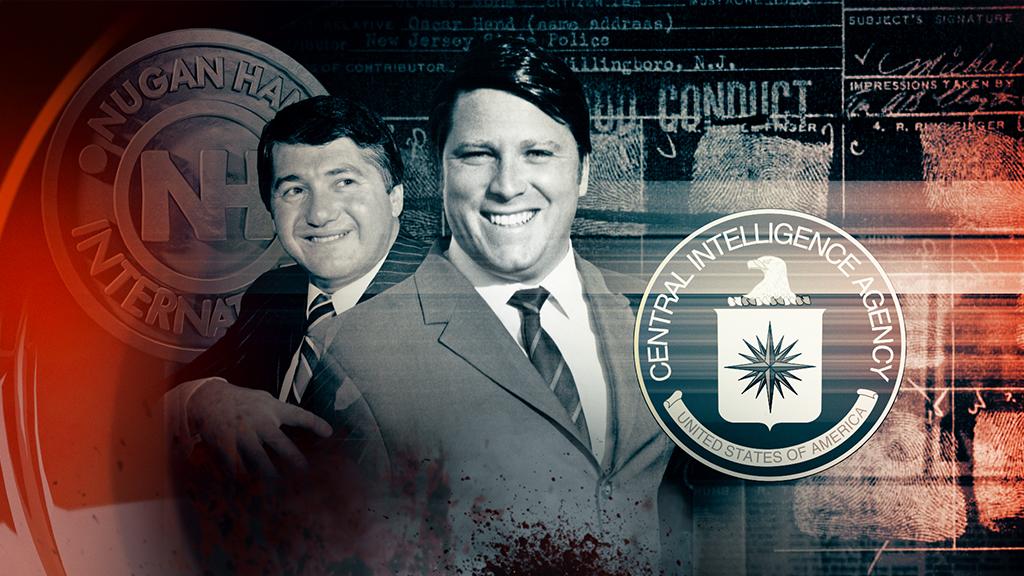
Many of the same CIA people involved in Iran-Contra had been at the center of the CIA’s creation of a clandestine army among the opium-growing Hmong in Laos to fight the communist Pathet Lao, and had helped set up the Nugan Hand Bank in Australia as a drug-money laundering front for the CIA.[5]
The historical pattern that emerges is clear: While U.S. leaders devote massive military resources to the War on Drugs and celebrate the killing of drug kingpins like “El Mencho,” behind the scenes it is the U.S. military and CIA and its proxy forces like the Ukrainians that are supplying the drug cartels with weapons and technical training and supporting them in their criminal operations.
The people who suffer the most are regular people caught in the crossfire of escalating cycles of drug-related mayhem and violence.
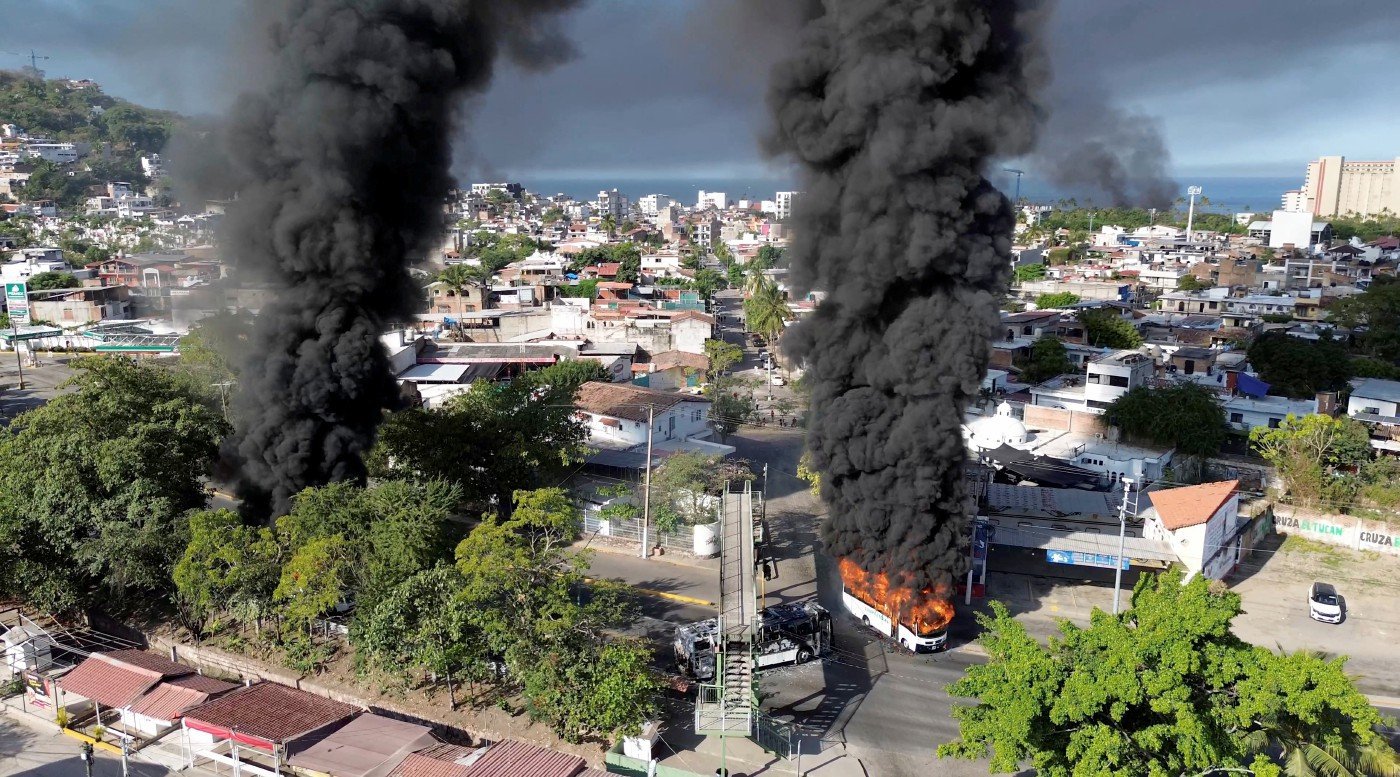
Within hours of El Mencho’s confirmed death, CJNG unleashed retaliatory violence across 12 Mexican states, causing Guadalajara—a FIFA World Cup host city—to become paralyzed.
Buses burned and airports were shut. At least 25 National Guard members were killed.
It was a reminder, if one were needed, that the kingpin strategy does not end cartels. It triggers succession wars and creates vacuums. And into every vacuum, the next operator—CIA badge optional—steps in to fill it.[6]
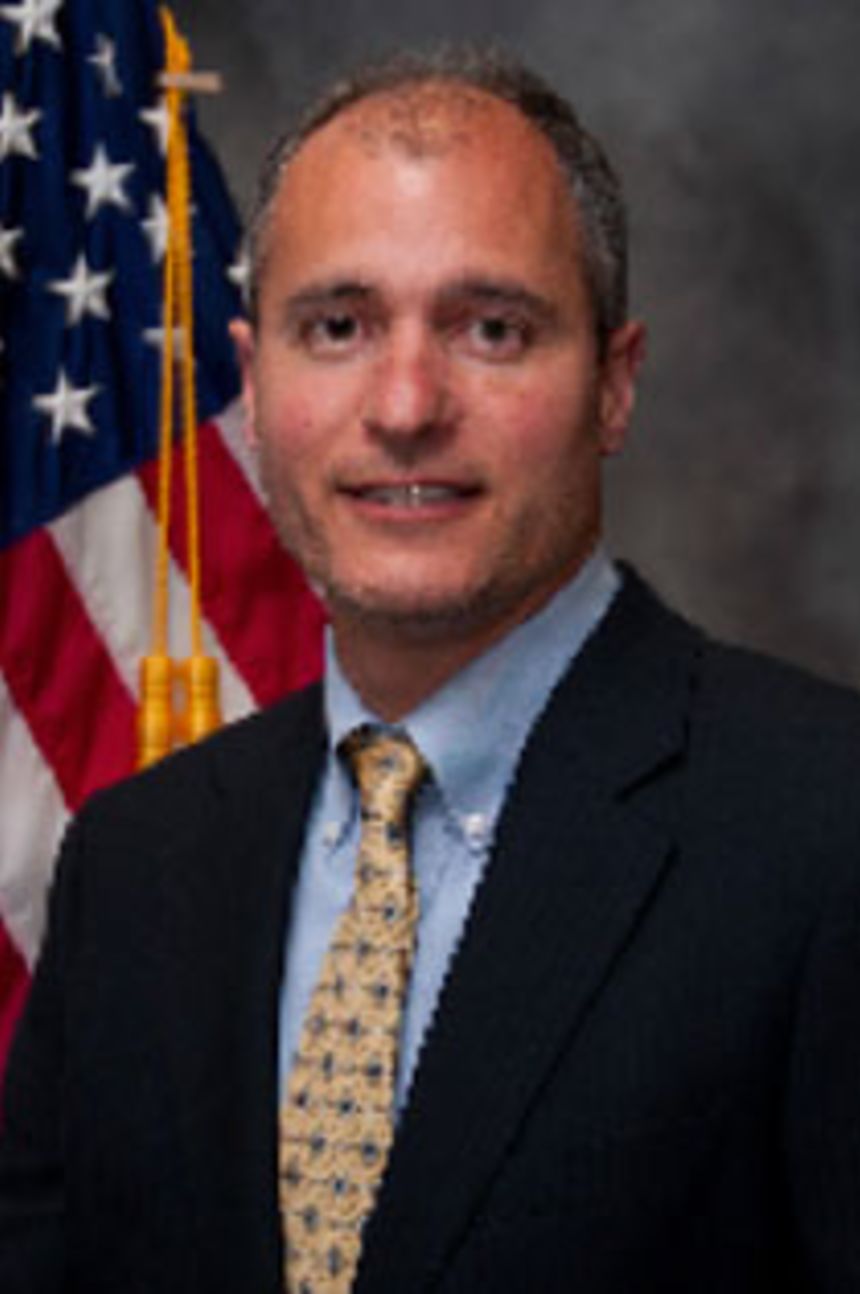
Robert M. Sensi: The CIA Agent Who Was Arming CJNG
In December 2025, the Southern District of New York unsealed a federal indictment that should have been front-page news for a month.
Sensi, a former CIA agent, and Paul Campo, former head of financial operations for the DEA, were charged with laundering $750,000 through real estate deals and cryptocurrency, with a promise to launder another $11.25 million.
The Department of Justice (DOJ) indictment goes further. Sensi and Campo allegedly tried to sell the CJNG a weapons package that reads like a Special Forces requisition order: explosive-packed drones, AR-15 and M16 rifles, M4 carbines, grenade launchers, rocket-propelled grenades.
And—in a detail that should end careers and trigger congressional hearings—they offered the cartel advice on how to produce fentanyl.
So there you have it: former CIA and DEA agents offering fentanyl production advice to the cartel responsible for most of the fentanyl killing Americans.
And now they want us to applaud the killing of that cartel leader when the criminal network that helped sustain him continues to operate.
Robert Sensi is no rogue actor. He worked for the CIA in the 1980s as a liaison between the agency and the Bank of Commerce and Credit International (BCCI), the fraudulent global bank at the center of the Iran-Contra money-laundering apparatus.
He visited the White House so routinely in the mid-1980s—meeting with CIA Director William Casey and Vice President George H. W. Bush—that, according to CIA officer Miles Copeland, White House security waved him through without credentials.
The well-exposed Iran-Contra operation was a criminal enterprise by which Reagan’s CIA, directed by William Casey and coordinated by then-Vice President George H. W. Bush, secretly sold weapons to Iran—violating an arms embargo—and used the profits to fund Nicaraguan Contra rebels, which Congress had explicitly banned under the 1984 Boland Amendment.
To launder the Iran-Contra affair, headed by Oliver North, John Poindexter and Richard Secord used one of the most corrupt financial institutions known as BCCI.
Sensi’s specific role was to transfer funds from checks worth $1 million and $4 million, made out by members of the Kuwaiti Royal Sabah family through BCCI’s Monte Carlo branch, to purchase TOW missiles routed to Iran—with profits flowing to the Contras.
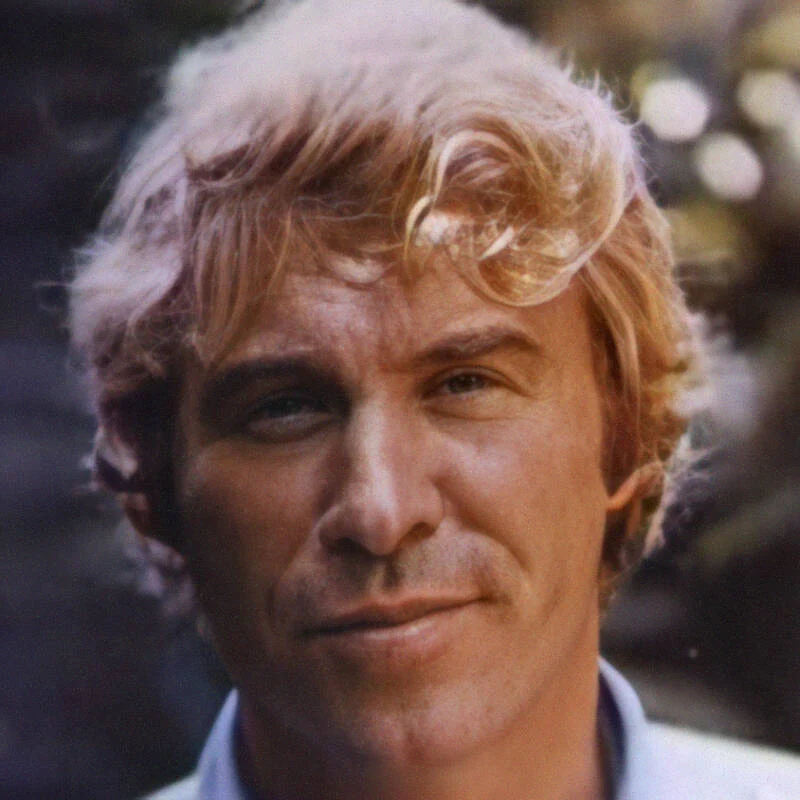
Those checks were sitting in the briefcase of journalist Danny Casolaro as evidence when he was found dead in a Martinsburg, West Virginia, hotel room in August 1991, his wrists slashed.
The official verdict: suicide. CIA investigator Peter Osborne’s assessment: Casolaro was days from publicly exposing George H. W. Bush when he died and could have provided testimony that would have put other Iran-Contra operators in federal prison.
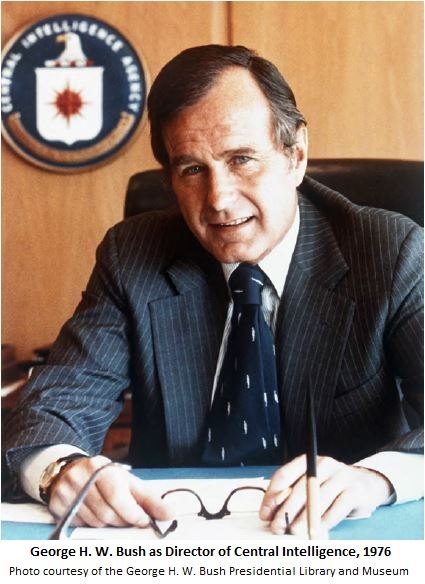
Attorney Daniel Sheehan, whose investigations of the CIA stretch back to the 1980s, was unambiguous in 2026: the Sensi indictment shows that “the tentacles of the Octopus that Danny Casolaro was working to expose are still alive and involved in the same kinds of covert activity—moving dirty money through global networks—that have gone on under the CIA for decades.”

|
Actor |
Role |
Charge / Connection |
|
Robert M. Sensi |
Former CIA agent; Iran-Contra BCCI operative |
Indicted December 2025: laundering $750K for CJNG, selling military weapons, fentanyl advice |
|
Paul Campo |
Former DEA head of financial operations |
Co-indicted with Sensi on narcoterrorism and money-laundering charges |
|
George H.W. Bush |
CIA Director 1976; VP 1981-89; President 1989-93 |
Coordinated Iran-Contra; pardoned Iran-Contra felons; Sensi’s White House contact |
|
Danny Casolaro |
Investigative journalist |
Found dead 1991 days before publishing “The Octopus”—documents implicating Bush missing |
|
William Casey |
CIA Director 1981-87 |
Directed Iran-Contra; met regularly with Sensi at Langley and the White House |
|
BCCI |
Bank of Commerce and Credit International |
Central money-laundering vehicle for Iran-Contra; Sensi was CIA liaison to BCCI |
Fast and Furious—Arming the Cartels in the Obama Years
The Obama administration militarized the War on Drugs under the $1.7 billion Plan Mérida at the same time that it supplied drug cartels with weapons under Operation Fast and Furious, which was run out of the Phoenix office of the Bureau of Alcohol, Tobacco and Firearms (ATF).
The stated goal of Fast and Furious: Let illegal straw purchasers buy weapons from U.S. gun shops, then track those weapons across the border to identify high-level cartel figures. The actual result: nearly 2,000 firearms were walked directly into the hands of Mexican drug cartels, most of them traced to the Sinaloa organization, which the U.S. government favored over its rivals.[7]
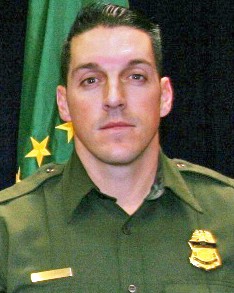
The ATF lost track of the overwhelming majority of those weapons. At least 195 Fast and Furious guns were recovered by Mexican police at violent crime scenes south of the border. Hundreds of Mexican civilians were killed or wounded. And on December 14, 2010, U.S. Border Patrol Agent Brian Terry was shot dead in the Arizona desert. Two of the weapons found at the scene had walked there courtesy of the United States government.
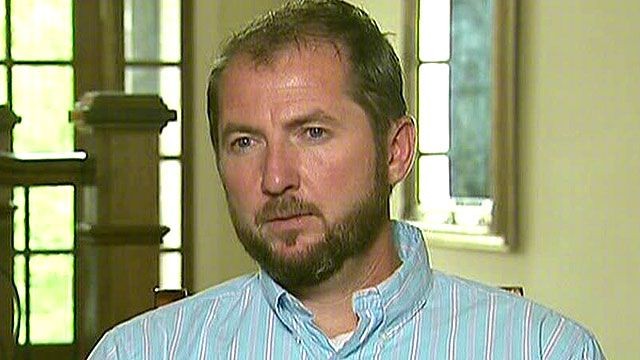
ATF whistleblower John Dodson risked everything to expose it. He had been raising alarms for months, watching weapons he knew were going to cartels disappear across the border with official ATF approval. When Agent Terry was killed, he went to CBS News. His supervisor’s response when Dodson had first raised concerns: “If you’re going to make an omelet, you’re going to scramble some eggs.”
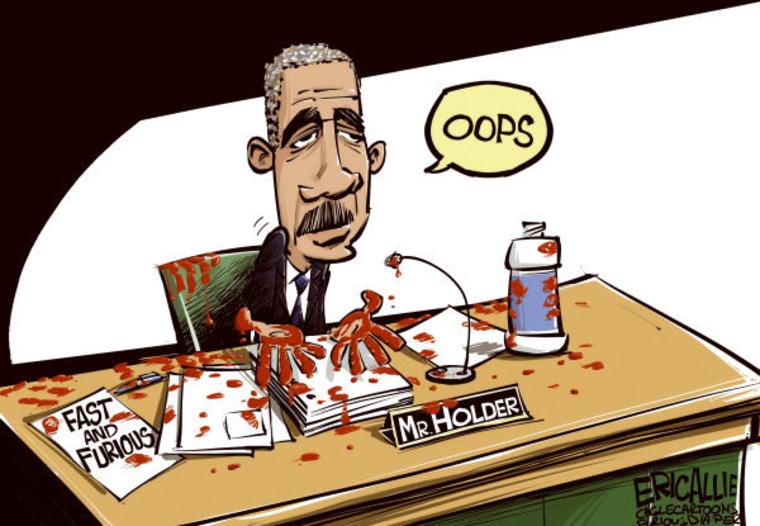
Attorney General Eric Holder was held in contempt of Congress—the first sitting attorney general in U.S. history to receive that designation—for refusing to hand over Fast and Furious documents.
President Obama invoked executive privilege to seal thousands of pages of related records. The DOJ told Congress initially that no gunwalking had occurred. That was a lie. The DOJ inspector general confirmed gunwalking was at the heart of the operation.
Fast and Furious’s top suspects—Sinaloa cartel operatives coordinating and financing the gun purchases—were FBI informants simultaneously receiving money from the bureau while using the guns to foment violence and kill other cartel rivals.
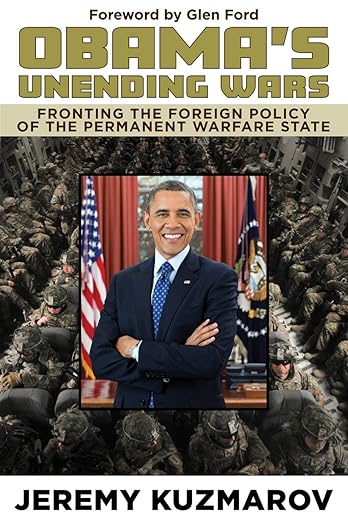
As CovertAction Magazine managing editor Jeremy Kuzmarov documents in his book Obama’s Unending Wars: Fronting the Foreign Policy of the Permanent Warfare State (Atlanta: Clarity Press, 2019), the Obama administration inherited and expanded a national security apparatus that systematically prioritized covert power over democratic accountability—from drone assassination programs to surveillance to the militarized drug war.
Trump Takes War to Next Level
This militarized War on Drugs has been ramped up further by the Trump administration, which has escalated CIA drone flights over Mexico—that were first initiated under President Joe Biden—to allegedly help the Mexican government identify fentanyl labs.
During the 2024 election, Trump called for the death penalty for drug dealers and, on January 20, 2025, signed an executive order calling for a major crackdown on Mexico’s cartels, which have been designated as foreign terrorist organizations—a label that sets the groundwork for potential U.S. military operations in Mexico.
The operation that took down “El Mencho” resulted from the Trump administration’s deployment of a joint military-intelligence task force through Northern Command. The CIA helped to identify the whereabouts of “El Mencho” by tracking one of his lovers and was “instrumental in removing the cartel leader,” according to one of the people briefed on the operation.
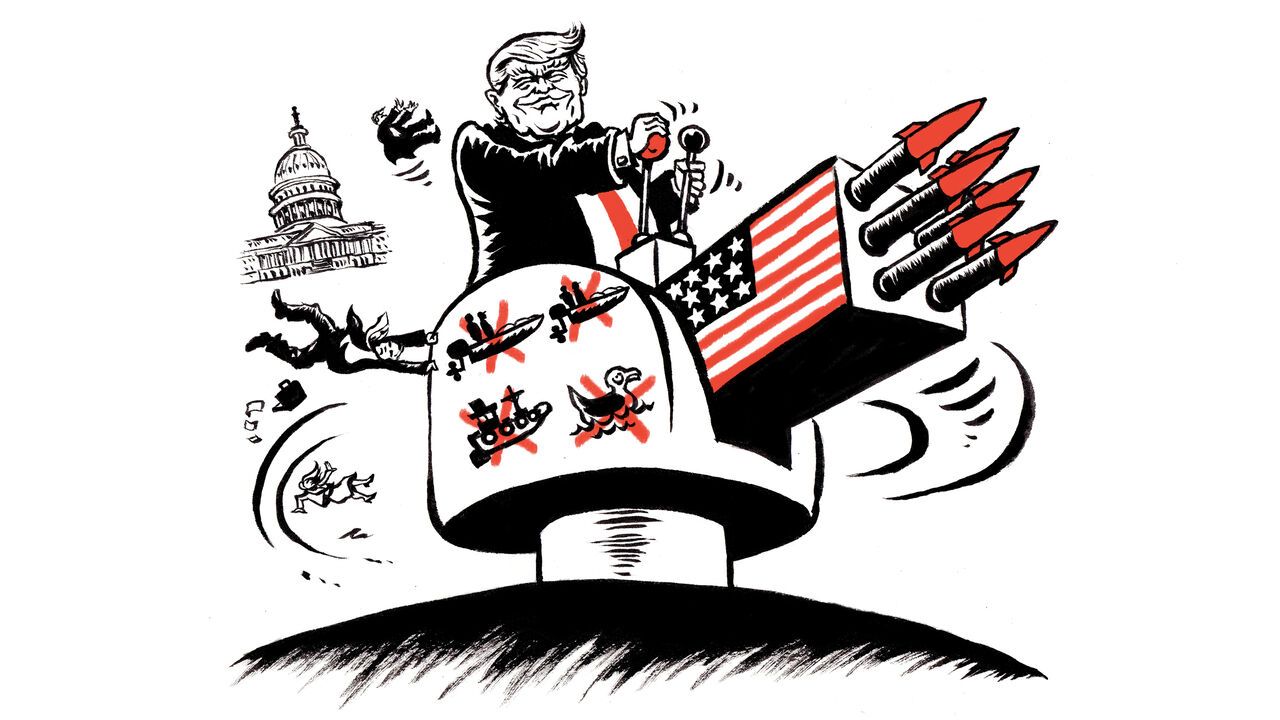
While Trump has tried in the past to depict himself as a maverick battling the dark forces of the “deep state,” the War on Drugs that he is expanding has been for decades one of the epic boondoggles of the military-industrial complex and a most wasteful government program that has provided a pretext for the CIA and other “deep state” agencies to expand repressive surveillance and police-state measures.
Salvador Santino Reglime, a professor at Leiden University, wrote in The Cambridge Review of International Affairs that “Trump’s War on Drugs was built on a logic of dehumanization and punishment, casting drug offenders—particularly those from marginalized communities—not as individuals in need of rehabilitation but as irredeemable threats to society.”[8]
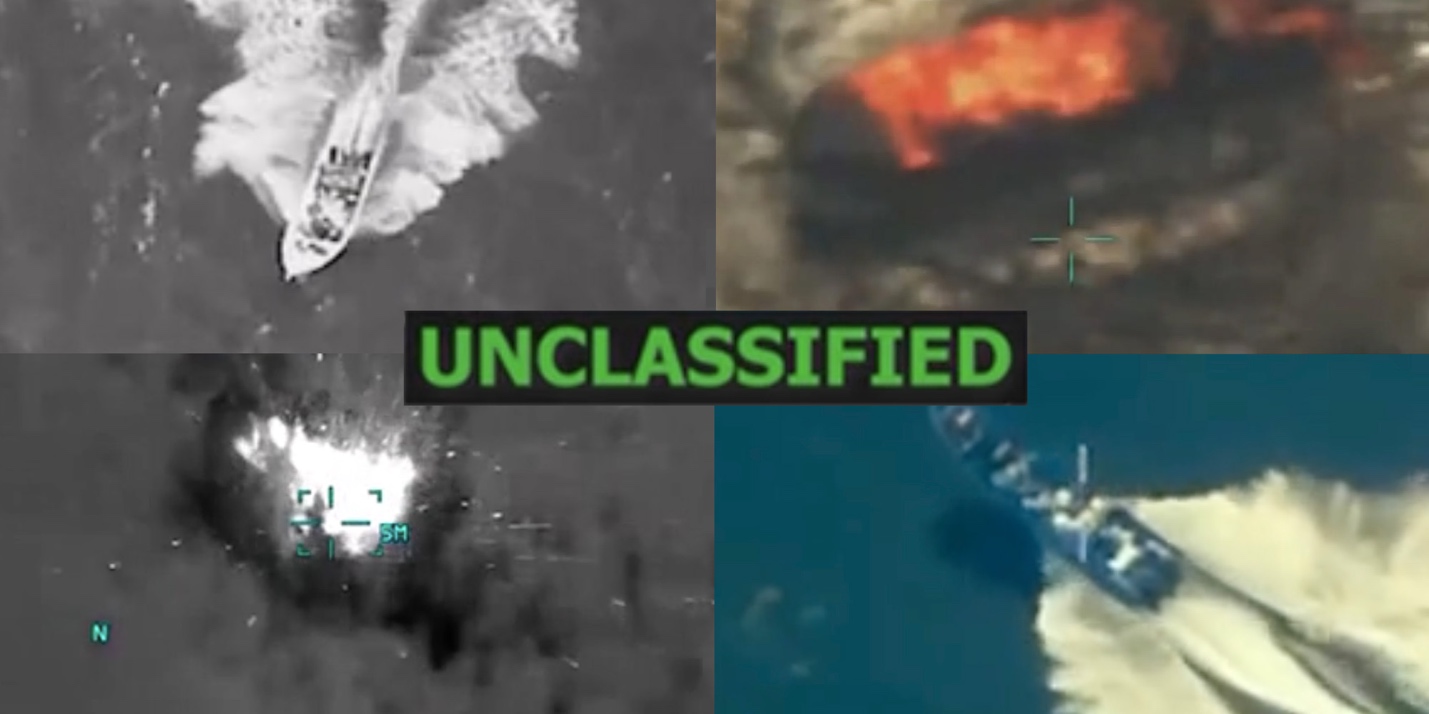
This outlook has underlain the murder of more than 140 people in boat strikes targeting alleged drug traffickers in the Caribbean Sea and Pacific Ocean. Evidence indicates many of the victims were not actually drug traffickers, and experts in the laws of war and members of Congress from both parties say the strikes are illegal extrajudicial killings.[9]
Trump’s War on Drugs has been marked generally by louder rhetoric than his predecessors, an even more militarized posture, more American troops and intelligence officers embedded in Mexican operations, and more designations and bounties and special task forces while the Lake City loophole stays open, the iron river flows south, and former CIA agents cut deals in federal court for arming the very cartels being bombed from above. And to add to the hypocrisy, Trump pardoned Honduran ex-President Juan Orlando Hernández, despite his sentencing in U.S. federal court last year to 45 years in prison for helping move tons of cocaine to the United States.
The Beat Goes On
After the killing of “El Mencho,” it is clear that the CJNG, which evolved out of the Sinaloa-affiliated Milenio cartel, will not collapse. The DEA describes it as a franchise of approximately 90 semi-independent sub-organizations—built precisely to survive leadership decapitation.
Juan Carlos Valencia González, known as “El Pelon” and the stepson of “El Mencho,” was his de facto second-in-command. But no single figure commands the loyalty “El Mencho” did, and the succession struggle—multiple factions, multiple ambitions, a vast network of plazas and routes up for grabs—will be settled with blood.
The Sinaloa cartel is simultaneously embroiled in its own succession war between the sons of Joaquín “El Chapo” Guzman and the faction loyal to Ismael “El Mayo” Zambada and his son, Ismael Zambada Sicairos, who is known as “El Mayito Flaco.”
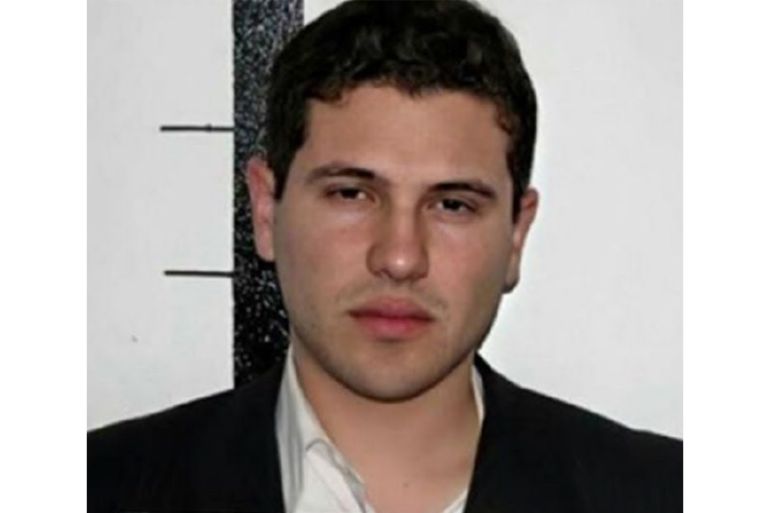
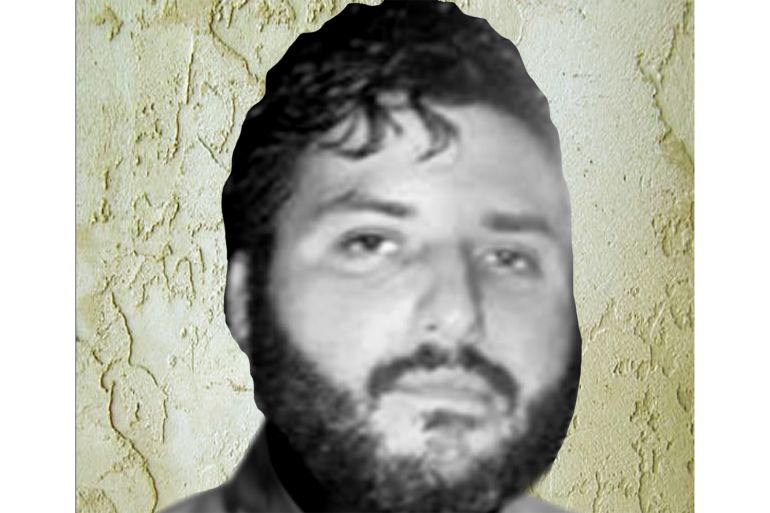
The simultaneous decapitation of both major cartel leaderships does not produce peace. It produces a scramble—more localized violence, more unpredictable actors, more mid-level commanders making dangerous decisions without senior-level restraint.
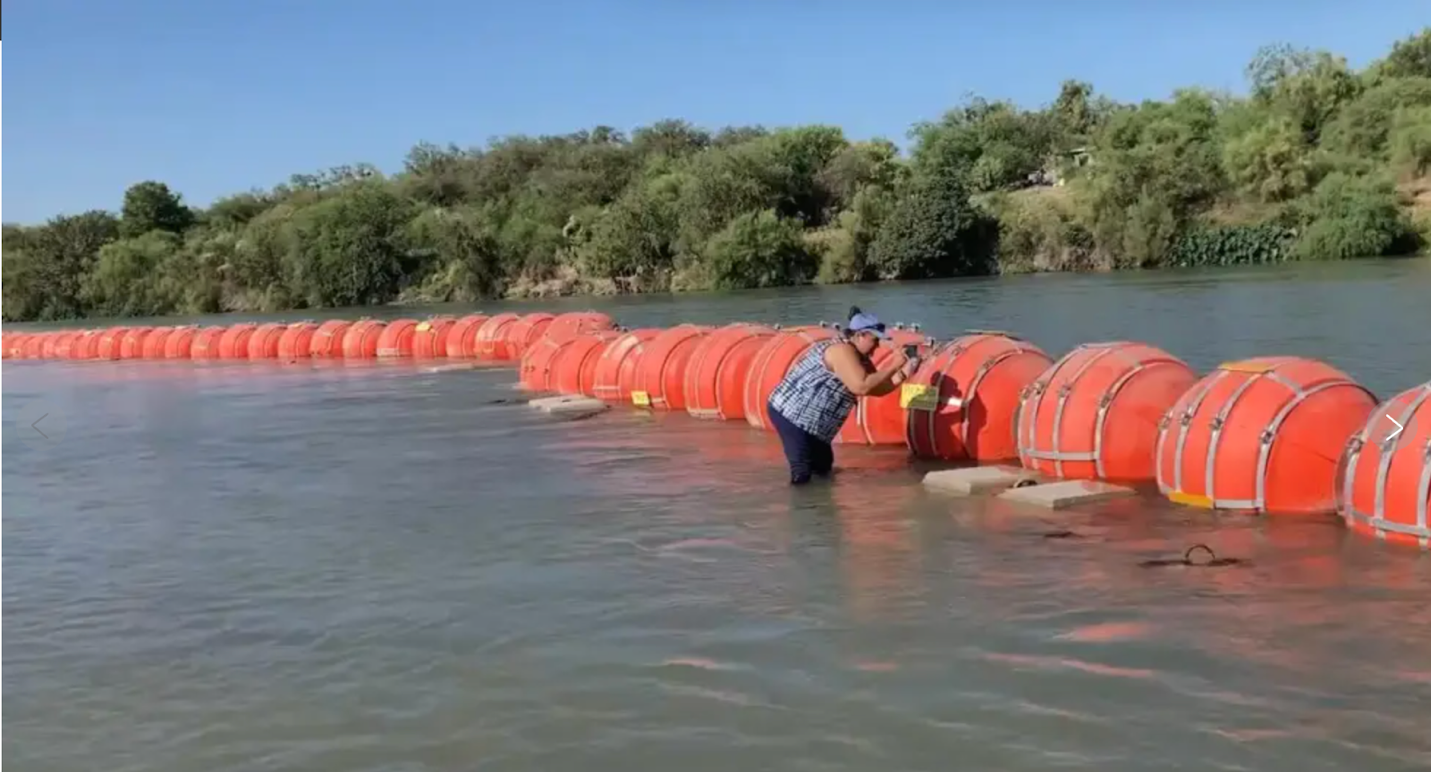
On the border itself, the 17 miles of Rio Grande buoy barriers of the Department of Homeland Security (DHS) in Cameron County and “Operation Lone Star” surges have reduced conventional crossing numbers in the Rio Grande Valley while producing the predictable balloon effect—pushing routes west into Arizona and into maritime corridors.
Cartels have responded with sea smuggling, forged documentation, drone-assisted operations, and expanded use of Mexico’s La Bestia freight rail network to move both migrants and contraband simultaneously.
In Tapachula, Chiapas—the primary bottleneck for northward migration from Venezuela, Haiti and Cuba—thousands remain trapped by Mexico’s own interdiction operations, vulnerable to the cartel extortion networks that prey on migrant caravans and the NGO ecosystem that has grown up around them.
This Is Not a War on Drugs: It Never Was
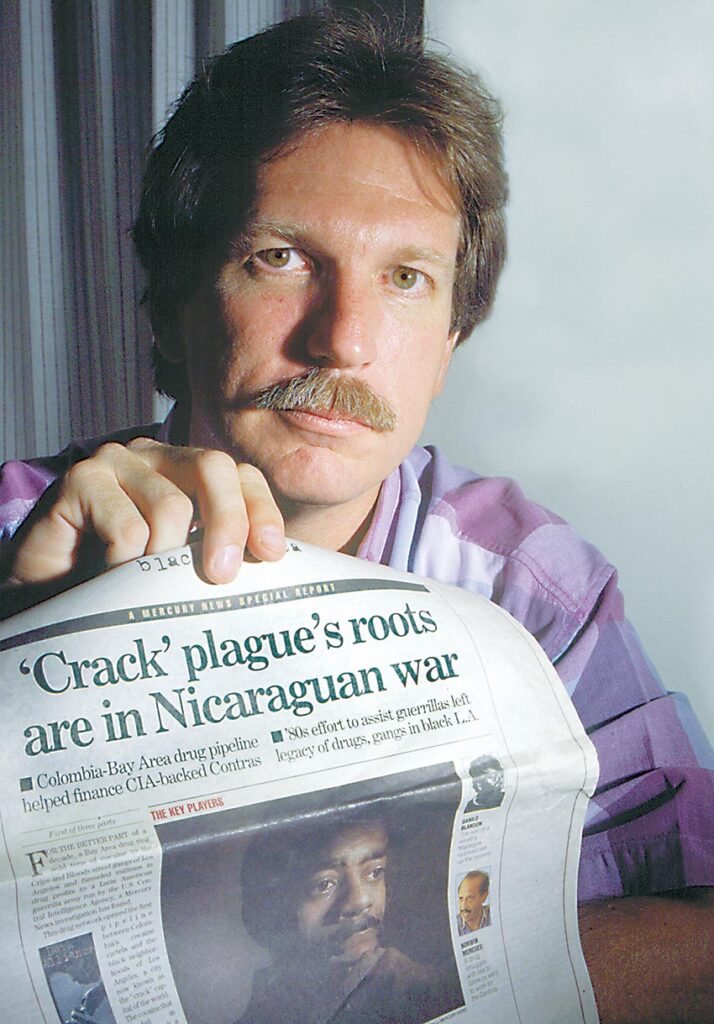
Journalist Gary Webb, who exposed CIA drug smuggling in Central America, documented this story in 1996. Then they maligned and murdered him for it.
Danny Casolaro told you the deeper story in 1991. He died for it in a hotel room in West Virginia with his briefcase full of documents that were never recovered.
The pattern has not changed. The U.S. government designates the CJNG a foreign terrorist organization while a former CIA officer launders their money.
This is the same government that hunts “El Mencho” while the Army plant that supplies his ammunition stays open for commercial sales. A government that ran Operation Fast and Furious then sealed the documents with executive privilege.
A government that allowed the favored Sinaloa cartel for years to smuggle drugs into the U.S. and pardoned the Iran-Contra felons promoted the men who ran the operation.
This is not dysfunction. It is not a series of policy failures that keep recurring by coincidence. It is the covert infrastructure of American power—the shadow network that uses criminal relationships, drug money, and deniable operators to sustain itself—functioning exactly as it was designed to function.
“El Mencho” is dead. Robert Sensi is in federal custody. The CJNG will be fighting over his territory by summer. The Lake City plant will open for business Monday morning. The iron river will keep flowing south.
The War on Drugs is 55 years old. The cartels have never been stronger. The guns have never stopped. At some point, you have to consider the possibility that is not a failure. It is the point.

Mexican President Claudia Sheinbaum, a darling among many liberals, praised the operation that killed “El Mencho.” Facing pressure from Donald Trump, who tweeted “Mexico must step up their effort on Cartels and Drugs,” Sheinbaum has moved away from her predecessor, Manuel López Obrador’s progressive “hugs not bullets policy” that was designed to address the root causes of crime by prioritizing poverty alleviation and social programs instead of militarized law enforcement. Previously, Sheinbaum had initiated a significant military buildup in Sinaloa Province and along the U.S.-Mexico border. Political analysts view Sheinbaum’s escalation of the War on Drugs as politically risky since the War on Drugs is unpopular in much of the country and undermined Felipe Calderon (2006-2012) and his National Action Party (PAN). Sheinbaum is a member of the left-leaning MORENA Party, a rival to PAN and the Mexican Revolutionary Party (PRI), which dominated Mexican politics for much of the 20th century. ↑
See Patrick Cockburn, Kill Chain: The Rise of the High-Tech Assassins (New York: Henry Holt, 2015). ↑
A regulatory loophole permitted private contractors operating the Lake City Army Ammunition Plant to sell military-grade armor-piercing ammunition on the commercial market. ↑
In October, one of these operative detonated drones rigged with explosives outside the prosecutor’s office in Tijuana. Attacks made by explosive-equipped drones surged to more than 260 in 2023. In 2024, a drone ambush was reportedly followed by an infantry-style attack in a remote community in Mexico, according to the Associated Press. ↑
See Alfred W. McCoy, The Politics of Heroin: CIA Complicity in the Global Drug Trade, rev ed. (New York: Lawrence Hill Books, 2003). ↑
Journalist Matt Weinglass suggested on the Garland Nixon Show that the U.S. intended to trigger more violence in Mexico by assisting in the assassination of “El Mencho” in order to create a pretext for more direct U.S. military intervention and de facto colonization, something openly advocated by hawks in the Trump administration like Marco Rubio, a wannabe modern-day Cecil Rhodes. ↑
An investigation by El Universal that drew on court documents and testimony of a DEA agent found that, between 2000 and 2012, the U.S. government had an arrangement with the Sinaloa cartel that allowed the organization to smuggle billions of dollars of drugs while Sinaloa provided information on rival cartels. ↑
Reglime further noted that, “by invoking ‘the ultimate penalty’ [murder] as a necessary tool in combating narcotics, Trump sought to normalize extreme forms of state violence, aligning the U.S. drug policy with authoritarian models that prioritize executions over harm reduction.” ↑
The Pentagon has repeatedly withheld information on the attacks from members of Congress and the American public, despite mounting questions from lawmakers about the legality of these deadly strikes. ↑
CovertAction Magazine is made possible by subscriptions, orders and donations from readers like you.
Blow the Whistle on U.S. Imperialism
Click the whistle and donate
When you donate to CovertAction Magazine, you are supporting investigative journalism. Your contributions go directly to supporting the development, production, editing, and dissemination of the Magazine.
CovertAction Magazine does not receive corporate or government sponsorship. Yet, we hold a steadfast commitment to providing compensation for writers, editorial and technical support. Your support helps facilitate this compensation as well as increase the caliber of this work.
Please make a donation by clicking on the donate logo above and enter the amount and your credit or debit card information.
CovertAction Institute, Inc. (CAI) is a 501(c)(3) non-profit organization and your gift is tax-deductible for federal income purposes. CAI’s tax-exempt ID number is 87-2461683.
We sincerely thank you for your support.
Disclaimer: The contents of this article are the sole responsibility of the author(s). CovertAction Institute, Inc. (CAI), including its Board of Directors (BD), Editorial Board (EB), Advisory Board (AB), staff, volunteers and its projects (including CovertAction Magazine) are not responsible for any inaccurate or incorrect statement in this article. This article also does not necessarily represent the views the BD, the EB, the AB, staff, volunteers, or any members of its projects.
Differing viewpoints: CAM publishes articles with differing viewpoints in an effort to nurture vibrant debate and thoughtful critical analysis. Feel free to comment on the articles in the comment section and/or send your letters to the Editors, which we will publish in the Letters column.
Copyrighted Material: This web site may contain copyrighted material the use of which has not always been specifically authorized by the copyright owner. As a not-for-profit charitable organization incorporated in the State of New York, we are making such material available in an effort to advance the understanding of humanity’s problems and hopefully to help find solutions for those problems. We believe this constitutes a ‘fair use’ of any such copyrighted material as provided for in section 107 of the US Copyright Law. You can read more about ‘fair use’ and US Copyright Law at the Legal Information Institute of Cornell Law School.
Republishing: CovertAction Magazine (CAM) grants permission to cross-post CAM articles on not-for-profit community internet sites as long as the source is acknowledged together with a hyperlink to the original CovertAction Magazine article. Also, kindly let us know at info@CovertActionMagazine.com. For publication of CAM articles in print or other forms including commercial internet sites, contact: info@CovertActionMagazine.com.
By using this site, you agree to these terms above.
About the Author

Kayla Dones is CovertAction Magazine’s development associate and founder of The Protagonist, an organization dedicated to advancing local investigative journalism.
Kayla can be reached at theprotagonistpr@gmail.com.