On two visits, this author witnessed North Korea’s economic boom first-hand
I visited the Democratic People’s Republic of Korea (DPRK) or People’s Korea in April 2024 and then 18 months later in October 2025 after being invited by the Korean Association of Social Scientists (KASS).
The trips were organized by the British Group for the Study of the Juche Idea of which I am the chairman.
What I saw during my two visits proved, in my opinion, that the numerous sanctions and blockades against the DPRK are not working.
Curiously, Trump’s recently published “National Security Strategy” does not even mention the DPRK. Perhaps, this is an explicit admission of failure.
The DPRK, a relatively small country of 25 million people and a land area of 120,000 square kilometers, is subject to more than 2,000 sanctions, making it one of the most heavily sanctioned countries in the world.
The sanctions on the DPRK are not only from the U.S. but also the UN Security Council, EU, UK, Japan and South Korea.
Sanctions are not new to the DPRK; the U.S. first imposed sanctions on the DPRK in 1949, decades before any DPRK nuclear test!
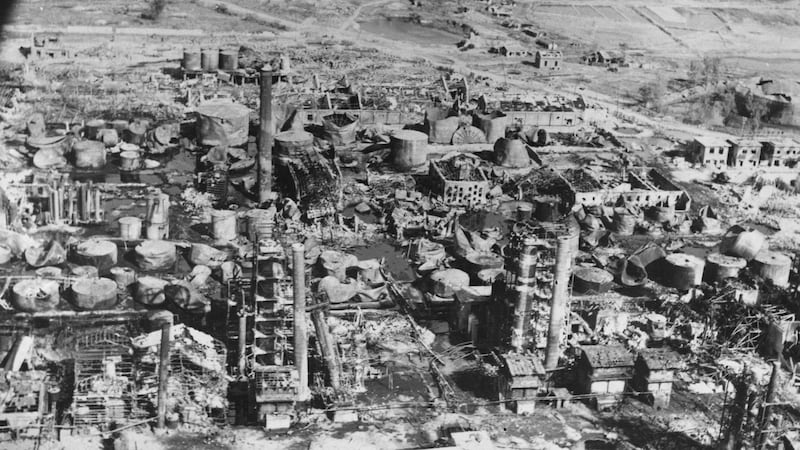
The sanctions were imposed in preparation for the full-scale U.S. invasion of North Korea during the Korean War which resulted in the bombardment of all major North Korean cities and the killing of one-tenth of North Korea’s population by U.S. and South Korean military forces.
In recent decades, particularly stringent sanctions were applied by UN Security Council Resolutions 2321, 2371 and 2375, which effectively prevent the DPRK from exporting and importing many products.
After a gap of almost five years, from October 2019, I visited the DPRK in April 2024.
For several years, it was not possible to travel to the DPRK because the border was closed at the end of January 2020 as a countermeasure against Covid 19. I was the first British citizen to visit the DPRK in five years
I wondered what I would see after several years of draconian sanctions and the border being shut for nearly four years. During the visit I witnessed that the situation in the DPRK is calm and stable.
The DPRK had closed its borders for four years but survived, a truly amazing feat when considering that some countries would only last weeks or even days with their borders closed.
However, the DPRK is based firmly on self-reliance and the independent national economy, a policy first laid down by President Kim Il Sung.
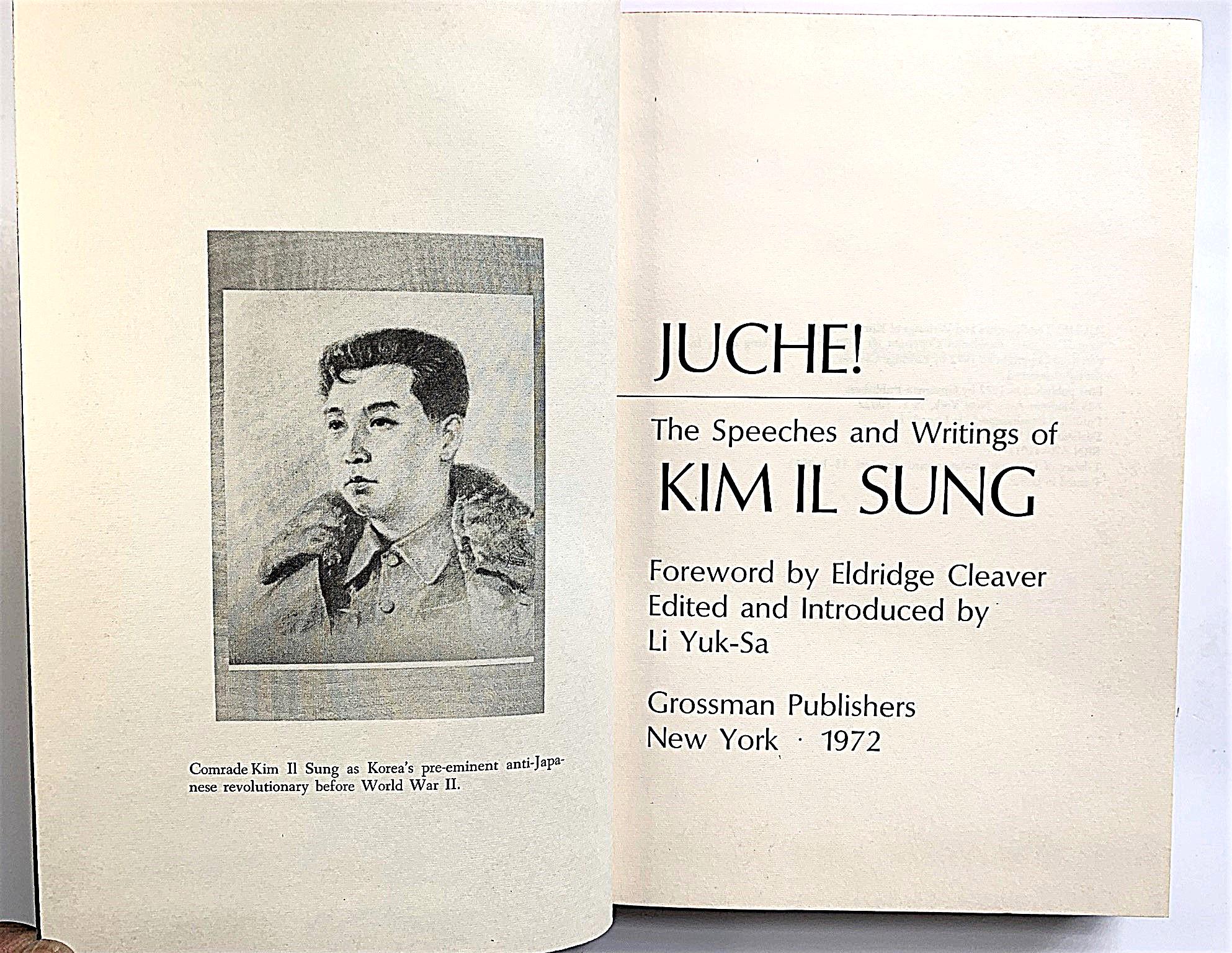
This policy has led to North Korea’s vilification in the capitalist press and its being targeted by an 80-year regime-change operation by Washington, which sought to integrate Korea into the global capitalist economy on American terms and have Korea function as a supplier of raw materials to Japan.
Rather than impoverishment and destitution that the Western media claim exists, we saw many new buildings and other signs of economic vitality in the DPRK.
Even some sources hostile to the DPRK, such as South Korea’s Bank of Korea, have conceded that the DPRK’s economy is growing. In 2024 the Bank of Korea estimated that the DPRK’s economy grew by 3.7% (although some believe this to be an underestimate).[1]
The report of the Bank of Korea said that “significant increases in manufacturing, construction and mining industries,” which it believed resulted from major government investment in those sectors as well as increased co-operation with Russia.
On our visit, one of the marvels that we observed was a new street, Hwasong Street, which is the size of a small city, in Pyongyang.
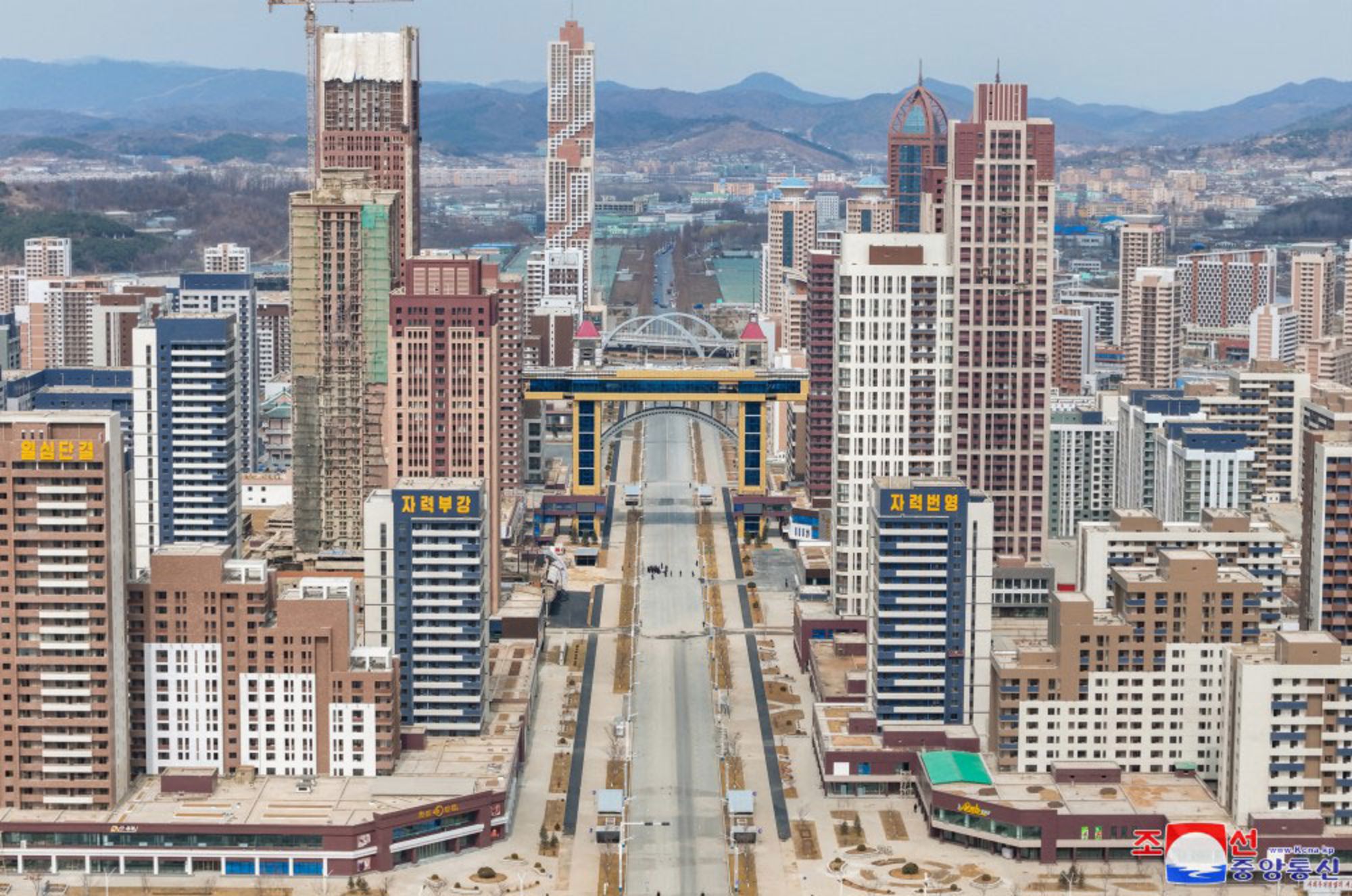
Replete with residential skyscrapers, Hwasong Street looks modern and of good quality. Despite the huge cost of construction, the DPRK gives homes to people free of charge.
While we were in the DPRK, the second stage of Hwasong Street was opened on the evening of April 16, 2024, in the presence of DPRK leader Kim Jong Un.
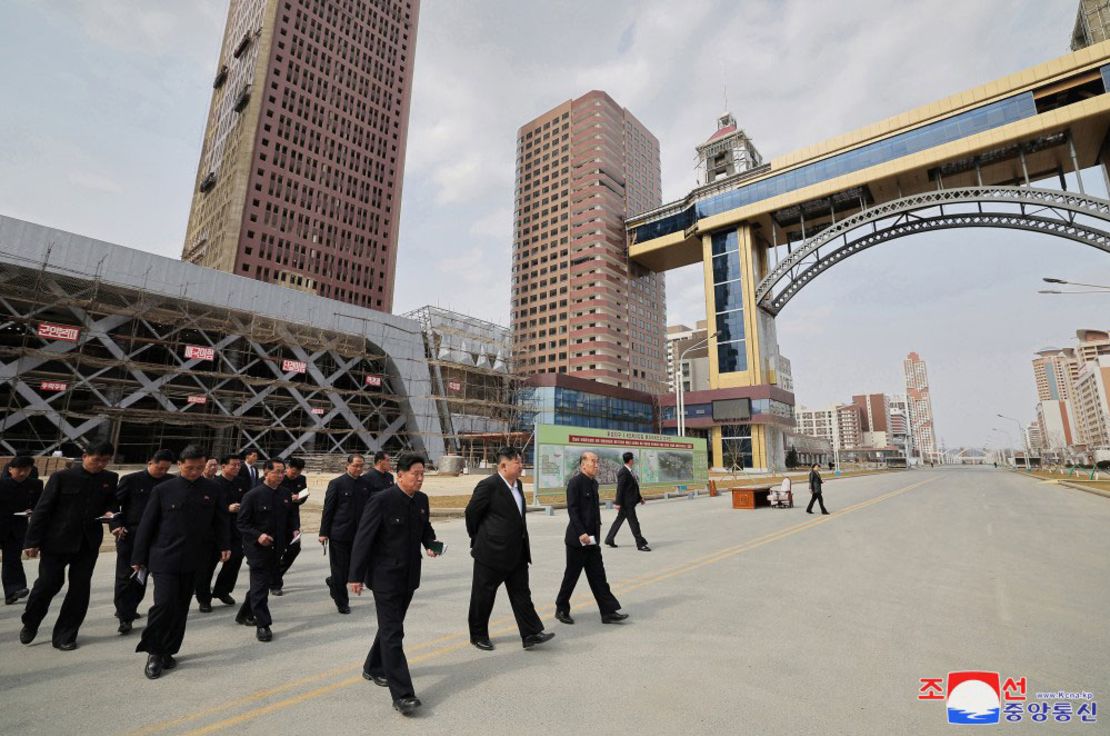
In general, construction was going on all over Pyongyang.[2]
Opposite the Pyongyang Koryo Hotel there was a new block of flats under construction and several other blocks of flats under construction were visible in the near distance as well as in other parts of Pyongyang.
I think that I can truly say that, although it was my 19th visit to the DPRK, I had never previously seen construction work on such a scale.
What is significant is that all this is being achieved without the so-called “aid” of imperialism or the South Korean puppets.
The DPRK rejected “aid” from the South Korean puppets, the UN and the U.S.
The daily newspaper of the Workers’ Party of Korea later described the “aid” of imperialism as “poisoned candy.”
The rapid development of People’s Korea, by relying on its own resources and labor, is destroying the myth that outside assistance, particularly from the U.S. and other Western countries, is somehow essential for a country’s development.
We visited the newly built Kangdong Greenhouse Vegetable Farm, which was some 34 kilometers outside Pyongyang. It had only gone into operation in March 2024 (barely a month before our visit) in the presence of Kim Jong Un. The farm had been built on the site of the former Mirim Airbase of the Korean People’s Army.
Another myth about People’s Korea parroted by the mainstream media of the imperialists is that resources are diverted from civilian use to the military, but the construction of the Kangdong Greenhouse Vegetable Farm shows that, in fact, this is simply not true.
The farm has an area of 100 square hectares with 1,800 workers and eight types of greenhouses. We were able to taste cucumbers produced on the farm.
Significantly, the Kangdong Greenhouse Vegetable Farm is not a co-operative farm but actually a state farm which means that it is owned by the whole people.
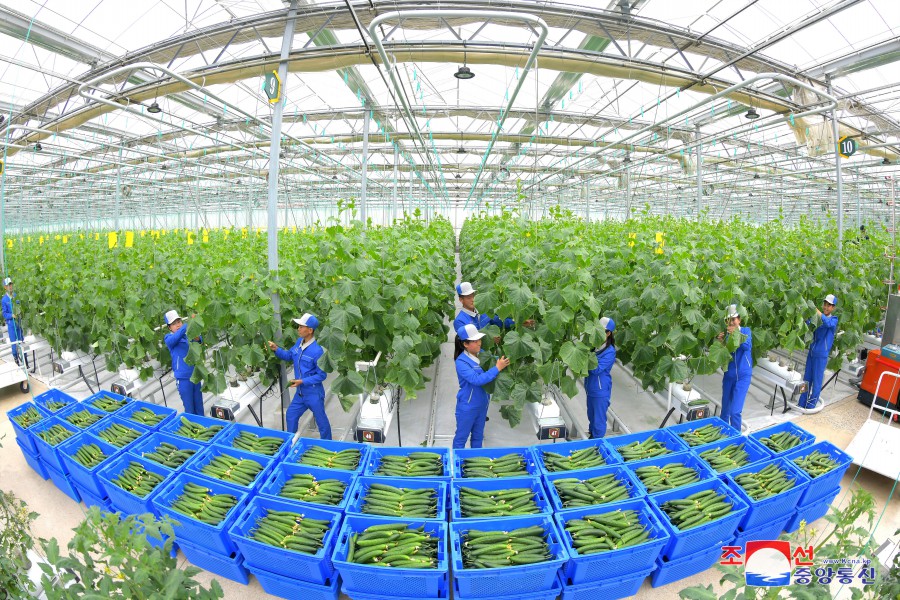
The aim is to create a similar farm in each county or province of the DPRK. Vegetables from the farm were supplied free of charge to Pyongyang citizens.
Also, dwellings for the farm’s workers were given to them free of charge.
Although there have been massive changes in the DPRK since the last time I visited, what remained unchanged was the DPRK’s consistent anti-imperialism and adherence to socialist principles. Red flags were flying on street corners and there were many revolutionary slogans in large Korean characters.
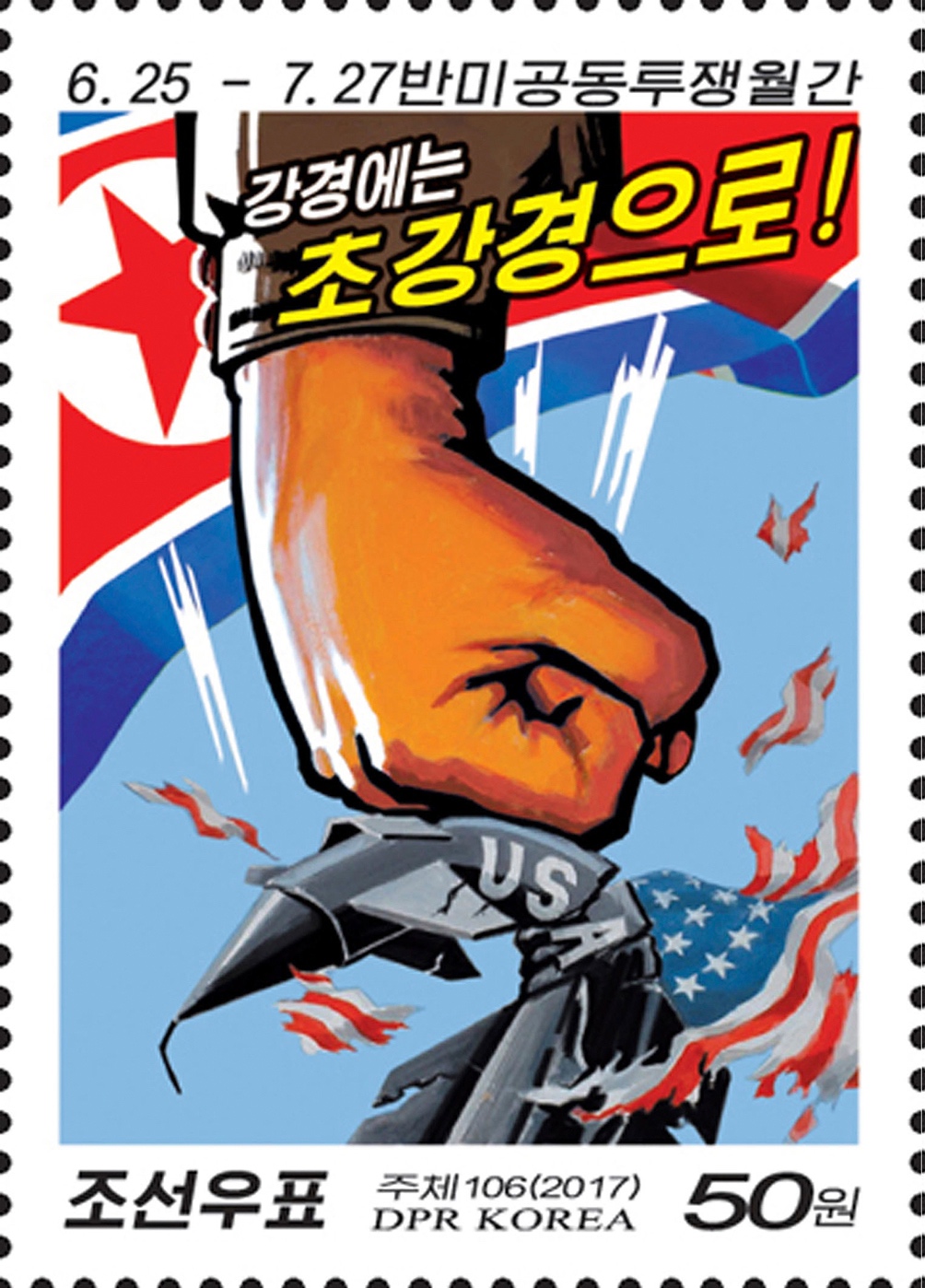
Postcards of anti-U.S. posters could be found in the bookshop of the Pyongyang Koryo Hotel and Korean Stamp Museum.
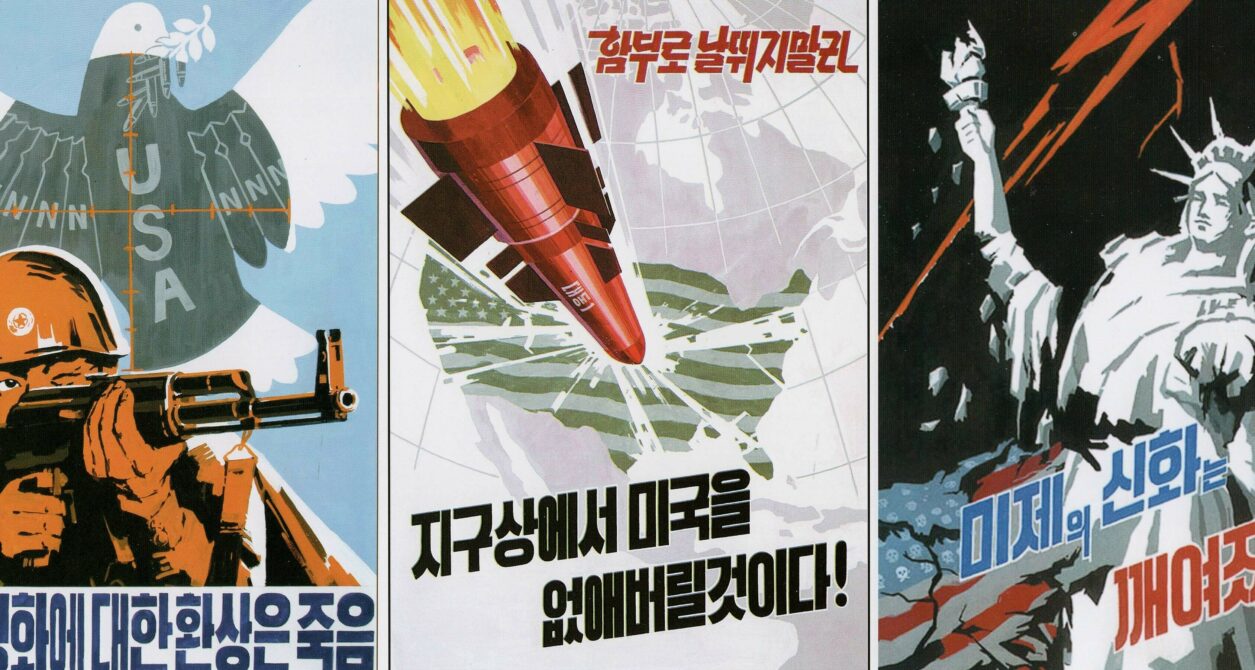
A friend of mine, who had been with me in the DPRK in 2017 and 2018, remarked that he had been worried about what he might find in the DPRK after an absence of six years, but was relieved as well when he saw that there had been no “reform” and “opening up” in the DPRK and there was a complete absence of Western influence.
Prices in the hotel shop were the same as in 2019.
Needless to say, the NK News’ “250-dollar banana” could not be found and my guide just laughed and said “ridiculous” when I told him the story.
There were no homeless people and I saw no one begging. Housing is given to people free of charge.
My guide, Mr. O, told me that he had lived in Mirae Scientists Street with his parents but that, when he married, he and his spouse were given a new flat.
The streets were spotlessly clean with no litter. There were no drug addicts, prostitutes, lumpens or decadent people. I was able to leave money in my hotel room and it was still there when I returned in the afternoon or evening.
As to tales of “human rights violations,” surely some exist but I witnesses how the DPRK actually has a fairly minimal police presence compared to other countries I have visited.
I returned to the DPRK 18 months later—in October 2025. This time I was invited to attend the celebrations for the 80th anniversary of the foundation of the Workers’ Party of Korea, the ruling party of People’s Korea.

Even before we landed in Pyongyang we got a flavor of the rapid development of People’s Korea, namely, the in-flight catering by Air Koryo (the national airline of the DPRK), which has been upgraded and improved.
The stewardess handed out boxes which contained not only the famous Air Koryo burger but biscuits and other confectionary including chocolate bars.
On the way from the airport to the hotel, we saw whole new streets that did not exist in 2019 or 2024. A block of flats near the Koryo Hotel that was under construction in April 2024 had been completed.
Our delegation traveled via Beijing, China, and arrived on the afternoon of October 7th. Waiting to check in for the Air Koryo flight, we met delegations from Brazil, Poland, Denmark, Finland, Switzerland, Bulgaria and many other countries.
It is a myth that the DPRK is “isolated.” In fact, not only did followers of the Juche Idea and friendship organizations make their way to Pyongyang, but also high-level delegations from China, Russia, Vietnam and Laos, including party general secretaries and presidents.
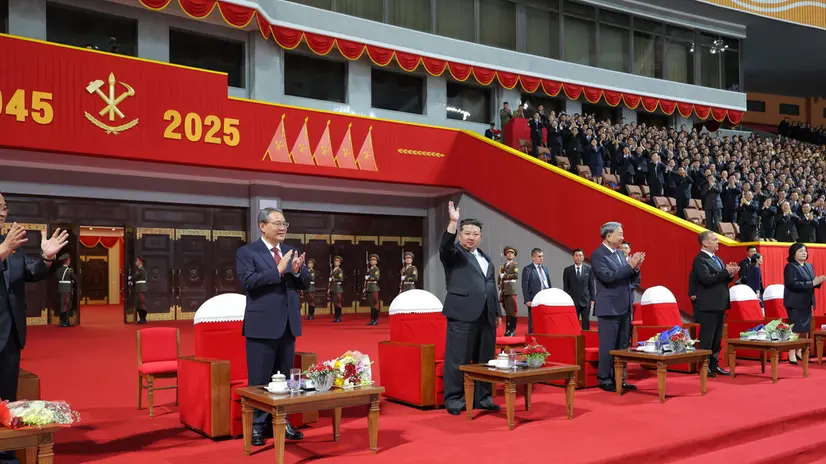
Dmitry Medvedev, the former president of Russia, attended the celebrations. There were also high-level delegations from the Islamic Republic of Iran, the Republic of Nicaragua and the ruling party of Venezuela, the PSUV. The Iranian delegation received a round of applause on the plane.
We saw that Pyongyang was a blaze of light and color at night. The imperialists are lying when they say that there is no electricity in the DPRK.
Rather than “everyone starving,” we saw no homeless or beggars on the streets and the guide for another delegation said that people received free housing and food that only costs 30 cents per month. Now the construction of the 4th stage of Hwasong Street is under way; I saw it with my own eyes.
This rapid development is being carried out under conditions of intense sanctions by the imperialists as well as natural disasters and the DPRK’s border being closed for four years due to the global health crisis. It is a miracle of self-reliance and shows what a socialist country can do when it relies on its own resources and believes in itself.
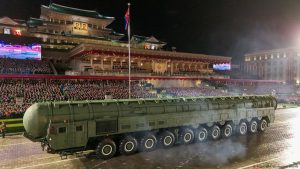
The set piece of any major DPRK celebration is the military parade. Although I had previously attended DPRK military parades during the day, it was my first time attending one at night. The parade was not held under easy or ideal conditions, it was raining and windy. The parade included the Korean Peoples’s Army A fighters, who had fought for the liberation of Kursk in Russia (not Ukraine!) and new ICBMs.
A friend from Italy said to me, as the new ICBM rumbled past, “That is for Washington.” At the end of the parade, Kim Jong Un came and waved at the crowd; to my astonishment I found myself within five meters of him.
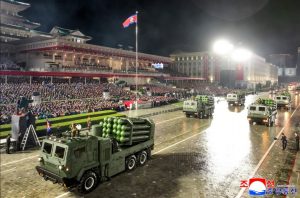
No less impressive was the Public Procession and Torchlight Gala on October 11th on Kim Il Sung Square. The sky was lit up by lasers first and fireworks later. The procession was led by a float which depicted the history of the Workers’ Party of Korea starting with the Down with Imperialism Union float. I was delighted to see modern DPRK farm tractors in the procession.
We were among the first foreigners to visit the Central Cadres Training School of the Workers’ Party of Korea, which is situated on the outskirts of Pyongyang. It is the size of a university. Displayed at the school are portraits of Marx and Lenin, Engels and Stalin.
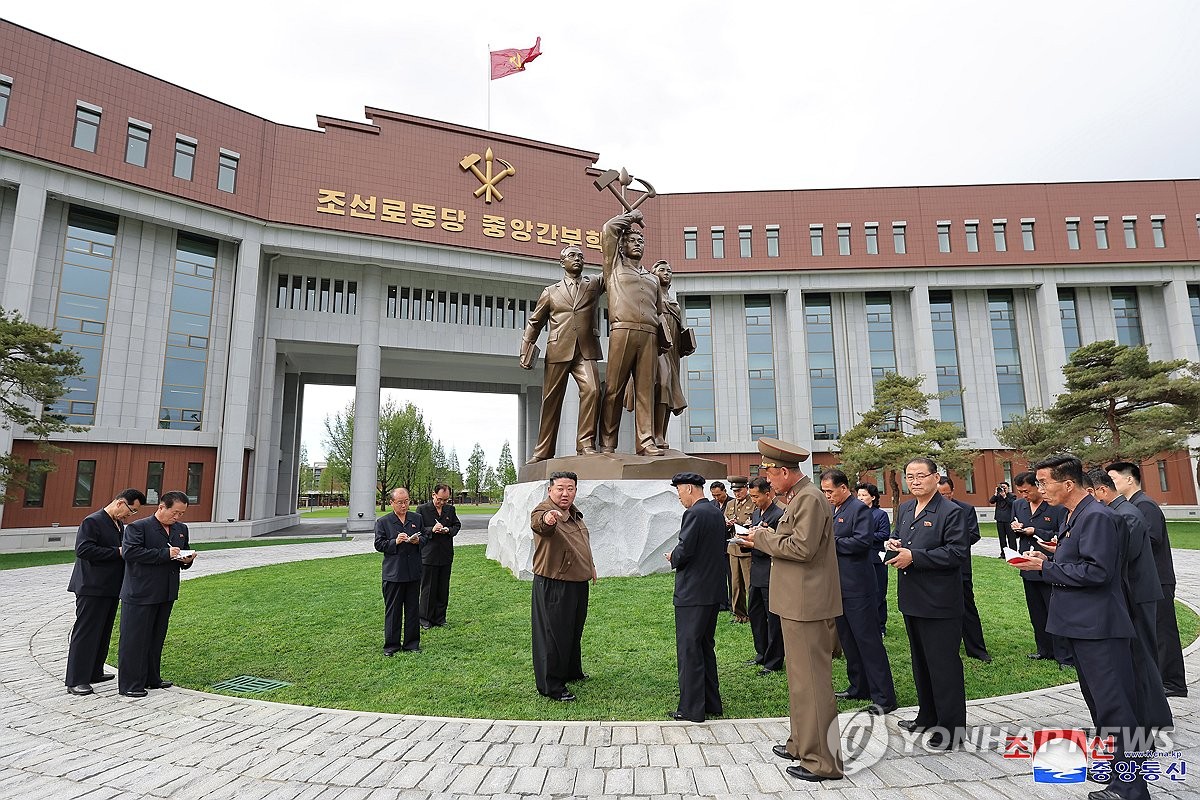
In recent years a new trope of anti-DPRK propaganda has emerged, namely, that the DPRK “abandoned Marxism-Leninism” or “deleted reference to Marxism-Leninism” but clearly, from what we saw, such assertions did not fit reality.
Based on what I saw with my own eyes in the DPRK, the sanctions policy of the U.S. and its allies is a flop, a pathetic failure.
Other independent foreign visitors have also seen signs of economic growth and prosperity in North Korea and found media coverage in the U.S. to be misleading and cartoonish in its nature. See, for example, Jeremy Kuzmarov, “Contrary to Relentless Media Demonization, A Swiss Businessman Who Worked in North Korea For Seven Years Found Much To Like About the Country,” CovertAction Magazine, May 5, 2022.
CovertAction Magazine is made possible by subscriptions, orders and donations from readers like you.
Blow the Whistle on U.S. Imperialism

Click the whistle and donate
When you donate to CovertAction Magazine, you are supporting investigative journalism. Your contributions go directly to supporting the development, production, editing, and dissemination of the Magazine.
CovertAction Magazine does not receive corporate or government sponsorship. Yet, we hold a steadfast commitment to providing compensation for writers, editorial and technical support. Your support helps facilitate this compensation as well as increase the caliber of this work.
Please make a donation by clicking on the donate logo above and enter the amount and your credit or debit card information.
CovertAction Institute, Inc. (CAI) is a 501(c)(3) non-profit organization and your gift is tax-deductible for federal income purposes. CAI’s tax-exempt ID number is 87-2461683.
We sincerely thank you for your support.
Disclaimer: The contents of this article are the sole responsibility of the author(s). CovertAction Institute, Inc. (CAI), including its Board of Directors (BD), Editorial Board (EB), Advisory Board (AB), staff, volunteers and its projects (including CovertAction Magazine) are not responsible for any inaccurate or incorrect statement in this article. This article also does not necessarily represent the views the BD, the EB, the AB, staff, volunteers, or any members of its projects.
Differing viewpoints: CAM publishes articles with differing viewpoints in an effort to nurture vibrant debate and thoughtful critical analysis. Feel free to comment on the articles in the comment section and/or send your letters to the Editors, which we will publish in the Letters column.
Copyrighted Material: This web site may contain copyrighted material the use of which has not always been specifically authorized by the copyright owner. As a not-for-profit charitable organization incorporated in the State of New York, we are making such material available in an effort to advance the understanding of humanity’s problems and hopefully to help find solutions for those problems. We believe this constitutes a ‘fair use’ of any such copyrighted material as provided for in section 107 of the US Copyright Law. You can read more about ‘fair use’ and US Copyright Law at the Legal Information Institute of Cornell Law School.
Republishing: CovertAction Magazine (CAM) grants permission to cross-post CAM articles on not-for-profit community internet sites as long as the source is acknowledged together with a hyperlink to the original CovertAction Magazine article. Also, kindly let us know at info@CovertActionMagazine.com. For publication of CAM articles in print or other forms including commercial internet sites, contact: info@CovertActionMagazine.com.
By using this site, you agree to these terms above.
About the Author
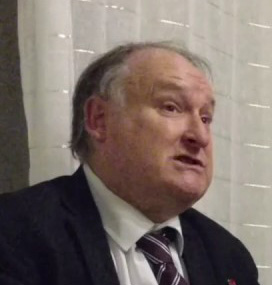
Dermot Hudson was born in London, UK but grew up in Winchester.
He studied History at the University of Winchester and also did some postgraduate study at the University of Greenwich. He has visited the Democratic People’s Republic of Korea 18 times and is the Chairman of the Korean Friendship Association of the UK as well the founder of the British Group for the Study of the Juche Idea.
In 2016 Dermot Hudson was awarded the Doctorate of Socio-politics by the Korean Association of Social Scientists.
He can be reached at juche007@yahoo.co.uk.


A Venezuelan woman living in Canada is looking at the U.S. capture of Nicolás Maduro as a sign of hope despite an uncertain future for her home country.
Recently, Venezuela has been in the news because of turmoil and conflict, she has happy memories of her home country before she came to Canada when she was eight-years-old.
“I remember the smell, I remember the people, the food. Venezuela is such a beautiful country and the people are so friendly,” she said
“When we left, Venezuela was still a nice place.”
She says her family moved to Canada due to the policies of then-president Hugo Chávez and fears of a worsening crime and economic downturn — fears that came to pass.
Maduro assumed the presidency after Chávez died in 2013, and his time in office was marked by food shortages, human rights abuses and rigged elections.
“We just look at pictures of Venezuela and we think, are we ever going to go back?” she said.
Now she says there’s hope things could change, though she acknowledges the situation is complicated.