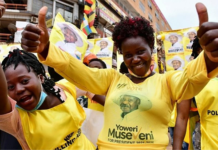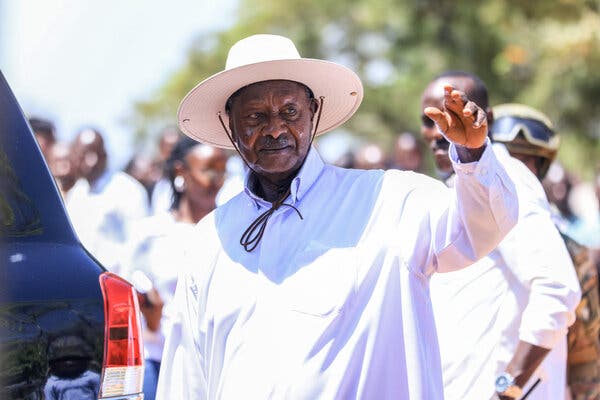
On January 17, Yoweri Museveni was declared the winner of Uganda’s presidential election over Bobi Wine with 71% of the vote, extending a four-decade grip on political power.
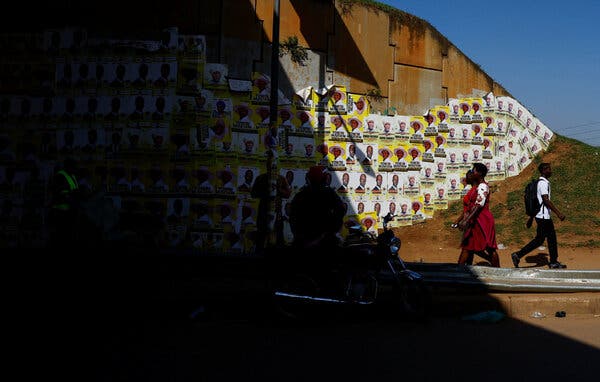
American news outlets like NPR and The New York Times cast doubt on the legitimacy of the election, noting that the vote took place under a government-imposed internet blackout and was marred by reports of deadly violence and widespread intimidation, and that Wine was forced into hiding after police raided his home.[1]
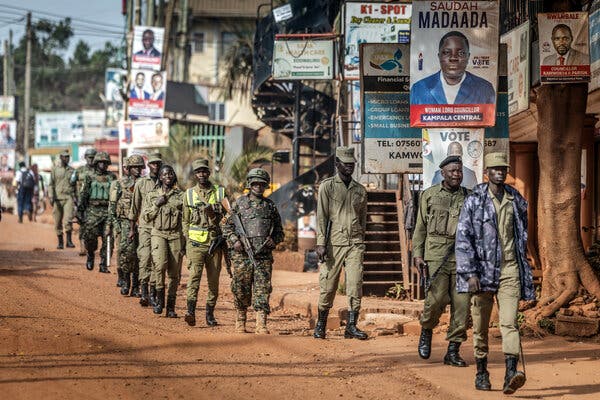
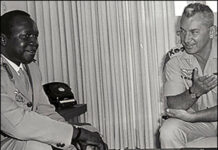
In its election report, written by Matthew Mpoke Bigg, The New York Times discussed how integral Museveni was to Uganda’s modern history, noting how he had formed a guerrilla movement in Tanzania to fight against dictator Idi Amin and that he fought his way to power in 1986.
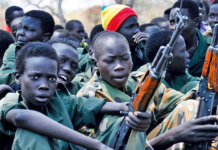
Bigg goes on to note how it took years for Museveni to effectively consolidate his power and that he suppressed a rebellion in northern Uganda at a high civilian cost and now “has troops in the east of the Democratic Republic of Congo (DRC) as well as in South Sudan, both of which are significant markets for Uganda’s economy.”
Indeed, Uganda has troops in the Sudan and DRC, but Bigg left out that Museveni ordered them there as part of illegal invasions backed by the U.S. with the intent of plundering mineral wealth.
Bigg also left out that Museveni’s suppression of the rebellion in northern Uganda reached genocidal proportions and was also subsidized in part by Uncle Sam.[2]
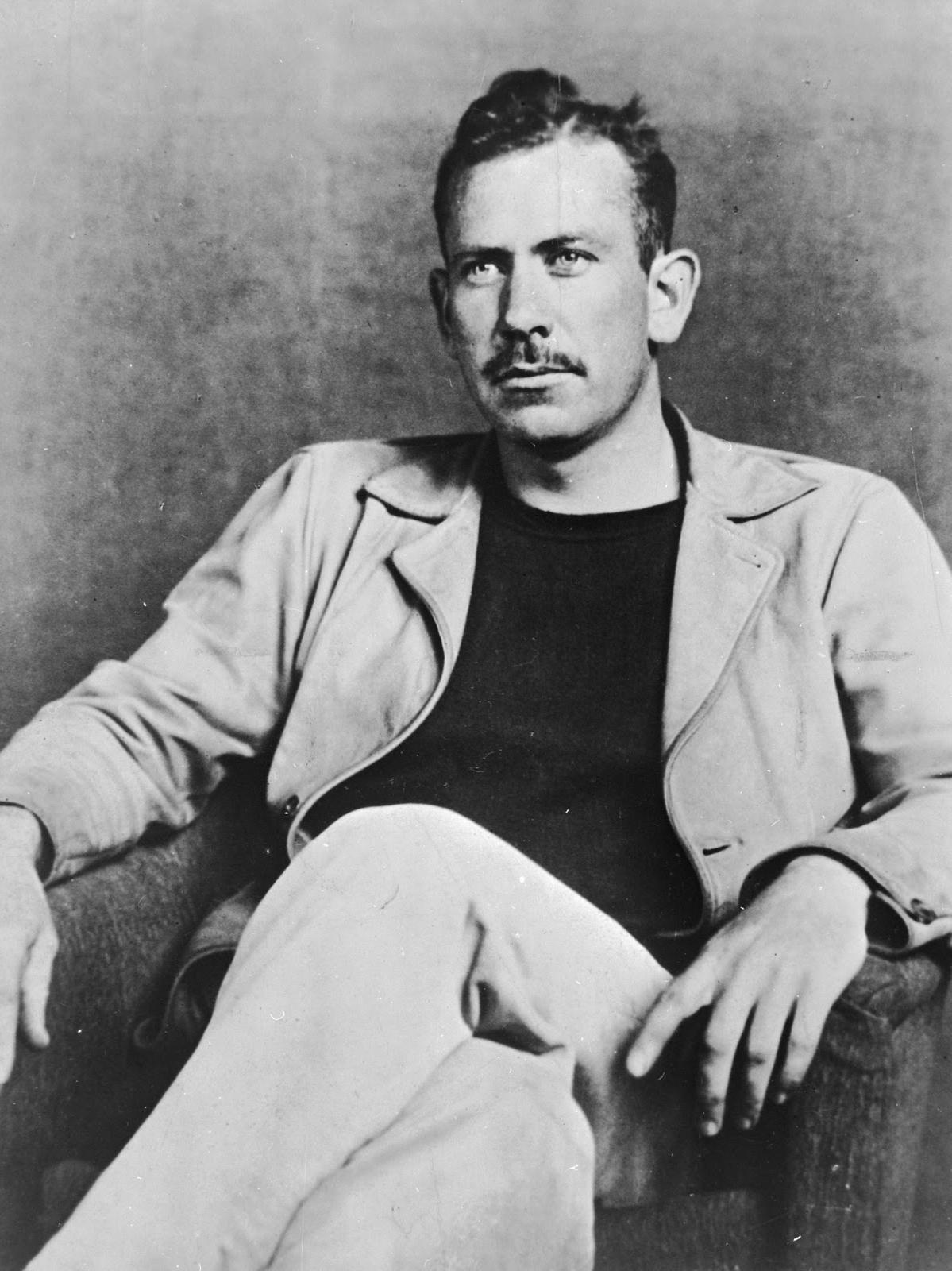
Commenting on his journalistic work during World War II, John Steinbeck wrote that “correspondents weren’t liars, but it is in the things not mentioned that the untruth lies.”[3]
Bigg and The New York Times never mention how outside powers led by the U.S. have helped empower Museveni since the mid-1980s and are complicit in his crimes.
Since 2020 alone, the U.S. government has provided Uganda with $3 billion in foreign aid. From 2001 and 2019, U.S. aid to Uganda eclipsed $8 billion.[4]
During this latter period, Uganda was a top recipient of the Pentagon’s global train-and-equip program, receiving well over $300 million in military support between 2011 and 2021. Between 2006 and 2026, total U.S. military aid to Uganda is estimated to have exceeded $1 billion.[5]
Journalist Helen Epstein wrote that, since meeting with then U.S. President Ronald Reagan in 1987, Museveni “has had far more contact with high-level American and British officials than any other living African leader.”
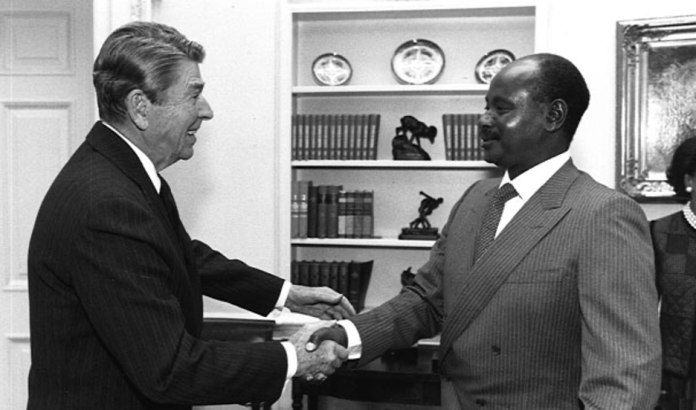
The motive underlying U.S. foreign policy was explained in a New York Times article in 1998, which reported that Museveni’s “style of self-reliant government, fiscal discipline and free-market economics has made him the darling of United States diplomats who are trying to remold America’s role in Africa…with more trade and investment.”[6]
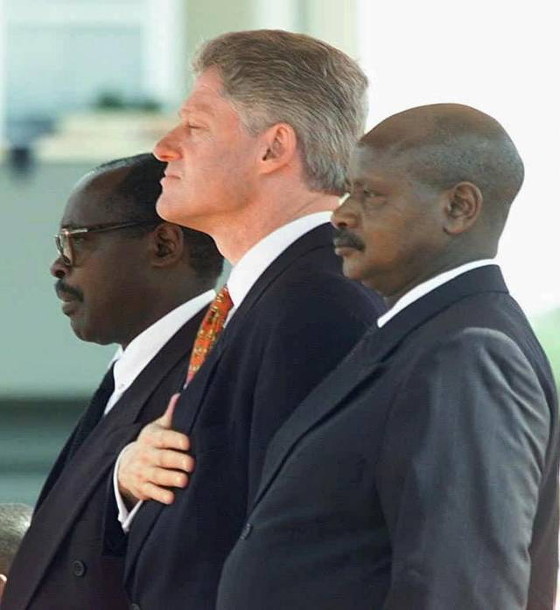
Museveni’s neo-liberal economic policies have included sweeping privatization initiatives that opened up Uganda’s economy to U.S. and other Western-based multi-national corporations.[7]
Museveni has further curried the U.S.’s favor by allowing Uganda to become a crucial transport and logistics hub for the U.S. Africa Command (AFRICOM), with at least three installations in the country at Entebbe, Kitgum and Kasenyi.[8]
The Entebbe base was used by U.S. Special Forces to carry out counterinsurgency operations against the Lords Resistance Army (LRA), a guerrilla force that drew support from the northern Acholi people who had been terrorized by the Ugandan army since Museveni came to power.[9]
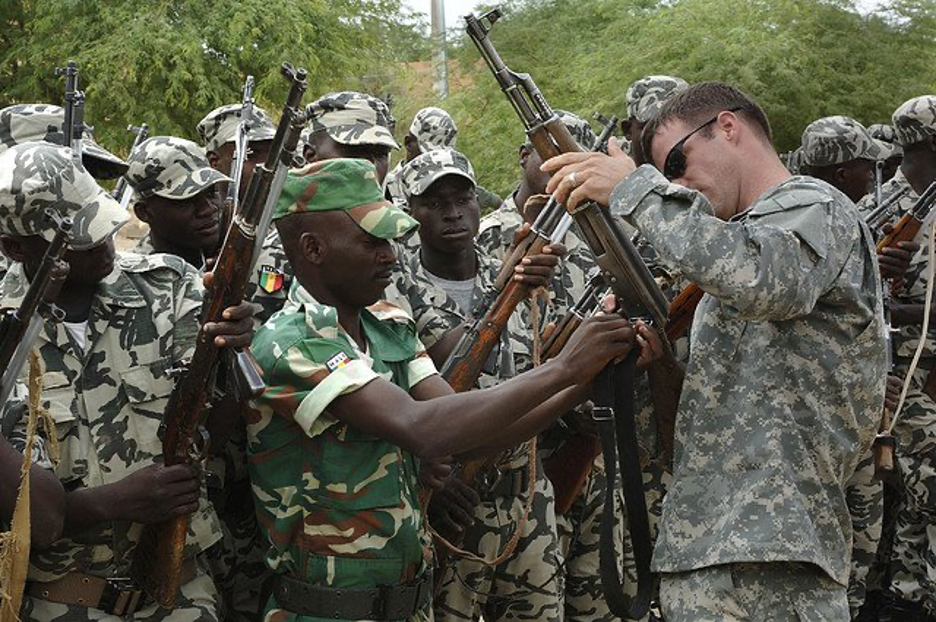
Additionally, Museveni’s Uganda helped advance U.S. imperial interests by sending thousands of Ugandan soldiers into Somalia under the cover of a UN mission.[10]
In the late 1980s, Uganda funneled U.S. economic aid and weapons to the Tutsi-led Rwandan Patriotic Front (RPF), a U.S.-UK proxy that conquered Rwanda and went on to invade the DRC numerous times and helped open it up for Western corporations.[11]
These and other invaluable services[12] that explain long-standing U.S. government support for Museveni were omitted from The New York Times and other U.S. media outlets.
The political implications are considerable—no less in helping engrain the public stereotype of African backwardness by obscuring the outside forces that have helped Museveni stay in power for so long.

Wide-scale ballot stuffing and voter fraud were also reported and how opposition leader Kizza Besigye was in jail. Uganda’s 2026 election was a repeat of 2021 when Museveni defeated Wine with 59% of the vote amidst allegations of voter intimidation and fraud. The World Socialist Web Site reported that hundreds of opposition supporters were arrested and that many were tortured. ↑
See Mahmood Mamdani, Slow Poison: Idi Amin, Yoweri Museveni, and the Making of the Ugandan State (Cambridge, MA: Harvard University Press, 2025), 213. Milton Obote, a socialist who ruled Uganda intermittently from the mid-1960s through the early 1980s, wrote presciently in his 1990 pamphlet Notes on Concealment of Genocide in Uganda that “Museveni’s propensity for bloodshed did not start in Luwero [northern Uganda]. The UPC [Uganda People’s Congress] government contained this mass killer within the Luwero Triangle. The [Tito] Okello and Okello junta facilitated the killer, and now he brutalises the whole country. Ugandans who, for whatever reason, have not seen Museveni as a killer, or think that they would be safe because they are close to him, are in for a rude shock. Museveni kills not only those he sees or regards as his enemies but also those closest to him.” For recent developments confirming this assessment, see Helen Epstein, Another Fine Mess: America, Uganda, and the War on Terror (New York: Columbia Global Reports, 2017). ↑
Steinbeck quoted in Michael S. Sherry, The Rise of American Air Power: The Creation of Armageddon (New Haven, CT: Yale University Press, 1987), 135. The quote came from Steinbeck’s book, Bombs Away: The Story of a Bomber Team (New York: Viking Press, 1942). ↑
Godber Tumushabe, a Ugandan lawyer and activist, stated after Museveni’s 2021 election victory that “the international donors, and particularly the United States, are the biggest enablers of Museveni’s authoritarianism…They underwrite all of Uganda’s public services—health, infrastructure, et cetera—which allows Museveni to spend massively on a security apparatus and a network of patronage.” ↑
U.S.-trained Ugandan military officers have been found responsible for torture, abductions and disappearances within Uganda and abroad. ↑
Jean Shaoul and Kipchumba Ochieng noted in an article in the World Socialist Web Site that Museveni “implemented a neo-liberal regime at the service of international capital, for which he was rewarded with ‘development aid’ and praised as a ‘beacon in the Central African region’ by former U.S. Secretary of State Madeleine Albright.” According to Shaoul and Ochieng, the social crisis bred by Museveni’s neo-liberal policies is “most acute among young people, who make up more than 70 percent of the population. More than half of those aged 18 to 30 are not in employment, education or training, according to the UNDP, with young women disproportionately affected. Only 90,000 graduates—around 13 percent—secure formal‑sector jobs each year. For the vast majority of young people, the only options are unemployment or precarious and hugely exploitative work in the informal economy, without contracts, benefits, or job security amid a soaring cost of living crisis.” ↑
Mamdani, Slow Poison, 233-52. Mamdani discusses the orgy of corruption resulting from these latter initiatives, which has resulted in Uganda being ranked among the most corrupt countries in the world. Neoliberalism has also left Uganda as one of the poorest countries in the world. In recent years, it has earned more money from the export of mercenaries then from its staple crop, coffee. ↑
Mamdani, Slow Poison, 266. ↑
Jeremy Kuzmarov, Obama’s Unending Wars: Fronting the Foreign Policy of the Permanent Warfare State (Atlanta: Clarity Press, 2019), 96, 97. ↑
Mamdani, Slow Poison, 265, 266. ↑
See Jeremy Kuzmarov, Warmonger: How Clinton’s Malign Foreign Policy Launched the U.S. Trajectory from Bush II to Biden (Atlanta: Clarity Press, 2024). ↑
Museveni has done a further favor by agreeing to accept migrants from the U.S. who are deported by the Trump administration. ↑
CovertAction Magazine is made possible by subscriptions, orders and donations from readers like you.
Blow the Whistle on U.S. Imperialism

Click the whistle and donate
When you donate to CovertAction Magazine, you are supporting investigative journalism. Your contributions go directly to supporting the development, production, editing, and dissemination of the Magazine.
CovertAction Magazine does not receive corporate or government sponsorship. Yet, we hold a steadfast commitment to providing compensation for writers, editorial and technical support. Your support helps facilitate this compensation as well as increase the caliber of this work.
Please make a donation by clicking on the donate logo above and enter the amount and your credit or debit card information.
CovertAction Institute, Inc. (CAI) is a 501(c)(3) non-profit organization and your gift is tax-deductible for federal income purposes. CAI’s tax-exempt ID number is 87-2461683.
We sincerely thank you for your support.
Disclaimer: The contents of this article are the sole responsibility of the author(s). CovertAction Institute, Inc. (CAI), including its Board of Directors (BD), Editorial Board (EB), Advisory Board (AB), staff, volunteers and its projects (including CovertAction Magazine) are not responsible for any inaccurate or incorrect statement in this article. This article also does not necessarily represent the views the BD, the EB, the AB, staff, volunteers, or any members of its projects.
Differing viewpoints: CAM publishes articles with differing viewpoints in an effort to nurture vibrant debate and thoughtful critical analysis. Feel free to comment on the articles in the comment section and/or send your letters to the Editors, which we will publish in the Letters column.
Copyrighted Material: This web site may contain copyrighted material the use of which has not always been specifically authorized by the copyright owner. As a not-for-profit charitable organization incorporated in the State of New York, we are making such material available in an effort to advance the understanding of humanity’s problems and hopefully to help find solutions for those problems. We believe this constitutes a ‘fair use’ of any such copyrighted material as provided for in section 107 of the US Copyright Law. You can read more about ‘fair use’ and US Copyright Law at the Legal Information Institute of Cornell Law School.
Republishing: CovertAction Magazine (CAM) grants permission to cross-post CAM articles on not-for-profit community internet sites as long as the source is acknowledged together with a hyperlink to the original CovertAction Magazine article. Also, kindly let us know at info@CovertActionMagazine.com. For publication of CAM articles in print or other forms including commercial internet sites, contact: info@CovertActionMagazine.com.
By using this site, you agree to these terms above.
About the Author
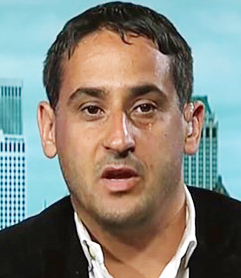
Jeremy Kuzmarov holds a Ph.D. in American history from Brandeis University and has taught at numerous colleges across the United States. He is regularly sought out as an expert on U.S. history and politics and co-hosts a radio show on New York Public Radio and on Progressive Radio News Network called “Uncontrolled Opposition.”
He is Managing Editor of CovertAction Magazine and is the author of eight books, including Obama’s Unending Wars (Clarity Press, 2019), The Russians Are Coming, Again, with John Marciano (Monthly Review Press, 2018), Warmonger. How Clinton’s Malign Foreign Policy Launched the U.S. Trajectory From Bush II to Biden (Clarity Press, 2023); with Dan Kovalik, Syria: Anatomy of Regime Change (Baraka Books, 2025), and Political Assassinations in America: The Intricate Nexus of Deep State Crime (Clarity Press, 2026).
Besides these books, Kuzmarov has published hundreds of articles and contributed to numerous edited volumes, including one in the prestigious Oxford History of Counterinsurgency .
He can be reached at jkuzmarov2@gmail.com and found on substack here.