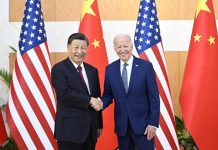
The United States of America seeks to pretend that it earnestly is focused on enforcing the 1823 Monroe Doctrine toward Central America, Latin America and the Caribbean. Its 2025 National Security Strategy and articles in the U.S. mainstream media seek to impart the perception of an America shifting away from Asia to “protect the homeland.” However, this could not be further from the truth.
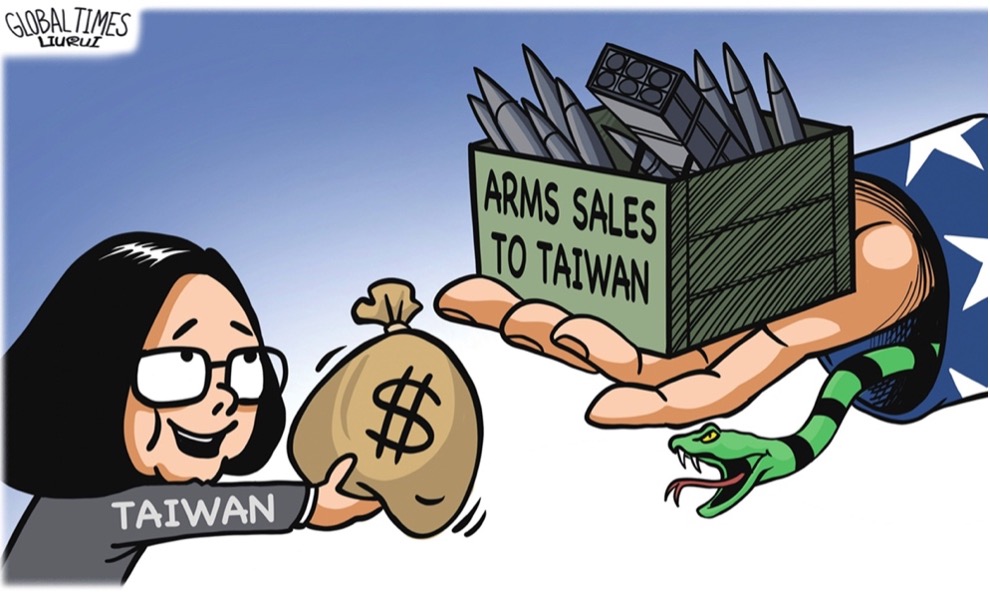
Barely a month after America announced an $11.1 billion arms sale to Taiwan, this is an opportune moment to emphasize that, rather than a throwaway sale for the U.S. military-industrial complex, this is part of a U.S. campaign to prop up Taiwan against the Chinese mainland while manufacturing a delusion among Western populations that Taiwan is an independent country.
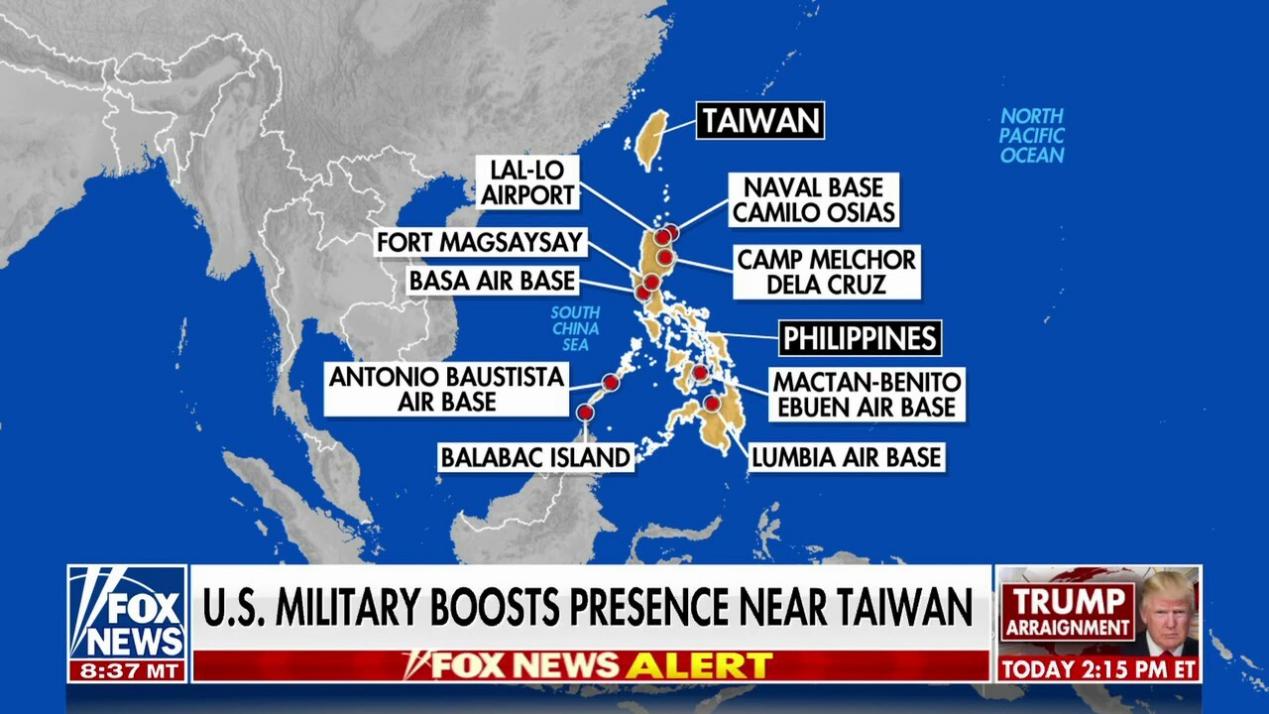
The U.S. has surrounded Taiwan with military bases, and in the late 2010s began implementing the “porcupine strategy” by which it was to be heavily militarized as a base of potential aggression against China—as it functioned during the Cold War when the CIA mounted covert operations across Southeast Asia from there.
Latest Round of EU and U.S. Provocations Toward China
On March 8, 2024, Operation MIST was announced by the Inter-Parliamentary Alliance on China (IPAC), funded by the National Endowment for Democracy (NED).[1]
What is Operation MIST? According to IPAC:
“The campaign, which grew out of the IPAC Prague Summit in September 2023, aims to rebut President Macron’s contention that ‘Europe should not be caught in conflicts which are not ours.”
One of China’s options to reunify Taiwan with the mainland is to blockade the island to cut it off from U.S. military supplies and broader military support.
In a bid to weaken China’s ability to exercise this non-land intervention option for reunification, IPAC’s campaign focused on pushing narratives that claim a blockade of the Taiwan Strait could cost the world somewhere between $2.5 to $10 billion USD.
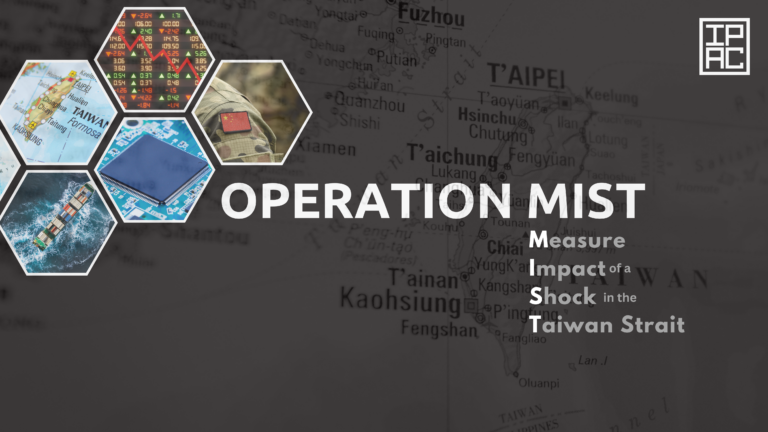
The key part sneaks under the radar: What does it mean to “assess and measure the domestic economic impact of a shock in the Taiwan Strait”?
To understand what this likely means, we have to jump many months ahead to the proposed legislation that would form a “tiger team.”
On October 6, 2025, Senate Foreign Relations Committee Chairman James Risch, introduced the “Deter PRC Aggression Against Taiwan Act.”
The committee’s press release notes: “This legislation will establish a China Sanctions Task Force led by the State Department and Treasury Department.” (Emphasis added)
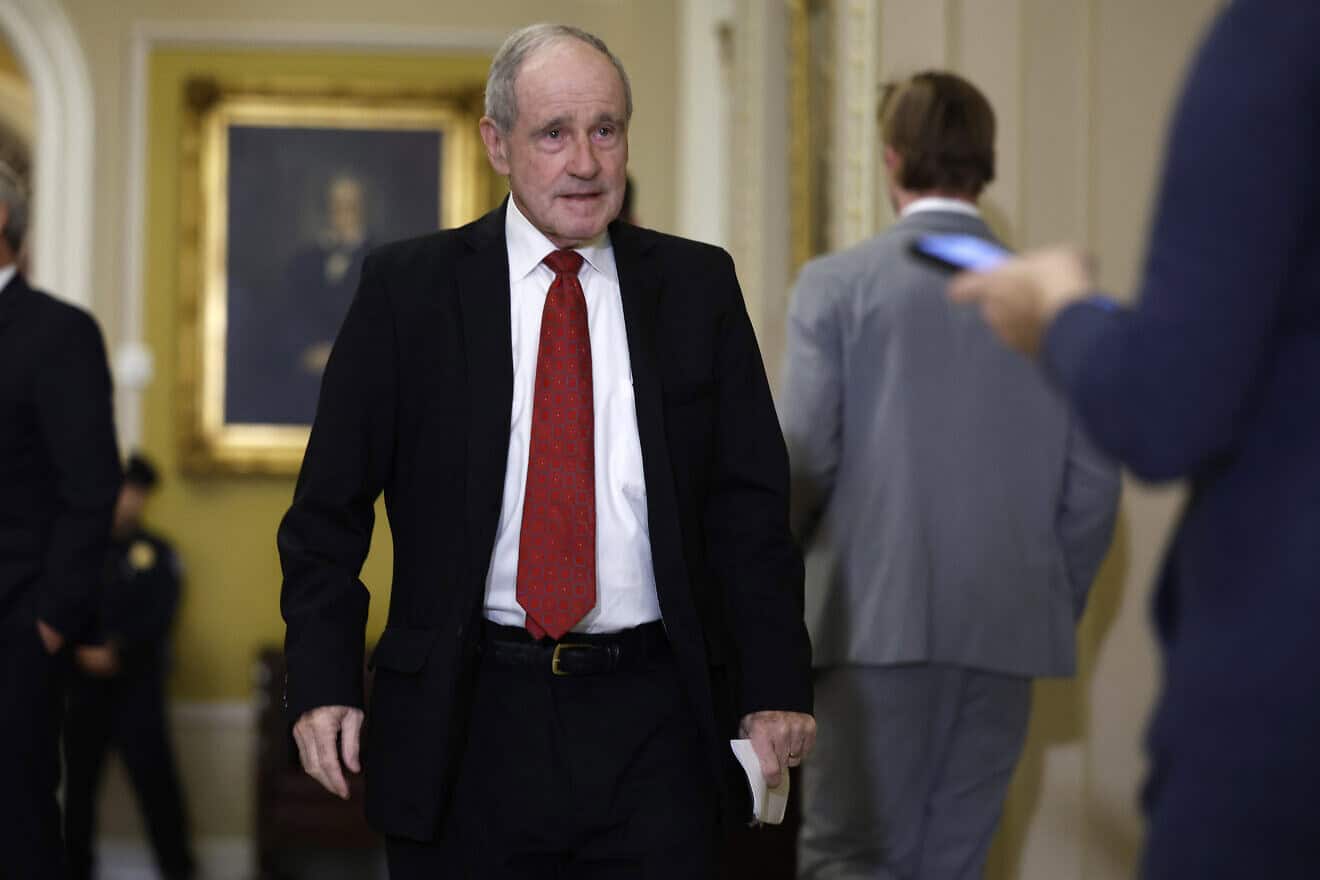
That “interagency task force,” known as the “Tiger Team,” would, among other tasks: “Identify sanctions targets and economic actions the U.S. can impose immediately following any effort from China to take physical or political control of Taiwan.” (Emphasis added)
The legislation provides more detail on what targets would be selected by the “Tiger Team”:
“It is the sense of Congress that the United States must be prepared to take immediate action to impose sanctions with respect to any military or non-military entities owned, controlled, or acting at the direction of the Government of the PRC or the Chinese Communist Party that are supporting actions by the Government of the PRC or by the Chinese Communist Party.” (Emphases added)
And what are the grounds for sanctioning any Chinese-owned company it wishes, especially those with subsidiaries in the U.S. which can be easily pushed into a forced sale for pennies, or become the victim of outright seizures Nexperia-style?
“(4) to take significant action against Taiwan, including—
(A) conducting a naval blockade of Taiwan;
(B) seizing any outlying island of Taiwan; or
(C) perpetrating a significant physical or cyber attack on Taiwan that erodes the ability of the governing institutions in Taiwan to operate or provide essential services to the citizens of Taiwan.” (Emphasis added)
Now consider again the IPAC “operation” started to “assess and measure the domestic economic impact of a shock in the Taiwan Strait.”
How would the U.S. be able to mitigate “domestic economic impact” of a Chinese blockade of Taiwan? In part, by understanding what Chinese-owned enterprises exist in the U.S. and the rest of the West, to enable sanctions and/or their seizure under the fog of war.
But what would be necessary for the U.S. and broader Western public to accept such seizures? False consciousness that Taiwan is an independent country, rather than a long-standing part of China which has been ripped away from the mainland’s control by colonial powers.
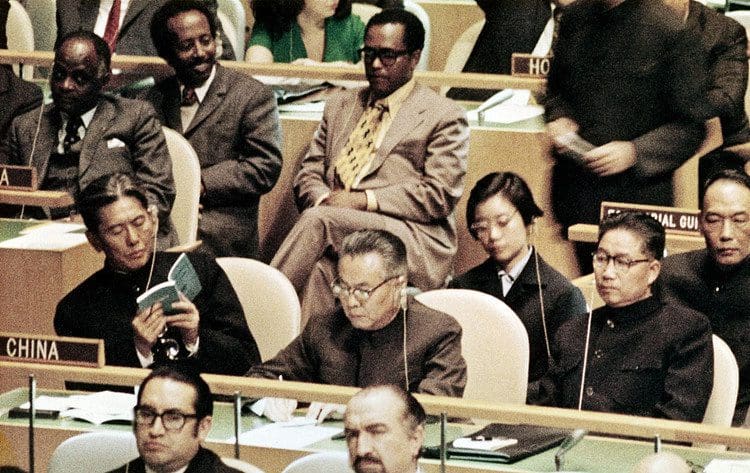
To do this they chose to target UNGA Resolution 2758. Why? Because this United Nations (UN) resolution, implemented in 1971, saw the representation of China at the UN switch from the “Republic of China” (ROC) to the People’s Republic of China (PRC).
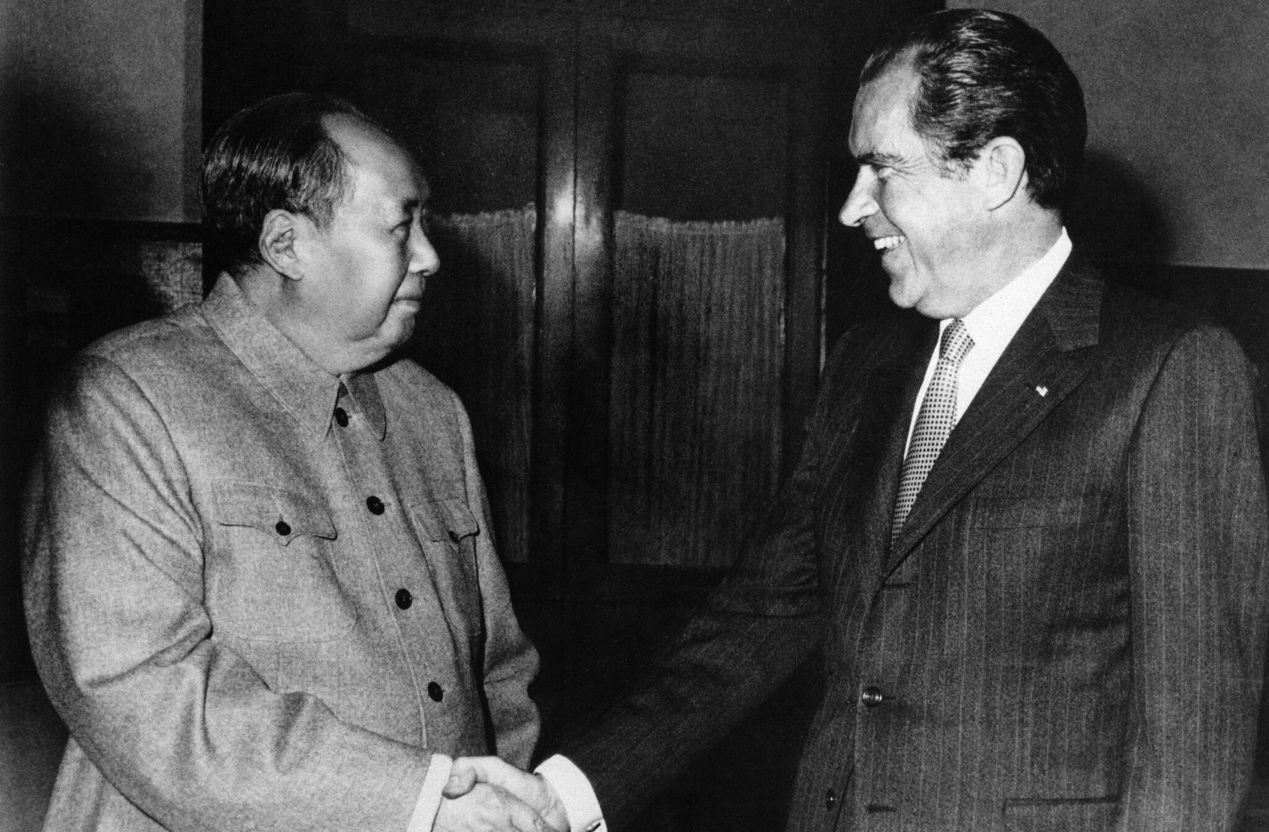
The ROC was governing the Taiwan area of China, having fled to this region after their defeat in the Chinese Civil War. The victory of the communists led to the founding of the PRC in 1949, which governs the Chinese mainland and intends to reunify Taiwan with the mainland.
The games began with a German Marshall Fund of the United States (GMF) report in April 2024. It was in this report where the narrative was shaped that UNGA Resolution 2758 only constituted a narrow shift of legal representation for China in the UN system. Now why is this important?
Because for this to matter, Taiwan would have to be considered a “sovereign state” which, despite what the report concedes, was battling it out to represent China at the UN until its defeat in 1971, and somehow twisted its failure to represent China into an opportunity to claim that China does not rightfully represent it on the international stage.
On July 31, 2024, members of IPAC agreed upon the “IPAC MODEL RESOLUTION ON 2758.” This built upon the GMF report to create a resolution for IPAC to utilize in pushing other Western legislators to push for Taiwan to be treated as a sovereign state.
Taiwan’s media release of September 3, 2024—centered around the UN General Debate for 2024—bears striking similarities to the IPAC model resolution. Both push the narrative that, because the Taiwan region of China has 23.5 million people but is not under the central government’s control, it must be allowed to have “meaningful participation” in the UN system.
As well, both push the separatist narrative that Taiwan is not part of China and, therefore, that Resolution 2758 does not preclude a right for China to represent Taiwan in the UN (even though it is a part of China).
This section is remarkable in its foreshadowing:
“In the face of China’s cognitive warfare, prompt rebuttals and clarifications must be issued. Otherwise, the objective status quo across the Taiwan Strait—in which neither the ROC (Taiwan) nor the PRC is subordinate to the other—will utterly change, allowing China to lay a legal foundation for an armed invasion of Taiwan. The international community would then lose its legitimate right to assist Taiwan in accordance with the UN Charter, which calls for maintaining international peace and security and resolving international disputes through peaceful means.”
The far-right Japanese government, led by Prime Minister Sanae Takaichi, triggered a serious ongoing row with China by saying that a Chinese military blockade to reunify Taiwan with the mainland could be a “survival-threatening situation” that allows the Japanese Self-Defense Forces (SDF) to be activated. This would surely entail violent attempts in coordination with U.S. troops occupying Japan, to break the blockade.
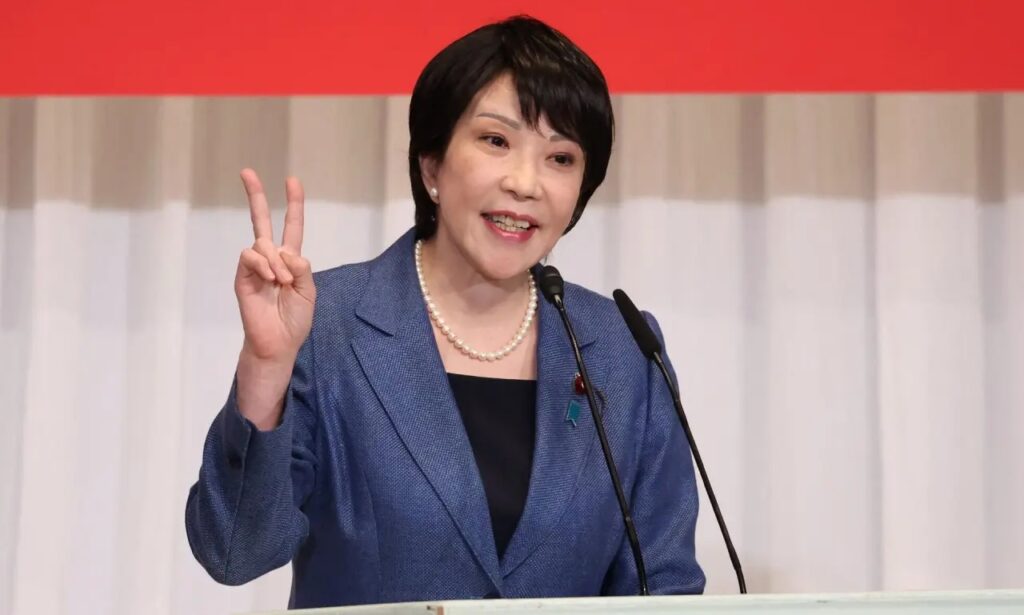
This itself is a position in support of Taiwan separatism because, as The Japan Times noted:
“In case a contingency arises, the attacked country asks for help, and if the three conditions are deemed met, the prime minister has the authority to mobilize the SDF, prior to the approval of parliament, in principle.” (Emphasis added)
Then, four days after the UN General Debate for 2024 had ended, IPAC released its “UNGA Resolution 2758 Factsheet.”
Three weeks later, 12 IPAC members were among the 38 Members of the European Parliament (MEPs) that pushed a resolution against the “misinterpretation of UN resolution 2758 by the People’s Republic of China and its continuous military provocations around Taiwan.”
Key points of the motion include repeated twisting of history, including: “whereas Taiwan has never been part of the PRC; [and] whereas the Republic of China was established in 1912 and the PRC in 1949.” (Emphasis added) Of course, this conveniently ignores that, in 1912, Taiwan was not under China’s control because colonialist Japan had been occupying it since 1895.
Furthermore, when the PRC was established in 1949, the Taiwan area of China was not under its control, yet the ROC forces that were occupying this area aimed to use it as the starting point for an eventual military campaign to put China back under ROC control. Most certainly, the Chinese military force that was occupying Taiwan in 1949 viewed it as part of China.
Another key point includes: “whereas UN Resolution 2758 addresses the status of the PRC, but does not determine that the PRC enjoys sovereignty over Taiwan, nor does it make any judgment on the future inclusion of Taiwan in the UN or any other international organisation…”
UN Resolution 2758 specifically indicates that the representation of China at the UN was handed over to the PRC. The question of the resolution was focused on who would represent China at the UN. The “future inclusion of Taiwan in the UN” was not in question because both the ROC and PRC sought to govern the entirety of China.
The question of the “future inclusion of Taiwan in the UN” is an acknowledgment that the intention of the European Parliament resolution is to support Taiwan separatism. To have Taiwan as a member of the UN would be to recognize it as a sovereign state, which it is not.
Further to this is the section of the motion stating “whereas in a speech on Taiwan’s national day of 10 October 2024, Taiwan’s President Lai Ching-te stated that the PRC has ‘no right to represent Taiwan’ and reiterated that the two sides are ‘not subordinate’ to each other.”
To say that Taiwan is “not subordinate” to the PRC (as the government of China) is to say it is a sovereign state.
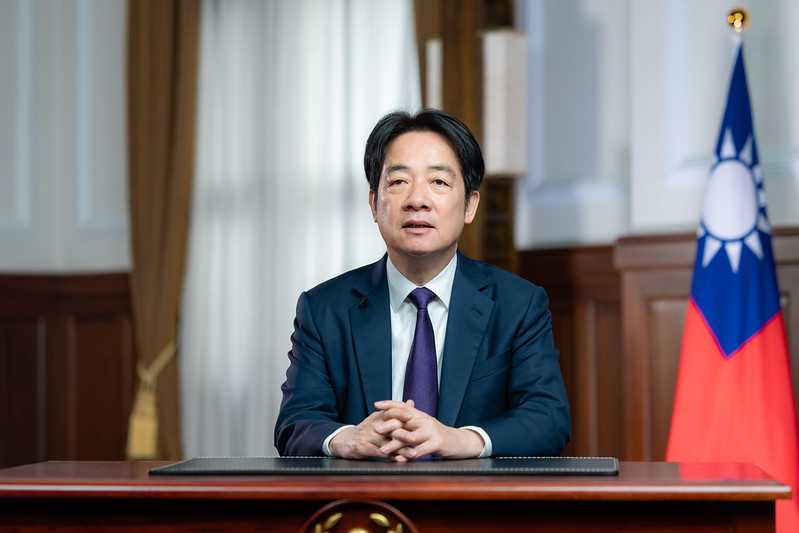
Later in the report, it “commends Taiwan and the Taiwanese people” and “firmly rejects the PRC’s economic coercion against Taiwan and other countries.” (Emphases added)
And given the IPAC members who supported the resolution, it should be no surprise that they hit on Operation MIST themes:
“whereas Taiwan is located in a strategic position in terms of trade, notably in high-tech supply chains; whereas the Taiwan Strait is the primary route for ships travelling from China, Japan, South Korea and Taiwan towards Europe; whereas Taiwan dominates semiconductor manufacturing markets, as its producers manufacture around 50 % of the world’s semiconductor output;…” (Emphasis added)
The U.S. and its proxies’ provocations toward China around the Taiwan area clearly show that the U.S.’s quest for global hegemony has not ended. The U.S. does not respect China’s sovereignty and views Taiwan as a valuable part of its “First Island Chain” in Asia. We are heading further from a peaceful reunification and closer to a Taiwan declaration of being an “independent country” with support from the U.S., and the resulting Chinese military response to reunify Taiwan with the mainland by force.

NED is a CIA offshoot that specializes in political and war propaganda and facilitating color revolutions in countries targeted by the U.S. for regime change. ↑
CovertAction Magazine is made possible by subscriptions, orders and donations from readers like you.
Blow the Whistle on U.S. Imperialism

Click the whistle and donate
When you donate to CovertAction Magazine, you are supporting investigative journalism. Your contributions go directly to supporting the development, production, editing, and dissemination of the Magazine.
CovertAction Magazine does not receive corporate or government sponsorship. Yet, we hold a steadfast commitment to providing compensation for writers, editorial and technical support. Your support helps facilitate this compensation as well as increase the caliber of this work.
Please make a donation by clicking on the donate logo above and enter the amount and your credit or debit card information.
CovertAction Institute, Inc. (CAI) is a 501(c)(3) non-profit organization and your gift is tax-deductible for federal income purposes. CAI’s tax-exempt ID number is 87-2461683.
We sincerely thank you for your support.
Disclaimer: The contents of this article are the sole responsibility of the author(s). CovertAction Institute, Inc. (CAI), including its Board of Directors (BD), Editorial Board (EB), Advisory Board (AB), staff, volunteers and its projects (including CovertAction Magazine) are not responsible for any inaccurate or incorrect statement in this article. This article also does not necessarily represent the views the BD, the EB, the AB, staff, volunteers, or any members of its projects.
Differing viewpoints: CAM publishes articles with differing viewpoints in an effort to nurture vibrant debate and thoughtful critical analysis. Feel free to comment on the articles in the comment section and/or send your letters to the Editors, which we will publish in the Letters column.
Copyrighted Material: This web site may contain copyrighted material the use of which has not always been specifically authorized by the copyright owner. As a not-for-profit charitable organization incorporated in the State of New York, we are making such material available in an effort to advance the understanding of humanity’s problems and hopefully to help find solutions for those problems. We believe this constitutes a ‘fair use’ of any such copyrighted material as provided for in section 107 of the US Copyright Law. You can read more about ‘fair use’ and US Copyright Law at the Legal Information Institute of Cornell Law School.
Republishing: CovertAction Magazine (CAM) grants permission to cross-post CAM articles on not-for-profit community internet sites as long as the source is acknowledged together with a hyperlink to the original CovertAction Magazine article. Also, kindly let us know at info@CovertActionMagazine.com. For publication of CAM articles in print or other forms including commercial internet sites, contact: info@CovertActionMagazine.com.
By using this site, you agree to these terms above.
About the Author

Aidan Jonah is the Editor-in-Chief of The Canada Files, an independent media group. Jonah wrote a report for the 48th session of the UN Human Rights Council, held in September 2021.
He can be reached at aidanjonah.canadafiles@gmail.com.