In 2013, the year when the Edward Snowden intelligence leaks hit the news, the Government Communications Security Bureau (GCSB) annual report stated that the New Zealand spy agency’s mission was “to inform and enhance the decision-making processes” of the government in pursuit of “an independent foreign policy programme.”
This claim was very close to being a total lie. Rather, the GCSB spies on numerous countries in support of the United States while New Zealand government decision-makers may benefit only in a secondary and incidental way.
This arrangement is symptomatic of U.S. influence on New Zealand foreign policy primarily achieved through the work of the country’s defense, foreign affairs and intelligence officials—treacherous public servants paid by the public.
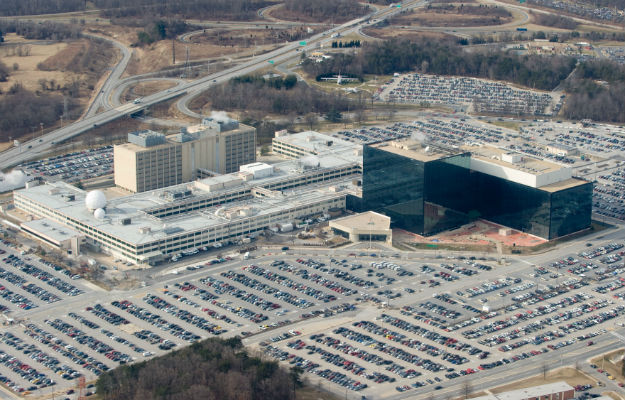
Revealing the targets of New Zealand’s spying is a leaked Snowden document that the U.S. National Security Agency’s country desk officer for New Zealand wrote just months before the publication of the GCSB annual report.

Titled “NSA Intelligence Relationship with New Zealand,” the April 2013 document lists GCSB intelligence operations conducted on behalf of the Five Eyes intelligence alliance also comprising Australia, Canada, the United Kingdom and the United States.
A section called “What Partner Provides to NSA” revealed that New Zealand’s GCSB spies on communications from “China, Japan, North Korea, Vietnam and South America, South Pacific island nations, Pakistan, India, Iran and Antarctica [sic].”
The GCSB was “especially helpful,” according to the document, due to “its ability to provide NSA ready access to areas and countries difficult for the U.S. to access.” Other Snowden documents showed that the GCSB had a long-term operation targeting Bangladesh and sent rotations of staff to Afghanistan to assist in U.S. intelligence centers.
The targeted South Pacific nations and territories included Fiji, Tonga, Tuvalu, Nauru, Kiribati, Samoa, Vanuatu, the Solomon Islands, New Caledonia and French Polynesia.
Despite such conduct, officials and politicians claimed that New Zealand had a special friendship with these neighboring countries.
Although some of New Zealand’s surveillance likely informed the decision-making processes of the New Zealand government, most by far appears to be alliance burden-sharing, i.e., spying on countries as a contribution to the Five Eyes alliance.
For example, the major Bangladesh program was solely a contribution to the NSA—New Zealand has no interests and not even an embassy in Bangladesh. By the same token, surveillance of South Pacific governments is a long-term duty as part of a geographical division of the globe between the five intelligence allies.
Reinforcing this view of the impetus of New Zealand’s spying is senior public servant Simon Murdoch’s 2009 review of the country’s intelligence agencies.
Classified as “Secret” and therefore presumably not expected to be seen by the public, the review stated that the projected $NZ103 million annual expenditure on intelligence agencies by fiscal year 2013 was a “‘subscription’ paid by New Zealand to belong to the 5-Eyes community whose annual capital investment and operating outlays would dwarf ours [sic].”[1]
This subscription model “helps explain why the niche contributions we can make to 5-Eyes burden-sharing are so important and why agency heads strive to be responsive to partner demand.”
New Zealand’s Role in U.S. Kill List
An example of New Zealand’s “niche contributions” that are “responsive to partner demand” came to light in March 2024.
Work by the Inspector-General of Intelligence and Security combined with “Top Secret” information from the Snowden papers revealed that a U.S. intelligence system called APPARITION was operating in New Zealand.
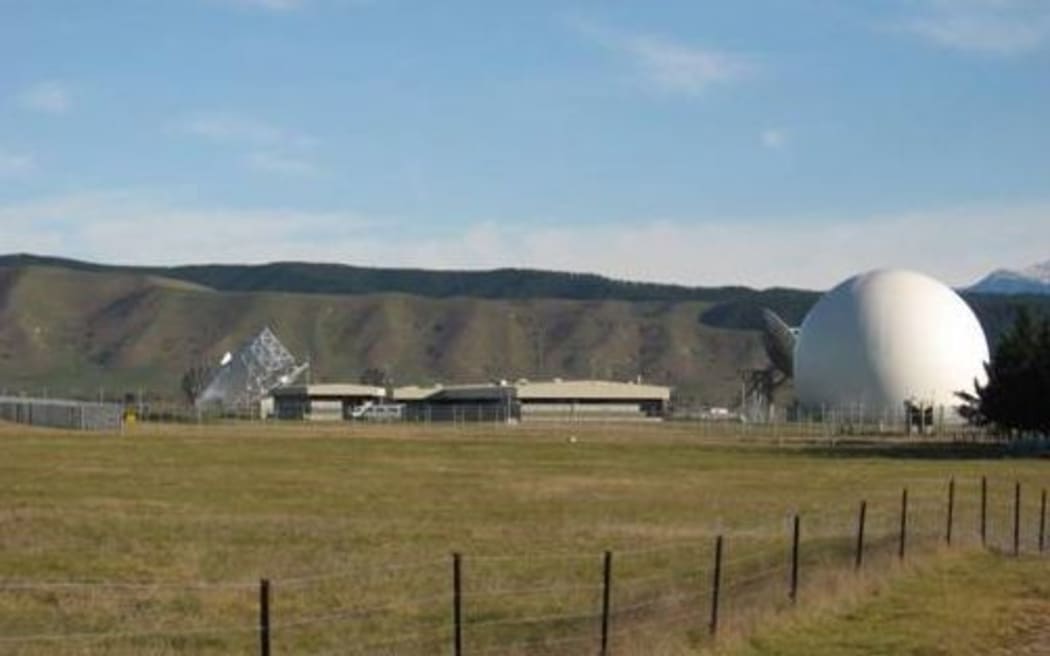
Located in the GCSB’s Waihopai spy station near Blenheim, the system supported “military action” against so-called high-value targets utilizing satellite communications that were intercepted at the station.
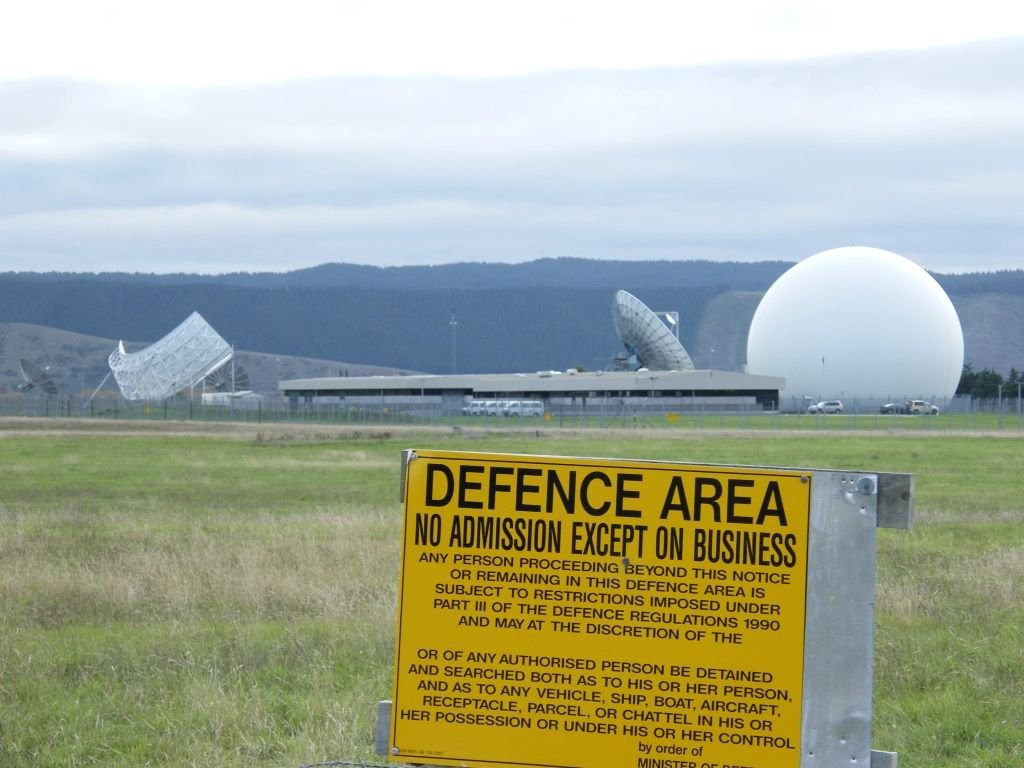
This activity did not inform decision-making in Wellington. In fact, the government appears to have been unaware of its existence. Rather, owning and operating APPARITION was the U.S. National Security Agency.
The American equipment was in operation when the GCSB released its annual report claiming that the New Zealand agency supported the government’s pursuit of an “independent foreign policy programme that contributes to global and regional stability.”
Meanwhile, GCSB staff and their political masters were unaware of the targets for military action being produced using APPARITION—not the people’s names, beliefs, what they had done to be on a U.S. kill list, or even the country or countries in which they were being targeted.
Official Cover-Ups
When information like the Snowden documents reaches the public, it could serve as an opportunity for informed debate. However, New Zealand defense, foreign affairs, and intelligence officials avoid admitting or discussing what the public has learned.
For example, when writing each of the stories on the New Zealand-related Snowden documents, Nicky Hager asked the government for comment.
Officials responded that many of the documents were old and outdated and they could not rule out that some were fabricated. They provided these responses before seeing the news stories or the documents and despite no other government making similar claims.
The leaks provided, perhaps, the best quality intelligence papers ever to reach the public. Furthermore, the documents contained serious revelations, such as New Zealand’s spying on its South Pacific neighbors. But New Zealand public servants attempted to shut down discussion of these issues.
This attempted foreclosure of public discussion persisted during the Operation Burnham inquiry, which investigated a New Zealand Special Air Service (SAS) raid in Afghanistan that resulted in accidental civilian casualties and implicated the SAS in torture.
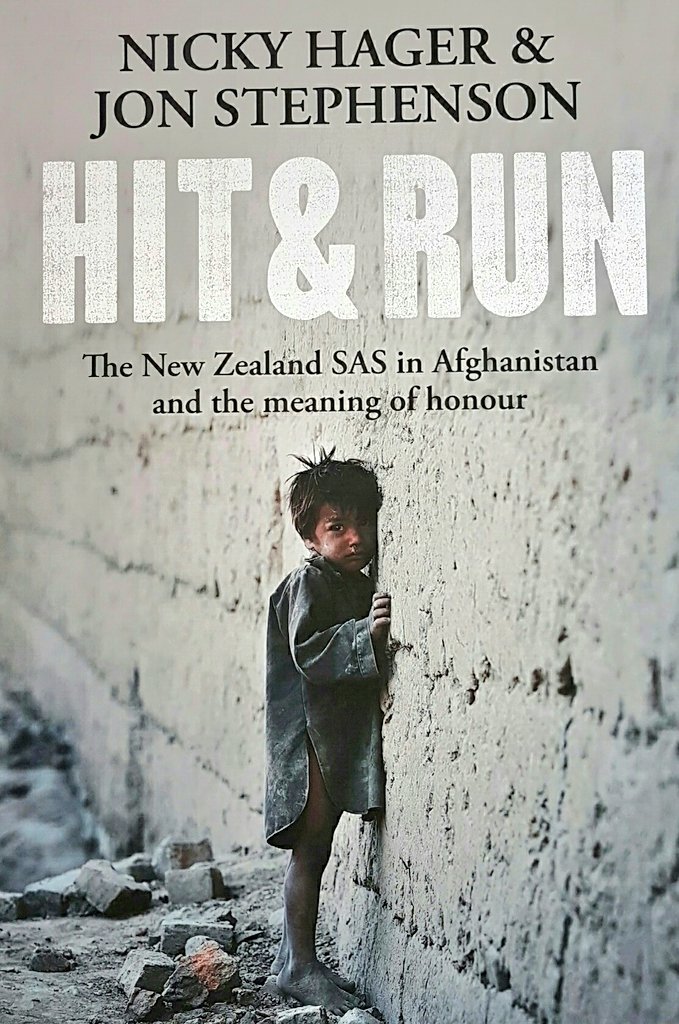
In response to Hager’s and Jon Stephenson’s book investigating the raid, Hit & Run, the Labour-led government launched the independent inquiry after winning the 2017 election.
From the start, the New Zealand Defence Force attempted to cover up and deny any wrongdoing. There was no such raid, said Chief of Defence Force Tim Keating.
He set up a 20-person office to disprove the authors’ findings. Military lawyers argued that the whole inquiry had to occur in secret, attempting to deprive Hager and Stephenson of the opportunity to challenge the SAS’s version of the facts.
Files were provided to the inquiry at a snail’s pace or not at all, for instance, when the SAS mysteriously lost a video of a dead child from its computer system.
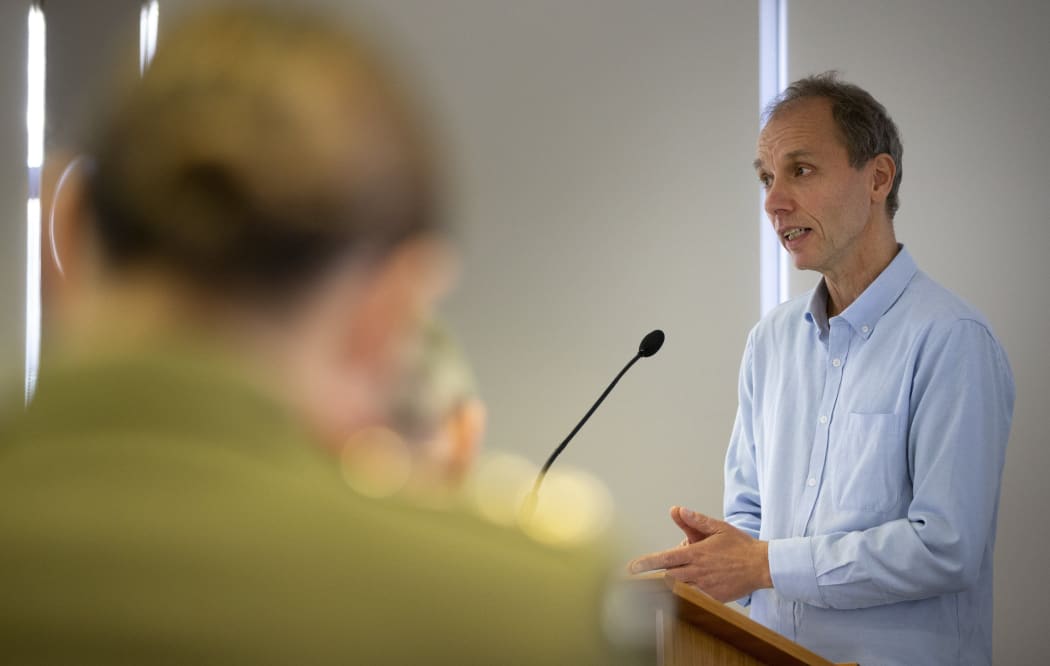
Official attempts to conceal the truth went further. In the midst of the inquiry, friendly insiders at the Ministry of Foreign Affairs and Trade (MFAT) informed Hager that, whenever he released new information or made progress in front of the inquiry, MFAT’s international law section held an emergency meeting to strategize how to disprove it.
Furthermore, after the inquiry began, officials formed an inter-departmental committee to try to undermine and prevent criticism of the SAS. This committee included representatives from the Defence Force, Ministry of Defence, spy agencies, MFAT, and the Department of Prime Minister and Cabinet, even though the prime minister herself had called for the inquiry.
Indicating the scale of this opposition, the inquiry hearings included a large room full of publicly funded lawyers—almost every one of them was trying to prove the book wrong.
These attempts to shield the military from scrutiny continued after the inquiry. Following its confirmation of most of the findings in Hit & Run of civilian casualties and torture, officials turned to sabotaging the inquiry’s recommendations.
The inquiry’s primary achievement was to recommend the creation of an independent Inspector-General of Defence to investigate any future allegations of Defence Force crimes.
However, this accountability was the last thing the Defence Force wanted, and officials stalled on establishing the inspector-general position for years.
Subsequently, following the election of a new conservative National-led government, officials issued a press release stating that it would not proceed. Only by some unclear political good fortune did the inspector-general position survive these efforts.
In recent months, officials have devised another way to achieve the same goal: They are currently working toward amending the Public Records Act to allow New Zealand military personnel involved in wars abroad not to retain records from their years of fighting. This law change would remove the obligation of Defence Force personnel to preserve evidence of future Operation Burnham-like scandals.
Preparing for War Against China
This secretive approach to military and foreign affairs persists in New Zealand officials’ support for U.S. attempts to assert dominance over China. In 2024, for example, a senior military officer attended a secret Five Eyes meeting in Portsmouth, England.
The meeting’s focus was new command-and-control systems designed to integrate the militaries of the Five Eyes countries in preparation for future wars.
Details of this meeting became public after one of the New Zealand participants took the secret papers home from the meeting and forgot about them.
A year later, the officer donated unwanted items to a Salvation Army thrift store in Lower Hutt, north of Wellington—along with the secret meeting documents.

The documents confirmed that New Zealand is preparing for war with China. Revealing this preparation is a document showing that a priority area for the Five Eyes working group was to “develop a credible and effective combined joint, all-domain, command and control capability for counter-PRC Operations.” In other words, the ambition was to integrate the Five Eyes countries into U.S. command-and-control systems in preparation for military action against the People’s Republic of China.
This secret meeting exemplified how important discussions involving New Zealand military and intelligence staff happen in secret rooms in foreign military bases around the world while public debate is minimized and thwarted. Roughly twice a week, New Zealand Defence Force personnel fly to overseas meetings to discuss special forces equipment, intelligence, secure communications, patrol vehicle tactics and other aspects of running a military and preparing for future wars.
Sitting around the table at these “standardization” meetings are always representatives from the same English-speaking countries in the Five Eyes. The purpose of the meetings is to prepare the smaller states to be compatible and ready to go to war with the larger countries. As part of this preparation, mid-level officers hear what is expected of the junior partners and absorb the Five Eyes world view. They learn to think like the larger Five Eyes allies and lose touch with the majority of New Zealanders.
Further detailing New Zealand’s preparations for future wars alongside its larger military partners, researcher Marco de Jong recently revealed that New Zealand is working with Five Eyes countries to develop networked military systems called kill-webs. These kill-webs consolidate data from sensing equipment such as “drones, radars, and satellites” and utilize artificial intelligence to produce targeting information. Continual communication between each platform within the kill-web is designed to facilitate “coordinated, multi-domain attacks ‘at machine speed.’” New Zealand’s involvement in this development, argued de Jong, risks locking New Zealand into future Anglo-American wars.
Locking the country into future wars is a feature, not a bug, of this military development. These commitments enable officials to demonstrate New Zealand’s support for its so-called like-minded partners, particularly the United States. However, New Zealand does not share values with a genocidal nuclear superpower that starts more wars than any other country on Earth. Nor does New Zealand share interests with a nation that is planning for war in the Asia-Pacific region against the island nation’s largest trading partner. New Zealand’s defense, foreign affairs, and intelligence officials continue to ensure that the country’s actions abroad reflect these dangerous perspectives.

It is worth considering this level of expenditure not just as a cost in budget terms but in the context of the annual subscription paid by New Zealand to belong to the Five-Eyes community “whose annual capital investment and operating outlays would dwarf ours.” It helps explain why the niche contributions that we can make to Five-Eyes burden-sharing are so important and why agency heads strive to be responsive to partner demand. ↑
CovertAction Magazine is made possible by subscriptions, orders and donations from readers like you.
Blow the Whistle on U.S. Imperialism

Click the whistle and donate
When you donate to CovertAction Magazine, you are supporting investigative journalism. Your contributions go directly to supporting the development, production, editing, and dissemination of the Magazine.
CovertAction Magazine does not receive corporate or government sponsorship. Yet, we hold a steadfast commitment to providing compensation for writers, editorial and technical support. Your support helps facilitate this compensation as well as increase the caliber of this work.
Please make a donation by clicking on the donate logo above and enter the amount and your credit or debit card information.
CovertAction Institute, Inc. (CAI) is a 501(c)(3) non-profit organization and your gift is tax-deductible for federal income purposes. CAI’s tax-exempt ID number is 87-2461683.
We sincerely thank you for your support.
Disclaimer: The contents of this article are the sole responsibility of the author(s). CovertAction Institute, Inc. (CAI), including its Board of Directors (BD), Editorial Board (EB), Advisory Board (AB), staff, volunteers and its projects (including CovertAction Magazine) are not responsible for any inaccurate or incorrect statement in this article. This article also does not necessarily represent the views the BD, the EB, the AB, staff, volunteers, or any members of its projects.
Differing viewpoints: CAM publishes articles with differing viewpoints in an effort to nurture vibrant debate and thoughtful critical analysis. Feel free to comment on the articles in the comment section and/or send your letters to the Editors, which we will publish in the Letters column.
Copyrighted Material: This web site may contain copyrighted material the use of which has not always been specifically authorized by the copyright owner. As a not-for-profit charitable organization incorporated in the State of New York, we are making such material available in an effort to advance the understanding of humanity’s problems and hopefully to help find solutions for those problems. We believe this constitutes a ‘fair use’ of any such copyrighted material as provided for in section 107 of the US Copyright Law. You can read more about ‘fair use’ and US Copyright Law at the Legal Information Institute of Cornell Law School.
Republishing: CovertAction Magazine (CAM) grants permission to cross-post CAM articles on not-for-profit community internet sites as long as the source is acknowledged together with a hyperlink to the original CovertAction Magazine article. Also, kindly let us know at info@CovertActionMagazine.com. For publication of CAM articles in print or other forms including commercial internet sites, contact: info@CovertActionMagazine.com.
By using this site, you agree to these terms above.
About the Author


Nicky Hager is an investigative journalist and author in New Zealand.
He has written seven books on intelligence, war, politics and public relations. His first article in CovertAction Magazine, then called CovertAction Quarterly (Winter. 1996/1997), was titled “Exposing the Global Surveillance System,” the full text of which can be read in our archives and here.
Nicky can be reached at nhager@actrix.co.nz.

Samuel Hume is an independent journalist and teacher based in London. His work has appeared in Arena, Jacobin, and Pearls and Irritations.
His collected articles can be found on his Substack.
Samuel can be reached at samuelhume@proton.me.