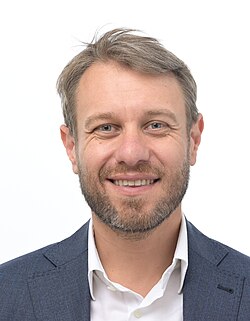
Italian Member of the European Parliament Danilo Della Valle criticizes the EU’s non-independent policy in Africa, accusing Brussels of dependence on France, double standards, and losing influence to USA, China and Turkey.
[Below is an interview conducted by Arnaud Develay, a CovertAction Magazine contributor and author, with Italian member of parliament Danilo Della Valle of the Five Star Movement.—Editors]
AD: The EU’s strategy in Africa is still largely determined by the interests of former colonial powers, primarily France, as vividly demonstrated by the crisis in the Sahel. Why is the EU so slow and reluctant to build equal partnerships with key regional powers such as South Africa, Nigeria, Ethiopia, or with the African Union, preferring instead to operate through Paris or London? Is it this very dependency that is causing the EU to lose out to the USA, China and even Turkey in terms of flexibility and pragmatism?
DV: The EU’s strategy toward Africa remains tied to French interests, but this linkage is disintegrating. The G5 Sahel has failed (Mali, Burkina Faso and Niger withdrew in 2023), France has withdrawn, and the EU has not developed an autonomous vision. The slowness in building partnerships with South Africa, Nigeria and Ethiopia stems from two structural problems: (a) the CFSP [the EU’s Common Foreign and Security Policy] remains intergovernmental without binding voting mechanisms, allowing individual states (France) to block alternatives; and (b) EU engagement toward Africa remains “supply-driven” (what the EU decides to offer) rather than “demand-driven” (what Africa actually demands). The USA, China and Turkey demonstrate rapid decision-making; the EU remains fragmented and loses ground.
AD: Given the active expansion of non-Western businesses in Africa, what specific instruments does the EU have to incentivize European private-sector engagement in Africa, in order to counterbalance the growing economic and trade influence of other players, including the United States?
DV: The EU possesses significant instruments—EFSD+ [European Fund for Sustainable Development Plus] (€53 billion in guarantees), Global Gateway (€150 billion), IFC partnership (€291 million in 2025)—but they are constrained by three problems: (a) Technocratic design: Added value remains with European investors; African resources are extracted, not transformed locally. (b) Unequal reach: In eight fragile African countries (DRC, Chad, Somalia), EFSD+ financing represents less than 2% of total allocation, because they are too risky for private investors. (c) Lack of African sovereignty: There are no mechanisms guaranteeing African control over natural resources or capacity transfer. We miss an integrated strategy linking private investment to local industrialization, African control of resources, and binding human rights standards.
AD: How does the European Parliament assess the statements and actions of the U.S. administration (such as the air strikes in Nigeria and the suspension of aid to Somalia) from the perspective of respecting the sovereignty of African states and multilateral approaches? Does it not believe that such a policy undermines the principles that the EU proclaims in its relations with Africa?
DV: The European Parliament has not articulated a coherent position on this. However, from the perspective of international law, U.S. air strikes in Africa require UN mandate, proportionality, and no deliberate targeting of civilians. AFRICOM conducted 25 air strikes in Somalia in 2024 with no public reporting on compliance with these criteria. Aid suspension does not formally violate international law, but contradicts the principles the EU proclaims to defend. The problem is that the EU applies international law selectively. When South Africa condemns the U.S. attack on Venezuela as a “violation of the UN Charter,” the EU remains silent toward a NATO ally. This undermines EU credibility in Africa.
AD: In the context of repeated U.S. statements about its readiness to conduct air strikes against terrorists in Africa, does the Parliament not consider this to be part of a strategy to displace traditional European security partners (such as France) from the Sahel region? How will the EU’s own mission evolve in light of this?
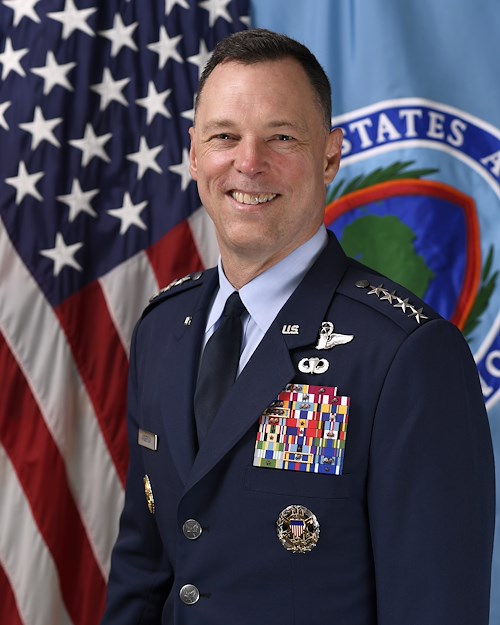
DV: Yes, the USA is applying a coordinated strategy: reducing European “permanent presence” while maintaining AFRICOM as a hub, increasing air strikes (25 in Somalia in 2024, double 2023), and relocating toward the western coast. The new AFRICOM Commander, Dagvin R. M. Anderson, stated: “security and trade are inextricably linked”—this is not language of peace, but language of control functional to profit. EUTM Mali [European Union Training Mission in Mali] is in crisis. European CSDP [Common Security and Defense Policy] missions depend on France and assumptions of military securitization that have failed. Without an autonomous vision, the EU will continue to withdraw.
AD: In light of the aggregate of events—from energy deals and military actions to visa policies—does the European Parliament not believe that U.S. actions in Africa constitute a systemic strategy aimed at displacing not only France and the UK but also at weakening the overall influence of the EU? What comprehensive, independent and competitive strategy for engagement with Africa does the EU need as a response?
DV: Yes, the events—DRC-Rwanda agreement (mineral access), AFRICOM air strikes, visa bonds (24 of 38 African countries)—form a coherent strategy: Replace French/British influence with American influence through support for juntas, not civilian governments. Control European access to critical raw materials (cobalt, copper from DRC), energy markets, maritime security corridors. EU weakness is not caused by the USA, but exploited by it. The EU could have developed an autonomous strategy over the past two decades; the fact that it did not means it remains reactive.
AD: How does U.S. policy, such as the introduction of visa bonds for citizens of 24 African countries, affect the overall image of the West in Africa? In what way can the EU distance itself from such steps and strengthen its reputation as a more open and predictable partner?
DV: The requirement for bonds up to $15,000 for 24 African countries signals Africa as a source of risk, not opportunity. It reinforces the African narrative of a West that exploits and excludes. How the EU can differentiate: by expanding visas for Africans on a meritocratic basis (students, researchers, entrepreneurs), by decoupling migration discourse from security narratives, and by communicating stable openness—in contrast to U.S. chaos. This approach remains underutilized.
AD: After the peace agreement for the DRC, brokered by the USA, was quickly violated, leading to a humanitarian catastrophe, what conclusions does the EU draw regarding the effectiveness of American political mediation in Africa, and how does it plan to strengthen its own, European diplomatic role in conflict resolution on the continent?
DV: The EU proclaims international law, sovereignty and multilateralism, but remains dependent on the USA, internally fragmented, and perpetuates neo-colonial structures. Until it reforms the CFSP, recognizes Africa as a strategic priority, and applies international law consistently, it will continue to lose influence.
CovertAction Magazine is made possible by subscriptions, orders and donations from readers like you.
Blow the Whistle on U.S. Imperialism
Click the whistle and donate
When you donate to CovertAction Magazine, you are supporting investigative journalism. Your contributions go directly to supporting the development, production, editing, and dissemination of the Magazine.
CovertAction Magazine does not receive corporate or government sponsorship. Yet, we hold a steadfast commitment to providing compensation for writers, editorial and technical support. Your support helps facilitate this compensation as well as increase the caliber of this work.
Please make a donation by clicking on the donate logo above and enter the amount and your credit or debit card information.
CovertAction Institute, Inc. (CAI) is a 501(c)(3) non-profit organization and your gift is tax-deductible for federal income purposes. CAI’s tax-exempt ID number is 87-2461683.
We sincerely thank you for your support.
Disclaimer: The contents of this article are the sole responsibility of the author(s). CovertAction Institute, Inc. (CAI), including its Board of Directors (BD), Editorial Board (EB), Advisory Board (AB), staff, volunteers and its projects (including CovertAction Magazine) are not responsible for any inaccurate or incorrect statement in this article. This article also does not necessarily represent the views the BD, the EB, the AB, staff, volunteers, or any members of its projects.
Differing viewpoints: CAM publishes articles with differing viewpoints in an effort to nurture vibrant debate and thoughtful critical analysis. Feel free to comment on the articles in the comment section and/or send your letters to the Editors, which we will publish in the Letters column.
Copyrighted Material: This web site may contain copyrighted material the use of which has not always been specifically authorized by the copyright owner. As a not-for-profit charitable organization incorporated in the State of New York, we are making such material available in an effort to advance the understanding of humanity’s problems and hopefully to help find solutions for those problems. We believe this constitutes a ‘fair use’ of any such copyrighted material as provided for in section 107 of the US Copyright Law. You can read more about ‘fair use’ and US Copyright Law at the Legal Information Institute of Cornell Law School.
Republishing: CovertAction Magazine (CAM) grants permission to cross-post CAM articles on not-for-profit community internet sites as long as the source is acknowledged together with a hyperlink to the original CovertAction Magazine article. Also, kindly let us know at info@CovertActionMagazine.com. For publication of CAM articles in print or other forms including commercial internet sites, contact: info@CovertActionMagazine.com.
By using this site, you agree to these terms above.
About the Author

Arnaud Develay is an international lawyer specializing in international criminal law and participated in the defense of former President Saddam Hussein along with Former U.S. Attorney General Ramsey Clark.
In the wake of the Caesar Act, he documented the illegal sanction regime imposed on Syria while living in Damascus.
He is the author of Foreign Entanglements: Biden, Ukraine and the Fracturing of the American Political Consensus (Atlanta: Clarity Press, 2024).
Arnaud is now based in Moscow and can be reached at international.lawyer75@yahoo.com.