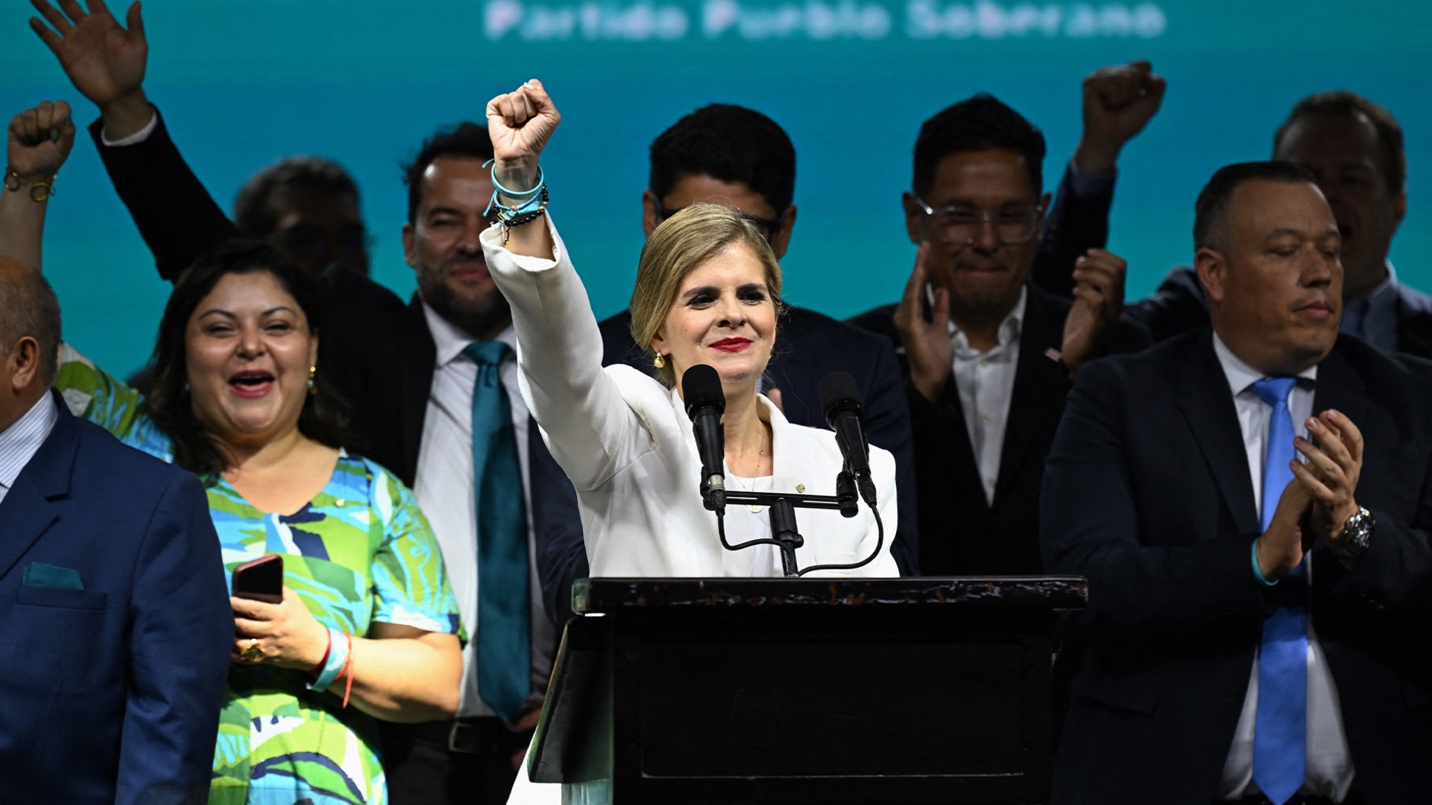
“The change will be profound and irreversible” asserted Costa Rica’s president-elect, Laura Fernández. The ruling Sovereign People’s Party (PPSO) won the election in the first round with a commanding 48.3% of valid votes cast, nearly 15 percentage points ahead of the National Liberation Party (PLN), the old social democracy.
The radical right of President Rodrigo Chaves will continue in government with Laura Fernández in the new 2026-30 term; she is the second woman in Costa Rica to attain the highest office.
Chaves is a confrontational leader with rhetoric critical of the traditional political class, who leaves office with a favorable approval rating above 58%. Together they constitute a new political identity in Costa Rica.
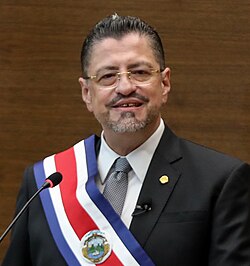
Fernández was born 39 years ago in Esparza, in the coastal province of Puntarenas, one of the regions most affected by drug trafficking. She is married, the mother of a young daughter, and identifies as a conservative Catholic.
Her rhetoric centers on the defense of family, life and traditional values. Daughter of a farmer and a schoolteacher, she is a political scientist and specialist in public policy and democratic governance. She served as Minister of National Planning and Economic Policy and as Minister of the Presidency during the current administration, and also served as Chaves’s chief of staff.
As Deputy Pilar Cisneros acknowledged, she was chosen by a small circle around the current president as his successor, since Costa Rica does not allow for re-election.
“What was called the Second Republic, forged in 1948 on battlefields, soaked with the blood of our fathers and brothers, has been left in the past! It has been left in the past by the express will of the people of Costa Rica.” With a resolute voice, she announced the founding of a new era: “That is why it is up to us to build the Third Republic. For that reason and for that purpose the new government that we will inaugurate on the coming May 8 will be established,” declared Laura Fernández.
Sociologist, political scientist, and economist Jorge Coronado explained to CovertAction Magazine why the political and economic project of the Costa Rican ruling party is a Trumpist model: “What the PPSO has done is to radically recompose the spectrum of the right and conservatives; it absorbed the neo-pentecostal current that began having legislative representation in 1998 with one deputy and reached 14 deputies by 2018; it absorbed the neo-liberal libertarian current that had its first deputy in the 1998 election and has maintained a faction of between six and nine deputies; it managed to absorb the old conservative right and even part of a right-wing leadership from the PLN and its electoral base.”
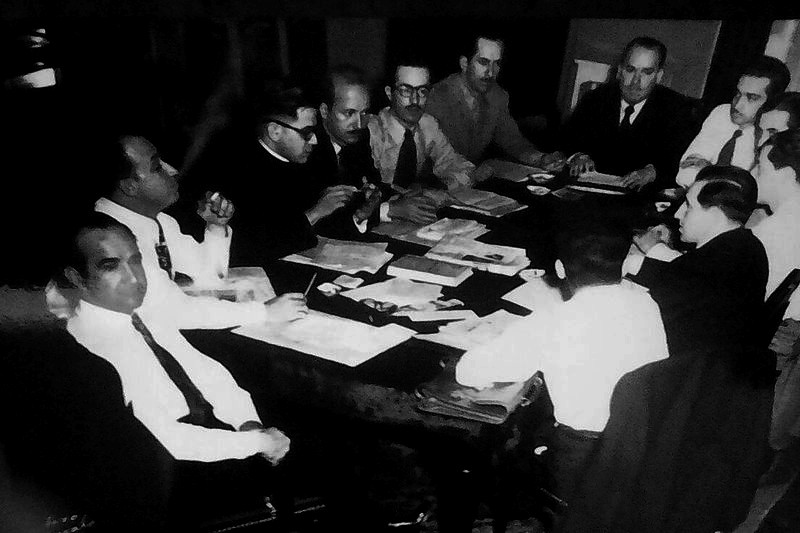
The Second Republic signified Costa Rica’s modernization and insertion into global capitalism, shifting from a predominantly agricultural country led by a coffee oligarchy to a country that bet on cautious industrialization, with the emergence of a new bourgeoisie. “The Second Republic rested on three pillars: a new Political Constitution of 1949 that guaranteed a regime of individual liberties; a state system composed of strong institutions with separation of powers (Executive, Legislative, and Judicial); and a party system based on bipartisanship, with social democracy as the dominant actor and a political opposition—more conservative, which ended up embracing Christian-democratic ideology—that never threatened the model and always played within established rules,” Coronado described.
What truly dies from the Second Republic in this election is the party system underpinned by bipartisanship. It had already suffered an initial fracture in 2002 with the emergence of the Citizens’ Action Party (PAC), a split from the National Liberation Party (PLN)—the old social democracy—and with the emergence of other political forces (neo-pentecostals, libertarians, leftists) that began to open a breach in the historically dominant bipartisanship (PLN and the Social Christian Unity Party, PUSC).
Political analyst and journalist Guillermo Acuña concurs: “We are in the presence of a political refounding, labeled in many ways—party crisis, crisis of representation, collapse of the party system. Such a refounding, built on the erosion of an exhausted and declining political community, seems to give way to the formation of an experience not yet identified—new narratives and practices that only begin to take shape as of 2026. Over the last 18 years, what we understand as political citizenship was configured in contexts of tension, diverse agendas and multiple expressions, appearing beyond party affiliations and closer to concrete agendas and specific problems.”
Insecurity and the Assassination of the Second Republic
In a 2012 text on inequality in Costa Rica, the late Costa Rican sociologist Carlos Sojo identified three normative references of the political culture that kept it in balance: horizontal coexistence, tolerance and pacifism. Those norms entered into crisis because the system did not provide society with the expected responses.
“This two-headed model—between remnants of the Second Republic’s economic model and the neo-liberal roadmap promoted by the PLN, with the support of the PUSC and other emerging forces such as neo-pentecostals and libertarians—has created two very different Costa Ricas in economic and social terms. The Costa Rica that remains linked to the domestic market, called the ‘traditional sector of the economy,’ does not grow, does not receive incentives, and whose business sector faces a bureaucratic apparatus that becomes a non-tariff barrier; consequently, it promotes informality and precarious labor. Another Costa Rica is linked to the external market—importers and exporters—or what is known as the ‘dynamic sector of the economy’ supported by a Free Trade Zone Regime. With limited connections to the national economy, a labor minority with good wages that enjoys fiscal and regulatory incentives, and a tourism and financial sector that is part of that same dynamic sector.”
This is reflected in social indicators from the National Institute of Statistics and Census of Costa Rica (INEC): the percentage of households in poverty is 15.2% and extreme poverty is 3.8%. Social inequality by region is alarming. The Central region remains with the country’s lowest levels of poverty and extreme poverty, while the coastal Huetar Caribbean region (24.9%) and the southern Brunca region (23.8%) have the highest levels of poverty and extreme poverty.
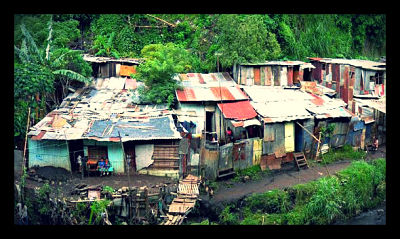
“We have a Costa Rica that has concentrated wealth distribution in urban sectors of the country’s center; inequality has grown and today the coastal provinces and the country’s southern zone concentrate the highest poverty levels. In addition, these are the zones where state institutional capacity functions most precariously. These social sectors are those that express the greatest estrangement from the institutional framework of the Second Republic, because they primarily live in informality: without access to public health, with access to more precarious public education, and without any social protection,” described Jorge Coronado.
According to political analyst and journalist Guillermo Acuña, “such traits found expressions of exhaustion that were evident in signs of transition and change of a political and party system, which crystallized in a juncture whose first expressions occurred in the 2018 elections, when a neo-pentecostal option burst onto the electoral scene and rapidly gained a volume of voters, although not enough to win those elections. Nevertheless, the fracture was declared.”
For the 2026 elections, political/economic elites that over four years of government attacked public institutions identified with the Second Republic came together. “They convinced popular social sectors, which do not see institutions as guaranteeing them services and improvements in their quality of life, that the fault for their precarious situation is that very institutional framework and that it must be destroyed,” Coronado added.
Overall, the electoral results show that, throughout the country—except in urban middle-class sectors—there is support to finish dismantling the type of state and institutional framework built in the second half of the twentieth century, to create a new national paradigm. “Unfortunately, the paradigm of these new elites is greater concentration of wealth. With no role for the state as guarantor of social justice, leaving distributional outcomes to the market; with a heavy hand to combat citizen insecurity, which may extend to a heavy hand against political and social opposition sectors.”
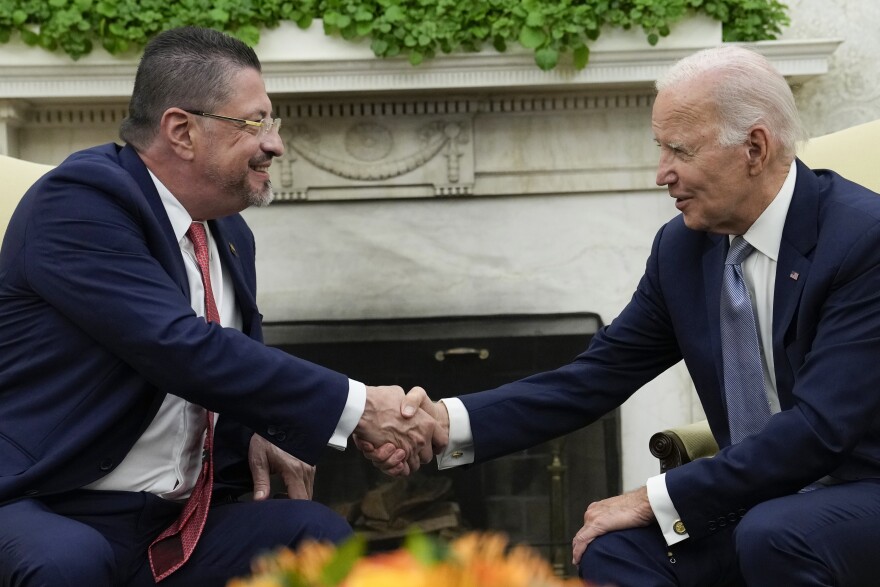
As in many Latin American countries, the major campaign theme was insecurity associated with drug trafficking. The population considers it the country’s principal problem due to the increase in homicides, mostly attributed to disputes among gangs linked to drug trafficking.
Laura Fernández’s solution is a “heavy hand” against organized crime: Among her proposals are the possibility of decreeing states of emergency in conflictive areas; reforms to the judiciary and criminal laws; and completing a mega maximum-security prison modeled after the approach of El Salvador President Nayib Bukele.
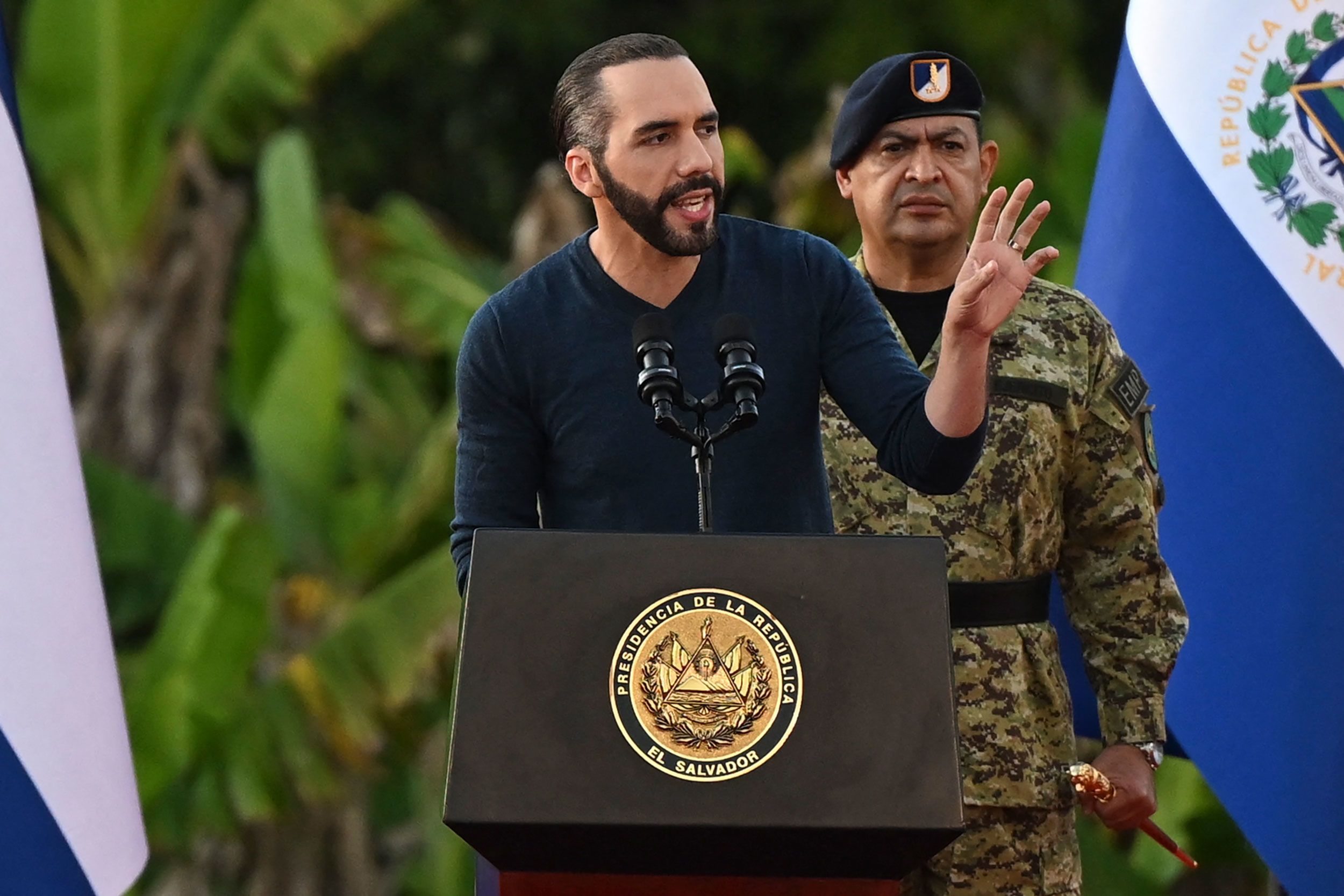
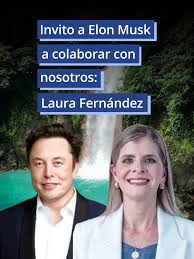
An institutional re-engineering aligned with mechanisms of a rightward ideological apparatus, with possible limitations on individual freedoms and collective processes—all in the shadow of the United States. The visit of U.S. Secretary of State Marco Rubio made the scenario and limits of Costa Rican governance clear. Likewise, Fernández’s campaign overture to Elon Musk to invest in Costa Rica was a political signal.
“A quick review of the victorious party’s government plan shows that, on issues such as migration management, it will follow the current script of the Republican Party: tightening security, prisons, and disregard for the rights of migrants residing in the country,” recalled Guillermo Acuña.
In this scheme, adherence to the limits imposed by the separation of powers of the Second Republic matters little. Jorge Coronado observed: “Clearly the national elections are inscribed in a context of a turn to the right, and not just any right, but the ‘Trumpist right’ that lives in Latin America.”
The project of this new Trumpist right represented by the PPSO aims to deepen neo-liberal policy and pursue an absolute rupture with the Second Republic’s institutional framework. Its antecedents lie in the three stages of the Structural Adjustment Program (SAP) begun in 1986, which reached a peak in 2007 with the approval of the Free Trade Agreement with the United States, also promoted by a National Liberation Party administration.
From that point, privatizations of public institutions began; flexibilization measures for the financial sector; trade liberalization that deprioritized the domestic market in favor of the export sector; elimination of tariff protections for national production; and a reduction in state economic intervention. In other words, a shift from the import substitution model that had created the Second Republic toward a model oriented to external markets and export promotion.
From May of this year, Laura Fernández and the PPSO’s priority task will be to construct the “Third Republic,” institutionalize it, and make it irreversible.
Jorge Coronado outlines its central characteristics: “Advance in opening up or privatizing the state electricity sector; financially strangle public education, especially public universities; financially asphyxiate the social security system until it is reduced to its minimal expression, to force a rapid transition toward the universalization of private medicine; radically flexibilize the legal framework for labor protection in order to precarize the entire workforce; swiftly privatize the robust state financial system to favor speculative private national and international financial capital. Very difficult times are coming for the country, unlike any experienced in the past. Today the elites who come to dismantle the Second Republic enjoy broad social legitimacy granted by the ballot boxes, in order to finish off the model Costa Rica built over the past 75 years. It is very possible that Costa Rican society as a whole has not gauged the implications of the step taken.”
For all these reasons, beyond the victory, Laura Fernández sought an absolute legislative majority. Although she did not obtain it, she exceeded a simple majority of 29 deputies, securing 31 seats. Projections indicate that, to reform the Constitution, she will find collaboration from the PLN’s 17 deputies and other legislators.
The Second Republic is already dead; the new one is taking shape. The true left opposition—Frente Amplio (seven seats), trade unions, social leaders, and intellectuals—denounce the serious risk of authoritarianism.
“Costa Rica has boarded the wave and drift of authoritarian tendencies because, since the establishment of ‘Bukelismo’ in El Salvador, it has spread like an expansionist wave. It first occurs in South America, as in Ecuador, whose president sought advice in El Salvador; now it comes to Central America, with Costa Rica,” emphasized international political analyst Junior Aguirre Gorgona.
They will all face the difficult task of ensuring that what is born anew does not result in a poorer Costa Rica.

CovertAction Magazine is made possible by subscriptions, orders and donations from readers like you.
Blow the Whistle on U.S. Imperialism

Click the whistle and donate
When you donate to CovertAction Magazine, you are supporting investigative journalism. Your contributions go directly to supporting the development, production, editing, and dissemination of the Magazine.
CovertAction Magazine does not receive corporate or government sponsorship. Yet, we hold a steadfast commitment to providing compensation for writers, editorial and technical support. Your support helps facilitate this compensation as well as increase the caliber of this work.
Please make a donation by clicking on the donate logo above and enter the amount and your credit or debit card information.
CovertAction Institute, Inc. (CAI) is a 501(c)(3) non-profit organization and your gift is tax-deductible for federal income purposes. CAI’s tax-exempt ID number is 87-2461683.
We sincerely thank you for your support.
Disclaimer: The contents of this article are the sole responsibility of the author(s). CovertAction Institute, Inc. (CAI), including its Board of Directors (BD), Editorial Board (EB), Advisory Board (AB), staff, volunteers and its projects (including CovertAction Magazine) are not responsible for any inaccurate or incorrect statement in this article. This article also does not necessarily represent the views the BD, the EB, the AB, staff, volunteers, or any members of its projects.
Differing viewpoints: CAM publishes articles with differing viewpoints in an effort to nurture vibrant debate and thoughtful critical analysis. Feel free to comment on the articles in the comment section and/or send your letters to the Editors, which we will publish in the Letters column.
Copyrighted Material: This web site may contain copyrighted material the use of which has not always been specifically authorized by the copyright owner. As a not-for-profit charitable organization incorporated in the State of New York, we are making such material available in an effort to advance the understanding of humanity’s problems and hopefully to help find solutions for those problems. We believe this constitutes a ‘fair use’ of any such copyrighted material as provided for in section 107 of the US Copyright Law. You can read more about ‘fair use’ and US Copyright Law at the Legal Information Institute of Cornell Law School.
Republishing: CovertAction Magazine (CAM) grants permission to cross-post CAM articles on not-for-profit community internet sites as long as the source is acknowledged together with a hyperlink to the original CovertAction Magazine article. Also, kindly let us know at info@CovertActionMagazine.com. For publication of CAM articles in print or other forms including commercial internet sites, contact: info@CovertActionMagazine.com.
By using this site, you agree to these terms above.
About the Author
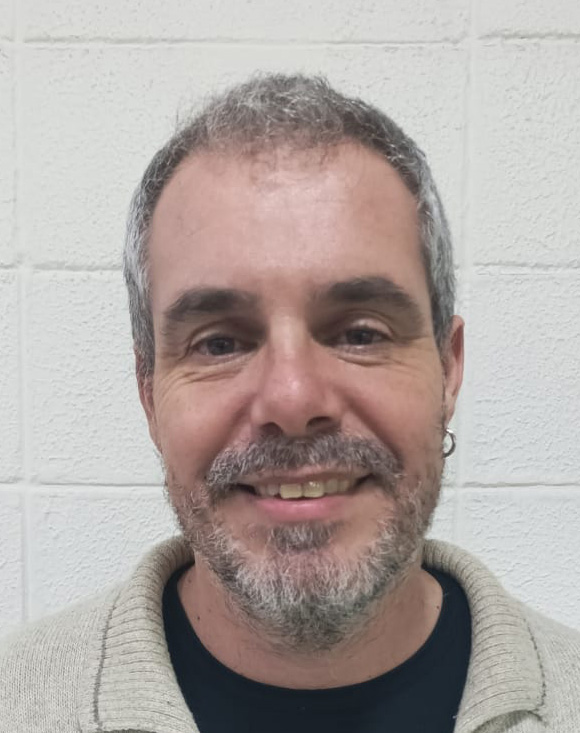
Hernán Viudes is an independent journalist and a graduate from The Faculty of Social Sciences at the University of Buenos Aires. He lives in Argentina and enjoys music, culture and football.
Hernán can be reached at hernanviudes@gmail.com.
