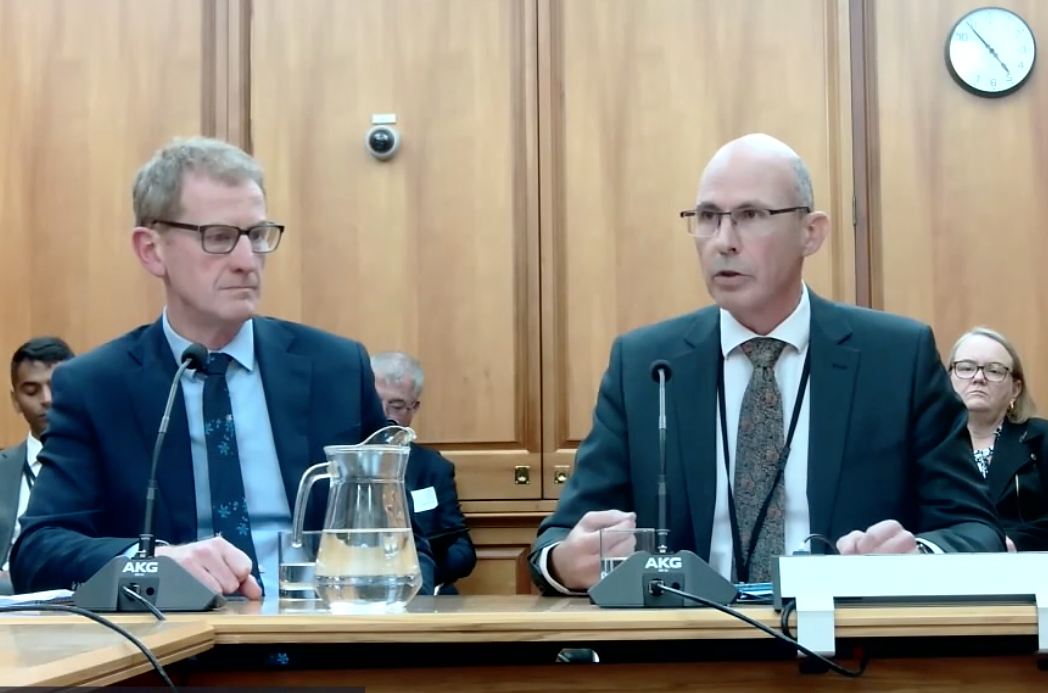
At the March 4, 2026, Intelligence and Security Committee, Green Party national security and intelligence spokesperson Teanau Tuiono asked the heads of New Zealand’s two primary spy agencies to clarify the country’s intelligence relationship with Israel. “I’ve been thinking about…the U.S.-Israel strikes on Iran,…and I wonder if you could provide us some clarity,” said Tuiono. “Certainly,…the potential closeness with Israel in particular is problematic.”
Revealingly, both agency heads declined to rule out a New Zealand-Israel intelligence relationship. Security Intelligence Service (NZSIS) director-general Andrew Hampton replied, “New Zealand gets significant benefit from a range of intelligence relationships, Five Eyes in particular”—referring to the Five Eyes spy alliance comprising Australia, Canada, New Zealand, the United Kingdom, and the United States.
By the same token, Government Communications Security Bureau (GCSB) Director-General Andrew Clark said that the agency has “good control around whether…to withhold intelligence…and that includes even where one of the partners might want to share some of our intelligence with another partner outside of the Five Eyes.”
Israel and New Zealand in “adversary” satellite tracking group
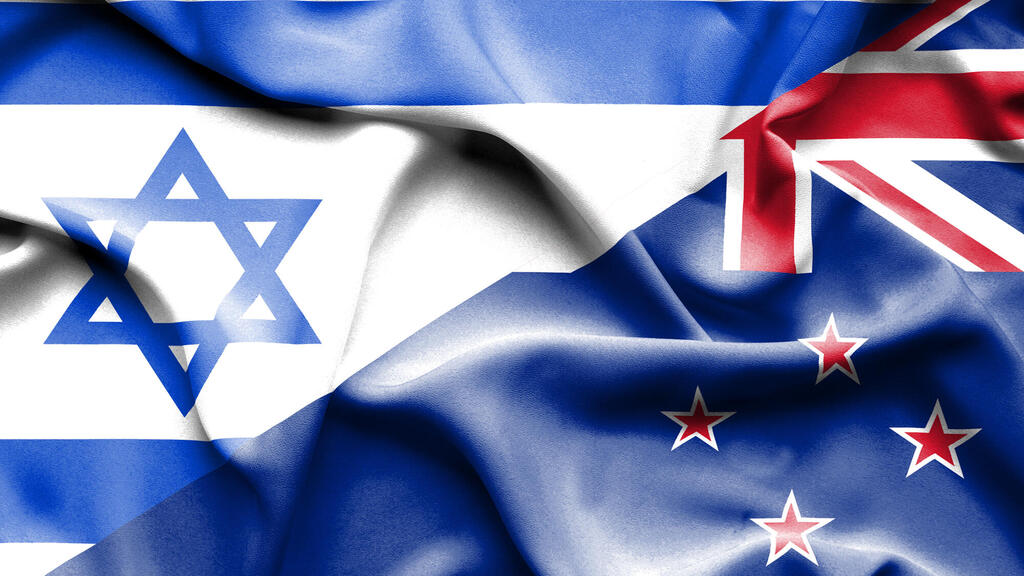
Confirming that New Zealand shares intelligence with Israel is the South Pacific nation’s membership of the U.S.-led Joint Commercial Operations cell (JCO). As of October 2025, the JCO comprised some 23 allies and partners of the United States, including Israel.
Member states cooperate as part of three regional cells around the globe to maintain a “follow-the-sun model” of 24 hours a day, five days per week staffing in which each cell operates roughly during local business hours. The Pacific cell consists of Australia, Japan, New Zealand and South Korea; the Meridian cell includes Israel, Qatar, Ukraine, the United Kingdom and other NATO states; the Americas cell includes Brazil, Canada, Colombia, Ecuador, Peru and the United States.
The JCO uses data from commercial sensing equipment and capabilities to track “adversary” satellites. Sources include passive radio frequency, radar, telescopes, imagery analysis, and global navigation satellite systems. Analysts produce unclassified reports called NOTSOs (notices to space operators) primarily for the U.S. National Space Defense Center as well as partner state operations centers and other government agencies. NOTSOs released under New Zealand’s Official Information Act reveal that the JCO targets satellites of U.S.-designated enemies China, Iran and Russia.
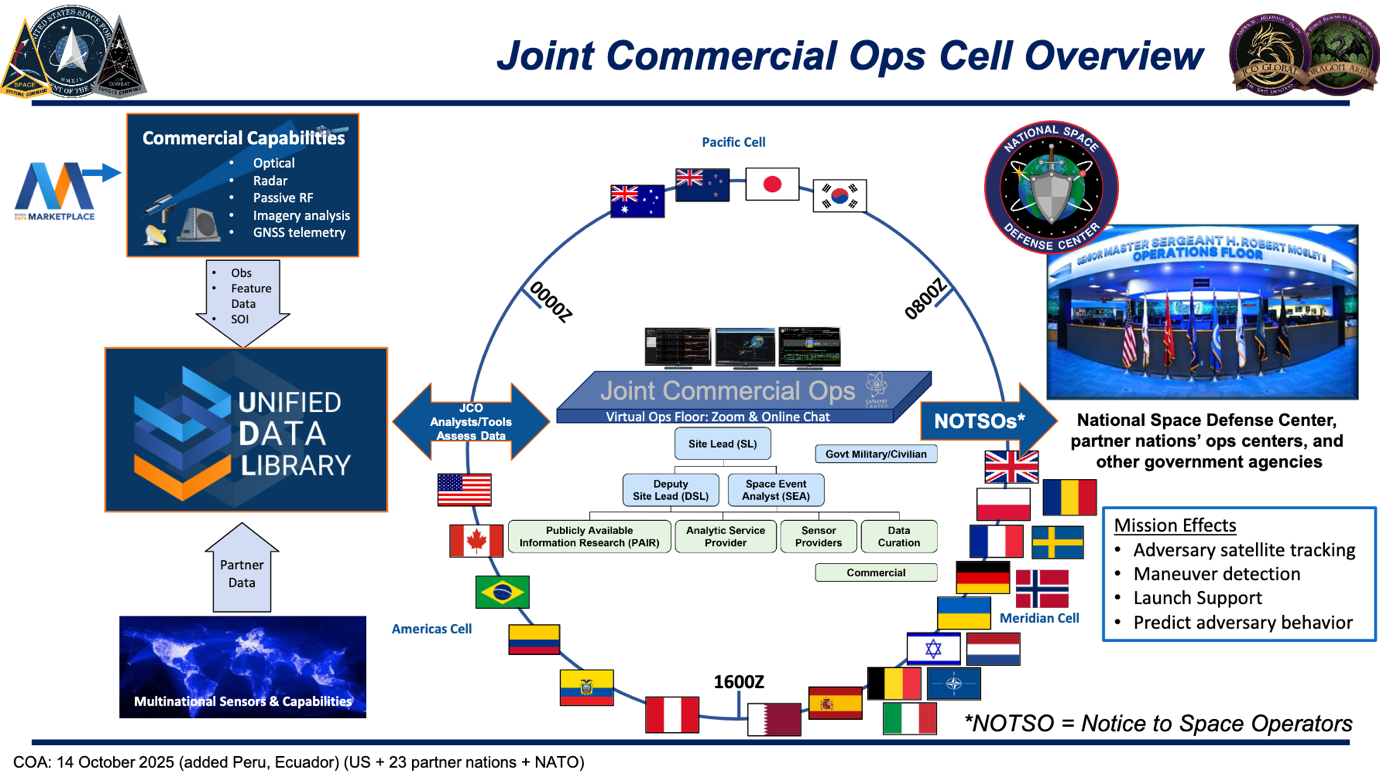
The JCO’s ambition extends beyond tracking satellites. The group intends to become “a global international operations center for integrating commercial capabilities to augment all-domain military operations,” states a technical paper on the JCO. In other words, member states, including Israel and New Zealand, will use commercial and military capabilities to support “U.S. combatant commands and international partners.”
Five Eyes support for Israel
In addition to working alongside Israel as part of the JCO, New Zealand may have provided intelligence to Israel linked to New Zealand’s membership of the U.S.-led Five Eyes alliance.
Confirming this possibility, a 2016 review of legislation governing New Zealand’s spy agencies states that “foreign partners” occasionally “submit requests to the GCSB for assistance with intelligence gathering.” Although “very few of these requests [were] fulfilled due to constraints in terms of capability, capacity and/or geography,” the GCSB informed the review’s authors, the agency shared intelligence when requests “align[ed] with New Zealand’s intelligence gathering priorities.”
This intelligence may have included operations against Iran. The GCSB’s Iran operations began around 1996 when a U.S. National Security Agency (NSA) language specialist trained two GCSB analysts in the translation and analysis of Farsi, according to investigative journalist Nicky Hager.
New Zealand’s operations against the country were on-going in September 2005, when a WikiLeaks-released cable from the U.S. embassy in Wellington stated that “the Iranian Embassy has three diplomatic officials who are being watched by the New Zealand Government,” which Hager presumes to refer to New Zealand’s Security Intelligence Service.
More recently, confirming that the GCSB is engaging with intelligence on the U.S.-Israel war on Iran, the GCSB director-general told the March 2026 Security and Intelligence Committee, “this week’s conflict in the Middle East is no exception, and our team has been providing round-the-clock threat intelligence updates to our customers, especially to the NZDF and MFAT” (the New Zealand Defence Force and the Ministry of Foreign Affairs and Trade).
New Zealand would not be the only country providing Five Eyes-linked intelligence to Israel.
For example, an Edward Snowden-released April 2013 top-secret information paper states that the U.S. “NSA maintains a far-reaching technical and analytic relationship with the Israeli SIGINT National Unit (ISNU) sharing information on access, intercept, targeting, language, analysis and reporting”—with SIGINT denoting the Five Eyes specialism signals intelligence, i.e., analysis of intercepted communications.
The NSA’s signals intelligence relationship with the ISNU was “the catalyst for a broader intelligence relationship between the United States and Israel” that included the Central Intelligence Agency, Israel’s Special Operations Forces, and Mossad.
Like the United States, the United Kingdom maintains a close intelligence relationship with Israel. For example, a Snowden-released top secret visit précis on then Government Communications Headquarters (GCHQ) Director Iain Lobban’s 2013 visit to his counterpart at the NSA states that the British signals intelligence agency “has long advocated that it work with NSA and the Israeli SIGINT Service (ISNU) in a trilateral arrangement in prosecuting the Iranian target.”
Although the NSA’s Signals Intelligence Directorate was “opposed to such a blanket arrangement,…in other areas, NSA and GCHQ have agreed to continue to share information gleaned from the respective bilateral relationships with ISNU.”
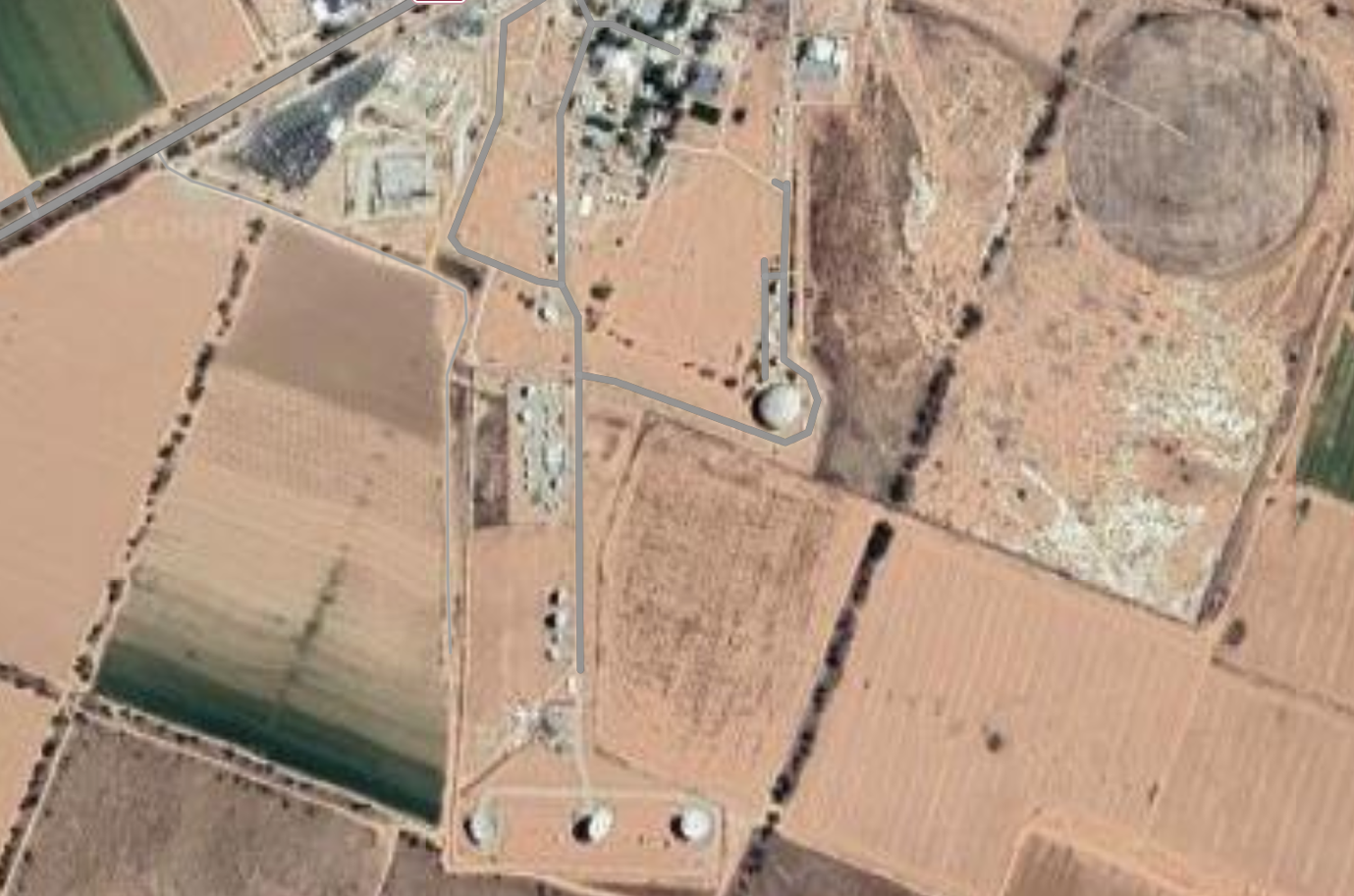
The GCHQ’s relationship with the ISNU likely includes information from U.S.-U.K. intelligence facilities on Cyprus. From Cyprus, Britain operated more than 500 surveillance flights around Gaza between December 3, 2023, and March 27, 2025. In response to an Official Information Act request, the GCSB withheld in full information on its possible receipt of intelligence from the U.S.-UK Troodos signals intelligence station on Mount Olympus.
Alliance burden sharing
New Zealand may have contributed to U.S. and UK support for Israel by analyzing intelligence and sharing intercepts.
In fact, New Zealand has analyzed intelligence for other parties in the Five Eyes alliance for decades. A 1999 Inspector-General of Intelligence and Security (IGIS) report claimed that the GCSB had “comprehensive procedures for the continued regular checking of any material collected or reported upon” (emphasis added). Furthermore, the document refers to “intelligence collection and reporting activities of the GCSB carried out…on its own behalf or at the request of its intelligence partners.”
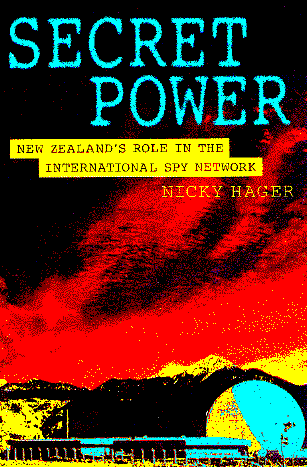
Exemplifying the GCSB’s analysis duties is the agency’s long-term role reporting on intercept against Japan. Although Japan may have been a third party to the alliance, the GCSB analyzed Japanese diplomatic communications intercepted at the agency’s Waihopai spy base and other Five Eyes stations. These duties were not unique to the GCSB, Hager explains in his book Secret Power. Rather, the arrangement constituted an NSA-led “worldwide division of analysis” wherein “the five agencies share[d] out the work of producing finished intelligence reports” (emphasis in original). In the 1980s and 1990s, this burden sharing “occupied about a third of the GCSB’s analysts.”
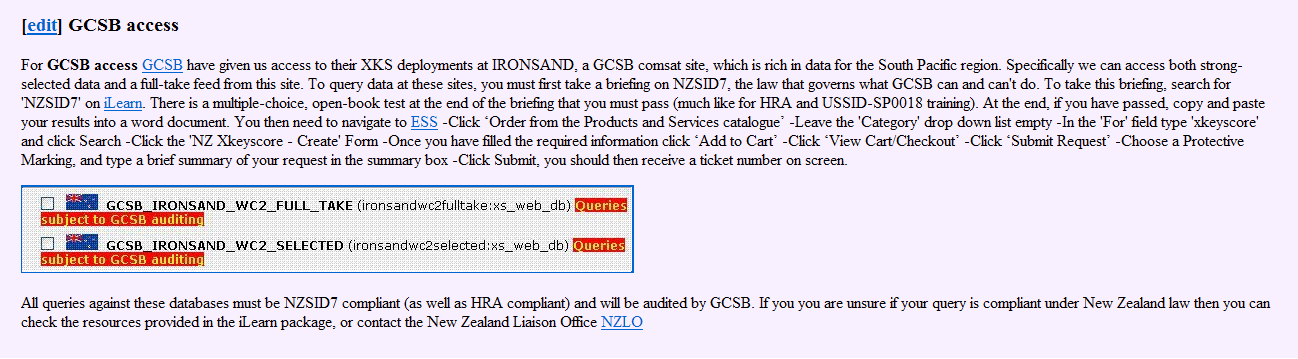
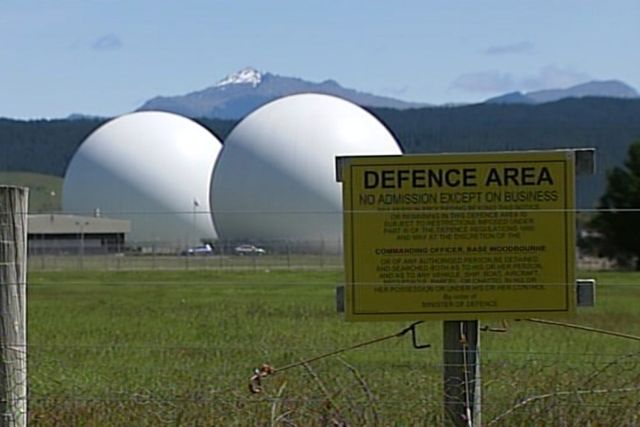
Likely facilitating intelligence analysis was New Zealand’s shared access to a key database with Five Eyes countries. Referring to the intelligence sharing program XKeyscore into which the GCSB channeled indiscriminately intercepted content and metadata of communications, a secret Snowden-released 2011 memo from the United Kingdom states: “GCSB have given us access to their XKS deployments at IRONSAND”—the codename for the Waihopai station. “We can access both strong selected data and full-take feed from this site.”
New Zealand intended for this sharing to include Australia and possibly Canada, according to other Snowden documents. A top-secret July 2009 GCSB SIGINT Development Quarterly Report revealed that the “GCSB received a visit from NSA XKEYSCORE trainers…in anticipation of full-take collection and 2nd party sharing.” Along with the GCHQ, Australia’s then Defence Signals Directorate (DSD) was “very keen to share XKEYSCORE data.” The previous month, top secret meeting minutes on a June 2009 SIGINT Development Forum at the NSA headquarters at Fort Meade, Maryland, stated that “GCSB are also working to gain connectivity to DSD XKEYSCORE (as a first step toward connecting to other 2P XKs).”
Third-party sharing
There is little restriction on the United States and other Five Eyes countries when sharing New Zealand-produced intelligence with third parties such as Israel.
For instance, a Snowden-released top-secret memorandum of understanding between the NSA and the ISNU states only that the Israeli spy agency agrees to “protect information” it receives from the NSA on U.S. citizens, permanent residents, groups and companies, with “similar” procedures applied to the other Five Eyes countries.

Although Five Eyes countries are required to obtain consent before on-sharing New Zealand-produced intelligence, this “third-party rule” is only a formality. In practice, the GCSB and the NZSIS are not concerned with how another member of the alliance shares their intelligence. Rather, according to an IGIS review of the agencies, “the position held jointly by the agencies has been that…on-sharing is a decision made by their Five Eyes partner.”
Consistent with this careless approach, human rights risks do not prevent the GCSB from providing consent. When completing Human Rights Risk Assessments for on-sharing intelligence to third parties, the GCSB mostly consulted only one source, with an “over-reliance” on unreliable country reports from the U.S. State Department. The inspector-general found that the GCSB declined requests primarily “for reasons other than human rights risk,” and “most requests to share intelligence [were] approved.” Consequently, the GCSB shared “a considerable amount of intelligence in accordance with the third party rule.”
New Zealand’s control over its intelligence
Belying the GCSB director-general’s assertion that the agency has “good control” over its intelligence, it is doubtful that New Zealand could enforce its decisions not to provide consent under the third-party rule.
Revealing the agency’s lack of control is an April 2013 top-secret information paper titled “NSA Intelligence Relationship with New Zealand.” The Snowden document states that “20% of GCSB’s analytic workforce [did] not have accounts or access to key NSA databases.” This lack of access was “a particularly significant issue for GCSB,” according to the information paper, as the New Zealand spy agency provided “NSA with NZL data…traditionally accessed via NSA tool/database interfaces.” In other words, the United States controlled the system through which New Zealand accessed its intelligence, and one-fifth of GCSB analysts were “unable to query or access” it.
U.S. control of intelligence from the other four members of the alliance is a decades-long arrangement. In 1990, the Naval Intelligence Bulletin stated that the NSA “control[led] all SIGINT product dissemination, including that of Field Reporting Sites and Second Party Producers (U.K., Canada, Australia, New Zealand),” Hager revealed in Secret Power.
To what extent is New Zealand-produced, U.S.-controlled intelligence supporting Israel’s commission of international crimes?
In 2024, three New Zealand lawyers asked the Inspector-General of Intelligence and Security to investigate this question regarding Israel’s genocide in Gaza.
The IGIS rejected this request as Israel’s assault was ongoing: “I do not want to ‘stop the clock’ at this time and commit the modest resources of my office to a deeper review of activity I have already been monitoring.”
In other words, the inspector-general may fully investigate New Zealand’s support for Israel’s crimes against Palestinians only when it can no longer be prevented. To fulfill his obligation to provide “independent oversight” of the country’s spy agencies, the inspector-general must reconsider this decision.

CovertAction Magazine is made possible by subscriptions, orders and donations from readers like you.
Blow the Whistle on U.S. Imperialism

Click the whistle and donate
When you donate to CovertAction Magazine, you are supporting investigative journalism. Your contributions go directly to supporting the development, production, editing, and dissemination of the Magazine.
CovertAction Magazine does not receive corporate or government sponsorship. Yet, we hold a steadfast commitment to providing compensation for writers, editorial and technical support. Your support helps facilitate this compensation as well as increase the caliber of this work.
Please make a donation by clicking on the donate logo above and enter the amount and your credit or debit card information.
CovertAction Institute, Inc. (CAI) is a 501(c)(3) non-profit organization and your gift is tax-deductible for federal income purposes. CAI’s tax-exempt ID number is 87-2461683.
We sincerely thank you for your support.
Disclaimer: The contents of this article are the sole responsibility of the author(s). CovertAction Institute, Inc. (CAI), including its Board of Directors (BD), Editorial Board (EB), Advisory Board (AB), staff, volunteers and its projects (including CovertAction Magazine) are not responsible for any inaccurate or incorrect statement in this article. This article also does not necessarily represent the views the BD, the EB, the AB, staff, volunteers, or any members of its projects.
Differing viewpoints: CAM publishes articles with differing viewpoints in an effort to nurture vibrant debate and thoughtful critical analysis. Feel free to comment on the articles in the comment section and/or send your letters to the Editors, which we will publish in the Letters column.
Copyrighted Material: This web site may contain copyrighted material the use of which has not always been specifically authorized by the copyright owner. As a not-for-profit charitable organization incorporated in the State of New York, we are making such material available in an effort to advance the understanding of humanity’s problems and hopefully to help find solutions for those problems. We believe this constitutes a ‘fair use’ of any such copyrighted material as provided for in section 107 of the US Copyright Law. You can read more about ‘fair use’ and US Copyright Law at the Legal Information Institute of Cornell Law School.
Republishing: CovertAction Magazine (CAM) grants permission to cross-post CAM articles on not-for-profit community internet sites as long as the source is acknowledged together with a hyperlink to the original CovertAction Magazine article. Also, kindly let us know at info@CovertActionMagazine.com. For publication of CAM articles in print or other forms including commercial internet sites, contact: info@CovertActionMagazine.com.
By using this site, you agree to these terms above.
About the Author

Samuel Hume is an independent journalist and teacher based in London.
Sam’s work has appeared in Arena, Jacobin, and Pearls and Irritations and his collected articles can be found on his Substack.
Samuel can be reached at samuelhume@proton.me.