At the end of March, Ben Cohen, the co-founder of Ben & Jerry’s ice cream, carried out an act of guerrilla theater when he installed a statue on the National Mall depicting a tearful Donald Trump holding a hole-riddled golden dome like an umbrella as water streamed from model intercontinental ballistic missiles (ICBMs) overhead.
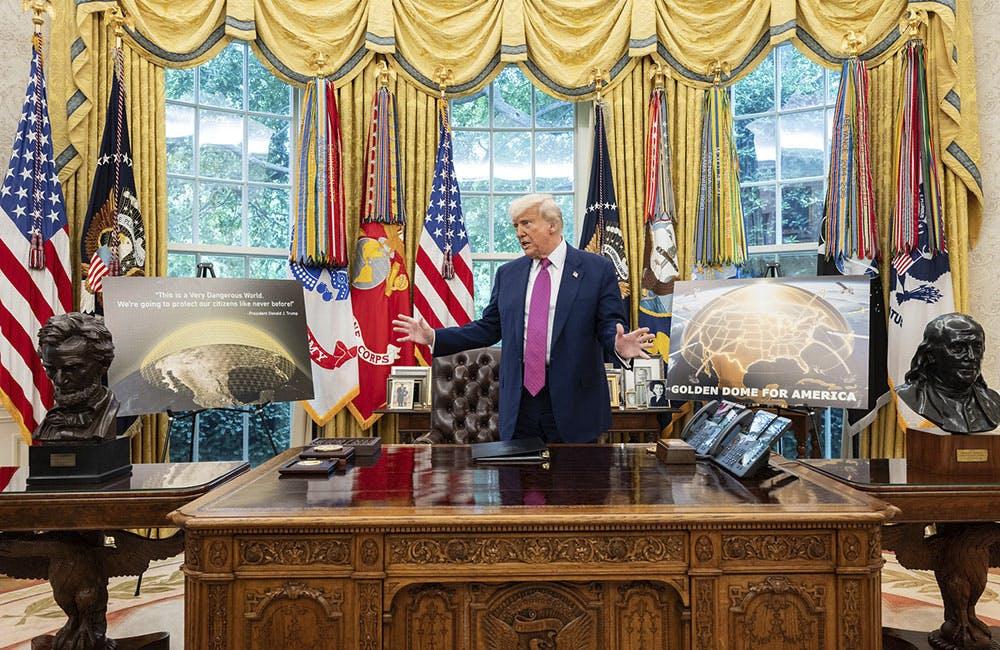
The hole-in-Trump’s-dome statue aimed to mock Trump’s Golden Dome missile system that would establish space-based interceptors capable of shooting down ICBMs fired at the U.S.
The cost of the Golden Dome is estimated to be in the range of $4 trillion officially, though top scientists believe that it is a “total delusion” that will never actually work.

Cohen’s protest against the Golden Dome is part of the “Up in Arms” campaign, which Cohen has co-founded to reduce Pentagon spending.
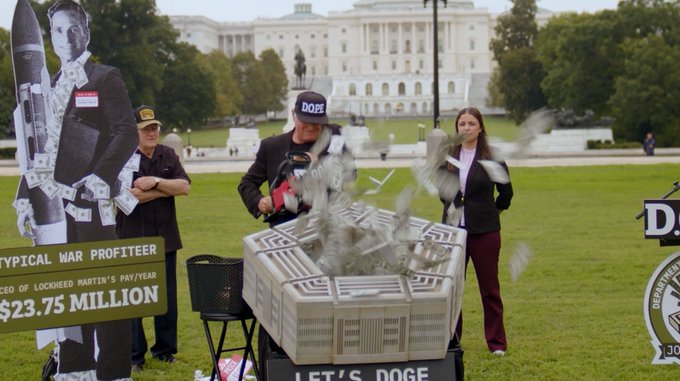
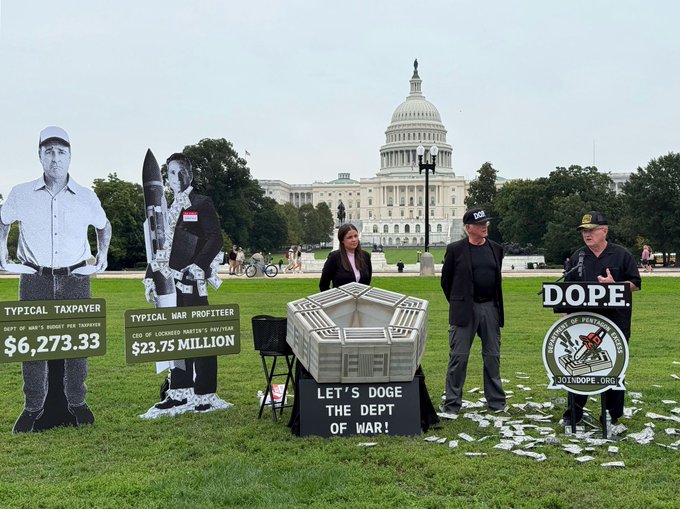
In October, as part of this campaign, Cohen used a chainsaw to dismantle a model of the Pentagon stuffed with fake dollar bills, and announced the creation of the Department of Pentagon Excess (DOPE), a parody of Donald Trump’s Department of Government Efficiency (DOGE), which has focused on cutting government programs unrelated to the military.
In an interview with CovertAction Magazine (CAM), Cohen said that Trump is “trying to repeat the folly of Reagan’s Star Wars system”—a high-tech space-based system for deterring nuclear attack—that “never actually worked. The Golden Dome concept is attractive—an invisible, impenetrable shield to prevent possible threats—but it is within the realm of make-believe. This is what the hole-in-the-dome was trying to demonstrate.”
Cohen went on to note that the Golden Dome is indicative of the warped spending priorities of the Trump administration, which “wants to increase military spending by $500 billion when that amount could be used to eradicate hunger around the world and provide people with affordable housing and health care and access to good education.”
Cohen added that “about the only honest thing the Trump administration has done was to rename the Department of Defense the Department of War. The U.S. has been invading other countries and has over 800 military bases, and this is not really about defending the country.”
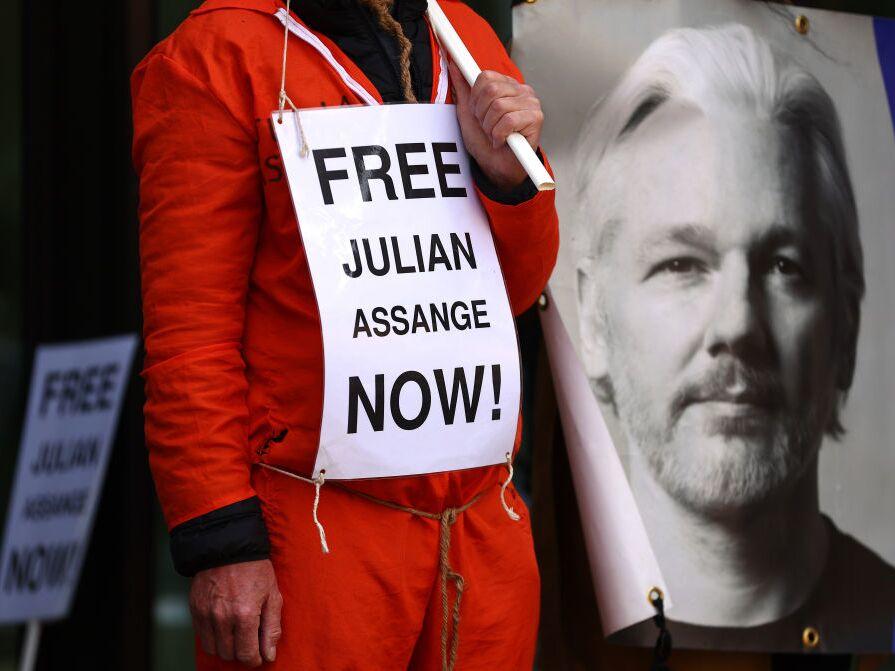
The “Up in Arms” campaign follows Cohen’s support for the Assange Defense movement, which succeeded in freeing WikiLeaks founder Julian Assange, who was imprisoned for eight years after publishing leaked documents that exposed U.S. government crimes.
Cohen told CAM that he “felt personally so strongly that WikiLeaks did an incredible service, letting people in the U.S. know what is being done in their name all around the world and about all the spying being done at home. Assange to me is a hero who displayed real courage and got clobbered by the U.S. government. When I think of him, I think of his statement: ‘If wars can be started by a lie, maybe peace can be achieved by exposing the truth.’”
Cohen’s support for Assange Defense and the “Up in Arms” campaign is part of a life-long mission to try to reduce violence and get the U.S. and other governments to prioritize spending on health care, education, housing and other things that provide social benefits.
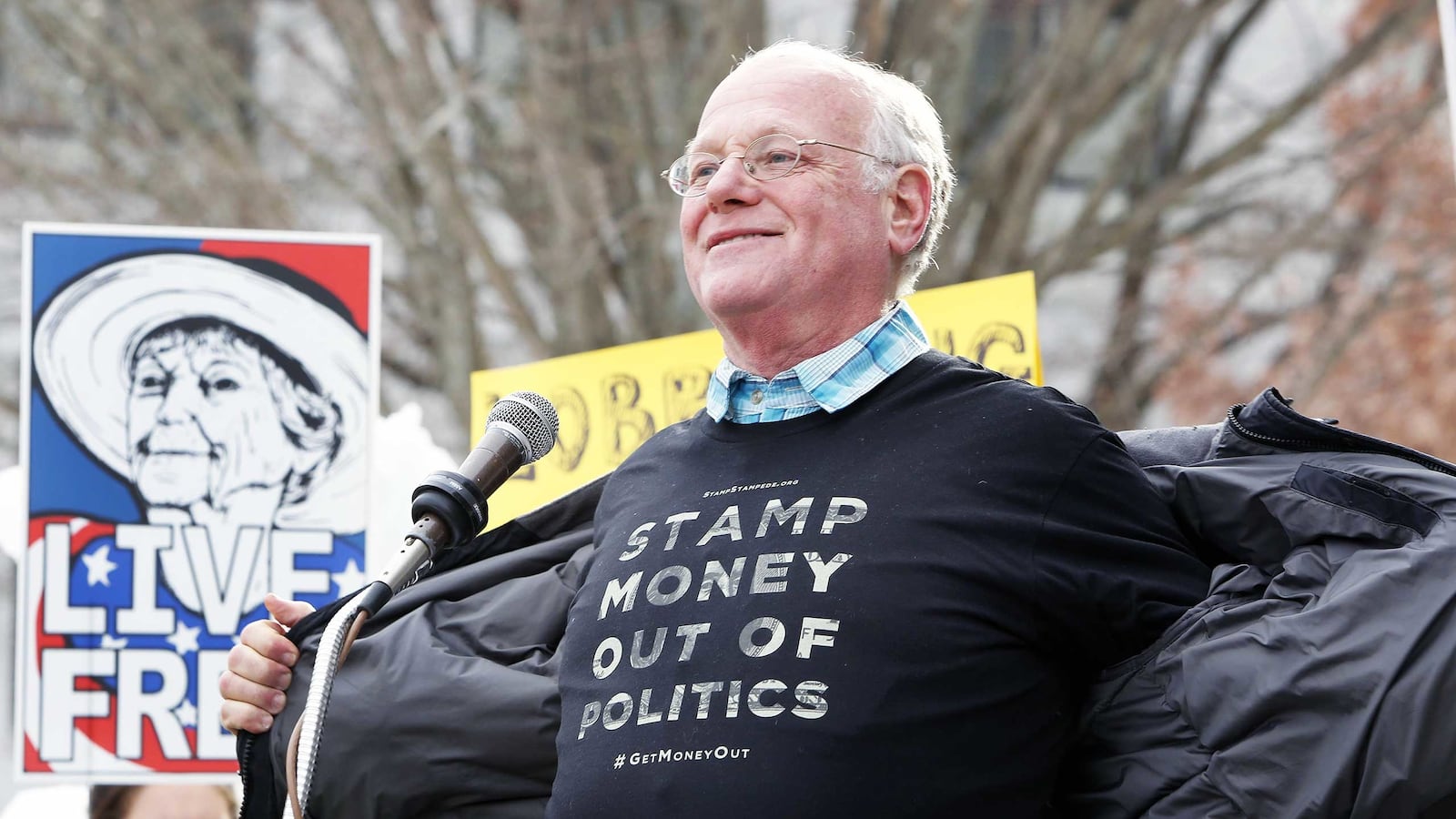
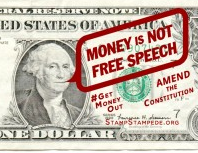
In 2012, Cohen helped launch the Stamp Stampede campaign to stamp messages on the nation’s currency in support of passing a constitutional amendment to overturn Citizens United v. Federal Election Commission and reduce the influence of private corporations on politics.
Cohen grew up in Long Island in the 1950s and 1960s and, starting in elementary school, began to understand how the Cold War had led to irrational government spending on weapons as part of a destructive arms race between the U.S. and the Soviet Union.
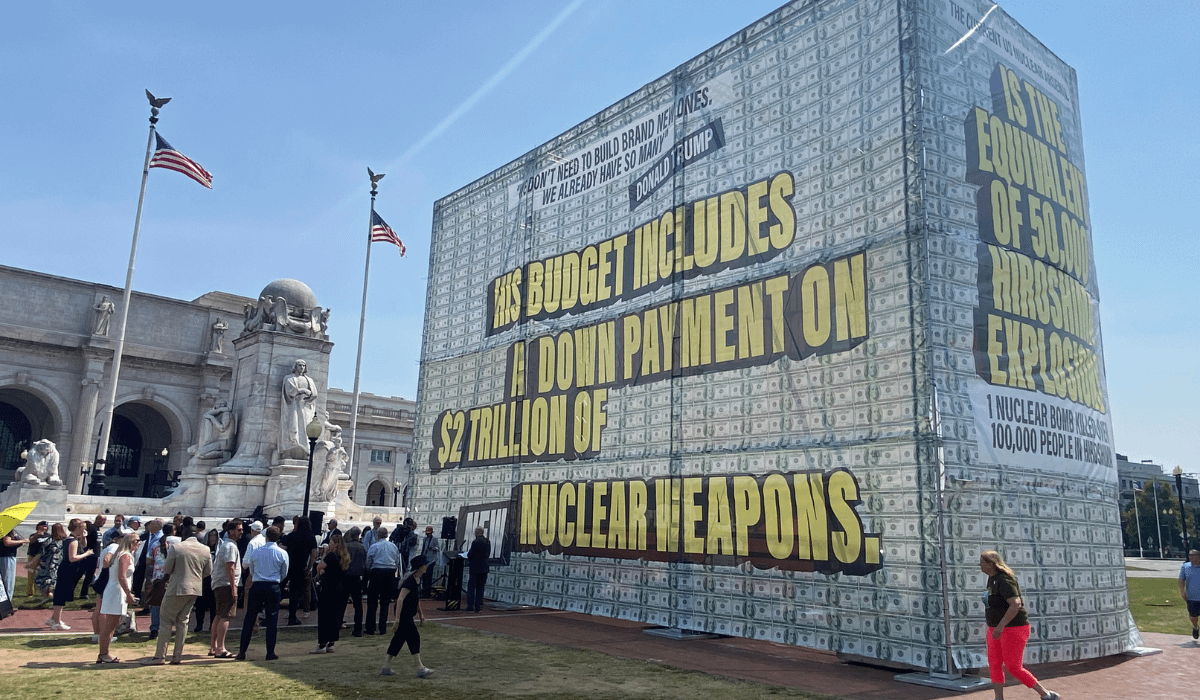
Cohen said that, even at his young age, he realized that “we have all the money we need, no shortage of money, but we decide to spend so much on weapons under the absurd idea that we can achieve peace through war. This same irrational thought process is leading the U.S. government now to double the amount that it intends to spend on nuclear weapons.”
Participating in various anti-Vietnam War demonstrations in the late 1960s and early 1970s, Cohen said that some of the inspiration for his anti-war views came from Bob Dylan’s song “Masters of War,” which was one of his favorites.
After attending various colleges in New York, Cohen founded Ben & Jerry’s ice cream in 1978 with his friend Jerry Greenfield, whom he had met in his junior high gym class where, he said, the two were the “slowest and fattest kids in the class.”
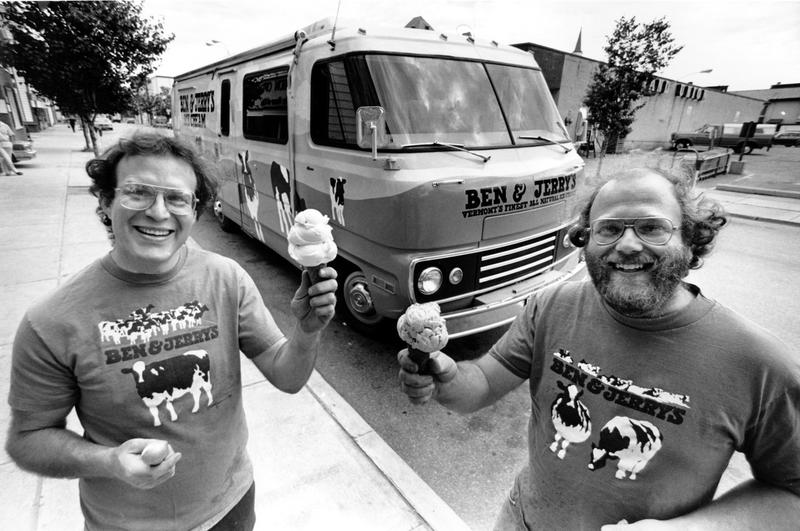
Cohen told me that he and Jerry shared a similar political outlook and value system. The first Ben & Jerry’s was a home-made ice cream shop in a former gas station in Burlington, Vermont.
Cohen said that, as the shop became successful and the Ben & Jerry’s brand grew, Ben & Jerry’s began running free festivals in Burlington where they gave away free ice cream.
They also tried to integrate their concerns for social benefit in daily business decisions, for example, opting to buy coffee beans produced by cooperatives in Mexico and blueberries from a Native-American tribe in Maine, and to establish a relationship with the Greyston Bakery in inner-city New York, which employed ex-convicts and formerly homeless people.
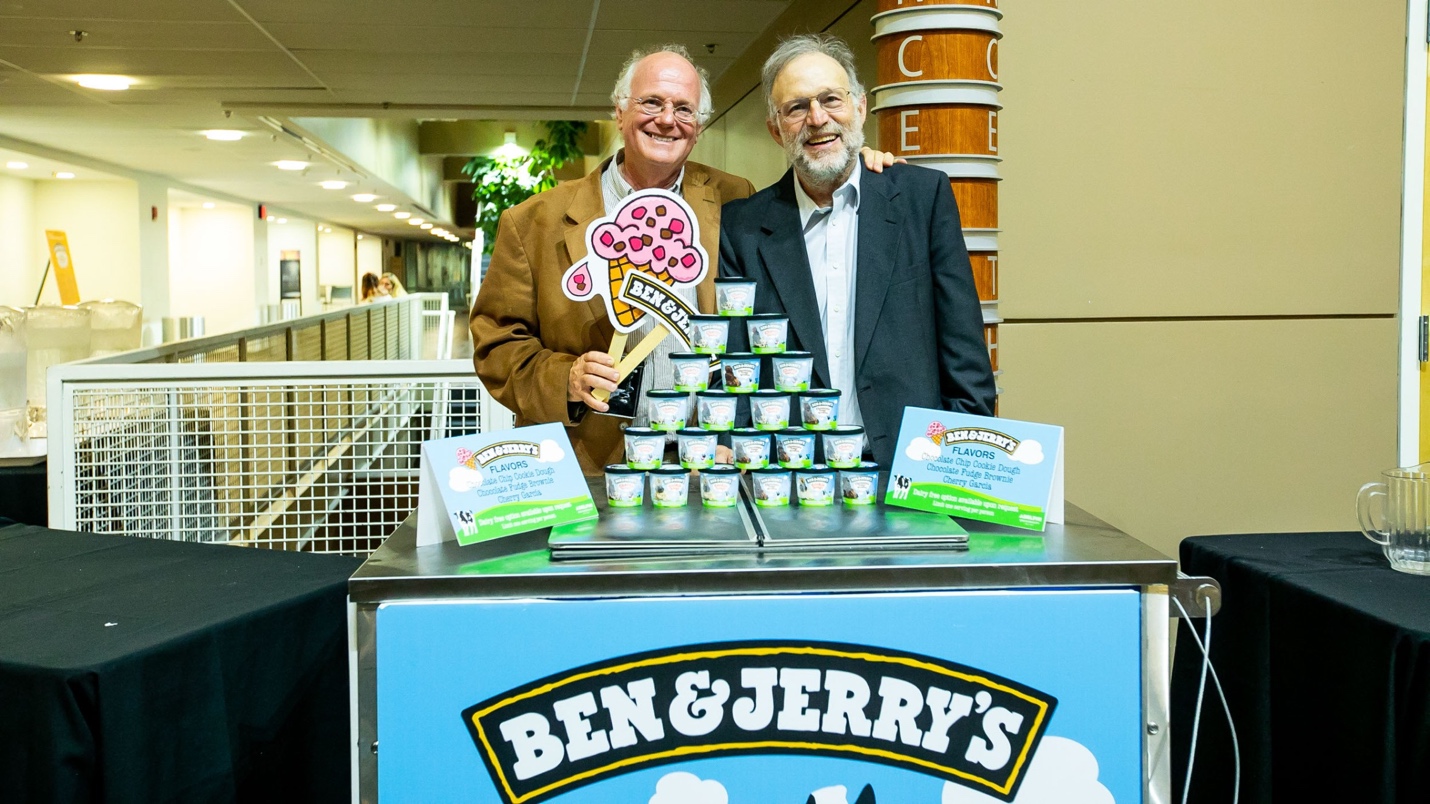
In the 1980s, Ben & Jerry’s established the Ben and Jerry’s Foundation, which received 7.5% of pre-tax profits, the highest of any publicly held organization.
When they needed an injection of cash, instead of taking money from venture capitalists, Ben & Jerry’s made public stock offerings available in Vermont and then sold shares, making the company publicly owned.
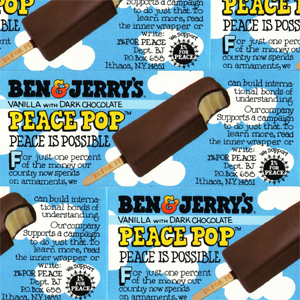
In 1988, when Cohen became disturbed by the Reagan administration’s exorbitant spending on nuclear weapons, while one in five American children lived in poverty, he founded “1% for Peace,” which advocated for the U.S. to redirect 1% of its defense budget to peace-promoting projects. In support of “1% for Peace,” Ben & Jerry’s launched a new product, the “Peace Pop,” which included a wrapper directly challenging Cold War spending policies.
Three years later, in 1991, when George H. W. Bush initiated Operation Desert Storm—a war that Cohen said was “clearly over oil”—Ben & Jerry’s joined other organizations to take out a full-page ad in The New York Times opposing the war.
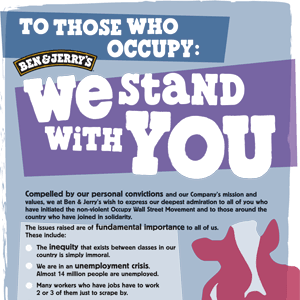
Ben & Jerry’s has since supported many other progressive causes, including lesbian and gay rights, the environment, prison reform and the Occupy Wall Street movement, and established relationships with banks and other businesses devoted to revitalizing decaying urban areas.
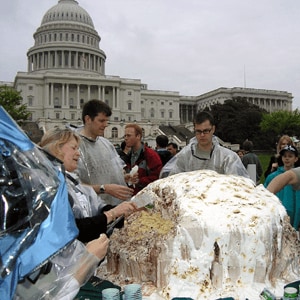
In 2005, to protest proposed oil drilling in the Arctic National Wildlife Refuge, Ben & Jerry’s employees constructed a 900-pound “Baked Alaska” with Ben & Jerry’s Fossil Fuel ice cream and shouldered it onto the U.S. Capitol lawn and served it up with the help of Greenpeace and the Alaska Wilderness League.
Cohen said that the reputation of Ben & Jerry’s for supporting community activism and progressive causes is part of what made the business so successful—and not something they ever want to lose. In 1999, a national survey found that Ben & Jerry’s ranked fifth among all companies in the U.S. in terms of reputation.
Unilever and the Free Ben & Jerry’s Campaign
In the late 1990s, Cohen said, Ben and Jerry’s hired the wrong CEO, Perry Odak, who saw an opportunity to make money by making an overture to sell the company to Unilever, a British-based corporation specializing in food, health and beauty products.
Since Ben & Jerry’s was publicly held, Cohen said that he and Jerry had no control over the sale when it went forward in 2000, although they did their best to resist it. Cohen and Greenfield were able to negotiate an agreement with Unilever by which they were able to establish an independent board that would make decisions related to Ben & Jerry’s social mission and marketing.
For the next 20 years, Cohen said, the arrangement worked well—much better in fact than he had expected.
However, in 2021, a conflict emerged when the board decided to pull Ben & Jerry’s out of the West Bank because it believed that selling ice cream to Israeli settlers who took over Palestinian land and brutalized the Palestinians was inconsistent with the values for which Ben & Jerry’s stood.
While Unilever’s appointee to the independent board had voted in favor of the resolution, Cohen said that, after this decision was made, the Israeli government got upset and called Unilever and threatened to refuse to allow Unilever to do any business in Israel.
Unilever responded by selling their rights to Ben & Jerry’s ice cream in Israel to an Israeli company, which meant that Ben & Jerry’s ice cream was again being sold on the West Bank.
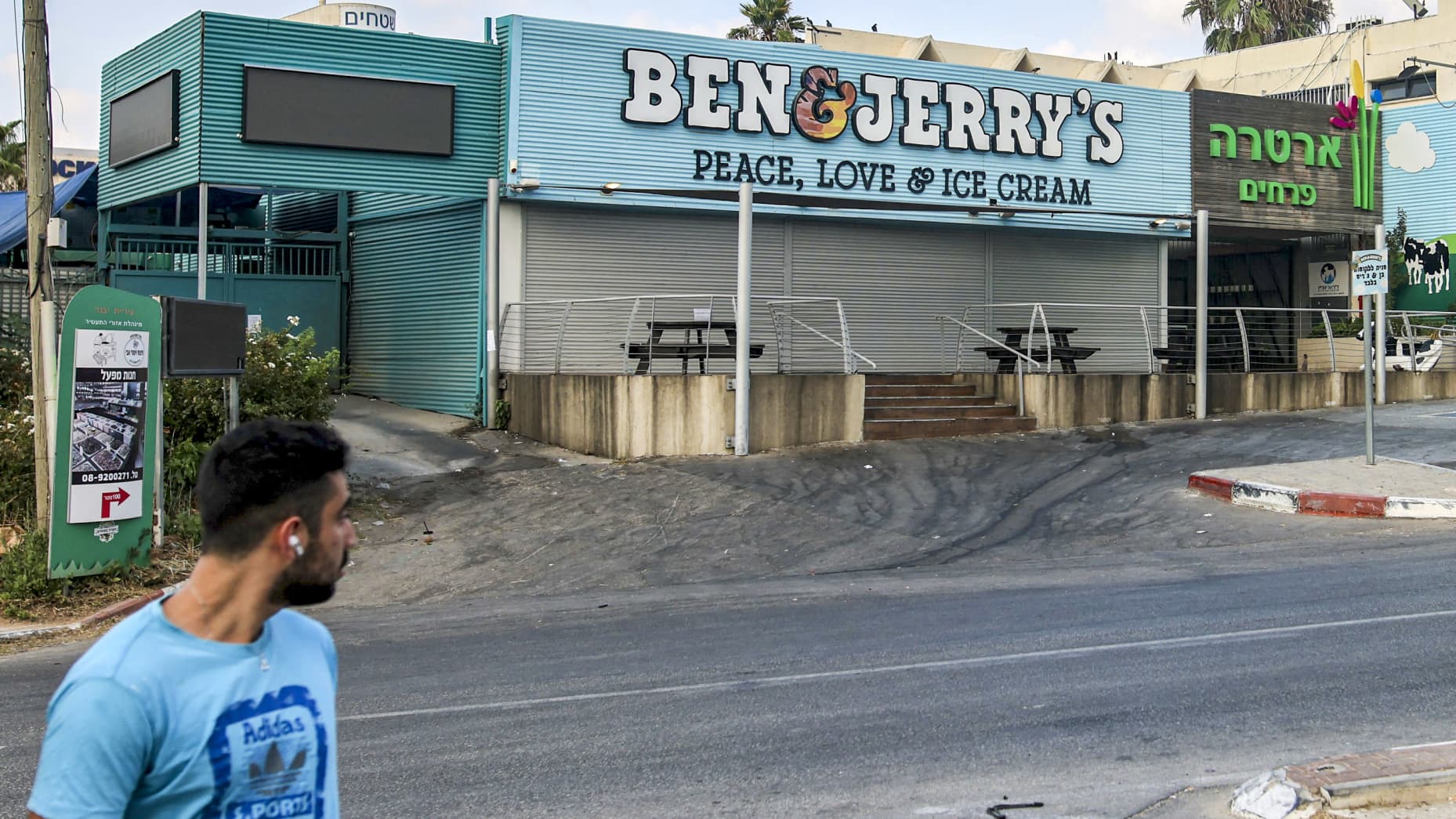
At that point, the Ben & Jerry’s board sued Unilever for usurping its power and breaching the terms of Ben & Jerry’s takeover.[1]
Unilever subsequently prevented the Ben & Jerry’s board from speaking out on a range of social issues[2] and from supporting chosen charitable organizations such as the Institute for Middle East Understanding and Jewish Voice for Peace, which were supposedly too “polarizing” and “controversial.”
Cohen said that the board wanted to call for a cease-fire in Gaza following the post-October 7, 2023, Israeli attacks there; to support a congressional amendment by Bernie Sanders to block arms supplies to Israel, and to offer support for student protesters’ and their First Amendment right to criticize the Israeli genocide, but Unilever would not allow it. Unilever also would not allow a watermelon-flavored sorbet featuring colors associated with the Palestinian flag.[3]
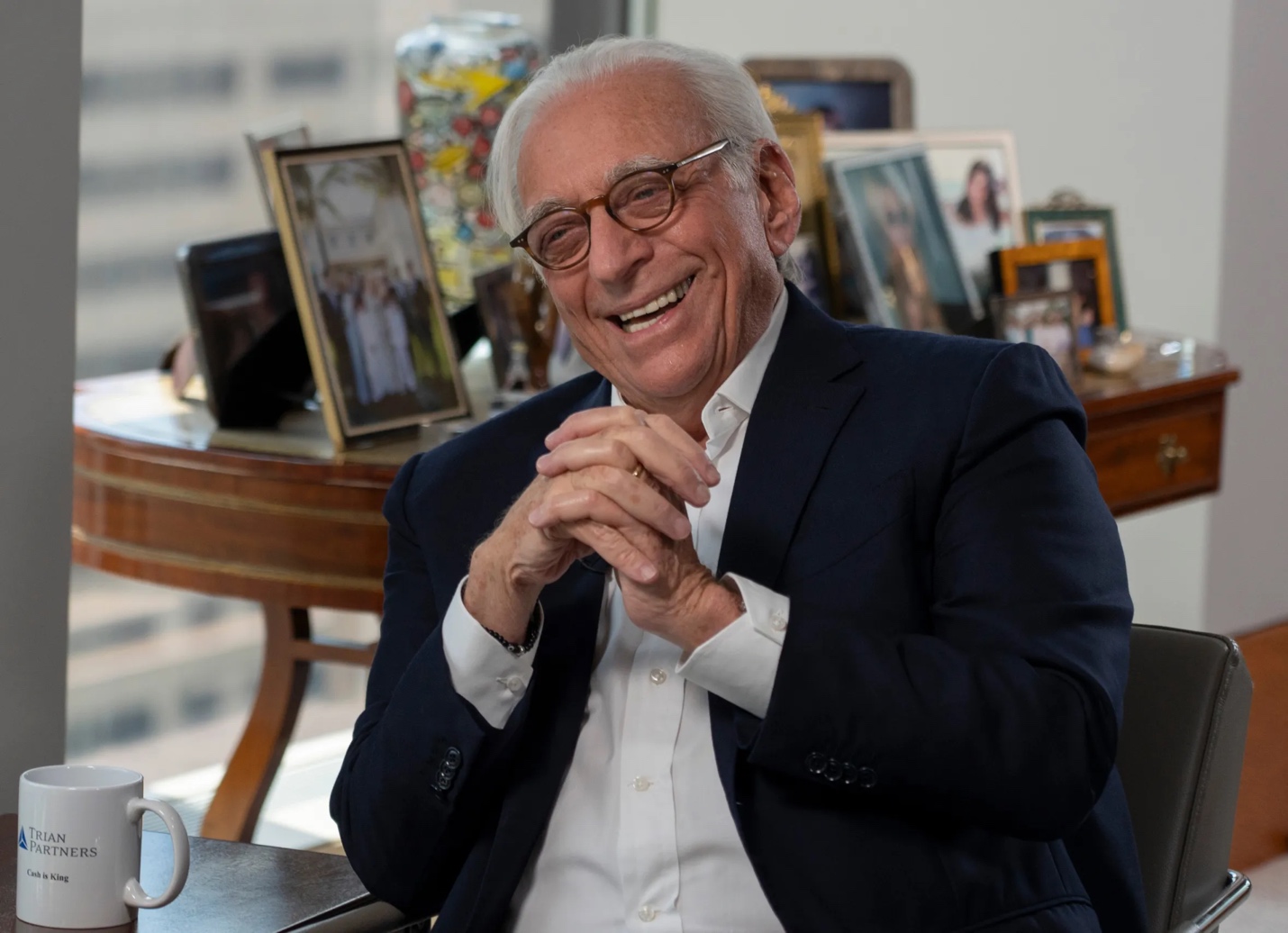
In our interview, Cohen noted that, after Ben & Jerry’s decided to pull out of the West Bank, Nelson Peltz, a giant on Wall Street and the head of the Simon Wiesenthal Center, whom Cohen said is among those who believe that “Israel can do no wrong,” bought stock in Unilever to get a seat on its board with the aim of influencing its decisions.
Cohen said that Peltz took credit for introducing Elon Musk to Donald Trump and referred to himself as a “bully billionaire.”
Though claiming to want to remain neutral on the Israel-Palestine conflict, according to one of the lawsuits filed by Ben & Jerry’s, after October 7, 2023, Unilever publicly made a 500,000 Euro donation to Magen David Adom, an Israeli organization that acts as an auxiliary service to the Israel Defense Forces (IDF).

Magen David Adom has appointed to head its rabbinical committee Rabbi Shmuel Eliyahu, who has been repeatedly criticized for his “racist statements and extremist views,” which include calling on Jews “not to rent apartments to Arabs,” and for the indiscriminate bombing of Palestinians and the nuking of Gaza.[4]
Demonstrating its hypocrisy further in preventing Ben & Jerry’s from speaking out on social issues, Unilever took a strident anti-Russia position on the Russia-Ukraine conflict, leading it to cease all imports to and exports from Russia. In 2022, Unilever criticized a Tweet from Ben & Jerry’s blaming then-President Joe Biden for contributing to rising tensions with Russia.[5]
After Trump’s election in 2024, Unilever established the Magnum Ice Cream Company, which included Unilever’s several ice cream brands and then spun it off (retaining a minority share); the new ownership of Magnum proceeded to fire Ben & Jerry’s CEO Dave Stever, who had worked for Ben & Jerry’s for 30 years, and barred Ben & Jerry’s from criticizing the Trump administration.[6]
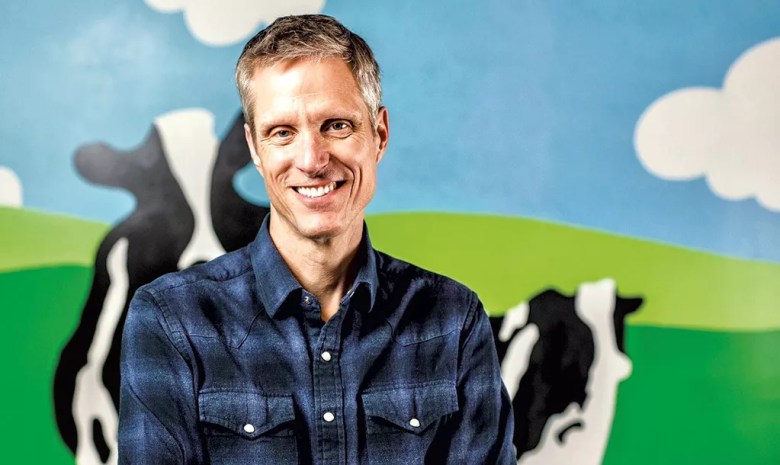
Jerry Greenfield subsequently resigned from Ben & Jerry’s, saying that this decision compromised the ability of the company to pursue its values in support of peace, justice and human rights.
Cohen told me that Trump’s policy positions are completely antithetical to Ben & Jerry’s value system and that it is vital for it to be able to speak out against them to sustain its credibility.
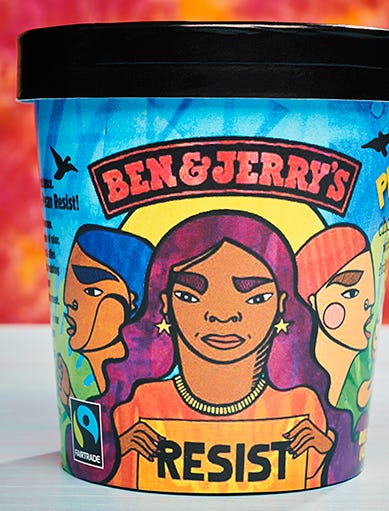
In 2018, Ben & Jerry’s had launched the flavor “Pecan Resist” alongside the following public statement: “The company cannot be silent in the face of President Trump’s policies that attack and attempt to roll back decades of progress on racial and gender equity, climate change, LGBTQ rights, and refugee and immigrant rights—all issues that have been at the core of the company’s social mission for 40 years.”
Cohen and the Ben & Jerry’s board are now pushing for Magnum to sell Ben & Jerry’s to a group of socially aligned investors who want to continue the company’s legacy as one devoted to supporting progressive causes.
The sale would allow Ben & Jerry’s to become an independently owned company that is once again free to live by its brand values, without compromise.
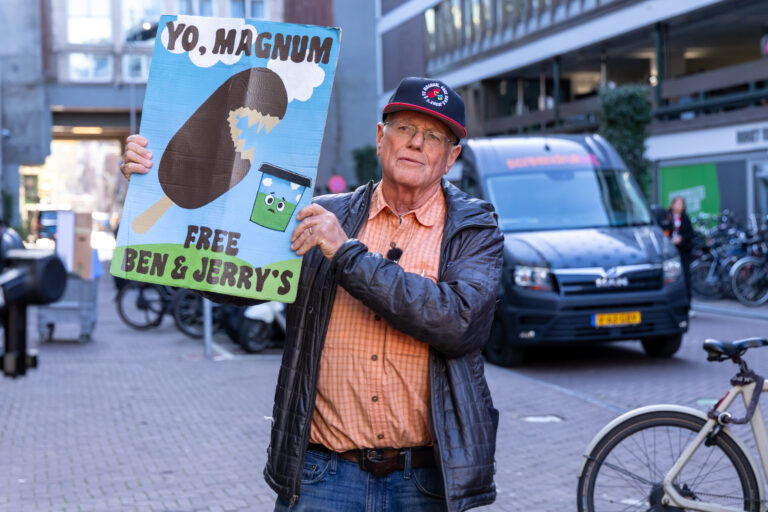
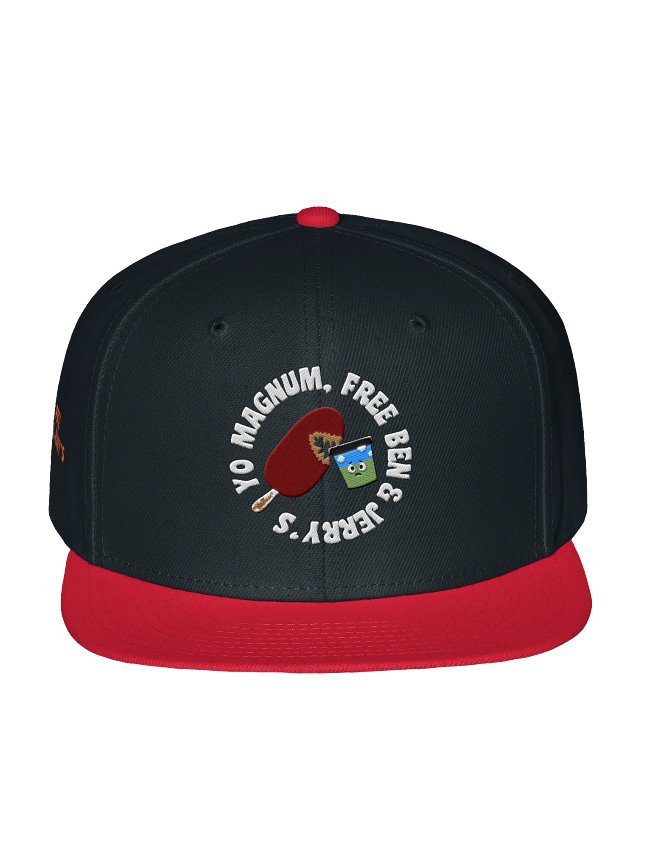
Cohen said that he recently went to the Netherlands, where Magnum is headquartered, to deliver a petition to Magnum’s board of directors advocating for the sale.
More than 100,000 supporters of Ben & Jerry’s have signed an online petition and letters supporting the “Free Ben & Jerry’s” campaign.
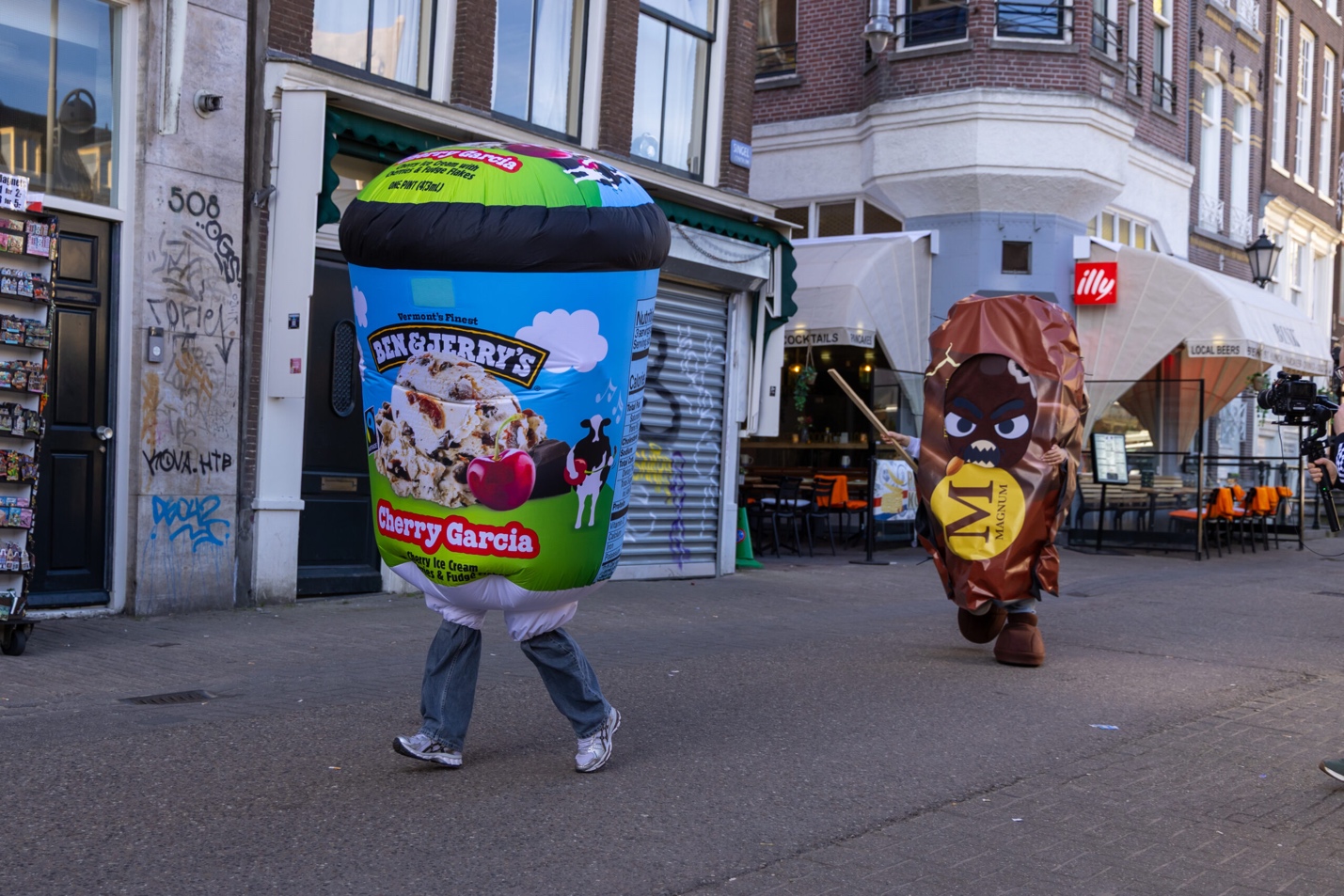
Cohen believes that this latter campaign is going well, as he said that it is starting to bring some negative publicity and “heat” on Magnum—whose most popular product in Europe is a chocolate-covered ice cream bar[7]—that could be damaging to their bottom line.
Cohen said that, by killing the ability of Ben & Jerry’s to speak out and combine selling ice cream with social activism, Magnum is symbolically killing the goose that lays golden eggs. It appears that people value this golden egg too much, however, to allow the goose to ultimately be slain.
Readers can sign the petition to Free Ben & Jerry’s here.
The lawsuit alleged that the Ben & Jerry’s board had the authority under the terms of the contractual agreement with Unilever to protect against actions that posed a risk to the integrity of the brand name, and that this was violated when Unilever allowed Ben & Jerry’s ice cream to be sold on the West Bank (which had been determined to pose a risk to that integrity because of the violence of Israeli settlers toward Palestinians). ↑
Unilever even prevented Ben & Jerry’s from issuing a statement about Black History Month, according to a lawsuit, and for supporting the release from ICE detention of Columbia University student activist Mahmoud Khalil. ↑
Ben vowed he would make the ice cream instead in his own kitchen. Previous Ben & Jerry’s flavors with an activist bent have included “Justice ReMix’d” to spotlight racial injustice, “Save Our Swirled” to highlight the need for action at the 2015 Paris climate meetings, “I Dough, I Dough” to celebrate the legalization of same-sex marriage, and “Home Sweet Honeycomb” in support of resettling refugees in Europe. ↑
According to a lawsuit filed by Ben & Jerry’s, Unilever has also placed hurdles on the receipt of funds by Canaan, a fair trade Palestinian almond producer that Ben & Jerry’s contracted with. ↑
In response to the tweet, Unilever issued a statement saying Ben & Jerry’s “should stay away from issues where it does not have expertise or credibility.” Cohen and Ben & Jerry’s opposed weapons sales to Ukraine. ↑
Stever had risen from a tour guide to CEO of Ben & Jerry’s. His firing triggered a lawsuit. Ben & Jerry’s alleged that the firing was illegal because the independent board established under the 2000 agreement with Unilever was never consulted. The lawsuit pointed out that, under Mr. Stever’s tenure, Ben & Jerry’s outperformed Unilever’s ice cream portfolio and was ranked #2 on the Brand 500 Authenticity Index in both 2023 and 2024. In a performance review, Unilever chastised Stever for acquiescing to the demands of the independent social mission board, which was actually his job to do. Another controversy developed when Magnum called Anuradha Mittal, the Chairman of the Board of the Ben & Jerry’s Foundation, “unfit to serve,” prompting Mittal to sue Magnum for defamation. Ms. Mittal is also the founder and executive director of The Oakland Institute, a think tank focused on the rights of farmers, forest dwellers, Indigenous communities and “pastoralists.” ↑
According to Cohen, Ben & Jerry’s represents about 10 to 12% of Magnum’s sales. ↑
CovertAction Magazine is made possible by subscriptions, orders and donations from readers like you.
Blow the Whistle on U.S. Imperialism
Click the whistle and donate
When you donate to CovertAction Magazine, you are supporting investigative journalism. Your contributions go directly to supporting the development, production, editing, and dissemination of the Magazine.
CovertAction Magazine does not receive corporate or government sponsorship. Yet, we hold a steadfast commitment to providing compensation for writers, editorial and technical support. Your support helps facilitate this compensation as well as increase the caliber of this work.
Please make a donation by clicking on the donate logo above and enter the amount and your credit or debit card information.
CovertAction Institute, Inc. (CAI) is a 501(c)(3) non-profit organization and your gift is tax-deductible for federal income purposes. CAI’s tax-exempt ID number is 87-2461683.
We sincerely thank you for your support.
Disclaimer: The contents of this article are the sole responsibility of the author(s). CovertAction Institute, Inc. (CAI), including its Board of Directors (BD), Editorial Board (EB), Advisory Board (AB), staff, volunteers and its projects (including CovertAction Magazine) are not responsible for any inaccurate or incorrect statement in this article. This article also does not necessarily represent the views the BD, the EB, the AB, staff, volunteers, or any members of its projects.
Differing viewpoints: CAM publishes articles with differing viewpoints in an effort to nurture vibrant debate and thoughtful critical analysis. Feel free to comment on the articles in the comment section and/or send your letters to the Editors, which we will publish in the Letters column.
Copyrighted Material: This web site may contain copyrighted material the use of which has not always been specifically authorized by the copyright owner. As a not-for-profit charitable organization incorporated in the State of New York, we are making such material available in an effort to advance the understanding of humanity’s problems and hopefully to help find solutions for those problems. We believe this constitutes a ‘fair use’ of any such copyrighted material as provided for in section 107 of the US Copyright Law. You can read more about ‘fair use’ and US Copyright Law at the Legal Information Institute of Cornell Law School.
Republishing: CovertAction Magazine (CAM) grants permission to cross-post CAM articles on not-for-profit community internet sites as long as the source is acknowledged together with a hyperlink to the original CovertAction Magazine article. Also, kindly let us know at info@CovertActionMagazine.com. For publication of CAM articles in print or other forms including commercial internet sites, contact: info@CovertActionMagazine.com.
By using this site, you agree to these terms above.
About the Author
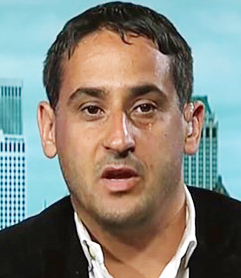
Jeremy Kuzmarov holds a Ph.D. in American history from Brandeis University and has taught at numerous colleges across the United States. He is regularly sought out as an expert on U.S. history and politics and co-hosts a radio show on New York Public Radio and on Progressive Radio News Network called “Uncontrolled Opposition.”
He is Managing Editor of CovertAction Magazine and is the author of eight books, including Obama’s Unending Wars (Clarity Press, 2019), The Russians Are Coming, Again, with John Marciano (Monthly Review Press, 2018), Warmonger. How Clinton’s Malign Foreign Policy Launched the U.S. Trajectory From Bush II to Biden (Clarity Press, 2023); with Dan Kovalik, Syria: Anatomy of Regime Change (Baraka Books, 2025), and Political Assassinations in America: The Intricate Nexus of Deep State Crime (Clarity Press, 2026).
Besides these books, Kuzmarov has published hundreds of articles and contributed to numerous edited volumes, including one in the prestigious Oxford History of Counterinsurgency .
He can be reached at jkuzmarov2@gmail.com and found on substack here.

Health conscious people should avoid Ben and Jerry’s ice cream
https://www.youtube.com/watch?v=q7xtsTM4ysw
Without the Alawites who obeyed Putin and Russia, Iran would not be on the verge of destruction now.
That none of them who obeyed Putin and fled to Russia would survive the conflict between Russia and NATO and would all be dead together with the Russians in Moscow.
Furthermore, that the NATO border would move and give Karelia back to Finland. There is also the question of who turned off the air defenses in Caracas. Delcy Rodriguez couldn’t have done it alone, just as she was have betrayed Alex Saab alone.
Some people would do anything for shoes.
And I hope Leopoldo Lopez wins the elections in Venezuela, because then she will pay for what she did to Alex Saab.
As for Putin and the traitorous Alawites, I wish the border between NATO and Russia was in the Urals. And climate change or (ISIS-K) would cause those traitors who obeyed Putin and RUSSIA to no longer reside in Latakia and Tartus. Because of their betrayal, Iran will be destroyed, and so I hope they pay dearly for their betrayal. Both Russians and Alawites.