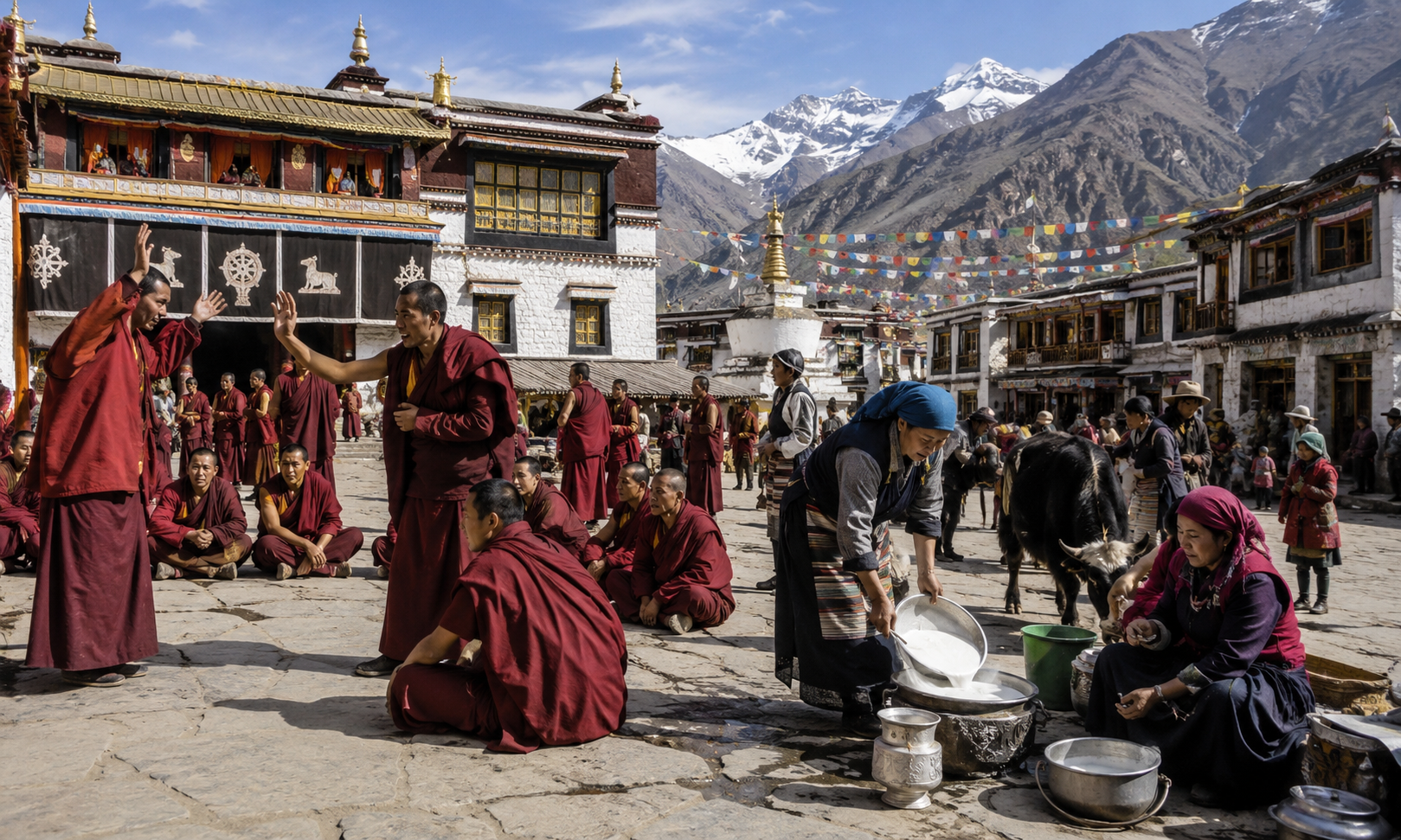
Vibrant monasteries, villages, the local language, and a woman I met who had three husbands—places where culture is not merely preserved—not suppressed—but actively lived.
Far from the capital, deep in the remote countryside, a Tibetan woman invited me and my Vietnamese friends into her home. She lives with three husbands and is a mother of five. Her children are growing up bilingual, learning both Mandarin—the national language—and their native Tibetan tongue at school. This family, like most in the region, proudly preserves their religious and cultural heritage.
To anyone raised on Western media, this scene might seem shocking, given the widespread narrative that China is suppressing Tibetan culture. But before we explore this contradiction, let’s go back to the very beginning and look at the history of Tibet, known in China as Xizang.
Early History: The Tibetan Empire (Tubo)
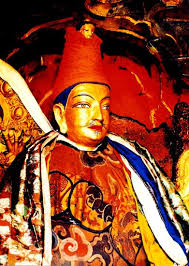
Songtsen Gampo founded the Tibetan Empire and ruled as the first “King of Tubo” (吐蕃, Tǔbō) in the 7th century (c. 618–649 CE). Under his reign, the Empire of Tubo (Tibet) expanded significantly. He is also credited with introducing Buddhism to Tibet and establishing early diplomatic relations with China and Nepal.
Songtsen Gampo sent envoys to the Tang court to request a marriage alliance. Emperor Taizong of the Tang Dynasty initially refused, and only after negotiations did he agree to send a young noblewoman, Princess Wencheng, to marry him; however, Taizong did not agree to send his biological daughter.
Princess Wencheng became a queen of Tibet through this political marriage and later a culturally significant, legendary figure in both Chinese and Tibetan histories. Her role as a “heqin” (peace-making) bride reflected a classical Confucian diplomatic strategy aimed at maintaining Tianxia (all under heaven) through marriage alliances and cultural influence rather than military force.
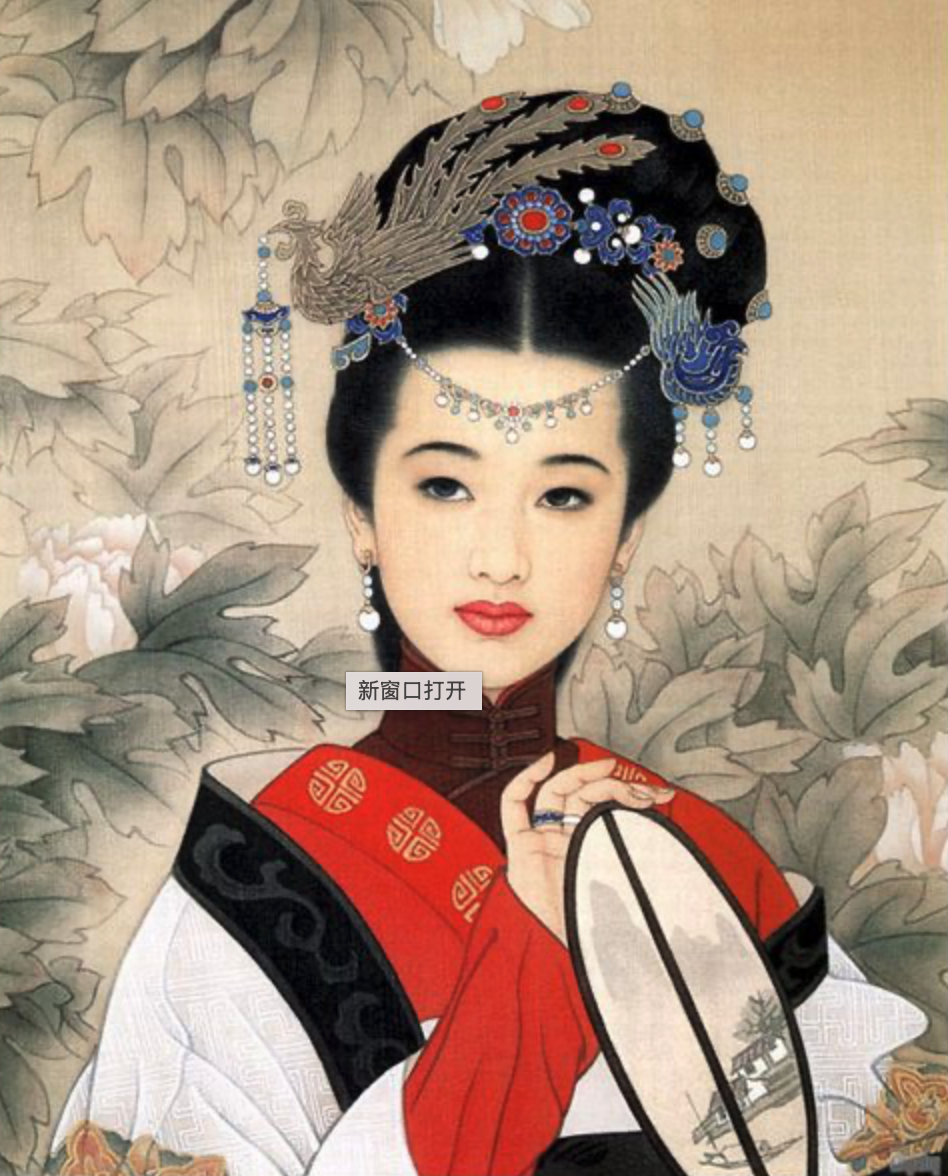
As a noblewoman educated in the Confucian tradition, Wencheng was raised with the belief that a ruler’s primary duty is the welfare of the people. Her concern for the poor reflects the Confucian virtue of Ren (benevolence), in which her marriage was understood not only as a political alliance but also as a moral responsibility to improve the lives of her new subjects.
This background is reflected in the “gifts” she brought with her to Tibet. In Confucian thought, a prosperous society is built on agriculture, literacy, and ritual order. Her introduction of farming techniques, weaving and medical knowledge is portrayed as an effort to establish a stable, Tang-style system intended to reduce poverty and strengthen social order.
At the same time, while her spiritual orientation was rooted in Buddhism, her methods of statecraft were often described through Confucian ideals. She combined practical Confucian tools (agriculture, silk production, calendars) with Buddhist compassion to address both material prosperity and the spiritual concerns of the people. For this reason, she is also said to have brought Buddhist sutras, Buddha statues, and monks to Tibet.
Princess Wencheng lived in Tubo (Tibet) for nearly 40 years. She outlived her husband and remained in Tibet out of solidarity with its people, exerting significant cultural influence. She is, for example, credited in tradition with discouraging “bad customs” that harmed the elderly and poor, such as the abandonment of incapacitated parents, arguing that such practices contradicted the Buddhist values she promoted.
In one well-known anecdote, she is said to have forgiven a maid who stole gold jewelry to pay for her father’s medical treatment, instead choosing to provide a medical doctor rather than punishment.
The philosophical themes in the musical The Great Compassionate Mantra, which I attended in Lhasa, closely mirror contemporary China’s vision of shared prosperity (gongtong fuyu). In Chinese state narratives, Princess Wencheng’s story is frequently used to validate modern governance through a historical lens.
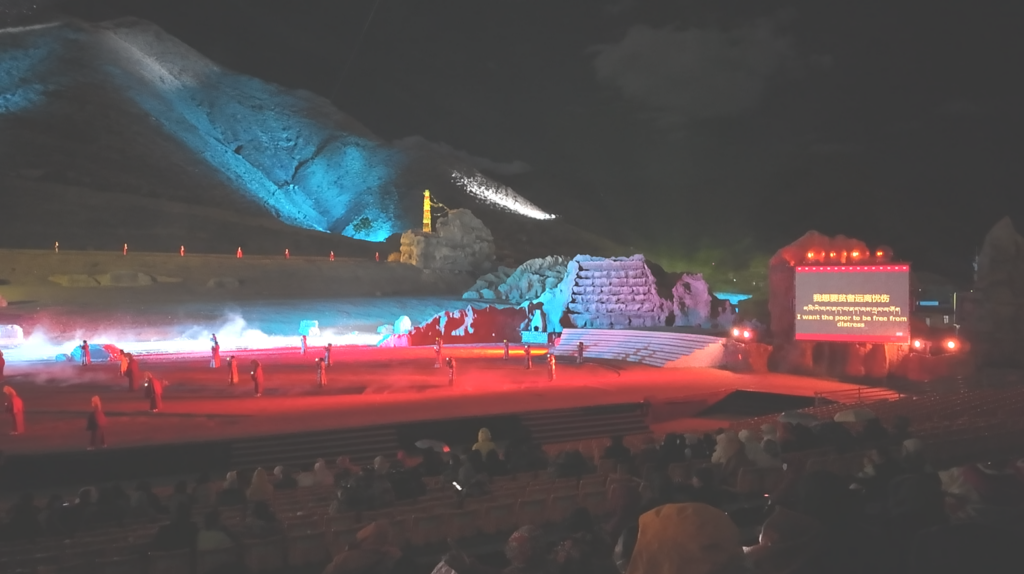
This is expressed particularly vividly in a powerful duet between the Princess and King Songtsen Gampo of Tubo. They sing:
“I wish for the living to be free from famine, for the poor to be free from sorrow, for the elderly to be free from the ailments of age, and for the departed to rest in serenity and peace. Ah, this is my dream: to make Tubo a paradise on earth!”
Backed by her husband, her portrayed mission reflects the Confucian belief that political legitimacy stems from ensuring the welfare and harmony of the population. Today, the Chinese government similarly channels these classical ideas of benevolence to frame its goal of a “moderately prosperous society” for all.
Ironically, while this narrative of harmony persists, the historical Tubo Kingdom collapsed in the 9th century.
The Shattered Crown: The Era of Fragmentation (9th-10th Centuries)
The collapse of the mighty Tibetan Empire did not occur overnight, but the assassination of Emperor Langdarma in 842 CE delivered the final, devastating blow. Langdarma, remembered in Buddhist chronicles for his anti-Buddhist purges, left behind a fractured succession. With no clear heir, his sons plunged into a brutal civil war that shattered centuries of centralized imperial rule.
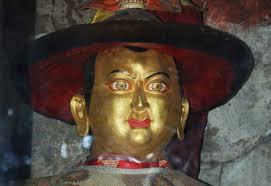
Almost immediately, the Tibetan Empire splintered into a chaotic mosaic of regional kingdoms, warlord fiefdoms, and competing clans. Central authority effectively disappeared. In central Tibet, organized Buddhism entered a dark age as state-supported monasteries were abandoned and monastic ordinations came to a halt. Yet the embers of the faith survived on the margins—particularly in Amdo and the remote western region of Ngari—where local rulers preserved texts and sustained spiritual traditions.
The Phoenix Rises: The Buddhist Revival (10th-13th Centuries)
By the late 10th century, Tibet began to emerge from its dark age of political fragmentation. This recovery was sparked by a profound cultural and religious renaissance known as the Chidar, or the “Later Diffusion” of Buddhism. Unlike the first wave of Buddhism, which relied on royal decrees, this resurgence was a grassroots movement. It was driven by fearless scholars and translators who braved treacherous mountain passes to travel between Tibet, India and Nepal, exchanging gold for sacred texts.
The Impact of Atisha
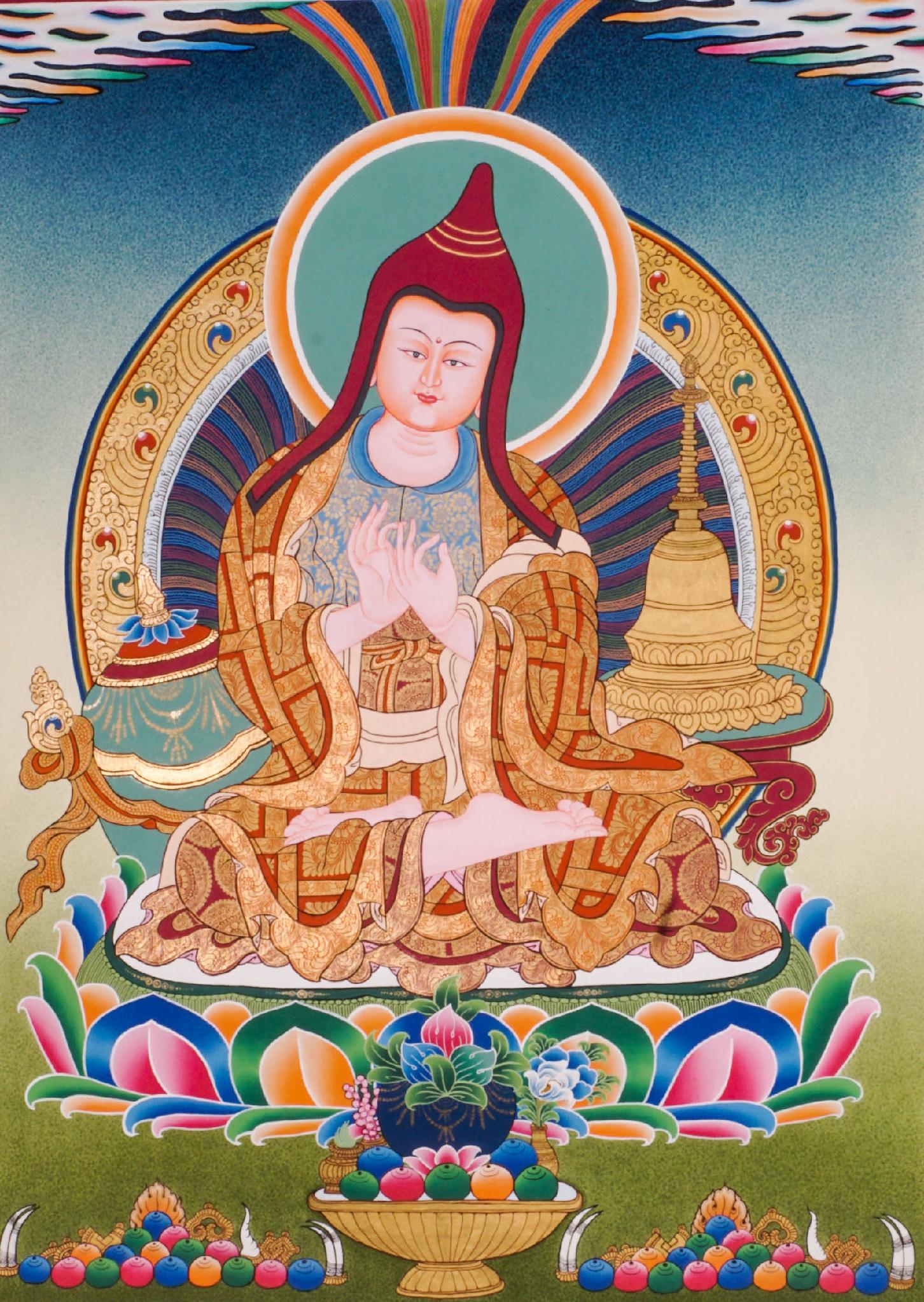
A defining catalyst for this movement occurred in 1042, when the rulers of western Tibet invited the venerable Indian master Atisha Dipamkara Shrijnana to the region. Atisha’s arrival revolutionized Tibetan spiritual life. He successfully harmonized complex, esoteric tantric practices with foundational monastic discipline, creating a structured path to enlightenment. His seminal text, The Lamp for the Path to Enlightenment, established a new, rigorous standard that anchored the Tibetan Buddhist worldview for centuries to come.
The Emergence of the Four Great Schools
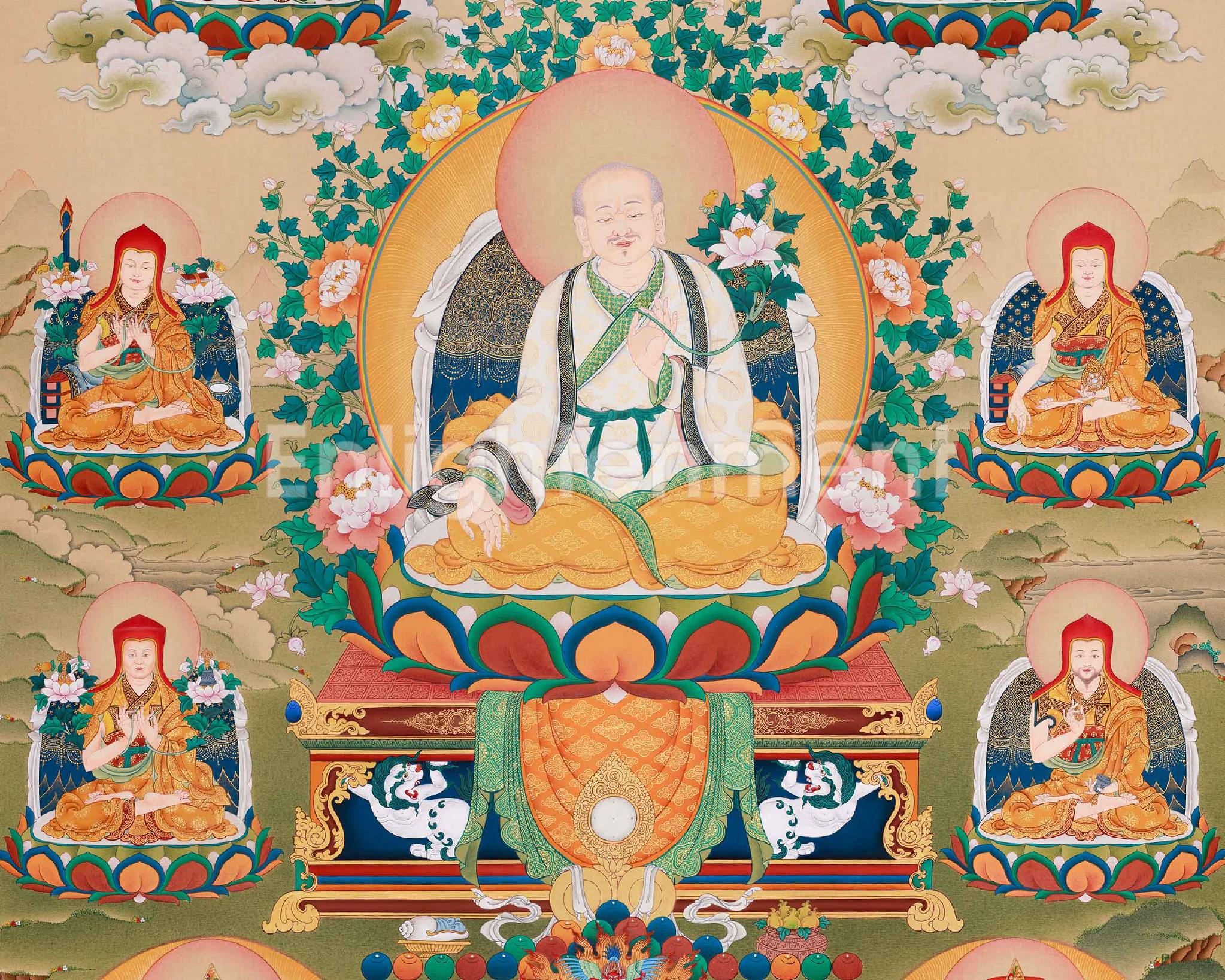
This intellectual and spiritual renaissance triggered an explosion of philosophical debate, giving rise to distinct schools and lineages. Each tradition formed around charismatic masters, specific tantric lineages, and monumental Sanskrit-to-Tibetan translation projects:
- Nyingma (The “Ancient Ones”): This lineage preserved the early, foundational teachings and mystical practices introduced during the imperial era, drawing heavily from the esoteric legacy of Padmasambhava.
- Kadam (The “Bound by Precept”): Founded by Atisha’s direct disciples, this school emphasized strict monastic discipline, ethics and Lojong (mind training). This lineage later laid the structural and philosophical foundation for the Gelug school.
- Kagyu (The “Oral Lineage”): Focused on intensive meditation and the direct transmission of experiential realization, this lineage passed teachings from Indian mahasiddhas like Tilopa and Naropa through the famous Tibetan masters Marpa the Translator, the yogi Milarepa, and the scholar Gampopa.
- Sakya (The “Grey Earth”): Established by the powerful Khon family, the Sakya tradition became renowned for its flawless philosophical systematization, rigorous scholasticism, and mastery of the Lamdre (Path and its Fruit) teachings.
Monasteries as Centers of Power
As these diverse traditions expanded, the physical landscape of Tibet transformed. Monasteries rapidly evolved from isolated hermitages and small meditation caves into sprawling, fortified complexes. Because the old centralized Tibetan monarchy had collapsed, a political vacuum existed across the plateau.
These monastic institutions quickly filled that void. Armed with vast libraries, agricultural lands, and growing patron networks, these estates evolved into the primary centers of wealth, higher education and regional political governance, setting the stage for a unique system where spiritual and secular power were intertwined.
Monks and Khans: Mongol Influence and Sakya Hegemony (13th-14th Centuries)
As the Mongol Empire expanded across Eurasia in the 13th century, Tibet faced the threat of invasion and destruction. Rather than resist militarily, Tibetan leaders pursued pragmatic diplomacy. In 1247, the Sakya master Sakya Pandita traveled to the Mongol court, establishing a unique Cho-Yon (“priest-patron”) relationship.
Under this arrangement, Tibetan lamas provided spiritual legitimacy, initiations and religious guidance to the Mongol rulers. In return, the Mongol Khans offered military protection and political support to the Sakya tradition. When Kublai Khan founded the Yuan Dynasty, he appointed Phagpa, the nephew of Sakya Pandita, as a leading religious and administrative authority in Tibet. For the first time since the fall of the empire, Tibet experienced a degree of political unification—maintained not by imperial conquest, but through religious authority backed by Mongol power.
The Age of Rivalry: Rise of Major Buddhist Schools (14th-16th Centuries)
The decline of the Mongol-led Yuan Dynasty in the mid-14th century fractured Tibet’s fragile political unity, plunging the plateau into a fresh era of internal fragmentation. With the collapse of Yuan backing, the hegemony of the Sakya order dissolved. Power shattered along regional lines as rival Tibetan dynasties—such as the Phagmodrupa, Rinpungpa, and Tsangpa—battled for dominance. This shifted the political landscape into a complex chess game; each secular dynasty aligned itself with and bankrolled a competing Buddhist school. For nearly three centuries, Tibetan history was characterized by intense sectarian and regional rivalries, particularly between the entrenched Kagyu and Sakya factions, as they jockeyed for local patronage, wealth and territory.
Out of this chaotic instability rose one of the most transformative intellectual movements in Tibetan history. The brilliant scholar and reformer Je Tsongkhapa (1357–1419) sought to revitalize a monastic system he viewed as increasingly compromised by political wealth. He founded the Gelug (“The Virtuous Way”) tradition, popularly known as the “Yellow Hat” school. Tsongkhapa enforced a strict return to celibacy and monastic ethics, paired with rigorous philosophical debate and an exhaustive, systematic study of logic.
The Gelug school’s emphasis on meritocracy and academic excellence sparked an unprecedented wave of growth. Near Lhasa, the tradition established three legendary monastic universities—Ganden, Sera, and Drepung—collectively known as the “Three Great Seats.” These sprawling city-universities drew thousands of monks from across the plateau, concentrating immense cultural and spiritual authority in the Lhasa region and quietly laying the geopolitical foundation for a radical new political order.
The Throne of Lhasa: Rise of the Dalai Lama Theocracy (16th-17th Centuries)
The lineage that would reshape the destiny of the plateau began with a historic encounter in 1578. Sonam Gyatso, a brilliant master of the expanding Gelug school, journeyed to meet the formidable Tümed Mongol ruler, Altan Khan. Seeking to revive the historic priest-patron relationships of the past, the Khan was deeply moved by the master’s spiritual authority. In turn, he bestowed upon Sonam Gyatso the title “Dalai”—the Mongolian word for “Ocean,” signifying a mind of boundless wisdom. Sonam Gyatso subsequently applied this title retroactively to his two previous incarnations, formally initiating the Dalai Lama lineage as the spiritual vanguard of the Gelug tradition.
The true geopolitical turning point arrived with Ngawang Lobsang Gyatso, remembered by history as the “Great 5th” Dalai Lama (1617-1682). Locked in a bitter, existential civil war with the Kagyu-backed King of Tsang, the 5th Dalai Lama made a daring diplomatic move: He forged a military alliance with the Oirat Mongol chieftain, Gushri Khan.
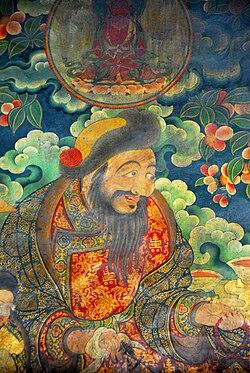
Armed with Mongol cavalry, Gushri Khan crushed the forces of Tsang and systematically defeated the Gelug school’s rival factions. In 1642, Gushri Khan handed sovereign control of the plateau to the Great 5th, elevating the Dalai Lama to the dual role of spiritual and temporal ruler over a unified Tibet. To institutionalize this new reality, the 5th Dalai Lama established the Ganden Phodrang—a highly centralized theocratic government. He also broke ground on the Potala Palace in Lhasa, a colossal fortress-monastery built over the ancient capital, designed to stand as a definitive architectural statement of supreme political and religious authority.
Shadows of the Emperor: Qing Dynasty Influence (18th-19th Centuries)
The absolute sovereignty won by the Great 5th Dalai Lama was short-lived. By the early 18th century, Tibet was plunged back into crisis by fractured successions, internal political assassinations, and devastating external invasions. After the Dzungar Mongols ransacked Lhasa and, decades later, the Nepalese Gurkha kingdom plundered major monasteries, the Tibetan leadership turned to the region’s dominant superpower for military aid. The Manchu-led Qing Empire launched massive, successful counter-offensives, driving out the invaders and asserting an unprecedented level of imperial authority over the plateau.
To cement this protectorate status, the Qing court stationed two imperial residents, known as Ambans, directly in Lhasa. Backed by a permanent military garrison, these officials closely monitored foreign policy, trade and border defense.
Following the Gurkha War, the Qianlong Emperor took direct aim at the corruption within the Tibetan aristocracy. In 1793, he decreed the Implementation of the Golden Urn system—a lottery process designed to select high-ranking reincarnations, including the Dalai Lama, under the watchful eye of the Ambans. Yet, this imperial shadow had its limits. While the Qing maintained a firm grip on geopolitical and symbolic affairs, the actual internal machinery of Tibet—its vast monastic estates, local tax collection, legal codes, and civil administration—remained overwhelmingly under the independent control of the Ganden Phodrang government and the entrenched Tibetan nobility.
The Forgotten Independence: Early 20th Century (1912-1950)
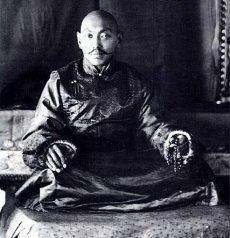
The geopolitical landscape shifted radically in 1911 when the Xinhai Revolution toppled the Qing Dynasty, instantly shattering Peking’s imperial grip on the plateau. Seizing this historic window of opportunity, the 13th Dalai Lama moved decisively to reclaim total sovereignty. He orchestrated the expulsion of all remaining Qing troops and imperial Ambans from the capital. On February 13, 1913, he issued a landmark proclamation declaring Tibet a fully independent nation, formally dissolving the historic “priest-and-patron” relationship with the Chinese court.
For the next 38 years, Tibet operated with the full autonomy of a sovereign nation. The Lhasa government issued passports, minted its own currency, ran a national postal service, maintained a small standing army, and hoisted its snow lion flag.
However, this hard-won independence stood on shaky geopolitical ground, as no major foreign power offered formal diplomatic recognition. Much of this isolation was self-imposed. Powerful, conservative monastic elites fiercely opposed modernization and foreign alliances, fearing they would dilute traditional Buddhist values and strip them of their privileges. Rather than securing vital international ties, Tibet turned inward, leaving itself exposed and deeply vulnerable as the surrounding global empires shifted.
The Storm Gathers: Incorporation into the PRC (1950-1959)
The establishment of the People’s Republic of China in 1949 fundamentally altered the regional order. In October 1950, the People’s Liberation Army crossed the Jinsha River and defeated the Tibetan forces at Chamdo. Recognizing the imbalance, the young 14th Dalai Lama assumed full political authority earlier than planned.
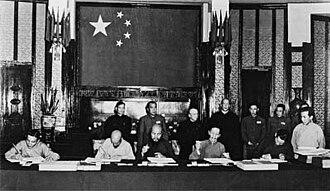
In 1951, a Tibetan delegation in Beijing signed the 17-Point Agreement, which formalized Tibet’s incorporation into the PRC while promising to preserve its traditional system, the position of the Dalai Lama, and religious freedoms.
However, tensions soon escalated. Land reforms and the dismantling of the serfdom system provoked resistance, and armed conflict—supported by external actors, in particular the CIA—broke out. The Lhasa uprising was ultimately suppressed. Amid the chaos, the 14th Dalai Lama, along with thousands of followers, fled over the Himalayas into India.
The Modern Frontier: Tibet from 1959 to Today
The geopolitical landscape shifted permanently after the 1959 uprising. The centuries-old traditional Tibetan government was completely dissolved, making way for the formal establishment of the Tibet Autonomous Region in 1965.
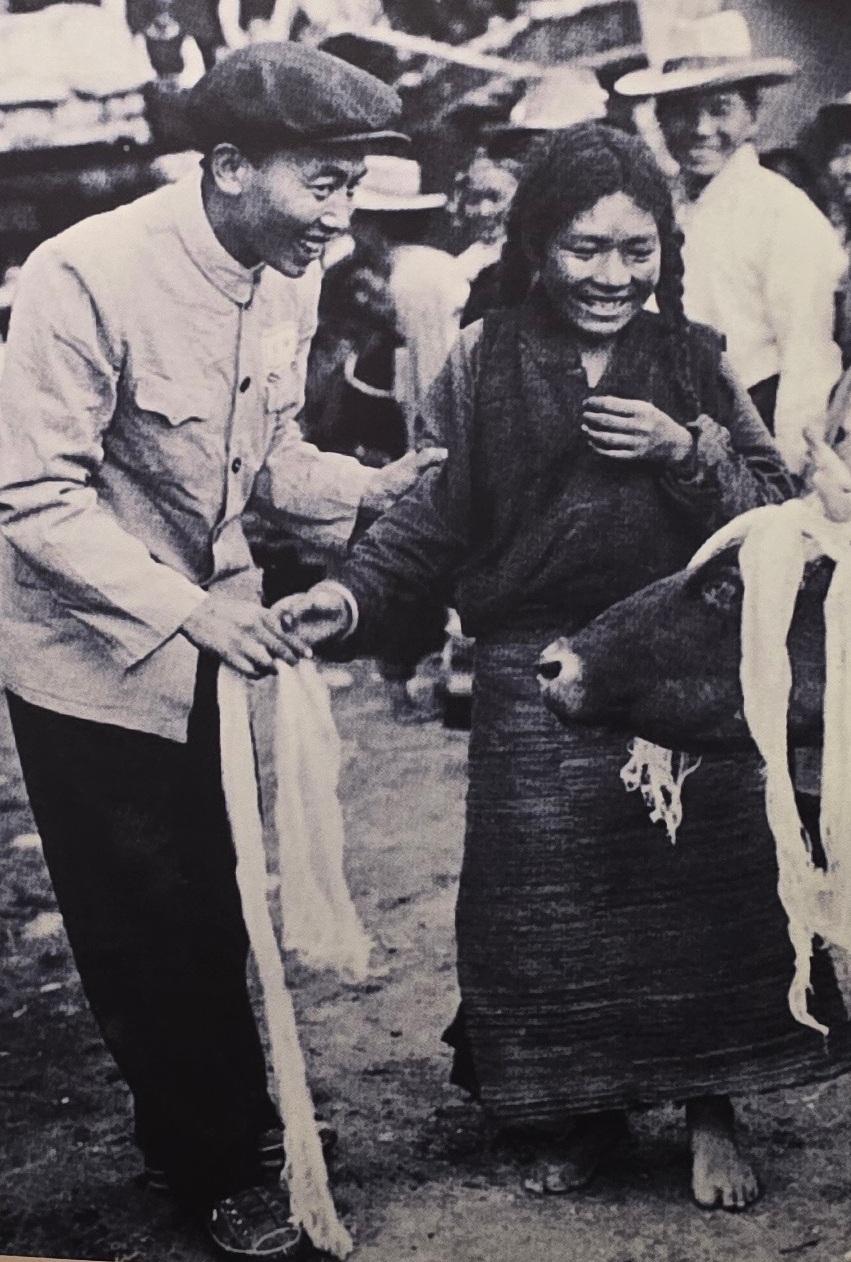
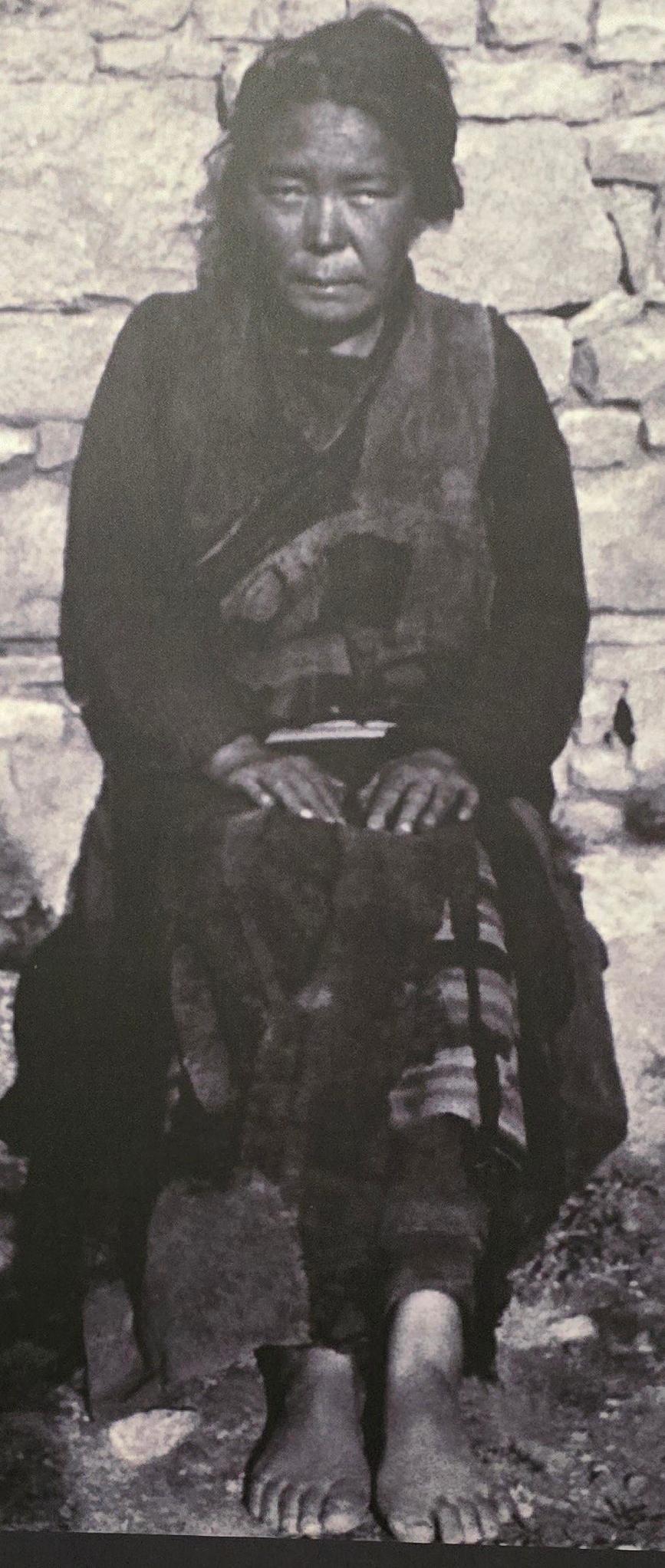
This restructuring fundamentally upended the region’s social hierarchy: Former serfs were legally recognized as Chinese citizens and were invited, for the first time in history, to cast political ballots. This socioeconomic transition is vividly captured in the historical photograph, which portrays a Chinese official formally welcoming a barefoot Tibetan woman to a local civic event.
During the Cultural Revolution (1966-1976), monasteries, texts and religious artifacts across the plateau were damaged or destroyed, as occurred throughout China.
In the post-Mao era, the Chinese state undertook large-scale restoration efforts and invested heavily in infrastructure and development. The opening of the Qinghai-Tibet Railway in 2006 permanently connected Lhasa to China’s national rail network, accelerating economic growth, urbanization and tourism.
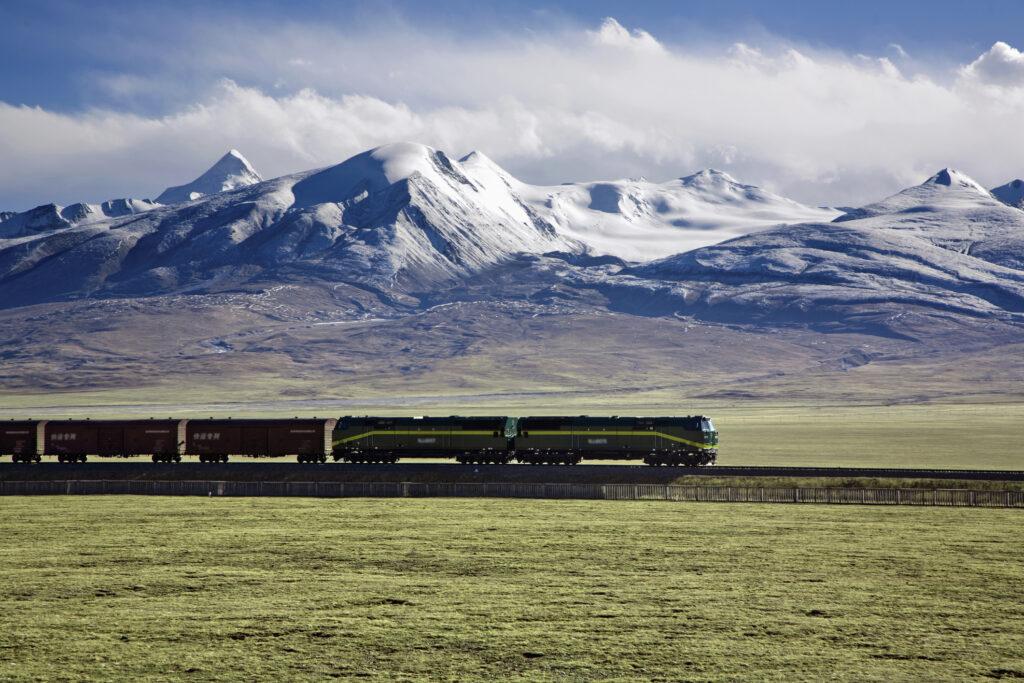
Today, Tibet remains a focal point of international geopolitical debate led by China’s political opponents. The Chinese government emphasizes improvements in living standards, health-care access, poverty reduction, and cultural heritage preservation, including restoration projects at sites such as the Potala Palace.
The Splendor of the Dalai Lamas Versus the Hardship of Ordinary Tibetans
The fact that the Potala Palace—of all places, the former winter residence of several of the 14 Dalai Lamas—is maintained with such meticulous care, and is even featured as a prominent motif on the 50-yuan banknote, may come as a surprise to critics of China.
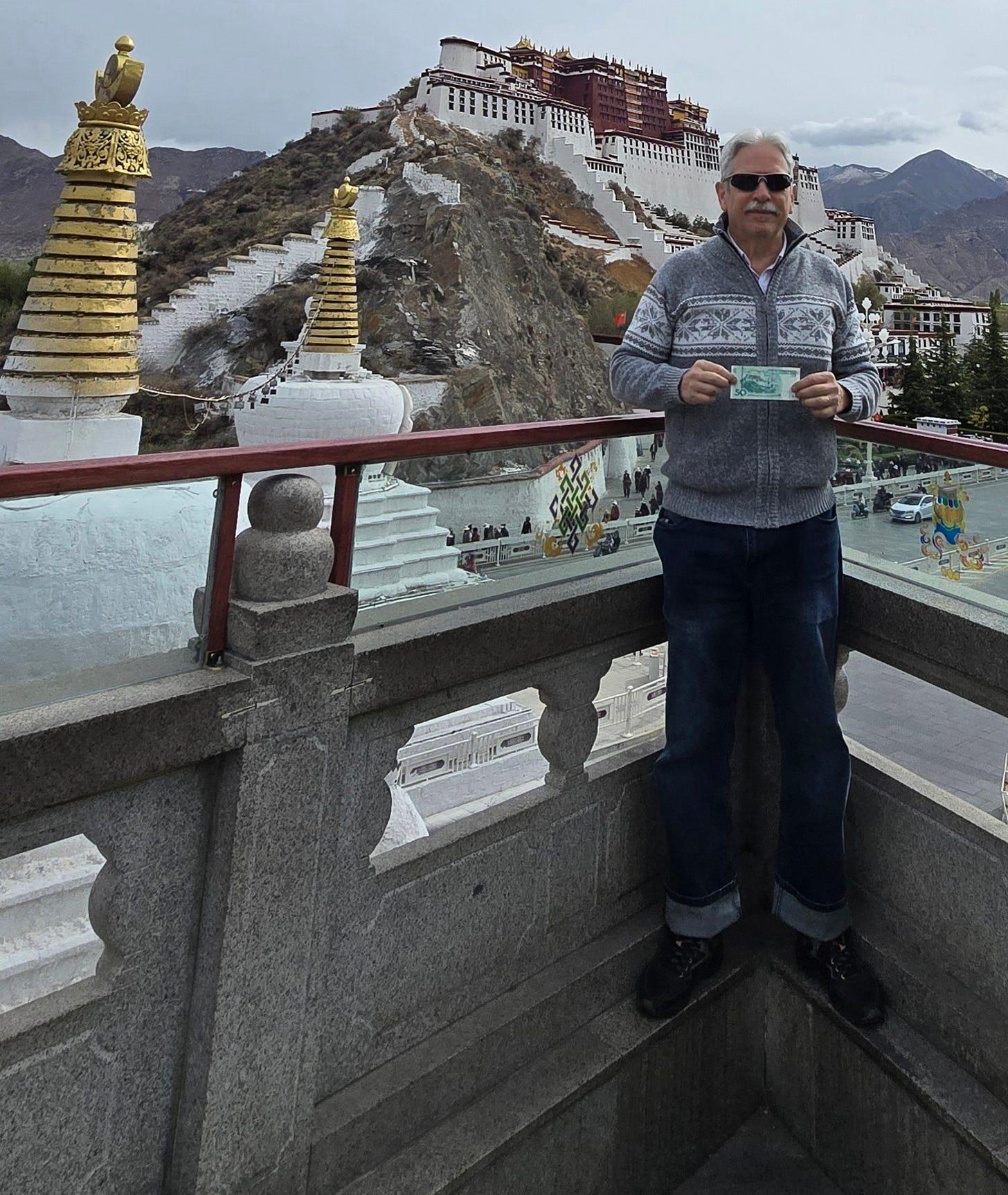
What surprised me, however, were the golden treasures—worth billions—gleaming within the palace walls. Regrettably, photography was forbidden. The sight is breathtaking.
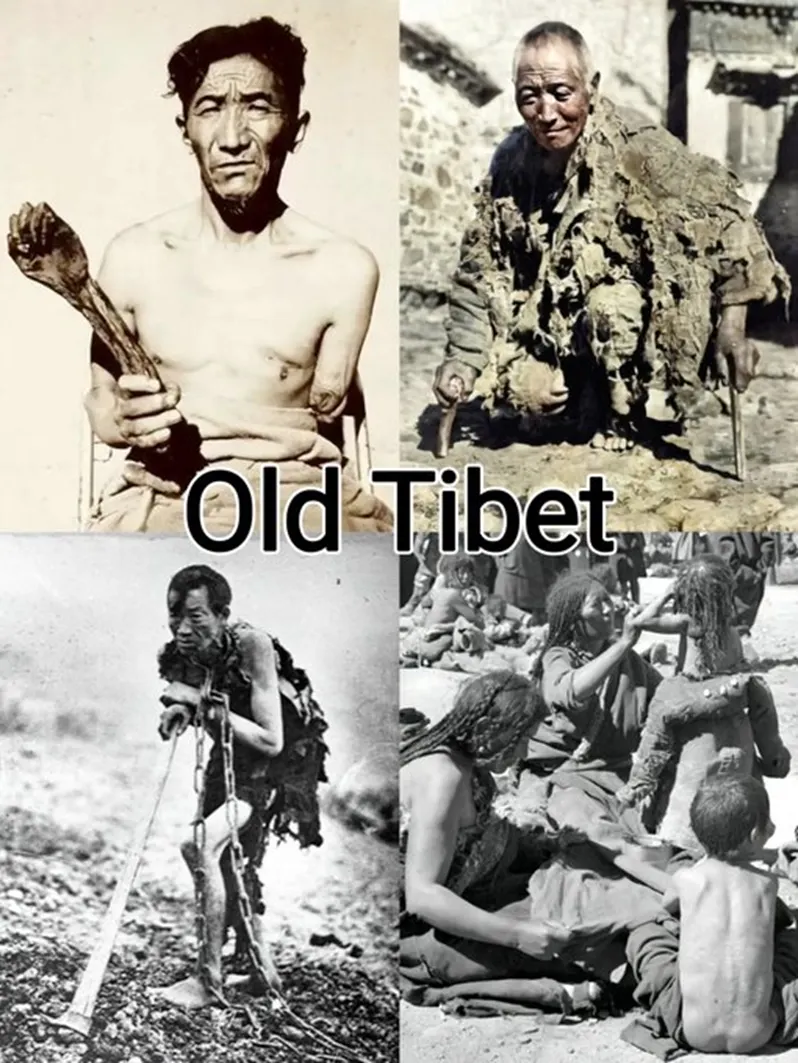
Yet, a shadow falls upon the heart. Images from the history museum remain all too vivid: barefoot serfs whose lives, in this merciless cold, were deemed utterly worthless. These human beings could be bought, sold and humiliated at their owners’ whim. Between this “sacred” gold and the suffering of those people opens a chasm almost unbearable to contemplate.
Family, Necessity and the Practice of Polyandry in Rural Tibet
Returning to the Tibetan woman with three husbands and five children: This form of polyandry is not encouraged by the Chinese government, yet officials recognize that such family structures arise from the realities of life in remote regions—realities that can be addressed only by improving living standards, not by imposing bans.
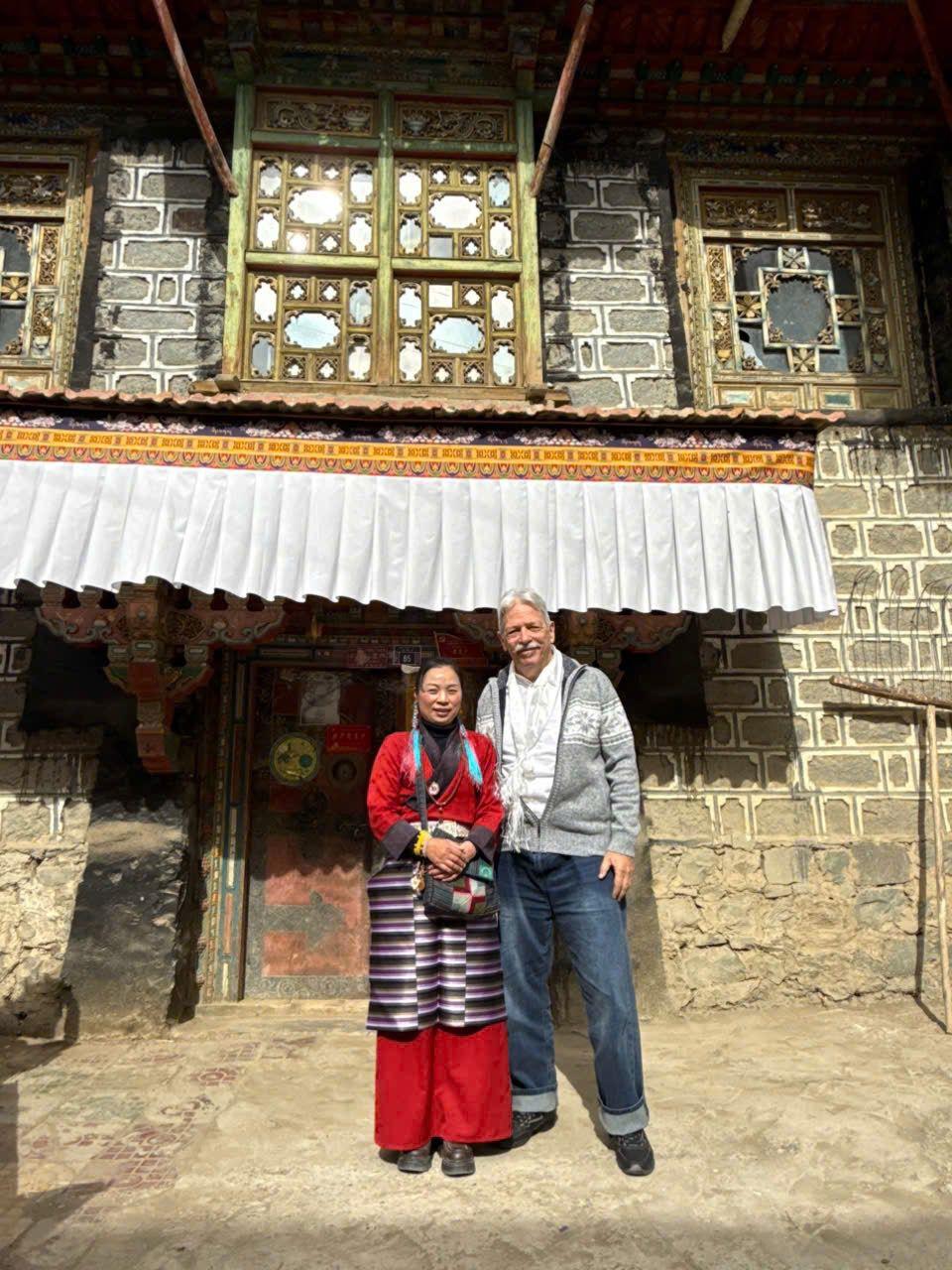
The family of the man who wished to marry her had to provide a dowry of 20 cows. This was an enormous burden for a modest farming household that also had other sons for whom they could no longer afford dowries. The compromise was practical: The family paid the 20 cows, but the bride married not only the eldest son, but also his two younger brothers.
In this way, the household with three sons saved a total of 40 cows while ensuring that all of them could marry and that the family line would continue. She is expected to give birth to a child within three years of the marriage; otherwise, she would be returned to her family, who would then send her to a monastery to live as a nun for the rest of her life.
The children call the eldest husband “father,” and the two younger husbands “uncle.” Each husband has his own bedroom, and the wife leaves her shoes outside the door of the husband she is with that night, so the other two know not to disturb her. When I asked whether she knew which child belonged to which husband, she said she did not. Yet she emphasized that the family lives together in harmony. As the parents are often busy working, it is the grandmother who takes care of the children.
Necessity is the mother of invention: Because the family does not have a refrigerator, they store milk in silver bowls, where it can be preserved for up to a week. These bowls, along with other silver items, were made by her husbands. In addition, the family has turned this craftsmanship—alongside farming—into a new source of income driven by visitors’ interest. A refrigerator and other modern comforts will likely not be far away.
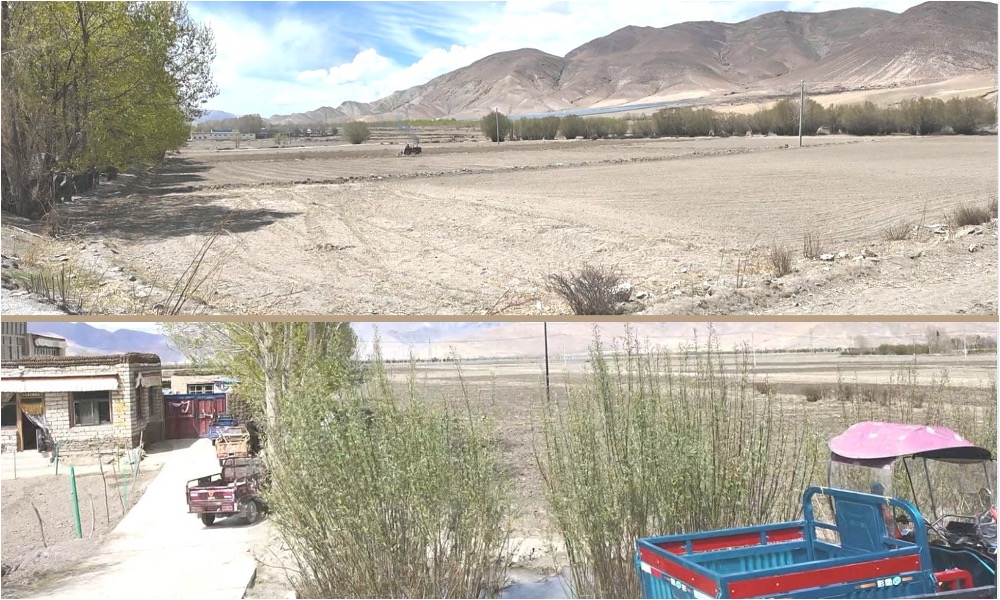
Besides modest family farms, I also came across large, fully mechanized operations. The smaller farms may look simple at first glance, but they do not reflect desperate poverty; rather, they appear modest yet self-sufficient. The larger mechanized farms, by contrast, are unmistakably more prosperous, generating substantial wealth for their owners. Below are my photos of both types of farms:
A large farm with extensive fields worked by mechanized equipment and small family farms with just a few cattle.
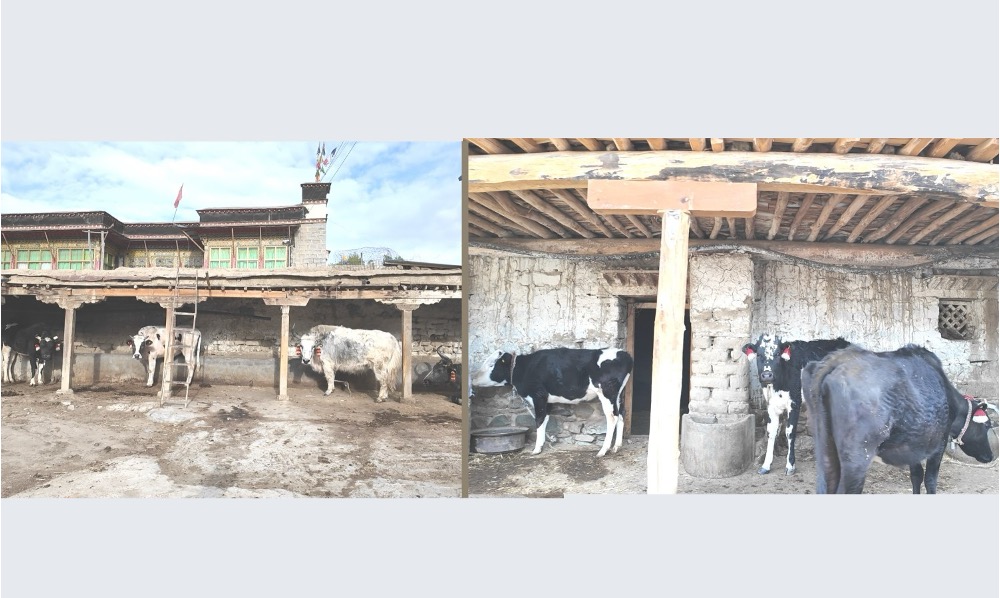
In any case, mechanization is advancing rapidly, with tractors and other agricultural machinery now being adopted on a significant scale.
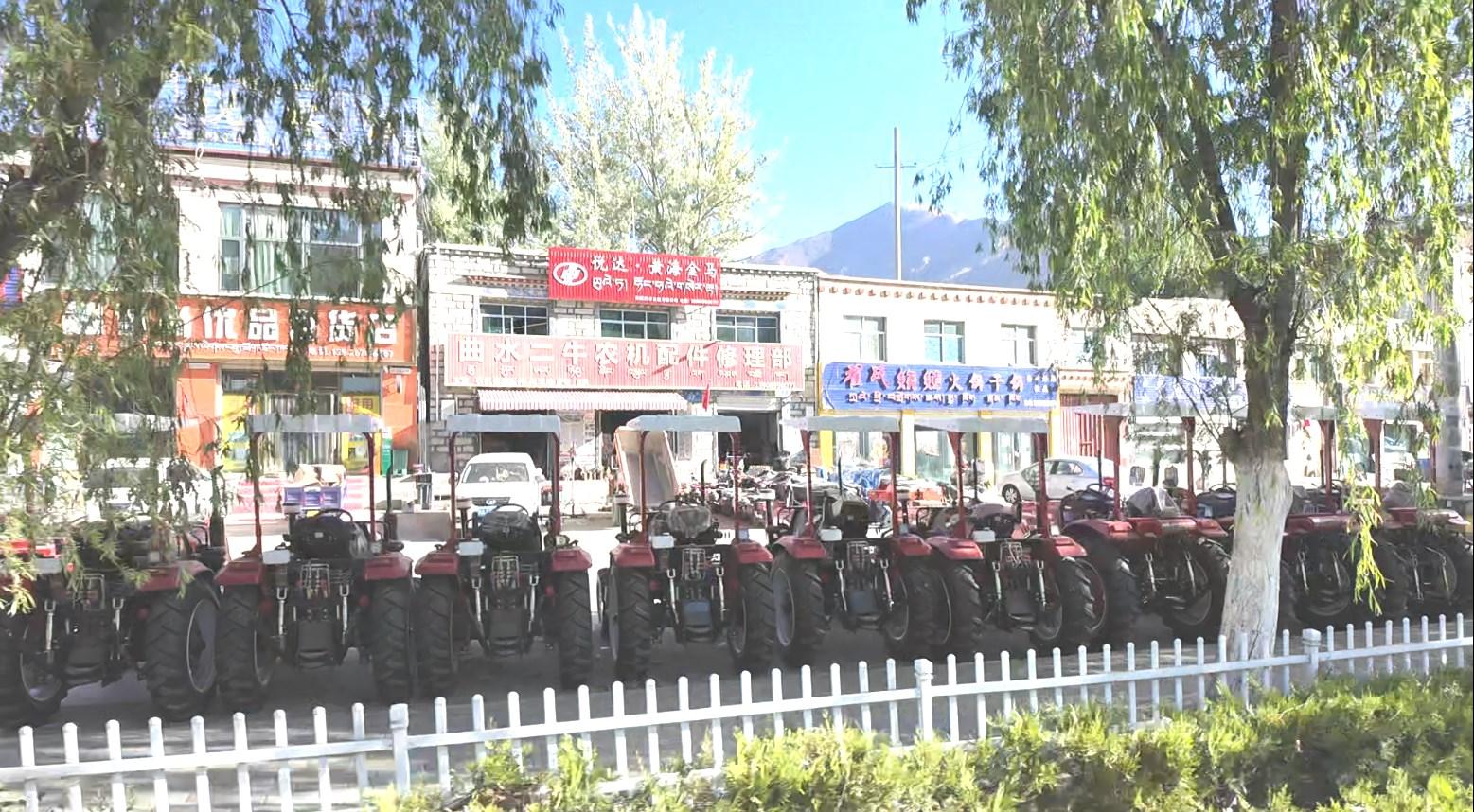
New farming techniques are helping farmers transform land once considered difficult or impossible to cultivate into productive, green fields.
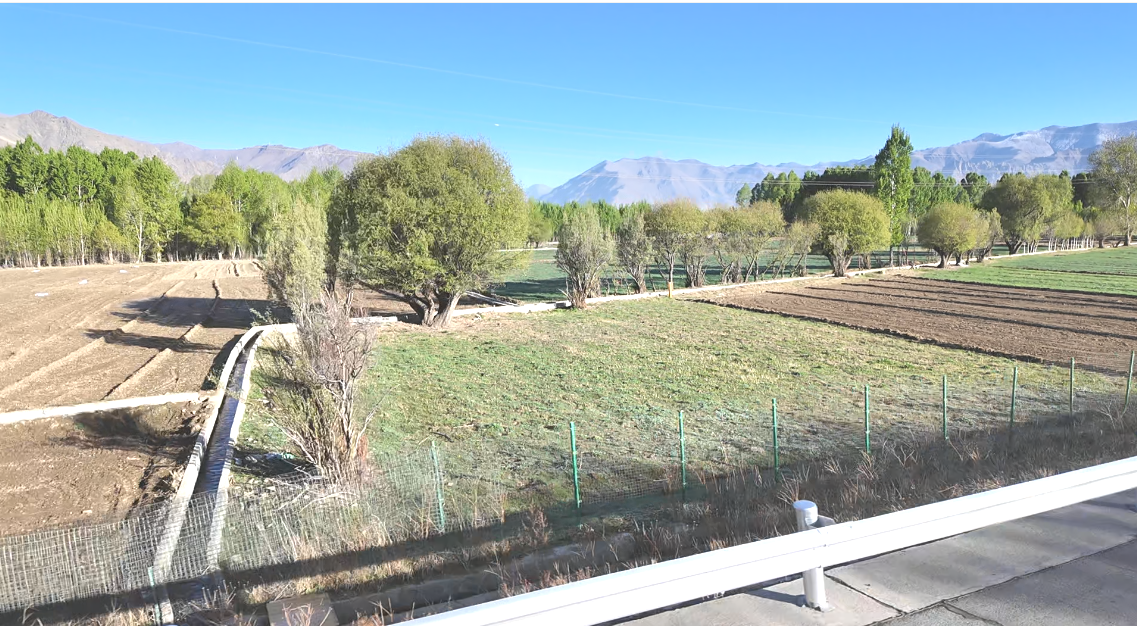
Aside from the visible growth of agriculture and trade, Tibet is also seeing the rise of small-scale manufacturing and new industrial parks.
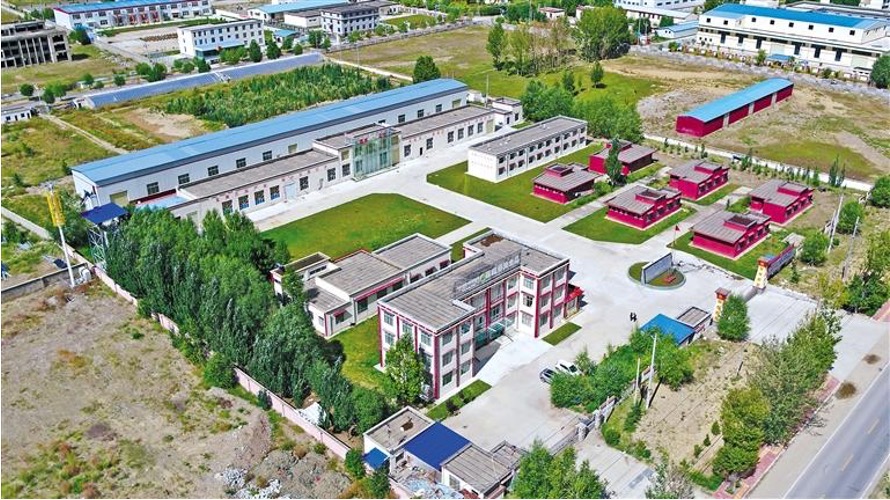
This facility—Tibet Chunguang Food Co., Ltd.’s highland barley deep-processing base—is located in the Dazi District Industrial Park.
In parallel, new residential areas are also being developed.

Yet, as striking as the changes in rural labor, industry and housing were, what impressed me just as much—if not more—during my travels was something of an entirely different order: the profound depth of spiritual life that permeates everyday existence in Tibet.
As someone who has traveled widely, I was struck by the deep religiosity of the Tibetan people—unlike anything I have encountered elsewhere.
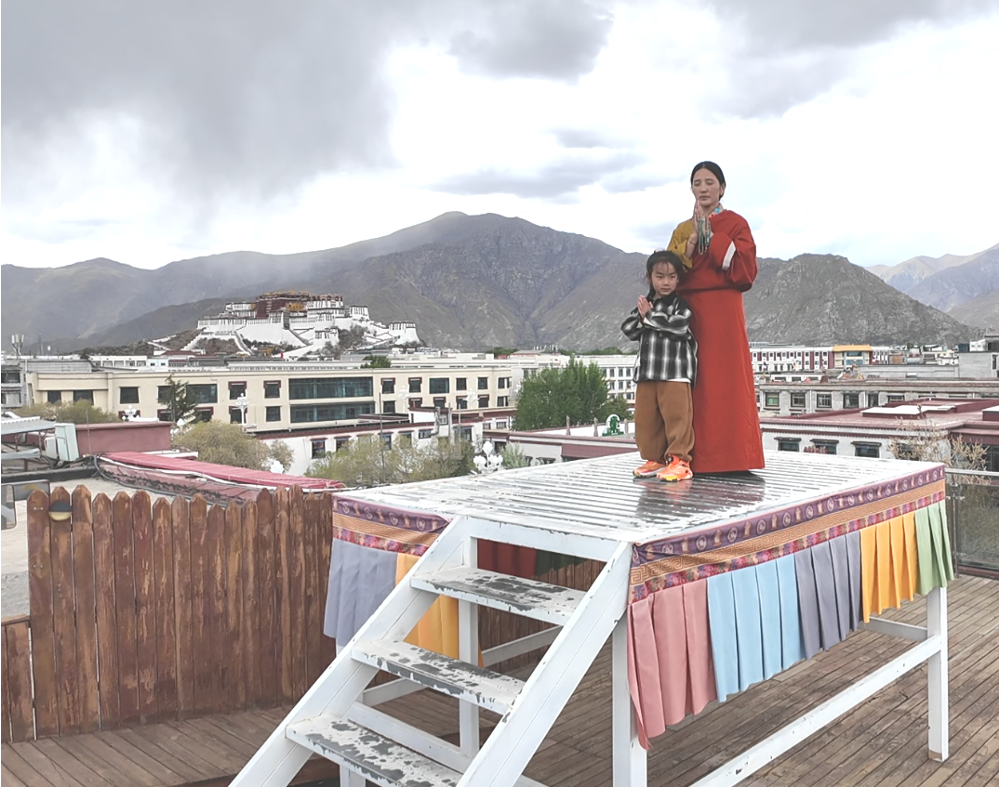
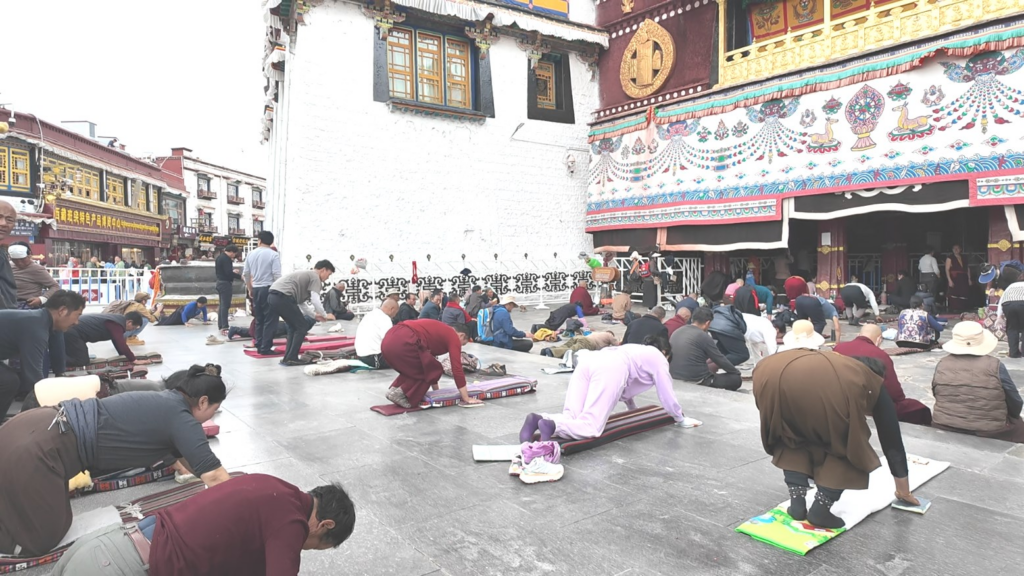
Tibetan devotion is exceptionally profound because, for centuries, religion, the harsh alpine environment, and a theocratic form of governance fused into a single way of life. Rather than functioning as a separate domain, Buddhism forms the daily lens through which Tibetans interpret reality, turning acts such as spinning prayer wheels, walking sacred circuits (kora), and performing full-body prostrations into continuous, embodied rituals.
These are not occasional displays of faith, but practices woven into the rhythm of everyday life. Elderly women circle temples for hours while whispering mantras, pilgrims trace long kora routes around mountains and monasteries as naturally as others might take a daily walk, and devotees perform hundreds—sometimes thousands—of prostrations as a physical expression of humility and purification. Through repetition, these practices become a moving form of prayer, merging body, breath and belief into a single devotional flow.
This spiritual intensity is further enriched by an ancient animist heritage that fills the landscape with deities and spirits believed to be actively present. Despite ongoing debates abroad about the region’s religious climate, I did not observe any indication that the Chinese government was exerting pressure on these practices. In the modern era, the careful preservation of these beliefs has become an important expression of cultural resilience, enabling Tibetans to maintain a distinct identity amid rapid social change.
For foreign observers like myself, the debates of Tibetan monks appeared almost like a form of “shadow boxing.” These animated exchanges, held in monastery courtyards, are a central pillar of monastic education.
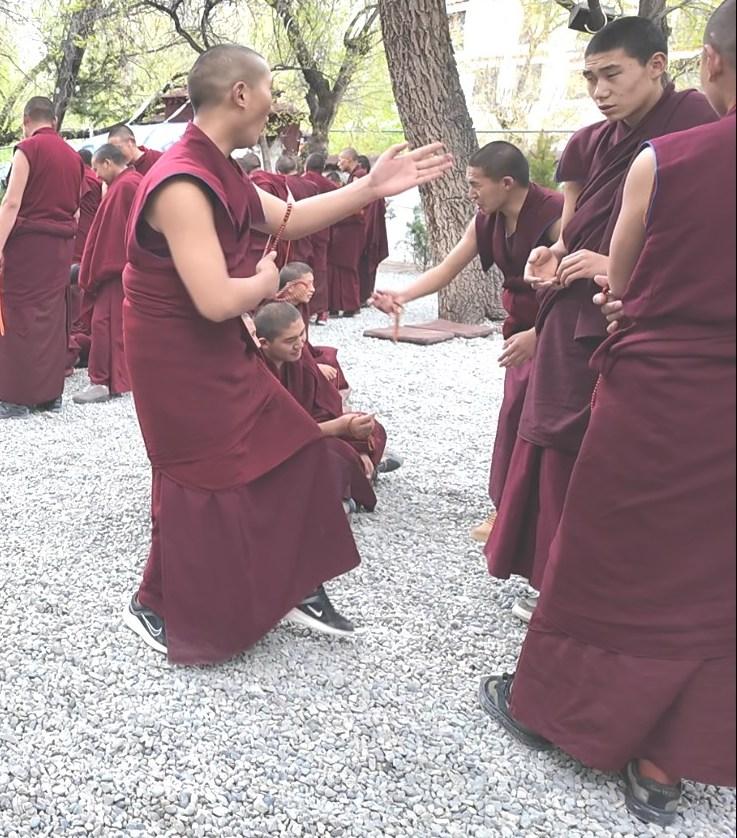
One monk stands and forcefully claps his hands while posing rapid-fire philosophical questions, while the seated monk must respond instantly, defending his position with logic and precision. The dramatic gestures—wide stances, sweeping arm movements, sharp claps—are not signs of aggression, but highly codified techniques designed to energize the debate, punctuate arguments, and symbolically “cut through” confusion. Far from theatrical performance, these debates cultivate rigorous reasoning, deepen philosophical understanding, and train the mind toward clarity.
From conversations with Tibetan parents and schoolchildren, I learned that Mandarin—the national language—serves as the primary medium of instruction, alongside classes taught in Tibetan, the children’s mother tongue. In practice, the two languages sit side by side in the classroom, reflecting a broader linguistic reality that extends far beyond the region.

Mandarin, I was reminded repeatedly, is not only essential for ethnic minority communities but also for the Han majority, who make up more than 90% of China’s population. The reason is simple but striking: Regional dialects can differ so widely that people from distant parts of the country are sometimes unable to understand one another without a shared language.
Several locals pointed out that fluency in Mandarin can open doors—especially for ethnic minority citizens who leave their home regions in search of work elsewhere. In Chongqing, I happened to meet a Uyghur man who had built a small but successful ice cream business, a quiet example of how mobility and language intersect in everyday life.
At one of the schools we passed, I noticed bilingual motivational posters written in both Mandarin and Tibetan, their messages mirrored across two scripts. I also saw textbooks printed in Tibetan. The two languages co-exist in daily learning. Together, these details offered a subtle but telling glimpse into a system where language, education and identity are closely interwoven.

Everywhere I went—shops, restaurants, petrol stations, banks, post offices and bus stops—bilingual signage was the norm. One exception that caught my eye was a Volkswagen showroom displaying signage only in Mandarin.

Since bilingual requirements do not uniformly apply to all private or foreign companies, the absence of Tibetan in this case likely reflects corporate branding choices rather than local policy—and it may also suggest a lack of cultural sensitivity toward Tibetan customers.
On Falsehoods Weaponized—and Real Cultural Genocide Ignored
Such observations—and countless others like them—make it clear that the Western accusation of “cultural genocide” in Tibet is nothing more than a grotesque distortion. Those who shout it most loudly are often the very same people who remain conspicuously silent in the face of genuine cultural suppression elsewhere.
Take Ukraine, where millions of Russian speakers have faced language restrictions, Russian-language books have been removed from libraries, Russian-language media outlets shut down, and the Russian Orthodox Church heavily constrained.
Or consider France, where regional languages such as Basque, Alsatian, Corsican, Breton and Occitan hold no official status. They are barred from administrative use and prohibited in classrooms under national law. In the past, students were even forced to wear a “necklace of shame” if they dared speak their mother tongue.
A similar practice once existed in the United Kingdom: In Wales, schools enforced the “Welsh Not,” a token of shame hung around a child’s neck if they were caught speaking Welsh.
France’s official policy of linguicide produced stark results. According to its own statistics, regional languages such as Corsican and Breton fell from being spoken in 70-80% of local families at the end of World War I to under 10% by the late 20th century. Even in Alsace—historically the most resilient—the intergenerational transmission of Alsatian dropped from about 70% to just 18% within two generations.
The Lying Fake News Media, Caught Red-Handed
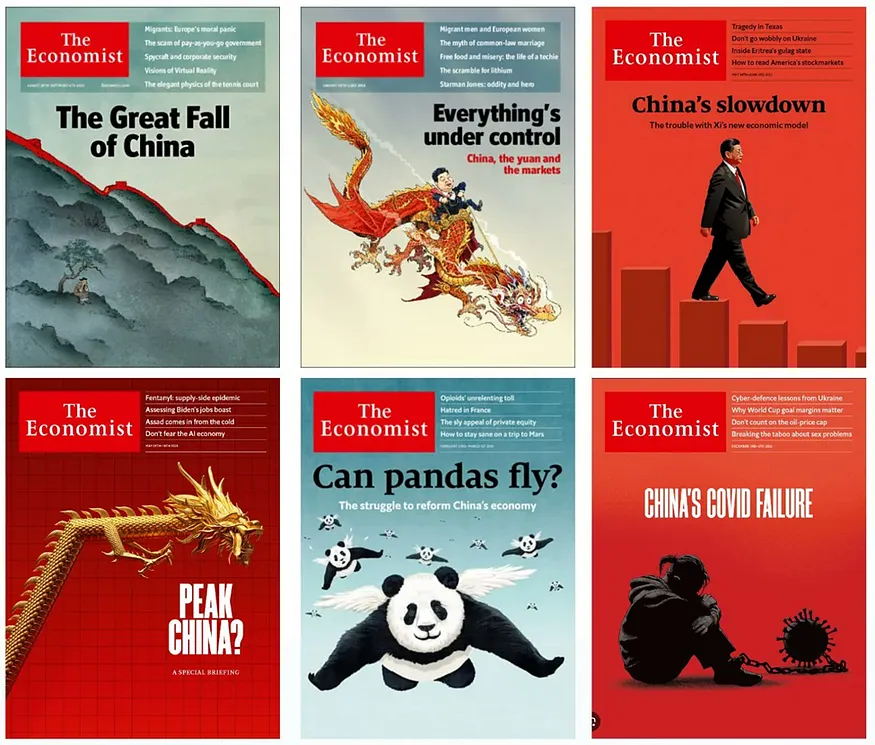
The Economist recently alleged that a new Chinese law is crushing 55 ethnic minorities. It is a classic example of the kind of framing that has long characterized their China coverage. For nearly two decades, their pages have warned—year after year—that China’s economy is perpetually on the brink of collapse.
of collapse.
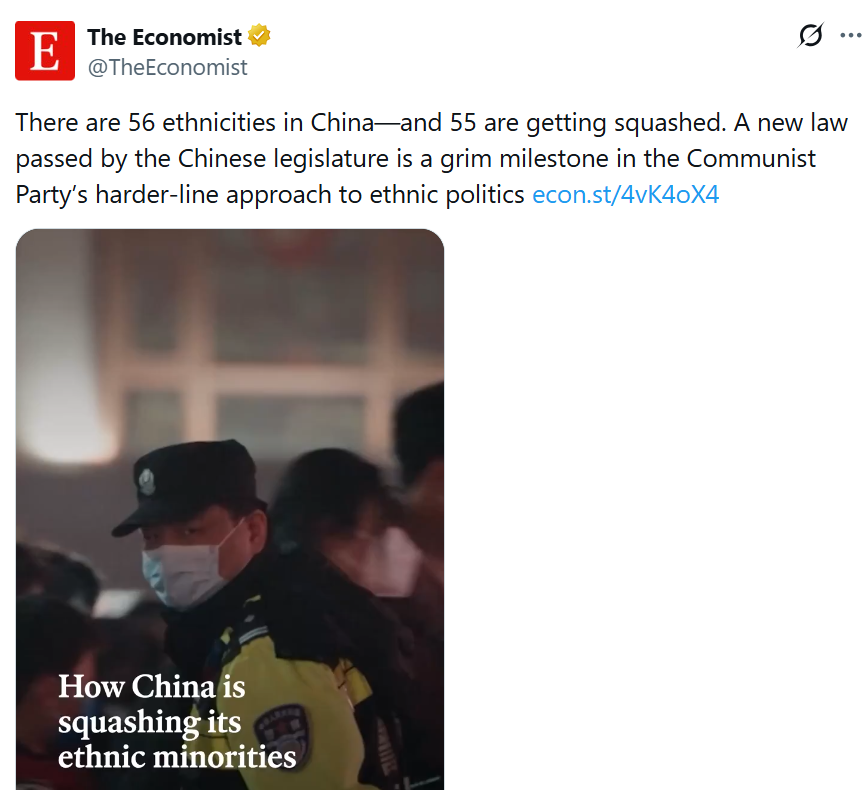
Let’s examine the actual law.
Minority Languages in China Today
China already does a better job protecting minority languages than nearly any Western country.
According to a 2017 survey by the National Language Commission, only 30% of people in Tibet had functional Mandarin proficiency. Tibetan remains the dominant language of daily life for the overwhelming majority. Similarly, China’s Sixth National Census (2010) found that 85.25% of ethnic Mongols still use Mongolian in everyday life.
In fact, China may have done too good a job: Among some groups, large numbers speak only their regional language and have limited or no Mandarin ability. This reality is precisely what the new law seeks to address.
What the New Law Actually Says
Here is the full text: https://www.neac.gov.cn/seac/xwzx/202603/1187637.shtml
- Does it recognize and protect minority languages? Yes. The law explicitly states: “The state respects and protects the learning and use of minority languages and scripts, [and] promotes the regulation, standardization, and digitalization of minority languages.”
- Does it ban minority languages in schools? No. It shifts education further toward Mandarin by requiring nationally unified textbooks and designating Mandarin as the primary language of instruction. However, it does not abolish minority-medium schools (民族语授课学校), which can continue operating with state funding.
- Does it ban minority languages in government? No. Article 15 requires that, where laws mandate documents in minority languages, both the national common language version and the minority language version must be provided.
- Does it ban minority languages on public signage? No. The law requires Mandarin to be displayed “prominently” alongside minority scripts—not in place of them.
- Does it undermine ethnic regional autonomy? No. Article 8 explicitly reaffirms “upholding and improving the system of ethnic regional autonomy.” The 1984 Regional Ethnic Autonomy Law remains in force, preserving local authority to adopt regulations suited to local conditions.
Bottom Line
The new law promotes Mandarin as a common national language—something entirely normal for any sovereign country. What it does not do is “squash” 55 ethnicities. That is pure propaganda, not reporting.
Actual cultural suppression looks like hanging a wooden clog around a child’s neck for speaking their native language, or declaring minority customs unconstitutional—both of which have historically occurred in Western nations. By contrast, a legal framework that funds minority-language preservation, sustains minority-medium schools, and mandates bilingual official documents is not erasing culture.
This is especially true when it operates under a constitution (such as Article 4) that explicitly guarantees ethnic minorities “the freedom to use and develop their own spoken and written languages, and to preserve or reform their own traditions and customs.”
Ultimately, critics are projecting their own historical or current practices onto China—accusing the “projectee” of actions actually committed by the “projector.”
Tibetan Cultural Presence Today
The omnipresence of the Tibetan language and the strong practice of Tibetan Buddhism are not the whole story. Even scientific work here carries a distinct cultural imprint.
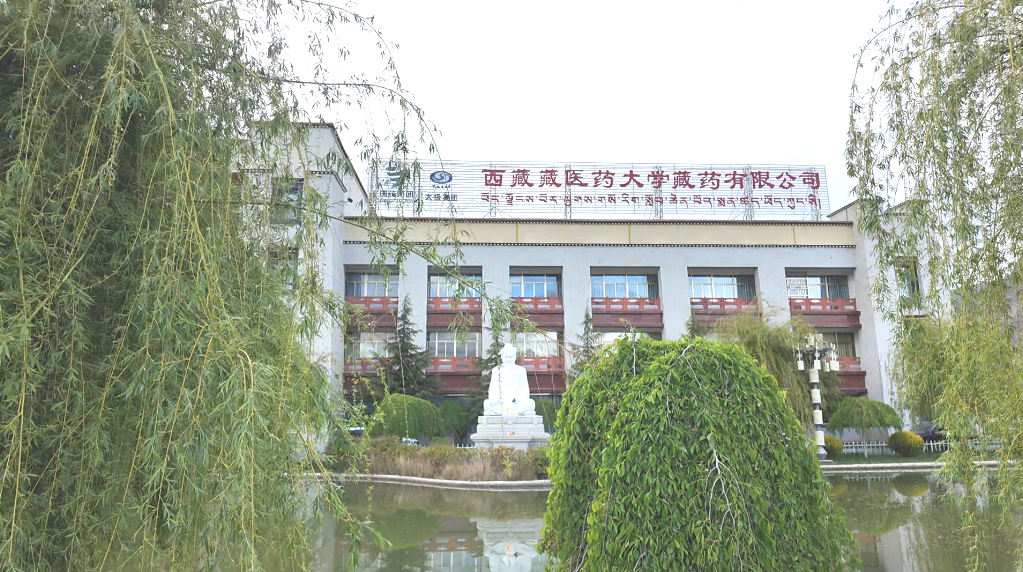
At the University of Medicine, a Tibetan doctor explained that the institution conducts specialized research into traditional Tibetan medicine and showed me samples of their work. Today, Tibetan medicine has been used in many places of China.
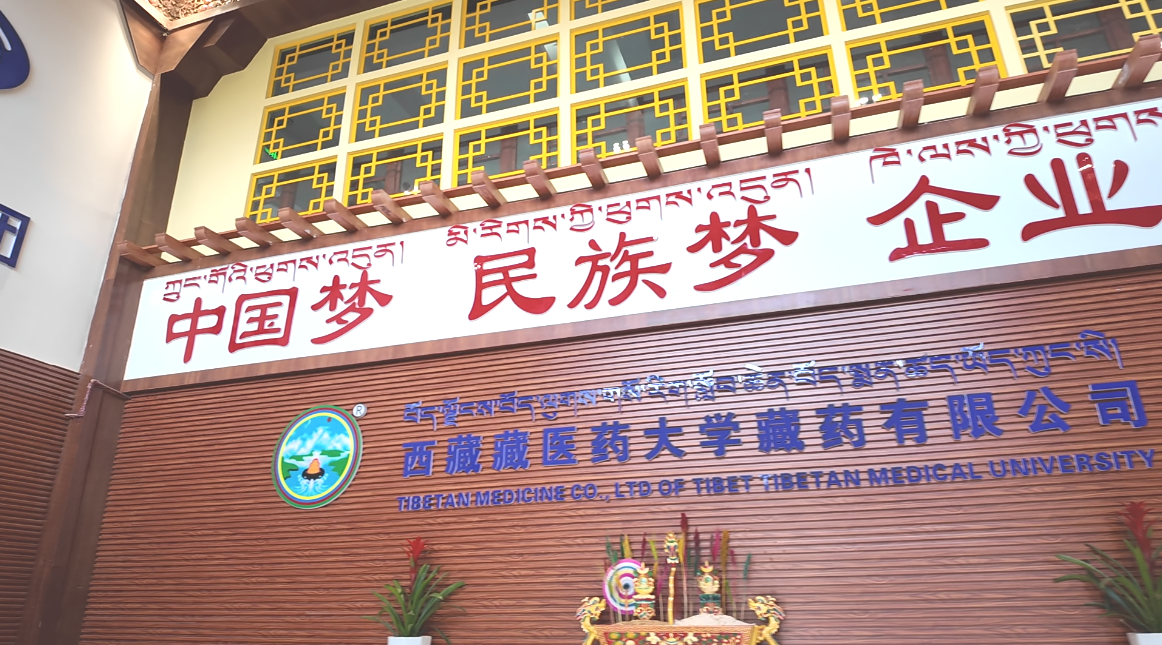
Continuity, Renewal and the Legacy of Princess Wencheng
Today, life once again pulses in Lhasa and across all of Tibet. And in people’s faces one senses something precious: deep calm, quiet dignity, and a gentle contentment. In this atmosphere of continuity and renewal, one might even recall the enduring legacy of Princess Wencheng—who later came to be remembered as one of Tibet’s most legendary queens—whose vision of harmony, prosperity and human well-being, as traditionally depicted, seems to find its quiet expression in the long arc of history.
My Photo Album:
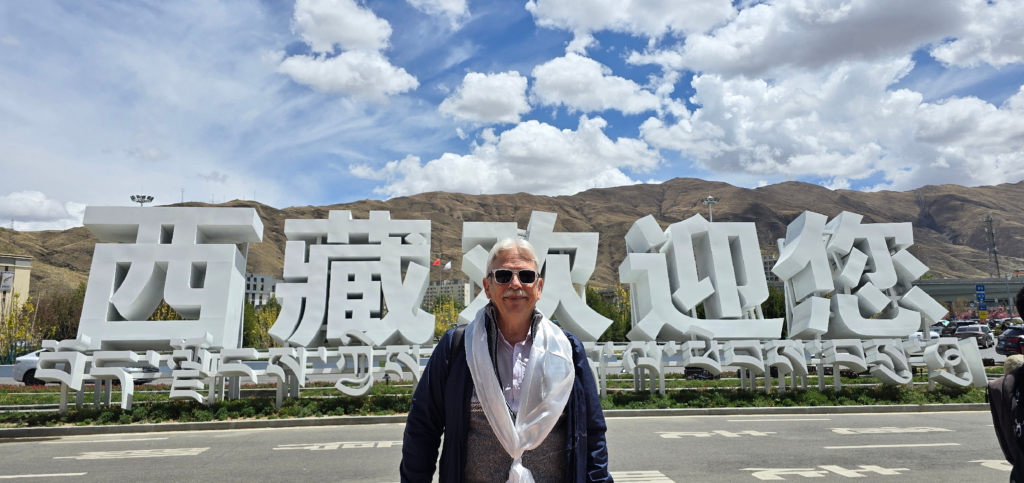
Arrival in Lhasa feels like crossing into another world entirely. The journey begins at Lhasa Gonggar Airport, where towering welcome signs in both Mandarin and Tibetan rise against the vast Himalayan sky. The two scripts stand side by side—one flowing and ancient, the other modern and structured—together announcing your entry into a land where history, spirituality, and everyday life are deeply intertwined.
Stepping outside, the atmosphere shifts immediately. Locals greet arriving visitors with a white khata, gently draped around the neck in a gesture of warmth and blessing. The scarf, light as air, carries a profound meaning: purity, goodwill, and safe passage. In that moment, the traveler is no longer an outsider, but a welcomed guest in a place shaped by devotion and tradition.
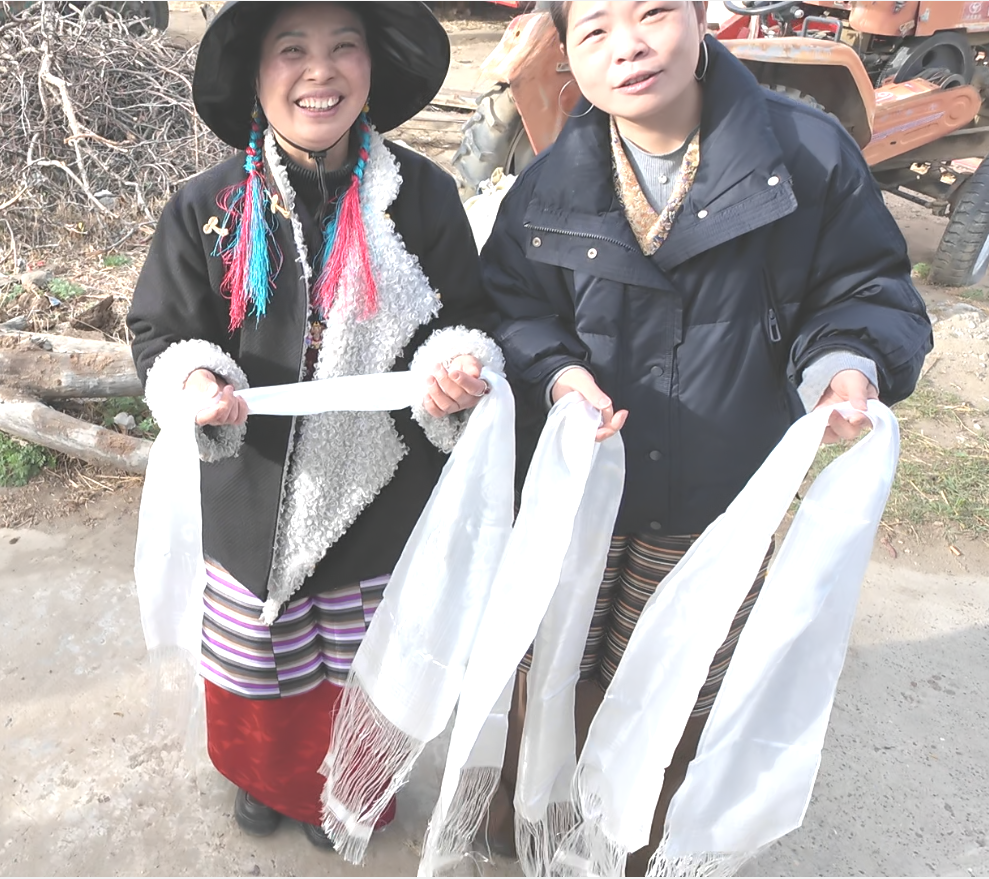
This gesture of hospitality can also be encountered in the countryside, where it carries the same quiet sincerity.
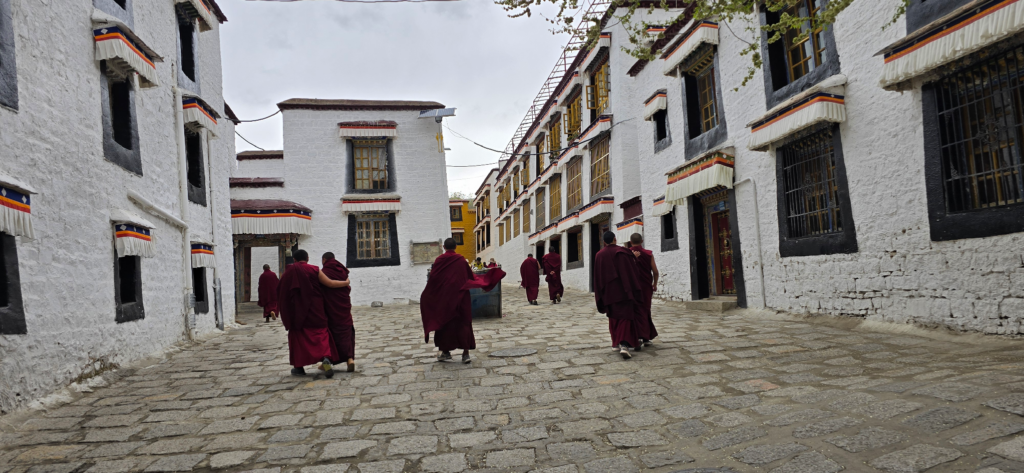
From there, the city unfolds into a landscape of devotion and rhythm. The vibrant monasteries of Tibet are alive with sound, color, and movement. Deep crimson robes move through sunlit courtyards, where prayer flags ripple overhead and the scent of incense drifts through stone corridors. Inside, golden statues glow in flickering butter lamp light, and murals stretch across walls like visual scriptures.
At places such as Sera Monastery, philosophy becomes performance as monks engage in spirited debate—clapping hands, stepping forward with conviction, and testing each other’s understanding of Buddhist teachings. Nearby, pilgrims circle sacred halls, spinning prayer wheels and offering silent prayers with every step, their devotion expressed through movement as much as belief.
Set against the backdrop of high plateau light and distant snow-capped peaks, these monasteries feel both timeless and immediate—centers of ancient wisdom still pulsing with daily life. For the traveler, the experience becomes more than observation; it is immersion into a living spiritual world where every gesture, sound, and breath carries meaning.
On the more worldly side of life, when people are not engaged in prayer or other religious practices, daily life in Lhasa is vibrant and full of activity.
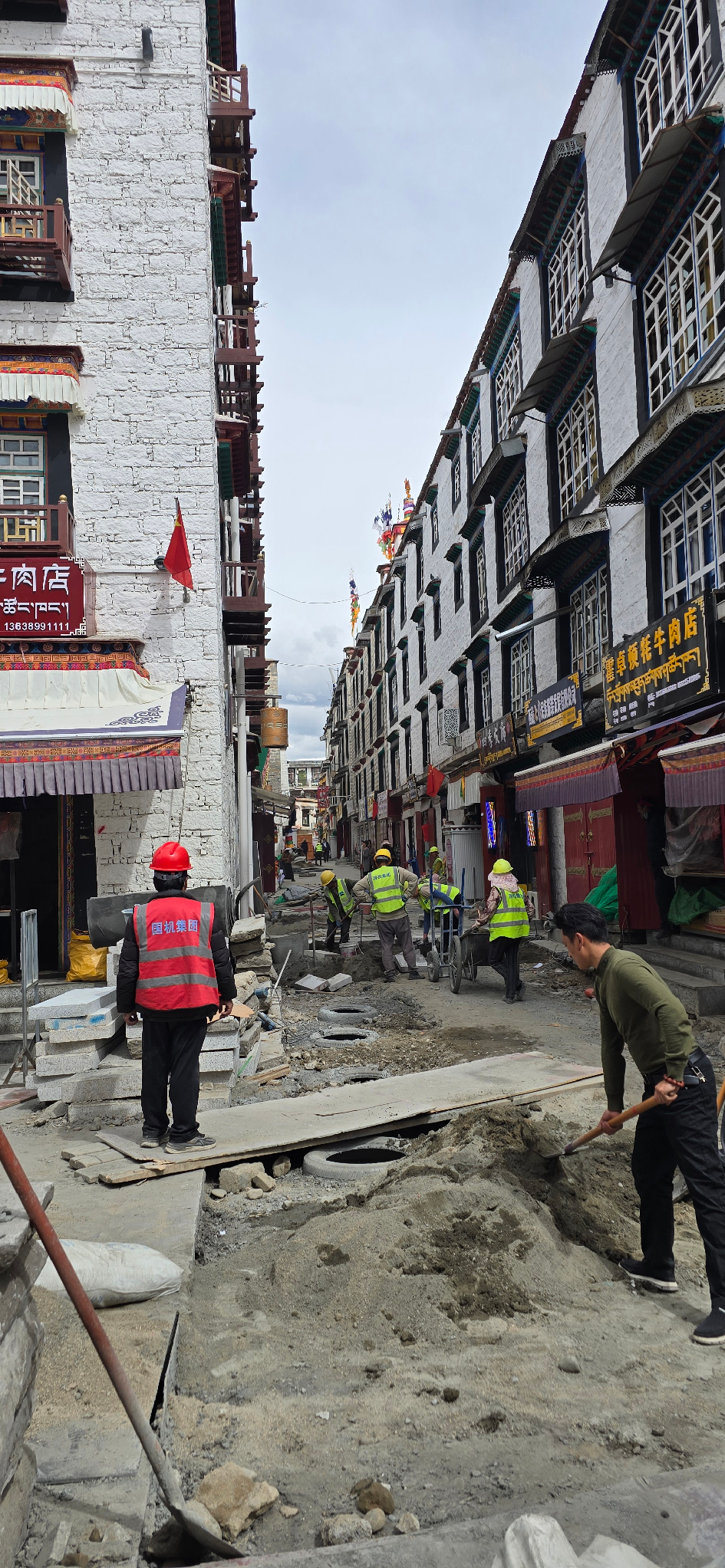
Here, roadworks are underway in the heart of the city, reflecting ongoing development and change. Nearby, people go about their everyday routines—shopping, exchanging goods, and filling the streets with movement and conversation.
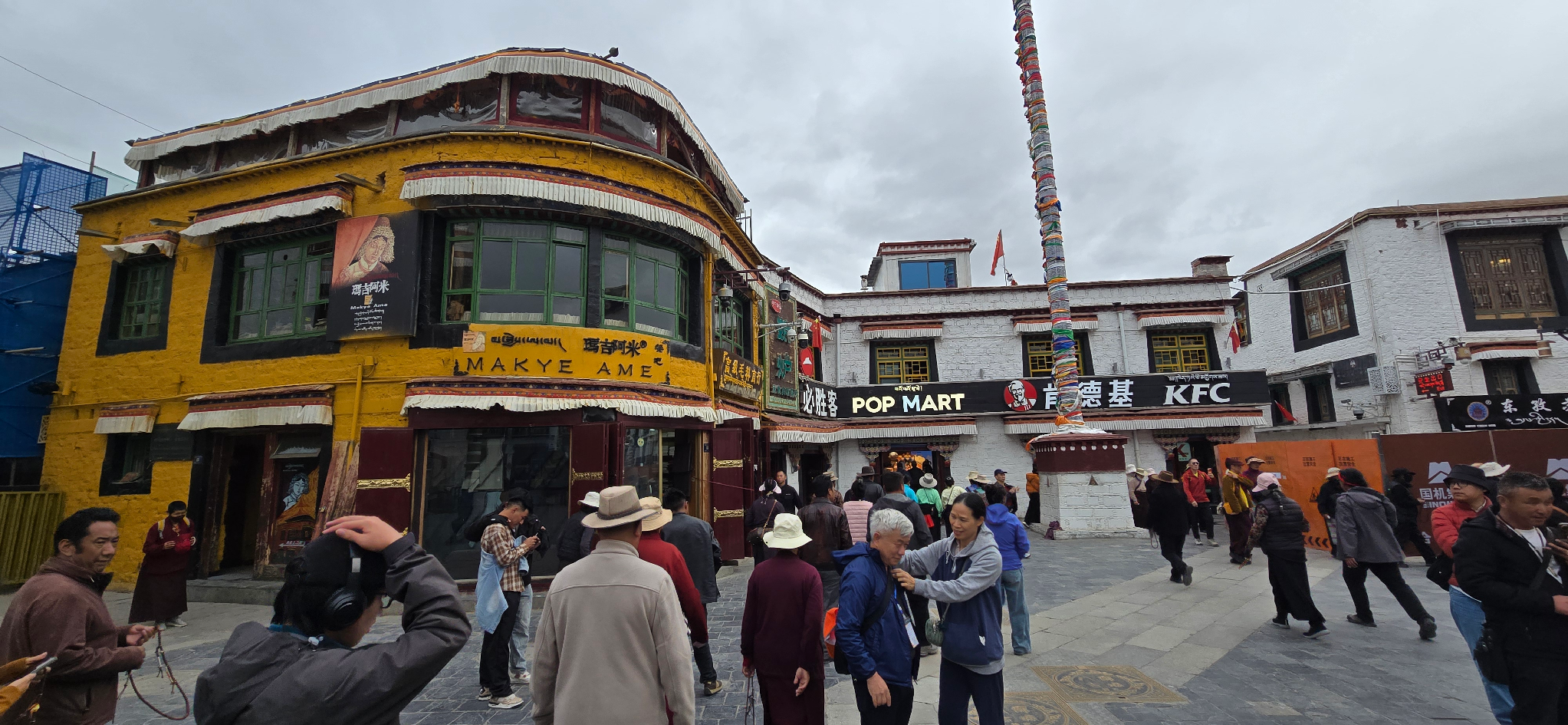
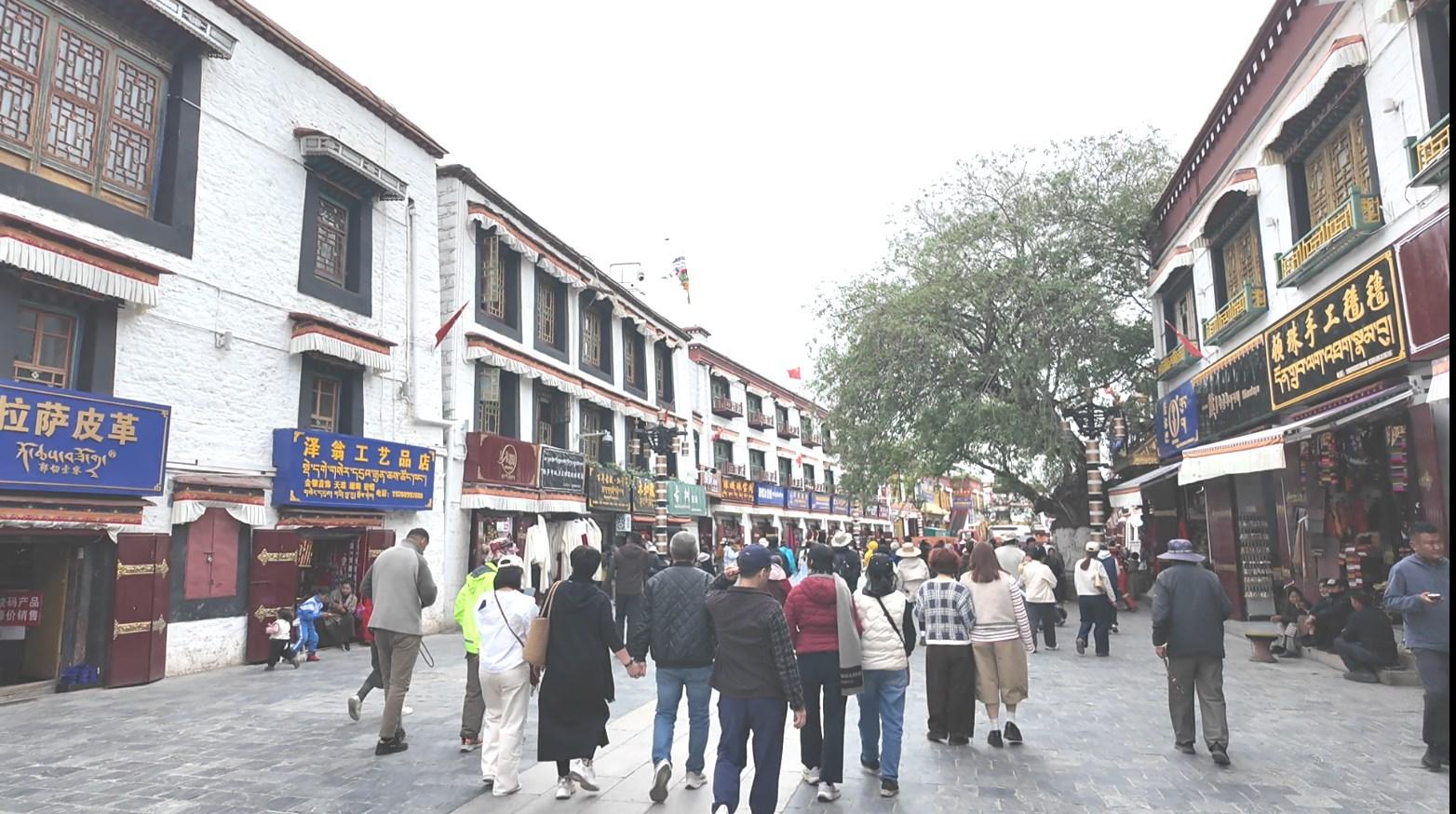
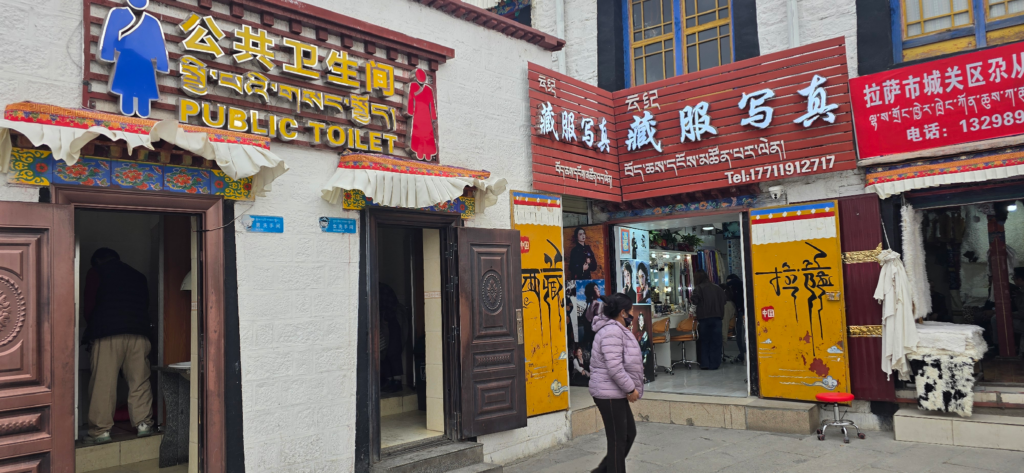
And, as in many other Chinese cities, cleanliness is clearly a priority. Public toilets are free and generally clean. Although international visitor numbers are still relatively low, signage is provided—likely in anticipation of increased international tourism—in Tibetan, Mandarin, and English.
I made it to the summit of the Potala Palace, ascending into its highest reaches—the very chambers where the Dalai Lamas once lived among monks, tutors, and attendants, and where, in some cases, their parents were also granted residence or nearby quarters, surrounded by an extraordinary wealth of sacred and precious objects.
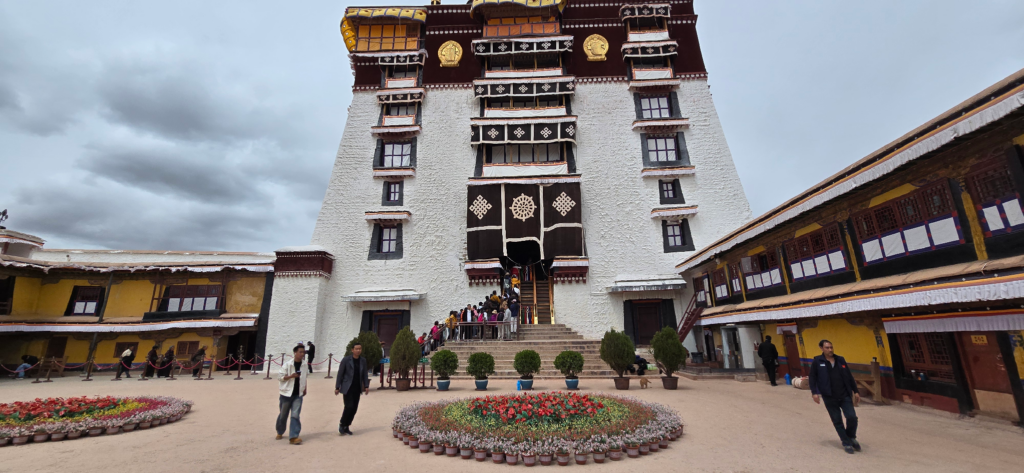
Within these walls, history feels almost intimate. One story speaks of a Dalai Lama who, despite the weight of his spiritual duties, fell deeply in love with a girl from Lhasa. From these very rooms, he is said to have written her passionate letters—quiet confessions of a heart constrained by expectation and tradition, and a love that was never meant to be.
When Princess Wencheng sang the musical line, “The world has no distant place. The world is my home,” it lingered with me, prompting me to reflect on her true origins. In her era, noble Chinese daughters rarely ventured beyond their family estates—let alone thousands of kilometers into a region contemporaries dismissed as “barbarian.”
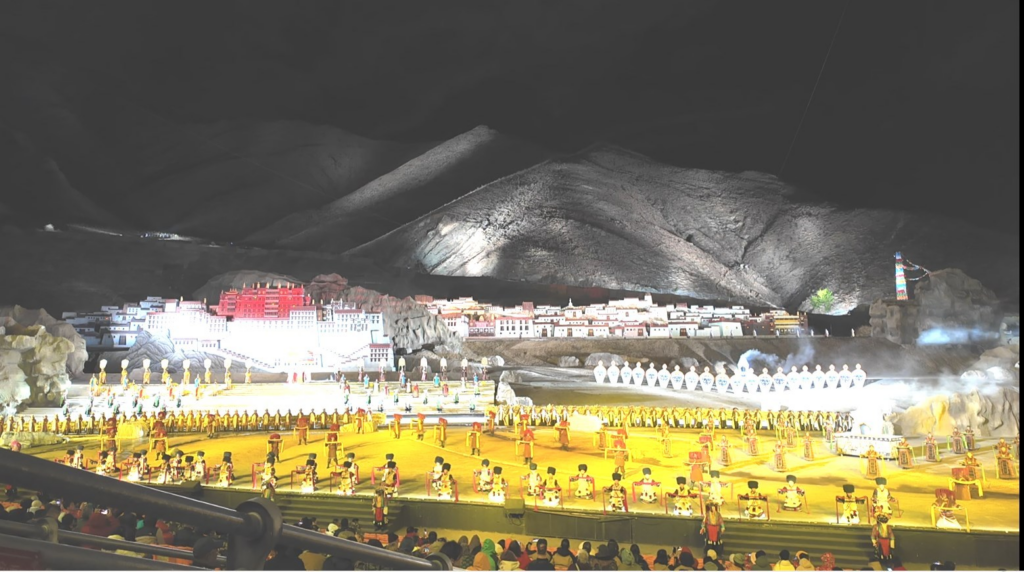
Her journey, in truth, was forged through profound conflict. Because her father initially resisted the imperial decree, Wencheng was left terrified for his safety. Driven by filial piety, she ultimately endured a brutal, 5,000-kilometer trek across precipitous mountains and wild terrains—one of the most grueling expeditions in Chinese history. Today, her song serves as a beautiful, symbolic tribute to that monumental trial.
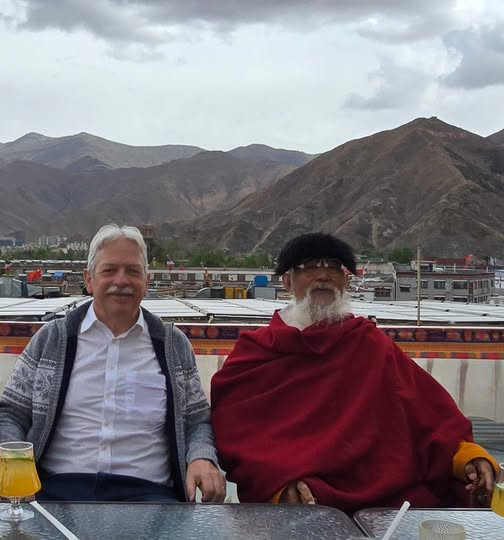
Travel has a way of placing extraordinary souls before us when we least expect it. High on a hill overlooking Lhasa, I found myself—by pure chance—face-to-face with one of the most revered spiritual leaders in all of Tibetan Buddhism.
The moment was unmistakable; even in the vast silence above the city, his presence declared exactly who he was.
I also happened to meet R. Kumar Singal, founder of one of India’s leading firms of chartered accountants, financial advisors, and consultants, in Tibet at an altitude of almost 5,000 metres.

He is currently driving from New Delhi to London, crossing 20 countries in 69 days. When I asked whether it was difficult to obtain all the permits for him and his car, he simply said, “Not at all.” An outstanding entrepreneur and achiever who has my full respect—I doubt I could do something like this.
In Tibet, religious devotion is deeply woven into everyday life and can be seen in many public and private spaces. People often worship not only in monasteries, but also along roads, in villages, and even beside house walls painted with sacred images of deities.
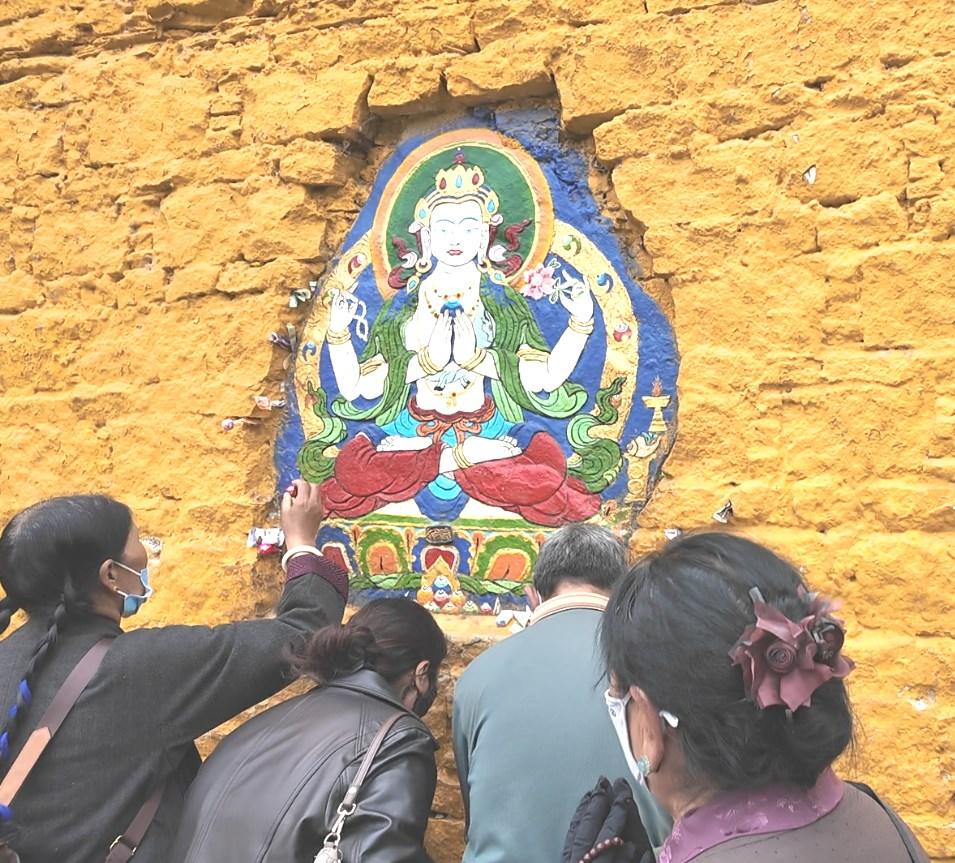
These images and moments of prayer reflect how Tibetan Buddhism is integrated into daily life as a constant source of protection and blessing.
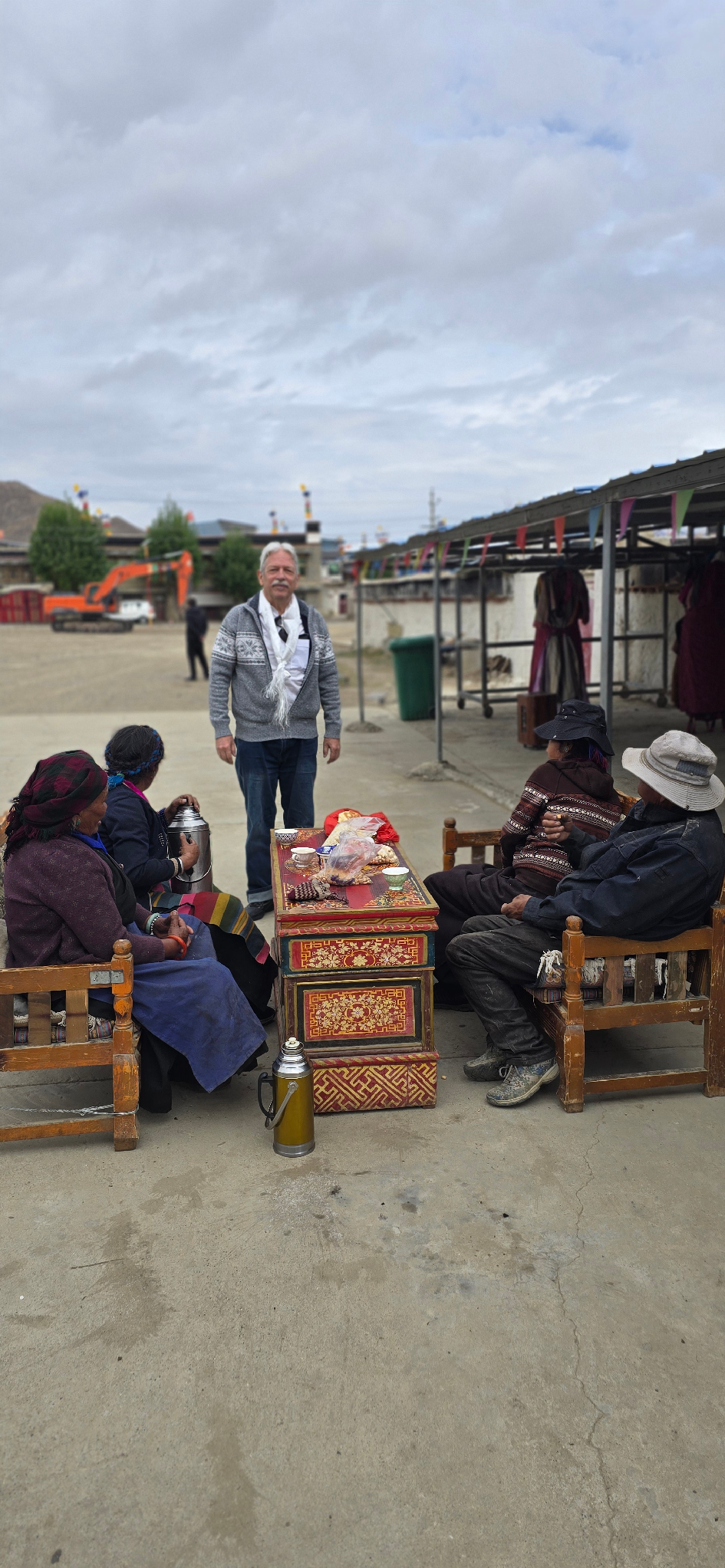
In the countryside, I sometimes came across ordinary Tibetans going about their daily lives—such as these workers resting during a break—which allowed for brief, friendly conversations.
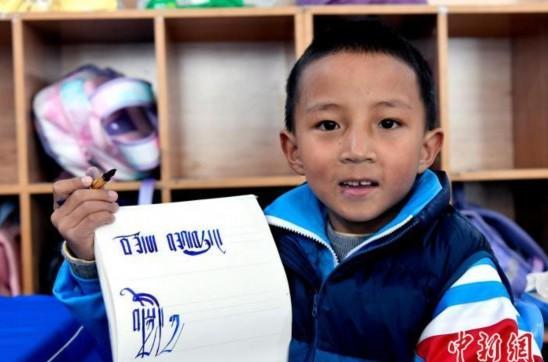
Although this is often questioned or even denied in Western accounts, children in Tibet learn both Mandarin and Tibetan calligraphy in school, as demonstrated by this boy.
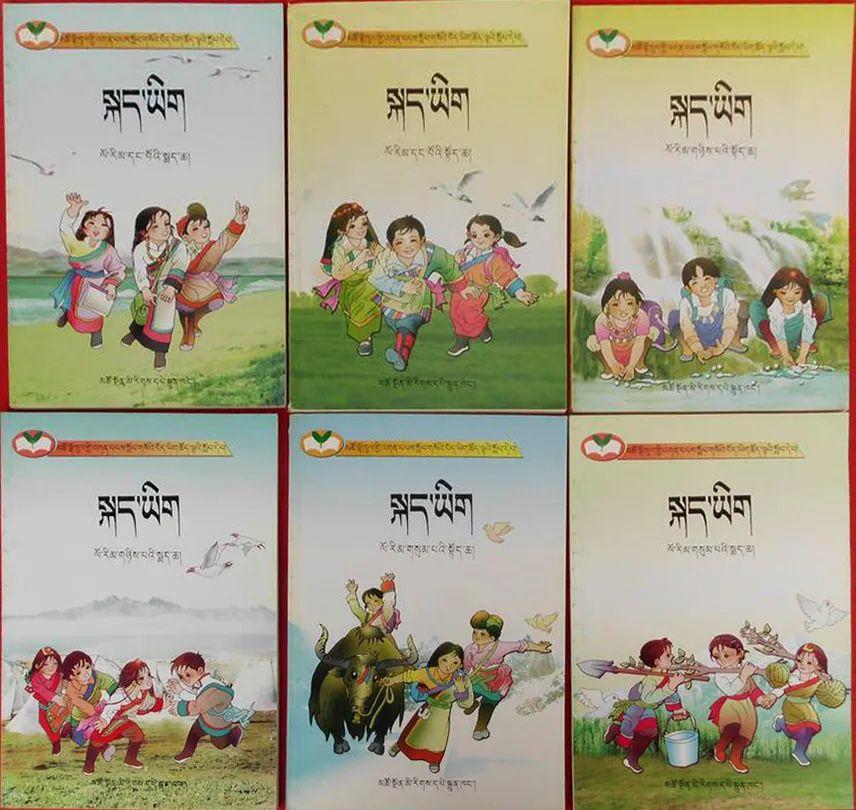
There are also children’s books in the Tibetan language:
At an altitude of 5,000 metres, I made friends with two Tibetans, each weighing around 70 kg.
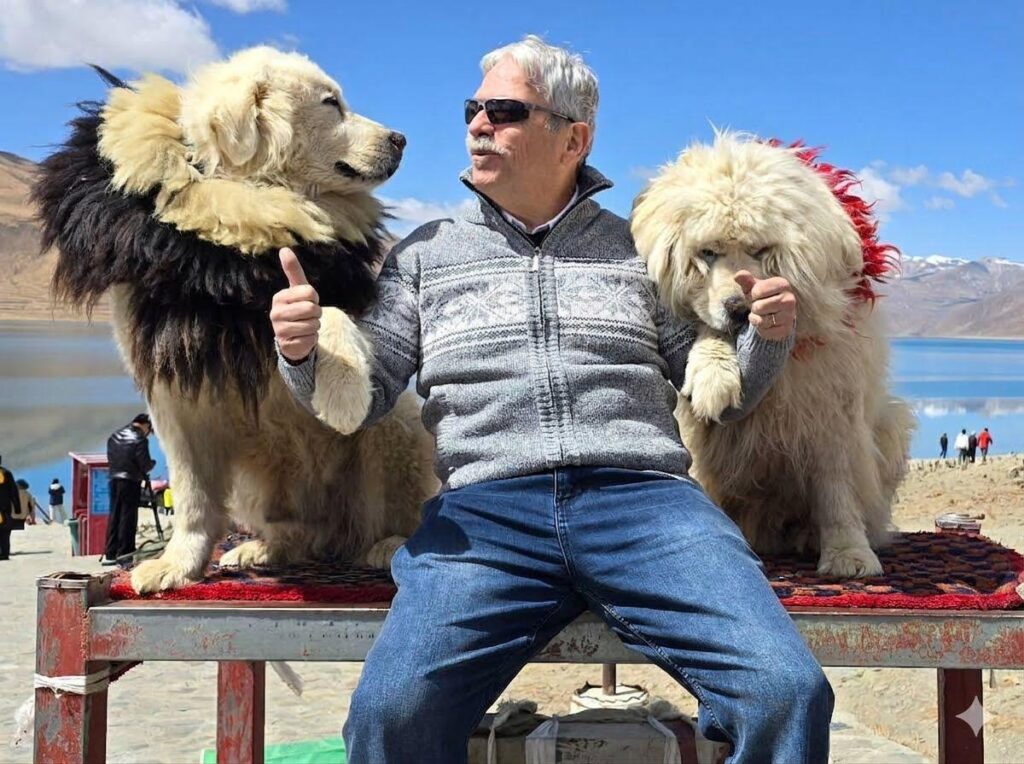
Strong and powerfully built, Tibetan Mastiffs have long served as guardians of monasteries and livestock, deterring wolves, snow leopards, and bears. Their thick double coats are perfectly adapted to the harsh Himalayan climate.
Their owner told me they are highly intelligent, trainable, and deeply loyal. For dog lovers, they can be wonderfully affectionate—seeming to sense when someone is genuinely friendly. I experienced this myself when they leaned in for a gentle moment of closeness.

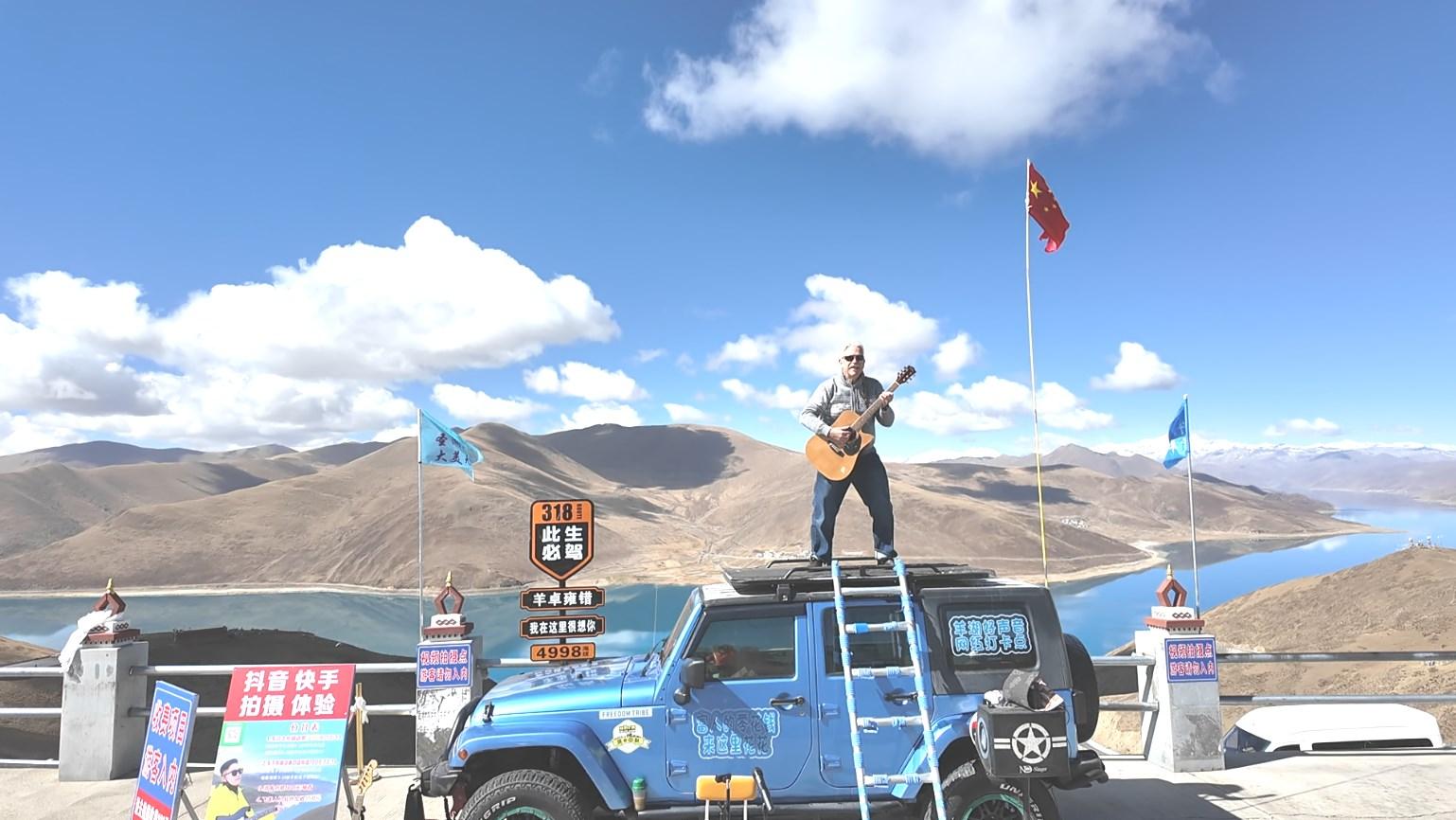
I was lucky not to need an oxygen bottle, unlike many others. This allowed me to enjoy the moment fully—even to “rock ’n’ roll” on the rooftop of the car at high altitude, surrounded by a beautiful landscape of mountains and blue water in the background.
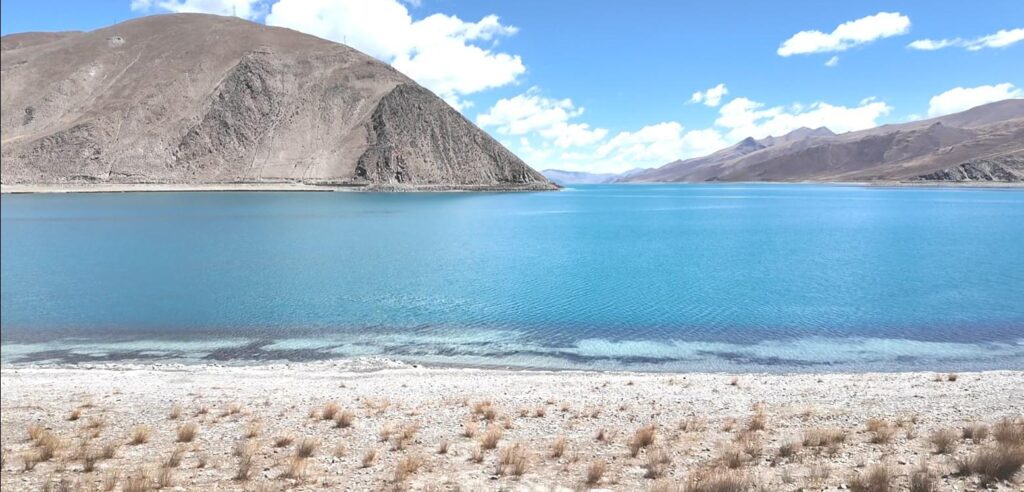
Tibet is indeed filled with breathtaking landscapes, from vast high-altitude plateaus and snow-capped mountains to deep valleys, clear lakes, and endless open skies.
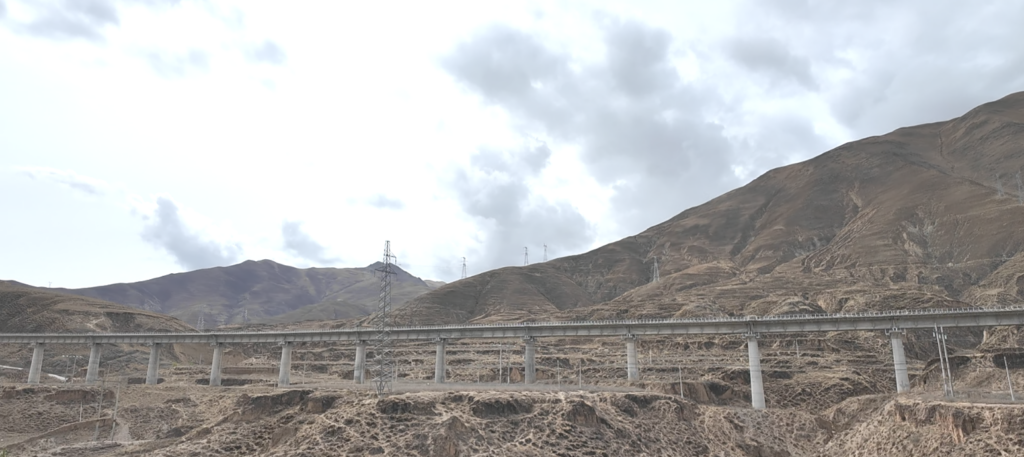
Bridges and power distribution lines can be seen even in the most remote and hard-to-access areas of Tibet. One gets the strong impression that the state is doing everything possible to improve living conditions and make life more comfortable for the local population.
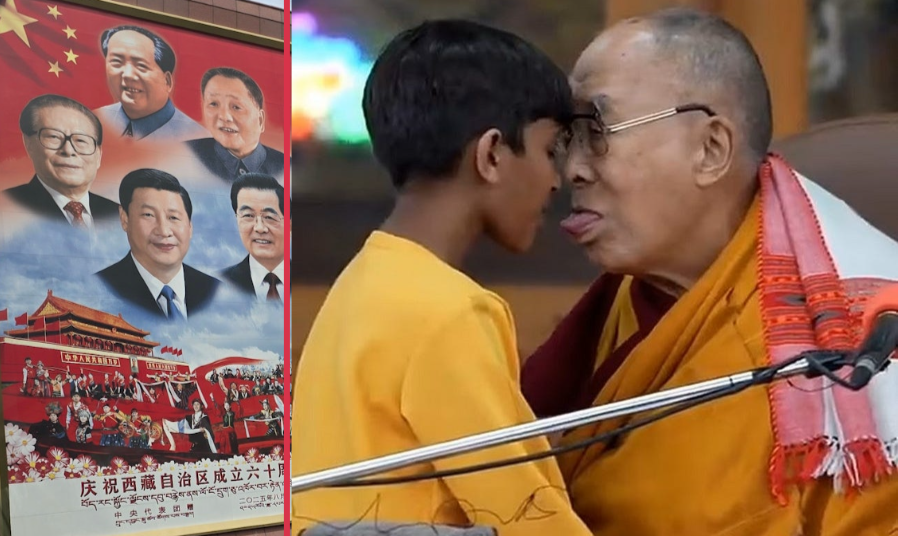
Clashes of Values: While portraits of Chinese leaders are visible in public places, restaurants, and other locations across Tibet, these same leaders promised to lift the Tibetan people out of poverty and misery—and they delivered on that promise. In contrast, three years ago in his Indian exile, the Dalai Lama asked a young boy to suck his tongue.
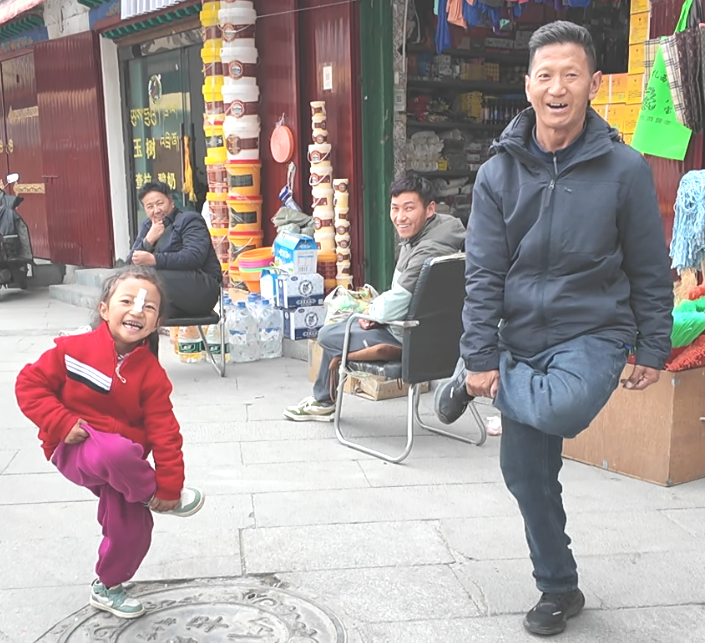
I was pleased to see with my own eyes so many smiling Tibetans.
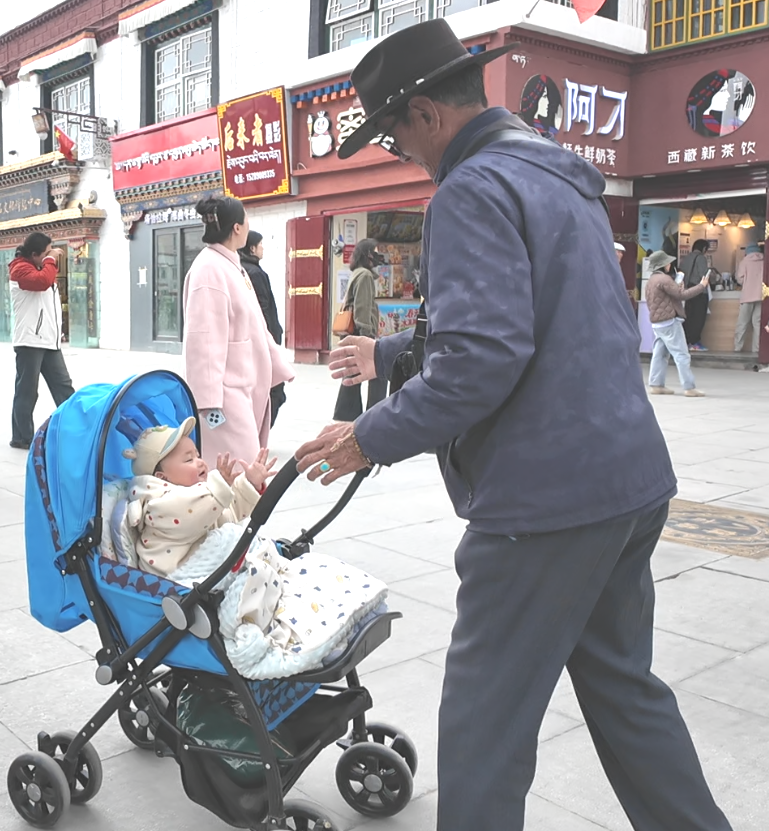
Here is a happy Tibetan grandfather clapping his hands, encouraging his baby grandson to clap along with him. And yes — the baby did it!
Or on another occasion, I came across a happy father dancing on one leg with his little daughter, while the neighbors looked on with amusement.
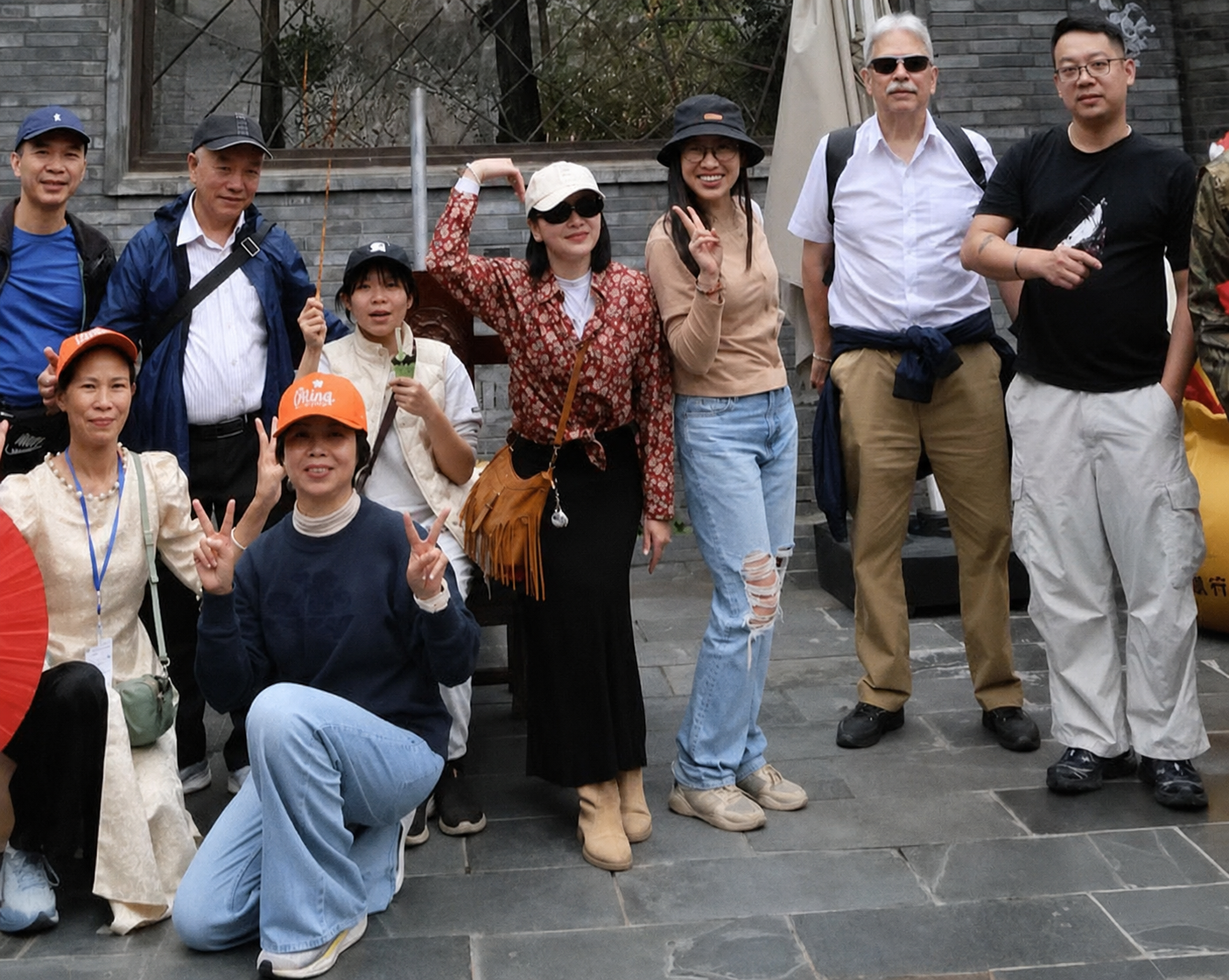
Last but not least, here’s a photo with my Vietnamese friends, with whom I had the pleasure of exploring Tibet.

Watch my Tibet and global travel videos on my YouTube channel, Lixplore.
For regular updates and insights, join my community (free of charge) on Substack: https://felixabt.substack.com
CovertAction Magazine is made possible by subscriptions, orders and donations from readers like you.
Blow the Whistle on U.S. Imperialism

Click the whistle and donate
When you donate to CovertAction Magazine, you are supporting investigative journalism. Your contributions go directly to supporting the development, production, editing, and dissemination of the Magazine.
CovertAction Magazine does not receive corporate or government sponsorship. Yet, we hold a steadfast commitment to providing compensation for writers, editorial and technical support. Your support helps facilitate this compensation as well as increase the caliber of this work.
Please make a donation by clicking on the donate logo above and enter the amount and your credit or debit card information.
CovertAction Institute, Inc. (CAI) is a 501(c)(3) non-profit organization and your gift is tax-deductible for federal income purposes. CAI’s tax-exempt ID number is 87-2461683.
We sincerely thank you for your support.
Disclaimer: The contents of this article are the sole responsibility of the author(s). CovertAction Institute, Inc. (CAI), including its Board of Directors (BD), Editorial Board (EB), Advisory Board (AB), staff, volunteers and its projects (including CovertAction Magazine) are not responsible for any inaccurate or incorrect statement in this article. This article also does not necessarily represent the views the BD, the EB, the AB, staff, volunteers, or any members of its projects.
Differing viewpoints: CAM publishes articles with differing viewpoints in an effort to nurture vibrant debate and thoughtful critical analysis. Feel free to comment on the articles in the comment section and/or send your letters to the Editors, which we will publish in the Letters column.
Copyrighted Material: This web site may contain copyrighted material the use of which has not always been specifically authorized by the copyright owner. As a not-for-profit charitable organization incorporated in the State of New York, we are making such material available in an effort to advance the understanding of humanity’s problems and hopefully to help find solutions for those problems. We believe this constitutes a ‘fair use’ of any such copyrighted material as provided for in section 107 of the US Copyright Law. You can read more about ‘fair use’ and US Copyright Law at the Legal Information Institute of Cornell Law School.
Republishing: CovertAction Magazine (CAM) grants permission to cross-post CAM articles on not-for-profit community internet sites as long as the source is acknowledged together with a hyperlink to the original CovertAction Magazine article. Also, kindly let us know at info@CovertActionMagazine.com. For publication of CAM articles in print or other forms including commercial internet sites, contact: info@CovertActionMagazine.com.
By using this site, you agree to these terms above.
About the Author

Felix Abt is the author of “A Capitalist in North Korea: My Seven Years in the Hermit Kingdom” and of “A Land of Prison Camps, Starving Slaves and Nuclear Bombs?”
He can be reached via his Twitter account.

Excellent research on Tibet. Here is some more information on Tibet
https://savetibet.org/