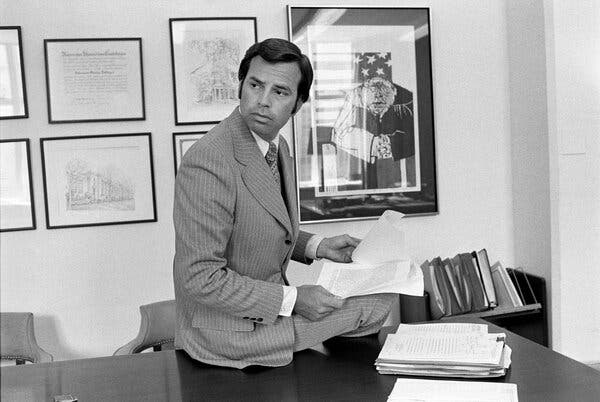
This may be the first time that you’re hearing the name “Stanley Pottinger”—America’s James Bond
At the same time that I was investigating the complex and multi-layered networks surrounding Jeffrey Epstein, parts of that same network also began to surround me. After many journalistic twists and turns, I was led to concentrating my investigative efforts on one man in particular, John Stanley Pottinger. At the time I began this investigation in 2022, J. Stanley Pottinger, often simply referred to as “Stan,” was one of the lead lawyers for around 200 victims of Jeffrey Edward Epstein.
During those investigations, I not only discovered that Stanley Pottinger had many close ties to Jeffrey Epstein himself, I was also flung down an unexpected rabbit hole. The results of my investigation into Stanley Pottinger fundamentally changes some of the defining events in American history over the past 60 years. J. Stanley Pottinger’s involvement in some of the most important events in U.S. history has been hidden and obscured for a reason. Stan the Man was a CIA agent who was often operating domestically. Like Jeffrey Epstein, Pottinger was one of the most important intelligence fixers of his generation.
Pottinger, born in Dayton, Ohio, was a gifted student from an early age. He served as the student mayor of Dayton and was chosen as Wilbur Wright Middle School’s representative. Pottinger became the all-city quarterback of the football team, a track athlete, president of Jr. Civitan Service Club, chairman of the board of the senior class, president of the National Honor Society, and voted the “outstanding senior” by his classmates.
Pottinger was originally meant to enroll at DePauw University after graduation, where he planned to major in economics, but Harvard beckoned instead. At Harvard, he flourished: “Meeting students from all over America and the world,” stated the freshman Pottinger about his first-term experiences at the prestigious university. He also described to his hometown newspaper how it was to “attend lectures by the same professors who had written his textbooks. My government lecturer drafted the Weimar Republic’s constitution, and another is a government budget advisor.” Pottinger went on to say: “Harvard has no fraternities, but there are special-interest clubs for everything from acting to parachute jumping.”
Pottinger was not interested in the normal extra-curricular activities open to the usual Harvard student; instead, in March 1959, he was to be the only freshman appointed to a special eight-man committee of the Harvard Student Council, set up to consider all aspects of the university’s athletic program. While at Harvard, Pottinger’s older brother, David Forbes Pottinger faked his own disappearance so he could traffic a minor across state lines for sex. This caused a swirl of controversy for Pottinger’s family in Ohio.
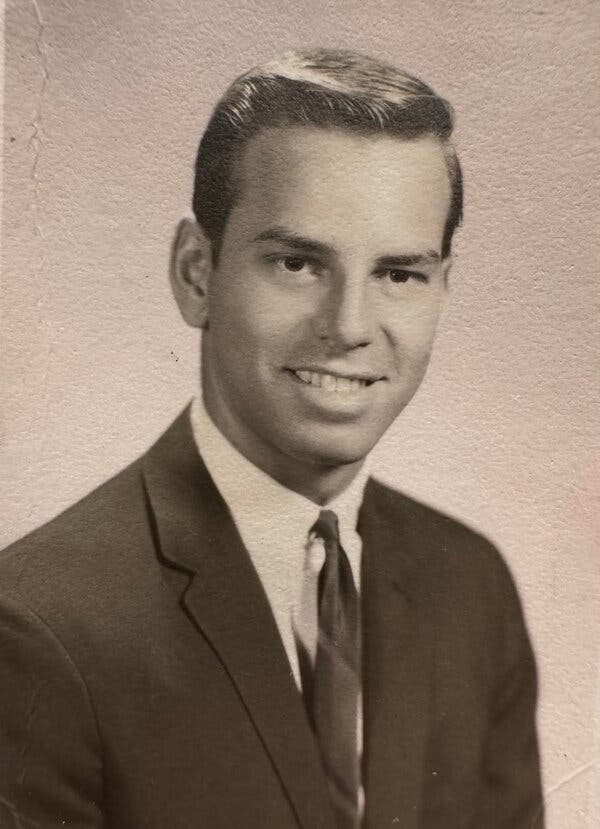
After graduating from Harvard Law School, Pottinger began practicing law, taking up a position as General Counsel for Broad, Busterud and Khourie, which would later become Broad Khourie & Schulz, based in San Francisco. In 1966, Pottinger was counsel to the condemned Dovie Carl Mathis, convicted of the murder of Vernon Ray. But, during this period, Pottinger was also looking for a way into government service.
In 1967, it was reported that J. Stanley Pottinger was the “lawyer and county committee counsel” for the Republican Party. In fact, Stanley Pottinger was representing the State Republican Central Committee during this period and was about to catch the break he had been searching for. In December 1969, Pottinger was appointed as a regional attorney in San Francisco for the Department of Health, Education and Welfare (HEW).
By March 1970, Pottinger was part of Richard Nixon’s team, which “toured the South enunciating desegregation policy.” He was soon being reported in The New York Times as the director of HEW’s Office for Civil Rights. Pottinger replaced Leon Panetta, the future CIA Director and Secretary of Defense, who had been dismissed months earlier for, as the latter article mentions, “moving ahead of Administration policy on desegregation.”
It is after Pottinger’s time heading the Office for Civil Rights that his true nature began to shine through. As the Watergate scandal began to break, there were rumors that Pottinger might lose his job; however, quite the opposite happened. From 1973 until 1977, Pottinger became central to managing some of the most potentially explosive events on behalf of both the Nixon and Ford administrations.
Pottinger was centrally involved in managing the standoff at Wounded Knee, and the Kent State shootings controversy. He officially signed off on the Justice Department’s investigation into the assassination of Martin Luther King, Jr., finding no conspiracy, and, by 1976, he was even central to the official investigation into Watergate.
Even though Nixon had stepped aside, the Watergate scandal was still in the news. The New York Times published an article on February 20, 1976, entitled “Helms Won’t Face Break-In Charge,” which stated that:
“Assistant Attorney General J. Stanley Pottinger, head of the department’s civil rights division, said that he and other officials had carefully weighed evidence in the break-in case and had decided they had insufficient evidence to prosecute Mr. Helms for a civil rights violation. However, Mr. Pottinger told a news conference, ‘his Congressional testimony is under review for possible perjury charges.’”
With a Nixonian man like Pottinger in charge, the former Director of the CIA, Richard Helms, appeared safe from prosecution over Watergate. Helms had also denied to the Senate Select Committee on Intelligence that the CIA had “conducted domestic surveillance or supported political foes” of the late President Salvador Allende Gossens of Chile.” In the latter New York Times article, it reads:
“Mr. Pottinger defended the decision not to prosecute Mr. Helms and others involved in the burglary of a photo studio in suburban Fairfax City, Va., that was partly owned by a former C.I.A. employee. ‘I had the lead responsibility in this case for the last few months,’ Mr. Pottinger said. ‘We have spared no resources, no time and no effort. I myself interviewed Mr. Helms.’”
In fact, Mr. Helms was probably delighted to have been interviewed by J Stanley Pottinger, a man with an abundance of links to the CIA.
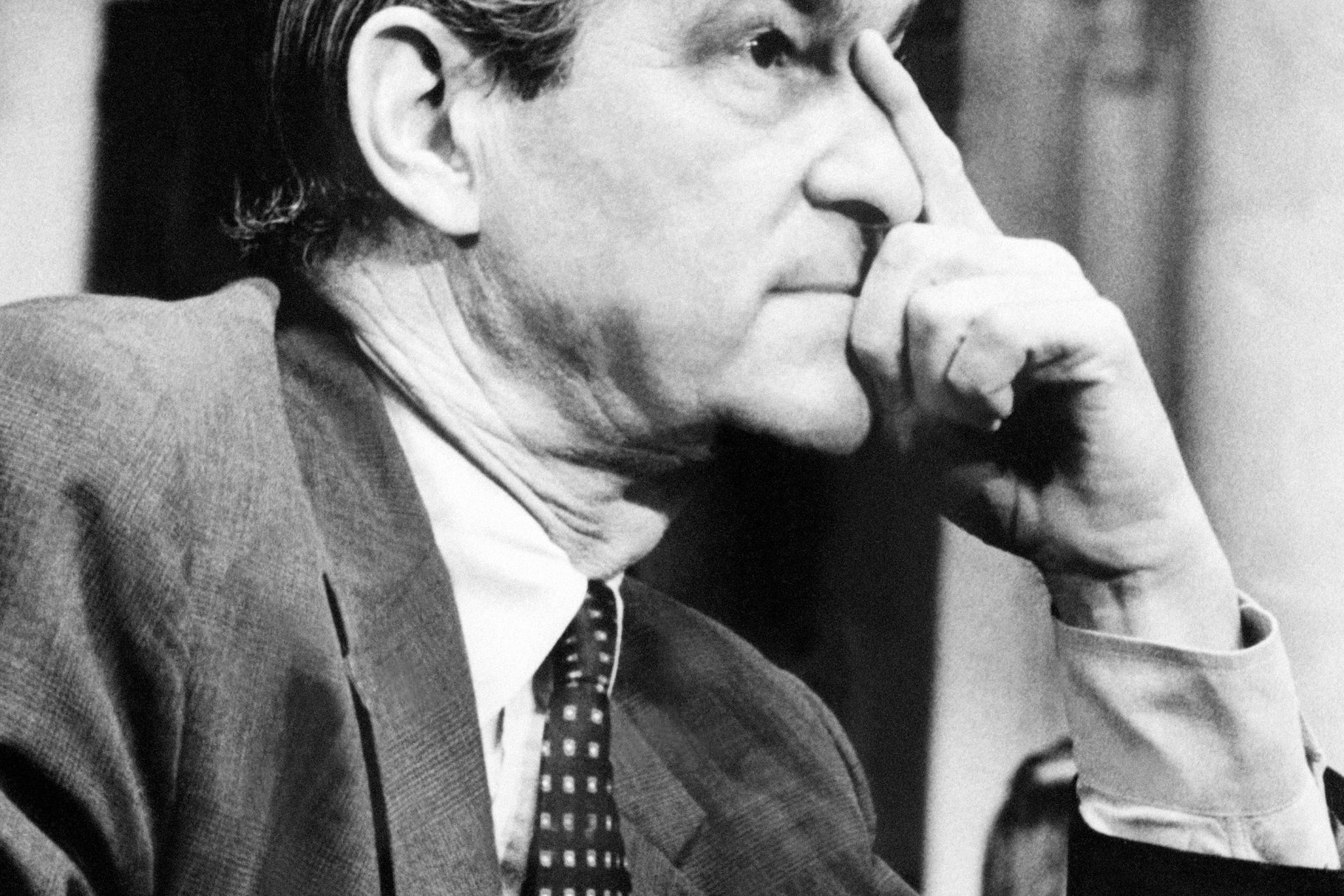
Also in 1976, the brazen assassination of former Chilean Foreign Minister Orlando Letelier near the Chilean Embassy in Washington, D.C., threatened to cause diplomatic outrage. Pottinger used the assassination of Letelier to forge a secretive deal between the CIA, the White House and the DOJ, which permitted the CIA to use domestic surveillance on American soil, regardless of the Constitution forbidding such subversive activities.
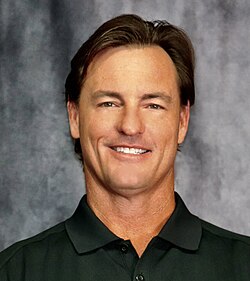
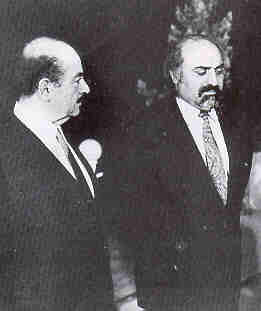
Perhaps the best example of Pottinger’s importance to the CIA is his activities during Iran-Contra, and the fact that, for the most part, his role has been left out of the history books. In fact, J. Stanley Pottinger, one of the lead lawyers who represented many of the victims of Jeffrey Epstein and Ghislaine Maxwell, organised a significant part of the Iran-Contra affair and benefited from the illegal sales of weapons, alongside Cyrus Hashemi, Adnan Khashoggi and Jeffrey Epstein himself.
It is also during this period that Pottinger, later, admitted to first working with Jeffrey Epstein. He made this revelation to his business partner Bradley Edwards, another of Epstein’s victims’ lawyers, something which is noted in Edwards’ 2020 book Relentless Pursuit.
Stan, the Man Behind Iran-Contra
When Iranian students stormed the U.S. Embassy in Tehran on November 4, 1979, taking 66 Americans hostage, they set in motion one of the most prolonged diplomatic crises in modern American history. What followed over the next 444 days was not only a very public standoff between two nations, but also a murky world of back-channel dealings, covert intelligence operations, and political manipulation that would eventually implicate some of the most prominent figures of the era, including a Washington attorney named J. Stanley Pottinger.
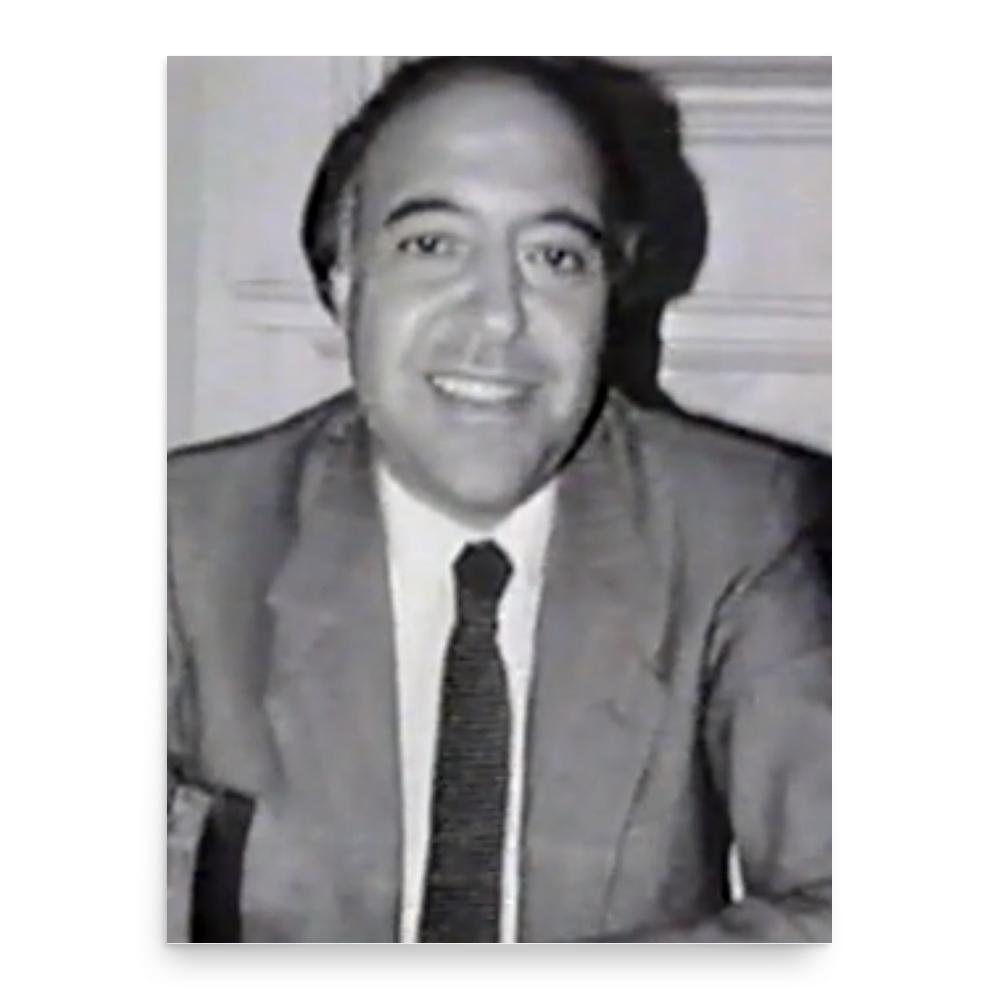
With formal diplomatic options between Washington and Tehran severely limited, unofficial channels began to emerge. On December 7, 1979, Pottinger wrote to then-Deputy Secretary of State Warren Christopher on behalf of his client and business partner, Cyrus Hashemi. Enclosed was a memorandum from Hashemi himself, outlining what he believed to be Iran’s core concerns and positioning himself as a potential conduit for back-channel diplomacy.
Hashemi had also approached Ramsey Clark, a former Attorney General then teaching at Brooklyn Law School. He suggested to Clark that he could arrange a meeting between Khomeini’s nephew and a U.S. representative. Clark passed the information along to Harold Saunders, who was heading the Iran Working Group (IWG), a body established by the State Department specifically to monitor the crisis.
On December 12, 1979, Saunders met Hashemi in Pottinger’s office. The Iranian recommended that the U.S. develop communication channels with intermediaries such as himself, and put forward a list of potential contacts, including Ayatollah Pasandideh, Admiral Ahmad Madani, a senior figure in Iran’s armed forces, and an Iranian economist named Dr. Mahmoud Moini.
Skepticism within the IWG was immediate, with officials concluding that Hashemi might be serving their own interests and possibly attempting to sidestep ongoing lawsuits. Even so, Secretary of State Cyrus Vance, setting aside his own reservations, recommended a “secret exploration” of Hashemi’s proposals.
On January 2, 1980, Saunders met again with Pottinger and Hashemi, this time joined by Dr. Moini as a representative of Khomeini’s nephew, and by Cyrus Hashemi’s step-brother, Mohammad Ali Balamian Hashemi, a man who operated under a variety of aliases, including Jamshid Khalaj, Jamshid Parsa, and Abdula Hashemi, but who was commonly referred to simply as Jamshid.
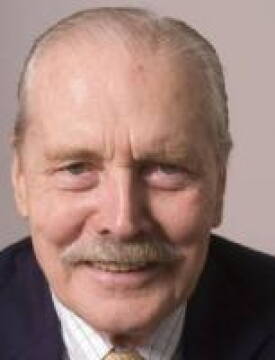
Three days later, on January 5, the Hashemi brothers met with the chief of the CIA’s Near East Division, Charles Cogan. At this meeting, the brothers also claimed to be representing Admiral Ahmad Madani, who was at that moment a candidate for the Iranian presidency, with Jamshid stating that he was “fully mandated by Madani” to seek election campaign funds from the Americans.
What had begun as an attempt to resolve the hostage crisis quickly took on the character of something rather more ambitious. Hashemi promised Cogan that, if diplomatic mediation failed and Mandani lost the election, the Admiral would free the hostages through a military coup against the existing regime. Cogan provided the brothers with $500,000, stating there were “no strings attached,” though he did request an accounting of the funds and insisted the hostages be returned unharmed. When Cogan attempted to deliver the cash in person at a New York hotel on January 17, 1980, the Hashemis refused to accept it directly, insisting instead on a wire transfer from a Swiss bank account to an account in London.
By February 7, CIA officials had concluded that Jamshid Hashemi was a “trafficker in intelligence to whomever would buy it,” and was “dishonest and untrustworthy beyond belief.” The agency accused him of exaggerating his connections to Mandani and charged both brothers with withholding 90% of the campaign funds. The CIA terminated its relationship with the pair, Madani lost the election, and approximately $100,000 was estimated to have been spent. The Hashemis returned $290,000 by check, delivered to Pottinger’s private Washington office.
Despite the CIA’s damning assessment, Cyrus Hashemi refused to abandon the stage. In late February, he informed the State Department that Reza Pasandideh, Khomeini’s nephew, had agreed to meet with him and Pottinger in Europe. Saunders briefed Pottinger with what he described as “just enough to give him some innocent but cogent questions.” The meeting eventually took place on July 2, 1980, at the Hilton Hotel in Madrid, where Hashemi, Pasandideh, Moini, and Pottinger gathered. Pasandideh indicated he was present because key figures in Khomeini’s inner circle wanted the crisis resolved.
The following day, a memorandum from Secretary of State Muskie to President Carter, held by the Office of the Historian, noted: “We have just received a report of a meeting yesterday in Madrid between Khomeini’s nephew, Reza Pasandideh (the son of Khomeini’s older brother), and Washington attorney Stan Pottinger. The meeting was arranged at Pasandideh’s request. According to Pottinger, Pasandideh claimed to be acting as Iranian President Abolhassan Bani-Sadr’s emissary. He stated that Bani-Sadr was now interested in beginning talks in Europe between his representative and a U.S. representative, to discuss a possible settlement, including release of the hostages.”
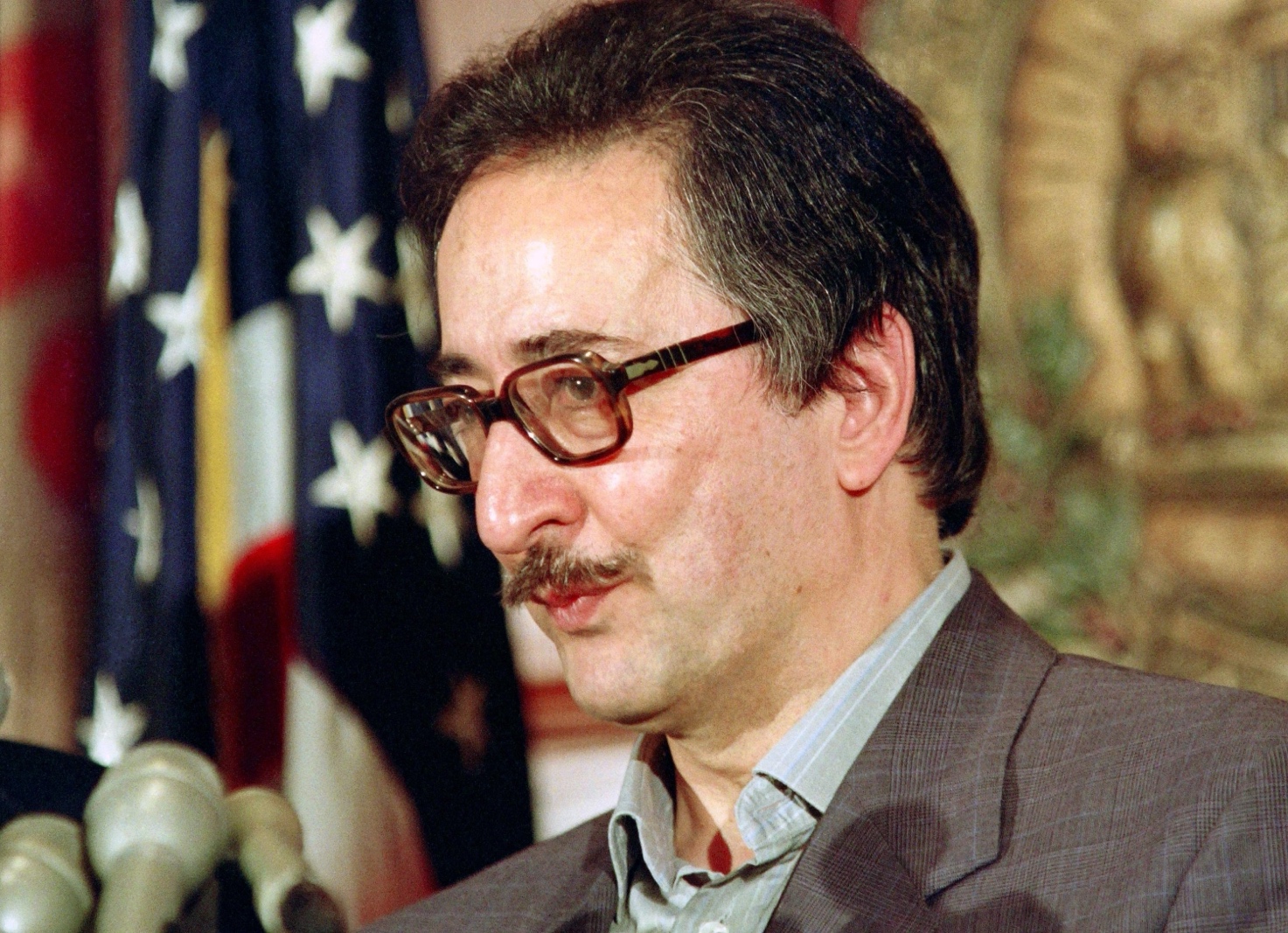
However, Pasandideh’s account of whom he believed he was actually meeting was strikingly different. He subsequently told Bani-Sadr that he had been in discussions with “Mr. Reagan’s envoys.” Bani-Sadr later gave testimony to the October Surprise Task Force, which was documented in the 1993 Joint Report:
“Q: So, Mr. Pasandideh believed that the people that he was meeting were people that Reagan had sent?
A: Yes, quite. Because he told me that if the ‘deal is not made with you then they’ll make a deal with your rivals.’
Q: So your, just for the sake of summarizing so that I clearly understand it. Mr. Carter has three channels open through you. Mr. Pasandideh, at Mr. Khomeini’s behest, meets with two people in Madrid, Mr. Hashemi and Mr. Pottinger. You believe that when Mr. Pasandideh met with them, all they did was discuss negotiations on behalf of Mr. Reagan and not Mr. Carter, is that right?
A: Uh huh.”
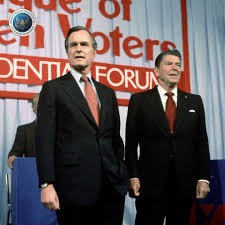
Pottinger, a committed Republican with deep ties to the party, was helping out his close friend George H. W. Bush who was on Reagan’s ticket. The evidence strongly suggests that, rather than acting in the interests of the sitting president or the American hostages, Pottinger was playing a far more calculated political game. He may also have harbored personal ambitions for a position within a future Reagan administration.
By the autumn of 1980, the situation had become considerably more serious. In September, the U.S. government received information from a former Hashemi employee alleging that the brothers were actively helping the Khomeini regime circumvent U.S. arms sanctions, while also circulating pro-Khomeini propaganda within the U.S.
Despite the weight of evidence mounting against the Hashemis, Pottinger continued his involvement. On December 10, 1980, he organized an arrangement with Cyrus and his brother Reza Hashemi to ship arms through a Netherlands Antilles trading company, listing the destination as a Swiss firm. Those meetings took place in Hashemi’s New York office, which was at the time under law enforcement surveillance.
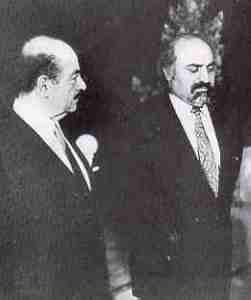
The broader network in which these dealings occurred is illuminating. Two close associates of Cyrus Hashemi, Saudi businessman Adnan Khashoggi and Iranian middleman Manucher Ghorbanifar, were themselves conduits in the U.S.-sanctioned arms sales to Iran that formed the heart of the Iran-Contra affair.
A 1986 Newsday article by Robert E. Kessler reported on a failed government sting operation targeting Khashoggi, noting: “Obviously, they weren’t told everything that was going on,” said a ranking Justice Department official, referring to the agents and prosecutors working the operation.
The same article drew attention to Pottinger’s role in the broader affair, describing a story that “includes a 1980 offer to free the U.S. hostages in Iran that backfired, an investigation by the FBI and the Customs Service of a former Justice Department official who had been instrumental in investigating FBI agents for misconduct, the disappearance of a key wiretap tape, the recent demotion of the federal agent who lost the tape, and the death of Hashemi in what, some defense attorneys say, were mysterious circumstances.”
The article eventually named Pottinger directly, noting that in 1980 he was “not only Hashemi’s lawyer but also a business associate, having invested $100,000 in a merchant bank Hashemi was starting in London.”
Cyrus Hashemi died in London in 1986, two days after being diagnosed with a rare and virulent form of acute myeloblastic leukemia. By 1993, with his former client gone, Pottinger was prepared to hand over his telephone records and attorney time-sheets to the October Surprise Task Force.
The connections did not end there. As author Whitney Webb has documented in One Nation Under Blackmail:
“[Roy] Cohn [Joseph McCarthy’s lawyer and Donald Trump’s mentor] and [C. Boyden] Gray [White House Counsel under George H. W. Bush] reportedly knew each other, but the exact nature of their relationship is difficult to discern. They were, however, most certainly intimately acquainted during Ronald Reagan’s 1980 presidential campaign, when both men worked closely with William Casey, who was the campaign’s manager and subsequently Reagan’s CIA director. Shortly after the campaign, Cohn, Gray and Jeffrey Epstein would all take on arms dealer Adnan Khashoggi as a client at the dawn of the Iran-Contra affair.”
By 1984, the Iran-Contra affair had become public. Indictments followed, naming five defendants in the complicated case. Although Pottinger had been heavily involved in the illegal trade of arms with Iran, he was eventually only investigated and not indicted. On July 19, 1984, The New York Times quoted then U.S. Attorney Rudolph W. Giuliani saying:
“The investigation of Mr. Pottinger is still continuing…It would be unfair to make a judgment at this point.”
J. Stanley Pottinger should have been in a lot of trouble, and even his own lawyer, T. Barry Kingham, stopped returning telephone calls for comment on the case, ignoring four from The New York Times alone.
The public exposure of the Iran-Contra affair left Pottinger in a very tight spot. In fact, those who were reading the many news articles related to this breaking scandal during the mid-1980s were not privy to all the information, and it would be years before the events concerning the October Surprise were put under anything close to proper public scrutiny.
Regardless, as the news broke, it was now public knowledge that Pottinger had been central to the illegal sales of arms to the Iranians, yet he was not indicted. In 2022, I asked Giuliani directly why he had chosen not to indict Pottinger; he told me that he could not recall.
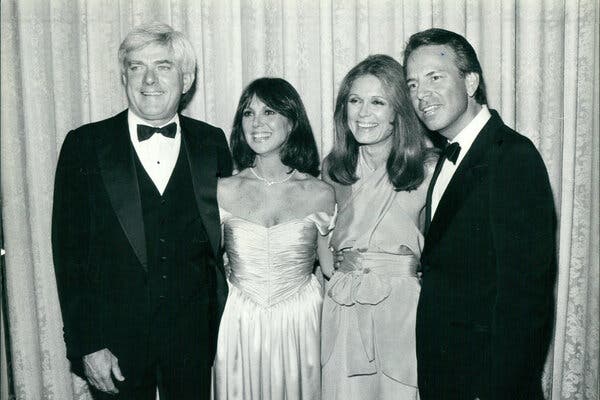
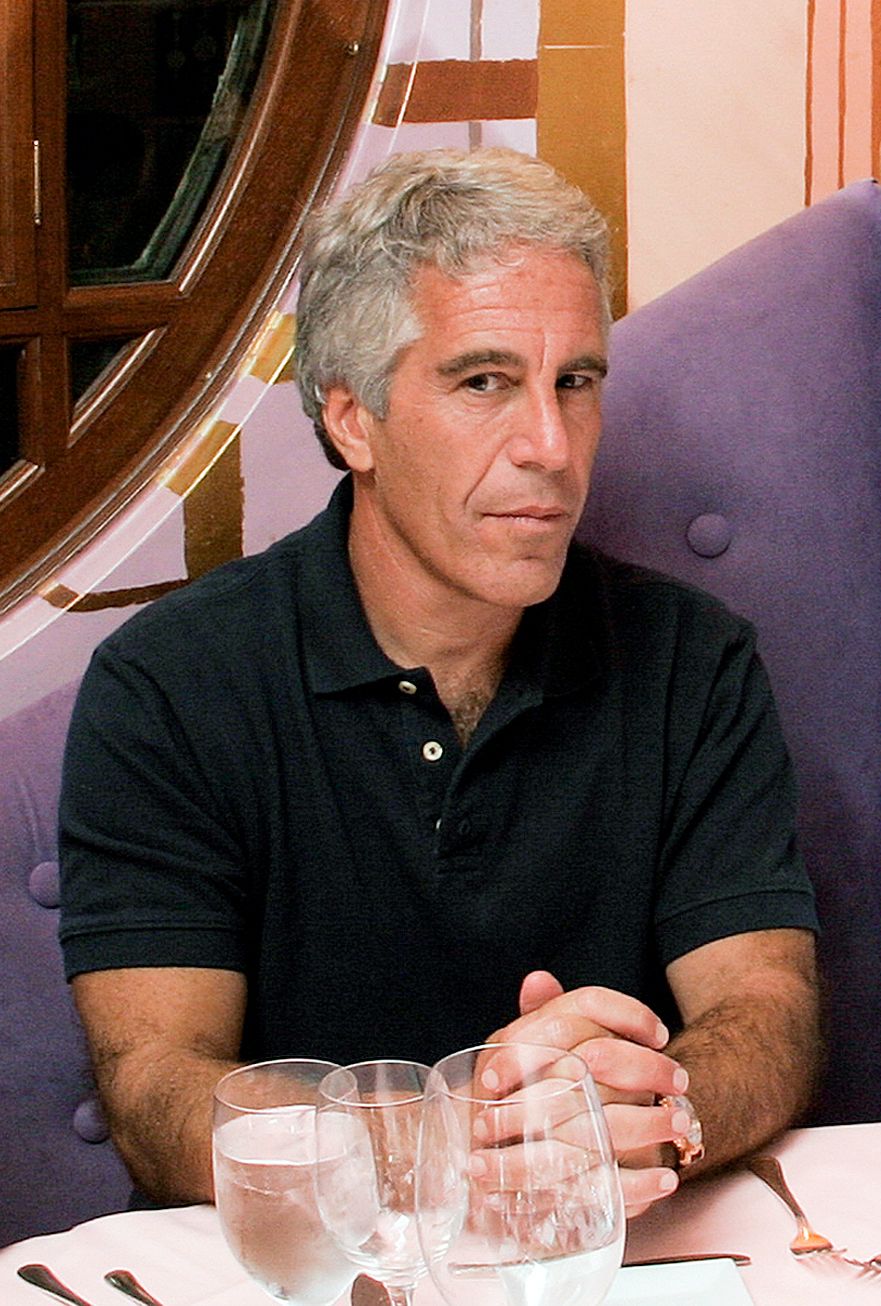
Pottinger continued to lay low until 1987, when his good friend, George H. W. Bush, was in a better position to protect him. In 1990, Jeffrey Epstein and Stanley Pottinger purchased houses in Palm Beach, 500 meters apart from each other.
This made Pottinger and Epstein both former CIA arms smugglers and neighbors. They would continue living a stone’s throw from each other for the next three decades. Before the Edwards Pottinger law firm was created to represent victims of Epstein, Stan had been working for David Boies in the same building as Jeffrey Epstein’s main legal team. In fact, David Boies’s phone number had been found on a Post-it note in Jeffrey Epstein’s dust bin during the first raids on his Palm Beach property.
Pottinger never mentioned his association with Jeffrey Epstein in any official record.
John Stanley Pottinger died on November 27, 2024.

CovertAction Magazine is made possible by subscriptions, orders and donations from readers like you.
Blow the Whistle on U.S. Imperialism

Click the whistle and donate
When you donate to CovertAction Magazine, you are supporting investigative journalism. Your contributions go directly to supporting the development, production, editing, and dissemination of the Magazine.
CovertAction Magazine does not receive corporate or government sponsorship. Yet, we hold a steadfast commitment to providing compensation for writers, editorial and technical support. Your support helps facilitate this compensation as well as increase the caliber of this work.
Please make a donation by clicking on the donate logo above and enter the amount and your credit or debit card information.
CovertAction Institute, Inc. (CAI) is a 501(c)(3) non-profit organization and your gift is tax-deductible for federal income purposes. CAI’s tax-exempt ID number is 87-2461683.
We sincerely thank you for your support.
Disclaimer: The contents of this article are the sole responsibility of the author(s). CovertAction Institute, Inc. (CAI), including its Board of Directors (BD), Editorial Board (EB), Advisory Board (AB), staff, volunteers and its projects (including CovertAction Magazine) are not responsible for any inaccurate or incorrect statement in this article. This article also does not necessarily represent the views the BD, the EB, the AB, staff, volunteers, or any members of its projects.
Differing viewpoints: CAM publishes articles with differing viewpoints in an effort to nurture vibrant debate and thoughtful critical analysis. Feel free to comment on the articles in the comment section and/or send your letters to the Editors, which we will publish in the Letters column.
Copyrighted Material: This web site may contain copyrighted material the use of which has not always been specifically authorized by the copyright owner. As a not-for-profit charitable organization incorporated in the State of New York, we are making such material available in an effort to advance the understanding of humanity’s problems and hopefully to help find solutions for those problems. We believe this constitutes a ‘fair use’ of any such copyrighted material as provided for in section 107 of the US Copyright Law. You can read more about ‘fair use’ and US Copyright Law at the Legal Information Institute of Cornell Law School.
Republishing: CovertAction Magazine (CAM) grants permission to cross-post CAM articles on not-for-profit community internet sites as long as the source is acknowledged together with a hyperlink to the original CovertAction Magazine article. Also, kindly let us know at info@CovertActionMagazine.com. For publication of CAM articles in print or other forms including commercial internet sites, contact: info@CovertActionMagazine.com.
By using this site, you agree to these terms above.
About the Author

Johnny Vedmore is a Welsh investigative journalist and the founder of NEWSPASTE.com, where he writes detailed exposés on intelligence-linked actors such as Jeffrey Epstein, Nicole Junkermann, J. Stanley Pottinger, Peter Thiel, Klaus Schwab, Elon Musk, Henry Kissinger, and many more.
Johnny prides himself on breaking stories and revealing previously unknown information. Vedmore was the first to reveal Epstein’s close relationships with Elon Musk, Nicole Junkermann and J. Stanley Pottinger. He was the first to reveal Klaus Schwab’s CIA training under Henry Kissinger, his father’s work on the Nazi atomic bomb program, and Schwab’s involvement in the illegal proliferation of nuclear technology in apartheid South Africa on behalf of the CIA.
Johnny Vedmore is also a musician, podcaster, quiz show host and public speaker. He has previously written for NEWSPASTE, UnlimitedHangout with Whitney Webb, and UKColumn. You can find Vedmore on Substack, Patreon, YouTube, X, and most other platforms.
Johnny can be reached at johnnyvedmore@gmail.com.