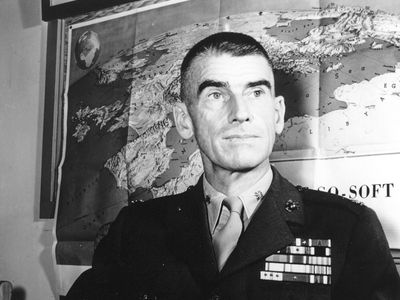
“[Evans Carlson] would be a voice in the wind…warning without being heard as the…hopeful wartime alliance [between the United States and China] spiraled into disaster…. In the transpacific world we inhabit today…we are still paying the price for what happened at the end of World War II. And Evans Carlson saw it coming.”
—historian Stephen R. Platt.[1]
In all fields of human endeavor, there have always been unsung activists who do not get much attention. In the military field, we can look to Smedley Butler and Evans Carlson as examples.
Fairly well known in their lifetimes, both men were officers in the U.S. Marine Corps and played active roles—albeit different kinds of roles—in armed interventions in the Global South. In comparison, Butler was better known for a longer time, to say nothing of being from a well-connected political family (for years, Butler’s father was an influential congressman).
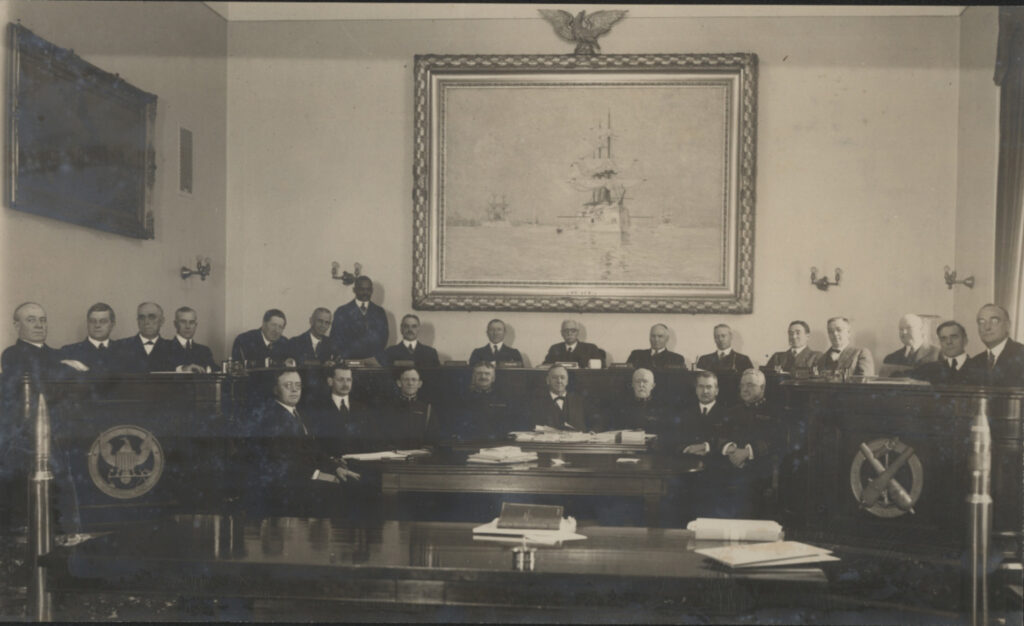
Born in 1881, Butler took part in America’s “small wars” in the early 20th century, beginning as a second lieutenant in Cuba in 1898. Despite not attending the Naval Academy, he was active in Central America, the Caribbean and China over the next three decades. Highly decorated yet considered “eccentric,” he became a vocal critic of U.S. foreign policy after his retirement in the early 1930s and before his death in 1940. Not really a leftist in ideological terms, he called himself a believer in “our democratic institutions.”
Over the past generation, Butler has been making something of a comeback among historians and some sections of the public.
About 15 years Butler’s junior, Carlson worked for the general in both the continental United States and in China during the 1920s as a second lieutenant. Also not a Naval Academy graduate, he nevertheless came to the notice of President Franklin Roosevelt for his military intelligence work in China when he met Chinese Communist Party leaders. He was greatly impressed by Communist guerrilla tactics used against Japanese forces.
At the start of World War II, when military and civilian leaders in the U.S. were desperately seeking victories, however small, they allowed Carlson to lead a commando unit in the Pacific modeled after what he saw in China.
But as soon as the tide of war began shifting, Carlson quickly fell from favor. The time between his retirement in 1944 and his death three years later saw the destruction of his reputation during the early days of the Second Red Scare.
While misperceptions about Butler and Carlson grew after their deaths, the situation is still very acute in Carlson’s case. Carlson’s ideas, which he shared publicly when he was still in uniform, earned him powerful enemies. This is why details about Carlson are hard to come by today. But his name keeps popping up in reference to special operations warfare.
A few cases suffice. A video produced by Naval Academy History Productions, run out of the U.S. Naval Academy’s History Department, portrays the “commando raid” led by Carlson on a Japanese-held island in the Gilbert Islands during the Pacific War as a success. But what is not acknowledged is that the attack failed to dislodge the Japanese garrison.
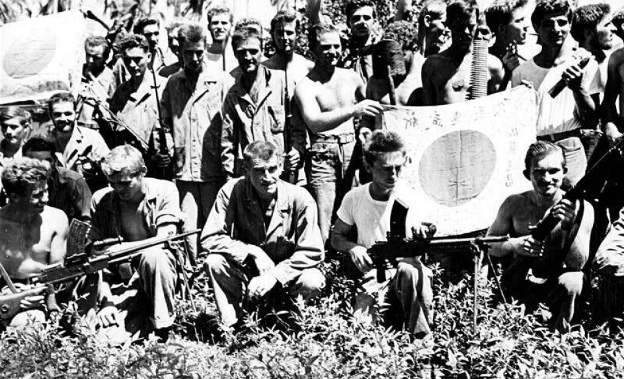
An entry about Carlson on the website of the Marine Corps University, an educational institution for Marine Corps staff, reports that he led a unit called “the Raiders” during the Pacific War. Several things crucial to an understanding of Carlson’s significance go unmentioned, like his pre-war contact with FDR.[2]
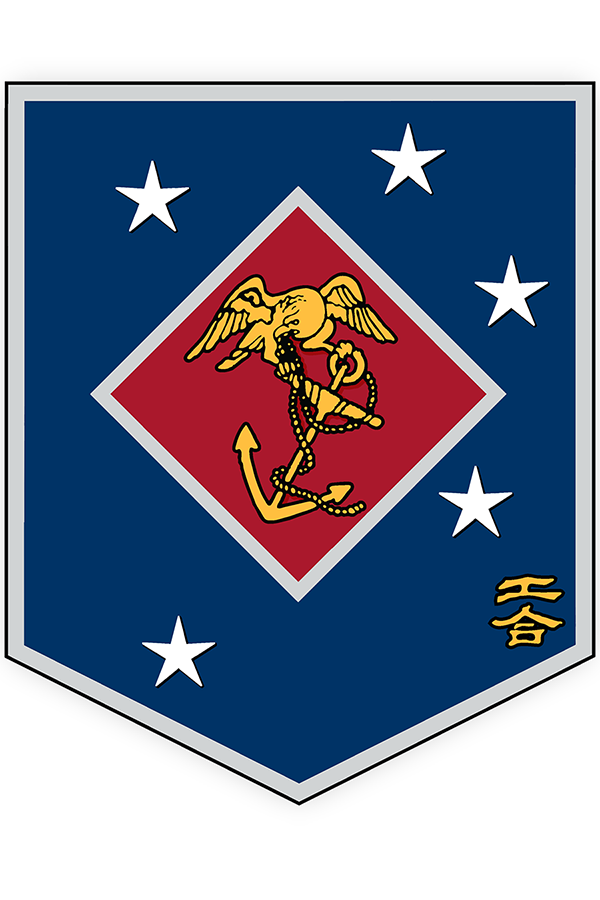
Readers are informed on the website of the Marine Special Operations Command that Carlson was stationed in China during the 1930s when he became convinced that “guerrilla warfare was the wave of the future.” Although Carlson was indeed in China before the Pacific War, the anonymous author does not explain what was controversial about the influences on his ideas or why the Marines were in China.
(Established in 2006 as an adjunct to the U.S. Special Operations Command, MARSOC possesses a combat unit named the “Marine Raider Regiment” in direct reference to Marine commando units during the Pacific War.)
The problem with all this is that both the nature of U.S. irregular warfare and U.S.-China relations today are far removed from what Carlson hoped they would become.
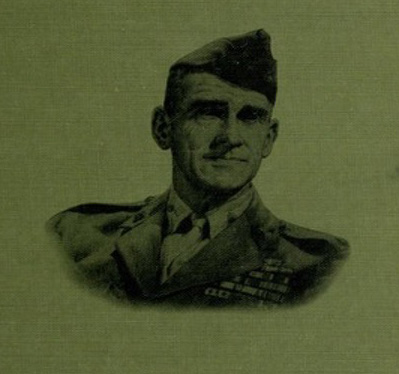
Carlson was even badly served by seemingly positive publicity when he was alive. Published just before his death in 1947, a biography of him reads more like a historical novel than a work of historical research. While arguing Carlson was ahead of his time in military thought, Michael Blankfort, a screenwriter by trade, portrayed the New Englander as a paragon of virtue.[3] Such an approach oversimplifies topics that deserve rigorous analysis.
Although Blankfort acknowledged Carlson’s difficulties with Marine Corps brass, that not- insignificant detail has been conveniently lost to military history enthusiasts.
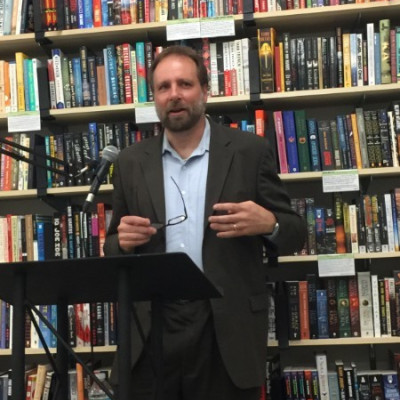
Stephen R. Platt, a historian of modern China based at the University of Massachusetts, Amherst, Stephen R. Platt attempts to right popular misperceptions about Carlson in The Raider: The Untold Story of a Renegade Marine and the Birth of U.S. Special Forces in World War II. Platt delves into the influence that Chinese Communist fighters had on Carlson’s ideas about warfare.
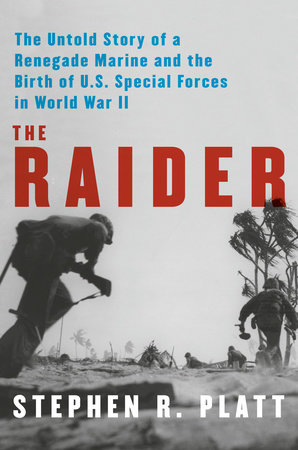
The Raider argues that Carlson was a highly decorated “maverick in the truest sense of the word,” both intellectually and professionally.[4] Carlson did not graduate from high school but was a life-long reader of Ralph Waldo Emerson. He rose to brigadier general but was popular among his soldiers and unpopular among many of his superiors. Seeking to adapt Chinese Communist war-fighting doctrine to training his Marines is what cemented his reputation as an outsider.
China Marine
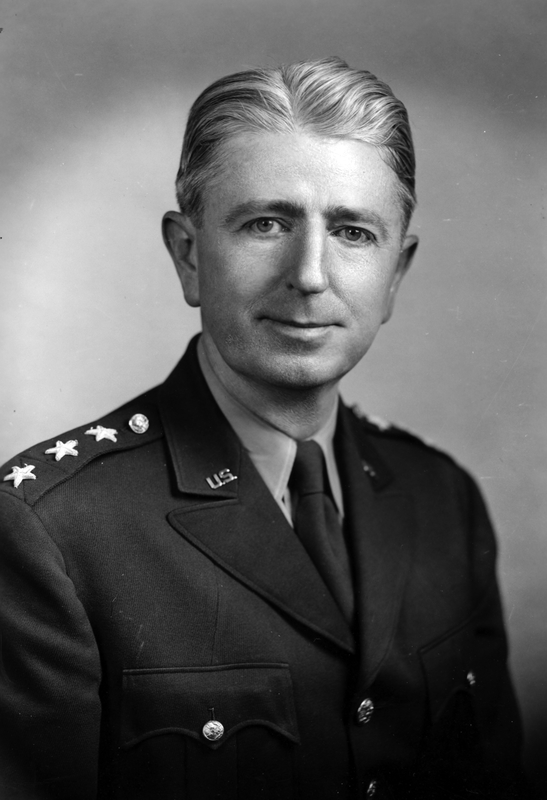
Unlike Smedley Butler, Evans F. Carlson did not have auspicious beginnings. Born the son of a poor Congregationalist minister in 1896, Carlson grew up in rural Vermont. He dropped out of high school to join the Army and was stationed in the Philippines and Hawai’i. He was behind the lines in France during World War I, and on General John Pershing’s staff in the Rhineland afterward.
Discharged as a captain in 1919, Carlson became a traveling salesman in Montana. Dissatisfied with civilian life, he joined the Marines as a private in 1922. After graduating from officer’s candidate school, he took up duty purchasing draft animals for Butler, then commander of the Marine base in Quantico, Virginia. Butler thought Carlson was “a hell of a good officer” held back by a “wretched system of promotion.”[5]
Meanwhile, China was mired in civil war pitting Sun Yat-sen’s reformist Kuomintang against regional rulers following the collapse of the Qing Dynasty in 1911. Several months before the KMT’s military wing under Chiang Kai-shek captured northern China in 1928, he had ordered a massacre of his Communist rivals at their Shanghai headquarters.
With civil war against the KMT under way, the CCP re-established itself in northern Shaanxi Province by 1935 with Mao Zedong as one of its main leaders. He would assert full control over the Party and cement the process of stamping Chinese Communism with his persona seven years later during the so-called “Rectification Campaign.”[6]
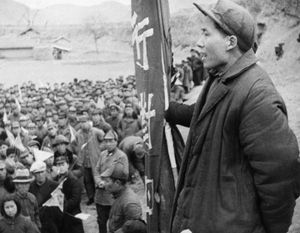
So it was that Lieutenant Carlson accompanied elements of the Fourth Marine Regiment under Butler’s command to Shanghai’s International Settlement in 1927 to protect resources controlled on the ground by U.S.-based corporations like the Standard Vacuum Oil Company during Chiang’s Northern Expedition. The “China Marines” stayed for the Japanese invasion of the Republic ten years later. Carlson remained in China, off and on, for 11 years.[7]
Although this form of neo-colonialism was justified in the framework of the three decades-old Open Door Policy, U.S. gunboats had been cruising the Yangtze River and “treaty ports” on the coast since the 1850s. Carlson perceived that the Chinese masses resented the “extraterritorial rights” forced from the Qing and the Republic ever since that time. What he saw in the late 1920s influenced his later ideas about the U.S. presence in China.
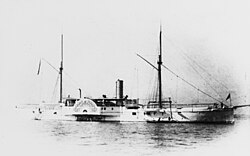
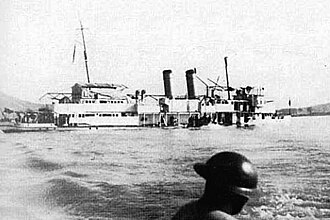
As military intelligence head for the Shanghai Marines, Carlson had no experience or resources to speak of. He was frustrated by misleading KMT information about the Communists. It was nevertheless the beginning of a long-lasting interest with the CCP’s military potential.
Parallelling Butler’s activities in Haiti and Philadelphia during and after World War I, Carlson worked with the Nicaraguan Guardia Nacional from 1930 through 1932, tasked with crushing insurgents led by Augusto Sandino. After fighting guerrillas in the mountains, Carlson became Managua’s police chief.
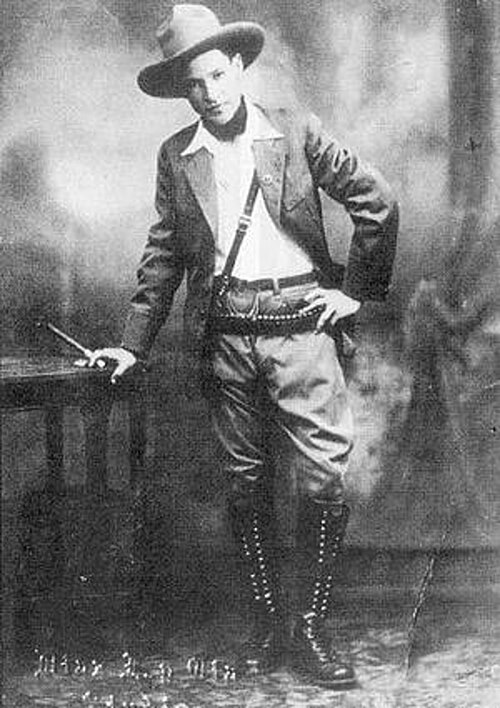
Based on his experiences in Nicaragua and as a member of the Legation Guard in Beijing during the mid-1930s, Carlson deepened his respect for the Chinese people. He also started to show an appreciation for guerrilla warfare.
Another crucial episode in Carlson’s military career was when he studied international affairs at George Washington University in the mid-1930s. On holidays, he was in FDR’s guard detail at Warm Springs, Georgia. FDR often quizzed Carlson about his impressions of China, finally asking him to send secret reports back when he would return to China, particularly regarding the Japanese.
Carlson’s return to China coincided with the start of the Second Sino-Japanese War on July 7, 1937. He saw the bombing of Shanghai from his ship on the Yangtze River.
The latest Japanese invasion of China was a process begun in 1931when the Kwantung Army established “Asian-style fascism” in Manchuria as an adjunct to Japanese imperialism.
Japanese imperialism foregrounded severe contradictions: On the one hand, the drive to colonize China challenged Western neo-colonialism; on the other hand, the “nationalist” Chiang clung to power at all costs instead of joining with his Communist rivals to decisively break Japanese influence, a goal the Communists had despite reservations (they were pressured by Soviet dictator Joseph Stalin, wanting a strong KMT to protect the Soviet flank in East Asia).
Attached to the Naval Attaché’s Office at the U.S. Embassy in Nanjing, Carlson could travel around the country and witness this situation. He did so at FDR’s behest. He managed to get official permission to visit the field headquarters of the CCP’s Eighth Route Army at Xi’an in north-central Shaanxi Province.
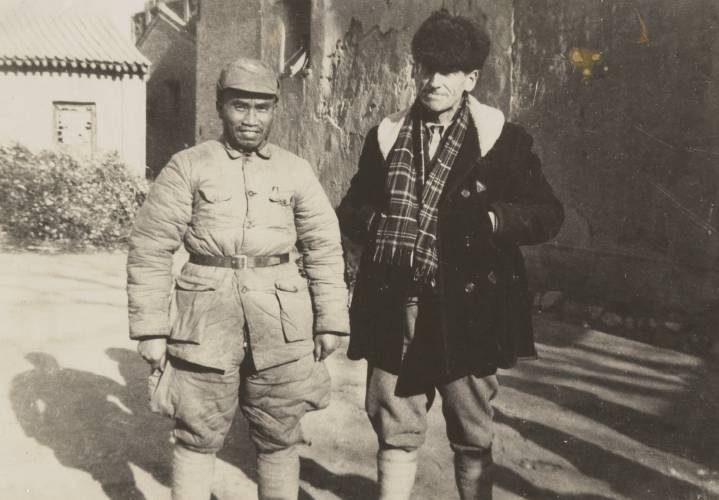
Carlson met Eighth Route Army Commander Zhu De in December 1937. Having similar life experiences as poor boys who joined the army when they were underage and who never attended college, they hit it off from the start.
Although Japanese forces had already captured much of Shaanxi, the Eighth Route Army controlled the countryside, using hit-and-run tactics against the occupiers. Carlson was favorably impressed by what he saw on the battle front.
In 1938, Carlson proceeded to the temporary Communist capital at Yan’an in isolated northern Shaanxi. He met Mao, then well on the way to becoming a dominant force in the CCP. Although Mao struck him as a deep thinker, Carlson did not feel the warmth exuded by Zhu.
Carlson also met Chou Enlai, chief diplomat of the future People’s Republic of China, and befriended journalist Agnes Smedley, who was conducting her own research in Yen’an.
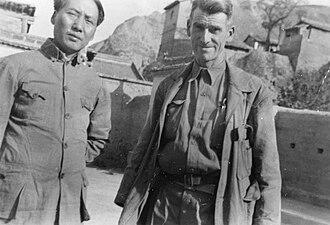
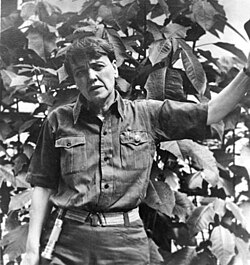
Returning to KMT territory months later, Carlson sent his reports to FDR, yet chafed under the embassy’s media restrictions.
Carlson was sympathetic to the Communists but not because he was a socialist or understood Marxist ideology. He tended to oversimplify class relations and geopolitics, reducing them to romantic and downright ahistorical notions. He idealized the Chinese Communists as “Liberal Democrats” and compared the CCP’s resistance against Japan with the American Revolution.[8]
Carlson had his naïve spots. Concerning the KMT, he saw guerrilla warfare as an important component in defeating Japanese aggression, but he nevertheless was “doggedly favorable” to Chiang, affirming in reports to FDR that there were merely bad apples in the KMT regime.[9]
On one occasion, Carlson met a young Deng Xiaoping, then a political commissar on Chu’s staff. After Deng mentioned in passing that a large share of imports to Japan from the United States included war materiel, Carlson was shocked. He recorded in his diary “Can this be true?”[10]
What is surprising is that, as a military intelligence officer, he was not already aware of this.
Some U.S. officials, like Military Attaché Joseph Stilwell and Harry Yarnell, commander of the Asiatic Fleet, nevertheless appreciated Carlson’s intelligence work.
After reading Carlson’s glowing pre-war reports on the Eighth Route Army, Colonel Stilwell remained skeptical about its military potential. But he had a good opinion of Carlson, calling him “Captain Courageous.” In addition, Stilwell’s own intelligence reports portrayed the Chinese Communists as committed to a “mild form of socialism.”[11]
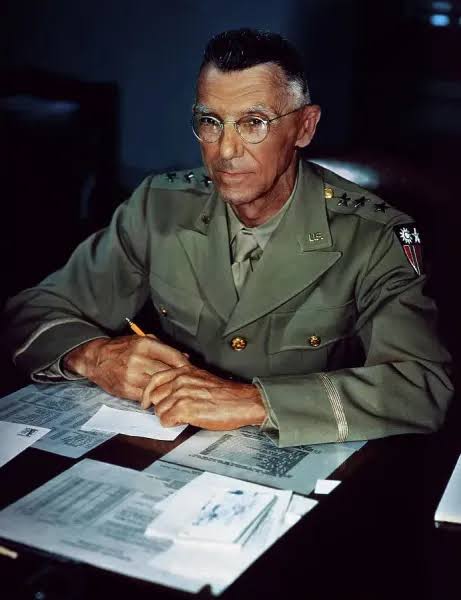
Still, Carlson had few illusions when it came to war itself. After seeing Nationalist soldiers leave on trains for the front in April 1938, he wrote in his diary, “It gets under my skin to see these youngsters—so full of enthusiasm, going off to the slaughter….I have seen so much death.”[12]
Carlson resigned his active-duty commission in the Marine Corps so that he could express himself freely. He became a speaker for the middle-of-the-road American Committee for Non-Participation in Japanese Aggression. Chaired by Wall Street lawyer Henry Stimson, this group’s main goal was to increase public support for an embargo on Japan.[13]
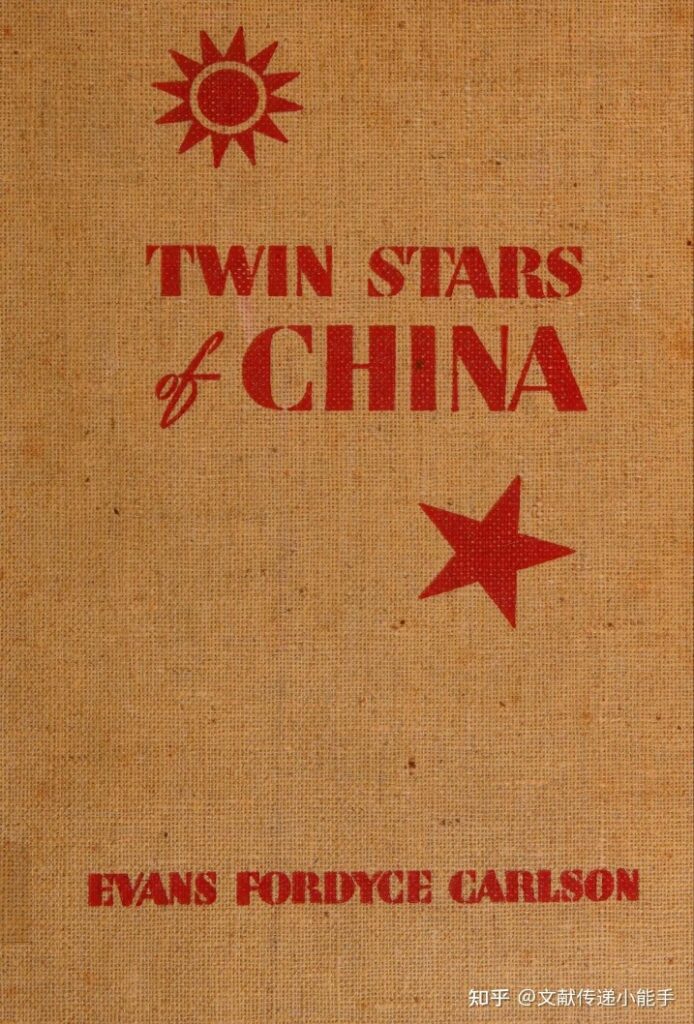
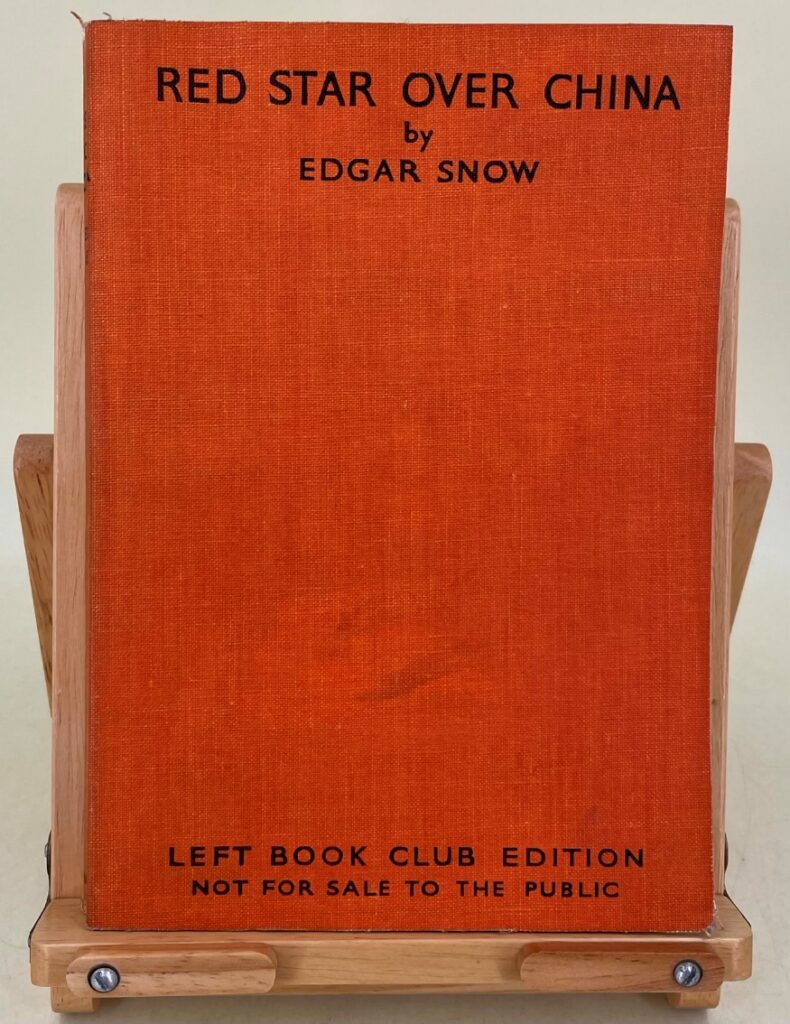
In 1940, two books by Carlson were published by the Institute of Pacific Relations (IPR). One was about the military situation in China. Twin Stars of China, modeled after the popular Red Star Over China, written by Carlson’s friend Edgar Snow, was specifically based on Carlson’s experiences on the road. In this “incredibly optimistic book,” Carlson argued that a united front between the KMT and the CCP was crucial to China’s defense against Japanese aggression.[14]
Pacific Commando
Carlson returned to active duty in the Marine Corps as a major several weeks before Japanese naval and air forces attacked U.S. colonial possessions in the Pacific in December 1941.
While Carlson had been thinking for years about a democratic fighting organization that could be a model for the U.S. armed forces, to frame this as a desire for an “elite” formation misreads his intentions. Rather, he had a “dream of building an American counterpart to the Eighth Route Army” in which soldiers, officers and enlisted alike, would critically analyze the conduct of any given mission together.[15]
The term that Carlson devised to represent this, gung ho (“work together”), would become a fixture in the English language. But the philosophy behind it, which Carlson also called “ethical indoctrination,” is little understood today. This is because Marine Corps brass in the 1940s found the concept unacceptable at face value. As Platt notes, senior Marine leaders considered his democratic inclinations and reliance on teamwork inimical to the core principles of the Marine Corps.
Worst of all, Carlson’s notions were, in the words of Omar Pfeiffer, “communist doctrine.”[16] Pfeiffer was the senior Marine on the staff of Admiral Chester Nimitz, Commander in Chief of the U.S. Pacific Fleet.
In the ranks, there was support for Carlson. A popular saying among Marines, attributed to Colonel David Shoup after seeing Carlson and his men in combat on Tarawa in 1944, was that “Carlson may be Red but he’s not yellow.”[17]
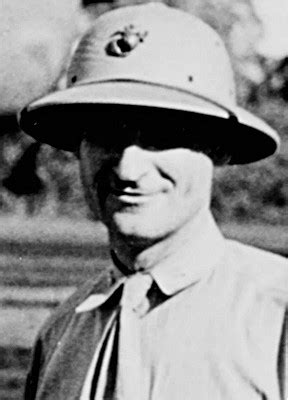
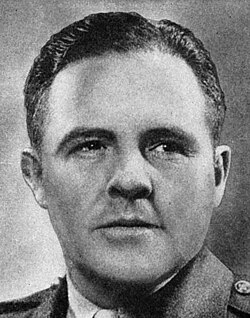
However, Carlson’s ideas did partially materialize due to backroom discussions already in play. Following recommendations from British Prime Minister Winston Churchill to FDR that a U.S. commando force be developed, Coordinator of Information William “Wild Bill” Donovan (later head of the Office of Strategic Services) and Marine Corps Commandant Thomas Holcomb vied for control of it.
While none of these men was favorably inclined to the goals of partisan warfare, that is, national liberation from imperial powers, Holcomb nevertheless won the argument, in no small part due to the influence of FDR’s son, James Roosevelt. In fact, at the time Captain Roosevelt and Carlson were working together in an intelligence unit near San Diego.
Formed in February 1942, “Carlson’s Raiders” was one of two battalions in a Marine Raider Regiment directly answerable to Admiral Nimitz. James Roosevelt was Lieutenant Colonel Carlson’s executive officer.
That August, Nimitz authorized part of Carlson’s battalion to raid Japanese-occupied Butaritari (aka Makin Atoll), a small island in the Gilbert Islands. Although the raid achieved little in military terms, it was the second U.S. offensive operation in the Pacific War after “Doolittle’s Raid” over Tokyo. Hyped as a success by The New York Times and Time magazine, the Makin attack made Carlson one of the first heroes of the war in domestic public opinion.
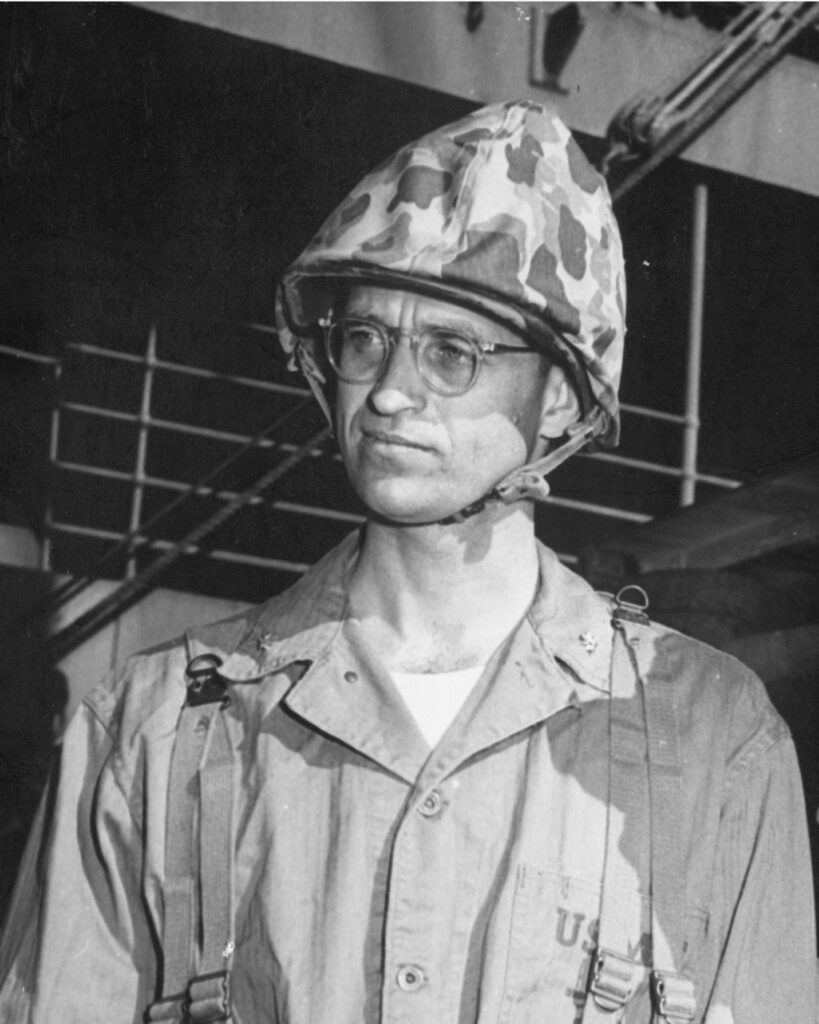
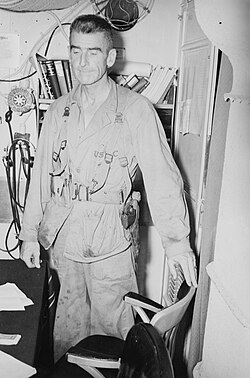
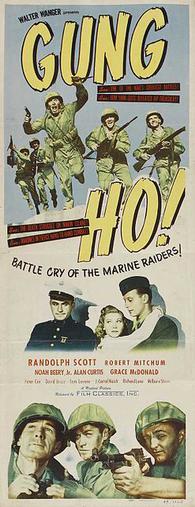
When Carlson was on leave in 1943 after leading the “long patrol” guarding the perimeter of the main U.S. airfield on Guadalcanal, the Navy Department allowed him to be technical adviser on the Universal Studios set of Gung Ho! Portraying the Makin Raid as a victory, the film’s simplistic propaganda and racist tropes made it typical Hollywood fare.
By the time Gung Ho! reached movie theaters, Carlson was already back in the Pacific. There were no other commando raids by Carlson’s unit. Instead, it supported larger operations in the Central Pacific as conventional light infantry.
When the Raiders were reorganized as a regiment directly under Marine Corps control, with Carlson promoted to brigadier general, he knew the Raiders’ days were over. He died physically broken three years after retiring from the Marines in the summer of 1944 (he had been grievously wounded during the invasion of Saipan).
The Loss of China
Although U.S. and British policymakers treated China as a backwater, Chongqing was the sole recipient of U.S. aid in the country during the Pacific War.[18] Yet an increasing number of U.S. officials on the ground, including Major General Stilwell, saw the Nationalist regime as fascistic and endemically corrupt.
Besides being Chiang’s chief of staff, Stilwell commanded the China-Burma-India Theater. His tenure in these positions was marred by conflicts with KMT and British authorities. Stilwell’s replacement in 1944 was Albert Wedemeyer, an Army general backed by China Lobby interests in the United States.
While supporting the Nationalists, the FDR administration made a half-hearted overture to the CCP by establishing a U.S. Army Observation Group in Yan’an in 1944. FDR also appointed Oklahoma Republican lawyer Patrick Hurley as a “special Presidential envoy” to CCP leadership.
As veteran British journalist Jonathan Fenby puts it, Hurley let out “an American Indian war cry of ‘Yahoo!’” when he met Mao and Zhu at the airfield in Yan’an. Not surprisingly, Hurley accomplished little during his visit.[19]
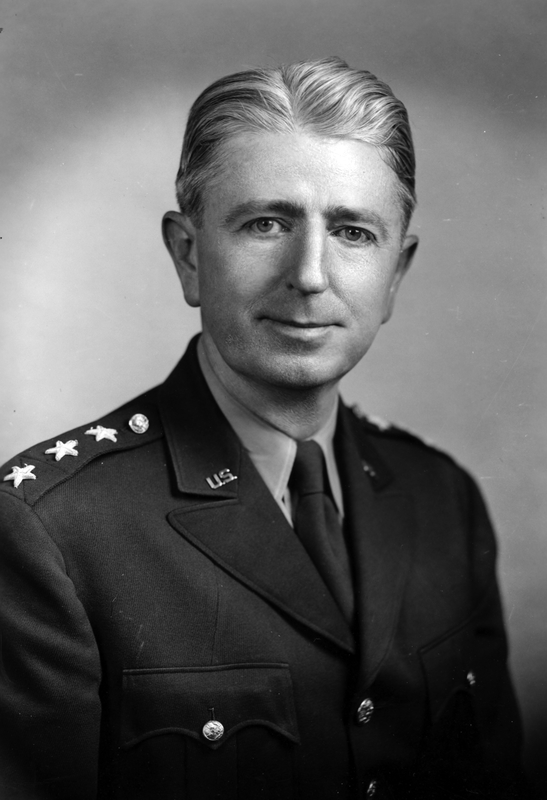
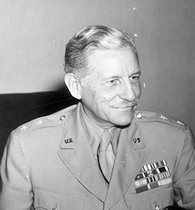
The Truman administration favored Chiang over the CCP after the Japanese defeat in 1945; the CCP was enjoying increased domestic popularity. Although President Harry S. Truman and Secretary of State George Marshall would place conditions on their support of Chiang inside China over the coming three years, the outcome was almost pre-ordained: An unconditional CCP victory over the KMT on the Mainland and Chiang’s retreat to Taiwan.
In the beginning of this period, Carlson followed as much of these developments that he had knowledge of from the Naval Hospital in San Diego. By the time FDR died in April 1945, Carlson believed that Chiang’s regime was a disaster. “I fear for things in China now,” he wrote to Edgar Snow.[20]
Between then and his death from heart disease on May 27, 1947, Carlson did not fade away of his own account. He became a harsh critic of the Truman administration’s China policy.
At one time, Carlson contemplated running for the Senate but never went through with it.
Although Mao had been disposed to cultivating good relations with the United States during the war, Carlson was unaware of Mao’s consolidation of power (this is a valid criticism of the Raider’s misreading of Chinese Communism). But Carlson was learning not to be naïve about the Truman administration’s desire to prop up Chiang to secure the “economic domination of Eastern Asia by American industrial interests.”[21]
Two days before Carlson died, he was visited by former Vice President and Commerce Secretary Henry Wallace. Fired by Truman for public opposition to the Cold War, Wallace would run in the 1948 presidential election on the Progressive Party slate but was trounced in the general election, having been pilloried in the corporate press and excluded from primary races in the South.
As FDR’s war-time vice president, Wallace helped to push for the establishment of the U.S. Army Observer Group. As part of a global whistle-stop tour authorized by FDR during the summer of 1944, he visited China and met with Chiang (FDR wanted to get his leftist vice president out of the country, it being election season).
However, considering Roosevelt’s unwillingness to confront the China Lobby head-on, the rationalization for the Observer Group was made strictly in military terms. Furthermore, Wallace had also called for the replacement of Stilwell by Wedemeyer.
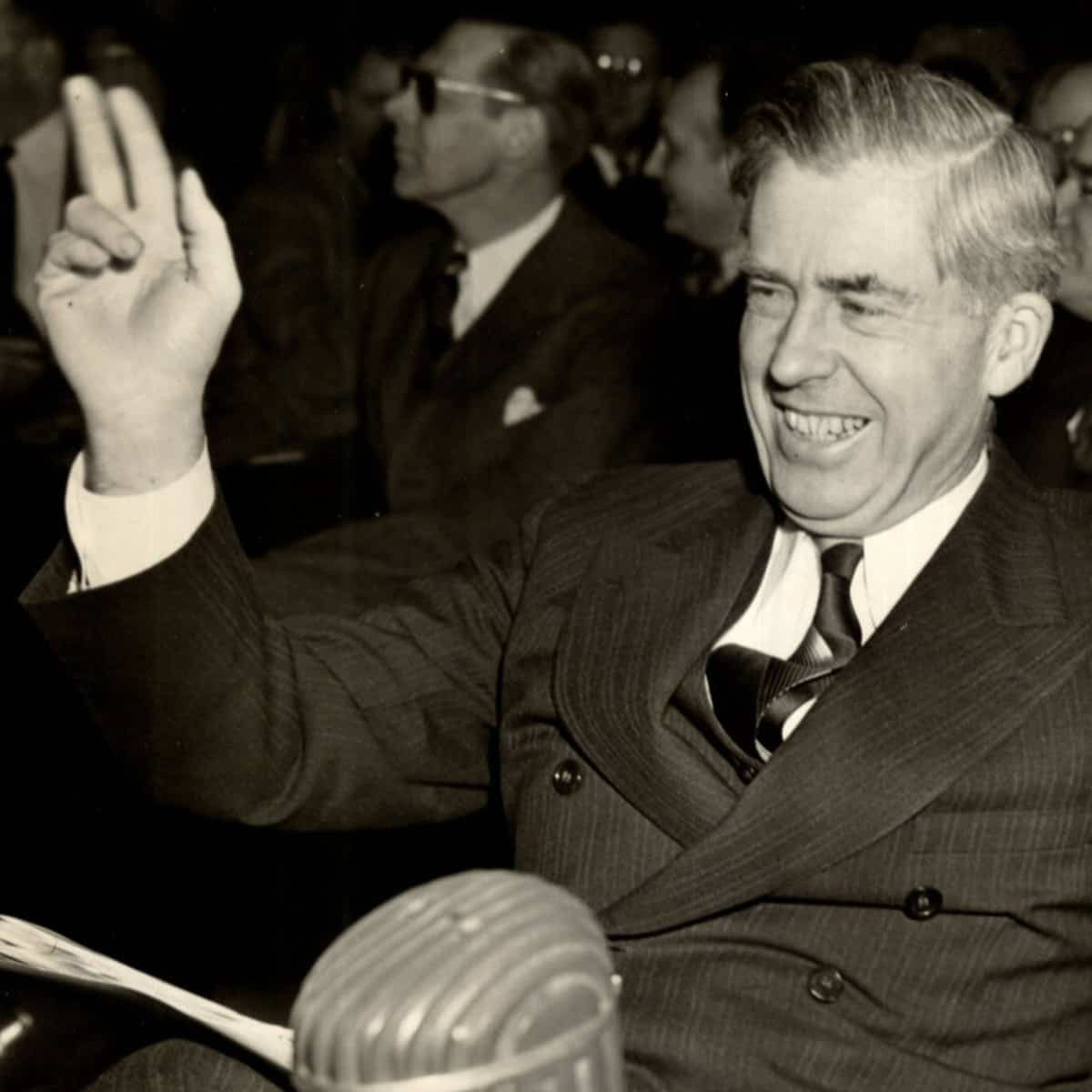
During their meeting, Carlson told Wallace that the CCP would win a civil war with the KMT that was sure to come.
Carlson was one of the first victims of the Red Scare; this treatment endured after he died despite being a highly decorated war-time hero.
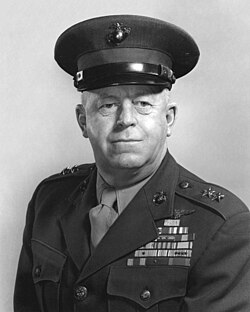
The government refused to pay for moving his remains to Arlington National Cemetery. The ceremony was sparsely attended as it was not announced ahead of time. In fact, Merritt Edson, war-time head of the First Raider Battalion, had refused the entreaty by Marine Corps Commandant Alexander Vandegrift to be on the funeral planning committee.
Although Carlson was not aware of surveillance of his “Communist tendencies” by the Federal Bureau of Investigation, Pratt points out that he “refused to play along with the Red Scare.”[22]
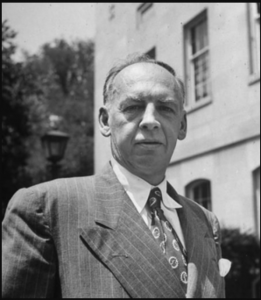
By 1950, though, Carlson was being roundly denounced in mass media publications, such as Life magazine. He and General Stilwell were denounced as Communists by professional witness Louis Budenz during the Amerasia probe chaired by Senator Millard Tydings (D-MD).
(The IPR’s Amerasia publication, in fact, formed the basis of the first post-war “espionage” investigation, which began with an OSS break-in of its offices in 1945.[23])
In 1951, Senator Joseph McCarthy (R-WI) wrote in America’s Retreat from Victory that Carlson was a “disciple” of Agnes Smedley.[24]
The Makin Raider’s widow, Peggy Tatum Carlson, lived in a financially precarious situation for the remainder of her life.
The Legacy of Evans Carlson
Carlson pointed to a more democratic and efficient form of warfare for modern industrialized society. Yet warfare has only one function there, which is to serve as the coercive arm of corporate power.
Ethical indoctrination was doomed from the start.
Another tragedy about Carlson is that, although disapproving of Western neo-colonialism in China and being a well-intentioned person, he unwittingly helped to repurpose guerrilla warfare in the service of imperialism.
This reviewer must admit that the sub-title of Platt’s otherwise excellent book is misleading. Aside from the brief commentary about bureaucratic in-fighting between Donovan and Holcomb, Platt does not undertake a comparative analysis of U.S. special operations forces during World War II.
The FDR administration and the War Department administered many decentralized special warfare units, large and small, during the conflict. The most celebrated of these formations, the OSS, ran small teams that often worked with indigenous partisans in Europe and East Asia. The OSS also trained KMT troops in China and Burma.
Platt does not refer to any of this. He also fails to examine the other Marine Raider battalion under Edson. Aside from one paragraph about an incident when Carlson rejected some of Edson’s Marines for his own unit, Platt does not go into detail about Edson’s “lifelong resentment” of Carlson—which is odd because Platt informs readers that Edson also worked in Nicaragua and Shanghai.
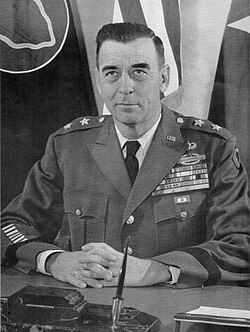
Nor was Edson the only war-time U.S. commando who held more conservative views than Carlson’s. Take, for instance, Edwin Walker, leader of a regiment in the First Special Service Force, a joint U.S.-Canadian group operating mainly in Europe. Retiring in the early 1960s, Walker gained notoriety as a radical right-wing opponent of the civil rights movement. Carlson was sympathetic to African Americans.[25]
(But nor was Carlson the only “left-leaning” U.S. officer during the war. Take West Pointer Philip Faymonville. A Red Scare target before Carlson, Brigadier General Faymonville administered Lend-Lease for the Soviets at the U.S. Embassy in war-time Moscow.[26])
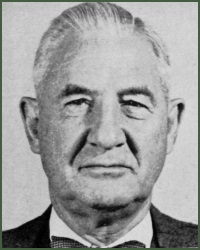
However, Platt breaks with unhelpful tendencies in the sprawling and disorganized literature about irregular forces in World War II. With comparatively few publications concerned with socio-economic factors, the overriding ideological approach reinforces ingrained notions about organized violence, nationalism and uncritical support of the status quo.[27]
Cold warriors have conducted “hard power” and “soft power” campaigns across the Global South essentially undisturbed since Carlson’s death nearly 80 years ago. Called “neo-conservatives” today, they would have been unconcerned with the intentions of a single unconventional Marine.
But Carlson’s warnings proved to be prescient, given the “new cold war” neo-conservatives have been intent on provoking for years with an increasingly powerful People’s Republic of China.
The degradation of U.S.-Chinese relations over the past generation is not a recent neo-conservative creation. Besides economic warfare, witness, for instance, the Xinhe provocation in the Persian Gulf in 1993 and the “accidental” bombing of China’s Belgrade embassy in 1999.[28]
All this is cold comfort to Evans Carlson, though. He is still turning in his grave after years of indignities visited upon him in life by superiors, civilian and military alike.

Stephen R. Platt, The Raider: The Untold Story of a Renegade Marine and the Birth of U.S. Special Forces in World War II (New York: Alfred A. Knopf, 2025), xiii. ↑
Marine Corps University article…. https://www.usmcu.edu ↑
Michael Blankfort, The Big Yankee: The Life of Evans Carlson of the Raiders (Boston: Little, Brown and Company, 1947). ↑
Platt, The Raider, xi.
Ibid., 61-62. ↑
Julia Lovell, Maoism: A Global History (New York: Alfred A. Knopf, 2019), 48. ↑
See Emily S. Rosenberg, Financial Missionaries to the World: The Politics and Culture of Doillar Diplomacy, 1900-1930 (Cambridge, MA: Harvard University Press, 1999). ↑Platt, The Raider, 171. ↑
Ibid., 194. ↑
Ibid., 193. Deng became paramount leader of the People’s Republic after Mao’s death in 1976. ↑
Barbara W. Tuchman, Stilwell and the American Experience in China, 1911-45 (New York: Macmillan, 1971), 184; Platt, The Raider, 207. ↑
Platt, Raider, 181. ↑
Formerly a cabinet-level official in the Taft and Hoover administrations, and governor of the Philippines in the late 1920s, Stimson would most famously be War Secretary under FDR and Harry Truman during World War II. ↑
Platt, The Raider, 226. Carlson referred to Yan’an as “China’s Fountainhead of Liberalism.” Evans Fordyce Carlson, Twin Stars of China: A Behind-the-Scenes Story of China’s Valiant Struggle for Existence by a U.S. Marine who Lived & Moved with the People (New York: Dodd, Mead, 1940), 154-77. Snow played a significant role in helping to raise public awareness of the CCP and its theories of guerrilla warfare in the English-speaking world. See Lovell, Maoism, 60-87. ↑
Platt, The Raider, 246. ↑
Ibid., 341. ↑
Ibid., 354. ↑
Churchill considered it “an absolute farce” to regard China as a great power. Platt, The Raider, 318. ↑
Jonathan Fenby, Chiang Kai-shek: China’s Generalissimo and the Nation He Lost (New York, Carroll & Graf, 2004), 439. See also Tuchman, Stilwell, 397, 478-79. ↑
Platt, The Raider, 374. On the Truman administration’s tolerance of opium production under the KMT in Southeast Asia after World War II, see Alfred W. McCoy, The politics of Heroin: CIA Complicity in the Global Drug Trade, rev. ed. (Chicago: Lawrence Hill Books, 2003), 122-25, 162-78. ↑
Ibid., 385. ↑
Ibid., 395. ↑
Ibid., 405-6. ↑
Ibid., 406. Notions that President Truman and his advisers were “liberal” in comparison to the McCarthyite 1950s are misguided. The Cold War developed gradually; Truman played a conscious role in the process. Concerning post-war relations with the Soviets, historian Frank Kofsky writes that “Truman and his principal assistants were guided by the precept that it was better to seem overly rigid than to look too conciliatory.” Frank Kofsky, Harry S. Truman and the War Scare of 1948: A Successful Campaign to Deceive the Nation (New York: St. Martin’s Press, 1993), 235. Meanwhile, Truman’s containment in East Asia involved open war. See Bruce Cumings, The Korean War: A History (New York: The Modern Library, 2011). ↑
Like General Wedemeyer, Walker was a vocal supporter of the John Birch Society, which took its name from a 1945 incident involving the CCP. Knowingly or not, Walker also gave testimony to the Warren Commission that helped frame Lee Harvey Oswald as a “lone nut assassin.” For a recent book on Walker, see Peter Adams, The Insurrectionist: Major General Edwin A. Walker and the Birth of the Deep State Conspiracy (Baton Rouge: Louisiana State University Press, 2023). ↑
Faymonville has a passing mention in The Big Yankee. According to Blankfort, he was among the “authorities” who received the manuscript that Carlson was writing for the IPR. Blankfort, The Big Yankee, 269.
For a few examples, see John A. Nagl, Learning to Eat Soup with a Knife: Counterinsurgency Lessons from Malaya and Vietnam (Chicago: University of Chicago Press, 2005); John Wukovits, American Commando: Evans Carlson, His WWII Marine Raiders, and America’s First Special Forces Mission (New York: NAL Caliber, 2009); Douglas Waller, Wild Bill Donovan: The Spymaster Who Created the OSS and Modern American Espionage (New York: Free Press, 2011); Mark Moyar, Oppose Any Foe: The Rise of America’s Special Operations Forces (New York: Basic Books, 2017). For more realistic works, see Daniele Ganser, NATO’s Secret Armies: Operation Gladio and Terrorism in Western Europe (London: Frank Cass, 2005; Seth Harp, The Fort Bragg Cartel: Drug Trafficking and Murder in the Special Forces (New York: Viking Press, 2025). ↑
On the “tilt-to-Asia” strategy, see Alfred W. McCoy, In the Shadows of the American Century: The Rise and Decline of US Global Power (Chicago: Haymarket Books, 2017), 214-26; Jeremy Kuzmarov, Obama’s Unending Wars: Fronting the Foreign Policy of the Permanent Warfare State (Atlanta: Clarity Press, 2019). Following world-system theory, he refers to the Chinese status in the world today as a “World System.” Alfred W. McCoy, To Govern the Globe: World Orders & Catastrophic Change (Chicago: Haymarket Books, 2021), 263-300. ↑
CovertAction Magazine is made possible by subscriptions, orders and donations from readers like you.
Blow the Whistle on U.S. Imperialism
Click the whistle and donate
When you donate to CovertAction Magazine, you are supporting investigative journalism. Your contributions go directly to supporting the development, production, editing, and dissemination of the Magazine.
CovertAction Magazine does not receive corporate or government sponsorship. Yet, we hold a steadfast commitment to providing compensation for writers, editorial and technical support. Your support helps facilitate this compensation as well as increase the caliber of this work.
Please make a donation by clicking on the donate logo above and enter the amount and your credit or debit card information.
CovertAction Institute, Inc. (CAI) is a 501(c)(3) non-profit organization and your gift is tax-deductible for federal income purposes. CAI’s tax-exempt ID number is 87-2461683.
We sincerely thank you for your support.
Disclaimer: The contents of this article are the sole responsibility of the author(s). CovertAction Institute, Inc. (CAI), including its Board of Directors (BD), Editorial Board (EB), Advisory Board (AB), staff, volunteers and its projects (including CovertAction Magazine) are not responsible for any inaccurate or incorrect statement in this article. This article also does not necessarily represent the views the BD, the EB, the AB, staff, volunteers, or any members of its projects.
Differing viewpoints: CAM publishes articles with differing viewpoints in an effort to nurture vibrant debate and thoughtful critical analysis. Feel free to comment on the articles in the comment section and/or send your letters to the Editors, which we will publish in the Letters column.
Copyrighted Material: This web site may contain copyrighted material the use of which has not always been specifically authorized by the copyright owner. As a not-for-profit charitable organization incorporated in the State of New York, we are making such material available in an effort to advance the understanding of humanity’s problems and hopefully to help find solutions for those problems. We believe this constitutes a ‘fair use’ of any such copyrighted material as provided for in section 107 of the US Copyright Law. You can read more about ‘fair use’ and US Copyright Law at the Legal Information Institute of Cornell Law School.
Republishing: CovertAction Magazine (CAM) grants permission to cross-post CAM articles on not-for-profit community internet sites as long as the source is acknowledged together with a hyperlink to the original CovertAction Magazine article. Also, kindly let us know at info@CovertActionMagazine.com. For publication of CAM articles in print or other forms including commercial internet sites, contact: info@CovertActionMagazine.com.
By using this site, you agree to these terms above.
About the Author
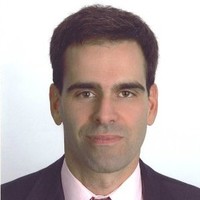
Anthony Newkirk is a high-school educator.
Besides teaching in secondary schools in Mexico City and Kuwait, he has taught on the college level in Little Rock and Philadelphia.
Anthony has written for American Communist History, Arkansas Historical Quarterly, Counterpunch, Foreign Policy in Focus, Global Research, Labour/Le Travail, and The Hill.
Anthony can be reached at newkirk1938@hotmail.com.


.jpg)
