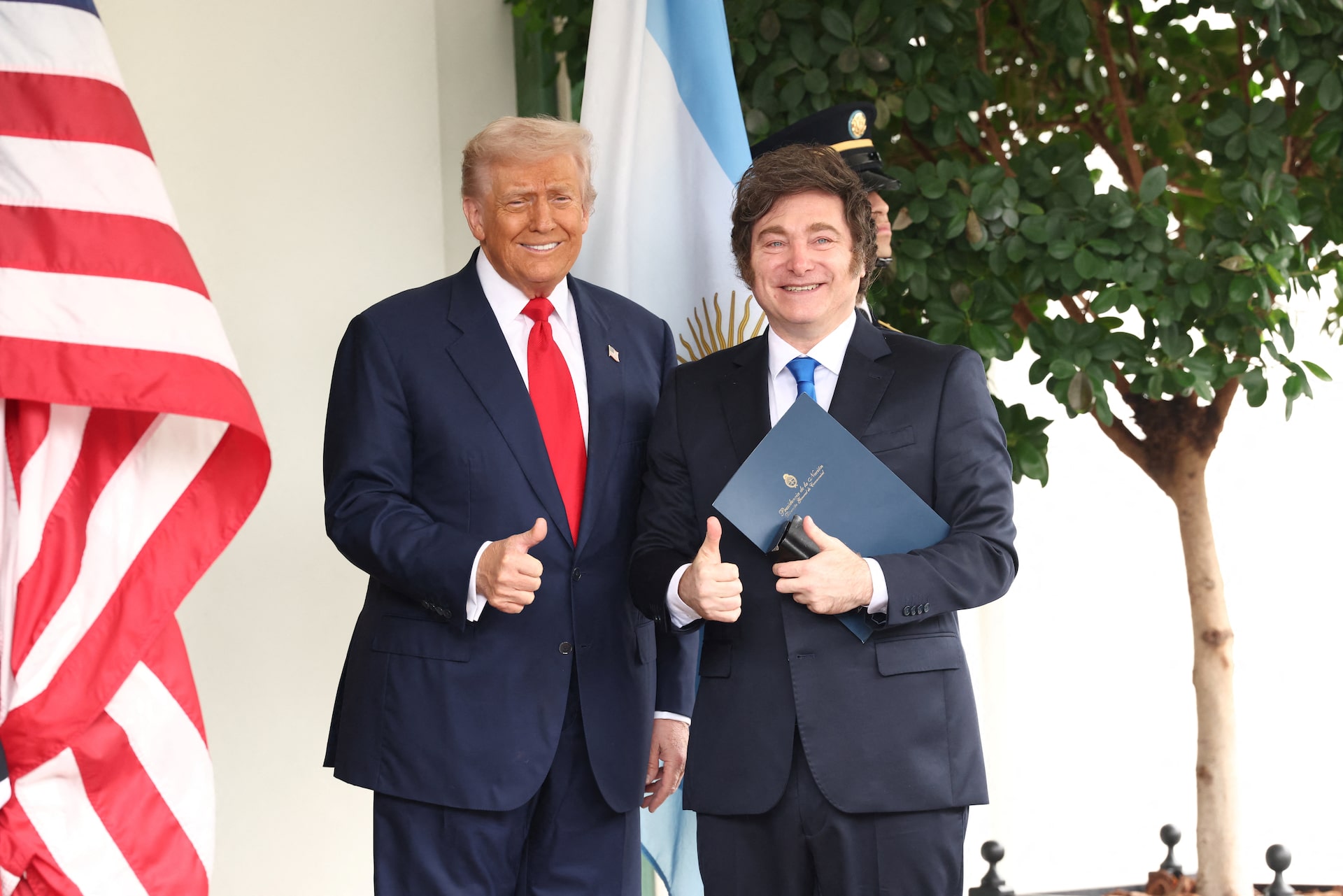
The global strategy Donald Trump has pursued since the beginning of his second term revives a formula that proved effective for much of the last century.
Treating the world as a chessboard, the old bipolar tradition of the Cold War has been redesigned to cast China as the rival power, framing international politics in the Schmittian terms of “friend versus enemy.”
Through an extraordinary increase in import tariffs on virtually every country, the tactic aimed to damage China and the states considered within its sphere of influence, while seeking to “reward” those who responded favorably to U.S. interests.
But,unlike the traditional imprint of the recent past, the present is multipolar in a political and military sense, and above all, commercial relationships now tend to promote non-lineal, non-automatic agreements among nations.
The Model Student
Argentina’s relationship with the United States has historically gone through significant swings, alternating periods of closeness with moments of coolness.
When ties warmed, Argentina—the southernmost country in the world—tended to fall in line with the course charted by the northern hegemon. That was the case in the 1970s, in the cycle of Southern Cone dictatorships with the implementation of Operation Condor, and again during the heyday of the Washington Consensus and the rise of neo-liberalism at the end of the last century.
The current time of disruptive leaders simultaneously in Argentina and the United States produced a bond between Donald Trump and Javier Milei that has drawn the two countries into a far closer alliance than the one observed decades ago.
What stands out is an alignment that looks different this time: more intense, far more automatic, and far less critical. Milei behaves like the world’s “most Trumpist president,” presenting himself as a fervent admirer of the American leader and, by extension, an enthusiastic promoter of Trump’s expansionist project.
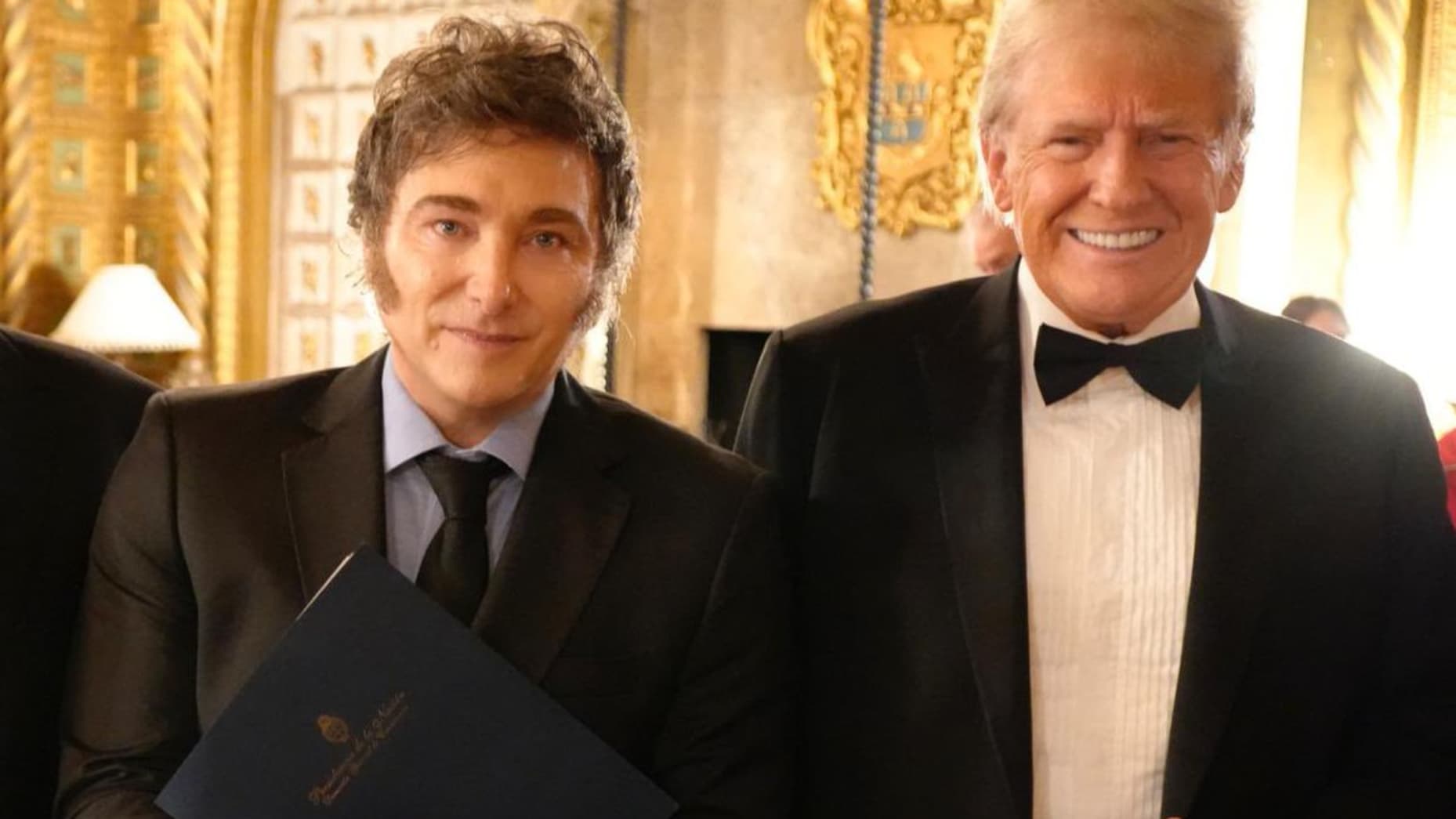
Argentina’s president has chosen the United States as his preferred destination for international visits, particularly venues where he might cross paths with Trump. Each CPAC gathering, every call from Washington like the creation of the Shield of the Americas, has become an occasion to pay tribute and present himself as a loyal follower.
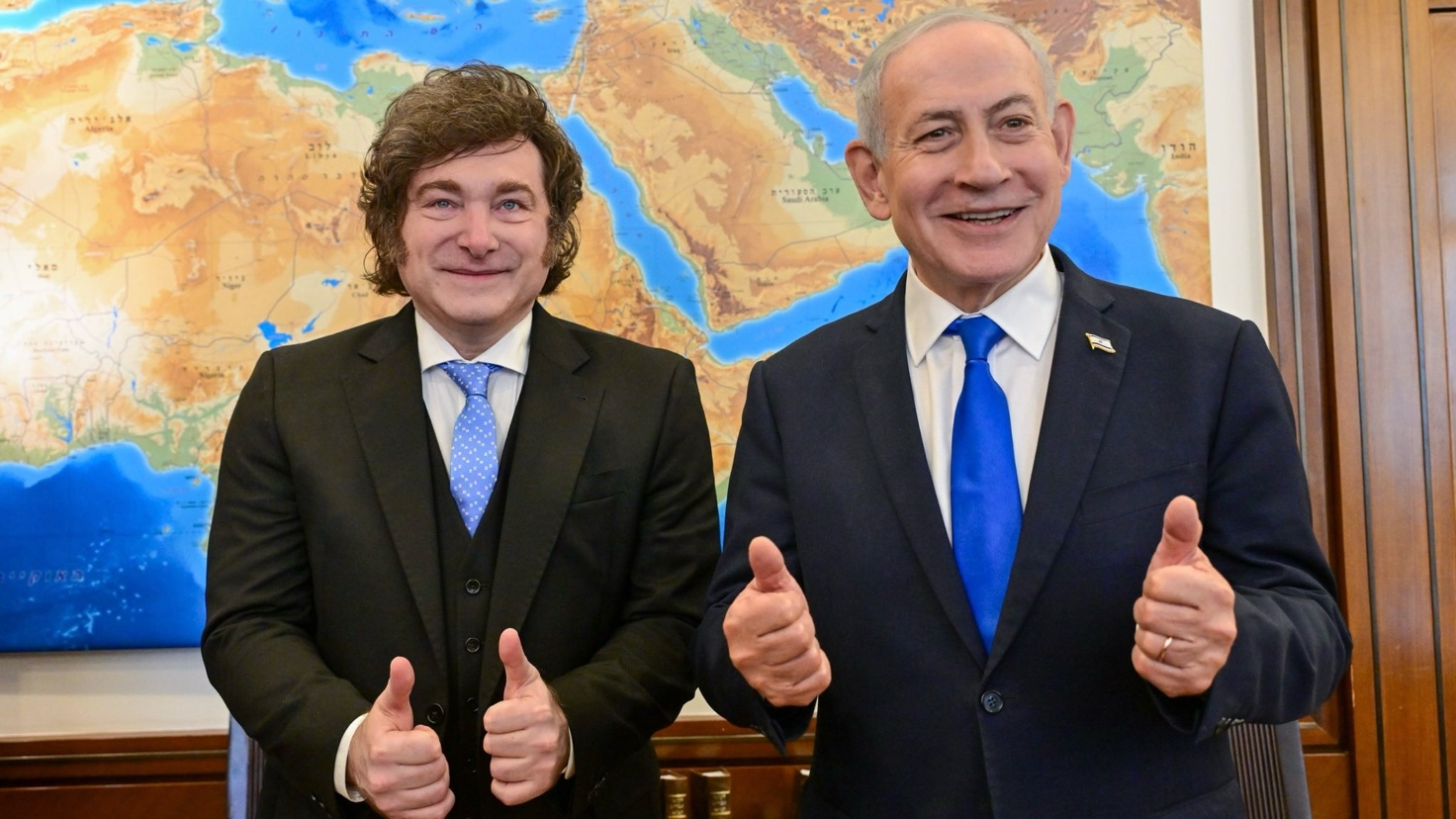
Beyond that, this pattern of falling in line with Washington, without hesitation, has clashed with Argentina’s diplomatic tradition. One example is the announced move of the Argentine embassy in Israel from Tel Aviv to Jerusalem. Then came a string of UN votes marked by breaks with long-standing diplomatic precedent: Argentina opposed ending the embargo on Cuba, and voted against a resolution aimed at eliminating all forms of violence against women.
Milei’s diplomatic posture also included standing only with Israel in Washington’s refusal to declare the transatlantic slave trade the gravest crime against humanity in history.
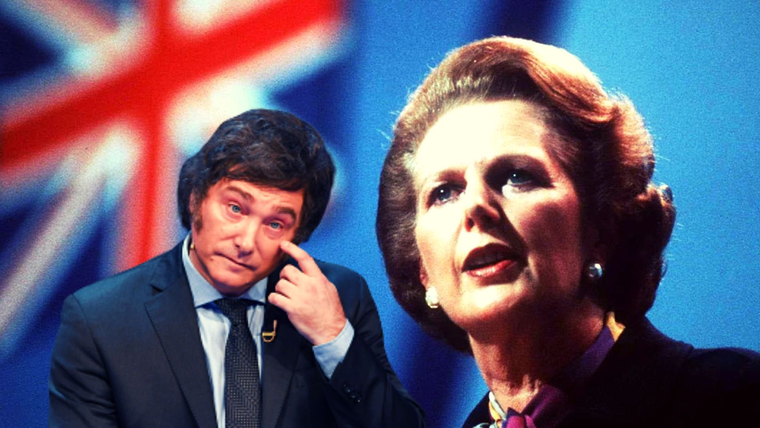
Coming from a strong admirer of Margaret Thatcher, it is hardly surprising that this course would create serious friction with Argentina’s traditional allies on the historic dispute with the United Kingdom over the Malvinas/Falklands. For decades, both Latin American countries—Cuba included—and African nations have consistently backed Argentina’s claim to discuss the islands’ sovereignty diplomatically.
As paradoxical as it may seem, Milei has repeatedly voiced admiration for the British conservative leader who, in addition to implementing orthodox austerity policies in the 1970s and 1980s, bore responsibility, as prime minister, for waging war against Argentina in 1982. In that context, the sinking of the cruiser General Belgrano while it was outside the declared exclusion zone is regarded in various circles as a war crime.
In interviews and public statements, Milei has argued that there is no claim to be made over the Malvinas/Falklands, reaffirming a position widely seen in Argentina as highly questionable—both regarding sovereignty and the rights of the islands’ current inhabitants. He has even asserted, against the historical record and the very basis of Argentina’s claim, that the islanders—a transplanted British population rather than an indigenous one—have a right to self-determination, and that the task ahead is to convince them to “freely choose whether they want to be British or Argentine.”
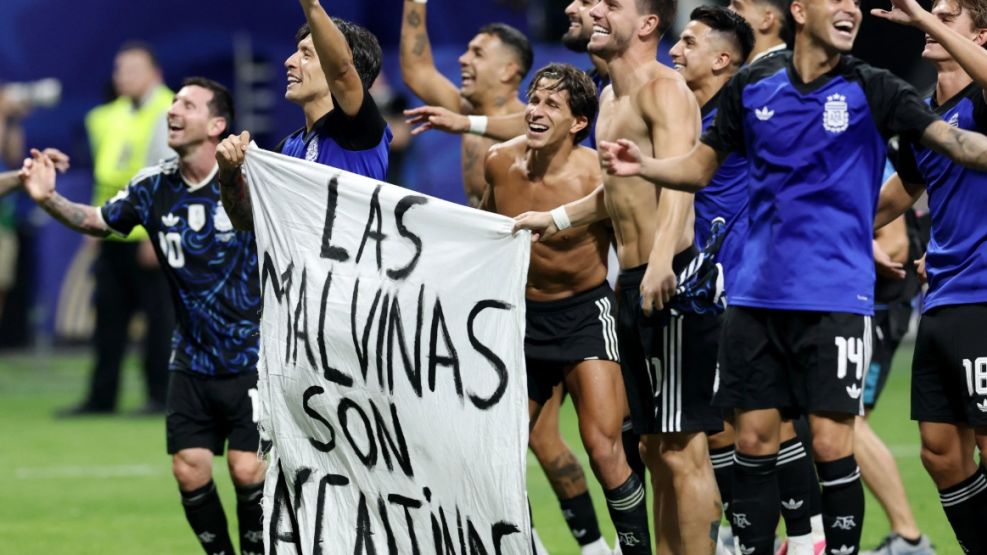
More recently, during the FIFA World Cup hosted by Canada, the United States and Mexico, Argentina’s 2-1 semi-final win over England in Atlanta was followed by players unfurling a flag reading “Las Malvinas son Argentinas” (The Malvinas are Argentine).
The British government reacted swiftly, with the prime minister’s spokesperson declaring that “the World Cup may not be ours, but the Falkland Islands certainly are” and London formally asking FIFA to investigate the incident. Milei, for his part, publicly criticized the gesture, arguing that sport should not be mixed with politics—at one point comparing the players’ position to that of Elvis Presley, who reportedly declined to comment on the Vietnam War because he was “in the entertainment business, not politics.”
A Discursive Shift, a Change in Strategy, or Submission?
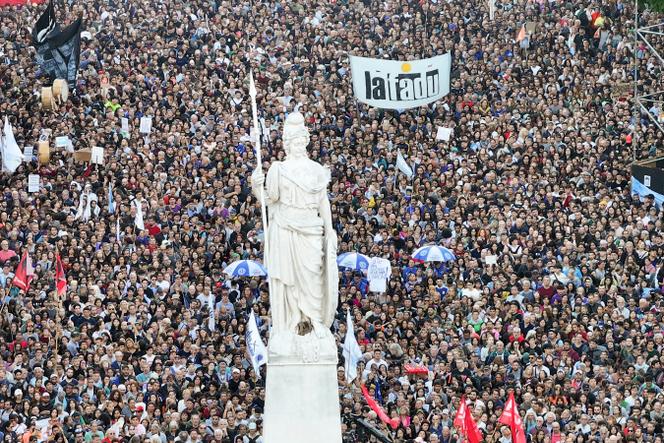
Suspiciously, just days ago, in a brief nationally televised address, Argentina’s president surprised observers with a sudden, forceful shift on the Malvinas/Falklands question. He directly reasserted Argentina’s sovereignty claim and announced a set of measures that broke little new ground: sanctions on companies operating in resource extraction in the area, and the development of a military base on the mainland. Coming from a president who, only weeks earlier, had publicly reproached his own national team for waving the Malvinas flag on a football pitch, the reversal was abrupt. What was unexpected was not so much the measures themselves, nor even the position taken. It was the messenger, not the message, that drew attention.
A striking rhetorical shift has emerged from Washington in recent weeks, this time aimed at its historic European allies. It comes against the backdrop of the Middle East conflict centered on Iran and the fight for control of oil trade routes.
An open complaint about the United Kingdom’s lack of cooperation with U.S. actions surfaced repeatedly whenever Trump was pressed by local and international media on the matter. In those same exchanges, journalists raised various questions about the Argentina-UK relationship, and specifically about the Malvinas/Falklands—questions Trump answered in terms vague and ambiguous enough to set off a wave of theories suggesting a stance favorable to Argentine interests.
Seen this way, the move looks a little clearer, fairly evident, and not particularly mysterious. In a new strategic maneuver—much like his tariff policy—Trump is opening a new phase of the conflict, one in which he has incentives both to prolong it and to seek a resolution favorable to U.S. interests.
After the failed attempt to replicate the Venezuela playbook—the detention of Maduro and a pact with a transitional government—the Middle East conflict shows signs of dragging on. And while rising oil prices are putting pressure on allies to fall in line, that pressure has not yet achieved its goal, and it is squeezing a U.S. administration facing high-stakes mid-term elections by the end of the year.
Today, Milei is playing the pawn in a game that is not his own—one in which Argentina stands to gain nothing, and in which it finds itself entangled in a conflict it has no part in. Yet the libertarian’s subordination is total, and the temptation to escalate nationalist rhetoric looks all too appealing for an unconventional leader whose political future remains very much up in the air.

CovertAction Magazine is made possible by subscriptions, orders and donations from readers like you.
Blow the Whistle on U.S. Imperialism

Click the whistle and donate
When you donate to CovertAction Magazine, you are supporting investigative journalism. Your contributions go directly to supporting the development, production, editing, and dissemination of the Magazine.
CovertAction Magazine does not receive corporate or government sponsorship. Yet, we hold a steadfast commitment to providing compensation for writers, editorial and technical support. Your support helps facilitate this compensation as well as increase the caliber of this work.
Please make a donation by clicking on the donate logo above and enter the amount and your credit or debit card information.
CovertAction Institute, Inc. (CAI) is a 501(c)(3) non-profit organization and your gift is tax-deductible for federal income purposes. CAI’s tax-exempt ID number is 87-2461683.
We sincerely thank you for your support.
Disclaimer: The contents of this article are the sole responsibility of the author(s). CovertAction Institute, Inc. (CAI), including its Board of Directors (BD), Editorial Board (EB), Advisory Board (AB), staff, volunteers and its projects (including CovertAction Magazine) are not responsible for any inaccurate or incorrect statement in this article. This article also does not necessarily represent the views the BD, the EB, the AB, staff, volunteers, or any members of its projects.
Differing viewpoints: CAM publishes articles with differing viewpoints in an effort to nurture vibrant debate and thoughtful critical analysis. Feel free to comment on the articles in the comment section and/or send your letters to the Editors, which we will publish in the Letters column.
Copyrighted Material: This web site may contain copyrighted material the use of which has not always been specifically authorized by the copyright owner. As a not-for-profit charitable organization incorporated in the State of New York, we are making such material available in an effort to advance the understanding of humanity’s problems and hopefully to help find solutions for those problems. We believe this constitutes a ‘fair use’ of any such copyrighted material as provided for in section 107 of the US Copyright Law. You can read more about ‘fair use’ and US Copyright Law at the Legal Information Institute of Cornell Law School.
Republishing: CovertAction Magazine (CAM) grants permission to cross-post CAM articles on not-for-profit community internet sites as long as the source is acknowledged together with a hyperlink to the original CovertAction Magazine article. Also, kindly let us know at info@CovertActionMagazine.com. For publication of CAM articles in print or other forms including commercial internet sites, contact: info@CovertActionMagazine.com.
By using this site, you agree to these terms above.
About the Author

Martin Epstein is a political scientist specialising in economics, a researcher at the Center for Argentine Political Economy (CEPA), and a professor at the University of Buenos Aires (UBA).
He is an economic journalist with over 15 years of experience covering policy, institutions, and politics in Latin America, with a focus on Argentina.
Earlier in his career, he worked with the UNDP and the ILO on institutional diagnostics and social policy in Argentina, and served as President of Amnesty International Argentina.
Martin can be reached at lic.epstein@gmail.com.