On the afternoon of July 25, 2024, a Beechcraft King Air turboprop appeared from the Mexican calina and descended through the heat waves toward a small airport in the New Mexico desert.
Waiting on the ground were federal agents. In the plane were the pilot and two Sinaloa cartel heavyweights: Joaquín El Güero Guzmán López, the son of Joaquín El Chapo Guzmán Loera, and Ismael El Mayo Zambada, the legendary cartel co-founder who had spent five decades avoiding cameras and custody.
Guzmán López stayed. Zambada stayed. Both would be booked. One will die in prison.
Two of the most wanted men in the hemisphere were in custody before the engines were cool. The pilot walked home, disappearing through the creosote bushes and lime-green mesquite leaves of the Chihuahuan hills—an unusual conclusion to an international kidnapping.
Through a statement read by his attorney, Frank Perez, Zambada told the media that he had been ambushed outside Culiacán, in a ranch called Huertas del Pedregal. Guzmán López had lured him to the ranch to resolve a political dispute involving the governor of Sinaloa, Rubén Rocha Moya, and the former municipal president of Culiacán, Héctor Melesio Cuén Ojeda.
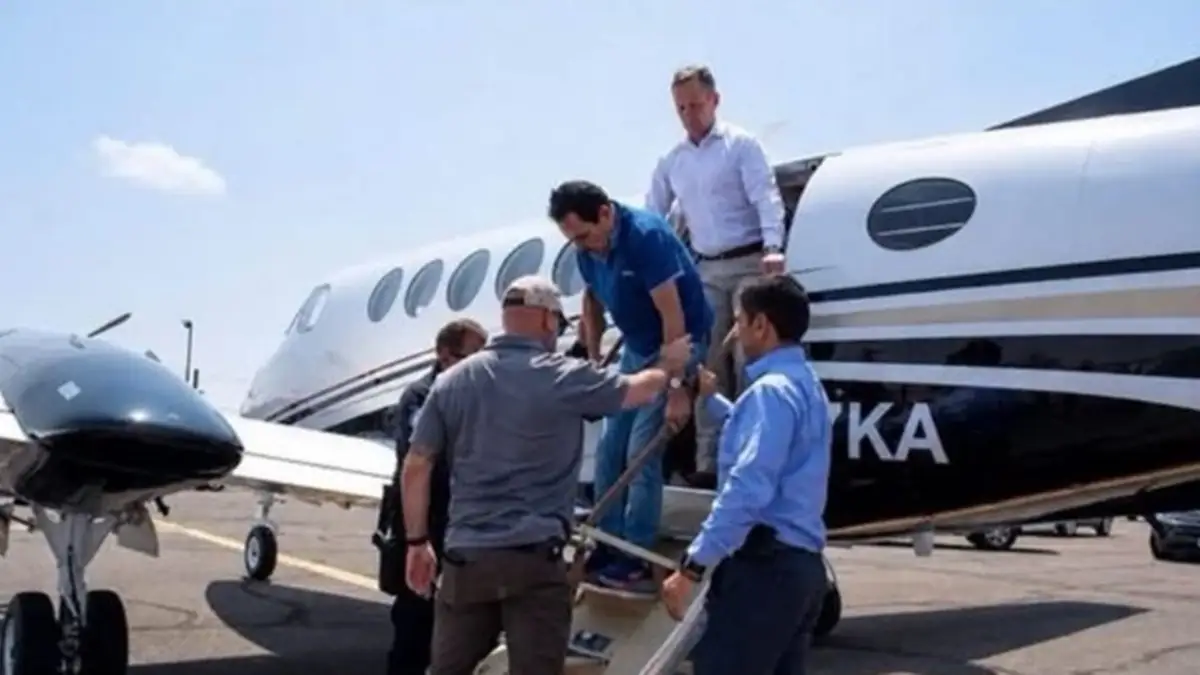
Once inside, Zambada was pounced upon. Guzmán López’s men bound him with zip ties, hooded him, forced him into a white pick-up, then drove a short distance to a waiting aircraft. Guzmán López would eventually take the weight for the scheme in an American courtroom, stipulating that he had planned and executed Zambada’s abduction without the authorization or inducement of the United States government.
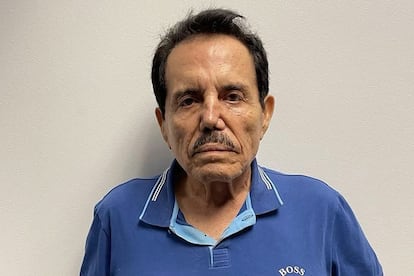
Three men were shot in the ambush. Two of El Mayo’s bodyguards appear to have died at the scene and a third man, later identified as Cuén Ojeda, died at the hospital. Local reports originally indicated he had been shot in his truck at a gas station, captured on CCTV, but a federal investigation showed that story to be fabricated by state authorities trying to cover up the crime.
The gunmen removed the bodies from the ranch but left the blood, which forensics teams discovered. No one is talking. Mexican law enforcement has not charged anyone with those crimes.
The man who actually flew the airplane presented a different problem. He was not arrested at the airport. No public images or videos show him leaving the aircraft. No public record explains what identification he presented or how it was that a man who had just piloted a kidnapped Mexican national from the scene of a triple homicide and crossed an international border was permitted to walk off the tarmac and return to Mexico. (FOIA pending)
For nearly two years, even his name proved surprisingly difficult to determine.
In an indictment filed April 2, 2025, U.S. prosecutors identified him as Mauro Alberto Núñez Ojeda. His plea agreement identified his real name in a footnote: Alejandro Ojeda Ávila. His original charging document has been sealed to protect witnesses.
Mexican authorities had captured a cartel pilot known as El Jando on February 8, 2025. This becomes critical because his U.S. charges were wrought from a decade-long investigation, yet on the day of the kidnapping, the FBI did not connect the subject of its investigation with the pilot of the plane. If the U.S. indictment was not filed until April, why had Mexican SEDENA and Guardia Nacional been sent to capture him in February?
Nearly two years after the plane landed, Mexican investigators claimed voice and fingerprint evidence established that the man they had arrested in the gun battle was the same man who had flown the King Air plane into New Mexico. Or was it?
The plane flew dark from a roadway near the extraction site outside Culiacan and landed at KDNA in Santa Teresa with the transponder either turned off or disconnected. Mexican investigators said he radioed the tower at Juarez for a squawk number to enter the U.S. The Juarez tower administration did not respond to an email seeking confirmation.
Mexico extradited the man to the U.S. in August 2025, apparently not knowing his role in the kidnapping. The man was within the federal grasp of two countries after allegedly committing multiple serious crimes in each, yet both countries managed to let him go. Neither gave a reasonable explanation as to why.
The identity of the pilot would become a bureaucratic mystery for nearly two years. Whether he is Mauro Alberto Núñez Ojeda or Alejandro Ojeda Ávila, reconstructing what authorities knew within specific windows of time requires following those identities chronologically.
|
Date |
Event |
Identity / Significance |
|
July 25, 2024 |
A King Air, N287KA, carrying Ismael El Mayo Zambada and Joaquín Guzmán López lands at KDNA, Santa Teresa, New Mexico. The pilot is not publicly identified or charged in connection with the arrival. |
Third occupant’s identity, questioning and departure from the United States remain unexplained in the public record. |
|
February 4, 2025 (unverified) |
El País reports a sealed U.S. narcotics accusation against El Jando. |
Possible pre-arrest charging action. Whether this was a complaint or indictment was unclear. |
|
February 8, 2025 |
Mexican military forces arrest El Jando in Jesús María, Culiacán, following a firefight that kills one soldier and wounds five. |
Detainee is publicly identified as Mauro Alberto Núñez Ojeda. |
|
February 11-18, 2025 |
Mexican authorities identify El Jando as a trusted Chapitos pilot. He is prosecuted for weapons and drug offenses. |
His alleged aviation role becomes publicly documented. |
|
March 2025 |
Mexican fingerprint comparisons associate the detainee with Alejandro Ojeda Ávila. Prosecutors seek electoral identity records on March 28. |
Mexican authorities reportedly discover his apparent true identity, distinct from the Mauro Núñez Ojeda identity. |
|
April 2, 2025 |
Reported formal U.S. indictment in the District of Columbia on cocaine-trafficking charges. |
Corrected indictment date, subject to confirmation against the original docket entry. |
|
August 12, 2025 |
Mexico transfers Mauro Alberto Núñez Ojeda and 25 other prisoners into U.S. custody. |
DOJ identifies him as the indicted Mauro Alberto Núñez Ojeda, facing up to life imprisonment. |
|
August 13, 2025 |
Mexican Security Secretary Omar García Harfuch states El Jando did not physically participate in Zambada’s transfer. The U.S. criminal case is unsealed. |
Harfuch’s statement subsequently conflicts with the FGR’s identification of El Jando as the pilot. |
|
April 9, 2026 |
Mauro Alberto Núñez Ojeda pleads guilty to cocaine-importation conspiracy in Washington, D.C. |
Plea materials describe extensive cartel aviation activity but omit the July 25, 2024, flight. |
|
May 10, 2026 |
Los Angeles Times reporting identifies El Jando as the alleged pilot of the Zambada aircraft. |
Journalistic identification precedes official Mexican confirmation. |
|
June 2026 |
Mexican investigators reportedly establish voice and fingerprint correspondence linking the man arrested in Jesús María to the July 2024 flight. |
Distinguishes identification of the detainee from identification of the aircraft’s pilot. |
|
July 15, 2026 |
FGR publicly identifies El Jando as the pilot who transported Zambada and Guzmán López to New Mexico. |
Official confirmation comes nearly two years after the flight and 11 months after his transfer to U.S. custody. |
[Source: Joe Hefferon]
At the press conference announcing the arrest of El Jando, Mexican Secretary of Security Omar Garcia Harfuch stated: “Pero sí podemos adelantar que esta persona en efecto es piloto de confianza del líder de la célula delictiva que tiene que ver con la privación ilegal de la persona que fue entregada en Estados Unidos.” Translation: “But we can anticipate that this person is indeed a trusted pilot of the leader of the criminal cell that has to do with the illegal deprivation of liberty of the person who was turned over in the United States.”
It is a vague statement that falls short of saying the man in their custody was the Chapito pilot who had flown the narco plane to the U.S. If they did not know for certain that he was the third man, who did they think they had arrested? The better tactical question is: What events led authorities to decide to arrest him that day?
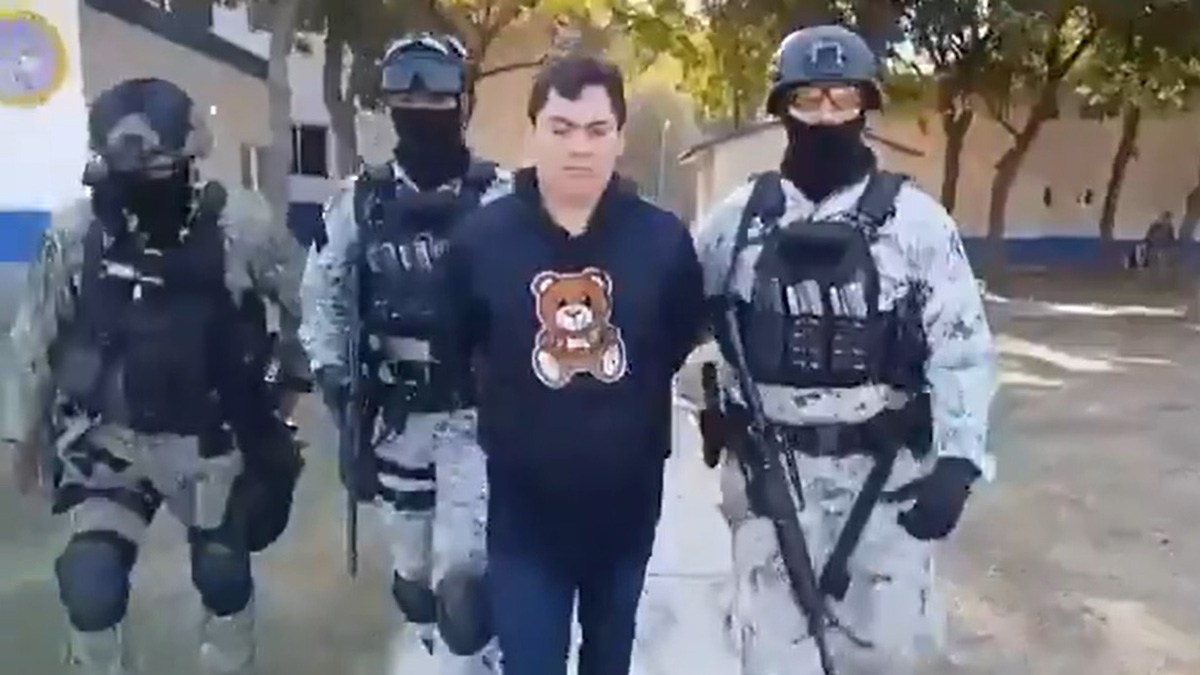
According to statements and reports from Mexico’s General Prosecutor’s Office (FGR) and the Secretariat of Security and Civilian Protection, members of the Mexican Army and National Guard were patrolling the area when occupants of an armored vehicle fired upon them in an unprovoked attack.
The official account from the FGR states that, while El Jando was traveling as part of a heavily armed group inside the armored car that attacked the military, the other occupants managed to evade capture during the chaotic gun battle.
When the shootout ended, the alleged pilot of the kidnapped kingpin was the sole suspect caught by the Army and National Guard after he abandoned the vehicle and attempted to flee into a nearby house. He was extradited without being charged for complicity in the killing of the soldier.
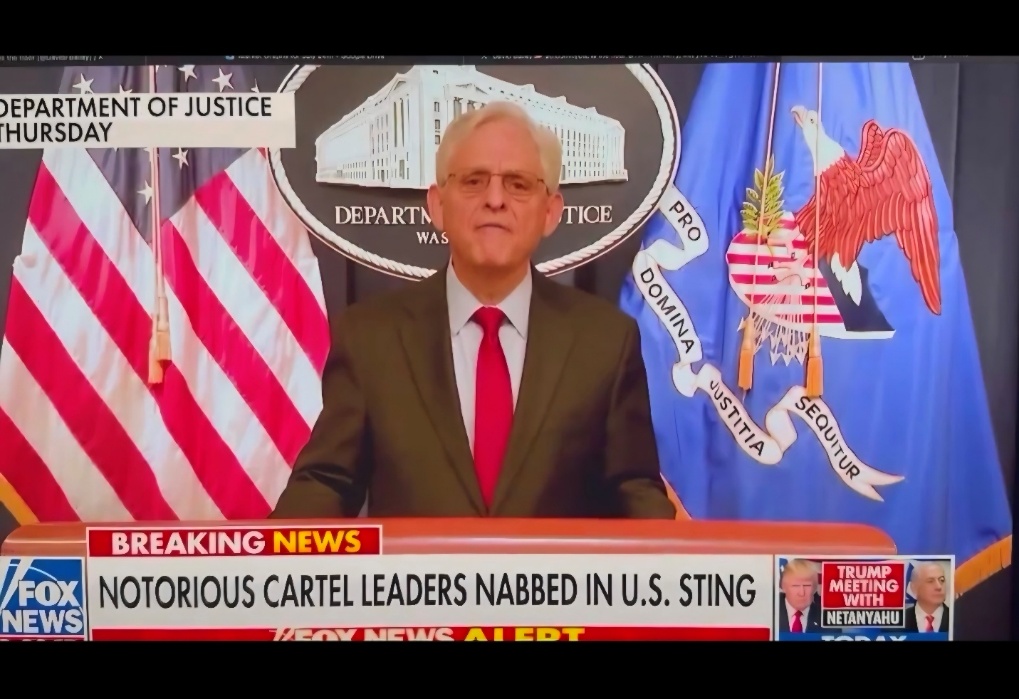
Federal prosecutors had used Guzmán López’s plea to establish that the United States neither induced nor condoned Zambada’s kidnapping. Yet, when he pleaded guilty to the drug charges, the man Mexico identified as the pilot stopped conspicuously short of discussing the flight at all.
Núñez Ojeda could have corroborated the statement given by Guzmán López at his sentencing.
Not mentioning it leaves open the question of whether he was really the pilot. His attorney told journalist Ioan Grillo that he can confirm his client was not arrested on the tarmac in Santa Teresa but could not (or would not) confirm his location on that day.
Zambada’s attorney said El Jando was the pilot. That subtle discrepancy may not be resolved until the FBI 302s and Mexico’s investigation are released. At present, Mexico has sealed the files for five years (until 2031).
To recap
The FBI and DEA arrested two cartel bosses in Santa Teresa, New Mexico. The pilot who flew the King Air turboprop with the narcos on board was released by U.S. authorities in order to deport him, at his own request. The authorities have not stated what identification he used or why he was not detained as a material witness to an international kidnapping.
Six months later, a man who would eventually be named as that pilot was arrested near Culiacan after initiating a shootout with the Mexican army.
At the time, the FGR said he was a pilot for the Chapitos, a group they claimed was responsible for the impromptu extradition of El Mayo Zambada but, importantly, did not say that the man with whom they had just had a firefight was the pilot of that flight.
Six months after his arrest in Mexico, in August 2025, the man was extradited to the U.S. as part of a group of 26 violent offenders. The Mexican authorities later claimed they did not know that the man they extradited was the pilot. However, Mexico extradited him based on a little-used Ley de Seguridad, Mexico’s national security law, Article 5, along with Article 89 of its Constitution.
His extradition was treated as a national security matter rather than going through the lengthy and complex process of a formal extradition. The back-channel conversations that led to his expedited custody transfer add to the intrigue of this case.
The man with two names, who was not identified by the U.S. as the pilot in court, pleaded guilty to drug and weapons charges in Washington, D.C. The plea was based on investigations that went back ten years to 2014; yet, on extraction day, they did not link the man in the cockpit to these investigations.
Two years after the kidnapping, Mexico confirmed that a man named Alberto Núñez Ojeda was the pilot of the King Air getaway plane. They claimed they identified him from a voice recording obtained when El Jando contacted the tower at Juarez to request a squawk to enter U.S. air space. The narco plane was falsely marked with a duplicate stick-on vinyl tail number, N287KA.
The provenance of that plane
During a forensic examination of the aircraft, the FBI discovered a plate with a fake serial number riveted to the door jam, creating initial confusion about the plane’s ownership. The team later determined that the actual serial number for that airframe was BB-191, a 1976 Beechcraft King Air. The FAA ownership history of that plane shows that it spent some years in Colombia under the operation of AerCaribe, before being sold to a U.S. buyer in 2019.
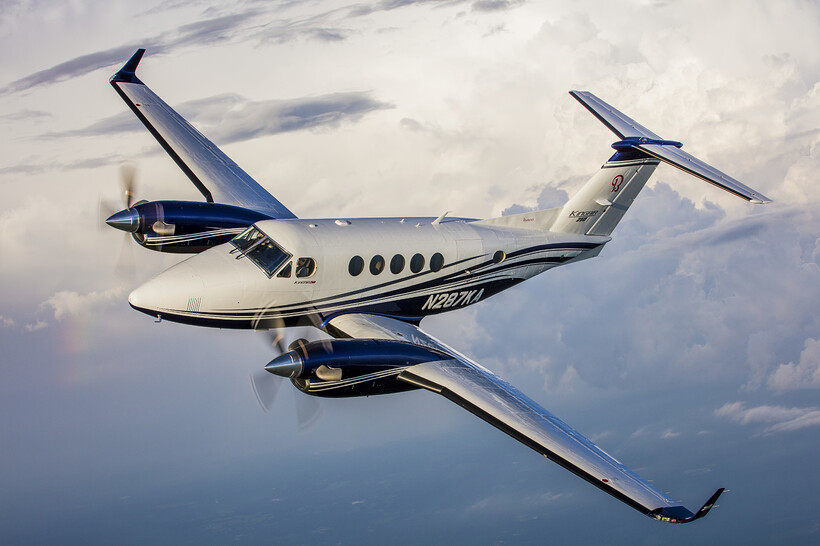
That U.S. buyer, after some back-and-forth leasing deals during 2019 with the eventual Mexican buyer, sold the plane to a Culiacan-based attorney called BRR in May 2020. It was in cartel hands until it was seized by U.S. authorities.
BRR appears to be a paper buyer, whose name was likely forged on the bills of sale. The former owner and the FAA made numerous attempts to retrieve the original certificates of registration from BRR, who never responded to any inquiries.
He would not, if BRR had never seen that correspondence.
The fake tail number on the narco plane matched a legitimately owned 2017 King Air registered to a holding company in Ruidoso, New Mexico. Per the ADS-B tracking registry, that U.S.-owned plane happened to be airborne, flying from Abilene, Texas, to Ruidoso, about three hours prior to the narco flight.
At the exact time that the real N287KA was airborne, a third plane bearing tail number PT-XHP was airborne in Brazil. That plane was transmitting an identifying hex code of A2E8DE, which is a duplicate of the hex code assigned to the legit N287KA.
Three planes linked to the same tail number were airborne on the same day, in three countries, which served mostly to confuse journalists investigating the incident. It also raises questions about whether the FBI or DEA had a hand in that confusion.
Who, if anyone, knew about the Brazilian plane flying with a duplicate hex code that matched a U.S. corporate-owned plane of a similar type? Why was that particular tail number stuck on the narco plane?
The duplicate hex code had been used in Brazil for scores of flights from 2019 to early 2025, when the U.S.-based plane was sold to a buyer who transferred the aircraft to—you guessed it—Brazil. Then the trail goes cold. But that could simply be that the U.S. plane acquired a new hex code upon its Brazilian registration, which removed the prior number from tracking registries.
The cartel pilot may have chosen a tail number at random that matched the model of the U.S. plane. This could have been done in part to fool anyone in Mexico looking for the getaway plane, but also to facilitate the entering of U.S. air space. Guzmán López might have called ahead to the FBI and told them the tail number of the plane on which he would be arriving.
However, the Chapitos knew this was a one-way trip and could reasonably presume the plane would be seized. They flew in without transponders activated so the tail number would be irrelevant. The disappearing of the bodies at the ranch probably bought the flight enough time to be in U.S. territory before El Mayo’s people could intercept it, assuming they even had the capacity to do so.
The other option is that the FBI and/or DEA told the pilot which tail number to affix to the plane, knowing that the radar would be muddied by the other planes linked in the system. This puts the FBI deeper into the preparation than they have been willing to admit. But they may have told on themselves.
In July 2026, the FBI announced that the narco plane would be on exhibit at the War Eagles Air Museum at KDNA. The exhibit includes photographs of the two narco bosses, Joaquin Guzmán López in handcuffs, and El Mayo Zambada descending the stairs. No picture of the pilot.
Of note, there is one federal agent among the images supplied by the FBI whose face is blurred out. He is the one posing with the handcuffed Guzmán López.
In a book written by Mexican journalists Ricardo Ravelo and José Luis Montenegro titled La Cuarta Transformación del Crimen Organizado, the authors claim that a source told them the pilot had been supplied by the FBI.
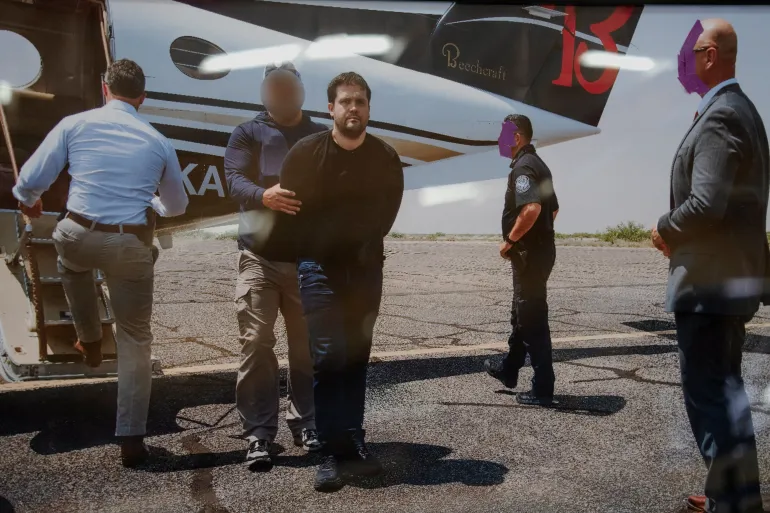
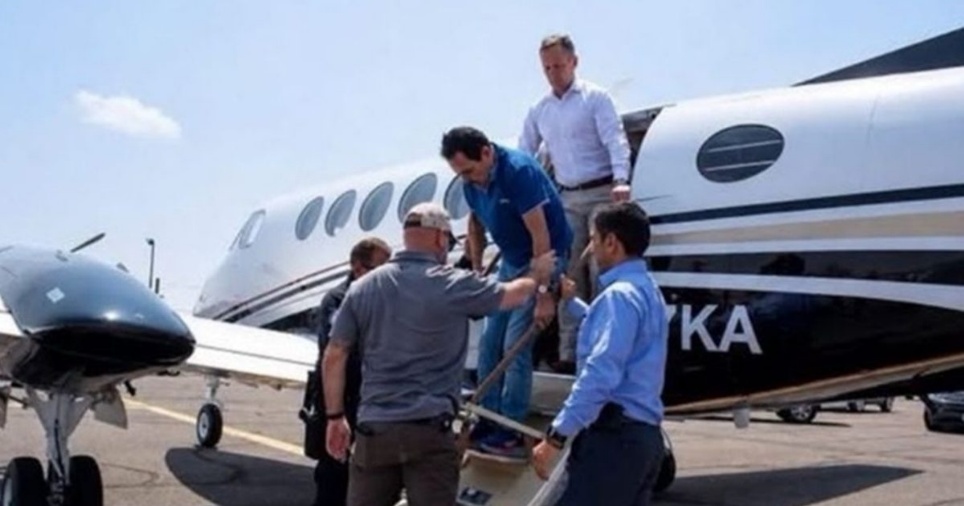
A narrative plaque from the FBI describes the operation as a “highly complex, secretive and daring arrest,” under the codename Operation Air Kings.
There was nothing daring about the relaxed manner in which agents approached the aircraft that day, as captured by KTSM9 News crews, who happened to be at KDNA filming B-roll. Anything complex or secretive happened well before that plane landed.
On extraction day, the narco flight landed at approximately 2:24 p.m. local time. As it banked into its final approach, the ADS-B tracking system showed a hex code of ~26BC94. That ~ symbol before the code indicates the plane was not transmitting a hex (flying dark) so that number is assigned by the system.
Roughly 50 minutes prior to the narco plane’s touchdown, at 19:27:40 UTC time, a military Lakota UH-72 landed at KDNA, bearing registration 13-72290, type code EC45, and serial no. 9638. Soon after, two aircraft that appeared to be drones were within a mile of the airport.
They could have been there to ensure the landing zone was clear or they could have been routine CPB surveillance drones.
The three-plane situation coupled with the fuzzy identification of the pilot are lingering conundrums in a story both governments want to go away.
What happens in Mexico is often distorted by what the U.S./Mexico governments say publicly and what has transpired in the shadows.
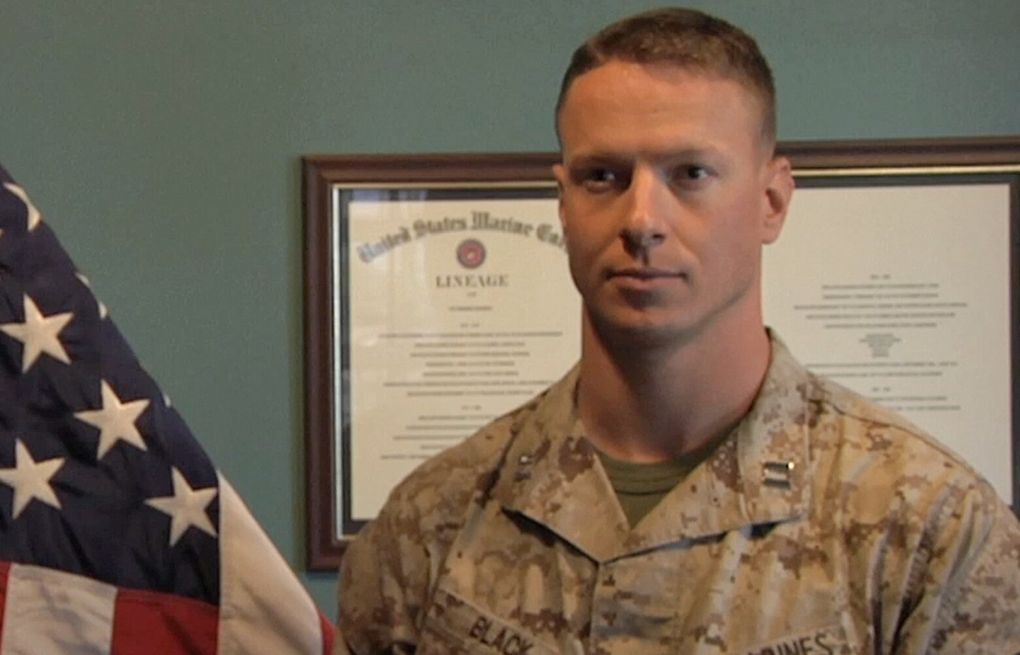
Back in April 2026, two former U.S. military operators turned CIA officers, Richard Johnston and John Black, died in a fireball when their truck launched off a mountain cliff in Chihuahua after a midnight raid on a meth lab, which turned out to have been abandoned. They were wearing the tactical uniforms of the local state cops, working out of a non-descript office in Monterrey that the federal government office in Mexico City said did not exist.
Had the real scenario in Santa Teresa played out, after receiving a last-minute call from a kingpin that he was flying in to surrender and he was bringing one of the DEA’s most wanted fugitives with him, there would have been a tactical approach to the aircraft. The pilot would have been arrested or at least identified, unless he was an agent or asset.
The fact is that his ID was kept secret and the later confusing reports about who he was and why he was grabbed indicate that discussions were held at levels the public would not see, in places where journalists are not invited.
You look at a pilot who walks off a tarmac and you look at dead operators in foreign uniforms who weren’t supposed to be in the mountains, and you begin to realize the border is not a crooked line on a map. It is a place of headlines and misdirection, of payoffs and paybacks.
More than 5,000 people have been killed or disappeared in the civil war that has ripped since the arrest of El Mayo. While the show plays out for the press, the bodies drop in the streets like desert locusts.

CovertAction Magazine is made possible by subscriptions, orders and donations from readers like you.
Blow the Whistle on U.S. Imperialism

Click the whistle and donate
When you donate to CovertAction Magazine, you are supporting investigative journalism. Your contributions go directly to supporting the development, production, editing, and dissemination of the Magazine.
CovertAction Magazine does not receive corporate or government sponsorship. Yet, we hold a steadfast commitment to providing compensation for writers, editorial and technical support. Your support helps facilitate this compensation as well as increase the caliber of this work.
Please make a donation by clicking on the donate logo above and enter the amount and your credit or debit card information.
CovertAction Institute, Inc. (CAI) is a 501(c)(3) non-profit organization and your gift is tax-deductible for federal income purposes. CAI’s tax-exempt ID number is 87-2461683.
We sincerely thank you for your support.
Disclaimer: The contents of this article are the sole responsibility of the author(s). CovertAction Institute, Inc. (CAI), including its Board of Directors (BD), Editorial Board (EB), Advisory Board (AB), staff, volunteers and its projects (including CovertAction Magazine) are not responsible for any inaccurate or incorrect statement in this article. This article also does not necessarily represent the views the BD, the EB, the AB, staff, volunteers, or any members of its projects.
Differing viewpoints: CAM publishes articles with differing viewpoints in an effort to nurture vibrant debate and thoughtful critical analysis. Feel free to comment on the articles in the comment section and/or send your letters to the Editors, which we will publish in the Letters column.
Copyrighted Material: This web site may contain copyrighted material the use of which has not always been specifically authorized by the copyright owner. As a not-for-profit charitable organization incorporated in the State of New York, we are making such material available in an effort to advance the understanding of humanity’s problems and hopefully to help find solutions for those problems. We believe this constitutes a ‘fair use’ of any such copyrighted material as provided for in section 107 of the US Copyright Law. You can read more about ‘fair use’ and US Copyright Law at the Legal Information Institute of Cornell Law School.
Republishing: CovertAction Magazine (CAM) grants permission to cross-post CAM articles on not-for-profit community internet sites as long as the source is acknowledged together with a hyperlink to the original CovertAction Magazine article. Also, kindly let us know at info@CovertActionMagazine.com. For publication of CAM articles in print or other forms including commercial internet sites, contact: info@CovertActionMagazine.com.
By using this site, you agree to these terms above.
About the Author
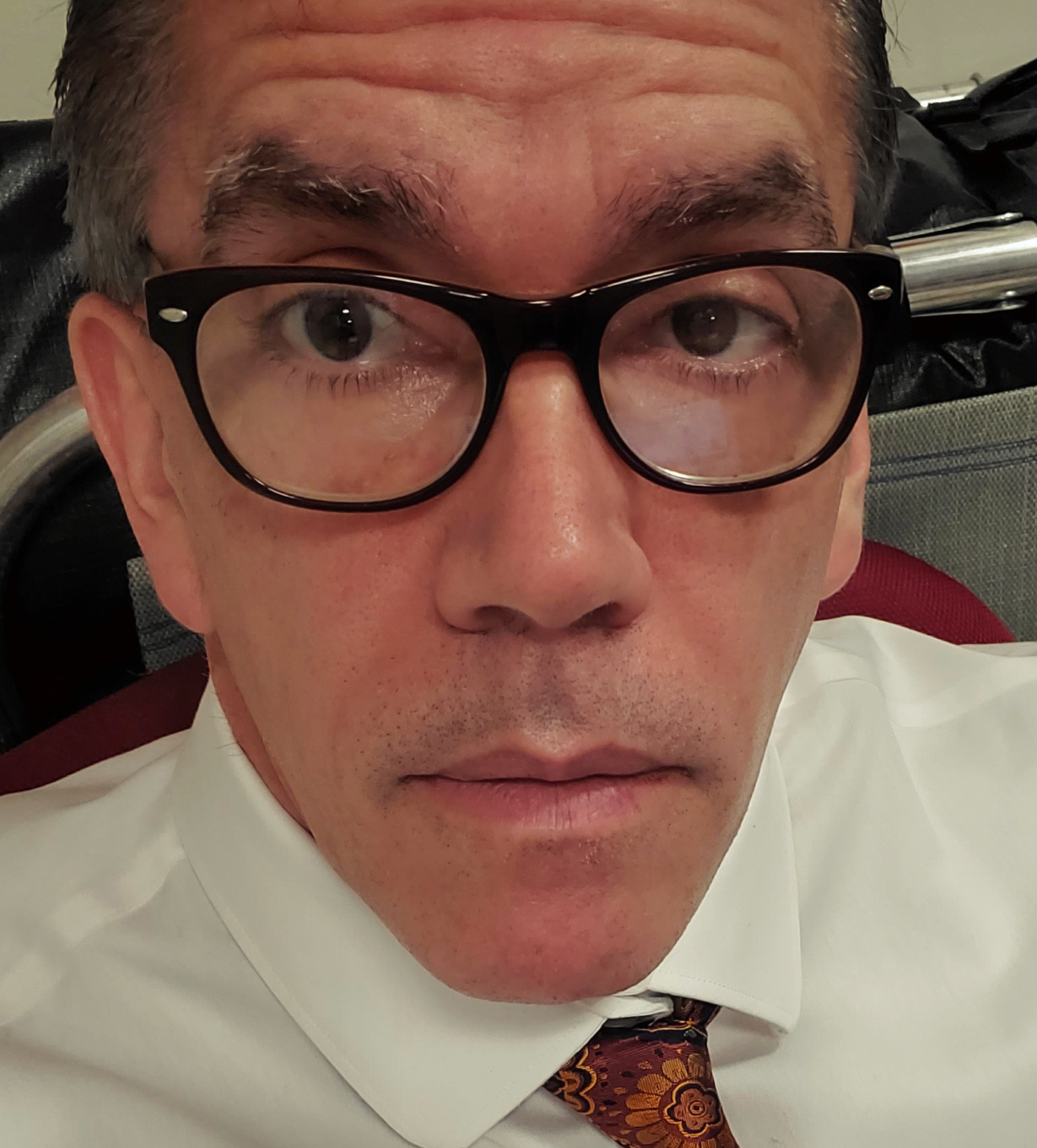
Joe Hefferon is a father and former police captain turned writer after 25 years in law enforcement.
He is the author of the thriller novel Countdown to Osaka and can be found on Substack https://joehefferon.substack.com and Instagram @joehefferon.
You can reach Joe at joehefferon@proton.me.