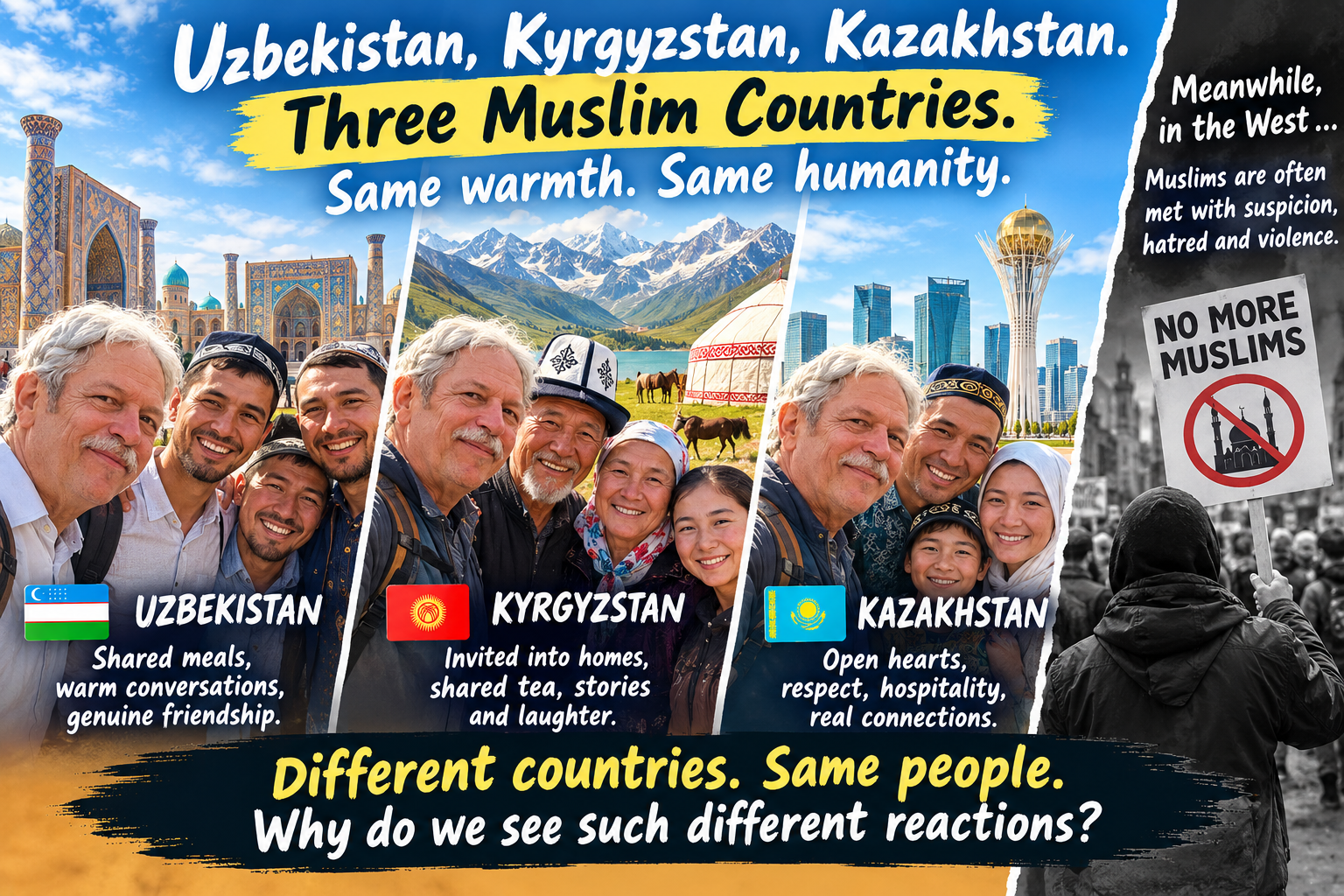
No more Islam in the West. No more mosques, no more Islamic schools, no more headscarves.
This was the demand of Geert Wilders, a prominent Dutch politician whose campaigns were significantly funded by Nina Rosenwald—an American Jewish billionaire heiress and pro-Israel activist, whom investigative journalists have dubbed the “sugar mama of anti-Muslim hatred.”
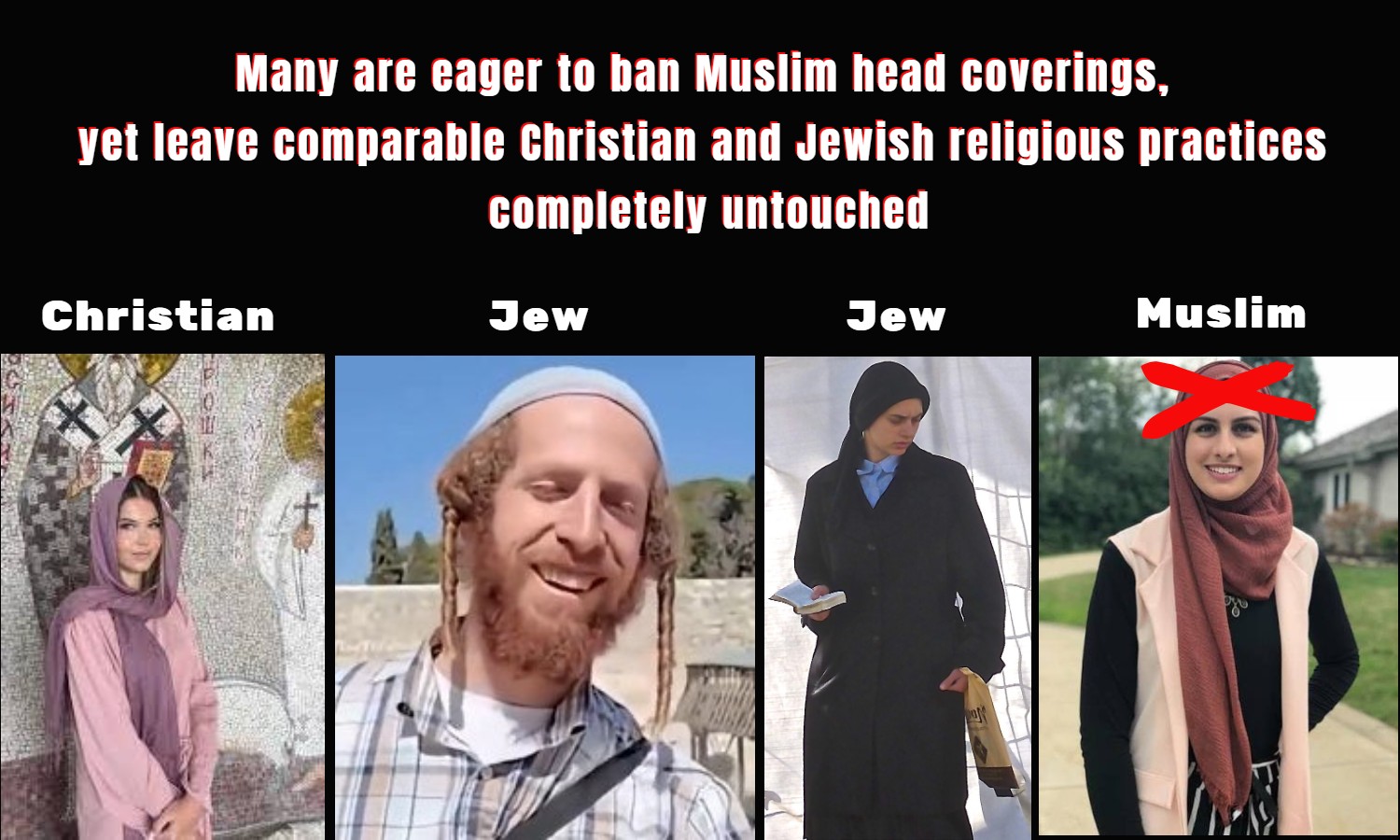
Anti-Islamic political actors in the West regularly call for a ban on minarets, target mosques themselves, and focus particularly intensely on Muslim women. “The veil is an Islamist uniform that must be banished from the entire public sphere,” claims Marine Le Pen, currently the most influential political figure in France.


Such demands for bans are highly selective: They target Islamic practices while other religious symbols remain largely untouched. Ironically, during a visit to an Orthodox Christian church in Muslim-majority Kazakhstan, I observed that women were strictly required to cover their heads—a traditional practice to which that faith continues to adhere without drawing any such Western political outrage.
Political rhetoric and “irresponsible media commentary” are fueling anti-Muslim violence, Australia’s top Islamic body warned after an attack on an imam and his wife.
The Australian National Imams Council said that falsely linking peaceful pro-Palestinian advocacy to the Bondi terror attacks had directly contributed to a surge in Islamophobic abuse, threats and assaults. Some are convinced that the attack was a “false-flag” operation intended to stoke anti-Muslim hatred, citing various pieces of evidence and witness testimony.
Zionism has, in fact, a long tradition of stoking fear of Muslims—as well as hatred—among Jews (and non-Jews). This even included the orchestration of bombings targeting synagogues and Jewish institutions in Baghdad and Cairo, for which Muslims were then falsely blamed—despite the fact that Muslims and Jews had lived together peacefully for centuries.
Another instance in a long series of anti-Muslim propaganda campaigns has recently been uncovered: a covert, far-right digital influence operation titled “Manufacturing the ‘Great Replacement'” generated over 533 million propaganda impressions across Europe, Lebanon, and the United States between 2023 and 2026. The campaign—valued at £6.12 million ($8.2 million USD) and exposed by researchers Marc Owen Jones and Sohan Dsouza—was traced back to companies based in Israel. The network utilized AI-generated media, parodies of video games, and advertisements on mainstream social media platforms to disseminate anti-Muslim, anti-migration, and anti-Qatari conspiracy theories, strategically concentrating its large-scale attacks often in the lead-up to major elections.
To bypass automated filters and evade platform bans, the operators employed sophisticated circumvention tactics: they laundered ad purchases through shell companies in Vietnam and Brazil; routed traffic through residential proxy networks to mask Israeli IP addresses; fabricated a humanitarian NGO in Gaza to manufacture a veneer of legitimacy; and leveraged a network of 24 coordinated, fake Wikipedia accounts to manipulate fringe online narratives.
However, overt corporate actions exert just as much influence as covert operations. A prime example is the Axel Springer group, Germany’s largest media conglomerate, which maintains a consistently aggressive anti-Muslim editorial stance while systematically ignoring, downplaying or denying reports of Israeli war crimes. This alignment is driven directly from the top; its CEO and co-owner, Mathias Döpfner, is a self-declared Goy and passionate Zionist. In a May 2026 address to the World Jewish Congress in Geneva, he explicitly stated, “I am a Zionist… out of conviction, and with passion,” while arguing that anti-Zionism is a form of racism. This personal ideology dictates corporate policy at Axel Springer—the parent company of major global outlets like Politico and Business Insider—where support for the right of the apartheid state of Israel to exist is considered an absolute, non-negotiable corporate value to which all employees are strictly required to align themselves.
The group’s media outlets frequently claim that antisemitism is surging in Germany and elsewhere; yet, they pay no attention whatsoever to anti-Muslim incidents—the actual number of which is likely far higher, not least due to the anti-Muslim media campaigns themselves. Axel Springer’s flagship German publications (Bild and Welt) routinely conflate mainstream advocacy for Palestinian human rights or criticism of Israeli government policy with antisemitism, inflating their antisemitism allegations enormously.
As Germany’s largest newspaper with a reach of six million readers per issue, ‘BILD’’ commands massive political and cultural influence. The publication frequently deploys inflammatory headlines and articles that paint Muslim immigrants and Arab communities as inherently dangerous, culturally incompatible with the West, or sympathetic to terrorism. These framing mechanisms regularly resort to sweeping generalizations about Islam to drive populist engagement, Islamophobia, hatred, and potentially even violence.
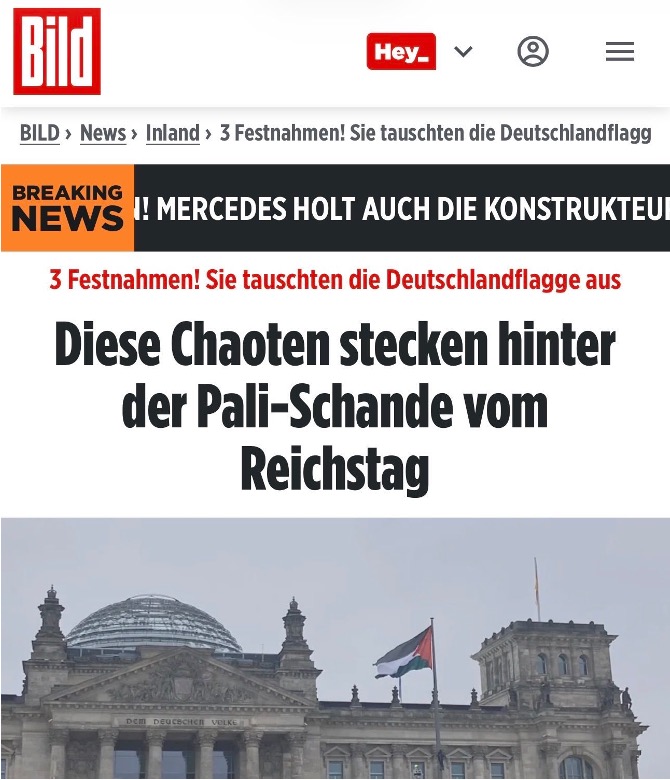
Yet, a stark double standard exists within the German media landscape. While Springer media routinely disparages Muslims, Arabs, and Palestinians (who are themselves Semites), any German journalist who treated Jewish communities with the same level of hostility would face severe penalties. In fact, this hostile framing directly contrasts with Germany’s strict laws against hate speech and antisemitism. Under Section 130 of the German Criminal Code (Strafgesetzbuch), the statute against incitement to hatred (Volksverhetzung) explicitly criminalizes public assaults on human dignity and agitation against national, racial, or religious groups, carrying potential prison sentences of up to five years.
Notwithstanding Section 130 of the German Criminal Code, anti-Muslim hate speech on social media platforms in Germany—such as Twitter and Facebook—is a widespread phenomenon. A perhaps particularly extreme example involved Paul Liebisch, a German Zionist who targeted a German Muslim on X with severe insults and violent threats, declaring: “Disgrace of the Kanaken [a derogatory slur for foreigners/non-whites]. Germany will soon answer the Kanaken question [a reference to the Nazis’ ‘Judenfrage’/‘Jewish Question’]. Run—we will hunt you down and turn you into soap.”
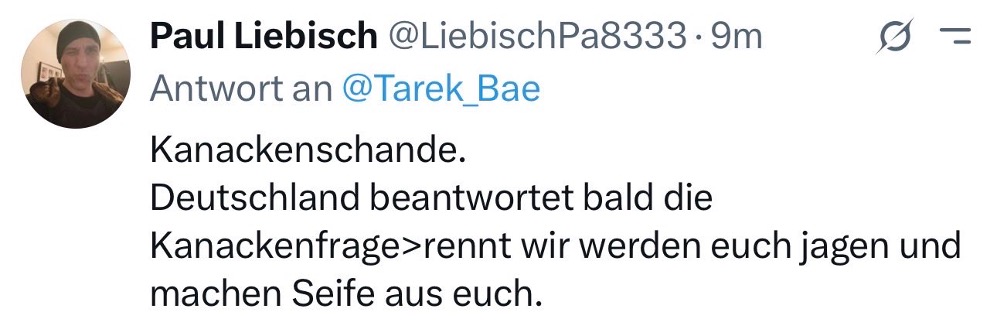
There is a striking double standard in the state’s response: authorities appear comparatively complacent toward explicit hate speech, yet they aggressively crack down on pro-Palestinian protesters. Many of these demonstrators face state prosecution for “antisemitism”—a classification that triggers state action—for merely showing solidarity with the Palestinian people.
Today, even self-proclaimed “Islam experts” are regularly given mainstream platforms in the Western press to spread sweeping generalizations. In the Neue Zürcher Zeitung (NZZ), an influential Swiss German-language newspaper, one such commentator claimed that “hatred of Jews belongs to Islam,” essentializing an entire faith and presenting a deeply biased theological narrative to a Western audience.

When vilifying claims are broadcast without scrutiny, mainstream media outlets abandon the fundamental principles of rigorous fact-checking. In the interest of objective balance, it is necessary to examine the actual textual foundations of these traditions. The following passages from the Torah and the Quran demonstrate how these two Abrahamic faiths historically and textually instruct their followers to treat those outside their faith communities.
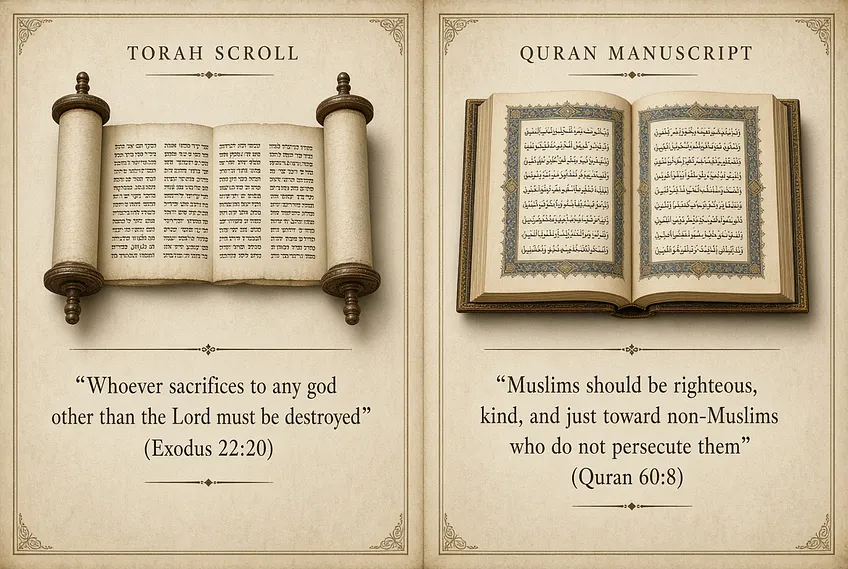
The Textual Landscape of the Torah
Within the Torah—the first five books of the Hebrew Bible—several passages prescribe severe punishments, including the death penalty, for apostasy, the worship of other deities, or the enticement of others to abandon the faith. In their original political setting, these laws functioned chiefly as statutes against religious treason within the ancient Israelite theocracy. Their aim was to preserve the community’s covenantal identity, not to govern external nations. Nevertheless, some rabbis continue to teach these prescriptions today.
The Textual Landscape of the Quran
Conversely, mainstream Islamic scholars and many academic historians emphasize that the Quran does not advocate the persecution of people simply because they adhere to a different faith. Rather, they argue that its teachings establish several fundamental principles governing the treatment of non-Muslims:
1. A Strictly Defensive Framework
Scholars and historians who champion this mainstream view maintain that the Quran permits armed force primarily in self-defense or to resist active oppression (fitnah). A foundational proof-text is Surah Al-Baqarah (2:190):
“Fight in the way of Allah those who fight you, but do not transgress limits. Truly, Allah loves not the transgressors.”
This framework places explicit restrictions on warfare: while Muslims are permitted to fight those who attack them, they are strictly forbidden from initiating aggression or exceeding the bounds of legitimate defense.
2. Freedom of Conscience
A central pillar of this perspective is that genuine faith cannot be imposed by force. Proponents frequently point to Surah Al-Baqarah (2:256), which states unequivocally:
“There is no compulsion in religion.”
In this reading, the text serves as a universal rejection of forced conversion, establishing that religious persecution is an illegitimate means of enforcing belief.
3. The Necessity of Historical Context
Some of the Quran’s most contentious passages, particularly Surah At-Tawbah (9:5)—frequently referred to as the “Sword Verse”—command believers to “kill the polytheists wherever you find them.”
However, contextualist scholars argue that isolating this passage misrepresents its intent. They place it within the specific historical theater of seventh-century Arabia, where pagan tribes had repeatedly violated peace treaties and launched campaigns to eradicate the early Muslim community. In this light, the verse is understood as a specific wartime directive aimed at active combatants, rather than a timeless mandate against religious differences.
4. Kindness and Justice Toward Peaceful Non-Muslims
Beyond mere tolerance, the Quran explicitly mandates proactive benevolence toward peaceful neighbors of other faiths. Surah Al-Mumtahanah (60:8) actively encourages Muslims to show “birr” (righteous kindness and benevolence) and absolute justice toward those who do not wage war against them.
This creates a sharp legal and moral distinction between hostile adversaries and peaceful citizens, asserting that co-existence, equity, and goodwill remain the baseline for interfaith relations.
Over the years, my professional life has brought me into close contact with Muslims from Iran, Iraq, Saudi Arabia, Lebanon, Malaysia and Indonesia. Through these encounters, I have formed friendships with Muslims, as well as with Jews, Buddhists and people of other faiths. Throughout all my interactions with Muslims across the globe, I have never personally experienced antagonism directed toward me as a Western non-Muslim.
This was especially true during the time I lived in Egypt, a country where I became keenly aware of the nuanced relationship between the Muslim majority and the Coptic Christian minority. My local staff comprised both Muslims and Coptic Christians, who worked seamlessly together as a cohesive team. Rather than quarreling over religious differences, they focused their collective energy on a shared goal: winning market share from our competitors.
Their cooperation paid off handsomely. In recognition of their outstanding performance, the entire team was rewarded with a well-deserved, all-expenses-paid company vacation in Europe—an experience that was celebrated in fitting and stylish fashion.

Of course, this positive experience does not mean that religious tensions or discrimination are entirely absent in Egypt. Many of those friction points carry deep historical and geopolitical roots rather than being purely theological in nature. Nevertheless, it demonstrated to me how incredibly misleading it is to reduce an entire society to a simplistic headline of religious antagonism—particularly when that narrative is shaped by highly politicized accounts presented to Western audiences by Western media, a practice I remember all too well from my own experiences.
On a broader basis, one could argue that religion is humankind’s worst invention, given the countless atrocities committed in its name throughout history. Just as Zionists justify land theft and genocide by claiming to be God’s chosen people, the National Socialists also frequently invoked a higher power—usually referred to as “Providence” or God—to portray their territorial expansion as a divine mission.
Their war of conquest cost the lives of tens of millions of people in the former Soviet Union. In his public speeches, Adolf Hitler regularly claimed that his conquests were guided by divine providence and cosmic destiny, while Wehrmacht belt buckles bore the inscription “Gott mit uns” (God with us).
To rally the population behind its aggressive campaigns, the regime promoted a state-sanctioned “German Christian” movement that elevated service to the “Führer” to the level of a sacred duty. Ultimately, National Socialist ideology treated both God and the “laws of nature” as supreme authorities invoked to justify the violent subjugation of other peoples and the expansion of the Greater Germanic Reich.
Wouldn’t it be better to do without a God who, in this day and age, permits Palestinians—children included—to languish in Israeli prisons without any legal proceedings, where they are subjected to torture and rape—acts that members of the Israeli Knesset and large crowds of Israelis claim as their right, to be committed with total impunity?
Perhaps people in majority-Muslim countries are unaware of how despised and vilified Muslims are in many Western societies. Or perhaps they simply show Christians and Jews greater tolerance than they themselves receive in return.
I was pleasantly surprised by the immense hospitality and warmth I experienced across the three majority-Muslim countries I recently visited: Uzbekistan, Kyrgyzstan and Kazakhstan.
On the night I arrived in the Uzbek capital of Tashkent, I happened upon two lively parties. Stopping briefly by the doors, I was spontaneously invited inside to join a large group of people eating and dancing—among them women both with and without hijabs.
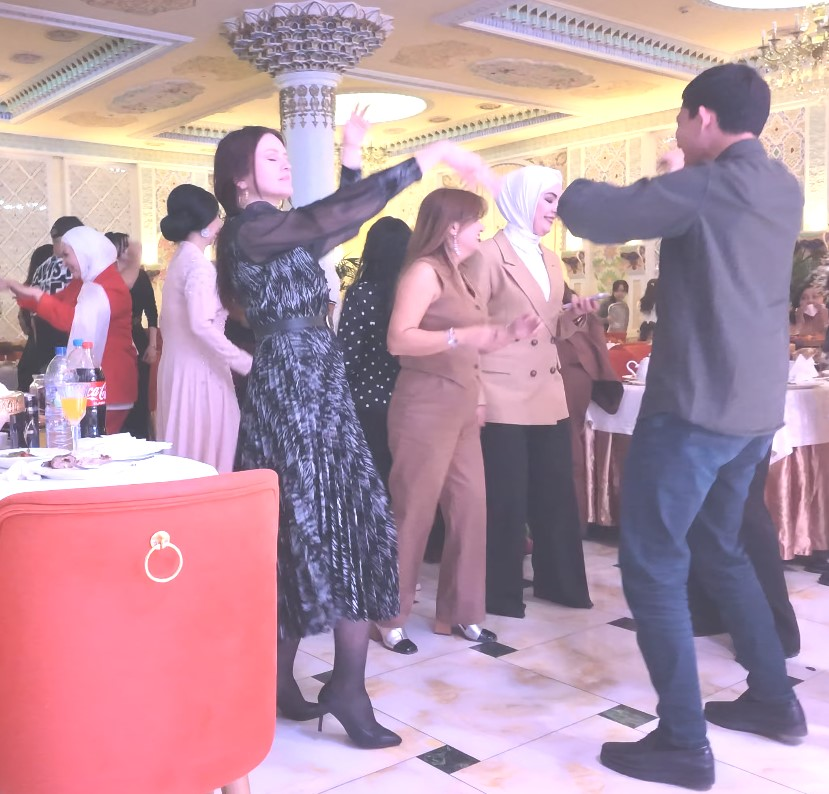
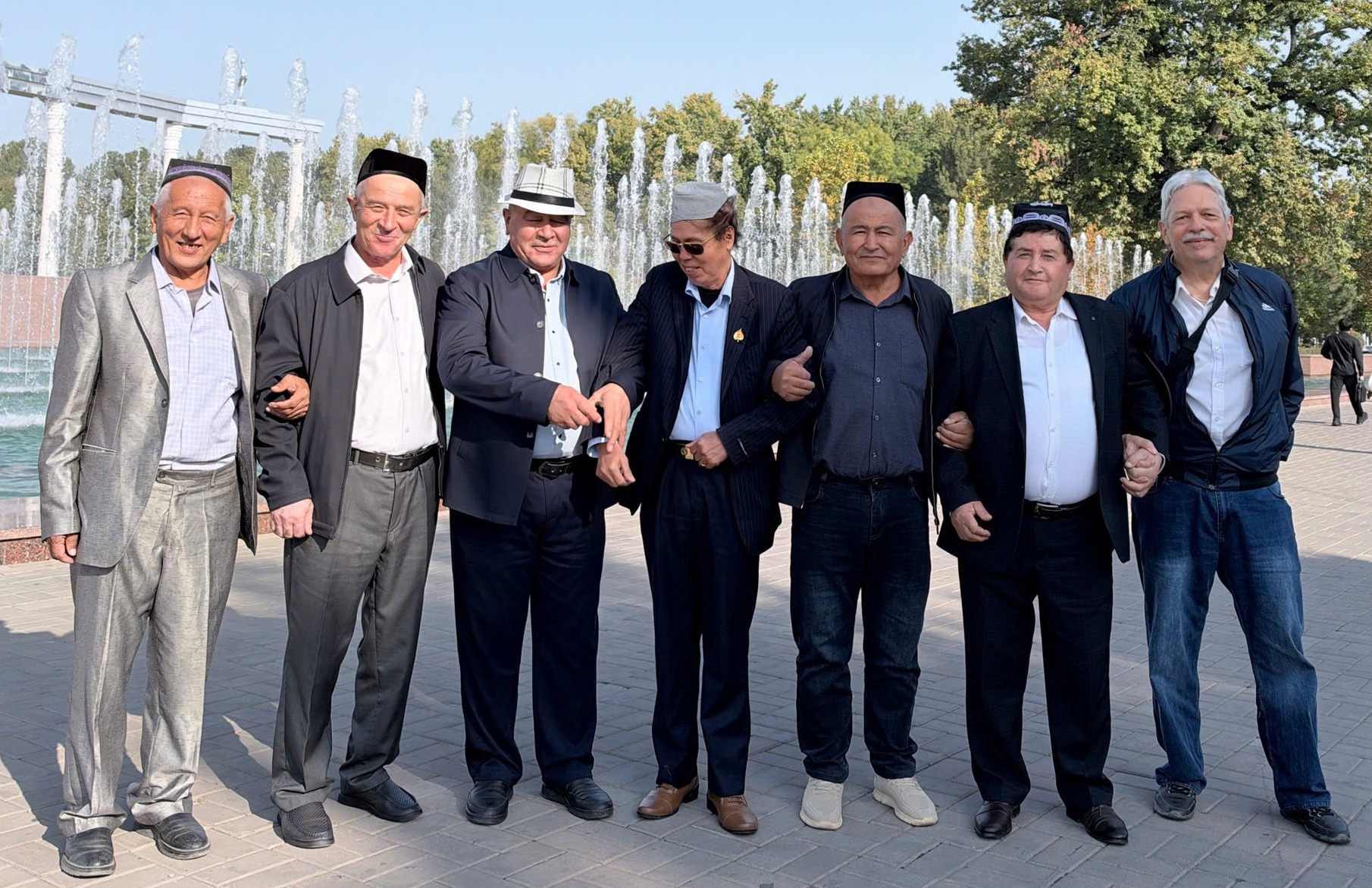
As I strolled through the city, locals often asked to take photos with me—this led to moments of genuine connection, as can be seen in the photo below.
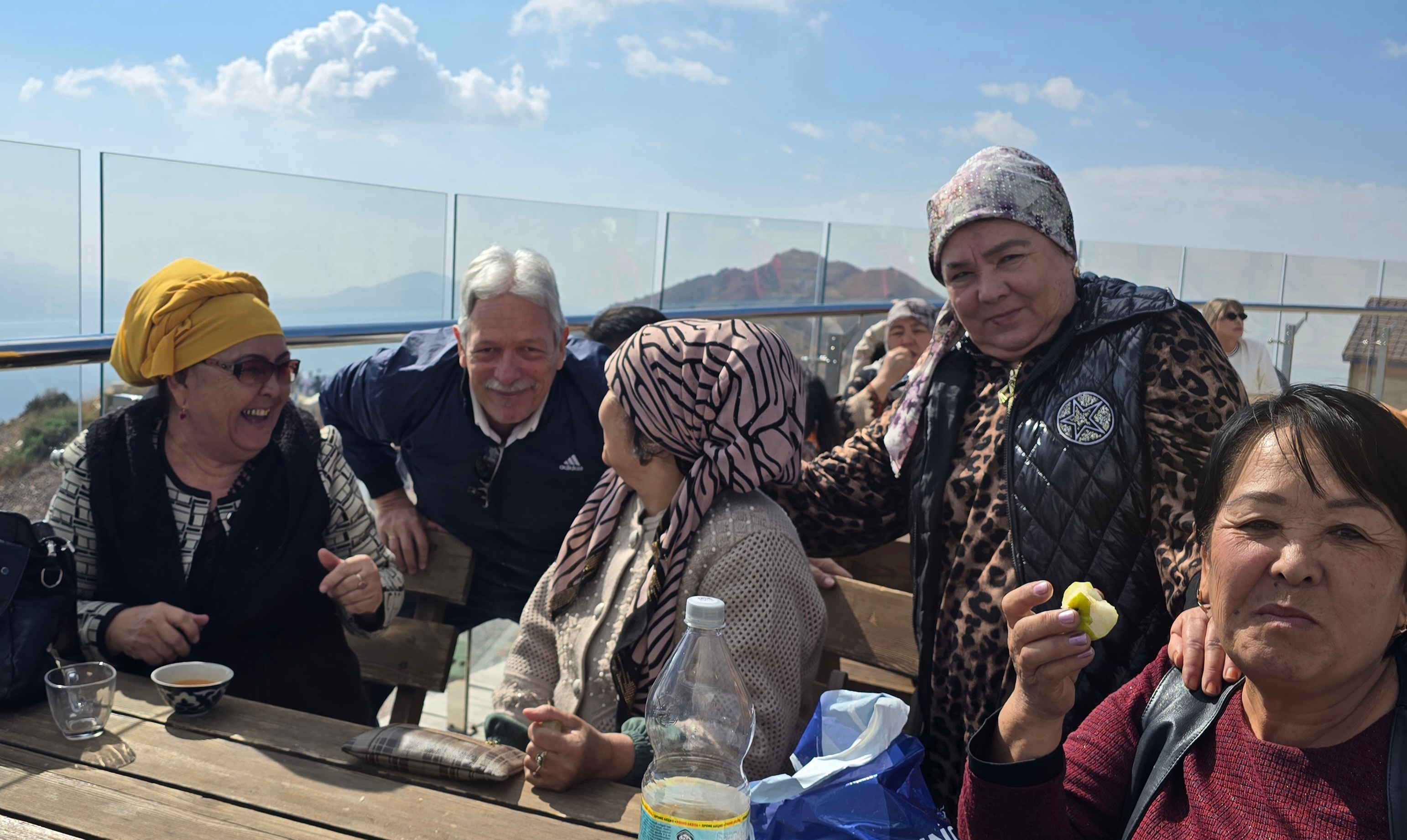
Later, during a walk through the countryside, a group of local women called me over to their table to join them for a chat. Despite the language barrier, we laughed and traded jokes, with one of them stepping in to translate. They were sharing an array of homemade breads—an art form Uzbekistan is famous for—and insisted on giving me some as a gift. Then, in a beautiful departure from orthodox Islamic custom, which generally considers physical contact between unrelated men and women impermissible, they reached out, shook my hand, and warmly declared: “Friendship, friendship!”
This warmth and hospitality were also clearly palpable in neighboring Kyrgyzstan. This scenically stunning, mountainous country—aptly described by some as “the Switzerland of Asia”—relies heavily on tourism. Yet, it receives far fewer visitors than it truly deserves. It came as no surprise, therefore, to be warmly welcomed by a group of Kyrgyz women—a greeting that, as you can see here, I was only too happy to return.
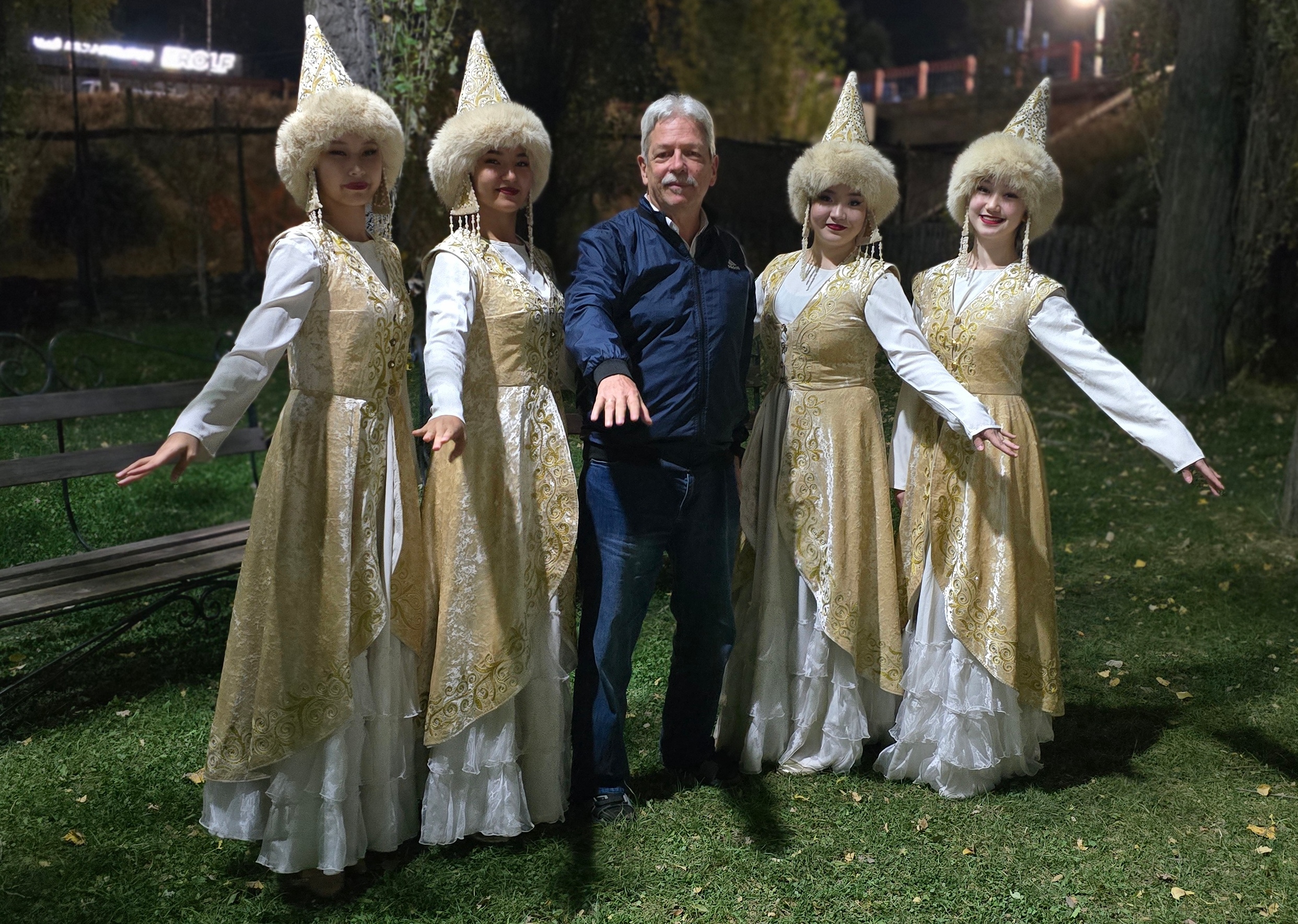
Local villagers proved equally welcoming, seemingly entirely at ease in my presence, as seen in the photograph below.

Kazakhstan was another country where I had the honor and pleasure of meeting many friendly Muslims. One of my most notable encounters occurred on a small mountain overlooking the city of Almaty.
While walking along the ridge, I was taken aback by the unexpected sight of statues dedicated to the Beatles. Both foreign tourists and local Kazakhs were enthusiastically taking pictures with Liverpool’s “Fab Four.”
Intrigued, I asked some of the locals about the connection between their country and the legendary British band. Older Kazakhs explained to me that they had absolutely loved the Beatles and had spent the 1970s listening to their music—and no, they didn’t have to hide their transistor radios under their pillows, as many in the West would have believed.
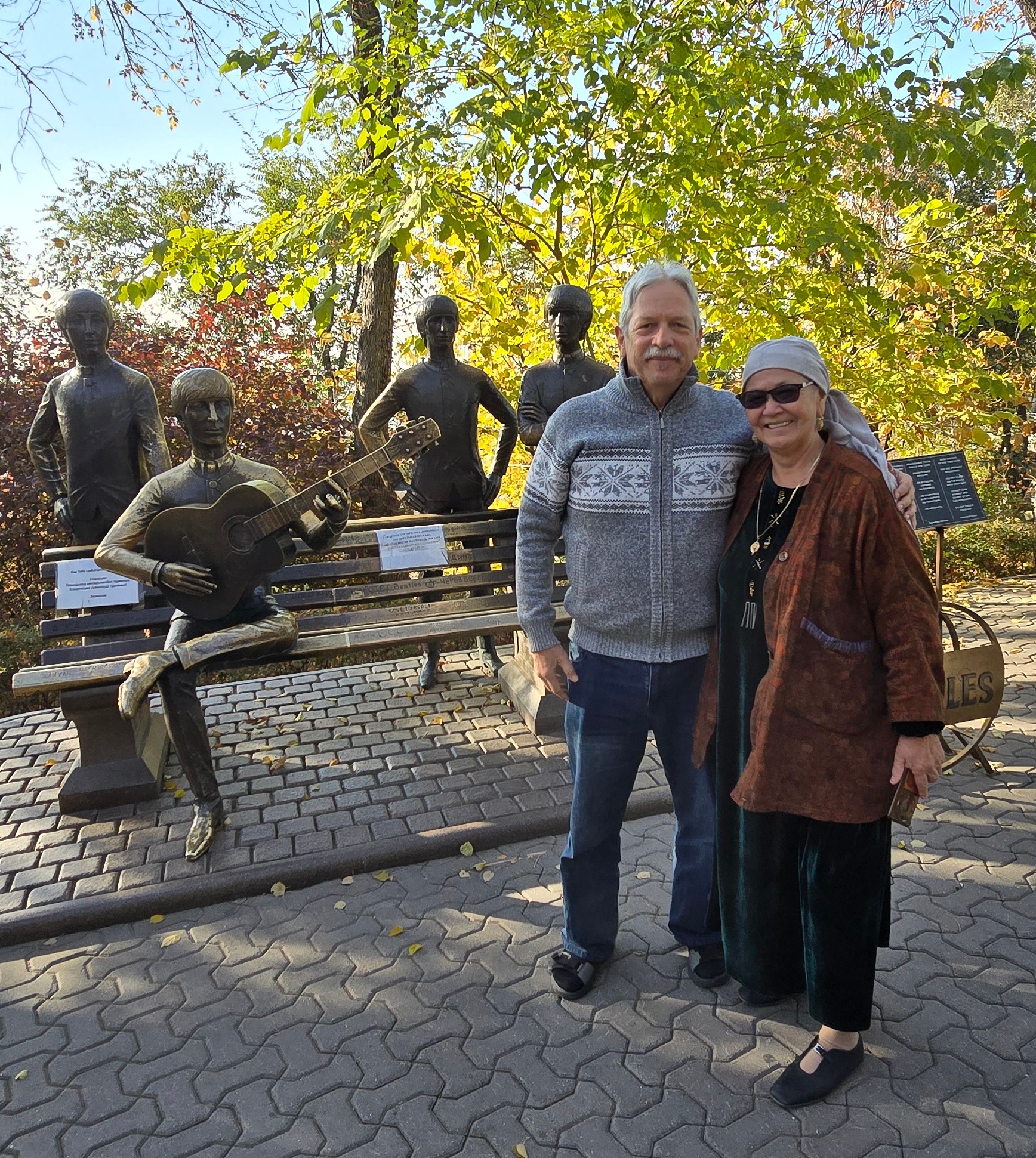
I was flabbergasted. When I was a young teenager growing up in Switzerland, my schoolteacher had once told us: “You guys are lucky that you can enjoy the music of the Beatles. The slaves behind the Iron Curtain cannot.”
The “Iron Curtain” was a ubiquitous propaganda term used in the West to portray the Soviet Union and its “satellite states” as completely closed societies whose citizens were entirely cut off from the outside world. Kazakhstan, at the time, was a Soviet republic. Standing there on that mountain, I realized just how misleading the narrative of my schoolboy days truly was. I had to travel all the way to Central Asia to discover that reality was vastly different from the story we had been told.
Just as the Cold War narrative of my youth had drawn a false, monolithic caricature of life behind the “Iron Curtain,” I realized that today, a new media and political apparatus work tirelessly to build an equally formidable psychological curtain between the West and the Muslim world. The fearful, antagonistic imagery broadcast by Western pundits, funded by special interests, and championed by populist politicians evaporates the moment you step across that divide.
The consequences of this Western hostility are intensely real for ordinary people. I recall a wealthy Malaysian businessman who obtained his engineering degree in Germany and speaks fluent German. He told me that he used to take his family on luxury vacations to Germany. However, after ordinary citizens repeatedly insulted his wife and daughter in public simply for wearing the hijab, he decided he would no longer spend his time or money there.
Fortunately, welcoming alternatives exist elsewhere. For instance, on Vietnam’s highest mountain, there is a restaurant catering specifically to Muslim travelers called “Sharia”—a name that alone would trigger many in the West.
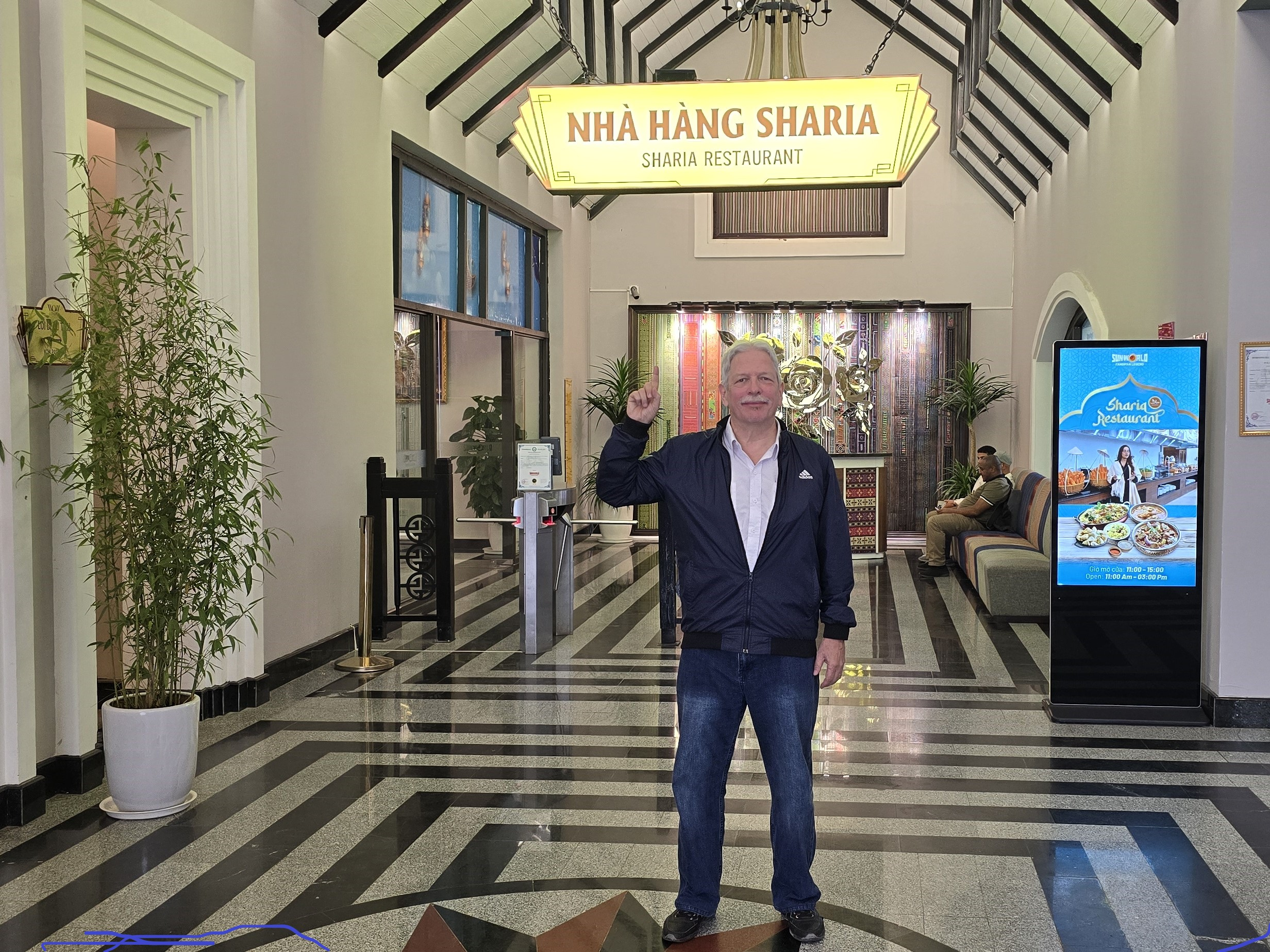
I have witnessed firsthand just how much middle- and upper-class Muslim tourists enjoy themselves there, as I captured in a video. Pragmatic and tolerant, Vietnam welcomes them with open arms, reaping significant economic benefits from travelers who are increasingly shunned elsewhere.

To rely solely on mainstream Western headlines is to view a quarter of the world’s population through a distorted lens of perpetual conflict and suspicion. My journey through Central Asia and encounters around the globe prove that the antidote to this manufactured fear is remarkably simple: presence.
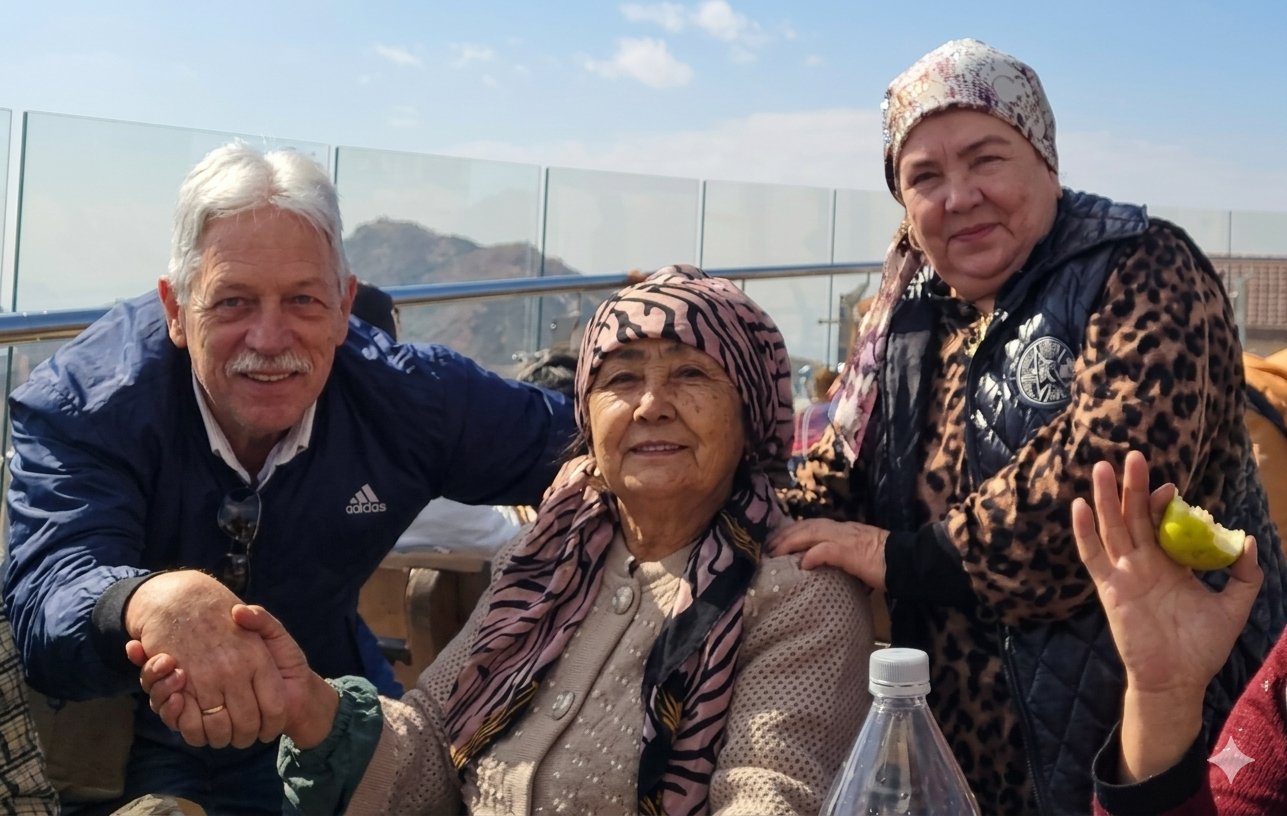
My personal experiences with Muslims across Central Asia and throughout the wider world have taught me a profound truth: we must refuse to let weaponized fearmongering dictate how we view our fellow human beings, just as we must refuse to allow corporate propaganda, social media echo chambers, or so-called alternative media disinformation—often driven by special interests and hidden agendas—to overwrite human reality.
To truly understand the Muslim world, we must possess the courage to shatter our preconceptions, look past the venom of Western media rhetoric, and witness the truth with our own eyes. When we do—when we actively cross these manufactured divides, sit at their tables, and break their bread—we confront an undeniable reality that no sensationalized headline can erase: a global community defined not by the hostility fabricated in the West, but by an expansive capacity for warmth, radical hospitality, and a simple, heartfelt hand extended in unwavering solidarity.

CovertAction Magazine is made possible by subscriptions, orders and donations from readers like you.
Blow the Whistle on U.S. Imperialism

Click the whistle and donate
When you donate to CovertAction Magazine, you are supporting investigative journalism. Your contributions go directly to supporting the development, production, editing, and dissemination of the Magazine.
CovertAction Magazine does not receive corporate or government sponsorship. Yet, we hold a steadfast commitment to providing compensation for writers, editorial and technical support. Your support helps facilitate this compensation as well as increase the caliber of this work.
Please make a donation by clicking on the donate logo above and enter the amount and your credit or debit card information.
CovertAction Institute, Inc. (CAI) is a 501(c)(3) non-profit organization and your gift is tax-deductible for federal income purposes. CAI’s tax-exempt ID number is 87-2461683.
We sincerely thank you for your support.
Disclaimer: The contents of this article are the sole responsibility of the author(s). CovertAction Institute, Inc. (CAI), including its Board of Directors (BD), Editorial Board (EB), Advisory Board (AB), staff, volunteers and its projects (including CovertAction Magazine) are not responsible for any inaccurate or incorrect statement in this article. This article also does not necessarily represent the views the BD, the EB, the AB, staff, volunteers, or any members of its projects.
Differing viewpoints: CAM publishes articles with differing viewpoints in an effort to nurture vibrant debate and thoughtful critical analysis. Feel free to comment on the articles in the comment section and/or send your letters to the Editors, which we will publish in the Letters column.
Copyrighted Material: This web site may contain copyrighted material the use of which has not always been specifically authorized by the copyright owner. As a not-for-profit charitable organization incorporated in the State of New York, we are making such material available in an effort to advance the understanding of humanity’s problems and hopefully to help find solutions for those problems. We believe this constitutes a ‘fair use’ of any such copyrighted material as provided for in section 107 of the US Copyright Law. You can read more about ‘fair use’ and US Copyright Law at the Legal Information Institute of Cornell Law School.
Republishing: CovertAction Magazine (CAM) grants permission to cross-post CAM articles on not-for-profit community internet sites as long as the source is acknowledged together with a hyperlink to the original CovertAction Magazine article. Also, kindly let us know at info@CovertActionMagazine.com. For publication of CAM articles in print or other forms including commercial internet sites, contact: info@CovertActionMagazine.com.
By using this site, you agree to these terms above.
About the Author

Felix Abt is the author of “A Capitalist in North Korea: My Seven Years in the Hermit Kingdom” and of “A Land of Prison Camps, Starving Slaves and Nuclear Bombs?”
He can be reached via his Twitter account.


 Radhika Desai is a Professor of Political Studies at the University of Manitoba, Winnepeg, Canada, Director of its Geopolitical Economy Research Group, and Convenor of the International Manifesto Group. Ms. Desai is an author of multiple books, including Geopolitical Economy(2013) and her most recent Capitalism, Coronavirus and War(2022). Ms. Desai hosts a fortnightly show, Geopolitical Economy Hour on the Geopolitical Economy Report website.
 Yan Pan is a Chinese PhD researcher at LUT University, Finland. Her work examines the political economy of China’s technological and industrial development, with a particular focus on the industrialization and governance of neurotechnology in China. Her research concerns industrial policy models for future industries in Chinese and Global South contexts. Prior to her PhD, she researched educational reforms and structural change in labor demand in China.
 Ken Hammond is professor emeritus of East Asian and Global History at New Mexico State University. He has lived and worked in China from time to time since 1982. A lifelong political activist, he is a member of the Party for Socialism and Liberation.