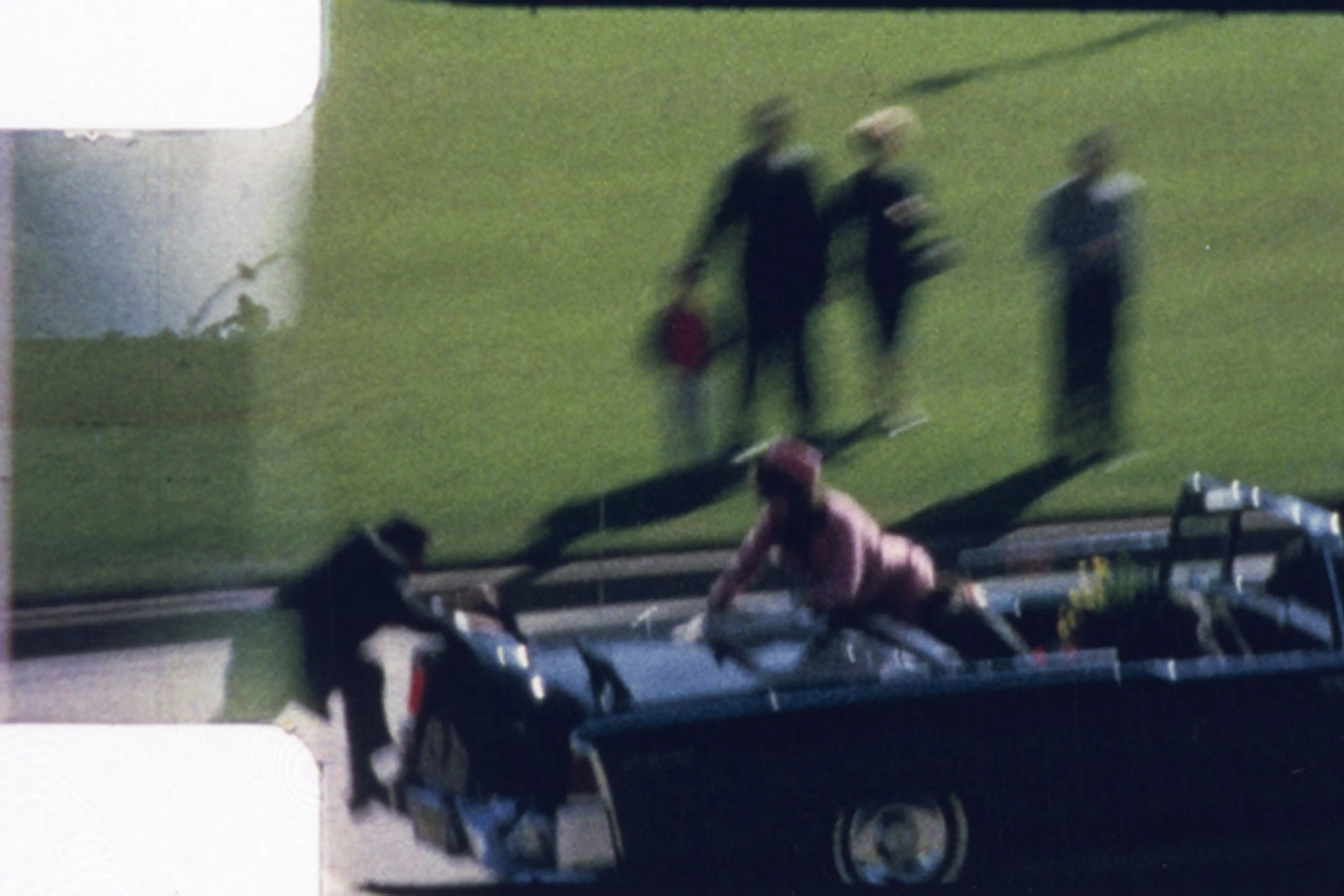
What the Early 1960s Movies Tell Us About JFK Assassination Motives
I do not want to be President of a destroyed world perishing under the mushroom clouds of nuclear holocaust. If the Presidency is not used to lead us from the edge of destruction—to restore America to the path of greatness and leadership—then the office itself is worthless.
—Presidential candidate John F. Kennedy, speech at Young People for Kennedy rally in Portland, Oregon, May 15, 1960
In the early 1960s most Americans were worried about nuclear war, especially with the Soviet Union. We were scared that the crisis with Cuba could lead to nuclear war. A much smaller number of people were afraid of Communists. But that minority included some powerful people, notably high-ranking generals. Popular books and films of the time included thrillers about accidental or delusional nuclear war.
By late 1963 Kennedy suspected that his generals would try to stage a military coup against him, maybe even assassinate him, because of his nuclear test ban treaty and steps toward rapprochement with Cuba and the Soviet Union. The Joint Chiefs and other powerful right-wing generals hated him for what they saw as his chickening out on invading Cuba in 1961 and backing down with the Soviets during the Cuban Missile Crisis in 1962. They were fanatically anti-Communist, and they hated his attempt to roll back U.S. nuclear weapons.
The generals that President Kennedy particularly feared included the 1962 head of the Joint Chiefs of Staff, General Lyman Lemnitzer, who supported the CIA’s Operation Northwoods, which sought to overthrow the Cuban government through false-flag and terrorist means.
Lemnitzer was demoted by Kennedy to heading NATO. The president also fired General Charles P. Cabell, deputy director of the CIA, along with his CIA superior, Allen Dulles. He replaced the CIA director with Republican John McCone, whose chief quality was his devotion to disarmament: As chairman of the Atomic Energy Commission, in December 1960, McCone had leaked to Seymour Hersh at The New York Times that Israel was developing a nuclear weapon at Dimona. In Hersh’s view, Kennedy was “fixated” on Israel’s drive to acquire a nuclear weapon.[1]
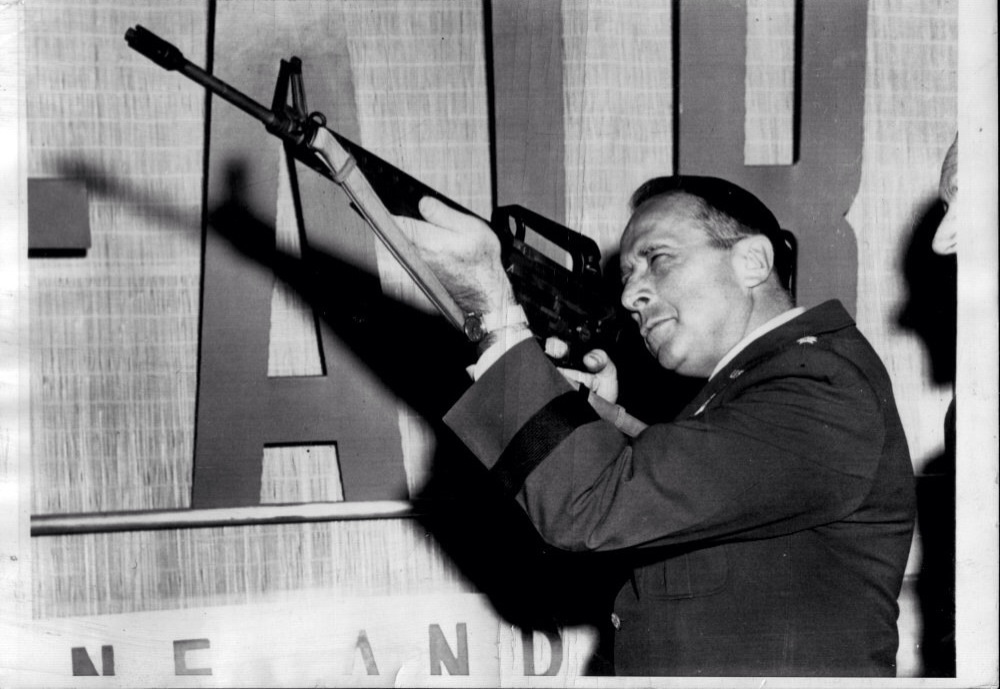
Air Force General Curtis LeMay was one of the Joint Chiefs that many considered literally insane. He accused the president of appeasing the Soviets at a meeting of the Joint Chiefs during the Cuban Missile Crisis. After the meeting, the president told his aide Dave Powers, “These brass hats have one great advantage in their favor. If we listen to them, and we do what they want us to do, none of us will be alive later to tell them they were wrong.”[2]
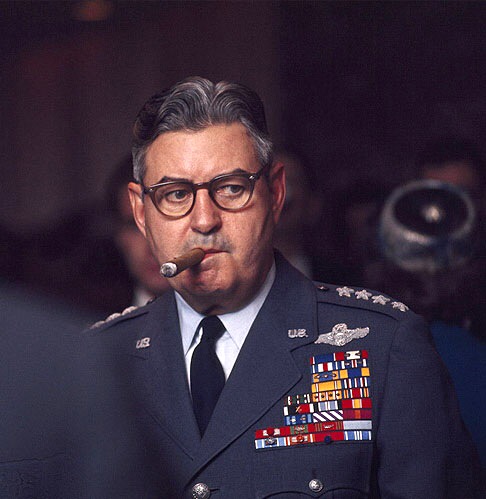
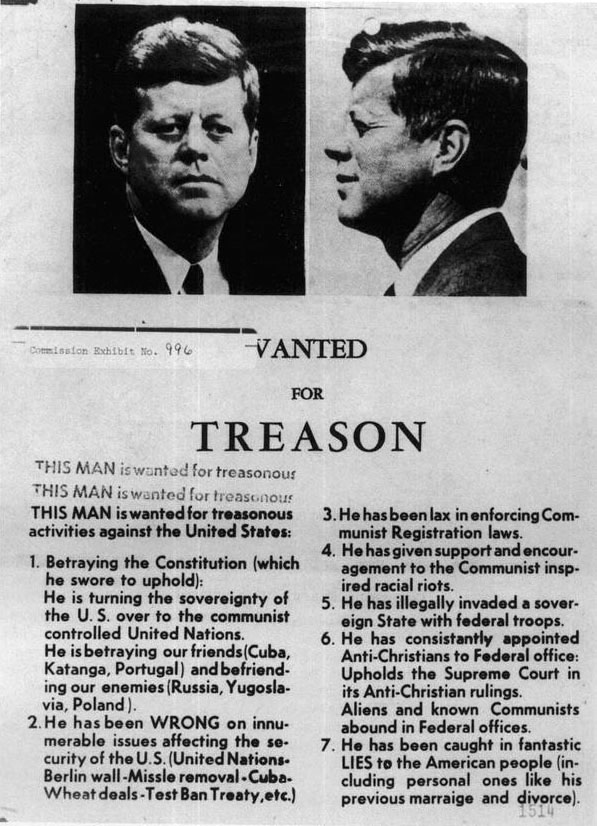
The general that Kennedy perhaps feared the most was “retired” General Edwin P. Walker. Kennedy relieved him of command in Europe in April 1961 and of his U.S. duties in November 1961. Walker claimed the last five U.S. presidents were Communists. Rather than relaxing in comfortable retirement in his home in Dallas, Walker went on the John Birch Society circuit.
Walker told students on college campuses that integration was “a plot of the anti-Christ.” After Walker started a riot in which two demonstrators were killed at the University of Mississippi, the president’s brother, Attorney General Robert Kennedy, had Walker arrested for seditious conspiracy, insurrection and rebellion. RFK had Walker put in a mental hospital for five days. Walker considered himself a “political prisoner” of the Kennedys.[3]
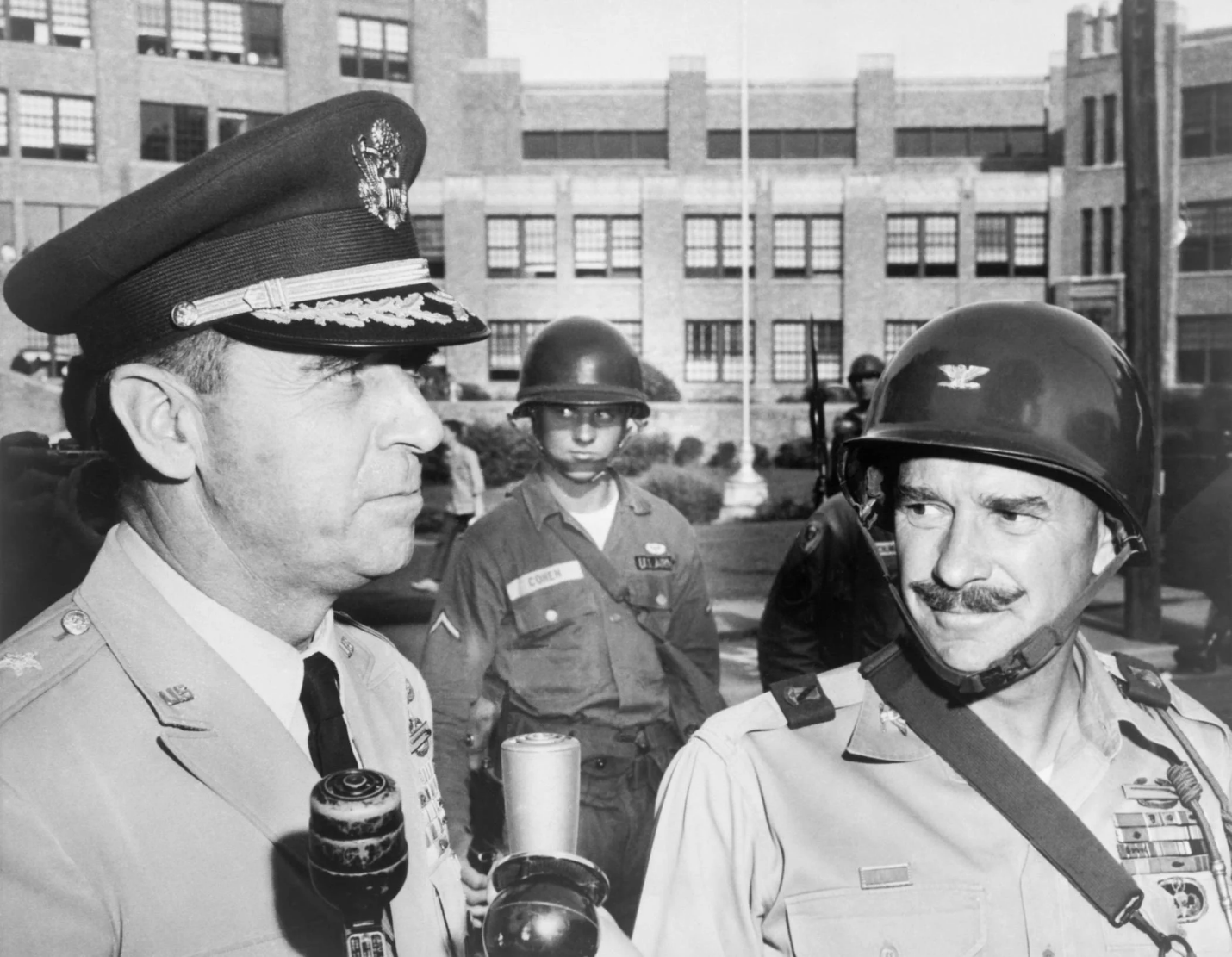
Ominously, on April 10, 1963, someone took a casual shot at Walker one night from outside his Dallas home. Walker was not injured, and the shooter was not found. Many people hated Walker, but if he was killed by a civil rights activist or a left winger, it could throw the country into chaos.
Utterly unknown to President Kennedy (or anyone else other than those conspiring to kill him), the shooting was part of an elaborate legend being concocted to frame his future “killer,” Lee Oswald, as a “Comsymp.”[4]
Ineluctable Nuclear Extinction: On the Beach
John Kennedy was a voracious reader, and he loved movies. When he became president in 1961, World War II hero Kennedy made disarmament and preventing nuclear war a primary concern. Beginning in the summer of 1959, he began a serious personal relationship with peace activist Mary Meyer. Unfortunately, she was the former wife of the CIA officer who headed Operation Mockingbird and was also the best friend of the CIA’s most secretive counterintelligence chief, James Jesus Angleton.[5]
Presidential candidate Kennedy was familiar with Australian engineer Nevil Shute’s 1957 best-selling novel On the Beach (set in 1964). He even referenced it during his 1960 presidential campaign speech at a Young People for Kennedy rally:
In the novel On the Beach by Nevil Shute—the story of the destruction of civilization in World War III—there is a scene in which the few remaining Americans—two naval officers and a few crewmen—are gathered in Australia. One of the officers receives a message that the other officer is dying from radiation sickness, and that he is now Commander in Chief of the American Armed Forces. The officer remarks to his crew – “I could run for President.”…That is not the Presidency which I seek.
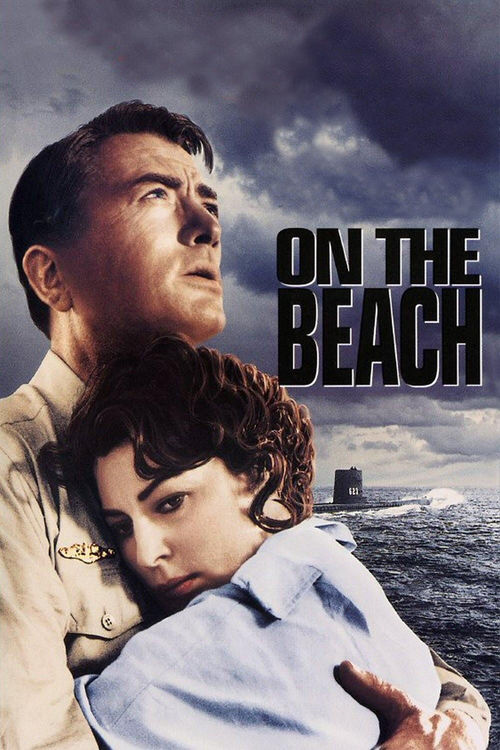
On the Beach was made into a movie in 1959, directed by Stanley Kramer and starring Ava Gardner, Gregory Peck, Anthony Perkins and Fred Astaire. A war is set off, much like World War I, with a small incident. Albania attacks Israel (!) with a nuclear weapon. Egypt, the U.S. and NATO, the Soviet Union and China become involved. Thousands of “superbombs” are dropped. Although the war is brief, the atmosphere is polluted with nuclear fallout, and all human and animal life in the Northern Hemisphere is destroyed. Australia is the last place to be poisoned by nuclear radiation.
The U.S. Department of Defense refused to allow its nuclear-powered submarines to be used in the filming. The Eisenhower administration did not want to support a film about the extinction of humanity as a result of nuclear war.
Nuclear Armageddon Resulting from Insanity: Dr. Strangelove
Filmmaker Stanley Kubrick read Red Alert, a 1958 novel about unexpected nuclear war, by Peter George (aka Bryan Peters / Peter Bryant). Kubrick hired George to co-write a screenplay based on Red Alert. In George’s screenplay, a senile lower-level SAC commander launches a preventive nuclear attack on the Soviet Union, in accordance with fictional policies.
When the president becomes aware of the launch, he tries unsuccessfully to help the Soviets intercept the U.S. bombers. To prevent an all-out Soviet-U.S. nuclear war, the president offers the Soviet premier the opportunity to bomb an American city of his choice. Just in time, the deadly bomber is shot down.
This novel was the basis for Kubrick’s eventual film Dr. Strangelove or: How I Learned to Stop Worrying and Love the Bomb.
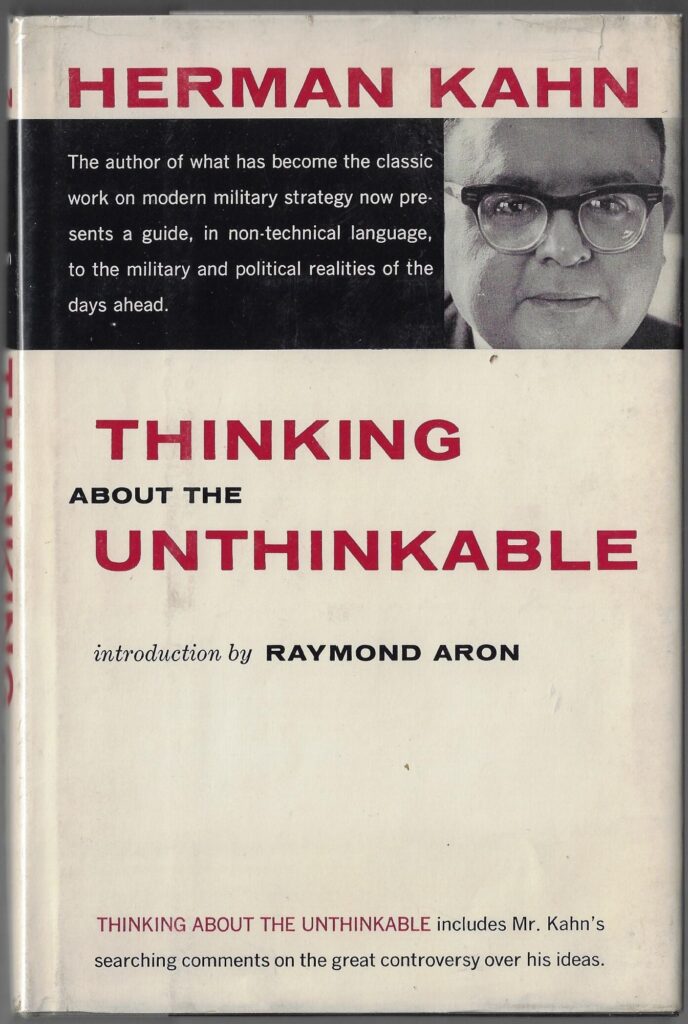
In 1960, RAND Corporation’s larger-than-life think tanker Herman Kahn published On Thermonuclear War (Princeton University Press) in which he promoted winning a nuclear war. Scientific American editor James R. Newman called the book “a moral tract on mass murder: how to plan it, how to commit it, how to get away with it, how to justify it.”[6]
Kubrick said he owned 70 or 80 books on nuclear strategy, including Kahn’s Thinking about the Unthinkable (1962). Kubrick consulted Kahn. The film’s Doomsday machine, a Soviet “deterrent” device that would destroy the planet in the event of a nuclear attack, came directly from Kahn’s On Thermonuclear War.
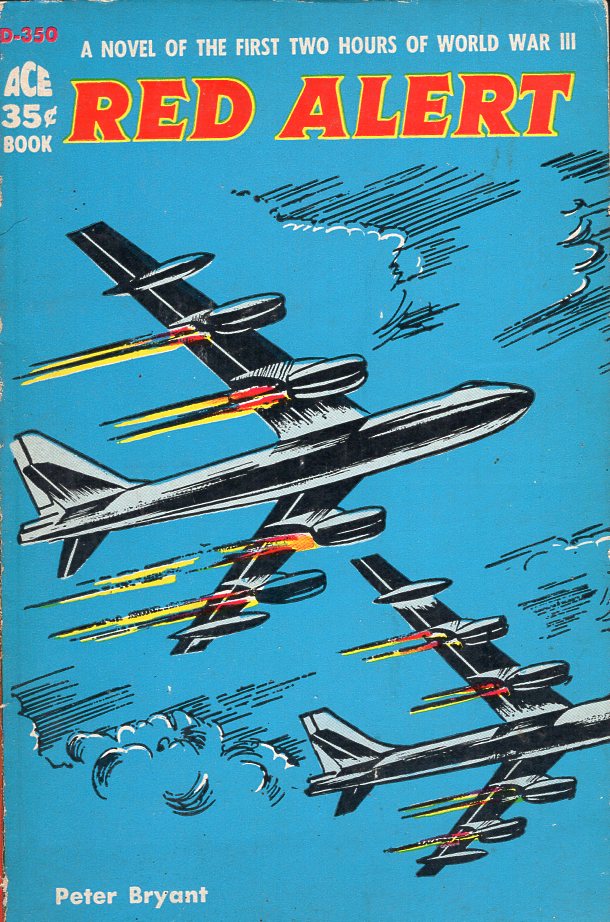
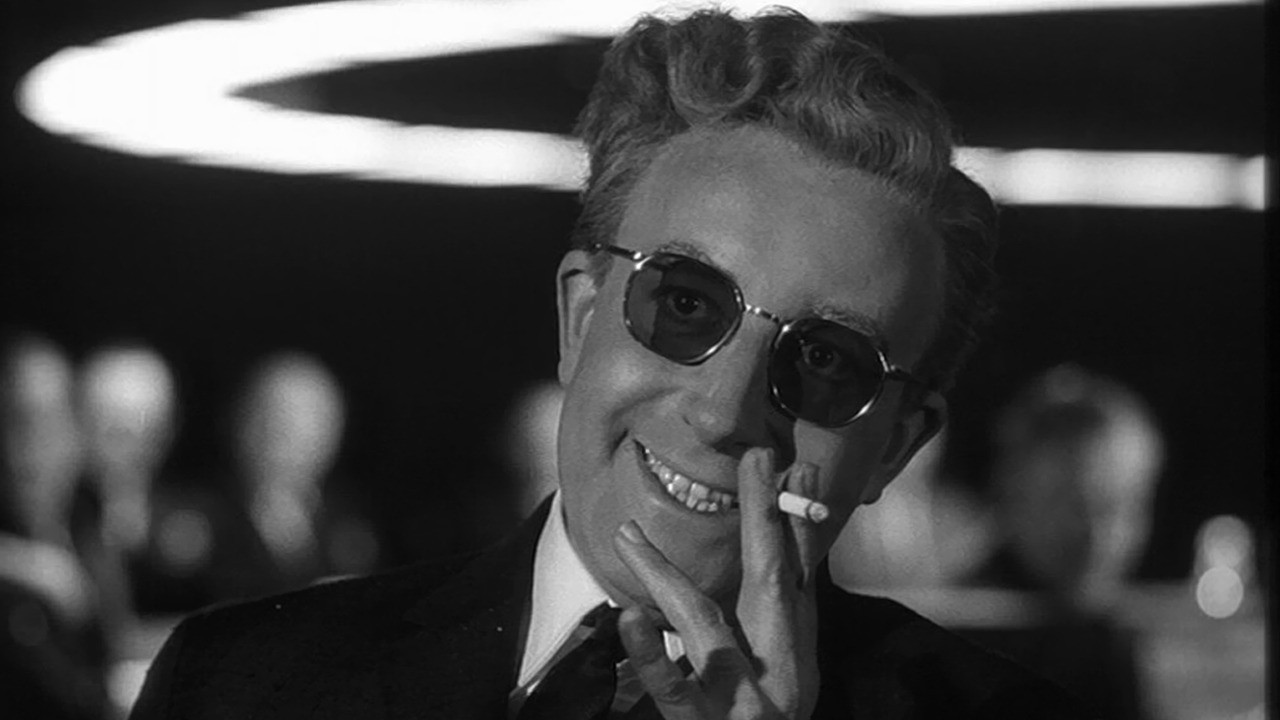
Peter George helped write the script, but there are important differences between Red Alert and Strangelove. Red Alert is not comedic, yet it has a “happy” ending. The nuclear bomber crashes, and the U.S. president vows to devote himself to world peace. Strangelove, which is satiric and grimly humorous, ends in creepy musical nuclear holocaust.
The characters in Dr. Strangelove are recognizable composites. Candidate models for Dr. Strangelove are Herman Kahn himself; Hungarian theoretical physicist Edward Teller, “father of the H bomb,” opponent of nuclear test bans, and adviser to Israel;[7] and Prussian former Nazi rocket scientist Wernher von Braun. Joint Chiefs General Curtis LeMay clearly resembles the paranoid General Jack D. Ripper with his characteristic cigar.
LeMay openly advocated a pre-emptive nuclear strike on the USSR and is infamous for saying he would “bomb North Vietnam back to the Stone Age.” (Compare our current Commander-in-Chief, with the Kubrick-sounding name Donald J. Trump, threatening Iran that “a whole civilization will die tonight.”)
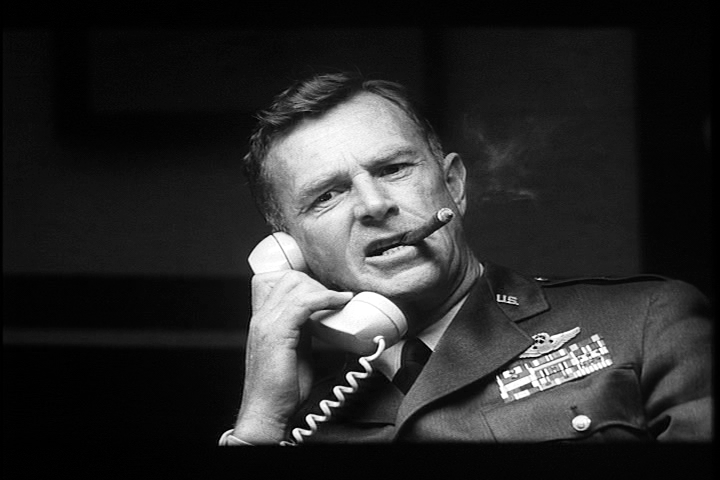
The film originally ended with a zany food fight in the Pentagon’s War Room with the president being hit by an enormous custard pie. General Turgidson yells, “Gentlemen! Our gallant young president has just been struck down in his prime!”[8]
Dr. Strangelove was set to be released on November 22, 1963. Because our gallant young president was struck down that day, the tragi-comic food fight was cut. The film was released in January 1964.
Accidental Nuclear War: Fail Safe
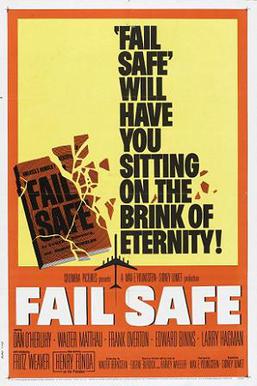
In 1962 political scientist and novelist Eugene Burdick (also author of The Ugly American) and fellow think tanker Harvey Wheeler published a bestselling novel, Fail-Safe, with a plot so similar to that of Red Alert that Peter George sued the authors for plagiarism. Like Red Alert, and unlike Dr. Strangelove, it is not a comedy.
It is not known whether President Kennedy read George’s 1958 novel or how much he knew about the film Kubrick was making, but he surely read Fail-Safe. It appeared at the peak of the Cuban Missile Crisis. The book terrified him with the possibility of accidental nuclear war at a time when prominent generals were lusting for war against the USSR.[9]
Kennedy pushed for the book to be made into a film.
Fail-Safe, the book, was indeed made into a film that was also released in 1964 after Kennedy’s murder.
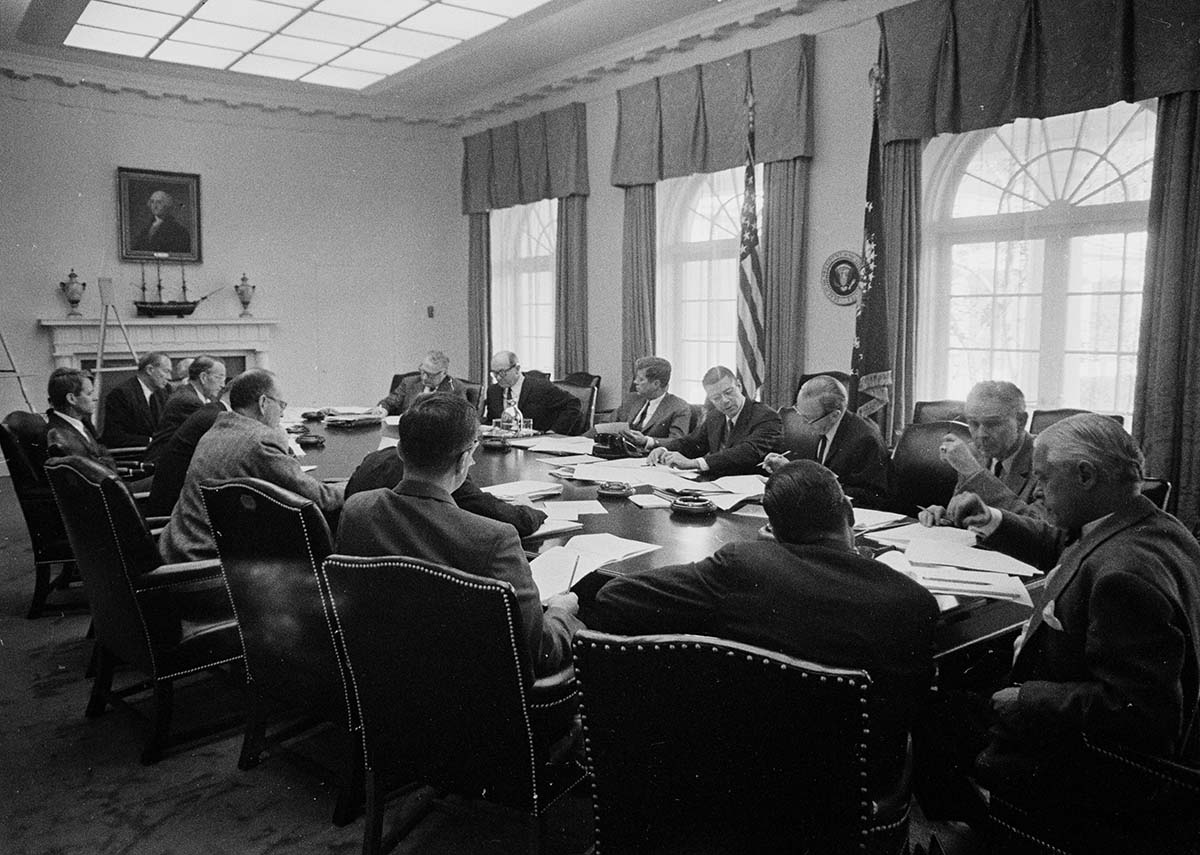
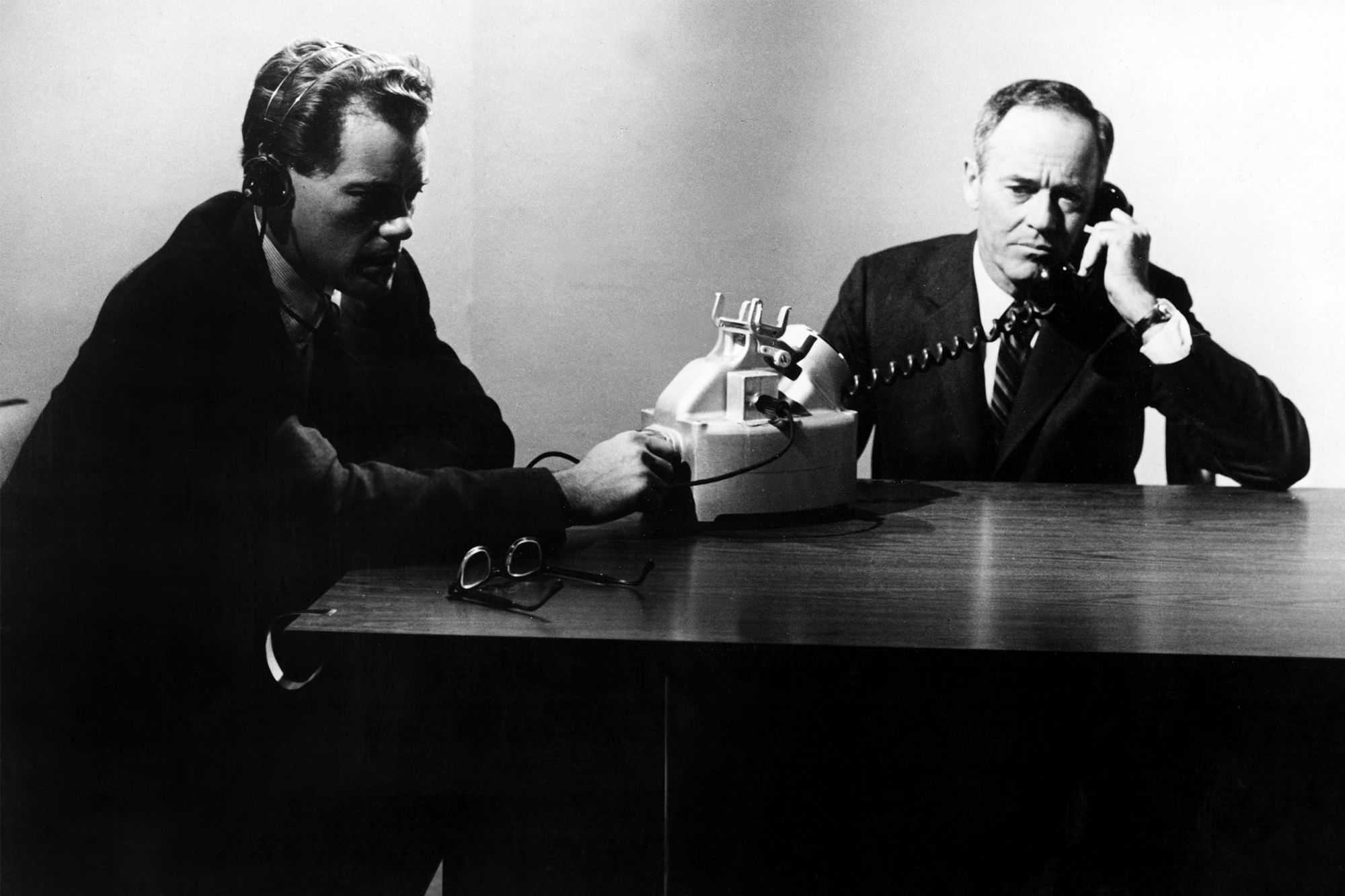
In 1965 Peter George completed a grim novel he called Commander-1 that included descriptions of actual nuclear war and its aftermath. In Commander-1 a small group, including civilian guinea pigs in a science experiment, survive the war among the U.S., the Soviet Union and China in a Navy submarine. They emerge on a Pacific island only to suffer from the brutal dictatorship of the submarine commander.
The successful coup against the peace president John Kennedy and the subsequent end of Soviet-U.S. efforts to stop nuclear proliferation affected author George deeply. George drank heavily. In June 1966 he committed suicide in the same manner as he describes his protagonist doing in Commander-1.
Coup Against the No-Nukes President: Seven Days in May
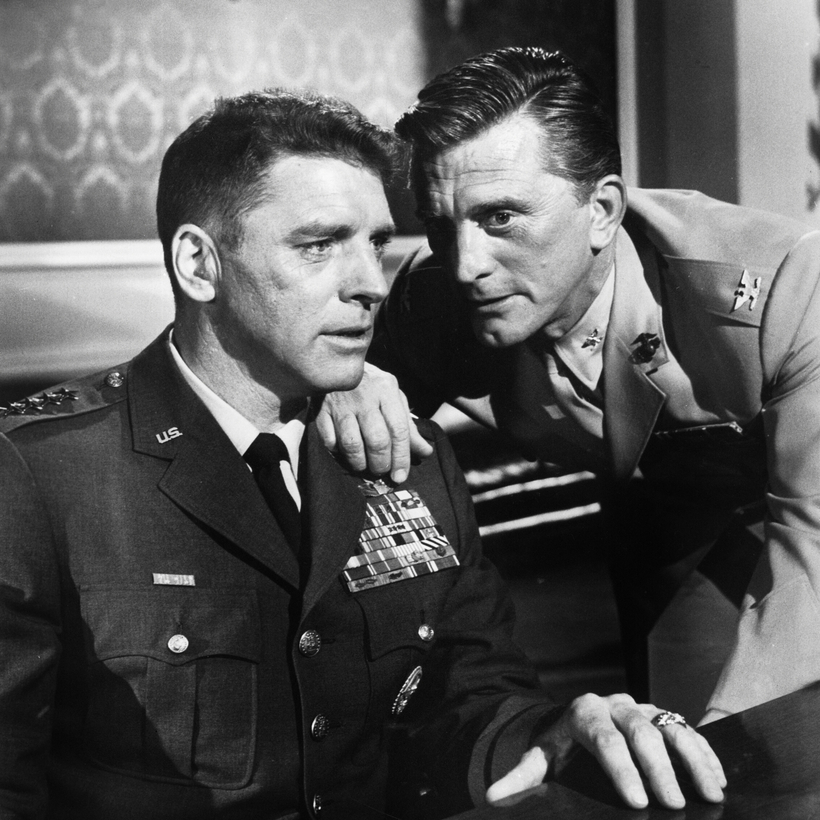
In September 1962 Fletcher Knebel and Charles W. Bailey II published the political thriller Seven Days in May. This novel did not portray nuclear war itself but the overthrow of a U.S. president because he signed a nuclear treaty with the Soviets (as Kennedy subsequently did just a year later). In the novel, top generals consider the president to be a Communist appeaser and realistically plot to get rid of him, presumably by killing him.
Knebel was a Harvard classmate and friend of President Kennedy. He said the idea for the novel came to him while he was interviewing General LeMay: “He upbraided President Kennedy for calling off an air strike against Cuba, implying that the Kennedy team was ‘too weak’ to cope with a harsh world.” Knebel wondered: “Coups were common elsewhere in the world….What would happen if a cabal of top generals and admirals plotted to overthrow the elected civilian government of the United States?” He became obsessed with writing a fictional story about it.[10]
President Kennedy read an advance copy of the novel.
When Kennedy exclaimed to his advisers in September 1962 regarding fired General Walker’s defiance of integration laws—“Imagine that son of a bitch having been commander of a division!”—one of his advisers asked him, “Have you read Seven Days in May?”
“Yeah. I have” was the president’s reply.[11]
Seven Days in May became an immediate best-seller. In Georgetown it was seen as a roman à clef. Some saw the fictional coup leader General Scott as a composite of Curtis LeMay and Edwin Walker. Others saw him as akin to General Lyman Lemnitzer. The Secret Service Special Agent in Charge was likely Jerry Behn. The president’s Southern adviser was likely Florida’s Senator George Smathers. Of course, the president (called Jordan Lyman in the book and film) was Kennedy himself.
Among others who had read an advance copy of the book was actor and producer Kirk Douglas, who shared the galleys with director John Frankenheimer, another friend of the Kennedys.
Frankenheimer had directed the anti-Communist film The Manchurian Candidate, which was released in October 1962 just before the Cuban Missile Crisis.[12]
Kennedy let Frankenheimer know that he very much wanted to see Seven Days in May made into a film and that he would help in any way he could. He thought it would serve as a warning to his generals.[13]
Frankenheimer later said, “I felt that the voice of the military was much too strong…the General MacArthur syndrome was very much in evidence…Seven Days in May was the opportunity to illustrate what a tremendous force the military-industrial complex is.”[14]
Frankenheimer said, “We did not ask the Pentagon for co-operation because we knew we wouldn’t get it.” As part of “helping out,” Kennedy allowed Frankenheimer to sketch the interior of the Oval Office and purposely left the White House for a vacation in Hyannis Port, so the film crew “could freely shoot exterior scenes on location.”[15]
May through September 1963 was a momentous time in American history. Kennedy and his serious mistress Mary Meyer had ambitiously been working on achieving a nuclear test ban treaty with the Soviets as a prelude to total nuclear disarmament. In May Meyer visited her LSD guru Timothy Leary—LSD was the rage among the Georgetown elite at this time—and told him that the generals were plotting World War III. She persuaded the president to try LSD, which accounts for the tenor of his June 10, 1963, American University “Peace Speech” in which he virtually declared an end to the Cold War. After the speech, the president and Meyer celebrated at their friend Joseph Alsop’s house.
Ironically, the actual coup against President Kennedy was already well advanced by May and June 1963. Lee Oswald was already being set up as the patsy assassin when he was instructed to shoot at General Walker in April. The American University speech, which someone familiar with Meyer’s giving LSD to the president said exemplified his “hipification,” was not the cause of his assassination but further proof to the conspirators that it must be carried out.
Kennedy’s Limited Nuclear Test Ban Treaty, which is similar to the cause of the military coup in Seven Days in May, was ratified by the Senate on September 24, 1963.
Seven Days in May was originally set to be released in December 1963 but, like Dr. Strangelove and Fail Safe, it was not released until early 1964 because of the assassination of the president in November.
September 1963: The Kennedy Home Movie
The Kennedys spent Labor Day weekend, August 31-September 2, at the Kennedy compound at Hyannis Port and adjacent Squaw Island with family and a few friends, including his close friend from PT boat days, Under Secretary of the Navy Paul “Red” Fay and his wife Anita, and various children. The president’s official photographer and secret service came along as usual.
The photographer recorded typical home movie scenes, mostly of children playing. This is likely the sojourn that allowed Frankenheimer the opportunity to work on Seven Days in May in Washington. Kennedy told Fay that he found the Seven Days in May coup plot “possible.” He added that “the conditions would have to be just right.” This is likely when JFK suggested that Fay help him make a film about his own assassination.
From September 12 to September 15, the Kennedy family vacationed at Jackie’s family’s Hammersmith Farm in Newport, Rhode Island. This period included the Kennedys’ tenth anniversary. Guests included the First Family and friends (undercover CIA) journalist Ben Bradlee, his wife Tony Bradlee (sister of the president’s secret mistress Mary Pinchot Meyer), Senator Claiborne Pell and his wife, John Ryan, Mrs. Ryan, and Hugh Ryan, Jr., and others who are unidentified. Family films included cruising aboard the Honey Fitz and playing golf.
Before returning to Hammersmith Farm on September 21 the president had time to visit the UN where he proposed a joint U.S.-USSR Moon mission. At the same meeting Soviet Foreign Minister Andrei Gromyko announced the Soviets were prepared to sign a treaty prohibiting nuclear weapons in outer space.
From September 21 to September 23 the Kennedys again spent a weekend at Hammersmith Farm. This time guests included Red Fay and his wife and daughter, as well as Vogue editor and fashion model Countess Pauline Crespi and her son. As usual, there were eight special agents.[16] The photographer, Robert L. Knudsen, made a 19-minute, typical home movie, mostly of Fay and children in the swimming pool.
During this weekend Knudsen also made a 16-minute fictional film of the assassination of President Kennedy.[17] The president wrote the script, Jackie Kennedy was the director, and the guests and Secret Service were recruited as actors. According to Special Agent Jerry Blaine, the First Lady told him, “We’re making a film about the president’s murder.”[18]
No one who has not seen the entire film knows the exact plot. An early scene takes place on the Hammersmith Farm pier. The presidential party is debarking from the Honey Fitz. JFK suddenly clutches his chest and falls, as if shot. Princess Crespi and her young son casually step over him, and Jackie does the same. Fay trips and falls on top of him, and a “gush of red [ketchup] surged from the president’s mouth” onto his shirt.[19]
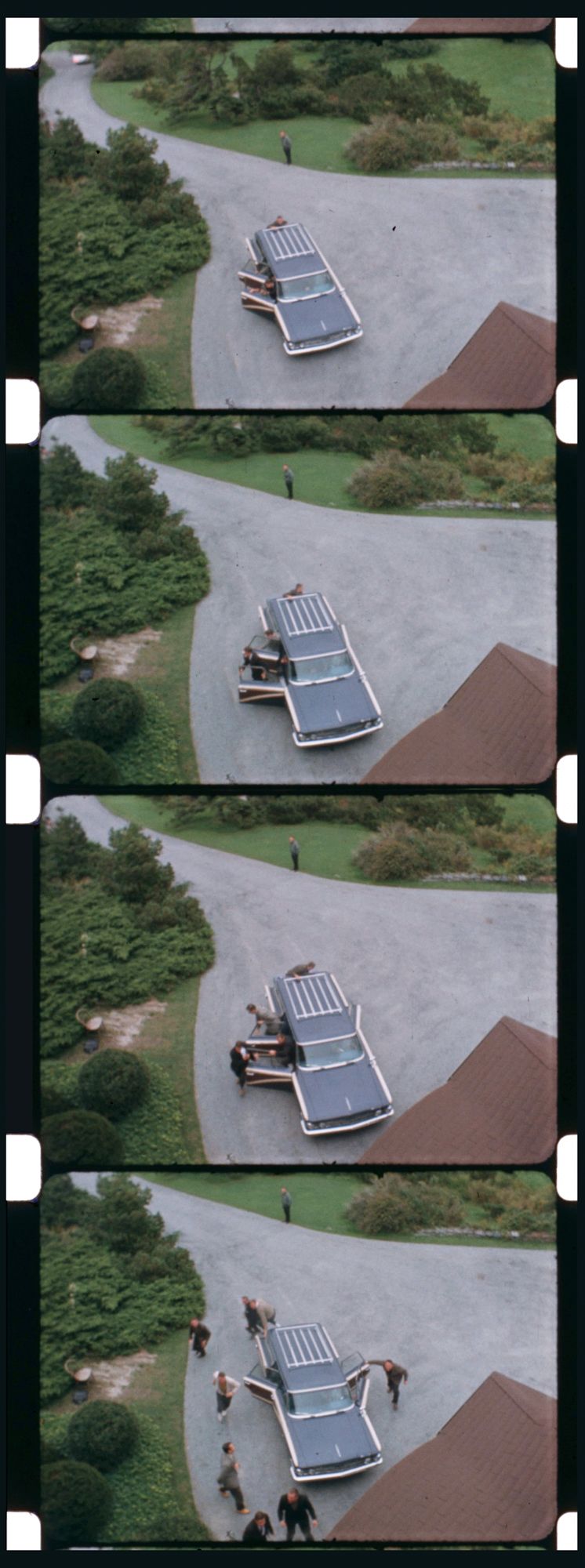
There follows a scene in which the special agents drive to the house. They pretend to hear shots, look desperate, and come to a screeching halt at the door of the house. The agents run to the door. When they enter the house, they find the president lying in the foyer. Agent Blaine said the rest of the film was made in the house.
A third series of scenes was taken behind the house. In these, a jealous love triangle involves Crespi, Fay and Jackie’s stepbrother, Hugh Auchincloss. In separate takes, Fay and Auchincloss make out with Crespi and are discovered by the other. The secret lover is murdered.
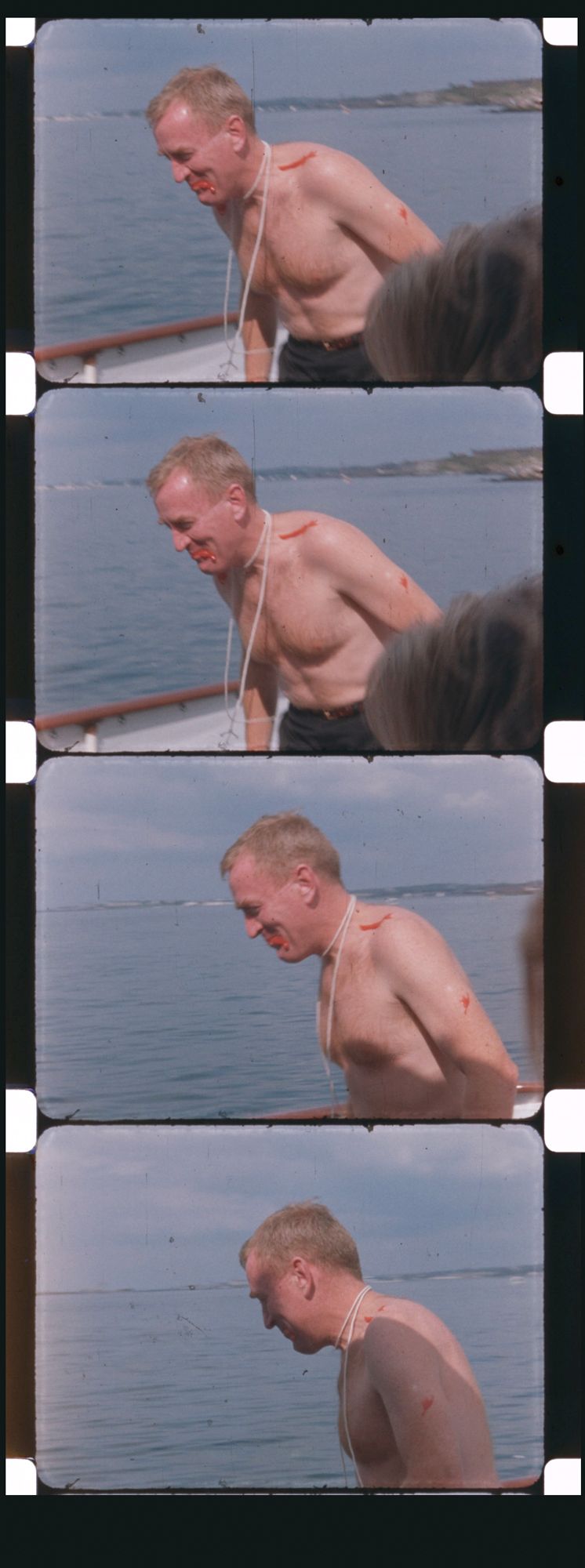
“There are other miscellaneous takes filmed on the Honey Fitz that variously show Jackie directing and JFK sitting next to Fay, who has a rope around his neck, and ketchup on his mouth and shoulder; as well as scenes in which the countess and Fay drop a pistol into a bag that is then surreptitiously spirited away. In related footage, Jackie carries the bag with the pistol, either directing or acting in the movie.”[20]
Kennedy and Jackie, Fay, and their close family friend Bill Walton screened Knudsen’s edited film on September 23, 1963.
The next day, September 24, the president traveled with Antoinette “Tony” Pinchot Bradlee and his mistress Mary Pinchot Meyer to their family estate at Milford, Pennsylvania, to dedicate the Pinchot Institute for Conservation Studies, a gift from the family to the U.S. Forest Service.
On this same day, the U.S. Senate ratified the Limited Nuclear Test Ban Treaty, which the president hoped would lead to complete nuclear disarmament. This treaty was clearly the coup starter in Seven Days in May.
According to presidential aide Ted Sorensen, Kennedy considered concluding this treaty the greatest achievement of his presidency. JFK and his pacifist lover experienced perhaps their happiest day.
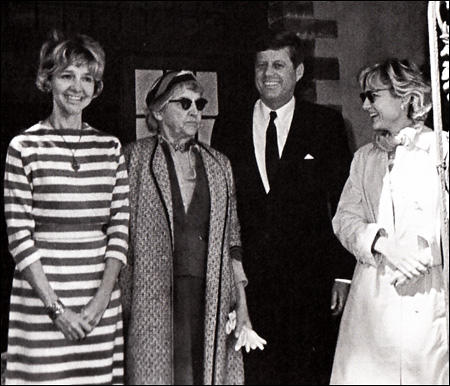
On September 30, the day before Jackie left to go on a Mediterranean cruise with Aristotle Onassis, the Kennedys screened the Knudsen presidential assassination movie for Ben and Tony Bradlee.
Although the home movie was made in a light-hearted atmosphere, it was clearly a response to Seven Days in May, not just a “spoof” on James Bond, as others have written. JFK expected to be assassinated, not by a communist or a lone gunman but in a domestic conspiracy related to nuclear disarmament. There is also a fatal jealousy theme. Just as the film Seven Days in May was JFK’s warning to the generals, the home movie might have also been a warning to his Secret Service team.
The November 22, 1963, coup that overthrew the constitutional government of the United States did not give the reactionary generals what they wanted: Cuba was not invaded, Vietnam was not saved from communism, and there was no nuclear war with the Soviet Union. Kennedy was wrong about who would kill him—but not the reason for his murder.
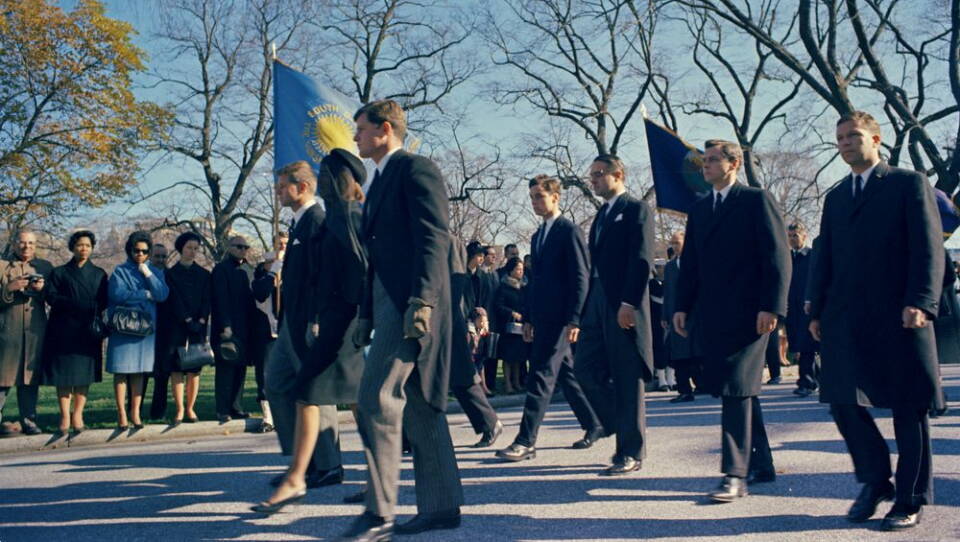
One consequence of JFK’s assassination was that Israeli Prime Minister David Ben-Gurion got the atom bomb he craved.[21] LBJ became president and the Six-Day War and attack on the USS Liberty was one consequence. And here we are today with nine nuclear-armed countries and hysteria about a non-existent Iranian atomic bomb. As the fictional president says at the climax of the film Seven Days in May: “The enemy is the Nuclear Age.”

The Samson Option: Israel’s Nuclear Arsenal and American Foreign Policy, Random House, 1991, 72–73, 100, 105, 120. ↑
https://www.nhbr.com/jfks-greatest-legacy-he-avoided-nuclear-war/. ↑
https://engelsbergideas.com/reviews/edwin-walker-deep-state-conspirator/https://www.tshaonline.org/handbook/entries/walker-edwin-a. ↑
“Comsymp” was coined in 1961 by John Birch Society founder Robert Welch as a derogatory term for a Communist or Communist sympathizer, that is, anyone on the American Left.
It is not certain whether Lee Oswald actually shot at Walker. His wife Marina testified that he did. The notes of Pierre Lafitte, one suspected key coordinator of the JFK assassination, indicate that Oswald was being set up by his CIA handlers to do it. In any case, the shooting was not planned to injure the general but to establish an intention on the part of Oswald.
President Kennedy’s trip to Dallas was solidified by April 1963. Metropolitan Police Department-CIA-White House liaison and government assassin Joseph Shimon conveyed to his daughter then that “something was going to happen” in Dallas because the president was going to get less security than the vice president. Peter Janney, Mary’s Mosaic (New York: Skyhorse, 2013), 253-54). Shimon had long been a spy for Mossad, reporting to Rafi Medan (aka Benny Murad), then an undercover journalist at the UN, and secretly meeting with Jordanian diplomat/international banker and Mossad spy Omar Dajany. docid-32313357 PDF;
(www.archives.gov) ↑
Janney, Mary’s Mosaic, 207; C. David Heymann, The Georgetown Ladies’ Social Club (New York: Atria, 2003), 57. Operation Mockingbird infiltrated the U.S. press. Angleton headed the Israel desk. ↑
Alex Abella, Soldiers of Reason: The RAND Corporation and the Rise of the American Empire (New York: Houghton Mifflin Harcourt, 2009), 103. Kahn reported taking LSD several times. His wife said of him, “Deep down in my heart I know he is a blithering idiot” (Life, December 6, 1968). Foreshadowing AI, Kahn said, “Maybe man is only the ancestor of the computer. His only role is to develop the circuits to take his place.” https://www.youtube.com/watch?v=VxGuW3aqync&t=750s. ↑
Teller has been underappreciated for his role in Israel’s acquisition of nuclear weapons. In 1952, Teller and nuclear physicist Robert Oppenheimer visited Israeli Prime Minister Ben-Gurion in Tel Aviv to explain how to accumulate plutonium by burning natural uranium in a nuclear reactor. In 1964, after the assassination of President Kennedy, Teller advised Ben-Gurion on how to build a hydrogen bomb. Michael Karpin, The Bomb in the Basement (New York: Simon & Schuster, 2005).
In 1967, just before Israel’s attack on Egypt, Teller briefed the CIA on Israel’s nuclear capability, saying it was justified by the international situation. It was Teller who persuaded Kennedy’s successor, President Lyndon Johnson, to stop inspecting the Negev Nuclear Research Center at Dimona. Teller said later of Israel, “They know that to test would get them into trouble.” Avner Cohen, Israel and the Bomb (New York: Columbia University Press, 1998), 297-300. ↑
Paul Boyer, “Dr. Strangelove,” 266-69, in Mark C. Carnes, ed., Past Imperfect: History According to the Movies, (New York: Henry Holt, 1995). ↑
Attorney General Robert Kennedy told Soviet Ambassador to the U.S. Anatoly Dobrynin toward the end of the Cuban crisis, “If the situation continues much longer, the President is not sure that the military will not overthrow him and seize power.” See Nikita Khrushchev, Khrushchev Remembers (New York: Bantam, 1971), 497-98. ↑
https://airmail.news/arts-intel/highlights/before-january-6-there-was-seven-days-in-may-928. ↑
https://airmail.news/arts-intel/highlights/before-january-6-there-was-seven-days-in-may-928 ↑
The Manchurian Candidate is associated with the assassination of the president and even more so with the subsequent 1968 assassination of his brother Robert Kennedy, who was possibly on the way to becoming president. The cabalists behind the RFK assassination choose a plot the public was already groomed to accept.
Perhaps it was. It was not his generals who planned and prepared his assassination, though they certainly had some foreknowledge and expected that the designated Communist perpetrator would lead the country into a likely nuclear-winnable war with the Soviets. In the end, LBJ and his Warren Commission outfoxed the generals (and others) by insisting the perpetrator was a lone nut. ↑
https://en.wikipedia.org/wiki/John_Frankenheimer#cite_note-Laurier_and_Walsh,_2020_WSWS-87 ↑
https://en.wikipedia.org/wiki/John_Frankenheimer#cite_note-Laurier_and_Walsh,_2020_WSWS-87 ↑
For agents Roy Kellerman, Jerry Blaine, Art Godfrey and Paul Landis it turned out to be a tragi-comic dress rehearsal for Dallas on November 22, 1963. Landis was in the motorcade that day, while Kellerman was the lead. In 1979 the House Select Committee on Assassinations declared that “the Secret Service was deficient in the performance of its duties” at the time of the assassination of President Kennedy, and that the president did not receive adequate protection in Dallas. House Select Committee on Assassinations Final Report, 227, 229-35.
Roy Kellerman, who had participated in the home movie, came in for special criticism. ↑
Red Fay and Jackie Kennedy had copies of the edited film. It is unknown what became of them. Photographer Knudsen kept about seven minutes of the footage. Knudsen spoke about the home movie once, in 1984, after Ralph G. Martin mentioned a scene from the movie in his A Hero for Our Time: An Intimate Story of the Kennedy Years (Greenwich, CT: Fawcett Crest, 1984). ↑
Gerald Blaine and Lisa McCubbin, The Kennedy Detail (New York: Gallery Books, 2010), 130. ↑
James Robenalt, “Why JFK Staged His Own Murder in a James Bond-Inspired Spy Film—2 months Before His Assassination,” Vanity Fair, November 19, 2024.
Idem.Ralph P. Ganis, The Skorzeny Papers: Evidence for the Plot to Kill JFK (New York: Skyhorse, 2020), and H. P. Albarelli,Jr., Coup in Dallas: The Decisive Investigation into Who Killed JFK (New York: Skyhorse, 2021), provide compelling evidence that Nazi Col. Otto Skorzeny orchestrated the assassination of the president using OAS Colonel Jean Souetre as head of snipers.
Skorzeny was recruited by Mossad in late 1962 or early 1963. See my three-part series in CovertAction Magazine “Who Killed Heinz Krug?” for evidence Israeli Prime Minister David Ben-Gurion instigated the assassination of the president. Former CIA Director Allen Dulles and Deputy Director (General) Charles P. Cabell, working with CIA Israeli desk chief J.J. Angleton, joined in Ben-Gurion’s scheme after Angleton met privately with him in his Negev retreat in the spring of 1963. ↑
CovertAction Magazine is made possible by subscriptions, orders and donations from readers like you.
Blow the Whistle on U.S. Imperialism
Click the whistle and donate
When you donate to CovertAction Magazine, you are supporting investigative journalism. Your contributions go directly to supporting the development, production, editing, and dissemination of the Magazine.
CovertAction Magazine does not receive corporate or government sponsorship. Yet, we hold a steadfast commitment to providing compensation for writers, editorial and technical support. Your support helps facilitate this compensation as well as increase the caliber of this work.
Please make a donation by clicking on the donate logo above and enter the amount and your credit or debit card information.
CovertAction Institute, Inc. (CAI) is a 501(c)(3) non-profit organization and your gift is tax-deductible for federal income purposes. CAI’s tax-exempt ID number is 87-2461683.
We sincerely thank you for your support.
Disclaimer: The contents of this article are the sole responsibility of the author(s). CovertAction Institute, Inc. (CAI), including its Board of Directors (BD), Editorial Board (EB), Advisory Board (AB), staff, volunteers and its projects (including CovertAction Magazine) are not responsible for any inaccurate or incorrect statement in this article. This article also does not necessarily represent the views the BD, the EB, the AB, staff, volunteers, or any members of its projects.
Differing viewpoints: CAM publishes articles with differing viewpoints in an effort to nurture vibrant debate and thoughtful critical analysis. Feel free to comment on the articles in the comment section and/or send your letters to the Editors, which we will publish in the Letters column.
Copyrighted Material: This web site may contain copyrighted material the use of which has not always been specifically authorized by the copyright owner. As a not-for-profit charitable organization incorporated in the State of New York, we are making such material available in an effort to advance the understanding of humanity’s problems and hopefully to help find solutions for those problems. We believe this constitutes a ‘fair use’ of any such copyrighted material as provided for in section 107 of the US Copyright Law. You can read more about ‘fair use’ and US Copyright Law at the Legal Information Institute of Cornell Law School.
Republishing: CovertAction Magazine (CAM) grants permission to cross-post CAM articles on not-for-profit community internet sites as long as the source is acknowledged together with a hyperlink to the original CovertAction Magazine article. Also, kindly let us know at info@CovertActionMagazine.com. For publication of CAM articles in print or other forms including commercial internet sites, contact: info@CovertActionMagazine.com.
By using this site, you agree to these terms above.
About the Author
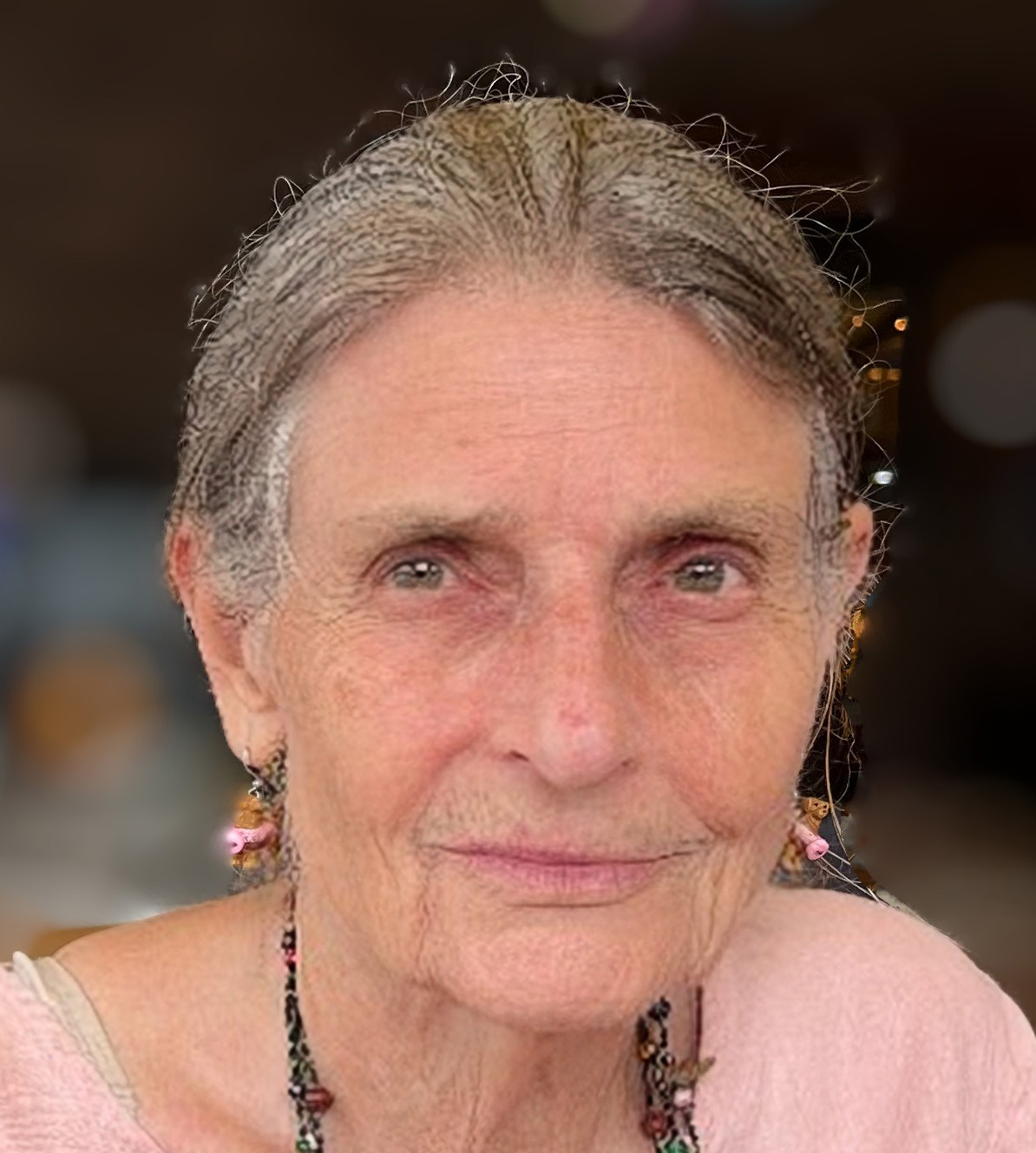
Kathleen Meigs is a thirteenth generation American and walked precincts for John Kennedy for president in 1960.
She matriculated at Stanford University, graduated from UCLA in history and has been a journalist, editor, and published academic author.
Her anthropological novel Mishopshno is available on Amazon. Her love is research, and her passion is truth and good government.
Kathleen can be reached at katymeigs@sbcglobal.net.

 Radhika Desai is a Professor of Political Studies at the University of Manitoba, Winnepeg, Canada, Director of its Geopolitical Economy Research Group, and Convenor of the International Manifesto Group. Ms. Desai is an author of multiple books, including Geopolitical Economy(2013) and her most recent Capitalism, Coronavirus and War(2022). Ms. Desai hosts a fortnightly show, Geopolitical Economy Hour on the Geopolitical Economy Report website.
 Yan Pan is a Chinese PhD researcher at LUT University, Finland. Her work examines the political economy of China’s technological and industrial development, with a particular focus on the industrialization and governance of neurotechnology in China. Her research concerns industrial policy models for future industries in Chinese and Global South contexts. Prior to her PhD, she researched educational reforms and structural change in labor demand in China.
 Ken Hammond is professor emeritus of East Asian and Global History at New Mexico State University. He has lived and worked in China from time to time since 1982. A lifelong political activist, he is a member of the Party for Socialism and Liberation.


Excellent well written article:
Here is a video of one of Kennedy’s speeches.
https://www.youtube.com/watch?v=yBQvKXIDiuc