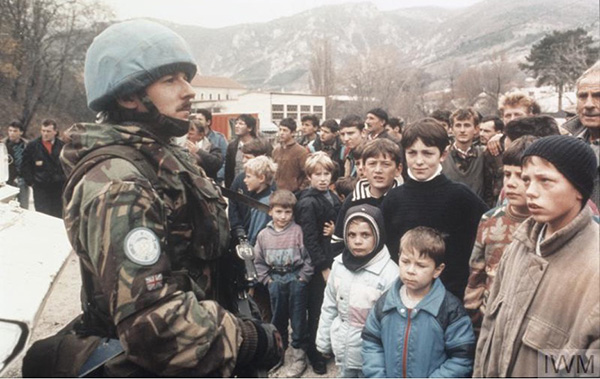
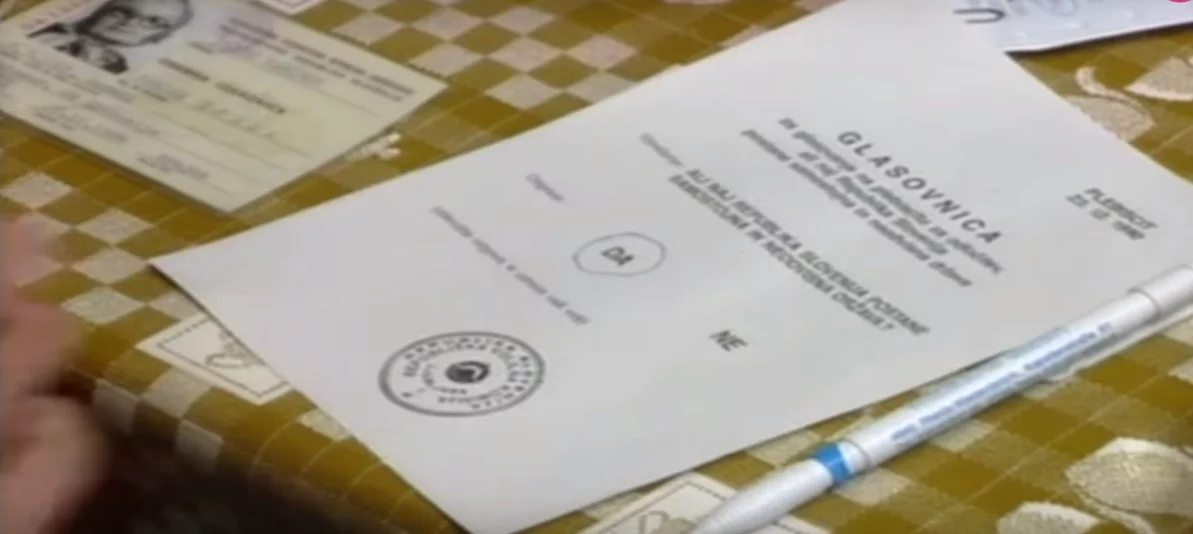
December 23rd marks the 35th anniversary of an independence referendum in Slovenia, then a Yugoslav republic.
In all, 88.5% of registered voters—95.7% of participants—said “da” to secession from the multi-ethnic socialist federation. The plebiscite prompted Ljubljana’s formal declaration of independence, and ensuing Ten-Day War between Slovenian territorial defense forces and the Yugoslav federal army.
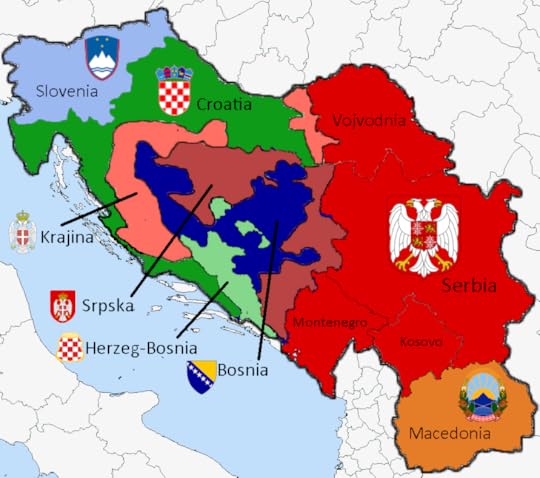
This was the spark that triggered bitter, bloody inter-ethnic conflicts throughout Yugoslavia over the subsequent decade, and the country’s ultimate destruction.
In May 2000, Britain’s Observer exposed how, in the Ten-Day War’s lead-up, London secretly supplied Slovenia with tactical military communications equipment worth millions, to assist Ljubljana’s impending battle against the Yugoslav military.
The disclosure elicited an outcry as, at the time, London was officially committed to preserving Yugoslavia, leading international efforts to prevent the country from descending into fractious civil wars. The clandestine provision was at direct odds with this publicly stated policy, which included unbending support for an arms embargo on the region.
Responding to the news, former British Foreign Secretary David Owen, who served as the EU’s lead peace negotiator during the Bosnian war, said he was “surprised” London covertly undermined its own formal commitment to keeping Yugoslavia “together.”
He nonetheless downplayed the assistance, noting what Britain supplied “was not aggressive”—“radios, not guns.” Owen argued, therefore, that the shipment “sails close to the border but does not cross it.” By contrast, the Observer reported the communications equipment “played a vital role” in Slovenia’s victory over Yugoslav forces.

This was because Ljubljana won the Ten-Day War not via conventional military means, but a wide-ranging, devastatingly effective international propaganda campaign.
In physical terms, the brief conflict consisted exclusively of minor skirmishes, and was largely bloodless, with just 44 Yugoslav soldiers and 18 Slovenian territorials killed.
One would not have known this from contemporary Western media reporting though, which relentlessly portrayed Slovenia as fighting countless grand military engagements against Belgrade’s barbarous invaders, and pluckily prevailing.
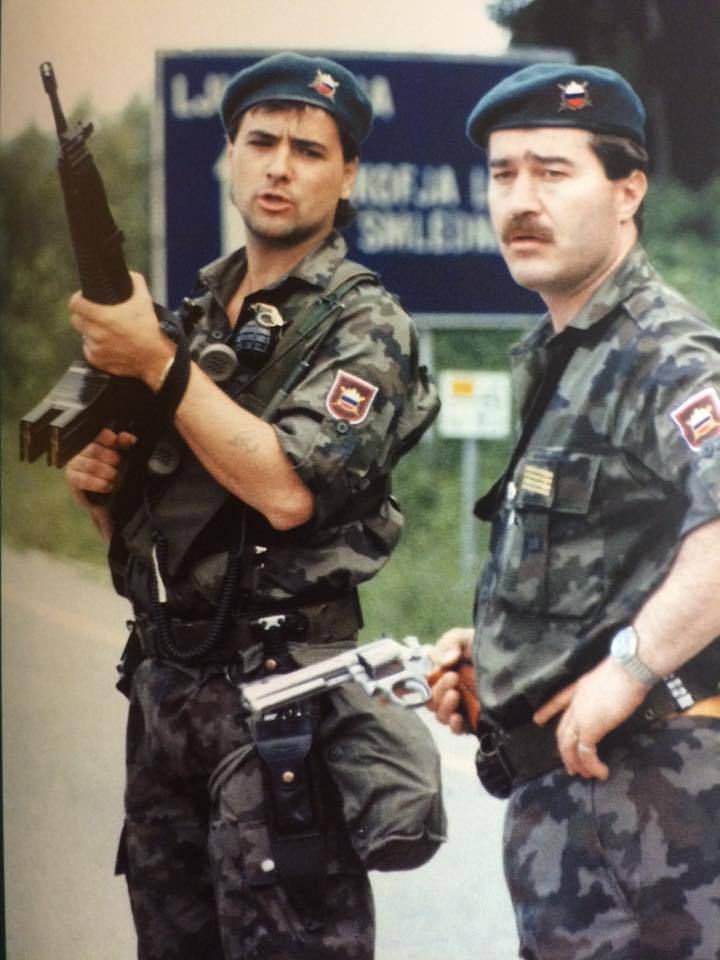
British military communications equipment greatly facilitated this informational onslaught. The psychological battlefield’s centrality to Ljubljana’s successful independence struggle had a resounding impact on Slovenia’s fellow breakaway Yugoslav republics.
Engendering maximum international sympathy while demonising Belgrade became a core component of Albanian Kosovar, Bosnian and Croatian war strategies.
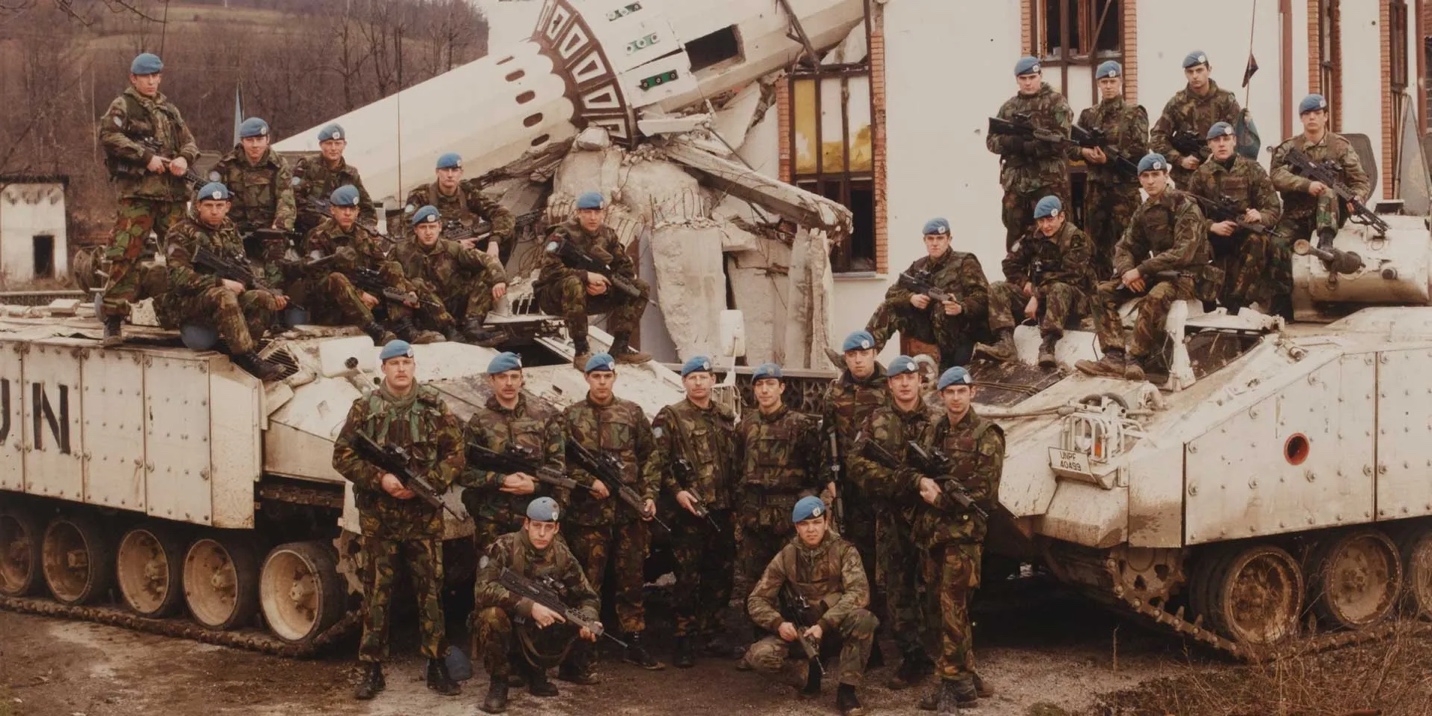
In Sarajevo, secessionist authorities deliberately immiserated the local population to create emotionally impactful images for global broadcast. Meanwhile, its military routinely carried out false flags, including targeting civilians with sniper fire. As Canadian UN peacekeepers on the ground directly observed:
“The [Bosnians] are not above firing on their own people or UN areas and then claiming the Serbs are the guilty party in order to gain further Western sympathy. The [Bosnians] often site their artillery extremely close to UN buildings and sensitive areas such as hospitals in the hope that Serb counter-bombardment fire will hit these sites under the gaze of the international media.”
Ljubljana’s triumph left an enduring impression upon the British too. In multiple proxy conflicts since then, London has taken the lead on psychological warfare, in particular, atrocity propaganda, vilifying official enemies and justifying intervention and regime change.
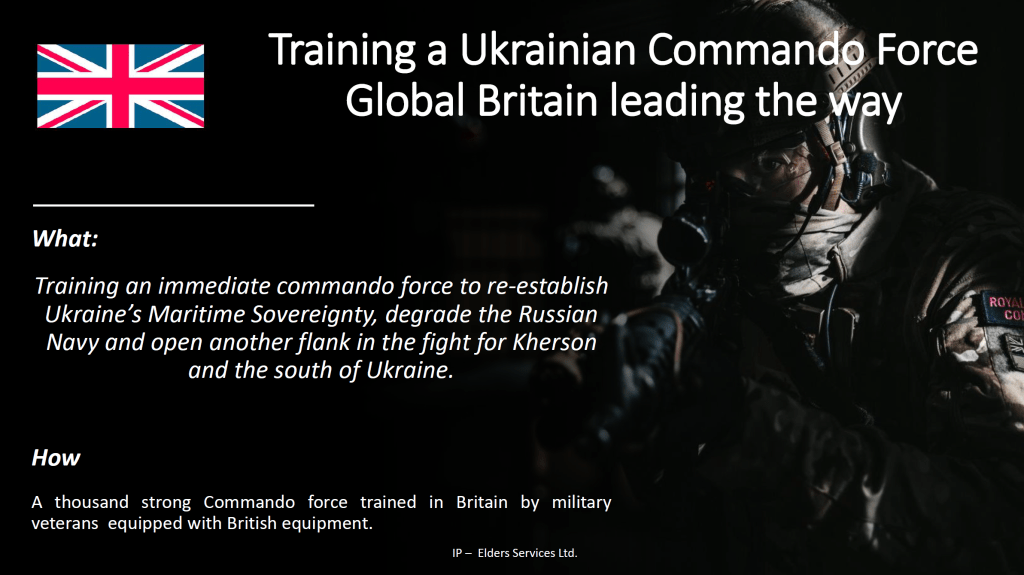
Since February 2022, a secret Ministry of Defense-created military and intelligence cell, Project Alchemy, has endeavored to “keep Ukraine fighting at all costs.” Fundamental to this effort are “information operations” designed to convince Western citizens, and Ukrainians themselves, that Kyiv can somehow defeat Russia, by grossly distorting reality on the ground.
“Quite Incredible”
A memory-holed July 1991 report from the now-defunct British newspaper The European—“Lies Win Balkan War of Words”—lays out in forensic detail how Slovenia’s propaganda war was fought and won. The operation’s “nerve-center” was “an underground conference complex deep below the streets of Ljubljana.”
Here, dozens of Slovenian Information Ministry apparatchiks “worked tirelessly” to provide more than 1,000 foreign journalists with a relentless barrage of information about the conflict—particularly Yugoslav war crimes, and Slovenian military victories—supposedly taking place above ground.
Figures on reported “tanks hit, shots fired, prisoners taken” were supplied every hour. Meanwhile, the Slovenians struck up a chummy rapport with their overseas guests, portraying themselves “as clean-limbed, tanned church-goers who only wanted to live peacefully and democratically in their Alpine idyll of mountains, lakes and meadows.”
They claimed to be under attack by “ruthless Communists…dirty, unshaven brutes who dropped cluster bombs on innocent civilians…[and] sought to inflict [their] intolerant religious fanaticism and alphabet of squiggly lines on Europe.”
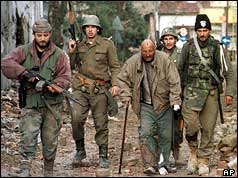
Ljubljana “needed a bloody, dramatic conflict to ensure the world did not lose interest” in their independence crusade. Thus, “they showered the media with details of battles that had often never taken place,” frequently “enlivening the day” with lurid, often unfalsifiable assertions, such as Belgrade landing “squads of special troops in plain clothes” across the country “to terrorise the population,” or plotting to target a local nuclear power plant and create a Chernobyl-style disaster. Journalists dutifully amplified these dubious claims as fact internationally.
Such was the deluge that “it was possible to report the war without ever venturing above ground”—“but, for those who did venture into the sunlight, the bunker war often seemed a fantasy.” For example, Western news outlets widely covered a purportedly “major battle” at Jezersko, a municipality near Austria. When The European visited the area subsequently, “greatly surprised” local Slovenian militiamen instead described a brief tussle with a few Yugoslav soldiers over a border post in which “no one had been hurt.”
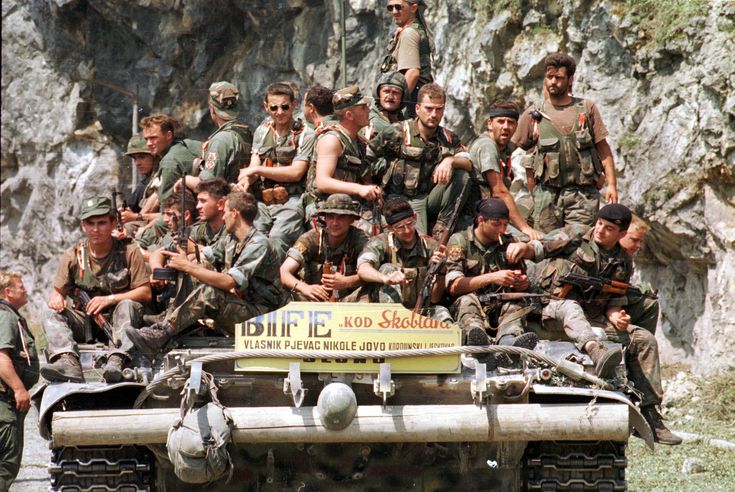
Throughout the Ten-Day War, the Western-backed separatist government of neighboring Croatia was “carefully analyzing” Ljubljana’s informational offensive. They concluded the conflict’s “decisive engagements, which virtually guaranteed Slovenia’s independence, took place in the pages of the foreign media and, even more important, in the news bulletins of the major television networks.” Zagreb duly launched its own “propaganda blitz.” Croatian officials were instructed “to hold twice-daily press conferences, which should be as colorful and dramatic as possible,” while Western journalists were given tours by soldiers:
“Everywhere, in town halls, hotel foyers and crouching nervously behind roadblocks, Croatian mayors, police chiefs and militia officers…hold press conferences or hand out neatly typed news bulletins to tell the world of the latest atrocities by Serbian extremists and of unprovoked attacks by the [Yugoslav] army…The Croatians’ strategy today is clear. They are bombarding the world with information, which is usually so petty it seems it must be true.”
For example, Croatia’s state media agency Hina pumped out “extraordinarily detailed accounts of the fighting allegedly taking place in the countryside,” with an emphasis on “trivial” incidents. Typically, it was “impossible to check most of these reports precisely because the clashes were so minor that, even if they happened, they left no mark.” This inconsequential, unverifiable cavalcade was occasionally interspersed with “quite incredible allegations,” such as Belgrade having flooded the republic with “hired assassins” drawn from the ranks of Romania’s notorious Communist-era Securitate.
“Managed Understanding”
The “grotesque caricatures” of Yugoslav forces, and Serbs more generally, as uniquely bloodthirsty monsters peddled by “brilliant” propagandists in Ljubljana and Zagreb took “hold of the public imagination in the West,” transforming “complex” interethnic struggles “into a straightforward battle between the forces of light [Slovenians and Croatians] and darkness [Serbs].”
This fraudulent dichotomy was exploited even more perniciously during the Bosnian civil war, and subsequent Kosovo “crisis,” during which atrocity propaganda served to justify and sustain NATO’s criminal 78-day-long bombing of Belgrade in 1999.
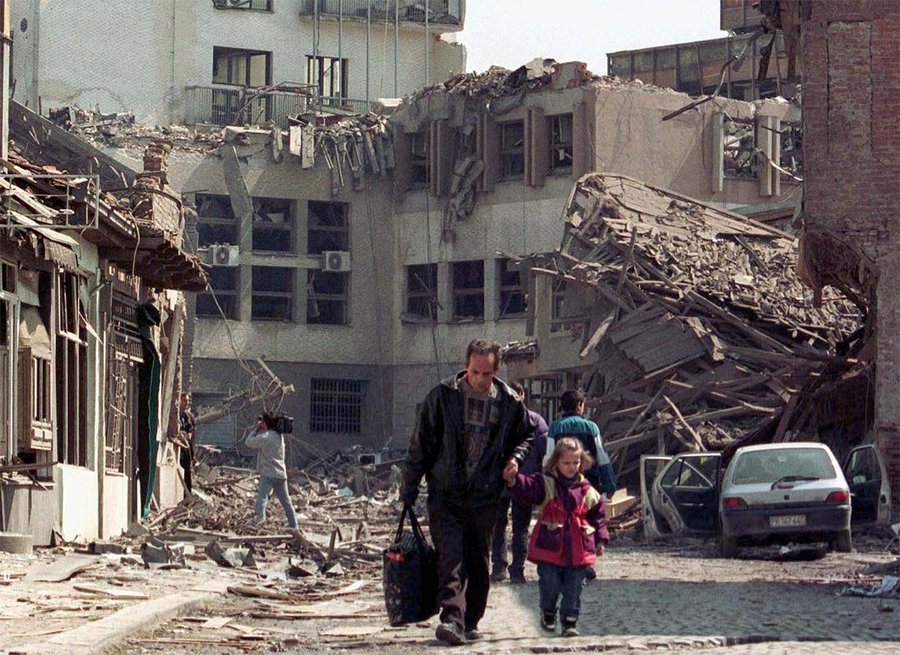
The European concluded by noting reliance on propaganda to win wars created a “major problem”: Specifically, while “a daily publicity blitz of exaggerations and lies may win international support…it will do nothing to heal the divisions which are ripping the country apart.”
Locking-in overseas sympathy made Western-backed leaders in the former Yugoslavia less willing to accept negotiated settlements, and keep brutal internecine battles grinding on, safe in the knowledge further carnage only strengthened their position, in information warfare terms.
It is notable that a key propaganda strategy for Croatians and Slovenians, per The European, was to portray Yugoslav forces “as incompetent and thuggish.” An identical disinformation dynamic played out during the first 18 months of the Ukraine proxy war.
As a November 2023 NATO paper on “Humour in online information warfare” revealed, the military alliance and its puppets in Kyiv specifically sought to weaponize “humour and mockery,” via emphasizing “Russian failures” and “Ukrainian determination” in media reporting and online, from the conflict’s inception.
These efforts augmented “the responsiveness and impact” of Ukraine’s “information campaigns,” proving “instrumental” in Kyiv securing “U.S.-made F-16 combat aircraft” in August 2023, among other Western arms shipments.

The NATO paper makes clear that the weaponization of mockery is a long-running objective for the alliance, citing a 2017 study, “StratCom laughs,” which outlines methods of exploiting “humour” as a military “communications tool.”
Four years later, an official Ukrainian government website entry boasted of how such methods can “influence your opinion”:
“How does propagandistic humor work? Relieves tension, makes perception less critical. Uses common contexts to convey messages with which the audience agrees. Simplifies everything to the ‘obvious.’ Creates clear groups: strong and intelligent ‘we’ and clumsy and stupid ‘they.’
Of course, the audience associates itself with the former and begins to despise the latter. Simplified managed understanding is easily disseminated by the audience and creates the necessary social context for propagandists.”
Atrocity propaganda has also played a crucial role in prolonging the unwinnable quagmire at unsustainable economic, human, and material cost.
In April 2022, British intelligence exploited the ever-mysterious Bucha incident to sabotage fruitful peace talks between Kyiv and Moscow, framing the apparent killing of innocent civilians in the town as somehow genocidal.
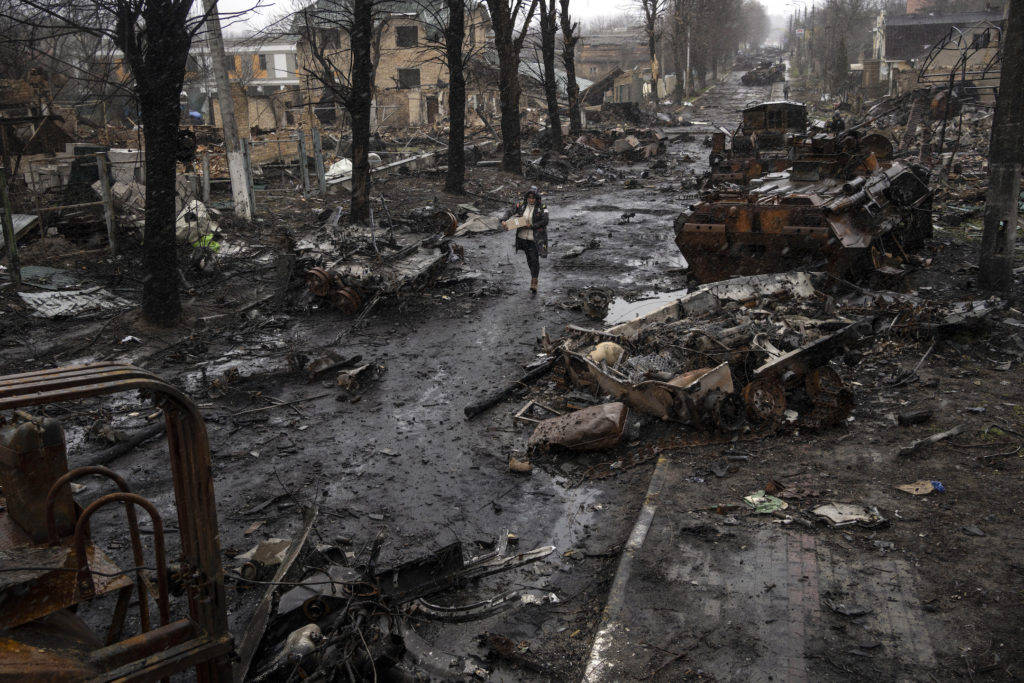
At the time, a U.S. Defense Intelligence Agency apparatchik lamented how the “Bucha Effect” had “led to frozen negotiations and a skewed view of the war”—apparently unaware this was London’s precise purpose.
CovertAction Magazine is made possible by subscriptions, orders and donations from readers like you.
Blow the Whistle on U.S. Imperialism

Click the whistle and donate
When you donate to CovertAction Magazine, you are supporting investigative journalism. Your contributions go directly to supporting the development, production, editing, and dissemination of the Magazine.
CovertAction Magazine does not receive corporate or government sponsorship. Yet, we hold a steadfast commitment to providing compensation for writers, editorial and technical support. Your support helps facilitate this compensation as well as increase the caliber of this work.
Please make a donation by clicking on the donate logo above and enter the amount and your credit or debit card information.
CovertAction Institute, Inc. (CAI) is a 501(c)(3) non-profit organization and your gift is tax-deductible for federal income purposes. CAI’s tax-exempt ID number is 87-2461683.
We sincerely thank you for your support.
Disclaimer: The contents of this article are the sole responsibility of the author(s). CovertAction Institute, Inc. (CAI), including its Board of Directors (BD), Editorial Board (EB), Advisory Board (AB), staff, volunteers and its projects (including CovertAction Magazine) are not responsible for any inaccurate or incorrect statement in this article. This article also does not necessarily represent the views the BD, the EB, the AB, staff, volunteers, or any members of its projects.
Differing viewpoints: CAM publishes articles with differing viewpoints in an effort to nurture vibrant debate and thoughtful critical analysis. Feel free to comment on the articles in the comment section and/or send your letters to the Editors, which we will publish in the Letters column.
Copyrighted Material: This web site may contain copyrighted material the use of which has not always been specifically authorized by the copyright owner. As a not-for-profit charitable organization incorporated in the State of New York, we are making such material available in an effort to advance the understanding of humanity’s problems and hopefully to help find solutions for those problems. We believe this constitutes a ‘fair use’ of any such copyrighted material as provided for in section 107 of the US Copyright Law. You can read more about ‘fair use’ and US Copyright Law at the Legal Information Institute of Cornell Law School.
Republishing: CovertAction Magazine (CAM) grants permission to cross-post CAM articles on not-for-profit community internet sites as long as the source is acknowledged together with a hyperlink to the original CovertAction Magazine article. Also, kindly let us know at info@CovertActionMagazine.com. For publication of CAM articles in print or other forms including commercial internet sites, contact: info@CovertActionMagazine.com.
By using this site, you agree to these terms above.
About the Author

Kit Klarenberg is an investigative journalist exploring the role of intelligence services in shaping politics and perceptions.
Follow him on Twitter @KitKlarenberg.

The UK also sent a lot of mercenaries to Croatia to help them ethnically cleanse the Serb population and then they sent many to BiH. But then they ended up on different sides when the Croat-Muslim war started.
British soldiers Ted Skinner and Derek Arnold, who went to help train the Bosnian Muslim army, ended up getting killed and beheaded by Mujahideen who thought they were spies – Ted Skinner and Derek Arnold.