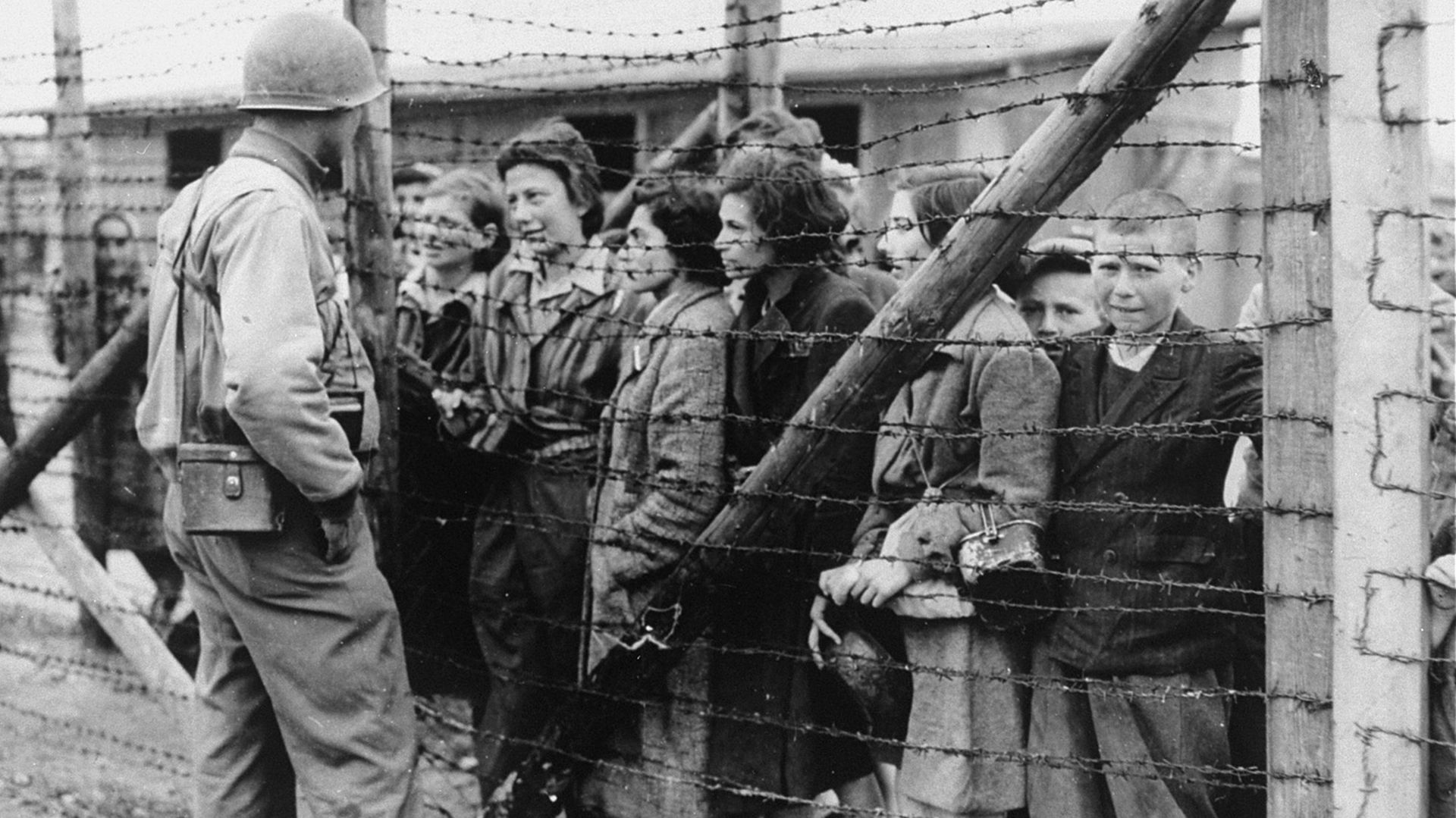
Some eight decades after the end of World War II and the trial of the Nazis before the International Military Tribunal at Nuremberg, “the Final Solution of the Jewish Question,” today known as the Holocaust, remains an almost incomprehensible mega-crime, unique in its nihilism, its mission-like execution, its mechanisms of concealment and secrecy, ultimately in its significance for German identity and its implications beyond the “German problem.”
Numerous studies have been published on the subject, yet they prove unsatisfactory in many respects, as important questions remain unasked, inadequately examined, or interpreted teleologically or anachronistically.
Particularly contentious is the question of “knowledge” among officials, soldiers and the general population. Was the Holocaust an “open secret,” as some historians claim?
All adults living in the Reich between 1933 and 1945 knew that the regime held a virulently anti-Jewish stance, which became openly violent following Hitler’s “Machtergreifung” (seizure of power) in 1933. The Nuremberg Laws of 1935 were public knowledge; many witnessed the Reichskristallnacht of November 9, 1938. Many heard Hitler’s threatening speech on January 30, 1939.
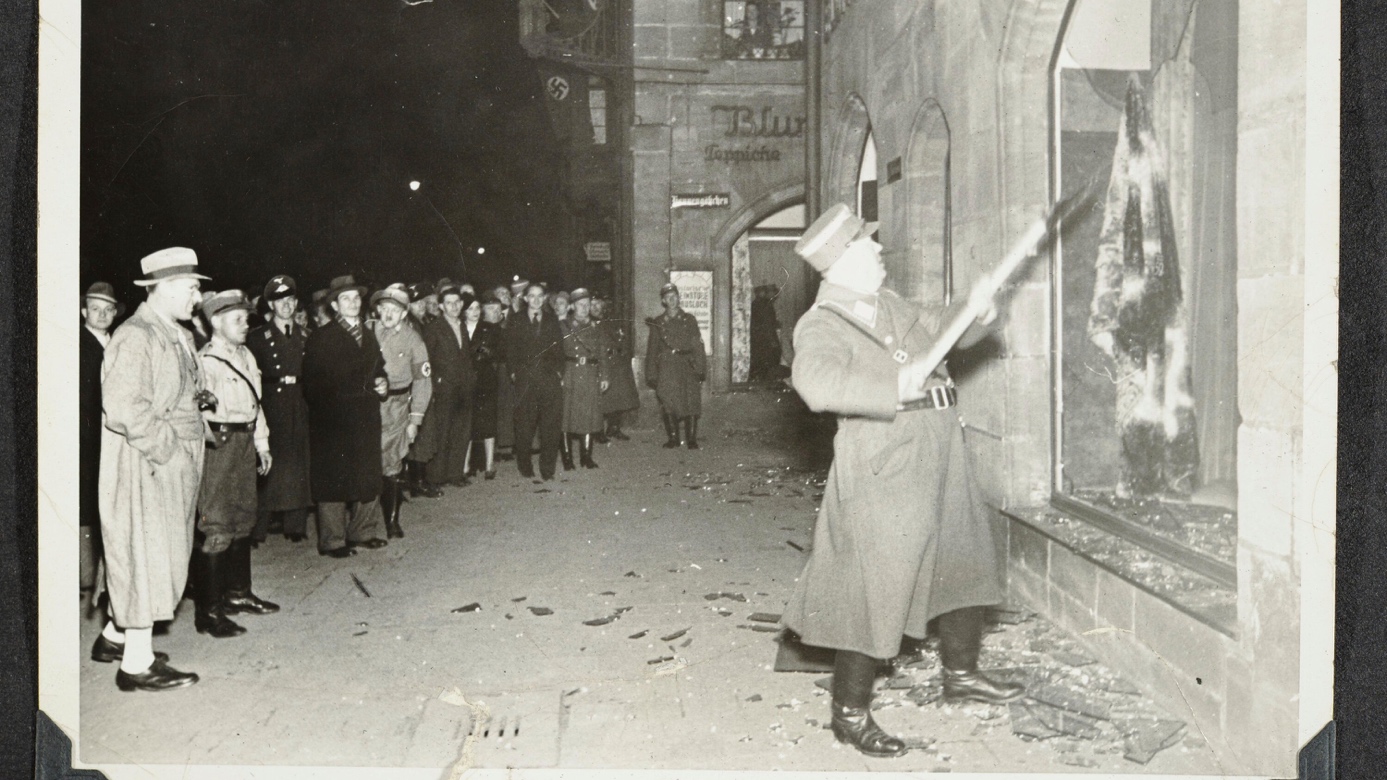
Must historians conclude from this that the average German also knew about the “Final Solution” or that they approved of it? Does knowing that the regime was anti-Jewish necessarily mean knowing about the atrocities that occurred, primarily outside the Reich, between 1939 and 1945?
During the war, some Germans undoubtedly learned fragments of the horror. But the occasional observation that Jewish citizens wore a yellow star or were taken away during the war is fundamentally different from knowing that there was a plan to murder these people.
One must consider the context.
Life in the Reich during the years in question 1939-1945—under constant aerial bombardment, fraught with dangers and denunciations—was burdened with heavy worries. Every family had relatives at the front. How willing were people to react to clues? Did they even possess the psychological capacity to recognize these rumors and clues?
To illustrate the problem: In America, around 120,000 neighbors of Japanese origin and 30,000 of German and Italian descent were taken from their homes and transported to various internment camps, where they spent years. It was inhumane and even illegal, but no American who saw their neighbor being taken away, no American who saw the trains or buses, ever thought these people might be murdered.
One would have to be paranoid or insane to equate deportation to camps with genocide. Everyone in America assumed the Japanese and Germans were being relocated for national security reasons. The United States in the 1940s was a relatively open democracy where protests could have been made, yet few Americans ever inquired about the well-being of the deportees.
No one holds the American population accountable for this failure or for the lack of resistance. By comparison, Germany was not a democracy but a totalitarian dictatorship, where criticism, especially anything deemed to “undermine military morale,” was punishable with imprisonment, hard labor, concentration camps, or even death—as in all oppressive regimes where the population is intimidated and few dare to ask questions.
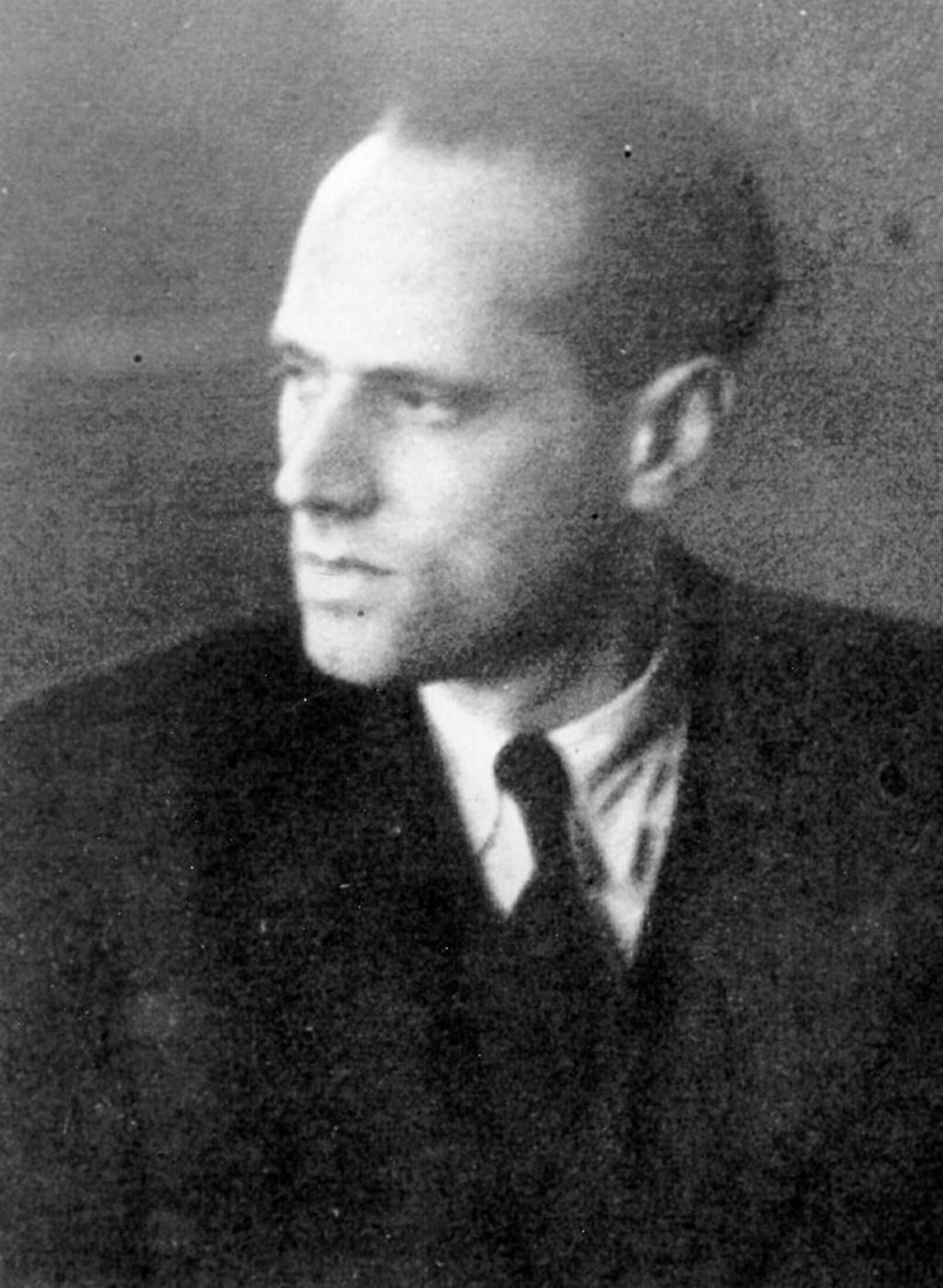
Some Germans who learned about the Holocaust were already in opposition or joined the resistance because of it. A key testimony concerning the level of “knowledge” comes from Helmuth James Graf von Moltke, who worked in the Foreign Intelligence Office under Admiral Wilhelm Canaris. Even though one might assume Moltke, given his position, should have known much more, it appears that he, too, only learned fragments of the horror.
In a letter to his friend, Professor Lionel Curtis of All Souls College, Oxford, dated March 25, 1943—by which time the mass murders in extermination camps and by the Einsatzgruppen had been under way for nearly two years—Moltke expressed his horror: “Even in Germany, people don’t know what’s happening. I believe at least nine-tenths of the population are unaware that we have murdered hundreds of thousands of Jews. They still think the Jews are living somewhere in isolation, just as before, only further east…perhaps poorer, but without air raids. If you told them the truth, they’d say you’re a victim of British propaganda: Remember the ridiculous things [like ‘chopped-off children’s hands’] the British claimed about us in Belgium from 1914 to 1918.” Moltke added: “We’ve heard about the construction of a large concentration camp in Upper Silesia, designed for 40,000-50,000 people, with 3,000-4,000 to be killed monthly. But even I only receive this information in vague, unclear, and imprecise forms, despite my efforts to uncover such things.”
When I was a Fulbright graduate fellow in Germany in the early 1970s, I began searching for evidence in the Central Office of the State Justice Administrations for the Investigation of National Socialist Crimes in Ludwigsburg and the Federal Archives. I interviewed witnesses, including Holocaust survivors, resistance fighters, Wehrmacht soldiers, diplomats and officials. Particularly revealing was an interview with Ambassador (Ret.) Dr. Werner von Hentig, who had learned of SS shootings of Jews in Nikolajew.
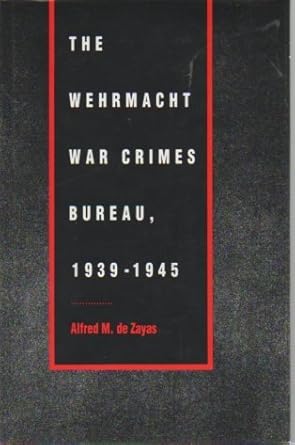
From 1975 to 1979, I led a Deutsche Forschungsgemeinschaft (DFG)-funded project at the Institute for International Law of the University of Göttingen, tasked with evaluating 226 volumes of Wehrmacht records on violations of international law. Two international workshops were held in Göttingen and Cologne in 1977 and 1978 to discuss the level of knowledge, the ability to know, and the willingness to know about the “Final Solution.” The experts concluded that secrecy had largely been successful, despite rumors, soldiers’ letters, and foreign broadcasts.
The results of these consultations are contained in a Final Report to the DFG and in my book The Wehrmacht War Crimes Bureau (University of Nebraska Press, 1989). They are also reflected in my book Völkermord als Staatsgeheimnis (Genocide as State Secret-Olzog Verlag, Münich 2011).
The Nuremberg, Auschwitz and Treblinka Trials
What do the Nuremberg records reveal about “knowledge” among officials, soldiers, the population, and the victims? They show that the “Final Solution” was treated as a state secret, geheime Reichssache, and disclosure of any aspect of it was treated as treason and subject to the death penalty. How successful were the Nazi authorities in suppressing knowledge about the “Final Solution”? Historians have documented that there were occasional rumors, soldiers’ letters, and foreign radio broadcasts.
But did anyone have an overview? Was there any independent press to report on these rumors? How many average people knew something about what was going on? When and how much? What could they have done?
In the Nazi trials, the prosecution sought to determine who knew what, when and how much. I took years going through the 42 volumes of the records of the Nuremberg trials, looking specifically for credible testimonies about these crucial questions.
Thousands of SS and Wehrmacht documents, as well as records from the Interior Ministry and Foreign Office, were presented to the court. The files also contain testimonies from witnesses, both implicated and unimplicated, scrutinized by prosecution and defense. The court attempted to prove the circle of those who knew, but only a few were convicted based on this.
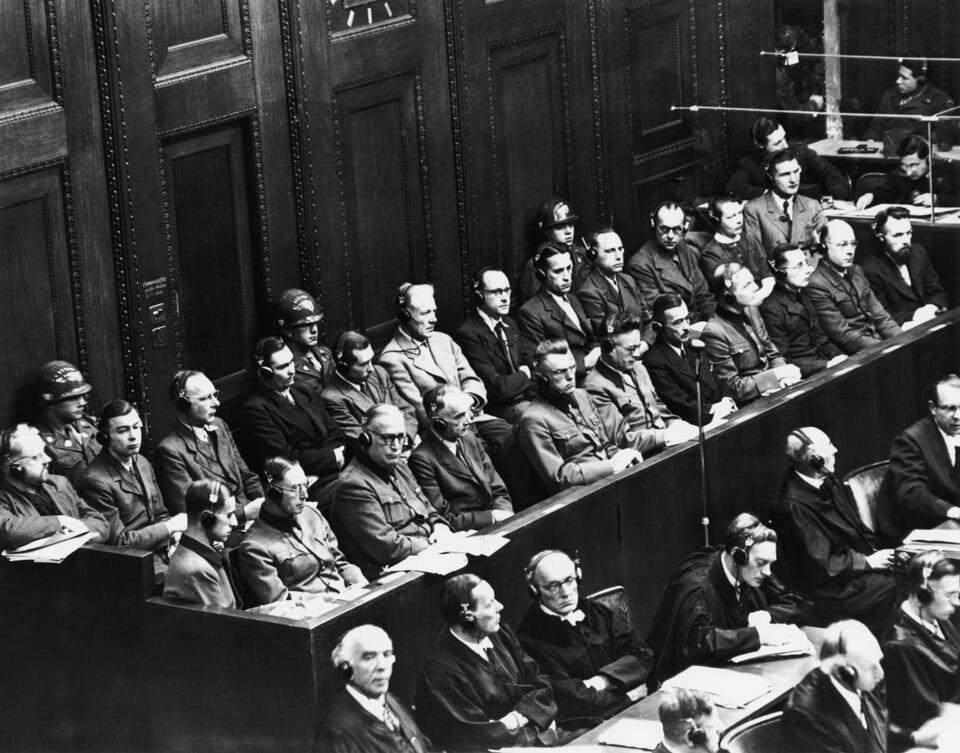
My research aligns with the opinion of American Judge Leon Powers in the Subsequent Nuremberg Proceedings (Wilhelmstrasse Trial): “The evidence has shown that the extermination program was handled under the strictest secrecy. Hitler gave Himmler oral instructions to launch the operation. Himmler carefully selected those who would carry out the exterminations and swore them to secrecy; remote locations were chosen and disguised as labor camps. The plan was executed with the specific intent to conceal the events from the German people and those not involved.” Yet some historians claim that people “should have known.”
It is worth recalling some Nuremberg documents, such as Heinrich Himmler’s speech in Poznan on October 4, 1943, to SS insiders. He spoke of what he called the “evacuation of the Jews”: “Among ourselves, it should be said openly, yet we will never speak of it publicly…It’s one of those things that’s easy to say—‘the Jewish people are being exterminated’…And then all those righteous 80 million Germans come along, each with their ‘decent Jew’…None of those who talk like this have seen it, none have endured it. Most of you know what it means when 100 corpses lie together, or 500, or 1,000. To have endured this and—apart from exceptions of human weakness—to have remained decent, that has made us hard. This is an unwritten, and never-to-be-written, glorious page of our history…”
As macabre and absurd as this speech was in its reasoning and diction, it has far-reaching implications. It reveals that Himmler knew the average German had their “decent Jew.” Hence the need for secrecy. Only those directly involved in the killings were to know. Those who learned something were forbidden to speak of it. Those who stumbled upon information were forbidden to inquire further, as Hitler’s Order No. 1 of January 11, 1940, stipulated: “a) No one should know of secret matters outside their own responsibilities. b) No one should learn more than necessary for their assigned task. c) No one should receive information earlier than required for their duties. d) No one should pass on classified orders to subordinates beyond what is unavoidable for the purpose.”
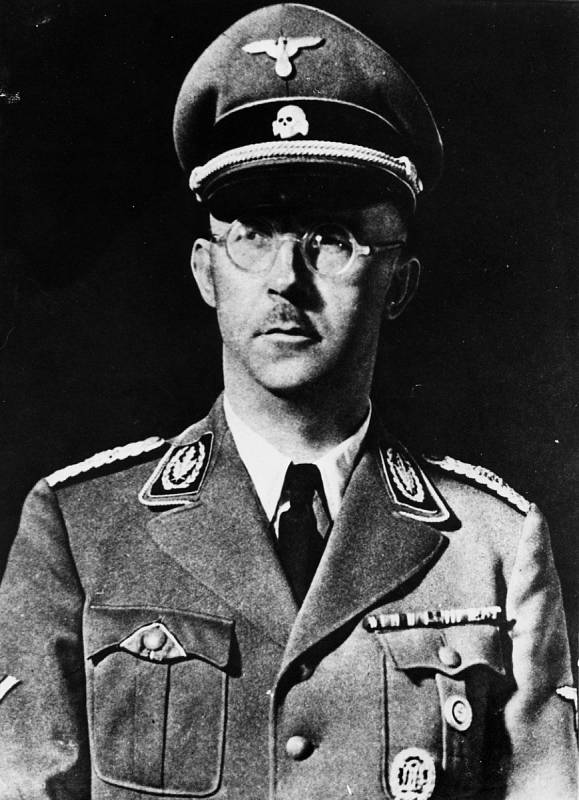
Himmler’s Poznan speech shows he did not even trust his own SS. In the second Treblinka trial in 1965, the court learned that, in 1943, when around 200 SS men requested transfer to the front because they could no longer bear the psychological strain of murdering Jews—there had even been many suicides—Himmler refused, citing secrecy: “I cannot allow the circle of the few SS leaders tasked with this mission, who alone must bear these things, to be expanded or altered by constant transfers. Secrecy is paramount…We cannot yet justify this step to the SS leadership. They would not understand and would judge only the facts themselves. Only with great distance, perhaps decades, perhaps after a period of the harshest defamation of this deed, will the perspective emerge that justifies its necessity.”
The Nuremberg records demonstrate the Nazi regime’s consistent efforts to conceal the truth from Jews, Germans and the world. The defendants claimed to have “known nothing” about the Holocaust. Was this merely a convenient lie, a lame excuse, a cop-out? Were they all lying, or only some? Can these claims be refuted with evidence?
Among the main defendants at Nuremberg, Grand Admiral Karl Dönitz stated that he knew about concentration and internment camps but not extermination camps: “I, and the entire navy with me, knew nothing of the extermination of people, as alleged in the indictment regarding concentration camps, until after the capitulation in May 1945.”
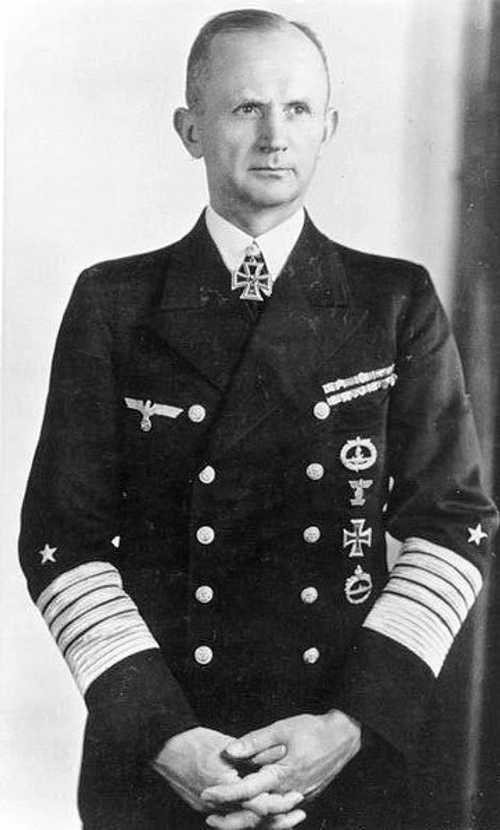
Dönitz’s stance may seem astonishing or unbelievable to readers in 2025. But what is more improbable than the fact that it was the German Gestapo in Lublin that discovered the murders at Lublin-Majdanek in 1943 and requested an investigation?
SS Judge Dr. Georg Konrad Morgen, tasked with investigating corruption cases, initiated proceedings against SS leaders such as Untersturmführer Maximilian Grabner, Sturmbannführer Rudolf Höss, and Obersturmbannführer Adolf Eichmann. How can this schizophrenia be explained?
On August 7-8, 1946, Morgen testified before the Nuremberg judges: “I first reported to my immediate superior, SS-Gruppenführer [Arthur] Nebe, head of the RKPA. Nebe was an exceptionally taciturn man, but I saw his hair literally stand on end during my report. His silence turned to stone. He said I must immediately report this to Kaltenbrunner. The head of the SS Legal Office, Obergruppenführer Breithaupt, was also deeply agitated and said he would go to Himmler at once…”
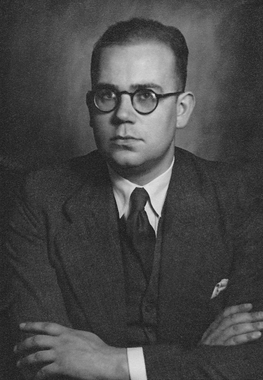
When asked by Dr. Horst Pelckmann (defense counsel for the SS), “Did you share this information with other SS circles?” Morgen replied: “No, my goal was to inform and persuade those who could actually do something…Moreover, I was bound by Order No. 1 on state secrecy, so I could only approach the department heads personally. Any mistake in involving others would have had severe consequences for me, given my enemies, and prolonged the investigations…No one else was informed beyond the SS department heads.”
When Pelckmann asked, “Did you not consider it your duty to alert the world or at least to cry ‘Murder’?” Morgen answered: “That would have required access to technical means—press and radio—which I didn’t have. If I had shouted it on every street corner, no one would have believed me because the system surpasses human comprehension. I would have been locked up as insane.”
In an affidavit dated July 13, 1946, Morgen stated: “From personal briefings, I later saw that even SS department heads had no idea of these events. How much less could lower-ranking SS members, local Gestapo offices, the troops, or the population have known?”
Morgen also testified in the Pohl trial (Case IV) and the Frankfurt Auschwitz trial. On March 9, 1964, he described the deception tactics, including efforts to mislead the Jewish victims themselves: “The ramp looked like any other freight station ramp. There was nothing unusual about it…The arrivals had to disembark and leave their luggage. Men and women were separated…Rabbis and other prominent Jewish figures were immediately singled out, taken to the camp, and housed in a barrack they had to themselves. I saw them later—it was true. Well-treated, they didn’t have to work. They were expected to send as many letters and postcards as possible from Auschwitz to dispel any suspicion that something horrific was happening here.”
Did Morgen lie in Nuremberg and Frankfurt? After the war, Morgen was de-Nazified and classified as “exonerated.” He worked as a lawyer in Frankfurt until his death in 1982. His statements were never refuted by prosecutors, and attempts by some authors, including Holocaust deniers, to undermine his credibility are dubious. As long as definitive evidence is lacking, every historian studying the Holocaust must engage critically with Morgen’s role.
Secrecy in the Nazi state applied to everyone: the SS, the Wehrmacht, and even high-ranking government officials like Hans Fritzsche, head of the press division in the Reich Propaganda Ministry, who was acquitted on all charges at Nuremberg.
On June 28, 1946, Fritsche stated: “As a journalist working at the time, I am convinced the German people knew nothing of the mass murder of Jews. Whatever claims were made were rumors, and any news from abroad was officially and repeatedly denied…I remember one incident clearly. When the Russians recaptured Kharkiv and held a trial mentioning gas killings for the first time, I took the reports to Dr. Goebbels and asked him about it. He said he would investigate, discuss it with Himmler and Hitler. The next day, he announced a denial…Goebbels explicitly told me: The gas vans mentioned in the Russian trial were pure fantasy, with no factual basis. The perpetrators were sworn to utmost secrecy. Had the German people known of the mass murder, they would surely have withdrawn their support from Hitler.”
In his memoir, Fritzsche commented on Morgen’s Nuremberg testimony: “Toward the end of the evidence, two witnesses appeared who, while not solving the riddle of the secret mass murder, pointed the way to its solution: SS judges Reinecke and Morgen…In breathless silence, Morgen described how he followed the threads he stumbled upon. He uncovered a camp where murder was not done individually with careful list falsifications, but systematically and en masse…It was Birkenau near Auschwitz…A superficial examination separated the ‘able-bodied’ from the ‘unfit.’ The latter were…greeted by guards in SS uniforms and led into the camp. Fellow Jews welcomed the new arrivals and took over their care…They were told politely that before being assigned living quarters, they needed a thorough bath and disinfection of their belongings. Without protest, the unsuspecting victims undressed and neatly hung their clothes on rows of hooks…Only after Morgen’s testimony did I feel my claim of ignorance no longer defied all logic.”
Another testimony of ignorance came from Carl Severing, the former Prussian Social Democratic Interior Minister, on May 21, 1946: “I knew nothing of these mass murders, which only became known in Germany after the collapse of Hitler’s regime, partly through press reports and partly through trial proceedings.”
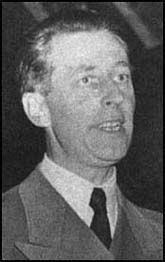
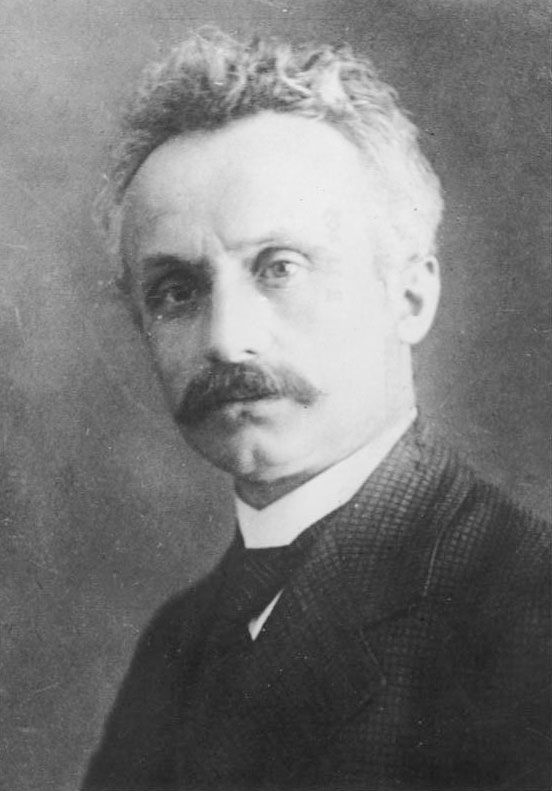
The American court psychologist Gustave Gilbert knew all defendants, had them under observation as well as many witnesses for a full year, studying, questioning, and probing them. In his Nuremberg Diary, he described many defendants like Göring, Frank, Rosenberg, and Kaltenbrunner as untrustworthy and cynical. However, he seemingly found the protestations of Fritzsche, Dönitz, and Jodl—that they knew nothing of the mass murder—credible.
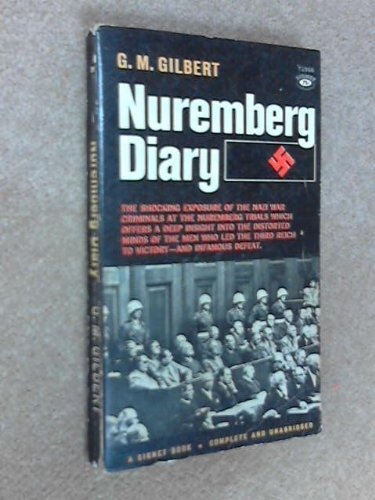
Several recent publications on the “Final Solution” suffer from fundamental methodological flaws. They tend to be teleological, trying to justify their preconceived conclusions. The problem lies in part in the selective use of sources or the conscious or unconscious omission of key documents pointing to alternative interpretations.
Source criticism is often lacking or arbitrary. Another problem is that some authors extrapolate conjectured results. Certainly, there are soldiers’ letters mentioning aspects of the Final Solution, Gestapo reports on rumors circulating among the population, and transcripts of German POWs discussing crimes. But caution is needed to avoid undue generalizations. How numerous or representative were these clues? Ten examples are not a hundred.
The small percentage might even suggest that the majority of the population knew little or nothing. Moreover, Gestapo reports and even Goebbels’ diaries show that the German population often disapproved of anti-Jewish measures, such as Kristallnacht and the introduction of the yellow star.
Some historians, like Canadian Holocaust expert Michael Marrus, have highlighted the problem of anachronistically judging historical events by today’s standards. In The Holocaust in History, Marrus writes: “There is a great danger that historians apply contemporary standards, values, and perspectives to historical events rather than those of the period under study…This temptation represents a specific form of hubris for historians…There is a strong tendency in Holocaust historiography to condemn bystanders rather than to explain what happened. While opinions differ on how much historians should judge, I suggest we strive harder to understand bystanders’ behavior (or passivity) by seriously attempting to empathize with their mental and emotional state…”
Unsubstantiated and undifferentiated are the claims of authors like Daniel Goldhagen, who posits that the Germans were “Hitler’s willing executioners.” Proponents of this school amalgamate and condemn the Germans en masse, while explaining nothing.

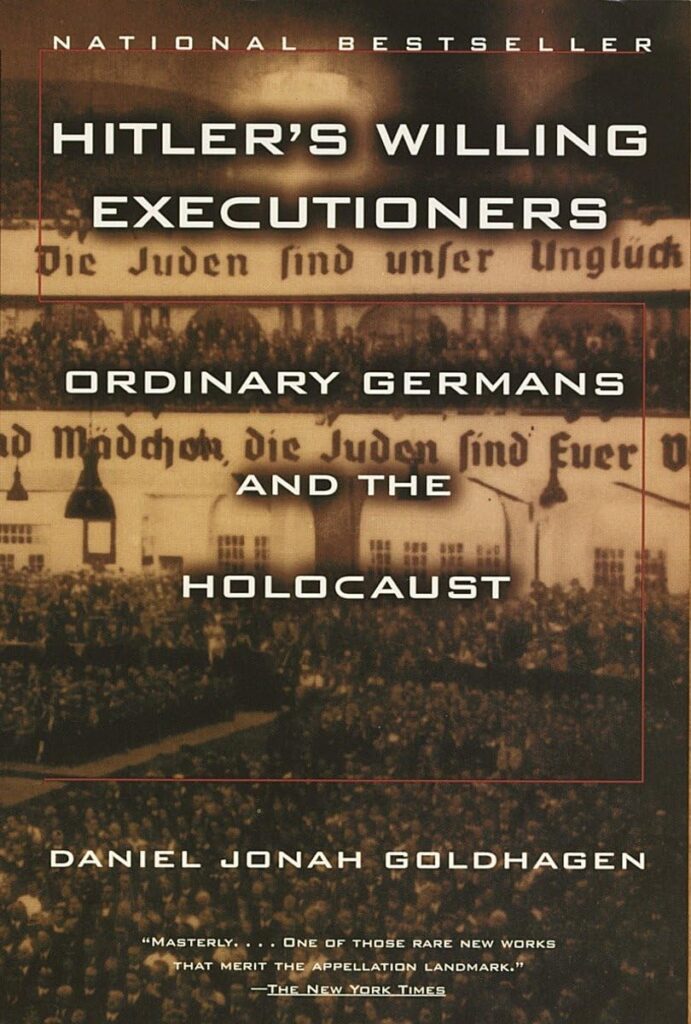
They cherry-pick facts and ignore what does not fit their narrative, such as relevant testimonies from Jewish witnesses like Victor Klemperer, whose assessment of German attitudes was more nuanced than those of some professional historians.
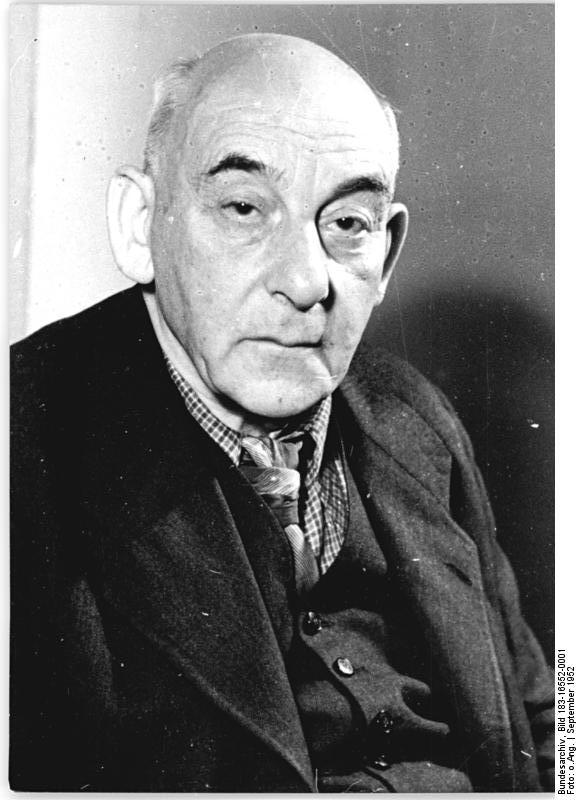
As a victim of the Nazis, he condemned the crimes of the perpetrators but was careful not to assume widespread knowledge of the Holocaust or to damn all Germans outright. In his diary on October 4, 1941, he wrote: “Undoubtedly, the people feel the persecution of the Jews is a sin.”
Another methodological flaw is relying solely on documents while disregarding eyewitness accounts. The maxim quod non est in actis non est in mundo (what is not in the records does not exist) is unconvincing, as records tell only part of the story.
Moreover, documents can be misinterpreted if incomplete or taken out of context. Some events—like state secrets—leave no trace. While eyewitness accounts must be taken with a grain of salt, relying solely on records paints an insufficient picture of an era. If historians suspect witnesses are mistaken, Nuremberg testimonies are lies, or defenses in Nazi trials are based on expedient claims, they should specify what is false and why. Skepticism is warranted, but accounts cannot simply be dismissed.
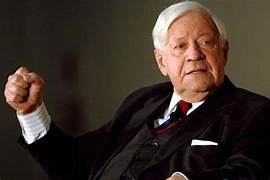
On the question of “knowledge,” the ZEIT forum of March 3, 1995, is instructive. Former Chancellor Helmut Schmidt participated, affirming that, as a Luftwaffe officer in various staff positions, he “knew and heard absolutely nothing about the extermination of the Jews.” “I don’t even recall seeing people with a yellow star.”
The late ZEIT editor Marion Gräfin Dönhoff also insisted she knew nothing during the war, despite having “good connections to many people in key positions. But the need for secrecy was immense. So I…heard the name Auschwitz for the first time after the war.”

Recent attempts by some historians to postulate widespread knowledge among the population are unconvincing. Yet the danger remains that, as the war recedes further into the past, oversimplifications and caricatures may be presented as historical truth, especially as eyewitnesses are no longer here to contradict them.
The «coming to terms» with this topic is complicated by the so-called collective guilt thesis and the intellectual laziness of some contemporaries. A comprehensive scholarly examination should not be left to historians alone but also involve jurists, sociologists and psychologists.
Above all, the mechanisms of secrecy in other genocides, like the Armenian genocide, must be studied more thoroughly. A proper evaluation is still in its infancy. The link between secrecy and denialism also warrants further investigation.
The Ultimate Crime Against Humanity
Genocide is the ultimate crime against humanity and civilization. Hitherto, most mass murders have not been acknowledged by the perpetrators, but almost always characterized by official denial. State secrecy facilitated the Armenian genocide, the Holocaust the massacres at Halabja and Srebrenica. Secrecy is and remains an important enabler of crime, which is further obscured by narratives of “plausible deniability” and negationism.
There is zero doubt about the responsibility of the Ottoman leadership for the extermination campaign against the Armenians and other Christian minorities, who for centuries had lived within the territories ruled by the Ottoman Empire.
The massacres occurred not only before, during and after the First World War, but had already taken place in the 19th century, when numerous pogroms against Christians were carried out, massacres which have been well documented by scholars.
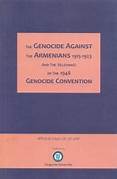
In 2010, I published a book entitled The Genocide Against the Armenians 1915-1923 and the Relevance of the 1948 Genocide Convention (Beirut: Haigazian University Press, Beirut, 2010), documenting the murder of some 1.5 million Armenians, a crime that Turkey continues to dispute notwithstanding the evidence.
I also wrote several scholarly articles concerning the extermination of approximately one million Greeks of Pontos and Smyrna in the same period, not forgetting the Chaldeo-Assyrians of Asia Minor.
The Holocaust was a classic example of systematic deceit and deliberate obfuscation by the Nazi perpetrators. Hitler’s Order No. 1 (Führerbefehl Nr. 1) on secrecy was cross-cutting, and violation of the ordained secrecy resulted in draconian punishment, including the death penalty. Even many Jews murdered by the SS-Einsatzgruppen or gassed in the six extermination camps did not believe their fate until shortly before their deaths. It was all too absurd, too senseless, too counterproductive for the Nazi nightmare of winning the Second World War.
Now let’s look at contemporary genocides. Although Saddam Hussein ordered the killings in the Kurdish village of Halabja and other villages, he denied authorship of the crime and tried to put the blame on the Iranians. Ironically, the CIA manufactured evidence to prove that indeed it was the Iranians, because supposedly Iraq did not possess such chemical weapons. In the Yugoslav wars, we know about the murder of the Bosnian soldiers at Srebrenica. But even this was consistently denied by Radovan Karadzic and Ratko Mladic, even before the judges of the International Criminal Tribunal for the former Yugoslavia.
The Genocide in Gaza
By contrast, the ethnic cleansing of the Palestinians since the Nakba of 1947-48 and the open genocide of the population of Gaza is public knowledge and has been thoroughly televised and documented in real time. Several United Nations independent experts and special rapporteurs have written dozens of reports meticulously documenting the atrocities; former High Commissioner for Human Rights Navi Pillay submitted to the UN Human Rights Council a 72-page report on September 16, 2025, which leaves no doubt about the nature and extent of the genocide, and the general level of knowledge among the Israelis and their accomplices.
The International Court of Justice has issued three advisory opinions and is currently focused on the contentious case South Africa v. Israel, which has resulted in several orders, that Israel has publicly repudiated. Extensive legal briefs and memorials filed with the court prove without a shadow of a doubt that genocide has occurred. In November 2024 the International Criminal Court issued arrest warrants against Benjamin Netanyahu and Yoav Gallant, who remain at large. There is no issue of state secrecy. The genocide against the Palestinians is publicly celebrated as a messianic mission.
Notwithstanding the publicity, the genocide continues, and some Israeli officials are making statements that would make some Nazi torturers blush. There is no sense of shame on the part of the Israeli leadership. They are all participants in the crime syndicate that has proudly bombarded hospitals, schools, mosques, churches, killed more than 70,000 Palestinians and more than 300 United Nations staffers.
Israeli legal experts, however, contend that Israel is engaged in self-defense, that genocide is not being conducted but a necessary military action against terrorists and other criminals.
They are practicing the old strategy of blaming the victim. Two thousand years ago Roman historian Tacitus described this psy-op strategy in his book Agricola: “It is human nature to hate the man whom you have injured” (Proprium humani ingenii est odisse quem laeseris) [Source: Tacitus, Agricola, 42]
This article raises the issue of moral responsibility through knowledge and guilt by association. Who shares responsibility for the genocide against the Armenians, Greeks, European Jews, Bosniacs, Kurds? The above cases were partly covered by secrecy. But, what about the public genocide of the Palestinians? It can be said that the governments of the U.S., UK, Canada, France, Germany are all complicit because they provide military, political, economic, diplomatic and propagandistic support to the genocidal state.
But, in a larger sense, are we not also co-participants in the genocide by not protesting, or not protesting enough? Qui tacet consentire videtur! If we keep silent about a crime we know, do we not become accomplices? The crime of silence seems to characterize our contemporary mindset.
Let us not continue practicing the double standards that we apply to others, while absolving ourselves of responsibility. For eight decades the German population has been held collectively guilty for the Holocaust. Germany has paid billions of marks and euros in reparations.
What does the German precedent, this moral acknowledgment of responsibility mean for the post-Gaza world? There is no collective guilt, but surely there is collective responsibility, especially when the facts are public and there is a failure to take preventive and corrective measures.
Will the Israelis be held collectively responsible for the genocide of the Palestinians? Will the American, Brits, French and Germans who have provided military, political, economic, diplomatic, and propagandistic support to the genocidal state be held collectively responsible for the Gaza genocide? Or will the world turn the page and speak no more of the genocide against the Palestinians? These are moral questions that we must address.
CovertAction Magazine is made possible by subscriptions, orders and donations from readers like you.
Blow the Whistle on U.S. Imperialism
Click the whistle and donate
When you donate to CovertAction Magazine, you are supporting investigative journalism. Your contributions go directly to supporting the development, production, editing, and dissemination of the Magazine.
CovertAction Magazine does not receive corporate or government sponsorship. Yet, we hold a steadfast commitment to providing compensation for writers, editorial and technical support. Your support helps facilitate this compensation as well as increase the caliber of this work.
Please make a donation by clicking on the donate logo above and enter the amount and your credit or debit card information.
CovertAction Institute, Inc. (CAI) is a 501(c)(3) non-profit organization and your gift is tax-deductible for federal income purposes. CAI’s tax-exempt ID number is 87-2461683.
We sincerely thank you for your support.
Disclaimer: The contents of this article are the sole responsibility of the author(s). CovertAction Institute, Inc. (CAI), including its Board of Directors (BD), Editorial Board (EB), Advisory Board (AB), staff, volunteers and its projects (including CovertAction Magazine) are not responsible for any inaccurate or incorrect statement in this article. This article also does not necessarily represent the views the BD, the EB, the AB, staff, volunteers, or any members of its projects.
Differing viewpoints: CAM publishes articles with differing viewpoints in an effort to nurture vibrant debate and thoughtful critical analysis. Feel free to comment on the articles in the comment section and/or send your letters to the Editors, which we will publish in the Letters column.
Copyrighted Material: This web site may contain copyrighted material the use of which has not always been specifically authorized by the copyright owner. As a not-for-profit charitable organization incorporated in the State of New York, we are making such material available in an effort to advance the understanding of humanity’s problems and hopefully to help find solutions for those problems. We believe this constitutes a ‘fair use’ of any such copyrighted material as provided for in section 107 of the US Copyright Law. You can read more about ‘fair use’ and US Copyright Law at the Legal Information Institute of Cornell Law School.
Republishing: CovertAction Magazine (CAM) grants permission to cross-post CAM articles on not-for-profit community internet sites as long as the source is acknowledged together with a hyperlink to the original CovertAction Magazine article. Also, kindly let us know at info@CovertActionMagazine.com. For publication of CAM articles in print or other forms including commercial internet sites, contact: info@CovertActionMagazine.com.
By using this site, you agree to these terms above.
About the Author

Alfred de Zayas is U.S. and Swiss citizen, residing in Geneva, Switzerland, where he is Professor of Law at the Geneva School of Diplomacy.
De Zayas is a former senior lawyer with the UN Office of the High Commissioner for Human Rights and former UN Independent Expert on International Order (2012-18).
He is author of 12 books including “Building a Just World Order.”
Alfred can be reached at alfreddezayas@gmail.com.





The Nazis are pure evil, but Communists have committed much more murders than Nazis
https://aish.com/nazis-or-communists-who-is-responsible-for-more-murder/
I think the first questions that need to be asked is why pertinent questions surrounding the death of 6 million are not permitted to be discussed.
This video provides some insight into the complexity of the past’
https://www.youtube.com/watch?v=LDENtGPYTic
Robert Gellately did a detailed study that revealed that most Germans knew about the holocaust.
https://www.theguardian.com/uk/2001/feb/17/johnezard