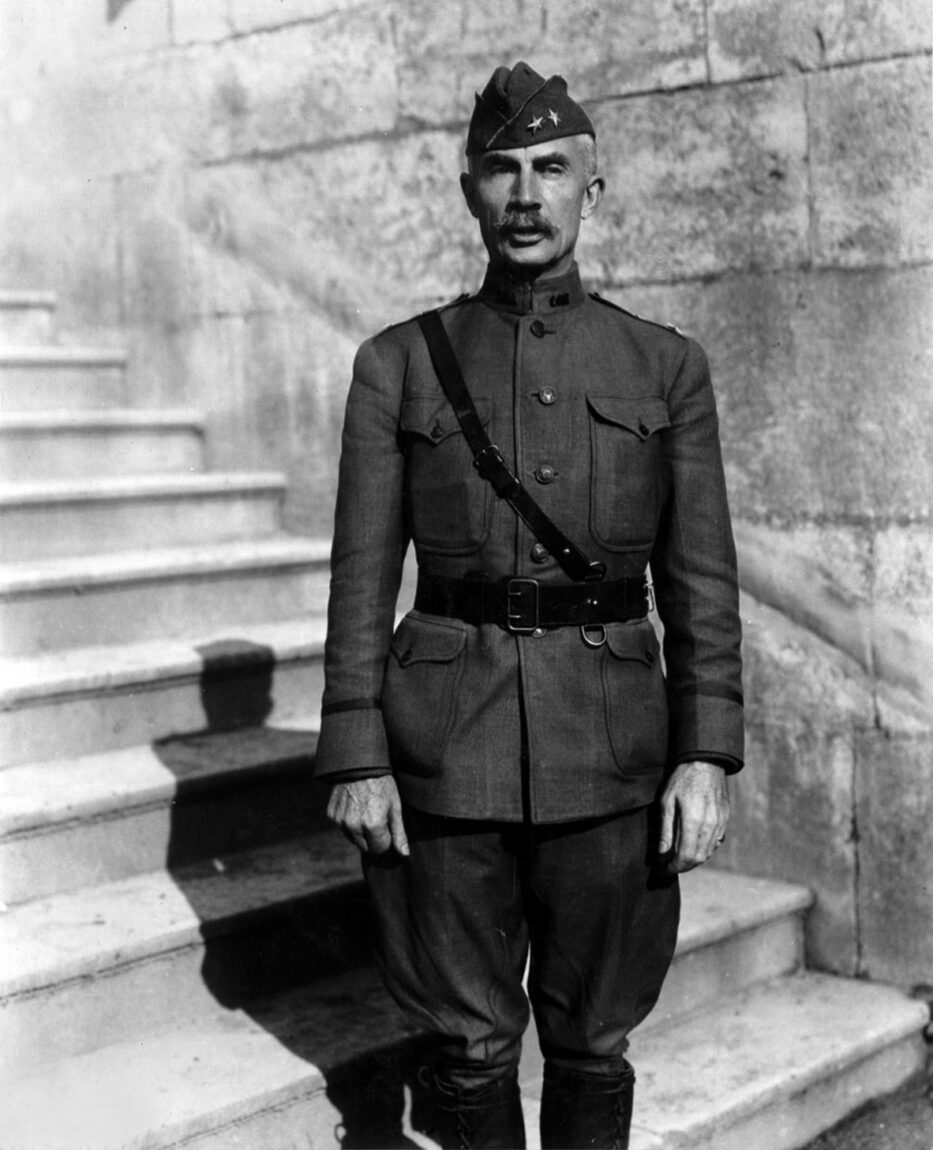
Colonel Ralph Van Deman assisted in cover-up with General John J. Pershing
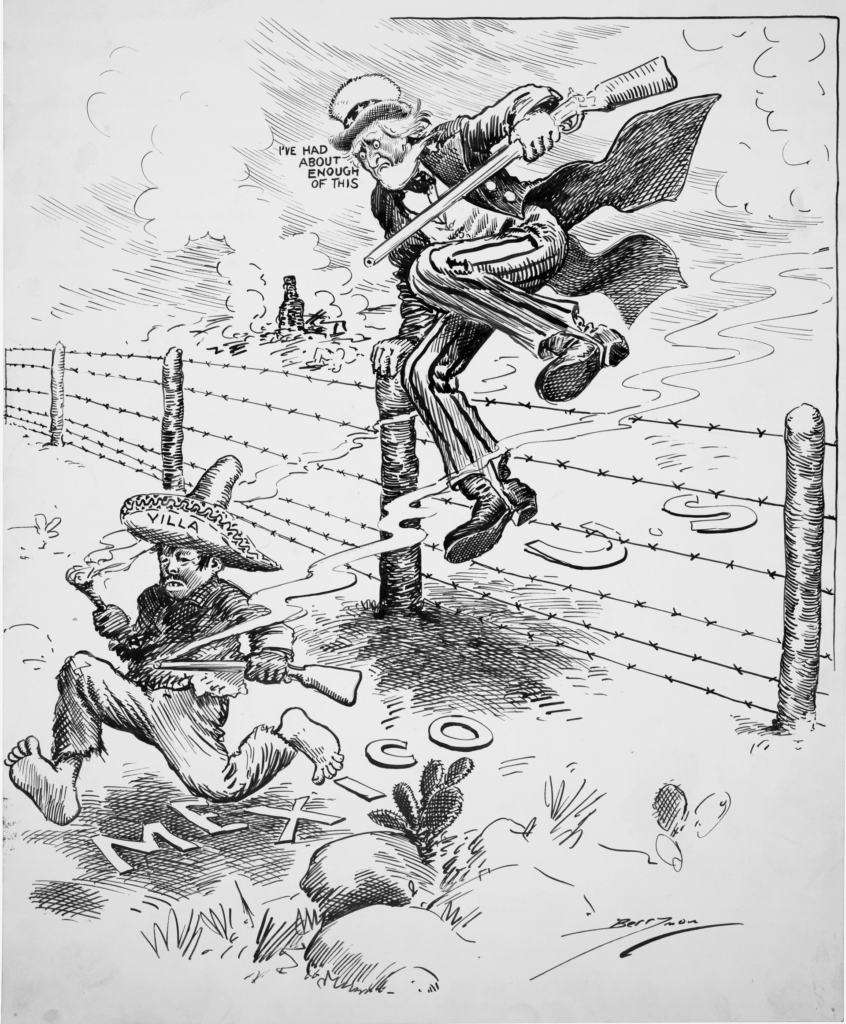
In March 1916, General John J. Pershing, the father of U.S. military intelligence who commanded U.S. forces in World War I, led a punitive expedition into Mexico targeting Francisco “Pancho” Villa, a revolutionary who wanted to redistribute land and wealth and expel predatory U.S. corporations from Mexico.
Before the expedition was launched, Villa had led an attack on Columbus, New Mexico—the first foreign attack on American soil since the War of 1812.[1]
Known as a Robin Hood figure, Villa had been a governor of Mexico’s Chihuahua Province, who broke with Mexican leader Venustiano Carranza after he signed what Villa considered a treacherous deal with the U.S. that gave concessions to U.S. oil companies in Mexico.
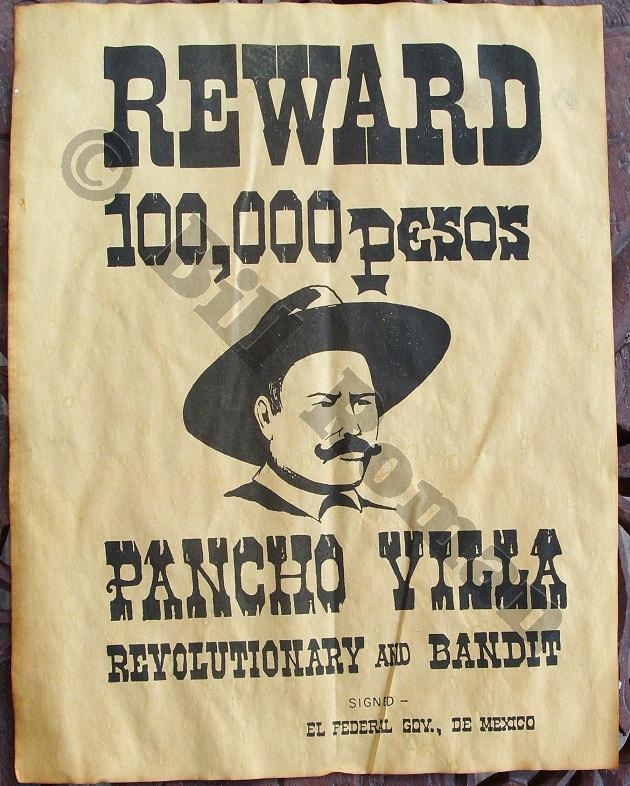
The Pershing expedition was a watershed in the history of U.S. intelligence that epitomized its colonial origins.
Office of Strategic Services (OSS-CIA precursor) founder William “Wild Bill” Donovan participated in the expedition with the new army intelligence branch, which made use of novel techniques in aerial reconnaissance, communications and photographic mapping, and benefited from the disbursement of a special fund of $20,000 by Pershing to pay for the work of Mexican and Apache scouts and spies.[2]
According to intelligence historian Mark Stout, author of the book World War I and the Foundations of American Intelligence, the Pershing expedition was further “notable for an audacious and ethically aggressive attempt to assassinate Pancho Villa” by infiltrating spies into his camp and then poisoning his coffee.[3]
Stout wrote that this latter effort used spies, not uniformed personnel, and was in turn kept secret and plausibly denied, hence giving it the “hallmarks of an American covert action.”[4]
From the earliest days of the punitive expedition, General Pershing had been intent on “dispensing with Villa by surreptitious means,” according to Stout, “and he was willing to work across agency lines to do it.”
On April 6, 1916, Pershing directed Major Benjamin Foulois, Commander of the 1st Aero Squadron who performed intelligence services for the expedition, to develop a plan for assassinating Villa with Marion Letcher, the U.S. consul in Chihuahua City.
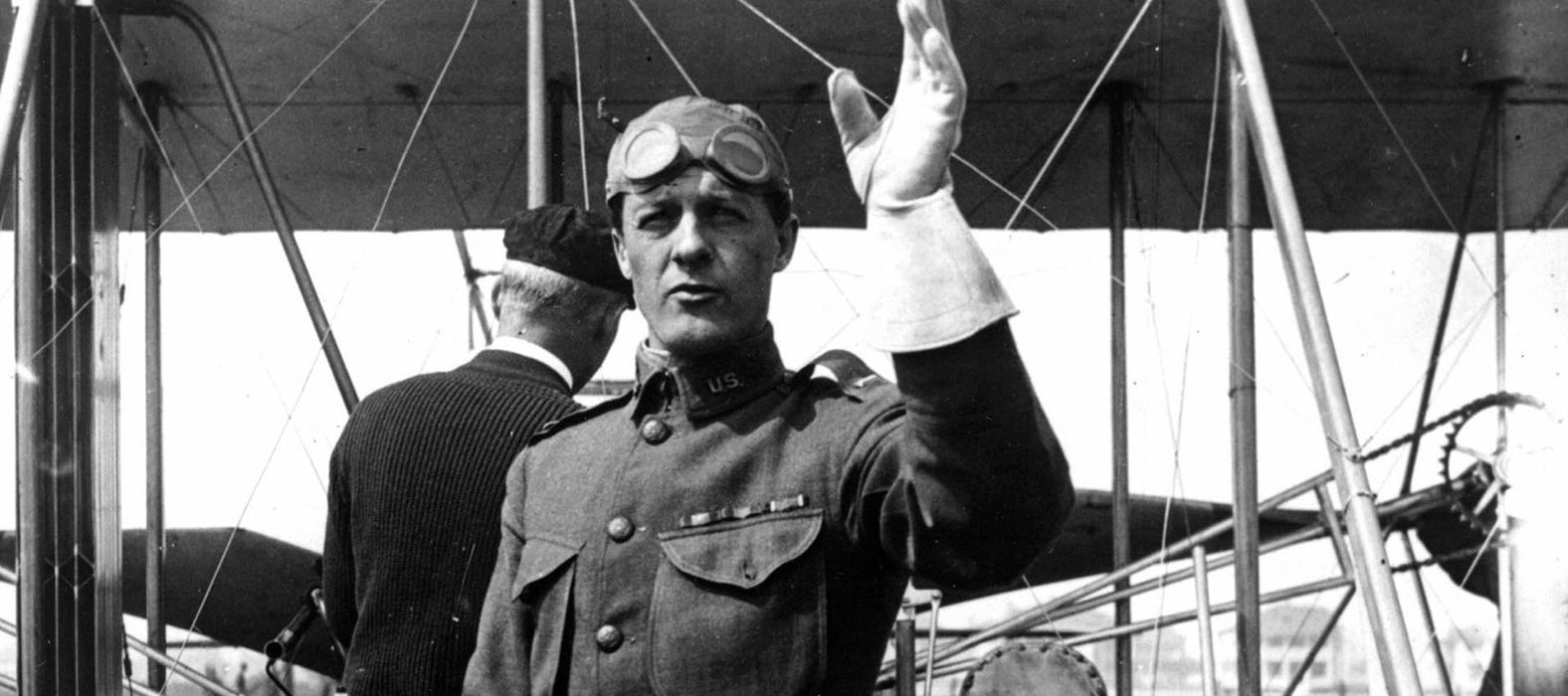
Pershing instructed Foulois as follows:
“Tell Mr. Letcher of the reward that has been offered for Villa’s head by an officer of this command. The reward is Fifty Thousand Dollars (gold). Of course, we are not at liberty to publish it to the world, but I myself can vouch for the bona fide character of this offer, and can say that it is as reliable as though the Government had offered it. This should be a very strong incentive to secret service workers, or possibly to some of the more daring Mexicans who would undertake to enter Villa’s camp or follow on his trail with a prospect of securing this reward…Any such man would be entirely protected by employment as scout by the United States Government and could be assured of immunity through such employment.”[5]
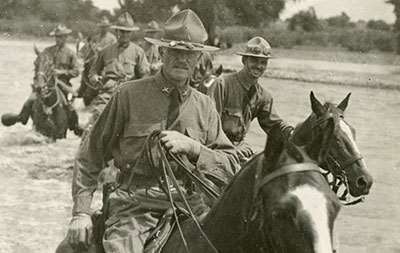
Pershing later recommended the use as assassins of four Japanese spies who were acquainted with Villa and had been recruited in April 1916: Tsutomu Dyo, Juan Sato, Enrique Suzuki, and T. Fujita.
At some point in the discussion between handlers and agents, the possibility came up of poisoning Pancho Villa.[6]
Subsequently, a Captain W. O. Reed of the U.S. Army’s 6th Cavalry Division provided poison obtained from an army surgeon to Tsutomu Dyo for the purpose of killing Villa.[7]
In mid-July1916, the Japanese accessed Villa’s camp and put the poison in his coffee.
However, Villa had long been wary of being poisoned and drank only a little of the poisoned drink.[8]
The Japanese subsequently escaped Villa’s camp and made their way toward American lines before Villa’s fate was clear.
A story subsequently began circulating in local newspapers and the Associated Press that Villa had succumbed to slow poison administered by a Japanese doctor in his entourage and had been replaced by a body double.[9]
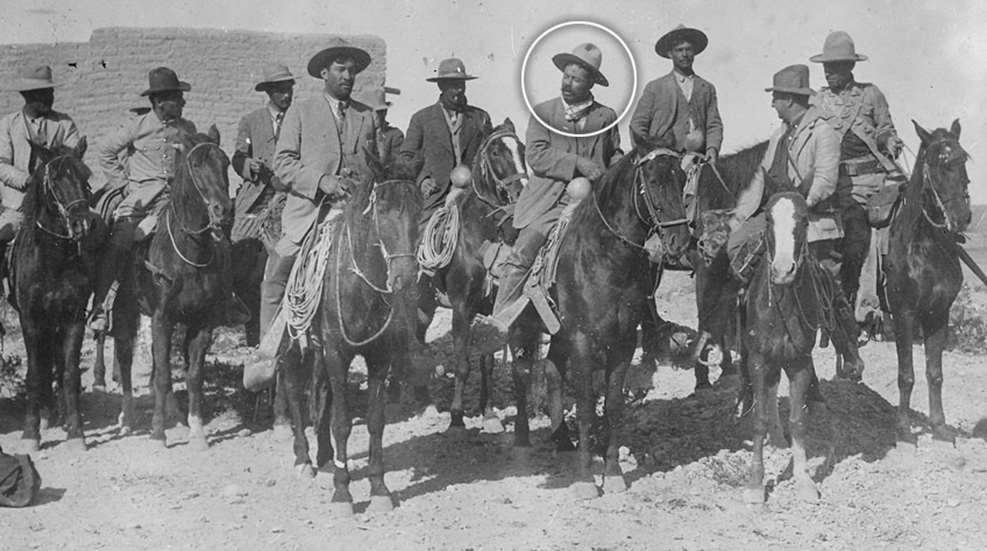
The origins of this story were mysterious and could have been an early version of the CIA’s black propaganda, which was widely spread in later counterinsurgency campaigns.
A few days after the story appeared, the punitive expedition’s intelligence section dispatched Dye and Fujita to find out whether Villa was still alive.
Before Fujita went directly to Villa’s camp, he received his answer when Villa appeared in public to attack Chihuahua City, dispelling all doubts.[10]
In September 1916, rumor of the attempted assassination attempt against Villa reached U.S. Attorney General Thomas Gregory, who in turn brought it to the attention of Secretary of War Newton Baker.
On September 25, the day Pershing was promoted to Major General, the army’s adjutant general ordered General Frederick Funston to investigate; he passed the task on to Pershing, who worked under him.
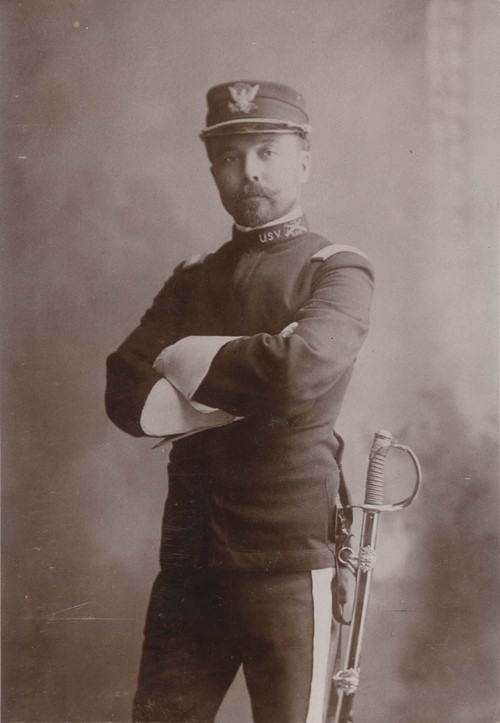
In February 1917, at the end of the punitive expedition, Pershing finally responded and lied, claiming that “I have made full investigation of this matter. All officers connected with secret service work of the Expedition in Mexico state that no officer had any knowledge or connection with any [assassination] plans….It is entirely possible that these Japaese had some such plans of their own, but I do not believe for one moment that any of our officers knew of it.”[11]
After Pershing issued the above statement, the War Department ended the matter by clearing Pershing of any wrongdoing.
In Washington, General Ralph Van Deman, who developed a large-scale surveillance system in colonial Philippines to assist in the hunting of nationalist rebels, dismissed the matter before seeing any of the evidence.
Van Deman stated: “I am sure that somebody is lying…the story about poison is simply absurd.”[12]
Years later, Van Deman changed his tune, somewhat cryptically remarking that “some of the activities of the intelligence officer [presumably Reed] with General Pershing’s headquarters were extremely interesting but hardly orthodox.”[13]
Setting the Groundwork for the American Century
The Mexican poisoning episode is significant historically on multiple levels.
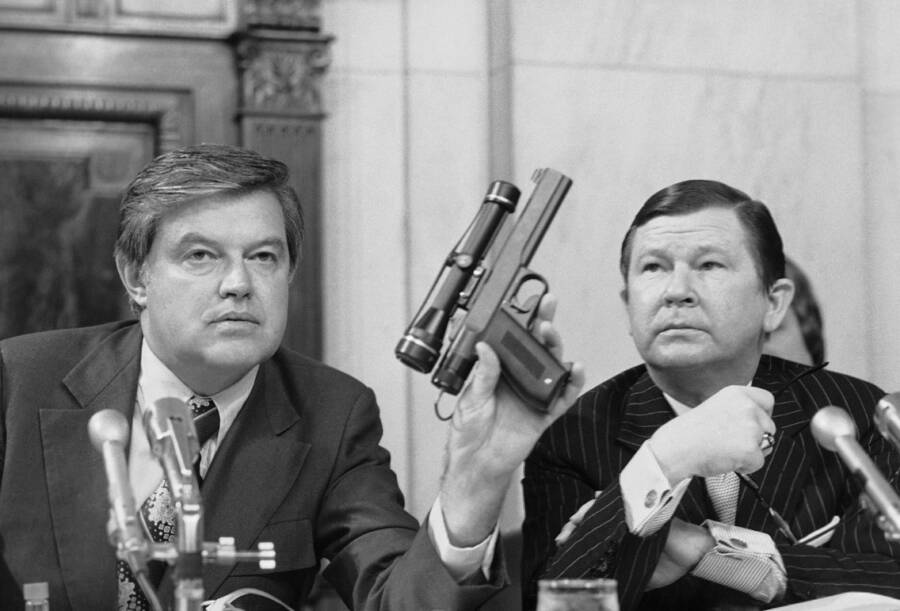
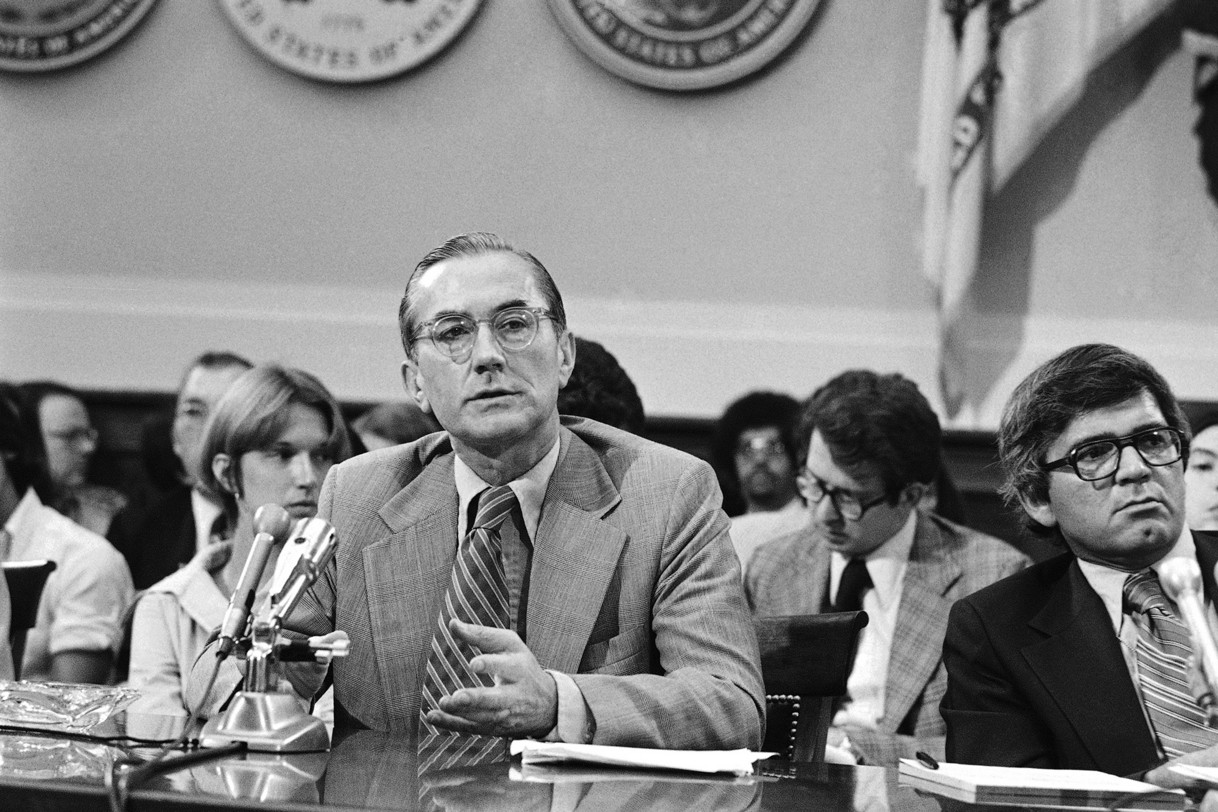
Firstly, it showed the murderous methods of U.S. intelligence agencies that were later exposed in the Church Committee hearings.
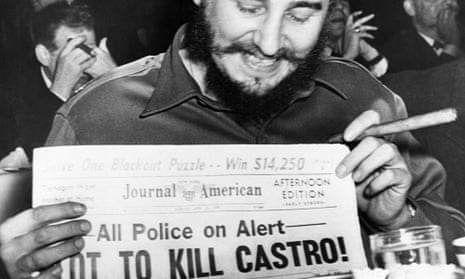
During these latter hearings, Senator Frank Church (D-ID) got CIA Director Wiliam Colby to acknowledge a) the CIA’s development of a specialized ray gun that the Agency used for assassination; b) the CIA’s use of the Mafia to try to poison and murder Cuban revolutionary leader Fidel Castro, an heir in certain ways to Pancho Villa, including in his efforts to assert Cuban control of its own natural resources; and c) the CIA’s killing of at least 20,000 civilians under Operation Phoenix in Vietnam.
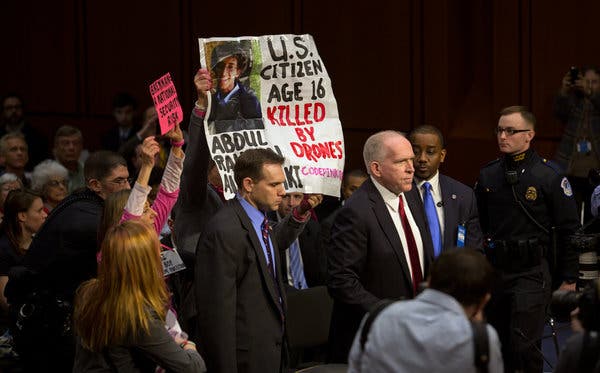
More recently, the CIA played a key role in the February 28 assassination of Iran’s Supreme leader, Grand Ayatollah Ali Khameini; in the kidnapping of Venezuela’ socialist President Nicolás Maduro; and in the killing of Jalisco drug cartel leader Nemesio Oseguera Cervante. CIA Directors from John Brennan on have also coordinated drone assassinations.
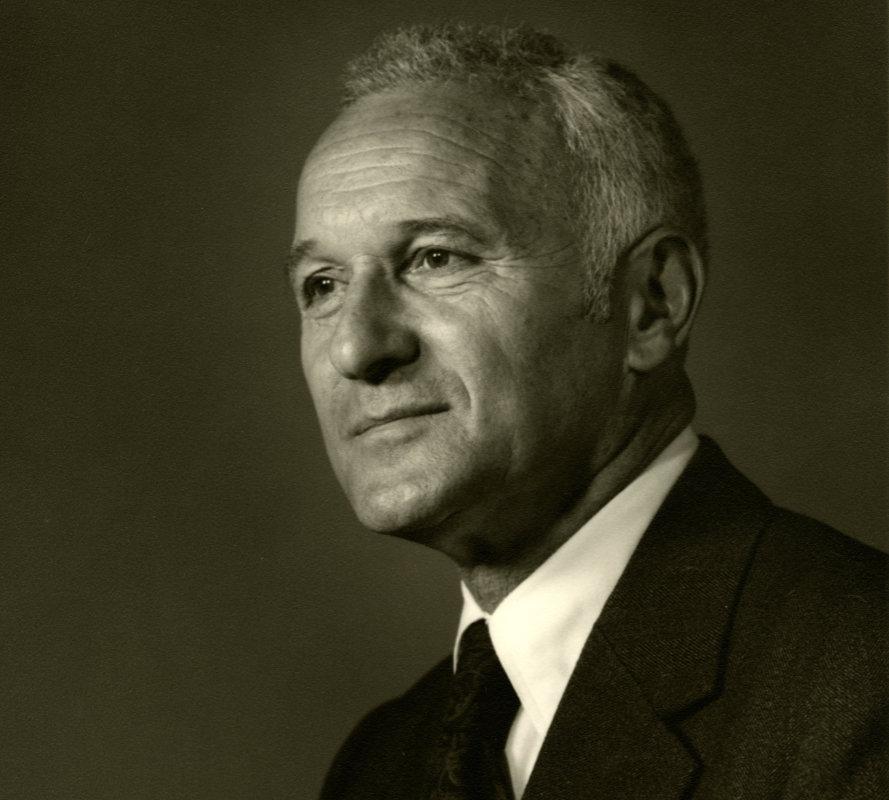
In the 1950, CIA doctor Sidney Gottlieb was known to have scoured the earth searching for plants that the CIA could use to poison its enemies.[14]
Another formative aspect of the Mexican poisoning episode relates to the secrecy of U.S. foreign policy and cover-up of criminal activities by high-ranking military and intelligence officials.
Additionally, the episode shows a strong link between U.S intelligence and corporate interests which were most zealous in pushing for aggressive foreign policy intervention in Mexico because of their commercial holdings and desire to control Mexico’s oil and other natural resources.[15]
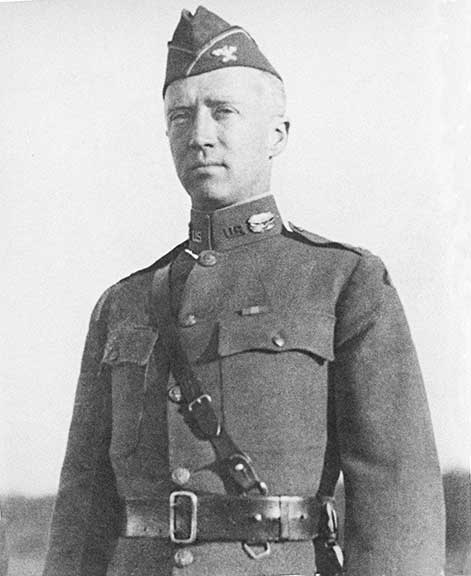
Finally, one must note the adoption of racist and colonialist attitudes that continue to underlie CIA and U.S. foreign policy interventions.
Pershing’s aide-de-camp, Lieutenant George S. Patton, wrote to a friend during the anti-Villa expedition that “one must be a fool to think that people half savage and wholly ignorant [Mexicans] will ever form a republic. It’s a joke. A despot is all they know or want…so when they lost [Porfirio] Díaz they set up bandit kings.”[16]
It is not hard to imagine a similar statement coming out of the mouth of Donald J. Trump, a great admirer of Patton.

The Villista forces killed seven American soldiers and eight civilians and suffered 190 losses before retreating back into Mexico. Villa was an ally of another major revolutionary figure—Emiliano Zapata, whose name the modern-day leftist Zapatistas adopted. ↑
Mark Stout, World War I and the Foundations of American Intelligence (Lawrence: University Press of Kansas, 2023), 83. Another paricipant in the expedition was Charles Willoughby, a fascist who served as General Douglas MacArthur’s chief of military intelligence during the Pacific and Korean Wars and was a top aide to him during the U.S. occupation of Japan from 1945-1952. David A. Foy, Loyalty First: The Life and Times of Charles A. Willoughby, MacArthur’s Chief Intelligence Officer (Philadelphia: Casemate, 2023), 4, 23. ↑
Stout, World War I and the Foundations of American Intelligence, 86. The assassination attempt is also discussed in Friedrich Katz, The Life and Times of Pancho Villa (Stanford, CA: Stanford University Press, 1998), a comprehensive biography of Villa, James W. Hurst, Pancho Villa and Black Jack Pershing: The Punitive Expedition in Mexico (Westport, CT: Praeger, 2008), chapter 4, and Charles H. Harris III and Louis R. Sadler, “Termination with Extreme Prejudice: The United States Versus Pancho Villa,” in The Border and the Revolution: Clandestine Activities of the Mexican Revolution, 1910-1920 (Silver City, NM: High-Lonesome Books, 1990). ↑
Stout, World War I and the Foundations of American Intelligence, 86. ↑
Stout, World War I and the Foundations of American Intelligence, 87. ↑
Idem. ↑
Idem.; Katz, Pancho Villa, 609. ↑
Idem. ↑
Stout, World War I and the Foundations of American Intelligence, 87. ↑
Idem. ↑
Stout, World War I and the Foundations of American Intelligence, 88. The cover-up is also detailed in Katz, Pancho Villa, 610. ↑
Stout, World War I and the Foundations of American Intelligence, 88. A detailed portrait of Van Deman is provided in Alfred W. McCoy, Policing America’s Empire: The United States, the Philippines, and the Rise of the Surveillance State (Madison: University of Wisconsin Press, 2009). ↑
Stout, World War I and the Foundations of American Intelligence, 88. ↑
See Stephen Kinzer, Poisoner in Chief: Sidney Gottlieb and the CIA Search for Mind Control (New York: Griffin, 2020). ↑
See Katz, Pancho Villa. ↑
Katz, Pancho Villa, 605. ↑
CovertAction Magazine is made possible by subscriptions, orders and donations from readers like you.
Blow the Whistle on U.S. Imperialism
Click the whistle and donate
When you donate to CovertAction Magazine, you are supporting investigative journalism. Your contributions go directly to supporting the development, production, editing, and dissemination of the Magazine.
CovertAction Magazine does not receive corporate or government sponsorship. Yet, we hold a steadfast commitment to providing compensation for writers, editorial and technical support. Your support helps facilitate this compensation as well as increase the caliber of this work.
Please make a donation by clicking on the donate logo above and enter the amount and your credit or debit card information.
CovertAction Institute, Inc. (CAI) is a 501(c)(3) non-profit organization and your gift is tax-deductible for federal income purposes. CAI’s tax-exempt ID number is 87-2461683.
We sincerely thank you for your support.
Disclaimer: The contents of this article are the sole responsibility of the author(s). CovertAction Institute, Inc. (CAI), including its Board of Directors (BD), Editorial Board (EB), Advisory Board (AB), staff, volunteers and its projects (including CovertAction Magazine) are not responsible for any inaccurate or incorrect statement in this article. This article also does not necessarily represent the views the BD, the EB, the AB, staff, volunteers, or any members of its projects.
Differing viewpoints: CAM publishes articles with differing viewpoints in an effort to nurture vibrant debate and thoughtful critical analysis. Feel free to comment on the articles in the comment section and/or send your letters to the Editors, which we will publish in the Letters column.
Copyrighted Material: This web site may contain copyrighted material the use of which has not always been specifically authorized by the copyright owner. As a not-for-profit charitable organization incorporated in the State of New York, we are making such material available in an effort to advance the understanding of humanity’s problems and hopefully to help find solutions for those problems. We believe this constitutes a ‘fair use’ of any such copyrighted material as provided for in section 107 of the US Copyright Law. You can read more about ‘fair use’ and US Copyright Law at the Legal Information Institute of Cornell Law School.
Republishing: CovertAction Magazine (CAM) grants permission to cross-post CAM articles on not-for-profit community internet sites as long as the source is acknowledged together with a hyperlink to the original CovertAction Magazine article. Also, kindly let us know at info@CovertActionMagazine.com. For publication of CAM articles in print or other forms including commercial internet sites, contact: info@CovertActionMagazine.com.
By using this site, you agree to these terms above.
About the Author
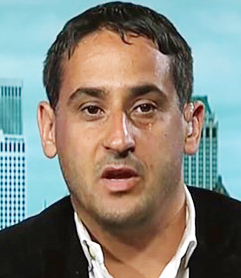
Jeremy Kuzmarov holds a Ph.D. in American history from Brandeis University and has taught at numerous colleges across the United States. He is regularly sought out as an expert on U.S. history and politics for radio and TV programs and co-hosts a radio show on New York Public Radio and on Progressive Radio News Network called “Uncontrolled Opposition.”
He is Managing Editor of CovertAction Magazine and is the author of six books on U.S. foreign policy, including Obama’s Unending Wars (Clarity Press, 2019), The Russians Are Coming, Again, with John Marciano (Monthly Review Press, 2018), Warmonger. How Clinton’s Malign Foreign Policy Launched the U.S. Trajectory From Bush II to Biden (Clarity Press, 2023); and with Dan Kovalik, Syria: Anatomy of Regime Change (Baraka Books, 2025).
Besides these books, Kuzmarov has published hundreds of articles and contributed to numerous edited volumes, including one in the prestigious Oxford History of Counterinsurgency .
He can be reached at jkuzmarov2@gmail.com and found on substack here.

Great unknown history!
A related tale of interest: The Empire’s Assassins
https://www.youtube.com/watch?v=jUp5_nHyG50