The late Mario Savio was a leading light of the Free Speech Movement (FSM) at the University of California, Berkeley. His 1964 speech is now legend:
There’s a time when the operation of the machine becomes so odious, makes you so sick at heart, that you can’t take part! You can’t even passively take part! And you’ve got to put your bodies upon the gears and upon the wheels, upon the levers, upon all the apparatus, and you’ve got to make it stop! And you’ve got to indicate to the people who run it, to the people who own it, that unless you’re free, the machine will be prevented from working at all!
– Mario Savio
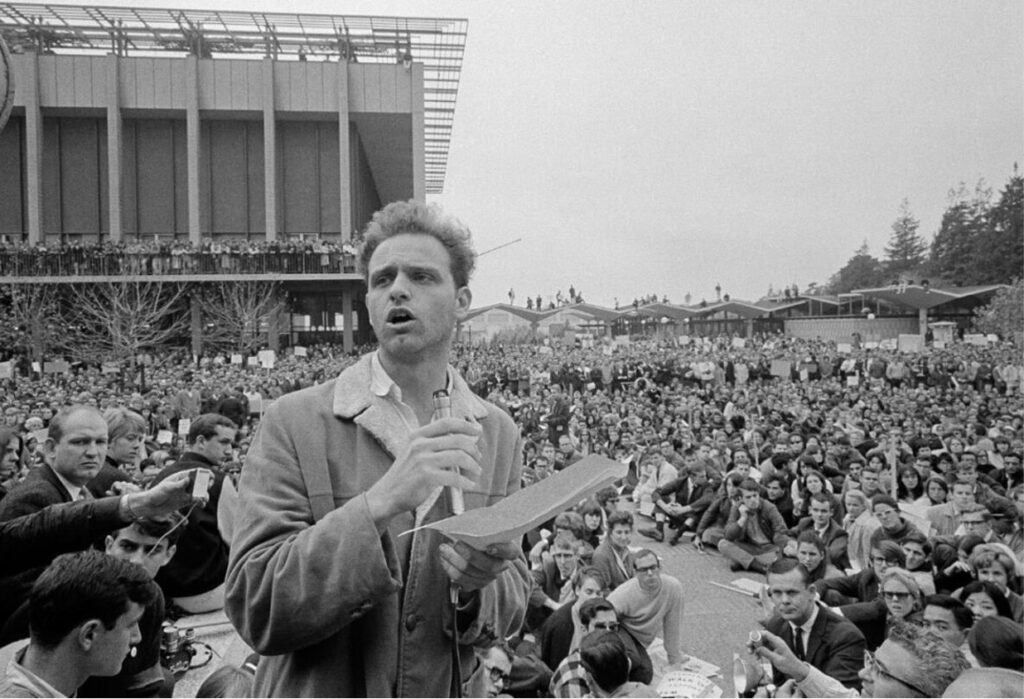
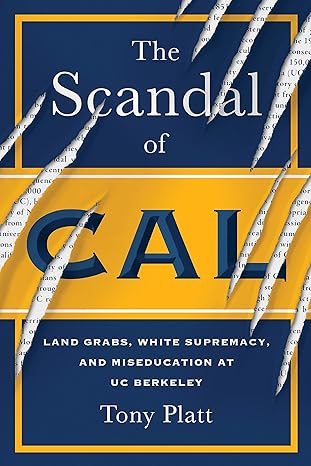
Now, Berkeley loves to boast of its former student. At the time of the undergraduate philosophy major’s speech, however, the university administration did not value him at all. “The university expelled Savio for his role in the FSM,” writes Tony Platt in The Scandal of Cal.
Nevertheless Robert Cohen, the author of Freedom’s Orator: Mario Savio and the Radical Legacy of the 1960s, explained via electronic mail to me: “Mario was not expelled. He was suspended for his FSM activism in the fall semester of 1964. During that academic year he did not re-enroll,” even after the Regents ended his suspension and just put him on disciplinary probation. “When Savio decided to return to his undergrad studies at Berkeley in 1966, he was denied re-admission in a decision polluted by political bias…though internal documents show that the admissions office had on the academic merits deemed him qualified for readmission.”
So, Tony Platt has made a minor error in his 2023 book, The Scandal of Cal: Land Grabs, White Supremacy, and Miseducation at UC Berkeley. Still, Platt is absolutely correct in his argument that, while the student body may sometime be progressive at times, as an institution, Berkeley is fundamentally conservative:
“The regents operate with the arrogance of absentee landlords. A small brass plaque, embedded in the sidewalk outside the main entrances to Berkeley and every other UC campus unequivocally reminds us that the university is owned by its governing board – ‘property of the Regents of the University of California,’ not the people or legislature of California.”
Not only is Platt a Distinguished Affiliated Scholar at the Center for the Study of Law and Society at Berkeley, he holds a doctorate in criminology from the university. Therefore, he knows of what he writes.
By signing the Morrill Land Grant Act in 1862, President Abraham Lincoln transferred eleven million acres of federal land to the western states for the establishment of universities. For its part, California received 150,000 acres, of which much of this land had been stolen from local Native American tribes.
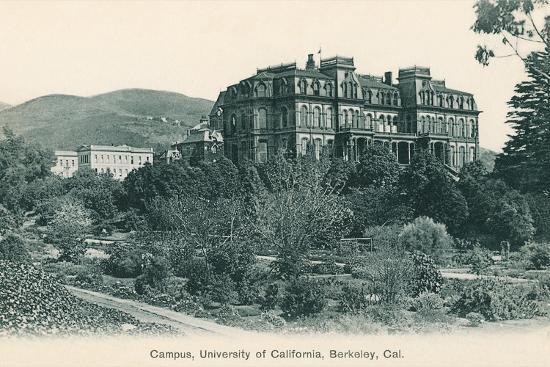
“Some eighty years after the Morrill Act, the University of California was party to another land grab far from the West Coast, and again the university benefited from the deprivation of tribes,” Platt points out. “From 1942 to 1946, the federal government created the clandestine Manhattan Engineer District—better known as the Manhattan Project—that perfected the atomic bomb. The land for the project in New Mexico was acquired through eminent domain by the US Department of War, which contracted with the University of California to administer the military site at Los Alamos.”
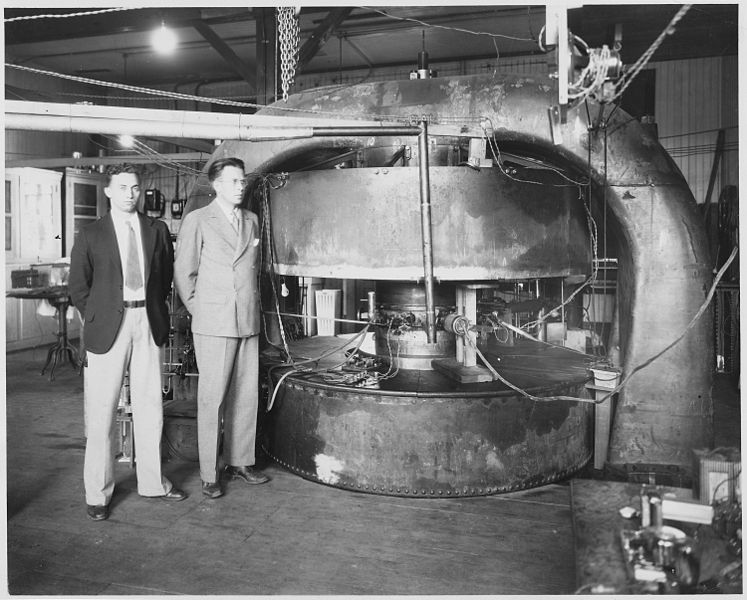
On July 16, 1945, in Los Alamos, Robert Oppenheimer observed the world’s first nuclear explosion, famously pronouncing, “Now I am become Death, the destroyer of worlds.”
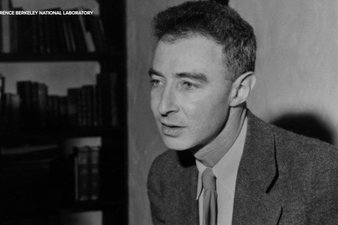
Oppenheimer had also been a professor in the Physics Department at Berkeley.
It took some time for Oppenheimer’s conscience to emerge. He was involved in the choice of the Japanese city of Hiroshima as a target. The atomic bombings of Hiroshima and Nagasaki killed an estimated 110,000 to 210,000 people. A lion’s share of the casualties were civilians.
In 1954, the Atomic Energy Commission asked Oppenheimer if he had felt any moral scruples about the use of the atomic bomb. “Terrible ones,” the physicist answered.
The AEC continued: “Would you have opposed the dropping of a thermonuclear weapon on Japan because of moral scruples?”
Oppenheimer replied: “I believe I would, sir.”
It took the development of the thermonuclear bomb, also known as the hydrogen bomb, for Oppenheimer to finally raise his voice. Such figures are too smart for their own good in that they allow their intellects to get ahead of themselves.
“If the United States had been defeated in the war,” Platt observes, “the men responsible for intentionally killing thousands of civilians could have been charged with war crimes.”
Berkeley’s contribution to atomic warfare did not conclude with the surrender of Japan.
The Lawrence Livermore National Laboratory is a beneficiary of federal contracts, “where the university co-manages the country’s preeminent nuclear weapons research facility.”
Apart from the development of weapons of mass destruction in New Mexico, as well as at Livermore, Berkeley had already promoted militarism right on campus years before. During World War I, University President Benjamin Ide Wheeler persuaded the Regents “to offer the War Department such use of the grounds, buildings, and equipment…as may accord with the plans and needs of the department in the training of troops.”
Platt points out that “it wasn’t until 1962, after decades of student organizing going back to the 1930s, that mandatory military training was ended.”
Militarism and racism go hand in hand, and such was the case in the Second World War. Berkeley dismissed 500 innocent Japanese-American students as part of the internment of the Japanese-American population on the West Coast.
Apart from the dispossession of Indian land, Berkeley also engaged in the dispossession of Indian remains. “Between the 1870s, when the first students were admitted, and the passage of the Native American Graves Protection and Repatriation Act (NAGPRA) in 1990, the university accumulated, according to its own dubious numbers, 11,109 ‘skeletal remains’ and 492,425 ‘Indian specimens’ from North America.”
As of 2011, Berkeley had returned just 16% of Indian remains, despite the enactment of NAGPRA.
Apart from the physicists, one might like to regard faculty members at Berkeley as enlightened thinkers who challenged the conservative administration, but such was not the case.
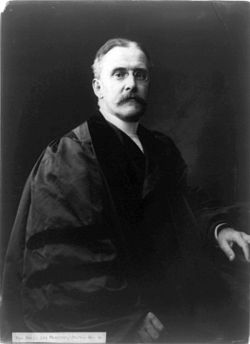
Herbert Bolton, who was the chairman of the History Department from 1918 to 1940, described Native Americans who met the Spanish conquest of California as “a debased race, little advanced from the anthropoid ape. It is doubtful if more primitive savages existed at the time on the face of the earth.”
David Barrows, an anthropologist by training, served as president of the University of California from 1919 to 1923, but was professor of political science for many more years. “The black lacks an inherent passion for freedom,” Barrows concluded.
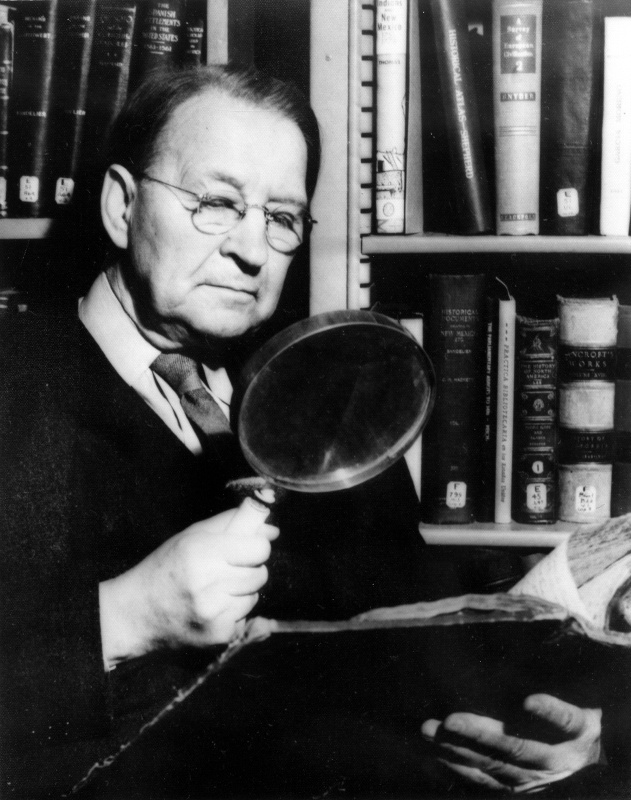
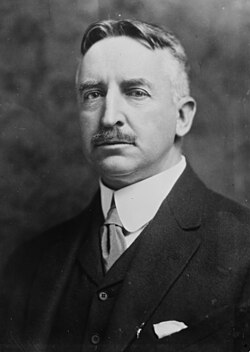
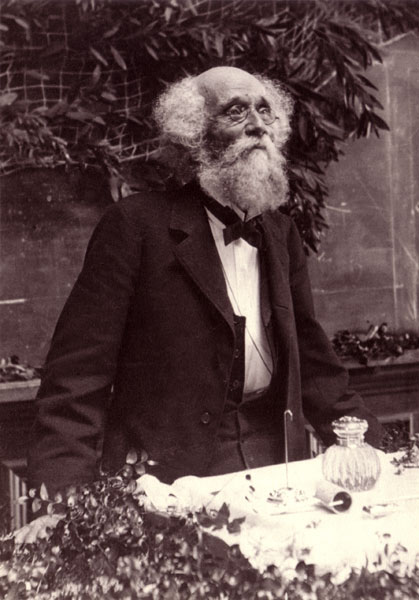
Geologist and botanist Joseph LeConte, a professor at Berkeley from 1869 to 1901, had spent his formative years on a Georgia plantation. “There was never a more orderly, nor apparently a happier working class than the negroes of Liberty County as I knew them in my boyhood,” Le Conte claimed. He blamed Reconstruction for “the intolerable insolence of the negroes set free with all their passions not only uncontrolled but often even encouraged.”
Indeed, promotion of racial justice came from the bottom up, rather than the top down. In 1985, Berkeley students occupied Sproul Hall, demanding university divestment from apartheid South Africa. Rallies accompanied the occupation of the building.
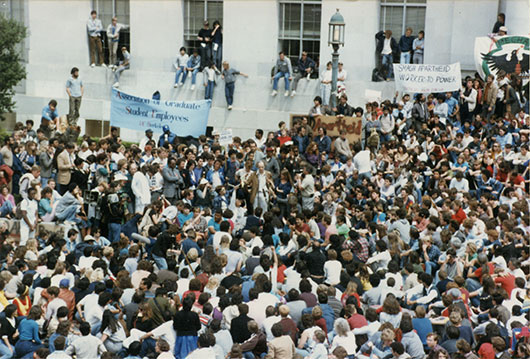
“The university responded by sending in riot police to arrest 158 students and clear the building, and eventually to establish a committee to study the issue,” Platt notes. “In response to the university’s delaying tactics, students built a small shanty town outside the chancellor’s office, chanting, ‘Apartheid kills while UC counts its dollar bills’.”
Eventually, the anti-apartheid campaign gained momentum, acquiring even the support of the governor and university faculty. The Regents gave in, divesting $3.1 billion from South Africa.

CovertAction Magazine is made possible by subscriptions, orders and donations from readers like you.
Blow the Whistle on U.S. Imperialism
Click the whistle and donate
When you donate to CovertAction Magazine, you are supporting investigative journalism. Your contributions go directly to supporting the development, production, editing, and dissemination of the Magazine.
CovertAction Magazine does not receive corporate or government sponsorship. Yet, we hold a steadfast commitment to providing compensation for writers, editorial and technical support. Your support helps facilitate this compensation as well as increase the caliber of this work.
Please make a donation by clicking on the donate logo above and enter the amount and your credit or debit card information.
CovertAction Institute, Inc. (CAI) is a 501(c)(3) non-profit organization and your gift is tax-deductible for federal income purposes. CAI’s tax-exempt ID number is 87-2461683.
We sincerely thank you for your support.
Disclaimer: The contents of this article are the sole responsibility of the author(s). CovertAction Institute, Inc. (CAI), including its Board of Directors (BD), Editorial Board (EB), Advisory Board (AB), staff, volunteers and its projects (including CovertAction Magazine) are not responsible for any inaccurate or incorrect statement in this article. This article also does not necessarily represent the views the BD, the EB, the AB, staff, volunteers, or any members of its projects.
Differing viewpoints: CAM publishes articles with differing viewpoints in an effort to nurture vibrant debate and thoughtful critical analysis. Feel free to comment on the articles in the comment section and/or send your letters to the Editors, which we will publish in the Letters column.
Copyrighted Material: This web site may contain copyrighted material the use of which has not always been specifically authorized by the copyright owner. As a not-for-profit charitable organization incorporated in the State of New York, we are making such material available in an effort to advance the understanding of humanity’s problems and hopefully to help find solutions for those problems. We believe this constitutes a ‘fair use’ of any such copyrighted material as provided for in section 107 of the US Copyright Law. You can read more about ‘fair use’ and US Copyright Law at the Legal Information Institute of Cornell Law School.
Republishing: CovertAction Magazine (CAM) grants permission to cross-post CAM articles on not-for-profit community internet sites as long as the source is acknowledged together with a hyperlink to the original CovertAction Magazine article. Also, kindly let us know at info@CovertActionMagazine.com. For publication of CAM articles in print or other forms including commercial internet sites, contact: info@CovertActionMagazine.com.
By using this site, you agree to these terms above.
About the Author
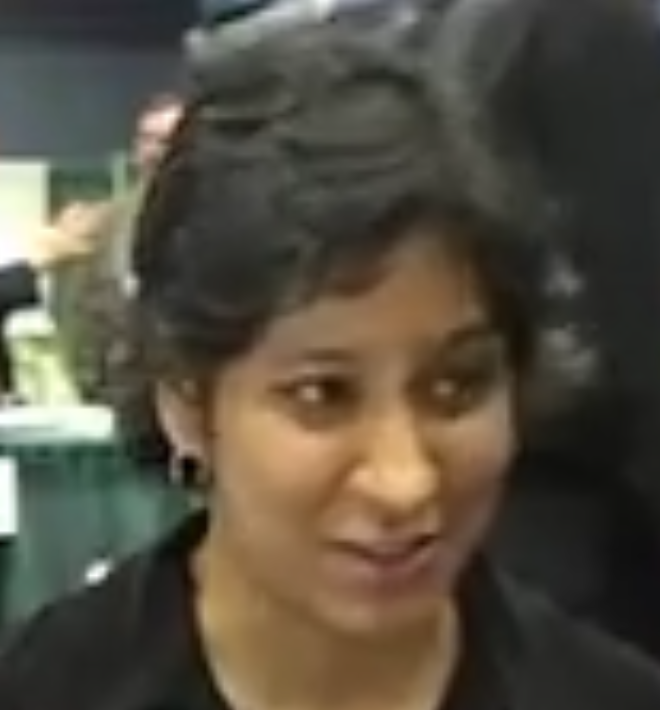
Lubna Z. Qureshi completed her doctorate in U.S. history from the University of California, Berkeley in 2006.
She is the author of Nixon, Kissinger, and Allende: U.S. Involvement in the 1973 Coup in Chile (Bloomsbury, 2008) and Olof Palme, Sweden, and the Vietnam War: A Diplomatic History (Bloomsbury, 2023).
Her essay, “Olof Palme, Sweden, and the Vietnam War: An Outspoken Socialist among European Socialists,” was published in the edited volume, European Socialists Across Borders: Transnational Cooperation and Alternative Visions of Europe After 1945, eds. Andrew Williams and Mélanie Torrent (University of London Press, 2025). The entire edited volume can be read for free via Open Access: https://uolpress.co.uk/book/european-socialists-across-borders/.
Lubna can be reached at lubnaqureshi1974@gmail.com.




Hello! Thank you for the interesting and informative article. I attended Cal, too, and found it to be very liberal and diverse. I believe it has one of the highest Asian student populations in the country. My professors were wonderful.
But I do know it was a founder of nuclear power/energy, and I was sad to hear about releasing students to internment camps during WWII. (My stepdad, who is a professor at Cal – his parents met in the internment camps!)
I still stand by it as a very high-quality school, but your criticisms are valid. I think all Ivy Towers (or adjacent) must be this way.
In recent years Berkeley did not do very much to protect Jewish students from harassment and violence on campus and Jewish students have not felt safe on campus.
I am not sure but I think situation has become better now as there are reports that the University has taken steps to help make the campus safer for Jewish students.