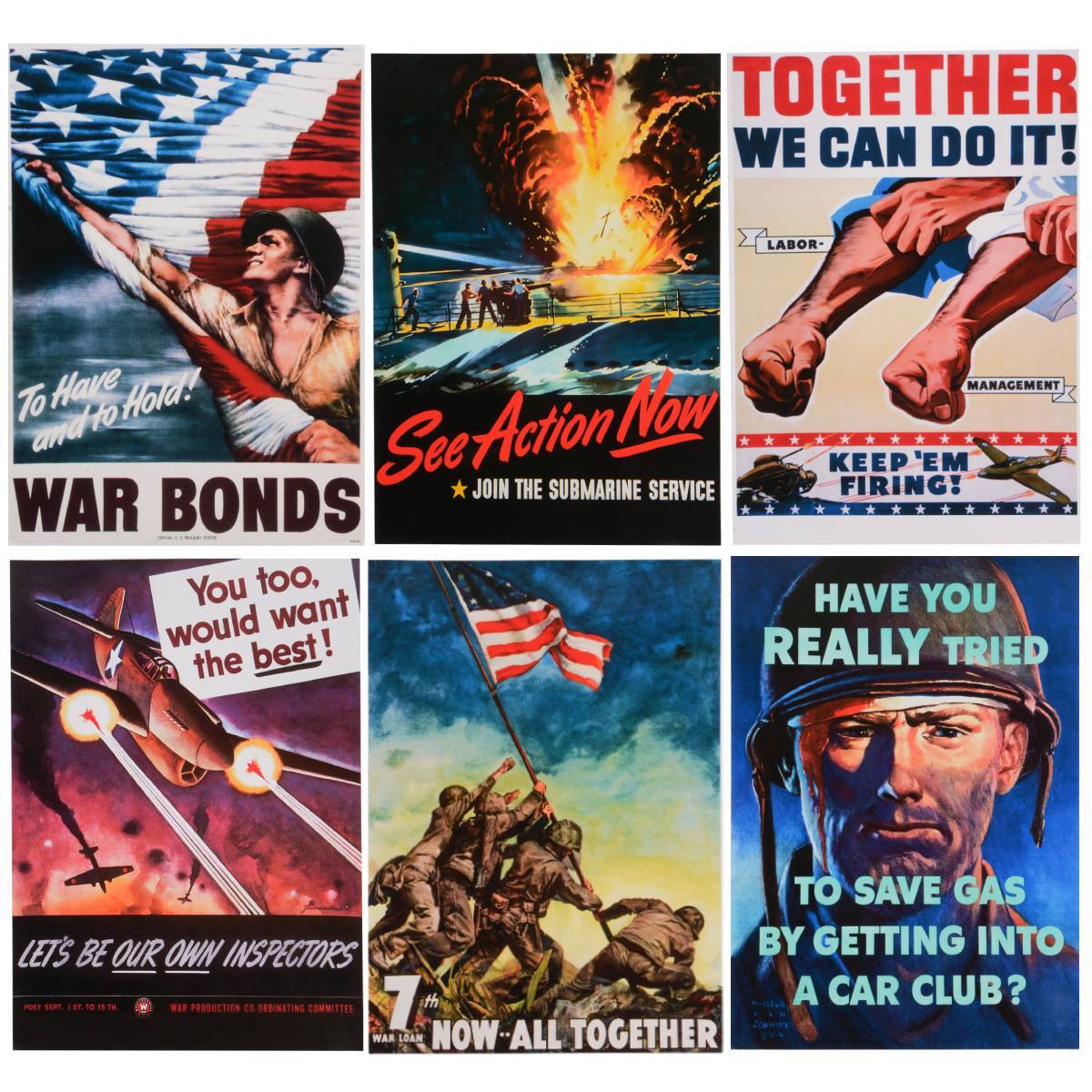
Among the many advantages of my generation, becoming adults in the 1960s and ’70s, was what and how we were taught. Advertising propaganda was new in the 1950s and, instead of using it to manage us, we were then taught how to manage it. Government and industry soon learned better; so, perhaps, we should too.
In 1938, the Institute for Propaganda Analysis presented “instruments of persuasion” in the hope that people in the United States would not be victimized by the techniques used by Hitler, Mussolini and the like. By the 1950s, high schools were teaching students how to recognize these same techniques now used by advertisers. Today, while these strategies are still used in ads, the same tactics show up regularly in everyday news.
While we may intellectually accept on some level that much of what we read and are told is propaganda, teasing out what is true and what is distorted is problematic. Of course, finding news services we trust is paramount, but there are techniques we can learn to help us recognize manipulation.
It is extremely important that we not expect our news providers to be unbiased, for that is when they can trap us into thinking the “other guy” is not. All news, any news, is neither impartial nor balanced; it just is. A writer can no more use only neutral, even-handed words and sentence structures to describe an event than a painter can exclusively use gray.
It can be done, but the result is bland and quickly gets boring. Words are colorful and are, for the most part, far from impartial. Ideas communicated through word images create a positive or negative impression based on our subconscious processing and our cultural and educational backgrounds.
Here is just one small example: It can make a difference if you refer to someone as an attorney or a lawyer. Both words are synonyms and both are correct descriptions of a profession, but neutral? The word “lawyer” calls up certain ideas in addition to legal representative: shyster lawyer, ambulance chaser, “come the revolution, we’ll kill all the lawyers,” definitely slightly negative. The word “attorney,” on the other hand, carries a certain cachet: erudition, seriousness, think famous movie courtroom heroes; Spencer Tracy in Inherit the Wind was definitely an attorney (Clarence Darrow), not a lawyer.
While we cannot expect our news providers to be unbiased, we can and should expect them to be transparent and honest; to identify their biases and then to be truthful in what they choose to report. Such news providers do exist.
So, until the day comes when most reporters and editors, with their personal histories, quirks, political prejudices and experiences, give us an even-handed, disinterested account, while answerable to boards of directors, stockholders and advertisers, it behooves us to review the most common propaganda techniques. Forewarned is, indeed, forearmed.
In reviewing some of these propaganda techniques, this article will use something a bit dated published in the New York Times: “Chávez Calls Bush ‘the Devil’ in U.N. Speech” by David Stout which, uses several of the more obvious tactics—name-calling, transfer, card-stacking and glittering generalities.
Name Calling: Name-calling is to say something nasty, but general, about someone to arouse prejudice by labeling the target something the public dislikes in order to provoke a knee-jerk reaction. Using negative labels and insults to discredit opponents or ideas. Often, name-calling is employed using sarcasm and ridicule: “He’s a pen-pushing bureaucrat” or “She’s a liberal.”
In the Stout article: “Mr. Chavez, a left-wing populist who tried to seize power in a coup six years before winning election in 1998.”
Beware of labeling—even if you agree with it.

Transfer: Transfer uses the power of association to “transfer” a good or bad feeling about something to another, to link the two in the subject’s mind. Associating a person, idea or product with something already liked or disliked to create a positive or negative impression.
Positively, it is why beautiful women and sleek wild animals sell cars.
In the Chávez story: “The moment may not become as famous as Nikita Khrushchev’s finger-wagging, shoe-thumping outbursts in the General Assembly in the Cold War era, but it still produced chuckles and some applause in the assembly hall.”
And again: “Mr. Chávez has courted [courted = wooed, cozied up to, rather than befriended] Fidel Castro and the leaders of Iran and Syria [well yes, but actually Mr. Chávez made a couple of world tours and befriended quite a number of world leaders].” This is a double whammy: transfer of the negatives of Iran, Syria and Cuba in many people’s minds and card-stacking because it was not just these three (see card stacking below].”
Use of transfer should be a red alert to read any article especially carefully.
Card-Stacking: “Stacking the cards” of facts for or against the truth. It uses under-emphasis or over-emphasis; it omits things. Card-stacking frequently uses selective omission: What it says is not untrue, but it omits important information, presenting only positive or negative information about a subject while downplaying or ignoring the opposite aspects.
The New York Times piece: “The Venezuelan leader also had sharp words for the United Nations, which he said is ‘antidemocratic’ and ‘doesn’t work.’” (It was not only Hugo Chávez who criticized the UN; UN Secretary-General Kofi Annan made similar statements and this criticism was in the final document of the 118 nations of the then-recent NAM Summit, two-thirds of the United Nations.)
The only protection against card-stacking is to get more information, preferably from other sources. Fortunately, there is a plethora on the Internet (even translated into English).
Glittering Generalities: These are words that have different positive meaning for individual subjects, but are linked to highly valued concepts. Sort of the opposite of name-calling, when glittering generalities are used, they demand approval without thinking, simply because such an important concept is involved using vague, emotionally appealing words that evoke positive feelings without providing concrete information, like “freedom” or “defense of democracy.”
Stout: “Mr. Bush spoke on Tuesday about Iran’s nuclear ambitions and how they might be curbed, and about his broader visions for the Middle East, visions that Mr. Chávez saw as insincere, ridiculous or both.”
This obviously combines glittering generalities: Note how no mention is made of the U.S.’s determination to “curb” Iran by force, in opposition to all of the other Security Council members, nor the content of Mr. Bush’s vision, in light of his encouragement and support of Israel’s invasion of Lebanon at the time.
In transfer here, Mr. Chávez, by contrast, is not illuminated by the glittering generalities.
We must consider the merits of the idea itself, separate from specific “glittering” words.
While use of these four is quite a hefty wielding of propaganda techniques, there are others beyond those used in this article that are useful to keep in mind.
Testimonials present an idea from someone whom many people respect or idolize and, thus, they are expected to take that person’s word for whatever it is, such as endorsements from celebrities or respected figures to promote a product, idea or cause.
Band wagon implies something is generally accepted and encourages everyone to conform or to belong to the group, creating the impression that everyone is already doing something to encourage others to join in: “Everybody believes this, so what’s your problem?”
Plain folks is an attempt to convince that the views reflect those of the common person and that they are also working for the benefit of the common person. Presenting oneself or one’s ideas as being ordinary and relatable to the common person. This is often used with the accent of a specific audience as well as specific idioms or jokes, but can be used negatively as well to ridicule with an egregious insult, for example, using incorrect English in translation.
Then, there are:
Fearmongering: Repeatedly using exaggerated or completely false claims to create fear and anxiety, often to promote a specific agenda.
Loaded language: Using emotionally charged words to influence the audience’s reaction.
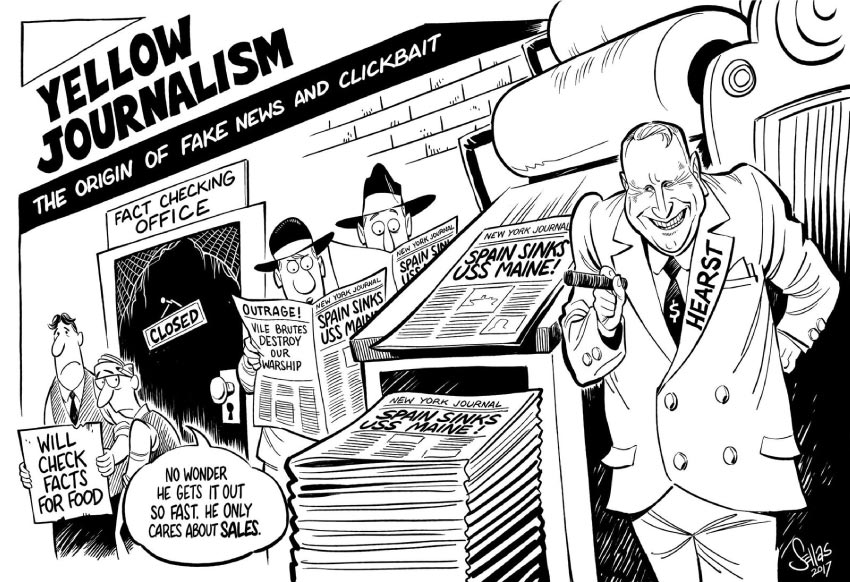
And one we’ll recognize today, but must be alert when used against our enemies:
Scapegoating: Blaming a specific individual or group for problems to deflect from the real issues.
Hyperbole: Exaggeration, caricature, overstatement, stretching, enhancement, coloring, magnification, elaboration.
Semantic satiation: This happens when a word, especially a significant one, is repeated so much or so often in imprecise context that it seems to lose its meaning. Diluted words can become less precise, losing their power and impact, making it harder to communicate nuanced ideas and leading to confusion, for example, “Fascism” or “Nazi.”
Finally, and most difficult to discern unless we are alert, there is the ordinary, everyday choice of words, with their nuances, words which may even have a different meaning for you than for me. We can refer to someone with whom we have had a past relationship as either a former or an ex. Former has a milder, friendlier feel, doesn’t it? Or, we can label an unproven event as “alleged,” “supposed,” “suspected,” “assumed,” “hypothetical,” “theoretical,” “said,” “believed” or “rumored”; any one of these words could be used to describe a fact that is unproven; the choice, however, is telling.
The point is that, even without overt propaganda techniques, sentences present ideas and ideas are subjective. Everyone has a point of view and this comes through in writing as in speech. Just as we move from conscious awareness of overt racism and sexism to recognizing nuances of prejudice that might have gone unnoticed before, so we can learn to be more discerning of an author’s attempt to influence us with his or her choice of words in ordinary reporting. Moreover, we can read honest news sources that write the truth from a candid point of view.

CovertAction Magazine is made possible by subscriptions, orders and donations from readers like you.
Blow the Whistle on U.S. Imperialism
Click the whistle and donate
When you donate to CovertAction Magazine, you are supporting investigative journalism. Your contributions go directly to supporting the development, production, editing, and dissemination of the Magazine.
CovertAction Magazine does not receive corporate or government sponsorship. Yet, we hold a steadfast commitment to providing compensation for writers, editorial and technical support. Your support helps facilitate this compensation as well as increase the caliber of this work.
Please make a donation by clicking on the donate logo above and enter the amount and your credit or debit card information.
CovertAction Institute, Inc. (CAI) is a 501(c)(3) non-profit organization and your gift is tax-deductible for federal income purposes. CAI’s tax-exempt ID number is 87-2461683.
We sincerely thank you for your support.
Disclaimer: The contents of this article are the sole responsibility of the author(s). CovertAction Institute, Inc. (CAI), including its Board of Directors (BD), Editorial Board (EB), Advisory Board (AB), staff, volunteers and its projects (including CovertAction Magazine) are not responsible for any inaccurate or incorrect statement in this article. This article also does not necessarily represent the views the BD, the EB, the AB, staff, volunteers, or any members of its projects.
Differing viewpoints: CAM publishes articles with differing viewpoints in an effort to nurture vibrant debate and thoughtful critical analysis. Feel free to comment on the articles in the comment section and/or send your letters to the Editors, which we will publish in the Letters column.
Copyrighted Material: This web site may contain copyrighted material the use of which has not always been specifically authorized by the copyright owner. As a not-for-profit charitable organization incorporated in the State of New York, we are making such material available in an effort to advance the understanding of humanity’s problems and hopefully to help find solutions for those problems. We believe this constitutes a ‘fair use’ of any such copyrighted material as provided for in section 107 of the US Copyright Law. You can read more about ‘fair use’ and US Copyright Law at the Legal Information Institute of Cornell Law School.
Republishing: CovertAction Magazine (CAM) grants permission to cross-post CAM articles on not-for-profit community internet sites as long as the source is acknowledged together with a hyperlink to the original CovertAction Magazine article. Also, kindly let us know at info@CovertActionMagazine.com. For publication of CAM articles in print or other forms including commercial internet sites, contact: info@CovertActionMagazine.com.
By using this site, you agree to these terms above.
About the Author
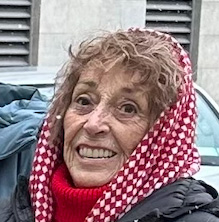
Carolina Cositore has been a justice activist her entire life.
She has also been a teacher, copy editor, journalist, social worker, mother, grandmother, mystery writer and traveler, roles often overlapping.
The traveler and copy editor roles are directly applicable to this article, as she learned honest reporting working for ten years at Prensa Latina in Cuba.
Carolina can be reached at mariposamobile02@gmail.com.




What a wonderful discovery for me to read your article. Your insightful analysis shows us how the mass media exists to support whatever their Establishment wishes.
Another wonderful affect for me is that you worked for the same media I did from 1992-6, the Che-created Prensa Latina. I could write about many matters, however we Cuban journalists (of whatever nationality) also had to abide by the rules of state, which I understood and supported all-be-it dissatifying for objective journalism. Supporting Cuba’s media as it is is necessary since the CIA and its msm allies would otherwise establish internal media conditions aimed at laying the basis for yet another of their “color revolutions”.
My first demonstration against US world domination occurred when the US invaded Cuba at the Bay of Pigs, and when I joined the Fair Play for Cuba Committee. I still have my membership card before me as I write about this righteous comrade activist/writer for a world based on equality and peace.
Thank you Carolina.