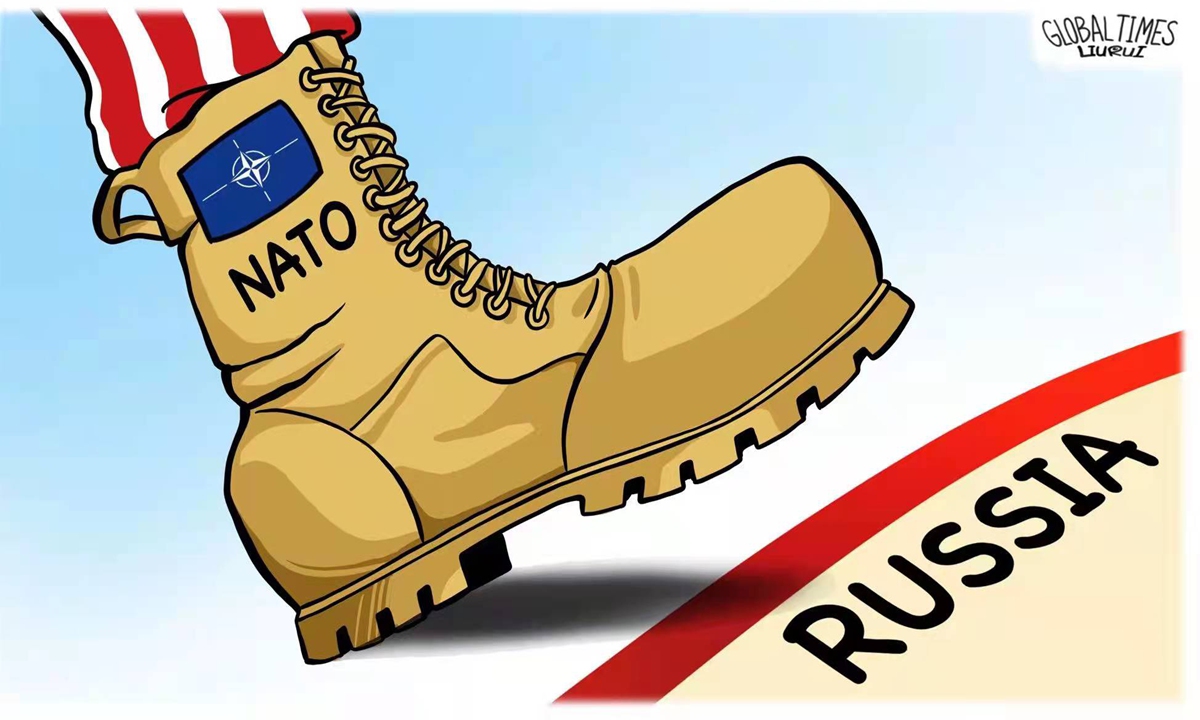
On April 15th, Declassified UK published a bombshell investigation exposing how, in the mid-1990s, senior British political and military officials were well aware that NATO expansion into Central and Eastern Europe “would provoke [the] Russians,” and likely trigger all-out war. Hitherto unreported Ministry of Defence files reveal London knew Moscow’s “sensitivities” over a “hostile military alliance” enlarging up to its borders were profound, and based on very “real” concerns. Yet, NATO’s dangerous crusade to absorb Central and Eastern Europe continued apace, ultimately producing the Ukraine proxy conflict.
Since the initiation of the so-called Special Military Operation in February 2022, British officials have relentlessly repeated the mantra that the proxy war was “unprovoked.” However, a declassified March 1995 Foreign Office memo noted “there was a widespread psychological and intellectual perception in Moscow that NATO was a real threat.”
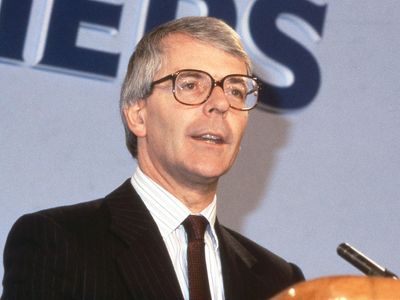
In May that year, then-Prime Minister John Major succinctly articulated Russian anxieties to his Irish counterpart John Bruton, as a “fundamental fear…of encirclement.” Concerns about EU membership were comparatively muted:
“For the Russians, NATO had a much more threatening symbolism and political resonance…The Baltics were particularly difficult, with extreme sensitivity for Russia. It would be very hard to have a NATO border directly against Russia.”
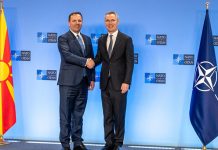
Nevertheless, in 1997, NATO invited Czechia, Hungary and Poland to join, which they did two years later.
In 2004, Estonia, Latvia and Lithuania simultaneously joined the military alliance. So too did ex-Warsaw Pact members Bulgaria, Romania, Slovakia and former Yugoslav republic Slovenia.
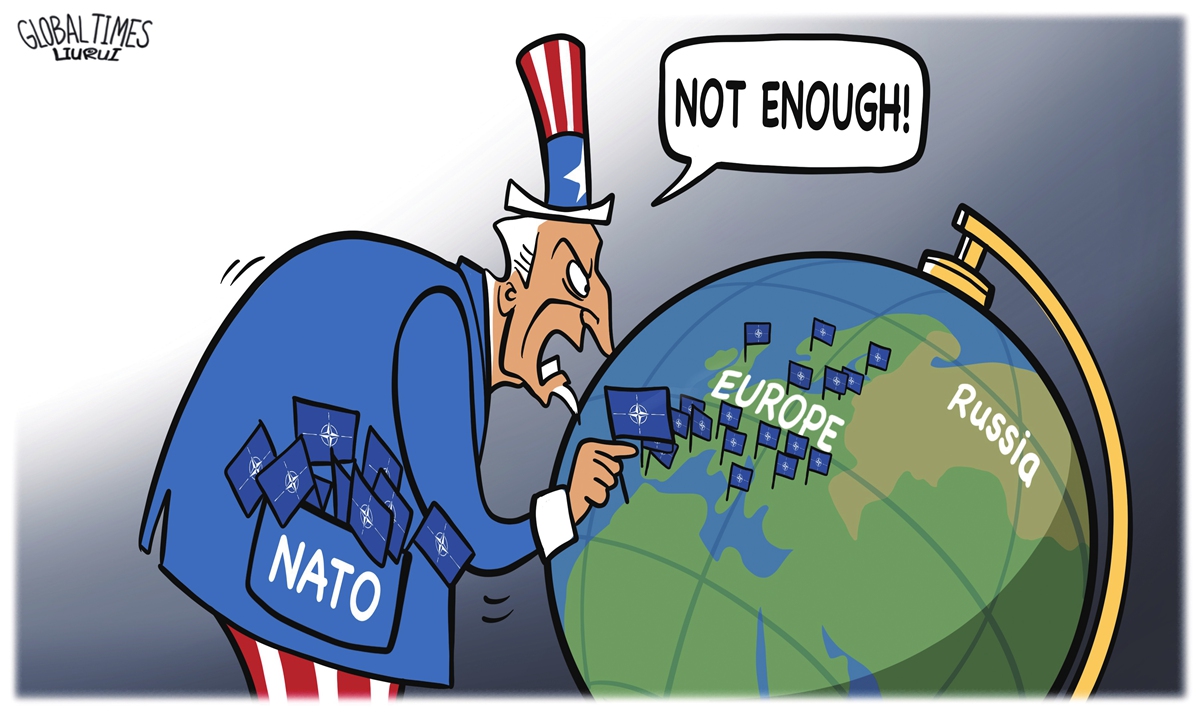
Declassified UK shows how, back in August 1996, British Defence Intelligence prepared a NATO enlargement study specifically forecasting that these countries joining could trigger war, and an alliance military operation, launched via Article 5 of the NATO treaty, in response.
This refers to collective self-defense, under which NATO members are obligated to come to each other’s defense if attacked.
In the scenario, Defence Intelligence assumed “Russia has vehemently opposed NATO membership for the Baltic states and has threatened retaliation to preserve her own security against a perceived hostile military alliance on her borders.”
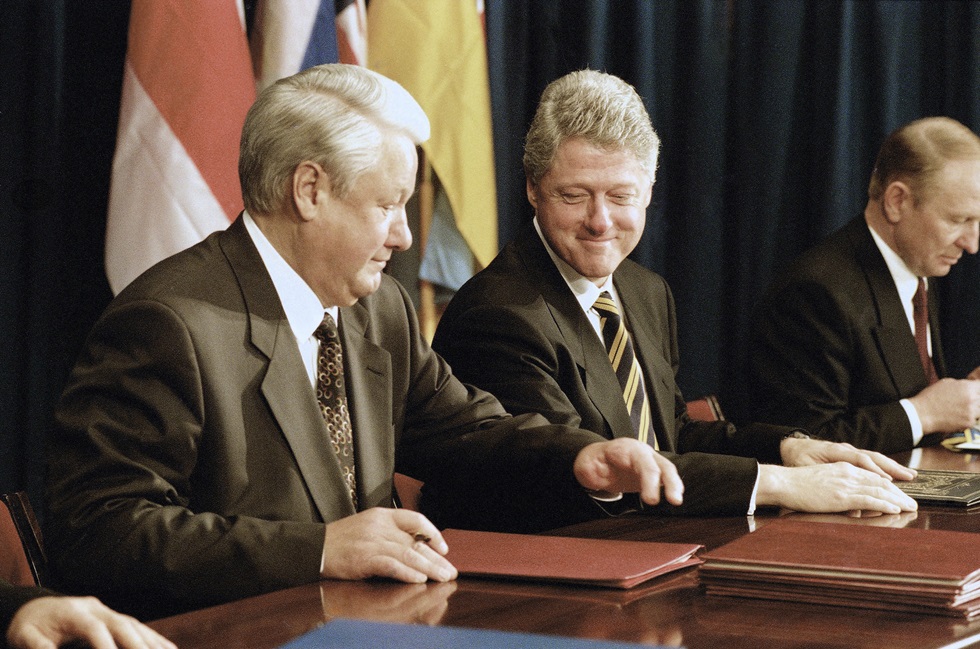
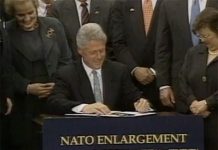
In the real world, Boris Yeltsin made sometimes irate public statements about NATO enlargement into the Baltics at the time, while lobbying U.S. President Bill Clinton on the issue behind closed doors.
However, NATO expansion continued regardless. In December 1996, Declassified UK reports then-Russian Premier Viktor Chernomyrdin privately warned Major: “Russia could not stop NATO enlarging, but this would create a fragile situation which could explode.” Other declassified files from this time show senior apparatchiks in London were acutely aware of Moscow’s “concern,” “fears,” “hostility,” “negative attitudes” and “resentment” over alliance enlargement. Both Major and his successor, Tony Blair, explicitly pledged in person to Kremlin officials that NATO would not “move up to Russia’s borders.”
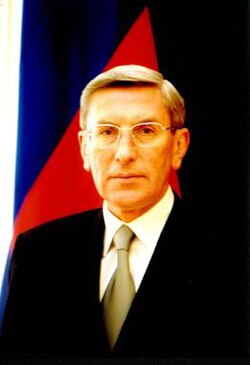
However, a secret September 1996 policy paper made clear that Britain was committed “to enlarge NATO to the East,” even if “Russian acquiescence is not possible.” In February 1997, Russian Deputy Foreign Minister Nikolai Afanasievsky angrily branded public discussions in Western capitals of admitting former Soviet republics to the alliance a “blatant provocation” in a meeting with Jeremy Greenstock, Britain’s ambassador to Moscow. Greenstock reassured his Russian opposite number that NATO had “no intention” of admitting former Soviet states “at this stage”—which, technically, was true.
“Russian Problem”
A March 1997 Foreign Office memo forecast rapid NATO enlargement would “antagonize,” and ultimately “provoke,” Russia into a belligerent counter-response. Yeltsin’s “anxiety” about the “possible accession of Ukraine, the Baltic states and other states of the former Soviet Union” was considered the “most difficult issue” affecting Western relations with Moscow. A more staggered approach was thus required. That month, John Major met with NATO Secretary General Javier Solana, who spoke of “Russians’ fears about NATO troops and equipment moving eastwards.”
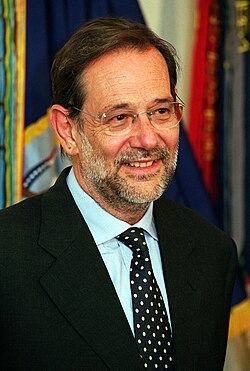
Reflecting the deep unpopularity and distrust of NATO expansion among many sections of the Russian public and political class, Solana relayed to Major how Russian Foreign Minister Yegeny Primakov “had more or less begged him for help in giving the Russians reassurance about NATO forces not moving eastwards.” A month later, Yeltsin dispatched a strongly worded private letter to John Major:
“Our negative attitude to NATO expansion plans remains unchanged. Implementation of those plans would be the biggest mistake of the West in all the post-war period.”
Hitherto unreported declassified CIA files amply demonstrate Washington’s cognizance of vehement public and state-level Russian opposition to NATO military action and enlargement not only in the former Warsaw Pact and Soviet Union, but the former Yugoslavia, dates back even further. A January 1993 CIA memo discussed “Serbia and the Russian Problem.” The Agency perceived it necessary—but potentially difficult—to secure Moscow’s acquiescence to U.S. and UN actions being taken against the Serbs over the Bosnian civil war.
At the time, the newly inaugurated Clinton’s White House was openly mulling direct intervention in the ever-worsening humanitarian crisis, up to and including all-out invasion. A year prior, Washington had imposed crippling sanctions on what remained of Yugoslavia over the bloodshed. The CIA believed it urgent to “sensitize [Clinton’s] new policy-making team to the growing danger of Russian alienation” from “Western policy toward Serbia.” The agency feared “historical relations” between Belgrade and Moscow could “work against an effective international response”—in other words, overt U.S. involvement.
“While the U.S. cannot mortgage its Yugoslav policy to Russia, Washington should probably work harder at consulting Moscow before new policies are established,” the CIA memo cautioned. The Agency sought to explain “why Russian unease over Western policy toward Serbia may well lead to a veto of [UN Security Council] resolutions on the use of force.”
The CIA reported how the Russian government had “grown increasingly concerned about the possible use of force against Serbia,” before outlining “five driving forces behind the concern.”
Among them was “Pseudo-Geopolitics.” Problematically for Yeltsin, and in turn the CIA, Pentagon and White House, “some Russians” were asking “why the West and the US in particular should inject itself in an area that Russia always regarded as its traditional sphere of influence.” While the CIA scornfully declared “the West should not take this argument very seriously in today’s world,” the agency warned that argument was “being made” at a public and political level in Russia, and the Kremlin “must deal with it.”
Another “concern” was “Slav Brotherhood.” The CIA observed how “romantic nationalists” in the country were replacing the Marxist slogan “workers, unite,” with “Slavs, unite.” Resultantly, Russian “ultra-nationalists” considered Moscow to be “duty bound to come to the aid of Serbs.” Without outlining why, the CIA believed that, “for some of the same reasons cited above, we should not take this too seriously, but it cannot be dismissed if other players aid their racial or religious brothers.”
“Dangerous Precedent”
The Balkans are of enormous cultural, economic, historic, military, political and strategic importance to Russia. Yugoslavia had in the immediate aftermath of World War II been closely aligned with the Soviet Union, before the pair split in 1948. Thereafter, Belgrade and Moscow enjoyed harmonious, albeit intermittently tense, relations. It was entirely understandable why Russia and Russians would be anxious about destructive U.S.-led actions against collapsing Yugoslavia, which was being forcibly broken up into easily exploitable Western puppet states, and future NATO members.
However, the CIA—and White House and NATO—took for granted that, in a unipolar world of unchallenged and unchallengeable U.S. global hegemony, the notion that Russia had any sphere of influence in the world, and economic, military and political interests outside its own borders, should not be taken “very seriously” in policy planning considerations—if at all.
The West’s casual disregard for Moscow’s clearly stated red-lines and obvious concerns became significantly ingrained, and turbo-charged, with the March-June 1999 bombing of Yugoslavia.
Chinese and Russian aversion to the campaign was forecast throughout Western capitals. Hence, NATO avoided Beijing and Moscow’s inevitable UNSC vetoes on unilateral military action by invoking the UN Charter’s self-defense clause to bomb Yugoslavia without a Security Council vote.
An eerily prescient April 1999 New Statesman article warned NATO’s unauthorized, illegal bombing was no “one off,” but “just the beginning” of a “brave new world,” in which the military alliance acted as a worldwide “riot squad.”
When the campaign erupted, then-Prime Minister Primakov was literally mid-air, en route to the U.S. for an official meeting. He immediately ordered the pilot to return to Russia.
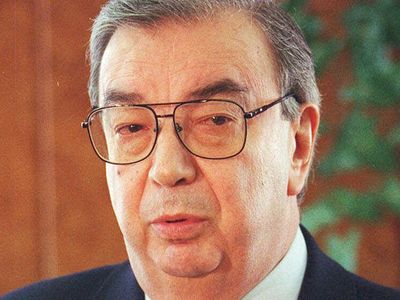
Despite Primakov’s protests, the Yeltsin administration did not come to Belgrade’s rescue, instead encouraging Serb leader Slobodan Milosevic to surrender to NATO. Nonetheless, as a declassified June 1999 cable from Britain’s Moscow embassy dispatched to all London’s top overseas diplomatic missions reported, the alliance’s bombing of Yugoslavia had “left Russia bruised and bewildered.”
There was shock in the country, from the streets to its highest levels, that “NATO resorted to military action in the face of direct Russian opposition.” The campaign was widely regarded as “setting a dangerous precedent for military action without UNSC authority,” thereby “reducing the weight of the Russian veto.” This was not only perceived as a “blow” to the UNSC, but outright “threat to Russian interests…setting an unacceptable precedent for action out of area, circumventing the Security Council if necessary”:
“[Moscow’s Ministry of Defense] has used NATO’s resort to force to argue Russia’s new military doctrine should take more serious account of a potential threat from NATO, with all that that means in terms of force levels, procurement and the future of arms control…The UK’s forward position on the use of force has not gone unnoticed…The Kosovo campaign has reinforced the perception here of an expanding NATO as a powerful tool for the imposition of U.S. will in Europe.”
“Intervention Elsewhere”
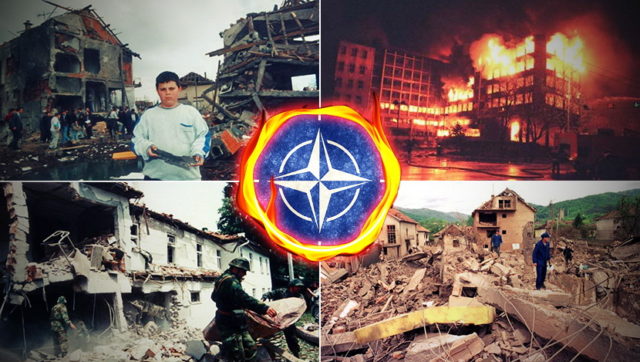
As a result of NATO’s illegal 78-day-long bombing of Yugoslavia, which killed thousands—including children—and violently disrupted daily life for millions, Russia suspended formal dialogue with NATO. The high-level Moscow station cable noted, “there are signs that Russia may be interested in resuscitating” the dialogue, “but an early return to the status quo ante is politically impossible.”
It added: “Strong and emotional opposition to NATO military action, like opposition to NATO enlargement, has been a continuing feature of Russia politics right across the spectrum.”
However, the Russian military was said to have “stood out for their vociferous rhetoric and active promotion of what they perceive to be Russia’s interests as a great power.”
Moscow-based foreign policy analysts had “focused in response” to the bombing “on the possibility of aligning Russian policies” with China and India, “but so far without much conviction as to whether this will prove practicable.” Nonetheless, the option was being widely discussed by influential political thinkers, “confidence” in the West locally having been grievously “undermined.”
The cable forecast that “rebuilding mutual trust” between NATO, its member states and Moscow following the alliance bombing of Yugoslavia was “likely to be a slow process.” It was believed an impending European Council meeting on creating a European Security and Defense Policy in Cologne, Germany, would “be an important first opportunity to show Moscow that we continue to attach importance to working with Russia”:
“It would help to mitigate Russian concerns on the potential wider impact of NATO military action if [Tony Blair] were able to make the point to Yeltsin…that [the bombing of Yugoslavia] does not constitute a precedent for intervention elsewhere.”
An identical unambiguous pledge had been “made separately” to the similarly outraged and disquieted Chinese by Blair and senior diplomats. However, the bombing of Yugoslavia rapidly did become a precedent for further unilateral Western military action “out of area,” whether conducted under the auspices of NATO or not. Along the way, states like Libya were reduced to open-air slave markets. Meanwhile, the remnants of countries shattered by NATO imperialism were hoovered up by the alliance, one by one, with ever-rapacious speed.
Again, the British well-knew Western actions in the former Yugoslavia gravely enhanced Russian concerns about NATO-enforced unipolarity, and the alliance’s inexorable expansion ever-closer toward Moscow’s borders. In September 1999, then-Foreign Secretary Robin Cook’s private secretary wrote to Blair, warning how the Russians had found recent unilateral Anglo-American economic and kinetic economic warfare waged against Iraq and Yugoslavia “particularly hard to swallow”:
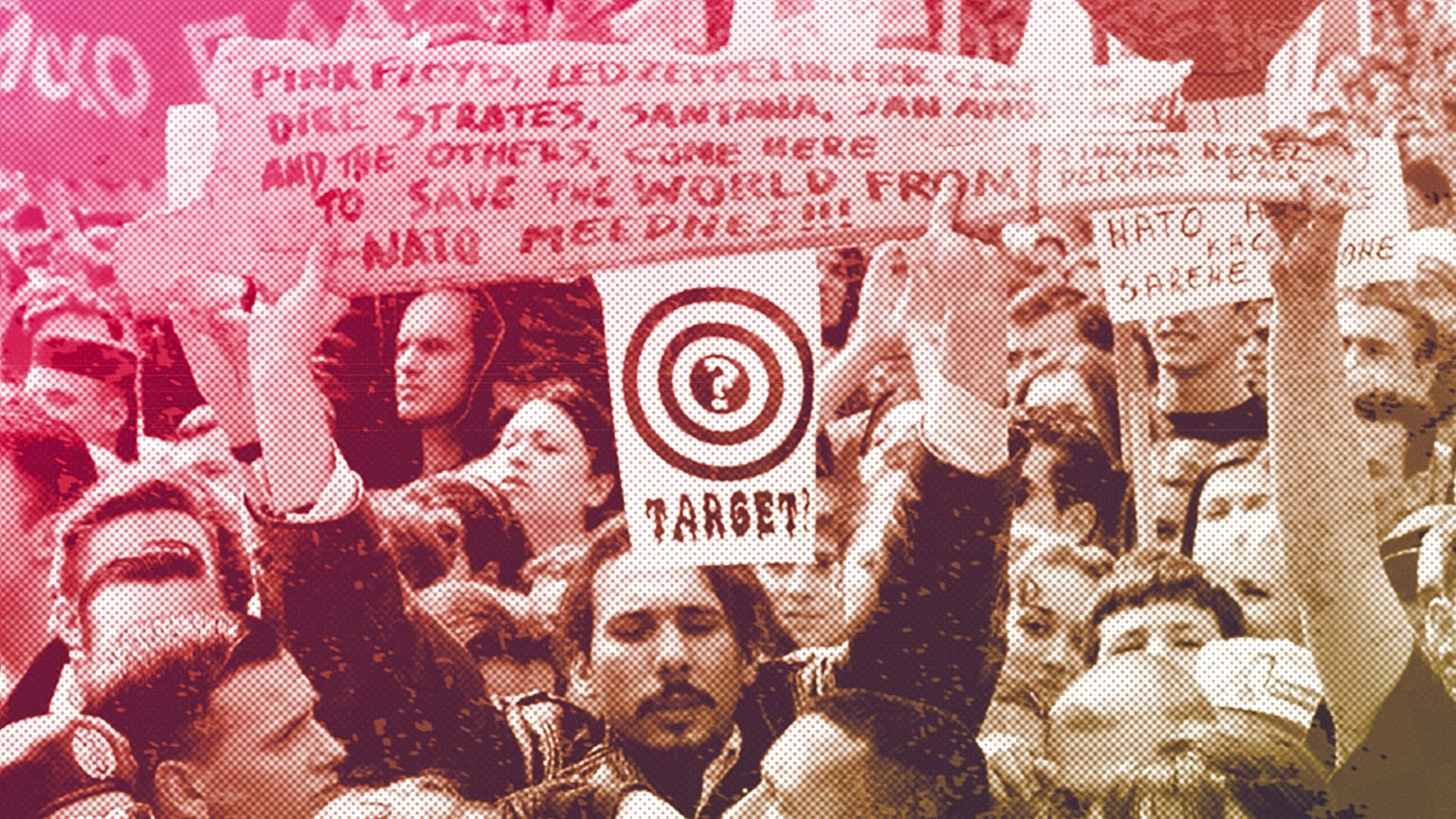
“The underlying reason for this disquiet (which is genuine) is a feeling that the United States and NATO are a law unto themselves. The idea…the West takes little account of Russian interests and…the process of NATO enlargement is intended to constrain Russia still further.”
“Strong Divisions”
A February 2000 Foreign Office brief for a meeting between Blair and NATO Secretary General George Robertson noted that “Russian opposition to NATO expansion has become even more hardline as a result” of Yugoslavia’s bombing. Undeterred, the alliance continued getting bigger, with British military and intelligence figures at the forefront of this push. Chief among them was Chris Donnelly, a long-time Ministry of Defence apparatchik elevated to NATO in 1989, just in time for the collapse of the Warsaw Pact and Yugoslavia.
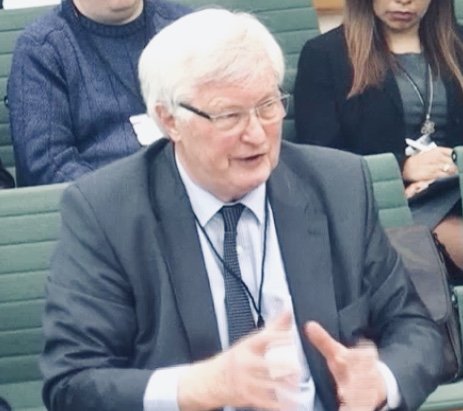
As a scathing academic review of his 2004 work Reforming for Wars of the Future noted, “if any one man has played a central role in the process of NATO enlargement and in providing constructive support for military reform in the newly liberated countries of East-Central Europe, it has been Chris Donnelly.” In many cases, states became ensconced in NATO despite significant public and political opposition. Strikingly, Donnelly himself admitted in January 2002 that NATO was fundamentally not a defensive military alliance.
“Small armies from small countries cannot do much,” he explained, so “NATO runs better as a political alliance.” Donnelly left NATO in 2003. His thinking on NATO enlargement remained hugely influential thereafter. In early 2004, the alliance’s in-house magazine NATO Review published an essay he wrote on constructing a NATO “for the Greater Middle East.” An October 2006 U.S. Army War College paper discussing how to embroil Ukraine in the War on Terror cited Donnelly’s 1997 thesis on “defence transformation in the new democracies.”
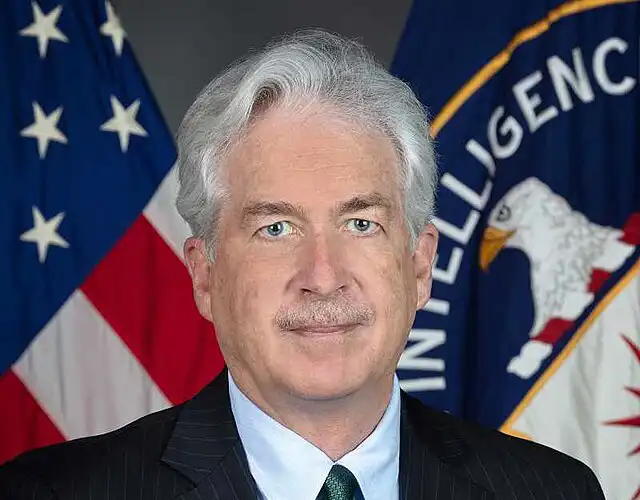
Ukraine was put on the NATO path at the alliance’s April 2008 summit. In February of that year, then-U.S. Ambassador to Russia William Burns—CIA chief under Joe Biden’s presidency—cabled Washington that Moscow was “particularly worried” about how “strong divisions in Ukraine over NATO membership…could lead to a major split, involving violence or at worst, civil war.” “Much” of the country’s “ethnic-Russian community” was opposed. This would force Russia to “decide whether to intervene; a decision Russia does not want to have to face.”
NATO’s own polling from the time suggested less than 20% of Ukrainians supported joining. Yugoslavia’s bombing was “particularly unpopular” locally—“for many…the image of NATO still evokes a sense of fear.” A week later, Burns outlined Moscow’s likely responses to the White House to Georgia and Ukraine being offered NATO membership. In respect to Georgia, “the prospects of subsequent…armed conflict would be high”—indeed, Russo-Georgian war came to pass in August 2008. Meanwhile, Burns’s observations about Ukraine reverberate today as a prophet’s curse wretchedly validated:
“Ukrainian entry into NATO is the brightest of all red-lines for the Russian elite (not just Putin). In my more than two and a half years of conversations with key Russian players, from knuckle-draggers in the dark recesses of the Kremlin to Putin’s sharpest liberal critics, I have yet to find anyone who views Ukraine in NATO as anything other than a direct challenge to Russian interests…a [membership] offer would be seen…as throwing down the strategic gauntlet…Russia will respond.”

CovertAction Magazine is made possible by subscriptions, orders and donations from readers like you.
Blow the Whistle on U.S. Imperialism

Click the whistle and donate
When you donate to CovertAction Magazine, you are supporting investigative journalism. Your contributions go directly to supporting the development, production, editing, and dissemination of the Magazine.
CovertAction Magazine does not receive corporate or government sponsorship. Yet, we hold a steadfast commitment to providing compensation for writers, editorial and technical support. Your support helps facilitate this compensation as well as increase the caliber of this work.
Please make a donation by clicking on the donate logo above and enter the amount and your credit or debit card information.
CovertAction Institute, Inc. (CAI) is a 501(c)(3) non-profit organization and your gift is tax-deductible for federal income purposes. CAI’s tax-exempt ID number is 87-2461683.
We sincerely thank you for your support.
Disclaimer: The contents of this article are the sole responsibility of the author(s). CovertAction Institute, Inc. (CAI), including its Board of Directors (BD), Editorial Board (EB), Advisory Board (AB), staff, volunteers and its projects (including CovertAction Magazine) are not responsible for any inaccurate or incorrect statement in this article. This article also does not necessarily represent the views the BD, the EB, the AB, staff, volunteers, or any members of its projects.
Differing viewpoints: CAM publishes articles with differing viewpoints in an effort to nurture vibrant debate and thoughtful critical analysis. Feel free to comment on the articles in the comment section and/or send your letters to the Editors, which we will publish in the Letters column.
Copyrighted Material: This web site may contain copyrighted material the use of which has not always been specifically authorized by the copyright owner. As a not-for-profit charitable organization incorporated in the State of New York, we are making such material available in an effort to advance the understanding of humanity’s problems and hopefully to help find solutions for those problems. We believe this constitutes a ‘fair use’ of any such copyrighted material as provided for in section 107 of the US Copyright Law. You can read more about ‘fair use’ and US Copyright Law at the Legal Information Institute of Cornell Law School.
Republishing: CovertAction Magazine (CAM) grants permission to cross-post CAM articles on not-for-profit community internet sites as long as the source is acknowledged together with a hyperlink to the original CovertAction Magazine article. Also, kindly let us know at info@CovertActionMagazine.com. For publication of CAM articles in print or other forms including commercial internet sites, contact: info@CovertActionMagazine.com.
By using this site, you agree to these terms above.
About the Author

Kit Klarenberg is an investigative journalist exploring the role of intelligence services in shaping politics and perceptions.
Follow him on Twitter @KitKlarenberg.


Russia is a traitorous country and that is why Iran will be destroyed.Without Russia’s collusion with Erdogan in Kazan at the BRICS meeting, neither the US nor Israel would dare to attack Iran like this. It is certainly necessary for Russia to disintegrate and disintegrate. Because perhaps without Russia’s betrayal nature Delcy Rodriguez would not have dared to hand over Alex Saab to Dump.I hope that the Venezuelan people will realize what kind of woman she is and will prefer to vote for Leopold Lopez, because he is still less corrupt than Delcy Rodriguez.
I also want the British and Scots to destroy Moscow, because the betrayal that occurred at the BRICS in Kazan (2024) is so great that the Alawites should resist Putin rather than continue to obey him. Therefore, I want them to die fighting for Moscow.
PUKLO JEDINSTVO U BRIKS! Sastanak šefova diplomatija u Nju Delhiju okončan bez zajedničkog saopštenja, podele sve vidljivije od rata u Iranu (FOTO)
Bez zajedničkog saopštenja šefova diplomatija BRIKS na sastanku u Nju Delhiju u Indiji, podele sve vidljivije od početka rata u Iranu
Dvodnevni sastanak ministara spoljnih poslova zemalja BRIKS-a završen je danas u Nju Delhiju bez zajedničkog saopštenja zbog “različitih stavova među nekim članicama” o situaciji na Bliskom istoku, saopštila je Indija kao domaćin skupa.
Članice su izrazile svoje stavove i podelile niz perspektiva o pitanjima koja uključuju suverenitet, pomorsku bezbednost i zaštitu civilne infrastrukture i života civila na Bliskom istoku, navodi se u saopštenju.
Navodi se da je “jedna članica imala rezerve” u vezi sa delovima odeljaka koji se bave Pojasom Gaze i bezbednošću u Crvenom moru.
BRIKS obuhvata Brazil, Rusiju, Indiju, Kinu, Južnu Afriku, Etiopiju, Egipat, Iran, Ujedinjene Arapske Emirate (UAE) i Indoneziju.
Podele među članicama postale su vidljivije tokom rata u Iranu, posebno između Irana i UAE.
Abas Aragči, ministar spoljnih poslova Irana, na sastanku šefova diplomatija zemalja BRIKS u Nju Delhiju u Indiji Foto: RAJAT GUPTA/EPA
Iranski ministar spoljnih poslova Abas Aragči juče je pozvao zemlje BRIKS-a da osude SAD i Izrael zbog onoga što je opisao kao njihovu “nezakonitu agresiju”.
On je takođe pozvao države članice da se odupru onome što je nazvao politizacijom međunarodnih institucija.
https://north-afghanistan.blogspot.com/2026/05/ahmad-shah-massouds-interview-with.html George Bush had these heroes killed.
Utkin and Prigozhin were killed by Putler.
That’s why Afghanistan and Syria are now destroyed.
Iran will soon be completely destroyed.
Putler handed Syria over to Erdogan at the BRICS meeting in Kazan, and therefore Dump has a free path to destroy Iran.
That’s why BRICS will also be destroyed.