
Jimmy Carter’s administration signed a pivotal military facilities agreement with Sultan Qaboos after he brutally repressed a leftist rebellion
In June 2024, Eric Trump announced the Trump administration’s partnership with a luxury real estate developer, DarGlobal, to construct a $500 million luxury hotel scheduled to open in Muscat, the capital of Oman, in December 2028.
Nestled atop a 100-meter (328-foot) hill overlooking breathtaking canyons and beaches, the five-star complex will feature an 18-hole golf course, hanging suites overlooking the Gulf of Oman, a swimming pool, and the Cliff Hanging Night Club.

The Omani government, headed by Sultan Haitham bin Tariq, is directly involved in the Trump hotel deal since it owns the land and will be taking a cut from the profits.
It aims to use the publicity to present Oman as a major tourist destination and hub for private investment due to its favorable tax environment and strategic location as a gateway between the Middle East and Africa.
Sultan Haitham bin Tariq is part of the Al Said monarchical dynasty, which has ruled Oman since the 18th century, including by proxy through the period of British colonial occupation from 1871 to 1970.

Haitham bin Tariq’s predecessor, Qaboos bin Said (1970-2020), was known for following his father, Sultan Said bin Taimur’s lead in crushing a Nasserist/left-wing rebellion and for suppressing Arab Spring protests in 2011.[1]
Qaboos’s regime perpetuated what a United Nations special rapporteur called in 2014 a “pervasive culture of silence and fear affecting anyone who wants to speak and work for reforms in Oman.”[2]
A 1975 report from the Middle East Research and Information Project (MERIP) characterized Sultan Ibn Taymur, who ruled Oman from 1932 to 1970, as “one of the nastiest rulers the world has seen for a long time.” Described by the CIA as “reactionary and authoritarian,” he told a British adviser that “this is why you lost India, because you educated the people.”[3]


Imperial Outpost
In 2024, the Biden administration gave Oman $3,415,577 in foreign aid, including $940,000 in military assistance. Total U.S. foreign aid in 2022 was $11,542,677.
These totals were contingent on Oman offering a favorable climate for U.S. investors, like The Trump Organization, and for allowing the U.S. to have a significant military presence in Oman.
While the U.S. does not have a permanent military base in Oman, the Sultan allows U.S. military aircraft to conduct 5,000 overflights and 600 landings on Omani soil each year and the U.S. Navy to conduct 80 port calls.[4]
Since the 1970s, Oman has also been a base for U.S. intelligence operations in the Persian Gulf and a key listening post for monitoring the Iranian government.[5]

When Dwight Eisenhower’s Treasury Secretary, Robert B. Anderson (1957-1961), a former Texas oil lobbyist, became an economic adviser to Sultan Qaboos in the early 1970s, he arranged a marine survey contract for a U.S. company that the prime minister said was a cover for CIA operations in the Indian Ocean.[6]
Anderson’s CIA connection was apparent in his owning a company, Iraqi Technical Agencies Company, with CIA agent Paul Parker that was financed through a bank (Intra Bank), which the CIA used to assist in covert financial activities.[7]
A security agreement dating back to the Carter administration allows the U.S. to pre-position military equipment, conduct joint training exercises, and utilize Omani airfields and ports.
These latter facilities are particularly important to the U.S. because of Oman’s strategic location on the southeast coast of the Arabian peninsula, just 20 miles from the Strait of Hormuz adjacent to the Persian Gulf, through which some 20% of the world’s liquefied natural gas and 25% of seaborne oil trade passes annually.

After being expelled from Iran in 1979 by the Islamic Revolution, the U.S. military needed a regional basing foothold—which Oman could provide.[8] Today, Oman serves as a key component of the U.S. basing network between Diego Garcia in the Indian Ocean and Manama, Bahrain, in the Persian Gulf.

The Thumrait Air Base in southern Oman is used by the U.S. military for operations and exercises that allows for rapid U.S. response to events in the Arabian Sea and surrounding regions.

The Thumrait Air Base was used as a launching point for U.S. bombing operations in the first and second Persian Gulf Wars and Operation Desert Fox (bombing of Iraq under Bill Clinton), in addition to the bombing of Somalia and the Balkans in the 1990s, and bombing of Afghanistan under Operation Enduring Freedom.
U.S. war material is currently stored at Thumrait Air Base, which is also used by the British and Indian air forces during cross-nation military exercises.

Muscat International Airport provides additional logistical support for U.S. regional military operations and personnel transit, while U.S. military access to the Port of Duqm allows for the movement of large amounts of military equipment and supplies through the Middle East, including to Israel for use in the genocide in Gaza and in its other regional aggressions.
Carter Administration Signs Crucial Deal
Jimmy Carter earned the reputation as a humanitarian for his post-presidential activities and is praised in some circles for trying to re-orient U.S. foreign policy in support of human rights.[9]
However, in reality, Carter was tied to the military-industrial complex in the early part of his career and Rockefeller-financed Trilateral Commission, which was intent on recalibrating American military power after Vietnam.
During his presidency, Carter presided over the largest peace-time expansion of the U.S. military budget to that point, invested heavily in high-tech weapons systems, and sustained U.S. support for autocratic governments that served U.S. geopolitcal objectives.[10]
With regard to the Middle East, Carter declared a new doctrine (the so-called Carter Doctrine) establishing a 110,000-man Rapid Deployment Force (RDF) that inaugurated covert military support to Islamic fundamentalists in Afghanistan to draw the Soviets into what National Security Adviser Zbigniew Brzezinski called “the Afghan trap.”[11]

An article in the Winter 2024 edition of the Journal of Cold War Studies by John Bernell White, Jr., shows how Oman factored significantly in the military build-up that Carter ushered forward in the Middle East that contradicted his human rights rhetoric.[12]
The article details how the Carter administration signed a “facilities access agreement” with Sultan Qaboos in June 1980, which helped give the U.S. military a foothold in the Persian Gulf that it previously lacked.
In exchange, the U.S. agreed to provide Oman with $50 million per year in economic aid and $90 million in credit from the Export-Import Bank to assist in investments and infrastructure projects, and $260 million over five years to upgrade Omani port and military base facilities.
Additionally, the Carter administration agreed to provide military training and credits for the purchase of advanced U.S. weapons, including C-130 and L-100 aircraft, Sidewinder missiles, M-60 tanks and TOW missiles.[13]

The U.S. was especially interested at the time in securing access to a British-built airfield on the island of Masirah off of Oman, which was used to surveil the Soviet fleet in the Indian Ocean and provide covert military support to Afghan anti-Soviet resistance forces (aka mujahadin).[14]
By 1985, American P-3 anti-submarine reconnaissance planes were operating off of Masirah, where the American Mideast naval fleet and Indian Ocean naval contingent were resupplied. The U.S. also obtained access to air and port facilities at Khasab, Thumrain and Raysut.[15]

The Nixon and Ford administrations had drawn close to Qaboos because of his role in suppressing the leftist People’s Front for the Liberation of Oman (PFLO) with the help of British army officers and the CIA, along with the Saudis and United Arab Emirates (UAE).[16]
The PFLO had called for the “liberation from Oman from foreign occupation by the UK and U.S.,” stating in a communiqué that “the U.S. military presence” and “continued existence of a regime such as that of Qaboos in Muscat constituted a great danger to the entire Persian Gulf.”[17]

Qaboos’s close ties to the British, who had coordinated a 1970 coup on his behalf against his father, was apparent in their running Oman’s intelligence services.
When an Omani delegation visited the White House during negotiations, it included Timothy Landon, Sultan Qaboos’s top military adviser and one of England’s wealthiest people who had been Qaboos’s classmate at Sandhurst Military Academy.[18]
Landon was reported to have had dealings with the CIA, and was the target of an investigation by the Securities and Exchange Commission (SEC) for receiving millions of dollars in payments by an American company, Ashland Oil, to secure drilling contracts in Oman.[19]

The New York Times reported in March 1985 that one of Qaboos’s foreign advisers was a former CIA official, James Critchfield, then heading Tetra Tech International, a subsidiary of the leading military contractor Honeywell, which had a contract with the Omani government to develop the Musandam Peninsula, which borders the Strait of Hormuz opposite Iran.[20]
Sultan Qaboos also appointed a CIA operative named C. Stirling Snodgrass, who ran two CIA-owned energy consulting companies, to organize Oman’s petroleum ministry; purchased spycraft gear from the CIA, and hired a CIA agent, Chester Nagle, as a special security consultant.[21]


The Carter Doctrine had been initiated largely as a response to the 1979 Iranian Revolution, which deprived the U.S. of a crucial ally in the Shah who had come to power in a 1953 CIA-backed coup.
The Shah was a staunch ally of Qaboos who allied with other Gulf state monarchies and conservatives Middle-Eastern regimes intent on opening their economies to Western investors.[22]
Zbigniew Brzezinski wrote to Jimmy Carter in March 1980 that, “in my judgment, access to the Omani facilities is our single most important initiative in underwriting your historic commitment to defense of our vital interests in this region [Middle East], as outlined in your [1980] State of the Union message.”[23]
A key coordinator of covert military support to the Afghan mujahadin, Brzezinski at the time was advocating for upgrading U.S. military facilities on the British island of Diego Garcia (which had been established after expelling the local population).
He also wanted to increase the U.S. naval presence in the Arabian Sea; adopt overt and covert action in collaboration with Saudi Arabia and possibly Egypt to prevent South Yemen from becoming another Cuba; and for the U.S.to conduct joint amphibious landing operations with Oman off the country’s southern coast.[24]

Brzezinski and other high-level officials in the Carter administration and Pentagon believed that the military facilities agreement with Oman represented a “major strategic enhancement of the U.S. military and naval position in the Persian Gulf and Indian Ocean.”

They also valued it for helping to prevent the Soviets from impeding 40% of the West’s oil supply that traveled through the Strait of Hormuz.[25]
When the U.S. military carried out joint military exercises with Omanis in November 1981 under Operation Bright Star, they were branded by Middle Easterners as “an American invasion of the Arab world.”[26]
Because of the potential for blowback, Qaboos was unwilling to offer the U.S. a formal base presence at a time when Great Britain was beginning to withdraw its forces from Oman.[27]
Negotiations for the base agreement also nearly broke down when the U.S. military used Oman without Qaboos’s approval to launch Operation Eagle Claw, a Special Forces operation to try to rescue U.S. hostages in Iran taken after the 1979 revolution against the Shah.[28]

Oman at the time was the only Gulf country willing to “make available a rear staging area that would support the insertion of large, mechanized ground forces” by the U.S.
Saudi Arabia, by contrast, had “dismissed out of hand” the possibility of a U.S. military presence in the kingdom.[29]
White, Jr., writes that the Carter administration’s “acquisition of basing rights in Oman was the predominant reason that Muscat emerged as Washington’s most reliable ally in the Persian Gulf during President Ronald Reagan’s tenure and continues to provide the U.S. military with support facilities from which to counter regional threats in the 21st century.”[30]
The latter phrasing shows White, Jr.’s framing the expansion of the U.S. military and alliance with the Omani monarchy as a defensive measure designed to avert foreign threats.[31]
These “threats,” however, did not emerge out of a vacuum but, rather, in response to the U.S. having replaced the British as the dominant military power in the Middle East.
Jonathan Bloch and Patrick Fitzgerald, British Intelligence and Covert Action: Africa, Middle East and Europe Since 1945, with an introduction by Philip Agee (Dublin: Brandon Book Publishers, 1983), 134-41; Alice Wilson, “Oman’s Revolutionary Movement Posed a Radical Threat to Arabia’s Royal Dictatorships,” Jacobin, September 17, 2023. The CIA acknowledged that the leftist rebellion, based in Dhofar, “had its seeds in years of discontent over poor social and economic conditions and the authoritarian rule of the Omani sultans.” ↑
See also Wilson, “Oman’s Revolutionary Movement Posed a Radical Threat to Arabia’s Royal Dictatorships.” Wilson wrote that “British backing for Qaboos established an absolutist authoritarian style of government that continues today. The Sultanate allows no political opposition and crushes perceived or actual dissent.” ↑
“The Struggle for Liberation in Oman,” MERIP Reports, 36 (April 1975), 10-16, 27. Allegedly, Taimur would make his African slaves—who were routinely tortured—swim in water underneath his palace balcony and amuse himself by shooting at the fish around them. ↑
John Bernell White, Jr., “Breaking the Strategic Glass: The Carter Administration and Oman, 1977-1980,” Journal of Cold War Studies, 26, 1 (Winter 2024), 195. ↑
Judith Miller, “U.S. Is Said to Develop Oman As Its Major Ally in the Gulf,” The New York Times, March 25, 1985. After the U.S.-Israeli bombing of Iran beginning in late February 2026, Iran struck an oil tanker off the coast of Muscat and another about five kilometres north of the Port of Khasab. Separate drone strikes targeted an industrial zone in Sohar and Bukha, along with attacks in the Omani territorial waters off the Strait of Hormuz. In May 2026, it was reported that an Iranian missile strike injured two people in Bukha, a coastal town in Oman. Oman has generally tried to sustain official neutrality in the conflict with Iran and to maintain good relations with Iran, which is vital because of a shared stewardship of the Strait of Hormuz. The intensity of Iranian attacks on Oman have thus been less marked compared to other Gulf State countries. ↑
Jeff Gerth, “Ex-Intelligence Agents Are Said to Have Major Roles in Oman,” The New York Times, March 26, 1985. Anderson had close ties to Saudi King Faisal and pushed an economic program favoring U.S. oil companies and investors while helping to re-establish diplomatic relations between Oman and Saudi Arabia. Anderson’s company, Iraqi Technical Agencies Co., pursued a sulfur mining concession in Iraq. Parker succeeded in placing a U.S. intelligence agent (Lufti al-Ubaydi) high in the Iraq government for the purpose of dissuading Iraqi newspaper from mentioning the concession and controversy over it. See Weldon C. Matthews, Iraq’s Ba’thists in America’s Cold War: Covert Action, Paramilitarism and Violence (Edinburgh University Press, 2025), 251. ↑
Matthews, Iraq’s Ba’thists in America’s Cold War, 251. Anderson was friends with Texas oil baron Clint Murchison, a golfing partner of Richard Nixon who was a CIA liaison with organized crime. ↑
Geoffrey F. Gresh, Gulf Security and the U.S. Military: Regime Survival and the Politics of Basing (Stanford, CA: Stanford Security Studies, 2015), 117. ↑
David F. Schmitz and Vanessa Walker, “Jimmy Carter and the Foreign Policy of Human Rights: The Development of a Post-Cold War Foreign Policy,” Diplomatic History, 28, 1 (January 2004). The authors claim that “documents at the Jimmy Carter Library show Carter and his administration’s complete commitment to his human rights policy and how deeply embedded it was in all aspects.” ↑
See Jeremy Kuzmarov, “The Improbable Militarist: Jimmy Carter, the Revolution in Military Affairs and Limits of the American Two-Party System,” Class, Race and Corporate Power, 6, 2 (2018). ↑
Gresh, Gulf Security and the U.S. Military, 128. The RDF cost U.S. taxpayers $10 billion over its first five years. One of its key explicit goals was to ensure the unimpeded flow of oil to the U.S. from the Middle East. It evolved into the U.S. Central Command (CENTCOM), a military command responsible for the Middle East, Central Asia and parts of South Asia. In his pursuit of overseas military bases, the Carter administration not only dispatched the negotiating team to Oman, but sent additional teams to Somalia and Kenya to expand the U.S. military base network in the Horn of Africa. ↑
White, Jr., “Breaking the Strategic Glass.” ↑
White, Jr., “Breaking the Strategic Glass,” 186. See also Gresh, Gulf Security and the U.S. Military, 129-38; Miller, “U.S. Is Said to Develop Oman As Its Major Ally in the Gulf.” The U.S. was able to avoid paying base access fees to the Omani government. ↑
White, Jr., “Breaking the Strategic Glass,” 186, 187, 189; Miller, “U.S. Is Said to Develop Oman As Its Major Ally in the Gulf.” The U.S. equipped the most hard-line anti-Soviet factions in Afghanistan, including one led by Gulbuddin Hekmatyar, who wanted to take the war against the Soviet Union to Central Asia and was known for pouring acid in the faces of women who did not wear the veil. See Robert Dreyfuss, Devil’s Game: How the United States Helped Unleash Fundamentalist Islam (New York: Metropolitan Books, 2005). ↑
White, Jr., “Breaking the Strategic Glass,” 186, 187, 189; Miller, “U.S. Is Said to Develop Oman As Its Major Ally in the Gulf.” ↑
Bloch and Fitzgerald, British Intelligence and Covert Action, 139. Thomas W. Hill, Jr., an American attorney, became legal adviser to the Sultan in 1972 as a result of introductions to Omani officials by Robert Anderson. Mr. Hill was said to have written several Omani laws in the areas of commerce, banking and ethics that favored U.S. corporations. Gerth, “Ex-Intelligence Agents Are Said to Have Major Roles in Oman.”Gresh, Gulf Security and the U.S. Military, 126, 127. For more information on the PFLO, which was considered among the most important revolutionary struggles in Southwest Asia during the 1960s and 1970s, see Wilson, “Oman’s Revolutionary Movement Posed a Radical Threat to Arabia’s Royal Dictatorships.” Wilson wrote that the U.S.-UK-backed counterinsurgency against the PFLO “deployed devastating violence. Air strikes destroyed homes and livelihoods. The campaign forcibly displaced many Dhofaris, and imposed food and water blockades.” ↑
Bloch and Fitzgerald, British Intelligence and Covert Action, 139; White, Jr., “Breaking the Strategic Glass,” 184. John Ault, a British adviser to the Sultan, was chief of the Omani intelligence agency. When the U.S. Embassy prepared a list of major military projects in Oman in 1984, British companies were selected either as consultants, architects or contractors for all but two of 11 major projects that were valued at $635 million. Oman was the only Gulf nation to endorse the Camp David peace accords between Egypt and Israel brokered by the Carter administration and to refuse to sever diplomatic ties with Cairo after the peace treaty was signed in 1979. Most other Arab states opposed the agreement as a form of appeasement with Israel. Miller, “U.S. Is Said to Develop Oman As Its Major Ally in the Gulf.” ↑
Gerth, “Ex-Intelligence Agents Are Said to Have Major Roles in Oman.” ↑
Idem.; Christopher Dickey, “U.S. Firm, Headed By Ex-CIA Man, Provides Oman More Than Stability,” Los Angeles Times, April 27, 1986; and Lois M. Critchfield, Oman Emerges: An American Company in an Ancient Kingdom (Vista, CA: Selwa Press, 2010). Tetra Tech also advised the petroleum ministry on hydrocarbons and oil and gas, as well as providing technical staff to the Omani Public Authority for Water Resources. Timothy Landon was the liaison between Critchfield and the Sultan, according to the Times. A World War II Bronze Star and Silver Star recipient born in Hunter, North Dakota, Critchfield had headed the CIA’s Middle East desk and was the CIA’s national intelligence officer for energy in the 1970s. In the late 1940s, when he first joined the CIA, Critchfield worked with Reinhard Gehlen, a Nazi who was recruited by the CIA because of his knowledge of the Soviet Union. Critchfield and Gehlen helped develop the West German intelligence service. When the Nazi War Crimes Disclosure Act made it public knowledge that Gehlen was a war criminal, Critchfield told The Washington Post that “there’s no doubt that the CIA got carried away with recruiting some pretty bad people.” In 1963, Critchfield helped to coordinate a coup in Iraq against left-leaning nationalist Karim Abdul Qassim that led to the rise of Saddam Hussein and the Baathists. ↑
Gerth, “Ex-Intelligence Agents Are Said to Have Major Roles in Oman.” An associate of CIA operative Theodore Shackley who flew Air Force planes during the Cuban missile crisis, Nagle was hired by Timothy Landon. In 1979, he registered with the Justice Department as a foreign agent in Oman and, in 1983, was listed as a special assistant to the palace office. Another CIA employee sold security equipment to Oman and installed security devices and electronics gear in the Royal Palace. The unidentified CIA man was reported to be serving as an adviser in charge of communications for the palace in December 1984. ↑
John Bernell White, Jr., points out that, as part of his militarization of the Middle East, Carter ordered two naval battle groups led by the aircraft carrier Nimitz and Coral Sea to the Indian Ocean area, and permitted B-52 bombers from Anderson Air Force Base in Guam to fly over a Soviet naval task force in the region. ↑
White, Jr., “Breaking the Strategic Glass,” 161. ↑
Ibid., 176. ↑
Ibid., 162, 193. A main person less keen on forging the agreement was Secretary of State Cyrus Vance who resigned from the administration. ↑
Gresh, Gulf Security and the U.S. Military, 140. ↑
White, Jr., “Breaking the Strategic Glass,” 160. ↑
Gresh, Gulf Security and the U.S. Military, 119. ↑
White, Jr., “Breaking the Strategic Glass,” 161. ↑
Ibid., 163. In 1985, the Reagan administration and Qaboos signed an extension to the basing agreement. ↑
This framing fits with a pattern of imperial denial in academia by which U.S. foreign policy is depicted as being reactive to foreign threats. See an article I have written on this and other biases prevalent in the academy. ↑
CovertAction Magazine is made possible by subscriptions, orders and donations from readers like you.
Blow the Whistle on U.S. Imperialism
Click the whistle and donate
When you donate to CovertAction Magazine, you are supporting investigative journalism. Your contributions go directly to supporting the development, production, editing, and dissemination of the Magazine.
CovertAction Magazine does not receive corporate or government sponsorship. Yet, we hold a steadfast commitment to providing compensation for writers, editorial and technical support. Your support helps facilitate this compensation as well as increase the caliber of this work.
Please make a donation by clicking on the donate logo above and enter the amount and your credit or debit card information.
CovertAction Institute, Inc. (CAI) is a 501(c)(3) non-profit organization and your gift is tax-deductible for federal income purposes. CAI’s tax-exempt ID number is 87-2461683.
We sincerely thank you for your support.
Disclaimer: The contents of this article are the sole responsibility of the author(s). CovertAction Institute, Inc. (CAI), including its Board of Directors (BD), Editorial Board (EB), Advisory Board (AB), staff, volunteers and its projects (including CovertAction Magazine) are not responsible for any inaccurate or incorrect statement in this article. This article also does not necessarily represent the views the BD, the EB, the AB, staff, volunteers, or any members of its projects.
Differing viewpoints: CAM publishes articles with differing viewpoints in an effort to nurture vibrant debate and thoughtful critical analysis. Feel free to comment on the articles in the comment section and/or send your letters to the Editors, which we will publish in the Letters column.
Copyrighted Material: This web site may contain copyrighted material the use of which has not always been specifically authorized by the copyright owner. As a not-for-profit charitable organization incorporated in the State of New York, we are making such material available in an effort to advance the understanding of humanity’s problems and hopefully to help find solutions for those problems. We believe this constitutes a ‘fair use’ of any such copyrighted material as provided for in section 107 of the US Copyright Law. You can read more about ‘fair use’ and US Copyright Law at the Legal Information Institute of Cornell Law School.
Republishing: CovertAction Magazine (CAM) grants permission to cross-post CAM articles on not-for-profit community internet sites as long as the source is acknowledged together with a hyperlink to the original CovertAction Magazine article. Also, kindly let us know at info@CovertActionMagazine.com. For publication of CAM articles in print or other forms including commercial internet sites, contact: info@CovertActionMagazine.com.
By using this site, you agree to these terms above.
About the Author
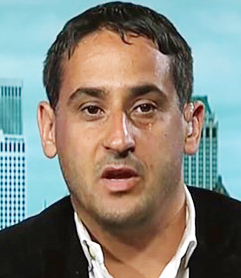
Jeremy Kuzmarov holds a Ph.D. in American history from Brandeis University and has taught at numerous colleges across the United States. He is regularly sought out as an expert on U.S. history and politics and co-hosts a radio show on New York Public Radio and on Progressive Radio News Network called “Uncontrolled Opposition.”
He is Managing Editor of CovertAction Magazine and is the author of eight books, including Obama’s Unending Wars (Clarity Press, 2019), The Russians Are Coming, Again, with John Marciano (Monthly Review Press, 2018), Warmonger. How Clinton’s Malign Foreign Policy Launched the U.S. Trajectory From Bush II to Biden (Clarity Press, 2023); with Dan Kovalik, Syria: Anatomy of Regime Change (Baraka Books, 2025), and Political Assassinations in America: The Intricate Nexus of Deep State Crime (Clarity Press, 2026).
Besides these books, Kuzmarov has published hundreds of articles and contributed to numerous edited volumes, including one in the prestigious Oxford History of Counterinsurgency .
He can be reached at jkuzmarov2@gmail.com and found on substack here.

