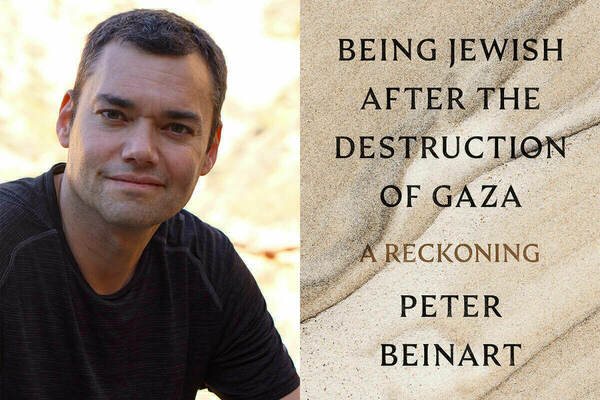
Treating a state as a god is a very frightening endeavor. It confers upon mortals a level of veneration that we do not deserve and will always abuse. [Israeli scientist Yeshayahu] Liebowitz called it “the essence of fascism.” It is especially frightening when that state operates along explicitly tribal lines.[1]
– Peter Beinart
On this planet, monstrosities are everywhere. Champions of social justice are everywhere too.
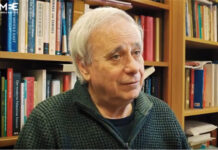
On May 11, journalist and public intellectual Peter Beinart spoke in person to a gathering of concerned citizens at the New Millennium Church in Little Rock, Arkansas. Beinart’s appearance was sponsored by Little Rock Peace for Palestine, a local human rights advocacy group.
Beinart was in Little Rock last June as part of a national tour to promote his latest book, Being Jewish After the Destruction of Gaza. At the personal invitation of a Little Rock Peace for Palestine member, Beinart agreed to return to Little Rock.
Peter Beinart was born in South Africa two decades before the end of apartheid in that country. After graduating from Yale and being a Rhodes Scholar, Beinart was editor of The New Republic from 1999 to 2006. Currently, he is a professor of journalism and political science at the City University of New York. He has also written for The New York Times, The Forward, and The Daily Beast. Professor Beinart is well known in progressive circles.
Professor Beinart stressed the dangers of never questioning the actions of the State of Israel. A mainstay of Israeli propaganda directed at the U.S. public is that Zionism is a force for democracy and secularism. But to Beinart, this is a contradiction in terms. If American Jews continue believing this—most older members of that community do—they will fall out of step with rising majorities in the world who see Israel as a case of settler colonialism and state-sponsored criminality.
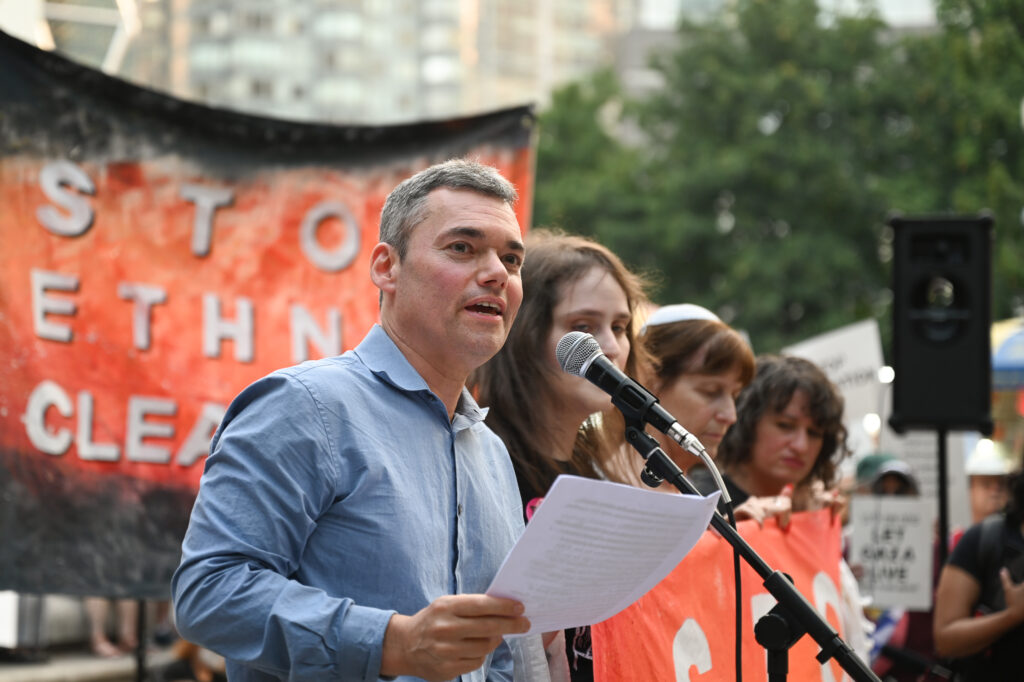
Beinart challenged the myth that the State of Israel is the Jewish homeland. There is “something fundamentally backward” about the concept that Israelis have the right to see themselves as existing in an exclusive relationship with God. Many American Jews have a “soul sickness” that equates a political state with a deity. They need to return to the fundamental tolerance and diversity of American Judaism.
While “the Jewish history of persecution” is indeed real, it is being abused by Zionists for political purposes. He added there is a strong “alliance” between Zionists and Western anti-Semites today.
To Beinart, it is a “fallacy” for Jews to think that violence against others will guarantee their safety. As he suggested, we need only look at shifting public opinion among young American Jews.
Professor Beinart also supports a “one-state solution” because Israeli Jews have no right to see themselves as superior to Palestine’s indigenous inhabitants. To him, a two-state solution is tantamount to “partition.”
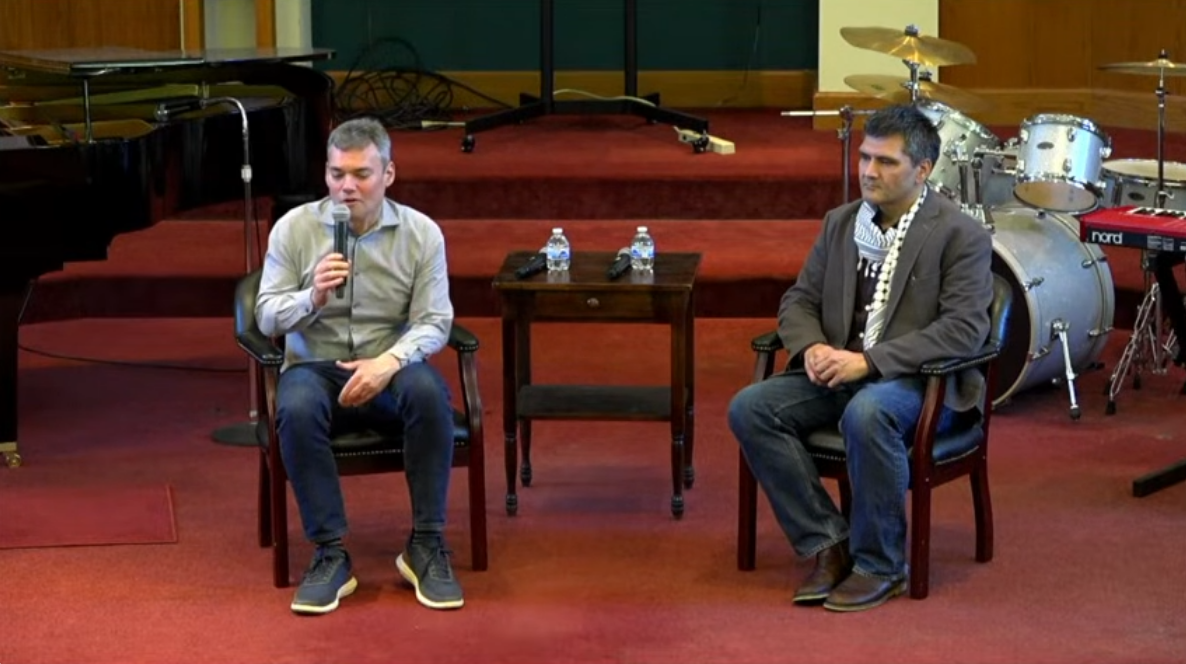
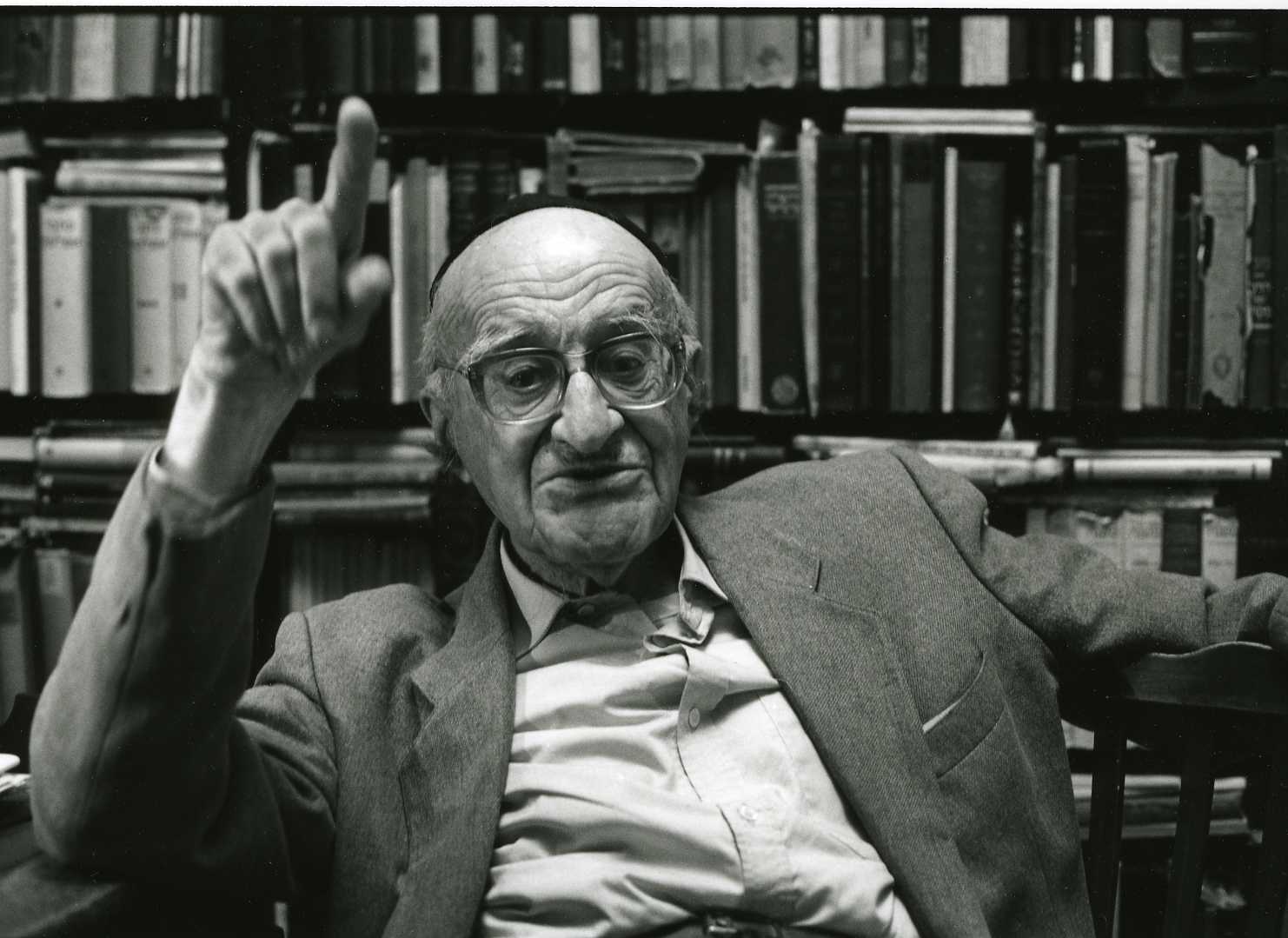
Citing Martin Luther King, James Baldwin, Israeli philosopher Yeshayahu Leibowitz, and the Torah, Professor Beinart said that “moral community” must be rigorously defended by critically-thinking Jews. He likened principled opposition to the still-unfolding Gaza Genocide to the Civil Rights and Anti-Apartheid movements.
Beinart seemed to be disinterested in spreading undocumented claims just because they are popular. Case in point: He did not refer to the Hamas mass-rape claim made by The New York Times in late 2023. Investigative journalists have exposed those claims to be fraudulent; interestingly, the “newspaper of record” does not endorse those claims any longer.
Admittedly, there have indeed been revelations about systematic sexual violence—but not practiced by members of the Al-Qassam Brigades. What is truly amazing is the reaction by some members of the Israeli public. Instead of calling for the expulsion of perpetrators from the ranks or denying that members of the Israel Defense Forces are guilty of such brutality, they express outrage that it was publicized.
Growing up in the 1970s, this reviewer remembers how “patriotic Americans” confronted with U.S. crimes in Southeast Asia and much else besides ran to a popular slogan: “America—love it or leave it.” Is it really surprising to find similar supremacist notions in other settler colonial societies?

Conceding that belief systems are complex, Professor Beinart remarked that religion can act as an “opiate,” yet can also be a liberating force in social conflict. Nor is there a contradiction between having pride in one’s own culture and respecting others. He acknowledged that interacting with oppressed people is uplifting, but difficult to accomplish in practice.
Concerning unjust Israeli wars fueled by the U.S. government, Beinart agreed “this hypocrisy is so profound.” To applause, Beinart asked how it is that U.S. and Israeli authorities can accuse Iran of seeking to develop nuclear weapons when they hold the same weapons themselves.
(Or take the Pentagon’s recent agreement with Tomer Israel to buy more than $200 million worth of XM1208 cluster shells for use on the Ukrainian battlefront against Russia [see here and here]. According to its website, Tomer is a “government-owned” manufacturer of rocket motors. Israel, Russia, Ukraine and the United States did not sign the United Nations Convention on Cluster Munitions. The XM1208 deal is most likely intended to prop up Israel’s war industries.)

Turning to the recent election of Zohran Mamdani as mayor of New York City, Professor Beinart saw it as a “remarkable” case of the ideology of diversity being put to the test. So far, in Beinart’s estimation, the test has been a success. Not only is Mamdani a Muslim and a Democratic Socialist, but he has also threatened powerful interests. Furthermore, charges that Mamdani is “anti-Semitic” because of his criticisms of Israel are inaccurate on many counts, not the least being that many young Jewish New Yorkers support him.
Beinart discussed conservative political commentator Tucker Carlson, who has gained notice of late as a critic of the oppression of Palestinians, Israeli aggression outside its borders, and the Trump administration’s Middle East policies. In Beinart’s opinion, Carlson nevertheless plays on Orientalist and ahistorical prejudices. Beinart observed that Carlson is a “Christian nationalist” who perceives Jewish people as a monolithic group.
Taking a question about perceptions of all Jews as Zionists, Beinart responded that Jews should promote justice for “any group of people.” This, he urged, is a special responsibility for Jews, given their own history of victimization. Beinart nevertheless acknowledged that the ideology of victimhood can also be abused by unscrupulous people.
Beinart came across as cool-headed, confident and urgent. He won listeners’ attention, whether they agreed with him or not.
This impression is reinforced by reading Beinart’s fourth book, Being Jewish After the Destruction of Gaza. Arguing that Zionists portray themselves as champions of “secularization” yet pander to Judaism while engaging in actions completely at odds with it, the author sees the Gaza genocide as “a turning point in Jewish history” revealing the contradictions of Zionism like never before. Though monstrous, the genocide presents an opportunity for Jews to rebel against Zionism and stand up for all oppressed people. Jews who defend Zionism are guilty of “moral evasion.”[2]
To bring it all down to earth, Beinart lays out grim statistics about Israel and the lives of the more than seven million Palestinians under its control:
- The 70% of Palestinians in the Occupied Territories lack Israeli citizenship. The arbitrary military dictatorship in the West Bank does not even pretend they have rights.
- The 30% of Palestinians inside Israel proper are citizens, but of “a profoundly second-class kind.”
- Between 2000 and 2023, more than 13,000 Palestinian children were held in Israeli prisons.
- In its own words, the Jewish National Fund, which has much control over more than 90% of the land inside Israel, has “allegiance to the Jewish people,” not “the Israeli public.”
In this environment, which fits the UN General Assembly’s definition of institutional racism, partisans of “Jewish supremacy” run amuck with state support.[3]

Professor Beinart has a historical consciousness. He understands that the world is a complex place. Lest one believe he discounts the enormity of the Shoah, or does not understand historical context, he explains his family history and his general perspective:
I have walked through the district in northern Lithuania where my paternal grandmother was born, and through the forests where its Jews were murdered. I have led Shabat service in Rhodes, in a sixteenth-century synagogue that gathers a minyan only when the remnants of that shattered community return home from distant corners of the globe. Many Jews have experienced this. The problem with our communal story is not that it acknowledges the crimes we have suffered. The problem is that it ignores the crimes we commit.[4]
Professor Beinart declares himself opposed to all forms of violence. While he does not speak to recent documentation of torture in Israeli prisons, he does describe the events of October 7, 2023.
Beinart sees striking parallels between Hamas violence on October 7 and other social conflicts in the Global South over the past 200 years. In all cases, massacres of colonists and their families were gruesome but not surprising given the long record of exploitation of various kinds of colonial subjects, such as enslaved people, landless peasants, and dispossessed natives.
Beinart writes, “earlier generations of Zionists, who were less invested in Jewish innocence” made no bones about what they were up to in Palestine, especially far-right-wing exponents like Ze’ev Jabotinsky.[5]
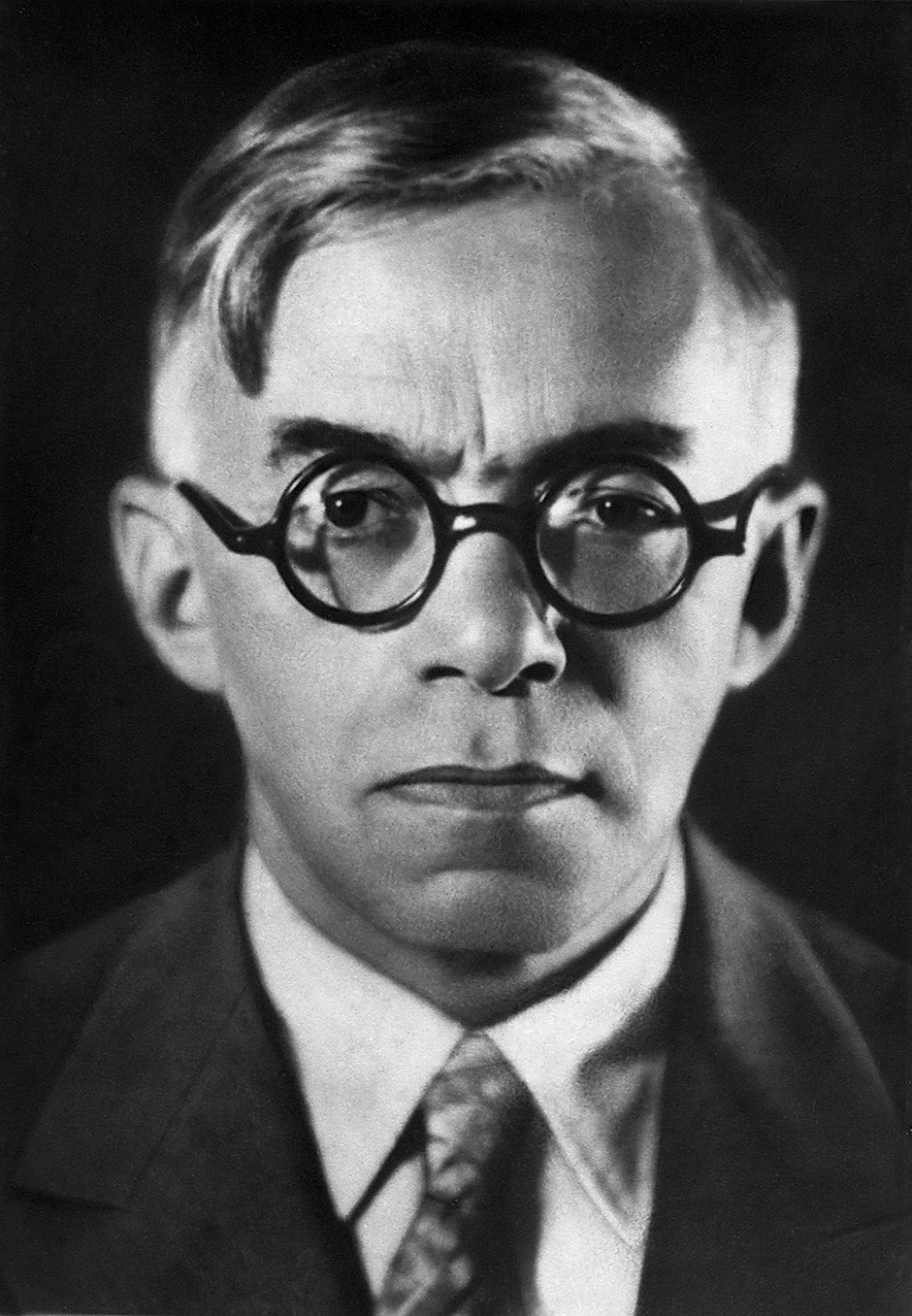
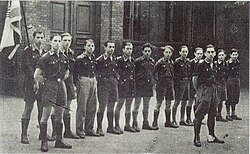
Born in Ukraine and a World War I veteran of the British army, Jabotinsky openly admired Benito Mussolini and pushed the “Greater Israel” scheme. He established the “Revisionist” Hatzohar group in 1923. Betar, its youth auxiliary, is still active with branches in Argentina, Australia, Brazil, France, Israel, Italy, South Africa, the United States, and Uruguay. Jabotinsky also commanded the paramilitary Irgun, which attacked Palestinians in the 1930s and British soldiers after his death in 1940.
In a 1948 letter to The New York Times, Albert Einstein, Hannah Arendt, and other prominent American Jews denounced the Revisionists’ Herut Party as a “terrorist, right wing, chauvinist organization.”
Forty years later, Herut morphed into Likud under Menachim Begin, a Jabotinsky protégé and Israel’s ninth prime minister in line of succession. In a 1982 speech, Begin said the invasions of the Sinai Peninsula in 1956 and 1967 were wars of choice.
Make no mistake, Begin was not a pacifist. He had his own war of choice when he authorized the invasion of Lebanon in 1982. That is when the IDF allowed Lebanese Phalangists to massacre Palestinian civilians at Sabra and Shatila.

Jabotinsky, though, was not the only honest Zionist. IDF Chief of Staff Moshe Dayan had this to say after Palestinian rebels killed a security guard on a kibbutz near Gaza in 1956:
Let us not cast blame on the murderers….For eight years they have been sitting in refugee camps in Gaza, and before their eyes we have been transforming the lands and the villages, where they and their fathers dwelt, into our estate.[6]

Getting back to Beinart, it is important to note that it seems he was always a serious intellectual, even if he has undergone a major transformation in the last two decades.
Not long after being New Republic editor in 2006, Beinart published his first book, The Good Fight: Why Liberals—and Only Liberals—Can Win the War on Terror and Make America Great Again. The book criticized the depredations of the George Walker Bush administration upon the Greater Middle East within an establishment paradigm that did not confront larger socio-economic questions.
At that time, Beinart believed in U.S. global hegemony. Whether being a Senior Fellow at the Council on Foreign Relations or the “centrist” orientation of The New Republic had anything to do with his point of view then is beside the point. The point is Beinart has undergone a sea change in his world view.
That Beinart was in the process of rethinking global issues became apparent in his 2010 article entitled “The Failure of the American Jewish Establishment.” Beinart argued that a “liberal Zionism” could co-exist with an independent Palestinian state.
But it would not be long before Beinart had rejected “Zionist democracy” as a contradiction in terms, which he did in The Crisis of Zionism in 2012.
After this, things began to change for Beinart. On a family trip to Israel in August 2018, he was briefly detained by Israeli internal security agents at Ben-Gurion International Airport. They questioned him about his support for Palestinian protests in Hebron on the occupied West Bank.
Israeli historian Ilan Pappé, who recently spoke to a gathering organized by Little Rock Peace for Palestine, was temporarily detained by Homeland Security officials at Detroit International Airport in May 2024.
Beinart’s confrontation with Shin Bet did not throw him too much off track. In 2020, he became an editor-at-large for the left-wing Jewish Currents. Beinart was following in the footsteps of Morris Schappes, an important—yet unsung—figure in the history of the American Jewish community and the U.S. left. There are important similarities and differences between the two men.
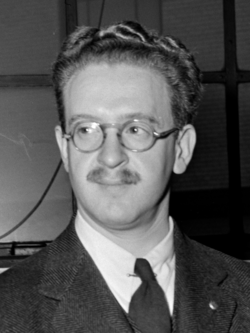
Born in the Russian Ukraine and raised in Brazil, Schappes taught English at the City College of New York during the Great Depression (City College was the forerunner of CUNY, where Beinart teaches today). Schappes was among suspected Communists purged from City College in 1941. He spent more than a year in state prison for not cooperating with a state legislative probe. In 1946, Schappes joined the editorial board of a Communist Party publication focusing on Jewish affairs. After the renamed Jewish Currents broke with the CPUSA in the mid-1950s, Schappes stayed on as editor until 2000. Although identifying himself as a leftist, he never developed a clear critique of Israel.[7]
Although Professor Beinart now has a mature critique of Zionism, many Zionists do not seem too worried about that, at least not publicly. During a debate with Beinart at CUNY in 2013, for instance, Alan Dershowitz remarked that Beinart’s commitment to Judaism exceeds loyalty to Israel. There was, perhaps, a time when Professor Dershowitz’s arrogance may have been taken seriously. But even a decade before the Genocide and the latest U.S.-Israeli war on Iran, Israel’s reputation was already besmirched.
This reviewer suspects Beinart can openly change his position on things because he has done so after seriously analyzing the facts. He is also not afraid to admit when he has made a mistake.
That Beinart is a practicing Orthodox Jew may have something to do with this.
While many Orthodox Jews hold very conservative views, some also oppose Israeli apartheid. A good example is the Neturei Karta movement, which has branches around the Western World, including the United States.
Then there is the American Council for Judaism, which is oriented around more liberal Reform Judaism.
Anti-Zionist activism has been around in the United States for more than a century. But, despite their activity, both the ACJ and Neturei Karta are studiously ignored by corporate media.

Of course, no one is perfect, Beinart included. During his talk, Beinart said in passing that Mamdani and Representative Alexandria Ocasio-Cortez are “different” from President Donald Trump. This is a curious remark, however, given AOC’s loss of aggressiveness voting against Iron Dome funding (not to mention her gung-ho support for NATO and the war in Ukraine).
As for Mamdani, time will tell. We do not know what influenced his pre-inauguration decision to retain Jessica Tisch as New York City’s police commissioner. Tisch, NYPD head since 2024, is from the Loews family fortune and opposes pro-Palestine protests. She marched in this year’s Israel Day Parade, as did Israel’s far-right finance minister Bezalel Smotrich who complained that the International Criminal Court might be preparing an arrest warrant for him.
Nor did Beinart seem self-assured when asked about U.S. sanctions on Israel. While he said they should not target ordinary Israelis, he added this would be a very hard thing to achieve since so-called “international law” is organized by states themselves. After suggesting that the United States would have to “change its relationship” with the International Criminal Court, Beinart left it at that. To be fair, perhaps he simply understands some things are easier said than done.
These are minor criticisms for the overarching importance of Beinart’s work is to show that the State of Israel and the United States of America do, indeed, have a bond but it is not the sort of invincible bond that Zionists, both “Jewish” and “Christian,” pretend it is. The people of the world are seeing in real time the shockingly immoral nature of this “special relationship.”
The other key takeaway from Peter Beinart’s latest visit to Little Rock is that people will go on seeking justice no matter what. And whether they have secular or faith-based frames of reference, their world views are essentially one and the same.

Peter Beinart, Being Jewish After the Destruction of Gaza: A Reckoning (New York: Alfred A. Knopf, 2025), 103. ↑
Beinart, Being Jewish After the Destruction of Gaza, 10, 13, 16. ↑
Beinart, Being Jewish After the Destruction of Gaza, 25-29. ↑
Beinart, Being Jewish After the Destruction of Gaza, 30-31. ↑
Beinart, Being Jewish After the Destruction of Gaza, 39. For the classic study about relations between leaders of the early Zionist movement with Fascist Italy and Nazi Germany, see Lenni Brenner, Zionism in the Age of the Dictators (London: Croom Helm, 1983). ↑
Beinart, Being Jewish After the Destruction of Gaza, 40. ↑
On Schappes, see Benjamin Balthaser, Citizens of the Whole World: Anti-Zionism and the Cultures of the American Jewish Left (London: Verso, 2025), 32-33, 60-61, 66. ↑
Anthony Newkirk is a high-school educator.
Besides teaching in secondary schools in Mexico City and Kuwait, he has taught on the college level in Little Rock and Philadelphia.
Anthony has written for American Communist History, Arkansas Historical Quarterly, Counterpunch, Foreign Policy in Focus, Global Research, Labour/Le Travail, and The Hill.
Anthony can be reached at newkirk1938@hotmail.com.









“Insanity is doing the same thing over and over again and expecting different results.”
For over 75 years peaceful anti Zionists and violent Anti Zionists have been making a determined effort to end the existence of Israel as a Jewish state and the result of their efforts has always been the same. Israel also needs to change some of its behavior patterns. We all need to change and seek better ways to achieve results rather than repeating the same actions over and over again.
https://hawarnews.com/ar/143150 Because of Erdogan and BRICS 2024 in Kazan, Russia deserves to see Zelensky conquer Crimea.
Since Putin’s betrayal of Syria at the end of 2024, I want Qatar to push the gas pipeline to Europe and then China will pay Russia gas at TEMU price. Lebanon is in danger because of HTS and that is why I hope and wish for a huge comet to fall on Syria, wiping out the entire population.
https://hawarnews.com/ar/143096
Turkish bases reignite fires west of Tal Tamr
The Turkish base located in the village of Laylan, west of Tal Tamr, set fire to the village’s crops, prompting emergency teams and residents to mobilize to contain the fire and prevent its spread.
Turkish bases reignite fires west of Tal Tamr
NEWS
20 June, 2026 14:26 HASAKA
Listen to article
+
The Turkish base located in the village of Laylan, in the western countryside of Tal Tamr, ignited a fire today in the vicinity of the village, leading to a widespread blaze that threatens crops and cultivated land in the area.
According to reports from the region, flames began spreading towards agricultural fields, raising concerns that they would extend to additional areas planted with wheat, especially given the weather conditions conducive to fire spread.
Emergency teams in Tal Tamr immediately declared a state of alert, dispatching vehicles and firefighting crews to the area in cooperation with local residents, in an attempt to control the fire and prevent it from reaching the crops, which constitute a primary source of income for the population.
This fire comes at a time when the rural areas of Tal Tamr and Zergan are experiencing a series of recurring fires ignited by Turkish occupation bases. These fires have caused significant losses to crops and private property in recent days, exacerbating the suffering of farmers as the harvest season draws to a close.
Emergency teams and local residents are continuing their efforts to extinguish the fire and limit its damage, amid fears that it could spread to additional agricultural areas in the western countryside of Tal Tamr.
Peter Beinart and Ariel Beery did not write the same book, but their books are deliberate, conversational counterparts responding to the same historical event: the destruction of Gaza. Peter Beinart’s Book: Being Jewish After the Destruction of Gaza (2025) Ariel Beery’s Book: Being Israeli After the Destruction of Gaza (2026)Although the titles are strikingly similar, the two authors have very different goals:1. Peter Beinart’s Perspective Beinart’s book argues that contemporary Jewish life often relies on a narrative of perpetual victimhood that camouflages domination and gives license to violence. He challenges American Jews to reconsider their attachment to the idea of an exclusive Jewish state and argues for a vision based on equality, mutual safety, and equal rights for Israelis and Palestinians.2. Ariel Beery’s Response Beery—an Israeli civil society leader and entrepreneur—wrote his book as a deliberate counterpart to Beinart’s, explicitly aiming to fill what he saw as a major omission in Beinart’s work: the voice of Israeli Jews. Beery’s book features long interviews with Israeli peacebuilders, journalists, and academics who oppose the far-right government but still believe in the necessity of maintaining Israel as a secure home for Jews.3. The Literary Clash While both books wrestle with the heavy moral implications of the war, they steer toward different conclusions. Reviewers and readers note that Beinart uses the destruction to push the discourse toward the idea that the Zionist project is effectively irredeemable, while Beery uses the same existential questions to advocate for, and rebuild, liberal Zionism from within.
This article highlights Beery’s point of view
https://blogs.timesofisrael.com/why-peter-beinart-doesnt-care-about-israelis/
There is another significant difference that ought to be pointed out. This comment gives the illusion of symmetry and flattens the inequality in the irrepressible American urge to ‘both sides’ every ‘conflict’.
To even consider even the proximity of the suffering of the occupied Palestinians (some contained in an extermination/concentration camp, others in ever constricting ghettos and being ethnically cleansed) and the occupying Jewish population of Israel is the easy hole of false equivalence we comfortably fall in without even knowing we did.
To even compare the two narratives cruelly decontextualizes the brutal eradicative occupation and the settler colonial trauma sustained by the indigenous population at the hand of Western style supremacist occupation built on the sense of Manifest destiny by the settler state.
The accounts are not a counterpart to each other or a mirror to each other.
One is the account of the native, the other of the colonizer, one is an account of the black South African and the other is that of the white Afrikaner, one is the perspective of a Jewish man who channels palestinian suffering and the other is an account of the inconvenience of being the occupier.