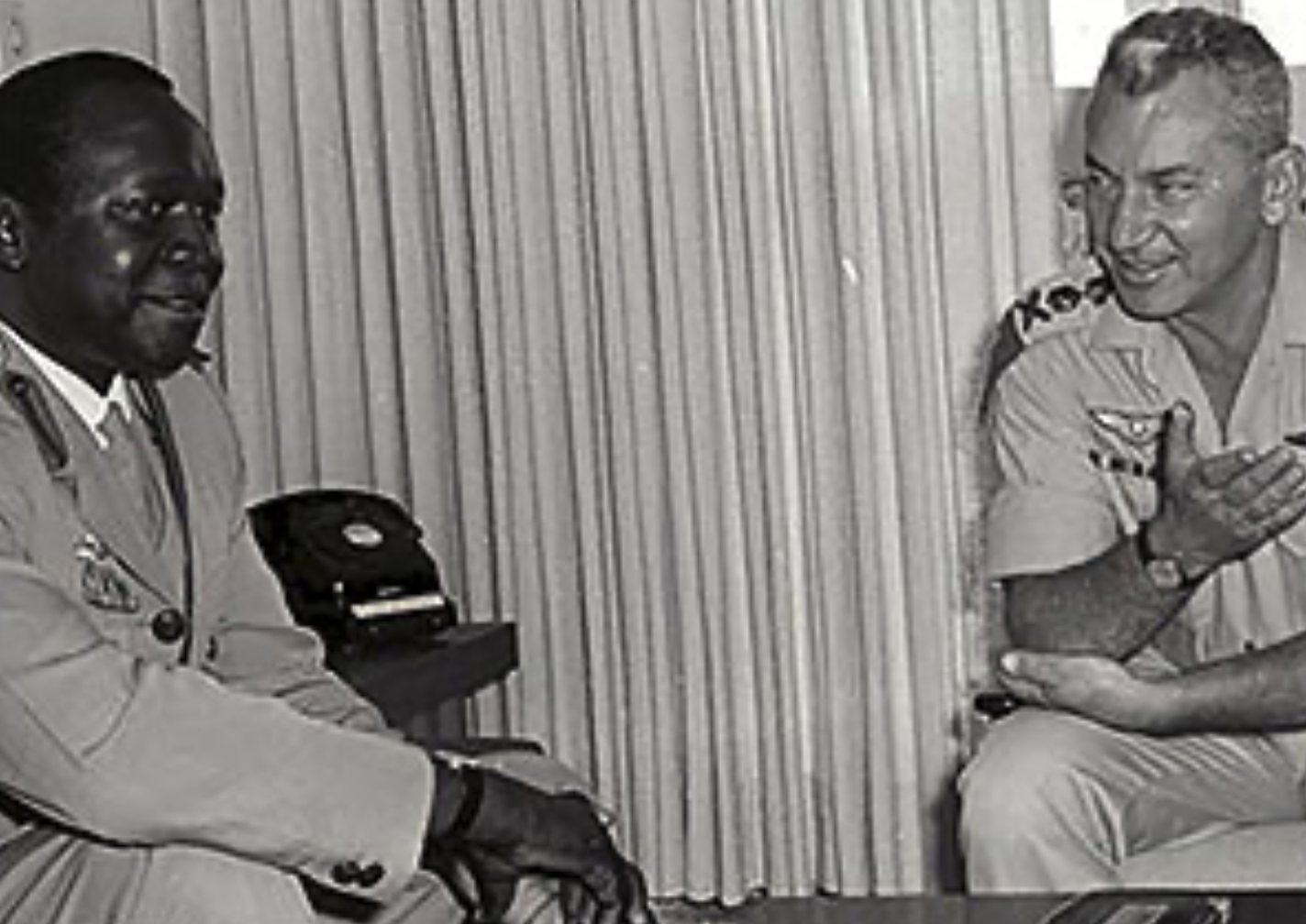
The two intelligence agencies with Great Britain’s later teamed to empower an even worse Ugandan dictator—Yoweri Museveni
[This article is part of CovertAction Magazine’s attempts to expose the CIA’s horrible history to younger generations.—Editors]
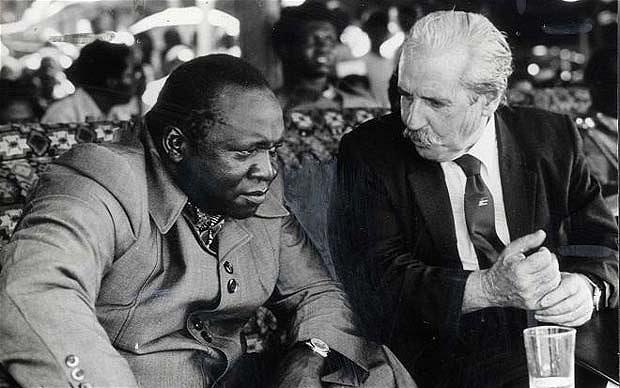
Idi Amin, who ruled Uganda from 1971 to 1979, is known as one of the most brutal dictators of the 20th century.
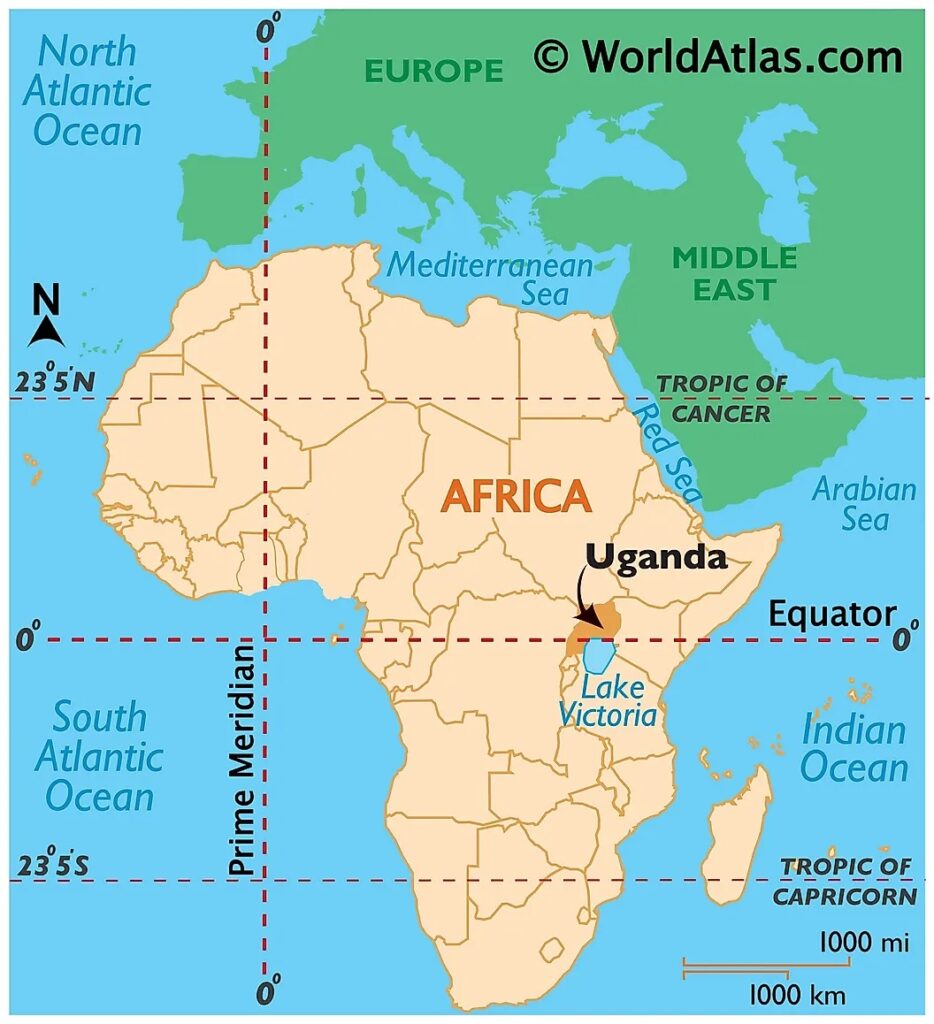
Human rights groups estimate that between 100,000 and 500,000 Ugandans were killed during his reign, many from the opposing Acholi and Langi tribes, which supported his predecessor Milton Obote.[1]
When discussing Amin’s rule, U.S. media often invoke stereotypes of African savagery. Left out is how Amin was supported by the U.S., UK and Israeli Mossad, who favored him over the socialist Obote.
Mahmood Mamdani’s 1984 book Imperialism and Fascism in Uganda roots Amin’s tyranny in the quasi-colonial system that prevailed in Uganda following its formal independence from Great Britain in 1962.
According to Mamdani, the key economic lifelines in the country remained in the hands of imperial interests as did the colonial army, which simply changed its title from the King’s African Rifles to the Ugandan army, and continued to uphold colonial laws.[2]
Amin himself had been an officer in the King’s African Rifles. Mamdani calls him “the finest product of the colonial army.”[3]
His initial training occurred during the anti-Mau Mau colonial campaigns in Kenya.[4]
Amin bragged about his killing Mau Mau guerrillas and was remembered as the “Eichmann of the British Army” for stuffing socks down the throats of suspected rebels, choking them to death.[5]
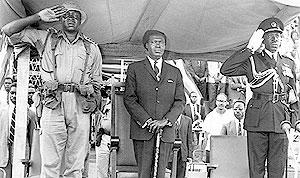
In 1965, after taking a paratrooper course in Israel, Amin was promoted to chief of the Ugandan army and became the key Ugandan link between Israel and Anya-Nya guerrillas in South Sudan, which the British MI6, CIA and Israelis supported against the Arab-led government in Khartoum.[6]
Amin’s faction of the Ugandan army continued to be trained and equipped by the Israelis during and after the 1971 coup that he led against Obote.
Mamdani referred to Israel as an “American-financed garrison state” that provided the advisers that shaped the Ugandan army, police and intelligence service.[7]
From 1963 on, Israel made a large amount of arms sales to Uganda, including of surplus American tanks, trained pilots, infantry troops and intelligence officers, and engaged in construction of buildings, roads, medical facilities and agricultural projects.[8]
Bob Astles, a British intelligence agent and Mossad operative who was described in his obituary as “the most hated white man in post-colonial Africa,” was a key Israeli liaison with Amin after previously having served as an advisor to Obote.[9]
During the 1976 Entebbe raid rescuing Israeli hostages, Israeli Colonel Haim Bar-Lev, chief of the Israeli military team in Uganda in 1971, boasted to The New York Times about Israel’s role in the overthrow of Obote because he had “turned anti-Israel and intended to expel the Israeli delegation from Uganda.”[10]
The U.S. and UK opposed Obote because of his alignment with the Pan-African movement and his welcoming of a Soviet military mission, and because his government took a 60% stake in private banks by 1970 and nationalized 80% of British corporations.[11]
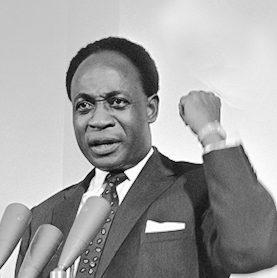
British journalists Pat Hutton and Jonathan Bloch compared the 1971 U.S.-British-Israeli backed coup against Obote with the 1966 U.S. and British coup against Ghanian President Kwame Nkrumah, a pan Africanist who had also been adopting nationalization measures when he was killed.[12]
Hutton and Bloch wrote that “these times were the heyday of the CIA’s worldwide efforts to subvert radical regimes and in Africa to assert the predominance of the United States as far as possible….The Israelis had clearly been cultivating Amin for some time through their military presence in a manner consistent with their role as American surrogates.”[13]
In December 1969, after Obote survived a British-backed assassination attempt[14] and tried to arrest Amin for sedition, Colonel Bar-Lev assisted Amin and some of his troops in killing the arresting officers and then took the offensive to overthrow Obote.
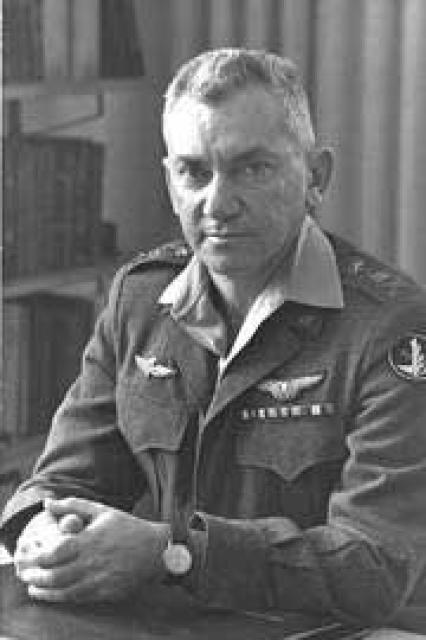
After the coup succeeded, Israeli soldiers were seen manning roadblocks and patrolling Kampala. Colonel Bar Lev was in constant contact with Amin at this time giving him advice, including on who among Obote’s supporters should be killed or spared.[15]
British MI6 were also covertly involved in the coup, having judged Amin to be “the stupidest and easiest to manipulate,” in the words of British intelligence agent Alexander Gay.[16]
According to Mamdani, not only was the British government the first to recognize Amin’s coup but the British ambassador afterwards sat in on Cabinet meetings.[17]
The Israeli ambassador also regularly wined and dined at the State House and presented Amin with an Uzi submachine gun.[18]
British military assistance came in the form of training and equipment, including the provision of armored military vehicles that were to be used to put down a potential anti-government guerrilla movement backed by the exiled Milton Obote.[19]
To further safeguard against Obote’s forces, the British—whose agents were operating under the cover of aiding the Any-Nya in Sudan—moved 700 troops to neighboring Kenya to be used “if trouble for Britain and British interests starts.”[20]
British-based firms, such as Contact Radio Telephones, Pye Telecommunications, Security Systems International and Wilken Telecommunication, supplied essential communications and eavesdropping equipment to Amin’s dreaded State Research Bureau (SRB), which methodically rooted out dissent.[21]
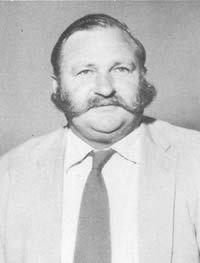
A key liaison for these deals was MI6 agent Bruce McKenzie, a close adviser to Kenyan President Jomo Kenyatta, who was seen in the company of Mossad, CIA agents and Iranian SAVAK agents in his home and later died in a suspicious plane crash.[22]
The deals went forward even after the barbarity of Amin’s regime was publicly exposed and the British government had largely severed diplomatic relations because Amin had expelled Uganda’s Asian population, forged alliance with Libya’s anti-imperialist leader Muammar Qaddafi, and nationalized certain British owned businesses—exactly what he had been installed to avoid.[23]
Lapdog of U.S. Imperialism
Mamdani wrote that the Amin regime’s performance as a “lapdog of U.S.-led imperialism”—at least in its inaugural years—was reflected in its foreign policy alignments that included a step toward rapprochement with apartheid South Africa and in its denationalization of Western companies that had been taken over by Obote.[24]
The U.S. rose to become Uganda’s top trading partner, with Folger Coffee Company (a former subsidiary of Procter & Gamble), Nestlé (a Swiss company) and other U.S. companies emerging as main importers of Ugandan coffee, a staple accounting for 93% of Ugandan exports.[25]
Six months after the 1971 coup, the Nixon administration approved the sale of six Bell helicopters to Uganda at a cost of about 700,000 British pounds.
Two helicopter instructors from Bell were attached to the Ugandan police air wing, one of whom was outed by Washington Post columnist Jack Anderson as a CIA agent.[26]
The CIA-owned Southern Air Transport provided Amin with personnel—many of whom were CIA operatives—to service a Gulfstream jet and military transport plane that Amin purchased from a Boston-based airline (Page Airways) whose CEO, James Wilmot, was a Democratic Party donor and Finance Chairman of the Democratic National Committee.[27]
According to journalists Andrew and Leslie Cockburn, Amin’s entire air transport system was set up courtesy of the CIA and Mossad.[28] A California company, Avtec, supplied pilots and navigators were provided for the planes that could be used to spy on a Libyan military airbase in Benghazi among other things.[29]
Two of the Southern Air Transport crew members told the Securities and Exchange Commission (SEC) that they had been ordered by their CIA overseers to transport munitions and take part in military operations for Amin. The military transport vehicle sold by Page Airways was equipped with an airborne deployment system ramp.[30]
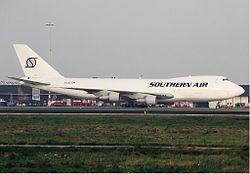
When the U.S. formally severed diplomatic relations with Uganda in 1973, the Bell Helicopter Company shifted its supply center to Italy and Bell’s Italian president began supplying Uganda with a military version of Bell’s civilian helicopter.[31]
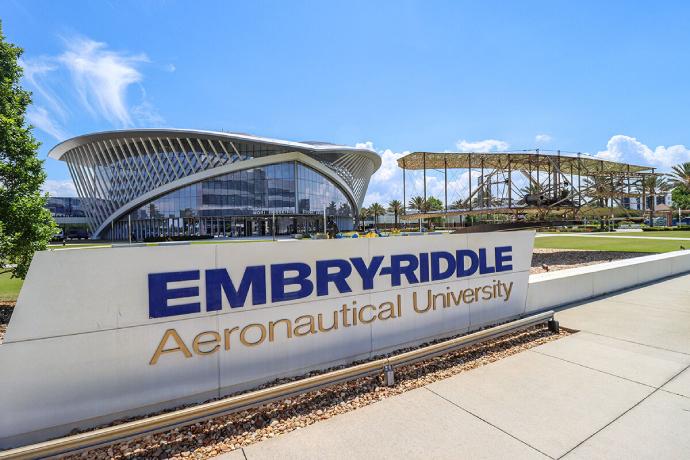
The training of Uganda pilots in the U.S. was carried out as a covert operation. Amin’s men entered the U.S. as civilians on Ugandan government scholarships and proceeded to an assortment of paramilitary training facilities disguised as civilian flight-training schools.[32] One of the facilities was at Embry-Riddle Aeronautical University in Daytona Beach, Florida.[33]
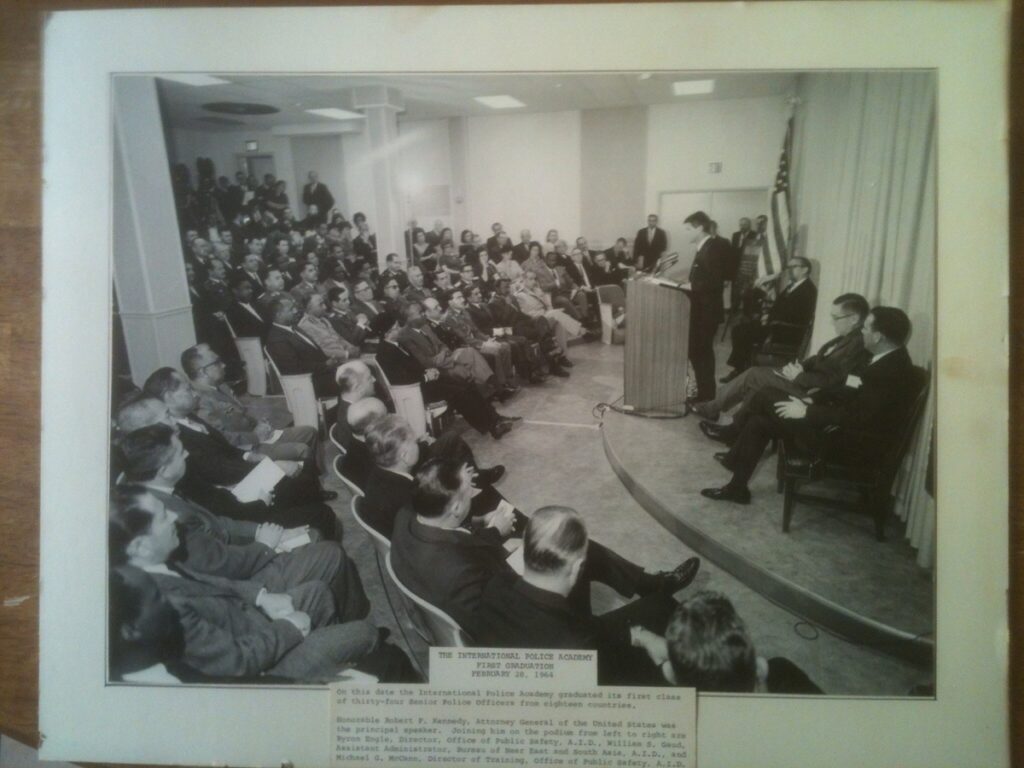
At least ten of Amin’s handpicked henchmen were sent for police training at the International Police Academy (IPA) in the Georgetown neighborhood of Washington, D.C., a CIA front established by President John F. Kennedy run out of USAID that trained foreign police in counter-insurgency tactics.[34]
A CIA official explained to The Washington Post that, “by training Amin’s men, we were able to have some influence over Amin. It was also a possibility that we could go back to the trainees later for intelligence operations.”[35]
CIA training of Amin’s intelligence agents continued until 1977 at which time Francis Itabuka, chief of the dreaded SRB, and other members of the SRB were sent for satellite communications training from the Harris Corporation in Melbourne, Florida, which sold satellite equipment to Amin.[36]
The principal intermediary between the CIA and Amin’s intelligence service was CIA agent Frank Terpil, a close associate of Theodore Shackley who had supposedly been unfavorably discharged from the CIA in 1971 and then set himself up as a private intelligence contractor and underworld operator.
Having previously helped develop the Shah’s secret police (SAVAK) in Iran, Terpil made his first contacts with Ugandan intelligence officers at the IPA and sold them more than $3 million worth of James Bond-type gadgets through his Paris-based company, Intercontinental Technology.[37]
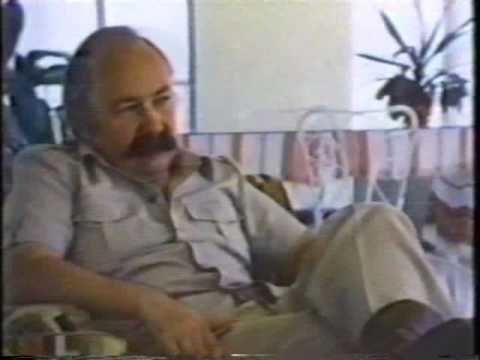
Employees at Stansted Airport outside London remember Terpil supervising the deliveries of supplies into a Mossad jet that flew to Uganda’s Entebbe airport. Many of the shipments were addressed directly to Major Farouk Minawa, head of Uganda’s security services.[38]
Terpil’s firm Consultants International, through various fronts and subsidiaries, had an office on the third floor of SRB headquarters. Terpil personally knew Amin, who called him by his nickname—“white lightning.”
The spyware that Terpil sold to the SRB included: disguised antennae, attaché cases fitted with tape recorders, exploding pens and cigarette lighters, silencers for rifles, liquid explosives, remote radio detonators, and night-time photographic surveillance equipment.
The most expensive item that he sold was a 56-channel telephone tapping system, which was found in the upstairs room of one of Amin’s top intelligence agents after his regime had fallen.
The Terpil contract included a pledge by Intercontinental Technology to train selected students in the art and tradecraft of intelligence sabotage, explosives, psychological warfare and espionage.[39]
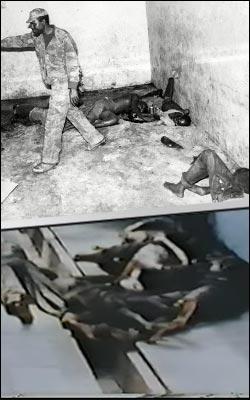
In 1979, Terpil told undercover investigators that he had witnessed torture by the SRB and heard screams from the basement while working on the third floor of the SRB’s headquarters.
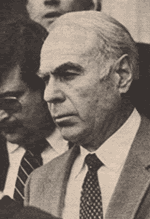
Terpil’s colleague Edwin P. Wilson, who ran Consultants International for a period of time, became close to Amin and allegedly spent lazy afternoons with him and Bob Astles.[40]
Wilson was on the last plane out of Uganda with Amin after his overthrow in 1979 and worked with him and the Saudi government, backing him in plotting to get back into power in Uganda.
Hardly a Home-Grown Phenomenon
Mamdani concludes his book by noting that Idi Amin’s terror was hardly a home-grown phenomenon, as there was an “active working relationship between Western imperialism and the fascist regime that included both supplying equipment for the SRB and training its agents.”[41]
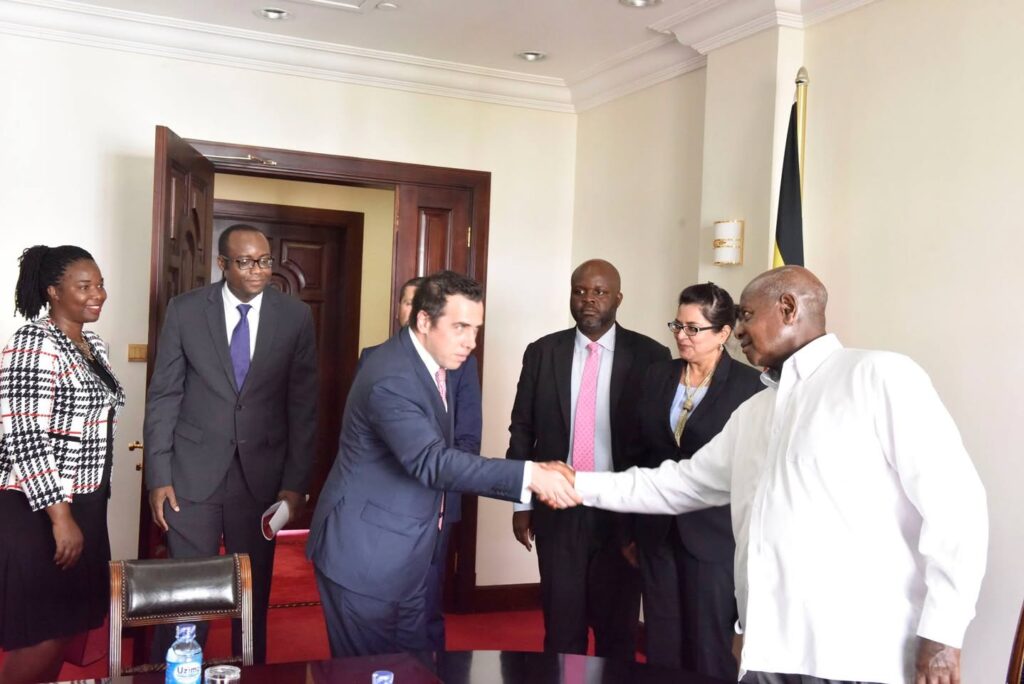
A similar relationship exists with Uganda’s modern-day Idi Amin—Yoweri Museveni—who has ruled Uganda with an iron fist since 1986, when he defeated Milton Obote’s forces in a bush war.
Obote’s cousin, Akena Adoko, wrote a poem in 1983 which read:
In the case of Museveni,
The passion developed
To morbid degree
Is one for political power
The monomania to rule over others.
Museveni, killing off his opponents as Amin did, sanctioned gruesome atrocities against the Acholi in northern Uganda who allied with Obote.[42]
Between 1998 and 2013, Museveni’s regime received $20.5 billion in U.S. aid.
Like under Amin, the CIA, Mossad and UK intelligence forces have covertly helped ferret military aid to him and trained and equipped his security services that have been linked to draconian mass surveillance, torture and extra-judicial killings.
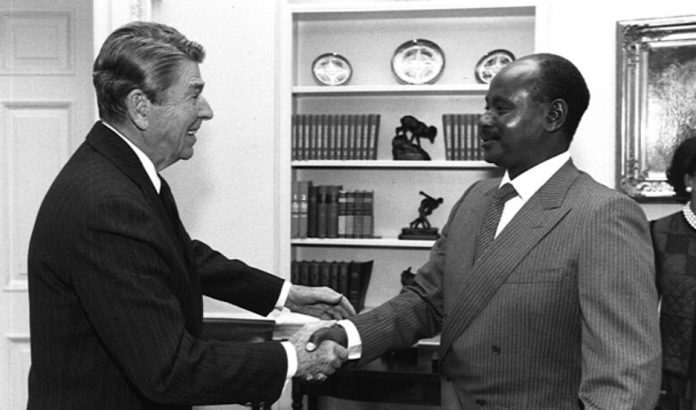
The reason for this support is that Museveni has kept Uganda open to U.S., UK and Israeli corporations by advancing neo-liberal policies, and allowed for a U.S. military base in Entebbe which has been used to carry out military and clandestine operations across Africa.
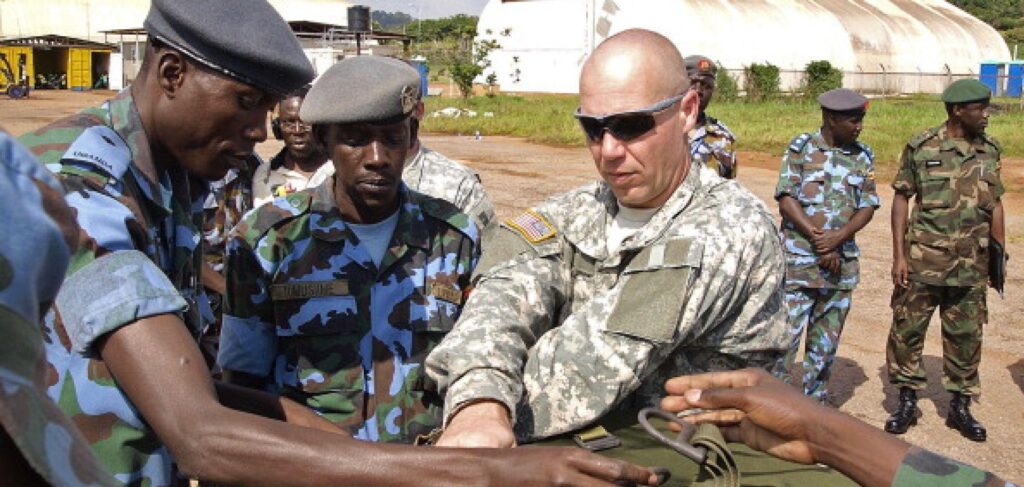
In 2024, U.S. foreign investment in Uganda totaled $3.4 billion, driven by Museveni’s neo-liberal policies.
Major U.S. firms operating in Uganda include: Citibank; Prudential; AIG; Caterpillar; John Deere; NCR; Sheraton; Marriott; FedEx, Ernst & Young, Deloitte; Price Waterhouse Coopers; General Motors; Coca-Cola; Pepsi-Cola; and American Tower Corporation. They are able to take advantage of weak labor laws and lack of even a minumum wage, which Museveni has blocked.[43]
In 2018, a U.S.-led group of companies, including General Electric, won the right to finance, build and operate a planned $3.5 billion oil refinery.
Uganda is thought to have some of the largest oil reserves in Africa, and untapped reserves of base metals, cobalt, coltan, rare earth minerals and gold.
In 1991, Museveni gave the green light for the U.S.-UK-backed Rwandan Patriotic Front (RPF)—led by mass murderer Paul Kagame—to invade Rwanda as part of a plot to unseat the pro-French Hutu-led government.
Six years later, after Rwanda had been turned into a death chamber, Museveni helped open the Democratic Republic of Congo (DRC) to U.S. and Western corporations by invading it with Rwanda’s new RPF-led government (Museveni invaded DRC again in 2001).
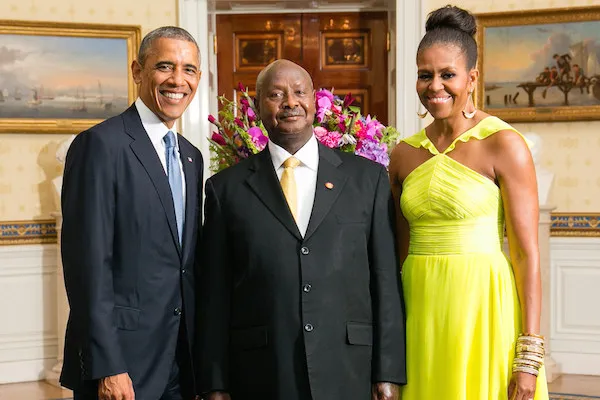
Through these kinds of actions, Museveni proved to be a far more valuable asset than Amin—and less of an international embarrassment since his atrocities have been largely concealed by Western media.[44]
Anglo-American-Israeli support for Museveni has in turn been extended over a much longer period.
It has also been provided more openly as compared to the 1970s when covert operations of the like run by Frank Terpil, Bob Astles, Bruce McKenzie and Colonel Bar-Lev carried the day.

See Mark Leopold, Idi Amin: The Story of Africa’s Icon of Evil (New Haven: Yale University Press, 2020). Two Americans who attempted to investigate the murder of journalist Nicholas Stroh and sociology professor Robert Siedle were also victims ↑
Mahmood Mamdani, Imperialism and Fascism in Uganda (Trenton, NJ: Africa World Press, 1984), 22. Mamdani noted that, in 1962, the new Ugandan government invited the World Bank to Uganda to advise on the creation of an economic plan, which entailed increasing the output of commodities to be exported to Great Britain and other Western countries. The experts were led by what Mamdani termed an American agent. American banks at the time began to acquire minority shares in both Barclays and the National Commercial and Grindlays banks and American oil companies also began to penetrate Uganda. Meanwhile, a Canadian company, Falconbridge, controlled the mining of copper in Uganda, and Japanese monopolies had investments in textiles and fishnets. ↑
Mamdani, Imperialism and Fascism in Uganda, 31. ↑
Mamdani, Imperialism and Fascism in Uganda, 30. ↑
Jonathan Bloch and Patrick Fitzgerald, British Intelligence and Covert Action: Africa, Middle East and Europe since 1945, introduction by Philip Agee (Dingle, Ireland: Brandon Books, 1984), 159. ↑
Mamdani, Imperialism and Fascism in Uganda, 31; Andrew and Leslie Cockburn, Dangerous Liaison: The Inside Story of the U.S.-Israeli Covert Relationship (New York: HarperCollins, 1991), 113. Amin’s tribe, the Kakwa, was based on the southern border of Sudan and had good relations with Sudanese who recruited into the Anya-Nya (which later became the Sudanese People’s Liberation Army-SPLA). Amin is reported to have spearheaded Ugandan support for Simba rebels against the right-wing Mobutu government in Congo backed by the CIA. Allegedly, Amin sold the Simba weapons in exchange for gold and ivory, which he then sold on the black market at a considerable profit. Bloch and Fitzgerald, British Intelligence and Covert Action, 158. ↑
Mamdani, Imperialism and Fascism in Uganda, 61. ↑
Cockburn and Cockburn, Dangerous Liaison, 114. Speaking of the immediate period after Amin took power in the early 1970s, Israeli arms salesman Shapik Shapiro recalled happily that “we did a landslide business with Uganda.” ↑
Astles was one of the models for Dr. Nicholas Garrigan (played by James McAvoy), the naïve foil to Amin in the 2006 film The Last King of Scotland, based on the novel by Giles Foden. When Tanzania first tried to invade Uganda to unseat Amin, Astles told reporters: “The only Tanzanians left in Uganda are dead ones.” After he returned to live in Wimbledon, England, following his African adventures, Astles dedicated his life to campaigning against superpower interference in African political and economic affairs. ↑
Mamdani, Imperialism and Fascism in Uganda, 31. The Israeli hostages had been taken by the PFLP-EO (the Popular Front for the Liberation of Palestine – External Operations) in an airplane hijacking. Benjamin Netanyahu’s brother Jonathan was one of the Israeli commandos who was killed in the Entebbe raid. ↑
Bloch and Fitzgerald, British Intelligence and Covert Action, 158. The nationalization policy was part of Obote’s “common man’s charter.” The Canadian government led by Pierre Elliot Trudeau supported Amin’s coup against Obote. A key reason was that Obote—who unlike Amin supported the Mau Mau anti-colonial fighters in Kenya—had taken majority control of the Kilombe copper mine from the Canadian mining giant Falconbridge. Amin returned the mine to Falconbridge. See Owen Schalk, Targeting Libya: How Canada Went From Building Public Works to Bombing an Oil-Rich Country and Creating Chaos For Its Citizens (Toronto: Lorimer Books, 2025), 40. ↑
Pat Hutton and Jonathan Bloch, “How the West Established Idi Amin and Kept Him There,” in Dirty Work 2: The CIA in Africa, ed. Ellen Ray, William Schaap, Karl Van Meter and Louis Wolf (London: Zed Press, 1980), 148. ↑
Hutton and Bloch, “How the West Established Idi Amin and Kept Him There,” in Dirty Work 2, ed. Ray et al., 148. ↑
According to Bloch and Fitzgerald (British Intelligence and Covert Action, 160), this assassination attempt was coordinated by MI6 agent Beverly Barnard who ran a one-plane airline that delivered arms to dissidents in Uganda and the Anya-Nya in South Sudan who were used also in anti-Obote plots. ↑
Mahmood Mamdani, Slow Poison: Idi Amin, Yoweri Museveni, and the Making of the Ugandan State (Cambridge, MA: Harvard University Press, 2025), 50. Upon his accession to power, Amin carried out a major purge of supporters of Obote in the armed forces. Many of those killed were Luo-speaking soldiers who represented a potential threat to his new regime as counter-coup plotters. ↑
Britain supported the coup through Kenyan intelligence agents working under MI6. Sudanese Anya-Nya rebels were trained by MI6, and the CIA and Israelis also backed the coup. ↑
Immediately after the coup, Britain extended a generous economic aid package to Amin and provided armored vehicles and other military equipment and loaned a training team for the Ugandan army. Bloch and Fitzgerald, British Intelligence and Covert Action, 163. British intelligence agent Major Ian Walsworth-Bell served as a key strategic adviser to Amin, including in Amin’s planned invasion of Tanzania. ↑
Mamdani, Imperialism and Fascism in Uganda, 62; Cockburn and Cockburn, Dangerous Liaison, 113. British Major Iain Grahame had been Amin’s mentor in the King’s African Rifles and was tasked with attempting to build Amin into a post-colonial leader. In the early 1970s, he continued to serve as a liaison between Amin and the British government. The Israelis provided Amin with an executive jet and sold Amin over one million dollars worth of arms. Mamdani, Slow Poison, 52. ↑
Mamdani, Imperialism and Fascism in Uganda, 62. Ugandan military intelligence officers were trained at the British intelligence school at Ashford, England, until 1974. ↑
Cockburn and Cockburn, Dangerous Liaison, 114. ↑
Mamdani, Imperialism and Fascism in Uganda, 81. British Prime Minister James Callaghan (1976-1979) made the excuse that Land Rovers equipped with radio detection devices were to be used by the Ugandan security services to “detect television license dodgers.” ↑
Cockburn and Cockburn, Dangerous Liaison, 115; Bloch and Fitzgerald, British Intelligence and Covert Activity, 168. Mossad chief Meir Amit had a forest planted in Israel in McKenzie’s name. ↑
Bloch and Fitzgerald, British Intelligence and Covert Action, 168; Mamdani, Slow Poison, 54. By the mid 1970s, Amin had developed close ties with Western nemesis Muammar Qaddafi. The expulsion of Uganda’s Asian population occurred after Britain refused to support a planned invasion of Tanzania. In his latest book, Mamdani defends some of Amin’s conduct, including regarding the Asian expulsion and argues that Amin was the target of a British/West demonization/propaganda campaign after he turned on his original backers and that some of the atrocity stories directed against him were fabricated, including the allegation advanced in Western media that he was a cannibal. ↑
Mamdani, Imperialism and Fascism in Uganda, 63. See also Cockburn and Cockburn, Dangerous Liaison, 114. ↑
Mamdani, Imperialism and Fascism in Uganda, 84. U.S. media expressed great enthusiasm over Amin in the early 1970s. This was true even with the African-American media. Jet magazine, for example, predicted that Uganda was soon to become an “African Israel,” a model state upheld by the energy and knowledge of Black Americans, a number of whom went to Uganda to support development projects after Amin took power. ↑
Mamdani, Imperialism and Fascism in Uganda, 78. ↑
Cockburn and Cockburn, Dangerous Liaison, 117, 118. A senior vice president with Page, Charles Hammer, was invited to spend up to one week every month in Kampala, with Amin appointing him honorary consul for Uganda in the U.S. ↑
Cockburn and Cockburn, Dangerous Liaison, 119. ↑
Hutton and Bloch, “How the West Established Idi Amin and Kept Him There,” in Dirty Work 2, ed. Ray et al., 153. ↑
Idem. ↑
Mamdani, Imperialism and Fascism in Uganda, 78. ↑
Idem. Many of Amin’s intelligence agents were characterized as policemen when they came to the U.S. ↑
Mamdani, Imperialism and Fascism in Uganda, 79. ↑
Mamdani, Imperialism and Fascism in Uganda, 79; Hutton and Bloch, “How the West Established Idi Amin and Kept Him There,” in Dirty Work 2, ed. Ray et al., 151; Jeremy Kuzmarov, Modernizing Repression: Police Training and Nation-Building in the American Century (Amherst, MA: University of Massachusetts Press, 2012). ↑
Mamdani, Imperialism and Fascism in Uganda, 79. In 1986, when journalist Murray Waas visited a CIA official in his home, he saw a mounted stuffed animal above his fireplace that had been given to him as a gift by Amin. Waas then asked the official whether he had reported it to the Treasury, as was required by law for all gifts to U.S. officials of more than minimal value, and the official took it down. Cockburn and Cockburn, Dangerous Liaison, 120. ↑
Mamdani, Imperialism and Fascism in Uganda, 79. Amin’s intelligence agents largely came from his own Kakwa tribe or were Nubians from northern Africa and Sudan. Amin was himself part Nubian. ↑
Mamdani, Imperialism and Fascism in Uganda, 80. Terpil’s criminal career is detailed in Richard Lloyd and Antony Thomas, Beyond the CIA: The Frank Terpil Story (London: Seaver Books, 1984). ↑
Cockburn and Cockburn, Dangerous Liaison, 120; Mamdani, Imperialism and Fascism in Uganda, 81. Minawa was so brutal that he allegedly executed his own wife and daughter. ↑
Mamdani, Imperialism and Fascism in Uganda, 80. ↑
Both Terpil and Wilson, who worked under CIA master criminal Theodore Shackley and George H. W. Bush, were later indicted for carrying out illegal arms sales with Muammar Qaddafi in Libya. ↑
Mamdani, Imperialism and Fascism in Uganda, 82. ↑
On Museveni’s reign of terror, see Helen C. Epstein, Another Fine Mess: America, Uganda, and the War on Terror (New York: Columbia Global Reports, 2017); Adam Branch, Displacing Human Rights: War and Intervention in Northern Uganda (New York: Oxford University Press, 2013). The New York Times reported in 1989 that Ugandan troops were destroying huts and granaries in northern Acholiland and burning civilians to death. “Uganda’s Legacy,” The New York Times, May 7, 1989. ↑
40% of Ugandans live in poverty. When Uganda’s parliament passed a Minimum Wage Bill in 2019 based on a directive from the International Labor Organization (ILO), Museveni refused to sign the legislation into force. Tanupriyah Singh, “Amid Threats and Exploitation, Ugandan Union Strives to Organize Garment Sector,” People’s Dispatch, May 31, 2023. Ugandans are also facing repeated cuts in education and recreation services while funding for the military under Museveni continues to expand. ↑
The CIA has also become more skilled at propagandizing the U.S. public, as was exemplified in the success of the 2012 celebrity-endorsed, CIA-linked propaganda film, Kony 2012, which spun it around to make it look like Museveni was a hero for defending Ugandans against a brutal warlord named Joseph Kony. The latter’s ties to the Acholi community and emergence as a product of the Ugandan atrocities committed there were suppressed in the film.
CovertAction Magazine is made possible by subscriptions, orders and donations from readers like you.
Blow the Whistle on U.S. Imperialism

Click the whistle and donate
When you donate to CovertAction Magazine, you are supporting investigative journalism. Your contributions go directly to supporting the development, production, editing, and dissemination of the Magazine.
CovertAction Magazine does not receive corporate or government sponsorship. Yet, we hold a steadfast commitment to providing compensation for writers, editorial and technical support. Your support helps facilitate this compensation as well as increase the caliber of this work.
Please make a donation by clicking on the donate logo above and enter the amount and your credit or debit card information.
CovertAction Institute, Inc. (CAI) is a 501(c)(3) non-profit organization and your gift is tax-deductible for federal income purposes. CAI’s tax-exempt ID number is 87-2461683.
We sincerely thank you for your support.
Disclaimer: The contents of this article are the sole responsibility of the author(s). CovertAction Institute, Inc. (CAI), including its Board of Directors (BD), Editorial Board (EB), Advisory Board (AB), staff, volunteers and its projects (including CovertAction Magazine) are not responsible for any inaccurate or incorrect statement in this article. This article also does not necessarily represent the views the BD, the EB, the AB, staff, volunteers, or any members of its projects.
Differing viewpoints: CAM publishes articles with differing viewpoints in an effort to nurture vibrant debate and thoughtful critical analysis. Feel free to comment on the articles in the comment section and/or send your letters to the Editors, which we will publish in the Letters column.
Copyrighted Material: This web site may contain copyrighted material the use of which has not always been specifically authorized by the copyright owner. As a not-for-profit charitable organization incorporated in the State of New York, we are making such material available in an effort to advance the understanding of humanity’s problems and hopefully to help find solutions for those problems. We believe this constitutes a ‘fair use’ of any such copyrighted material as provided for in section 107 of the US Copyright Law. You can read more about ‘fair use’ and US Copyright Law at the Legal Information Institute of Cornell Law School.
Republishing: CovertAction Magazine (CAM) grants permission to cross-post CAM articles on not-for-profit community internet sites as long as the source is acknowledged together with a hyperlink to the original CovertAction Magazine article. Also, kindly let us know at info@CovertActionMagazine.com. For publication of CAM articles in print or other forms including commercial internet sites, contact: info@CovertActionMagazine.com.
By using this site, you agree to these terms above.
About the Author
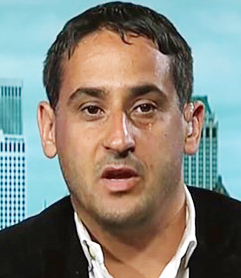
Jeremy Kuzmarov holds a Ph.D. in American history from Brandeis University and has taught at numerous colleges across the United States. He is regularly sought out as an expert on U.S. history and politics and co-hosts a radio show on New York Public Radio and on Progressive Radio News Network called “Uncontrolled Opposition.”
He is Managing Editor of CovertAction Magazine and is the author of eight books, including Obama’s Unending Wars (Clarity Press, 2019), The Russians Are Coming, Again, with John Marciano (Monthly Review Press, 2018), Warmonger. How Clinton’s Malign Foreign Policy Launched the U.S. Trajectory From Bush II to Biden (Clarity Press, 2023); with Dan Kovalik, Syria: Anatomy of Regime Change (Baraka Books, 2025), and Political Assassinations in America: The Intricate Nexus of Deep State Crime (Clarity Press, 2026).
Besides these books, Kuzmarov has published hundreds of articles and contributed to numerous edited volumes, including one in the prestigious Oxford History of Counterinsurgency .
He can be reached at jkuzmarov2@gmail.com and found on substack here.


Idi Amin’s international backing shifted over his 1971–1979 rule. He initially received support from Western nations like Britain, the United States, and Israel, which welcomed the ouster of his predecessor. After these ties deteriorated, his primary backers became Libya, the Soviet Union, East Germany, and Zaire.
Libya: Under Muammar Gaddafi, Libya became Amin’s closest ally. Gaddafi provided substantial financial aid, weapons, and even deployed troops to help Amin fight during the Uganda–Tanzania War.
The Soviet Union & Warsaw Pact: The USSR heavily supplied the Ugandan military with heavy weaponry, tanks, and aircraft as part of its Cold War strategy to gain influence in East Africa. East Germany provided critical training and support for Amin’s internal security and intelligence agencies.
Non-State Allies: The Palestine Liberation Organization (PLO) provided military training, personnel, and bodyguards