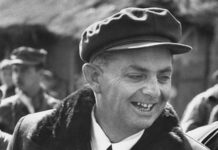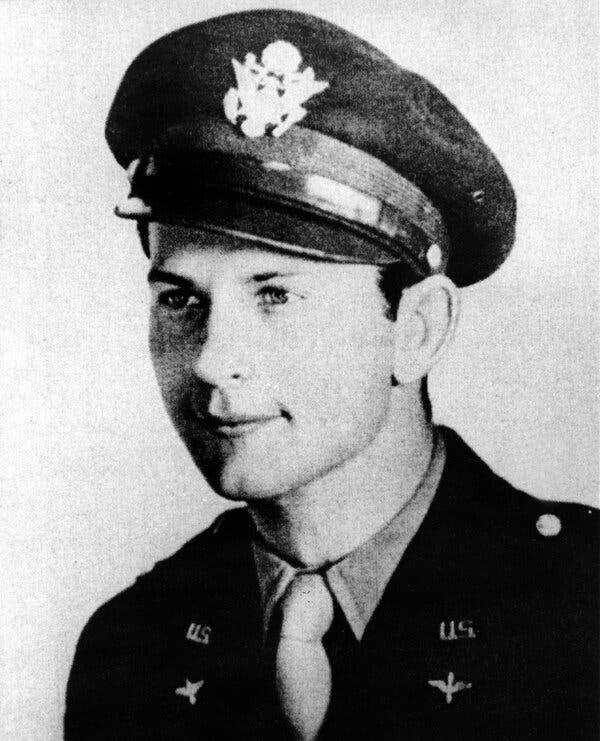
In the decades after the U.S. dropping of atomic bombs over Hiroshima and Nagasaki, only one serviceman who participated in the bombing missions came forward to publicly declare that he felt remorse for what he had done and reached out to hibakusha (atomic bomb survivors) by making charitable donations and asking them for forgiveness.
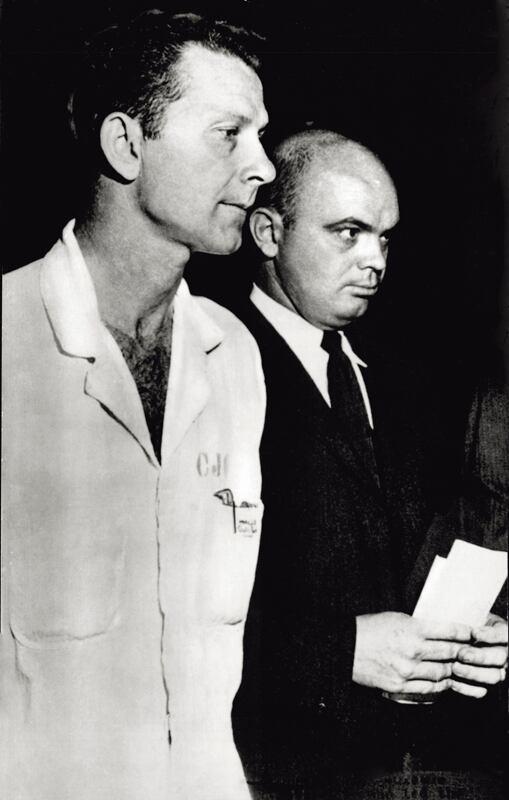
The serviceman was a Texan named Claude Eatherly. Twenty-six years old at the time, he was responsible for piloting the advanced weather plane tasked with assessing target visibility over Hiroshima, giving the go-ahead to drop the atom bomb, nicknamed “fat man,” on August 6, 1945.
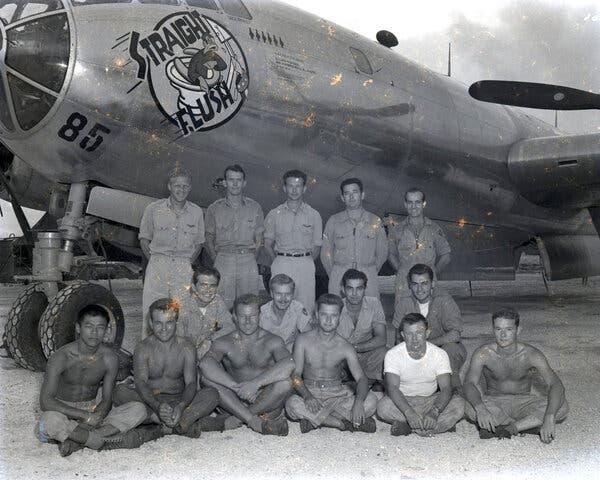
This role in the bombing would haunt Eatherly for the remainder of his life. He reported suffering nightmares, was confined for a period at a psychiatric hospital in Waco, Texas, where he was subjected to electro-shock treatments, and became estranged from his wife and children.
He also carried out a series of poorly executed petty crimes, such as breaking into a post office and robbing a grocery store without actually taking the money.
At his trial for the post-office burglary, Eatherly’s psychiatrist testified that he suffered from a guilt complex stemming from his role in the bombing of Hiroshima, and carried out petty crimes so that punishment would be inflicted on him.[1]
Eatherly told Parade Magazine in the 1960s: “every night for 15 years, I have dreamed about it [the bomb]. I see great fires, boiling fires, crimson fires, closing in on me. Buildings fall, children run—living torches with their clothes aflame. ‘Why did you do it?’ they scream. I wake up paralyzed with fear, screaming, sweating because I have no answer.”
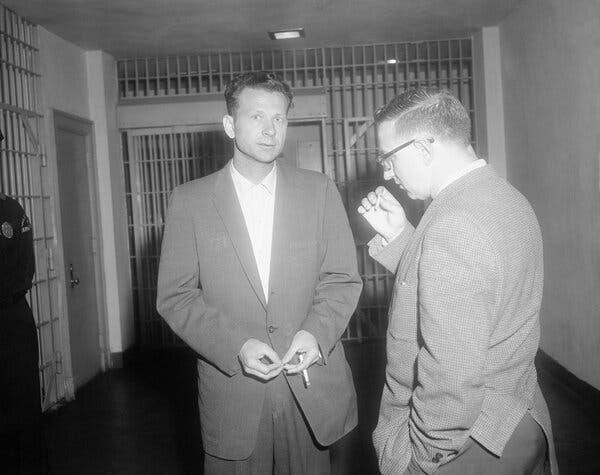
Eatherly’s story first came to public attention after Newsweek ran an article about him in 1957 entitled “Hero in Handcuffs.” Two years later, a poem by John Wain, “A Song About Major Eatherly,” was read on the BBC.
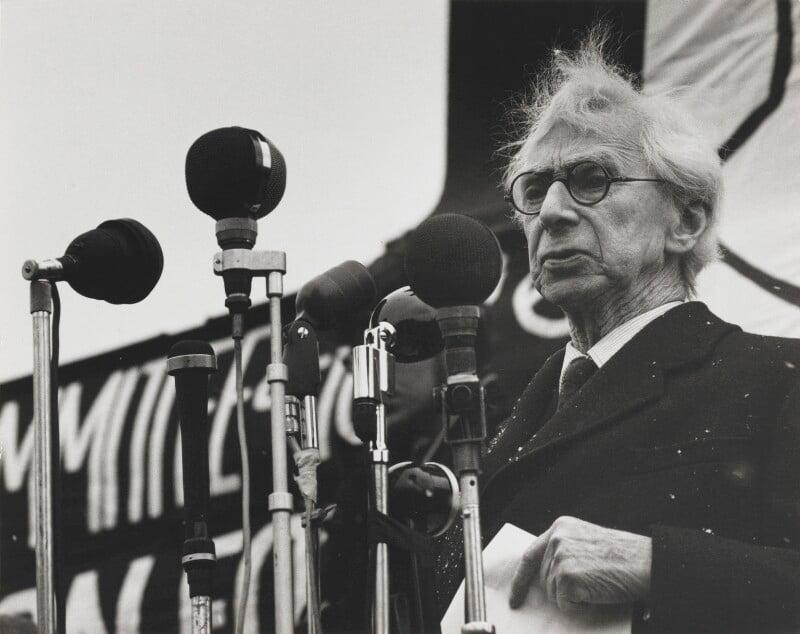
In 1962, Eatherly was honored for his outstanding contribution to world peace at a large anti-war rally in New York City. The same year, the leftist Monthly Review published a book of correspondences between him and Viennese philosopher Gunther Anders, which had a foreword by noted peace activist Bertrand Russell, who wrote that “the case of Claude Eatherly is not only one of appalling and prolonged injustice, but it is also symbolic of the suicidal madness of our time.”[2]
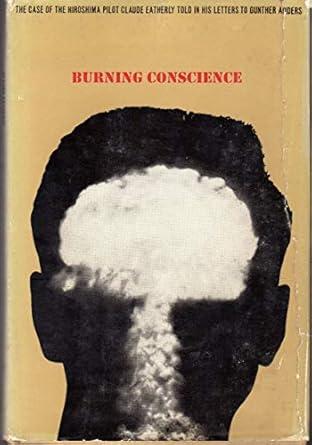
Eatherly wrote directly to the hibakusha in Hiroshima, decrying all warfare and begging their forgiveness, and in August 1960, he wrote to Senator Ralph Yarborough (D-TX) to urge him to act forcefully to eliminate the nuclear threat, warning that the use of the atomic bomb again “would be the end of this people’s earth.”
Retaliation and a Slanderous Campaign
Wilfred Burchett, the first Western journalist to report on the horrific effects of the atomic bomb, suggested in a 1983 book that Eatherly was subjected to “harsh and petty disciplinary retaliation by the Veterans administration” and that various agencies applied pressure on his brother not to facilitate his early release from the Waco psychiatric hospital, with the result that the brother ultimately refused to sign the “responsibility form” which would have set him free.
According to Burchett, the political motivation and measure of the political pressure applied was clear from the “repeated urging to Eatherly to stop writing or making any statements about his anti-war feelings.”[3]
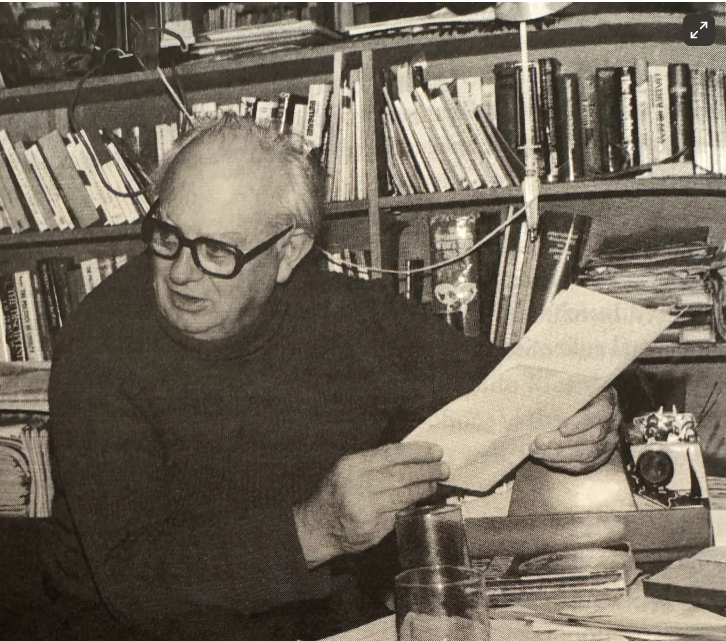
Another facet of Eatherly’s story that has not received great attention is the slanderous campaign directed at him bearing the imprint of the FBI.
The timing of the campaign coincided with Eatherly’s emergence as a hero to the budding anti-nuclear movement following the 1962 Cuban Missile Crisis.
At the heart of the slander was a 1964 book by William Bradford Huie, entitled The Hiroshima Pilot.
Huie was a former Navy officer and World War II correspondent from Hartselle, Alabama, who wrote 14 best-selling books and 21 overall that sold more than 30 million copies.
One of his books was about one of the flag-raisers at Iwo Jima, Ira Hayes, and another was about Eddie Slovik, the only American soldier executed in World War II for desertion.
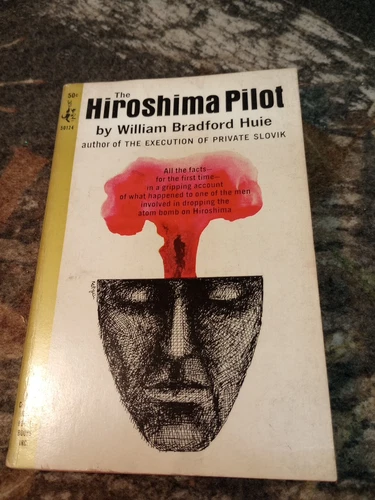
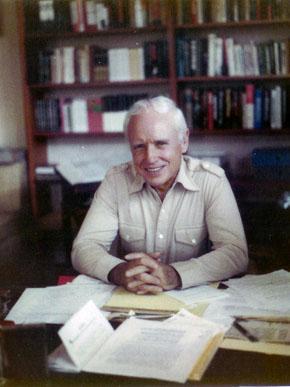
The Hiroshima Pilot’s thesis was that Eatherly’s professed guilt over the Hiroshima bombing was contrived and designed to garner him media publicity, and that his personal problems did not result from war-guilt but from his own failings and disappointment over being passed over for promotion in the Air Force and only having played a secondary role in the Hiroshima bombing.[4]
Huie bases his argument on interviews that he carried out with other Air Force pilots and members of his family, who stated that Eatherly showed no evidence of being disturbed by the Hiroshima bombing after it happened—but only over a decade later.
Huie also points out that Eatherly exaggerated his military record and participated in a covert mercenary operation to overthrow the Cuban government, which showed that he was not a man of principle.[5] His motive was to pay off gambling debts accrued from poker.
Huie wrote that “the truth seems to be that when Claude Eatherly began evidencing mental illness and ‘turning to crime,’ he was a disappointed and immature man who thought he had been overlooked.…Instead of being the hero of Hiroshima, he was a man who was disappointed at having been left out of the attack on Hiroshima.”[6]
According to Huie, Eatherly was especially bitter because he was denied the opportunity to participate in atomic testing operations in the Bikini Atoll in the Marshall Islands.
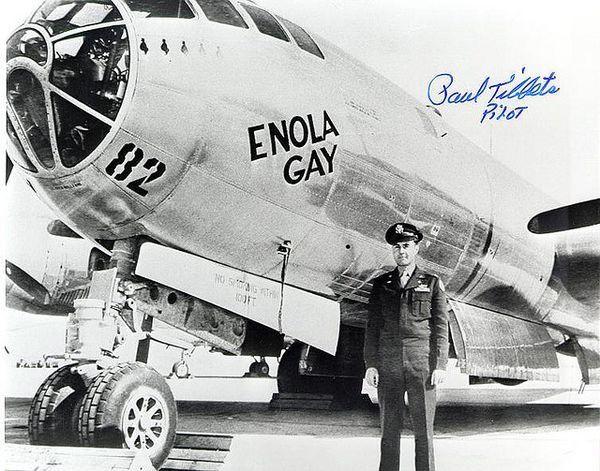
Therefore, in Huie’s telling, Eatherly was not really a champion of abolishing nuclear weapons or peace but, rather, a cynical opportunist and narcissist who was jealous that Paul Tibbets, the Enola Gay bomber, became famous instead of him.
“He Didn’t Fake It”
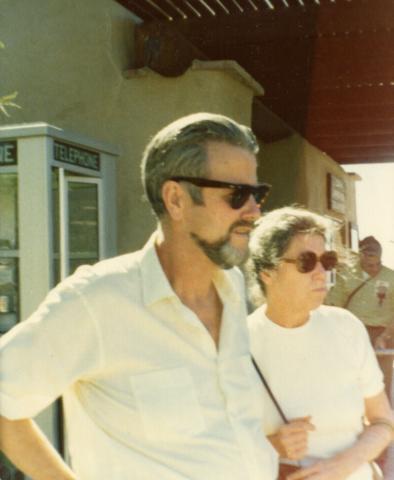
Huie’s thesis is contradicted by Claude Eatherly’s brother James, who is quoted in Claude’s 1978 New York Times obituary stating: “I can remember him waking up night after night. He said his brain was on fire. He said he could feel those people burning. He didn’t fake it.”
As for the Distinguished Flying Cross, which Huie claimed he had lied about receiving, James said, “He got it. I saw it.”
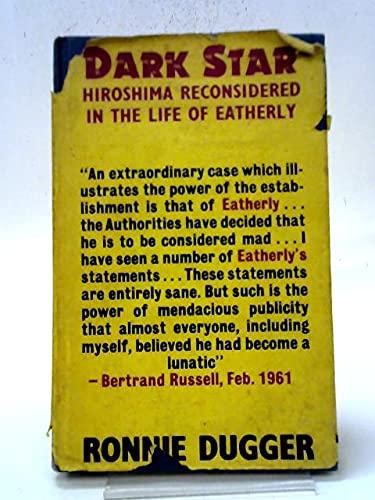
Ronnie Dugger’s book Dark Star: Hiroshima Reconsidered in the Life of Claude Eatherly further shows that Huie unfairly maligned Eatherly—in part because he was selective in his interviews and overlooked certain military records.[7]
Novelist George P. Elliott, writing in Commentary magazine in August 1968, noted that Huie was “so zealous to make a case against Eatherly-the-symbol that he needlessly damages Eatherly-the-man.”[8] Elliott further noted that, “to this reader at least, Huie’s case stands unproved. His is a case for the prosecution, and in a dirty trial at that.”[9]
Intelligence-Connected Magazine Advances Slander Campaign
The Hiroshima Pilot was reviewed favorably in Time magazine, which concluded in a May 1964 review that Huie deserved credit for “destroying the Eatherly myth.”[10]
Though conceding that Huie “enjoys making the kill a little too much” and “browbeats poor Eatherly throughout the book,” Time characterized Eatherly as a “neurotic” and ridiculed Bertrand Russell and other intellectual supporters of the ban-the-bomb movement who had tried to make Eatherly into more of a “martyr than the heroes of the Alamo.”[11]
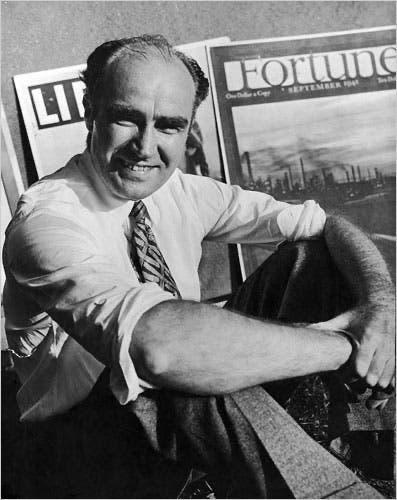
Time’s favorable review of Huie’s book is not surprising in light of the magazine’s close ties to U.S. intelligence and support for U.S. foreign policy.
Time’s editor-in-chief from 1929 to 1964, Henry Luce, was the son of missionaries in China who viewed the Cold War as a new kind of holy war and was a strong proponent of the “American Century.”
One of Time Inc.’s vice president in the 1950s, Allen Grover, worked with CIA operative Frank Wisner to establish a CIA front organization, The American Committee for the Liberation of the Peoples of Russia, which organized Russian émigrés and provided the CIA with a conduit for the sponsorship of anti-Soviet propaganda.
Grover sat on the Board of Trustees of Radio Liberty, which broadcast American propaganda into the Soviet Union and worked closely with its CIA-funded counterpart, Radio Free Europe, whose creation Henry Luce was intimately involved with.[12]
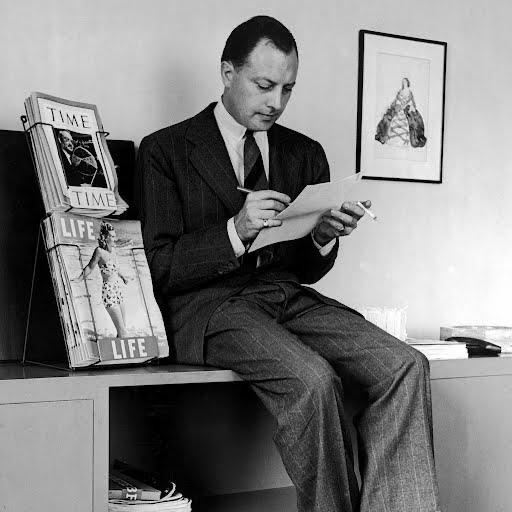
Beginning in 1947 when the CIA was founded, Time’s Deputy Chief of Foreign Correspondents, Eleanor Welch, would forward Time’s incoming dispatches from their various offices in foreign locales to the CIA.
This arrangement began at the behest of Charles Douglas Jackson, Vice-President of Time, Inc., who had worked for the Office of Strategic Services (OSS-precursor to the CIA) as Deputy Chief of Psychological Warfare during World War II and advised the Eisenhower administration on psychological warfare with the Psychological Strategy Board (PSB).[13]
Huie’s Ties to the Deep State
Characterized by conservative gadfly William F. Buckley as a “sensationalist with an instinct for political scandal,” Huie’s lack of journalistic ethics received attention in 2024 when newly unearthed correspondences pointed to his collaboration with the defense attorneys of Emmett Till’s accused killers and his suppression of evidence regarding that murder.[14] Huie helped advance the false belief that Till had molested a white woman in Mississippi before he was lynched in 1955.[15]
Huie helped advance unfounded anti-Soviet hysteria when he wrote a story suggesting that Soviet spies had stolen uranium from labs at the Atomic Energy Commission. A 1949 Senate investigation determined that Huie’s story was exaggerated—only four grams of the compound were missing, far too little to be of use to the Soviets.
In 1950, Huie was appointed editor of The American Mercury, a magazine founded by H.L. Mencken that was transformed into an organ of the New American right under his editorship after it was bought over by Clendenin J. Ryan Jr., heir of one of America’s premier financial dynasties who financed a private anticommunist intelligence network that assisted in the defection of Eastern European dissidents from behind the Iron Curtain.
Huie stayed on as editor after The American Mercury was purchased by J. Russell Maguire, a financier and oil producer who supplied the allies with Thompson submachine guns in World War II and financed distribution of Southern Methodist University Professor Joh Beaty’s book Iron Curtain Over America, which warned of a Jewish-bolshevik takeover of American institutions.[16]
A conservative critic of the New Deal, Huie wrote a column in 1951 railing against the Truman administration for allegedly protecting Soviet spies who had passed on atomic secrets and another in January 1952 criticizing Dwight Eisenhower for failing to oppose what he called “State Department Russia lovers” who signed the 1945 Yalta agreements vowing cooperation with the Soviets and “wanted to give Russia bases in the Mediterranean.”[17]
Branding Julius and Ethel Rosenberg as traitors for giving up atomic secrets, Huie further blamed liberal-Democrats Harry Truman, George C. Marshall and Owen Lattimore for the “loss of China” (victory of the Maoists over the Nationalists), and claimed that “the Chinese reds planned and manipulated the Korean War.”
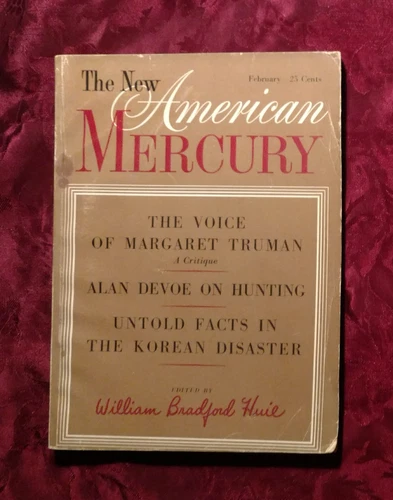
In The Hiroshima Pilot, Huie made clear his support for the Eisenhower administration’s nuclear weapons build-up and his disdain for the ban the bomb groups that lionized Eatherly.
During his tenure as editor of The American Mercury, Huie cultivated ties with CIA-linked neo-conservative writers such as Edward Hunter, James Burnham, General Charles Willoughby and William F. Buckley who wrote for The American Mercury in the 1950s.[18]
Huie had further intelligence contacts from a television program he co-hosted on CBS-afiliated stations that were compromised under the CIA’s Operation Mockingbird. One of Huie’s co-hosts was Max Eastman and another was Elliott Haynes, who in 1953 along with his father, Eldridge, founded Business International Corporation (BIC), a CIA front organization that Barack Obama Jr. worked for in the 1980s.[19]
Huie’s connection to the so-called “deep state” is further exemplified in his two decades’ long association with FBI Director J. Edgar Hoover (1924-1972), a political reactionary who carried out illegal surveillance and infiltration operations targeting peace groups during the Cold War.[20]
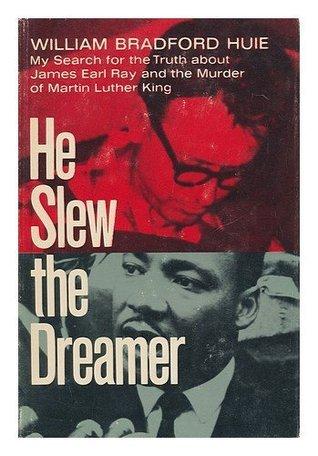
After the assassination of Martin Luther King, Jr., Huie entered into a deal with assassination suspect James Earl Ray by which he paid most of his legal fees in exchange for getting access to him and his legal files for a book that he wrote, He Slew the Dreamer: My Search for the Truth about James Earl Ray and the Murder of Martin Luther King.[21]
When the book was published, Ray felt betrayed, as he had thought Huie would present his story. Instead, Huie defamed Ray by characterizing him as a racist, which he was not, and by pointing to his guilt, when evidence of this is dubious.
A four-decades-long investigation by King family lawyer William Pepper uncovered an elaborate conspiracy to assassinate King coordinated by Hoover and his top assistant Clyde Tolson.[22]
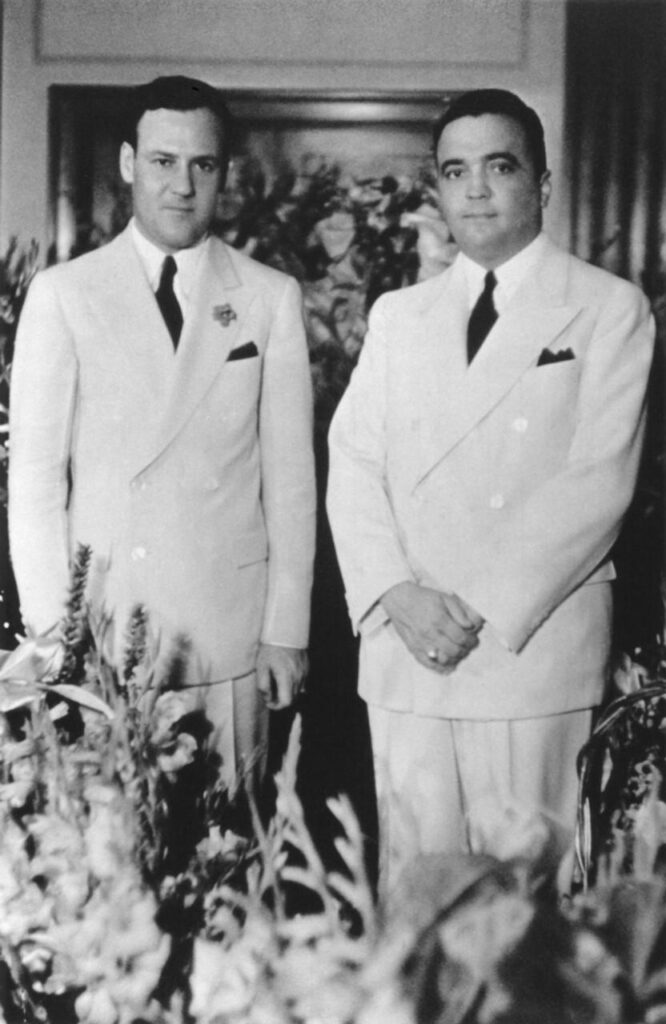
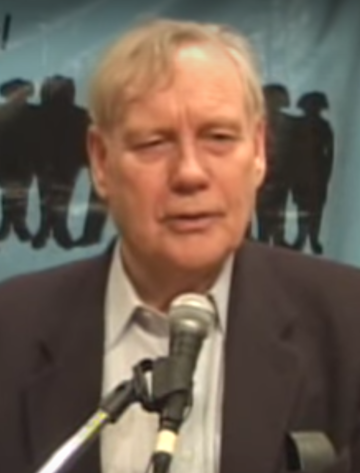
Huie appears to have been pre-selected by Hoover to aid in this conspiracy by helping to cement the public impression that Ray was a lone deranged gunman motivated by racism.[23]
Cartha DeLoach, the FBI agent placed in charge of the investigation, had written a memo to Hoover suggesting that the FBI “quietly sponsor a book” that would tell the “true story of the King case” and “advise friendly newsmen” on a “strictly confidential basis” that Coretta Scott and Ralph Abernathy “were deliberately trying to keep King’s assassination in the news by pulling the ruse of maintaining the King murder was definitely a conspiracy and not committed by one man in order to keep the money coming to Ms. King.”[24]
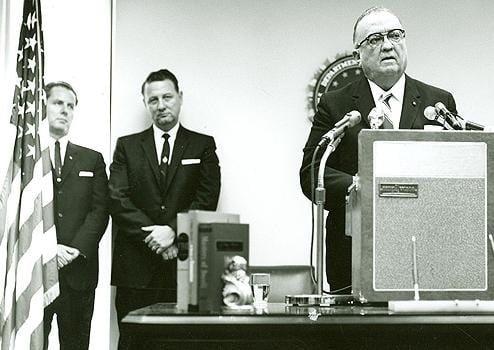
Whether someone else in the FBI wrote a similar kind of memo regarding Eatherly is not established; it is, however, certainly conceivable.
In private correspondence, Huie boasted of his experience in the “propaganda business” and ability to “control the narrative of a story.”[25]
This is clearly something that he did well with both Ray and Eatherly. Today, Ray is a villain in most history textbooks while Eatherly is left out entirely.
The Hiroshima Pilot can be seen in hindsight to have fulfilled its function in sowing public doubt about Eatherly’s motives and character at the peak of the Cold War.
The public was left with an impression of Eatherly as an enigmatic and pitiable figure, rather than as a principled dissenter haunted by his participation in one of the 20th century’s greatest crimes.

For more on Eatherly, see Ronnie Dugger, Dark Star: Hiroshima Reconsidered in the Life of Claude Eatherly (Cleveland, OH: The World Publishing Company, 1967). ↑
Bertrand Russell, preface, in Burning Conscience: The case of the Hiroshima pilot, Claude Eatherly, told in his letters to Gunther Anders (New York: Monthly Review Press, 1962). ↑
Wilfred Burchett, Shadows Of Hiroshima (London: Verso, 1983), 96. ↑
William Bradford Huie, The Hiroshima Pilot (New York: G. P. Putnam’s Sons, 1964). ↑
According to Huie, in the late 1940s, Eatherly enlisted in the Israeli Air Force where he participated in the Israeli independence war. ↑
Huie, The Hiroshima Pilot, 39, 40; also quoted in Anne I. Harrington, “The Hiroshima Pilot Who Became a Symbol of Antinuclear Protest,” The New York Times Magazine, August 6, 2020. ↑
Dugger, Dark Star. ↑
George P. Elliott, “Burning Conscience, by Claude Eatherly and Gunther Anders; The Hiroshima Pilot, by William Bradford Huie; Dark Star, by Ronnie D,” Commentary, August 1968. Commentary became known as a neo-conservative journal.Elliott wrote that Huie says he “paid five hundred dollars for letters giving him access to Eatherly’s service records; he uses a piece of evidence so obtained to convict Eatherly of an early dishonesty; but Ronnie Dugger in his later book demonstrates how Huie, by not having dug out all the relevant facts in this episode, gives a false impression of Eatherly’s dishonesty on that occasion (he cheated on an Air Force classroom written test, but in such a ‘bizarre’ way as almost to ensure detection—this was after Hiroshima and Bikini).” ↑
“Atomic Age Martyr,” Time, May 1, 1964. ↑
Idem. ↑
A graduate of Yale, Grover had worked as an assistant to W. Averell Harriman at American Steamship Lines in Manhattan. Harriman was the son of a robber baron who served as U.S. ambassador to the Soviet Union in World War II and was a top administrator of the Marshall Plan, later serving in top State Department positions in the Kennedy and Johnson administrations. Harriman is considered one of the key fathers of the Cold War. For more on Wisner’s career, see Douglas Waller, The Determined Spy: The Turbulent Life and Times of CIA Pioneer Frank Wisner (New York: E. P. Dutton, 2023). ↑
Simon Willmetts, “The CIA and Time Magazine: Journalistic Ethics and Newsroom Dissent,” Diplomatic History, 48, 5 (November 2024), 719-43. ↑
Stacy M. Brown, “Unearthed Letters And Research Notes Expose Journalist’s Role In Distorting Emmett Till’s Story,” Pride Publishing Group, August 30, 2024. Buckley quoted in Sam Tanenhaus, Buckley: The Life and the Revolution That Changed America (New York: Random House, 2025), 228.
Jerry Mitchell, “The writer and killers ‘stole the story of Emmett Till from his mother and family,’” Mississippi Today, August 16, 2024. ↑
Ryan’s paternal grandfather, Thomas Fortune Ryan (1851–1928) was a Wall Street magnate, accumulating wealth via investments in tobacco (as a co-founder of the British-American Tobacco Company), urban railways, insurance, and mining ventures in Africa. Clendenin allegedly funded International Services of Information, headed by Ulius Amoss, an OSS veteran who worked for Frank Wisner of the CIA and with OSS agent Carleton S. Coon. International Services of Information assisted in the defection of Eastern European émigres and amassed intelligence information from them, producing a monthly newsletter. ↑
William Bradford Huie, “Memo to General Eisenhower,” The American Mercury, January, 1952, 124-130. Huie’s claims about the Rosenberg’s has been disproven. In “Untold Facts in the Korean Disaster,” The American Mercury, February 1951, Huie condemned Alger Hiss and other “State Department traitors” as he termed them, for pushing FDR to make concessions to the Russians, and praised Defense Secretary James Forrestal for opposing concessions to the Russians at Yalta, such as those that allowed them to gain a foothold in mineral rich Manchuria by entering the Pacific War at its conclusion. ↑
Back issues of The American Mercury are available here. Edward Hunter originated the myth that the Chinese had brainwashed American POWs in the Korean War. ↑
John Avery Emison, The Deep State Assassination of Martin Luther King (Columbia, South Carolina: Shotwell, 2023), 156. ↑
Hoover also wrote for The American Mercury, which provided him a platform. ↑
William Bradford Huie, He Slew the Dreamer: My Search for the Truth about James Earl Ray and the Murder of Martin Luther King, rev ed., with foreword and afterword by Wayne Greenhaw (Jackson: University Press of Mississippi, 1997). See also Philip Nelson, WHO REALLY Killed Martin Luther King Jr.: The Case Against Lyndon Johnson and J. Edgar Hoover (New York: Skyhorse, 2018) and Pate McMichael, Klandestine: How a Klan Lawyer and a Checkbook Journalist Helped James Earl Ray Cover Up His Crime (Chicago: Chicago Review Press, 2015). The latter book provides good biographical information on Huie, though is dubious in its overarching thesis related to Ray’s role in the Martin Luther King, Jr., assassination. In a 1977 prologue to the original manuscript of He Slew the Dreamer, Huie referred to the “despicable conspiracy theory” suggesting that King’s murder was arranged by agents of the U.S. government.
See William F. Pepper, The Plot to Kill King: The Truth Behind the Assassination of Martin Luther King Jr. (New York: Skyhorse Publishing, 2016). ↑
Stacey Brown, “Unearthed Letters and Research Notes Expose Journalists’ Role in Distorting Emmet Till’s Story,” Seattle Medium, August 30, 2024. Huie’s suitability for the job was enhanced by his having published a conspiracy-minded article on King’s assassination in Look magazine and by his exposure of the Ku Klux Klan. ↑
James Earl Ray, Who Killed Martin Luther King? The True Story by the Alleged Assassin, with foreword by Jesse Jackson and preface by Mark Lane (Washington, D.C.: National Press Books, 1992), 250; William F. Pepper, Orders to Kill: The Truth Behind the Murder of Martin Luther King (New York: Carroll & Graf, 1995), 53. ↑
Brown, “Unearthed Letters and Research Notes Expose Journalist’s Role in Distorting Emmett Till’s Story.” ↑
CovertAction Magazine is made possible by subscriptions, orders and donations from readers like you.
Blow the Whistle on U.S. Imperialism

Click the whistle and donate
When you donate to CovertAction Magazine, you are supporting investigative journalism. Your contributions go directly to supporting the development, production, editing, and dissemination of the Magazine.
CovertAction Magazine does not receive corporate or government sponsorship. Yet, we hold a steadfast commitment to providing compensation for writers, editorial and technical support. Your support helps facilitate this compensation as well as increase the caliber of this work.
Please make a donation by clicking on the donate logo above and enter the amount and your credit or debit card information.
CovertAction Institute, Inc. (CAI) is a 501(c)(3) non-profit organization and your gift is tax-deductible for federal income purposes. CAI’s tax-exempt ID number is 87-2461683.
We sincerely thank you for your support.
Disclaimer: The contents of this article are the sole responsibility of the author(s). CovertAction Institute, Inc. (CAI), including its Board of Directors (BD), Editorial Board (EB), Advisory Board (AB), staff, volunteers and its projects (including CovertAction Magazine) are not responsible for any inaccurate or incorrect statement in this article. This article also does not necessarily represent the views the BD, the EB, the AB, staff, volunteers, or any members of its projects.
Differing viewpoints: CAM publishes articles with differing viewpoints in an effort to nurture vibrant debate and thoughtful critical analysis. Feel free to comment on the articles in the comment section and/or send your letters to the Editors, which we will publish in the Letters column.
Copyrighted Material: This web site may contain copyrighted material the use of which has not always been specifically authorized by the copyright owner. As a not-for-profit charitable organization incorporated in the State of New York, we are making such material available in an effort to advance the understanding of humanity’s problems and hopefully to help find solutions for those problems. We believe this constitutes a ‘fair use’ of any such copyrighted material as provided for in section 107 of the US Copyright Law. You can read more about ‘fair use’ and US Copyright Law at the Legal Information Institute of Cornell Law School.
Republishing: CovertAction Magazine (CAM) grants permission to cross-post CAM articles on not-for-profit community internet sites as long as the source is acknowledged together with a hyperlink to the original CovertAction Magazine article. Also, kindly let us know at info@CovertActionMagazine.com. For publication of CAM articles in print or other forms including commercial internet sites, contact: info@CovertActionMagazine.com.
By using this site, you agree to these terms above.
About the Author
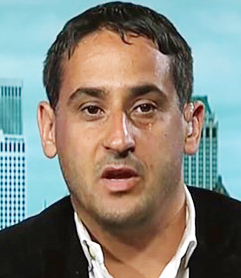
Jeremy Kuzmarov holds a Ph.D. in American history from Brandeis University and has taught at numerous colleges across the United States. He is regularly sought out as an expert on U.S. history and politics and co-hosts a radio show on New York Public Radio and on Progressive Radio News Network called “Uncontrolled Opposition.”
He is Managing Editor of CovertAction Magazine and is the author of eight books, including Obama’s Unending Wars (Clarity Press, 2019), The Russians Are Coming, Again, with John Marciano (Monthly Review Press, 2018), Warmonger. How Clinton’s Malign Foreign Policy Launched the U.S. Trajectory From Bush II to Biden (Clarity Press, 2023); with Dan Kovalik, Syria: Anatomy of Regime Change (Baraka Books, 2025), and Political Assassinations in America: The Intricate Nexus of Deep State Crime (Clarity Press, 2026).
Besides these books, Kuzmarov has published hundreds of articles and contributed to numerous edited volumes, including one in the prestigious Oxford History of Counterinsurgency .
He can be reached at jkuzmarov2@gmail.com and found on substack here.