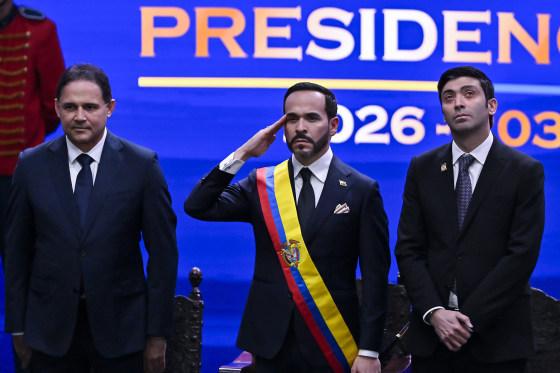
Colombia’s recently inaugurated right-wing President Abelardo de la Espriella is moving rapidly to transform Colombia into a neo-colonial outpost after taking office in early August, giving the U.S. permission to enter Colombian territory under the pretext of “fighting drug cartels.”
The Trump administration is making Colombia a centerpiece of his “War on Drugs,” announcing plans to provide $1 billion in security assistance to Colombia after Espriella’s swearing in and to provide more U.S. intelligence in support of Colombian military counter-narcotics missions and to restart the aerial eradication of coca plants, which was banned in response to World Health Organization (WHO) warnings.[1]
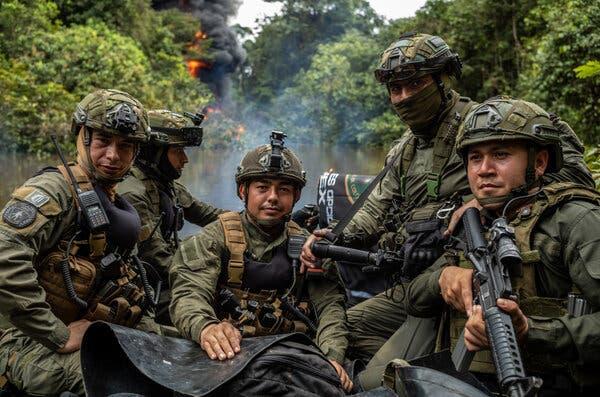
Journalist Ben Norton wrote that Espriella’s positioning himself as a drug warrior is “ironic because, when Espriella spent years living in Florida (he is a dual U.S. citizen), he worked as a lawyer defending…drug traffickers,” thereby making him “a best friend of narcos.”[2]
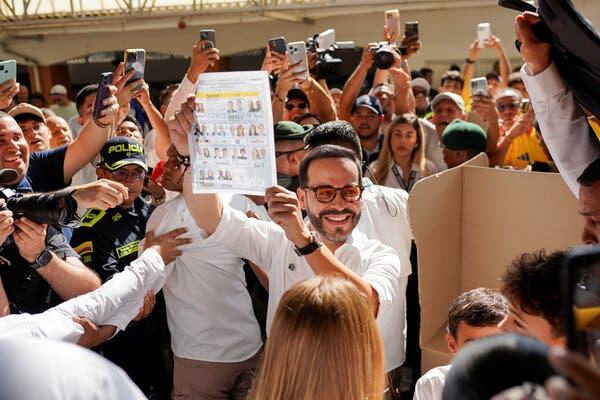
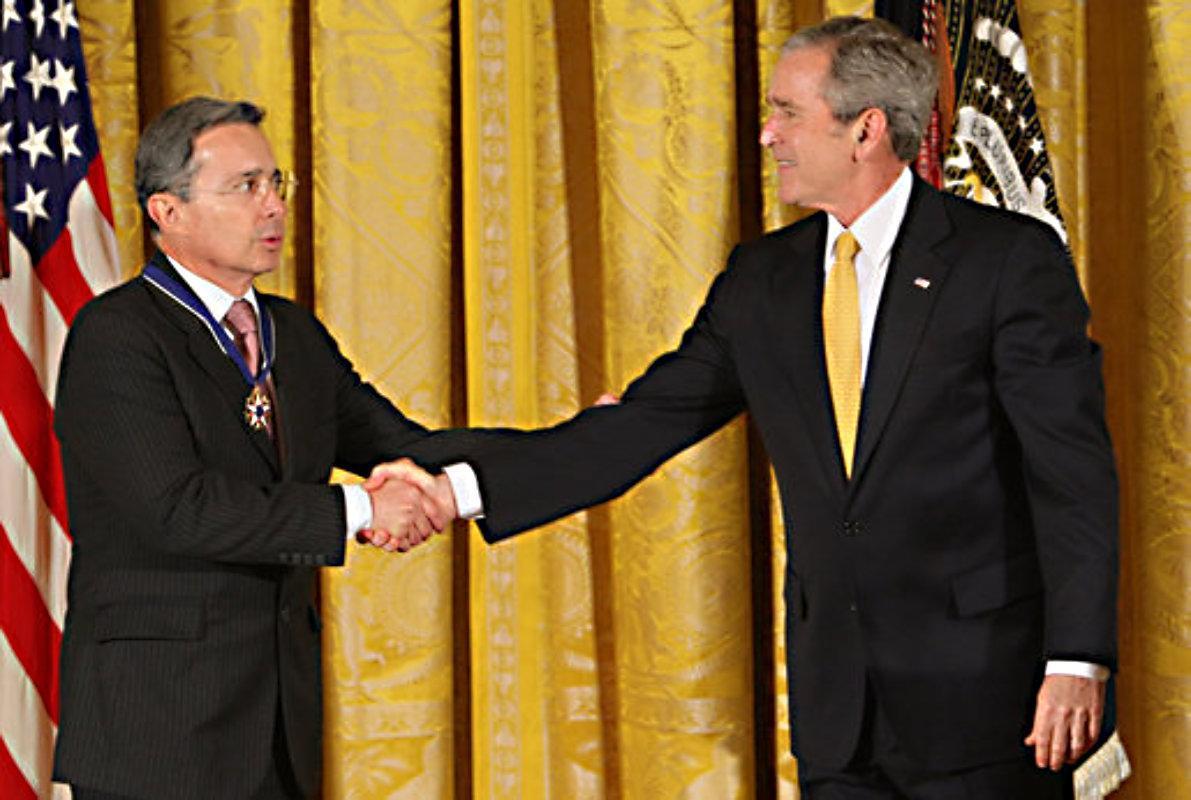
Espriella’s most prominent client was Álvaro Uribe Vélez, Colombia’s president from 2002 to 2010 and a darling of the Bush II and Obama administrations, who was sentenced to 12 years of house arrest in July 2025 after being convicted on bribery and fraud charges related to his efforts to cover up his involvement with paramilitary groups that committed egregious war crimes in the suppression of the leftist Fuerzas Armada Revolucionario de Colombia (FARC).
A 1991 Defense Intelligence Agency (DIA) report identified Uribe as a collaborator with the Medellín drug cartel, and he was removed from his position as mayor of Medellín after he attended a drug cartel meeting at Pablo Escobar’s ranch.[3]
The U.S. valued Uribe as a partner in Plan Colombia, a $10 billion militarized drug-war program first implemented in 2000 by the Clinton administration.[4]
Much of the military equipment provided under Plan Colombia was used to combat the FARC, which was conveniently branded as “narco-guerrillas.”
The drug cartels actually allied closely with the right-wing paramilitaries to which Uribe has been linked, and hated the FARC, which threatened to expropriate their lands.[5]
A truth commission found that Plan Colombia resulted in extreme violence by state forces, including extrajudicial killings.[6]
This has not stopped Trump and Espriella from rebranding Plan Colombia, Plan Patriot 2.0, whose outcome will likely be similar.
Senator Iván Cepeda, who narrowly lost June’s election, warned about human rights abuses and Colombia’s being converted into a kind of U.S. protectorate under Plan Patriot 2.0.[7]
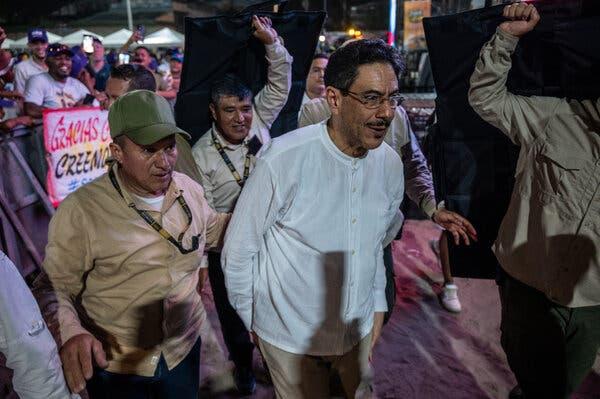
In a case of déjà vu in his first week in office, Espriella ordered a harsh crackdown that killed four members of a splinter faction of FARC, which was accused of launching a car bombing attack after Espriella’s inauguration.
Espriella’s predecessor, Gustavo Petro (2022-2026), had halted military operations and pursued peace talks with FARC and other left-wing rebel groups, which led to a reduction of violence in Colombia during his presidential tenure.
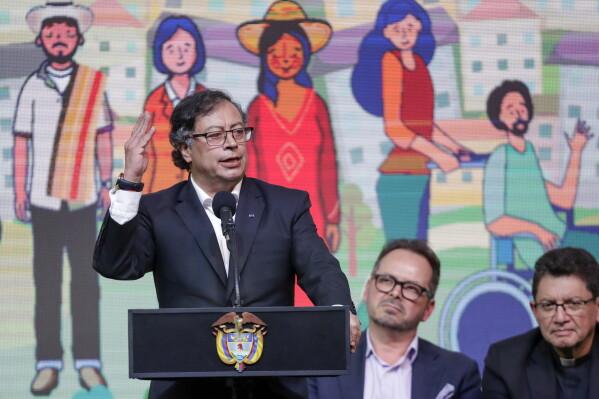
Petro’s lawyer, Dan Kovalik, told CovertAction Magazine that Espriella “has threatened to go after the Colombian left and to build 10 prisons like the notorious one [CECOT] in El Salvador. He will also align Colombia closely with the U.S. and Israel. This all will lead to environmental degradation in Colombia, state repression and violence and further economic disparity. Colombia will [also] return to its status as ‘the Israel of South America’ and the staging ground of U.S. intervention throughout the region. And, while Petro successfully removed Colombia from the shackles of IMF indebtedness, Espriella will certainly reverse this gain. Espriella will [also] certainly reverse Petro’s moves to transition Colombia to renewable energy and his protection of forests, and reverse Petro’s social programs.”[8]
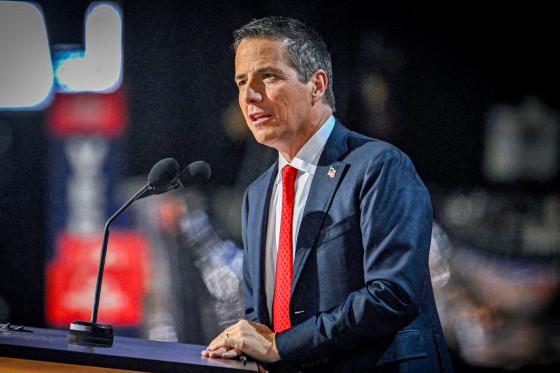
Asked about U.S. interference in the elections where Espriella defeated leftist candidate Ivan Cepeda, Kovalik said that “Donald Trump openly supported Espriella, making it clear that Colombia would be rewarded if he won and punished if he did not. Meanwhile, Senator Bernie Moreno [a Republican from Ohio who hails from a wealthy and prominent Colombian family], campaigned for Espriella in Colombia—a clear violation of Colombian electoral laws. While the election was won by just over 200,000 votes, Colombia Reports, citing the investigation done by the evangelical party MIRA, explains that ‘around 14,000 polling booths across central and northern Colombia were not counted in the vote while up to 235,000 further votes were affected after it was found software used to scrutinize votes had been sabotaged.”
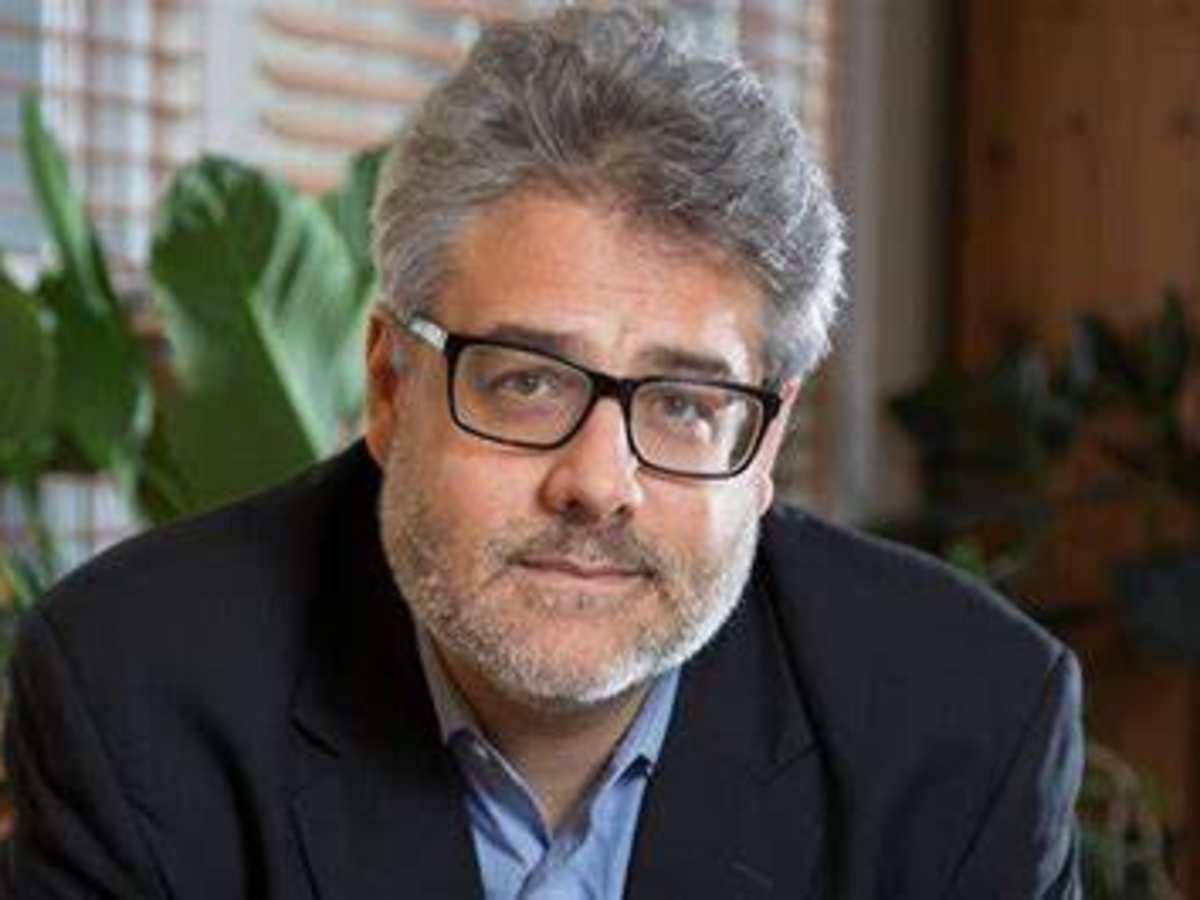
With respect to the CIA presence in Colombia, Kovalik noted that the “CIA has massive penetration into Colombia as it has been freely operating there for decades.”
Commenting on comparisons between Uribe and Espriella, Kovalik said that Espriella “will be much like Uribe, though even Uribe himself has expressed concern that Espriella is a threat to Colombian democracy. And he should know!”[9]
Kovalik added that Petro has been “outspoken in his belief that the election was fraudulent and has vowed to mobilize Colombian society to defend it against the [Espriella] regime.”
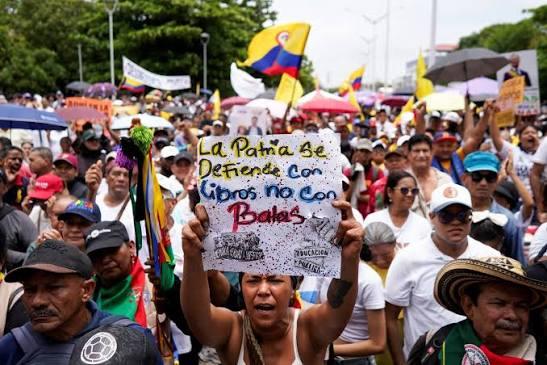
NBC reported that Petro urged social movements after the election to organize “people’s militias” to defend themselves against potential attacks from what Petro called the “fascists,” and called on his supporters to prepare for a general strike should they try to imprison him.[10]
Petro earned the special ire of the Trump administration by denouncing as murder the U.S. military strikes on boats the Trump administration claimed, without evidence, were carrying drugs off the coast of South America.[11]
In March, Petro was named a “priority target” by the U.S. Drug Enforcement Administration (DEA), which was reminiscent of the phony labeling of Venezuelan President Nicolás Maduro as a narco-trafficker as a pretext for his kidnapping.[12]
Petro said that U.S. legal proceedings would ultimately dismantle accusations from the Trump administration and Colombian far right who are the ones involved with traffickers.
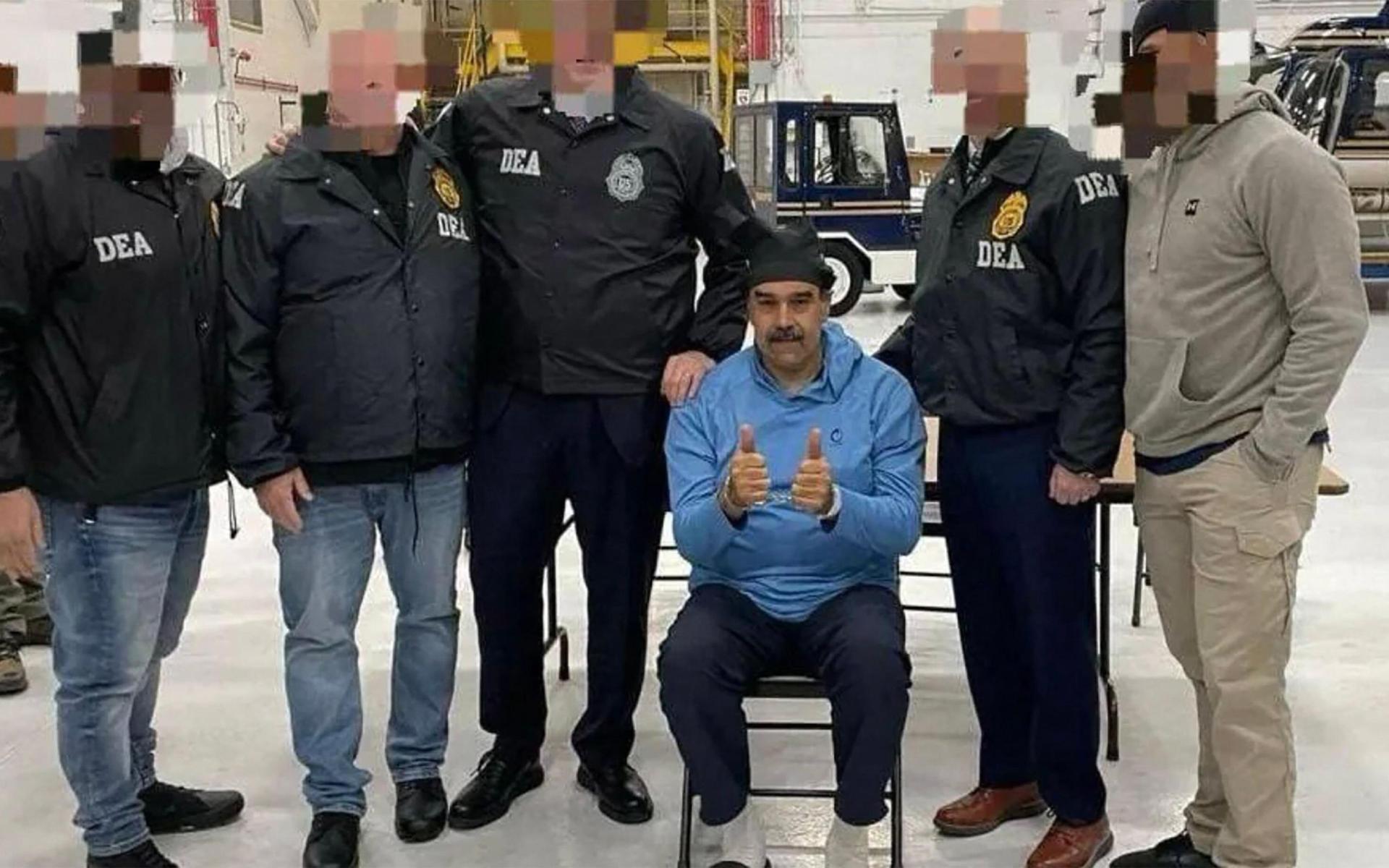
Since the Cold War era, the U.S. State Department has frequently accused its political adversaries of narco-trafficking while covering up the deep involvement of its allies and the CIA’s role in using the drug trade to fund black operations.[13]
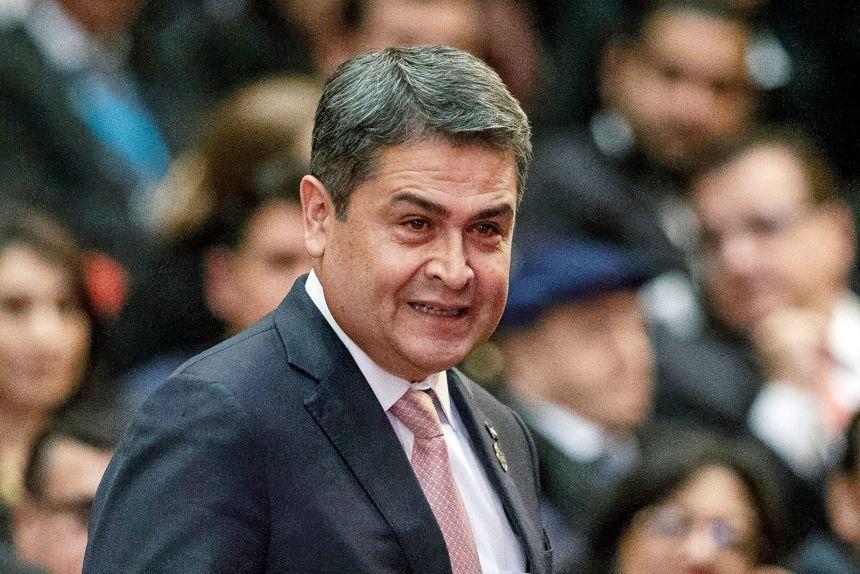
The Trump administration’s double standard in the War on Drugs was apparent in December 2025 when Trump pardoned former Honduran President Juan Orlando Hernández (2014-2022) just before Honduras’s election that was won by a right-wing ally of Hernández.
Hernández was sentenced to 45 years in prison in June 2024 after a U.S. federal jury convicted him of conspiring to import large amounts of cocaine into the U.S.
In Ecuador, the Trump administration has deepened U.S. “security” cooperation with a dictatorship now run by another far-right U.S. citizen, Daniel Noboa (born in Miami), whose billionaire family is deeply involved in drug trafficking.[14]
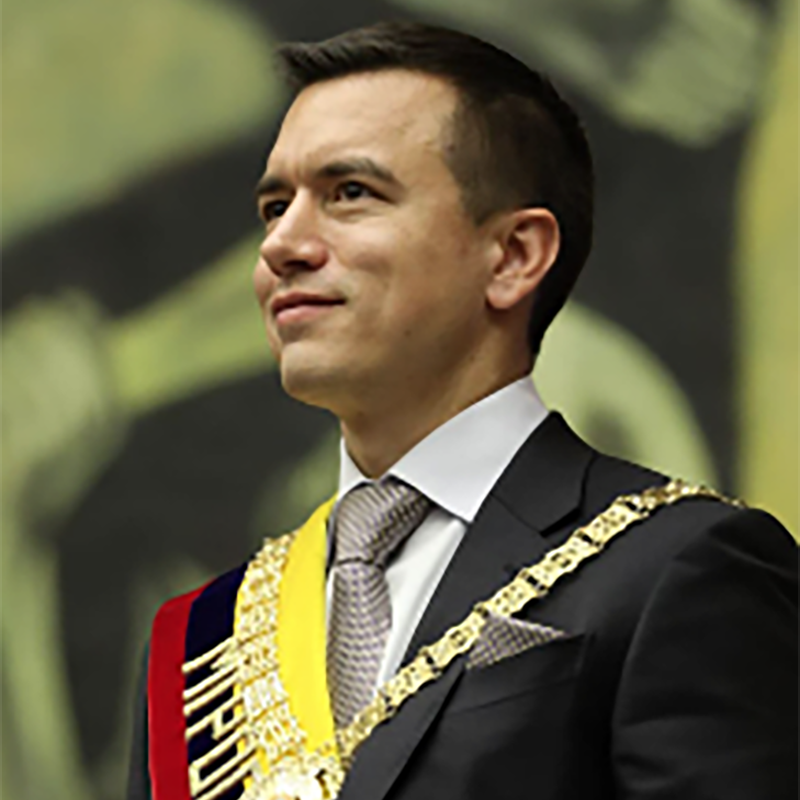
Ben Norton wrote that Noboa, “a literal narco-dictator, has allowed the U.S. military to intervene in Ecuador in the name of fighting ‘drug traffickers’”—just like Espriella is doing.
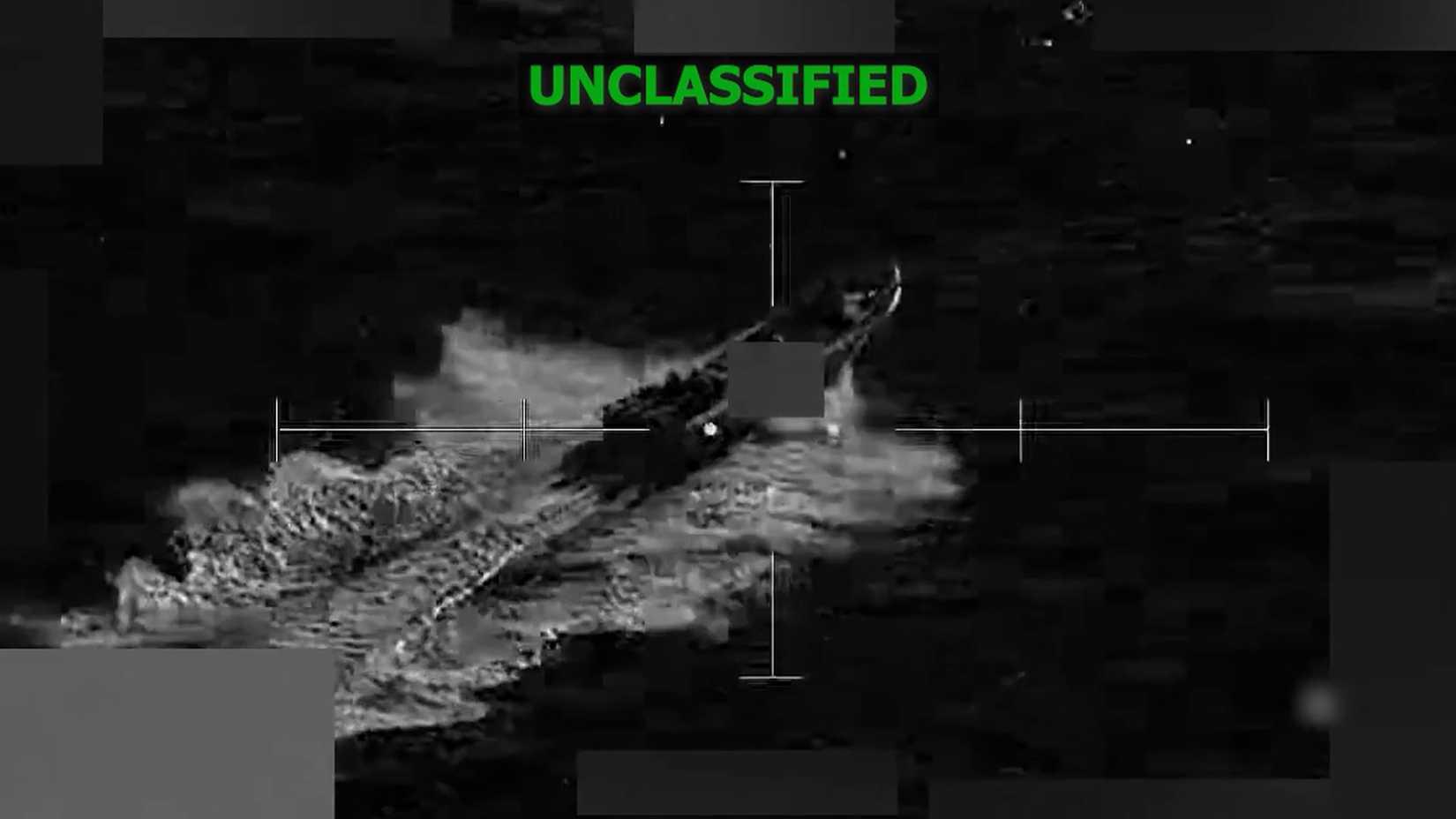
The deteriorating human rights climate under Noboa is apparent with his sanctioning of U.S. air strikes and CIA covert operations targeting fishing vessels accused of transporting drugs, and with the murder of prosecutor Gloria Alexandra Bravo Cedeño who was investigating attacks on civilian fishing boats, along with her sister, Olinda Emperatriz Bravo Cedeño.
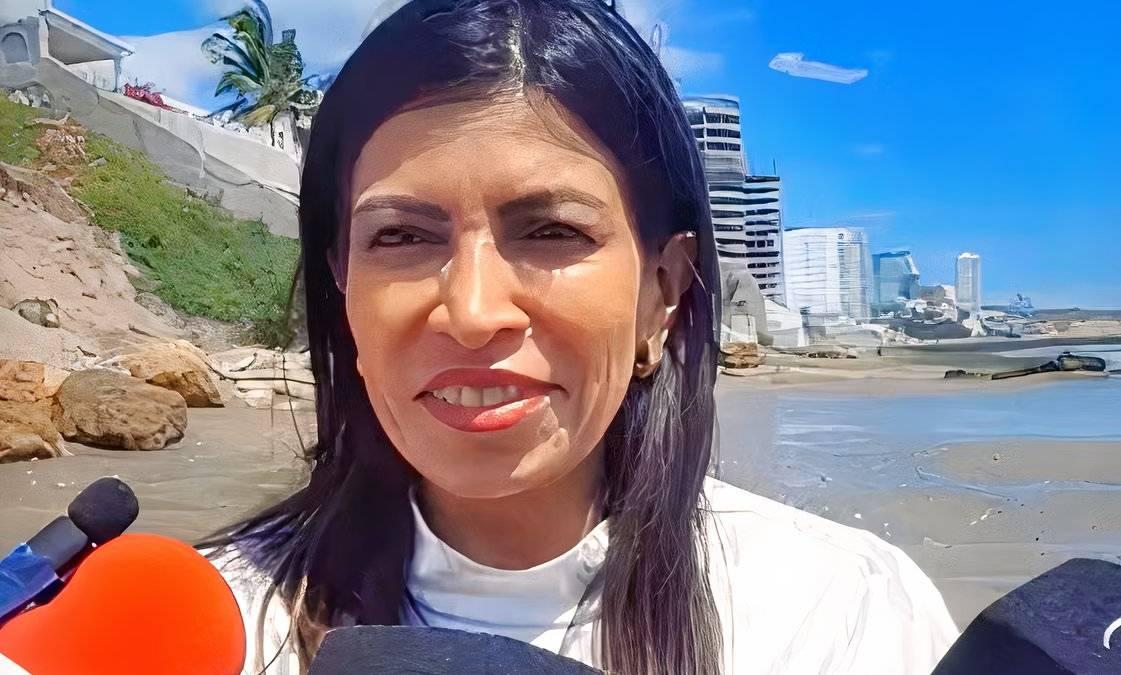
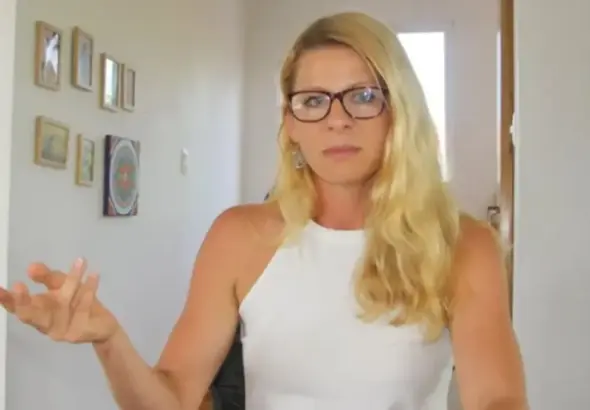
Activist Monika Silva Koniuszek was found dead on June 8 on Ecuador’s coast after investigating alleged environmental offenses and cocaine shipments involving President Noboa’s family business.
According to Ben Norton, “the U.S. empire’s closest allies in Latin America [like Espriella, Noboa, Hernández and Uribe] are the worst drug traffickers. But they claim they need the U.S. military to intervene to fight ‘drug trafficking.’ It’s a neo-colonial farce.”

The U.S. currently has access to seven military bases in Colombia—which is valued for its proximity to Venezuela, giant oil fields and mining potential. Last year, the Trump administration provided Colombia more than $390 million in foreign aid; in 2024, the Biden administration provided over $586 million. After Espriella’s inauguration, Colombia became part of the “Shield of the Americas” initiative, a group of far-right governments launched in March whose operational arm is the America’s Counter-Cartel Coalition (ACCC). ↑
According to Michael K. Smith, Espriella’s clients included Jorge Caballero, Rocio Arias, and Eleonora Pineda, spokespersons for the paramilitary AUC in Congress, as well as Juan Carlos, “El Tuso Sierra,” a former drug-trafficker and also a member of the AUC. ↑
A DEA report stated that Uribe was one of the “more important Colombian narco-terrorists contracted by the Colombian narcotics cartels for security, transportation, distribution, collection, and enforcement of narcotics operations in both the United States and Colombia. These individuals were also contracted as ‘hit men’ to assassinate individuals . . . . and to perform terrorist attacks against Colombian officials, other government officials, law enforcement agencies, and groups of other political persuasions.” ↑
Joe Biden was a key promoter of Plan Colombia in Congress when he was chair of the Senate Foreign Relations Committee. See article here. President Bill Clinton personally waived the human rights conditions Congress had attached to Plan Colombia, including requirements to suspend military personnel charged with gross violations and to prosecute right-wing paramilitaries. ↑
Carlos Castaño, Colombia’s chief paramilitary leader and a reported CIA asset, stated that 70% of the income for his group, called the United Self Defense Forces of Colombia (AUC) and a de-facto wing of the Colombian Army which carried out 70-80% of non-combat killings, came from drugs. ↑
The World Socialist Website reported that between 2002 and 2008, under Uribe, the Colombian military murdered 6,402 civilians in the “false positives” scheme, dressing corpses in guerrilla uniforms to inflate body counts in exchange for bonuses, leave and promotions. A 2010 WikiLeaks cable from the U.S. Embassy in Bogotá recorded the Colombian army’s own inspector general telling Ambassador William Brownfield that “the extrajudicial execution problem was widespread,” that it had originated in the 4th Brigade in Medellín before spreading, and that it stemmed from commanders’ insistence on body counts and from military ties to criminals and narco-traffickers. Within five months of receiving this information, the Obama administration concluded the agreement granting U.S. forces access to seven Colombian military bases. U.S. personnel committed their own atrocities with total impunity. At least 54 documented cases of rape and sexual abuse of Colombian minors by U.S. soldiers and contractors have been recorded, some victims as young as 12. At Tolemaida Air Base, a 12-year-old girl was drugged, kidnapped and raped by a U.S. Army sergeant and a contractor. ↑
Cepeda has an admirable record of exposing a string of state-ordered assassinations of leftist leaders, including his father, Manuel Cepeda Vargas, also a senator who was gunned down by right-wing death squads in 1994. He revealed ties between brutal paramilitary groups and right-wing politicians, including Álvaro Uribe, and sought to hold the military accountable for killing thousands of civilians, whom soldiers dressed up in fatigues to pass off as enemy fighters. ↑
While adopting a negative spin centered on an alleged fiscal crisis from over-spending, The New York Times reported that Gustavo Petro, during his presidency, expanded social programs and access to public higher education, gave subsidies to older people and to unemployed young Colombians, and that poverty dropped to a historic low. ↑
Michael K. Smith reported in Counterpunch that Espriella comes from a wealthy family in Cordoba that is close to Álvaro Uribe. In his youth, Espriella founded a “peace foundation,” FIPAZ, which was actually funded by the paramilitaries, specifically by Salvatore Mancuso, a historic and bloodthirsty commander of the paramilitary AUC, who promoted candidates close to the paramilitaries, including Uribe, and dedicated the organization to making public speeches on university campuses promoting the paramilitaries. Smith further noted that Espriella “focuses on the ‘free market’ and ‘merit,’ and has promised to reduce the size of the Colombian state by up to 40% in order to provide what the late Edward Herman called a “favorable investment climate.” That’s a climate where taxes are low, profit repatriation allowances generous, poor people too terrified to lift their heads, independent journalists dead or in jail, and workplace and environmental regulations weak or non-existent.” ↑
NBC News reported that in Cali, where Petro has a large following and most voted for Cepeda, social and student organizations protested. Demonstrations also took place in Bogotá and Barranquilla. “Here we are defending dignity, resisting and making it clear that he [Espriella] did not win here and we are letting him know it,” Sebastián Ocampo, 25, told the Associated Press while demonstrating in Puerto Resistencia, a residential area of Cali that was the epicenter of massive anti-government protests in 2021. ↑
The strikes have now killed at least 221 people. On the campaign trail, The New York Times reported that Espriella praised Trump’s boat strikes and won over many Colombians with vows to come down on armed traffickers “with the wrath of God.” ↑
The Trump administration at that time imposed sanctions on Mr. Petro and decertified Colombia as a counternarcotics partner. ↑
See Alfred W. McCoy, The Politics of Heroin: CIA Complicity in the Global Drug Trade, rev ed. (New York: Lawrence Hill Books, 2003); Bill Conroy, The Great Pretense: A Tour Through the Boneyard of the CIA’s War For Drugs (Walterville, OR: Trine Day, 2026). ↑
In 2024, the Biden administration provided more than $237 million in foreign aid to Ecuador. In 2025, the figure eclipsed $59 million. ↑
CovertAction Magazine is made possible by subscriptions, orders and donations from readers like you.
Blow the Whistle on U.S. Imperialism

Click the whistle and donate
When you donate to CovertAction Magazine, you are supporting investigative journalism. Your contributions go directly to supporting the development, production, editing, and dissemination of the Magazine.
CovertAction Magazine does not receive corporate or government sponsorship. Yet, we hold a steadfast commitment to providing compensation for writers, editorial and technical support. Your support helps facilitate this compensation as well as increase the caliber of this work.
Please make a donation by clicking on the donate logo above and enter the amount and your credit or debit card information.
CovertAction Institute, Inc. (CAI) is a 501(c)(3) non-profit organization and your gift is tax-deductible for federal income purposes. CAI’s tax-exempt ID number is 87-2461683.
We sincerely thank you for your support.
Disclaimer: The contents of this article are the sole responsibility of the author(s). CovertAction Institute, Inc. (CAI), including its Board of Directors (BD), Editorial Board (EB), Advisory Board (AB), staff, volunteers and its projects (including CovertAction Magazine) are not responsible for any inaccurate or incorrect statement in this article. This article also does not necessarily represent the views the BD, the EB, the AB, staff, volunteers, or any members of its projects.
Differing viewpoints: CAM publishes articles with differing viewpoints in an effort to nurture vibrant debate and thoughtful critical analysis. Feel free to comment on the articles in the comment section and/or send your letters to the Editors, which we will publish in the Letters column.
Copyrighted Material: This web site may contain copyrighted material the use of which has not always been specifically authorized by the copyright owner. As a not-for-profit charitable organization incorporated in the State of New York, we are making such material available in an effort to advance the understanding of humanity’s problems and hopefully to help find solutions for those problems. We believe this constitutes a ‘fair use’ of any such copyrighted material as provided for in section 107 of the US Copyright Law. You can read more about ‘fair use’ and US Copyright Law at the Legal Information Institute of Cornell Law School.
Republishing: CovertAction Magazine (CAM) grants permission to cross-post CAM articles on not-for-profit community internet sites as long as the source is acknowledged together with a hyperlink to the original CovertAction Magazine article. Also, kindly let us know at info@CovertActionMagazine.com. For publication of CAM articles in print or other forms including commercial internet sites, contact: info@CovertActionMagazine.com.
By using this site, you agree to these terms above.
About the Author
Jeremy Kuzmarov holds a Ph.D. in American history from Brandeis University and has taught at numerous colleges across the United States. He is regularly sought out as an expert on U.S. history and politics and co-hosts a radio show on New York Public Radio and on Progressive Radio News Network called “Uncontrolled Opposition.”
He is Managing Editor of CovertAction Magazine and is the author of eight books, including Obama’s Unending Wars (Clarity Press, 2019), The Russians Are Coming, Again, with John Marciano (Monthly Review Press, 2018), Warmonger. How Clinton’s Malign Foreign Policy Launched the U.S. Trajectory From Bush II to Biden (Clarity Press, 2023); with Dan Kovalik, Syria: Anatomy of Regime Change (Baraka Books, 2025), and Political Assassinations in America: The Intricate Nexus of Deep State Crime (Clarity Press, 2026).
Besides these books, Kuzmarov has published hundreds of articles and contributed to numerous edited volumes, including one in the prestigious Oxford History of Counterinsurgency .
He can be reached at jkuzmarov2@gmail.com and found on substack here.

This article contains a lot of excellent truthful information, but has neglected to mention some of the disturbing aspects of the previous Columbian president Gustavo Perez which were concerning to the Jewish Community of Columbia, as outlined in this article.
https://www.bnaibrith.org/condemns-antisemitic-statements-by-colombian-president/