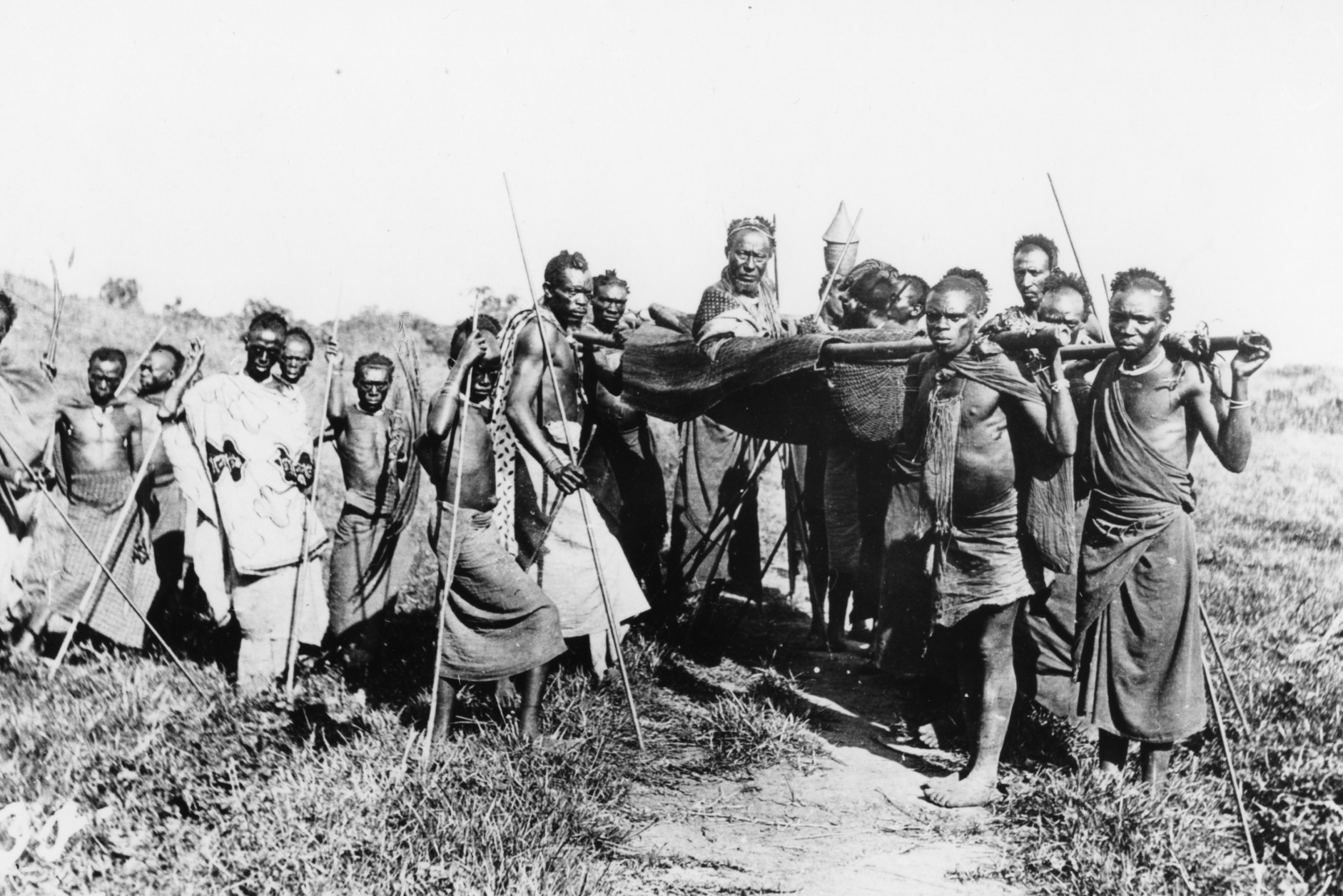
Introduction
In 2024 and 2025 The New Times, an online publication edited by the Rwandan Patriotic Front (RPF), published more than 30 articles on the origins of the kingdom of Rwanda, the events that led to the overthrow of the Nyiginya Tutsi monarchy in 1959, and the reconquest of power by the RPF to accredit that Hutu and Tutsi, the two ethnic groups of Rwanda were siblings and that colonizers divided a people that was united.
The articles signed by Amani Athar, Tom Ndahiro, and Peter Ruti under a section called “Opinions” offer a reinterpretation of Rwanda’s history.
This article discusses the distortion of history by the above authors and the political implications related to Rwanda and ongoing conflicts in Central Africa. This has relevance to Americans since the U.S. has long supported the RPF and its regional conquests and the horrific violence underlying them.

Distortion of Rwandan History

Amani Athar claims in one of its articles that “Kandt introduced a divisive ideology that resonated with colonial ambitions. In 1899, he wrote, ‘Rwanda is a country full of hopes when we could destroy the power of the Watusi,’ referring to the Tutsi elite. He reported to German authorities that the ‘Wahutu’ welcomed missionaries as liberators from ‘centuries-old servitude’ to the Tutsi, framing the Hutu as inherently subservient.”[1] As to Jan Vansina, a prominent historian who taught for many years at the University of Wisconsin, The New Times says, “His writings reveal a troubling obsession with the Abanyiginya dynasty, rooted in a desire to absolve Belgium of its colonial crimes and sow division within Rwandan society.”
Athar adds: “In these works, Vansina claims that the relationship between Hutu and Tutsi in pre-colonial Rwanda was fundamentally hostile, framing the Tutsi as dominant oppressors and the Hutu as perennial victims. He portrays pre-colonial Rwanda as ruled by the “law of the strongest”—a Tutsi aristocracy that allegedly subjugated others long before colonialism arrived.”[2]
Athar intends to rebut that the Nyiginya Tutsi monarchy oppressed Hutu, poor Tutsi, and Twa, a narrative documented by other Western and African researchers.
Anti-Tutsi Racism
New Times articles argue that anti-Hutu racism and anti-Tutsi racism were the products of colonialism. A piece by Peter Ruti states, “Anti-Hutu racism that took place during the colonial era was replaced by anti-Tutsi racism from the end of the 1950s. When the PARMEHUTU party emerged, all Tutsi qualities became evil and all evil that were previously associated with Hutu became qualities. They contended in any case that the Hutu were the majority who had been exploited by a feudal system for many centuries.”[3]
The article implies that there was no anti-Hutu racism before colonial rule. Rwandan proverbs and casual conversations prove otherwise. Anti-Tutsi racism, anti-Hutu racism, and anti-Twa racism coexisted before and after colonial rule and continue today. Rwandan proverbs portray Tutsi as power mongers and deceitful; Hutu as submissive and unintelligent; and Twa as inferior human beings. Similar portrayals exist in casual conversations.
Social Harmony
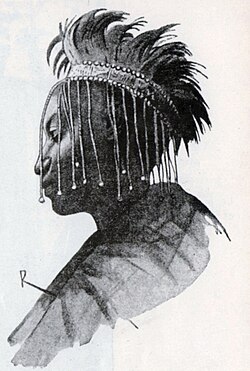
Another article published in The New Times by Amani Athar states that, “before the colonial era, the Batutsi and the Bahutu were siblings.”[4] Yet, dynastic poems celebrate the Nyiginya Tutsi imperialism in central Africa specifically the conquest of the kingdoms inhabited by farmers and ruled by kings known as Abahinza (singular: umuhinza). Furthermore, the Nyiginya Tutsi monarchy subjected these farmers to uburetwa, a mode of economic exploitation abolished by the social revolution of 1959.
Episodes of intra-Tutsi conflicts triggered by competition for power also proves that social harmony did not exist in pre-colonial Rwanda. The best example is the overthrow of Mibambwe III Rutalindwa in 1896 when Queen Mother Kanjogera and her brothers, Kabare and Ruhinanyiko, replaced him with her son Yuhi V Musinga. In Rwandan history, this episode is known as Rucunshu.
Ibimanuka (Fallen) vs. Abasangwabutaka (Found on Land)
Amani Athar wrote in The New Times that “Struggling to comprehend how such a well-organized kingdom could exist in the heart of Africa, Speke theorized that people must have come from elsewhere to create it. This led Europeans to fabricate a narrative about strangers who descended from heaven or traveled from Ethiopia to establish the Kingdom of Rwanda.”[5]
Athar continues: “Rwandans considered themselves siblings until colonial scholars concocted the myth of the Ibimanuka (Fallen), who supposedly brought various aspects of “civilization” to the land’s original inhabitants, the Abasangwabutaka (Found on Land). This fabricated narrative divided brothers into two groups: the Ibimanuka and the Abasangwabutaka.” It concludes that “From this divisive myth, colonial writings introduced themes to cement their ideology, such as superiority versus inferiority, settlers versus natives, and the notion of Hamitic pastoralists from heaven subjugating the land’s original Bantu owners.”
A contradiction appears in the same article when The New Times observes, “What struck them [Europeans] most was that the elders could trace their genealogy back to legendary ancestors like Sabizeze bya Sabiyogera or Mututsi wa Sabiyogera.”
Europeans did not invent the myth of Ibimanuka. The myth served as the ideological foundation of the Nyiginya kingdom. Here is what the myth says:
“The starting point of the myth of Kigwa, or the Ibimanuka (those who dropped from heaven), is that the ancestors of the Banyarwanda—also referred to in some narratives as Shyerezo (end) and also called Sebantu—lived in heaven with the father of mankind. The heavenly father had two wives: Gasani and Nyabunyana. In other narratives, they were also referred to as Nyabuhoro and Nyampinga. Gasani was the favorite daughter of Shyerezo, but she was barren. Nyampinga had a son called Mututsi and a daughter called Nyampundu. On the advice of her servant, Gasani hid the heart of a bull in a jar where milk regularly flowed until nine months passed and a baby boy was born from this miraculous operation. The child was named Sabizeze, or Mana in some narratives, from the name of Rwanda’s supreme power known as Imana. Thanks to Mutwa’s curiosity, Shyerezo learned about the circumstances under which Sabizeze was born. He was very angry and threatened to kill the child, but the child escaped from heaven through an opening. After this, he was given the name of Kigwa, or the one who dropped from heaven.”[6]
On one hand, The New Times claims that the myth of Ibimanuka versus Abasangwabutaka is divisive; on the other, it acknowledges the myth as part of the oral history of Rwanda when Amani Athar says, “Some may hold that Sabizeze can’t be the ancestor of Rwandans, labeling him IKIMANUKA from heaven as colonial scholars did. But, according to oral history, he is. Of course, with his brother Mututsi and their sister Nyampundu. That is what Rwandans knew before colonial writings told us otherwise. Most Rwandan elders could tell you their genealogy and go from their names up to Mututsi or to Sabizeze, both sons of Sabiyogera.”[7]
The New Times seems to be conflicted when it says that the myth of Ibimanuka versus Abasangwabutaka is a story external to Rwanda. One would think that the ensuing conclusion would be to dispose it from Rwandan history. Instead, The New Times reaffirms it, saying: “According to oral history preserved by Abiru, Rwanda’s traditional custodians of royal knowledge, the first individual to arrive in Rwanda was Sabizeze, who came from Ubuha (present-day Tanzania) and settled in Mazinga (now part of Akagera National Park). Colonial scholars attempted to discredit Rwanda’s origin stories by dismissing this account as an invention of Abiru meant to glorify the royal court. Ironically, these same scholars relied on what they themselves called ‘fabricated lies’ to create an alternative history, one that was not ours—one that placed Sabizeze’s origins in heaven and claimed he descended to Mubari instead.”[8]
The myth of Kigwa is tied to three other myths: Gihanga, Nyarushara and Nyirarucyaba which I will discuss below.
Advanced Technology
Nyiginya Tutsi oral history maintains that Gihanga was a descendant of Sabizeze and the founding father of an empire of which current Rwanda was just a part. He inherited the symbol of power called Nyarushara, a hammer Sabizeze had brought with him when he arrived and settled in Mubari, a region located in northeastern Rwanda. The New Times writes,
“Oral tradition tells us that when Sabizeze left Ubuha for Mazinga, he brought several objects with him, including his father’s hammer, Nyarushara.
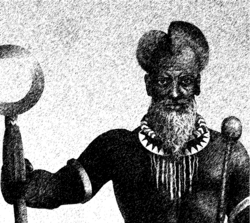
Long after Sabizeze’s passing, Nyarushara continued to be passed down through his lineage. It became a family emblem symbolizing Imana’s presence among his descendants.
Gihanga, Nyarushara, and Nyirarucyaba are myths. It was Gihanga, the founding father of Rwanda, who elevated Nyarushara to the rank of sacred artifact.”[9]
As to Nyirarucyaba, Gihanga’s daughter, oral tradition credits her for the domestication of wild animals that became cows. According to an article published in The New Times by Amani Athar,
“Without her determination, cows might still roam as wild animals today. One morning, Nyirarucyaba noticed large animals with imposing horns grazing nearby. She observed them over several days, devising ways to approach them. With persistence, the animals grew accustomed to her presence. Eventually, they allowed her to milk them, marking the beginning of cattle domestication in Rwanda.”[10]
The three myths glorify the ingenuity of the descendants of Sabizeze and his companions who brought technology and knowledge to the region. They reinforce the rationality of the myth of Ibimanuka (Fallen) and Abasangwabutaka (Found on the Land). The New Times takes the myths at face value despite arguing that Europeans fabricated the Sabizeze story.
Hutu Kingdoms
Amani Athar asserts that there were no Hutu kingdoms before colonial rule including the kingdom of Abazigaba that welcomed Sabizeze and his companions. It writes: “As we know, in ancient Rwanda there were no ‘Tutsi’ and no ‘Hutu,’ how then do we have the pre-Gasabo ‘Hutu’ kingdoms? To get these ‘Hutu’ kingdoms, there was a need to first have a conquering kingdom and a deceitful interpretation was given to the name Rwanda, with an expansionist label on it that corroborates the project.”[11]
Historically, small kingdoms inhabited by farmers existed before colonization. Oral traditions celebrate Ruganzu II Ndori as the conqueror of these kingdoms. Under colonial rule three of such kingdoms still thrived with relative autonomy vis-à-vis the Nyiginya Tutsi royal court: the kingdoms of Bukunzi, Busozo and Bushiru. Belgium integrated them by force into the Nyiginya Tutsi kingdom in 1924.
The case of King Mashira may illustrate how the RPF intends to purge these small kingdoms from Rwanda’s history.
Amani Athar wrote: “according to colonial history, widely propagated by European scholars, Mashira (labeled as Hutu) was born in Nduga, a kingdom ruled by his father, King Nkuba.
Oral history does not elaborate on Mashira’s death, but colonial narratives fabricated a story of Mashira’s death and the destruction of the Ababanda people, a line that had not yet existed when the colonialists first arrived.
The distortion of Mashira’s story played a significant role in the creation of ethnic divisions among Rwandans. This narrative, promoted by colonial powers, laid the groundwork for the tragic events that would culminate in the 1994 Genocide against the Tutsi.
As Simon Bikindi’s song during the genocide echoed, Mashira’s death was used to justify the deepening hatred that drove the violence.[12]
Athar and The New Times narrative omits that Nduga (central Rwanda) was an immensely powerful kingdom ruled by King Mashira. To conquer the kingdom, King Mibambwe I Sekarongoro Mutabazi (1609-1642) signed a pact of non-aggression with him but subsequently violated it as he killed his rival under the disguise of paying him a visit.
Thereafter, the kingdom of Nduga ended. The episode is an emblematic example of Tutsi Nyiginya deceitfulness as it negatively portrays Tutsi as imperialist, power hungry, untrustworthy, dishonest, and calculating in what they do. The New Times wants the mention of Hutu kingdoms erased to shed the divisive historical political connotation it evokes for Hutu and Twa.
Gasabo
In the same vein, Amani Athar contends in The New Times that “Rwanda did not start from Gasabo [a hill on Lake Muhazi]. It adds: “Rwanda started in Mazinga and not in Gasabo as Belgian scholars wanted us to believe. The reason they distorted our history was to destroy our identity.”[13] Gasabo evokes Nyiginya Tutsi expansionism. Athar does not make bone about it when it states, “To explain how these so-called ‘Tutsi’ invaded their own siblings, there was a need for a center, where they would come to invade the lands of the so-called ‘Hutu.’”
Dubious Origins of Hutu leaders
New Times articles allege that post-independence leaders had dubious origins and that President Kagame is the only leader whose origin is rooted in Rwanda. Amani Athar writes, “President Juvenal Habyarimana, though Rwandan, had immediate family ties in Uganda during his presidency. Grégoire Kayibanda reportedly had Congolese roots, with some identifying him as either Mushi or Mutetela. Théodore Sindikubwabo’s origins remain obscure, known mostly for his role during the 1994 Genocide against the Tutsi.”[14]
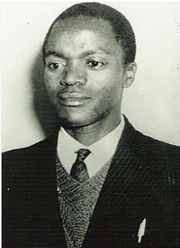
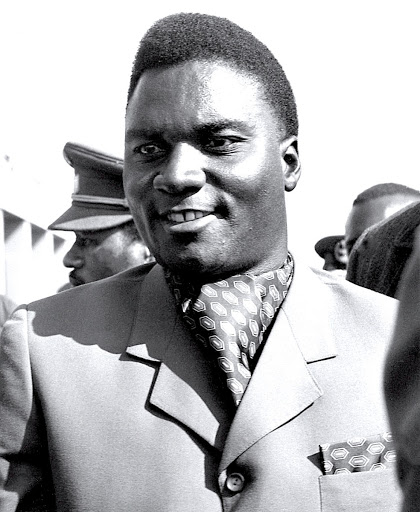
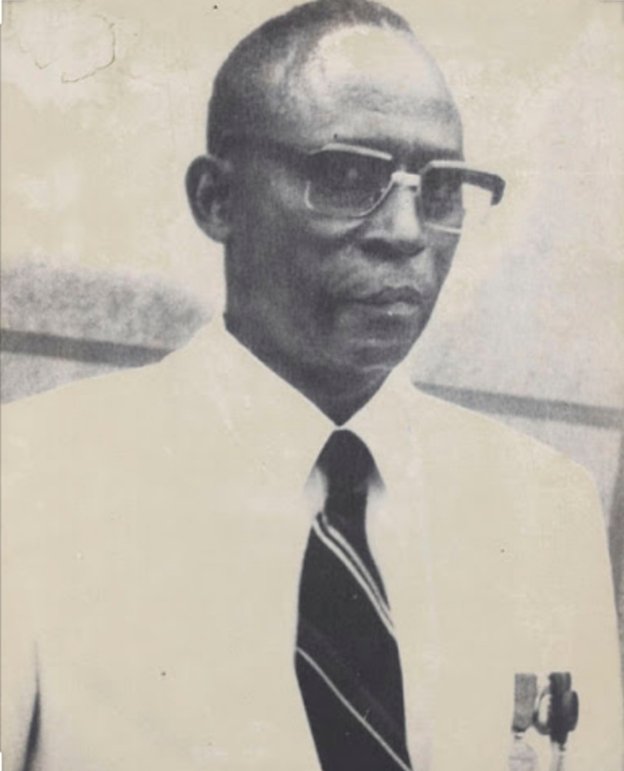
In 2025 during the 31st commemoration of “the genocide against Tutsi,” Jean-Damascène Bizimana, the minister of National Reconciliation, claimed that Gitera was from Bunyoro, Uganda. The New Times asserts, “In contrast, Kagame’s family history is intimately connected with Rwanda’s past and present. This deep sense of national belonging may explain his singular focus on unity, stability, and national development.” It implies that post-independence Hutu leaders were usurpers as the descendants of Sabizeze (Kigwa) are the only legitimate rulers.
Political Parties
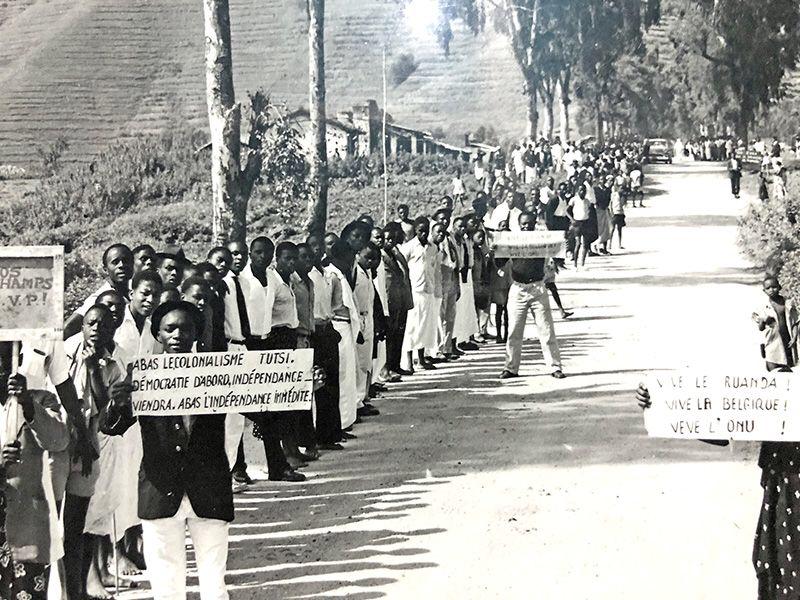
Amani Athar depicts the two political parties APROSOMA (the Association for the Promotion of the Masses) and PARMEHUTU (The Party of the Emancipation of the Hutu) created in 1959 to call for political reforms as extremist and bent on exterminating Tutsi. According to it, their respective leaders—Joseph Gitera and Grégoire Kayibanda—were the brain of ethnic divisions, institutionalized discrimination, and genocide ideology in Rwanda.[15]
In contrast, UNAR (Rwandese National Union), a pro-monarchy party, was the victim of Belgium and the Catholic Church because of its anti-colonialist ideology. It is silent on the atrocities this party committed in 1959 against the members of APROSOMA and PARMEHUTU, on the ethnic diversity of their members and the trials and sentences imposed on the perpetrators of violence committed in 1959. (Hubert, 1965).[16]
Inyenzi
To New Times writers, Inyenzi were freedom fighters opposed to the policies of Belgium and PARMEHUTU. Peter Ruti writes: “The origin of the term ‘Inyenzi’ much as is difficult to trace for some, it was an abbreviation of “Ingangurarugo yemeye kuba ingenzi.” Ingangurarugo were the elite forces of King Kigeli IV Rwabugiri. The word meant those who vowed to stand out. Every king would have an elite force associated with his reign. It was a patriotic move associated with the valor and prowess of Rwabugiri during military expeditions.
In 1960, the idea of creating an army was born among young Rwandan refugees in Kizinga, Uganda, near the border with Rwanda. Kizinga was one of the first refugee camps to be established when persecuted Rwandans fled the country. The objective was to launch a struggle against the Belgians and the new PARMEHUTU leaders.”[17]
In March 2025, Peter Ruti wrote in The New Times stated that Inyenzi was an abbreviation, then in December 2025 it claimed that Inyenzi meant cockroaches. Ruti wrote, “Inyenzi, a derogatory word referring to cockroaches, was used for Rwandan Tutsi exile groups that fought against the repressive government in the 1960s.”[18]
The inconsistency of the use of the term Inyenzi suggests that a correction was needed to continue to mislead journalists and scholars interested in Rwandan politics.
Liberation
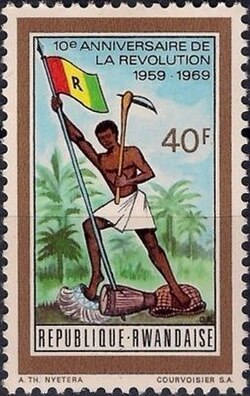
Amani Athar contends that President Kagame is comparable to two famous Nyiginya Tutsi kings who saved the monarchy at times its rule was in peril. It writes,
“While drawing perfect parallels between King Ruganzu II Ndoli (1510 to 1543), King Cyilima II Rujugira (1770-1786), and President Paul Kagame may be difficult, there are undeniable traits they share: the ability to safeguard Rwanda’s sovereignty in times of existential threat, exceptional military leadership, and the capacity to unite the Rwandan people.
King Ruganzu II Ndori, King Cyilima II Rujugira, and President Paul Kagame each led Rwanda through times of great peril. Their leadership ensured that Rwanda would not only survive but thrive. Kagame, as a living symbol of national continuity and sovereignty, deserves recognition as a hero in the lineage of Rwanda’s greatest defenders.”[19]
Oral tradition says Ruganzu II grew up at the royal court of the kingdom of Karagwe (Tanzania) where he sought refuge as his father defended his throne against his brothers backed by the kings of Bushi and Bugara. After he returned to Rwanda and ascended to the throne, he avenged his father and conquered farmers’ kingdoms. Rwanda’s historical narratives celebrate him not just as the savior of Rwanda from foreign domination but as the king with supernatural powers who moved mysteriously from one location to another piercing through mountains or appearing suddenly at remote locations. Popular culture attributes to him and his dogs the marks of footprints found on rocks across Rwanda.
The analogy with Ruganzu II invites the public to think of Kagame as the savior of the Nyiginya kingdom that Hutu usurpers took over and destroyed its social harmony. In Rwandan culture, when a murder is committed against a family member, a situation known as inzigo or vendetta begins and ends when relatives avenge the deceased. The subtext of the analogy is that the RPF war of “liberation” launched in October 1990 was a vendetta. Like Ruganzu II, Kagame was a refugee in Uganda who returned to Rwanda fighting and defeated power usurpers who toppled the Nyiginya Tutsi monarchy in 1959.

Pre-emptive Military Doctrine
The parallel between Kagame and Cyilima Rugira II frames Rwanda’s military involvement in the Great Lakes of Africa, particularly the Democratic Republic of the Congo (RDC), as normal and ingrained in the pre-emptive response to potential military threats to Rwanda’s sovereignty. Rwanda’s oral tradition portrays King Cyilima II Rujugira (1675-1708) as a great warrior who organized the Rwandan army, established military camps along the border with the kingdom of Burundi, expanded Rwanda’s territory and established the Rwandan pre-emptive military doctrine expressed in the following moto “U Rwanda ruratera ntiruterwa” or Rwanda attacks; it does not wait for an attack.”
While The New Times strives to decolonize Rwanda’s history to root out Nyiginya Tutsi imperialism in the region, it misses the point, as the Kagame-Rujugira analogy reaffirms the policy of expansionism it purports to erase.
The Heir to the Kingdom of Rwanda
Amani Athar wrote in The New Times, “Kagame’s paternal and maternal heritage is steeped in the traditions of Rwanda’s royal and military history. On his father’s side, his lineage includes queen mothers and military leaders who commanded battalions such as Inkotanyi and Abasoni—names long associated with the defense of Rwanda’s sovereignty. It adds, “Given this noble ancestry, Kagame’s rise to the presidency might not have been mere coincidence but rather a continuation of leadership ingrained in his lineage.”[20]
Through the presentation of Kagame’s genealogy, The New Times ties it to the mythic founders of the Nyiginya monarchy. In other words, Kagame’s ascension to power means monarchy restoration.
Glaring Omissions
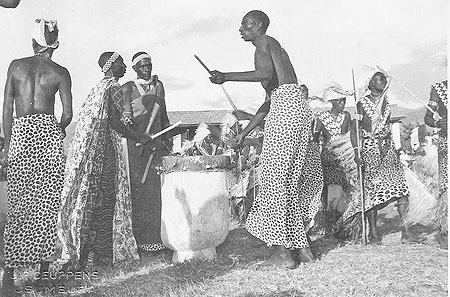
The New Times avoids mentioning the drum Karinga, the symbol of the Nyiginya Tutsi kingdom, which royal ritualists adorned with the genitals of defeated kings (Abahinza). RPF ideologues also avoid the Rucunshu violence, as it undermines the narrative of a harmonious society destroyed by European missionaries and German and Belgian colonizers.
Furthermore, there is no reference to three important historical documents published in the late 1950s: “Note on the Social Aspect of the Indigenous Racial Problem in Rwanda” published in March 1957 calling for political reforms that would recognize equal rights. Journalists and political commentators labeled it “The Bahutu Manifesto.”[21]
On May 17, 1958, 12 Tutsi senior servants at the royal court reacted by addressing a letter to the High Council of the Country, an advisory body claiming that there was no brotherhood between Hutu and Tutsi as Tutsi descended from Sabizeze and Mututsi.
On May 18, 1958, another group of senior Tutsi servants addressed a letter to King Mutara III Rudahigwa (1931-1959) requesting him not to touch their pastoral domains (ibikingi) and their land (amasambu).
Nyiginya Tutsi Supremacy
While trying to eliminate from the myth of Kigwa undesirable elements, such as Kabeja and the foreign origin of Kigwa to claim that Rwandans are siblings, The New Times still propagates the notion that Tutsi are Ibimanuka (fallen) or that they came from Ubuha, Tanzania. Some individuals continue to trace their ancestry to Sabizeze (Kigwa) and Mututsi. For instance, in 2021, during an interview to a YouTube channel, President Kagame’s uncle, Innocent Ruterambuku recited with pride his ancestry going back to Mututsi.[22]
Today, members of the old Tutsi aristocracy no longer hide the Nyiginya Tutsi supremacist ideology of celestial origin. RPF political activists and even President Kagame dehumanize the Hutu population, calling them “imbwa” or dogs.[23] In addition, the RPF regime pressures Hutu civil servants and politicians to apologize to Tutsi for the crimes committed by their ethnic Hutu as though the genocide was a collective Hutu operation.
The binary presentation of the war that took down the Juvenal Habyarimana regime in 1994 as a conflict between Hutu and Tutsi has so emboldened RPF political leadership to the point of taking ownership advocacy and protection role regarding the Tutsi communities of the Great Lakes of Africa.
Hutu Supremacy
When the RPF attacked Rwanda in October 1990, the Habyarimana regime framed the invasion as a war launched by the Tutsi refugees to restore Tutsi monarchy. The RPF forcefully rejected the frame and argued that its grievances were the return to their homeland and the struggle for democracy. In 1991 opposition parties agreed with the grievances of the RPF by engaging in a dialogue with the RPF to work out a common political agenda. However, in October 1993, the assassination of Melchior Ndadaye, the first elected Hutu president of Burundi, by a monoethnic Tutsi army seemed to give credence to the frame. On October 23, 1993, factions of Rwandan political parties held a rally at Nyamirambo Stadium to denounce the coup d’état in Burundi.
At this rally Froduald Karamira, second vice-president of the Democratic Republican Movement (MDR), urged Hutu to mobilize and unite to assist the Hutu of Burundi. He said: “Let us avoid division among the Hutu wherever they may be. We should not allow ourselves to be weakened by division after an attack. Let us avoid infiltration by traitors who will seize power from us. At last, the MDR has a slogan for Hutus. Nonetheless, we must demonstrate Hutu power by running to the rescue of Burundi.” He concluded his speech shouting “Hutu Power,” which the crowd repeated after him, and closed with “The Hutu is power.”[24] The Hutu Power movement was born.

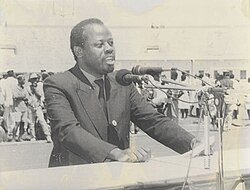
In April 1994, during a debate carried by Radio Rwanda, journalist Jean Baptiste Bamwanga asked Dr. Donat Murego, the Secretary General of the MDR, to explain how a minority group achieved domination over a majority group. He responded this way:
“In all countries including Rwanda, a minority dominated majority. Let us take the example of Rwanda, it is not the Tutsi who arrived first in Rwanda. That is what history tells us. When they arrived, they represented a small number. That duplicity, Kagame narrated it to us. Father Alexis Kagame revealed it to us enough in Inganji Kalinga and his other writings. They used the cow and apparently gave it to the Hutu, they started with the abahinza [Hutu kings], when they saw their success, they added adulating language, then they killed those bahinza [Hutu kings], they took ownership of their armies, then these armies helped them conquer them one after another. The minority implemented the policy of exclusion of the majority, thereby completely taking power. Inganji Kalinga, their political system prevailed. That is the case of Rwanda, that is the part relevant to Rwanda. Elsewhere too, the minority can dominate the majority.”[25]
Another panelist, Shingiro Mbonyumutwa, said:
“Historians tell us that Tutsi ruled Rwanda for more than four hundred years and that is understandable since they had more than 20 kings. During that whole time, Hutu lived in slavery. Because of the arrival of the Europeans that reduced the power of the Tutsi, they taught that all people are equal, nobody should live in a slavery system, and no one should enslave another person; such ideas led us to 1959.”[26]
The Hutu Power narrative implied that all Tutsi had oppressed Hutu even though, before colonization, about four aristocratic Tutsi clans held power. Under German rule (1897-1918) local notables in northwestern and southeastern Rwanda fiercely resisted the presence of the representatives of King Musinga sent to collect taxes.
Furthermore, Rwanda is the outcome of both German and Belgian colonization. Belgium integrated by force the kingdoms of Bukunzi, Busozo and Bushiru into the Nyiginya kingdom of Rwanda around 1924.
Conclusion
From October 1990 to April 1994 Hutu supremacists and Tutsi supremacists managed to transform the struggle for democracy into a war opposing two ethnic groups, the Hutu and the Tutsi. Today, the RPF regime conflates political dissent with Hutu-Power ideology.[27]
It accuses European scholars and journalists who publish books or articles critical of the RPF of fostering genocide ideology. Combating Nyiginya Tutsi supremacy and Hutu-Power Supremacy is essential to create a stable political environment in the Great Lakes of Africa so its inhabitants can focus on economic development. For the eradication of the two ideologies to happen, pluralistic democracy is essential. Only a context of free expression can allow a dispassionate debate over decolonizing and re-writing Rwanda’s history.

Amani Athar, “Dr. Richard Kandt’s role in sowing division in Rwanda,” The New Times, April 15, 2025. ↑
Amani Athar, “How Jan Vansina distorted Rwanda’s history to serve colonial interests,” The New Times, June 17, 2025.
Peter Ruti, “Rwanda: How Refugees’ Exclusion At Home and Failure to Integrate Into Host Countries Birthed RPF Armed Struggle,” allAfrica.com, June 5, 2025. ↑
Amani Athar, “February 11, 1959, a day the unity of Rwandans was wounded,” The New Times, February 15, 2025. ↑
Amani Athar, “Debunking the myth: The true origins of Ibimanuka vs Abasangwabutaka in Rwanda,” The New Times, August 28, 2024. ↑
Déogratias Byanafashe and Paul Rutayisire, History of Rwanda, (Kigali: National Unity and Reconciliation, 2016). ↑
Amani Athar, “The Rwagasabo pact and the genesis of Rwanda’s leadership,” The New Times, November 14, 2024. ↑
Amani Athar, “Revisiting Nyarushara, the divine hammer of Rwanda’s ancient kingdom,” The New Times, December 10, 2025. ↑
Idem. ↑
Amani Athar, “The Legacy of Princess Nyirarucyaba, Rwanda’s first daughter and pioneer of cattle Domestication,” The New Times, September 26, 2024. ↑
Amani Athar, “Demystifying the pre-Gasabo ‘Hutu’ kingdoms myth,” The New Times, November 26, 2024. ↑
Amani Athar, “Rwanda: The Distortion of Mashira’s Story – Colonialism’s Greatest Crime in Rwanda,” allAfrica.com, December 19, 2024. ↑
Amani Athar, “The project that originated Rwanda from Gasabo was born in Brussels,” The New Times, November 19, 2024. ↑
Amani Athar, “How ancestral legacy shaped Paul Kagame’s leadership,” The New Times, April 18, 2025. ↑
Amani Athar, “November 1, 1959: In Remembrance of the infamous ‘La Toussaint Rwandaise,’” The New Times, November 1, 2025. ↑
Jean R. Hubert, La Toussaint Rwandaise et sa Repression (Brussels: Academie Royale des Sciences d’Outre Mer, 1965). ↑
Peter Ruti, “A look back at PARMEHUTU’s oppressive policies and the birth of Inyenzi,” The New Times, March 9, 2025. ↑
Peter Ruti, “How Kayibanda’s regime made killings a political process,” The New Times, December 2, 2025. ↑
Amani Athar, “Ruganzu, Rujugira, and Kagame: The leaders who secured Rwanda’s survival,” The New Times, July 11, 2025. ↑
Amani Athar, “How ancestral legacy shaped Paul Kagame’s leadership,” The New Times, April 18, 2025. ↑
F. Nkundabagenzi, Rwanda Politique 1958-1960 (Brussels : Centre de Recherche et d’Information Socio-Politiques, 1961). ↑
3 D TV Rwanda. (2021) Twasuye Se Wabo Wa Perezida Paul Kagame mu Rugo.
TWASUYE SE Wabo Wa Perezida PAUL KAGAME mu Rugo|Yatuganirije Ibintu bikomeye|Ibye Ni Isomo rikomeye ↑
Jean-Marie Vianney Higaro, Hate Speech in Rwanda: A Way of Life under President General Paul Kagame and Chair of the Rwandan Patriotic Front (RPF),” African Agenda – A new perspective on Africa, August 5, 2025. ↑
ICTR K022-4010-K022-4033 ↑
ICTR Cassette no 270 transcrite par U.MV. ↑
ICTR Cassette RSF 0237 K7 No 42 Transcrite par I.D ↑
Tom Ndahiro, “Genocide ideology: Belgium is a gene pool custodian,” The New Times, April 13, 2025. ↑
CovertAction Magazine is made possible by subscriptions, orders and donations from readers like you.
Blow the Whistle on U.S. Imperialism

Click the whistle and donate
When you donate to CovertAction Magazine, you are supporting investigative journalism. Your contributions go directly to supporting the development, production, editing, and dissemination of the Magazine.
CovertAction Magazine does not receive corporate or government sponsorship. Yet, we hold a steadfast commitment to providing compensation for writers, editorial and technical support. Your support helps facilitate this compensation as well as increase the caliber of this work.
Please make a donation by clicking on the donate logo above and enter the amount and your credit or debit card information.
CovertAction Institute, Inc. (CAI) is a 501(c)(3) non-profit organization and your gift is tax-deductible for federal income purposes. CAI’s tax-exempt ID number is 87-2461683.
We sincerely thank you for your support.
Disclaimer: The contents of this article are the sole responsibility of the author(s). CovertAction Institute, Inc. (CAI), including its Board of Directors (BD), Editorial Board (EB), Advisory Board (AB), staff, volunteers and its projects (including CovertAction Magazine) are not responsible for any inaccurate or incorrect statement in this article. This article also does not necessarily represent the views the BD, the EB, the AB, staff, volunteers, or any members of its projects.
Differing viewpoints: CAM publishes articles with differing viewpoints in an effort to nurture vibrant debate and thoughtful critical analysis. Feel free to comment on the articles in the comment section and/or send your letters to the Editors, which we will publish in the Letters column.
Copyrighted Material: This web site may contain copyrighted material the use of which has not always been specifically authorized by the copyright owner. As a not-for-profit charitable organization incorporated in the State of New York, we are making such material available in an effort to advance the understanding of humanity’s problems and hopefully to help find solutions for those problems. We believe this constitutes a ‘fair use’ of any such copyrighted material as provided for in section 107 of the US Copyright Law. You can read more about ‘fair use’ and US Copyright Law at the Legal Information Institute of Cornell Law School.
Republishing: CovertAction Magazine (CAM) grants permission to cross-post CAM articles on not-for-profit community internet sites as long as the source is acknowledged together with a hyperlink to the original CovertAction Magazine article. Also, kindly let us know at info@CovertActionMagazine.com. For publication of CAM articles in print or other forms including commercial internet sites, contact: info@CovertActionMagazine.com.
By using this site, you agree to these terms above.
About the Author

Jean-Marie Higiro was director of the Rwandan Information Authority in Kigali from July 1993 until April 6, 1994.
Higiro has a Ph.D. in Communications from the University of Texas at Austin and is Professor of Communication in the Department of Communication, Media and the Arts at Western New England University.
Jean-Marie can be reached at jmhigiro@hotmail.com.


