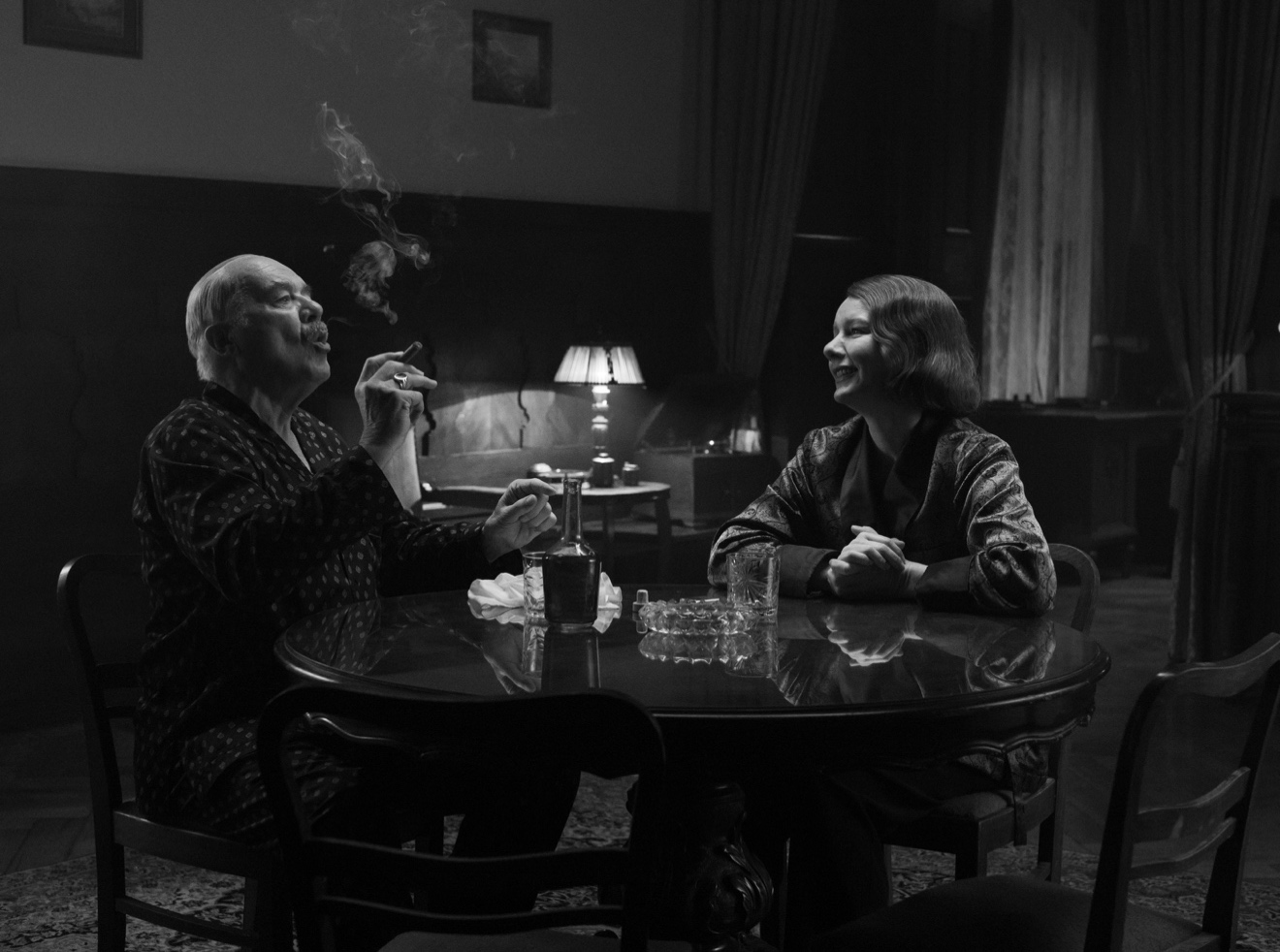
Polish-born co-writer/director Paweł Pawlikowski’s Fatherland—Poland’s official entry for the Best International Feature Film Academy Award—is a vivid reminder why, in terms of style and subject, American cineastes love “foreign films” so much.
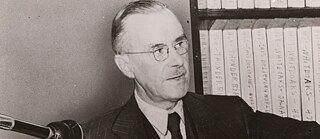
A Hollywood studio would never make this black-and-white movie although, in a sense, it is about a superhero and superstar of sorts. Thomas Mann (Bavaria-born actor Hanns Zischler), who won the Nobel Prize in Literature for novels such as 1924’s The Magic Mountain, returns to Germany in 1949 for the first time since fleeing the Nazis in 1933.
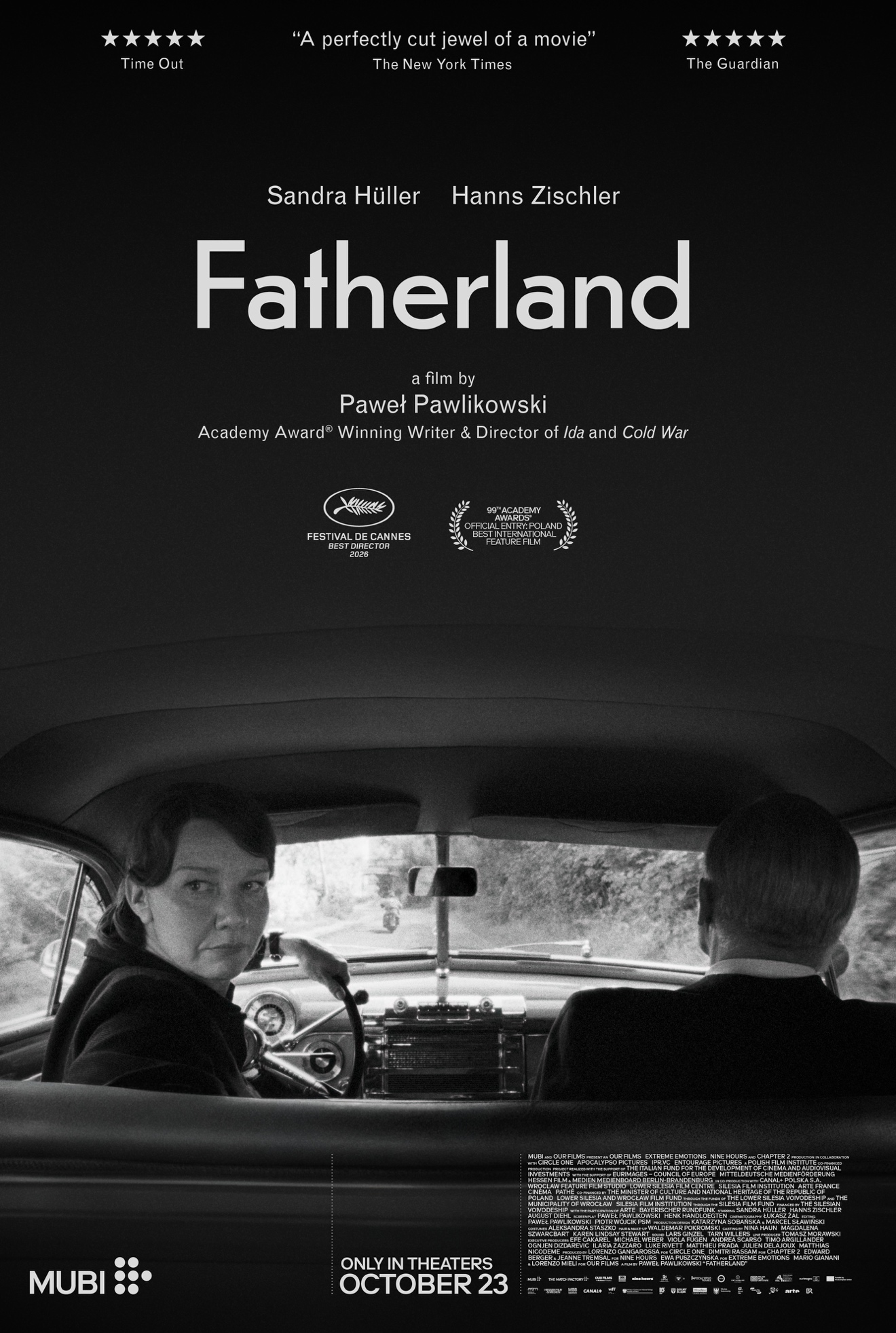
It is the sort of mountain-comes-to-Muhammad moment as Mann, a staunch anti-fascist, is drawn back to his native land for a visit in order to celebrate the bicentennial of the birth of his hero Johann Wolfgang von Goethe (playwright of the 1790 masterpiece Faust about a man who sells his soul to the devil).
However, as what Churchill called “the Iron Curtain” of the Cold War has dropped, to which “Deutschland Uber Alles” will the German intellectual travel? Since the Red Scare has descended, the exile—a resident of Pacific Palisades—boldly travels to both Frankfurt in West Germany and Weimar in East Germany, aka the German Democratic Republic (GDR).
Pawlikowski and co-screenwriter Hendrick “Henk” Handloegten (who co-wrote the droll 2003 Cold War comedy Good Bye Lenin!) cleverly interweave exposition into a press conference, shortly after Mann’s arrival in Frankfurt to make a speech paying tribute to Goethe.
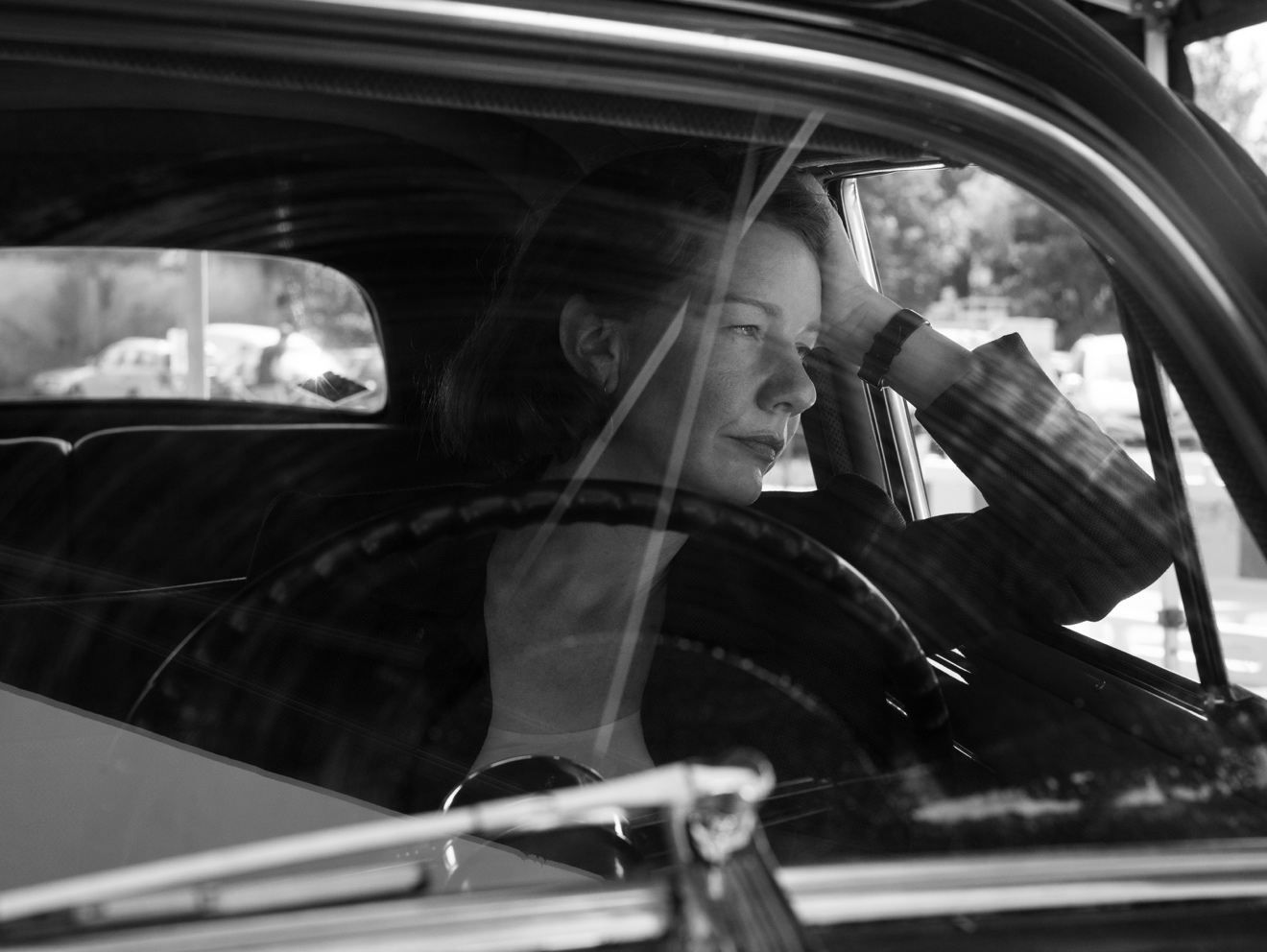
Afterwards at a bar, American AP reporter Betty Knox (an actual historical figure, played by English Actress Anna Madeley), who had been a World War II foreign correspondent serving with Thomas’s daughter Erika Mann (German actress Sandra Hüller, who was Oscar-nominated for 2023’s Anatomy of a Fall), tips Erika off that back in the USA, her father is being red-baited along with Bertolt Brecht and others.
In response, Erika—who is accompanying her father on his German trip and serving as his driver and assistant—jauntily quips that her dad is “in good company.” (In reality, Mann’s wife Katia, who was born Jewish, was Thomas’s companion during his 1949 German sojourn.)
While in West Germany, the Manns visit is overseen by Arthur Quint (Norwegian actor David Menkin), a Central Intelligence Agency operative who ostensibly provides security but likely is keeping tabs on Thomas to make sure his speechifying, public pronouncements, etc., serve Washington’s propaganda purposes.
At a party Erika clashes with the cringy Gustaf Gründgens (Homburg-born Joachim Meyerhoff), who claims that he is the role model for the German actor who sells his soul to the Nazis in the 1935 novel Mephisto by Erika’s brother, Klaus Mann (August Diehl, who co-starred in 2009’s Inglourious Basterds and played Vladimir Lenin in 2021’s The King’s Man).
When Quint (the same name as Robert Shaw’s shark hunter in Jaws!) intervenes, she calmly informs him that she had been married to Gründgens. Quint responds that he thought she was married to an English poet (W. H. Auden), and after she clarifies her marital status to the CIA agent, annoyed at being surveilled, she pointedly adds, “not that it’s any of your business.”
While they are in Frankfurt, Klaus dies of an overdose in Cannes. Fatherland opens with a scene of a naked Klaus talking to his sister on the phone; someone with long hair on the bed sleeps in the nude, then rises and dresses in the background during their telephone conversation.
The figure is completely flat chested and likely male, which seems to allude to Klaus’s homosexuality, just as a shot of a syringe suggests his drug addiction. This scene is the only reference to the sexuality of the various Manns, which was believed to be unconventional. In addition to it also going unmentioned that Erika’s mother was born Jewish, Thomas being part-Brazilian is never referenced.
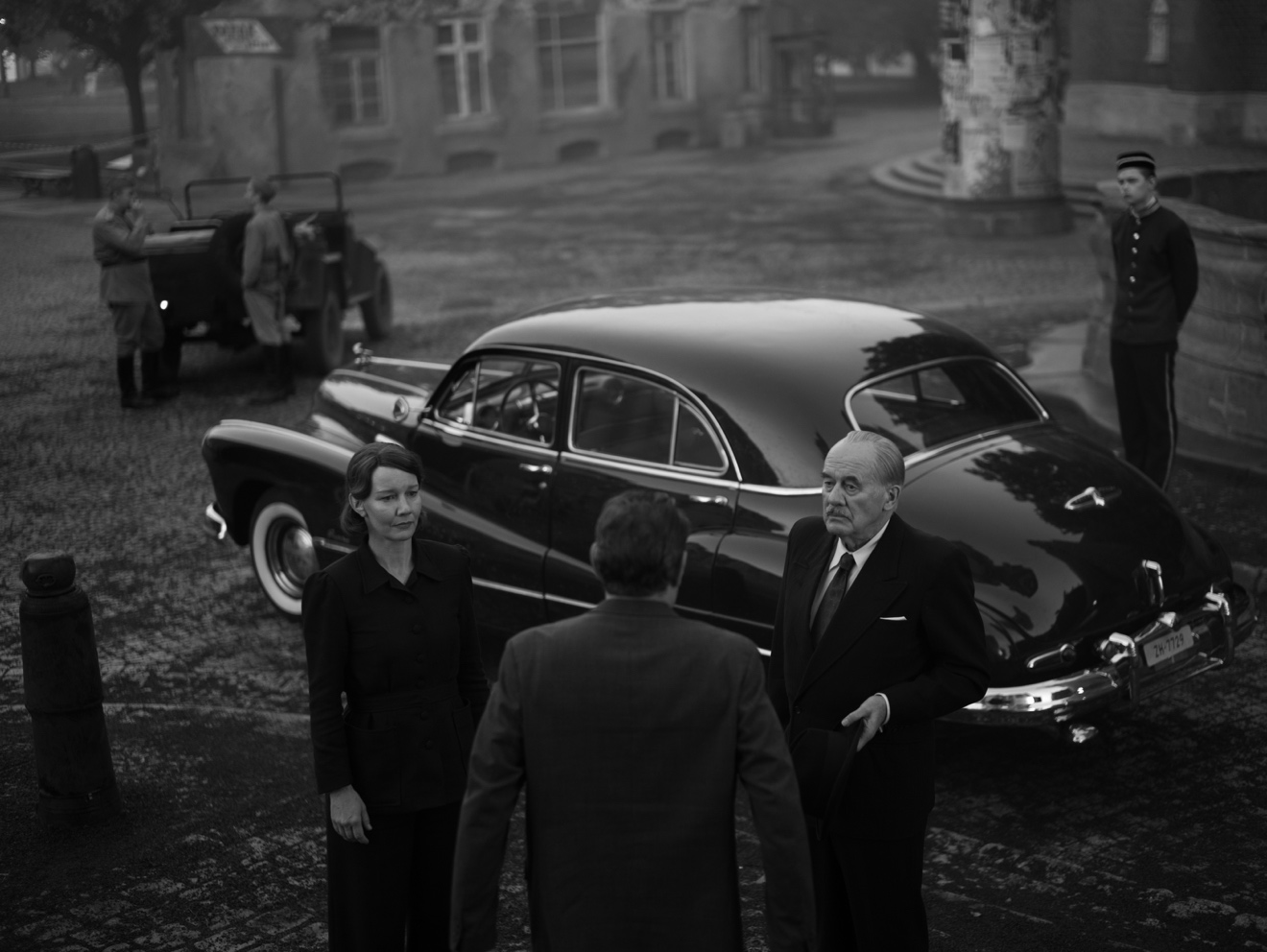
Erika, who was close to her brother, suggests canceling the rest of their Goethe odyssey in order to attend Klaus’s funeral at Cannes, but Thomas insists that they press on toward the GDR and the Goethe commemorations scheduled there. Crossing into East Germany they are met by Siergiej Iwanowicz Tiulpanow (Kazakhstan-born actor Daniel Wagner), another real-life figure who had been director of the Propaganda Administration of the Soviet Military Administration in the GDR at the time. Tiulpanow is joined by Johannes R. Becher (East German-born actor Devid Striesow, co-star in 2022’s All Quiet on the Western Front), also an actual historic personage, a novelist and KPD (Communist Party of Germany) member before Hitler’s rise to power, who went on to win the Stalin Peace Prize and become the GDR’s Minister of Culture.
Tiulpanow and Becher escort the Manns to numerous events in East Germany, where they are met with high esteem wherever they go. At one, the GDR’s new national anthem—with music composed by Hans Eisler and lyrics by none other than Becher himself—is sung by schoolchildren. (Like Brecht and Thomas Mann, Eisler lived in exile in Los Angeles until he was deported in 1948, a victim of the Hollywood Blacklist and “Reds-under-the-beds” hysteria then sweeping post-war America.) The Soviet and GDR officials accompany Thomas and Erika to Goethe’s home, where the Manns ponder his death mask, while lightbulbs flash, as a photographer captures it all with a camera, milking the moment for all of its propaganda value.
In one telling scene, a harried man somehow gains ingress at Thomas’s hotel room, where he informs the Nobel Prize winner that political prisoners are being held at nearby Buchenwald, and urges the revered writer to speak out on their behalf.
The dissident is taken away by security forces, and it did not seem to me that Mann raised the issue with East German authorities or his speeches—at least not directly. Like the CIA operative Quint in Frankfurt, Mann’s Soviet and GDR “hosts” want to make sure that the man of letters who delivered broadsides via BBC broadcasts in German against the Nazis during WWII is kept under control.
Completing their mission to pay homage to Goethe, the Manns drive back toward West Germany, with another vehicle acting as an official escort. Passing the partially bombed-out remains of a historic church where Bach had received his first job, Erika and Thomas duck their minders and make an unofficial detour, entering what is left of the house of worship where a kapellmeister serenades them with organ music, bestowing a note of spirituality that is in between the choices Thomas has been asked to choose from: on the one hand “Mickey Mouse,” on the other “Stalin.”
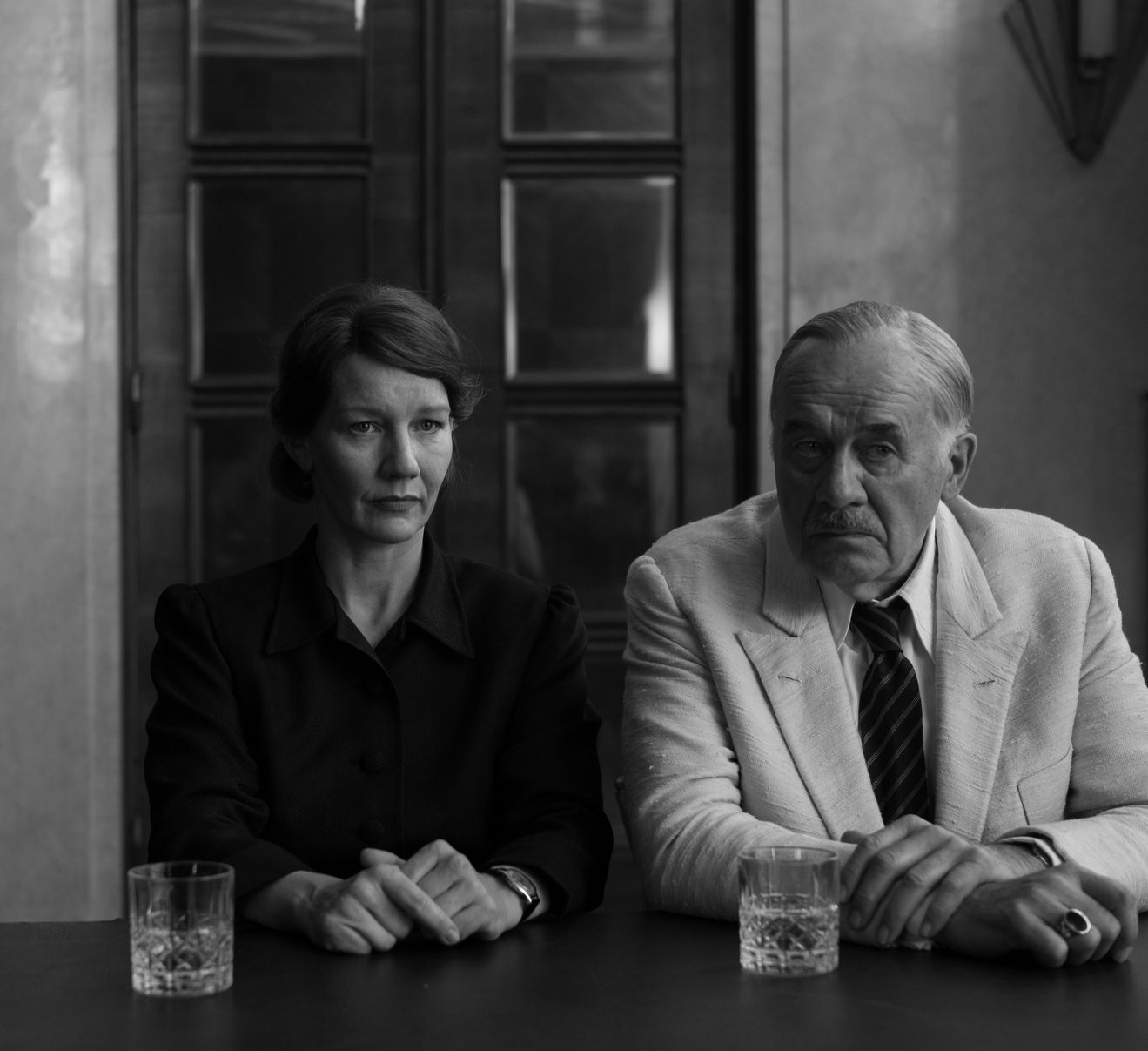
Pawlikowski’s black-and-white period piece was actually not shot by his long-time cinematographer Lukasz Zal in either present-day western or eastern Germany, but rather in Lower Silesia, Poland (the land of their births). The cast, especially Zischler—who acted in Wim Wenders’ 1976 Kings of the Road and Jean-Luc Godard’s 1991 Germany Year 90 Nine Zero—is completely convincing. The B&W film has a realistic form—after all, Pawlikowski has a documentary background, having worked for years for the BBC.
Fatherland is a great political film, an insightful rumination on and look at the Cold War, at capitalism in the West, Stalinism in the East, and at fascism in the not-too-distant past. With Trump’s authoritarianism seeking to repress news media and the arts, this 82-minute film about one of the world’s greatest anti-fascist intellectuals is very timely.
The New Yorker recently profiled Paweł Pawlikowski, whose 2013 Ida won the Academy Award for Best Foreign Language Film. Pawlikowski’s 2018 Cold War was nominated in that same Oscar category, as well as for Best Directing and Best Cinematography. (Zal likewise received a nomination for Ida, the first film the director and his cameraman worked on together.)
Pawlikowski has emerged as one of our best and most thought-provoking helmers, and I suspect that his paean to Thomas Mann will be recognized and rewarded by the Motion Picture Academy once again.
Fatherland is in German and some English with English subtitles: It opened on October 30 (see: https://mubi.com/en/fatherland).
For information about the fourth book co-authored by Ed Rampell and Luis Reyes about filmmaking in Hawaii, see: https://mutualpublishing.com/product/on-location-in-hawaii/.

CovertAction Magazine is made possible by subscriptions, orders and donations from readers like you.
Blow the Whistle on U.S. Imperialism

Click the whistle and donate
When you donate to CovertAction Magazine, you are supporting investigative journalism. Your contributions go directly to supporting the development, production, editing, and dissemination of the Magazine.
CovertAction Magazine does not receive corporate or government sponsorship. Yet, we hold a steadfast commitment to providing compensation for writers, editorial and technical support. Your support helps facilitate this compensation as well as increase the caliber of this work.
Please make a donation by clicking on the donate logo above and enter the amount and your credit or debit card information.
CovertAction Institute, Inc. (CAI) is a 501(c)(3) non-profit organization and your gift is tax-deductible for federal income purposes. CAI’s tax-exempt ID number is 87-2461683.
We sincerely thank you for your support.
Disclaimer: The contents of this article are the sole responsibility of the author(s). CovertAction Institute, Inc. (CAI), including its Board of Directors (BD), Editorial Board (EB), Advisory Board (AB), staff, volunteers and its projects (including CovertAction Magazine) are not responsible for any inaccurate or incorrect statement in this article. This article also does not necessarily represent the views the BD, the EB, the AB, staff, volunteers, or any members of its projects.
Differing viewpoints: CAM publishes articles with differing viewpoints in an effort to nurture vibrant debate and thoughtful critical analysis. Feel free to comment on the articles in the comment section and/or send your letters to the Editors, which we will publish in the Letters column.
Copyrighted Material: This web site may contain copyrighted material the use of which has not always been specifically authorized by the copyright owner. As a not-for-profit charitable organization incorporated in the State of New York, we are making such material available in an effort to advance the understanding of humanity’s problems and hopefully to help find solutions for those problems. We believe this constitutes a ‘fair use’ of any such copyrighted material as provided for in section 107 of the US Copyright Law. You can read more about ‘fair use’ and US Copyright Law at the Legal Information Institute of Cornell Law School.
Republishing: CovertAction Magazine (CAM) grants permission to cross-post CAM articles on not-for-profit community internet sites as long as the source is acknowledged together with a hyperlink to the original CovertAction Magazine article. Also, kindly let us know at info@CovertActionMagazine.com. For publication of CAM articles in print or other forms including commercial internet sites, contact: info@CovertActionMagazine.com.
By using this site, you agree to these terms above.
About the Author
Ed Rampell is an L.A.-based film historian and critic who also reviews culture, foreign affairs and current events.
Ed can be reached at edrampel@gte.net.


 Radhika Desai is a Professor of Political Studies at the University of Manitoba, Winnepeg, Canada, Director of its Geopolitical Economy Research Group, and Convenor of the International Manifesto Group. Ms. Desai is an author of multiple books, including Geopolitical Economy(2013) and her most recent Capitalism, Coronavirus and War(2022). Ms. Desai hosts a fortnightly show, Geopolitical Economy Hour on the Geopolitical Economy Report website.
 Yan Pan is a Chinese PhD researcher at LUT University, Finland. Her work examines the political economy of China’s technological and industrial development, with a particular focus on the industrialization and governance of neurotechnology in China. Her research concerns industrial policy models for future industries in Chinese and Global South contexts. Prior to her PhD, she researched educational reforms and structural change in labor demand in China.
 Ken Hammond is professor emeritus of East Asian and Global History at New Mexico State University. He has lived and worked in China from time to time since 1982. A lifelong political activist, he is a member of the Party for Socialism and Liberation.