It has become a cliché that award ceremonies serve the award givers more than the laureates.
Admittedly, there are many worthy laureates who genuinely care to make sure the prize recipients get merit Recognition, and who could make good use of research and development’s financing.
Nonetheless, it is manifest that most award festivities have become public-relations spectacles, useful occasions for governments, organizations and foundations to get free media attention to advance their geopolitical agendas, confirm skewed narratives, and double-down on “necessary” dogmas.
These celebrations offer platforms to certain political players, legitimize dubious achievements, and provide congenial photo opportunities.
This reality does not negate the fact that many potential laureates deserve recognition from society. Still, there is poetry in anonymity. And it is good so. While we take many “discoveries” for granted, we should also realize that every invention is the brainchild of an individual or group of individuals, and that there is a “before” and “after” the discovery. No one received an award for inventing the wheelbarrow[1] or the sailing boat,[2] manufacturing soap[3] or porcelain,[4] developing algebra and geometry, telescopes, microscopes, dialysis apparatus, the bathroom shower, etc.
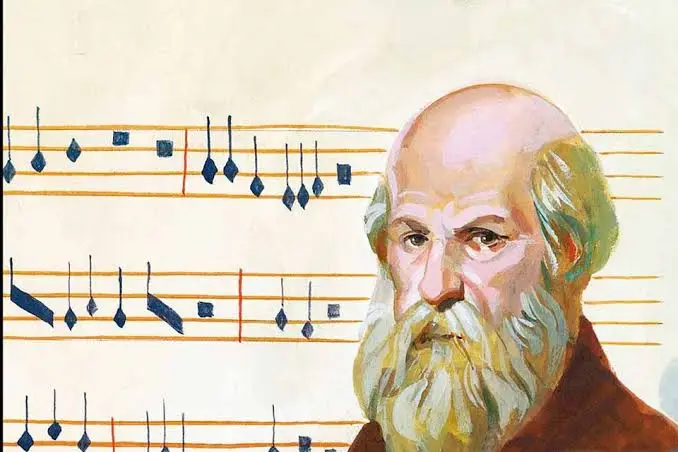
Creators do not invent to garner applause, but for the sheer joy of producing something new. Just think of Guido of Arezzo (991-1033),[5] author of the Micrologus,[6] who devised the musical notation system, thereby allowing composers to note down precisely a melody, and the duration and intensity of every note on a staff scale that could then be copied and distributed to chorists and orchestra musicians. Without Guido no Mozart, no Beethoven, no Mahler. What is important is Guido’s revolutionary achievement itself.
There is justification to confer honors and awards when the purpose is to encourage young and old to create things that will benefit society at large.
Creators do not create to generate short-term profit or to obtain an award. That would be a combination of utilitarianism with narcissism, just vanity, as we know from Ecclesiastes 1:2, vanitas vanitatum, omnia vanitas.
The genuine draftsman and architect does it for free.
Probably many inventors would prefer anonymity, knowing that their contributions have helped humanity.
For instance, an author would like to see his/her books disseminated and read. A scientist would draw satisfaction from the positive results of his/her discovery or invention.
A medical doctor takes solace in the awareness that, notwithstanding death and disease, he has contributed to alleviating pain, saving lives. An artist does not need an Oscar to prove that he/she is a good performer. An Olympic runner does not need a gold medal.
All the Greek Olympians received was a crown of bay laurels.[7] A singer does not need a hand-made trophy of the Eurovision Song contest, but he/she would surely appreciate the thunderous applause.
Some worthy recipients of awards have declined to receive them, or refused to attend the award ceremony, because they do not want to be “used” by the organizers, do not want to endorse the media noise and the utilitarian, materialistic atmosphere surrounding such spectacles.
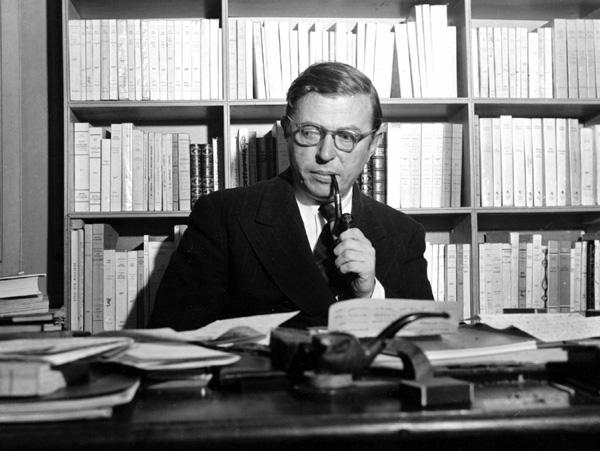
We remember that, in 1964, Jean-Paul Sartre declined the Nobel Prize for Literature because, as he explained, he never accepted official honors and did not want the category of “writers” to be placed on a pedestal and become an institution.[8]
There are certain awards that lend themselves to politicization, among them the Nobel Peace Prize, the European Karls Preis, and the International Peace of Westphalia Award.
More and more we see a retrogression in humanistic values,[9] an Orwellization of language and values, an enforced cognitive dissonance, when we realize that warmongers and even war criminals can become laureates of the highest prizes.
As a human rights industry[10] emerged long ago, an “award industry” is developing that turns positive strategies, like diplomacy, compromise and appeasement,[11] into negative concepts or even curse words and, instead, honor those intransigent political leaders who self-righteously claim full-spectrum dominance, also in the field of values.
The peacemakers are not honored, nor the peace associations like the Geneva International Peace Research Institute, nor the peace academics like Noam Chomsky, John Mearsheimer, Jeffrey Sachs, Stephen Kinzer, nor the whistleblowers—but the hawks, the apologists of genocide, the war criminals themselves.
More than anything else, humanity needs patient, mature diplomacy in the sense of quid pro quo, give-and-take, recognizing that major errors, miscalculations and crimes have been committed by all sides in every war, including the Ukraine and Palestine tragedies.
Especially we in the “collective West” must enhance our faculty of self-criticism and understand that, if we provoke others, if we humiliate others, if we bark at others,[12] if we try to take advantage of others,[13] inevitably there will be adverse consequences.
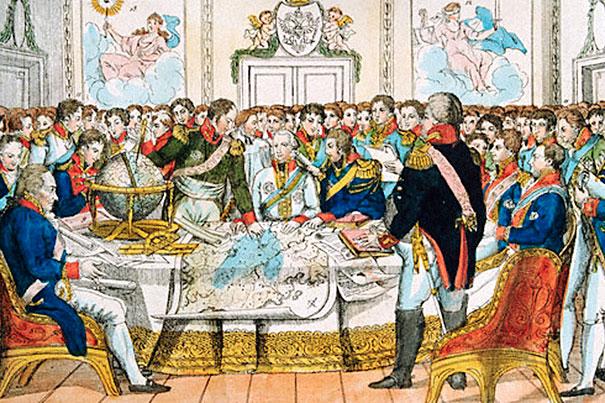
Therefore, diplomacy and appeasement must reflect the realities on the ground, as the diplomats at the Peace of Westphalia in 1648 understood after 30 years of devastating wars and the slaughter of eight million Europeans, constituting almost 10% of the European population in the 17th century, as the diplomats at the Congress of Vienna 1814-15 recognized following the Napoleonic adventures.
Nobel Peace Prize
Alfred Bernhard Nobel Alfred Bernhard Nobel (1833-1896) was born in Stockholm, Sweden, to a well-to-do family. He became a chemist, engineer and businessman, who held 355 patents and made his fortune by inventing and commercializing dynamite.
He spoke six languages and showed a keen interest in peace and international solidarity. Before his death he established a foundation that would bequeath prizes to deserving inventors and peace activists.
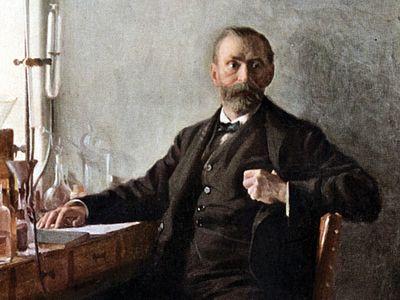
According to the terms of his Last Will and Testament, signed in Paris on November 27, 1895, he devoted his residual estate to the establishment of five prizes that would bear his name and should be conferred “…to those who, during the expired year, shall have conferred the greatest benefit on mankind. The interest shall be divided into five equal parts, which shall be apportioned as follows: one part to the person who shall have made the most important discovery or invention within the field of physics; one part to the person who shall have made the most important chemical discovery or invention; one part to the person who shall have made the most important discovery within the domain of physiology or medicine; one part to the person who shall have produced in the field of literature the most outstanding work in an ideal direction; and one part to the person who shall have done the most or the best work for creating the brotherhood of nations, for the abolition or reduction of standing armies, and for the holding and promotion of peace congresses.”[14]
The best book on the last category—the Nobel Peace Prize—is by the late Fredrik Stang Heffermehl (1938-2023), a Norwegian jurist, first secretary-general of the Norwegian Humanist Association, peace activist and expert on the Last Will and Testament of Alfred Nobel. The Real Nobel Peace Prize[15] meticulously documents in 405 pages how Alfred Nobel’s intentions have been egregiously violated and the NPP hijacked for cheap political purposes. Heffermehl also established the Swedish peace organization, Lay Down Your Arms, which fights against war and armaments, and annually honours a champion for peace.[16]
The obituary by the International Peace Bureau reads: “As a distinguished lawyer, author, and former Vice President of the IPB, Heffermehl dedicated his life to the cause of peace and disarmament.
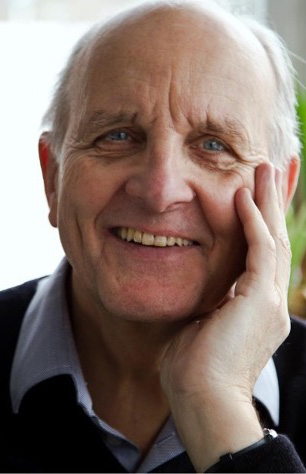
Fredrik’s involvement in peace activism extended beyond the IPB. He played a vital role as Vice President of IALANA (International Association of Lawyers Against Nuclear Arms) and led the Norwegian Peace Council from 1985 to 2000. His influential works, including Peace Is Possible and The Nobel Peace Prize: What Nobel Really Wanted, have been translated into multiple languages, reflecting his global impact.
Today, we honor his final contribution to the field of peace literature, a book poignantly published shortly before his passing: The Real Nobel Peace Prize: A Squandered Opportunity to Abolish War. This groundbreaking work, available in English, is a culmination of Heffermehl’s lifelong quest to unveil the true intentions behind Alfred Nobel’s peace vision.
In The Real Nobel Peace Prize, Heffermehl reveals a startling discovery he made in 2007 about Alfred Nobel’s original peace ideals, a secret obscured by the very stewards of Nobel’s legacy. This book uncovers how Norwegian politicians, designated executors of Nobel’s will, have deviated from its intended purpose since the inception of the Nobel Peace Prize.”[17]

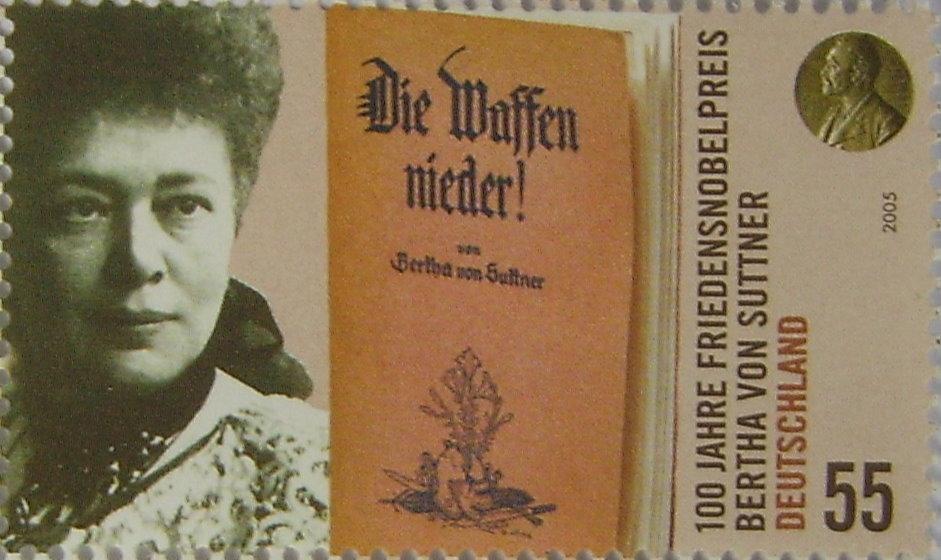
The first NPP was conferred in 1901 upon Henri Dunant, the Swiss businessman and founder of the International Committee of the Red Cross. In 1905 the prize was awarded to Bertha von Suttner, the tireless peace activist and author of the famous book Die Waffen Nieder! — Lay Down Your Arms.[18]
In 1922, the Committee honored Fridtjof Nansen “for his leading role in the repatriation of prisoners of war, in international relief work and as the League of Nations’ High Commissioner for Refugees.”
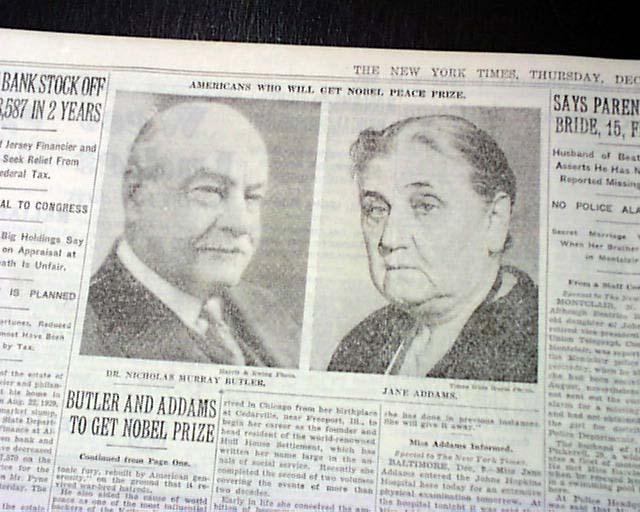
In 1931, the prize was given to Jane Addams and Nicholas Butler “for their assiduous effort to revive the ideal of peace and to rekindle the spirit of peace in their own nation and in the whole of mankind.”
In 1947, it was awarded to the Quakers, represented by the American Friends Service Committee, “for their pioneering work in the international peace movement and compassionate effort to relieve human suffering, thereby promoting the fraternity between nations.”
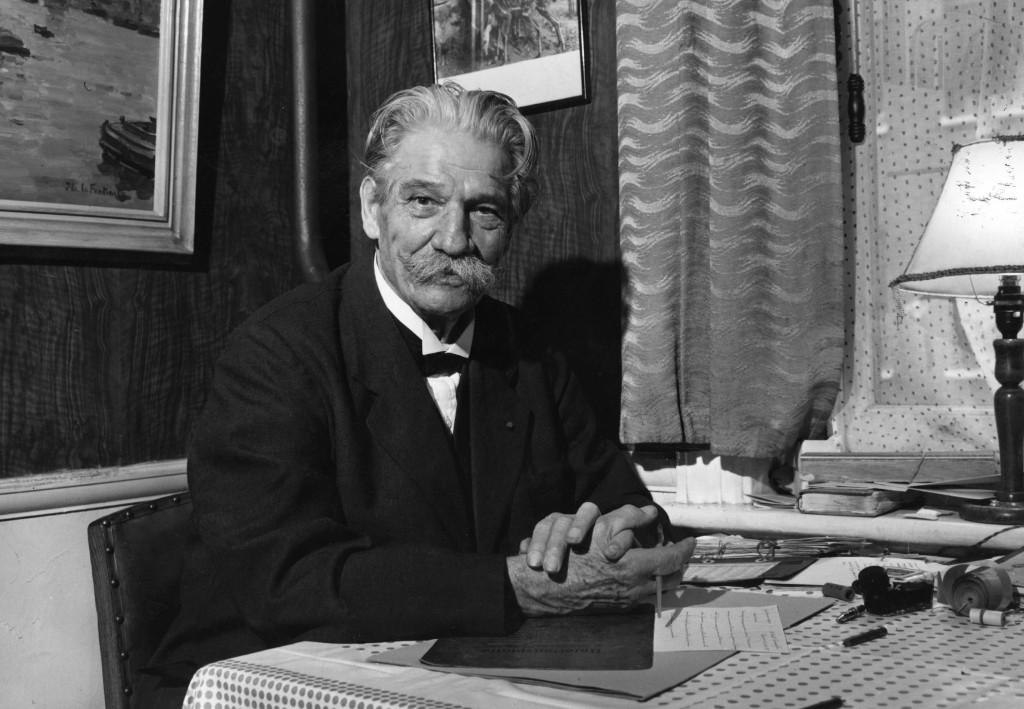
In 1952, it was given to Albert Schweitzer “for his altruism, reverence for life, and tireless humanitarian work which has helped making the idea of brotherhood between men and nations a living one.”
In 1976, it was given to Betty Williams and Mairead Corrigan “for the courageous efforts in founding a movement to put an end to the violent conflict in Northern Ireland.”
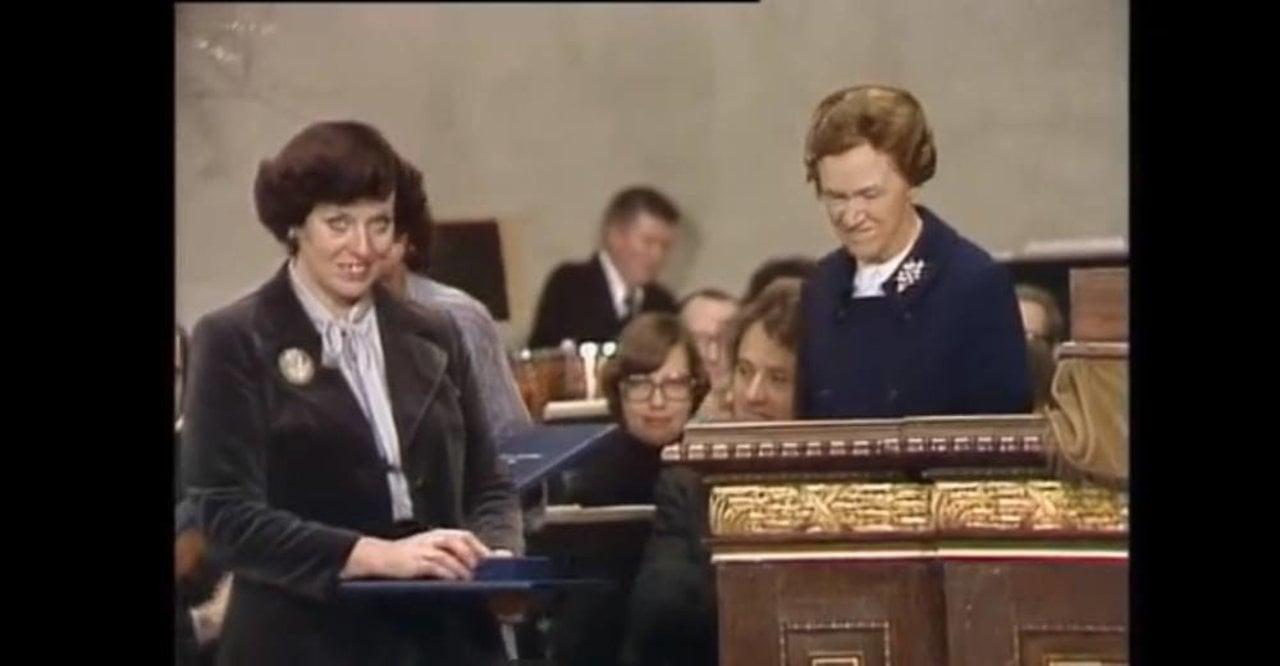
In 1980, it was given to Adolfo Pérez Esquivel “for being a source of inspiration to repressed people, especially in Latin America.”
In 1987, it was given to Óscar Arias “for his work for lasting peace in Central America.” In 1990, it was given to Mikhail Gorbachev “for the leading role he played in the radical changes in East-West relations.”
In 1997, the Nobel Peace Prize went to Jody Williams and the International Campaign to Ban Landmines “for their work for the banning and clearing of anti-personnel mines.”
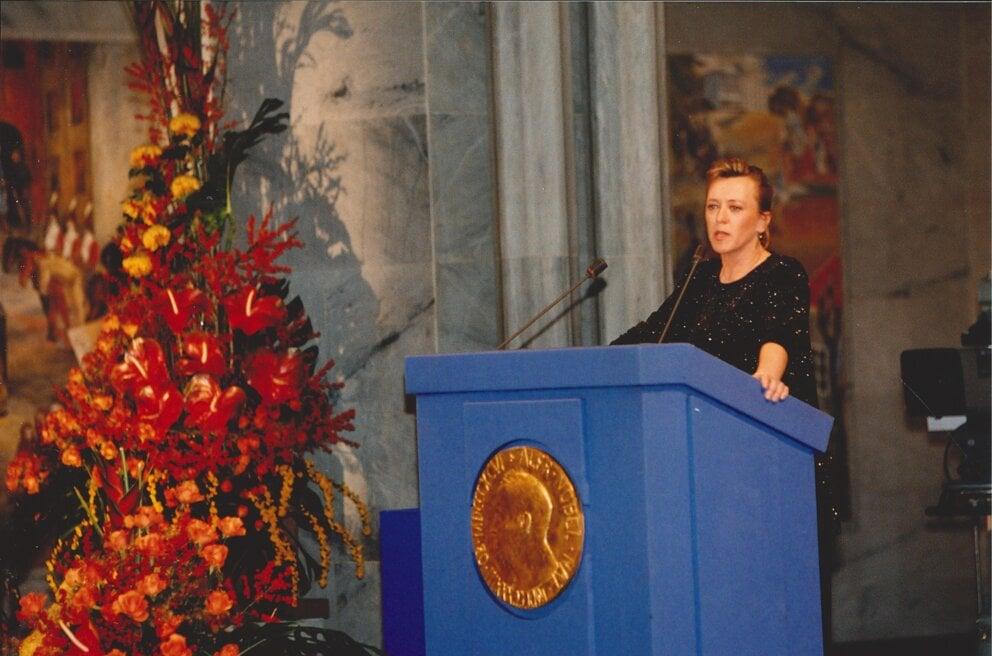
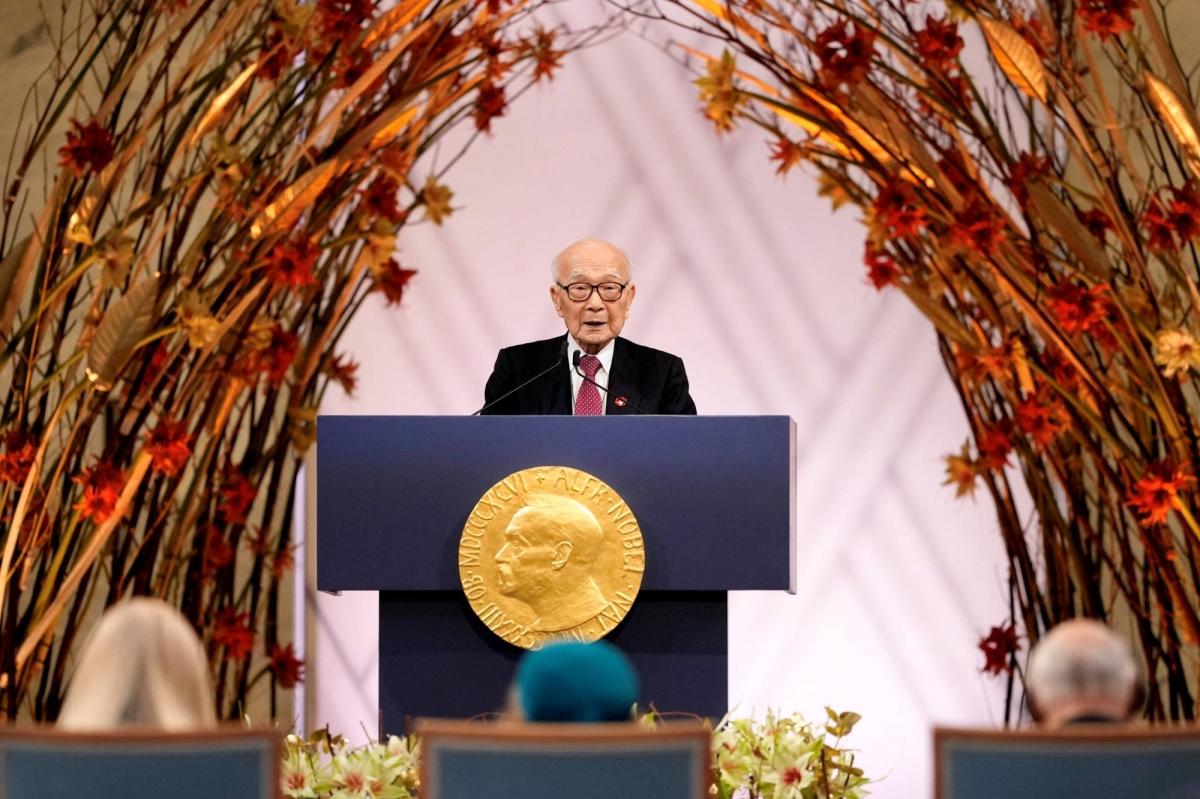
And in 2024, the prize went to Nihon Hidankyo (the Japan Confederation of A- and H-Bomb Sufferers Organizations) “for its efforts to achieve a world free of nuclear weapons and for demonstrating through witness testimony that nuclear weapons must never be used again.”
Unfortunately, the prize has also been egregiously misused to support political agendas that are incompatible with peace and reconciliation, and contrary to the letter and spirit of the Will of Alfred Nobel.
I would call this an aggressive take-over and hijacking of the NPP by hawks and warmongers, a cognitive dissonant destruction of the object and purpose of the prize.
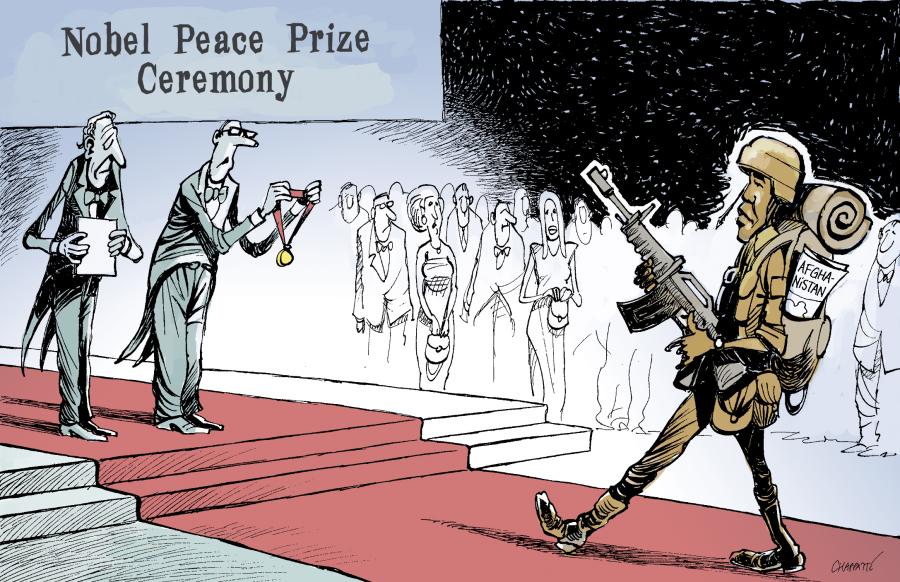
Among the embarrassing and politically motivated Nobel Peace Prize laureates are U.S. President Theodore Roosevelt (1906), a classic bully and warmonger, Henry Kissinger (1973), Menachem Begin (1978), Barack Obama (2009), Abiy Ahmed (2019), Maria Ressa and Dmitry Muratov (2021), and Ales Bialiatski (2022).
Bialiatski was part of an uprising in his country—Belarus—that was financed by foreign intelligence agencies intent on weakening and dismembering Russia. His co-winner that year—Ukraine’s Center for Civil Liberties, led by Oleksandra Matviichuk—also received funding from a CIA-linked organization to advance anti-Russian propaganda and lobbied for an escalation of weapons supplies to Ukraine and war.
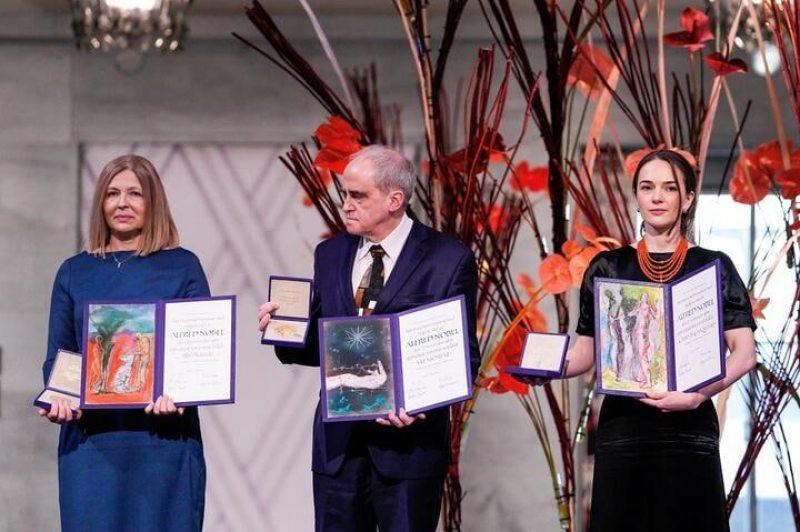
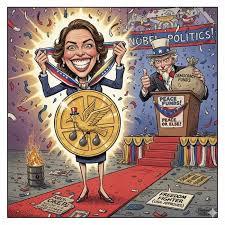
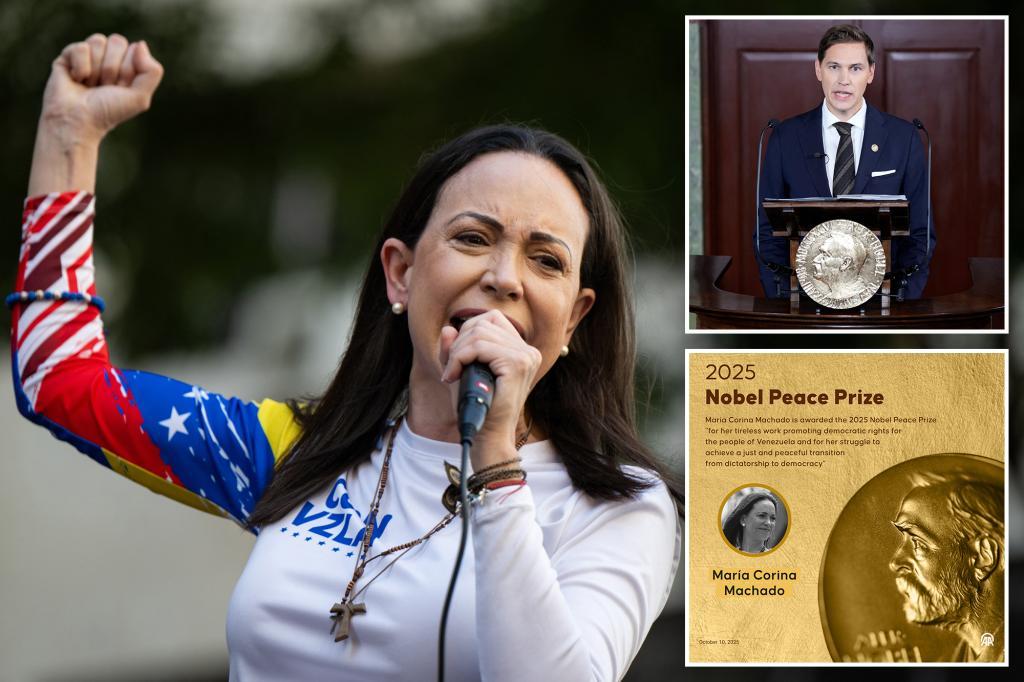
In 2025, we watched President Donald Trump brazenly campaign for the prize. The Committee did not grant him the coveted honor, but it conferred the 2025 prize to a notorious warmonger, Maria Corina Machado, who campaigns for an illegal military intervention in her own country, so that she can become president and replace Nicolás Maduro.
In order to achieve regime change, Machado additionally demanded more sanctions against her own people when she knows that these sanctions have killed tens of thousands of them.
The incompatibility of the laureate with everything that Alfred Nobel stood for is too glaring to ignore, although the Nobel Peace Prize Committee tried to justify it “for her tireless work promoting democratic rights for the people of Venezuela and for her struggle to achieve a just and peaceful transition from dictatorship to democracy.” Yes, as Orwell suggested, “War is Peace, Freedom is slavery.”
Among the positive highlights of Nobel Peace Prize lectures, we can quote the following:
Albert Schweitzer (1952): “The most flagrant violation of historical rights, and indeed of human rights, consists in depriving certain peoples of their right to the land on which they live, thus forcing them to move to other territories. At the end of the Second World War, the victorious powers decided to impose this fate on hundreds of thousands of people, and under the most harsh conditions; from this we can judge how little aware they were of any mission to work toward a reorganization which would be reasonably equitable and which would guarantee a propitious future.”[19]
Rigoberta Menchú (1992): “To us Mother Earth is not only a source of economic riches that give us the maize, which is our life, but she also provides so many other things that the privileged ones of today strive for. The Earth is the root and the source of our culture. She keeps our memories, she receives our ancestors and she, therefore, demands that we honor her and return to her, with tenderness and respect, those goods that she gives us. We have to take care of her so that our children and grandchildren may continue to benefit from her. If the world does not learn now to show respect to nature, what kind of future will the new generations have?”[20]

Mikhail Gorbachev (1990): “Today, peace means the ascent from simple coexistence to cooperation and common creativity among countries and nations. Peace is movement toward globality and universality of civilization. Never before has the idea that peace is indivisible been so true as it is now. Peace is not unity in similarity but unity in diversity, in the comparison and conciliation of differences.”[21]
Nelson Mandela (1993): “Let it never be said by future generations that indifference, cynicism or selfishness made us fail to live up to the ideals of humanism which the Nobel Peace Prize encapsulates. Let the strivings of us all, prove Martin Luther King, Jr., to have been correct, when he said that humanity can no longer be tragically bound to the starless midnight of racism and war.”[22]
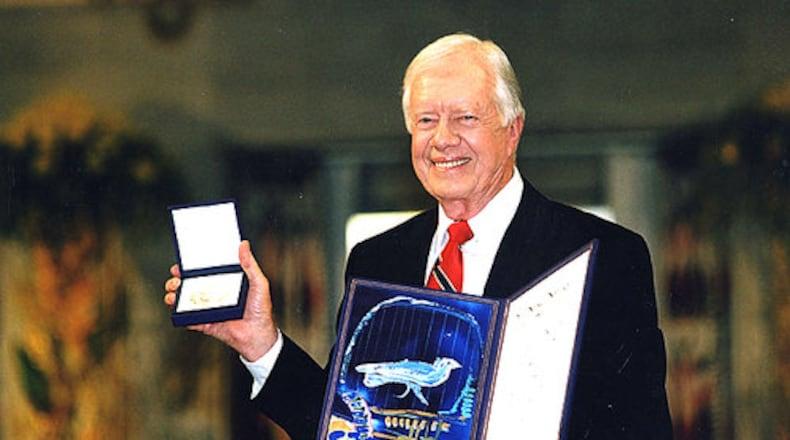
Jimmy Carter (2002): “War may sometimes be a necessary evil. But no matter how necessary, it is always an evil, never a good. We will not learn how to live together in peace by killing each other’s children.”[23]
Charlemagne Prize
The International Charlemagne Prize (German: Karlspreis—Internationaler Karlspreis der Stadt Aachen) is a prize awarded for work done in the service of European unification. It has been awarded since 1950 by the German city of Aachen. It commemorates Emperor Charlemagne (German: Karl der Große), ruler of the Franks and founder of what became the Holy Roman Empire, the first leader to unify Western Europe following the fall of the Western Roman Empire.
As of 2025 there have been 65 laureates (some years there were no laureates). Among the initial laureates were politicians who had done much for European unification, including Konrad Adenauer, Robert Schuman, Jean Monnet, but as the years progressed and bloc mentality replaced common sense, the award became increasingly and corrosively confrontational.
The list of the last four laureates relates a story of aggressive, confrontational choices, leaving little room for reviving the spirituality of the Universal Declaration of Human Rights and the ideals of peace through mutual respect and diplomacy.
2022—Sviatlana Tsikhanouskaya, Maria Kalesnikava, Veronika Tsepkalo (Belarus) “[for] their exemplary commitment to freedom, democracy, the rule of law and the protection of human rights in Europe.”
2023—Volodymyr Zelensky “and the Ukrainian people…[for] their courageous fight for freedom, self-determination, democracy and the defence of our European values.”
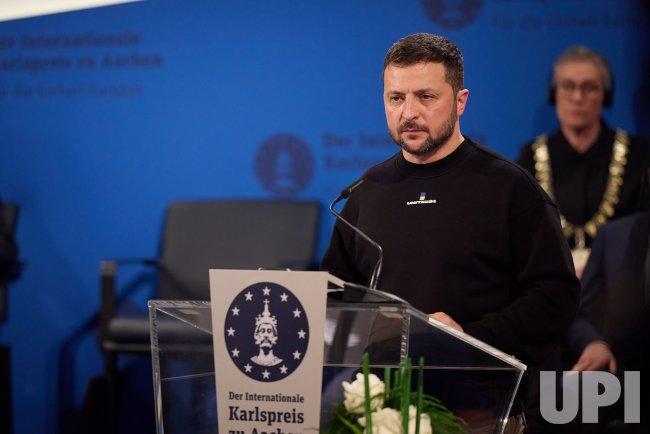
2024—Pinchas Goldschmidt (Switzerland) “and the Jewish communities in Europe…as a signal against anti-Semitism, violence and hatred, for tolerance, dialogue and understanding and as a sign that Jewish life in Europe is a matter of course.”
2025—Ursula von der Leyen (Germany) “for her outstanding commitment to European unity, security and competitiveness.”
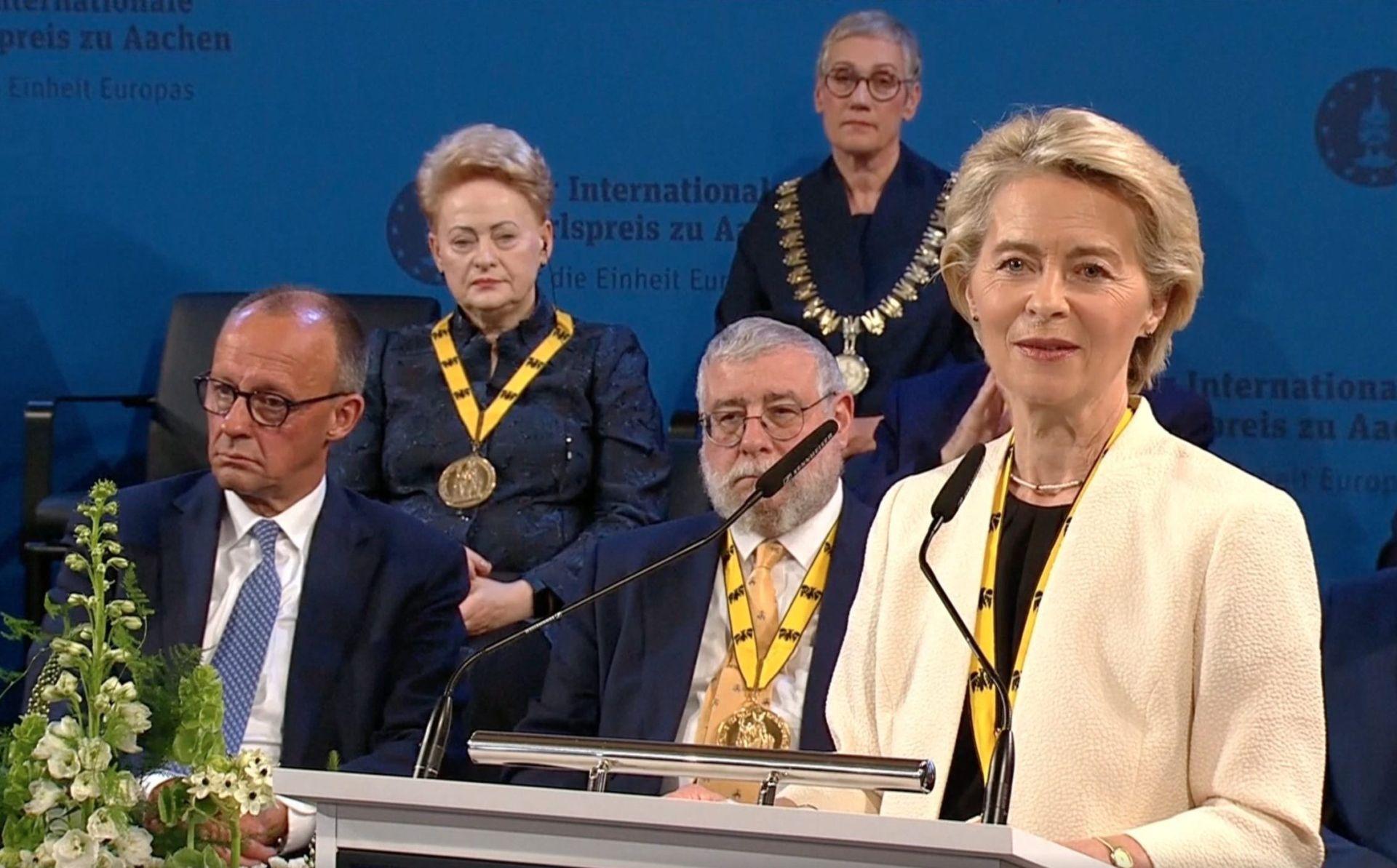
The speeches delivered at the award ceremonies are emblematic for the civilizational decline of Europe and its “elites.”
On May 29, 2025, Ursula von der Leyen used her acceptance speech for invective and provocation. She urged the European Commission “to develop a new form of Pax Europaea for the 21st century—one that is shaped and managed by Europe itself. We all know the vital role that NATO and our transatlantic partners have played in protecting our security and freedom on our continent. And this will continue in future. But thanks to NATO we perhaps thought that times of relative peace were here to stay. The Baltic countries, Poland, and the countries of central and eastern Europe warned us. Their fight for freedom from Soviet oppression confronted them with hardships many others had forgotten. And we know this led to a form of complacency among us—we thought we could rely on a peace dividend. But these times are over. Adversaries of our open democratic societies have rearmed and remobilized. There is no greater example of that than Putin’s brutal and ruthless war against Ukraine. Russia and others will continue to scale up their war economy. The need to invest in our security is therefore becoming ever more urgent. And we know that this investment will not come from anywhere else. Times are changing—and Europe with it. The fact that we are now providing up to EUR 800 billion for defense would have been impossible just a few years ago. The fact that Member States are raising their defense spending to historic highs would also have been unthinkable. We are doing this to put everything into defending peace.”[24]
The entire von der Leyen speech is self-righteous and confrontational, leaving no room for a European culture of mutual respect, the spirit of cooperation and the Helsinki Final Act.[25]
It does not ask the crucial question of the root causes of the Ukraine conflict, the missed opportunities of diplomacy and compromise. It does not address the need for a comprehensive security architecture for all of Europe, a charter that would actually be in keeping with the ideas and ideals of Konrad Adenauer and Robert Schuman—and perhaps even of Charlemagne himself.
International Peace of Westphalia Award
The International Peace of Westphalia Award was established in 1998 to commemorate the 350th anniversary of the signing of the Treaties of Münster and Osnabrück in 1648, ending the murderous Thirty Years’ War (1618-48), which devastated central Europe.
The Peace of Westphalia is recognized as a milestone in the development of European international law, a precursor of European unification, affirming the principle of the sovereignty of States and laying out a plan for reconstruction and reconciliation. Its motto was Pax optima rerum—peace is the highest good.
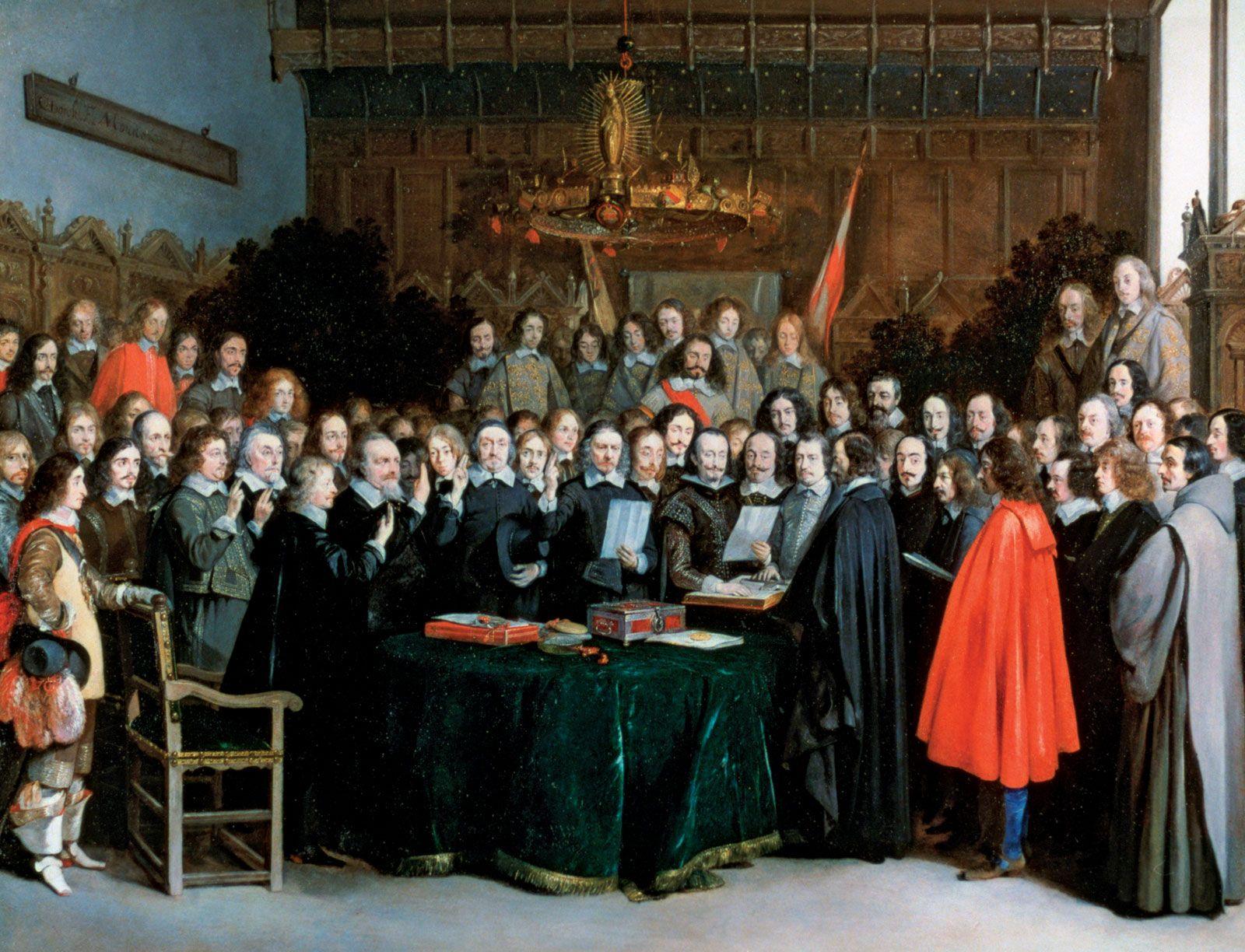
Notwithstanding the atrocities committed in the war, notably by the soldiers of Gustavus Adolphus of Sweden and Louis XIII and Louis XIV of France, Article 2 of the Treaties of Münster and Osnabrück provided for a psychologically necessary turning of the page, a strategy to escape the trauma and the tragedy, reaffirming common values and the recognition of the necessity to live together in peace and tolerance.
Common Article 2 stipulates: “There shall be on the one side and the other a perpetual Oblivion, Amnesty, or Pardon of all that has been committed since the beginning of these Troubles, in what place, or what manner soever the Hostilities have been practiced, in such a manner, that nobody, under any pretext whatsoever, shall practice any Acts of Hostility, entertain any Enmity, or cause any Trouble to each other…”[26]
Similar amnesties were agreed upon in countless peace treaties, e.g., the Peace of Rijswijk of 1697, the Congress of Vienna of 1814-15 and, more recently, the Évian Accords of 1962.[27]
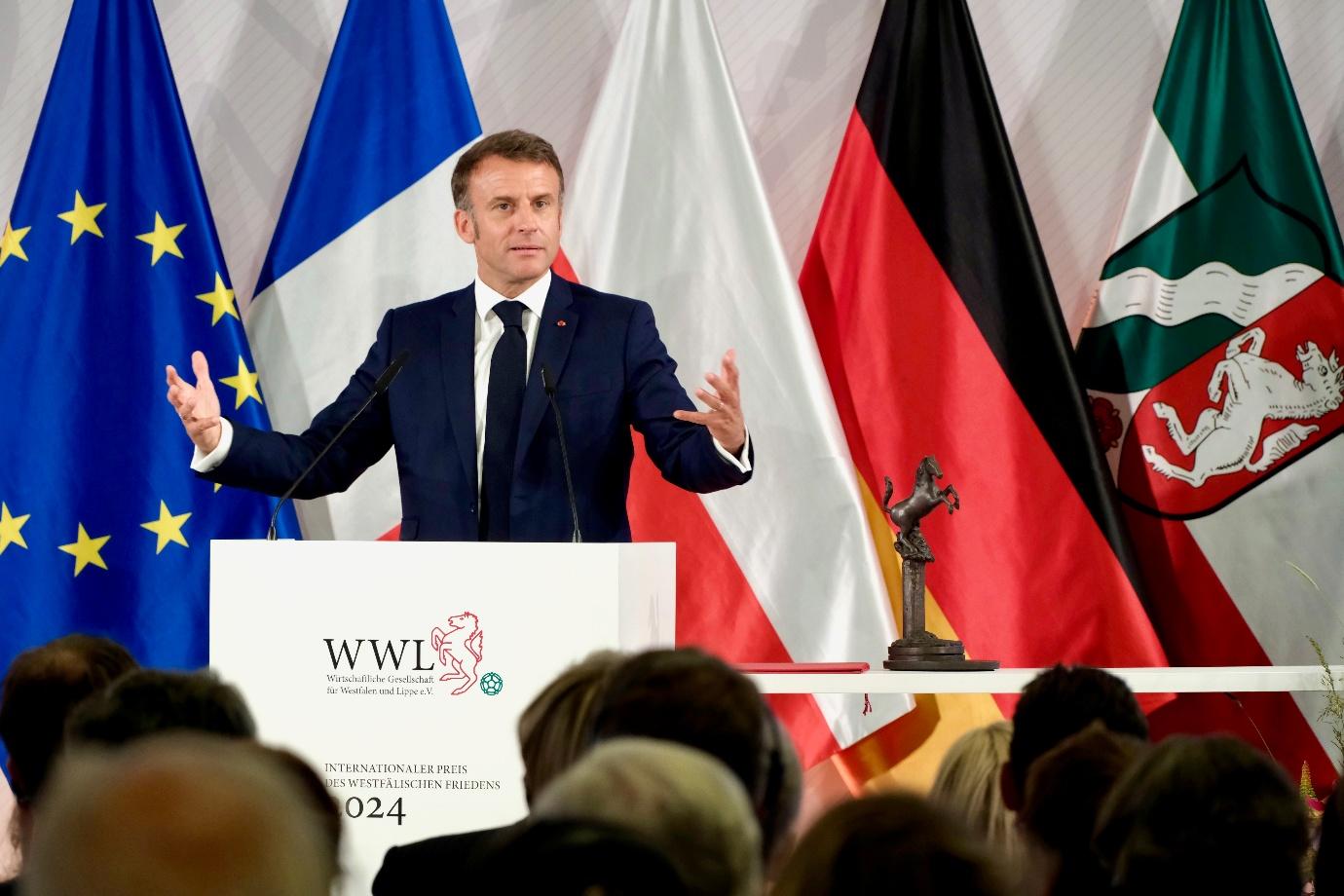
Every two years, the Wirtschaftliche Gesellschaft für Westphalen und Lippe (WWL), with its seat in the city of Münster in Germany, awards the Peace of Westphalia Prize,[28] which is intended to honor special commitment to sustainable peace and international understanding.
At 100,000 euros, the award is the most valuable peace prize awarded by business enterprises. The venue for the award ceremony is the historic town hall in Münster. The award honors international personalities or representatives of states and institutions who, through their commitment, have a long-term peace-building and integrative effect and have thus made a contribution to peace in Europe and the world.
Through 2025, the laureates have been Margot Friedländer (special prize), 2025; Emmanuel Macron, 2024; Alexis Tsipras and Zoran Zaev, 2020; the Baltic states of Estonia, Latvia and Lithuania, 2018; H.M. King Abdullah II ibn Al Hussein, 2016; Crews of the International Space Station, 2014; Helmut Schmidt, 2012; Daniel Barenboim, 2010; Kofi Annan, 2008; Valéry Giscard d’Estaing, 2006; Kurt Masur, 2004; Carla Del Ponte, 2002; Helmut Kohl, 2000; and Vaclav Havel, 1998.
The above list proves how politicized this award is, how little it pays tribute to genuine peace activists, how it caters to hawks. One could and should be outraged to see a hawk like Emmanuel Macron getting the prize.[29]
The only truly deserving laureates have been Daniel Barenboim,[30] who set an immense humanistic example by using music for reconciliation, notably by founding the West-Eastern Divan Orchestra, made up of Israeli and Arab musicians, and the former President of Czechoslovakia, Vaclav Havel, who publicly apologized for the brutal 1945-48 expulsion of three million ethnic Germans who had lived in Bohemia and Moravia[31] for 700 years and were ethnically cleansed by order of his predecessor President Eduard Benes.
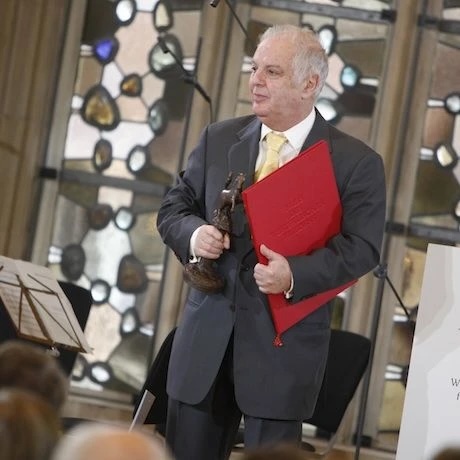
The announcement that the 2026 award will be conferred upon NATO should be a wake-up call to everyone that something has gone terribly wrong.[32]
The Peace of Westphalia Prize has lost its meaning—it has become yet another political spectacle, one not inspired by peace and reconciliation but by provocation, self-righteousness and intransigence.
Yes, believe it or not, the North Atlantic Treaty Organization—a war coalition, a military alliance that has already committed war crimes, crimes against humanity and genocide in numerous war theaters—including Yugoslavia, Afghanistan, Iraq, Libya and Syria—has been named the recipient of the 2026 International Peace of Westphalia Award.
NATO Secretary General Mark Rutte will accept the award on behalf of the transatlantic coalition of hawks, that likes to refer to itself as a “defense alliance.”
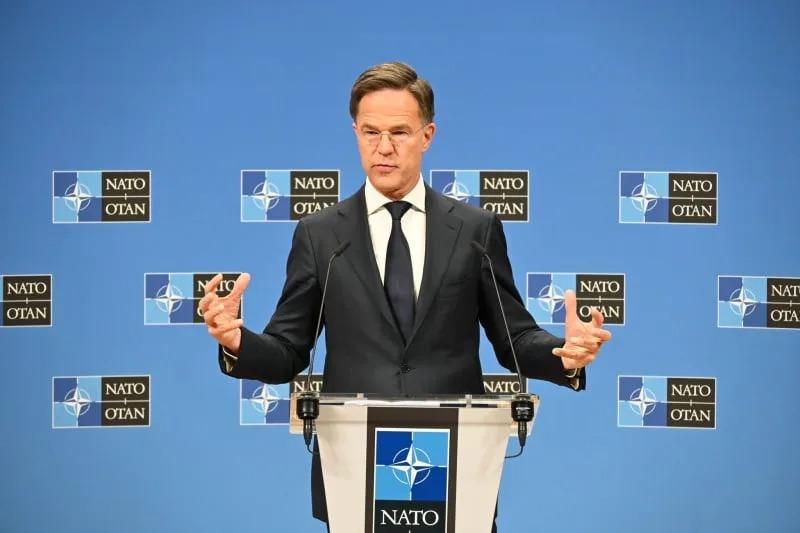
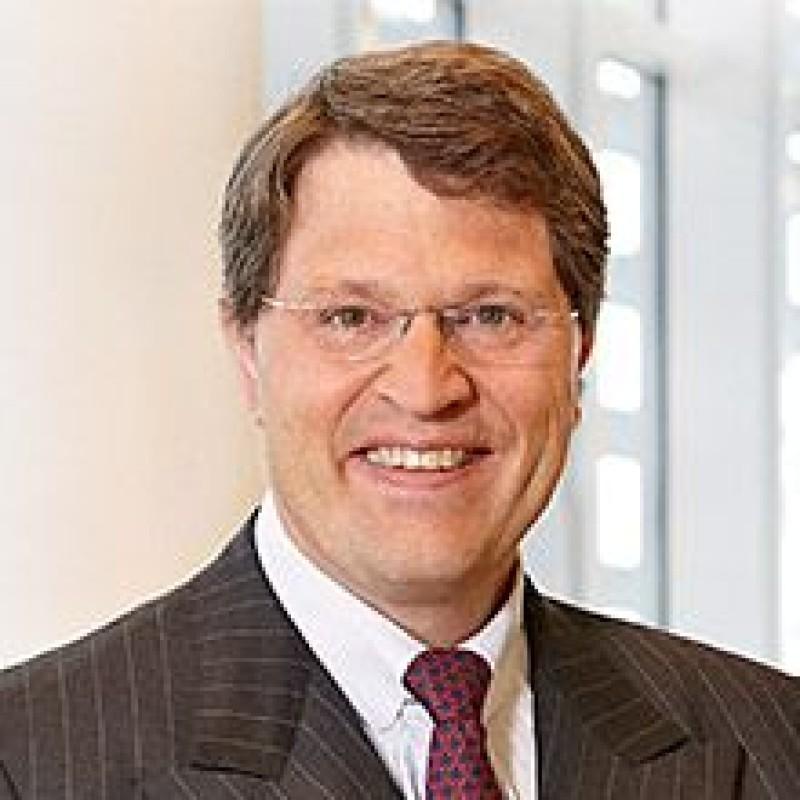
Reinhard Zinkann, chairman of the WWL, stated: “In times of global uncertainty, NATO creates trust, promotes partnership, and ensures peace through stability…Under Mark Rutte’s leadership, the alliance demonstrates that military strength and the preservation of peace are not contradictory but mutually dependent.”
Is this Machiavellianism or just Orwellianism? If we were to re-read Articles 9 and 10 of the Statute of the International Military Tribunal for Nuremberg (London Agreement of August 8, 1945[33]) and the 1949 judgment of the Nuremberg Tribunal, and if we would apply the same criteria to NATO, we would conclude that NATO qualifies as a “criminal organization”[34] and that there must be accountability for its crimes.
Yet, immense public relations and relentless propaganda have persuaded us that NATO is a legitimate organization, even a “defense” alliance. Never underestimate the power of indoctrination: “War is Peace, Freedom is Slavery, Ignorance is Strength” (George Orwell, 1984).[35]
What institutions or individuals would be more deserving? Among others: TFF—the Transnational Foundation for Peace and Future Research;[36] GIPRI—the Geneva International Peace Research Institute; WILPF—the Women’s International League for Peace and Freedom; AEDIDH—the Spanish Society for International Human Rights Law; IHRAAM—the International Human Rights Association of American Minorities; UNESCO; Fundación Cultura de Paz, Madrid…
What individualss would merit the honor – or would have merited it more? Navi Pillay, former UN High Commissioner for Human Rights, Amy Goodman (Democracy Now), Prof. Richard Falk, Prof. Jeffrey Sachs, Prof. John Mearsheimer, Prof. Noam Chomsky, Prof. Glenn Diesen, Prof. Karl Albrecht Schachtschneider, Prof. Francesca Albanese, Prof. Georgios Katrougalos, Jan Öberg, Denis Halliday, Hans-Christof von Sponeck, Julian Assange, the late Fredrik Heffermehl, the late Federico Mayor Zaragoza, former UNESCO director-general, and the late, wonderful, inspiring Edith Ballantyne (1922-2025).
While expressing gratitude to all those who have championed peace, humanitarian aid, technology and medical science, it is time to recognize that award ceremonies are often over-the-top and should be scaled down. Indeed, our civilization rests on the contributions of millions of individuals, most of whom have remained anonymous.
Every invention builds on countless previous inventions. Every inventor rests on the shoulders of long-gone giants. Honor is due to the human spirit, to human ingenuity—and to universal solidarity.
The Sonderweg of peace awards can still be corrected. A reality check and a common-sense approach are the logical preconditions.
Otherwise, the value of awards is undermined, especially when the concept of “peace” is turned on its head and redefined ad absurdum.

M. J. T. Lewis, “The Origins of the Wheelbarrow,” Technology and Culture, vol. 35, no. 3 (July 1994), 453–75. ↑
https://www.lifeofsailing.com/blogs/articles/who-invented-the-sailboat-when ↑
https://www.soaphistory.net/soap-history/ ↑
https://www.chinahighlights.com/travelguide/culture/porcelain-history.htm ↑
https://www.antichemura.it/en/illustrious-characters/guido-of-arezzo/ ↑
https://www.britannica.com/topic/Micrologus
http://www.micrologus.com/tools/online_harmonic_analyzer ↑https://www.olympics.com/ioc/ioc-overview/ioc-history/ancient-olympic-games/rewards ↑
https://www.openculture.com/2024/08/jean-paul-sartre-rejects-the-nobel-prize-in-literature-in-1964-it-was-monstrous.html ↑
Alfred de Zayas, CounterPunch, https://www.counterpunch.org/2023/09/26/retrogression-in-human-rights/ ↑
Alfred de Zayas, The Human Rights Industry (Atlanta: Clarity Press, 2023). ↑
Alfred de Zayas, https://www.counterpunch.org/2024/08/09/appeasement-reconsidered/ ↑
https://www.politico.eu/article/pope-francis-nato-cause-ukraine-invasion-russia/ ↑
https://www.counterpunch.org/2022/01/28/a-culture-of-cheating-on-the-origins-of-the-crisis-in-ukraine/ ↑
https://www.nobelprize.org/alfred-nobel/full-text-of-alfred-nobels-will-2/ ↑
https://booksfromnorway.com/books/2151-the-real-nobel-peace-prize.pdf
https://onlinelibrary.wiley.com/doi/epdf/10.1111/pech.70012
https://english.cpnn-world.org/?p=33748 ↑
https://www.betterworld.info/peace/peace-prizes/real-nobel-peace-prize ↑
https://ipb.org/honoring-the-legacy-of-fredrik-s-heffermehl-a-voice-for-peace-and-a-final-masterpiece/ ↑
https://www.gutenberg.org/files/49294/49294-h/49294-h.htm; https://www.berthavonsuttner.com/ldya.pdf ↑
https://www.nobelprize.org/prizes/peace/1952/schweitzer/lecture/ ↑
https://www.nobelprize.org/prizes/peace/1992/tum/lecture/ ↑
https://www.nobelprize.org/prizes/peace/1990/gorbachev/lecture/ ↑
https://www.nobelprize.org/prizes/peace/1993/mandela/lecture/ ↑
https://www.nobelprize.org/prizes/peace/2002/carter/lecture/ ↑
https://ec.europa.eu/commission/presscorner/detail/en/speech_25_1366 ↑
https://www.csce.gov/wp-content/uploads/2016/10/Helsinki-Final-Act.pdf. See also Gabriele Krone-Schmalz, Russland Verstehen? (Frankfurt am Main: Westend Verlag (2023). ↑
https://avalon.law.yale.edu/17th_century/westphal.asp ↑
Alfred de Zayas, “Amnesty Clause,” in Rudolf Bernhardt (ed.), Encyclopedia of Public International Law, Vol. 1, pp. 151-53, “Westphalia, Peace of” in vol. IV, pp. 1465-69 (Amsterdam: North Holland Publishers, 2000). https://newkontinent.org/a-blueprint-for-peace-in-ukraine/ ↑
https://www.wirtschaftliche-gesellschaft.de/en/international-award-of-the-peace-of-westphalia/award-winners ↑
https://www.wirtschaftliche-gesellschaft.de/en/international-award-of-the-peace-of-westphalia/peace-prize-2024-awarded and https://theeuropetoday.com/2024/05/28/emmanuel-macron-receives-international-award-of-the-peace-of-westphalia-in-germany/ ↑
https://west-eastern-divan.org/ ↑
Alfred de Zayas, “International Law and Mass Population Transfers,” Harvard International Law Journal, vol. 16, 1975, pp. 207-58; Nemesis at Potsdam (London: Routledge, 1977, and Routledge Revivals, 2023). ↑
https://www.wirtschaftliche-gesellschaft.de/en/international-award-of-the-peace-of-westphalia/nato-and-sociomovens-receive-westphalian-peace-prize-2026 and https://www.cereport.eu/news/politics/88256 ↑
https://avalon.law.yale.edu/imt/imtchart.asp ↑
https://www.globaltimes.cn/page/202307/1294420.shtml
https://www.youtube.com/watch?v=u2SL79k_oKI and https://rumble.com/v6yqwo4-deserves-nato-organisations-the-label-of-a-cartel-criminal-organization.html ↑
https://www.george-orwell.org/1984/0.html ↑
https://transnational.live/about/ ↑
CovertAction Magazine is made possible by subscriptions, orders and donations from readers like you.
Blow the Whistle on U.S. Imperialism
Click the whistle and donate
When you donate to CovertAction Magazine, you are supporting investigative journalism. Your contributions go directly to supporting the development, production, editing, and dissemination of the Magazine.
CovertAction Magazine does not receive corporate or government sponsorship. Yet, we hold a steadfast commitment to providing compensation for writers, editorial and technical support. Your support helps facilitate this compensation as well as increase the caliber of this work.
Please make a donation by clicking on the donate logo above and enter the amount and your credit or debit card information.
CovertAction Institute, Inc. (CAI) is a 501(c)(3) non-profit organization and your gift is tax-deductible for federal income purposes. CAI’s tax-exempt ID number is 87-2461683.
We sincerely thank you for your support.
Disclaimer: The contents of this article are the sole responsibility of the author(s). CovertAction Institute, Inc. (CAI), including its Board of Directors (BD), Editorial Board (EB), Advisory Board (AB), staff, volunteers and its projects (including CovertAction Magazine) are not responsible for any inaccurate or incorrect statement in this article. This article also does not necessarily represent the views the BD, the EB, the AB, staff, volunteers, or any members of its projects.
Differing viewpoints: CAM publishes articles with differing viewpoints in an effort to nurture vibrant debate and thoughtful critical analysis. Feel free to comment on the articles in the comment section and/or send your letters to the Editors, which we will publish in the Letters column.
Copyrighted Material: This web site may contain copyrighted material the use of which has not always been specifically authorized by the copyright owner. As a not-for-profit charitable organization incorporated in the State of New York, we are making such material available in an effort to advance the understanding of humanity’s problems and hopefully to help find solutions for those problems. We believe this constitutes a ‘fair use’ of any such copyrighted material as provided for in section 107 of the US Copyright Law. You can read more about ‘fair use’ and US Copyright Law at the Legal Information Institute of Cornell Law School.
Republishing: CovertAction Magazine (CAM) grants permission to cross-post CAM articles on not-for-profit community internet sites as long as the source is acknowledged together with a hyperlink to the original CovertAction Magazine article. Also, kindly let us know at info@CovertActionMagazine.com. For publication of CAM articles in print or other forms including commercial internet sites, contact: info@CovertActionMagazine.com.
By using this site, you agree to these terms above.
About the Author
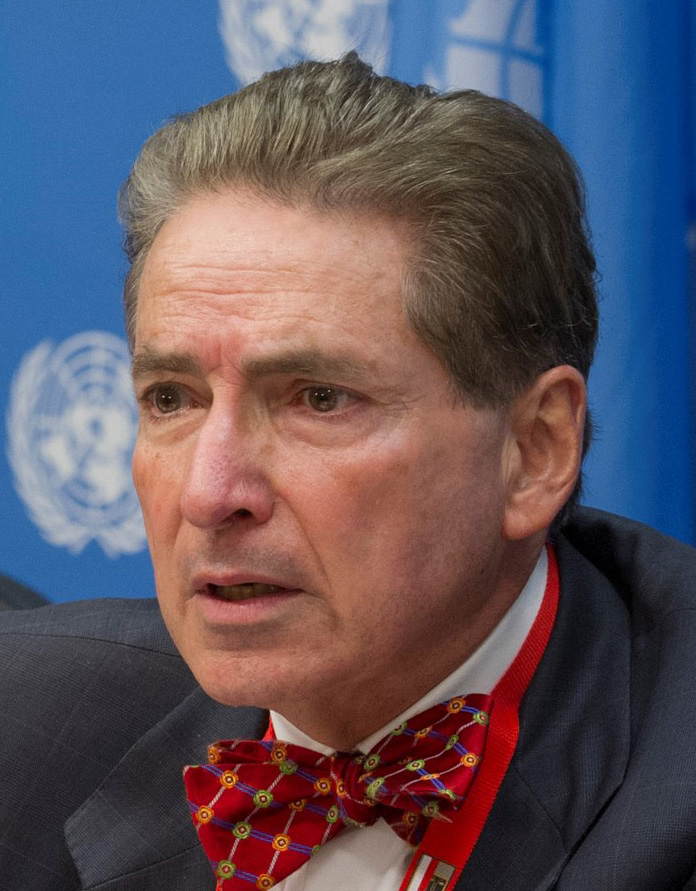
Alfred de Zayas is U.S. and Swiss citizen, residing in Geneva, Switzerland, where he is Professor of Law at the Geneva School of Diplomacy.
De Zayas is a former senior lawyer with the UN Office of the High Commissioner for Human Rights and former UN Independent Expert on International Order (2012-18).
He is author of 12 books including “Building a Just World Order.”
Alfred can be reached at alfreddezayas@gmail.com.

In 2022 several anti war activists were awarded the Nobel prize:
Activists from Ukraine, Belarus and Russia won the Nobel Peace Prize on Friday, a strong rebuke to Russian President Vladimir Putin whose invasion of Ukraine has outraged the international community and highlighted his authoritarian rule.
The Norwegian Nobel Committee awarded the 2022 prize to imprisoned Belarus rights activist Ales Bialiatski, the Russian group Memorial and the Ukrainian organization Center for Civil Liberties.
Berit Reiss-Andersen, chair of the Norwegian Nobel Committee, said the panel wanted to honor ”three outstanding champions of human rights, democracy and peaceful coexistence.”
“Through their consistent efforts in favor of human values and anti-militarism and principles of law, this year’s laureates have revitalized and honored Alfred Nobel’s vision of peace and fraternity between nations, a vision most needed in the world today,” she told reporters in Oslo.