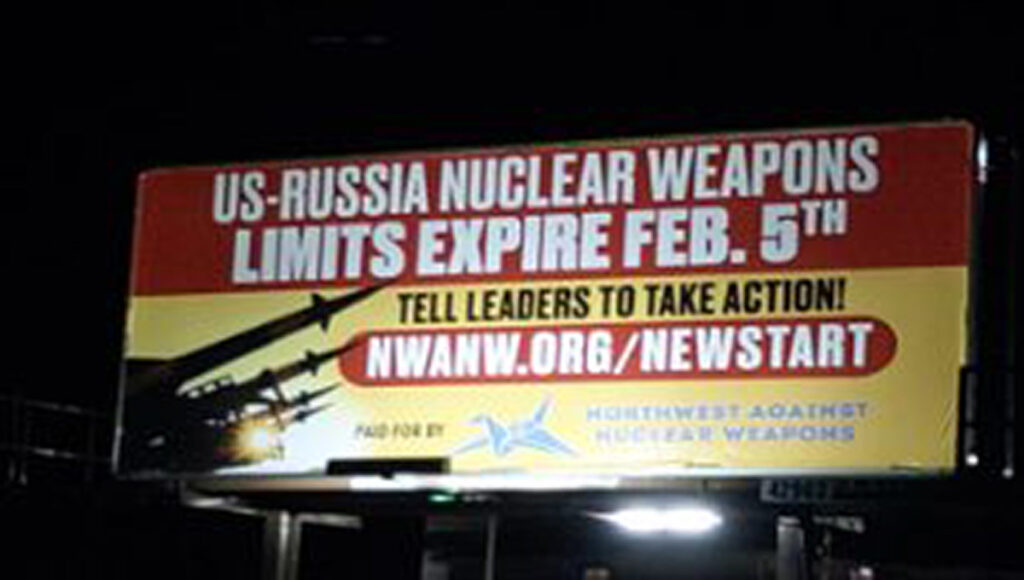
Expiry of New START is set to trigger dangerous new nuclear arms race
On February 5, the Trump administration allowed the New Strategic Arms Reduction Treaty (START) to expire, leaving the U.S and Russia with no agreements for the regulation of nuclear weapons for the first time in more than 50 years.
Trump refused to respond to Russia’s offer to extend the treaty for a year and has failed to establish a negotiating process to develop an alternative to New START.
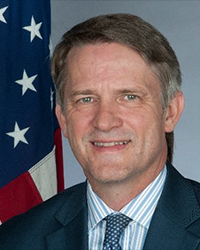
Thomas Countryman, the former U.S. Undersecretary for Arms Control, warned at a Quincy Institute forum on February 5 that the expiration of the New START and failure to negotiate a new agreement that includes Russia and China could trigger a “trilateral arms race that may exceed the cost and risk of the arms race of the Cold War.”
Costing U.S. taxpayers more than $5.5 trillion, this latter arms race profoundly warped the U.S. and Soviet economies, caused environmental and health catastrophes, and helped induce what General Lee Butler, commander of Strategic Command in the early 1990s termed a “terror-induced anesthesia,” which “suspended rational thinking” and “nearly provoked a nuclear holocaust” that was averted only by “some combination of diplomatic skill, blind luck and divine intervention, probably the latter in greater proportion.”[1]

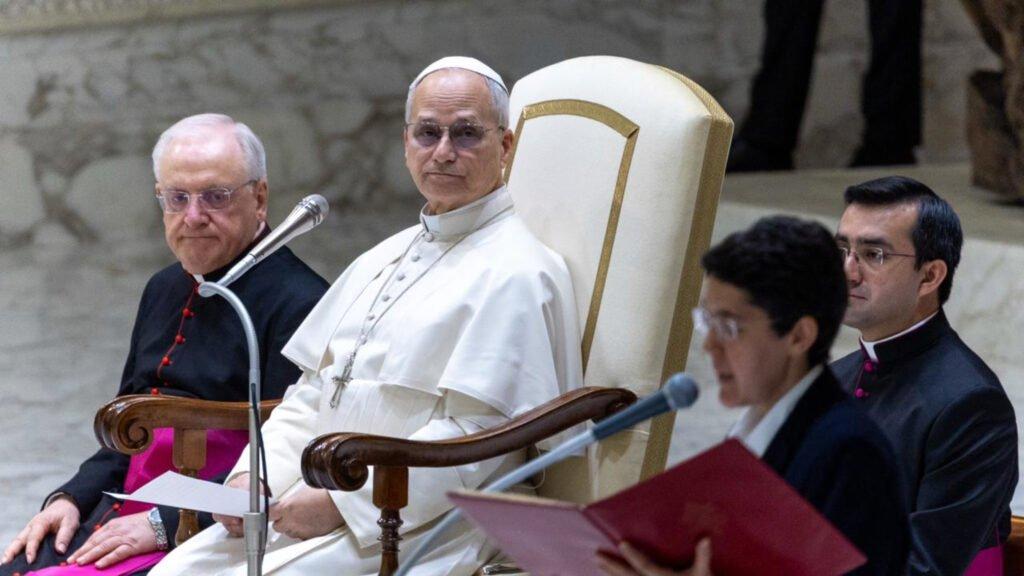
On February 4, Pope Leo XIV issued an appeal stating that the lapsing of the New START bodes ominously for the advent of a “new arms race that would threaten peace among nations.”
This arms race is being openly promoted by right-wing think tanks like The Heritage Foundation, which has released a report calling for tripling the U.S. nuclear arsenal to 4,625 operational weapons by 2050 and stating that more nuclear weapons should be “forward deployed in allied states.”
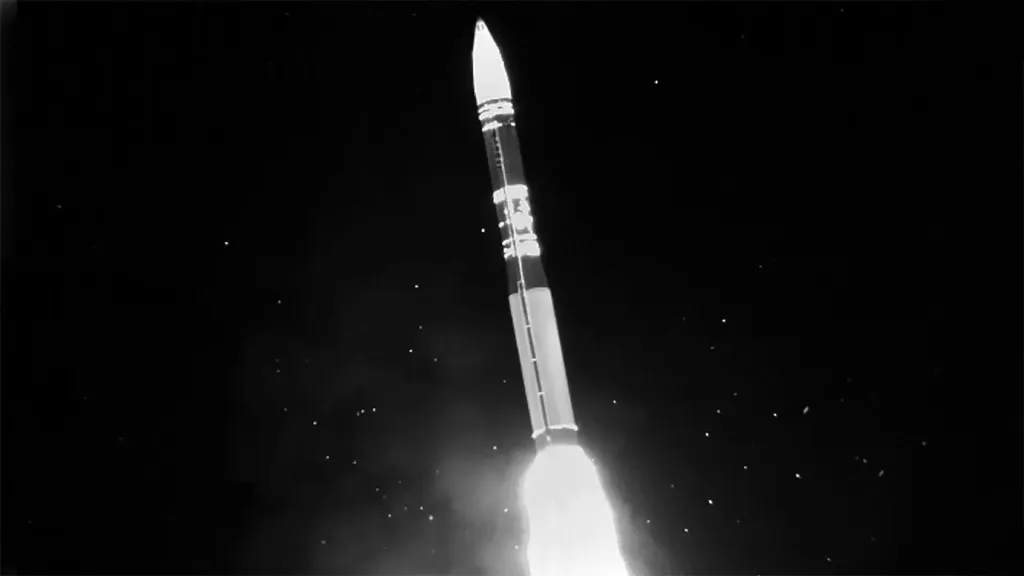
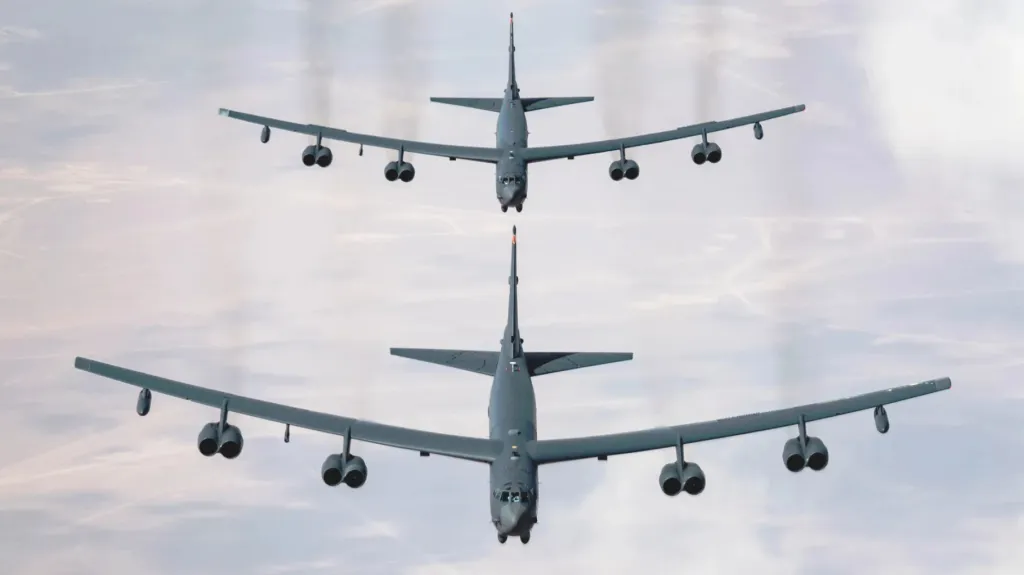
The U.S. Air Force Global Strike Command (AFGC) has begun preparations to upload additional warheads to Minuteman III Inter-Continental Ballistic Missiles (ICBMs) and to re-nuclearize B-52 bombers that were denuclearized to comply with New START.[2]
The Trump administration appears intent on using the New START’s expiration as a pretext to move forward with its Golden Dome missile defense system, a trillion-dollar space shield in which interceptors orbiting the Earth would have the capacity to shoot down nuclear-armed ICBMs fired at the U.S. mainland.
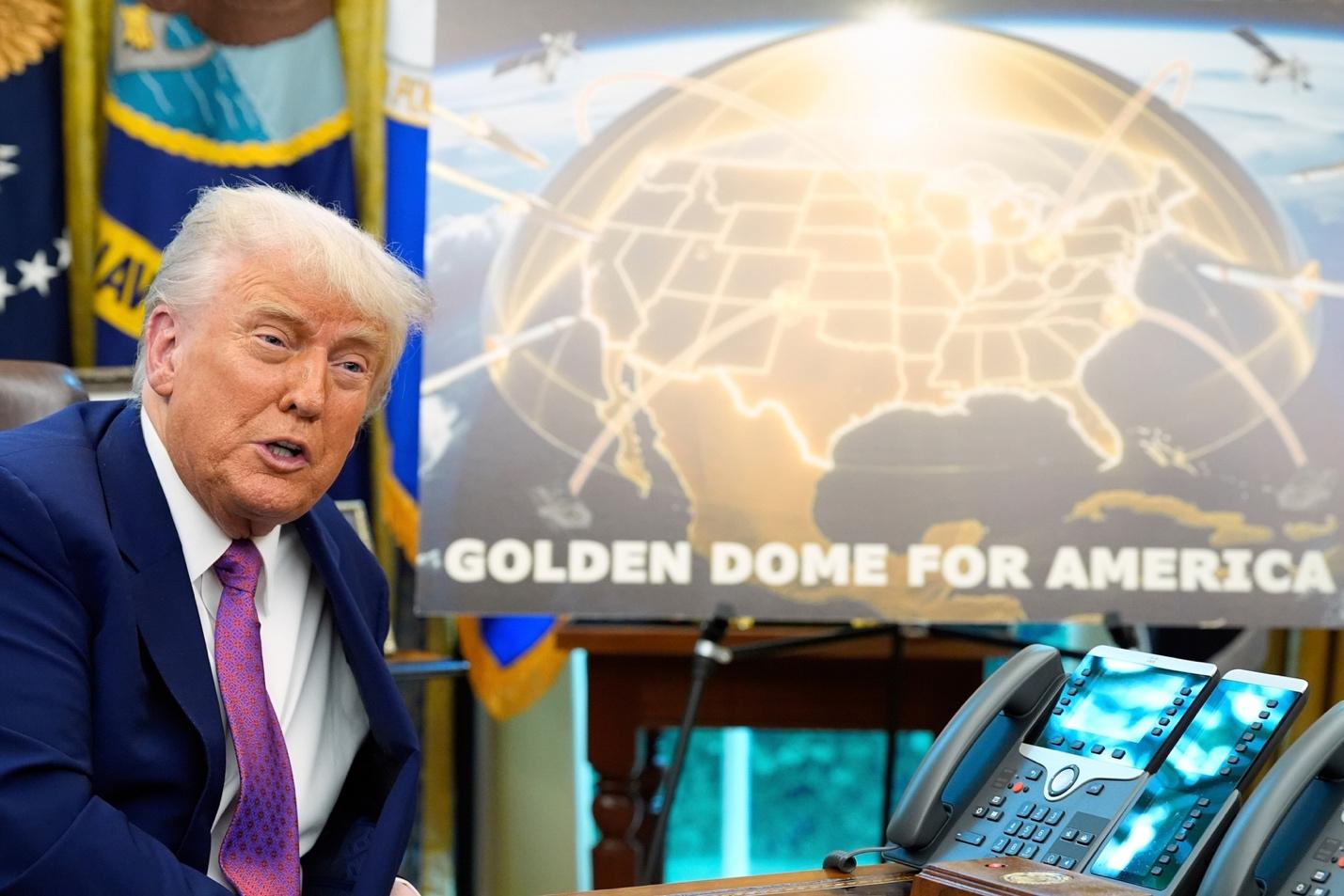
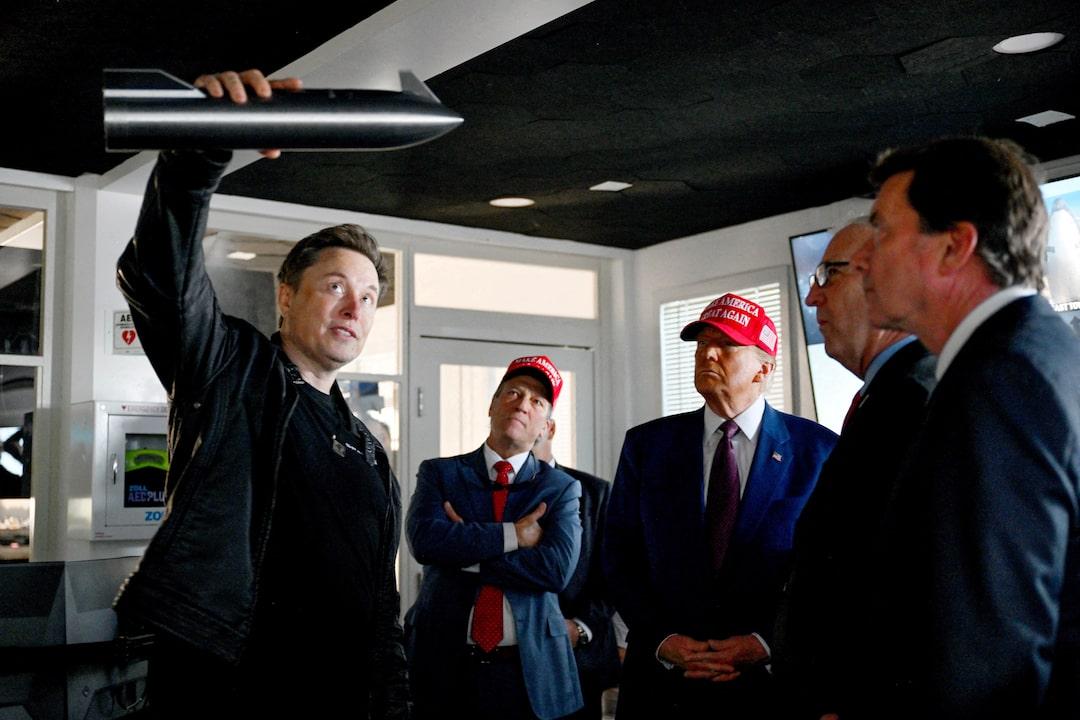
Characterized by MIT professor and former Pentagon weapons adviser Theodore Postol as a “total delusion” and “crazy idea” with “no merit,” the Golden Dome offers a bonanza for top military contractors like Lockheed Martin and Elon Musk’s SpaceX, which are expected to be awarded most of the contracts for building the system in partnership with software maker Palantir and drone builder Anduril.
Musk gave around a quarter of a billion dollars to help get Donald Trump elected president and is receiving a high rate of return for policies that are detrimental to humanity.
Disarmament in the Time of Perestroika and Its Collapse
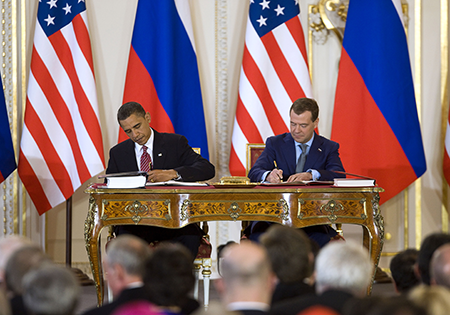
Following from the START 1 treaty signed between the U.S. and the USSR in July 1991, the New START treaty was signed by the Obama administration in 2010 and limited the number of deployed strategic nuclear warheads for both the U.S. and Russia to 1,550 and the number of deployed and non-deployed ICBM launchers, submarine-launched ballistic missile (SLBM) launchers, and heavy bombers equipped for nuclear armaments to 800.
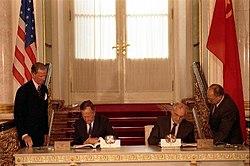
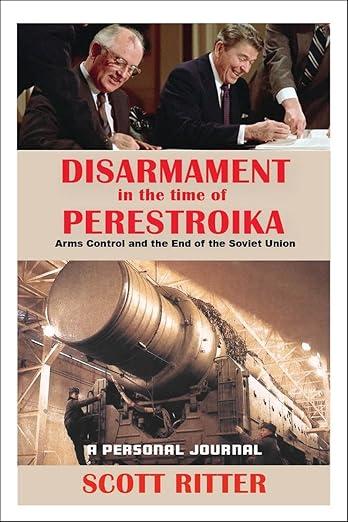
In Disarmament in the Time of Perestroika, former weapons inspector Scott Ritter discusses the spirit of cooperation between the U.S. and Soviet Union in the 1970s and 1980s that led to START 1 and the 1987 Intermediate Nuclear Forces (INF) Treaty, which mandated the destruction of all ground-launched ballistic and cruise missiles with ranges of 500 to 5,500 kilometers.
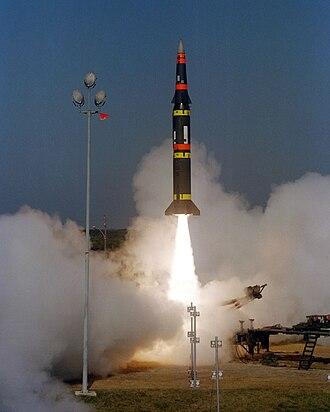
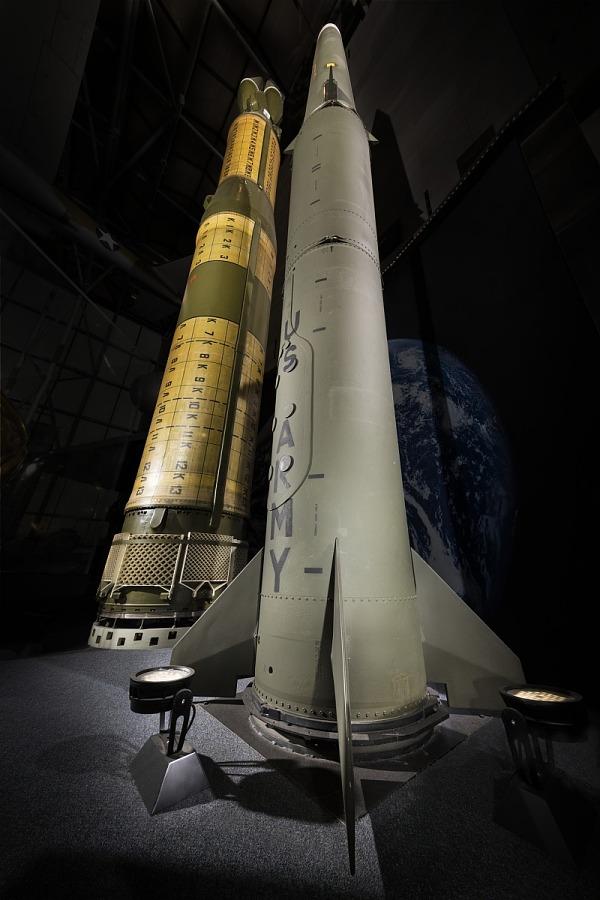
In the late 1980s, Ritter served as a weapons inspector at the Votkinsk Missile Assembly Plant on the foothills of the Ural Mountains. The plant produced the SS-20 missile that the INF Treaty forced to decommission along with its American counterpart, the Pershing II missile, which could reach Moscow from its launch sites in West Germany in fewer than eight minutes.[3]
The CIA had tried to block the INF Treaty by leaking falsified intelligence pointing to the existence of a covert force of SS-20 booster missiles that could launch nuclear devices into the atmosphere that would create a “dome of light” capable of destroying U.S. warheads. The falsified intelligence prompted five Senators, including Jesse Helms (R-NC), to vote against the INF Treaty.[4]
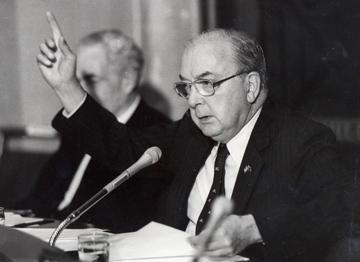
Following the CIA’s lead, the Trump administration suspended the INF treaty in Febrary 2019, claiming Russian non-compliance.
Russia specified that it had in fact complied with the treaty and that the U.S. was the one violating it through its Mark 41 Vertical Launching System (Mk 41 VLS) that was part of the Aegis Ashore Missile Defense System located in Deveselu, Romania, which Russia said had capability for launching ground-based cruise missiles.
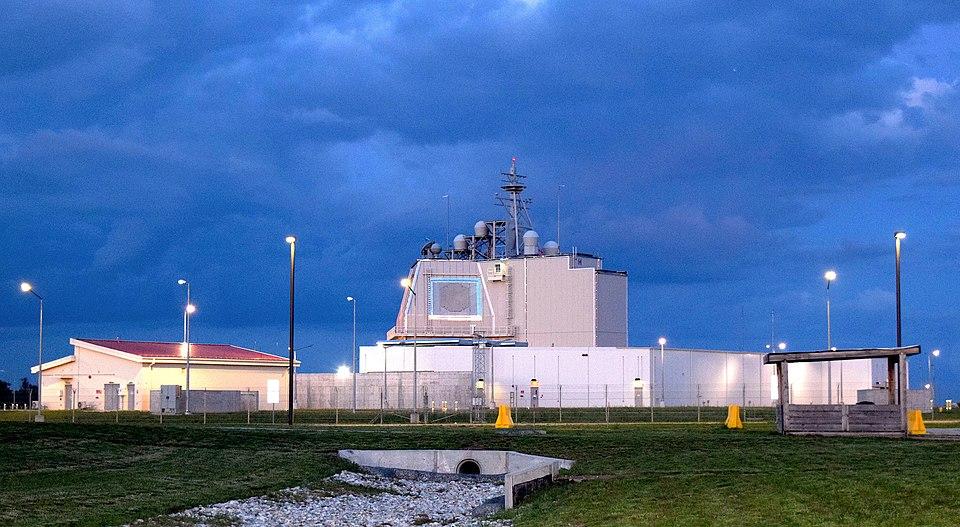
The Russian argument appears to have been valid, as the U.S. admitted that its missile defense system in Romania was based on MK 41 vertical launchers made by BAE Systems capable of firing cruise missiles, though it claimed the latter lacked an offensive capability.[5]
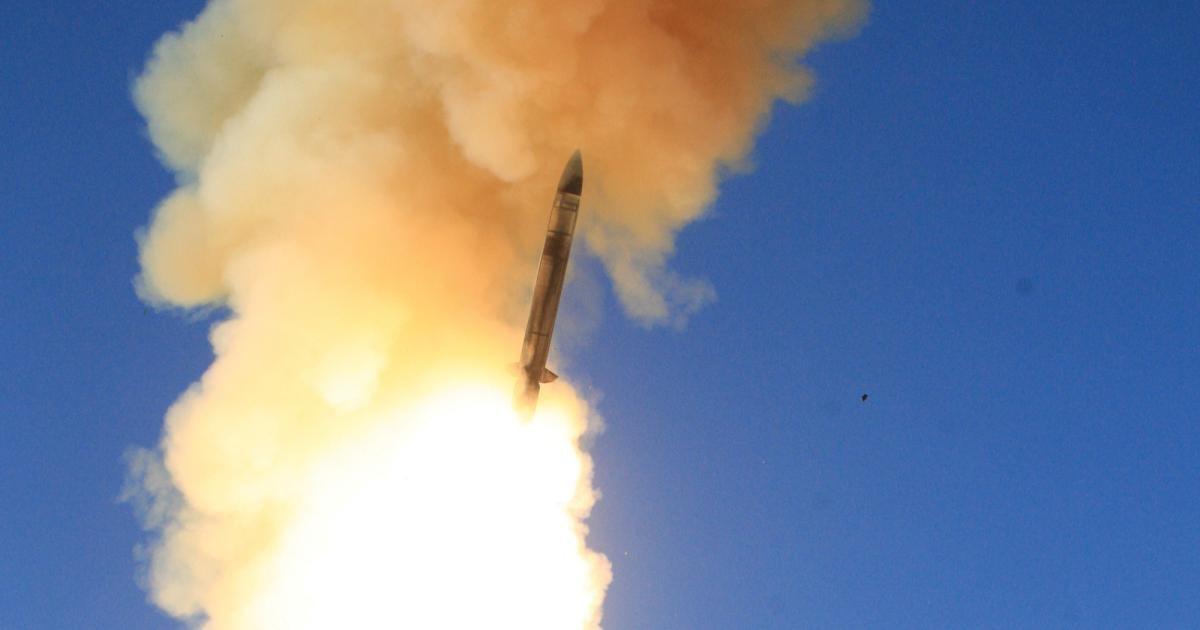
The Russians also said that the U.S. had violated the INF Treaty through its proliferation of attack drones, which the U.S. claimed did not fit the definition of a cruise missile because cruise missiles were a “one-way vehicle” while a drone is supposed to return to base.
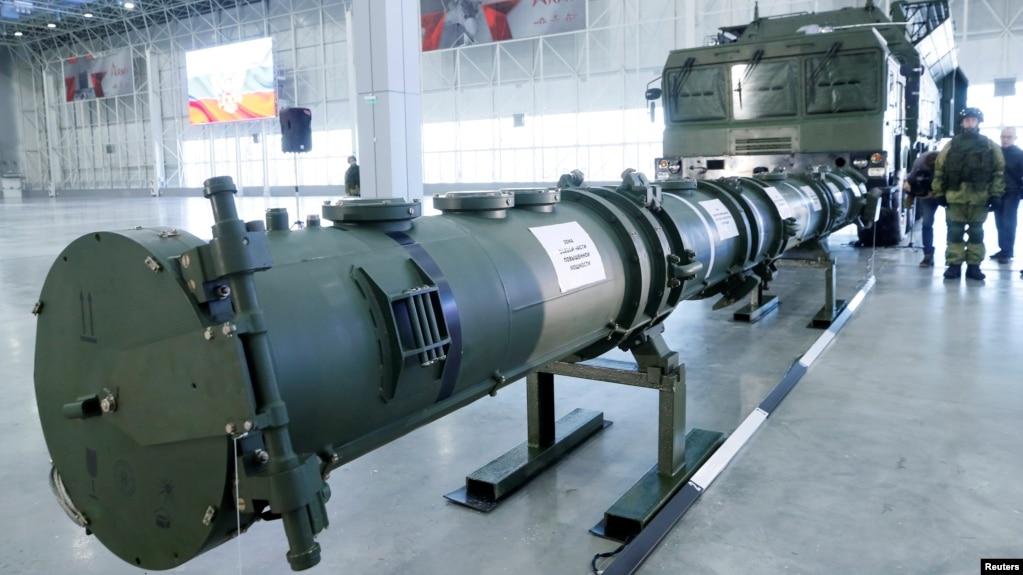
The U.S. accused the Russians of violating the INF Treaty through development of the 9M729 missile, which the U.S. said possessed a range of 2,500 miles.
Scott Ritter noted some skepticism within NATO about Russia’s claimed violations because the U.S. was not forthcoming about how it obtained intelligence on the 9M729 missile and because it was thought there might be some confusion with a naval cruise missile known as the “Kalibr” that was tested at the same time and was in compliance with the INF Treaty.[6]
Like with China, Trump’s hard-line policies vis-à-vis Russia are being driven by weapons-makers and the Wall Street firms that own them who have rigged the political system in the U.S. and stand to profit massively from a new arms race.
The media and academic establishment have helped “manufacture consent” by advancing an incessant Russophobia over the last decade and a half that has warped public thinking about Russia.[7]
A report by the Nobel Peace Prize-winning International Campaign to Abolish Nuclear Weapons (ICAN), entitled Perilous Profiteering: The companies building nuclear arsenals and their financial backers, identifies Northrop Grumman, Aerojet Rocketdyne, Bechtel, General Dynamics, Raytheon (RTX), L3 Harris, Lockheed and Honeywell as among the biggest potential beneficiaries of the expiration of the New START.
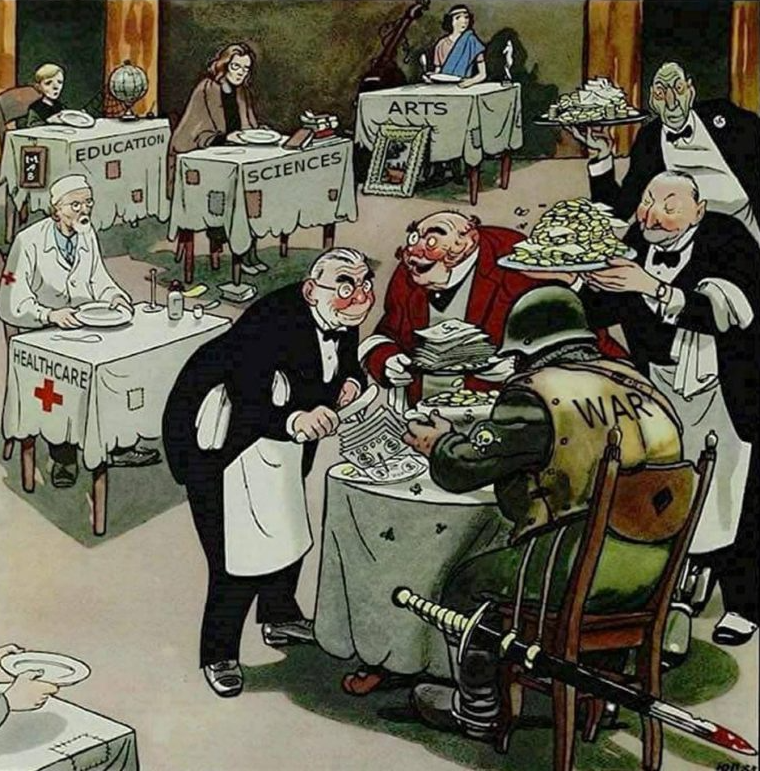
This year, Washington is spending roughly $87 billion on nuclear weapons, according to The New York Times, including a modernization of its warheads and a hugely expensive replacement of aging missiles and bombers.
When Trump announced a new kind of warship known as the “Trump class,” he noted that the vessels would be armed with nuclear-capable cruise missiles.
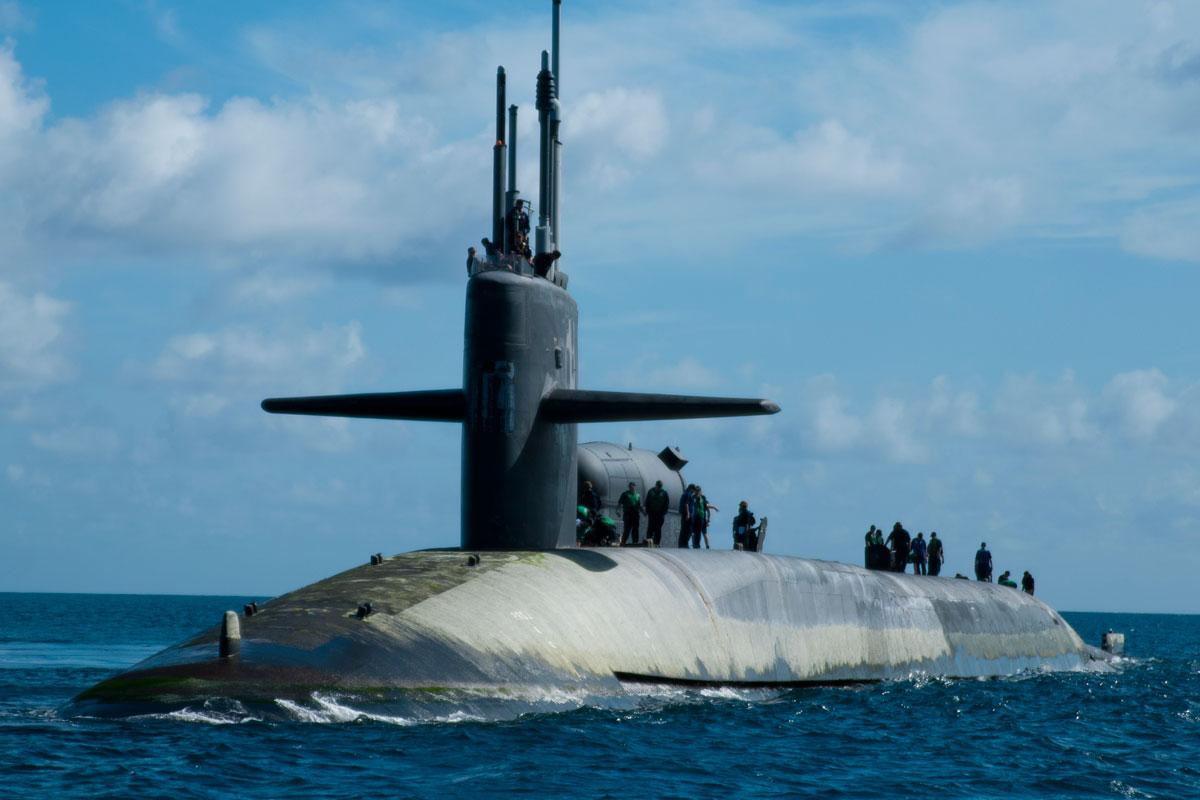
With the expiration of New START, the U.S. Navy has also now developed plans to expand by 56 the number of nuclear missiles aboard Ohio-class submarines, missiles that are 30 times more powerful than the atom bomb that destroyed Hiroshima.[8]
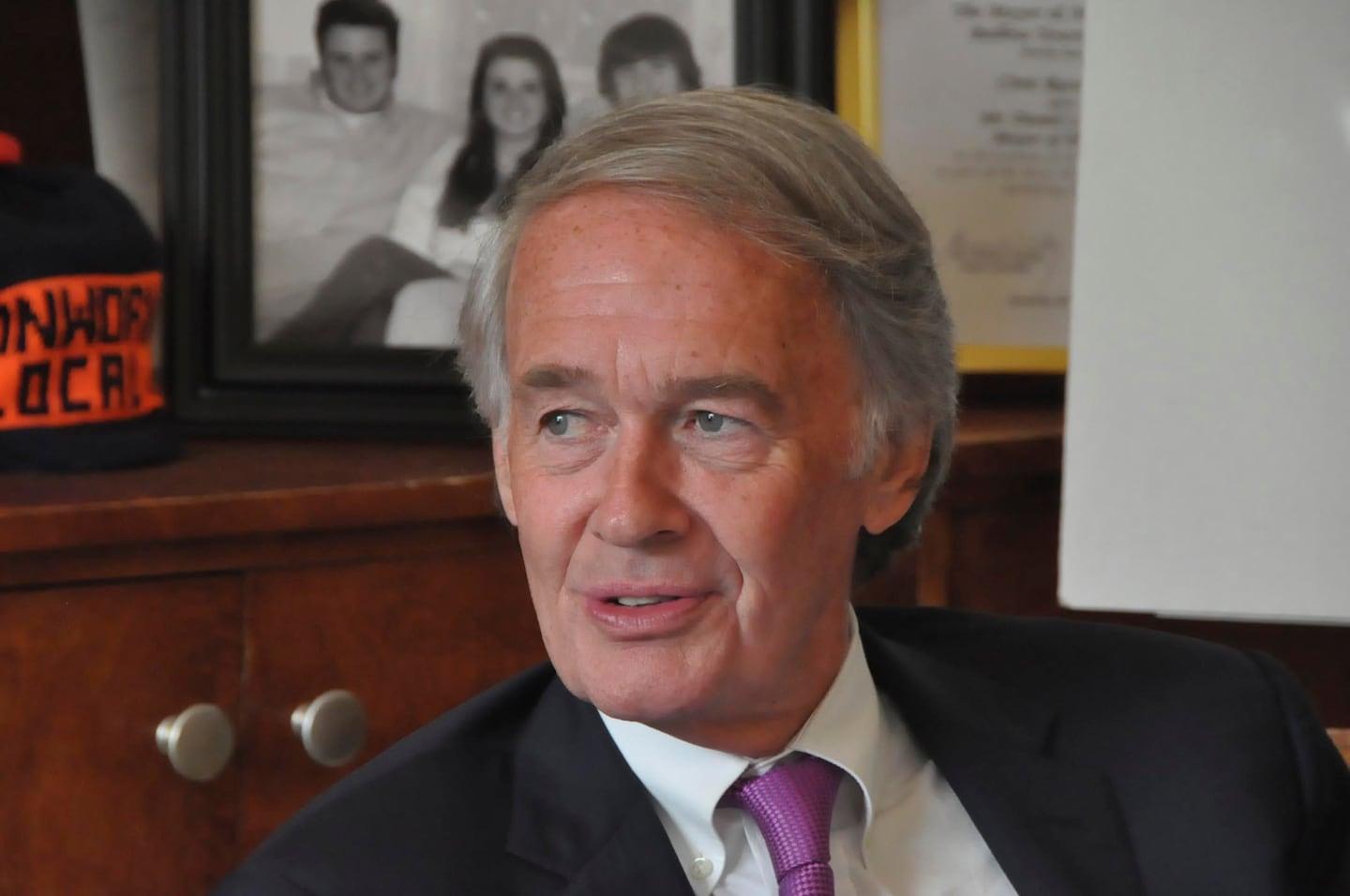
In August, Senator Edward Markey (D-MA) penned a letter to Secretary of State Marco Rubio urging ratification of New START that was signed by even such staunch new Cold Warriors as Adam Schiff (D-CA), along with Bernie Sanders (D-VT), Rashida Tlaib (D-MI), Elizabeth Warren (D-MA) and Rand Paul (R-KY).
While misguidedly blaming Vladimir Putin for carrying out unprovoked aggression in Ukraine, Markey’s letter accurately noted that the expiration of New START means that “there will be no legal limits on U.S. and Russian strategic nuclear forces, reversing decades of work to reduce the risk of nuclear war…For five decades, every American president, from Richard Nixon to Joe Biden, has supported the U.S.-Russia nuclear arms control process. This long-standing, bipartisan effort has enjoyed high approval ratings among the American public, who recognize the dangers of nuclear proliferation and of nuclear miscalculation by the world’s two largest nuclear powers.”
A public opinion poll found that 87% of registered American voters, including 86% of Republicans, believe the U.S. should accept Russia’s offer to extend New START for a year until a new equivalent arms control agreement is negotiated.
The same poll found that 72% of registered voters believe that removing all nuclear limits on the U.S. and Russian nuclear arsenals would make the U.S. less secure.[9]
In an interview with The New York Times in early January, Trump signaled he was ready to let the treaty expire and was not concerned about potential consequences: “If it expires, it expires. We’ll do a better agreement,” he said.[10]
When that might happen though is anybody’s guess.
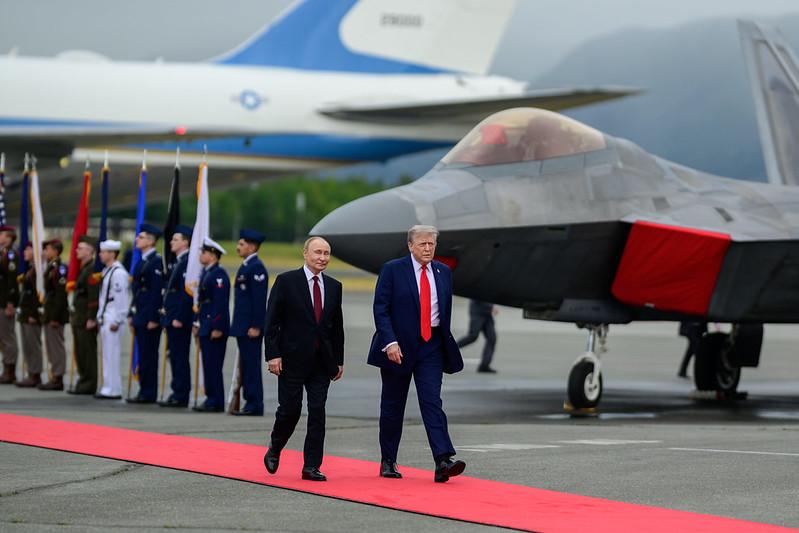
“The Insanity of the Current Moment is Real”
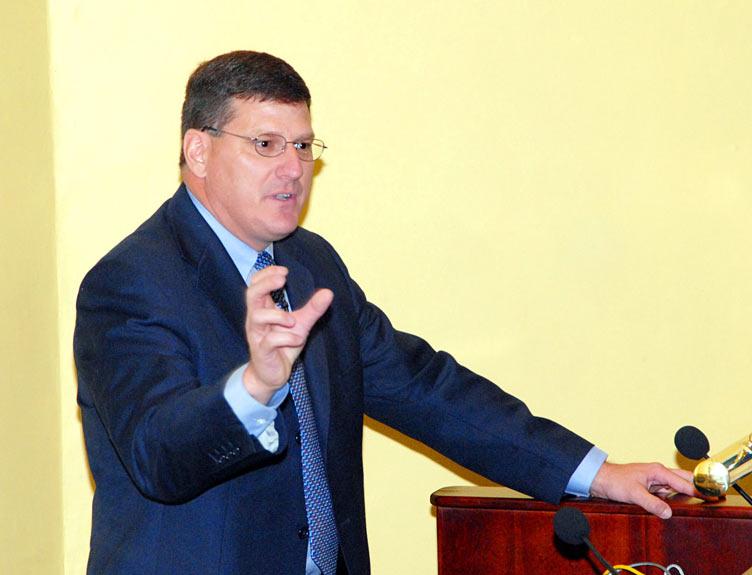
In a press conference on the expiration of the New START on February 5,[11] Scott Ritter noted that the groundwork for the INF Treaty and START I was set in motion with the 1972 Anti-Ballistic Missile (ABM) Treaty, which established a pattern of U.S. and Soviet leaders sitting down together to discuss how the two countries could reduce their nuclear arsenals.
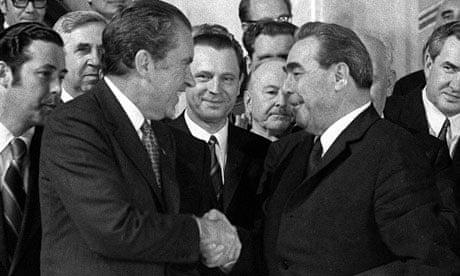
At that time, each side had something in the range of 30,000 nuclear weapons, which was reduced dramatically by arms control treaties that have now expired.[12]
Ritter said that he was proud to have worked as one of the first weapons inspectors in Soviet Russia and to have written a key manual for carrying out on-site inspections.
Unfortunately, since 2022, no inspections have been undertaken in relation to New START because of sanctions policies, the Ukraine conflict and poisoning of U.S.-Russia relations.
The lack of adequate intelligence on weapons systems and data exchange has further eroded trust between the U.S. and Russia, along with the U.S. violation of New START and the INF Treaty.
Ritter believes that, due to the devaluing of diplomacy over the last generation, the U.S. lacks competent and experienced negotiators, which has further diminished the prospects for a new treaty coming about to replace New START.[13]
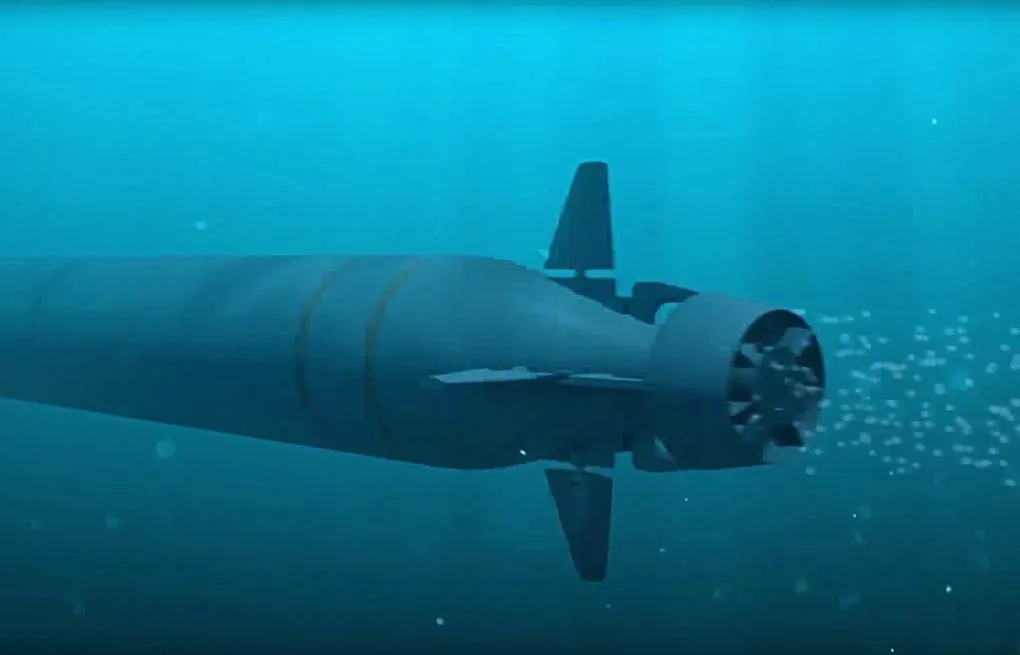
That treaty would have to include new technologies not covered by New START, such as hypersonic missiles, undersea nuclear weapons, and space weapons, which the U.S., Russia and China are all now developing.
Ritter’s contacts in Russia relayed to him the feeling that Trump had betrayed the trust of Vladimir Putin.
The severity of the current situation is reflected for him in the fact that a 2024 CIA estimate gave a 50% chance of nuclear war breaking out—a higher estimate than during the Cuban Missile Crisis when the CIA gave odds of around 30-40%.
“The insanity of the current moment,” Ritter said, “is real and there is now no treaty to control this insanity. We need new leadership that believes in arms control and that wants to make the world safer than it is right now.”

Butler quoted in Jeremy Kuzmarov and John Marciano, The Russians Are Coming, Again: The First Cold War as Tragedy, the Second as Farce (New York: Monthly Review Press, 2018), 95. After retiring as commander of the U.S. Strategic Command, Butler made the highly unusual decision to renounce his life-long profession and publicly embraced the abolition of nuclear weapons on the grounds that they are “immoral and therefore anathema to societies premised on the sanctity of life.” ↑
Joseph Trevithik and Howard Altan reported in TWZ that the end of New START could have further impacts on the Air Force’s bomber fleets as there are now no constraints on how many nuclear capable B-21s the service can now order. ↑
Scott Ritter, Disarmament in the Time of Perestroika: Arms Control and the End of the Soviet Union (Atlanta: Clarity Press, 2022). ↑
Ritter, Disarmament in the Time of Perestroika, 8. ↑
The INF Treaty did not differentiate between offensive and defensive cruise missiles. Brian P. Mckeon, Principal Deputy Secretary for Policy at the Department of Defense at a speech in 2019, claimed that the Russian contention about the MK 41 Vertical launchers was false because the Aegis Ashore system in Deveselu, Romania, was only capable of launching missile defense interceptors such as the SM-3 which, he said, were not subject to the INF Treaty. According to McKeon, “while the Aegis weapon system aboard the Aegis destroyers and cruisers can fire cruise missiles, this capability is not included in Aegis Ashore.” By his logic, though, it seems that, if the Aegis weapon system existed, then the U.S. was violating the treaty. McKeon added in his speech that the Aegis Ashore system “may look a lot like the system on a cruiser, but it lacks essential elements for launching a land-attack missile, including software, fire control hardware, and additional support equipment.” The Russians said, however, that the latter elements could easily be applied/developed to make the cruise missile launch operational within a very quick period. ↑
Ukraine reported Russia’s use of the 9M729 in the Ukraine conflict. ↑
See Kuzmarov and Marciano, The Russians are Coming, Again. ↑
The missile expansion is supported in Trump’s so-called “One Big Beautiful Bill.” Trump has also voiced support for the resumption of nuclear testing. ↑
Another poll of 1,000 U.S. registered voters found 91% in favor of either maintaining current limits on nuclear weapons or continuing to reduce the U.S. and Russian arsenals. ↑
The New York Times reported that, “on Thursday afternoon, after the New START treaty’s expiration, Mr. Trump reiterated his call for a new accord, denouncing the previous one as ‘a badly negotiated deal’ and declaring on social media that ‘we should have our nuclear experts work on a new, improved, and modernized treaty that can last long into the future.’ But he said nothing about agreeing with Mr. Putin to freeze American and Russian arsenals at current levels, leaving open the possibility of a renewed arms race.” ↑
The press conference was hosted by radio host Garland Nixon and featured also Diane Sare, who is running for U.S. President as an independent. ↑
Noting that early arms control efforts had a lot of loopholes, The New York Times reported that the U.S. nuclear arsenal peaked at 62,000 in the 1980s. ↑
Ritter said that a new treaty would have to involve additional nuclear armed powers, like China and probably Britain and France, which would make negotiation even more complex and require skilled and experienced diplomats which unfortunately do not exist in today’s State Department. ↑
CovertAction Magazine is made possible by subscriptions, orders and donations from readers like you.
Blow the Whistle on U.S. Imperialism

Click the whistle and donate
When you donate to CovertAction Magazine, you are supporting investigative journalism. Your contributions go directly to supporting the development, production, editing, and dissemination of the Magazine.
CovertAction Magazine does not receive corporate or government sponsorship. Yet, we hold a steadfast commitment to providing compensation for writers, editorial and technical support. Your support helps facilitate this compensation as well as increase the caliber of this work.
Please make a donation by clicking on the donate logo above and enter the amount and your credit or debit card information.
CovertAction Institute, Inc. (CAI) is a 501(c)(3) non-profit organization and your gift is tax-deductible for federal income purposes. CAI’s tax-exempt ID number is 87-2461683.
We sincerely thank you for your support.
Disclaimer: The contents of this article are the sole responsibility of the author(s). CovertAction Institute, Inc. (CAI), including its Board of Directors (BD), Editorial Board (EB), Advisory Board (AB), staff, volunteers and its projects (including CovertAction Magazine) are not responsible for any inaccurate or incorrect statement in this article. This article also does not necessarily represent the views the BD, the EB, the AB, staff, volunteers, or any members of its projects.
Differing viewpoints: CAM publishes articles with differing viewpoints in an effort to nurture vibrant debate and thoughtful critical analysis. Feel free to comment on the articles in the comment section and/or send your letters to the Editors, which we will publish in the Letters column.
Copyrighted Material: This web site may contain copyrighted material the use of which has not always been specifically authorized by the copyright owner. As a not-for-profit charitable organization incorporated in the State of New York, we are making such material available in an effort to advance the understanding of humanity’s problems and hopefully to help find solutions for those problems. We believe this constitutes a ‘fair use’ of any such copyrighted material as provided for in section 107 of the US Copyright Law. You can read more about ‘fair use’ and US Copyright Law at the Legal Information Institute of Cornell Law School.
Republishing: CovertAction Magazine (CAM) grants permission to cross-post CAM articles on not-for-profit community internet sites as long as the source is acknowledged together with a hyperlink to the original CovertAction Magazine article. Also, kindly let us know at info@CovertActionMagazine.com. For publication of CAM articles in print or other forms including commercial internet sites, contact: info@CovertActionMagazine.com.
By using this site, you agree to these terms above.
About the Author
Jeremy Kuzmarov holds a Ph.D. in American history from Brandeis University and has taught at numerous colleges across the United States. He is regularly sought out as an expert on U.S. history and politics and co-hosts a radio show on New York Public Radio and on Progressive Radio News Network called “Uncontrolled Opposition.”
He is Managing Editor of CovertAction Magazine and is the author of eight books, including Obama’s Unending Wars (Clarity Press, 2019), The Russians Are Coming, Again, with John Marciano (Monthly Review Press, 2018), Warmonger. How Clinton’s Malign Foreign Policy Launched the U.S. Trajectory From Bush II to Biden (Clarity Press, 2023); with Dan Kovalik, Syria: Anatomy of Regime Change (Baraka Books, 2025), and Political Assassinations in America: The Intricate Nexus of Deep State Crime (Clarity Press, 2026).
Besides these books, Kuzmarov has published hundreds of articles and contributed to numerous edited volumes, including one in the prestigious Oxford History of Counterinsurgency .
He can be reached at jkuzmarov2@gmail.com and found on substack here.










Arms control treaties , to a certain extent, formalise what is being planned anyway. In the 1980s, for example, General David Jones stated that without SALT II, he would not do anything differently. The military chiefs were okay with the limits in the START treaty which recently expired.
I am far more worried about the attitude of the think tanks like the Heritage Foundation.
I am cautiously optimistic, however, that the administration can be persuaded to stick to the limits of the treaty on a voluntary basis. We should not forget that the START treaty should have been negotiated by the George H.W. administration and that its ratification was supported by all 5 former Republican Secretaries of State.
Trump has, at times, spoken in favour of sticking with the treaty’s limits.
Roots Action has this useful action facility on its website:
https://rootsaction.org/no-new-arms-race