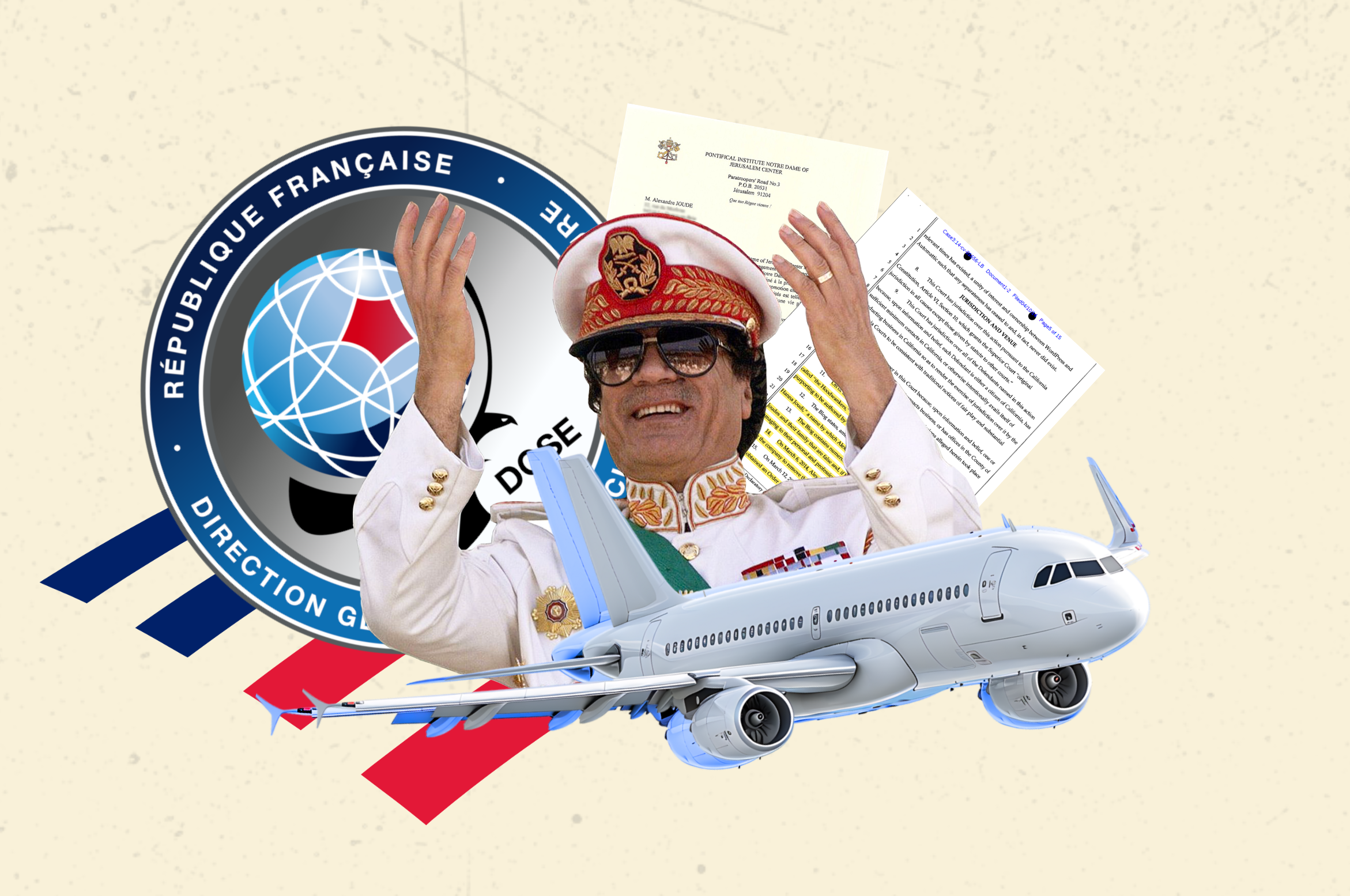
Amid the Cold War, French and Spanish intelligence services recruited terrorists to dismantle a Libyan spy network in Europe. Today, more than three decades later, the case remains shrouded in mystery.
And what if I told you that it is highly likely the nation for which you would be willing to lay down your life has sponsored—or does sponsor—terrorist groups and/or acts of terror, in your name and in the name of national security?
If, like me, you are passionate about the world of espionage, you might be tempted to ignore this question and blindly trust what official sources tell you. It is essential that you do not do so and that you reflect on the profound implications underlying this type of strategy.
The Mad ’80s
December 28, 1985, Paris—The year was drawing to a close. It had been one of the most turbulent on record. Terrorist attacks had become part of daily life in Europe. France, however, had been relatively spared. Between February and December of that year, only one person had lost their life as a result of an attack. It is one death too many, certainly, but a modest number compared to previous and subsequent years. Yet, as Parisians recovered from the Christmas abundance and prepared for New Year’s Eve, two terrorists were seeking to get a jump on the fireworks.
From here on, the information becomes confused and, at times, contradictory. What we know with a reasonable degree of certainty is that Farid Hassan and Faysal Hanna Joude, from Syria and Lebanon respectively, planned to recreate the 1980 attack on the reformist synagogue on Rue Copernic in Paris. It is known that they departed from Spain, determined to wreak havoc. What we do not know, however, is when. The dates fluctuate between October and December.
Be that as it may, they failed. As soon as they set foot on French soil, they were apprehended by the police. The fate of these two men seemed sealed: They would be left to rot in prison. Or, at least, that was the idea. It happens, however, that they ended up being released on orders of the French intelligence services. Civil society knew nothing, of course. It could not know, at least, not at that moment.
Both men were part of an organization called The Call of Jesus Christ. You have likely never heard of it. Almost all available information about this group comes from a bulletin issued by the Spanish Ministry of the Interior in the spring of 1986. But let’s leave that for later. For now, let us focus our attention on this group.
The Call of Jesus Christ was born in Lebanon in 1978, at the hands of Elias Hanna Joude. The group is thought to be part of the Melkite Church, which includes Arab Christians of the Byzantine rite. Beyond that, there is little more to say, except that its ideological make-up was deeply contradictory, as illustrated by its relationship with Gaddafi’s Libya, a pan-Arabist, “socialist” and nominally Islamic regime. They were united by their clear support for Palestinians and disdain for the Zionist movement.
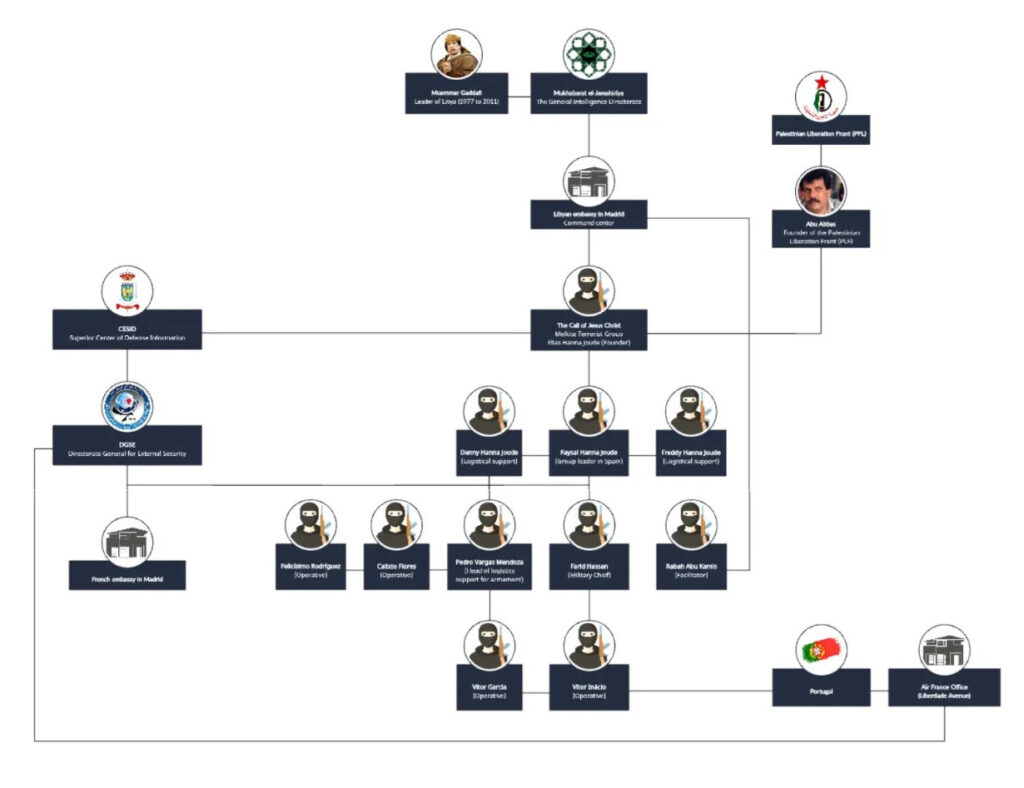
The political ambiguity was evident. Early reports pointed to a far-left movement. However, the information now available suggests precisely the opposite. Indeed, the then Minister of the Interior, José Barrionuevo, stated that the group maintained contacts with the Argentine Anti-Communist Alliance. This was a far-right death squad, trained and financed by USAID and the CIA. We are thus faced with another paradox: one of The Call of Jesus Christ’s main objectives was precisely to harm U.S. interests in Europe. Confusing, isn’t it?
Nest of Spies
But, after all, why were the two released? What could two failed terrorists possibly offer the fearsome DGSE? The answer is simple: an opportunity. Freeing them would help gather more information regarding the Libyan Embassy in Madrid, believed to be funding terrorist groups across Europe. Once at liberty, they were allegedly instructed to carry out a series of attacks. All, naturally, under the supervision of the authorities.
The organization had lost the Libyans’ trust. For the French, it was imperative to regain it—even if that meant sponsoring terrorism. Surprised? Let me guess: You watched the television series Le Bureau des Légendes and thought you already knew everything about the French secret services. Don’t worry: I made that mistake myself. However realistic the show may seem—and by all accounts, it truly is—reality is rarely linear.
In most cases, it is dirty. Very dirty. In fact, France is known for resorting to unconventional methods. And there is no need to go far back in time to find examples. One need only return to the years of the Syrian civil war, a period during which French intelligence services allegedly authorized payments amounting to millions of euros, both to the PKK (Kurdish) and to the Islamic State. To this day, doubts remain as to whether that money may have been used to finance the Bataclan attack in 2015. The question that presents itself is a simple one: Was all that information worth it?
From Paris with Love
April 10, 1986, Lisbon—The sun had not yet risen when a sudden release of energy, caused by a powerful explosive charge, lit up the sky and reduced the façade of the former Air France office to rubble. Windows within a 22-meter radius were shattered; the shock wave awakened tourists sleeping nearby. The bomb had been placed in the trash container next to the building. There were no casualties to report. Close by, a team of French spies monitored the events as they unfolded, making sure everything proceeded according to plan. After all, they were the ones who, allegedly, had given the operation the green light.
Around 5:30 a.m., an anonymous call to the Portuguese News Agency (ANOP) attributed the attack to the French group Action Directe. In a country accustomed to far-left violence, the claim was met with little surprise. No one bothered to raise doubts, for lack of available information. Only now, years later, is it possible to theorize about what actually happened. Apart from that phone call, there is no evidence linking the French group to the attack. Most likely, the DGSE intended to obscure the true origin of the bombing.
And what about the then newly created Portuguese Security Intelligence Service (SIS)? Were they aware of this French interference? If so, they did nothing to stop it. Silence, coupled with the inertia of the Portuguese authorities, allowed this small French escapade to succeed. Luck, however, proved short-lived.
Usual Suspects
May 11, 1986, Madrid—Spain woke to the headline: “Police detained ten members of the group The Call of Jesus Christ. The arrests followed a failed attempt to attack the Bank of America. As had been the case in Paris in 1985, the Spanish authorities seized the opportunity to recruit and infiltrate an agent into the alleged Libyan network, suspected of supporting that and other extremist groups across Europe.
There was only one difference: The French consistently denied having done so. The Spanish government, on the other hand, admitted it, abandoning its customary secrecy. Nevertheless, Madrid withheld additional information so as not to compromise the coordinated effort with France in the fight against Basque separatists. A report from the same year stated that the Libyan government had allegedly financed ETA with about one million dollars.
Among those detained were Farid Hassan and Faysal Hanna Joude, double agents whose information led to the arrests of the other eight participants, likely oblivious to the fact that their comrades had betrayed them. Two of them—a Portuguese national, wanted by Interpol, and a Spaniard—were charged with conspiring against the Spanish state and with belonging to the Melkite organization.
Vítor Manuel Romano da Cruz Inácio and Vítor Cerro García admitted, under police questioning, that they took part in the attacks in Paris and Lisbon and received about $70,000 from the Libyan embassy in Madrid, confirming DGSE’s suspicions. Portugal—which, apparently, had done nothing to detain the terrorists—hurried to request the extradition of the Portuguese citizen. What became of him is unknown, and it remains unclear whether he ever served a sentence on Portuguese soil.
The tower collapsed. And with a resounding crash. Based on the confessions obtained during interrogations of members of The Call of Jesus Christ group, Spanish authorities were finally able to identify the person actually responsible for the operation in Madrid: Ahmed Mohamed Nakaa, at the time chargé d’affaires and the Libyan Embassy’s strongman in Spain. Anticipating that the trial would not be favorable to him, he left the country with his family, escaping the clutches of justice.
The informants did not have the same luck. At least, not all of them. Some, perhaps luckier, escaped virtually unscathed. All served sentences far shorter than those sought by the Spanish Public Prosecutor’s Office (MP). Take the case of Faysal Joude: He was sentenced to only one year, eight months and two days in prison. The contrast is striking.
The MP had requested 19 years on charges of terrorism. The reason none of the defendants was convicted of terrorism lies in the court’s legal interpretation. Some will say it was overly literal; others that it was fair. In any event, the court concluded that the legal requirements for the crime of terrorism had not been met, since it was impossible to prove the existence of an “armed organization, with a defined hierarchical structure and effective capacity to confront the State.”
The National Court emphasized that the evidence was riddled with contradictions. That is indisputable. I believe I made that clear from the outset, when I wrote that the existing literature is not enlightening regarding the group’s ideology, its associations, the dates and even the spelling of names. Even so—and despite recognizing the “existence of preparations and the possession of explosives” — the court concluded that such facts were not enough to support a conviction for terrorism. But was that the only reason? Or did the fact that some of those implicated, notably Faysal Joude and Farid Hassan, had collaborated with the French intelligence services and, perhaps, the Spanish ones, also carry weight?
Second Chances
October 18, 1989, Madrid—Three years later, Faysal Joude was once again facing justice. Spain sought to repatriate him to Lebanon, where he had been born, but Joude vehemently refused to leave the country. He had been in the holding cells of the Plaza de Castilla courts for three days when the news broke: “Leader of The Call of Jesus Christ arrested for the second time.” He was not alone. Freddy Joude, who denied having taken part in the attacks, accompanied him.
That family seemed simply incapable of staying out of trouble. They were granted a second chance, but failed to make the most of it. Even so, this would not be the end of the Joude family. In no time, they would be integrated into the very societies they had attacked. All of this occurred without anyone noticing. Not even the authorities.
I searched tenaciously for any reference to the family’s surname, without success. Until I came across a Uruguayan government publication dated 1998, which stated that four members of the Joude family—Freddy, Danny, Simon and Pierre—were leaving the company Frontur S.A. It was they. It had to be. The given names and surnames matched perfectly.
All I had to do was fit the pieces together. Yet they would not fit. Whenever I felt close to the truth, it eluded me, leaving me feeling empty and frustrated. Invariably, I kept returning to square one. I was convinced that the family’s trajectory would remain shrouded in controversy. I was wrong. Instead, I discovered a den of businessmen and men of faith.
I could very well have ended this piece with the previous paragraph. It would certainly have been tidier and less controversial. But that is neither my style nor that of this magazine, which prides itself on detail. Journalism taught me to trust human instinct: Things are not always what they seem; yet it is our duty to investigate, even if only to clear one’s conscience.
And so I did. I found it strange that a handful of terrorists would have abandoned their convictions so simply. As a rule, one year of imprisonment is not enough to convince a fundamentalist to change his mind. If my suspicions were confirmed, the Joude brothers would have left some trace, however small. And, it appears, they did.
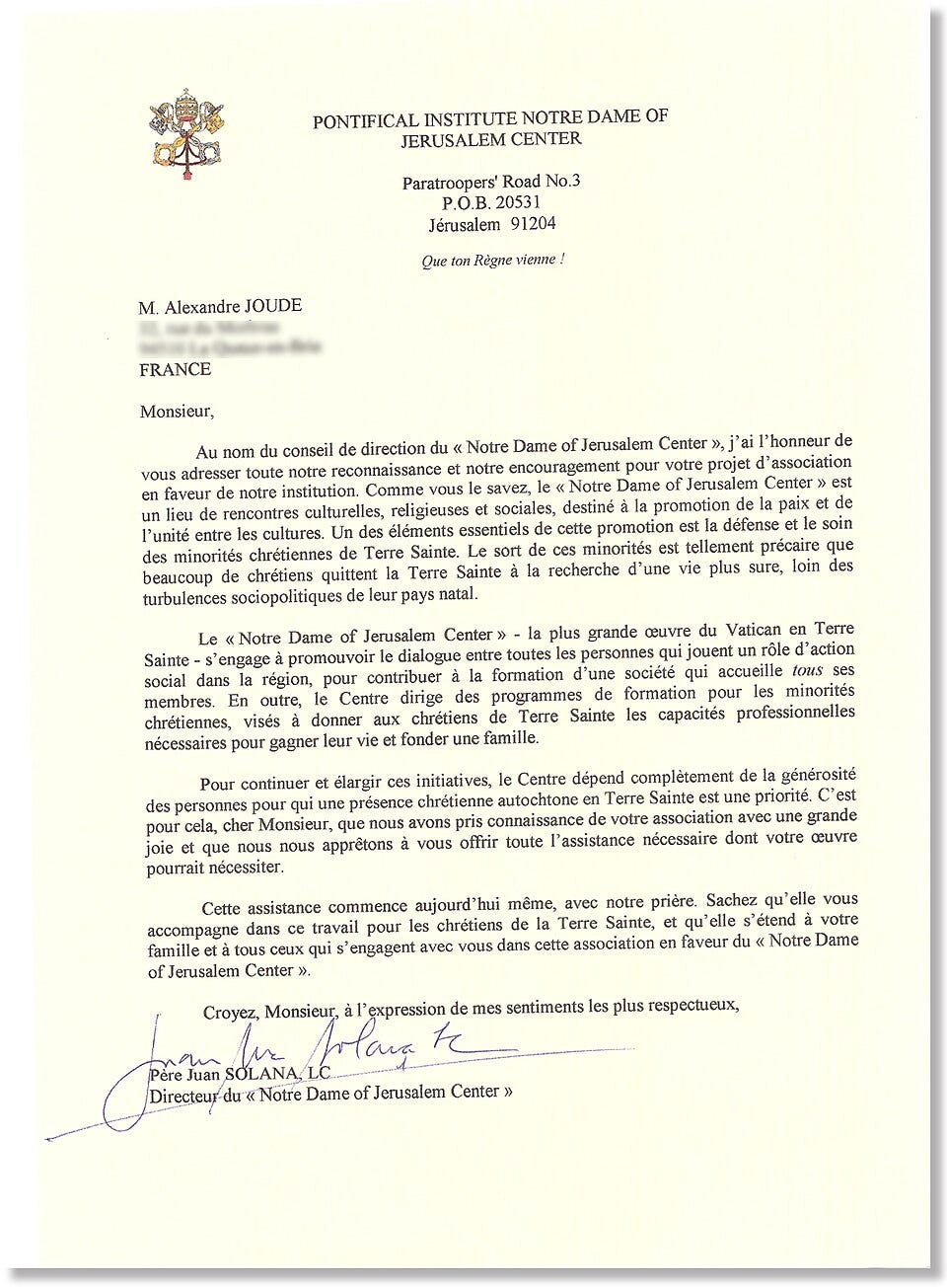
In 2009, Faysal Joude and Danny Joude founded the Notre-Dame de Terre Sainte Foundation, whose primary objective was to promote “cultural and interreligious dialogue.” Gone were the days of visceral rage against the Western world and Israel. For all intents and purposes, they were new men, reborn from hatred and malice. Like Jesus, they seemed to have discovered the splendor of peace.
There was only one caveat: Once again, they fell in with bad company. According to the Wikipedia page about the foundation—created by one of the brothers—it funded projects whose management had been entrusted to the Legionaries of Christ, a congregation mired in controversy. Beyond the sexual scandal involving its founder, the Pandora Papers revealed the use of offshore entities and opaque financial practices.
The past seemed not to matter. Armed with unshakeable faith, the Joude family appeared destined for great things, particularly Danny, a devout man with a knack for business. In 2013, the newspaper Africa Intelligence described him as a successful financial adviser serving powerful families in the Middle East. The same publication revealed that, at the end of 2011, Joude teamed up with Jean-Charles Charki, son-in-law of the then French Minister of the Interior, Claude Guéant.
Through the company Worldmill Limited and the holding company LPA Group, Joude and Charki, respectively, attempted to acquire a stake in Total’s Block B in South Sudan. The deal did not materialize, in part, due to political instability and lack of clarity from the South Sudanese authorities. The pair had previously tried to acquire wealth-management firms belonging to the Hottinger family in Switzerland, Luxembourg and the Bahamas, but without success. Joude handled the negotiation process, while Charki used his influence to try to see it through.
The year 2014 was not a good one, either for Charki or for the Joudes, who once again saw the family name splashed across the papers. Unsurprisingly, Danny’s proximity to the shadowy world of offshore companies and dubious deals made the rest of the clan vulnerable to civil-society scrutiny. The image the three brothers had constructed was finally beginning to crumble.
That same year, the Joudes came across a blog whose author, posing as Faysal, described the family as a bunch of terrorists and swindlers. Fearful of the impact this could have on their reputations, Faysal and Danny filed a lawsuit against WordPress. They demanded that the company remove the blog The Hoodwankers, which is currently unavailable for viewing. Thanks to the Wayback Machine, it was possible to peer into the past. Here is what I found: The author seemed to know a great deal about the Joudes—who they were, where they came from, their ages, the religion they practiced and even what they had done during the turbulent 1980s.
The tone employed is jocular, ironic and markedly accusatory. Indeed, much of what was written there corresponds to the information presented here. Nevertheless, the author offers surprising particulars not previously disclosed. Whether they are true—Faysal and Danny maintain they are not—is difficult to ascertain.
The blog alleged, among other things, that Elias Hanna Joude—mockingly called Papa—had left Haifa in 1948 for Lebanon where, years later, he purportedly joined the Lebanese intelligence services. Claims such as this were recurrent and, not infrequently, seasoned with sarcasm. Unabashedly, the author asserted that the family was involved in fraud and money laundering.
The United States District Court for the Northern District of California ruled in favor of WordPress, frustrating the successive appeals lodged by the Joudes to have the blog taken down. After this brief but futile dispute, they were never heard from again. It was as if they had vanished from the face of the Earth.
We have reached the end of our story. Every time I attempt to accept uncertainty and move on, I am dragged back to these lines. No matter how hard I try, I cannot understand how three terrorists obtained the nationality of the very country they once sought to attack. I am referring, of course, to France, which appears to have welcomed them with open arms. Did the State not know who they were? Or did it turn a blind eye, so as not to raise doubts about its presumed involvement in the plot? Perhaps we will never know the truth. At the time of publication of this article, none of those involved had made themselves available to clarify the matter.

CovertAction Magazine is made possible by subscriptions, orders and donations from readers like you.
Blow the Whistle on U.S. Imperialism

Click the whistle and donate
When you donate to CovertAction Magazine, you are supporting investigative journalism. Your contributions go directly to supporting the development, production, editing, and dissemination of the Magazine.
CovertAction Magazine does not receive corporate or government sponsorship. Yet, we hold a steadfast commitment to providing compensation for writers, editorial and technical support. Your support helps facilitate this compensation as well as increase the caliber of this work.
Please make a donation by clicking on the donate logo above and enter the amount and your credit or debit card information.
CovertAction Institute, Inc. (CAI) is a 501(c)(3) non-profit organization and your gift is tax-deductible for federal income purposes. CAI’s tax-exempt ID number is 87-2461683.
We sincerely thank you for your support.
Disclaimer: The contents of this article are the sole responsibility of the author(s). CovertAction Institute, Inc. (CAI), including its Board of Directors (BD), Editorial Board (EB), Advisory Board (AB), staff, volunteers and its projects (including CovertAction Magazine) are not responsible for any inaccurate or incorrect statement in this article. This article also does not necessarily represent the views the BD, the EB, the AB, staff, volunteers, or any members of its projects.
Differing viewpoints: CAM publishes articles with differing viewpoints in an effort to nurture vibrant debate and thoughtful critical analysis. Feel free to comment on the articles in the comment section and/or send your letters to the Editors, which we will publish in the Letters column.
Copyrighted Material: This web site may contain copyrighted material the use of which has not always been specifically authorized by the copyright owner. As a not-for-profit charitable organization incorporated in the State of New York, we are making such material available in an effort to advance the understanding of humanity’s problems and hopefully to help find solutions for those problems. We believe this constitutes a ‘fair use’ of any such copyrighted material as provided for in section 107 of the US Copyright Law. You can read more about ‘fair use’ and US Copyright Law at the Legal Information Institute of Cornell Law School.
Republishing: CovertAction Magazine (CAM) grants permission to cross-post CAM articles on not-for-profit community internet sites as long as the source is acknowledged together with a hyperlink to the original CovertAction Magazine article. Also, kindly let us know at info@CovertActionMagazine.com. For publication of CAM articles in print or other forms including commercial internet sites, contact: info@CovertActionMagazine.com.
By using this site, you agree to these terms above.
About the Author
Rafael Baptista is a 24-year-old journalist from Portugal driven by an unwavering passion for storytelling.
Curious and determined, he has spent over four years specialising in Politics and Security, investigating the rise of the far right and clandestine foreign espionage in Portugal. Inspired by Ryszard Kapuściński, Martha Gellhorn and many others, he is constantly on the move in search of extraordinary stories that transcend time.
Rafael can be reached at rafael.baptista2000@gmail.com.





Excellent article on the horrifying impact that terrorist organizations like Hezbollah and Hamas can have in the world. Here is some more details.
Terrorism was not unknown in Paris during the 1970s and 1980s. Bombs had detonated at the same store on Boulevard Haussmann—not far from the famous Galeries Lafayette—on three separate occasions, in 1976, 1981, and 1985. In March 1985, eighteen people were injured in an attack on a Jewish film festival. But although these earlier bombings proved to be isolated incidents, the campaign that began in December 1985 persisted long into the new year—and frightened Parisians enough to thin the crowds on the grand boulevards, empty the sidewalk cafes, and drive the city, according to one news report, “psychotic with fear.”
The first attack in the wave took place in December 1985, but the campaign’s full intensity wasn’t felt until early 1986. Four bombs were planted in February and another three in March. These attacks targeted world-famous symbols of France, such as the Eiffel Tower and the Champs-Élysées, as well as everyday stores where ordinary Parisians went about their day. Although the bomb in the Eiffel Tower was discovered in time and defused, explosions at a book store and a sports boutique in the space of two days injured almost thirty people.
After a period of relative calm during the summer, the campaign erupted again in September. Five attacks took place within ten days, the last taking place on Rue de Rennes—an event which forms the centerpiece of Bronwasser’s Listen. At around 5:30pm, a bomb exploded on the busy commercial street on the Left Bank, having been either hidden in a trash can or thrown from a passing car. The attack killed seven people and injured 55 more; it was, at the time, the deadliest attack against civilians ever carried out in France.