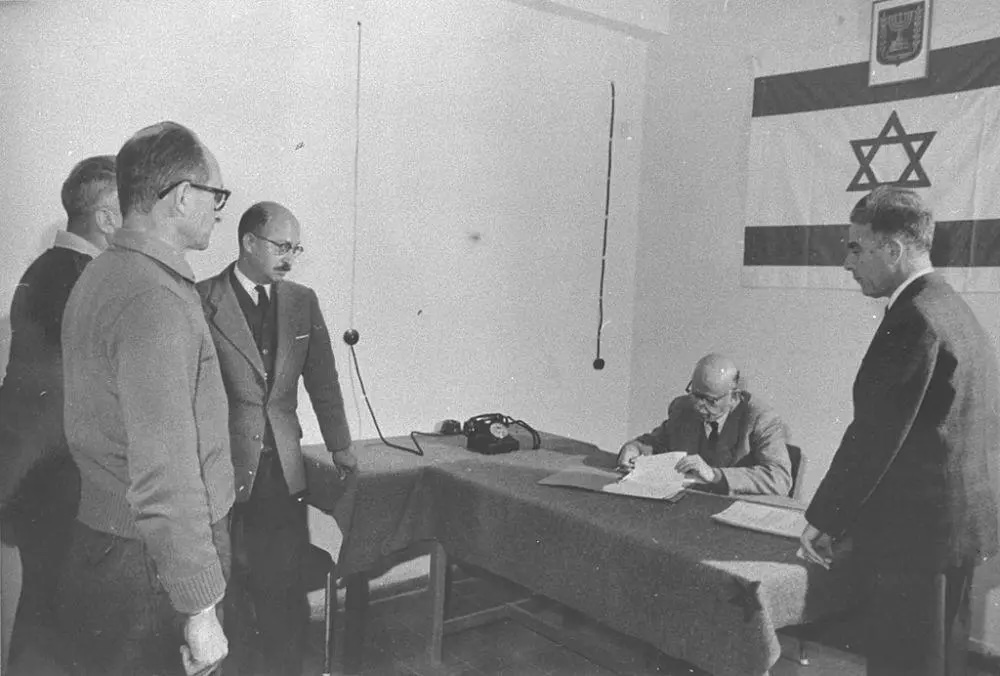
Of the twentieth century’s most consequential political melodramas, the Ben Barka case ranks with the murder of John F. Kennedy.
—Henrik Kruger, The Great Heroin Coup.
The investigative journalist Henrik Kruger wrote about the Ben Barka murder in 1980 when it was still unsolved. He said it contained “unexploded fireworks.”
Even after it was more-or-less sorted out, with starring roles for the Moroccan king and his security agents, French Gaullist ministers and their gangster operatives, and even Israel’s Mossad under Meir Amit, there were still questions about U.S. involvement.
Today there are still thousands of CIA documents related to the case that are being withheld for “national security” reasons. And there are still plenty of unexploded fireworks.
The convoluted French involvement has been widely dissected and even made into exciting films (J’ai vu tuer Ben Barka; L’Attentat). But Israel’s involvement needs to be re-evaluated in terms of the world situation of the mid-1960s and high-level battles for control of state power and direction.
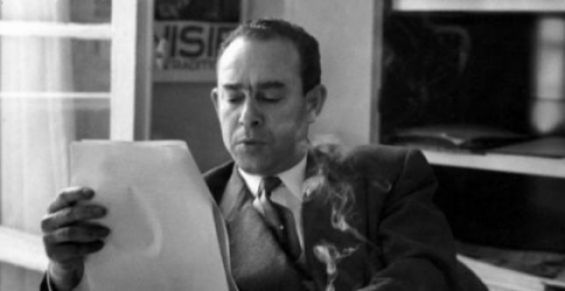
Mossad attitudes toward political assassination and nuclear weapons are not less but more relevant today. At the time, the fireworks were unseen by the outside world or even by most inside Israel. The lid on the Israeli Ben Barka affair kept the dangerous mishmash inside the pressure cooker for many decades, but it has finally exploded.
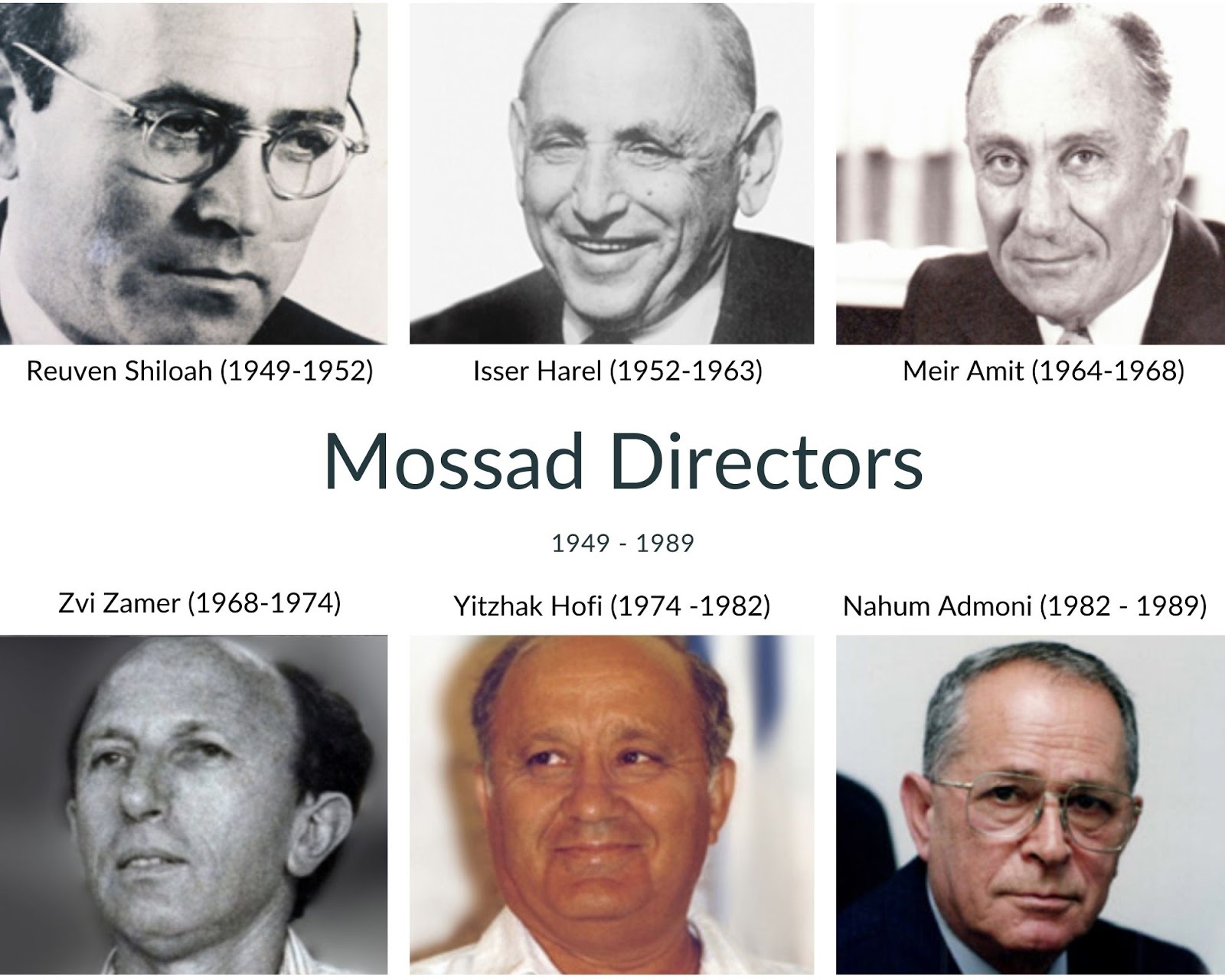
Israel’s two most powerful and determined Mossad directors of the time—Isser Harel and Meir Amit—had nearly opposite values and personalities. In the 1960s they were bound to do battle for the Conquest of Canaan. We are living today with the consequences.
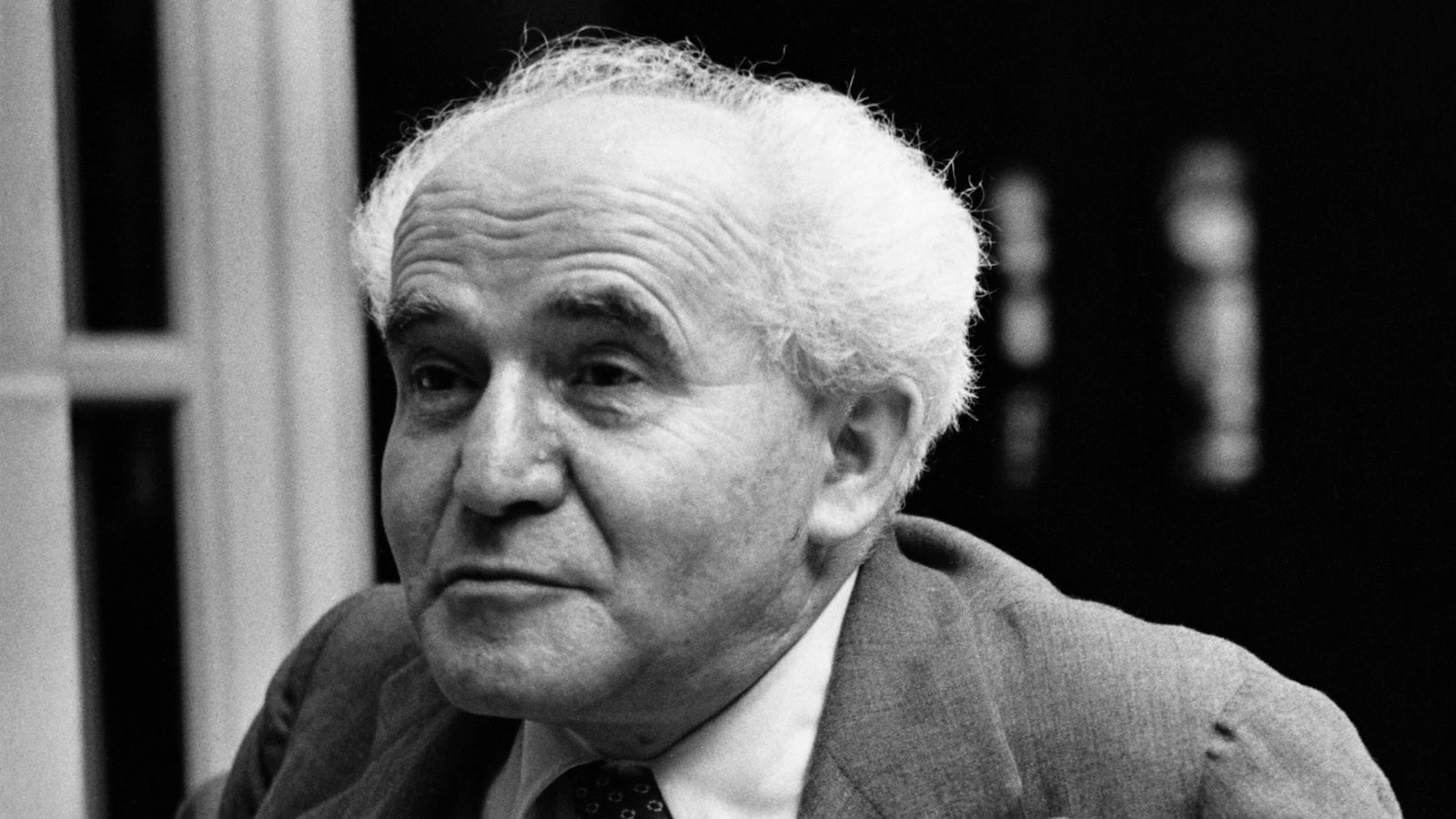
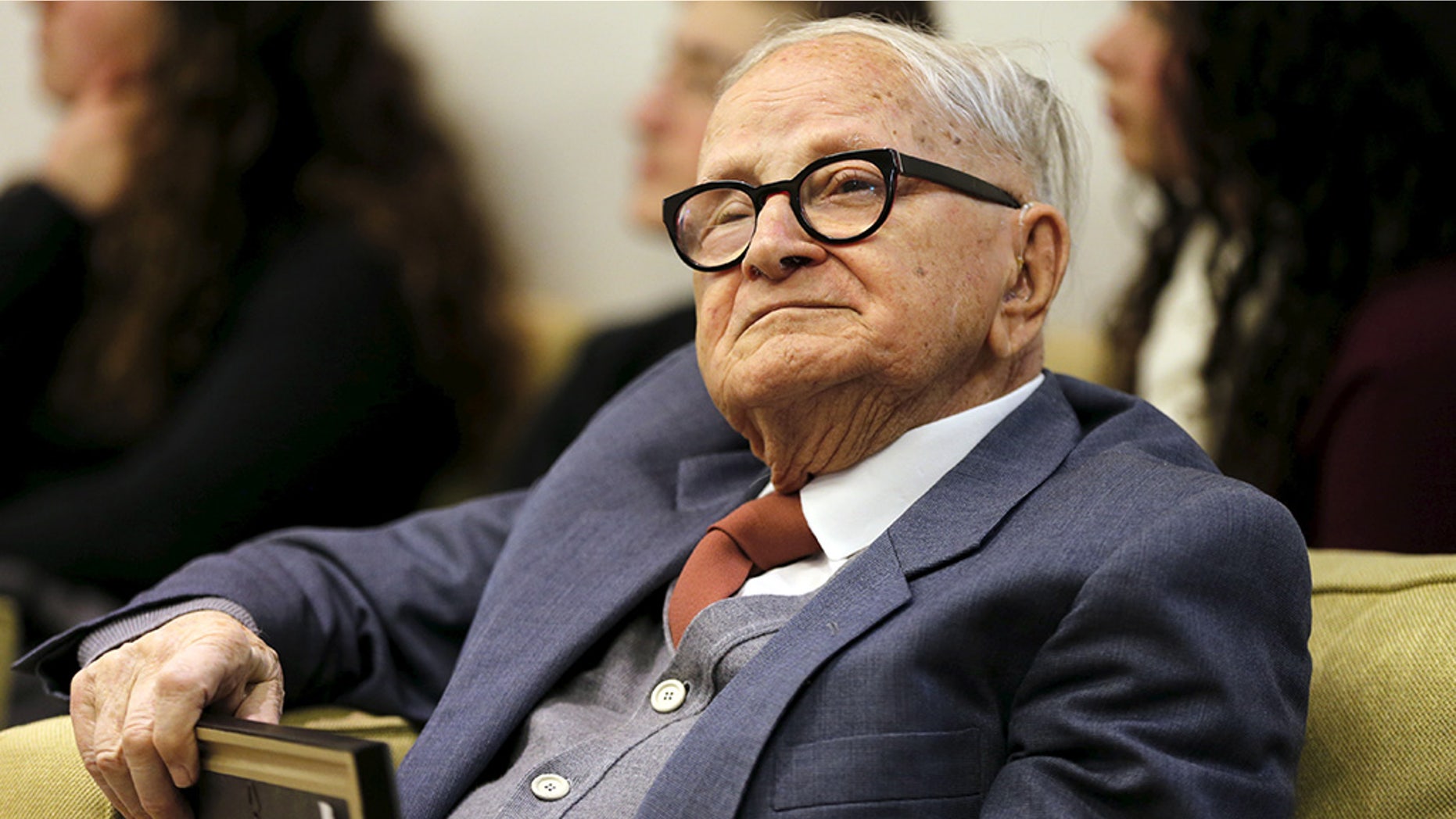
Isser Harel was born Yisrael Natanovich Halperin in the Russian Empire. His father was a rabbi, and the family owned a prosperous vinegar business. The Bolshevik Revolution disrupted their lives, and they moved to Latvia.
As a youth, “Isser” emigrated to Palestine to work as a pioneer in a citrus kibbutz. He was noted for his moral integrity, meticulous work, perseverance and modest living. Some described him as a puritan.
In 1942 he joined the pre-state military, the Haganah, where he was assigned to intelligence.
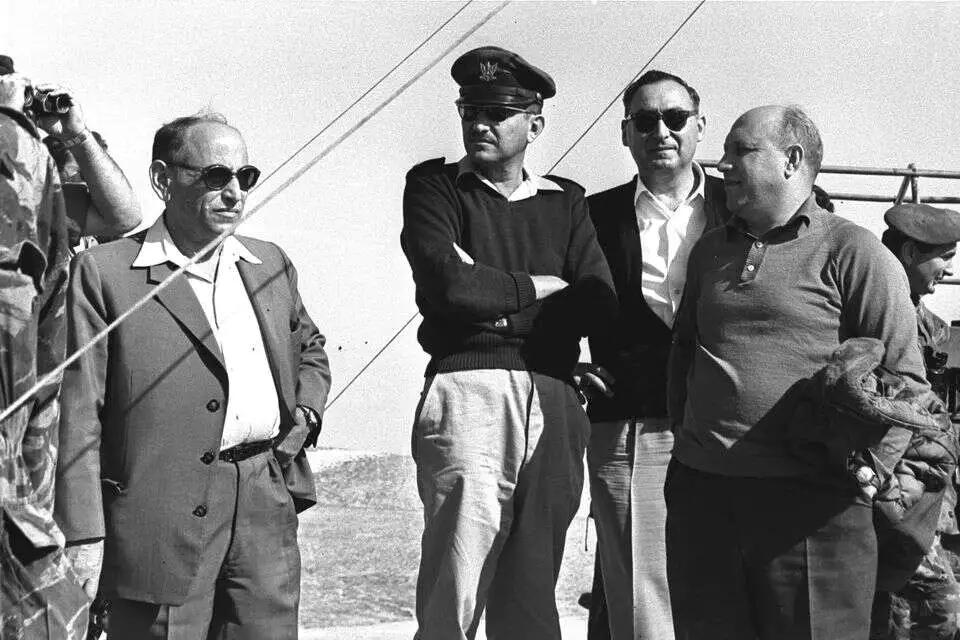
His early state work in Shin Bet internal security involved hunting down Irgun and Lehi (Stern gang) terrorists. Typical of his style, he was relentless in the hunt, but because of their skills, he invited the reformed terrorists to join his organization.
Yitzhak Shamir, whose gang had sent letter bombs to prominent politicians, including President Harry Truman, was one of the terrorists he recruited.
In 1950 Israeli founding father David Ben-Gurion and Reuven Shiloah (b. Jerusalem as Zaslansky) consulted with Allen Dulles and the CIA on how to set up an agency for national intelligence and special operations, the Mossad. After 1951, James Jesus Angleton was Israel’s unique contact in the CIA, and Mossad worked closely with him.
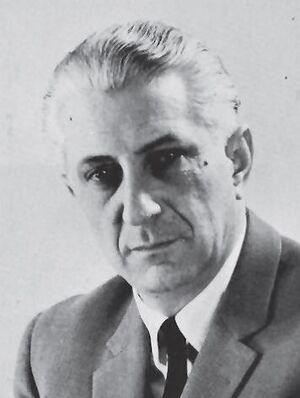
Harel had come to the positive attention of Ben-Gurion and was soon appointed head of Mossad along with Shin Bet, making him essentially number two man in the state. Ben-Gurion called him Memuneh (Responsible). He supported Ben-Gurion. At times he used his office to work on behalf of Ben-Gurion’s political party. Besides loyalty, persistence and honesty, Harel was gifted with superior intuition. He was considered a “great detective” who did elegant work in the manner of Sherlock Holmes.
In 1956 Shin Bet, headed by Amos Manor (b. Arthur Mendelowitz in Romania), gave its CIA partner Angleton a great boost in prestige when it came into possession of Soviet Premier Nikita Khrushchev’s so-called “secret speech” criticizing Stalin and gave it to Angleton to break in the West.
Angleton and the CIA repaid the favor by allowing Rafi Eitan to steal highly enriched uranium from a U.S. business, NUMEC, that was started by American Zionists David Lowenthal and Zalman Shapiro. Harel, himself, did not approve of using nuclear material for weapons.

The Military versus the Mossad
The same year, 1956, the Suez war between Israel and Egypt was run by Meir “Amit” Slutsky.
The young officer was born on a kibbutz to parents who immigrated from the Ukraine. He had what was considered a typical kibbutzim personality: independent, arrogant, contemptuous of city people, brash and pragmatic. Somewhat like a cowboy, he grew up fighting Arabs.
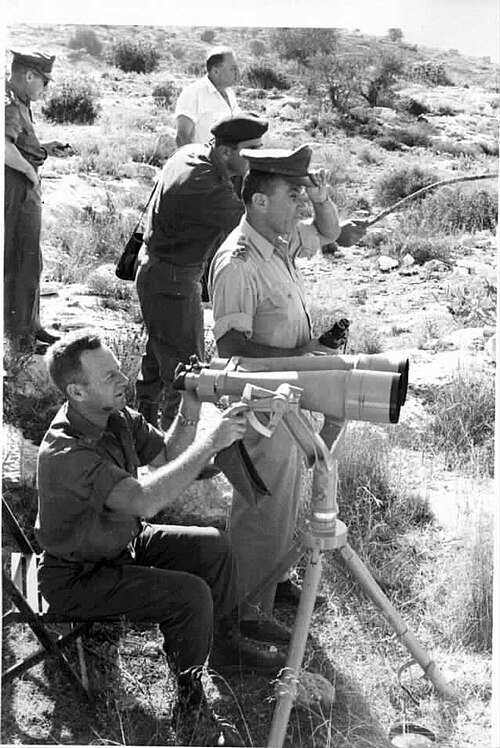
As a company commander in the War of Independence, he was criticized for accepting too many losses, but IDF Chief of the General Staff Moshe Dayan (born of Ukrainian parents on a kibbutz in Ottoman Syria) liked his courage and perseverance and promoted him.
At the end of the Suez war, Soviet Premier Nikolai Bulganin threatened Israel with existential annihilation if they did not give back lands taken from Egypt. Mossad Director Harel persuaded Ben-Gurion to give in to the threat. Amit did not forgive him.
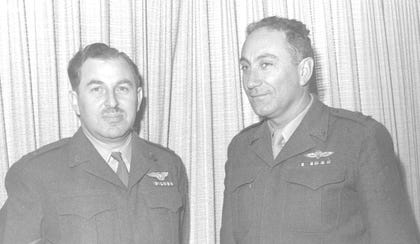
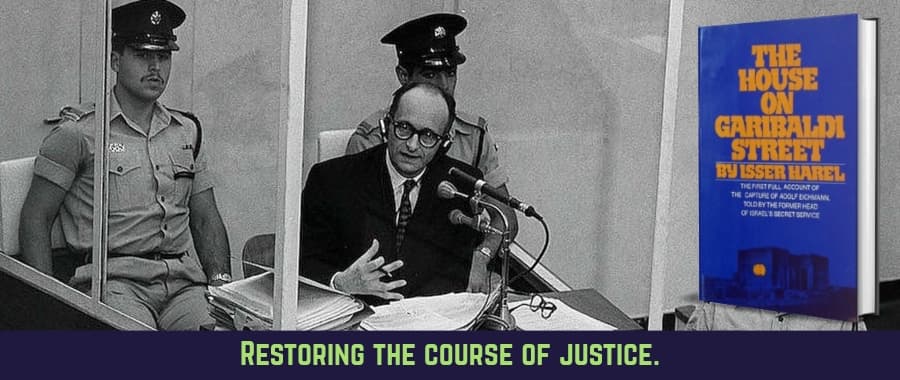
Harel preferred to be anonymous, and his photo was not seen in newspapers. He could not avoid fame, however, when his eleven-member team captured Nazi war criminal Adolf Eichmann in Argentina in 1960.
The highly publicized operation was meticulously planned, and Harel supervised it in Buenos Aires, standing behind his team in case of trouble. Typical of his values, he told his team that, under no circumstances were they to kill Eichmann: He had to be brought to Israel to stand trial. Harel called it a “humane and national mission…acting in accord with the dictates of my conscience.”
Some thought Harel was soft on Israeli Communists who might be spying for the Soviet Union. Yet he exposed a prominent IDF intelligence officer who was a Soviet spy.
Amit was expected to eventually become head of the IDF. But a serious parachute injury put him in the hospital for more than a year. Though Harel may not have known it, the military was grooming Meir Amit as a replacement for Harel as head of national intelligence. When Amit came out of the hospital, he was sent to Columbia University to learn modern methods of business organization.
Most certainly he consulted with Angleton at the CIA as well. His thesis compared military structure, with its orders and chain of command, with the kibbutz method of working by personal decision. When Amit returned to Israel in 1960, his mentor Dayan proposed him as head of IDF intelligence, Aman.
From day one, Harel opposed Amit as head of military intelligence. Amit was only 40 years old. He had no Israeli intelligence training or experience. He was purely military minded. Aman heads were known for creating scandals from their rash adventurism (most famously the so-called Lavon Affair), and Amit appeared to have the same sort of personality. A battle for dominance was sure to ensue if Amit headed IDF intelligence.
After the capture of Eichmann, Harel devoted considerable energy to tracking down a kidnapped Israeli boy. He was found in Brooklyn in 1962. Harel worked with Attorney General Robert Kennedy to get permission to return the boy to Israel. Harel, like Foreign Minister Golda Meir (b. Golda Mabovitch in the Ukraine), got along with the Kennedys and shared their view that nuclear weapons should not be introduced to the Middle East. They believed it was not in Israel’s security interest to seek them.
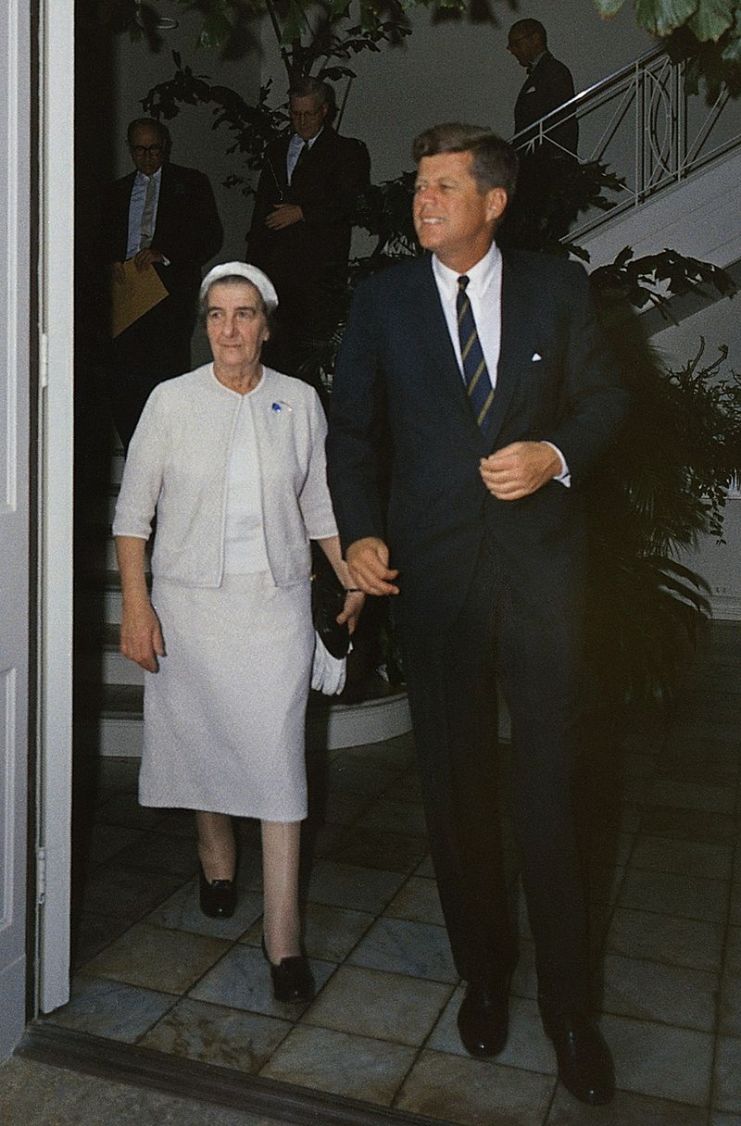
Prime Minister Ben-Gurion differed from his venerable security chief in that he was obsessed with acquiring a nuclear weapon and thought Arab neighbors, not Nazis, were the real enemies of the state. The prime minister had significant secret agreements (such as Operation Business Friend) with Konrad Adenauer, chancellor of West Germany. Germany would be rehabilitated as a “normal” country through Israeli acceptance, and Israel would receive monetary and military aid in perpetuity.
The French were also helping build a “peaceful” nuclear reactor in Israel. The CIA was also of great help. President John Kennedy, Premier Khrushchev, and President Charles de Gaulle were giant obstacles, with their anti-nuclear proliferation drive and insistence on inspections. Ben-Gurion was drawing closer to the military and farther from the socialist values of his party as the existential foundation of his Jewish state.
In March 1961 an OAS colonel in Paris tried to recruit Israelis to participate in an assassination of de Gaulle. They were asked to provide an “Israeli Arab” to train as a shooter and pose as an Algerian Arab so the deed would be blamed on the FLN (National Liberation Front).
The offer made its way up the chain to Ben-Gurion and his advisers. Harel was outraged that it was even being considered. Ben-Gurion is said to have shouted, “Israel is not a land of assassins!”
Although de Gaulle had been warned about the putsch by various sources, he expressed gratitude and friendship for Israel for not only refusing to participate in the coup but for reporting it.
Ben-Gurion, despite pressure from Harel, was persuaded that the military should choose their own intelligence chief. Amit was appointed and, as expected, relations between Mossad and Aman became more rivalrous than cooperative. Like a dysfunctional family, each organization kept secrets from the other, and both kept secrets from Israeli society.
First Battle of Harel and Amit
In 1959 President Gamal Abdel Nasser, leader of the United Arab Republic, had upgraded Egypt’s rocket program under General Khalil and brought in former Nazi rocket scientists from Peenemunde (home of the V-2).
Former Nazi military men were already developing Egyptian military and intelligence with assistance from Hitler’s favorite commando, Colonel Otto Skorzeny. Germany and the Arab world had good relations during World War II, largely because both opposed British and French colonialism.
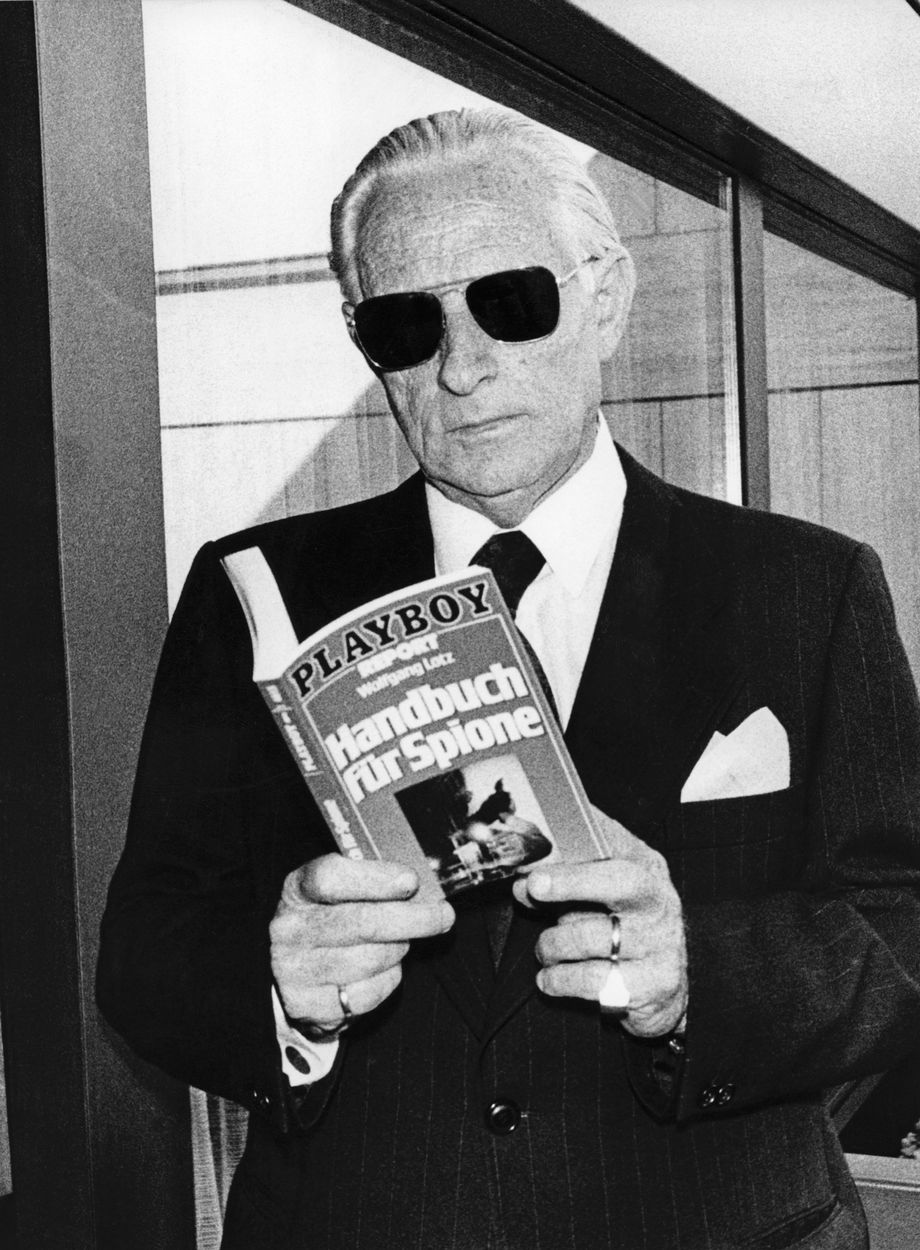
At the same time, Aman under Amit was secretly working with former Eastern Division head of Nazi intelligence and current chief of the German Federal Intelligence Service (BND) Reinhard Gehlen to create a legend for a German-Israeli spy, Wolfgang Lotz, to be sent to Cairo to gather military intelligence by posing as a German horse breeder.
The month after John Kennedy was elected president of the United States, Lotz arrived in Egypt. His IDF handler was Yosef Yariv (b. Rivkind in Haifa) in Paris.
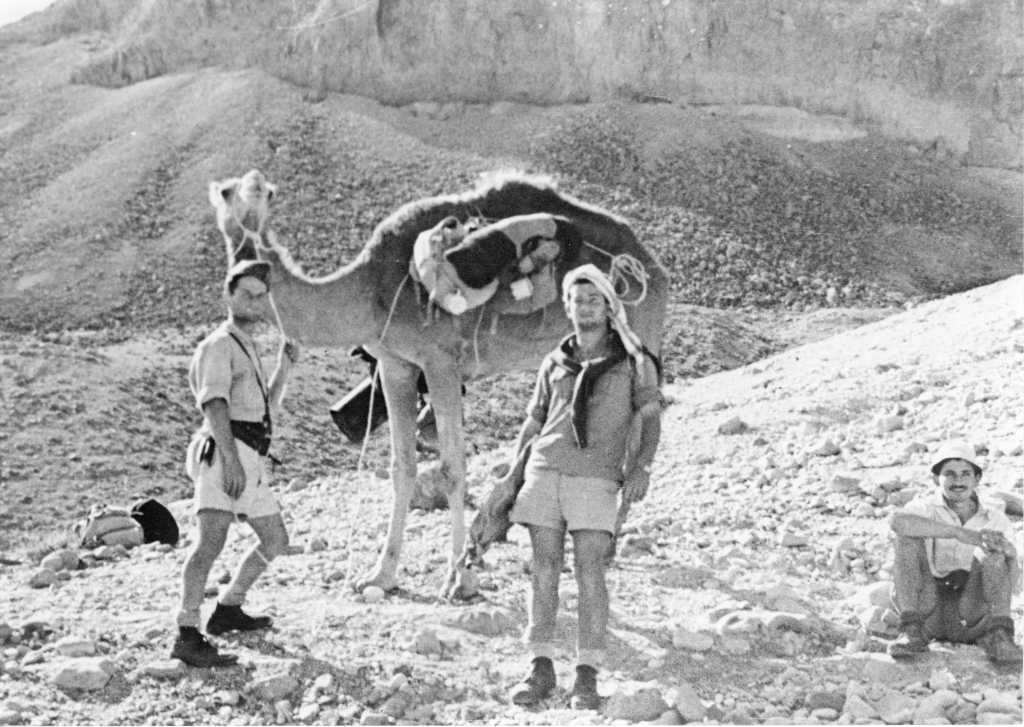
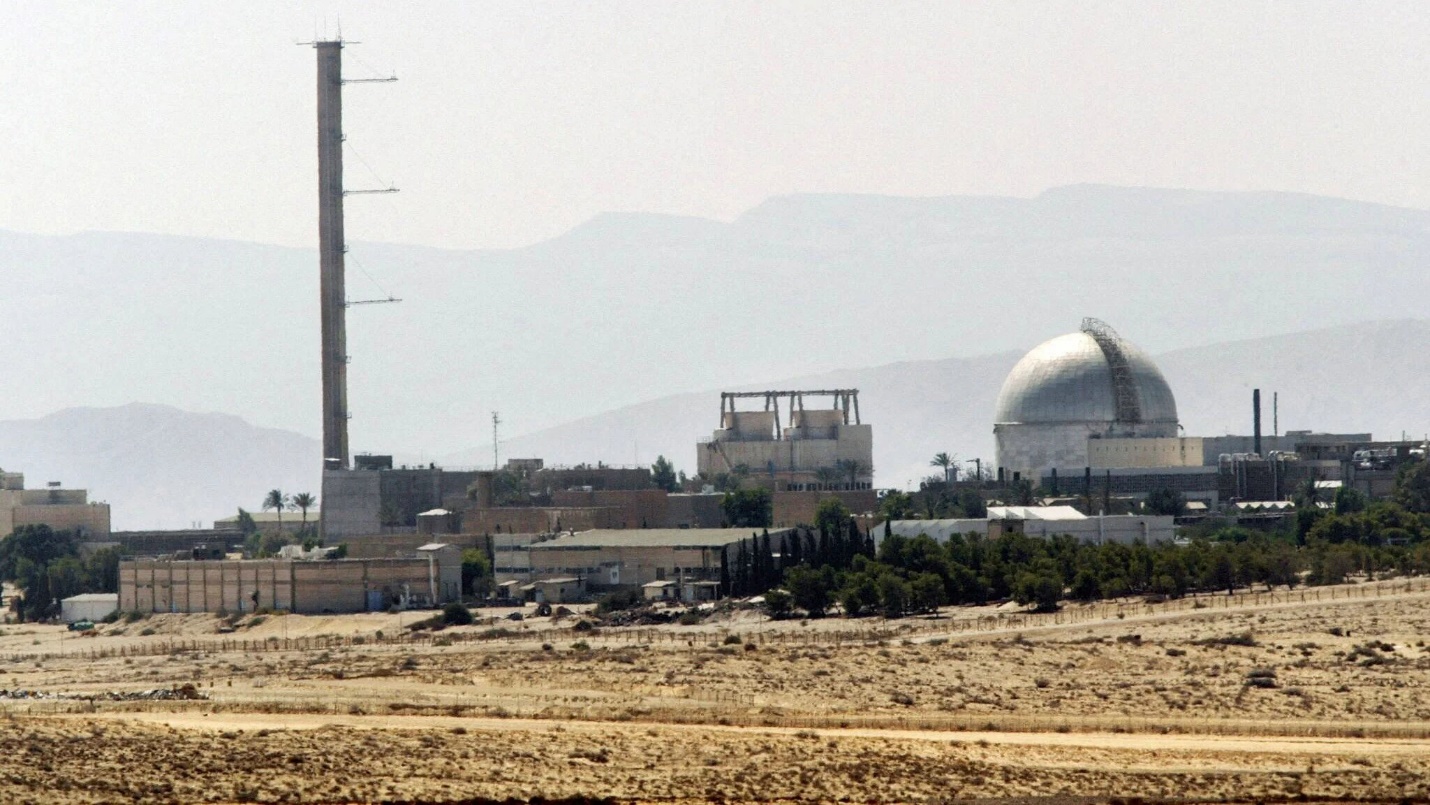
In July 1961 Israel launched its first rocket. Ben-Gurion secretly continued work on developing a nuclear weapon at Dimona, despite Kennedy’s opposition and that of many Israelis.
When Egypt launched its own rockets the following year, the Mossad was caught by surprise. (Harel had been devoting a lot of time to the abducted boy.) The “crisis of the German scientists” in Egypt became the battleground for the first major war between Harel and Amit. (For details, see my three-part series for CAM, “Who Killed Heinz Krug.”)
Mossad superspy Rafi Eitan called the intense power struggle between the intelligence chiefs akin to the biblical battle of Gog and Magog. (Eitan was Harel’s cousin, but his personality was much more like Amit’s.)
Amit said Israel should not be attacking Germans but, instead, should be planning for war with Arabs. Amit had battlefield experience and his U.S. training. He mocked Harel as an old-fashioned sleuth and the Mossad for not doing its job in Egypt.
Attacking Harel was attacking a living legend. Harel, like the majority of Israelis, feared and hated Nazis. He rushed to get back on track and did. He wanted to go directly to Adenauer and tell him to make the scientists leave.
But Ben-Gurion did not want to jeopardize his secret alliance with Germany. Harel then created Operation Damocles, to be headed by Yitzhak Shamir. The operation’s goal was to persuade or intimidate or even kill German scientists to get them out of Egypt.
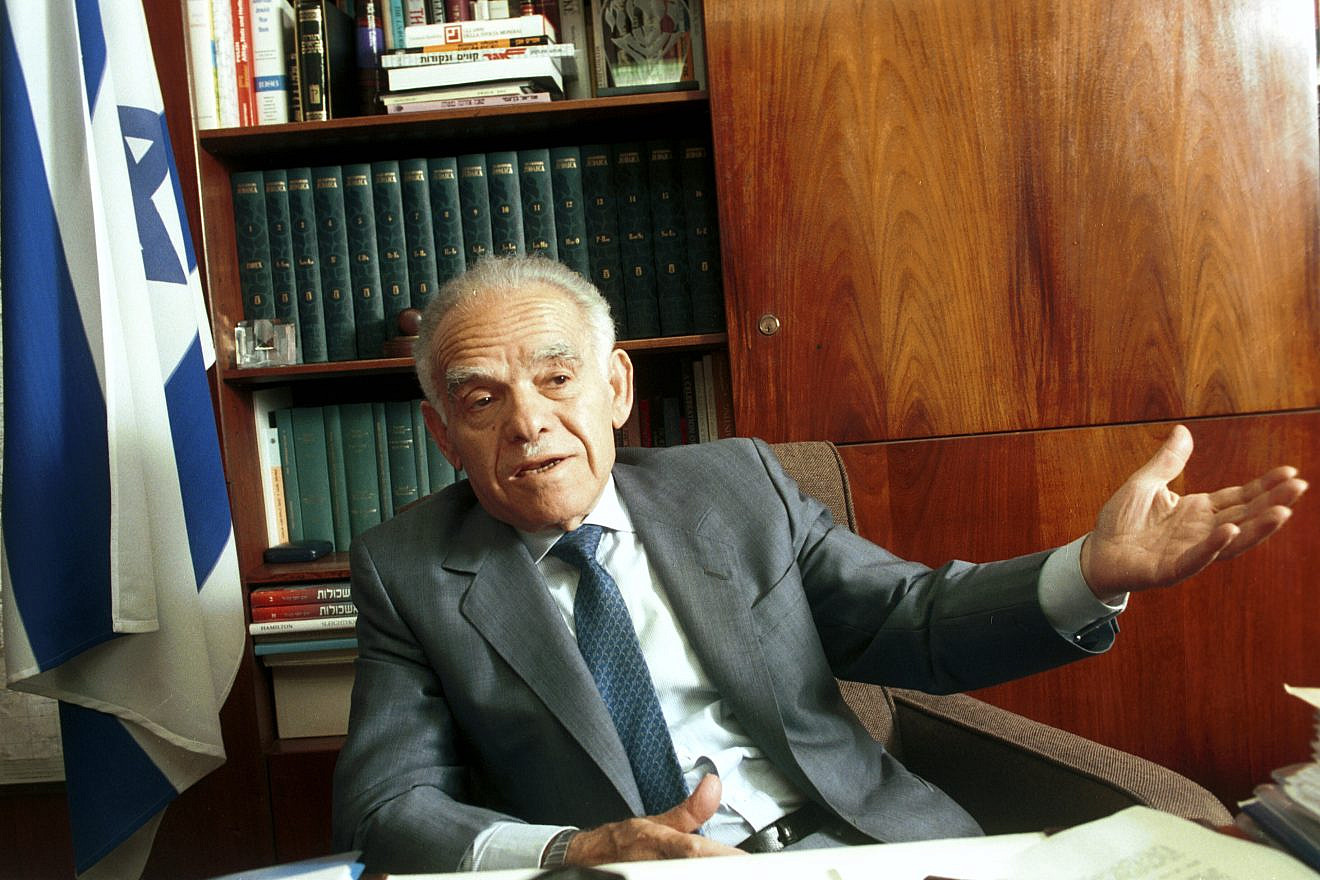
Lotz was transferred to Mossad (with the same handler) to help with the operation.
Shamir got information on the scientists by intercepting their mail with a machine donated by U.S. organized crime boss Meyer Lansky. The mail-opening machine turned up an Austrian engineer who seemed to be buying nuclear weapons material for the Egyptians.
Like other scientists, this former Nazi was scared when threatened. He defected to Israel. Harel kept this prize a secret from Amit.
When Amit found out about the defector, he insisted on a scientific assessment of his bona fides. The committee concluded that the defector was just a con artist. But Harel thought he could use him to persuade the scientists to quit.
In what looks like a sting operation, Harel’s defector was caught in the act of offering a ticket to Cairo to a scientist’s daughter in early 1963. He was arrested by the waiting Germans for threatening her. The trial and scandal ended Operation Damocles.
During this period, Harel’s men—significantly, he did not believe in using women—had been investigating Skorzeny, who had been involved with Eichmann. Skorzeny owned engineering and real estate companies in Madrid and had an enormous farm in Ireland, but he was generally known for assisting former Nazis to obtain work in South America and Egypt as well as trafficking arms and arranging coups and assassinations in the Middle East and elsewhere.
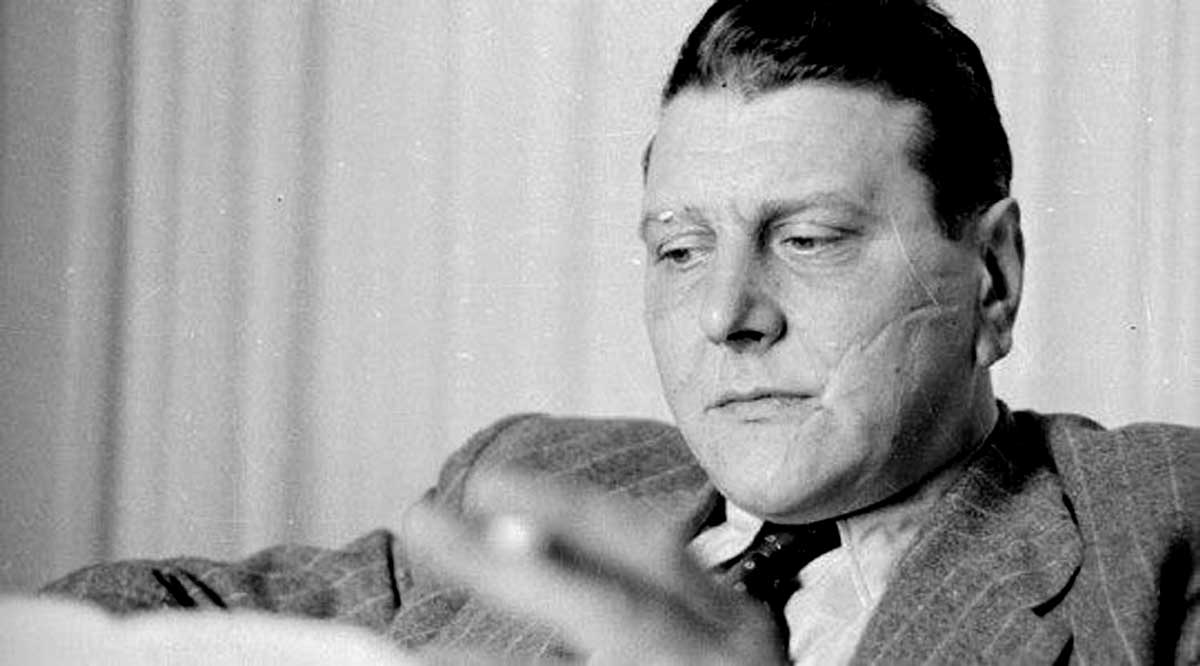
What to do with Skorzeny became a major issue for the Mossad and for Ben-Gurion. Skorzeny was easy to locate, but should he be captured and tried as a war criminal?
Ben-Gurion was through with causing trouble for Germany. Some, perhaps Skorzeny himself, suggested he could be put to use by the Jewish state. Harel, however, would never agree to work with an Austrian Nazi. Ben-Gurion and Amit, though, were pragmatists.
They were thinking about their existential enemies: the Arabs and the Kennedys. According to Eitan, in 1962, “Israeli intelligence” decided to use Skorzeny and shared this plan with Angleton at the CIA.[1]
At the time, Skorzeny was working for the OAS, with secret CIA funding, on a scenario for assassinating President de Gaulle in France.
Mossad chief Harel considered political assassination as an intelligence technique “morally repugnant,” though he had accepted murder of the German scientists because they had irreplaceable lethal skills.
Significant evidence from his voluminous business papers points to Skorzeny as the architect of the Kennedy assassination in November 1963.
After Ben-Gurion terminated Damocles, Harel went to the press and escalated the public’s fears of Germans, Nazis and Egyptian bombs. Harel and Foreign Minister Meir wanted to send an envoy to Adenauer demanding the return of the Israeli agents. Ben-Gurion again refused. Round one of the Battle of Gog and Magog was about to reach a decisive conclusion.
In early March of 1963, Ben-Gurion was more concerned about losing his own nuclear program than danger from a rudimentary Egyptian one. His exchanges with President Kennedy about Israel’s existential needs had been going nowhere. He was experiencing dementia-related rages.
He went away to his retreat in Tiberias. He thought about what Amit and Angleton were proposing to use Skorzeny for. He met a few times with Harel. He and his old ally could not agree on what Israel’s most important existential problem was. Harel chided Ben-Gurion for sacrificing Israel’s security for an alliance with Germany.
The prime minister finally told Harel he did not trust his judgment.
Harel felt obliged to resign. He was shocked when Ben-Gurion accepted his resignation. Out of loyalty, Shamir quit the Mossad as did most high-level staff. Eitan, who later claimed to have recruited Skorzeny, remained. Ben-Gurion appointed Amit temporary head of Mossad (until September 1963), keeping him as head of Aman.
Amit had succeeded in engineering a military coup that he had been brooding on since 1956. His “alternative philosophy” had prevailed. He not only defeated Harel, but he and Dayan and his supporter Shimon Peres (b. Szymon Perski in Poland) had gotten control over much of the land of Caanan.
Ben-Gurion, to mix a metaphor, was over a barrel and in over his head. The public could not accept (or understand) his forgiving attitude toward Germany regarding the Nazi scientists.
The upstart anti-Semite Jack Kennedy had given him the brush-off. He did not want to be around to even read Kennedy’s latest letter. He abruptly resigned and let his successor deal with the fallout.
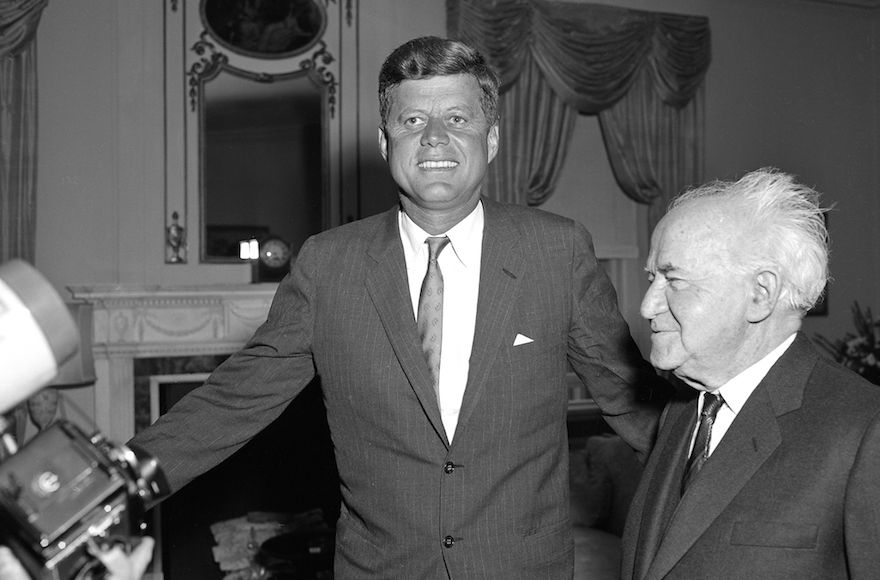
In the United States, Vice President Lyndon Johnson had long been in the Zionists’ camp and, if president, he was sure to support Israel all the way. CIA contact Angleton was in awe of Israel. Angleton answered only to former CIA Director Allen Dulles and Dulles’s ultra-rich sponsors.
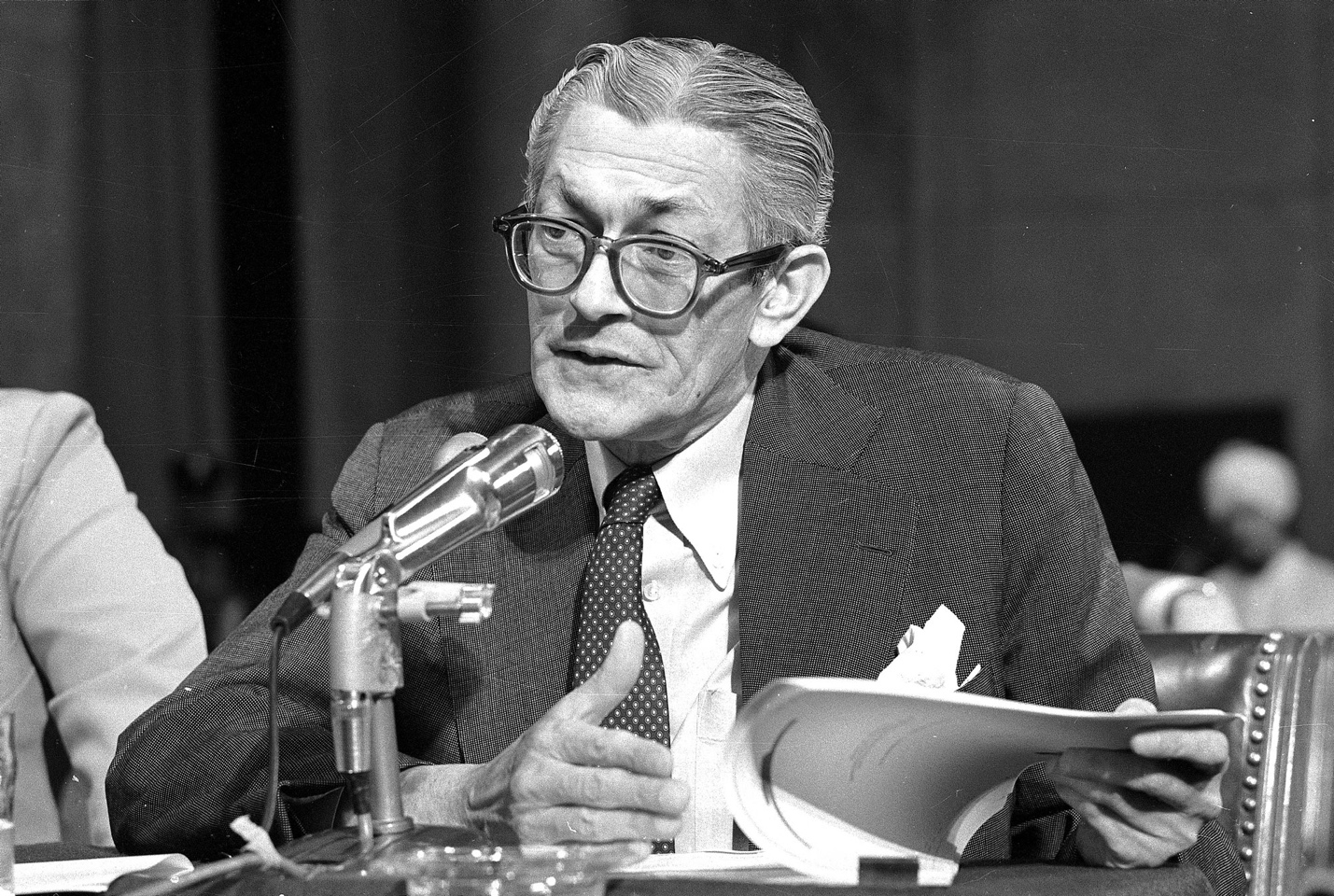
As Amit later said of Angleton, his “identification with Israel was a great asset for Israel. [He was] the biggest Zionist of the lot.” Germany, France, Italy, and even Morocco, were already secret allies of Israel. Amit was convinced that Israel could defeat the Arabs—and the Communists too.
Interlude in Battle
After resigning, Isser Harel lay low. He wrote contemporary histories and some novels. None were published until the 1970s, and his Eichmann narrative was not allowed in Israel until 1975.
All but the Eichmann story, The House on Garibaldi Street, were published only in Hebrew. They certainly are worth reading, but who, other than Israelis, reads Hebrew?[2]
In September 1963, the new prime minister, Levi Eshkol (b. Levi Yitzhak Shkolnik in Belarus), confirmed Amit as permanent head of Mossad. Amit was still working under suggestions he had received from Ben-Gurion. It is very likely, given Amit’s later exploits, that Eshkol was not informed of the use of Otto Skorzeny in 1963.
In November 1963 the incoming head of the Israeli armed forces, Yitzhak Rabin (formerly ambassador to the U.S.), was in Washington to discuss with Kennedy’s team the security situation in Israel vis-à-vis Egypt. Rabin happened to be at Ft. Bliss, Texas, on the Mexican border, the day President Kennedy was assassinated in Dallas.
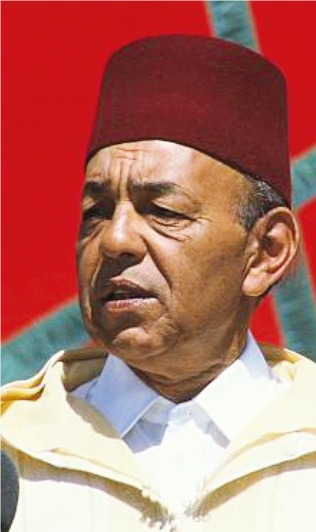
After the death of the U.S. “peace president,” everything changed, though none of the Israeli historians write about what a remarkable change it was. The odd silence in histories of Israeli nuclear weapons development and intelligence operations speaks volumes, considering how important these changes were to Israel and its relations with the rest of the world, most especially with the United States.
Any hint of involvement in the Kennedy assassination, however, could potentially destroy the Jewish state. Thus, the matter was, and is, left with barely a nod, even by U.S. historians of Israeli nuclear weapons, such as Seymour Hersh and the Cockburns.
The stage was, nevertheless, set for a takeover of U.S. foreign policy in the Middle East. Robert Kennedy was stopped in his tracks from forcing Zionists to register as foreign agents. The new American president was more than a friend of Israel; he was a major asset.
Israel’s race was on for an effective atom bomb. The peace movement that Kennedy, de Gaulle, Khrushchev, and Third World leaders favored was set back, and Israel’s plans for war against the growing united and independent Arab states went ahead, now with U.S. encouragement. In the mix now was possible Soviet assistance to Egypt, and some U.S. generals were still itching for the nuclear war they were denied by the new president.
The biggest threat to the militarists, U.S. and Zionist and others, was the Tricontinental movement of Third World leaders who were committed to achieving political and economic independence. Revolution was on the rise in Latin America.
Even immense Communist China was involved in the Tricontinental movement. Progressive Arab leaders such as the king of Morocco’s nemesis, Mehdi Ben Barka, supported the Palestinians. The movement as whole supported the right of Palestinian return.
Things were eerily quiet between Amit and Harel until the summer of 1965.
Second Battle of Harel and Amit
On October 29, 1965, Moroccan progressive politician in exile Mehdi Ben Barka was on his way to a meeting with a film director, a journalist, and a film producer when he was accosted by two policemen on a busy street in Paris and led into a black police car. He was never seen again.
People believed it when the fake film producer (actually a gangster) fingered Moroccan security agents as the abductors and killers of Ben Barka. There was no question that shady French police were also involved. Many, including the Ben Barka family, believed the CIA was the real culprit. But no one blamed the Israelis.
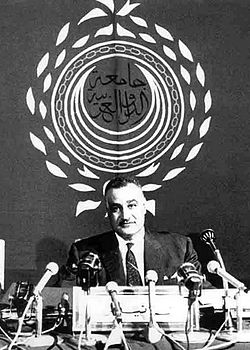
In April 1965, however, without telling Prime Minister Eshkol, Mossad Director Meir Amit had gone to Paris and met his Moroccan and French secret service counterparts, General Mohamed Oufkir and Jacques Foccart. They certainly discussed the summit of the Arab League that would be held in late summer in Morocco. They also discussed the abduction and murder of Ben Barka that Morocco wanted as a quid pro quo for letting the Israelis bug the summit. Plans for killing Ben Barka were far along when the summit opened in Casablanca on September 13, 1965.
That same day Prime Minister Eshkol created a new position, national security adviser, and appointed Isser Harel. Eshkol did not trust Amit because he was aligned with Eshkol’s political enemies, Ben-Gurion, Peres, and Dayan, who had formed a new party. The Aman chief, Aharon Yariv (born in Moscow), was also allied with them. Harel’s new job was to keep an eye on Amit and make sure he did not do anything rash.
Neither Eshkol nor Harel knew about Amit’s agreement with Morocco to plan and provide full services for the assassination of Ben Barka. Because of the appointment of Harel, Amit was expected by many to resign as head of Mossad out of shame. Amit was not motivated by shame. He had already staged a military coup in 1963.
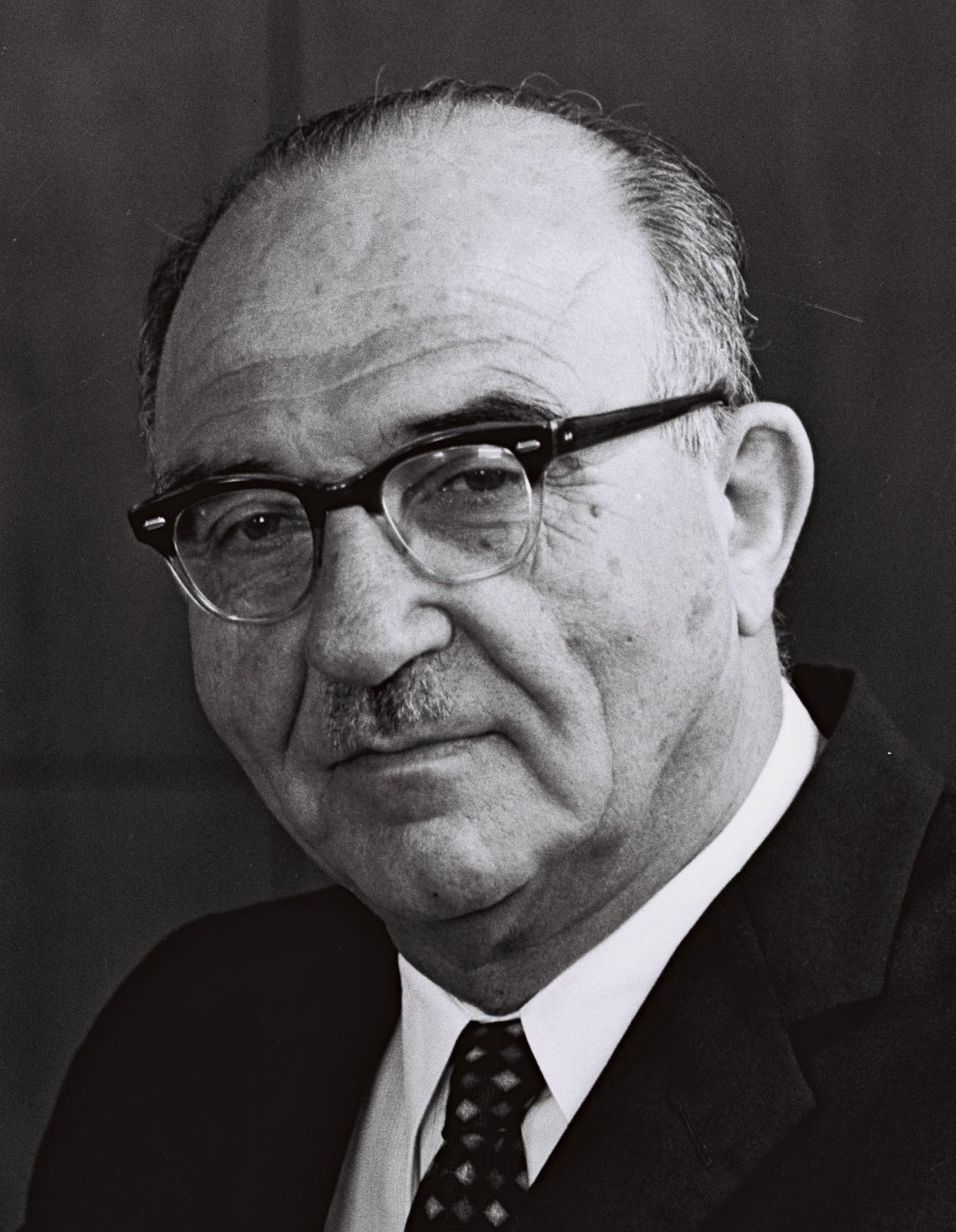
The first that Eshkol heard anything about the planned assassination was after the Casablanca meeting, where Mossad wiretaps gleaned important information on Arab readiness for war. Amit told him the Moroccans wanted Mossad to help in killing Ben Barka. That is when Eshkol said (in Yiddish) that “it doesn’t smell right . . . we already agreed that once is enough.”
Amit told him he would try to get out of it but it would not be easy. On October 13 Amit told Eshkol that the Moroccans had given up on the idea. On October 25 Amit flew to Rabat where the Moroccan deputy security chief told him the plan was under way.
Amit told Eshkol it was only then that Mossad agreed to help. Of course, this was not the case. He certainly did not tell Eshkol about Mossad’s creating a scenario, complete with a fake film documentary and a half-dozen gangsters, not to mention French police.
Nor about a Mossad operations apartment or Mossad guards in Paris. Nor the provision of fake passports, rental cars, safe houses, and even poisons and shovels.
In “one of the most important classified secrets in the history of the State of Israel,” Amit acted alone. Some compared his isolation to a Führerbunker. If Eshkol asked for Harel’s advice at the time, he did not take it.[3]
By the time of Israel’s elections in early November, Ben Barka’s disappearance, and presumed murder, had created an enormous political furor in France—not only because he was abducted in “friendly” France but because several of de Gaulle’s own people in intelligence and police were implicated.
These collaborators were not connected with his enemies in the OAS but his own Gaullist Barbouzes, gangsters whose job was to fight the OAS. De Gaulle certainly did not know or approve of what happened to Ben Barka. He was more than embarrassed. He had just returned from a tour of South American countries. His stature was suddenly diminished.
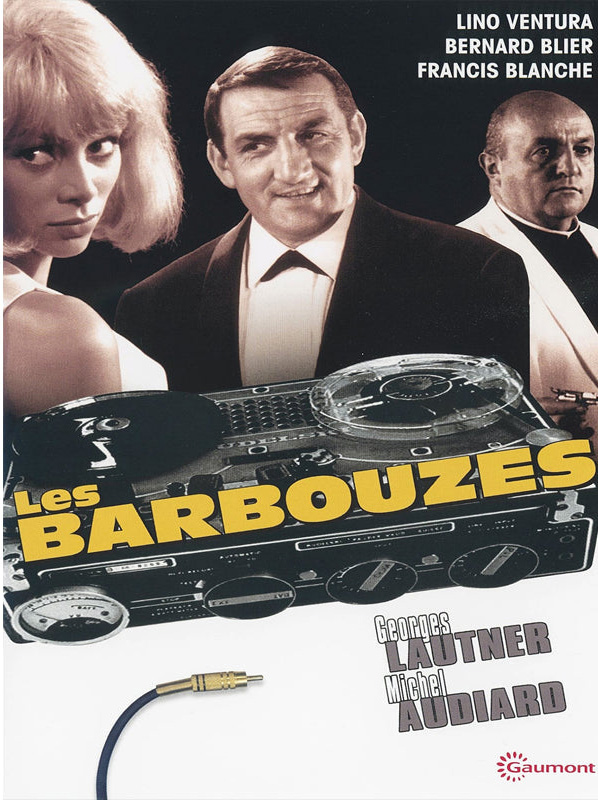
The political furor in France made the Mossad panic. Amit had thought, wrongly, that the disappearance of a Third World politician would barely make the news. It had not been planned as a public execution like the attacks on de Gaulle and Kennedy.
On November 5, Amit reassured Eshkol that it was the Moroccans who did the actual killing. He said, “Israel had no physical connection to the act itself.”
On November 25, Amit told Eshkol, “Everything is fine.”
Naturally, the real plot leaked to the leadership in Israel. One of Amit’s disgruntled agents spilled the details to an influential member of parliament, Yisrael Galili, who told Harel who told Eshkol who blew his top. The situation was more than embarrassing for Eshkol.
Eshkol won the election in November but could not form a government until January 1966 because of the internal problems created by Operation Ben Barka that had to be kept secret from the public.
Amit was by this time very powerful. He had united the Mossad and Aman under a military perspective. He and his backers had probably ignited the coup of the century in the United States, which had very positive results from the point of view of his party. He tried to keep everything related to the Ben Barka assassination under wraps using a non-nuclear Samson option: He threatened French intelligence that, if Mossad’s role were revealed, they would go down with the ship.
Eshkol asked Harel to investigate. Harel asked: “Who gave the order?” Amit said he had authority from the prime minister. Eshkol said he knew nothing about it. Harel observed that Amit had “seriously exceeded his powers…he used bad judgment.” He told the prime minister, “You should know that [Amit] did not tell you the truth. You had an adviser [himself] and did not use him.” He later said that Eshkol almost started crying.
Harel concluded: “The Mossad, and through it the state, were engaged in various actions connected to a political assassination, in which Israel not only had no interest, but should not have been, I believe, from a moral, public, and international perspective involved at all.”
Several secret committees and discussions delved further into what happened. The situation was so serious that a senior IDF officer set a gun down on Amit’s desk and told him he should “end the affair in a manner expected of an officer.” Amit returned the gun to the officer.
Harel told Eshkol, “God sent me to protect you, and you became terribly entangled. Amit lied to you all along. You told him not to get involved [in the Ben Barka case], and he was involved.” Harel told Eshkol that either he had to fire Amit or resign himself.
Eshkol was not ready to do either.
The Tide Turns
Amit and Ben-Gurion threatened Eshkol that, if Amit were fired, they would start a political fire that would ignite the country. Foreign Minister Meir agreed that Amit needed to go, but she could not agree to forcing Eshkol out.
The problem was that, if Eshkol resigned, his party, which had won the election, would be destroyed. She reminded the committee of the Official Secrets Act and made their report “disappear.”
In February 1966 Eshkol appointed another committee, one that included two of his good friends. This committee found that Amit had not properly informed Eshkol of events, such as the statement of the Moroccan Mossad-trained deputy security chief that they would kill Ben Barka and that they only needed technical support. Yet, the committee concluded that Eshkol had approved Mossad’s “involvement in the affair” and that there was “certainly no reason to oust the head of the Mossad or the prime minister.”
Naturally, Harel did not agree. He said a judicial investigative committee was needed. He said the Labor Party would be tainted if it was not cleared up.
The others all agreed to cover up the disaster. Harel, who was not a politician but was relentlessly ethical, insisted that either Amit would have to go or he would. It was basically a repeat of the ultimatum he gave to Ben-Gurion in March 1963.
It had the same result. Eshkol no longer felt supported by Harel. He now joined Amit in fighting back. Amit told the prime minister that Harel “will not drop the subject of his own accord…unless it is hinted to him that in his past there is enough material to undermine his claim that he is ‘the moral guardian’ of the Mossad.”
Amit and Eshkol jointly blackmailed Harel regarding the 1954 death of an Israeli spy during Harel’s tenure as Mossad chief. The spy died of oversedation during transit from Egypt to Israel, his body was thrown in the sea, and his death was withheld from the spy’s parents. Amit found the file and threatened to make it public. Harel rebutted that he had demanded an investigation at the time.
Shortly afterward, on June 30, 1966, Harel resigned as intelligence adviser to the prime minister.
Nearly 50 years later, Amit insisted that Harel did not leave out of conscience but because of “questionable incidents” that would have destroyed his righteous persona. Harel was not driven by concern for the nation “but by unbridled vengeance.” Amit said, “He resigned when we put the file on the murder of Jews on the table.”
Harel said merely that he resigned not because of threats to his reputation but because Eshkol refused to fire Amit.
Since the late 1960s Israeli historians have uniformly judged the once-beloved Isser Harel harshly, saying, among other things, that it was he who brought divisiveness into the intelligence services and that, after he resigned, the Mossad left the Middle Ages and entered the modern world. The victors write the histories but, perhaps, it is time for a reassessment of this conclusion.

Ralph P. Ganis, The Skorzeny Papers: Evidence for the Plot to Kill JFK (New York: Hot Books, 2020), 186. ↑
Hebrew readers might also want to check out Nahik Naveh, Tensions in Israeli Intelligence: Harel vs. Amit, Ma’ariv, a book that Google AI does not acknowledge existing. ↑
Quotes are from Stewart Steven, The Spymasters of Israel (New York: Ballentine 1980); and Ronen Bergman and Shlomo Nakdimon, “The Ghosts of Saint-Germain Forest,” March 23, 2015, Ynet News Magazine https://www.ynetnews.com/articles/0,7340,L-4639608,00.html. ↑
CovertAction Magazine is made possible by subscriptions, orders and donations from readers like you.
Blow the Whistle on U.S. Imperialism

Click the whistle and donate
When you donate to CovertAction Magazine, you are supporting investigative journalism. Your contributions go directly to supporting the development, production, editing, and dissemination of the Magazine.
CovertAction Magazine does not receive corporate or government sponsorship. Yet, we hold a steadfast commitment to providing compensation for writers, editorial and technical support. Your support helps facilitate this compensation as well as increase the caliber of this work.
Please make a donation by clicking on the donate logo above and enter the amount and your credit or debit card information.
CovertAction Institute, Inc. (CAI) is a 501(c)(3) non-profit organization and your gift is tax-deductible for federal income purposes. CAI’s tax-exempt ID number is 87-2461683.
We sincerely thank you for your support.
Disclaimer: The contents of this article are the sole responsibility of the author(s). CovertAction Institute, Inc. (CAI), including its Board of Directors (BD), Editorial Board (EB), Advisory Board (AB), staff, volunteers and its projects (including CovertAction Magazine) are not responsible for any inaccurate or incorrect statement in this article. This article also does not necessarily represent the views the BD, the EB, the AB, staff, volunteers, or any members of its projects.
Differing viewpoints: CAM publishes articles with differing viewpoints in an effort to nurture vibrant debate and thoughtful critical analysis. Feel free to comment on the articles in the comment section and/or send your letters to the Editors, which we will publish in the Letters column.
Copyrighted Material: This web site may contain copyrighted material the use of which has not always been specifically authorized by the copyright owner. As a not-for-profit charitable organization incorporated in the State of New York, we are making such material available in an effort to advance the understanding of humanity’s problems and hopefully to help find solutions for those problems. We believe this constitutes a ‘fair use’ of any such copyrighted material as provided for in section 107 of the US Copyright Law. You can read more about ‘fair use’ and US Copyright Law at the Legal Information Institute of Cornell Law School.
Republishing: CovertAction Magazine (CAM) grants permission to cross-post CAM articles on not-for-profit community internet sites as long as the source is acknowledged together with a hyperlink to the original CovertAction Magazine article. Also, kindly let us know at info@CovertActionMagazine.com. For publication of CAM articles in print or other forms including commercial internet sites, contact: info@CovertActionMagazine.com.
By using this site, you agree to these terms above.
About the Author

Kathleen Meigs is a thirteenth generation American and walked precincts for John Kennedy for president in 1960.
She matriculated at Stanford University, graduated from UCLA in history and has been a journalist, editor, and published academic author.
Her anthropological novel Mishopshno is available on Amazon. Her love is research, and her passion is truth and good government.
Kathleen can be reached at katymeigs@sbcglobal.net.





Author’s correction: Rabin was “later” (1968-73) ambassador to the US (not “formerly”)
Pashinyan won easily in Armenia. The Russians left the Armenians to Azerbaijan and then expected Armenia to remain a Russian colony. Armenia became an ally of Europe and with a little luck Kazakhstan and Armenia will be members of NATO. Thus the Traitors Putler and Assad will pay for their betrayal. It is funny that the traitor Putler thinks he will shift the blame to others, the same with Syria, the same with Venezuela. But the end of Russia and its betrayals is near. Putin handed Syria over to Erdogan (BRICS and Kazan), and in return, Erdogan will bring Kazakhstan into NATO. This is a magnificent payoff for traitorous Russia.