Warning: Trying to access array offset on value of type bool in /home/covertaction/public_html/wp-content/plugins/wp-word-count/public/class-wpwc-public.php on line 123
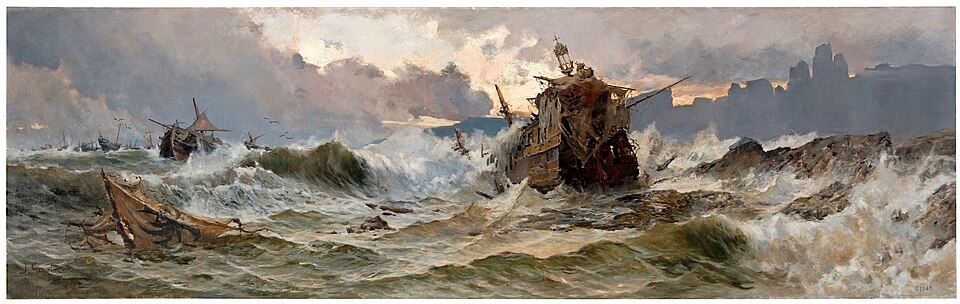
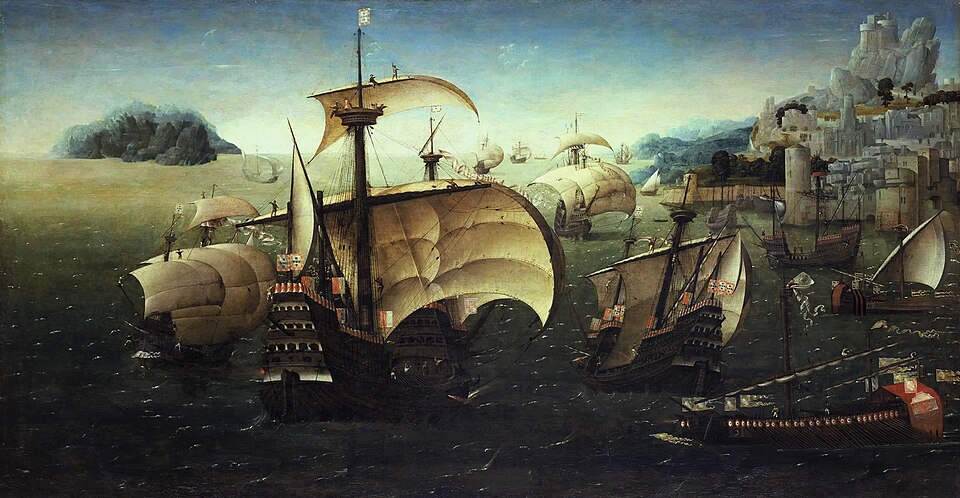
Those living today are destined to experience a rare Triffin’s Dilemma moment, when one dominant but fading empire transitions uneasily to a more robust one.[1] The end of the Portuguese and Spanish empires can be understood as examples of such turning points, with the defeat of the Spanish Armada in the English (not Spanish) Channel in 1588 being emblematic.
Another imperial turning point occurred during the 1956 Suez Crisis (known as the Sinai War in Israel). That year, Egypt under its powerful pan-Arab leader, Gamal Abdel Nasser, nationalized the Suez Canal and blocked the Straits of Tiran. Britain, France and Israel united to try to regain control of the canal and overthrow Nasser. Israel preemptively invaded and captured both Sinai and Gaza, while Soviet Premier Nikita Khrushchev threatened to drop atomic bombs on London and Paris if the British, French and Israelis did not withdraw from Egypt. U.S. President Dwight Eisenhower refused to back the Europeans against Egypt and blocked an IMF bailout of Britain. The seemingly limitless British Empire thus expired, due primarily to its failing economy and currency. As Niall Ferguson put it in the April 10, 2026, (London) Times, “After Suez, there was no making Britain great again.”[2]
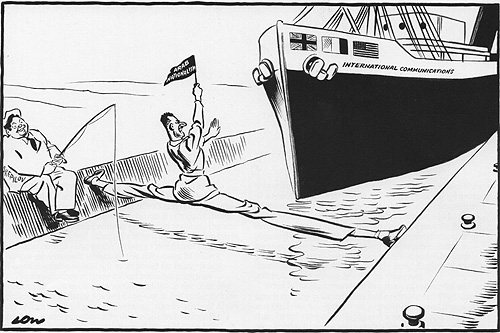
As a result of the fall of the British pound, the U.S. dollar became the global reserve currency, while the Soviet Union advanced to second place in power. The UN forced Israel to return its territorial spoils. It is worth noting that, just a year ago, U.S. Vice President J. D. Vance took the side of the losers in the 1956 hegemonic crisis when he said, “The British and the French were certainly right in their disagreements with Eisenhower about the Suez Canal.”[3] According to Triffin’s theory, Vance is certainly wrong in his geopolitical assessment.
The demise of the over-extended Spanish and Portuguese or Dutch empires did not take place in a nuclear context. In 1956 in Suez, however, the nuclear card was already on the table, not only through Soviet threats against European capitals but because Israel was already on its way to producing its own nuclear device.
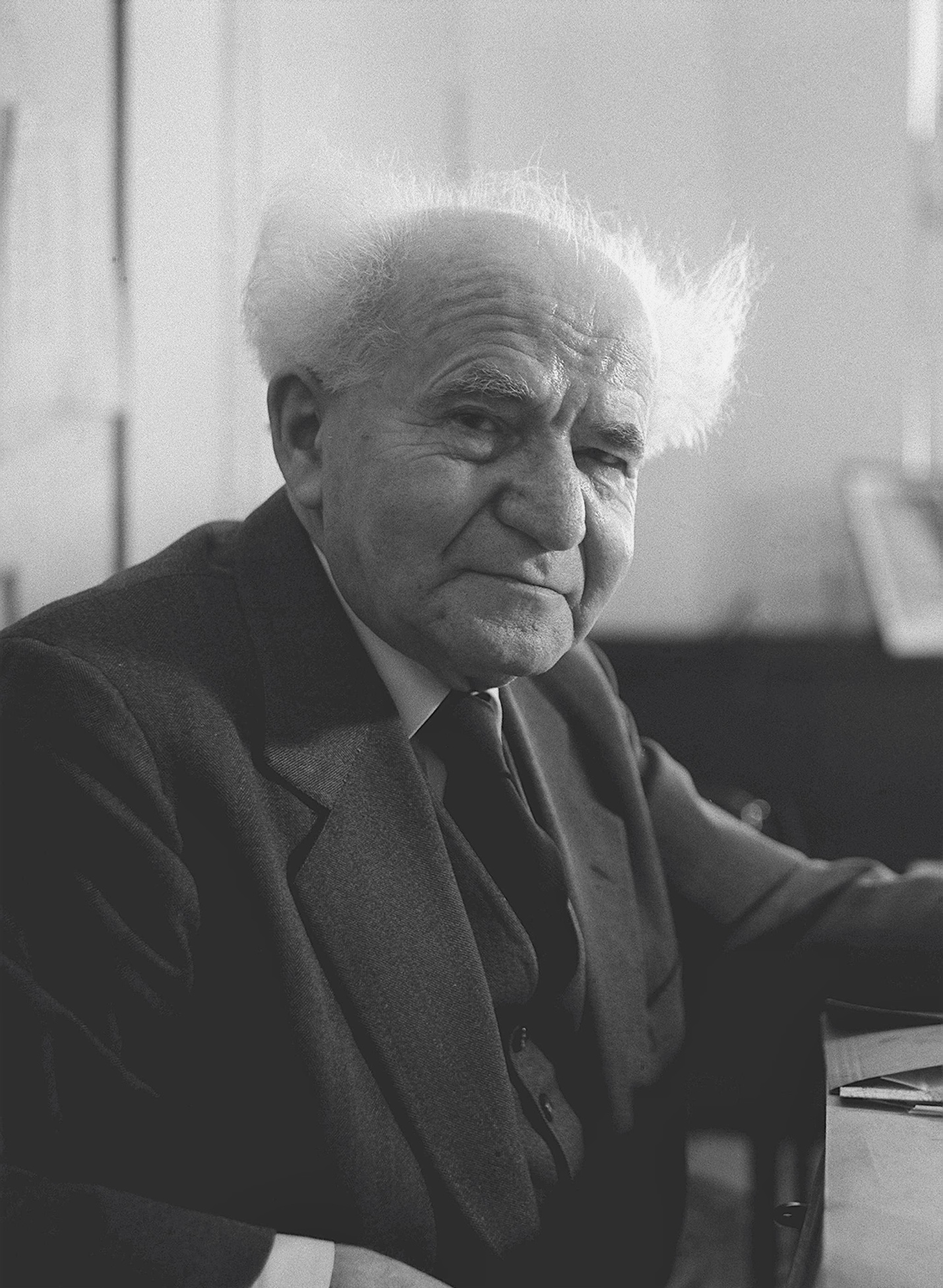
Even before the Suez Crisis, Israel’s founder David Ben-Gurion and disciples Shimon Peres and Moshe Dayan believed that the new nation’s continued existence depended on acquiring an atom bomb. The weapons program they created was so secret that Israeli citizens could not express their opinions about it. Six out of seven members of the Israeli Atomic Energy Commission resigned when they learned about it. The program, LAKAM (Science Liaison Bureau), headed by Benjamin Blumberg, was so secret that even Shabak (aka Shin Bet) and Mossad Director Isser Harel, who had originally recruited Blumberg to set up a security system within the defense industries, knew nothing about it until 1962.[4]
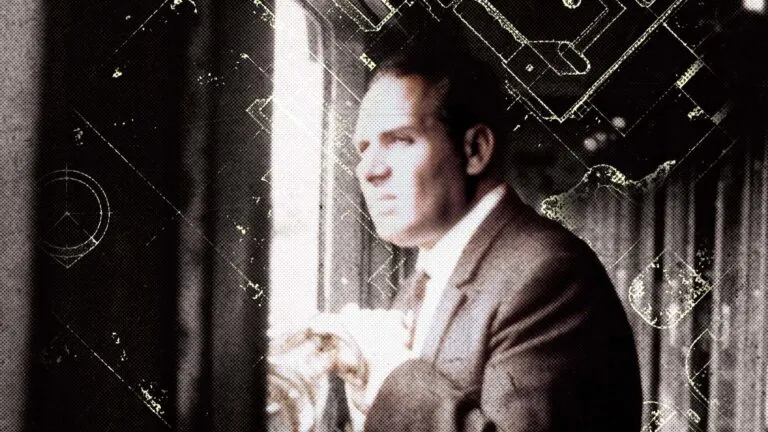
After the end of the Sinai War, LAKAM rushed to achieve Israel’s atomic weapon before Egypt or Nasser’s Soviet friends could stop them. By January 1961, from various sources, including the head of Mossad, the U.S. concluded that Israel, without informing Washington, was moving ahead on building a nuclear weapon at its supposedly peaceful reactor at Dimona.
When upbraided about it by the U.S. ambassador, Ben-Gurion brashly responded that the U.S. was a great and prosperous country but “we are the equals of America in terms of moral respect. We didn’t deserve it and we will not accept such treatment. We are not a satellite of America…and will never be a satellite.”[5] As Dayan put it, “Israel must be like a mad dog, too dangerous to bother.”[6]
From the beginning of Nasser’s rule, Egypt had been pursuing advanced aircraft and rockets, assisted by German scientists who had worked for Hitler. By 1962 there were hints that Egypt was also trying to create a nuclear weapon.[7] There was a public scare in July1962, when Nasser paraded his rockets. In actuality, Egypt on its own was never a nuclear contender. The German rocket scientists assisting Egypt were pressured in Yitzhak Shamir’s Operation Damocles to leave by late 1962.
In the 1960s Ben-Gurion saw two major threats to his atomic weapon plan: U.S. President John Kennedy, whom he considered an upstart anti-Semite, and Soviet Premiers Nikita Khrushchev and Alexei Kosygin, who supported Israel’s rival in Egypt. The superpower leaders, East and West, were devoted to non-proliferation of atomic weapons, especially in the Mediterranean. In August 1963 US Secretary of State Dean Rusk and Soviet Foreign Minister Andrei Gromyko signed the first-ever nuclear test ban treaty.
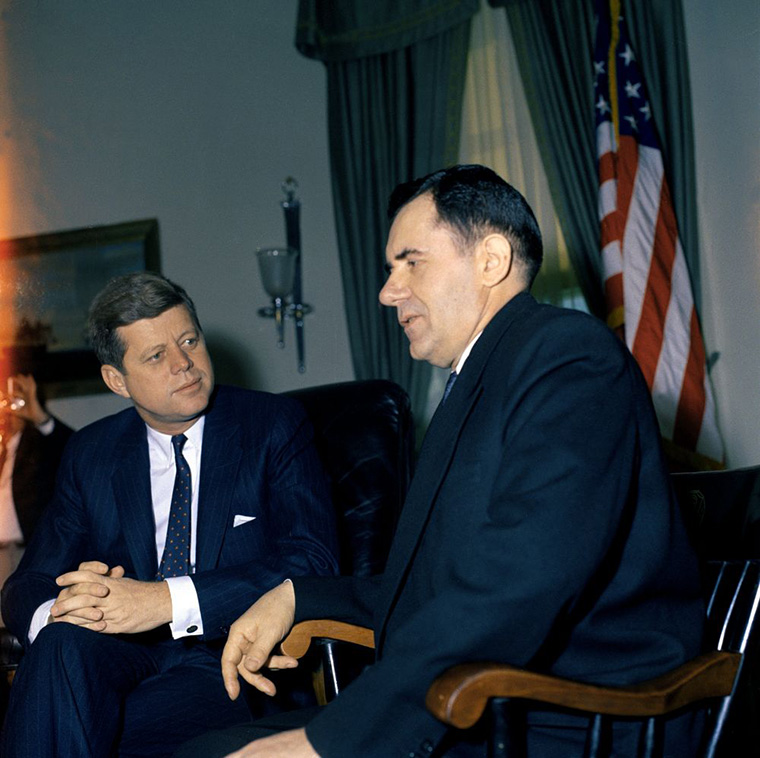
In the early 1960s, Ben-Gurion continued to practice infamous pre-state Zionist terrorist tactics, including false flags and assassinations. The 1963 successful coup against the U.S. presidency and the unconstitutional ascendency of Israeli asset Vice President Lyndon Johnson took care of the first problem. Replacing Kennedy with Johnson proved successful in stopping serious inspections at Dimona.
The second threat to Israel’s nuclear capacity was from the Egyptian air force and Syrian army as well as from the USSR, which might promise a nuclear umbrella for the United Arab Republic (Egypt and Syria). Israel prepared to go to the brink with the Soviets and their Arab friends.
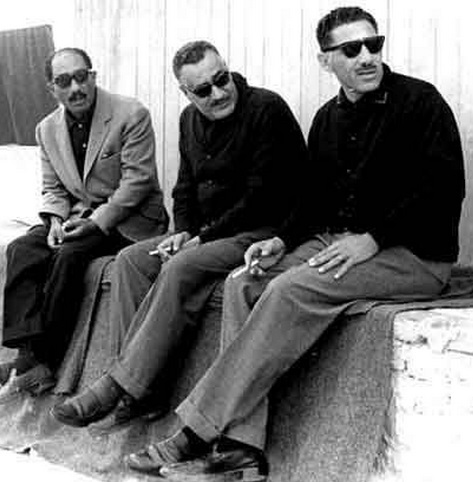
Ten days before the 1963 assassination of President Kennedy, the incoming Israel Defense Forces chief, General Yitzhak Rabin, and incoming IDF intelligence (Aman) chief, General Aharon Yariv, were in Washington talking to Defense Department officials about plans to defend against an expected Egyptian attack around 1966 or 1967. Rabin described “Nasser’s master plan as depending heavily on surprise and on a crippling initial blow” with a war lasting three to five days, for which Israel had to be prepared with missiles from the U.S.[8]
The U.S. side doubted Egypt would attempt this. The U.S. also believed Egypt was not counting on any support from the USSR. The U.S. objected (this was literally in the last days of the Kennedy administration), “What would a surprise attack get [Nasser], unless he could eliminate Israel by such a blitzkrieg that our intervention would be too late?” (This is exactly what happened when Israel attacked Egypt on June 8, 1967. Whatever the Soviets offered the UAR, it was too late after the first few hours of the war.)
The Kennedy official asked, “Why did Israel always seem to question our will or ability to react, which we had underlined again and again both publicly and privately?” Good question. He might have asked Ben-Gurion and/or his Mossad/Aman chief, Meier Amit.
By May 1966, Soviet Premier Kosygin had visited Egypt and proposed a mutual defense pact between Egypt and Syria under a Soviet umbrella. A year later, Israeli leaders were secure that they were militarily well ahead of Egypt. In fact, they believed Israel had a viable, though untested, nuclear weapon, and in June they were preparing to test it in the Sinai. What they feared most regarding Egypt, with good reason, was that their unfriendly neighbor might be capable, with assistance from the Soviet Union, of destroying Israel’s breeder reactor at Dimona.
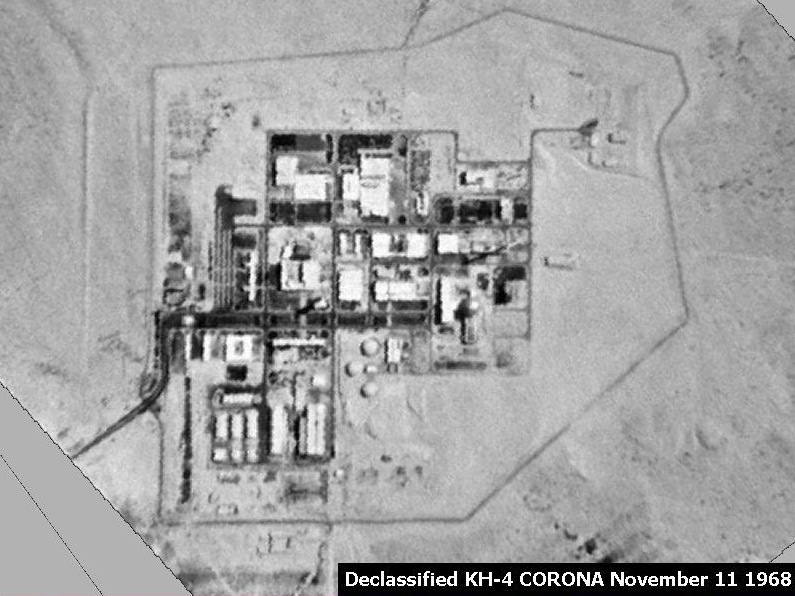
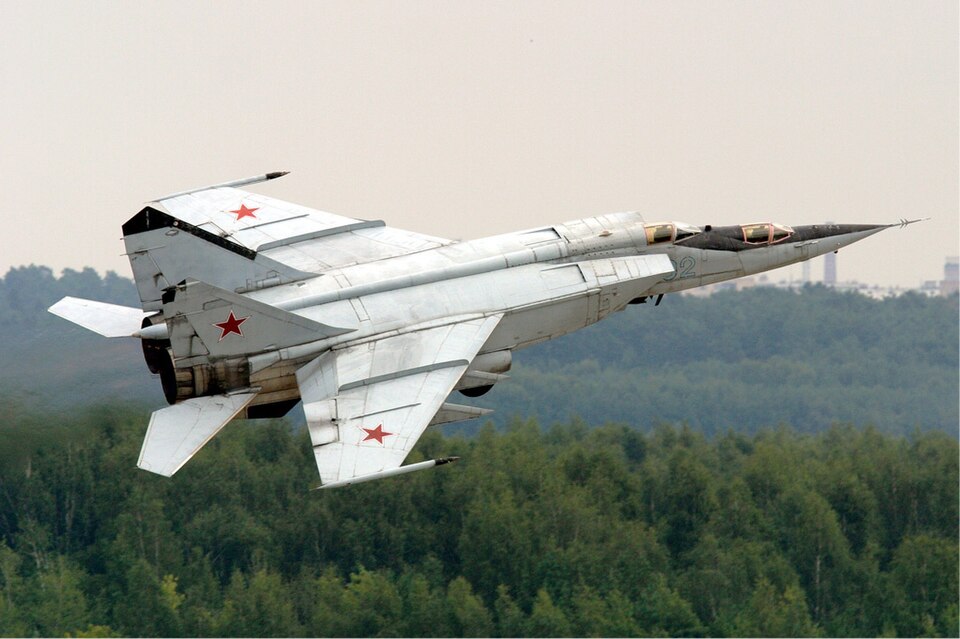
In mid-May 1967 Soviet pilots were flying experimental top-secret surveillance MiG-25s (known as Foxbats) over Israel and Dimona and sending the film back to Moscow. Because they were not shot down by Israel’s U.S.-supplied Hawk missile system, the USSR concluded it could successfully bomb Israel’s nuclear sites. An Egyptian delegation went to Moscow to ask for support in a pre-emptive attack on Dimona. Things were coming to a head.
Soviet-Egyptian False Flag?
The context of the June 1967 Israeli-Arab war was clearly a nuclear one, as it concerned both parties and their protecters, with Israel’s production of a viable atomic weapon at their reactor at Dimona the central issue. By 1967, the Egyptian and Soviet militaries were technically prepared to bomb Dimona to stop this capability if attacked by Israel. Although the U.S. (now under President Johnson and Secretary of Defense Robert McNamara) tried to discourage Rabin from initiating a war on Egypt and Syria, the Israelis decided to regard the U.S. views on a pre-emptive attack as an “amber light” rather than a red light.
Just before the start of the war, Israel was planning to drop paratroopers in the Sinai to prepare and remotely detonate a nuclear bomb as a test and a warning. However, Israel started and won the war before the test could be set up. Peres later hinted at this operation in his memoir when he mentioned a plan “that would have deterred the Arabs and prevented the war.”[9]
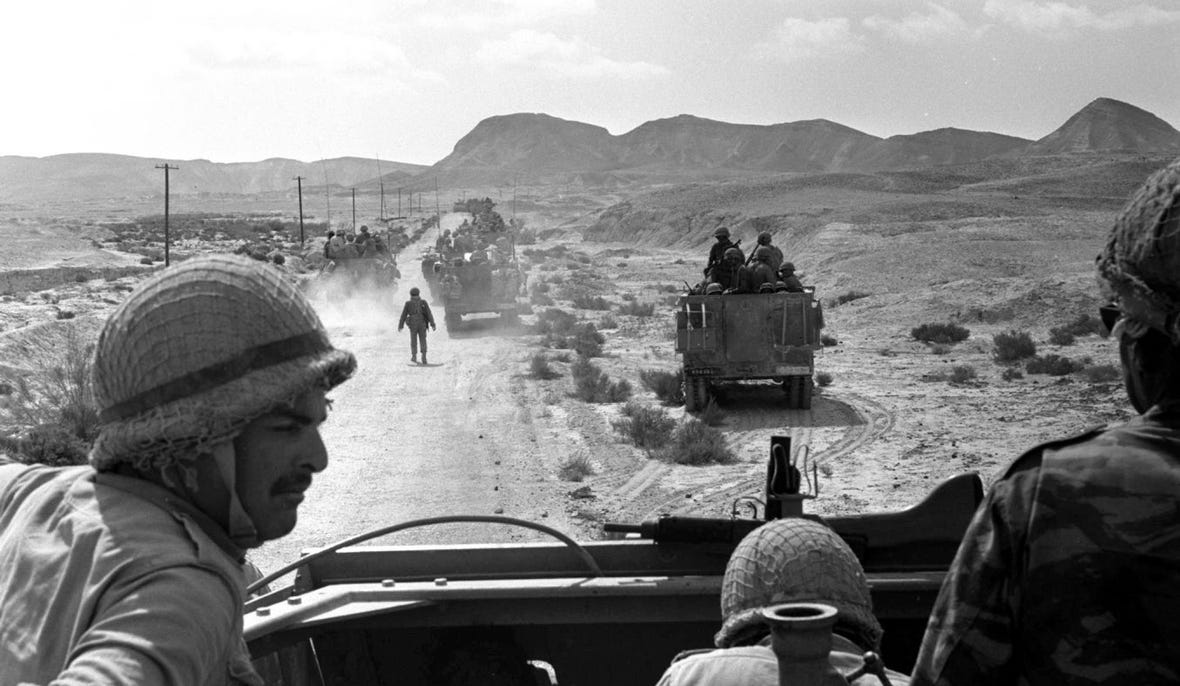
On June 5 Rabin made the first (and fatal) blow of the war, destroying Egypt’s air force on the ground and its army in the Sinai and rendering a nuclear “warning” moot. Just as Rabin had projected about Egypt in 1963, the speed of Rabin’s successful attack on the Egyptian air force made it impossible for the Soviets to respond, let alone the Egyptians. Dimona was not struck, and it stands today, though Iranian missiles have landed in the reactor’s vicinity.
Meanwhile in the West Bank, Moshe Dayan was making rapid progress toward Damascus. On June 10, 1967, Soviet Premier Kosygin phoned LBJ and demanded that Israel stop invading Syria, as the situation could go nuclear. The Six-Day War ended. Israel made vast territorial gains such that ultra-Orthodox Jews and Kahanists took the miraculous victory as a sign from God that they were indeed chosen to restore the ancient kingdom of Greater Israel. National confidence—hubris—exploded.
The conventional (2002) Israeli view of the Soviet attitude before the war is that the Soviets, like any nation, had conflicting ideas of how to handle the situation. The doves, headed by diplomats Kosygin and Gromyko, won out over the hawks, headed by militarists Grechko, Brezhnev, and Andropov, who did want to bomb Dimona.[10]
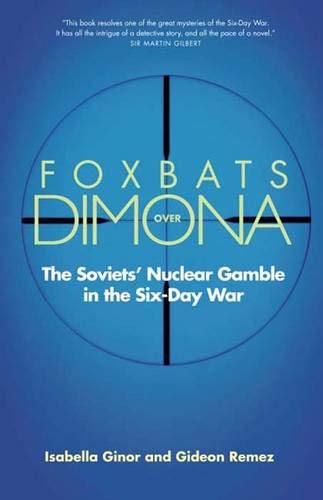
In 2007 two prominent Israeli journalists, (Belarus-born) Isabella Ginor and Gideon Remez, produced a book with the provocative thesis that the Six-Day War was planned and provoked by the Soviet Union for the very purpose to “halt and destroy Israel’s nuclear development before it could attain operational atomic weapons.”[11]
In their view, the Soviet interest in making war on Israel was not about the rights of Palestinians nor concern about Israeli territorial expansion. Rather, the Soviets intentionally triggered the war with false rumors of an imminent Israeli invasion of Syria so that they could provoke Israel to initiate a war, after which their Foxbats could bomb Dimona. The authors claimed the failure of this planned Soviet attack on Israel’s nuclear weapons at Dimona led to “improved [nuclear weapons] efficacy as the ultimate guarantor of the state’s survival.”[12]
In 2026 such nuclear capability looks different: the weapons that barely avoided being destroyed in 1967 may have become the guarantors of the state’s destruction today. In the early 1990s, Efraim Sneh, medical doctor, politician, and son of Israeli Communist Party leader Moshe Sneh, said that Israel “cannot possibly put up with a nuclear bomb in Iranian hands…since Iran threatens the interests of all rational states in the Middle East….If the Western states don’t do their duty, Israel will find itself forced to act alone, and will accomplish its task by any [i.e., including nuclear,] means.”[13] In 2007, the Foxbats authors refer to Iran as a “fanatic region adversary” with “implacable religious hostility.”[14]
According to Ginor and Remez, the conspiracy to bomb Dimona was agreed on in Moscow in November 1966 between Egyptian Vice President Abdel Hakim Amer and Soviet Defense Minister Andrei Grechko. The Israelis would be provoked into starting the war with false stories about a Syrian invasion. The new Soviet strategic bombers, repainted in Egyptian colors with Soviet pilots wearing Egyptian uniforms, would overfly and bomb Dimona in a false-flag operation. The Soviets would then undertake a land invasion.
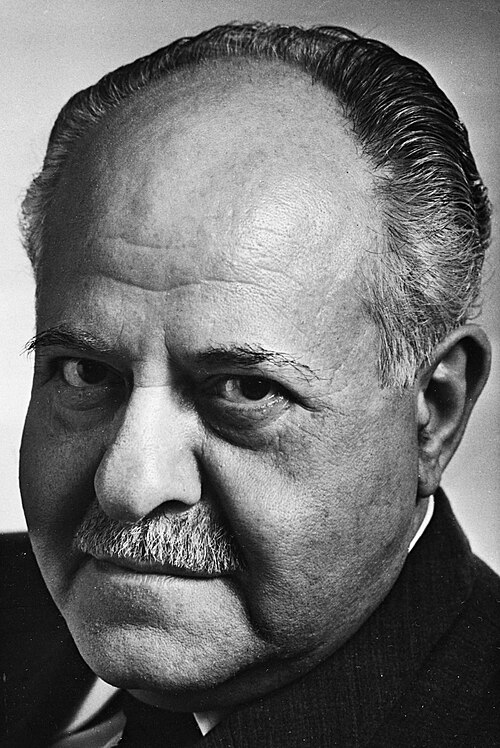
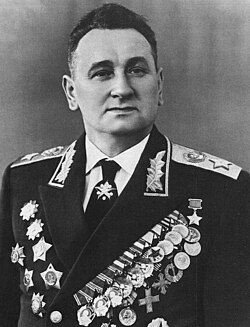
Ginor and Remez provided plausible evidence that the Soviets did indeed fly reconnaissance missions over Dimona in the experimental Foxbats, which the U.S.-supplied Hawks were unable to shoot down. The authors’ source was Soviet pilot Aleksandr Vybornov, who reportedly flew these reconnaissance missions over Dimona.
In addition, Alexander Drobyshevsky, chief spokesman of the Russian Air Force, confirmed in writing that its pilots, in the USSR’s most-advanced MiG-25 Foxbat aircraft, did participate in these provocative sorties over Israel’s nuclear facility at Dimona in May 1967, just prior to the Six-Day War.[15] Although they could successfully bomb the complex, there is disagreement over whether they wanted to.
Isser Harel, the Scapegoat
In Ginor and Remez’s revisionist Israeli narrative of Soviet causation and goal of what became the Six-Day War, the de rigueur villain was the once-beloved—but after March 1963 uniformly demeaned—Director of the Mossad and Shabak, Isser Harel. Harel had refused to cooperate with German Nazis as Prime Minister Ben-Gurion was secretly doing through Operation Business Friend and by using Austrian war criminal Colonel Otto Skorzeny and his Paladin group.[16]
The Foxbats authors contended that Harel in 1965 was responsible for the Soviet-Egyptian conspiracy to “halt Israel’s nuclear armament which climaxed in targeting Dimona.”[17] According to The New York Times, in 1960 Harel told President Kennedy’s brother, Attorney General Robert Kennedy, that a Soviet satellite had photographed Dimona. In later 1960, Nasser said that “Israel’s development of nuclear weapons would prompt Arab states to launch a preventive war.”[18]
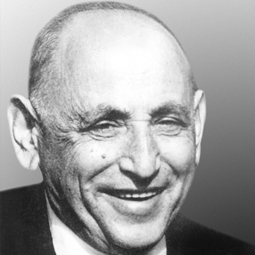
In November 1965, through his Israeli Communist Party friend Moshe Sneh, Harel let the Soviets know that Israel was planning to produce a nuclear weapon but did not have one yet. What Ginor and Remez call treasonous of Harel was his acknowledging that Israel by early 1966 was on the road to nuclear capability but had not yet achieved it.
Ben-Gurion, the Real Villain
Rather than being a traitor, it is likely that Harel, in talking to Sneh, was sending the views of Prime Minister Levi Eshkol to the USSR, to encourage superpower anti-proliferation dialogue before it was too late. It should be emphasized that not all Israelis believed an atomic weapon was a positive undertaking, and most knew nothing about Ben-Gurion’s LAKAM plan at Dimona. Many politicians, including Harel, Eshkol, Golda Meir, Abba Eban, and Yigal Allon did not favor Israeli nuclearization. The whole project was extremely secret. But cognitively declining Ben-Gurion was fixated on his dream of nuclear parity with the big players, and he had dictatorial powers.
Certainly, only a very few knew about Mossad’s recruitment of Skorzeny to assassinate President Kennedy and Harel’s objections. In March 1963, after meeting with the CIA’s James J. Angleton at his retreat in the Negev—presumably to discuss how to use Skorzeny—Ben-Gurion forced Harel’s resignation. He then installed Harel’s detested IDF rival Meir Amit as head of both Mossad and IDF security, Aman. Amit still had these roles in November 1963 after Ben-Gurion himself had “retired.”
The Foxbats authors believed that Israel had a useable nuke at the beginning of the June 1967 war and that Israeli nuclear deterrence, secured in 1967, reduced an imminent existential threat that may have existed in the 1960s to a “manageable balance of terror.”[19]
Responsible experts believe in 2026 that the existential “balance of terror” is already out of control, given that Iran is prepared to fight for its own existence after multiple attacks by Israel (and the United States). Iran, in 2026, may be understood to have existential protection from nuclear superpowers Russia and China or Pakistan.
Refutation of the Foxbats Theory
There is no documentary proof that the USSR planned to attack Israel in 1967, let alone for the purpose of destroying its nuclear capability. On the contrary, evidence from the exchange of letters between Ben-Gurion and JFK and from the November 1963 meeting in Washington between General Rabin with U.S. generals indicates it was Israel that was planning for war with the UAR from the early 1960s. The Israeli plan date was certainly based on when they expected to be ready with their nuclear device.
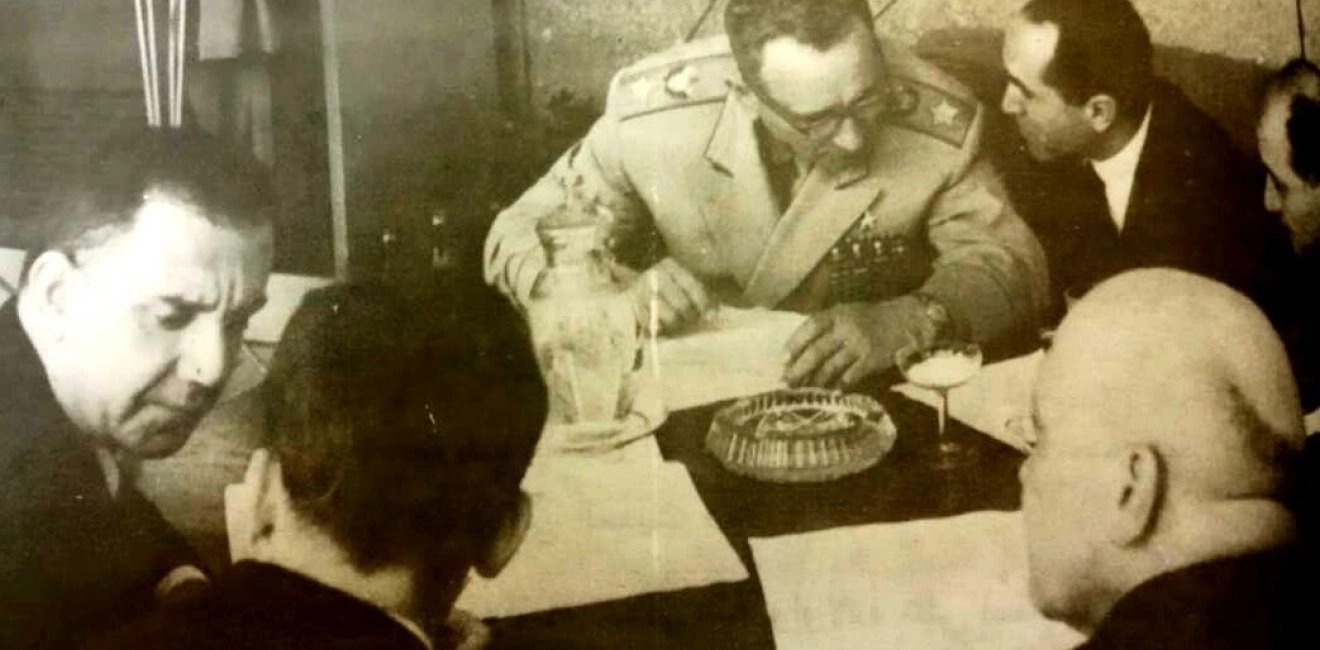
In 2017, Hassan Elbahtimy, the director of the Centre for Science and Security Studies, King’s College, London, published an article based on Egyptian sources that refutes the premise of the Foxbats authors and conventional views as well. He writes that, “from May 25-28, 1967, a high-level Egyptian delegation visited Moscow to discuss the evolving crisis in the Middle East with the Soviet leadership. The Egyptian delegation was headed by Shams Badran (Minister of Defense),” whom he interviewed. The Egyptians wanted to bomb Dimona.
Elbahtimy, however, reported that “Egyptian minutes of the consultations paint a consistent picture of the messages the Soviet imparted to Egyptians, as well as their position on the escalation in the Middle East. In all these accounts, the Soviet Union comes across as a cautious and measured ally.”[20] On May 26 Moscow asked the Egyptians to refrain from attacking first. Gromyko and Kosygin promised they would support Egypt and Syria if Israel attacked them, but they did not want to provoke a superpower confrontation. Egypt obeyed.
Looking ahead, in the 1973 Yom Kippur War, Soviet missiles (as well as MiG-25s) were nuclear-capable and were “prepared to launch standoff missiles at the Foxbats’ old target, the Dimona reactor.”[21] At that time, Israel did not take the Shimshon Option because it was not existentially threatened. If Gromyko and Kosygin were alive today, would they regret discouraging Egypt from pre-emptively attacking Dimona with their Foxbats in 1967?
The Infamous USS Liberty Bombing
Much has been written about the Israeli sinking of the USS Liberty. Was the Liberty sent to the region to spy on the Foxbats? Was the sinking of the Liberty a Mediterranean version of the 1964 Tonkin Gulf incident, planned by LBJ and Israel (in Operation Cyanide) to invade Egypt and overthrow Nasser, maybe even justify a U.S. nuclear strike on Cairo?[22] Was it planned by Israel alone to draw in Washington without U.S. foreknowledge? Or was it an error, as General Rabin claimed? Was the Israeli navy’s initial torpedoing of the U.S. spy ship actually a mistake that the admiral tried to cover up by eliminating the witnesses with aerial strafing? One thing everyone agrees on: What really happened is hidden. Nuclear confrontation, however, was certainly a big part of it. U.S. planes were on their way toward Cairo with a nuclear bomb when they learned the ship had not sunk and that there were survivors and turned back. If it was an Israeli or U.S.-Israeli false flag intended to get the U.S. to drop a nuclear weapon on Cairo, it was a failure. Likewise, if there was a Soviet false-flag operation for the USSR to attack and destroy Dimona with disguised Foxbats while invading the north, it was also a failure.
In the post-nuclear world power turning points thus far—the Suez Crisis of 1956, the Egyptian-Israeli crisis of 1967, and the Soviet collapse of 1989-91—widespread war has been avoided. This appears to be because all parties have been aware that species extinction would result from escalation on a global scale.
Will the 2026 West Asian (Israel-Iran) petrodollar crisis turn out similarly to past confrontations? Will the rising nuclear powers, China and Russia, demand a halt to the war? In the present case, the core conflict may turn on how the situation is framed and the sanity of the heads—Netanyahu and Trump—of the declining Israel-U.S. Union State. The distraught duo appear to see the crisis in terms of a Thucydides Trap (an unproven hypothesis of the ancient Greek historian that a declining power must inevitably try to destroy a rising power),[23] while the other side, the multipolar coalition with Iran in the vanguard, understands that the world is facing a Triffin’s Dilemma. The Thucydides Trap involves a one-winner battle or even species suicide (MADD); Triffin’s Dilemma invites international cooperation and original thinking to deal with the imperial default. In both cases, there will be, and already is, global instability.

Named for famed Belgian-American economist Robert Triffin, who told Congress in 1960 that holding the world reserve currency inevitably leads to an international trade deficit. The dilemma is that reducing deficit spending results in a depression, while continuing to overspend leads to loss of confidence in the reserve currency and an end to its status. ↑
“Is This America’s Suez Crisis?” April 10, 2026. For cultural relief, see the 1970 Dennis Potter play about the Suez power shift, Lay Down Your Arms, or his expanded 1993 musical version, Lipstick on Your Collar. Both enjoyable dramas are available on YouTube.https://unherd.com/2025/04/jd-vance-my-message-to-europe/?edition=us. ↑
Blumberg, like Harel, was a scrupulous administrator and Labor Party member. Blumberg’s later years, like Harel’s, were bitter in regard to the Israeli government. His fame-to-non-entity biography is fascinating. See https://amconfidential.blogspot.com/2012/04/top-spy-master-tells-his-story-and.html, April 10, 2012, “Top Master Spy, LAKAM Chief Benjamin Blumberg, Tells His Story, And About His Relationship to Arnon Milchan,” originally published in Hebrew in Ma’ariv. Arnon Milchan was a thief for LAKAM and later producer of the film JFK about the conspiracy to murder the U.S. president that fails to even mention Israel. ↑
Secret U.S. bulletin making it illegal to acknowledge Israeli nuclear weapons, see September 6, 2012, chrome-extension://efaidnbmnnnibpcajpcglclefindmkaj/https://www.irmep.org/cfp/WPN-136/WNP-136.pdf. ↑
Military historian Martin van Creveld quoted Dayan in David Hirst, The Gun and the Olive Branch (2003 edition). Van Creveld himself added, “Our armed forces, however, are not the thirtieth strongest in the world, but rather the second or third. We have the capability to take the world down with us. And I can assure you that that will happen before Israel goes under.” The Guardian, September 20, 2003. https://www.theguardian.com/world/2003/sep/21/israelandthepalestinians.bookextracts. ↑
See my CovertAction Magazine series, “Who Killed Heinz Krug?” for more on the crisis of the German scientists and the con artist/defector to Israel Otto Joklik, who claimed he had procured cobalt-60 and strontium-90 for Egypt in Operation Ibis. ↑
Foreign Relations of the United States, 1961-1963, vol. xviii, Near East, 1962-1963. Kennedy Library, National Security Files, Countries Series, Israel. Secret. Drafted by Robert Komer on November 18, 1963. https://history.state.gov/historicaldocuments/frus1961-63v18/d360e. ↑
William J. Broad and David E. Sanger, “‘Last Secret’ of the 1967 War: Israel’s Doomsday Plan for Nuclear Display,” The New York Times, June 3, 2017. Brig. Gen. Itzhak Yaakov called this the Shimshon (Samson) Operation. See also Ofer Aderet, “Israeli Ex-general: Setting Off Nuke in Sinai in 1967 Would’ve Hurt Israel,” Haaretz, June 4, 2017. ↑
Michael B. Oren, Six Days of War: June 1967 and the Making of the Modern Middle East (New York: Oxford University Press, 2002). ↑
Isabella Ginor and Gideon Remez, Foxbats over Dimona: The Soviets’ Nuclear Gamble in the Six-Day War (New Haven, CT: Yale University Press, 2007), 27. ↑
Ginor and Remez, Foxbats over Dimona, 8. ↑
Excerpt from David Hirst’s The Gun and the Olive Branch in The Guardian, September 20, 2003, https://www.theguardian.com/world/2003/sep/21/israelandthepalestinians.bookextracts#. Hirst incorrectly identifies Efraim Sneh as Moshe Sneh (who died in 1972). ↑
Ginor and Remez, Foxbats over Dimona, 8. ↑
David Horovitz, “Russia confirms Soviet sorties over Dimona in ’67,” The Jerusalem Post, August 23, 2007. ↑
For Operation Business Friend, see, e.g., Le Monde Diplomatique, May 2020. For using Skorzeny, see Ralph P. Ganis, The Skorzeny Papers (New York: Hot Books, 2020) and my article in CovertAction Magazine online, “Who Killed Heinz Krug?” ↑
Ginor and Remez, Foxbats over Dimona, 48. ↑
Ginor and Remez, Foxbats over Dimona, 30n10, citing Avner Cohen (1998) and The New York Times “Nuclear Arms Turned from a Deterrent into the Main Cause of War in the Middle East [in 1967],” 31. ↑
Ginor and Remez, Foxbats over Dimona, 8. ↑
“Did the Soviet Union Deliberately Instigate the 1967 War in the Middle East? Hassan Elbahtimy uses new Egyptian sources to answer one of the great mysteries surrounding the 1967 Six-Day War,” June 5, 2017. https://www.wilsoncenter.org/blog-post/did-the-soviet-union-deliberately-instigate-the-1967-war-the-middle-east. ↑
Ginor and Remez, Foxbats over Dimona, 217. See also Efrain Inbar, Rabin and Israel’s National Security, Woodrow Wilson Center, 1999. ↑
See Operation Cyanide by Peter Hounam (book available as 2003 pdf online) and his BBC documentary Death in the Water. ↑
Several scholars contend it did not even apply to the Peloponnesian War, in which Thucydides fought. See, e.g., https://academic.oup.com/cjip/advance-article-abstract/doi/10.1093/cjip/poaa023/6199606?redirectedFrom=fulltext&login=false. ↑
CovertAction Magazine is made possible by subscriptions, orders and donations from readers like you.
Blow the Whistle on U.S. Imperialism

Click the whistle and donate
When you donate to CovertAction Magazine, you are supporting investigative journalism. Your contributions go directly to supporting the development, production, editing, and dissemination of the Magazine.
CovertAction Magazine does not receive corporate or government sponsorship. Yet, we hold a steadfast commitment to providing compensation for writers, editorial and technical support. Your support helps facilitate this compensation as well as increase the caliber of this work.
Please make a donation by clicking on the donate logo above and enter the amount and your credit or debit card information.
CovertAction Institute, Inc. (CAI) is a 501(c)(3) non-profit organization and your gift is tax-deductible for federal income purposes. CAI’s tax-exempt ID number is 87-2461683.
We sincerely thank you for your support.
Disclaimer: The contents of this article are the sole responsibility of the author(s). CovertAction Institute, Inc. (CAI), including its Board of Directors (BD), Editorial Board (EB), Advisory Board (AB), staff, volunteers and its projects (including CovertAction Magazine) are not responsible for any inaccurate or incorrect statement in this article. This article also does not necessarily represent the views the BD, the EB, the AB, staff, volunteers, or any members of its projects.
Differing viewpoints: CAM publishes articles with differing viewpoints in an effort to nurture vibrant debate and thoughtful critical analysis. Feel free to comment on the articles in the comment section and/or send your letters to the Editors, which we will publish in the Letters column.
Copyrighted Material: This web site may contain copyrighted material the use of which has not always been specifically authorized by the copyright owner. As a not-for-profit charitable organization incorporated in the State of New York, we are making such material available in an effort to advance the understanding of humanity’s problems and hopefully to help find solutions for those problems. We believe this constitutes a ‘fair use’ of any such copyrighted material as provided for in section 107 of the US Copyright Law. You can read more about ‘fair use’ and US Copyright Law at the Legal Information Institute of Cornell Law School.
Republishing: CovertAction Magazine (CAM) grants permission to cross-post CAM articles on not-for-profit community internet sites as long as the source is acknowledged together with a hyperlink to the original CovertAction Magazine article. Also, kindly let us know at info@CovertActionMagazine.com. For publication of CAM articles in print or other forms including commercial internet sites, contact: info@CovertActionMagazine.com.
By using this site, you agree to these terms above.
About the Author

Kathleen Meigs is a thirteenth generation American and walked precincts for John Kennedy for president in 1960.
She matriculated at Stanford University, graduated from UCLA in history and has been a journalist, editor, and published academic author.
Her anthropological novel Mishopshno is available on Amazon. Her love is research, and her passion is truth and good government.
Kathleen can be reached at katymeigs@sbcglobal.net.




.jpg)