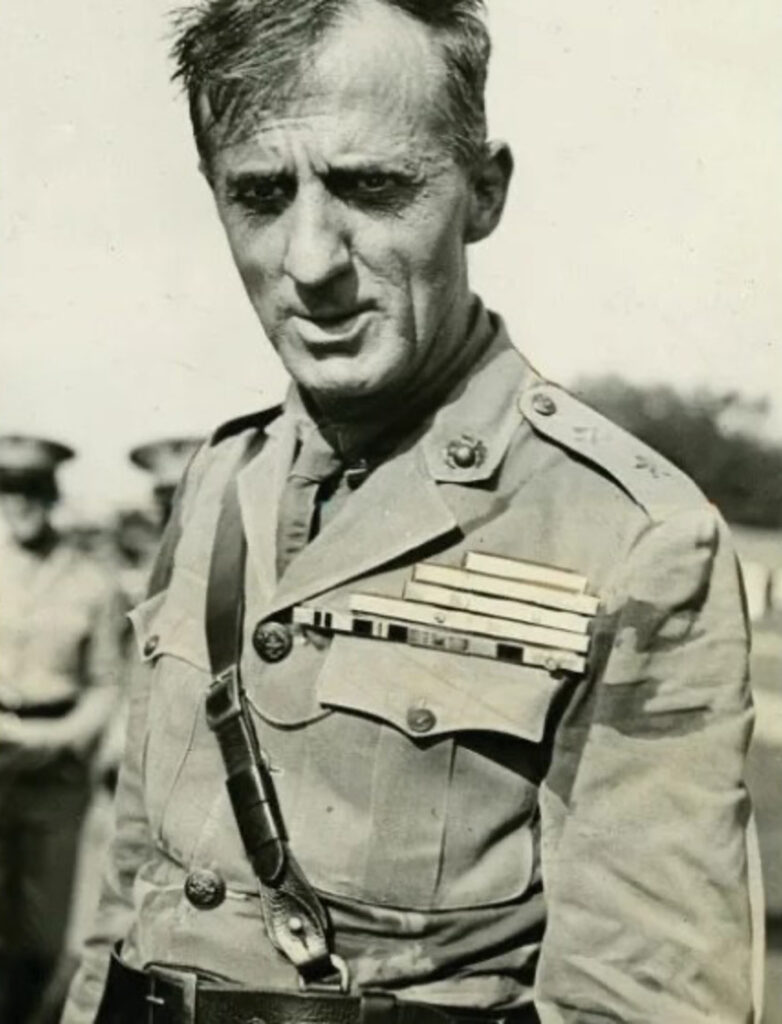
That tension—between the ideal of the United States as a leading champion of democracy on the one hand and a leading destroyer of democracy on the other—remains the often-unacknowledged fault line running through American politics today.
– Jonathan M. Katz, Gangsters of Capitalism: Smedley Butler, the Marines, and the Making and Breaking of America’s Empire [1]
A side effect of the war with Iran is that it distracts attention from other global developments. Take Latin America. Beyond mass media background noise, there is little public awareness in the United States of the following developments within the past year alone:
September 2: President Donald J. Trump announces that he authorized the drone-bombing of a “drug boat” supposedly carrying contraband narcotics from Venezuela.
September 4: Secretary of State Marco Rubio publicly praises Ecuador’s right-wing President Daniel Naboa as a valued ally in the War on Drugs.
October 9: Treasury Secretary Scott Bessent announces the purchase of $20 billion worth of Argentina’s currency to boost its commercial value. President Trump conditions this on the victory of the political party led by his ally, President Javier Milei, in upcoming mid-term elections.
October 26: Milei’s La Libertad Avanza wins the mid-term elections.
December 1: President Trump pardons former Honduran leader Juan Orlando Hernández for taking bribes from his narcotics dealer brother. Based on a probe begun during the Obama administration, the Justice Department initiated legal proceedings against Hernández during Trump’s first term.
January 3: Special Operations Forces capture Venezuelan President Nicolás Maduro and his wife Cilia Flores in Caracas and send them to the United States for trial as international drug dealers.
January 9: The Milei regime has repaid its share of the “currency swap,” the Treasury announces.
March 3: Southern Command and Ecuadoran security forces begin operations against “narco-terrorism” in Ecuador.
March 7: President Trump signs a proclamation establishing the Americas Counter Cartel Coalition during a summit with Latin American allies at one of his golf clubs.
April 23: A Miami grand jury indicts former Cuban President Raúl Castro for playing a role in shooting down two civilian aircraft owned by a Miami-based “humanitarian” group 30 years ago. In addition to the 66-year-old embargo, U.S. warships are positioned off Cuba’s coast.
These examples show how U.S. interference in Latin America has always depended on variations of carrots and sticks, an aspect of “America’s imperial history” addressed by Jonathan M. Katz in Gangsters of Capitalism: Smedley Butler, the Marines, and the Making and Breaking of America’s Empire.[2] The author’s fundamental argument is that Smedley Butler played an important role in the formation of the modern U.S. empire.
An investigative journalist who has reported for the Associated Press in the United States, Greater Israel, China and the Caribbean, Katz’s articles have appeared in The New York Times, Foreign Policy, and other publications. He has written a book about international schemes in Haiti following the 2010 earthquake.
Katz both tracks Butler’s progress around the world chronologically and delves into the historical context with flair, moving seamlessly back and forth between Butler’s past and the author’s own experiences traveling as a journalist in the Global South. Katz visited Guantánamo Bay, Shandong Province, Shanghai, Panama, Nicaragua, the Dominican-Haitian border, and Butler’s final home in Pennsylvania.
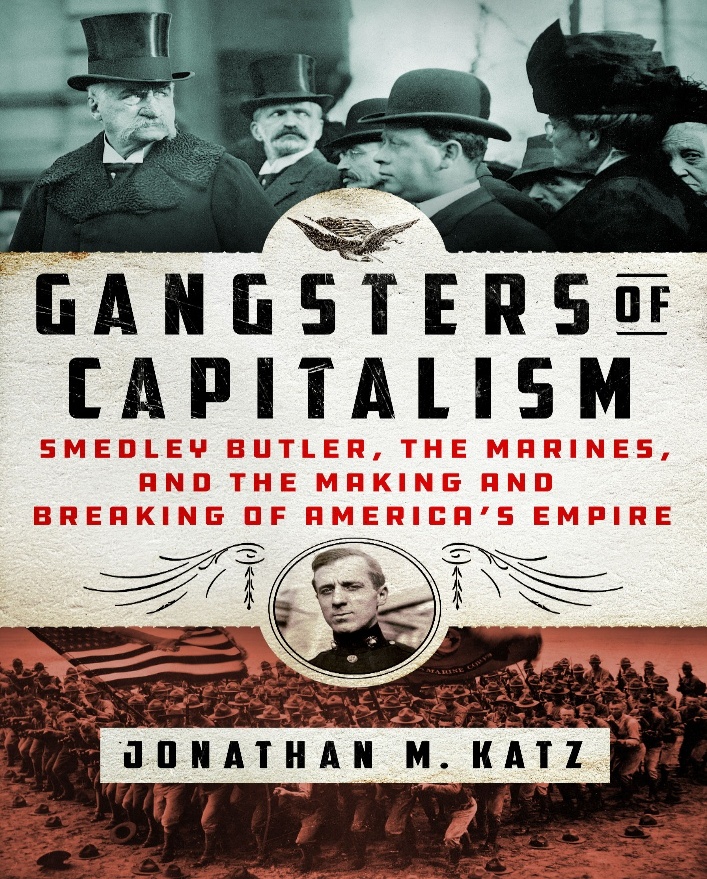

So who was Smedley Darlington Butler?
Remembered mostly as an eccentric war hero, Smedley Butler was born in 1881 in the small yet prosperous railroad town of West Chester outside of Philadelphia, Pennsylvania. His parents were well-to-do Quakers. Smedley’s father was a Republican member of the House of Representatives for more than 30 years; he sat on the influential Naval Affairs Committee in the 1920s. Smedley’s mother was from an esteemed local family.
As a student at the Haverford College Grammar School, a private school for upper-class boys, Butler was caught up in patriotic fervor at the start of the War of 1898 with Spain. Before graduating, he volunteered in the Marine Corps and was sent to a special training camp. Several months later, he participated in the invasion of Guantánamo Bay in Cuba. Lieutenant Butler was also in the multinational force that put down the Boxer Rebellion in northern China two years later (where he made the acquaintance of future President Herbert Hoover).
Butler never completed high school or attended the Naval Academy. During World War I, the Navy Department nevertheless promoted him to the rank of general. He did not lead troops in the trenches, as was the standard profile of most U.S. military leaders of his generation. But during the first two decades of the 20th century, he participated in most “small wars” on the frontiers of the burgeoning U.S. empire, from formal colonies like the Philippine Islands to neo-colonies in Central America and the Caribbean.
Butler was highly decorated during his career, earning two Congressional Medals of Honor, one for action in combat in China in 1900 and another for combat in Haiti 15 years later.
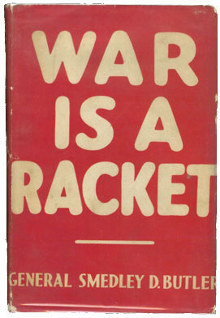
After his retirement in 1931, Butler wrote and spoke publicly about his career. In a small book entitled War Is a Racket, Butler identified corporations that profited from the Great War.[3]
Butler’s most famous words are from an article in Common Sense, a socialist-oriented publication:
I spent 33 years and 4 months in active service as a member of our country’s most agile military force—the Marine Corps….And during that period I spent most of my time being a high-class muscle man for Big Business, for Wall Street and for the bankers. In short, I was a racketeer for capitalism.
I suspected I was just part of a racket at the time. Now I am sure of it. Like all members of the profession I never had an original thought until I left the service….
…I helped make Mexico and especially Tampico safe for American oil interests in 1914. I helped make Haiti and Cuba a decent place for the National City Bank boys to collect revenues in. I helped in the raping of half a dozen Central American republics for the benefit of Wall Street…. I helped purify Nicaragua for the international banking house of Brown Brothers 1909-12. I brought light to the Dominican Republic for American sugar interests in 1916. I helped make Honduras “right” for American fruit companies in 1903. In China in 1927 I helped see to it that Standard Oil went its way unmolested.
During those years, I had, as the boys in the back room would say, a swell racket. I was rewarded with honors, medals, promotion. Looking back on it, I feel I might have given Al Capone a few hints. The best he could do was to operate his racket in three city districts. We Marines operated on three continents.”[4]
Butler died of a stomach ailment at the Philadelphia Naval Hospital in 1940.
Katz argues that Butler “blazed a path for U.S. empire across the world.” Katz describes how Butler helped to shape U.S. counterinsurgency doctrine before the term even existed. During the 1920s, his influence was also felt in “the militarization of police” and in the new U.S. role in the Republic of China.[5]
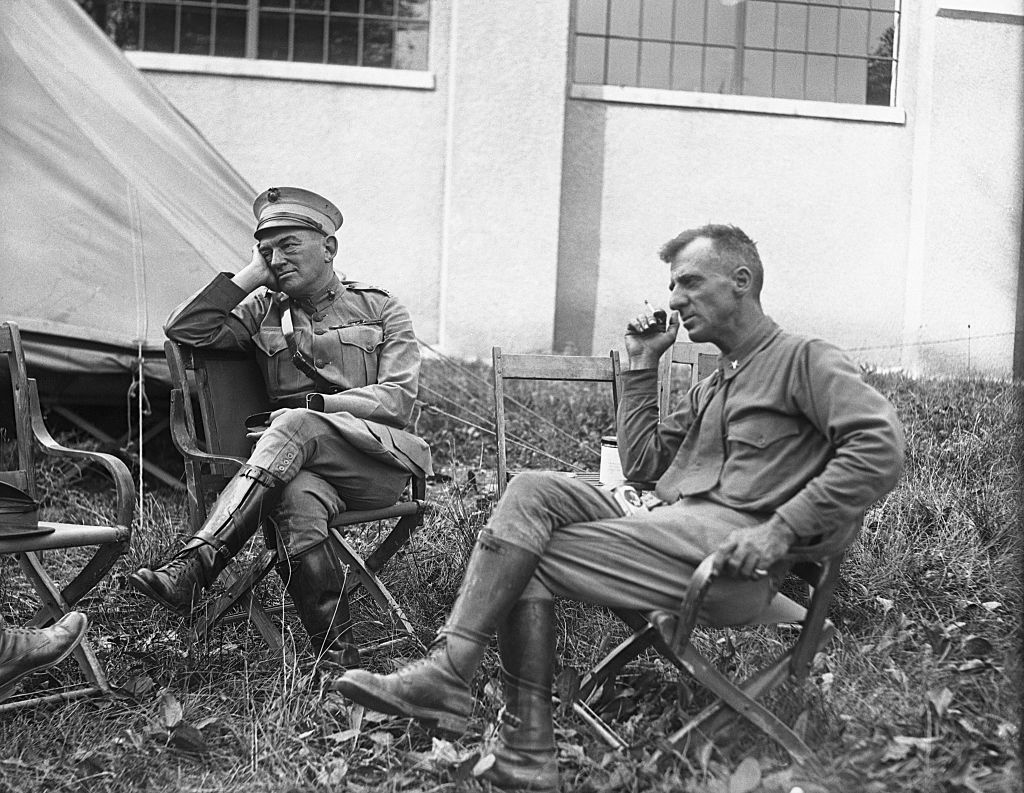
After retirement, Butler became a vocal critic of fascism and interventionism. In the early 1930s, he supported the Bonus Marchers against the Hoover administration and exposed Wall Street machinations against Franklin D. Roosevelt. However, Katz also points out that Butler would always be highly contradictory in his beliefs, betraying a strain of white supremacy.
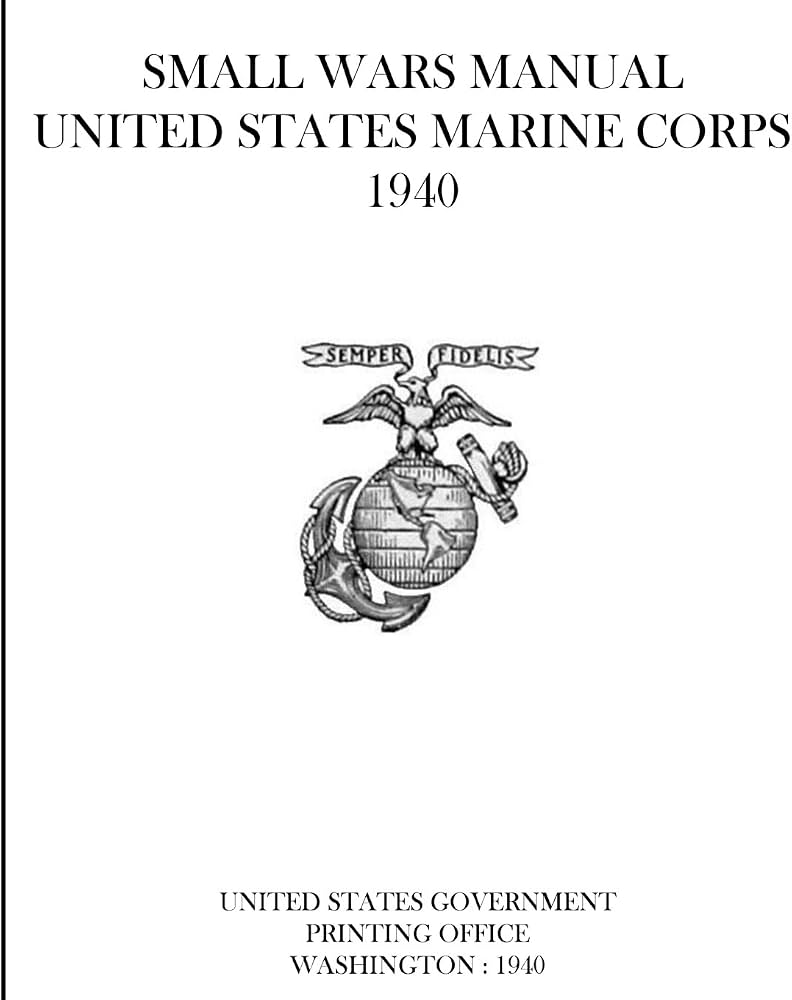
Small Wars
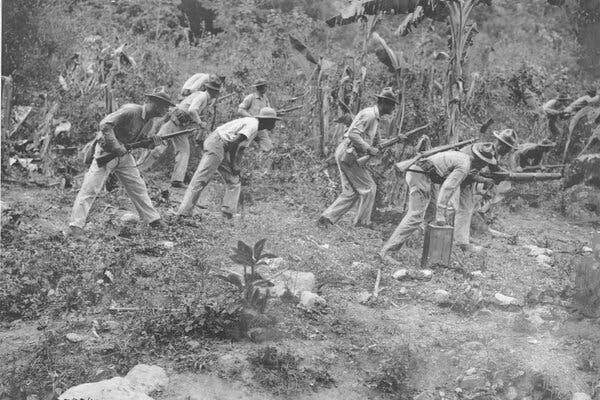
The peak of Butler’s career was the occupation of Haiti in July 1915 under Woodrow Wilson. Butler was there for almost three years at the start of the 19-year ordeal. This is when he synthesized everything he had been learning since 1898 about suppressing popular uprisings to become a “founding father” (in the U.S. context) of a style of warfare now called counterinsurgency.[6]
Counterinsurgency generally refers to tactics employed by special military organizations in powerful nation-states tasked with weakening colonial or neo-colonial resistance movements, usually social movements, seeking some measure of national sovereignty.[7]
Since coming to power in 1913, the “progressive” Wilson administration had been pressured by Wall Street interests to help them control Haiti. In July 1914, Secretary of State William Jennings Bryan—a Midwest populist no less—okayed the “Farnham Plan” backed by the National City Bank. Modeled on a successful experiment in the Dominican Republic, the goal was to have U.S. officials collect Haitian customs duties and, hence, control its finances.
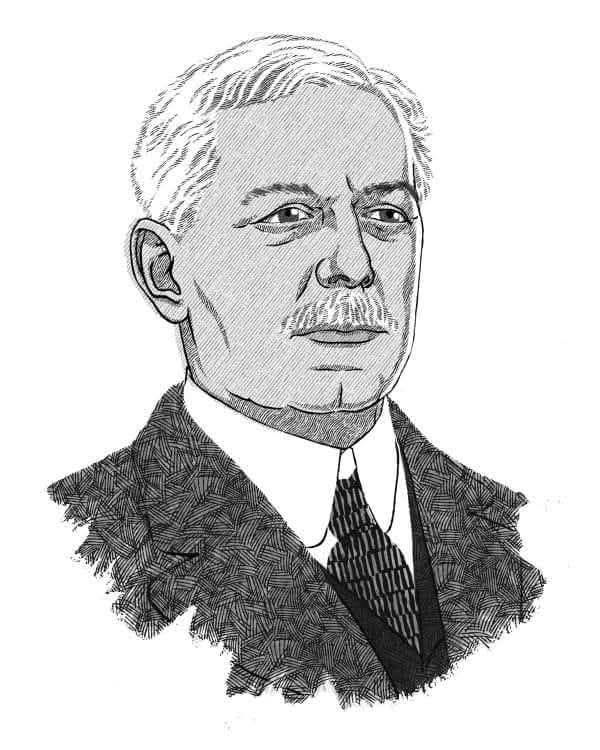
Roger Leslie Farnham was vice president of National City Bank (today’s Citibank). He had also orchestrated the creation of Panama in 1903, which laid the way for the construction of the Panama Canal (at that time, Farnham was employed by Sullivan & Cromwell, a New York-based corporate law firm). The construction of the Panama Canal—which Butler helped guard for several years—was in the interest of the U.S. government, Wall Street, Sullivan and Cromwell and, of course, Farnham.
Jealous of its main form of revenue, the Haitian government opposed the Farnham Plan so, as Katz recounts, the Wilson administration resorted to outright piracy. On December 16, 1914, eight disguised Leathernecks entered the Haitian National Bank in Port-au-Prince and seized $500,000 worth of gold bars by force. The bank robbers escaped on a gunboat to New York City where they deposited the gold in the vaults of the National City Bank.[8]
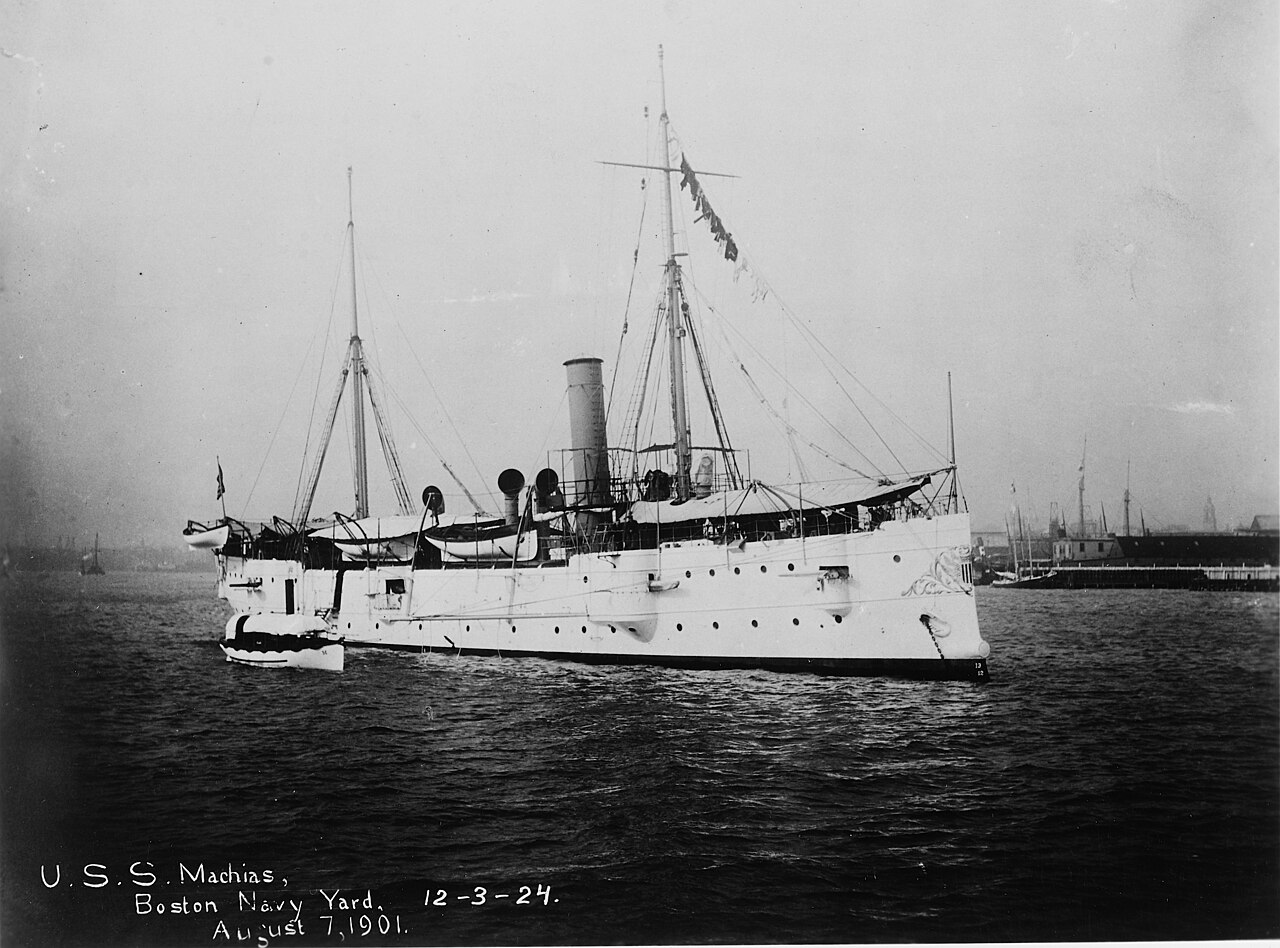
Using the pretext of protecting Haiti from German influence, a Marine Expeditionary Force invaded a year-and-a-half later. In command was Virginia-born Littleton T. Waller, Butler’s beloved mentor.
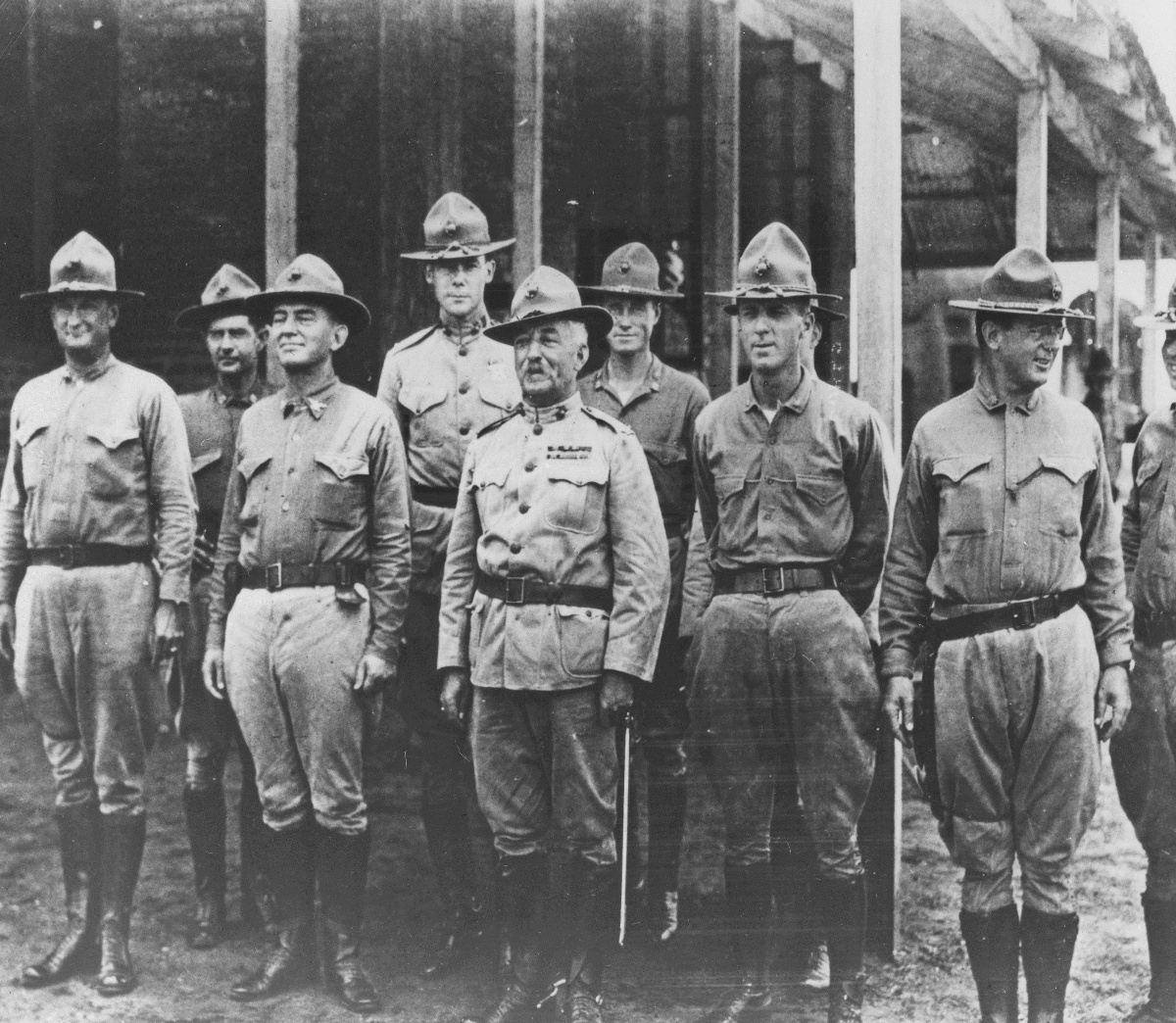
With Haiti being officially sovereign and having a restive working class proud of Haiti’s reputation as the first nation in the Caribbean to abolish slavery, the occupation was not problem-free. For instance, U.S. veterans of the occupation openly admitted to a Senate Select Committee in 1921 that they had systematically engaged in torture and murder of prisoners. They referred to how three to five aircraft with machine guns and bombs were deployed against rebels at least once.
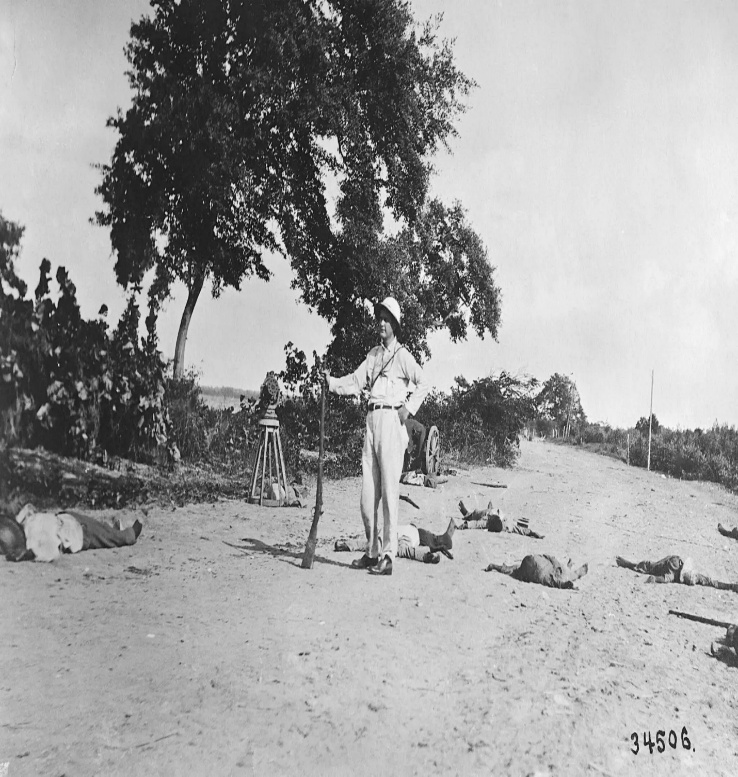
While Major Butler might not have taken part in such activities as commander of the First Battalion of the First Marine Regiment, he stood out from his colleagues, most of whom were crude racists less inclined to use “progressive” rhetoric. As Katz observes, Butler fit the narrative the Wilson administration sought to promote: The occupation reflected a “softer” approach to Latin America in general.
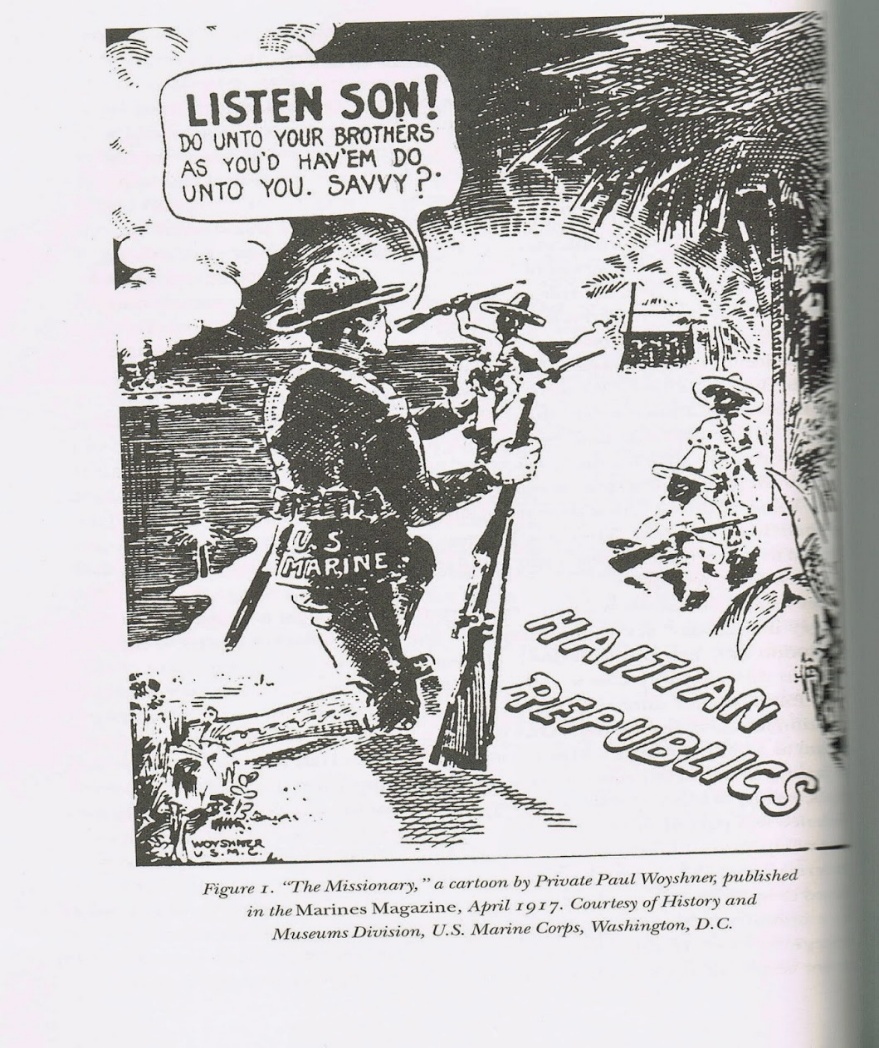
Butler nonetheless came to be known to Haitians as “The Devil.” No naïve hero worshipper, Katz shows why. Butler was never an idealist. As the officer wrote to his father a few months after arriving in Haiti, “We are Marines sent here to put an end to a condition that…no amount of carefully formed words will do….Nothing will but a little shooting.”[9]
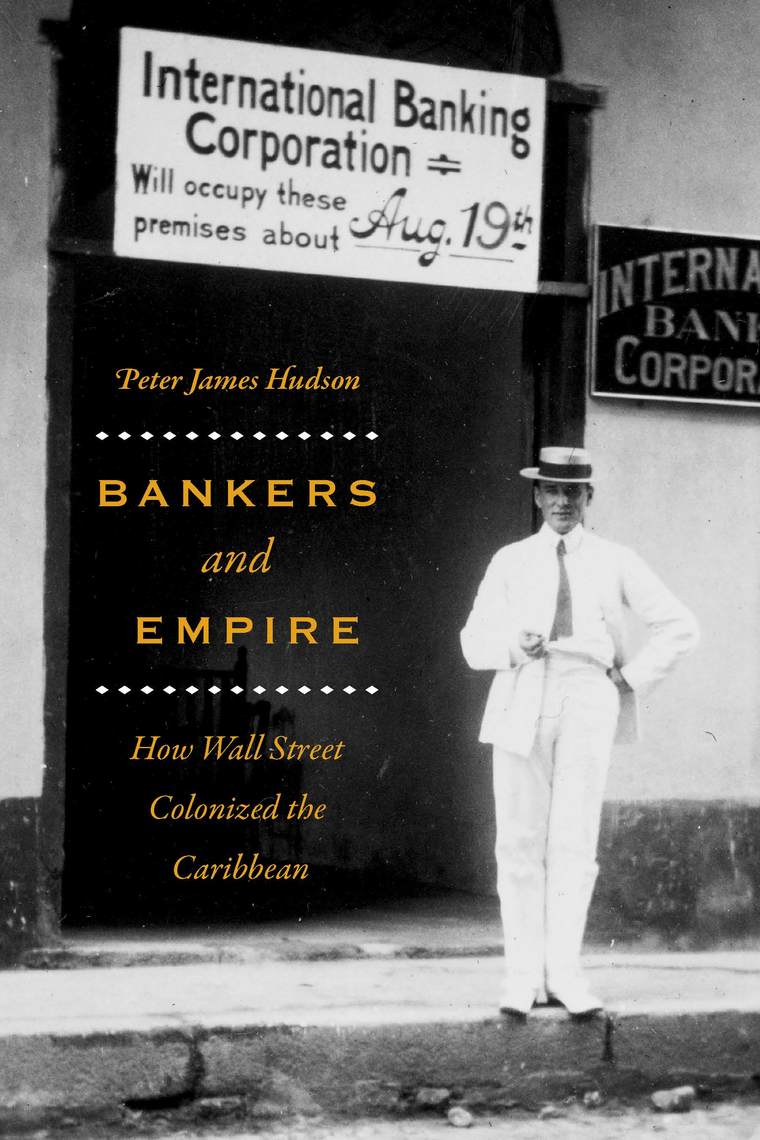
Butler received his second Congressional Medal of Honor for “combat” at Fort Rivière in the fall of 1915. Essentially a massacre of Haitian militants, Fort Rivière foreshadowed Butler’s involvement in what historian Peter James Hudson has characterized as “a police state.”[10] It also foreshadowed Butler’s growing alienation from his own actions.
Commanding the Gendarmerie d’Haiti, Butler oversaw a force of native Haitians led by Marine officers that attempted to pacify the country for Wall Street interests. Based on letters to family members, Katz ably demonstrates that Butler seemed to have conflicted feelings about what he was doing. Butler nevertheless revived the corvée—the system of forced labor used in Medieval Europe, European colonies, and in the Republic of Haiti itself during the 19th century—to build highways that facilitated the importation of agricultural produce (Haiti was previously self-sufficient in agricultural staples).
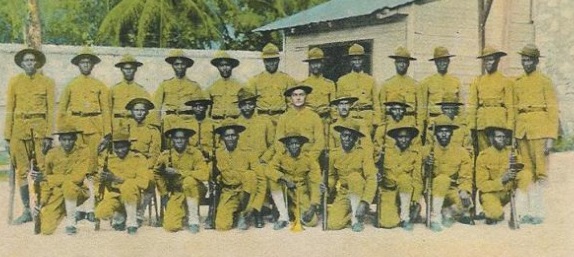
Testifying before the Senate, Butler explained how the corvée worked under his management:
We had little cards printed [for] who should work on the roads…. The Gendarmes then delivered these little cards notifying [people] that on a certain date they would report at a certain place and do their work or pay a certain tax…. Nobody had any money so they reported for work.[11]
On June 19, 1917, Butler played a key role in what amounted to a coup d’état in Port-au-Prince. Surrounded by Gendarmes, he stormed into the National Assembly to foist a constitution designed by the State Department upon the assembled legislators (there is no documentation of the boast made by then-Assistant Secretary of the Navy Franklin Delano Roosevelt that he wrote it).
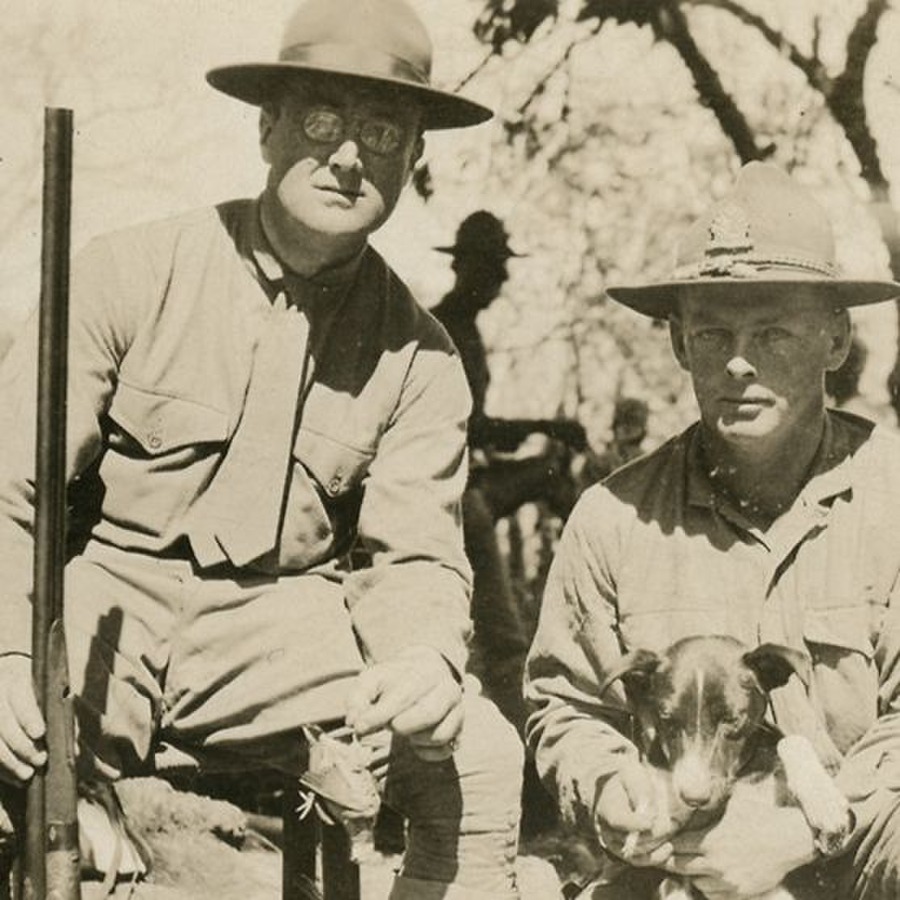
The U.S. occupation of Haiti involved seemingly disparate individuals from the U.S. political class not often mentioned in the same breath. They had a relationship with Smedley Bulter, direct or indirect.
For instance, FDR had visited Port-au-Prince on official business in early 1917. As Katz points out, the New York progressive was also seeing to the health of “a private investment scheme” in Haitian agriculture he had invested in. In an exchange of letters with FDR about road construction, Butler wrote “it would not do to ask too many questions as to how we accomplished this work.”[12]
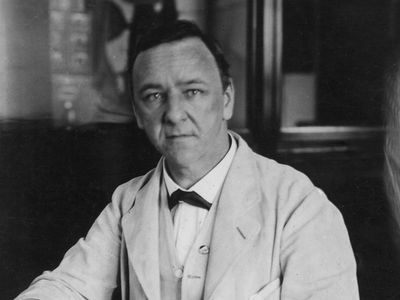
Then, there was Josephus Daniels. We remember him only as Woodrow Wilson’s Secretary of the Navy and as FDR’s ambassador to Mexico two decades later. Yet Daniels was well known in his native North Carolina as a newspaper publisher and a Democratic Party leader. He also helped organize a coup d’état in Wilmington on November 10, 1898, in which some 2,000 white terrorists wearing upper-class militia uniforms and working-class red shirts ousted the elected biracial government. In the process, the coup plotters pillaged the African American community and killed, perhaps, several hundred people.[13]
In 1900, Daniels backed a constitutional amendment disenfranchising most North Carolina blacks. This rule remained in force for more than 60 years.
Daniels was living proof of the close interlock between government and industry which came into existence long before the worst excesses of the Trumpian times in which we now live.
Haiti seems to have been a confusing time for Butler. On one hand, he saw himself as a friend and protector of the Haitians. But he also complained to his father that he was “a policeman in service of a foreign black republic.”[14]
Katz believes that, although Butler was beginning to question his “authoritarian mentality,” the Quaker Marine was, in effect, “the symbol par excellence of American imperialism in Haiti.”[15] Katz wonders if that, plus complaints he began filing with the Navy Department, could have influenced why he did not receive a battlefield appointment in France. To Butler, “Europe [was] the center of civilization, humanity, and war.”[16]
Urban Counterinsurgency
Gunboat diplomacy was temporarily unpopular after World War I. Excepting “forever wars” in Haiti, the Dominican Republic, and Nicaragua and failed interventions in the Russian Civil War, no major overseas adventures were in the works. In 1923, Butler accepted an invitation from Philadelphia’s mayor to become his Director of Public Safety. As Philadelphia’s police chief, Butler applied what he had learned in Central America and Haiti to control populations in an urban setting. Butler helped to shape urban counterinsurgency.
For years, Philadelphia had been run by a corrupt Republican “Organization.” Police officers acted as its enforcers, ensuring that election fraud and rum-smuggling operations go unmolested. Mayor W. Freeland Kendrick wanted Butler for police chief only because of his name recognition. Yet, although Butler was a Republican with political connections through his father, the Fighting Quaker took his new position seriously.
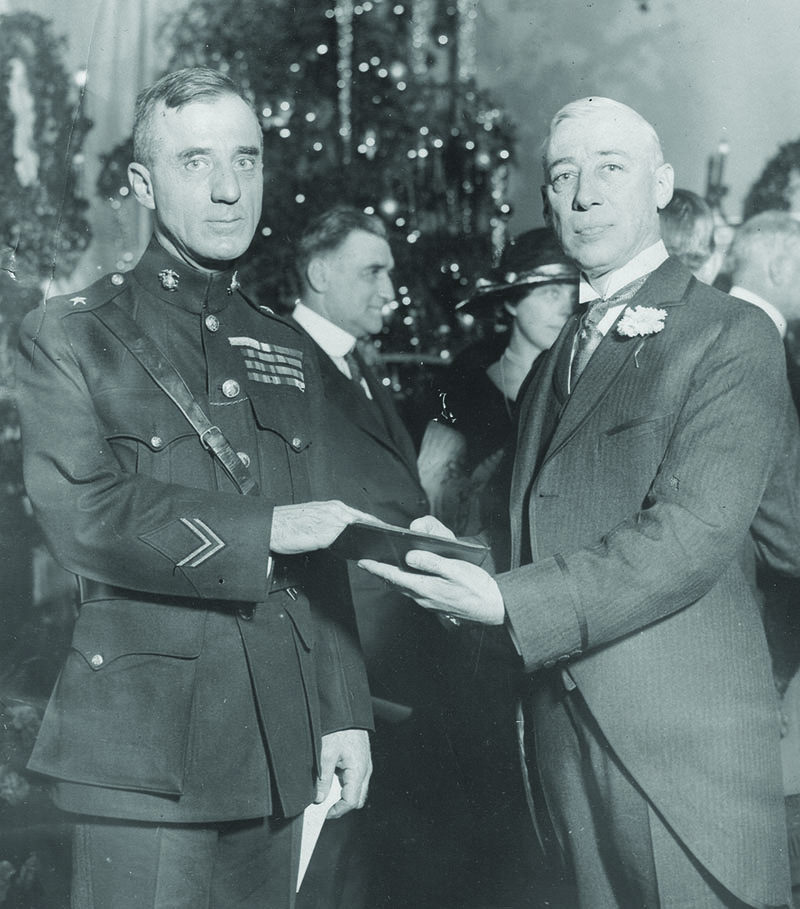
Butler ordered raids on officially illegal drinking establishments and arrests of bootleggers protected by the Organization. Under pressure, Kendrick fired Butler before he had even been on the job for a full year. While Butler could not stamp out corruption in Philadelphia, he had great impact on the militarization of policing there that persists a century later.
Butler deployed armored cars and formed a “gunnery squad.” Exhortations to kill “bandits” and make arrests often translated to paramilitary operations in poor neighborhoods.[17] Mostly black and immigrant residents, not the actual perpetrators of crime, were targeted by police. The General anticipated urban SWAT units, which arose in response to ghetto uprisings in the 1960s, plus today’s ICE operations.
Major General Butler played an important role in institutionalizing police violence against African Americans in large cities. To show this connection, Katz draws attention to the Trump-like record of Frank Rizzo in Philadelphia between 1967 and 1980, when he was police chief and then mayor.
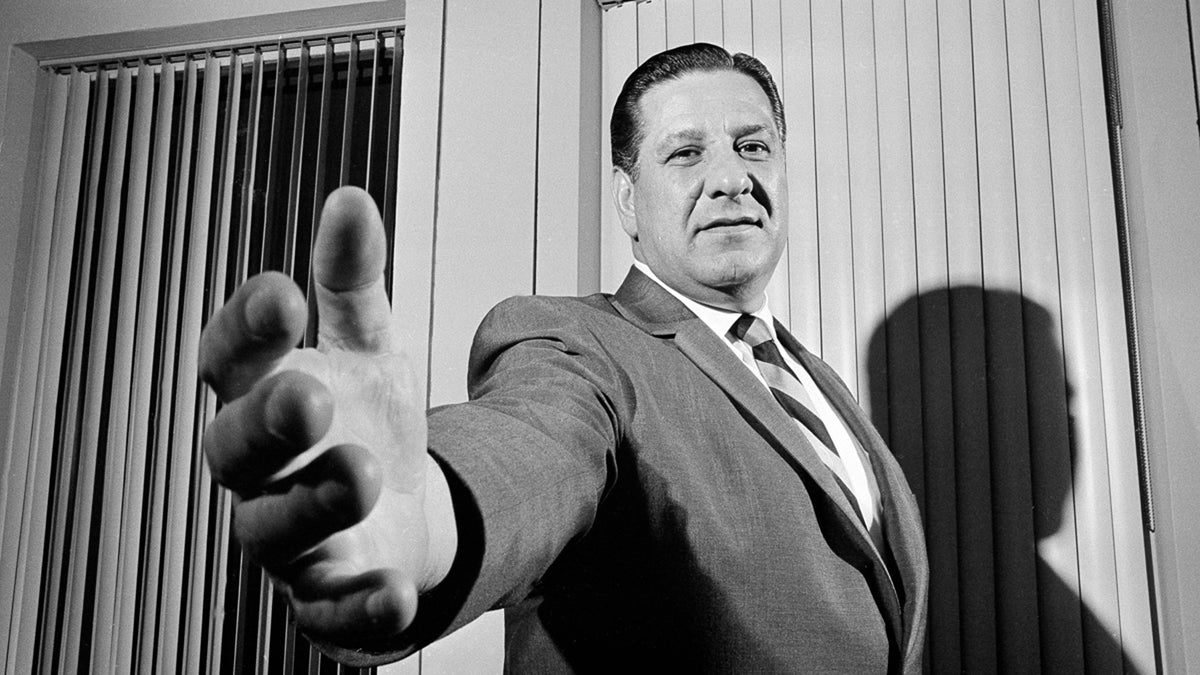
As had been the case with Butler, Rizzo’s influence persisted beyond office. Evidence of that was the televised bombing of MOVE headquarters in a working-class black neighborhood in 1985 (MOVE was a left-wing group composed mostly of African Americans).
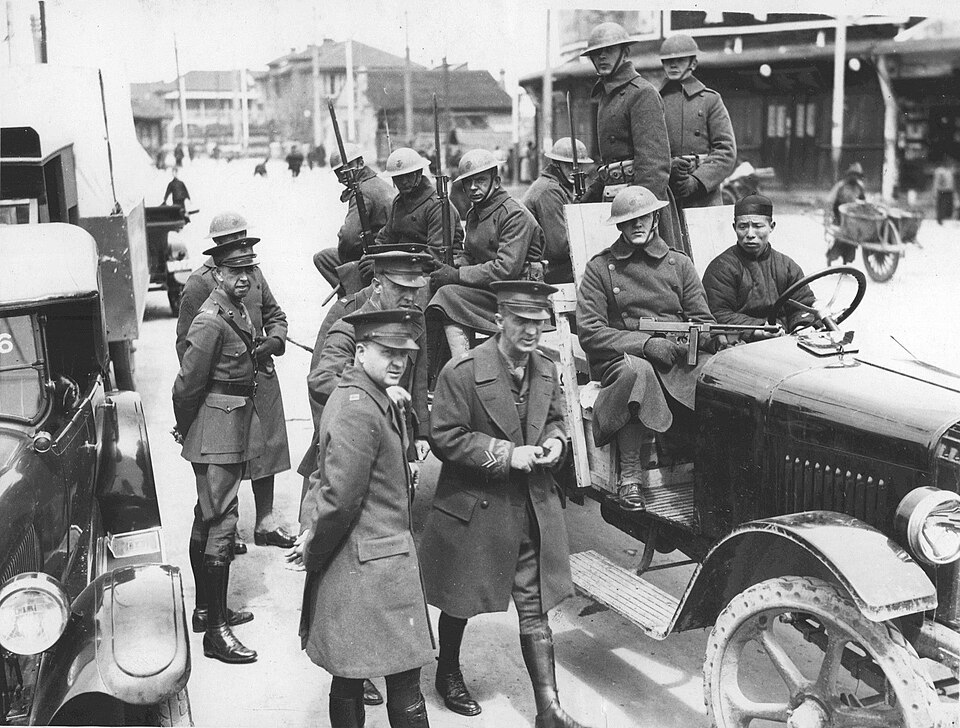
After Philadelphia, Butler was assigned by his old friend John A. Lejeune, now Marine Corps Commandant, to lead the garrison at San Diego. Butler’s last overseas assignment was taking the San Diego detachment to Shanghai in 1927 during the Republic of China’s complex civil war between the ruling Guomindang Party, regional warlords, and the emerging Chinese Communist Party. His orders from Lejeune were to not get involved in local affairs beyond protecting U.S. citizens and the resources they controlled.
From his vantage point in the International Settlement, Butler witnessed the massacre of Shanghai’s Communists by Chiang Kai-shek’s forces and growing U.S.-Japanese imperial rivalry.
As with other populations he had contact with in the Global South, he was torn about the Chinese. Although he told a New York Times reporter in 1928 “This country belongs to the Chinese,” Butler had been an early proponent of supporting Chiang and his faction in the Guomindang.[18] As Butler wrote to Lejeune less than a year earlier, Chiang’s bloody purge of Communists in the Guomindang and break with the Soviet Union was a “golden opportunity for us to get in on the commercial ground floor of this movement.”[19]
The Deep State
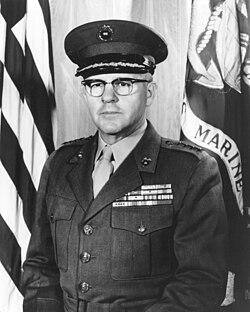
While many in U.S. governing circles know how the world works, they admit it in veiled terms, if at all. Considering the mission of the Marines in Shanghai, for example, future Marine Corps Commandant David M. Shoup wondered why the U.S. government would defend the interests of Standard Oil even if it endangered Marines’ lives (“Later I discovered that of course it would, and did”).[20] Butler kept his concerns to himself while in uniform but was far more transparent once retired, which is why he is a footnote in history books.
In U.S. history, all roads lead to “the Deep State.” Coming increasingly into general usage but also widely misunderstood, this term essentially refers to the hierarchy of ruling institutions in modern society. In the U.S. context, this refers to the uneasy working relationship of the Pentagon, the intelligence community, Wall Street, and organized crime.
Butler spent his entire professional life in the shadow of Deep State institutions, generally on the military side, but an incident in retirement exposed him to it in its clear fullness.
According to claims made before a congressional committee and the press, Butler was asked by Gerald C. MacGuire, a Wall Street bond salesman, to lead an army of veterans in seizing control of the federal government. With steady prodding during meetings with MacGuire between the summer of 1933 and the fall of 1934, Butler learned this scheme was led by investment banker Grayson Mallet-Prevost Murphy and, perhaps, corporate backers of the American Liberty League, the goal being to get the United States back on the gold standard that FDR had suspended in the spring of 1933.
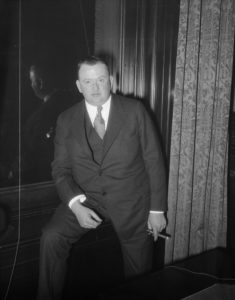
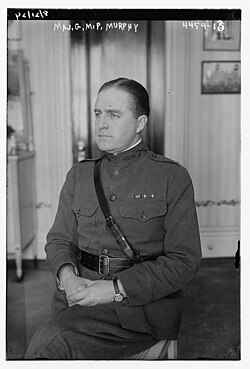
Butler told the McCormack-Dickstein Committee that he refused to have anything to do with the scheme. While his claims were nevertheless controversial and sparsely documented, the American Liberty League was indeed a major participant in domestic politics between 1934 and 1940. A private organization critical of the Roosevelt administration, its member included former DuPont Chemical President Irénée du Pont, General Motors Chairman Alfred P. Sloan, and other corporate executives. The question is if they were part of this supposed conspiracy.
Led by Congressmen John W. McCormack (D-MA) and Samuel Dickstein (D-NY), the Special Committee on Un-American Activities Authorized to Investigate Nazi Propaganda and Certain Other Propaganda Activities was a forerunner of the House Committee on Un-American Activities (HUAC), the famous standing committee of the domestic Cold War. In the early 1930s, the McCormack-Dickstein Committee mainly investigated left-wing groups.
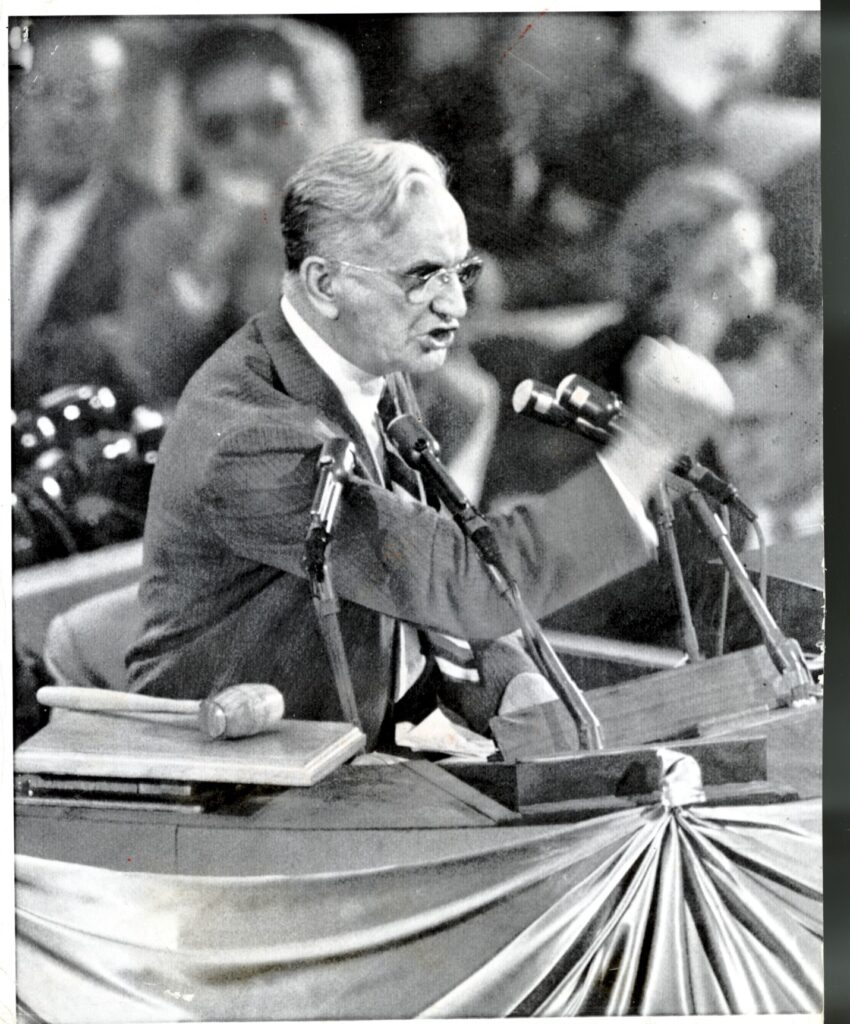
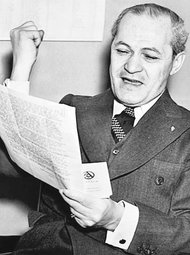
How the official investigation of the charges made by Butler played out was curious. John L. Spivak, who wrote about the controversy for the New Masses in 1935 [here and here], would characterize the work of the McCormack-Dickstein Committee this way three decades later:
I had studied the Committee’s report. It gave six pages to the threat by Nazi agents operating in this country and eleven pages to the threat by communists.
It gave one page to the plot to seize the Government….[21]
A bone of contention in left-wing press coverage was that there were inconsistencies in Butler’s printed testimony, as recorded in the original and published versions of the hearing transcript.
The mainstream press dismissed the matter out of hand but it was of interest to reporters like Spivak, Walter Wilson, Ferdinand Lundberg, and Paul Comly French in the 1930s and to professional historians like Hans Schmidt in the 1980s.[22]
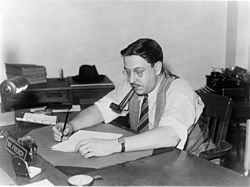
(Since there is apparently little extant documentation, we should not rush to judgment. However, this reviewer is tempted to wonder if the McCormack-Dickstein Committee and the Roosevelt administration itself were involved in a cover-up; there are no primary documents about the purported coup against the president referenced on the Franklin D. Roosevelt Library website.)
According to Butler, others asked him to participate in yet another conspiracy. In 1936, far-right radio personality Charles Coughlin supposedly asked Butler to lead a coup d’état against Mexican President Lázaro Cárdenas who was opposed to the Roman Catholic Church. Butler informed FBI Director J. Edgar Hoover of Coughlin’s overture. Hoover wrote that he reported the matter to FDR in person. There is no documentation of the meeting with Hoover in FDR’s papers.[23] No one in power pursued Butler’s allegations.
This reviewer might argue that fascism has always been organic to the United States at one level or another. Katz does not see the likelihood of fascism arising here during the Great Depression as an outlandish notion—as he puts it, “the divide between fascism and the American elite was paper thin.”[24] But although the potential of fascism arising from elite circles in the inter-war United States is itself a substantial topic of concern, the question is mostly side-lined. As we are now seeing very clearly in the domestic world today, this has always been a possibility.[25] However, mainstream institutions still treat the danger as a “mystery” or as “pop culture” material.
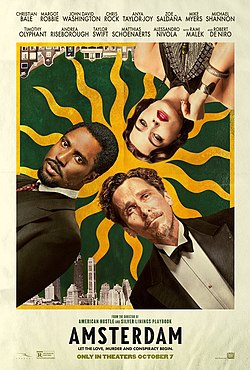
A telling example was the 2022 release of Amsterdam by Regency Enterprises. Directed by David O. Russell and starring Christian Bale, the film is about a private detective investigating the mysterious activities of “the Committee of Five,” a veiled reference to the Business Plot. Robert De Niro plays “General Dillenbeck,” a character loosely based on Butler. Pop icon Taylor Swift has a small role as the daughter of a man who told an unflattering story about Benito Mussolini—something Butler really did in 1931 (as he was still in uniform, the Navy had him court-martialed).
Without any identifying information, a clip of Butler giving a speech appears in the final credits. Uninformed viewers may think it was part of the film, a performance made to look authentic.
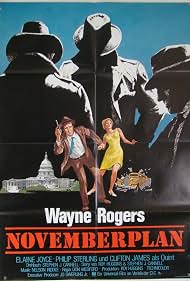
Nor was Amsterdam the first time the Business Plot was treated by entertainment media. In 1977, Universal Studios released a television film “loosely based” on the controversy, entitled The November Plan.[26]
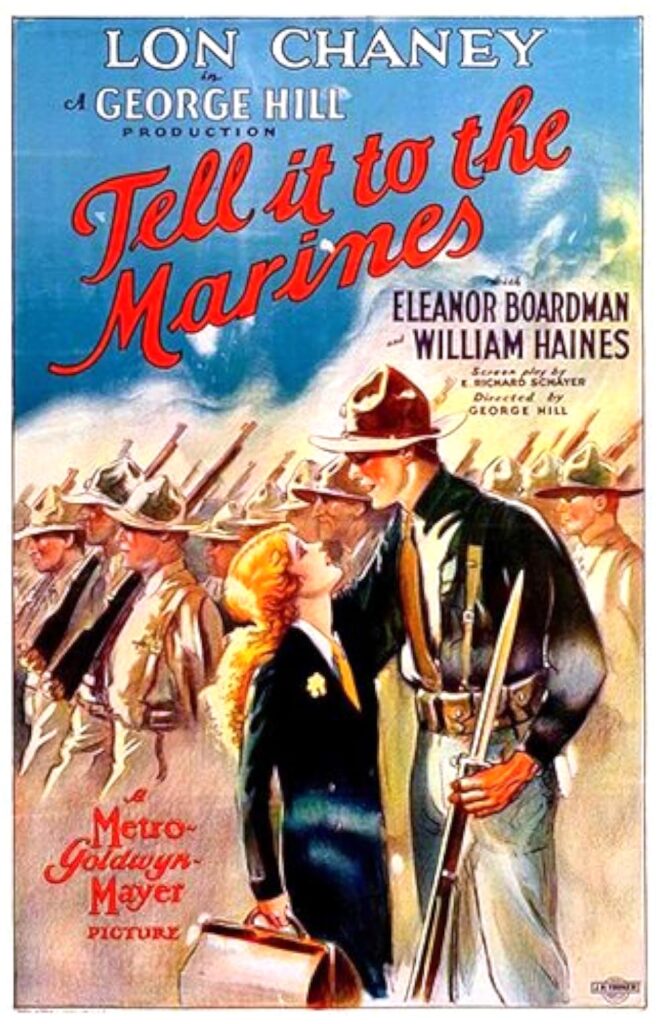
In Gangsters of Capitalism, Katz has produced a well written and interesting analysis of Butler and relates him to larger social trends. For one, Katz recognizes that Butler was aware of how important mass culture was in glorifying overseas expansion and the military lifestyle. While Butler thought only European battles in the Great War should reach the silver screen because they were “maximally murderous [and] fought in a white man’s country,” he sensed that popular interest in the United States might focus on places more directly under U.S. influence.[27] This may be why Butler worked on the set of Metro-Goldwyn-Mayer’s Tell It to the Marines. Set in Asia, this silent film, starring Lon Chaney, pandered to orientalism, which was popular in the United States.
At about the same time, Butler collaborated with science fiction writer (and former Marine) Arthur J. Burks on a pulp novel. Entitled Walter Garvin in Mexico, it was a potboiler loosely based on Butler’s participation in the invasion of Veracruz in 1914. Written for young readers, the book perpetuated white supremacist notions about the world.
Katz writes about how Butler related to trends in early 20th-century political history. Besides his abiding awareness of the role of U.S. big business in wars around the world, Butler was aware of revolutionary changes after World War I. In War Is a Racket, for instance, Butler wrote that the authoritarian regimes of Joseph Stalin in the Soviet Union, Benito Mussolini in Italy, and Adolf Hitler in Germany were threats to the United States.
While historians have not written much about Butler’s political persuasion beyond being a typical conservative Progressive, that is simply because Butler did not write that much about it himself. He had little to say, for example, about the theory or practice of socialism. He was ambivalent, to say the least, about Marxist revolutions in the world. This is a relevant matter because he often shared the stage at anti-war rallies in the 1930s with Communist Party USA members.
The author is always aware of the inconsistencies in Butler’s positions. Katz observes that Butler’s remonstrations about “maintaining…democracy” during the Business Plot controversy were frustrating because—by his own admission—he had participated in regime-change plots overseas during his military career for Wall Street interests.[28]
Katz’s book is not perfect. In his brief discussion of William Penn, the proprietor of early Pennsylvania in the late 17th century, he notes the irony of remembering Penn as an advocate of democracy when he was really a feudal overlord. However, Katz does not acknowledge factionalism within the Quaker movement. This is significant because it could shed light on why some adherents of an ostensibly pacifist doctrine would let their sons go to war, as the Butlers did with Smedley. An important question is which faction was his family associated with, or whether such distinctions had any bearing in Butler’s lifetime.
This criticism is not arbitrary. Two U.S. presidents grew up in Quaker households: Herbert Hoover, a strong proponent of classical liberalism, and Richard Nixon, who came from a poor Quaker family. On the other hand, this is a comparatively minor detail because Katz accomplished what he claimed he would do in his book. He shows that the interlocking relationship between “legitimate business” and state power—whether in the imperial core or further afield—is as strong as it ever was.
Were he alive today, Smedley Butler would agree, with the world (again) on the brink of catastrophe. And he would surely have interesting things to say about the recent doings of the Trump administration in Latin America.

Jonathan M. Katz, Gangsters of Capitalism: Smedley Butler, the Marines, and the Making and Breaking of America’s Empire (New York: St. Martin’s, 2022), 6. ↑
Katz, Gangsters of Capitalism, 10. ↑
Smedley D. Butler, War Is a Racket (New York: Round Table Press, 1935), 13-25. ↑
Samuel D. Butler, “America’s Armed Forces: 2. ‘In Time of Peace’: The Army,” Common Sense, November 1935, 8. See also Hans Schmidt, Maverick Marine: General Smedley D. Butler and the Contradictions of American Military History (Lexington: University Press of Kentucky, 1998), 236. ↑
Katz, Gangsters of Capitalism, 7, 8. ↑
Interestingly, for eight years after retiring from the Army, counterinsurgency guru John A. Nagl was headmaster of the private school Butler attended. Nagl resigned under pressure in 2020 after a letter he wrote calling for a military coup if Trump would refuse to step down after losing the presidential election to Joe Biden appeared on a defense industry website. John A. Nagl, Knife Fights: A Memoir of Modern War in Theory and Practice (New York: Penguin Press, 2014), 248-53. See also John A. Nagl, Foreword to the University of Chicago Press Edition, The U.S. Army/Marine Corps Counterinsurgency Field Manual (Chicago: University of Chicago Press, 2007), xiii–xx. ↑
On counterinsurgency campaigns in the Global South since World War II, see Hannah Gurman, ed., Hearts and Minds: A People’s History of Counterinsurgency (New York: New Press, 2013). ↑
Katz, Gangsters of Capitalism, 202-203. See also Schmidt, The United States Occupation of Haiti, 1915-1934 (New Brunswick, NJ: Rutgers University Press, 1995), 42-63; Mary A. Renda, Taking Haiti: Military Occupation and the Culture of U.S. Imperialism, 1915-1940 (Chapel Hill: University of North Carolina Press, 2001), 94-101. ↑
Katz, Gangsters of Capitalism, 212, 244. ↑
Peter James Hudson, Bankers and Empire: How Wall Street Colonized the Caribbean (Chicago: University of Chicago Press, 2017), 109. ↑
Katz, Gangsters of Capitalism, 244-45. ↑
Katz, Gangsters of Capitalism, 239, 245. ↑
See David Zucchino, Wilmington’s Lie: The Murderous Coup of 1898 and the Rise of White Supremacy (New York: Atlantic Monthly Press, 2020). ↑
Katz, Gangsters of Capitalism, 258. ↑
Katz, Gangsters of Capitalism, 246, 256.
Katz, Gangsters of Capitalism, 263-64. ↑
Katz, Gangsters of Capitalism, 272. ↑
Katz, Gangsters of Capitalism, 300. ↑
Katz, Gangsters of Capitalism, 296. ↑
Katz, Gangsters of Capitalism, 302. ↑
John L. Spivak, A Man in His Time (New York: Horizon Press, 1967), 331. ↑
Ferdinand Lundberg, America’s 60 Families (New York: Vanguard Press, 1937), 146; Paul Comly French, “Gen. Butler Accuses N.Y. Brokers Of Plotting Dictatorship in U.S.,” New York Post, November 20, 1934; Schmidt, Maverick Marine, 223-31. See also Sally Denton, The Plots Against the President: FDR, a Nation in Crisis, and the Rise of the American Right (New York: Bloomsbury Press, 2012), 186-213. French was a Philadelphia Quaker. ↑
Denton, The Plots Against the President 219-20; Schmidt, Maverick Marine, 234. ↑
Katz, Gangsters of Capitalism, 317. ↑
For a recent treatment of this problem, see Michael Joseph Roberto, The Coming of the American Behemoth: The Origins of Fascism in the United States, 1920-1940 (New York: Monthly Review Press, 2018).
Schmidt, Maverick Marine, 247. ↑
Katz, Gangsters of Capitalism, 264. ↑
Katz, Gangsters of Capitalism, 325. ↑
CovertAction Magazine is made possible by subscriptions, orders and donations from readers like you.
Blow the Whistle on U.S. Imperialism

Click the whistle and donate
When you donate to CovertAction Magazine, you are supporting investigative journalism. Your contributions go directly to supporting the development, production, editing, and dissemination of the Magazine.
CovertAction Magazine does not receive corporate or government sponsorship. Yet, we hold a steadfast commitment to providing compensation for writers, editorial and technical support. Your support helps facilitate this compensation as well as increase the caliber of this work.
Please make a donation by clicking on the donate logo above and enter the amount and your credit or debit card information.
CovertAction Institute, Inc. (CAI) is a 501(c)(3) non-profit organization and your gift is tax-deductible for federal income purposes. CAI’s tax-exempt ID number is 87-2461683.
We sincerely thank you for your support.
Disclaimer: The contents of this article are the sole responsibility of the author(s). CovertAction Institute, Inc. (CAI), including its Board of Directors (BD), Editorial Board (EB), Advisory Board (AB), staff, volunteers and its projects (including CovertAction Magazine) are not responsible for any inaccurate or incorrect statement in this article. This article also does not necessarily represent the views the BD, the EB, the AB, staff, volunteers, or any members of its projects.
Differing viewpoints: CAM publishes articles with differing viewpoints in an effort to nurture vibrant debate and thoughtful critical analysis. Feel free to comment on the articles in the comment section and/or send your letters to the Editors, which we will publish in the Letters column.
Copyrighted Material: This web site may contain copyrighted material the use of which has not always been specifically authorized by the copyright owner. As a not-for-profit charitable organization incorporated in the State of New York, we are making such material available in an effort to advance the understanding of humanity’s problems and hopefully to help find solutions for those problems. We believe this constitutes a ‘fair use’ of any such copyrighted material as provided for in section 107 of the US Copyright Law. You can read more about ‘fair use’ and US Copyright Law at the Legal Information Institute of Cornell Law School.
Republishing: CovertAction Magazine (CAM) grants permission to cross-post CAM articles on not-for-profit community internet sites as long as the source is acknowledged together with a hyperlink to the original CovertAction Magazine article. Also, kindly let us know at info@CovertActionMagazine.com. For publication of CAM articles in print or other forms including commercial internet sites, contact: info@CovertActionMagazine.com.
By using this site, you agree to these terms above.
About the Author
Anthony Newkirk is a high-school educator.
Besides teaching in secondary schools in Mexico City and Kuwait, he has taught on the college level in Little Rock and Philadelphia.
Anthony has written for American Communist History, Arkansas Historical Quarterly, Counterpunch, Foreign Policy in Focus, Global Research, Labour/Le Travail, and The Hill.
Anthony can be reached at newkirk1938@hotmail.com.




POGOĐEN AVION VREDAN 40 MILIONA DOLARA Objavljeni satelitski snimci BRUTALNOG razaranja usred VOJNE BAZE! Pogledajte šta je od njega ostalo (FOTO)
Autor:
Aleksandar Vulić
Pet, 21.08.2026. 14:05h
→ 14:06h
8
Dodajte Kurir u vaš Google izbor
2.jpg
Foto: Printscreen/Twitter
Ruski bombarder Su-34 značajno je oštećen u vazduhoplovnoj bazi Ahtubinsk, tvrde OSINT analitičari. Zelenski potvrdio rezultate udara.
Slušaj vest
03:07
Ukrajinski predsednik Volodimir Zelenski izjavio je danas da su ukrajinske oružane snage tokom protekle noći izvele napad na rafineriju nafte u Permskoj oblasti, duboko na teritoriji Rusije, više od 1.600 kilometara od granice.
Zelenski je u objavi na platformi X naveo da je Ukrajina tokom noći pogodila i rusku vojnu vazduhoplovnu bazu Marinovka u Volgogradskoj oblasti, na jugu Rusije.
“Nastavljamo da svojim dubinskim udarima vraćamo posledice rata tamo odakle su i došle. Sinoć su naši dubinski udari pogodili rafineriju nafte u Permu, više od 1.600 kilometara od granice, kao i vojnu vazduhoplovnu bazu Marinovka u Volgogradskoj oblasti”, rekao je Zelenski.
Prema njegovim rečima, ukrajinski udari ostvarili su rezultate i u Crnom moru.
“Takođe imamo potvrđene rezultate prethodnih udara. Ruski avion Su-34 oštećen je u vazduhoplovnoj bazi Ahtubinsk, oko 600 kilometara od linije fronta”, naveo je Zelenski.
Ruski bombarder Su-34 oštećen je na teritoriji Rusije tokom noći između 19. i 20. avgusta, a satelitski snimak posledica napada objavili su analitičari OSINT projekta Exilenova+.
Avion je oštećen tokom napada na aerodrom Ahtubinsk na severu Astrahanske oblasti. Ranije tog jutra OSINT projekat saopštio je da je nakon napada dronovima na aerodromu registrovan termalni trag.
Prema navodima analitičara, bombarder je “značajno oštećen”.
“Posledice udara na frontovski bombarder Su-34 tokom noći na aerodromu u Ahtubinsku. Došlo je do curenja goriva, nakon čega je izbio požar. Sam bombarder je značajno oštećen”, objavio je Exilenova+.
Ruski višenamenski lovac-bombarder Su-34 predstavlja glavnu platformu za upotrebu navođenih avionskih bombi sa univerzalnim modulima za planiranje i korekciju, kao i drugih planirajućih vazduhoplovnih ubojnih sredstava.
Prema projektu War&Sanctions, trećina kompanija uključenih u snabdevanje komponentama za proizvodnju ovih aviona nije pod restrikcijama nijedne države iz sankcione koalicije, što znači da bi i dalje mogle da imaju pristup potrebnim stranim komponentama i tehnologijama.
Ukrajina je u noći između 19. i 20. avgusta izvela napade velikog dometa, tokom kojih su pogođeni važni ruski vojni objekti u Donjecku i Primorsko-Ahtarsku.
I hope all the traitorous Alawite rats, along with their bosses Bashar al-Assad, MAHER al-Assad and SUHAIL al HASSAN, are caught by a Ukrainian missile and in RUSSIA.