[This is the first of a three-part series on China by veteran political activist and journalist Ron Ridenour.—Editors]
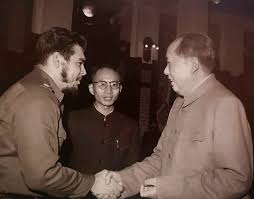
My morality and thought processes, and much of my writings have I learned from Che Guevara’s meaning about building a socialist society in which people begin to shed themselves from being alienated commodities.
My evaluation of China is based on what Che meant, in order to develop the “New Man” (Woman). These articles are only the second time I have written anything about China. The first was in May 1979 when I interviewed China’s first cultural vice-minister visit to the U.S. after China under bid Hollywood’s American animation workers to do film animation, and to buy B-grade entertainment films. It so succeeded.
I take up pen again, because of the current geo-political wars that Wall Street, Citibank, and EU deem as necessary, desperately attempting to prevent their economies and societies from crumbling, bringing us to the brink of nuclear annihilation. In so doing, I am upset and saddened that I must write this critique of China.—Ron.
Part One: China Abolished Poverty, Started BRICS and BRI
The People’s Republic of China (PRC) has referred to its status since 2012 as the “New Era of Socialism with Chinese Characteristics,” meaning a mixture of socialism and capitalism.
Four years later, President and Communist Party of China (CPC) leader Xi Jinping was proclaimed the CPC’s fourth leadership core, following Mao Zedong, Deng Xiaoping, and Jiang Zemin.
“The ruling Communist Party of China celebrated its 105th anniversary on Wednesday, 1 July [2026] with the resolve to press ahead to make [itself] into a modern socialist country by 2049,” wrote Abdul Rahman, a New Delhi University political scientist.
Xi Jinping summarized major achievements of his party, with emphasis on the eradication of absolute poverty. He stated that China would “realize modernization by 2035” and, by the 100th birthday of the People’s Republic of China (2049), the country would have built China “into a great modern socialist country in all respects.”
“Socialist China under the leadership of the CPC is widely recognized as the defender of world peace, contributor to global development, contributor to global development and upholder of international order,” maintained Guo Jiakun, spokesperson of the Ministry of Foreign Affairs.
Great. With 1.4 billion Chinese today—17% of the world’s population, and more by 2049—that should mean a socialist China could move toward full democratic-stateless communism.
So why should I be so presumptuous as to scold this great nation as I will be doing in these writings? I base my critique on certain important facts, some internal, mostly external, from the time of Mao Zedong to the present.
I have seen myself as a Marxist revolutionary since 1961 from the day the Yankees invaded Cuba.
I joined many leftist anti-war and civil rights groups; seven years a member of a Communist party in the U.S., and another in Denmark. A downside I witness is that most members of these committed organizations are not taught, or allowed to criticize the leadership’s direction, and especially not the old Soviet Union and China since 1949. We have too many divisions and divisiveness.
I want us all to have a critical mind: to ask “why” of our leaders; to suggest what might be a better course. Solidarity with Chinese organizations could, for example, tell their Chinese associates to stop selling war materials to the U.S. If we are really going to build the society we envision, then we must be open-minded and exercise a curious/critical mind and voice. We do not bow down to kings and queens, nor should we bow down to Socialist/Communist leaders either!
First, however, let us acknowledge its positive and wonderful accomplishments.
The U.S.’s main economic rival is “Communist China.” One of the reasons is that these Communists have eliminated poverty (severe and extreme) since 2021, while the “democratic” U.S. has not.
The U.S.’s internal and external capitalist-imperialist path officially allows 11% of its people (37 million) to live in poverty.
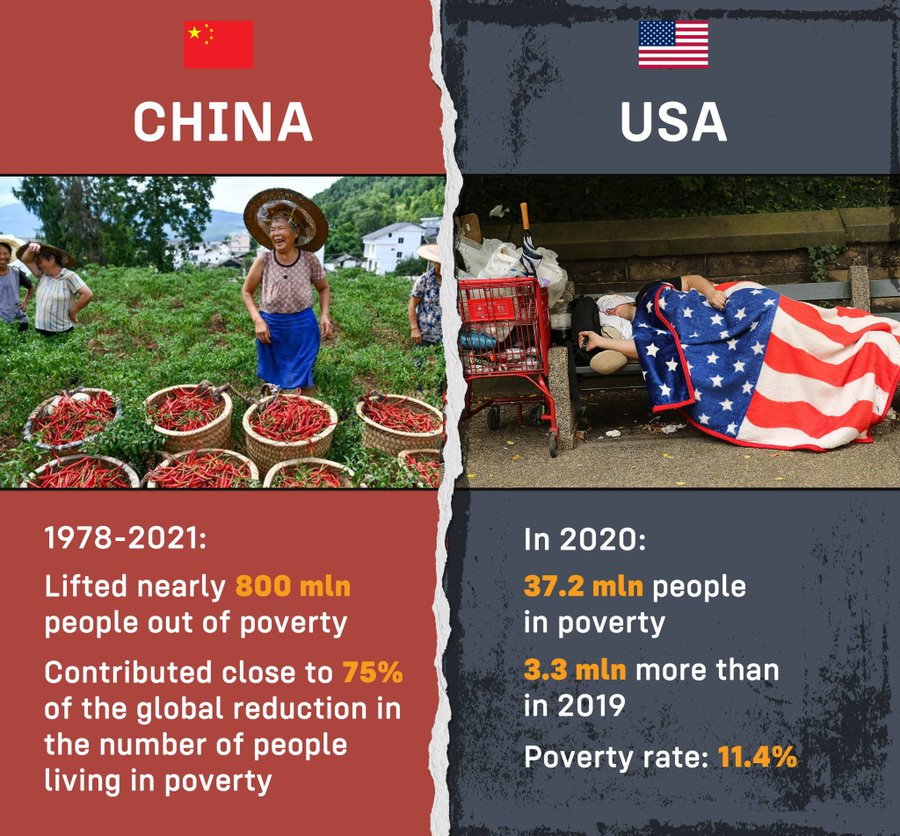
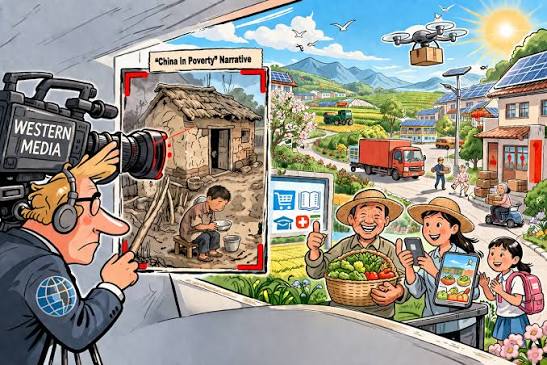
China’s rise out of poverty was peaceful and effective. The nation adopted industrialization first, with export-led growth, infrastructure diplomacy, credit instead of conquest, attempting to influence without occupation. China so states.
The World Bank, a 170-country alliance officially working to end extreme poverty worldwide, concurs with China’s statistics. Its 2022 finding:
“Over the past 40 years, the number of people in China with incomes below $1.90 per day—the International Poverty Line as defined by the World Bank to track global extreme poverty—has fallen by close to 800 million. With this, China has contributed close to three-quarters of the global reduction in the number of people living in extreme poverty. At China’s current national poverty line, the number of poor fell by 770 million over the same period.”
In comparison, according to the The Guardian in 2025: “The U.S. did not offer much to the people eking out a living around the poverty line. Per head, the U.S.’s economic output is six times China’s, and yet, inexplicably, there seem to be more abjectly poor Americans than Chinese.…The poor’s share of the US economic pie is shrinking to developing-world levels.”
Trump’s so-called Big Beautiful Bill Act will increase the numbers of American poor. Nevertheless, “America’s indifference towards its poor did not appear suddenly during the Trump administration. It’s been a feature of Democratic and Republican governments over the last 50 years.”
China’s economic success is studied and adopted by many countries especially in the Global South, including BRICS.
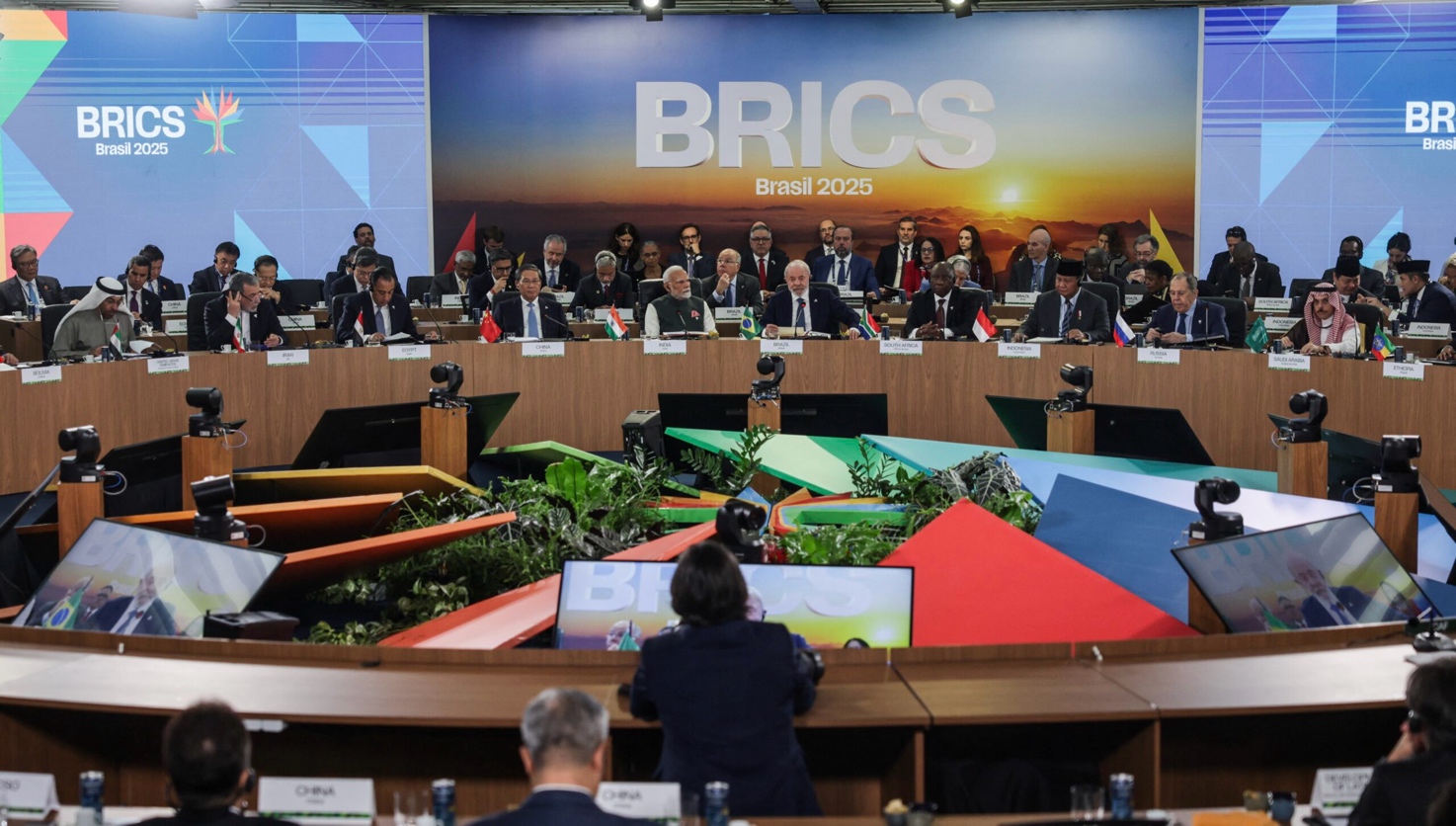
BRICS (Brazil, Russia, India, China, South Africa)
BRICS is a coalition of 11 nations first formalized in 2006 with Brazil, Russia, India and China. South Africa joined in 2010. It serves as a platform for consultation and cooperation on global and regional issues, especially concerning economic and political governance for the Global South.
BRICS’ current members, besides the five founders, are: Egypt, Ethiopia, Indonesia, Iran, Saudi Arabia and the United Arab Emirates. Some 30 others are applicants and aspirants. These include Belarus, Bolivia, Cuba, Kazakhstan, Malaysia, Nigeria, Thailand, Uganda, Uzbekistan and Algeria. These nations participate in BRICS mechanisms permanently while awaiting full accession. Other applicants are: Turkey (Türkiye), Vietnam, Sri Lanka, Bahrain and Kuwait.
Algeria dropped out of the waiting list in September 2023, maintaining that the criteria for membership were an “absurd selection logic,” pursuant to which some accepted countries had weaker economic indicators than itself. Three months later, Argentina also backed out after the far-right Javier Milei won the presidency, stating that it would not sit with “Communists,” that is, China.
Today, BRICS countries have 49.5% of the world’s population; 40% of the world’s GDP; and 26% of world trade.
In 2025, BRICS issued a statement about its objective: “Building for resilience, innovation, cooperation and sustainability,” reflecting a people-centric and humanity-first approach. Some members call BRICS the “new world order” in which no one country dominates others.
BRICS actively champions de-dollarization and trading in local currencies, explicitly seeking to reduce U.S. financial and political hegemony.
“BRICS also offers a compelling prospect for obtaining development financing without political conditions and in local currencies rather than in dollars or euros. Countries engaged with BRICS are united in their desire to shift the global balance of power away from American uni-polarity and in their belief that BRICS can help facilitate this transition.”
The BRICS 2025 Summit in Brazil reaffirmed its commitment to comprehensive UN reform that would equalize all nations rather than only have five permanent Security Council members. BRICS is open to all nations for membership as it seeks to strengthen world peace while providing a platform for Global South solidarity.
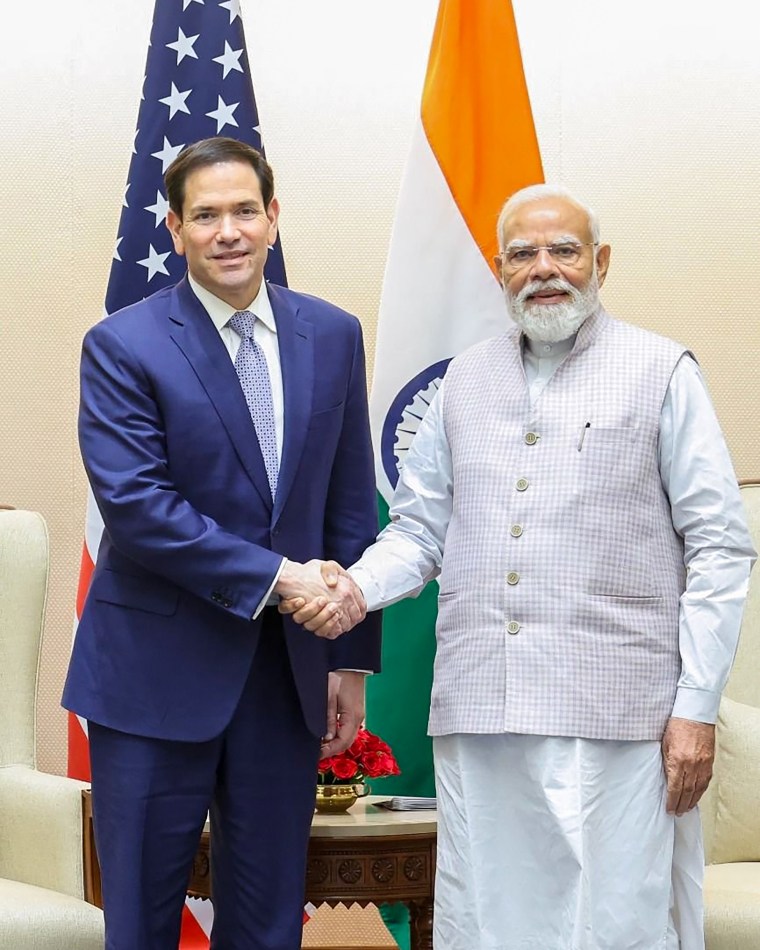
Since Trump’s re-election, Trump is maneuvering countries to leave or not to join BRICS, which he sees as a threat to U.S. world domination. In May, Secretary of State Marco Rubio visited BRICS co-founder India, which is the current chair. Rubio proposed that India stop importing oil from Russia and buy from the U.S., which has much more oil than before it took over Venezuela’s supply. Rubio said that the U.S. would sell India “as much energy as they’ll buy.” India stopped buying oil from Russia to please Trump!
Belt and Road Initiative
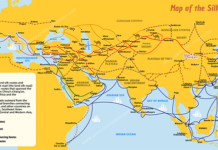
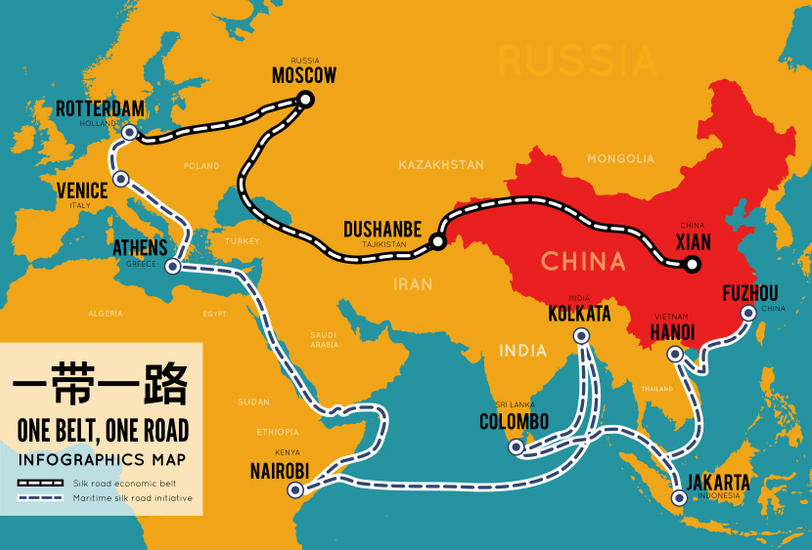
China formed the Belt and Road Initiative (BRI) in 2013. BRI is building a new Silk Road through six economic corridors: ports, railways, highways, power stations, aviation and telecommunications.
One hundred and fifty countries have since joined or signed memorandums of understanding—
Africa 53 of its 54 countries, Europe 29, Latin America 22, Pacifica 12, Southeast Asia 10, South Asia 6, Central Asia 6, East Asia 3.
More than half of Latin America and the Caribbean have joined the BRI since 2018, seeking expanded infrastructure investment and broader economic cooperation. Four countries—Brazil, Mexico, Chile and Peru—account for 76% of China’s total trade volume.
Trade between China and Latin America and the Caribbean reached $510 billion in 2024—nearly double its level a decade ago. In 2002, trade only amounted to $17 billion.
Italy withdrew in 2023 shortly after the fascist-led Brothers of Italy Party won the election with Giorgia Meloni as prime minister. Two other extreme rightest parties—League and Go Italy—form a three-party government.
Since Donald Trump took office, acting as “Don” Monroe (the 1823 Monroe Doctrine declared the Western hemisphere to be the U.S.’s sphere of influence), he endeavors to throw China out of his “backyard.” Trump revived the concept of “American Exceptionalism,” which places the U.S. above all other countries.
Trump has already succeeded in forcing Panama’s government of José Raúl Mulino to leave BRICS and curb China’s use of the Panama Canal. Mulino also took two ports away from the Hong Kong-based CK Hutchison, which had long managed them. Panama turned them over to the Danish Mærsk, the world’s largest shipping company and a shipping partner for U.S. wars.
China is considering building another canal in Nicaraguan waters, an expensive idea of old.
“While the Trump administration has urged governments to distance themselves from China, the data shows that China’s deepest economic ties—particularly with Brazil and Mexico—go beyond the Belt and Road Initiative and are rooted in trade, production and supply chains.” So reported the ODI Global think tank on March 4, 2026.
Swaziland, or the Kingdom of Eswatini, is the only African country not in BRI, because its absolute monarchy under King Mswati III since 1986 recognizes Taiwan as separate from China. Swaziland has the lowest life expectancy in the world—58 years.
Stay tuned for part II in the series next week.

- The author wishes to thank Carolina Cositore and Dave Lindorff for their editorial assistance.
CovertAction Magazine is made possible by subscriptions, orders and donations from readers like you.
Blow the Whistle on U.S. Imperialism

Click the whistle and donate
When you donate to CovertAction Magazine, you are supporting investigative journalism. Your contributions go directly to supporting the development, production, editing, and dissemination of the Magazine.
CovertAction Magazine does not receive corporate or government sponsorship. Yet, we hold a steadfast commitment to providing compensation for writers, editorial and technical support. Your support helps facilitate this compensation as well as increase the caliber of this work.
Please make a donation by clicking on the donate logo above and enter the amount and your credit or debit card information.
CovertAction Institute, Inc. (CAI) is a 501(c)(3) non-profit organization and your gift is tax-deductible for federal income purposes. CAI’s tax-exempt ID number is 87-2461683.
We sincerely thank you for your support.
Disclaimer: The contents of this article are the sole responsibility of the author(s). CovertAction Institute, Inc. (CAI), including its Board of Directors (BD), Editorial Board (EB), Advisory Board (AB), staff, volunteers and its projects (including CovertAction Magazine) are not responsible for any inaccurate or incorrect statement in this article. This article also does not necessarily represent the views the BD, the EB, the AB, staff, volunteers, or any members of its projects.
Differing viewpoints: CAM publishes articles with differing viewpoints in an effort to nurture vibrant debate and thoughtful critical analysis. Feel free to comment on the articles in the comment section and/or send your letters to the Editors, which we will publish in the Letters column.
Copyrighted Material: This web site may contain copyrighted material the use of which has not always been specifically authorized by the copyright owner. As a not-for-profit charitable organization incorporated in the State of New York, we are making such material available in an effort to advance the understanding of humanity’s problems and hopefully to help find solutions for those problems. We believe this constitutes a ‘fair use’ of any such copyrighted material as provided for in section 107 of the US Copyright Law. You can read more about ‘fair use’ and US Copyright Law at the Legal Information Institute of Cornell Law School.
Republishing: CovertAction Magazine (CAM) grants permission to cross-post CAM articles on not-for-profit community internet sites as long as the source is acknowledged together with a hyperlink to the original CovertAction Magazine article. Also, kindly let us know at info@CovertActionMagazine.com. For publication of CAM articles in print or other forms including commercial internet sites, contact: info@CovertActionMagazine.com.
By using this site, you agree to these terms above.
About the Author

Ron Ridenour is a U.S.-born author and journalist, anti-war and civil rights activist since 1961. After joining the U.S. Air Force at 17, he saw the inner workings of U.S. imperialism first hand and resigned. In the 1980s and 1990’s he worked with the Nicaraguan government and on Cuban national media.
He now lives in Denmark and, in addition to writing a dozen books, has served as a special correspondent and freelance investigative journalist for many publications in the U.S. and several Latin American and European countries—among them: The Morning Star, New Statesman, The Guardian (U.S. and England), Playboy, Liberation News Service, Pacific News Service, Coast Magazine, Qui, Skeptic, Seven Days, and Pacifica Radio.
CAM co-founder Philip Agee wrote commentaries to two of his dozen books: Yankee Sandinistas: Interviews with North Americans Living and Working in the New Nicaragua, and Backfire: CIA’s Biggest Burn. See also: The Russian Peace Threat: Pentagon on Alert and Winding Brook Stories at Amazon and Lulu. Other work can be found at ronridenour.com.
Ron can be reached at ronrorama@gmail.com.