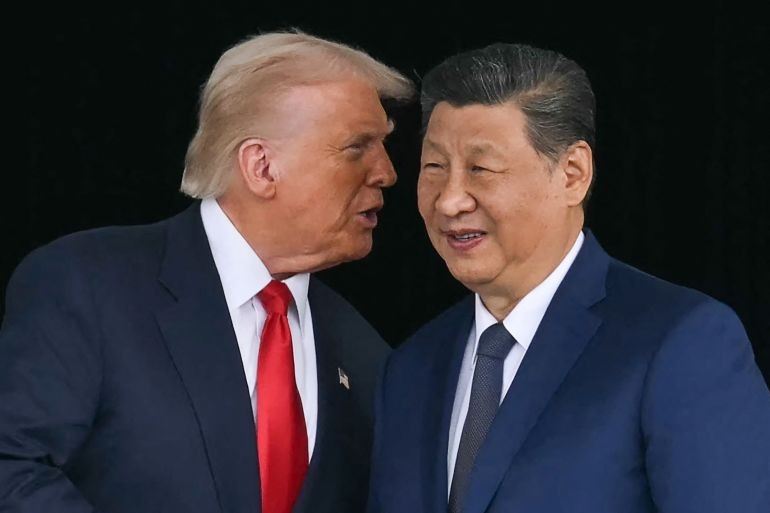
China invests in U.S./Israel Wars and supported Pol Pot’s Genocide and South African Apartheid
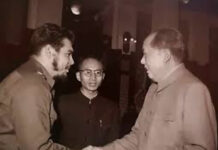
Che Guevara’s revolutionary humanist perspective led him to “reject any notion that included using capitalist tools or fetishes. The pipe dream that socialism can be achieved with the help of the dull instruments left to us by capitalism (the commodity as the economic cell, profitability, individual material interest as a lever, etc.) can lead into a blind alley. When you wind up there after having traveled a long distance with many crossroads, it is hard to figure out just where you took the wrong turn.”
“Meanwhile, the economic foundation that has been laid has done its work of undermining the development of consciousness. To build communism it is necessary, simultaneous with the new material foundations, to build the new man and woman…That is why it is very important to choose the right instrument for mobilizing the masses. Basically, this instrument must be moral in character…In order to develop a new culture, work must acquire a new status. Human beings-as-commodities cease to exist.” [Building socialism] “is a matter of making the individual feel more complete, with much more inner wealth and much more responsibility…At the risk of seeming ridiculous, let me say that the true revolutionary is guided by great feelings of love…Our vanguard revolutionaries must idealize this love of the people, of the most sacred causes, and make it one and indivisible…“one must have a large dose of humanity, a large dose of a sense of justice and truth in order to avoid dogmatic extremes, cold scholasticism, or an isolation from the masses. We must strive every day so that this love of living humanity is transformed into actual deeds, into acts that serve as examples, as a moving force.”
….
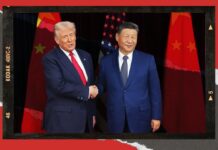
Trump Visits Xi Jinping: China Still Sells U.S. Minerals Used for Its Wars
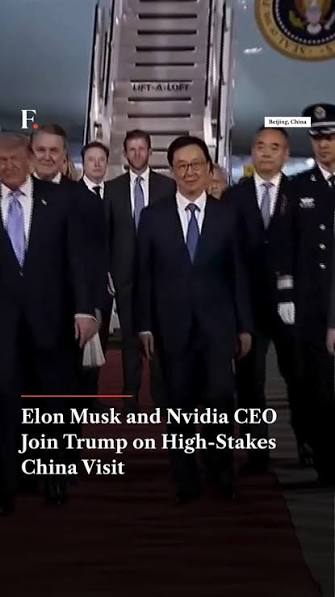
One of only two major commitments made by China during President Donald Trump’s May visit to Beijing was to buy 200 Boeing jets, the first such deal in almost a decade. The number of jets China agreed to buy was far less than the 500 which Trump’s billionaires had expected, causing a drop in the company’s share price.
Boeing’s CEO Kelly Ortberg was among a dozen billionaires who traveled with Trump. Tesla’s Elon Musk, the world’s richest man, and Jensen Huang, the CEO of AI chip giant Nvidia, were among his partners.
Why should China buy commercial aircraft from a major United States warmongering corporation?
Furthermore, one of China’s defense corporations, China Aerospace Science and Technology Corporation, is number three (2025) among the world’s top 100 weapons firms. Boeing’s listing ranges from number two to seven (2025).
Boeing’s net worth as of August, 2026, is $165.84 billion.
“We have a long history of designing and delivering aircraft that give commanders and warfighters the advantage when the stakes are highest—including the new, 6th generation F-47 stealth fighter, which will dominate the battlespace for decades to come.”
Rare earth minerals used to make weaponry and surveillance satellites also used for war purposes, was the second product desired by the U.S. war machine. It was not announced how much rare earth minerals China would sell, but it has been selling the U.S. these minerals, some of which are not found elsewhere, for decades.
Beijing identified rare earths as a strategic industry already in the 1980s. By the 1990s, China had become the world’s leading producer. Deng Xiaoping became China’s president and CPC leader in 1978 until he died in 1997.
China has cut back on the quantity of these metals, but still is selling the product used for “American fighter jets, satellites, guided missiles, and submarines all rely on high-performance magnets built with rare earths like neodymium, samarium, and dysprosium,” writes West Point’s “Modern War Institute.”
“These materials are overwhelmingly Chinese controlled, processed, and manufactured—and American reliance on foreign minerals and rare earths exposes critical vulnerabilities.”
“China refines over 85 percent of the world’s rare earths and produces nearly 90 percent of high-performance rare earth magnets. That means US weapon systems, from F-35s and Virginia-class submarines to hypersonic weapon systems and precision-guided munitions, are all critically dependent on materials from strategic rivals. Exotic minerals are no longer just for the green revolution; this is about the United States and its allies having the raw materials needed to sustain a future war….A single Virginia-class submarine contains about 9,200 pounds of rare earths and making an F-35 requires more than 900 pounds of rare earths.” [Emphasis added.]
Between 2008 and 2018, China sold rare earth minerals for $8.1billon at $3,780 per metric ton. China earned at least half a billion from exporting rare earth minerals in 2025.
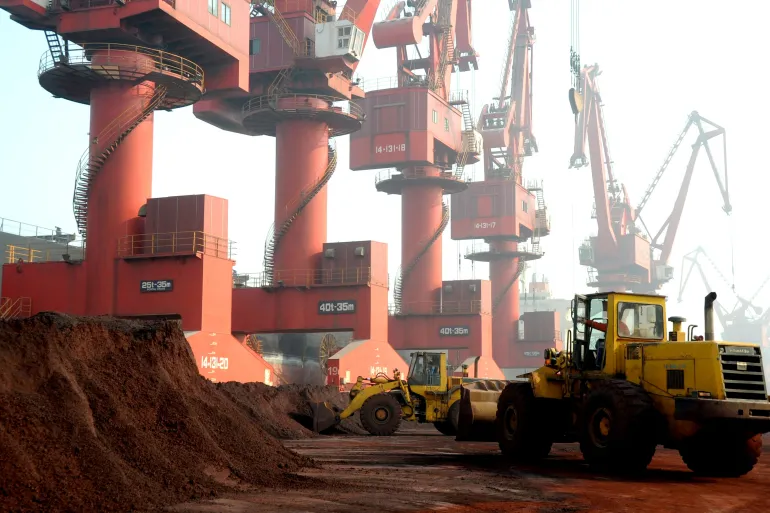
For most of the last four decades, the U.S. has imported around 10,000 tons of rare earth magnets annually from China.
China Daily, China’s largest English-language newspaper with a combined readership of 470 million, confirms the trade. It reported that China has “transitioned from being just a manufacturing hub or export platform to becoming a key node in global supply chains, including sectors vital for advanced military capabilities. An example of this is the US defense sector’s dependence on rare earth elements, where China holds a dominant role. Achieving strategic autonomy is challenging when reliance on external materials cannot be avoided.” [Emphases added.]
President Putin Visits China
Within a week of Trump’s visit, Russian President Vladimir Putin came to meet China’s president. They conducted trade agreements and sent messages to the world. Here is part of what Xi said:
“Unilateralism and hegemonism have brought severe harm and the world risks regressing to the law of the jungle.
As permanent members of the U.N. Security Council, China and Russia must work steadfastly as responsible major countries, safeguard the authority of the U.N. and international fairness and justice, oppose all unilateral acts of bullying and attempts to reverse the course of history, and especially oppose all provocative acts that deny the outcomes of the victory of World War II and attempt to justify and revive fascism and militarism, and work together to shape a more just and equitable global governance system.” [Emphasis added.]
A few days later, China’s Minister of Foreign Affairs, Wang Yi, told the UN Security Council what he thought of the U.S.’s “law of the jungle”: “The law of the jungle is resurging…glorying the history of aggression.” He called for all member states to align their actions with the spirit of the UN Charter and “reject [American] exceptionalism.”
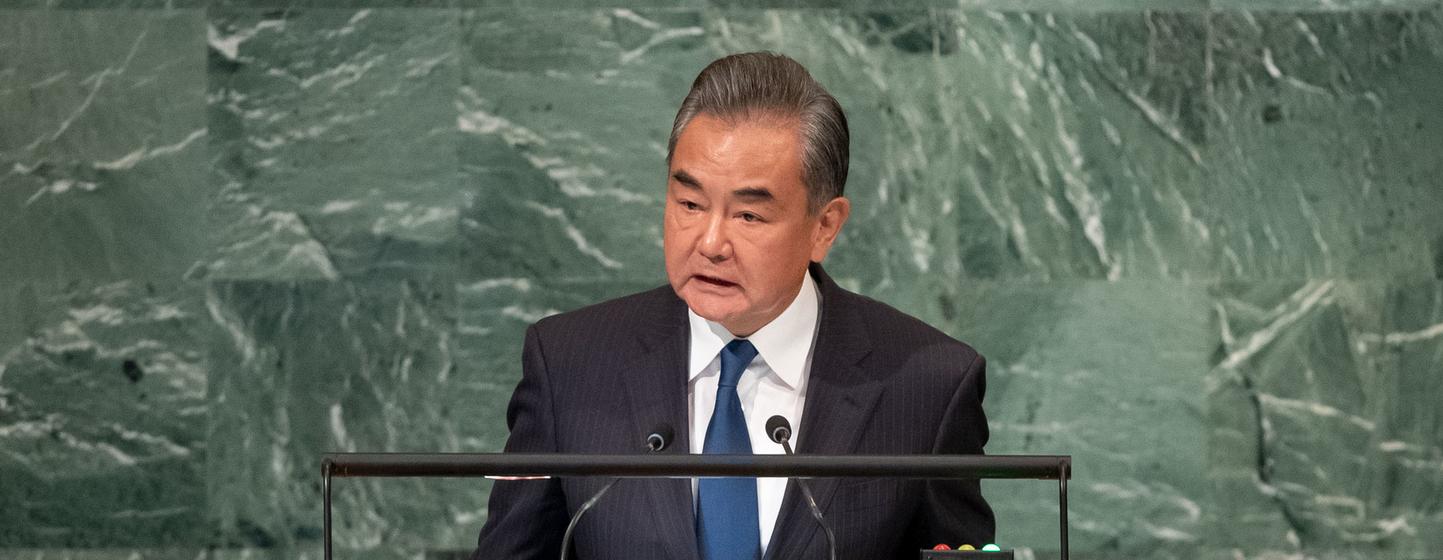
I ask Wang Yi and Xi Jinping: Why do you sell vital and extremely rare minerals to the warmonger U.S. when you know it uses them to murder innumerable people in many countries? Are you not complicit in murder?
China’s Pragmatism Ignores Venezuela’s and Iran’s Plight: Not to Disturb Ally Trump
Not wishing to damage its possessions and investments in the U.S.’s war economy, China did nothing to assist its Venezuelan ally, from which it bought as much as 89% of its oil trade, up to 400,000 barrels daily, and is 4% of China’s oil trade.
Not only has China not come to Venezuela’s assistance, it does little to support Iran in its existential struggle for survival. This is how William Murphy, a former State Department official who became a “Marxist-Leninist-Maoist,” judges China today?
Not coming to Iran’s aid to a significant degree is “not a story about morality. It’s a story about material constraints, imperial geography, and a world order transitioning in ways the U.S. ruling class cannot control.” [Emphasis in original.]
Murphy continues that China is not “‘anti-imperialist’ in a moral sense. It makes China structurally different. Beijing’s priority is systemic stability—because instability disrupts capital accumulation. The U.S. tolerates chaos because it monetizes it. China avoids chaos because it loses money.”
M.K. Bhadrakumar, a former diplomat for India, and political expert on Iran, Pakistan, the Soviet Union and elsewhere, wrote “The Hormuz Gamble.”
Bhadrakumar opened with Russian Foreign Minister Sergey Lavrov concerning why Trump ordered the naval blockade of Iran. “Venezuela is a stark example. The claim was that the drug traffickers’ regime must be taken down. The bottom line is that the United States is taking control of Venezuela’s oil industry. The same is now happening with Iran.”
Bhadrakumar remarked about Lavrov’s analysis: “That is one clever remark, given Russia’s deep interest in partnering with Iran’s oil and gas sector rather than competing.”
Iran had sold 90% of its oil to China. What is able to bypass U.S. naval patrols to reach China or anywhere else is unknown, but China does nothing to get the oil, or to actually assist Iran during Israel-US’s unprovoked, aggressive war.
Bhadrakumar explained: “Beijing maintains a cautious approach to avoid jeopardizing relations with other Middle Eastern partners” and has even “limited its official support for Iran after US and Israeli strikes to diplomatic statements.” [Emphasis added.]
Macedonian political scientist Biljana Vankovska wrote something I relate to personally:
“China’s conduct in the UN Security Council often disappoints those who expect it to openly confront what they see as an unrestrained American imperial machine…China does not rush; it plays a long game, guided by principles and a strategic horizon that resembles a global chessboard.”
This “long game” often leads China to abstain rather than vote “no” in the UN Security Council when the U.S. or Israel want to kill people.
Vankovska said that some “segments of the left” want Beijing to act “more decisively, even ‘revolutionarily,’” realizing that many of us leftists “search for a geopolitical savior.”
China must buy its oil and most has come from Iran and Venezuela. In the last of 2025 and early 2026, the U.S. has seized as least four ships, either Chinese of contracted, with oil headed for China. China did nothing about that, just more words of protest.
Russia does not have the wealth and freedom to do much more than it is doing for its war for sovereign survival, which is as costly as it is an existential war, which has killed more than one million people on both sides, but more Russians than Ukrainians.
Nevertheless, President Putin sent a tanker full of oil to Cuba, taking the risk of U.S. confiscation as it and Great Britain have done with two other Russian “sanctioned tankers”
“Sanctioned” is not anything more than what these Western rogue states determine. China does not risk such defiance of the world’s policeman. However, China has sent many solar panels and much rice to Cuba.
“The Cuban National Electric Union (UNE) is implementing a program to install 5,000 2-kW photovoltaic (PV) systems, donated by China.”
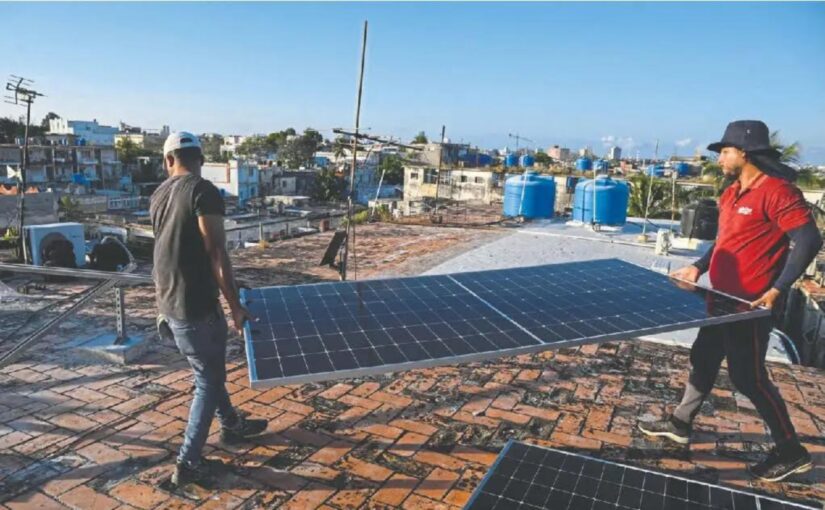
Solar energy’s share of Cuba’s total generation reportedly will grow from 4% to 17% by the end of 2026 due to Chinese equipment and on‑the‑ground support.
China-Israel Hypocrisy
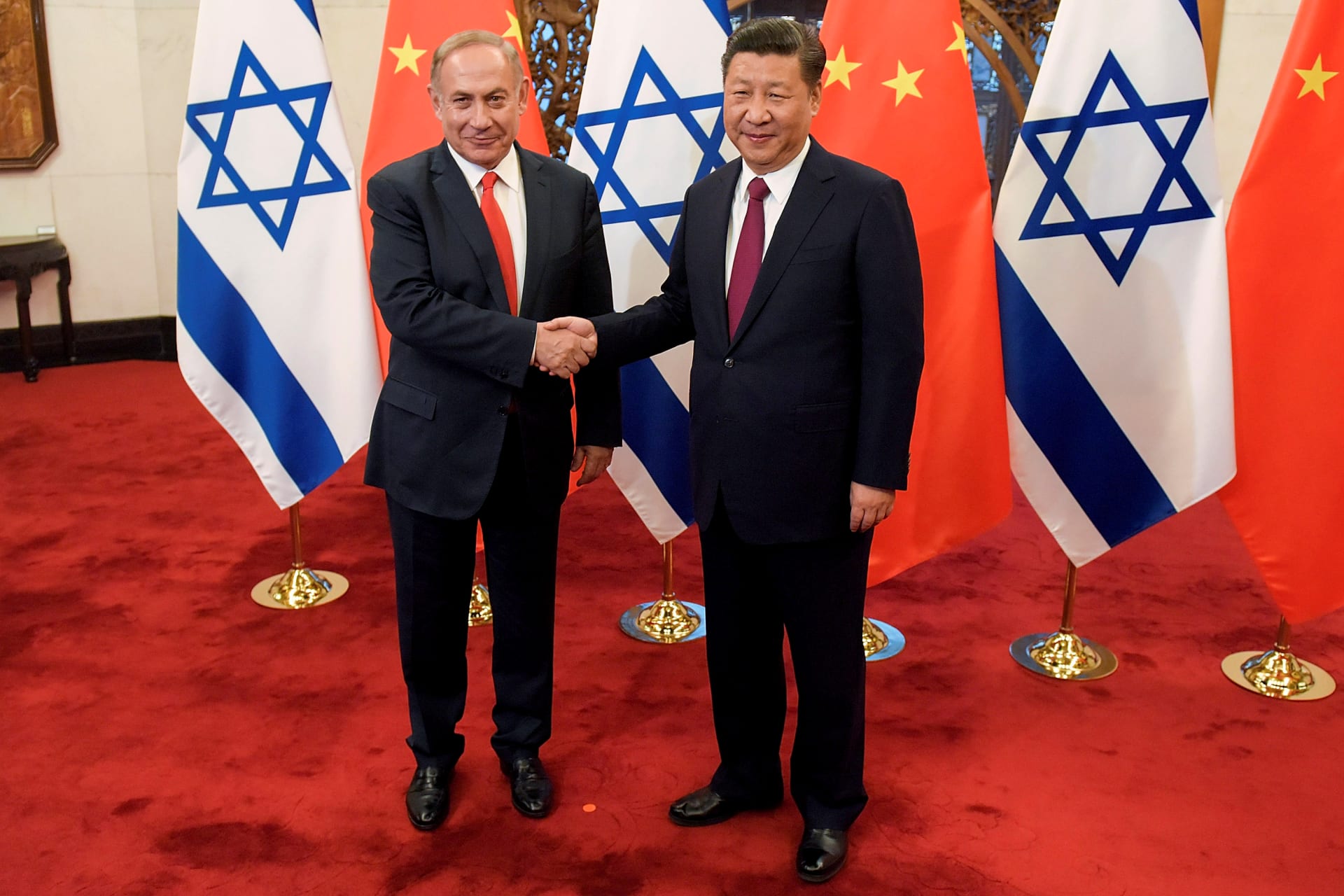
While China criticizes Israel for its invasion of Beijing’s ally Iran and genocide against Palestinians, it continues to trade with Israel. In fact, it even sells more while buying less.
China had been buying weaponry from Israel until the U.S. told Israel to stop.
During 2025, in the heat of Israel’s genocide, al Jazeera noted that “China imported a range of Israeli products including optical equipment, electronic components and chemical products…China primarily exported electric vehicles, mobile phones, computers and metals.”
The Diplomat is an Establishment business-trade think tank website; it shows the latest statistics about this trade, reporting that “bilateral trade rebounded significantly since 2023 and in 2025 was in a record high $21.17 billion (including Hong Kong), the growth is heavily asymmetric. Imports from China alone rose by 25 percent in two years to over $14.7 billion. Including Hong Kong, the imports are over $16 billion, while Israeli exports to China plummeted by 40 percent in three years to $2.8 billion.” (Yet China is selling even more cars than ever, one in every five Israel imports.)
China settles for words of protest that go unheeded.
China Invests in U.S. Treasury Bonds to Relieve Debt/Owns U.S. Land and Businesses
China owned as much land in the U.S. in 2021, as there is in Vermont and New Hampshire. https://globalaffairs.org/commentary/blogs/china-foreign-land-ownership-explainer
“Xi Jinping has clearly stated that by 2049 he wants China to be the world leader—diplomatically, economically, militarily, even in space,” so spoke Representative Mike Collins (R-GA) to the U.S. Congress on July 26, 2023.
Representative Collins continued: “On another alarming note, folks. China owns 384,000 acres of American agricultural land. That’s a 30% increase just since 2019. And on top of that, they own land near an air force base in North Dakota. That’s a clear threat to our national security….China owns $870 billion in U.S. Treasuries that finance our debt. And they either own or have a huge portion of the Chicago Stock Exchange, AMC movie theaters, General Electric’s appliance division, General Motors, and Smithfield Foods just to name a few.” [Emphases added.]
General Electric has an annual $3 billion investment in U.S. aerospace industries and $1 billion in “defense engines.”
GM Defense, which was re-established in 2017, is one of the fast-growing “defense business” segments. General Motors and the military aircraft producer Lockheed Martin have just joined hands as bloodless brothers. The deal was facilitated by the U.S. Department of Defense, and announced on June 16 this year.
Lockheed Martin is said to be the world’s richest producer of “defense” materials. It produces the popular new F-35s, replacing its once popular F-16s. It also makes dozens of types of other fighters, including fighter helicopters.
Lockheed Martin’s 2024 revenues were $71 billion; war machinery accounted for $68.4 billion. Its Chinese competitor, China Aerospace, number three in the world, raked in $38.7 billion for military uses of its total $121 billion, more than China State Shipbuilding Corp. is ranked number eight, yet had $111.9 billion in revenues in 2024, $22.4 billion from defense.
For some unknown reason, the compilers of this data (checkable elsewhere) did not explain why, when two Chinese companies earn more profits from war-making equipment than the number one U.S. company, that they are not listed as numbers one and two.
The main argument here—while tough to say—is that China is a partner in U.S. wars!
These are the latest trade figures between the U.S. and China for 2024-25, according to the U.S. government. U.S. goods and services trade with China totaled an estimated $658.9 billion in 2024, up 2.6% ($17 billion) from 2023.
“U.S. goods trade with China totaled an estimated $414.7 billion in 2025. U.S. goods exports to China in 2025 were $106.3 billion, down 25.8 percent ($36.9 billion) from 2024. U.S. goods imports from China totaled $308.4 billion in 2025, down 29.7 percent ($130.4 billion) from 2024.
The U.S. goods trade deficit with China was $202.1 billion in 2025, a 31.6 percent decrease over 2024.”
China’s Cozy Relations with the U.S. Have Roots Back to Mao’s Support of Pol Pot
Mao Zedong opposed the Soviet Union’s Cold War “peaceful coexistence” strategy with imperialism. Mao meant that Nikita Khrushchev’s approach was a capitulation to Western imperialism.
The Sino-Soviet split meant to Mao and some post-Mao leaders that war with the capitalist bloc was inevitable, and militant anti-imperialist strategies were necessary against so-called “paper tigers.”
Nevertheless, CCP leaders supported U.S. wars during the 1970s and 1980s, and then again in recent years, since it sells weaponry for U.S./Israel wars, especially in the Middle East.
The Chinese Communist Party led by Mao supported Pol Pot and the Khmer Rouge for many years. Pol Pot made frequent visits to China where he received political and military training from the CCP. It is estimated that at least 90% of the foreign aid which the Khmer Rouge received came from China; and at least US $1 billion in interest-free economic and military aid in 1975 alone.
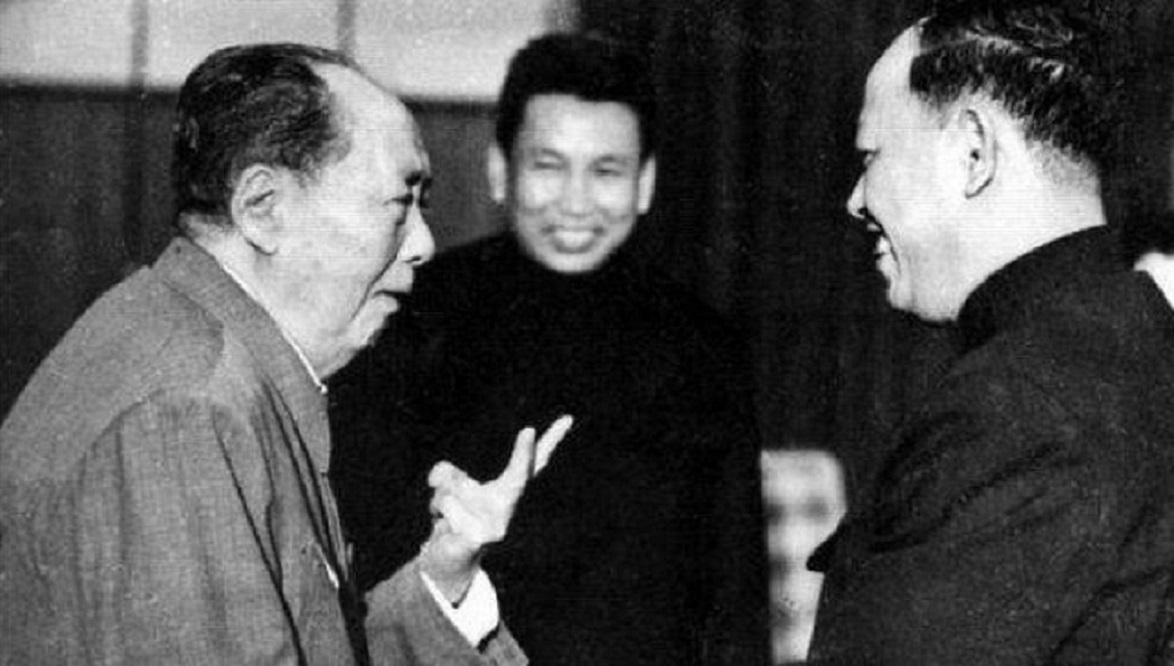
Triggered by the U.S. bombing of Cambodia and support for vicious right-wing elements in the late 1960s and early 1970s which tore apart Cambodia’s social fabric, the Cambodian genocide under the Khmer Rouge resulted in the murders of more than a million people between 1975 and 1979.
In early 1979, China launched an invasion of Vietnam to retaliate against Vietnam’s invasion of Cambodia that stopped Pol Pot’s genocide. Deng Xiaoping informed U.S. President Jimmy Carter about the attack on Vietnam beforehand. The People’s Republic of China and the United States established formal diplomatic relations on January 1, 1979.
China Supported South African Apartheid Against Marxist-Led Angola
It was mainly during Deng Xiaoping’s regime that China supported the FNLA and UNITA, Angolan nationalists opposing the Marxist government. China thus allied with U.S. The alignment also placed China on the same side as the South African apartheid regime in the Angolan civil war, despite Beijing’s official stance against apartheid.
The war began in 1975, the last year of Mao’s life, and stopped in 1991. It seemed that the nationalists were defeated and the Marxists remained in power, but the next year the war resumed off and on and did not totally end until 2002. Nearly one million Africans died.
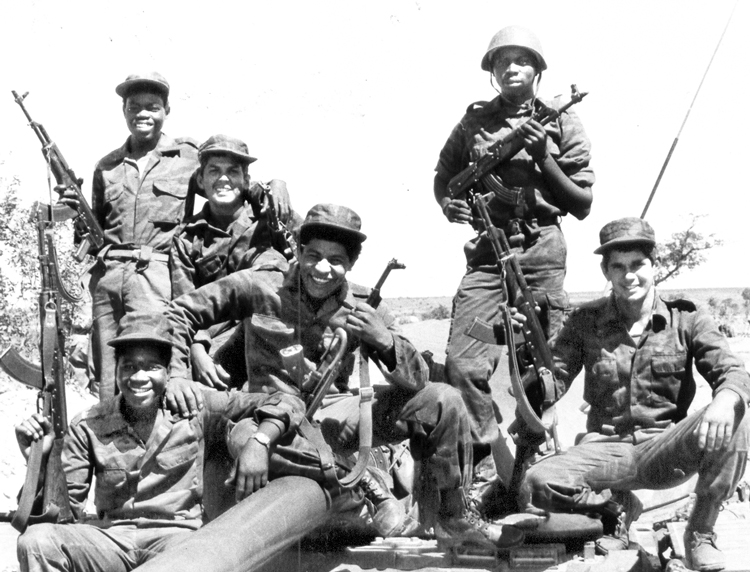
Cuba sent upwards of 400,000 troops over a 15-year period and lost nearly 10,000. Soviet Union sent about 11,000 and lost 54. North Korea sent 3,000 with an unknown number killed. South Africa sent around 7,000 and lost 2,500.
A 2012 Masters’ thesis by Morgan Hess, at City College of the City University of New York goes into great detail about hypocritical Communist China working hand-in-hand with the CIA and South Africa, thus supporting its racism as well. Maoist-reformist leader Deng Xiaoping even “encouraged U.S. intervention in the conflict.”
Hess wrote that “[t]his study examines China’s role in the Angolan Civil War through the context of U.S.-Chinese rapprochement and the global Cold War. Based on declassified conversations between U.S. and Chinese officials along with declassified intelligence cables, government documents, and research in the United Nations archives this paper illuminates how China played a crucial role in escalating the Angolan Civil War and encouraged U.S. intervention in the conflict….” [Emphasis added.]
Several Cubans I knew, including a work colleague, fought in Angola. Cuba sent 1,000 tanks, much artillery and missiles. Fidel and Cuban soldiers were the decisive influence in the defense developments that could beat the Yankees and the Apartheid Racists along with right-wing Angolan nationalists. Fidel’s “war room” kept up with where battles occurred. Without Cuba’s solidarity, Angola’s government would have fallen.
China Supports Afghanistan Mujahideen, CIA, Aiding the End of the Soviet Union
China even backed the U.S., the Mujahideen and Saudi Arabia in the 1979-89 civil war in Afghanistan. The cost is valued at $6-12 billion. Chinese aid exceeded $400 million. The Soviet Union was so adversely affected, in loss of lives and economy, that it provoked the end of the Soviet Union. According to Wikipedia:
“During the Sino-Soviet split, strained relations between China and the USSR resulted in bloody border clashes and mutual backing for the opponent’s enemies. China and Afghanistan had neutral relations with each other during the King’s rule. When the pro-Soviet Afghan Communists seized power in Afghanistan, in 1978, relations between China and the Afghan communists quickly turned hostile. The Afghan pro-Soviet communists supported China’s then-enemy Vietnam and China for supporting Afghan anti-communist militants. China responded to the Soviet war in Afghanistan by supporting the Mujahideen and ramping up their military presence near Afghanistan in Xinjiang. China acquired military equipment from America to defend itself from Soviet attack.”
Today, Mao’s political offspring Xi Jinping sees himself as another Mao, yet he has turned his master’s disdain for cooperating with Western imperialists on its head. Regardless of where you are ideologically on the left of the Establishment, be wary of accepting all that comes from any power that profits from war-making. Cuba never profited from its defense of Angola.
See previous article in the series here. Coming next: China promotes alienation despite its path to socialism
CovertAction Magazine is made possible by subscriptions, orders and donations from readers like you.
Blow the Whistle on U.S. Imperialism
Click the whistle and donate
When you donate to CovertAction Magazine, you are supporting investigative journalism. Your contributions go directly to supporting the development, production, editing, and dissemination of the Magazine.
CovertAction Magazine does not receive corporate or government sponsorship. Yet, we hold a steadfast commitment to providing compensation for writers, editorial and technical support. Your support helps facilitate this compensation as well as increase the caliber of this work.
Please make a donation by clicking on the donate logo above and enter the amount and your credit or debit card information.
CovertAction Institute, Inc. (CAI) is a 501(c)(3) non-profit organization and your gift is tax-deductible for federal income purposes. CAI’s tax-exempt ID number is 87-2461683.
We sincerely thank you for your support.
Disclaimer: The contents of this article are the sole responsibility of the author(s). CovertAction Institute, Inc. (CAI), including its Board of Directors (BD), Editorial Board (EB), Advisory Board (AB), staff, volunteers and its projects (including CovertAction Magazine) are not responsible for any inaccurate or incorrect statement in this article. This article also does not necessarily represent the views the BD, the EB, the AB, staff, volunteers, or any members of its projects.
Differing viewpoints: CAM publishes articles with differing viewpoints in an effort to nurture vibrant debate and thoughtful critical analysis. Feel free to comment on the articles in the comment section and/or send your letters to the Editors, which we will publish in the Letters column.
Copyrighted Material: This web site may contain copyrighted material the use of which has not always been specifically authorized by the copyright owner. As a not-for-profit charitable organization incorporated in the State of New York, we are making such material available in an effort to advance the understanding of humanity’s problems and hopefully to help find solutions for those problems. We believe this constitutes a ‘fair use’ of any such copyrighted material as provided for in section 107 of the US Copyright Law. You can read more about ‘fair use’ and US Copyright Law at the Legal Information Institute of Cornell Law School.
Republishing: CovertAction Magazine (CAM) grants permission to cross-post CAM articles on not-for-profit community internet sites as long as the source is acknowledged together with a hyperlink to the original CovertAction Magazine article. Also, kindly let us know at info@CovertActionMagazine.com. For publication of CAM articles in print or other forms including commercial internet sites, contact: info@CovertActionMagazine.com.
By using this site, you agree to these terms above.
About the Author
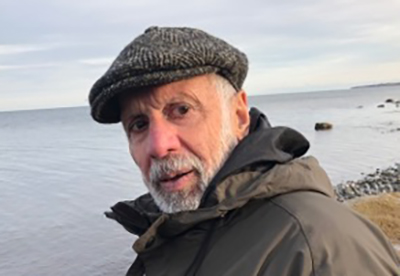
Ron Ridenour is a U.S.-born author and journalist, anti-war and civil rights activist since 1961. After joining the U.S. Air Force at 17, he saw the inner workings of U.S. imperialism first hand and resigned. In the 1980s and 1990’s he worked with the Nicaraguan government and on Cuban national media.
He now lives in Denmark and, in addition to writing a dozen books, has served as a special correspondent and freelance investigative journalist for many publications in the U.S. and several Latin American and European countries—among them: The Morning Star, New Statesman, The Guardian (U.S. and England), Playboy, Liberation News Service, Pacific News Service, Coast Magazine, Qui, Skeptic, Seven Days, and Pacifica Radio.
CAM co-founder Philip Agee wrote commentaries to two of his dozen books: Yankee Sandinistas: Interviews with North Americans Living and Working in the New Nicaragua, and Backfire: CIA’s Biggest Burn. See also: The Russian Peace Threat: Pentagon on Alert and Winding Brook Stories at Amazon and Lulu. Other work can be found at ronridenour.com.
Ron can be reached at ronrorama@gmail.com.



The United States purchases about 350 billion dollars per year of goods and services from China per year and China purchases about 170 billion dollars of goods and services from United States per year. So it is sort of like a love hate relationship. There is a lot of friction but they do not to get divorced yet. By contracts there is very like trade between Russia and the United States.
correction.. very little trade, not very like trade.
EA,
I wonder why you, and the other commentary from my first piece, only use initials. Are we getting afraid of our names?
Anyway, your point is well taken about many leaders, including my Putin, hand in hand with the genocidaire. However, I am not writing about Putin in this series, and he is under attack by the entire NATO, with 57 coalition of the willing–who wish to takeover Russia, like the big bad bully “GB” so attempting to do so for three hundred years.
Excellent article.
There are also many photos of Putin and Netanyahu shaking hands.
https://www.gettyimages.ca/photos/benjamin-netanyahu-putin
This is only page 1 or 17. There are 17 pages of pictures