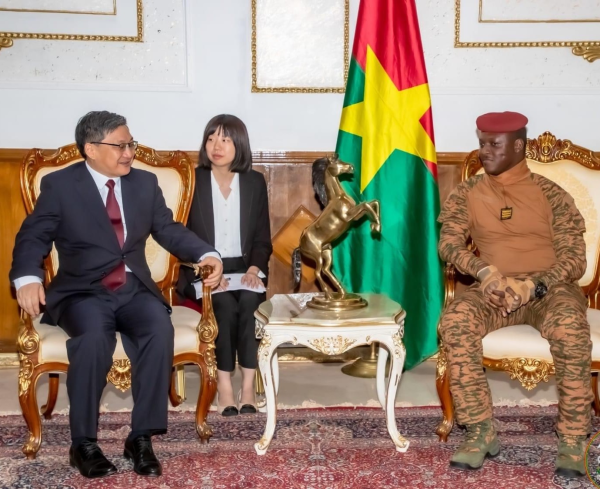
China is a modern superpower, as is the U.S., but a qualitatively different one. The U.S. uses military aggression, coups and sanctions to impose U.S. corporate interests worldwide. China is a predominantly peaceful power that respects national sovereignty, mutual development, and non-interference.
Despite opposing imperialism, too many in the Western left recycle Western anti-China narratives that liken Chinese conduct to Western imperial conduct, as in Sri Lanka, Congo and Occupied West Bank. Some even criticize China for lack of aid to Cuba.
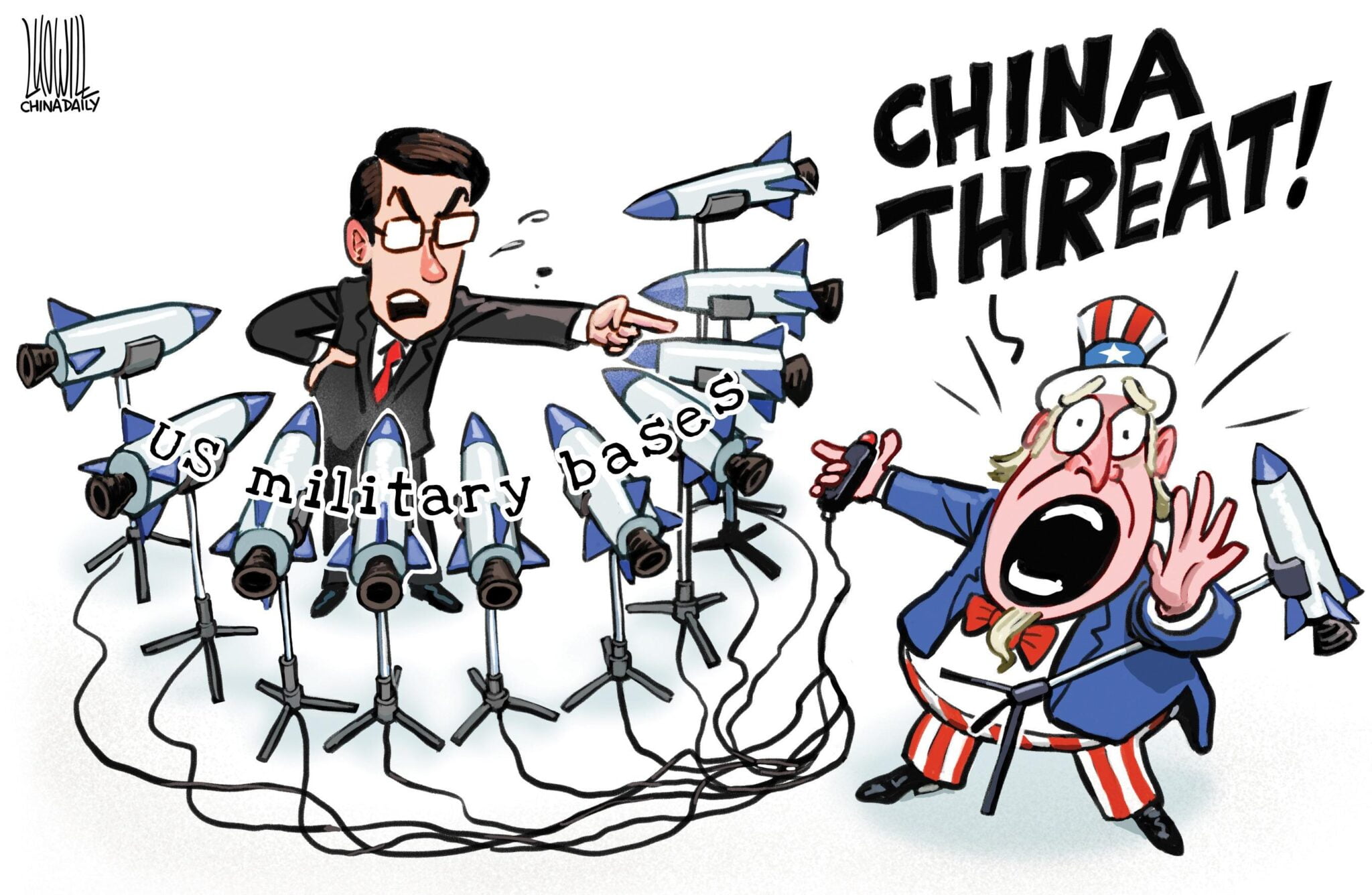
The U.S. empire has at least 750 military bases in 80 countries. China has just one, in Djibouti—part of a UN mission against piracy. The U.S. has continued wars against other countries on a non-stop basis, while China has invaded no country and has started no wars in close to half a century.
The U.S. instigated more than 25 coups and coup attempts in Latin America just between 2000 and 2020. China has sponsored no coup attempts on any government.
The U.S. imposes blockades and “sanctions” warfare on at least 39 nations. China imposes no sanctions on anyone. The U.S. regularly launches drone attacks on the people of other countries. China has launched no drone attacks on anyone. China is no imperial superpower, but a peaceful one.
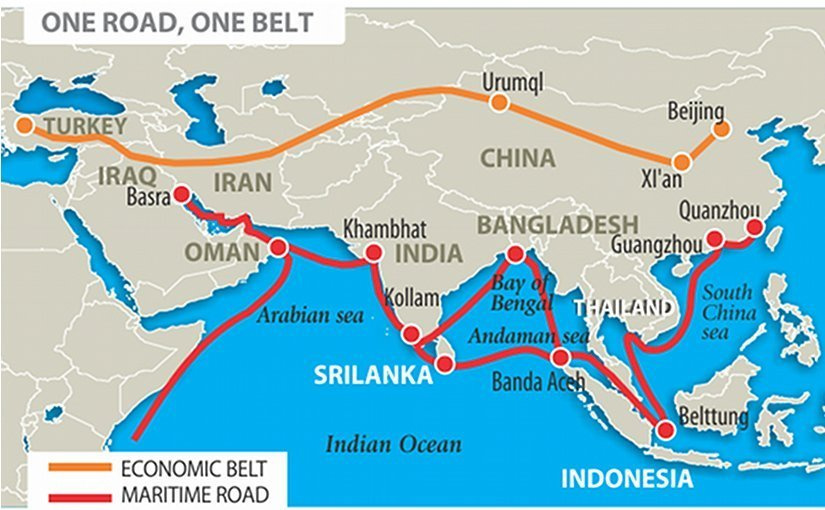
China is the outstanding example of a Third World country developing into a superpower despite Western centuries-long efforts to torpedo its progress. China engages in “win-win” economic relations with other nations.
Its loans and investments are carried out on the basis of equality, consensus and joint benefit, unlike the predatory behavior of the IMF and Western lending institutions. China is helping other countries of the Global South break out of the underdevelopment that colonialism and imperialism have imposed on their countries for 500 years.
At present, 150 countries have chosen to participate in China’s economic program called the Belt and Road Initiative.
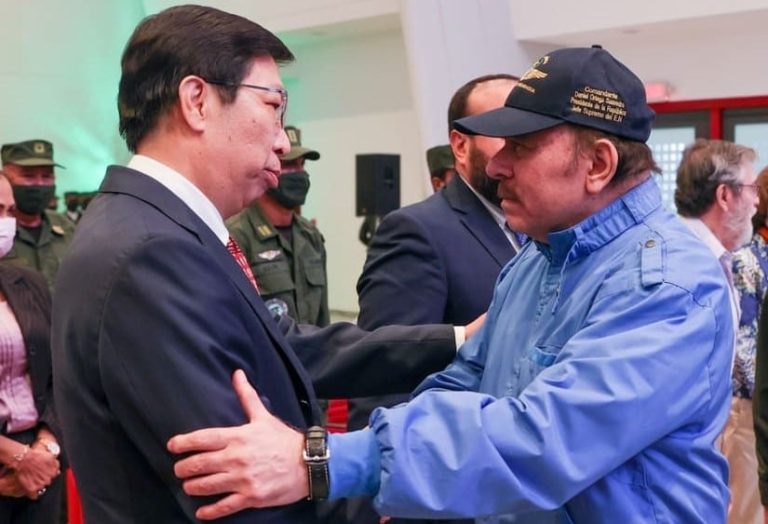
Nicaraguan President Daniel Ortega explained why: “The People’s Republic of China has brought progress, benefits, development to peoples who were colonized, and later became independent, but who were then subjugated under the boot of the interests of the powers that had colonized them, leaving those peoples in poverty, with people in misery, people going hungry, people in illiteracy, with infant mortality, in Africa, in Asia. And the People’s Republic of China has been developing a policy bringing benefits to developing countries, without setting any conditions…The powers that have been colonialists and neo-colonialists, like the U.S., like Europe…have not stopped being colonialists. They still are neo-colonialists. They have not stopped being criminals. They still are criminals. They still are killers.”
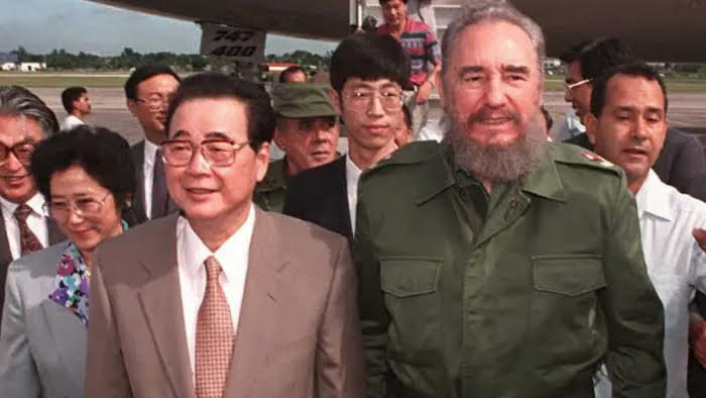
China’s role in helping other countries to develop has been noted by several anti-imperialist leaders. Fidel Castro rejected the notion that China was an imperial power: “China has objectively become the most promising hope and the best example for all Third World countries. I do not hesitate to say that it is already the main engine of the world economy…The role that China has been playing in the United Nations, including the Security Council, is an important element of balance, progress and safeguard of world peace and stability.” Of the Chinese leader he said, “Xi Jinping is one of the strongest and most capable revolutionary leaders I have met in my life.”
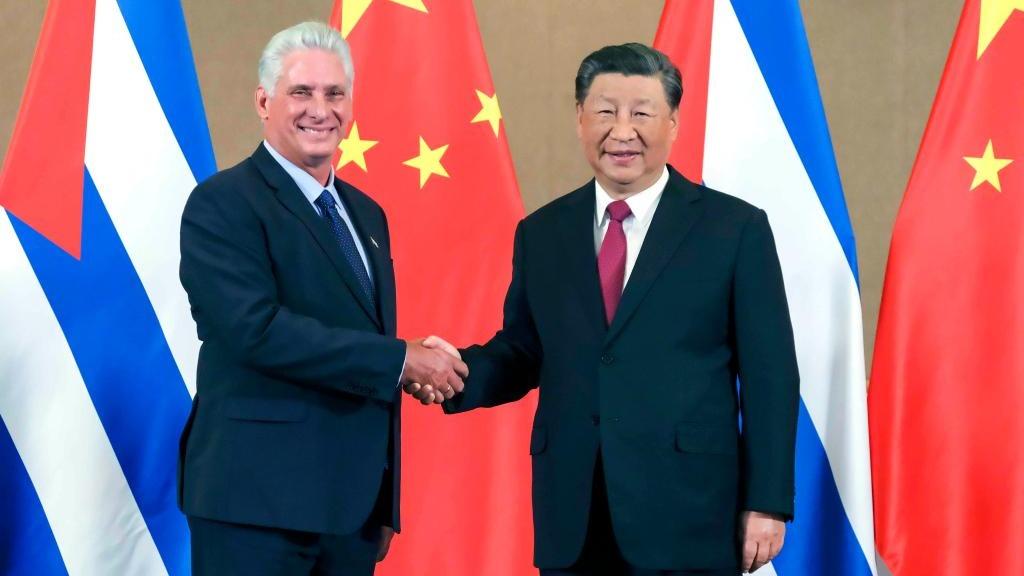
Current Cuban President Miguel Díaz-Canel has also had high praise for Xi Jinping.
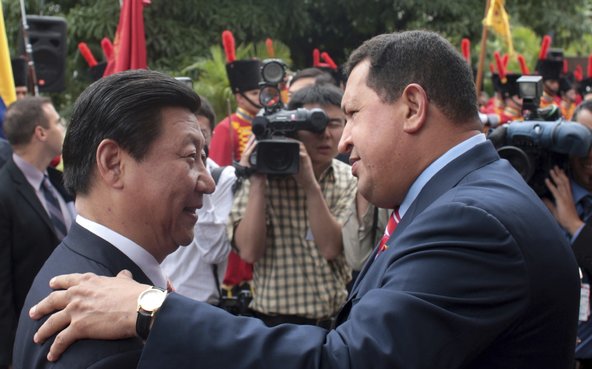
Likewise, Hugo Chávez said, “one of the greatest events of the 20th century was the Chinese Revolution.” Chavez considered that an alliance with China constituted a bulwark against imperialism — a “Great Wall against American hegemonism…China is large but it’s not an empire. China doesn’t trample on anyone, it hasn’t invaded anyone, it doesn’t go around dropping bombs on anyone.”
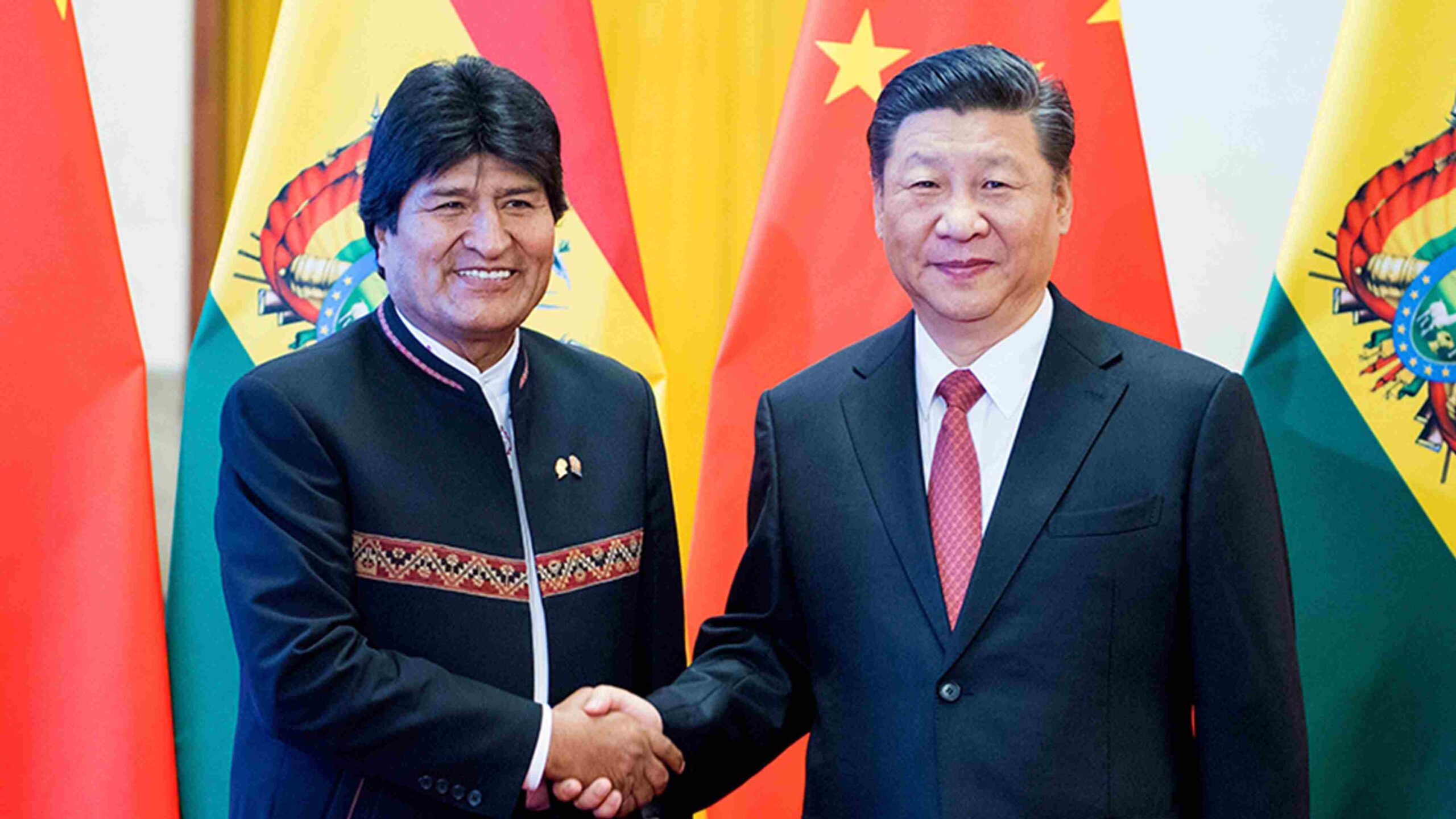
Bolivia President Luis Arce said: “We have built bridges of trust between the two countries and maintain a very positive bilateral relationship.” Evo Morales, the former president, said Bolivia and China “maintain a relationship characterized by wide-ranging and diverse cooperation and reciprocity.”
China “works in a joined-up way with other countries and benefits the peoples of the world; the opposite to what was imposed on us for decades by the U.S., where predatory, individualistic and competitive capitalism looted our people’s resources for the benefit of transnational corporations.” “China develops, and helps, invests, without any conditions, just to support our development. China is always ready to cooperate unconditionally.”
Venezuelan President Nícolas Maduro declared: “Between China and Venezuela there is a model relationship, a model of what should be the relationship between a superpower like China, the great superpower of the 21st century, and an emerging, heroic, revolutionary and socialist country like Venezuela…China has inaugurated a new era of the emergence of non-colonialist, non-imperialist, non-hegemonic superpowers.”
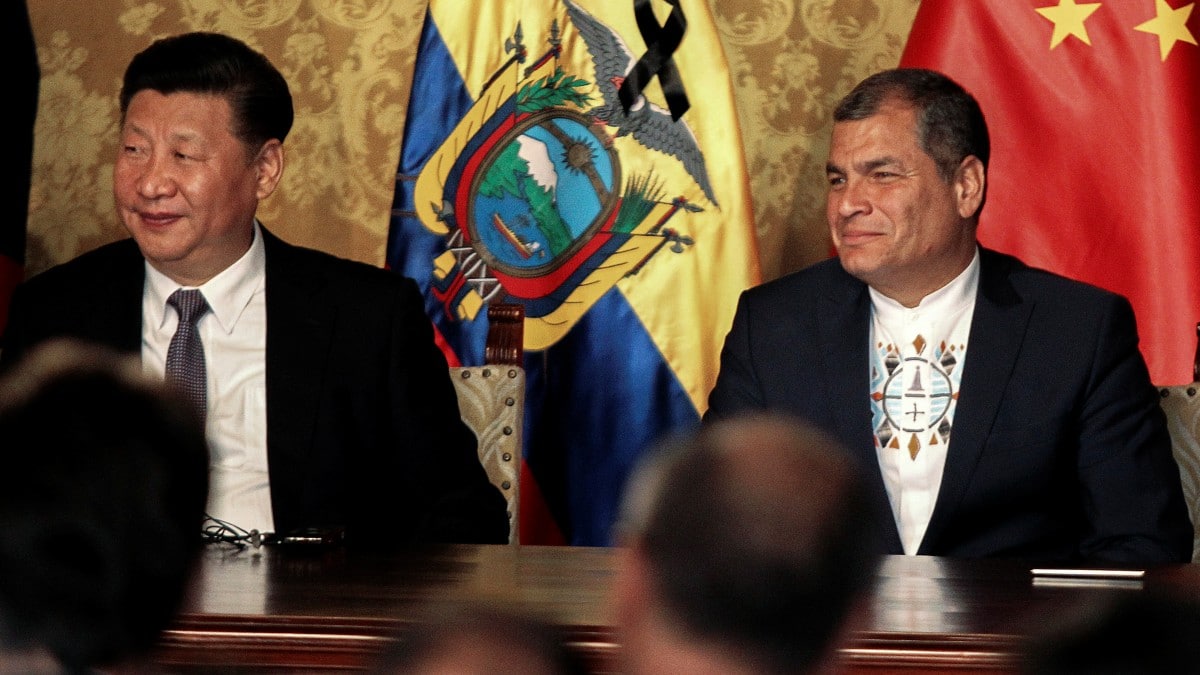
Former Ecuador President Rafael Correa spoke highly of Chinese aid to the Citizens’ Revolution. China’s assistance is “an example for Latin America and for the rest of the world.”
Burkina Faso revolutionary President Ibrahim Traoré said Chinese aid was a “testament to a mutually beneficial partnership.”
Even President Prabowo Subianto of Indonesia recently said at the ASEAN Summit: “China has consistently defended the interests of developing countries. They consistently oppose oppression, oppose imperialism, oppose colonialism, oppose apartheid; the People’s Republic of China defends liberation struggles in countries that are still oppressed by imperialism and colonialism.”
Recent Western Left Anti-China Stories
Despite the testimonies of these anti-imperialist Third World leaders, many progressives here are still swayed by the West’s anti-China propaganda. Some recent cases stand out: China in Sri Lanka; the Democratic Republic of Congo; Palestinian lands occupied by Israel; and China-Cuba relations.
Sri Lanka
The China debt-trap myth arose from Sri Lanka’s Port Hambantota, that China lent money to the country to build the port, knowing Sri Lanka could not make it viable. This led Sri Lanka to default on the loans, and Beijing demanded the port as collateral. Chatham House and The Atlantic, both organs of the ruling elite, debunked this. First, the Hambantota Port project was not proposed by China, but by Sri Lanka. Second, Sri Lanka’s debt crisis resulted not from Chinese lending, but from Western loans. Third, there was no debt-for-asset swap. Rather, China leased the port for $1.1 billion, money Sri Lanka then used to pay down debts to the West. Chatham House concludes, “Sri Lanka’s debt trap was thus primarily created as a result of domestic policy decisions and was facilitated by Western lending and monetary policy, and not by the policies of the Chinese government.”
China in Africa
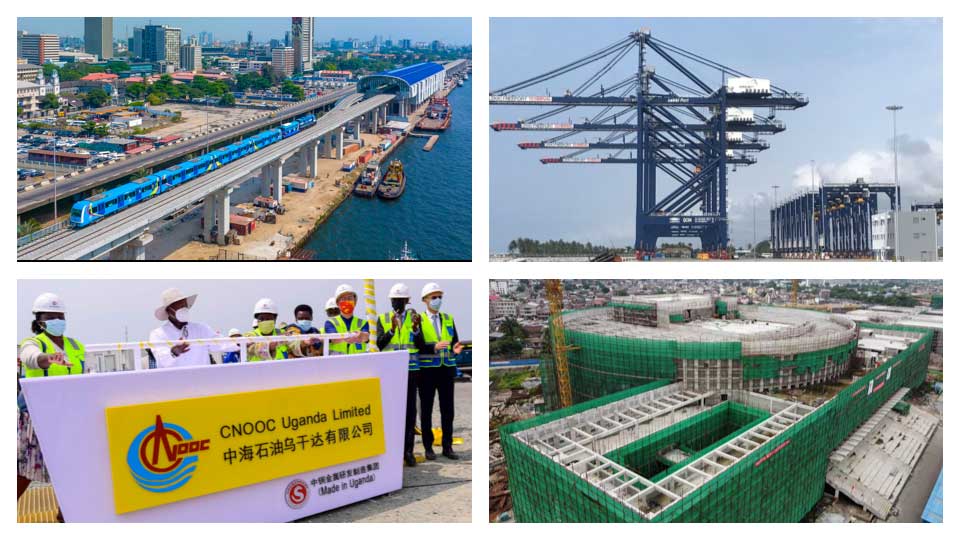
Former Liberia Minister of Public Works W. Gyude Moore noted that, under European colonialism, “there has never been a continental-scale infrastructure building program for Africa’s railways, roads, ports, water filtration plants and power stations…China has built more infrastructure in Africa in two decades than the West has in centuries.”
At the most recent Forum on China-Africa Cooperation in 2024, 53 of the 54 African countries chose to attend. China pledged $50 billion over the next three years, in addition to the $40 billion already invested.
Dee Knight took up the issue of China’s exploitation in the Democratic Republic of Congo propagandized in the book Cobalt Red.
He drew on Isabelle Minnon’s report, “Industrial Turn-Around in Congo?” She wrote that “China has responded to the DRC’s need to have partners who invest in industrialization.” The West had bled Congo dry through debts that prevented its development. China brought large-scale investment on a new basis, combining financing for industrial mining and public infrastructure—roads, railroads, dams, health and education facilities.
The result, Minion said, was: “After decades of almost non-existent industrial production, the country became and remains the world’s leading producer of cobalt and, by 2023, became the world’s third largest producer of copper.” This “puts an end to the monopoly of certain Western countries and their large companies,” which just plundered the Congo. Furthermore, China cancelled $28 million in already interest-free loans, and gave $17 million in support to the DRC.
During the Covid pandemic, China announced that it also forgave 23 interest-free loans for 17 African nations. This is in addition to China’s cancellation of more than $3.4 billion in debt and restructured $15 billion of debt in Africa between 2000 and 2019.
Chinese Investments in Israel
China trades with Israel, as with all other countries, to establish mutually beneficial economic relations, to counter the U.S. goal of isolating China. China’s trade with Israel is qualitatively different from that of the U.S., Britain, France, Germany and others, since China does not export weaponry to Israel used to slaughter Palestinians and peoples in surrounding countries.
Some, such as Razan Shawamreh in Middle East Eye, condemn China for its alleged economic relations with Israeli businesses in the occupied West Bank. Undermining her credibility, she had previously condemned China in 2023 for blocking a UN resolution against Assad’s Syria for using chemical weapons on its people—already shown to be unsubstantiated if not fabricated back in 2013. Kim Peterson also criticized China’s alleged involvement in Israeli-occupied West Bank Palestine, but qualified it, “If Chinese firms are confirmed to be operating illegally in the occupied territories of Palestine,” questioning the accuracy of the claim.
China worked hard to unite the divided Palestinian resistance with the recent Beijing Declaration. There were no reports of Palestinian criticism of Chinese businesses in the occupied territories. China has repeatedly upheld the Palestinian right to resist occupation, and never condemned the October 7, 2023, Hamas breakout attack. Moreover, China voted in favor of the 2024 UN General Assembly resolution calling for no trade or investments with Israeli operations in the Occupied Territories.
China and Cuba
Recently, some Western leftists have criticized China for lack of support for Cuba, suffering under a worsening U.S. blockade. However, China is working to build 55 solar installations there this year, covering Cuba’s daytime shortfall, and another 37 by 2028, for a total of 2,000 megawatts. This aid would meet nearly two-thirds of Cuba’s present-day demand.
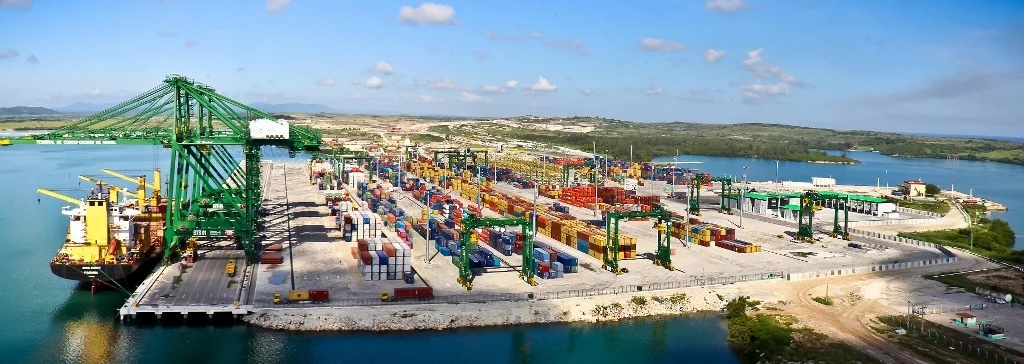
China has long been a partner of Cuba in terms of trade and investment, participating in the Mariel Special Development Zone, and in projects in the production of medicines, biotechnology and agriculture.
Many on the Western left are inexplicably not friendly toward China, given that the U.S. rulers have long called it the main threat to their imperial domination.
China—A Superpower That Supports Third World Development
To some self-described opponents of empire, China’s investments in underdeveloped countries are regarded as imperialistic. China invests in these countries both to obtain essential resources for its own industries and as self-defense against the U.S. strategy to isolate it economically and politically. That has made it impossible for the West to isolate China.
In Africa, Asia and Latin America, Chinese investments in schools, roads, railroads and other needed infrastructure are generally seen as a welcome change from the neglect and underdevelopment imposed by the imperial First World.
As Third World leaders have said, most of China’s foreign loans are not capitalist investments, but government funds that have been used to free countries from the grip of imperialism.
China counters the imperial isolation strategy by building collaborative economic and non-interference relations with all countries, even with the U.S. and its close allies. Consequently, every year China becomes more and more a world power in relation to the imperialist countries.
China’s significance for the world is being a singular example of a Third World country developing despite the West’s goal to thwart its rebirth. This is a model for other Third World countries that seek to assert their independence of the West and make their own path.
In this process, China, which just 75 years ago had an illiteracy rate of 80%, has just ended poverty for 800 million people, which no capitalist group of countries has ever accomplished. China has achieved the fastest growth in living standards of any country in the world. It achieved this without invading, massacring and colonizing, or looting other countries, but peacefully, without threatening any other people, and in cooperation with them.
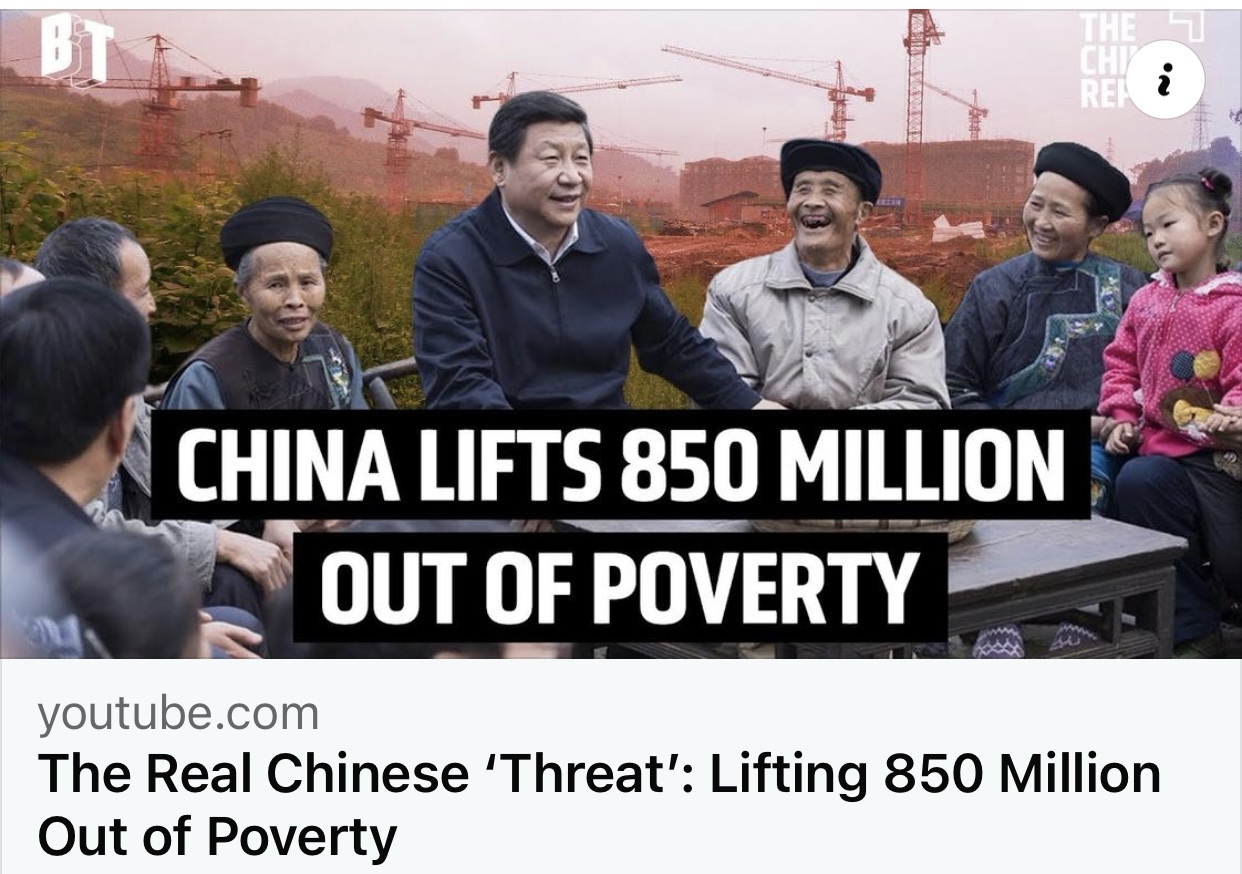
As Daniel Ortega said, “The self-same ideologues of imperialism state that what worries them is that they see the People’s Republic of China bringing benefits to these Peoples and they feel that there they are losing the power to keep these peoples enslaved…They are upset, outraged, because the People’s Republic of China is making available billions in Africa, in Asia, in Latin America. These are investments for the development of our peoples. They see that as bad for themselves, but why can’t they do the same? Why have they never brought investment with the same conditions that the People’s Republic of China is making available?”
The Third World and all opponents of empire are fortunate China exists as a collaborator, in contrast to the U.S. rulers’ despoiling of other countries’ resources, overseen by its 243,000 troops stationed overseas.

CovertAction Magazine is made possible by subscriptions, orders and donations from readers like you.
Blow the Whistle on U.S. Imperialism

Click the whistle and donate
When you donate to CovertAction Magazine, you are supporting investigative journalism. Your contributions go directly to supporting the development, production, editing, and dissemination of the Magazine.
CovertAction Magazine does not receive corporate or government sponsorship. Yet, we hold a steadfast commitment to providing compensation for writers, editorial and technical support. Your support helps facilitate this compensation as well as increase the caliber of this work.
Please make a donation by clicking on the donate logo above and enter the amount and your credit or debit card information.
CovertAction Institute, Inc. (CAI) is a 501(c)(3) non-profit organization and your gift is tax-deductible for federal income purposes. CAI’s tax-exempt ID number is 87-2461683.
We sincerely thank you for your support.
Disclaimer: The contents of this article are the sole responsibility of the author(s). CovertAction Institute, Inc. (CAI), including its Board of Directors (BD), Editorial Board (EB), Advisory Board (AB), staff, volunteers and its projects (including CovertAction Magazine) are not responsible for any inaccurate or incorrect statement in this article. This article also does not necessarily represent the views the BD, the EB, the AB, staff, volunteers, or any members of its projects.
Differing viewpoints: CAM publishes articles with differing viewpoints in an effort to nurture vibrant debate and thoughtful critical analysis. Feel free to comment on the articles in the comment section and/or send your letters to the Editors, which we will publish in the Letters column.
Copyrighted Material: This web site may contain copyrighted material the use of which has not always been specifically authorized by the copyright owner. As a not-for-profit charitable organization incorporated in the State of New York, we are making such material available in an effort to advance the understanding of humanity’s problems and hopefully to help find solutions for those problems. We believe this constitutes a ‘fair use’ of any such copyrighted material as provided for in section 107 of the US Copyright Law. You can read more about ‘fair use’ and US Copyright Law at the Legal Information Institute of Cornell Law School.
Republishing: CovertAction Magazine (CAM) grants permission to cross-post CAM articles on not-for-profit community internet sites as long as the source is acknowledged together with a hyperlink to the original CovertAction Magazine article. Also, kindly let us know at info@CovertActionMagazine.com. For publication of CAM articles in print or other forms including commercial internet sites, contact: info@CovertActionMagazine.com.
By using this site, you agree to these terms above.
About the Author

Stansfield Smith is a member of Chicago ALBA Solidarity, formerly the Chicago Committee to Free the Cuban 5.
He has published in Counterpunch, Dissident Voice, Council on Hemispheric Affairs, Monthly Review online, and other websites.
Smith is a long time anti-war activist, and opposed U.S. interference over the years in Latin America.
He produces AFGJ’s Venezuela & ALBA Weekly News.
Stan’s website is ChicagoALBASolidarity.org and he can be reached at Stansfieldsmith100@gmail.com.



In this article it says that China did not condemn the Hamas brutal massacre on October 7, 2023. This video shows that this is not true.
https://www.youtube.com/watch?v=jcTJoqU_k8U