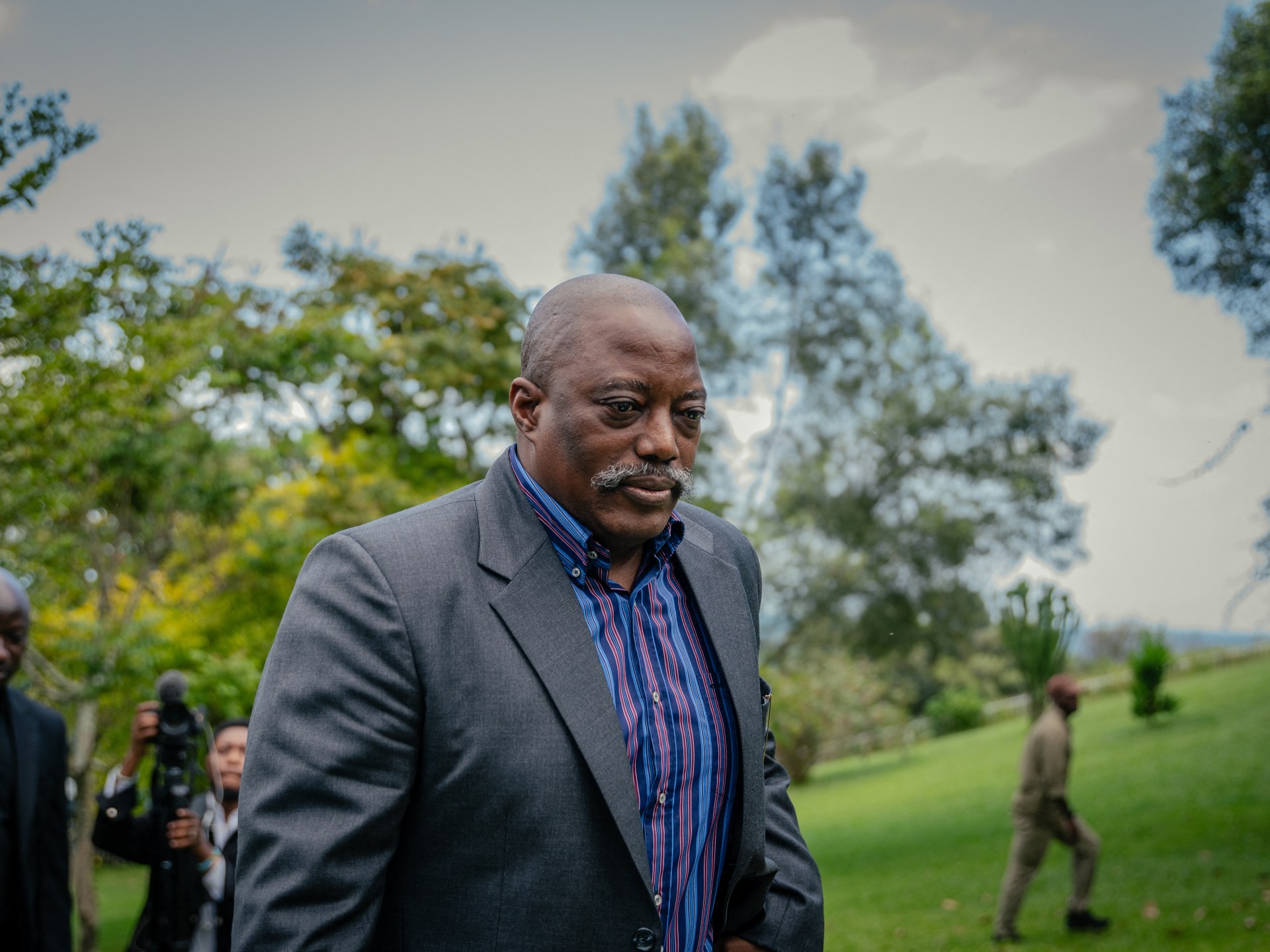
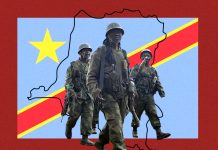
In mid-October, former President Joseph Kabila (2001-2019) of the Democratic Republic of Congo (DRC) announced the launch of a new political coalition consisting of the Rwandan M23 rebel group, which controls the eastern DRC city of Goma where Kabila now resides.
A DRC government spokesman said that Kabila—who was sentenced to death in absentia last year for “complicity” with M23—had decided to “formalize his widespread attack against the Republic,” adding that “the choice to take up arms means killing Congolese in order to try to conquer territories.”[1]
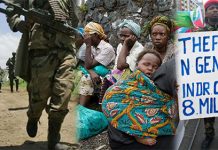
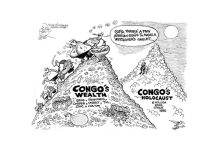
For years, M23 has terrorized the people of eastern Congo while helping to siphon off the DRC’s rich mineral wealth to Rwanda.
In 2024, a UN report determined that the M23 rebels had illicitly exported 150 tons of coltan to Rwanda that year. Amnesty International reported that M23 fighters forced Congolese miners to dig minerals and work underground for more than a week at a time in coltan mines near Rubaya in the DRC’s North Kivu Province, and Lomera, a gold-mining site in South Kivu Province.[2]
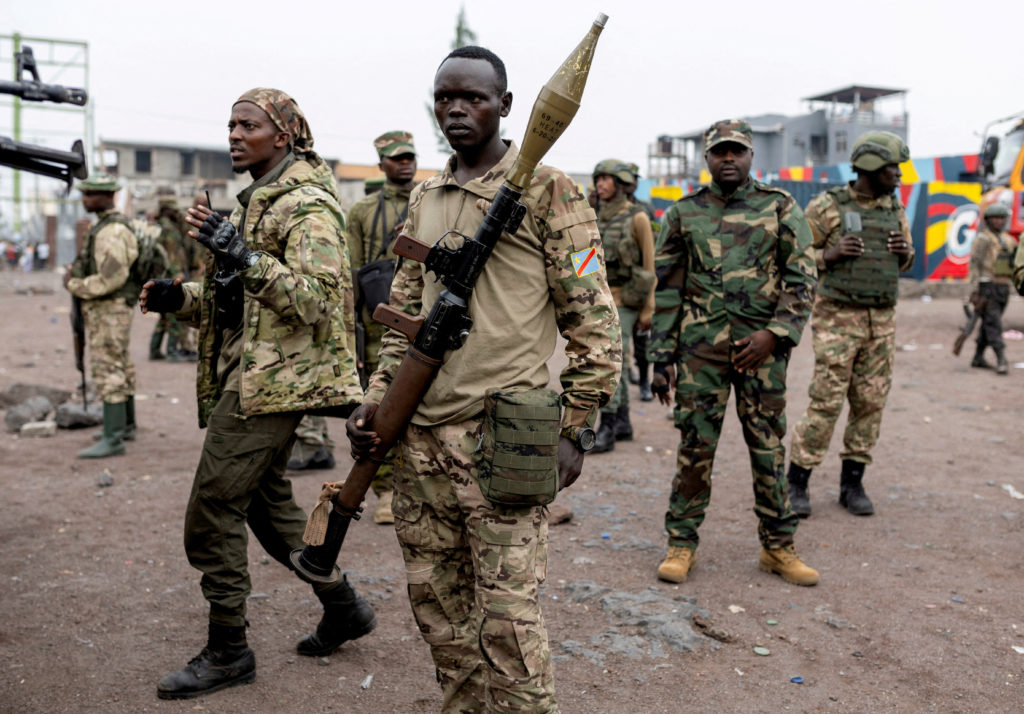
Kabila’s alliance with M23 confirms allegations that he has always been a Rwandan quisling—something that U.S. journalists and academics have long overlooked.
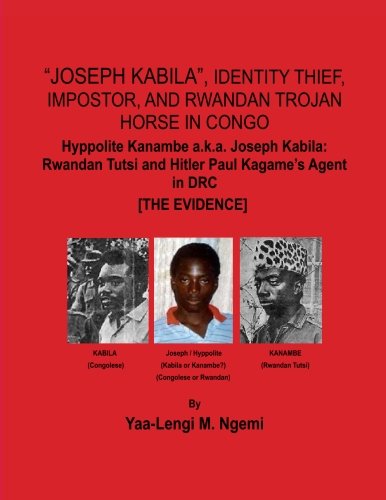
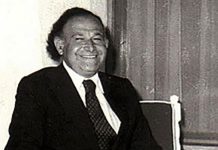
In 2017, Congolese dissident Yaa-Lengi M. Ngemi published an important book, “Joseph Kabila”, Identity Thief, Impostor, and Rwandan Trojan Horse in Congo, which provides strong evidence to show that Kabila’s real name is Hyppolite Kanambe and that he is of Rwandan origin.[3]
Mr. Kanambe claims to be the son of Laurent Kabila, Congo’s head of state from 1997 to 2001, who fought alongside Ché Guevara in the 1960s as a leader of the Simba rebellion against dictator Joseph Mobutu.
However, Mr. Ngemi shows that Kabila’s actual father, Adrien Christophe Kanambe, was a Rwandan Tutsi exiled in Tanzania after the early 1960s Hutu revolution, who was killed by Laurent Kabila after he had been accused of disloyalty to his cause.
Hyppolite was then adopted by Kabila who married his widowed mother but could not actually take care of him because he had too many other wives and children.
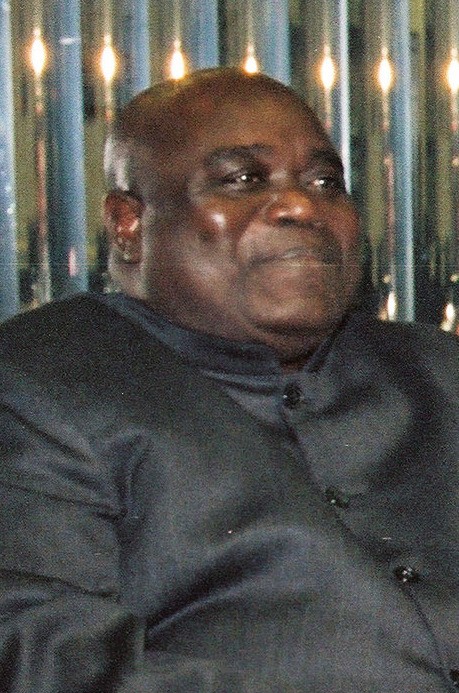
Thus, Kanambe never received much formal education and made a living as a taxi driver and bartender.
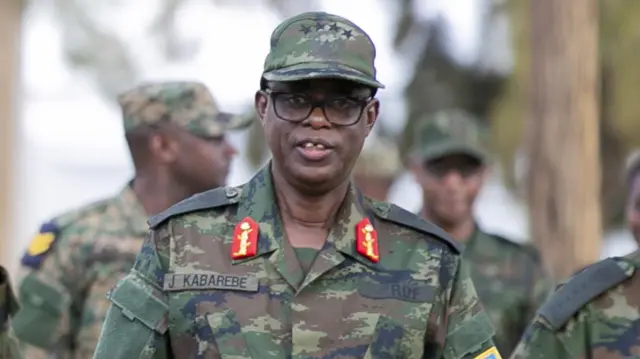
He was at a certain moment taken under the wing of his uncle, Chief of Staff of the Rwandan Patriotic Front (RPF), James Kabarebe, and was then installed in power by Rwanda’s Tutsi President, Paul Kagame, after presiding over the massacre of Hutu in the late 1990s.
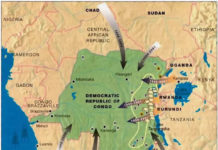
The Congolese army under Kanambe’s command integrated thousands of Rwandan and Ugandan Tutsi who committed legions of atrocities against Mai Mai fighters and others seeking the liberation of North Kivu in eastern Congo, which Rwanda has aimed to annex.
Kanambe even made a deal with Kigali to allow the Rwandan army to enter Congo and hunt Hutu militias. The “peace agreements” he signed helped advance Rwanda and Ugandan influence in North Kivu and gave legal ground for the dismantling of Hutu militias and massacre of Hutu people, who had been chased out of Rwanda into Congo, by M23 and other agents of the Rwandan Kagame regime.
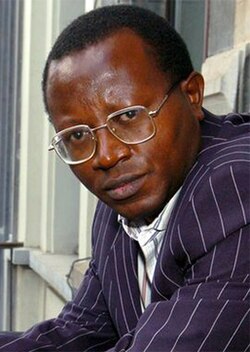
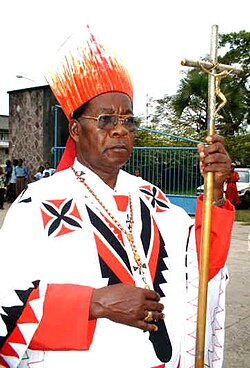
Kanambe’s security forces meanwhile detained and tortured trade union organizers and murdered human rights activists like Floribert Chebeya, president of the NGO Voice for the Voiceless, priests such as Cardinal Frederic Etsou, the Pope’s representative in the DRC, and members of Laurent Kabila’s family who threatened to expose his dark secret.
The latter included Laurent’s outspoken younger sister Esperance who was shot to death by her bodyguard who never did any prison time.
According to Ngemi, at least 45 assassinations were carried out by Dr. Jean-Pierre Tumba-Longo, who used specialized poisons to kill victims like General Félix Mbuza Mabe, who had kicked Rwandan troops out of Kivu and threatened to pursue them back into Rwanda.
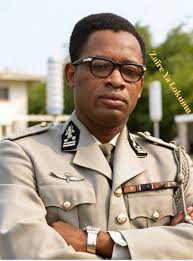
Kanambe came to power after the murder of Laurent Kabila in January 2001 by one of his bodyguards. Ngemi suggests that Paul Kagame ordered the killing. Laurent had been installed by Rwanda, Uganda, and the U.S. and UK following the overthrow of Joseph Mobutu in 1997.
However, the U.S. and UK sponsored a second invasion of Rwanda and backed Kanambe when Laurent “sent a worrying signal…to foreign companies eager to do business” in Congo, according to The Wall Street Journal.
This worrying signal resulted from his proposal to nationalize key industries and by drawing too close to the Chinese and granting cobalt mining concessions to Robert Mugabe’s Zimbabwean government.[4]
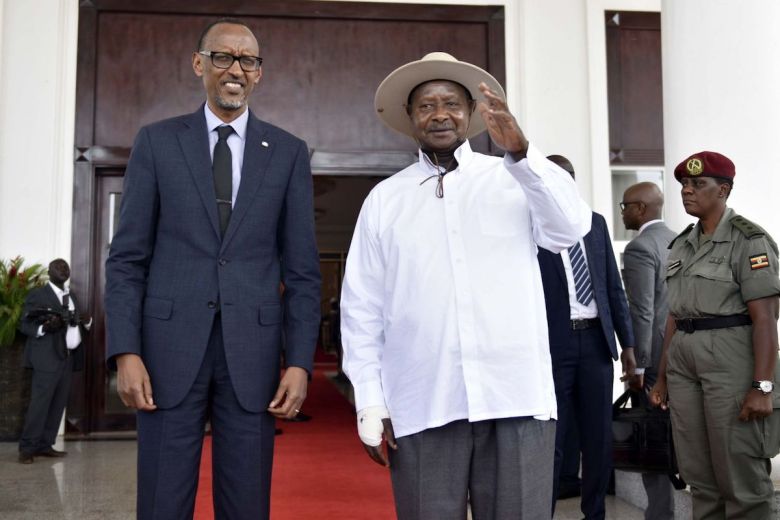
The U.S. and UK had helped orchestrate an earlier regime-change operation in Rwanda in 1994 that brought to power Kagame who was their vehicle for trying to control Central Africa along with Ugandan leader Yoweri Museveni, whom the U.S. and UK supported when Museveni ousted a socialist rival, Milton Obote, in the mid-1980s.
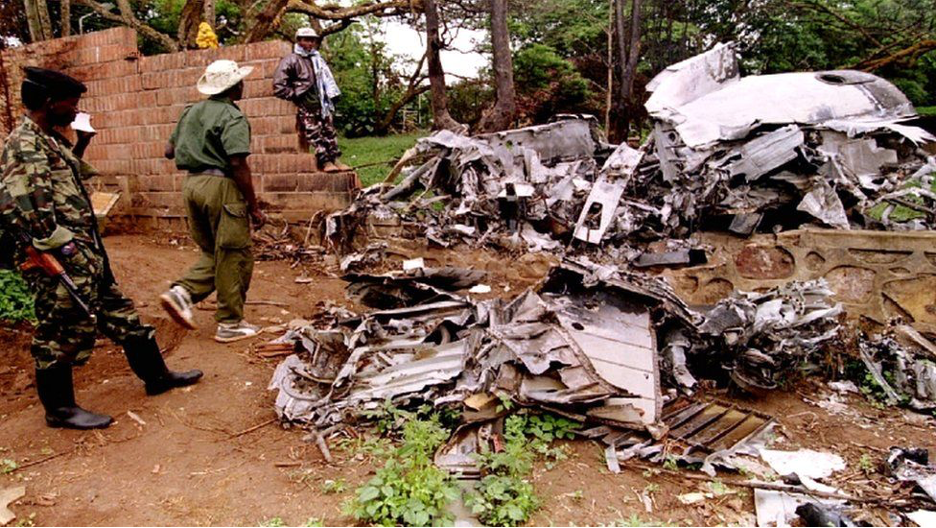
French Army Captain Paul Barril, who served as an adviser to Rwanda’s Hutu President Juvénal Habyarimana (1973-1994), alleged that the CIA transferred missiles to Kagame and the RPF that were used to shoot down Habyarimana’s aircraft in April 1994, the triggering event for the Rwandan genocide, which culminated in Kagame’s seizure of power and invasions of the DRC.[5]
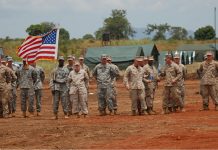
In June 1994, more than 200 American soldiers were deployed to rebuild and control Kigali’s airport and provided military training, satellite surveillance and arms to the RPF.[6] A U.S. soldier from Connecticut said: “Human rights and democracy are none of our concerns. We are concerned with making sure that Kagame’s regime is well planted and can survive.”[7]
The Pentagon and CIA subsequently provided more than $10 million in arms to Rwanda and Uganda, including through a CIA-run airline, Mountain, which helped evacuate wounded soldiers and installed a command and communications center in Kigali and in the coastal areas of Uganda to help support the Rwandan and Ugandan invasion and plunder of the DRC.
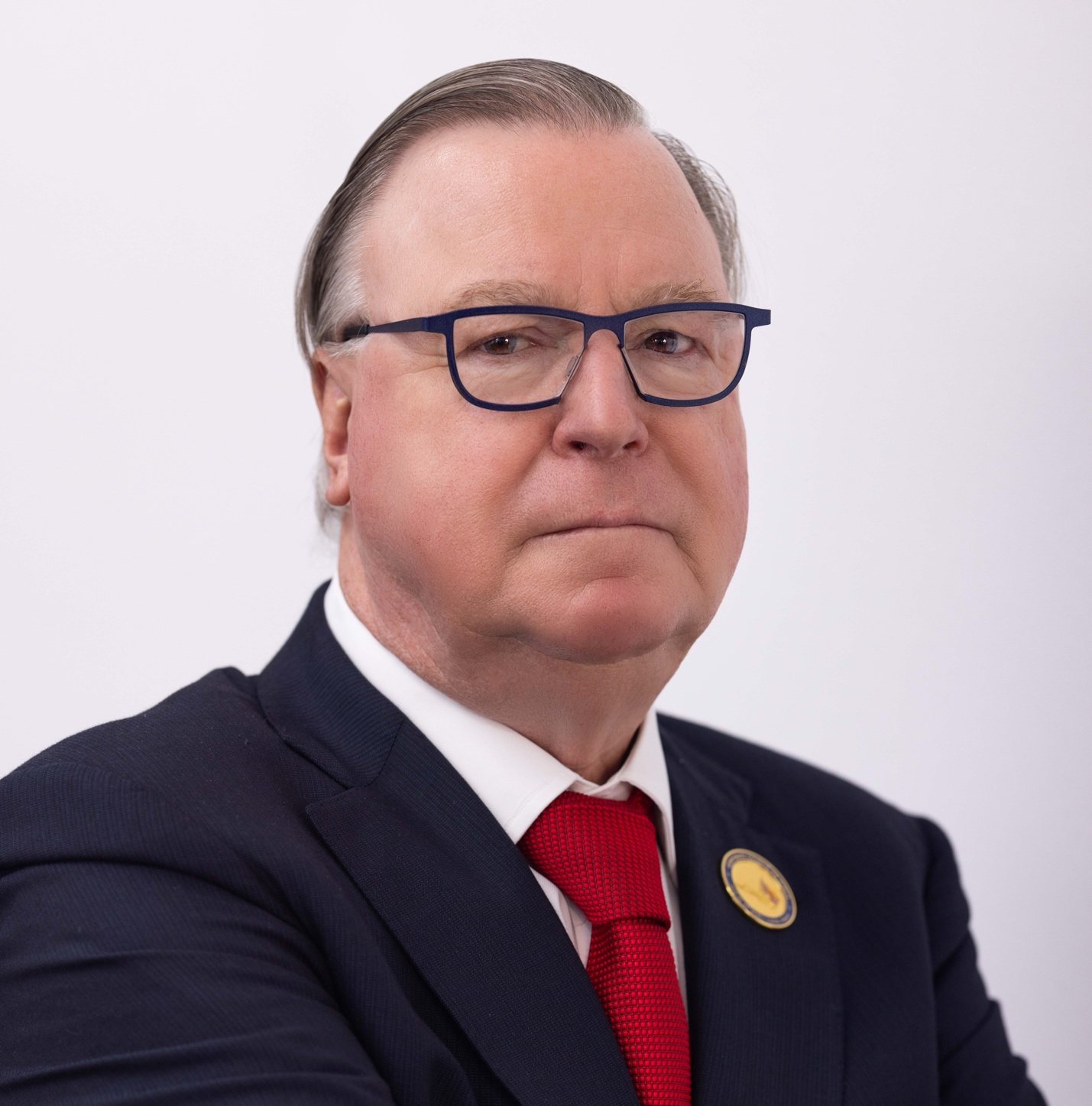
U.S. Special Forces and private contractors, such as Military Professional Resources Inc. (MPRI), provided counterinsurgency training to RPF and Ugandan fighters at a U.S. military base near Cyangugu, Rwanda, on the Congolese border, constructed partly by the politically connected U.S. firm of Kellogg Brown & Root, a subsidiary of Halliburton.[8]
U.S. covert military operations were tethered to a strategy of using Uganda and Rwanda as proxies to open up Congo’s mineral wealth to politically connected investors, like American Mineral Fields (AMF), whose CEO, Jean-Raymond Boulle, was a top Clinton donor, and Barrick Gold, a CIA-linked company which appointed President George H. W. Bush and Clinton’s chief of staff, Vernon Jordan, to its advisory board.[9]

Having a Rwandan quisling installed as leader was the culmination of a foreign policy strategy that went back to the mid-1980s when CIA Agent Roger Winter had worked to advance the militant plans of the Rwandan Tutsi elite, which had been expelled from Rwanda when the Hutu took over following Rwanda’s gaining independence from Belgium in 1962.
Winter helped establish U.S. Committee for Refugees funding for RPF propaganda tracts and the RPF’s journal, Impuruza, published from 1982 to 1994, which dehumanized the Hutu people, and organized a major conference of Tutsi exiles in Washington, D.C., in 1988, where a military solution to the Tutsi problem was decided.
In 1992, Winter put Kagame in touch with high-ranking bureaucrats in the U.S. State Department and allegedly briefed Clinton administration officials on the RPF’s military achievements when he was on the war’s front lines.
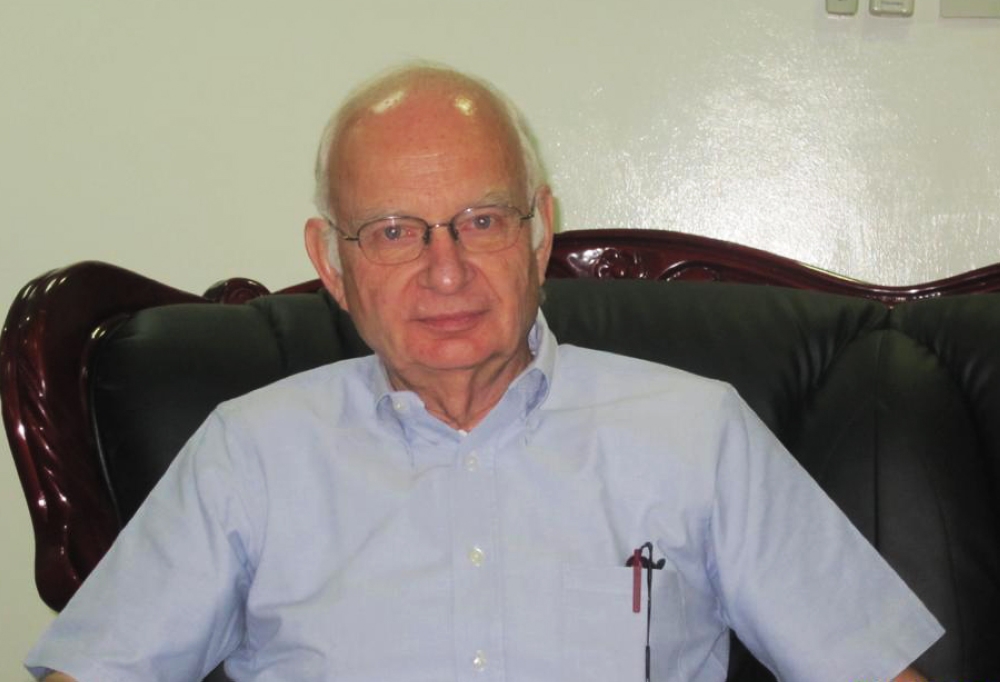
According to Bernard Lugan, a French historian and editor of the online journal L’Afrique Réelle, Winter was present at Kagame’s headquarters at Mulundi (in Rwanda) on the night of April 6, 1994, when the Habyarimana plane crash occurred. Ugandan opposition leader Remigius Kintu further stated that “Roger Winter was the chief logistics boss for [RPF] Tutsis until their victory in 1994.”[10]
21st Century Great Game
Kanambe’s first move upon assuming the presidency fittingly was to fly to the U.S. to give back mining concessions to the companies that had had them revoked by his fictitious father.
President George W. Bush hosted Kanambe in the Oval office in November 2003 and October 2007, showering his regime with hundreds of millions of dollars in foreign aid ($462 million in 2007 alone).
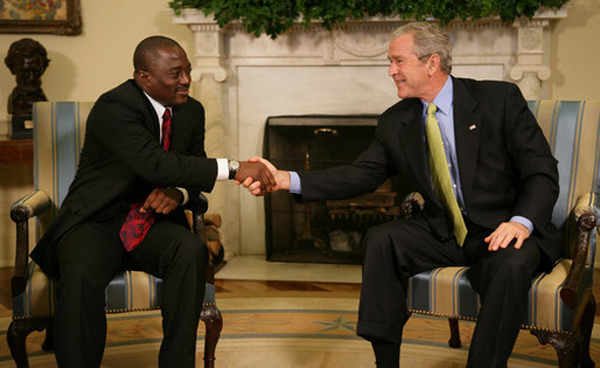
Kanambe enabled Rwandan and Ugandan proxy forces to occupy and plunder Kivu Province while selling out Congo’s riches to predatory foreign interests. Gang rapes were carried out by a battalion of the Congolese Army trained by U.S. Special Forces.
Maurice Carney, Director of the NGO Friends of the Congo, said that “Kabila [Kanambe] served as a tollgate for Western corporate interests, sell[ing] off Congo’s riches for pennies on the dollar.”
Among the beneficiaries was Herman Cohen, the former U.S. Ambassador to Rwanda and Zaire, whose consulting firm partnered with Rwandan President Paul Kagame to exploit deadly methane in deep water under Lake Kivu on the Congo-Rwanda border.
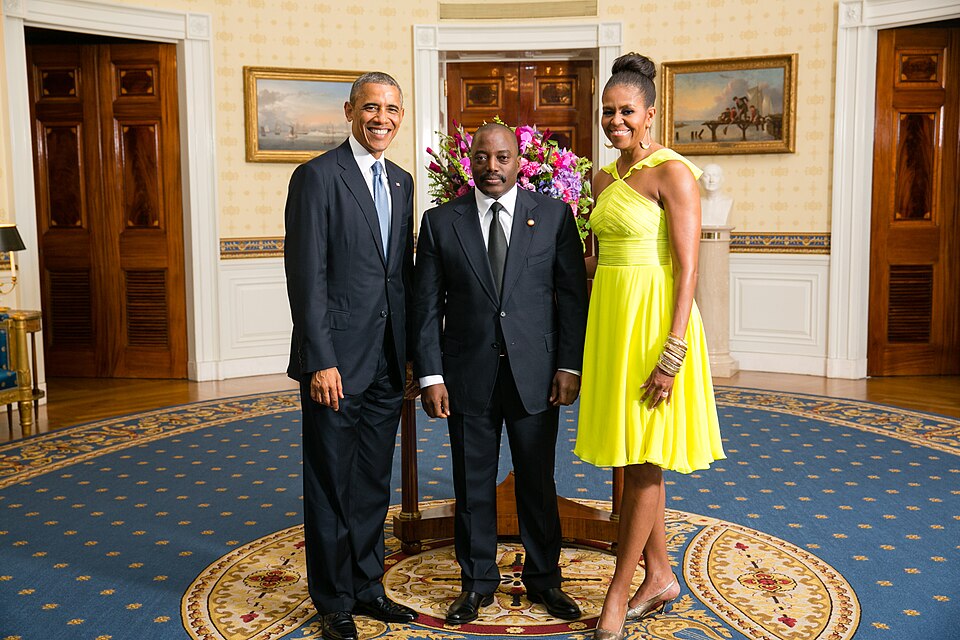
The Obama administration provided Kanambe with an estimated $193 million in security assistance over eight years, training Congolese military forces in psychological warfare and other counterinsurgency methods.[11]
In exchange, Kanambe provided the U.S. with an intelligence cell in Kisangani, which helped oversee U.S. and Israeli access to Congo’s gold, diamonds, platinum and coltan, as a report from the CIA-connected intelligence firm Stratfor acknowledged.
The Lundin Group, a Canadian mining company with ties to the Clinton Foundation, made billions in DRC copper mines as Secretary of State Hillary Clinton refused to push for key provisions of a law she had passed as a senator to regulate conflict minerals and directly intervened to restore the license of another Clinton Foundation donor, First Quantum Minerals.[12]
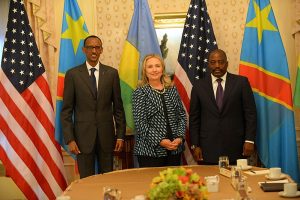
As the foreign looting proceeded, Kanambe and his family enriched themselves by building a network of businesses reaching into every corner of Congo’s economy. At one time, Kanambe controlled more than 120 permits to mine gold, diamonds, copper, cobalt and other minerals.
The wide scale of corruption was exemplified by Och-Ziff Capital Management, a U.S. hedge fund, having paid more than $100 million in bribes to DRC officials in exchange for its illegal acquisition of Kingamyambo Musonoi Tailings (KMT) copper and cobalt mine in Kolwesi. A few years later, Och-Ziff sold the mine at a $625 million profit.[13]
Kanambe is today trying to get back what he lost when he lost power in 2019 while showing his true colors as a Rwandan proxy.
Ironically, the U.S. appears to be playing a double game as Erik Prince’s Vectus Global (formerly Blackwater) has been contracted by President Felix Tshisekedi to try to stabilize the DRC and counteract the M23 with which Kanambe has joined forces.
The contract is worth hundreds of millions of dollars over a five-year period, with Prince supplying drones and mercenaries, including Israelis and Ukrainians fresh from fighting the Russians.[14]
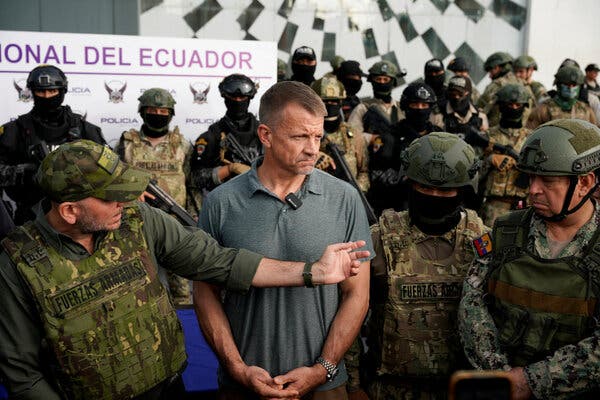
Calling for the return of colonialism in Africa, Prince is a close ally of Donald Trump, with strong connections to the CIA. In the past, CIA officials served as advisers to Blackwater, which performed services for the CIA, along with functions the CIA and Special Forces would normally do.
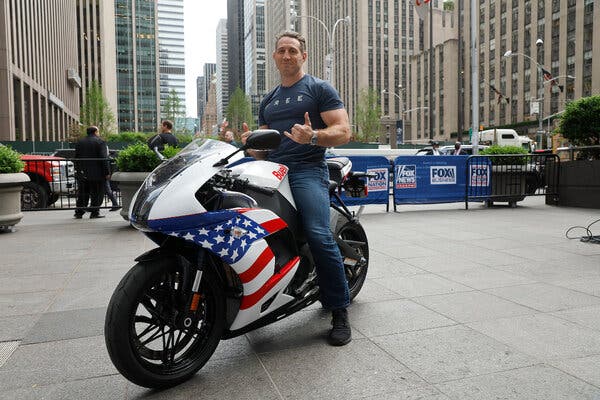
Prince’s role in the DRC gained publicity when one of his employees, Tim Kennedy, a former Green Beret who appeared frequently as a guest on Fox News, was shot several times during fighting in Congo’s eastern highlands against the M23.
The New York Times reported that “Mr. Prince’s growing influence in Congo comes as the Trump administration seeks a new toehold for American companies in the country’s lucrative mining industry, where China’s dominance over critical minerals like cobalt is a source of growing concern in Washington. Last December the United States and Congo signed an agreement granting preferential access to American mining interests in Congo, which many Congolese officials privately called a ‘peace for minerals’ deal.”[15]
The clearest indicator of U.S. objectives is the Lobito Corridor project, which links mining zones in Congo and Zambia by railway to the Atlantic port of Lobito via Angola.
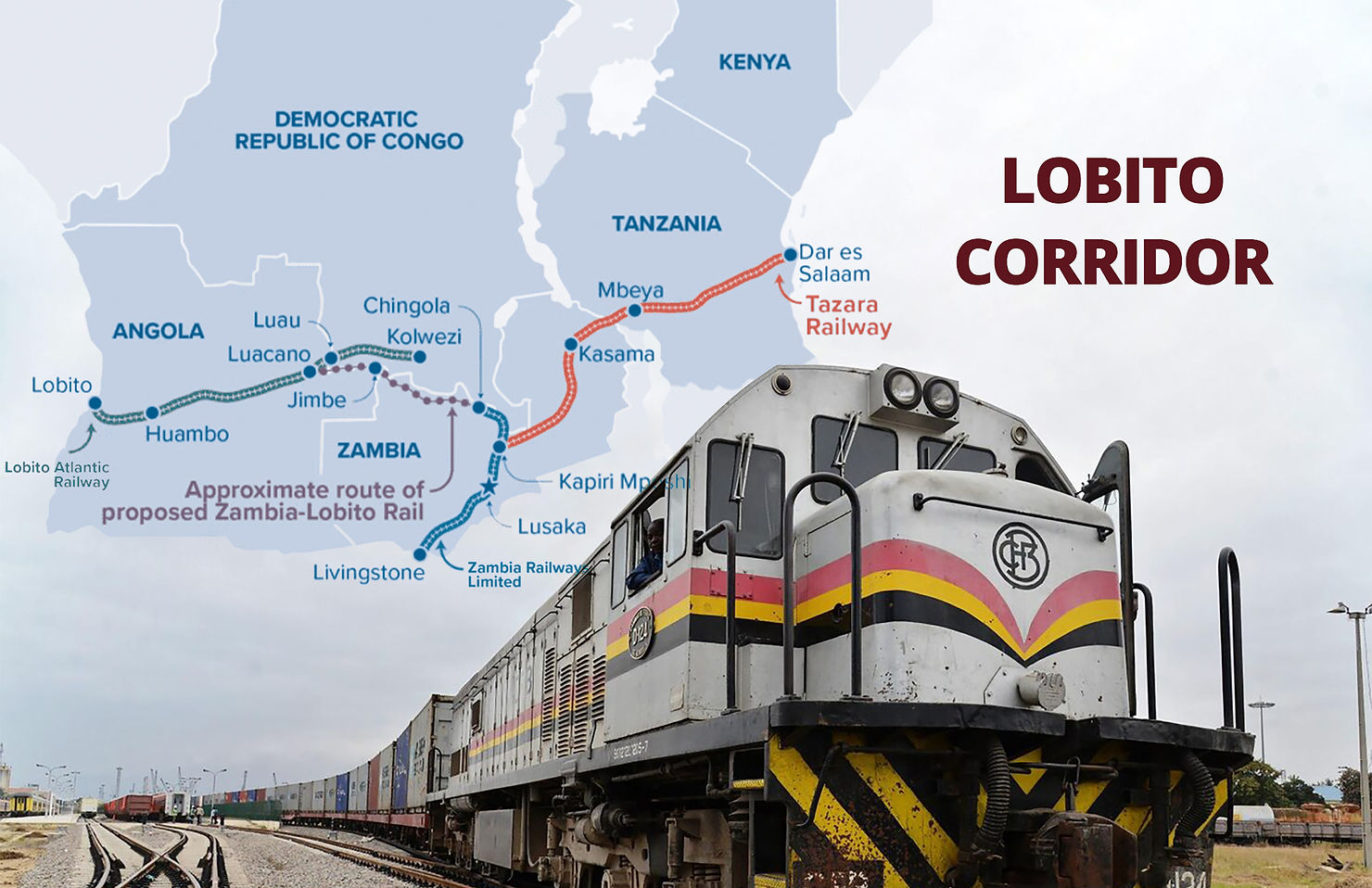
The U.S. supports this project through development financing and infrastructure investments, aiming to create an alternative export route for Congolese copper and cobalt to Western markets, bypassing trade networks linked to East and Southern Africa or those dominated by Chinese firms.
As part of the strategy, the Trump administration appears to be banking on a closer relationship with the Tshisekedi government and has applied selective sanctions on Kanambe and M23.[16]
The Trump administration’s distancing from Kanambe shows that he has used up his utility to the U.S. and, therefore, can be discarded like other strategic proxies—though he remains an important political player on the Rwandan side.
Kanambe presented the new group he was heading—the Front for the Refoundation of the Nation (FRN)—as a “politico-military” outfit that will “pool their strengths, resources and means” with the aim of “putting an end to tyranny by any means, including force.” The latter rhetoric is in response to the fact that DRC president Felix Tshisekedi appears bent on seeking a third presidential term in violation of the DRC constitution. The FRN is headed by Kanambe with M23 leaders serving as deputies. ↑
Some reports raise concern that Kanambe will work with M23 to foment a separatist rebellion in the mineral-rich Katanga Province, a venue of Western-backed destabilization efforts during the Cold War. ↑
See my review of the book, which is self-published, here. ↑
T. J. Coles, “Backed by AFRICOM, corporations plunder DR Congo For ‘climate-friendly’ materials and blame China,” The Grayzone, November 30, 2021; Robert Block, “In Congo, Businesses Take to the Sidelines—Confusion, Disillusionment Become Kabila’s Legacy; Resources up for Grabs,” The Wall Street Journal, January 22, 2001, A18.
Wayne Madsen, Genocide and Covert Operations in Africa, 1993-1999 (Lewiston, NY: Edwin Mellen, 1999), 113, 125; “Who Killed Habyarimana Juvenal and Uwilingiyimana Agathe? The Death of a President and Prime Minister,” http://intabaza.com/?p=1394&lang=en; Jeremy Kuzmarov, “Still Unsolved: The Great Crime that Triggered the 1994 Rwandan Genocide,” CovertAction Magazine, April 6, 2021. The warehouse where the missiles were stored and then re-assembled in Kigali was rented by a Swiss front company tied to the CIA, according to a whistleblower’s report published on the website intabaza.com. French Foreign Minister Alain Juppé and Defense Minister François Léotard claimed that members of the RPF received specialized missile training near Phoenix, Arizona, which would indicate a direct American complicity.Madsen, Genocide and Covert Operations in Congo 1993-1999, 148; David Himbara, Kagame’s Economic Mirage (South Carolina: Create Space Independent Publishing, 2016), 85; Michael Wines, “U.S. Sending Force of 200 to Reopen Rwandan Airport,” The New York Times, July 30, 1994; Remigius Kintu, “The Truth Behind the Rwandan Tragedy,” ICTR, March 20, 2005. ↑
Kintu, “The Truth Behind the Rwandan Tragedy.” The total number of American troops was later increased to 800. ↑
“Genocide and Covert Operations in Africa, 1993-1999, Prepared Testimony and Statement of Wayne Madsen, May 17, 2001, http://www.hartford-hwp.com/archives/27e/791.html. Kellogg Brown & Root was a war profiteer in the Balkans. It helped build Camp Bondsteel and also provided logistical support to U.S. troops in the 1990s in Somalia and Haiti. The company was infamous because of its association with Lyndon Johnson and wealth derived from base-building projects in Vietnam and, subsequently, Iraq. ↑
See Jeremy Kuzmarov, Warmonger: How Clinton’s Malign Foreign Policy Launched the U.S. Trajectory from Bush II to Biden (Atlanta: Clarity Press, 2024). AMF’s headquarters was located in Bill Clinton’s hometown of Hope, Arkansas. Hillary Clinton wore one of its diamonds at the 1997 presidential inaugural balls. ↑
See Kuzmarov, Warmonger. Winter allegedly told a South Sudanese exile at the time (1994): “I have now stabilized Rwanda and will turn my full attention to Sudan.” ↑
Jeremy Kuzmarov, Obama’s Unending War: Fronting the Foreign Policy of the Permanent Warfare State (Atlanta: Clarity Press, 2019), 101, 102. ↑
Kuzmarov, Obama’s Unending War, 102. ↑
Charles Tshimanga, “Joseph Kabila: The ‘Raïs’ of the Democratic Republic of the Congo (born 1971)” in Klaus Larres, ed., Dictators and Autocrats (London: Routledge, 2021), 113, 114; Alexandra Stevenson, “Och-Ziff to Pay Over $400 Million in Bribery Settlement,” The New York Times, September 29, 2016. ↑
See Declan Walsh, “A Deadly Firefight Exposes Erik Prince’s New Shadow War in Congo,” The New York Times, October 9, 2026; Kribsoo Diallo, “The Congo as a Site of Capital Accumulation: Erik Prince and the Privatization of War,” Black Agenda Report, October 14, 2026. The UAE is also providing mercenary support to the DRC, which cannot rely on its own army to protect national security because it is too weak.Walsh, “A Deadly Firefight Exposes Erik Prince’s New Shadow War in Congo.” The U.S.-Congolese agreement established a mechanism called the Strategic Asset Reserve. Under this framework, American investors receive the right of first refusal on listed projects and preferential access to specific investment opportunities in the Congolese resource sector. In April 2026, Reuters published an investigation detailing how Virtus Minerals, an American company, acquired Chemaf’s mining assets for $30 million. In February 2026, a proposed deal emerged to sell a 40% stake in the Mutanda and Kamoto Copper Company mines to the Orion Critical Mineral Consortium, backed by the U.S. International Development Finance Corporation (DFC) and the UAE’s ADQ fund. These deals positioned American and Emirati investors prominently within Congolese copper and cobalt assets. ↑
A March 8, 2026, Washington Post investigation cited a U.S. official stating that Kagame successfully delayed the sanctions for several months by reaching out to the late Senator Lindsey Graham (R-SC), who intervened with the White House. ↑
CovertAction Magazine is made possible by subscriptions, orders and donations from readers like you.
Blow the Whistle on U.S. Imperialism
Click the whistle and donate
When you donate to CovertAction Magazine, you are supporting investigative journalism. Your contributions go directly to supporting the development, production, editing, and dissemination of the Magazine.
CovertAction Magazine does not receive corporate or government sponsorship. Yet, we hold a steadfast commitment to providing compensation for writers, editorial and technical support. Your support helps facilitate this compensation as well as increase the caliber of this work.
Please make a donation by clicking on the donate logo above and enter the amount and your credit or debit card information.
CovertAction Institute, Inc. (CAI) is a 501(c)(3) non-profit organization and your gift is tax-deductible for federal income purposes. CAI’s tax-exempt ID number is 87-2461683.
We sincerely thank you for your support.
Disclaimer: The contents of this article are the sole responsibility of the author(s). CovertAction Institute, Inc. (CAI), including its Board of Directors (BD), Editorial Board (EB), Advisory Board (AB), staff, volunteers and its projects (including CovertAction Magazine) are not responsible for any inaccurate or incorrect statement in this article. This article also does not necessarily represent the views the BD, the EB, the AB, staff, volunteers, or any members of its projects.
Differing viewpoints: CAM publishes articles with differing viewpoints in an effort to nurture vibrant debate and thoughtful critical analysis. Feel free to comment on the articles in the comment section and/or send your letters to the Editors, which we will publish in the Letters column.
Copyrighted Material: This web site may contain copyrighted material the use of which has not always been specifically authorized by the copyright owner. As a not-for-profit charitable organization incorporated in the State of New York, we are making such material available in an effort to advance the understanding of humanity’s problems and hopefully to help find solutions for those problems. We believe this constitutes a ‘fair use’ of any such copyrighted material as provided for in section 107 of the US Copyright Law. You can read more about ‘fair use’ and US Copyright Law at the Legal Information Institute of Cornell Law School.
Republishing: CovertAction Magazine (CAM) grants permission to cross-post CAM articles on not-for-profit community internet sites as long as the source is acknowledged together with a hyperlink to the original CovertAction Magazine article. Also, kindly let us know at info@CovertActionMagazine.com. For publication of CAM articles in print or other forms including commercial internet sites, contact: info@CovertActionMagazine.com.
By using this site, you agree to these terms above.
About the Author
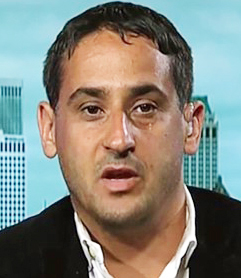
Jeremy Kuzmarov holds a Ph.D. in American history from Brandeis University and has taught at numerous colleges across the United States. He is regularly sought out as an expert on U.S. history and politics and co-hosts a radio show on New York Public Radio and on Progressive Radio News Network called “Uncontrolled Opposition.”
He is Managing Editor of CovertAction Magazine and is the author of eight books, including Obama’s Unending Wars (Clarity Press, 2019), The Russians Are Coming, Again, with John Marciano (Monthly Review Press, 2018), Warmonger. How Clinton’s Malign Foreign Policy Launched the U.S. Trajectory From Bush II to Biden (Clarity Press, 2023); with Dan Kovalik, Syria: Anatomy of Regime Change (Baraka Books, 2025), and Political Assassinations in America: The Intricate Nexus of Deep State Crime (Clarity Press, 2026).
Besides these books, Kuzmarov has published hundreds of articles and contributed to numerous edited volumes, including one in the prestigious Oxford History of Counterinsurgency .
He can be reached at jkuzmarov2@gmail.com and found on substack here.



This is an excellent, well-written article. Keep up the good work. By the way, here is some additional historical context on the Rwandan genocide:
https://humanrights.ca/story/what-led-genocide-against-tutsi-rwanda