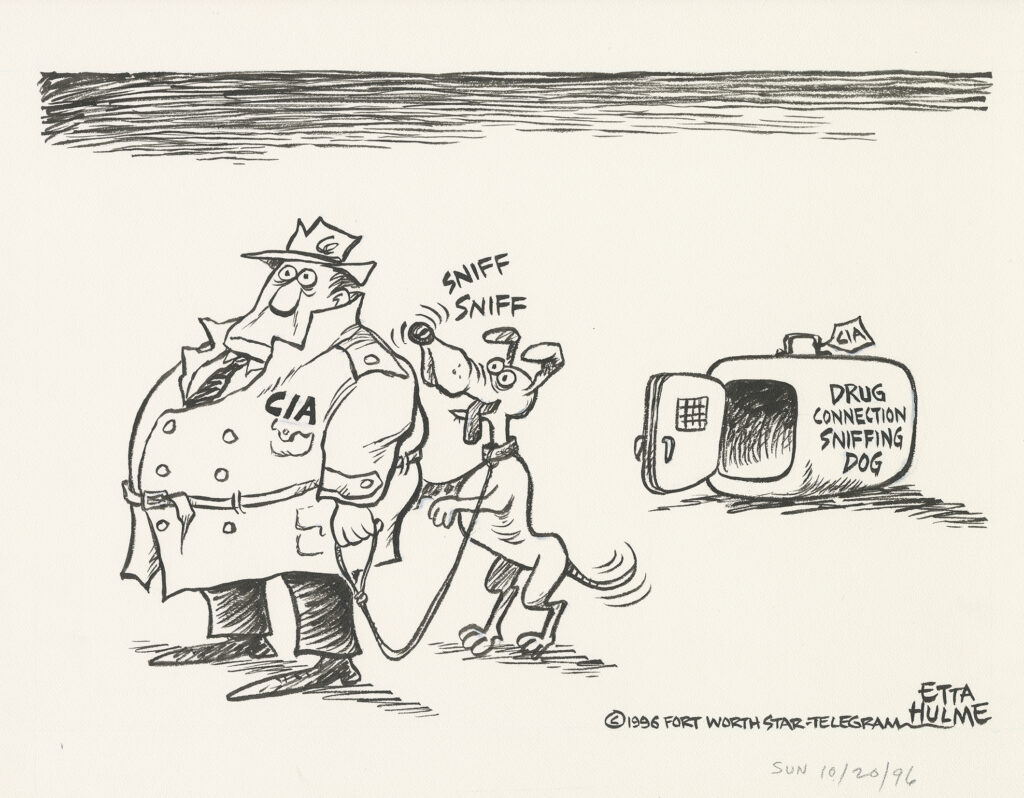
One of the many hideous policies of the Trump administration has been its escalation of the War on Drugs by attacking Venezuelan fishing boats and carrying out “targeted” assassinations of alleged drug cartel kingpins with the assistance of the CIA.
The CIA’s growing involvement in the drug war is ironic in light of the Agency’s notorious history of covering up drug crimes, allying with drug traffickers, setting up money-laundering banks like Nugan Hand and Bank of Commerce and Credit International (BCCI) and trafficking in drugs to finance covert operations like in the Indochina Wars and Iran-Contra affair.[1]
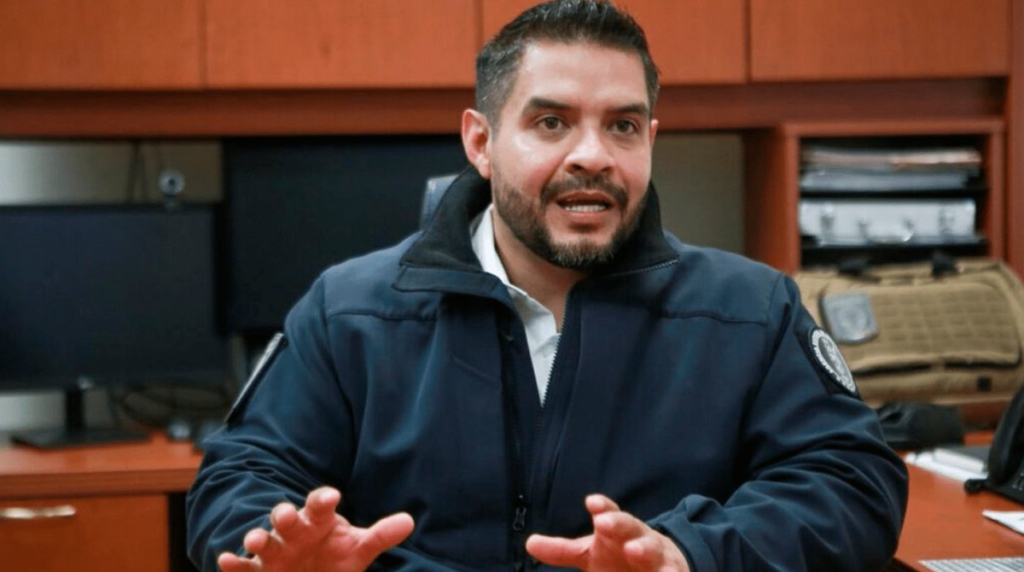
The New York Times reported on November 11 that the CIA was working in the Mexican state of Chihuahua with Guillermo Zuany, a prosecutor and former police commander whose U.S. visa was revoked because of his suspected ties to the very cartels the CIA wanted to root out.
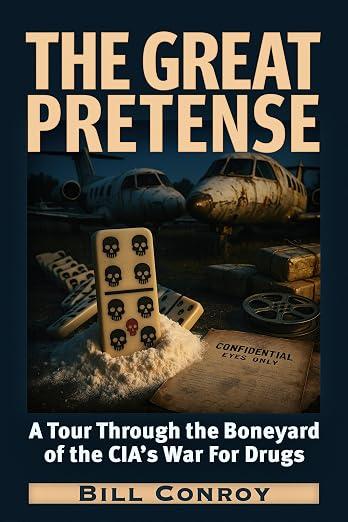
Bill Conroy’s book The Great Pretense: A Tour Through the Boneyard of the CIA’s War For Drugs provides new insights into the drug war’s double standards and CIA’s deep involvement in the drug trade going back decades along with the role that the media plays in covering this up.
Conroy is well-equipped to tell this story as the long-time editor of the now-defunct Narco News Bulletin.
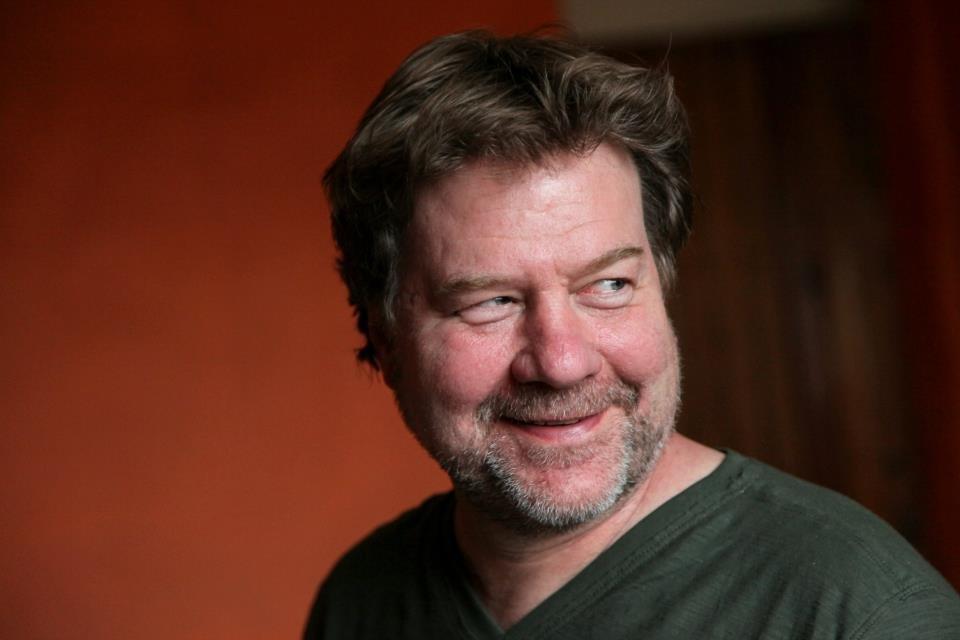
He was mentored by muckracking journalists Gary Webb and Charles Bowden, who helped guide him on his journey into the dark netherworld where intelligence agents and organized crime elements work together.
Conroy starts The Great Pretense by discussing closed-door congressional testimony given by CIA pilot Robert “Tosh” Plumlee in 1991 that blew the whistle on CIA narco-trafficking corruption in Latin America. Plumlee worked for CIA proprietary companies in support of CIA dirty operations with full knowledge of the White House National Security Council.[2]
![Tosh Plumlee being interviewed, 2] - The Portal to Texas History](https://covertactionmagazine.com/wp-content/uploads/2026/11/tosh-plumlee-being-interviewed-2-the-portal-to.jpeg)
In February 1985, Plumlee said that he was ordered by his CIA handlers to fly to a ranch near Veracruz, Mexico, controlled by Guadalajara cartel founder Rafael Caro Quintero.
Later, he found out that the ranch was being used by the CIA and Mexican intelligence as a training ground and drugs-weapons trans-shipment center for Nicaraguan counter-revolutionary guerrillas (Contras) intent on undermining the 1979 socialist Sandinista Revolution.[3]
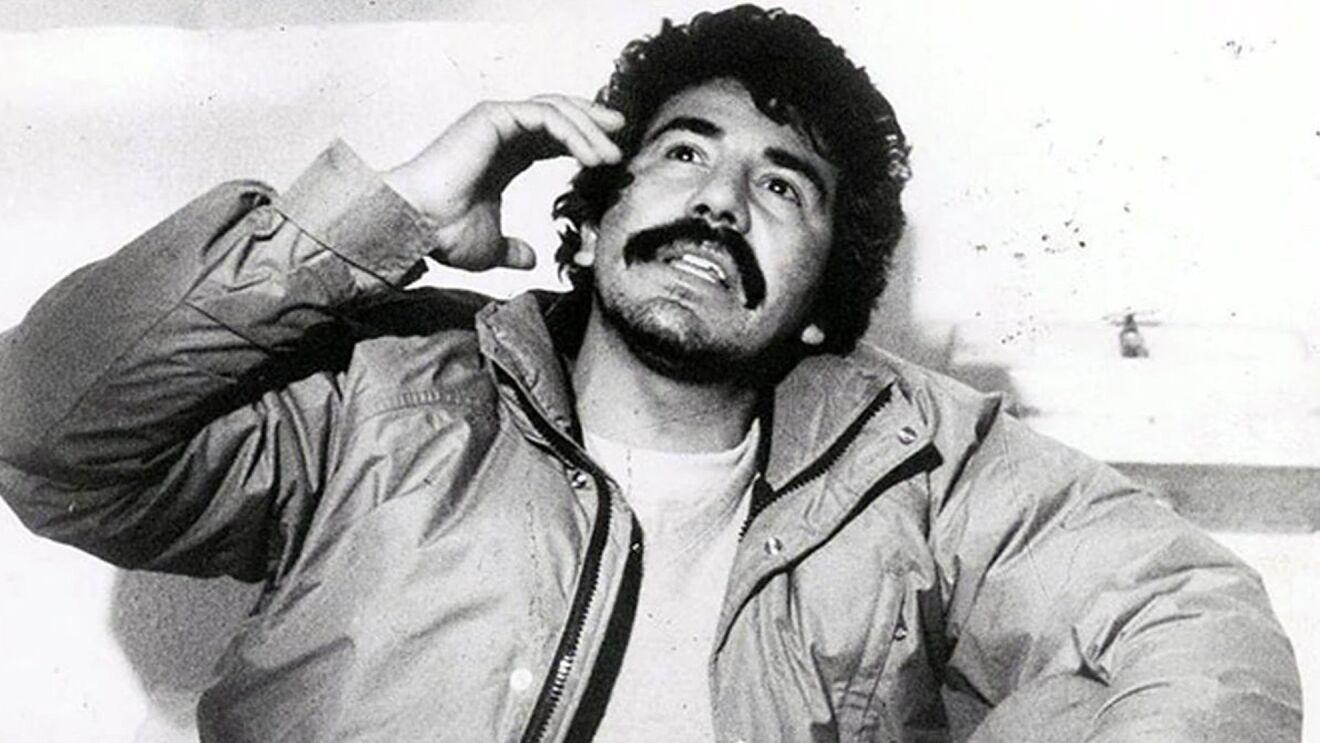
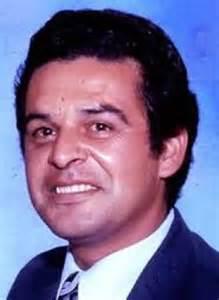
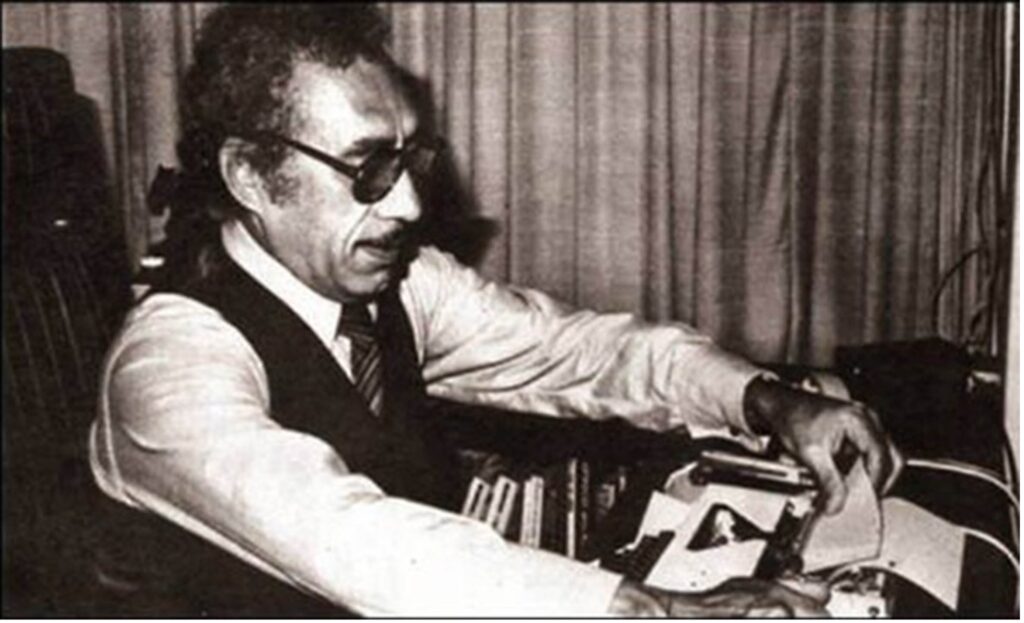
When DEA agent Enrique “Kiki” Camarena got wind of what was going on, he was murdered along with Mexican journalist Manuel Buendía, who had exposed the CIA’s relationship with narco-traffickers in the Veracruz area and that high-ranking members of Mexico’s Revolutionary Party (PRI) were assisting the CIA with arms smuggling to the Contras.[4]
Iran Contra whistleblower Al Martin suggests that Camarena was killed because he discovered the existence of a network of CIA and Mossad linked drug traffickers known as the Singer group (after Eddy Singer) who worked with CIA drug pilot Barry Seal to smuggle arms and drugs to the Contras. According to Martin’s sources, General Raul Medina, the chief of the Mexican Federal Police, ordered Camarena’s murder at the urging of the CIA.[5]
Hector Berrellez, the DEA agent tasked with investigating Camarena’s murder, told Conroy that CIA operatives were present in a house in Guadalajara where Camarena was tortured to death after being subjected to an interrogation to determine where he had gotten information about the CIA’s covert operations in Mexico.[6]
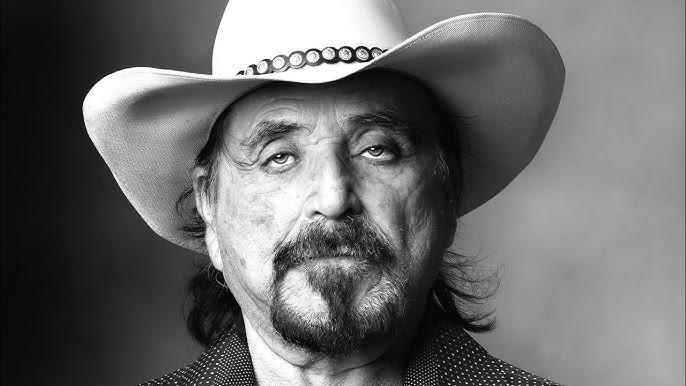
Celerino Castillo was an honest and effective DEA agent like Camarena who was subjected to retaliatory investigations and forced to serve a 37-month prison sentence for supposedly violating federal firearms regulations after he uncovered how the CIA was using Ilopango Airport in El Salvador as a weapons and narcotics trans-shipment site to the Contras.
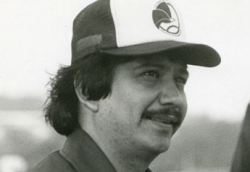
Before retaliating against him, the DEA blocked Castillo’s investigation, and sealed his written reports in a stark reflection of the corruption that undermined the War on Drugs.[7]
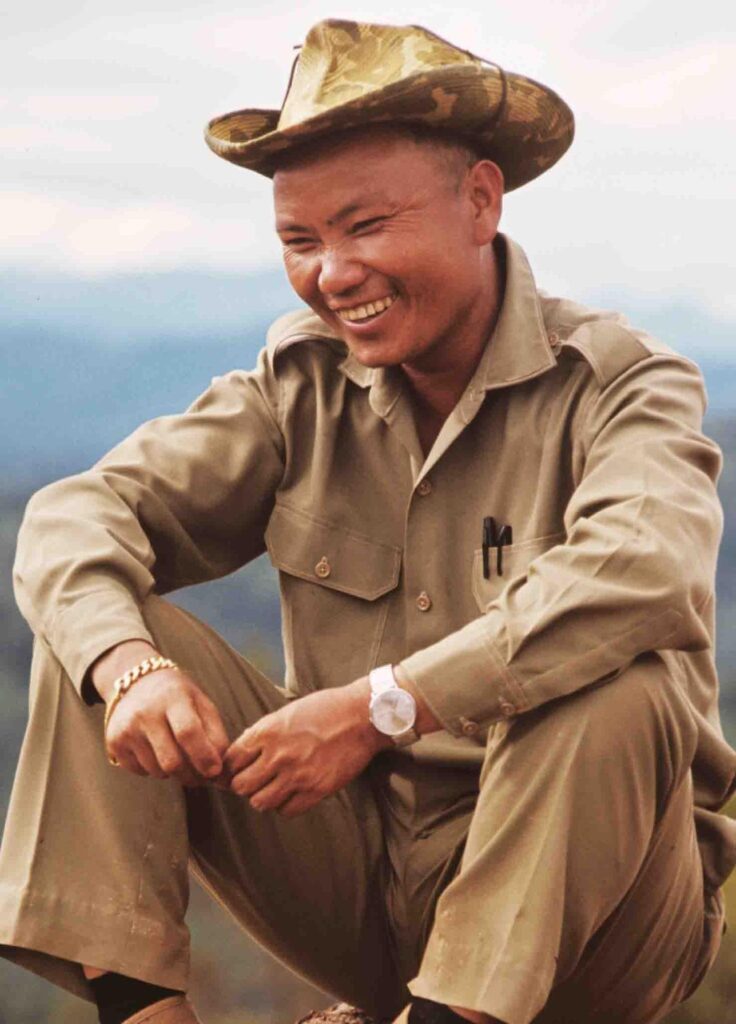
Back in the 1960s, the CIA had rewarded Vang Pao, leader of the CIA-backed Hmong army who fought a secret war against communism in Laos, with his own airline so he could ferry opium from the CIA base at Long Tieng to Vientiane.[8]
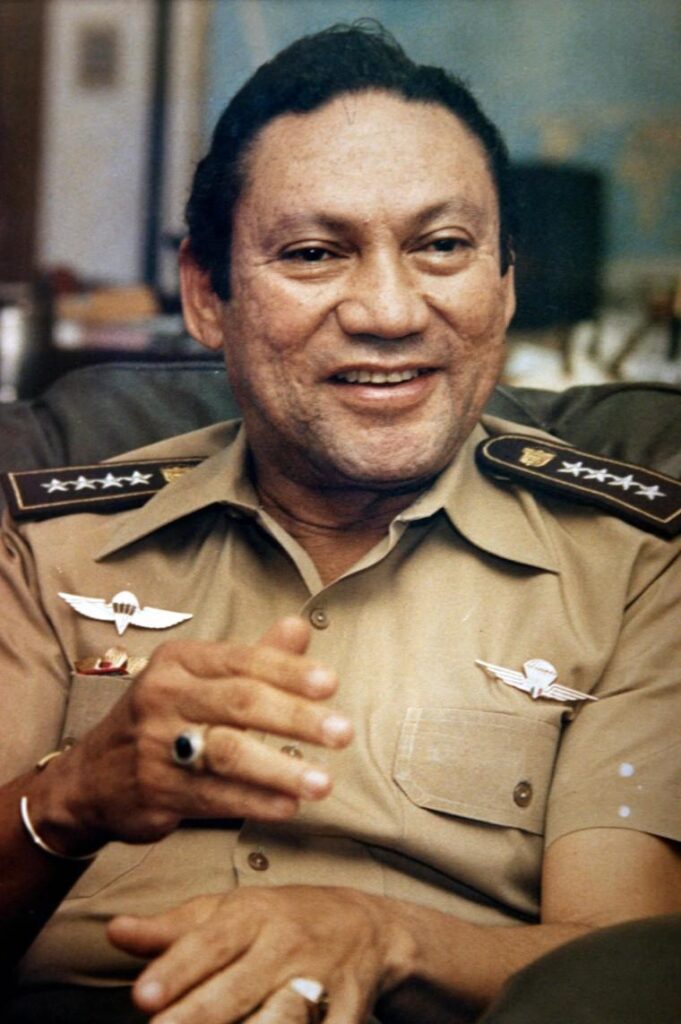
The CIA in the 1980s paid Panamanian narco-dictator Manuel Noriega $320,000 and ran a spook mission in Venezuela designed to infiltrate Colombian narco-trafficking groups that resulted in a ton of cocaine entering Miami unchecked.[9]
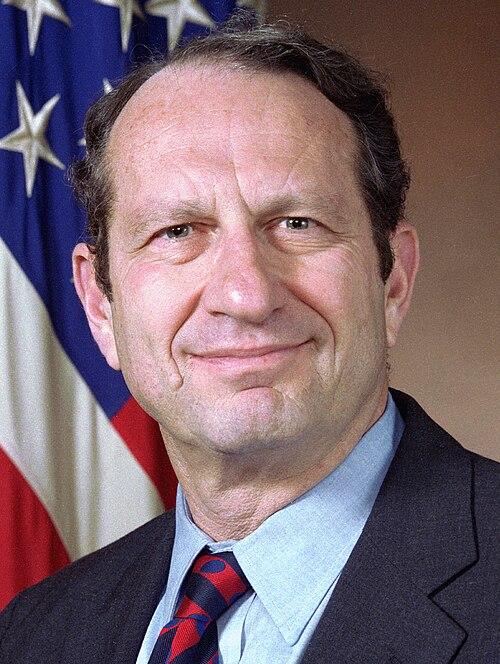
In 1995, when CIA Director John Deutch conducted a review of CIA informants on the payroll, it was determined that more than 1,000 CIA informants had been selling their CIA officer/handlers false information while being paid and protected from prosecution for every kind of felony imaginable, including smuggling vast amounts of illegal drugs into the U.S.[10]
The review took place at a time when the Clinton administration was expanding the international War on Drugs from the Reagan era and locking up Black youth en masse for petty drug crimes.[11]
“We Don’t Have a Drug Policy, We Have a Drug Pretense”
DEA agent Richard Horn was a counterpart to “Kiki” Camarena and Celerino Castillo, who was spied on by the CIA in the 1990s as part of the Agency’s efforts to thwart his anti-narcotics mission in Burma.
An anonymous source leaked to Conroy a judge’s ruling in a lawsuit filed by Horn that accused the CIA and State Department of violating his Fourth Amendment rights against unreasonable searches and seizures.[12]
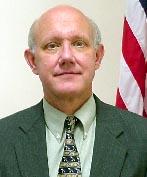
Horn’s attorney sent a letter to U.S. Senator Richard Shelby (R-AL) stating that Franklin Huddle, Jr., the charge d’affaires at the U.S. Embassy in Rangoon, and CIA Station Chief Arthur M. Brown undermined the DEA efforts in Burma after Horn had begun to make inroads in opium eradication.
The reason was that Horn’s efforts undercut the State Department’s goal of vilifying Burma’s military rulers who were allied with the People’s Republic of China (PRC).
Huddle ultimately succeeded in getting Horn run out of Burma—after Horn discovered that the CIA had planted eavesdropping equipment in his private quarters.[13]
Horn’s lawsuit was initially dismissed after crucial evidence was withheld on “national security grounds” though Horn was ultimately awarded a $3 million settlement, which the CIA paid in the hopes of erasing from the court record the opinions of Judge Royce Lamberth that accused CIA officials of committing a fraud on his court via a string of lies.
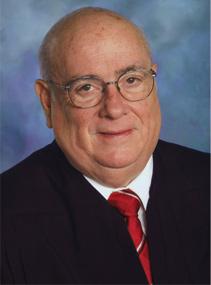
Judge Lamberth’s ruling stated that the “allegations of wrongdoing by the government attorneys in this case are not only credible, they are admitted.”[14]
A DEA agent familiar with Horn’s case told Conroy: “If you want to cultivate assets in the drug trade to get information, then you have to let the drug trade continue, and that’s why you don’t want a noisy DEA agent getting in the way. The reason the opium economy will not stop is that the CIA does not see a value in stopping it when they want intelligence….We don’t have a drug policy, we have a drug pretense.”[15]
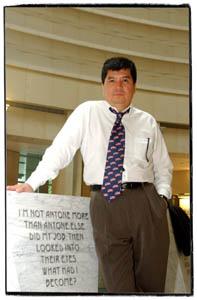
Conroy also quoted Lok Lau, a former spy and FBI agent, who said that the Horn case is illustrative of the lack of coordination between the intelligence community and federal law enforcement agencies, adding that, “if the U.S. government was really serious about eradicating the drug trade, they would have done it. But they do not really want to…Let’s say the DEA was successful in eradicating all drug trafficking. What would be left to prop up pro-U.S. regimes that rely on the drug trade?…The CIA can use the proceeds from the drug trade to pay for armies to support a friendly government.”[16]
Bogotá Corruption and Alliance with North Valley and Sinaloa Cartels
On December 19, 2004, Thomas M. Kent, an attorney in the wiretap unit of the Department of Justice’s Narcotic and Dangerous Drug Section (NDDS), sent a memo to his chief at NDDS that raised a series of corruption allegations centering on the DEA’s office in Bogotá.
The accuracy of the memo was later corroborated by polygraph tests and by Sandalio Gonzalez, the former second in-command of Miami’s field division, who said that it “reflects a climate of cover-up in the executive branch.”[17]
Kent alleged that one of the corrupt DEA agents was caught on a wiretap discussing his involvement in laundering drug money for the United Self-Defense Forces of Colombia (AUC), a right-wing paramilitary group implicated in death-squad activity.[18]
The same agent was subsequently promoted and put in charge of narcotics and money-laundering operations while the DOJ shut down a money-laundering investigation.[19]
According to Kent, a corrupt DEA agent at the Bogotá embassy got several drug informants killed when they tipped off Colombian officials that the informants were traveling to Florida with cocaine infused with acrylic used by smugglers to evade detection in order to help DEA chemists learn how to extract the acrylic. After the informants were arrested and released from jail, they were kidnapped and murdered by drug cartels in Bogotá who had been tipped off about their collaboration with the DEA.[20]
The Kent memo detailed an additional informant who was outed by the corrupt agent, making him a target of leftist FARC (Fuerzas Armada Revolucionarias de Colombia) guerrillas to whom he was going to sell communications equipment.[21]
Conroy notes that, although the charges raised by Kent in his 2004 memo passed through many hands, they were ultimately “buried in contorted layers of bureaucracy.” Kent was himself transferred from Washington, D.C., to Nashville, Tennessee, after his request to send the Bogotá corruption allegations to the DOJ’s Public Integrity Section was denied.[22]
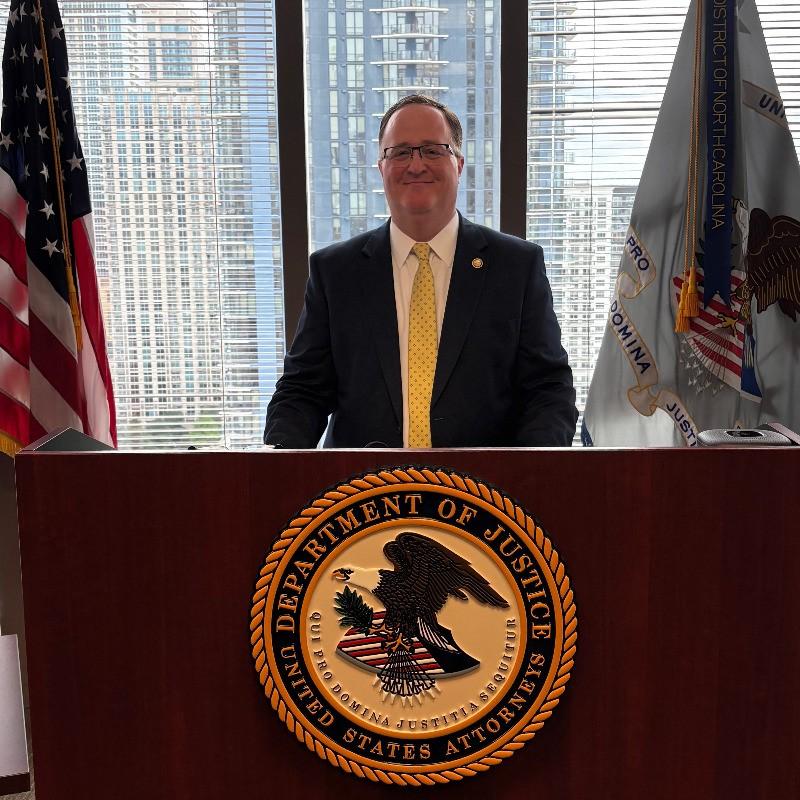
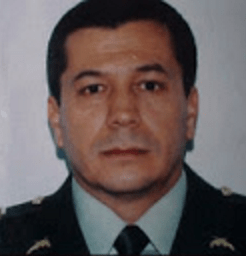
In January 2000, North Valley cartel kingpin Luis Hernando Gomez-Bustamante alleged that a high-level DEA agent in Bogotá—Javier F. Peña, an inspiration behind the Netflix series Narcos—was on the payroll of a corrupt Colombian National Police Lieutenant Colonel, Danilo González, who was eventually indicted by the DOJ on narco-trafficking charges and then assassinated in his attorney’s office in Bogotá.[23]
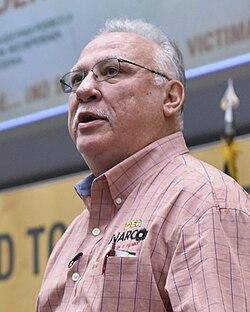
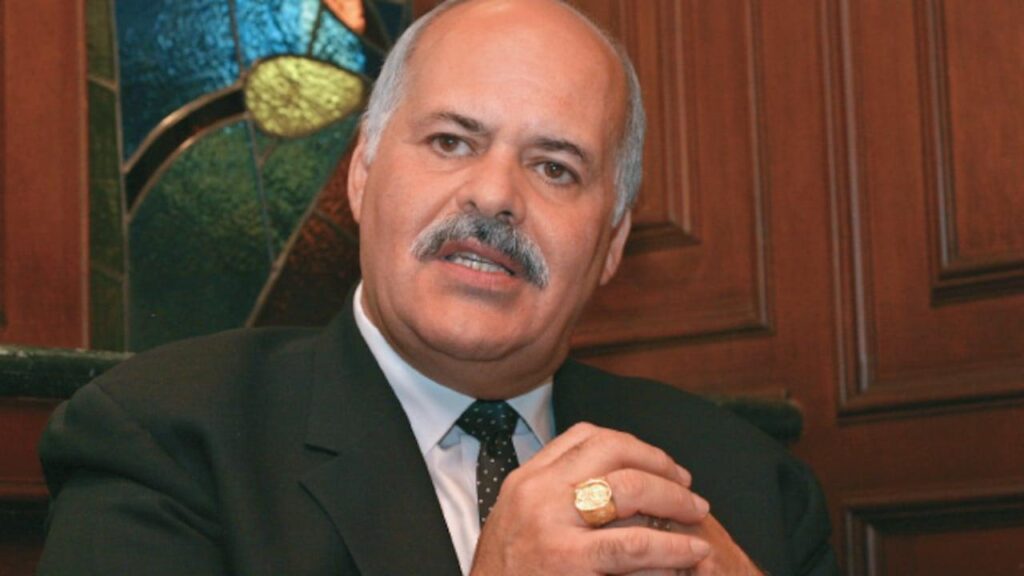
A public court filing related to the case revealed that the DEA, FBI and CIA were operating covertly in Colombia’s narco-trafficking underworld through a source named Baruch Vega, a high-profile fashion photographer whom Leo Arreguin, chief of Bogotá’s DEA office, alleged was extorting money from Colombian narco-traffickers by promising that he could get them light sentences with the help of corrupt federal agents and prosecutors.[24]
In a multi-million dollar lawsuit, Vega alleged that DEA agents in the Bogotá office and U.S. Customs compromised his role as a government asset and leaked information about ongoing U.S. law enforcement investigations to key players in the Colombian National Police (CNP) aligned with the North Valley drug cartel. The result was a bloodbath in which numerous informants and cooperating sources were assassinated.[25]
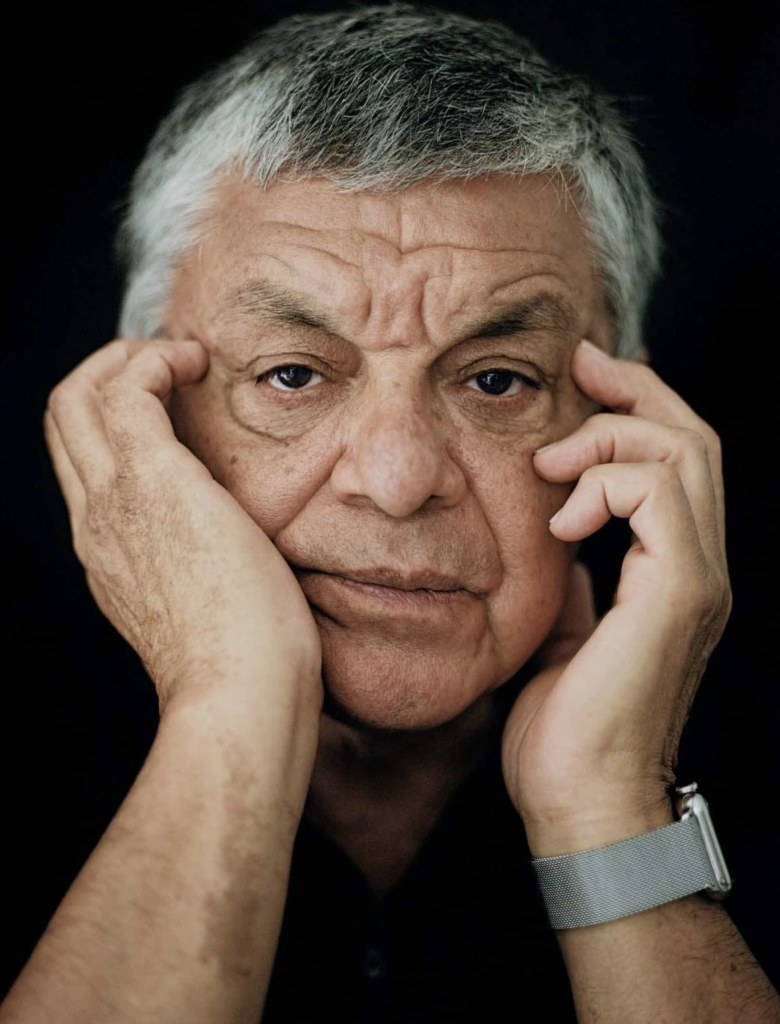
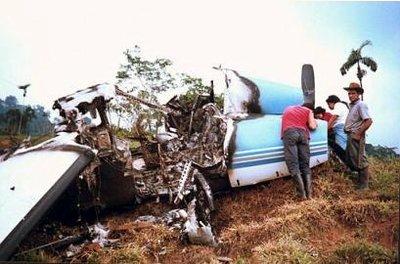
Conroy found evidence to indicate that the 2003 crash of a plane carrying American military contractors in Colombia, who were on an aerial fumigation and spy mission in the jungle, was facilitated by the corrupt officers in the DEA’s Bogotá embassy.
The U.S. government claimed the plane crashed due to engine failure, though FARC guerrillas claimed credit for shooting down the plane. Conroy determined that FARC had advanced knowledge of the plane’s coordinates, which had been leaked by the dirty agents.[26]
When DEA supervisor David Tinsley reported that DEA agents in Bogotá were suspected of assisting narco-traffickers and providing them with insider information from U.S. government documents, he was retaliated against—like Kent and other whistleblowers—and fired, though a judge ordered his reinstatement with back pay plus interest.[27]
Conroy suggests that a possible explanation for the Bogotá Connection corruption and its cover-up is that U.S. law enforcement and intelligence agencies such as the CIA operated as part of a sanctioned operation designed to prop up the North Valley cartel, which was being used to control the lucrative drug trade and root out rival cartels and political factions, including the FARC.[28]
A similar strategy was employed with Mexico’s Sinaloa cartel, which for years enjoyed high level protection.[29]
Sinaloa cartel capo Vicente Zambada Niebla was able to negotiate a quid pro quo immunity deal with the U.S. government in which he and other associates were guaranteed immunity from prosecution in exchange for providing U.S. law enforcement and intelligence agencies with information that undermined Sinaloa competitors such as the Carrillo Fuentes Organization in Juarez, Mexico, then the murder capital of the world.[30]
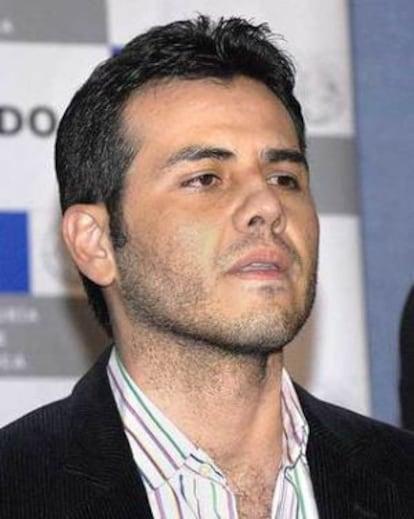
Conroy notes that information provided by the Sinaloa cartel as a result of the deal “assured a steady flow of drug busts and media victory headlines for U.S. agencies;” a “propaganda necessary for hoodwinking citizens into believing that progress [was] being made in the drug war and thereby assuring the continued funding of bloated drug war budgets.”[31]
Operation Mayan Jaguar and Suspicious Plane Crashes
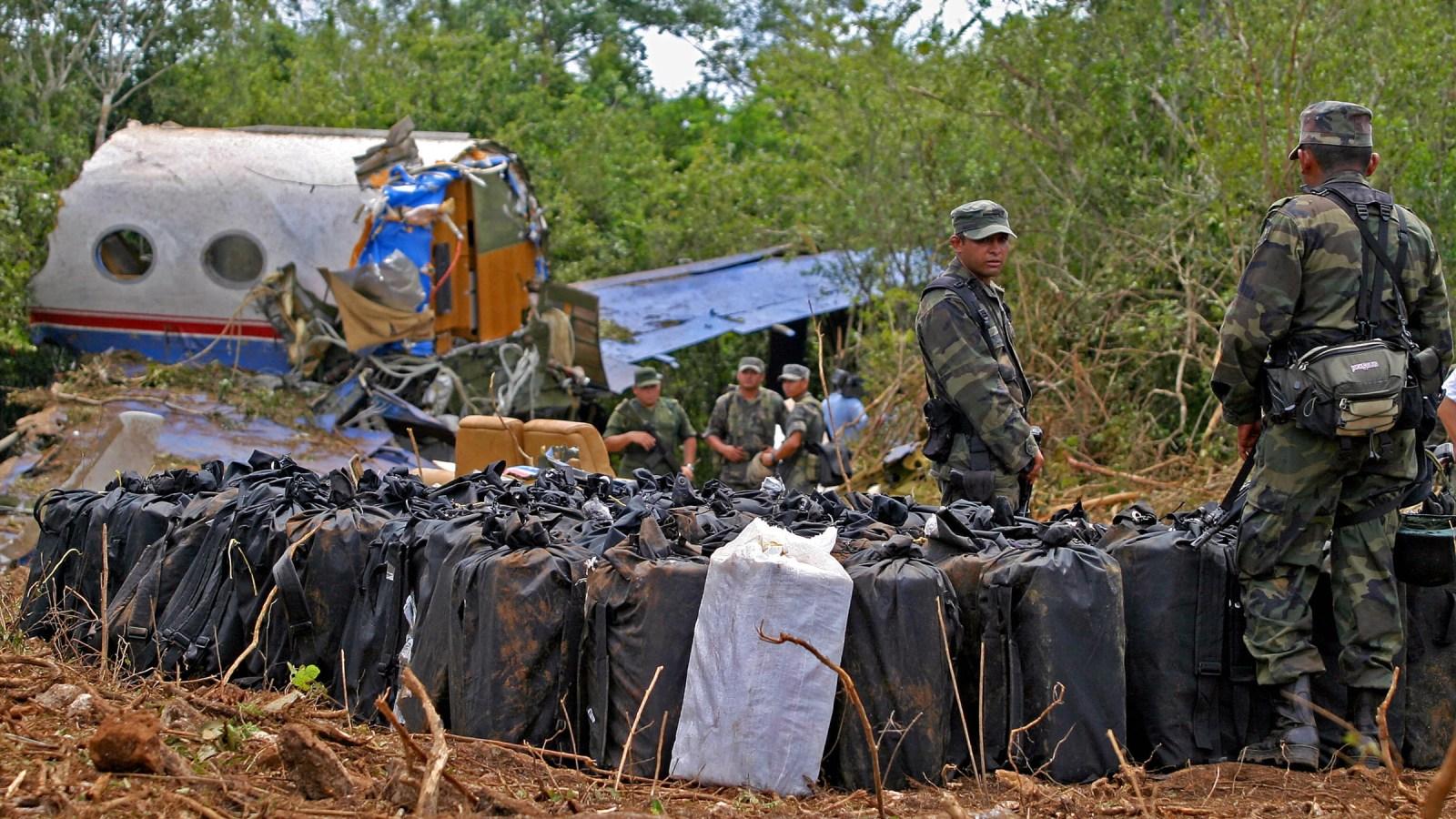
The CIA’s deep complicity in the drug trade came to light in late September 2007 when a Gulfstream II jet, carrying four tons of cocaine, crashed in Mexico’s Yucatán Peninsula. Conroy’s sleuth work uncovered that the plane had been owned by a suspected CIA operative named Greg Smith, who had a history of piloting flights for sensitive operations for the FBI, DEA and CIA that involved Colombian narco-traffickers.[32]
Conroy further uncovered that the Gulfstream jet had been involved in the terrorist rendition program by transporting kidnapped suspects to Guantánamo Bay and was part of a secret government operation, Mayan Jaguar, spearheaded by U.S. Immigration and Customs Enforcement (ICE) that involved recruiting a former Mexican cop as an informant who smuggled 100 pounds of marijuana into the U.S. and partook in the torture and murder of 12 people at a “House of Death” in Juarez.[33]
José Nelson Urrego, a Colombian narco-trafficker who operated a sophisticated communication center on a private island off the coast of Panama and claimed to have worked for the CIA, was among the shady figures involved in Operation Mayan Jaguar.[34]
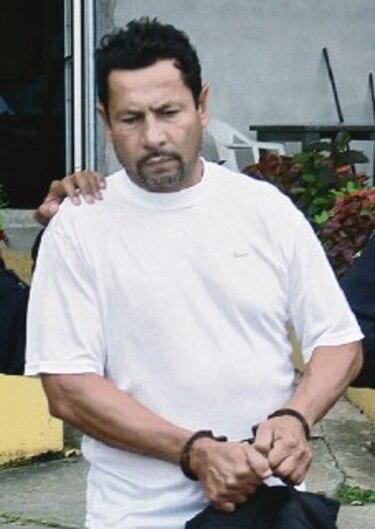
A former high-level U.S. Customs agent, Mark Conrad, told Conroy that Mayan Jaguar “could well be a CIA operation working under ICE cover,” adding that ICE was “a perfect vehicle for the CIA because it can provide the CIA with a free pass at U.S. ports of entry. All an ICE agent has to do is make a call and the cargo will be cleared through a checkpoint.”[35]
Leutrell Osborne, a CIA case manager, told Conroy that the CIA had effectively infiltrated the DEA and that law enforcement and intelligence operations had been merged, resulting in “an approach to the War on Drugs that tolerates or even enables drug running for the sake of some perceived higher value in the dirty world of covert action.”[36]
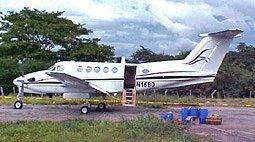
The latter approach came to light in the 2007 Gulf Stream II jet crash and the crash of another CIA drug flight in 2004 in Nicaragua; a Beechcraft King Air 200 with a CIA tail number registered with CIA contract companies (Devon Holding and Leasing Inc.), which was packed with cocaine.[37]
Conspiracies Abound
Conroy suggests that many of the covert operations involving drug running targeted not only leftist forces in Colombia but also Venezuela, an oil-rich country whose socialist government was for years a target of U.S. regime change.
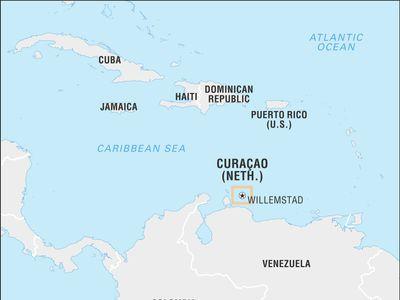
Some of the U.S. covert operations aimed at Venezuela were run through the island of Curaçao, home of a U.S. military base staffed by personnel from the DEA, Coast Guard and U.S. Customs Service that had a clandestine CIA presence.[38]
Tosh Plumlee told Conroy that covert activity on the part of U.S. intelligence agencies in trafficking drugs continues today, the reason being that “there’s too much money involved.”
Conroy quotes another truism from Gary Webb, the famous journalist who exposed the CIA-Contra cocaine connection, who said “I don’t believe in conspiracy theories. I believe in conspiracies.”[39]
Conroy’s investigations verify that the CIA has indeed been involved in wide-ranging conspiracies that have cost countless lives and tarnished the integrity of federal law enforcement agencies, the U.S. judicial system, and U.S. media that has failed to investigate them properly.
Additionally, the conspiracies have betrayed the constitutional principle of separation of powers among the executive, legislative and judicial branches, contributed to the proliferation of cocaine and other hard drugs on American city streets, and helped advance an imperialistic foreign policy agenda under the guise of protecting national security.
Among other works, see Alfred W. McCoy, The Politics of Heroin: CIA Complicity in the Global Drug Trade, rev ed. (New York: Lawrence Hill Books, 2003); Douglas Valentine, The Strength of the Wolf (London: Verso, 2003); Peter Dale Scott, Drugs, Oil and War: The United States in Afghanistan, Colombia and Indochina (New York: Rowman & Littlefield, 2003); Gary Webb, Dark Alliance: The CIA and the Crack-Cocaine Explosion, rev ed. (New York: Seven Stories Press, 2011). ↑
Bill Conroy, The Great Pretense: A Tour Through the Boneyard of the CIA’s War For Drugs (Walterville, OR: Trine Day, 2026), 5, 6. See recent CovertAction Magazine article on Plumlee here. ↑
Conroy, The Great Pretense, 39. ↑
Ibid., 41. Five years after Buendía’s death, several members of the-now defunct Mexican Security Directorate (DFS), Mexico’s top police force and intelligence agency, were arrested for their involvement in Buendía’s murder. DEA agent Phil Jordan referred to the DFS as the “ears and arms of the CIA.” ↑
Al Martin, The Conspirators: Secrets of an Iran-Contra Insider (Virginia: National Liberty Press, 2001), 218. According to Martin, the Singer network included Eddy Singer, Yoram Ettinger, a member of the Israeli Knesset and Lt. Col. Ari Klein, a retired Mossad agent. ↑
Conroy, The Great Pretense, 43. Berellez also told Conroy that Camarena had played a key role in helping DEA to successfully ramp up interdiction, thereby threatening the funding source for the CIA-backed Contra supply effort. Berellez told Conroy that the DEA had tapes of Camarena’s torture from the CIA, which raises suspicion about how they obtained them. Berellez believed that Felix Rodriguez, a CIA operative involved in the Che Guevara assassination, was behind Camarena’s death. In the wake of Camarena’s murder, DEA agent Phil Jordan said that DEA agents managed to catch up with Rafael Caro Quintero at the airport in Guadalajara but were prevented from apprehending him because Quintero was protected by dozens of DFS agents. The plane Quintero flew out on that day was owned by narco-trafficker Juan Matta Ballesteros, the founder of SETCO, a Honduran airline linked to the CIA that transported weapons to the Nicaraguan Contras. Jordan also contends that Quintero was carrying DFS credentials and that the aircraft’s pilot was a CIA operative. Quintero was eventually indicted and convicted in Camarena’s murder, given a 40-year prison sentence and in 2025 extradited to the U.S. ↑
Conroy, The Great Pretense, 20. ↑
Ibid., 25. ↑
Ibid., 22. ↑
Ibid., 25. ↑
The double standards of Clinton’s War on Drugs are detailed in Jeremy Kuzmarov, Warmonger: How Clinton’s Malign Foreign Policy Launched the U.S. Trajectory From Bush II to Biden (Atlanta: Clarity Press, 2024). ↑
Conroy, The Great Pretense, 69, 78. ↑
Ibid., 70. ↑
Ibid., 78. ↑
Ibid., 74. ↑
Ibid., 75. ↑
Ibid., 102, 103. Gonzalez became the central whistleblower in the horrifying “House of Death” case, in which ICE agents were accused of looking the other way while one of their drug informants helped torture and murder at least a dozen people in Ciudad Juárez, Mexico. ↑
Conroy, The Great Pretense, 92, 93, 94. Documents from the National Security Archive detail that AUC commander Carlos Castano and his brother Fidel were linked to the CIA via the CIA’s work with the anti-Pablo Escobar terrorist group known as Los Pepes. ↑
Conroy, The Great Pretense, 93. ↑
Ibid., 96. The dead body of one of the informants was dumped on the street in front of his home in Bogotá. The corrupt DEA agent who had the informants arrested claimed he did not know the informants had permission to travel to Miami with the acrylic-laced cocaine. ↑
Conroy, The Great Pretense, 96. ↑
Ibid., 99. ↑
Ibid., 108, 143. ↑
Ibid., 108, 109. ↑
Ibid., 122. Vega had three contracts on his life and was lucky to survive. The North Valley drug cartel was a rival of the Cali cartel formed out of the ashes of Pablo Escobar’s drug empire. ↑
Conroy, The Great Pretense, 132, 133. The FARC were prone to shooting down U.S. spy and aerial fumigation planes because of their involvement in chemical spraying and violent counterinsurgency operations that resulted in vast human rights abuses. See Doug Stokes, America’s Other War: Terrorizing Colombia (London: Zed Books, 2004). ↑
Conroy, The Great Pretense, 109, 111, 112, 117, 120. ↑
Ibid., 124. ↑
Idem. ↑
Ibid., 125. Niebla was sentenced to 15 years behind bars by a federal judge in Chicago in 2019 including time served since his extradition to the U.S. in 2010. ↑
Ibid., 125. ↑
Ibid., 163. ↑
Ibid., 166, 167. ↑
Ibid., 170, 181. ↑
Ibid., 168, 182. Conrad noted that the CIA has agents operating inside many federal law enforcement agencies utilizing what is known as “official cover.” The head of ICE at the time of Operation Mayan Jaguar, Charles E. Allen, was a veteran of the CIA who served as Under Secretary for the Office of Intelligence and Analysis at the Department of Homeland Security (DHS) under George W. Bush. He was a major player in the Iran-Contra scandal. Tosh Plumlee said that the CIA’s fingerprints were “everywhere” on Operation Mayan Jaguar. ↑
Conroy, The Great Pretense, 182. ↑
Ibid., 180, 213. ↑
Ibid., 197. ↑
Ibid., 13. ↑
CovertAction Magazine is made possible by subscriptions, orders and donations from readers like you.
Blow the Whistle on U.S. Imperialism
Click the whistle and donate
When you donate to CovertAction Magazine, you are supporting investigative journalism. Your contributions go directly to supporting the development, production, editing, and dissemination of the Magazine.
CovertAction Magazine does not receive corporate or government sponsorship. Yet, we hold a steadfast commitment to providing compensation for writers, editorial and technical support. Your support helps facilitate this compensation as well as increase the caliber of this work.
Please make a donation by clicking on the donate logo above and enter the amount and your credit or debit card information.
CovertAction Institute, Inc. (CAI) is a 501(c)(3) non-profit organization and your gift is tax-deductible for federal income purposes. CAI’s tax-exempt ID number is 87-2461683.
We sincerely thank you for your support.
Disclaimer: The contents of this article are the sole responsibility of the author(s). CovertAction Institute, Inc. (CAI), including its Board of Directors (BD), Editorial Board (EB), Advisory Board (AB), staff, volunteers and its projects (including CovertAction Magazine) are not responsible for any inaccurate or incorrect statement in this article. This article also does not necessarily represent the views the BD, the EB, the AB, staff, volunteers, or any members of its projects.
Differing viewpoints: CAM publishes articles with differing viewpoints in an effort to nurture vibrant debate and thoughtful critical analysis. Feel free to comment on the articles in the comment section and/or send your letters to the Editors, which we will publish in the Letters column.
Copyrighted Material: This web site may contain copyrighted material the use of which has not always been specifically authorized by the copyright owner. As a not-for-profit charitable organization incorporated in the State of New York, we are making such material available in an effort to advance the understanding of humanity’s problems and hopefully to help find solutions for those problems. We believe this constitutes a ‘fair use’ of any such copyrighted material as provided for in section 107 of the US Copyright Law. You can read more about ‘fair use’ and US Copyright Law at the Legal Information Institute of Cornell Law School.
Republishing: CovertAction Magazine (CAM) grants permission to cross-post CAM articles on not-for-profit community internet sites as long as the source is acknowledged together with a hyperlink to the original CovertAction Magazine article. Also, kindly let us know at info@CovertActionMagazine.com. For publication of CAM articles in print or other forms including commercial internet sites, contact: info@CovertActionMagazine.com.
By using this site, you agree to these terms above.
About the Author
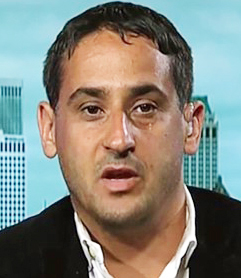
Jeremy Kuzmarov holds a Ph.D. in American history from Brandeis University and has taught at numerous colleges across the United States. He is regularly sought out as an expert on U.S. history and politics and co-hosts a radio show on New York Public Radio and on Progressive Radio News Network called “Uncontrolled Opposition.”
He is Managing Editor of CovertAction Magazine and is the author of eight books, including Obama’s Unending Wars (Clarity Press, 2019), The Russians Are Coming, Again, with John Marciano (Monthly Review Press, 2018), Warmonger. How Clinton’s Malign Foreign Policy Launched the U.S. Trajectory From Bush II to Biden (Clarity Press, 2023); with Dan Kovalik, Syria: Anatomy of Regime Change (Baraka Books, 2025), and Political Assassinations in America: The Intricate Nexus of Deep State Crime (Clarity Press, 2026).
Besides these books, Kuzmarov has published hundreds of articles and contributed to numerous edited volumes, including one in the prestigious Oxford History of Counterinsurgency .
He can be reached at jkuzmarov2@gmail.com and found on substack here.


 Radhika Desai is a Professor of Political Studies at the University of Manitoba, Winnepeg, Canada, Director of its Geopolitical Economy Research Group, and Convenor of the International Manifesto Group. Ms. Desai is an author of multiple books, including Geopolitical Economy(2013) and her most recent Capitalism, Coronavirus and War(2022). Ms. Desai hosts a fortnightly show, Geopolitical Economy Hour on the Geopolitical Economy Report website.
 Yan Pan is a Chinese PhD researcher at LUT University, Finland. Her work examines the political economy of China’s technological and industrial development, with a particular focus on the industrialization and governance of neurotechnology in China. Her research concerns industrial policy models for future industries in Chinese and Global South contexts. Prior to her PhD, she researched educational reforms and structural change in labor demand in China.
 Ken Hammond is professor emeritus of East Asian and Global History at New Mexico State University. He has lived and worked in China from time to time since 1982. A lifelong political activist, he is a member of the Party for Socialism and Liberation.


