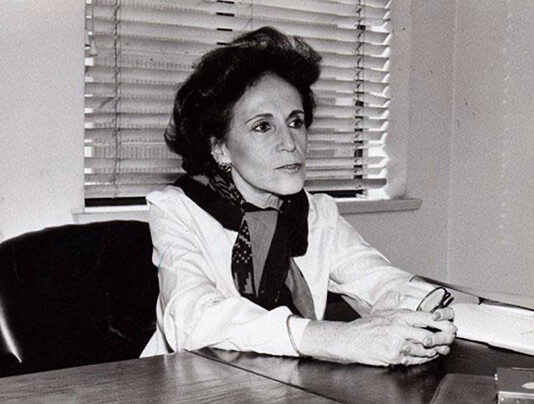
The election of a Pinochet admirer as Chile’s new president shows that the evils she devoted her life to fighting have not been eradicated
The election of José Antonio Kast in Chile, an extreme right-wing admirer of fascist dictator Augusto Pinochet (1973-1990), has brought fears of a return to Chile’s...

The first round of Chile’s presidential election determined that center-left government candidate Jeannette Jara and far-right opposition leader José Antonio Kast will face off in the December 14 runoff. Although Jara won the first round with 26.75%—3,446,854 votes—against Kast’s 23.96%—3,086,963 votes—everything suggests that the right will win the second...
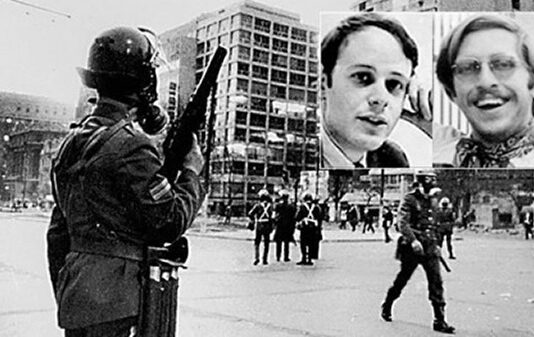
American embassy and CIA were complicit in their killings and the cover-up
On September 11, 1973, General Augusto Pinochet launched a fascist coup in Chile that deposed Salvador Allende, a democratically elected socialist who had nationalized Chile’s copper industry and enacted other measures designed to equalize wealth in Chile.
Supported by...
Black America has the term “Uncle Tom” for sellouts. In South America, a “vendepatria” is someone who is willing to sell their homeland to the highest bidder. Simón Bolívar, José Marti and Jan-Jak Dessalin conceived of a united, integrated Americas, or “la patria grande,” “the big fatherland;” and fought...

 Radhika Desai is a Professor of Political Studies at the University of Manitoba, Winnepeg, Canada, Director of its Geopolitical Economy Research Group, and Convenor of the International Manifesto Group. Ms. Desai is an author of multiple books, including Geopolitical Economy(2013) and her most recent Capitalism, Coronavirus and War(2022). Ms. Desai hosts a fortnightly show, Geopolitical Economy Hour on the Geopolitical Economy Report website.
 Yan Pan is a Chinese PhD researcher at LUT University, Finland. Her work examines the political economy of China’s technological and industrial development, with a particular focus on the industrialization and governance of neurotechnology in China. Her research concerns industrial policy models for future industries in Chinese and Global South contexts. Prior to her PhD, she researched educational reforms and structural change in labor demand in China.
 Ken Hammond is professor emeritus of East Asian and Global History at New Mexico State University. He has lived and worked in China from time to time since 1982. A lifelong political activist, he is a member of the Party for Socialism and Liberation.