As cities and towns are faced with rising poverty, homelessness and drug addiction, the authorities respond with more social control, using a technology that makes George Orwell’s 1984 seem tame
I’m seated in the police Zoom briefing with other council members representing Hastings, my small English seaside town in East...
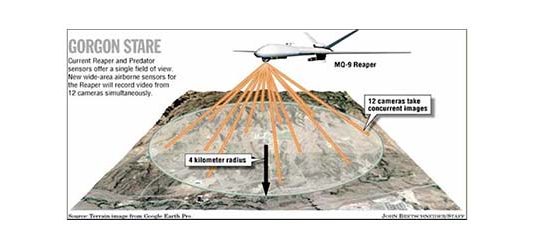
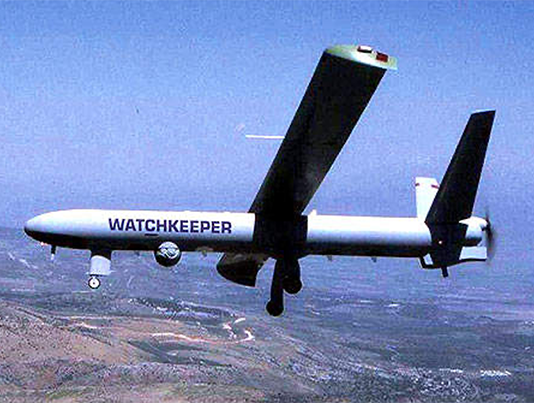
Drones, or Unmanned Aircraft Systems (UAS), were developed for war. The idea was first conceived in World War I and they were first adopted for surveillance purposes at the end of World War II and in the Korean and Vietnam Wars. Then military drones like the Predator became armed...
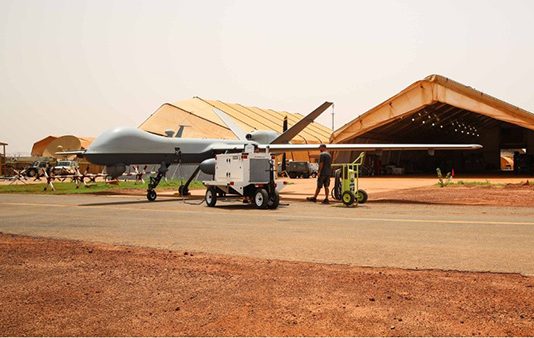
The Wall Street Journal reported on January 4 that talks were under way as the Biden administration was seeking to establish drone bases at airfields in Ghana, Ivory Coast and Benin following a coup in Niger over the summer that jeopardized the U.S. military position there.
Stars and Stripes magazine...

Citizen activism to bring about changes in how brutal wars are conducted is extremely difficult, but not impossible. Citizens have successfully pushed through the United Nations General Assembly treaties to abolish nuclear weapons and to ban the use of landmines and cluster munitions.
Of course, countries that want to continue to...


 Radhika Desai is a Professor of Political Studies at the University of Manitoba, Winnepeg, Canada, Director of its Geopolitical Economy Research Group, and Convenor of the International Manifesto Group. Ms. Desai is an author of multiple books, including Geopolitical Economy(2013) and her most recent Capitalism, Coronavirus and War(2022). Ms. Desai hosts a fortnightly show, Geopolitical Economy Hour on the Geopolitical Economy Report website.
 Yan Pan is a Chinese PhD researcher at LUT University, Finland. Her work examines the political economy of China’s technological and industrial development, with a particular focus on the industrialization and governance of neurotechnology in China. Her research concerns industrial policy models for future industries in Chinese and Global South contexts. Prior to her PhD, she researched educational reforms and structural change in labor demand in China.
 Ken Hammond is professor emeritus of East Asian and Global History at New Mexico State University. He has lived and worked in China from time to time since 1982. A lifelong political activist, he is a member of the Party for Socialism and Liberation.