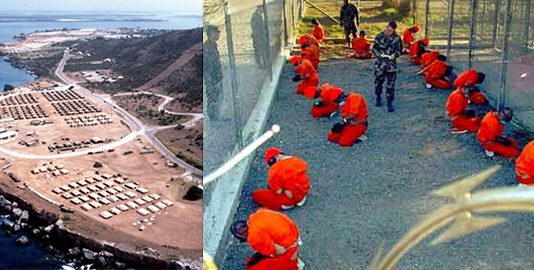
In 2020 Campaign Biden Promised to Close Facility, But Has Actually Upgraded It
During the 2020 election campaign, Joe Biden followed Barack Obama in promising to close the prison at Guantánamo Bay, which had become an embarrassing symbol of human rights violations.
The move made sense geo-strategically as the Biden...

Guantánamo Bay prison is a monstrosity where hundreds of suspected terrorists have been held and tortured for years, many without being charged of any crime.
To keep their humanity, many of the inmates produced paintings that were featured at a May 2 screening premiere event in Beverly Hills of I...

I Am Gitmo spotlights the story of an Egyptian man who was incarcerated in notorious torture chamber for a decade after being wrongfully accused of being part of 9/11 plot
Gamel Sadek was living a quiet life as a school teacher in Kandahar in March 2002 when his life was...
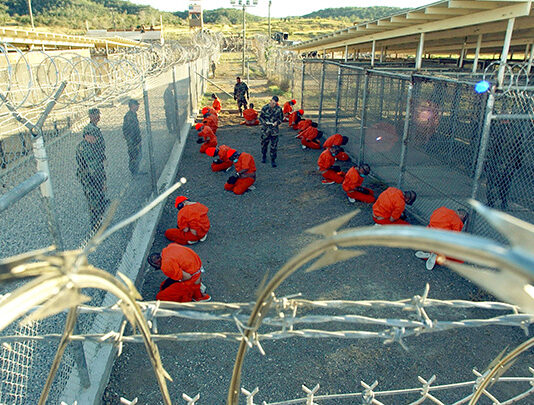
Guantánamo Naval Base Also Used for Migrant Detentions in 2025
On January 11, 2026, thousands of citizens of many countries held vigils for the 15 men still in the U.S. military prison at the U.S. Naval Base at Guantánamo, Cuba.
As these citizens have been doing for more than two decades,...


 Radhika Desai is a Professor of Political Studies at the University of Manitoba, Winnepeg, Canada, Director of its Geopolitical Economy Research Group, and Convenor of the International Manifesto Group. Ms. Desai is an author of multiple books, including Geopolitical Economy(2013) and her most recent Capitalism, Coronavirus and War(2022). Ms. Desai hosts a fortnightly show, Geopolitical Economy Hour on the Geopolitical Economy Report website.
 Yan Pan is a Chinese PhD researcher at LUT University, Finland. Her work examines the political economy of China’s technological and industrial development, with a particular focus on the industrialization and governance of neurotechnology in China. Her research concerns industrial policy models for future industries in Chinese and Global South contexts. Prior to her PhD, she researched educational reforms and structural change in labor demand in China.
 Ken Hammond is professor emeritus of East Asian and Global History at New Mexico State University. He has lived and worked in China from time to time since 1982. A lifelong political activist, he is a member of the Party for Socialism and Liberation.