But 1st A “Healthy Left” Recap By British Agents Toning Down Brazil
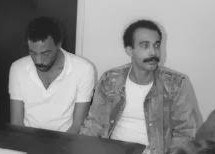
“Rogério Lemgruber, founder of the Red Command (CV), lived on my block #38…He taught us to be revolutionary. In his house he raised a hammer and sickle because the Red Command evolved from ties between political prisoners of the ALN [Ação Libertadora Nacional] and MR-8 [Movimento Revolucionário 8 de Outubro, an armed group which former Brazilian President Dilma Rousseff was a member].”
— Celso Athayde, author and founder of Central Única das Favelas (CUFA), speaks about Rogério Lemgruber during his years growing up in the Sapo favela (Rio de Janeiro).
If the passage of time, in of itself, does not represent change, then most of South America is a prime example of this concept.
Just 45 years elapsed between Brazil becoming the last country in the Western Hemisphere to legally abolish chattel slavery (1888) and the rise of Nazi Germany (1933).
To this day, Brazilian authorities “rescue” thousands of victims, like an unnamed 86-year-old woman who labored as an unpaid domestic for 72 years in the home of an unnamed family in Rio de Janeiro, lied to, exploited and abused to the point of euphemizing such crimes as being “work analogous to slavery.”
Far from cases confined to private civilians, in 2023, 50-year-old Sônia Maria de Jesus, abducted when she was only nine, was “rescued” from the home of Santa Cantarina court judge Jorge Luiz de Borja in another “labor analagous to slavery” operation.
Falsely claiming that Maria de Jesus was a member of his family, the court determined, “[B]ased on the past 40 years, the supposed victim of the crime has lived as if she were a member of their family,” absolving Luiz de Borja and his wife, Ana Cristina Gayotto de Borba, of any wrongdoing.
Only 14 years passed between Hitler’s defeat in World War II (1945) and the defeat of Cuban dictator Fulgencio Batista (1959). The end of the war waged in Europe witnessed top Nazi officials (i.e., Gustav Wagner, Ludolf von Alvensleben, Walter Rauff, etc.) don civilian clothes, making their exit from Berlin’s inferno to Brazil, Argentina, Chile and other regional countries, This group included Nazi officers, like Michael Kast, father of José Antonio Kast, Chile’s new president and Augusto Pinochet fan-boy.
Worse still is how progressive leader and former Chilean President Gabriel Boric, like his recently imprisoned counterpart, leftist and former Bolivian President Luis Arce literally handed over their administrations to the far-right on a silver platter.
The implications behind such dramatic changes are worth long overdue deliberations and effective means of weeding out such individuals. Discounting evident unity in cause and purpose, the strength of the right, at least in this region, pales in comparison to the foibles, retardation, decadence, as well as tribal opportunist and traitor-ridden disunity, of “the left.”

East of Chile, third-term Brazilian President Luíz Inácio Lula da Silva vows to give the “far-right” and their “fascist” policies an “(ass)-whupping” in the 2026 presidential election. With former head-of-state Jair Bolsonaro convicted of plotting a coup, only time will tell which far-right candidate(s) will contest “the greatest leftist leader in Brazil.”
Nevertheless, in this political vortex, where mainstream and alternative media pit the right versus the left akin to a football match despite both sides sharing similar state-creation myths, it is instructional to review how others, particularly Western intelligence agents, viewed and, in many ways, nurtured and cultivated the Brazilian left during the Cold War.
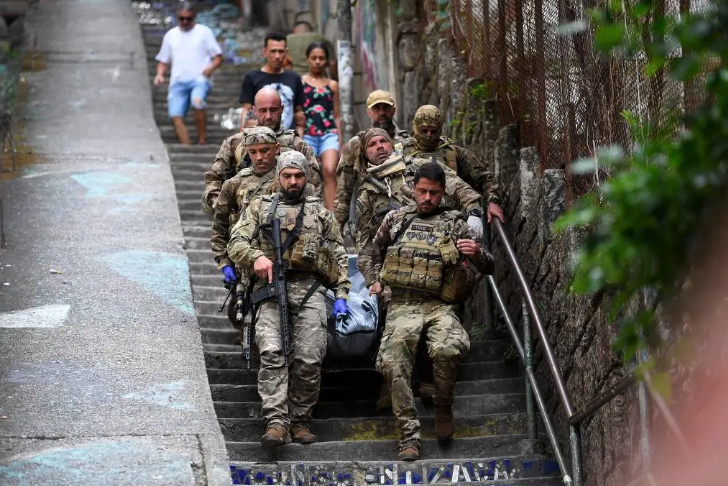
For the South American giant, where favelados (local favela residents) speak candidly of not being able to distinguish between the end of the military dictatorship and return to democracy, considering repeated invasions into their communities, this recap is also well overdue.
“Healthy Progressive Thought” Versus What?
“People will never know the shortcomings or virtues of Rogério [Lemgruber] but what does that matter? Myths serve for good or bad references…When he was chillin’, Rogério gathered youths to tell stories. Our mothers could not know about our meetings because he was the living embodiment of crime. But that word had nothing to do with killings, evilness, or cowardly acts. Crime, to him, meant assaults and trafficking to sustain the organization’s [Red Command or CV] base, including members’ families, never disrespecting locals. He would say: ‘I do not want idiot thugs. No. I do not want idiot favelados here.”
— Celso Athayde
British intelligence officer Robert Evans and several of his colleagues, including diplomats and media professionals, spared no verbiage in detailing their efforts to suppress, maneuver and, ultimately, control the Brazilian left. Operating within the context of Cold War Western propaganda campaigns, their quotes, comments and reports give insight into the mindset and focus of covert operations, pinned as much on dividing and weakening leftist groups as providing material support to the right.
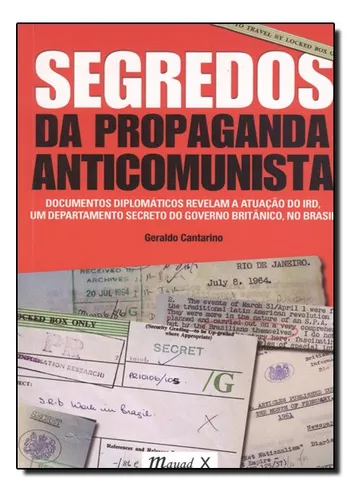
The following excerpts are included in the trove of declassified documents author Geraldo Cantarino reviewed at Britain’s National Archives and published in his book Segredos da Propaganda Anti-comunista (Anti-Communist Propaganda Secrets) [Rio de Janeiro: Mauad, 2011]. Yet to be digitized for wider circulation, the following statements and writings are translated from his reporting in Portuguese.
Robert Evans
(British Foreign Office field officer specifically trained and dedicated exclusively to the Information Research Department’s (IRD) activities. Stationed at the British Embassy in Rio de Janeiro in the 1960s, he is quoted as using the term the “healthy left.” Operating from 1948 to 1977, the IRD was a secret unit of Britain’s Foreign Office that coordinated anti-communist propaganda activities during the Cold War.)
- “Brazil is one of the few underdeveloped countries with a genuinely reformist liberal left. It contains a durable anti-communist nucleus. The common denominator is a form of nationalism characterized by anti-Americanism opposed to any kind of external domination or foreign pressure. This movement contains the majority of left-wing intellectuals who aren’t communist converts.”
- [Writing about the Brazilian state of Bahia after traveling to the country’s northeast region in 1962] “The spread of education is making the new generation militant in their fight to change the feudal structure which has existed since colonial times. Besides that, the state’s vast interior possesses a revolutionary tradition.”
- [On September 2, 1964, Evans wrote a confidential document addressing Brazil’s 1964 military coup, which he and others in Britain’s diplomatic corps and intelligence community referred to as a “Revolution”] “[S]ome organizations and groups created to counter communism during [João] Goulart’s regime have swallowed so much of their own medicine that they now position themselves much further to the right than is needed for the country’s future.”
Ronnie Burroughs
(Chargé d’Affaires at the British Embassy in Rio de Janeiro in 1962)
- “Surely our tactics should be providing assistance to and encouraging those people who offer healthy solutions on the left…Classic anti-communist propaganda must continue, however, in my opinion, it is of less importance.”
George Littlejohn Cook
(Information Officer at the British Embassy in Rio de Janeiro [1964-1966])
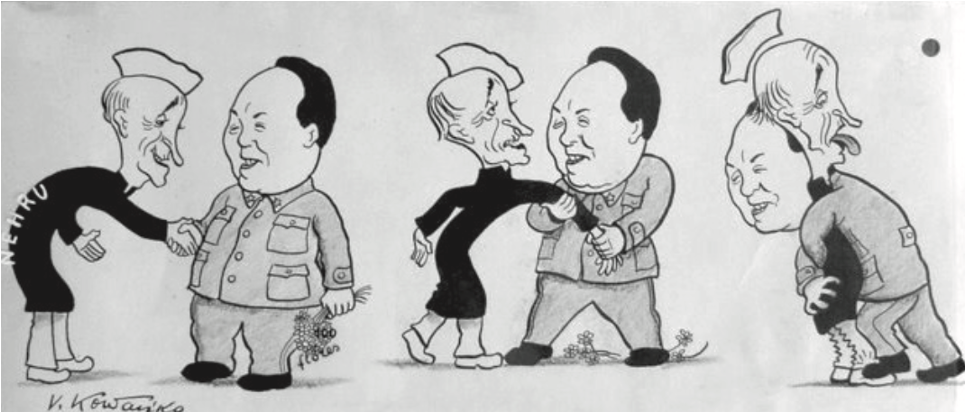
- “With introspective attitudes, Brazilians are uninterested in international affairs or the machinations of international communism. Cuba is practically their only contact and their admiration for [Fidel] Castro will be much less affected by U.S. propaganda than the gradual realization that he was unable to fulfill his initial dreams. Our content will lose impact if it’s distributed through the same channels utilized by the Americans. We can better influence Brazilian opinion leaders if we produce material related to Brazilian problems and, presumably, not by Americans or Europeans but Brazilians.”
- “Our assignment in Brazil, within the IRD, as well as our public propaganda, is not so much launching a frontal counter-attack against communism but to help Brazilians help themselves. Once we have a clear vision of the type of political and social structure we’d like to see emerge, the best way to do this is to invite more Brazilians to visit the United Kingdom and distribute material that doesn’t simply project the British way of life or assaults communism directly. Instead, it should contribute to healthy progressive thought, which is already seeking to transform Brazilian society without resorting to any form of revolutionary solutions.”
- “The U.S. embassy is already doing large-scale anti-communist work. The question is if expanding our work represents an anti-economic duplication? The Americans admit that some printed IRD materials are superior to what they receive from Washington, so, at times, they just translate and distribute IRD booklets. Is it not sufficient enough for us to just encourage them to do this on a larger scale?”
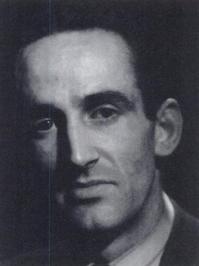
Brian Crozier
(An Australian author and journalist who wrote a long-form report titled “Travels Through Latin America” (1965). Published in Encounters, this magazine was later revealed to be financed by the CIA. In this excerpt, Crozier discusses the 1964 Brazilian military coup.)
- “Everything ended on the 02 April and that’s when the repression began…[I]t was typical Brazilian repression, decisive but not overly violent and far from terror. Brazil is not like Cuba with its mass execution squads and heaps of corpses. However, as in all repressions, you had foolishness and aberrations.”
“Healthy Left”
“One beautiful day, Bagulhão [Rogério Lemgruber’s nickname] came to the favela. After escaping from [Candido Mendes Prison on] Ilha Grande, he gave books to a bunch of folks, including me, insisting that we read. In six months we would have to respond to debate questions and those unable to answer would take a bullet to the hand.”
— Celso Athayde
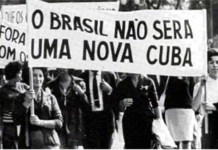
As the Cold War progressed, intensifying in the Western Hemisphere following the triumph of the Cuban Revolution, Brazil became the object of concern for foreign affairs policymakers in multiple Western capitals. If not for its ideological shackle of “racial democracy,” demonstrating cleverness on a par with neo-colonial club members and their state creation myths, then more pro-active measures would be unleashed to assure a domino of Brazil’s magnitude would not tumble into Havana-Moscow-Beijing’s ideological orbit or that of the Red Command (CV).
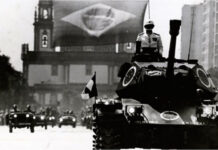
And that is exactly what happened. It happened before, during and after the South American giant’s 1964 military takeover, an event which saw U.S. Marines sailing off the coast of Rio de Janeiro as part of Operation Brother Sam just in case Brazilian coup plotters radioed for back-up. However, with “healthy leftist” resistance to the coup falling like a house of cards, not a single U.S. boot on the ground was needed.
Moving forward, propaganda, covert intelligence and counter-insurgency operations would lead the way in keeping Brazil tucked firmly in the West’s “backyard.” One example was the country’s parliamentary and state elections in 1962. A public inquiry later revealed that the U.S. had funnelled $5 million, twice the cost of John F. Kennedy’s presidential campaign, to support conservative candidates such as João Cleofas de Oliveira.
CV Game-Changer
While 1979 is marked as the official date of the CV’s founding, favelados more in tune with on-the-ground events cite a decade earlier, 1969, as the year the CV (previously called the Red Phalanx) emerged. In either case, the time frame encompasses the height of Brazil’s military dictatorship.
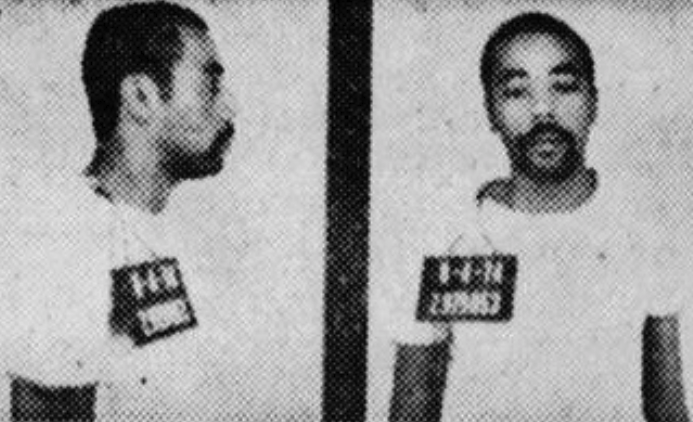
Upholding their cause for “liberty,” the CV planned and carried out prison escapes. Once free, CV cells established themselves in the favelas for security, resorting to “expropriating” banks and armored trucks, the exploits of which were dedicated to fulfill two of their Ten Commandments: (7) Act collectively, and (8) Strengthen those less fortunate.
In practical terms, this meant opening a “caixa” (savings account), monies used to support remaining incarcerated members and their families, as well as finance future prison breaks and invest hard cash to improve historically oppressed communities. However, when left-wing Brazilian political prisoners came face-to-face with locked-down CV members in the 1970s. alliances between the groups had taken an ugly but “healthy leftist” turn.
William da Silva, one of the first CV members who also spent time locked down at Candido Mendes Prison with Lemgruber, and author of the book, 400 Against 1, wrote:
Unity, however, no longer extended beyond the iron gates separating us from armed resistance groups. They [leftist political prisoners] ceased interacting with us. By doing so, they severed, possibly unknowingly, an old prison tradition where revolutionaries and the mass prison population once shared bread, the same cells, and developed our ideals collectively. They had their reasons for doing this but we were not obliged to accept them.
To negate the struggle for amnesty, Brazil’s military dictatorship denied the existence of political prisoners. In this context, members of armed resistance groups from the ’70s, interested in guaranteeing their visibility in national and international public opinion, fought to separate themselves from the mass prison population, an attitude we considered elitist. Their discourse behind the move was coherent but weak. Separation would not determine the existence of political prisoners in Brazil, however, strength of opposition to the regime would. The decision made by [leftist] political prisoners to remain separate meant maintaining their middle-class hegemony and reoccupying political spaces starting to reopen within the dictatorship’s détente policies. We did not share that perspective nor would we be afforded such opportunities. Our only path was the opposite—unity among the incarcerated masses and the continued struggle for freedom based on our own means.
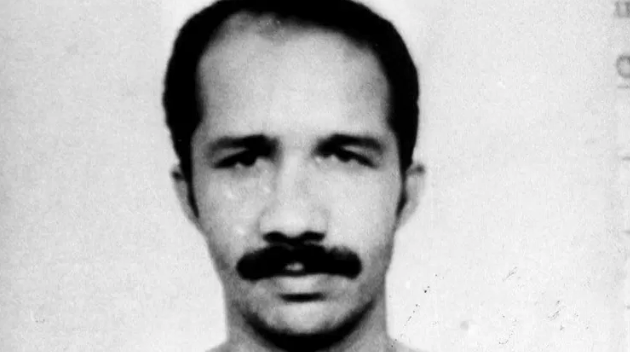
Da Silva’s analysis, expressed decades prior to the British government declassifying secret documents detailing how their intelligence agents burned the midnight oil railroading the left, explains one reason, self-inflicted presumably, as to why such fractures occurred.
Update
In December 2025, Brazil’s Finance Minister and a presumed successor to Lula, Fernando Haddad, met with U.S. Embassy officials to sign an “anti-crime” agreement. In the Brazilian context “anti-crime” is synonymous with “criminal gangs,” “narco-terrorists,” the CV, and similar groups emergent from on-going state violence and repression.
Language in the agreement is mostly restricted to combatting illicit funds; however, actions behind carrying out these operations can be interpreted to mean and justify almost anything.
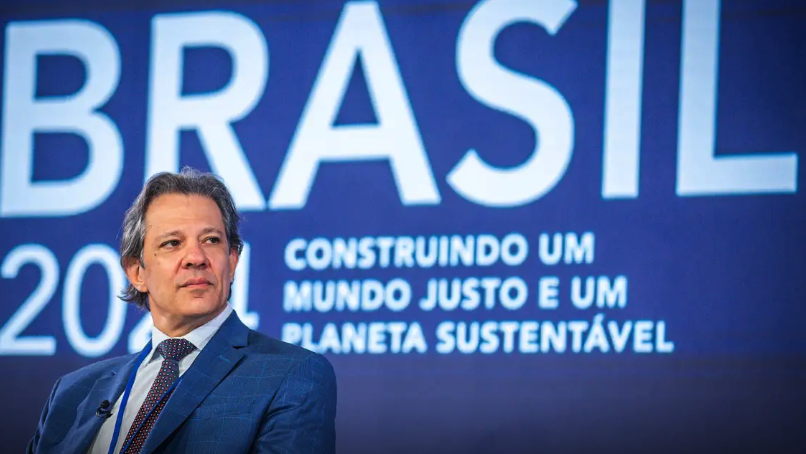
The U.S.-Brazilian “anti-crime” agreement comes during on-going negotiations between the two countries to remove or reduce 50% export tariffs imposed on the South American country by the Trump administration. Also during this period, Brazil’s Senate unanimously approved an “anti-gang” law. Passed on December 10, maximum convictions for gang leaders have increased to anywhere between 60 and 120 years in prison.

CovertAction Magazine is made possible by subscriptions, orders and donations from readers like you.
Blow the Whistle on U.S. Imperialism

Click the whistle and donate
When you donate to CovertAction Magazine, you are supporting investigative journalism. Your contributions go directly to supporting the development, production, editing, and dissemination of the Magazine.
CovertAction Magazine does not receive corporate or government sponsorship. Yet, we hold a steadfast commitment to providing compensation for writers, editorial and technical support. Your support helps facilitate this compensation as well as increase the caliber of this work.
Please make a donation by clicking on the donate logo above and enter the amount and your credit or debit card information.
CovertAction Institute, Inc. (CAI) is a 501(c)(3) non-profit organization and your gift is tax-deductible for federal income purposes. CAI’s tax-exempt ID number is 87-2461683.
We sincerely thank you for your support.
Disclaimer: The contents of this article are the sole responsibility of the author(s). CovertAction Institute, Inc. (CAI), including its Board of Directors (BD), Editorial Board (EB), Advisory Board (AB), staff, volunteers and its projects (including CovertAction Magazine) are not responsible for any inaccurate or incorrect statement in this article. This article also does not necessarily represent the views the BD, the EB, the AB, staff, volunteers, or any members of its projects.
Differing viewpoints: CAM publishes articles with differing viewpoints in an effort to nurture vibrant debate and thoughtful critical analysis. Feel free to comment on the articles in the comment section and/or send your letters to the Editors, which we will publish in the Letters column.
Copyrighted Material: This web site may contain copyrighted material the use of which has not always been specifically authorized by the copyright owner. As a not-for-profit charitable organization incorporated in the State of New York, we are making such material available in an effort to advance the understanding of humanity’s problems and hopefully to help find solutions for those problems. We believe this constitutes a ‘fair use’ of any such copyrighted material as provided for in section 107 of the US Copyright Law. You can read more about ‘fair use’ and US Copyright Law at the Legal Information Institute of Cornell Law School.
Republishing: CovertAction Magazine (CAM) grants permission to cross-post CAM articles on not-for-profit community internet sites as long as the source is acknowledged together with a hyperlink to the original CovertAction Magazine article. Also, kindly let us know at info@CovertActionMagazine.com. For publication of CAM articles in print or other forms including commercial internet sites, contact: info@CovertActionMagazine.com.
By using this site, you agree to these terms above.
About the Author
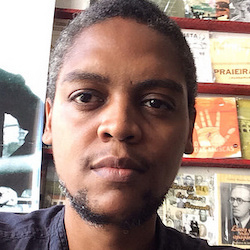
A former editor-at-large for African Stream and ex-staff writer at Telesur, Julian Cola is publishing a memoir of intimate, community-inspired stories titled “Proibidão (Big Prohibited): Off-Grid Correspondence From Brazil & Ecuador.”
The pre-launch is in December 2025. It includes media beefs and, having taught in the teaching-English-industrial-complex, the book discusses linguistic soft-power in the region and creative ways of dealing with it as mentioned in the essay, Listening To 2Pac In The Andes (Kawsachun News).
For more information contact: traducoessemfronteiras@protonmail.com