Leary Helped Destroy the 1960s New Left by Turning the Youth onto Drugs
[This article follows CAM’s efforts to expose the CIA’s dark and often bizarre history to new generations of people.—Editors]
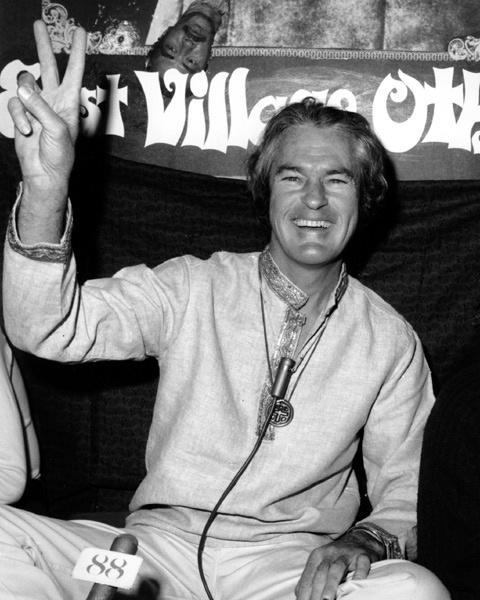
During the mid-1960s, as political activism against the Vietnam War and other social ills skyrocketed, Dr. Timothy Leary, a former University of California at Berkeley and Harvard professor, traveled the U.S. urging young people to “turn on” to lysergic acid diethylamide (LSD), “tune in and drop out” of “high school, junior executives” and other societal institutions.
Leary had been fired after distributing LSD to students at Harvard in 1963 and subsequently moved to the Millbrook Estate in New York where he continued to carry on experiments with LSD through a foundation that he established.
At the time, Leary’s message seemed subversive.
Leary was touting LSD as a consciousness-expanding drug that could induce sexual euphoria among women and lead to the development of a more peaceful society.
However, in hindsight, Leary proved to be a false prophet who helped destroy the 1960s movements by pushing young people to take a drug that fried their brains and diverted their energy from political activism.
Carl Oglesby, the one-time president of Students for a Democratic Society (SDS), the leading 1960s-era campus anti-war organization, wrote in 1988 that “we have to contemplate the possibility that the great American acid trip, no matter how distinctive of the rebellion of the 1960s it came to appear, was in fact the result of a despicable government conspiracy….If U.S. intelligence bodies collaborated in an effort to drug the entire generation of Americans, then the reason they did so was to disorient it, sedate it, and depoliticize it.”
An examination of Leary’s career makes it apparent that U.S. intelligence bodies were, indeed, behind the drugging of American youth.
Leary himself said in an interview with journalist Walter Bowart near the end of his life that he was working as an intelligence agent since 1962. “I was a witting agent of the CIA” which, he claimed, had recognized him as “an important national asset.”
Asked by Bowart to elaborate on whether CIA people were involved in his LSD-proselytizing groups in the 1960s, Leary responded: “Of course they were. I would say that eighty percent of my movements, eighty percent of the decisions I made were suggested to me by CIA people.”
Leary continued: “I like the CIA! The game they’re playing is better than the FBI. Better than the Saigon police. Better than Franco’s police. Better than the Israeli police. They’re a thousand times better than the KGB. So it comes down to: who are you going to work for? The Yankees or the Dodgers?”[1]
Doing Exploratory Work for the CIA
Possessing a wild and rebellious streak, Leary’s connection to the CIA went back to the 1950s when, as a young psychology professor, he developed a personality test called “the Leary” that was used by the CIA.[2]
At the time, Leary was a professor of clinical psychology at the University of California at Berkeley and Director of Psychology Research at the Kaiser Foundation Hospital in Oakland.
Coming from a military family, Leary’s father Tote had been a dentist with the rank of captain at West Point when Douglas MacArthur was Superintendent there.[3]
After agreeing to leave West Point following issues with the so-called “honor committee” because of his womanizing tendencies, Leary was drafted into the U.S. Army in 1943 and was sent to the psychology subsection of the Army Specialized Training Program, which included three months of specialized study at Georgetown University.
By the time he obtained his Ph.D. from UC Berkeley, Leary had sought to liberalize the way that psychologists interacted with their patients, believing that the therapist ought to be a “democratic participant” in group therapy sessions rather than an outside authority figure.[4]
Leary’s viewpoint dovetailed with the burgeoning anti-psychiatry movement that sought to humanize the psychiatric profession.[5]
Believing that “everything that could be found in mental disorder could be found in anyone,” Leary said that “the world was a madhouse,” and that insane asylums were “more terrifying than Dachau because the captors claim to be healers.”[6]
Based on a review of data collected from hundreds of patients, Leary’s 1957 book The Interpersonal Diagnosis of Personality (John Wiley & Sons) depicted social interaction as a kind of game in which people played assigned roles they could be coached to improve upon, or modify if they were unhappy.
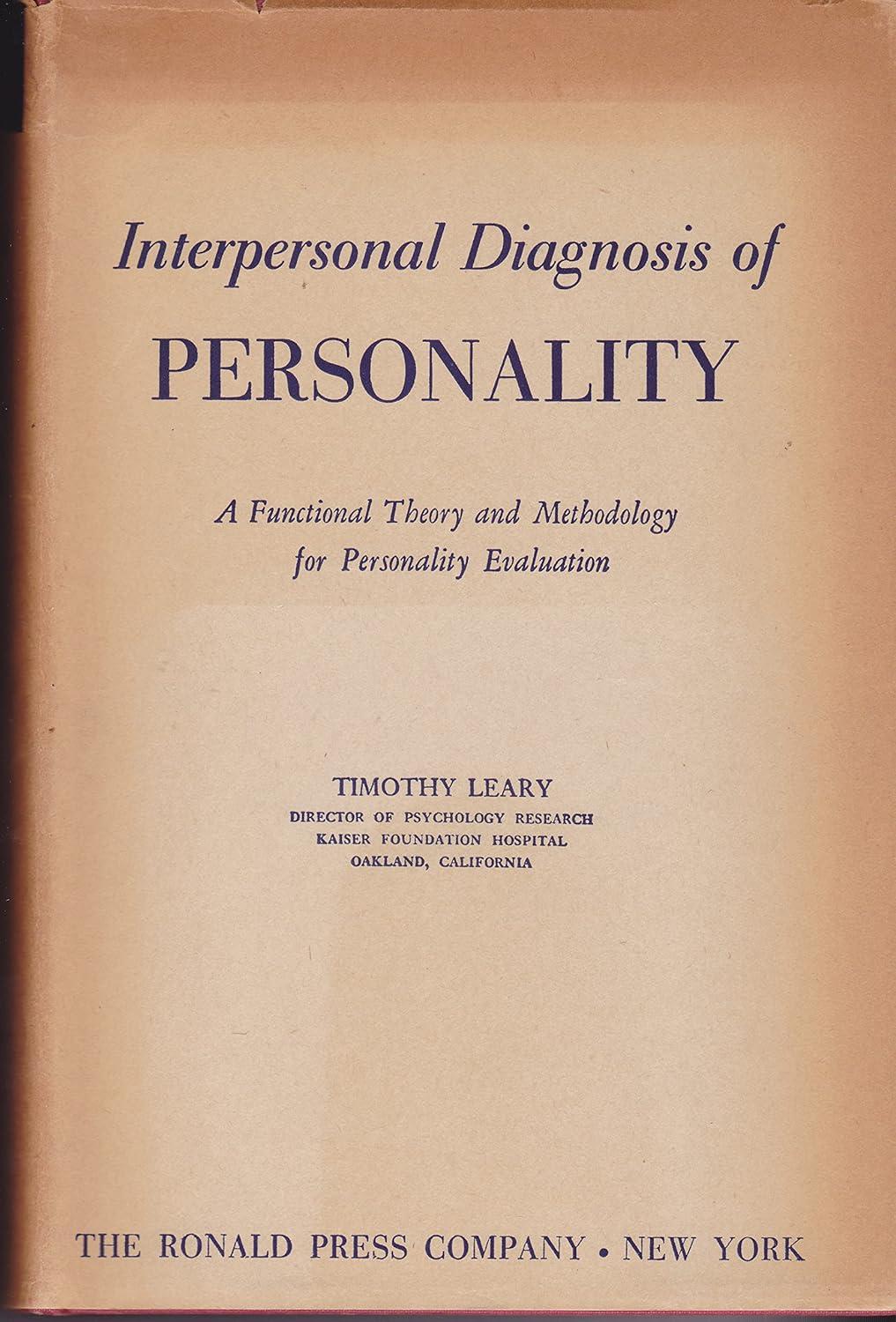
The book was considered by colleagues to be “very creative” and a “masterpiece” that provided for a “different way of thinking.”[7]
The CIA gravitated to Leary—who had a genius-level IQ—because the personality archetypes he laid out could help the Agency manipulate people. Additionally, his research aimed to find ways to change human behavior—including through dispensation of psychedelic drugs in a controlled setting, which was a CIA obsession.[8]
Leary admitted to interviewer Walter Bowart that personality-assessment research in the late 1940s and 1950s was an offshoot of an Office of Strategic Services (OSS) research project and was “CIA initiated.”[9]
The OSS project had been headed by Dr. Henry Murray, Leary’s boss at Harvard in the early 1960s, and Donald W. MacKinnon, a OSS alumni and UC Berkeley psychologist who collaborated with Leary at Harvard in the early 1960s.
In 1948, while completing his Ph.D. at UC Berkeley, Leary became acquainted with influential CIA operative Cord Meyer, Jr., as a member of the American Veterans Committee (AVC), a liberal alternative to the American Legion and the Veterans of Foreign Wars.
Founded by the CIA, the AVC sought to elect Harry S. Truman over Republican challenger Thomas Dewey in the 1948 election. Leary was said to have brought enormous energy and a lot of ideas for fundraising to the organization.[10]
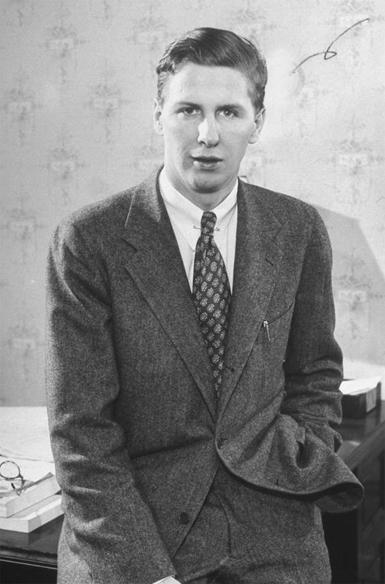
Leary credited Cord Meyer—who led the purging of communists in AVC—with “helping me understand my political-cultural role more clearly.”[11]
Lecturing Leary about communism and the importance of liberal resistance to it, Meyer had headed CIA programs that infiltrated liberal-left groups such as labor unions, creative-academic societies and student groups.
In his memoir Flashbacks, Leary recounted receiving a visit when he was teaching at Harvard from Cord Meyer, Jr.’s ex-wife, Mary Pinchot Meyer, who took part in an LSD session with him.
After that session, Meyer gave a lecture on the CIA’s interest in using such drugs for brainwashing and interrogation, which she seemed to know a lot about. Leary believed that “there was something calculated about Mary, that tough hit you get from people who live in the hard political world.”[12]
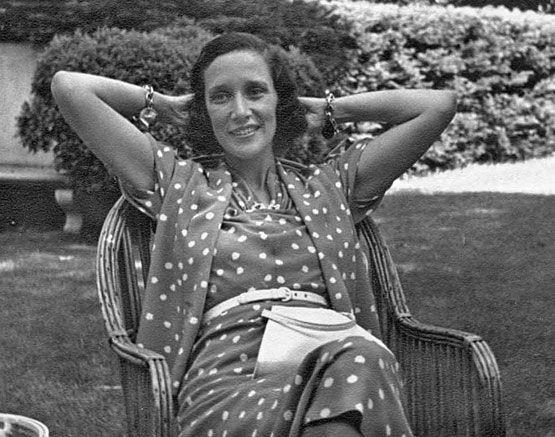
Later, Leary learned that Meyer had an affair with President John F. Kennedy. He came to believe that she was murdered in October 1964 for giving LSD to the president and recording this information in her diary, which the CIA seized after her death.[13]
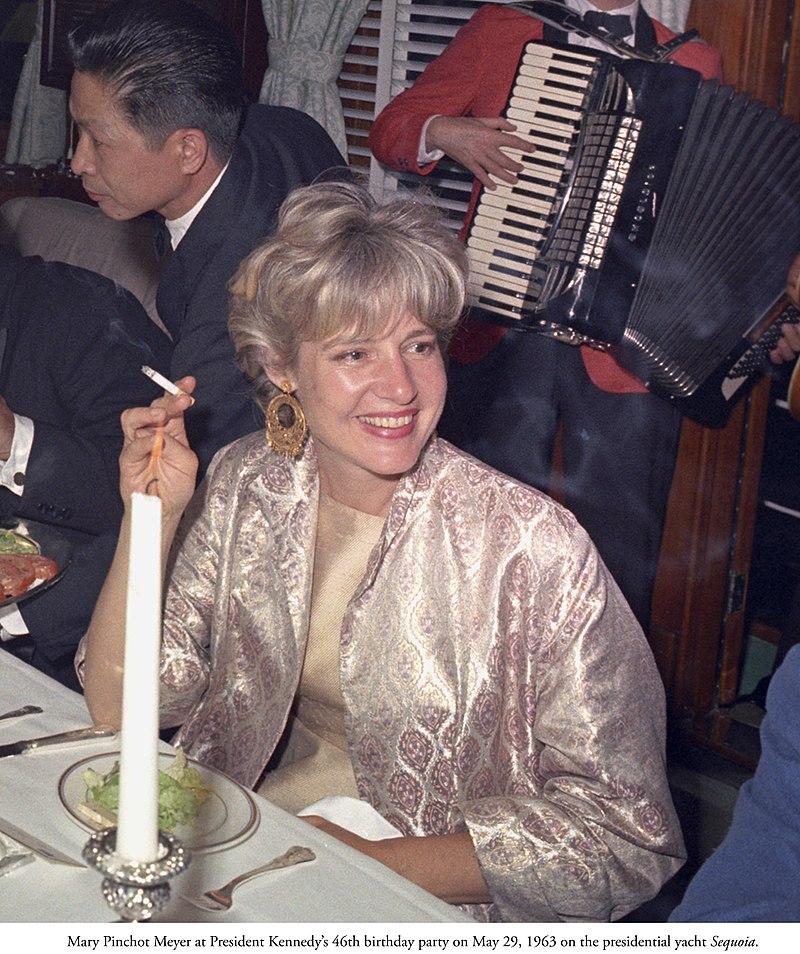
Leary’s ties to the Meyer’s appear to be crucial in his relationship with the CIA.[14] Meyer had told Leary: “The CIA creates the radical journals and student organizations and runs them with deep-cover agents. Dissident organizations in academia are also controlled.”[15] Included, presumably, was the psychedelic club run by Leary at Harvard.
Allegedly Meyer told Leary: “Since your research is of vital importance to the intelligence agencies of the country, you’ll be allowed to go on with your experiments as long as you keep it quiet. You are doing exploratory work the CIA tried to do in the 1950s. So they’re more than happy to have you do their research for them. As long as it doesn’t get out of hand.”[16]
Fighting a War at the Neurological Level
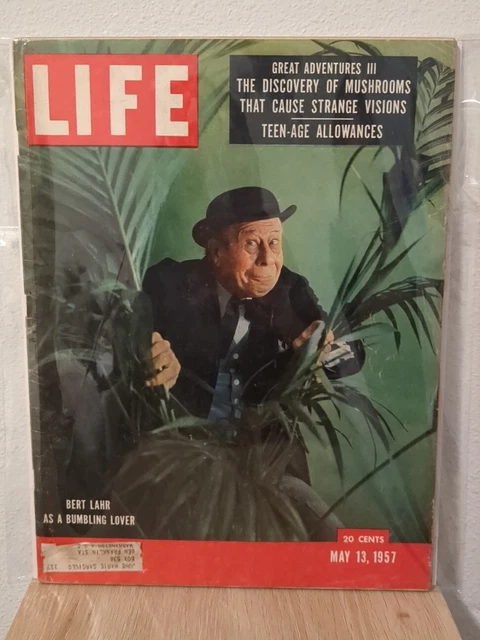
Leary claimed to have had some kind of spiritual and religious epiphany while taking magic mushrooms in Cuernavaca, Mexico, in the summer of 1960. He was also said to have been inspired by a 1957 Life magazine article by Gordon Wasson, a J.P. Morgan vice president with intimate ties to the intelligence establishment, who supposedly had a profound spiritual experience taking magic mushrooms in Mexico.
Offered a position at Harvard for the 1960-1961 academic year, Leary began teaching courses on the use of psychedelic drugs and carried out LSD experiments with his colleague, Dr. Richard Alpert.
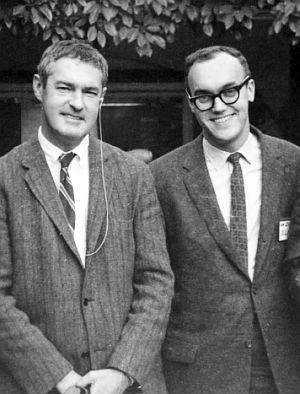
Dr. Aldous Huxley and Dr. Humphry Osmond appear to have selected Leary as a key person to advance research on psychedelic drugs in the service of the Cold War and arranged for his position at Harvard.[17]
Grandson of one of the founders of the Rhodes Round Table group, an elite body that aimed to advance the interests of the British empire, Huxley was the author of the 1954 book The Doors of Perception extolling the consciousness-expanding effect of hallucinogenic drugs and a visiting professor at MIT who had been brought in to help oversee Operation MK-ULTRA by CIA Director Allen Dulles. MK-ULTRA was a CIA mind-control program designed to develop methods for better controlling human behavior.[18]
Dr. Osmond also conducted research for Operation MK-ULTRA at Princeton and the University of Saskatchewan, working closely with Dr. Carl Pfeiffer of Emory University, who was a key academic figure involved in MK-ULTRA.
Drs. Osmond and Huxley were allegedly introduced to LSD by Captain Al Hubbard, a special investigative agent for the OSS in World War II who was known as the “Johnny Appleseed of LSD.”
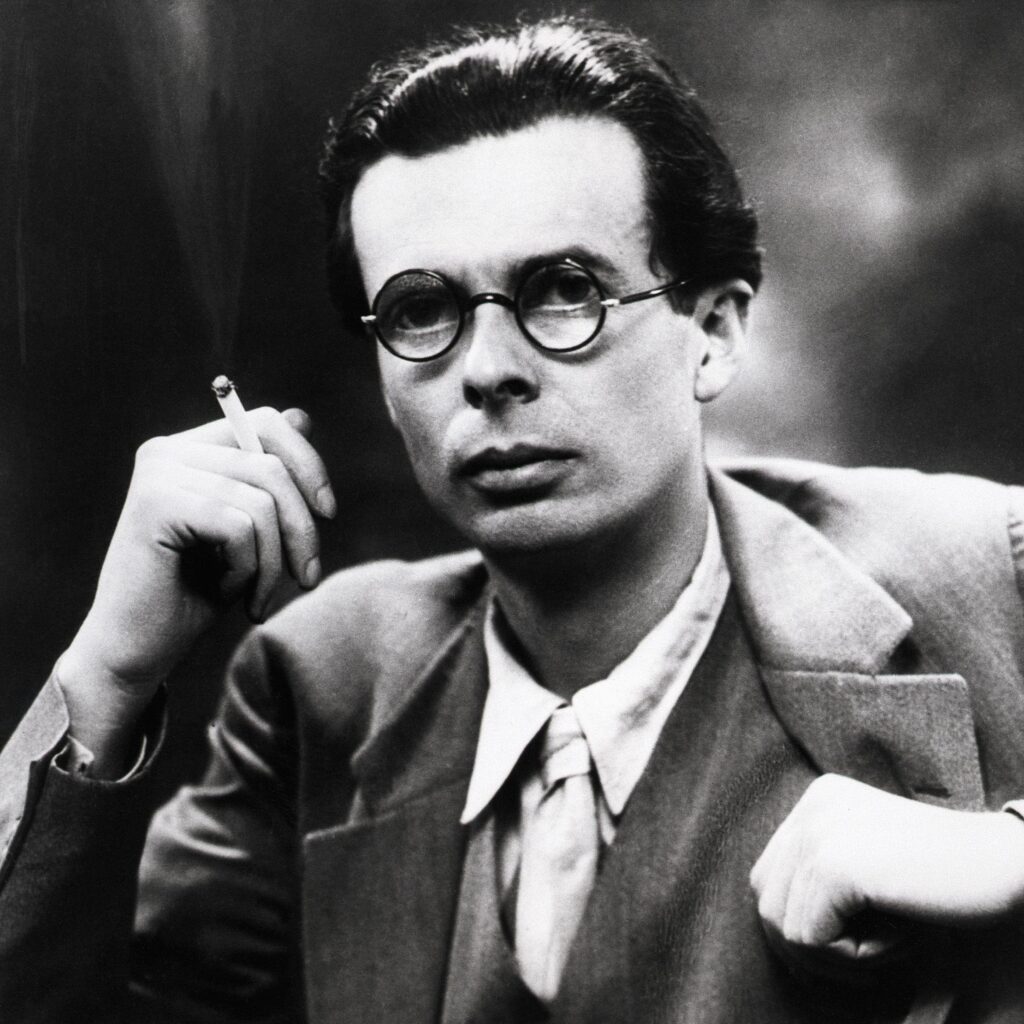
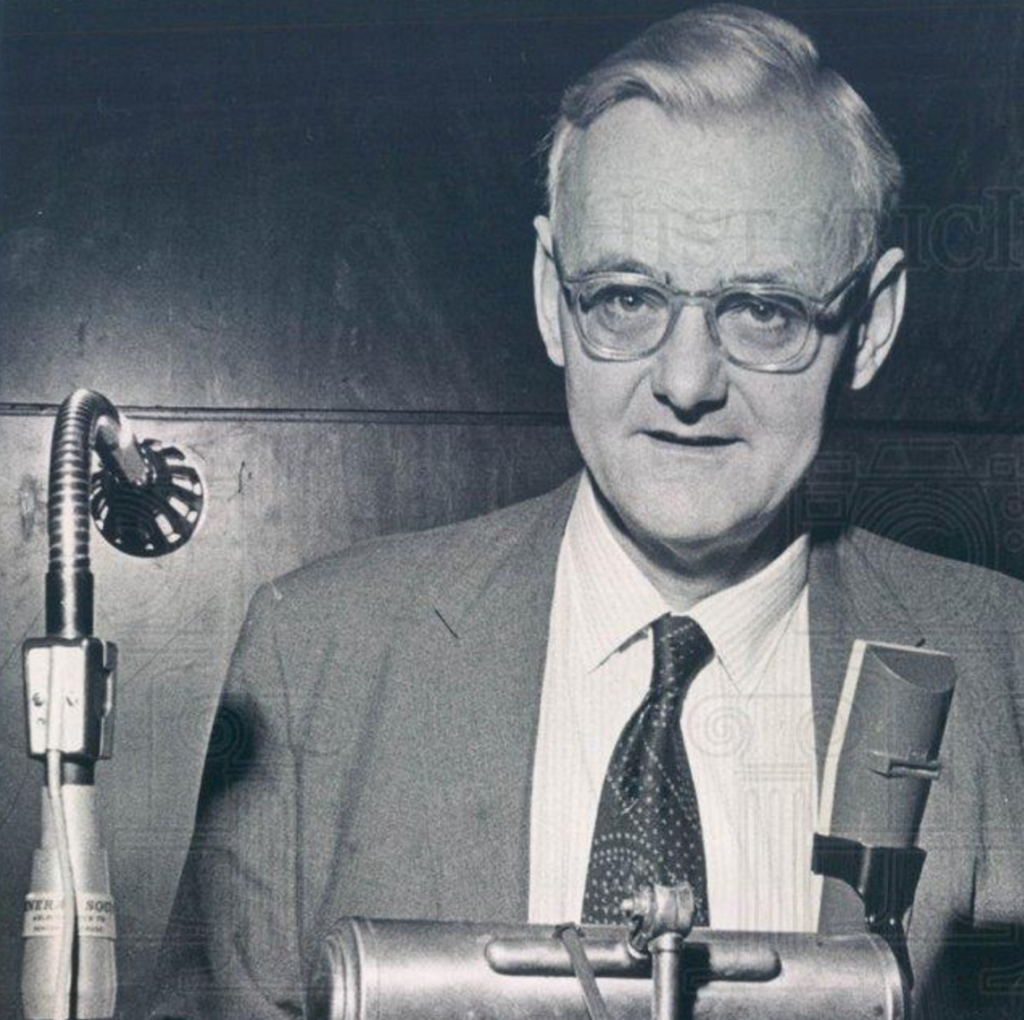
Researcher Jan Irvin frames it that Osmond and Huxley hired Leary on behalf of the CIA to take on the personae of the “hip drug pusher” who would proselytize LSD among the youth.[19]
Leary relished his new role in part because of his desire to escape the trap of middle-class conformity and the “organizational man,” which he did not want to become.[20]
John Potash reported that funding for Leary’s research at Harvard—along with other professors involved in psychedelic drug research working under Osmond and Huxley—came from the Human Ecology Fund, which had been started by the CIA at Cornell University Medical School in 1959 and was used as a conduit for CIA funding of psychological research.[21]
Previously, Leary had received government grants through the National Institute of Mental Health (NIMH), which is known to have been one of the conduits for MK-ULTRA research.[22]
Leary was recruited to work at Harvard’s Psychological Drug Research Center by Dr. Frank Barron, who previously worked with Leary at the Berkeley Institute of Personality Assessment and Research, which Leary admitted was “funded and staffed by OSS-CIA psychologists.”[23]
Leary’s psilocybin research project was approved by Dr. Henry Murray, the Director of the Harvard psychological clinic, who, according to Leary, had monitored military experiments on truth-drug brainwashing and interrogation when he was with the OSS.
Not surprisingly, Murray—who had conducted a series of psychologically damaging experiments on undergraduate students that involved testing for reactions to extreme stress—took a keen interest in Leary’s work and even supplied him with magic mushrooms.[24]
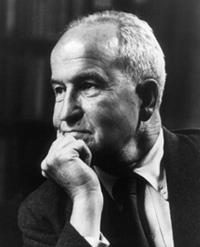
A declassified CIA memo directing an agent to accumulate more information on the Leary-Alpert psychedelic experts at Harvard noted that “some individuals known to have taken the drugs have sensitive security clearances and are engaged in classified work.”[25]
The CIA in the 1950s and early 1960s thought that psilocybin and LSD were magic substances capable of altering human behavior and even winning wars without battlefield casualties.
Sidney Gottlieb arranged for the CIA to purchase the world’s entire supply of LSD in the early 1950s, distributing it to institutions under false pretenses.[26]
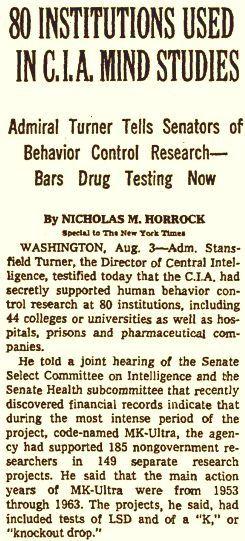
After the exposure of the Operation MK-ULTRA, CIA Director Stansfield Turner (1976-1980) admitted that LSD research on college campuses and elsewhere was funded by the CIA.[27]
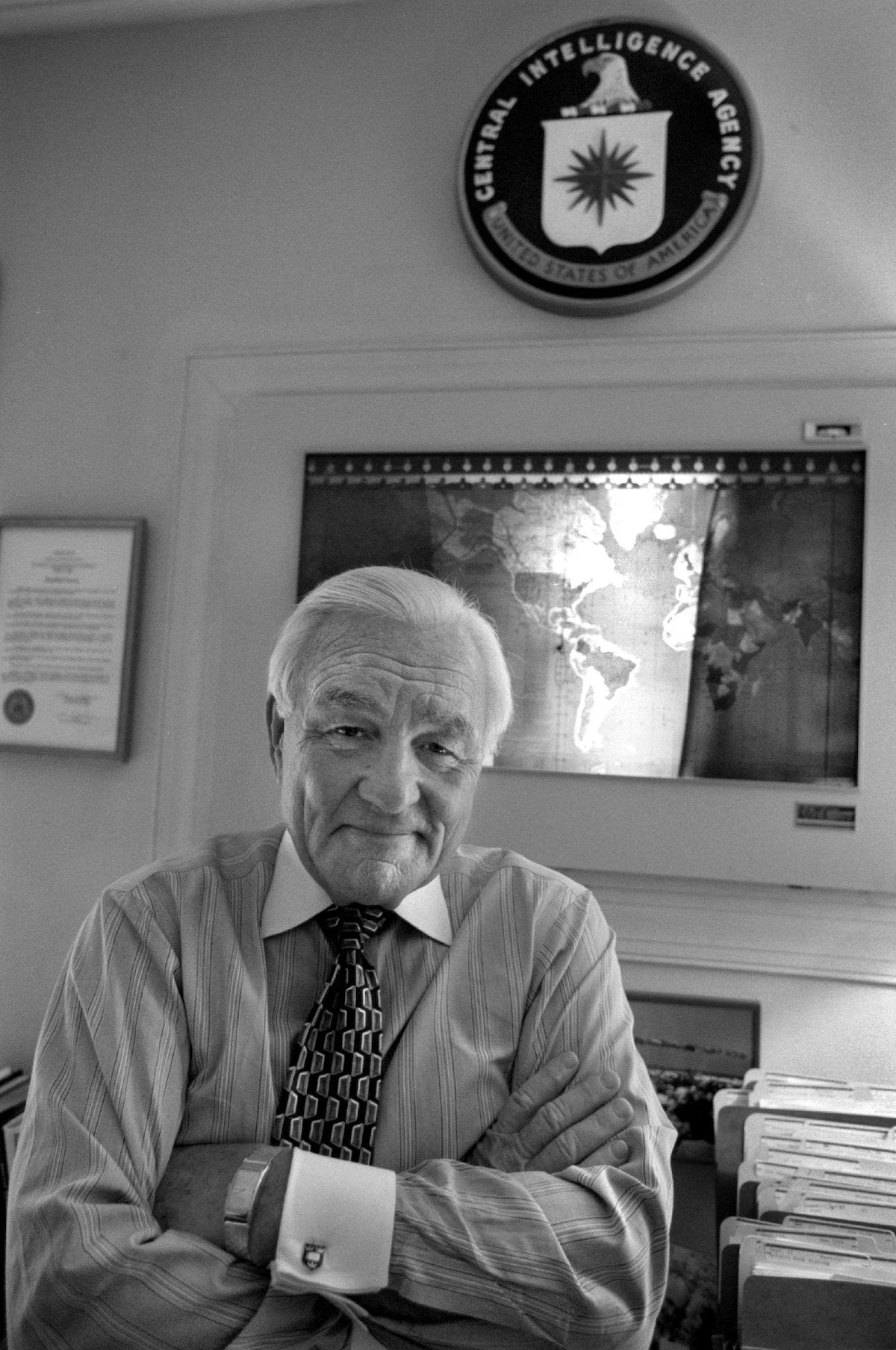
Identifying himself as a cold warrior, Leary told Walter Bowart: “I saw after Hiroshima, there would never be a big world war. World War III would be at the neurological level, not at the level of tanks and planes and bombs…I proceeded as an intelligence agent since 1962, understanding that the next war for control of this planet and beyond, had to do with the control of consciousness. So, I had to think very carefully about that…I wanted my side to win the war.”[28]
Leary claimed that, while he was never directly recruited by the CIA, people came and advised him to do this or that, and that he assumed he was being advised by the CIA.
He also said that, while he was a witting agent of the CIA, he did everything in his power to throw out Nixon, whose War on Drugs he objected to (as did perhaps others in the CIA who were behind the Watergate coup).
Leary was especially proud of a project he ran at Harvard—financed by the Uris Brothers Foundation[29]—where he gave psilocybin and LSD to inmates in a controlled setting at the Concord prison in Massachusetts.
Leary claimed that the program was successful in reducing recidivism rates and proved his theory of “set” and “setting” that a user’s experience with psychedelic and other drugs was shaped by the environment in which the drugs were taken.
While the “set” and “setting” theory is supported by other drug researchers,[30] Potash pointed out that the Concord experiment fit the pattern of Operation MK-ULTRA, by which Ivy League-bred scientists like Leary performed drug experiments on prison inmates who served as human guinea pigs.[31]
Mellon-Fortune Front and the CIA As Drug Pusher
Researcher Jan Irvin suggests that Leary and Alpert’s firings from Harvard—for distributing LSD unwittingly to students—was staged to set the stage for Leary becoming a hippie guru whose spiritual message Harvard had tried to suppress. During the semester of Leary’s firing, he had actually stopped teaching his classes, which is what really led to his dismissal. [32]
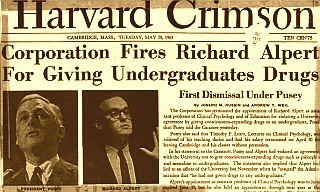
After leaving Harvard, Leary and Alpert established a non-profit foundation called the International Federation for Internal Freedom (IFIF), which continued to carry out drug experiments and advocated for LSD as a consciousness-expanding drug.
IFIF fit the paradigm by which wealthy institutions and individuals fund “astroturf” non-profits that make it appear that a particular cause—in this case LSD use—was being promoted by passionate individuals.
IFIF’s financing came from William Mellon Hitchcock, a wealthy financier who was the nephew of former Treasury Secretary Andrew Mellon, one of the richest men in America, and a grandson of William Larimer Hitchcock, the founder of Gulf Oil.[33]
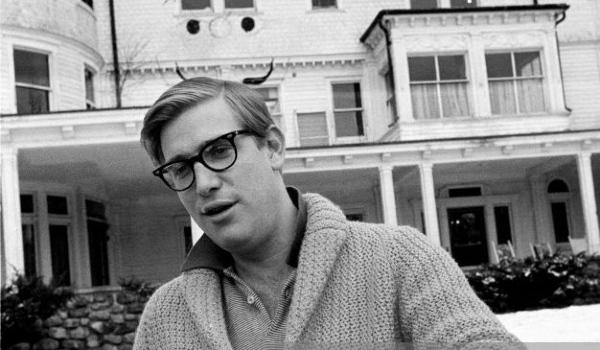
Martin A. Lee and Bruce Shlain wrote in their book Acid Dreams: The CIA, the Sixties and Beyond that “certain influential members of the Mellon family maintained close ties to the CIA. Mellon family foundations have been used repeatedly as conduits for Agency funds. Richard Helms was a frequent guest of the Mellon patriarchs in Pittsburgh during his tenure as CIA Director.”[34]
Dubbed “Timothy Leary’s godfather” and the “Daddy Warbucks of the counter-culture,” William Mellon Hitchcock had a bank account at Castle Bank in the Bahamas, a CIA bank founded by Paul Helliwell for money-laundering purposes and was the lead investor in a Meyer-Lansky linked gambling and casino company that established a private intelligence operation.[35]
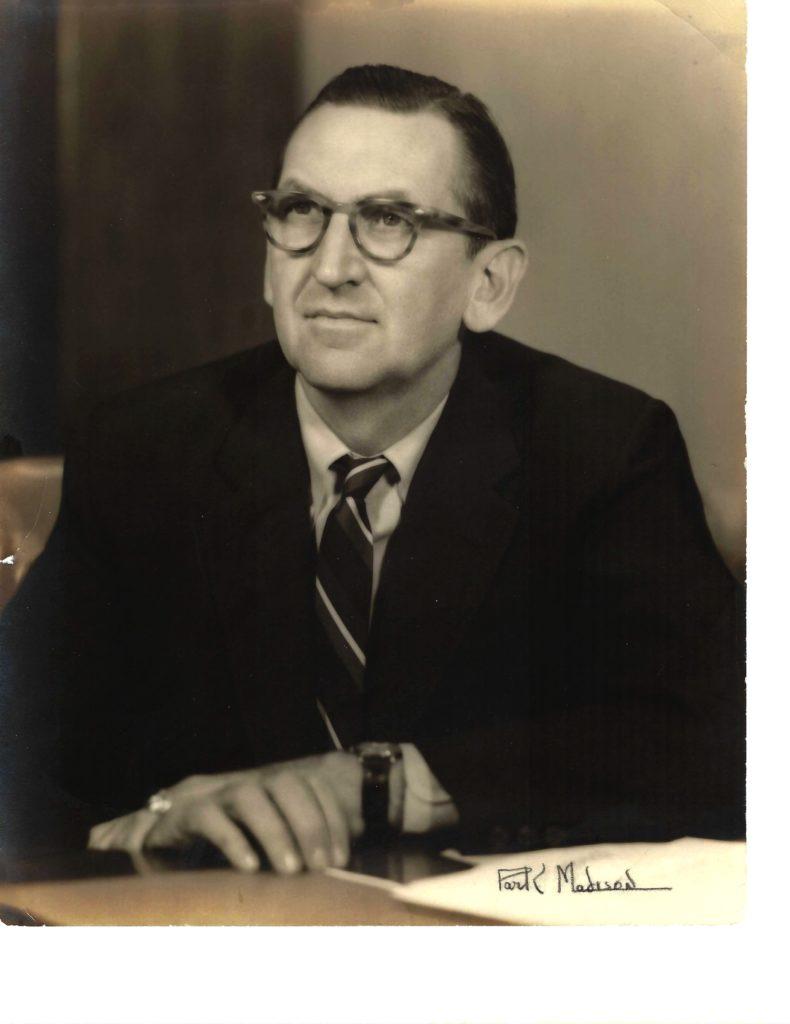
Hitchcock allowed Leary to live for meager rent at his family’s 40,000-acre Millbrook Estate in Dutchess County, New York, where Leary and some of his former Harvard associates continued with their LSD and drug experimentation and hedonistic lifestyle.[36]

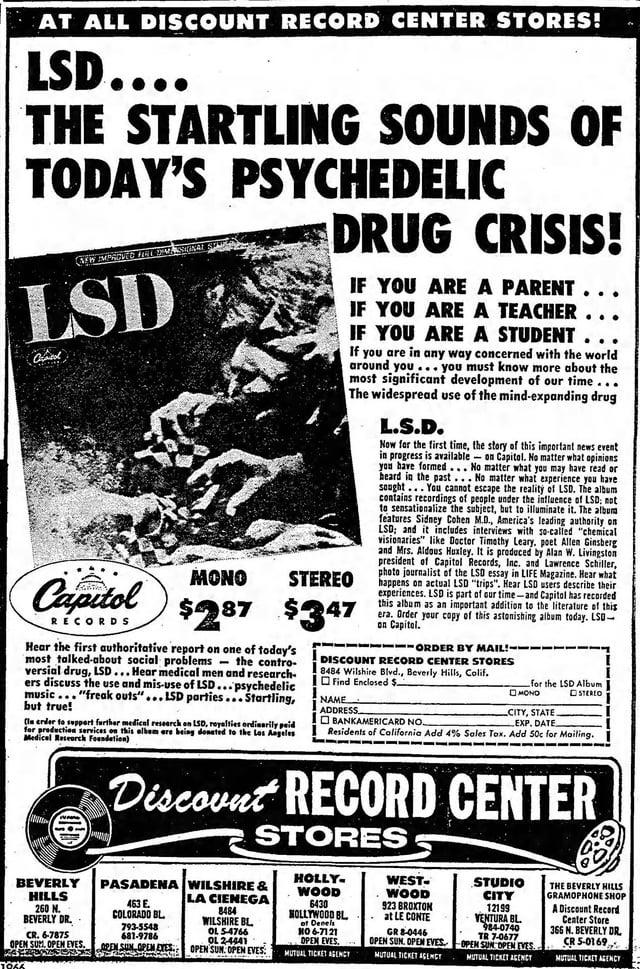
Walter H. Bowart, in a 1970 article in Gallery magazine entitled “How the CIA Planned the Drugging of America,” wrote that the “International Federation for Internal Freedom (IFIF), Castalia Foundation, and the League for Spiritual Discovery (LSD)—all Leary-led organizations—did little to further scientific research. Their major accomplishment was to make LSD a household word and to encourage people to try the drug.”
Baby Boomer Youth As Human Guinea Pigs?
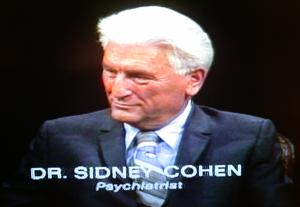
Dr. Sidney Cohen, a CIA-linked LSD researcher involved with MK-ULTRA and a veteran of the U.S. Army Medical Corps, stated in a 1963 CIA memo: “I think we need people like Tim and Al [Hubbard]. They’re absolutely necessary to get out, way out, too far in fact, in order to move the shit…I must confess that when I studied LSD, and then I heard that it was getting out on the streets, I said this’ll never sell. It’s too intense, people will be too shook up. But it didn’t work that way at all. I’m not quite sure I know why. But apparently people were able to sustain it—this intense response.”[37]
These comments seem to suggest that Leary functioned with Alpert as a drug pusher for the CIA, which wanted to continue the clandestine MK-ULTRA experiments above ground, with baby-boomer youth functioning as human guinea pigs.
A CIA memo dated November 1, 1963 and obtained by John Marks under a Freedom of Information Act lawsuit in August 1977, ordered all CIA groups involved in mind-control operations to report if any agency personnel were involved with either Leary or Alpert or IFIF. The response to this in-house memo, if there was one, was not released by the CIA, which appears to have been pulling the strings behind the scenes.
In a 1979 conversation with Cohen, Leary referenced “undercover agents” in Los Angeles and “cells,” which is intelligence lingo, providing more evidence of Leary’s work for the CIA.
Elmer Gantry and the Shift from the “We” to the “Me” Generation
Leary’s strategic cultivation of a friendship with Beatnik poet Allen Ginsberg was especially important to the advancement of the psychedelic revolution, as Ginsberg provided Leary with an entrée into the New York City artistic world and became a key youth counter-culture influencer.
Leary also turned on influential rock musicians like Jimi Hendrix and John Lennon who adopted lyrics from some of Leary’s speeches.[38]
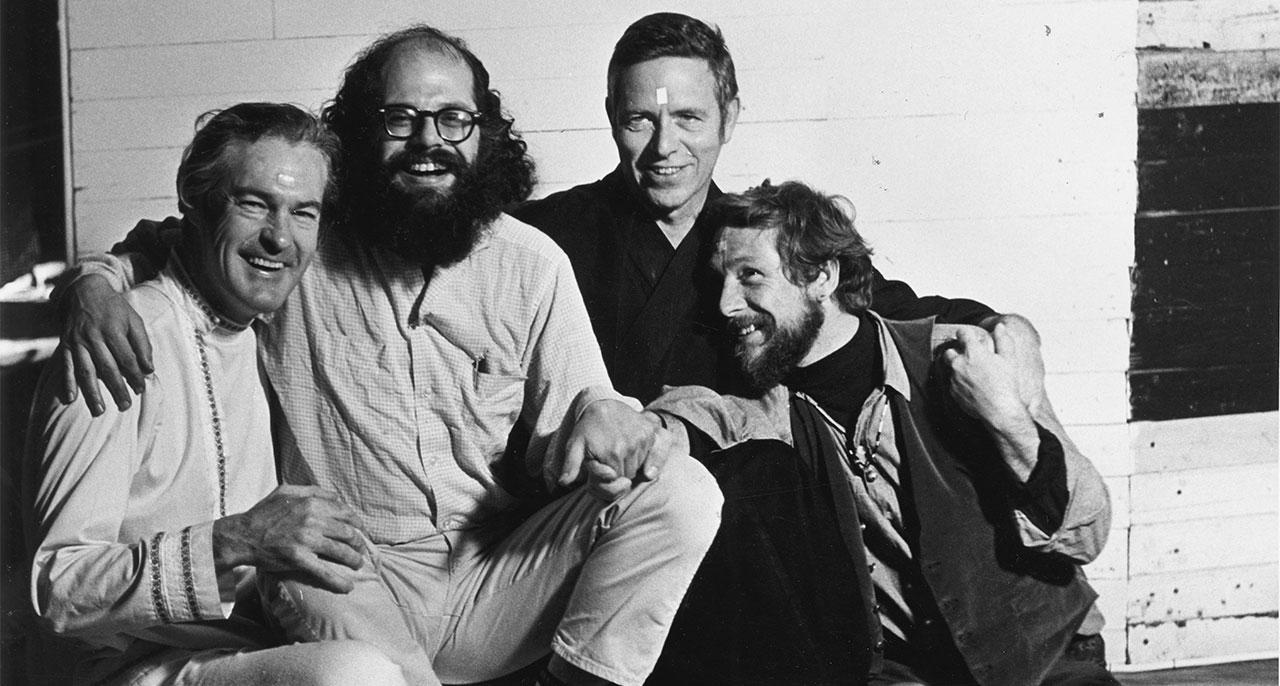
A brilliant self-promoter and showman, Leary enlisted media expert Marshall McLuhan to help him to improve his public appeal and image. McLuhan encouraged Leary to wear hippie beads and Native-American bandanas and to adopt the slogan “turn on, tune in and drop out,” which McLuhan had derived from a Pepsi commercial.[39]
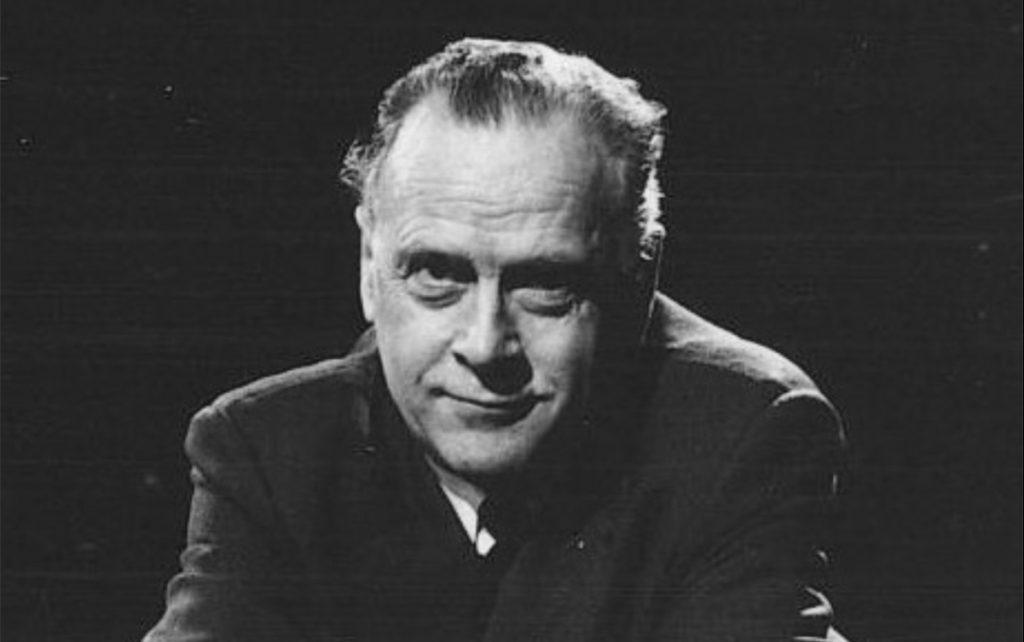
Through magazine interviews, television appearances, movies, records and books, Leary came to project himself as the culture hero of a new generation fighting for an individual’s right to alter his own consciousness—a right Leary maintained was guaranteed by the U.S. constitution.
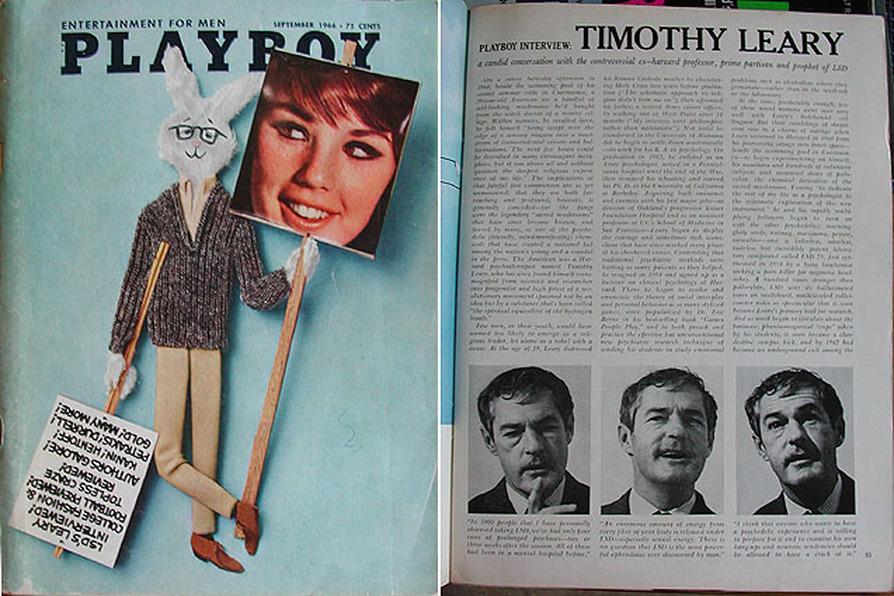
Leary scored a major public relations coup with a 1966 Playboy magazine interview describing how LSD was a great aphrodisiac that got women to have many orgasms during sex.[40]
Also significant was the fact that Leary got the influential countercultural magazine The East Village Other to promote the psychedelic revolution.
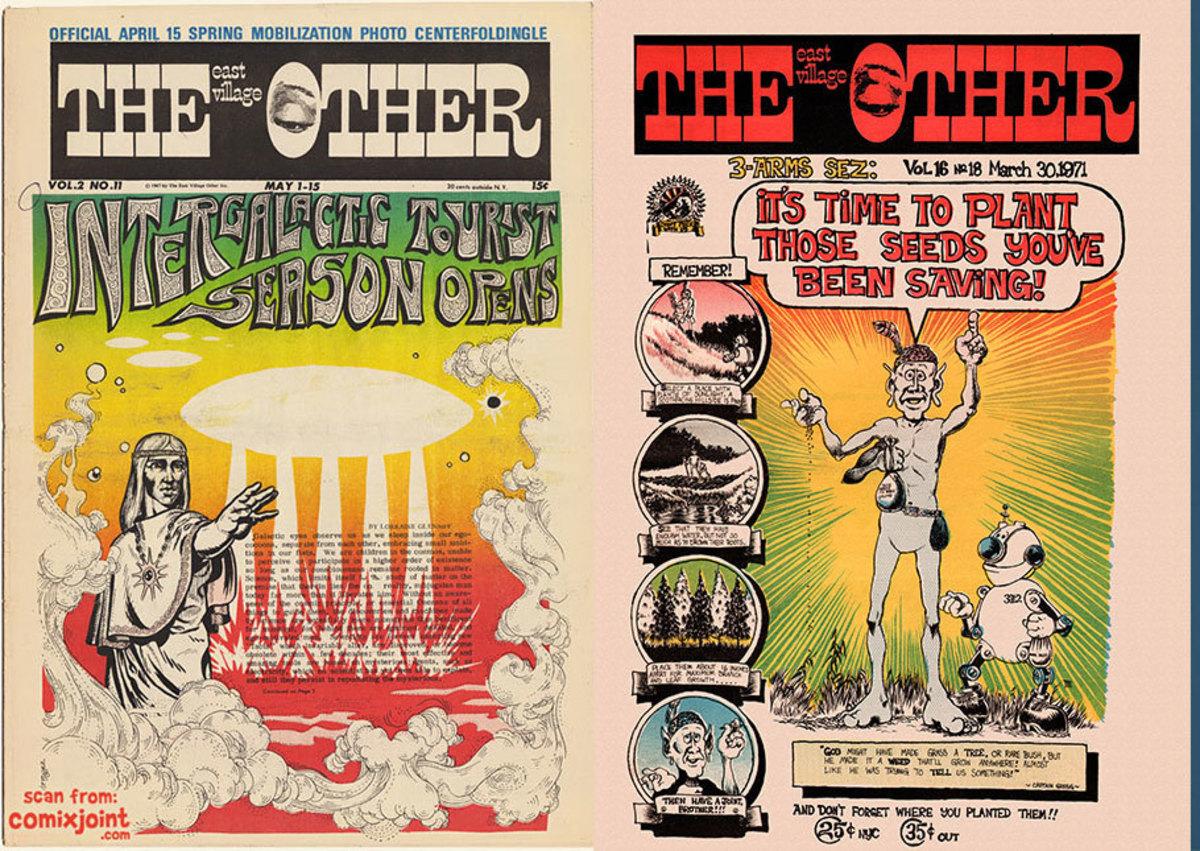
The East Village Other was founded by Walter Bowart, who had gone with Leary to testify about LSD before Congress in 1966.[41]
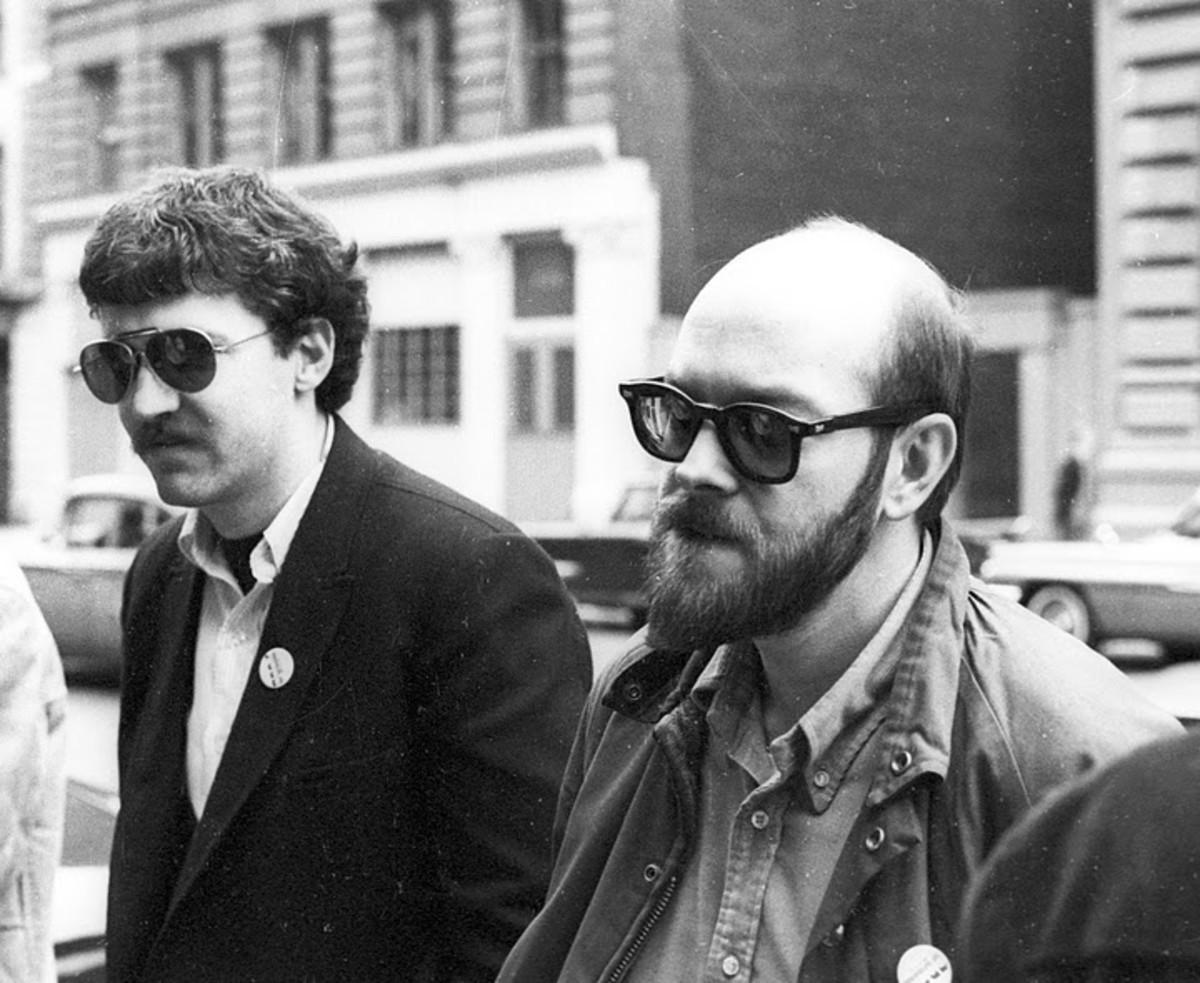
He was married to Peggy Mellon Hitchcock, William’s sister, who served on the board of IFIF and financed The Grateful Dead’s first album.[42]
According to a 1968 FBI memo, Jerry Garcia, the leader of the Grateful Dead, was employed to “channel youth dissent and rebellion into more benign and non-threatening directions.”[43]
Leary’s value to the Agency became clear as youth abandoned traditional forms of protest and political organizing and spent their time getting high, listening to rock ’n’ roll music and having sex.
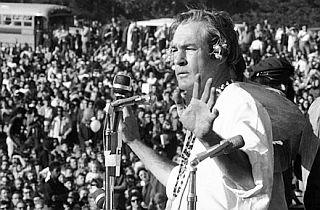
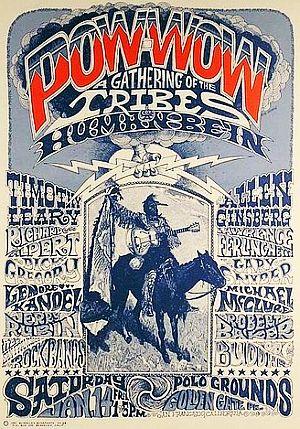
At the famous January 1967 Human Be-in at Golden Gate Park, Leary sat on the stage dressed from head-to-toe in white with his hands together as if in prayer.
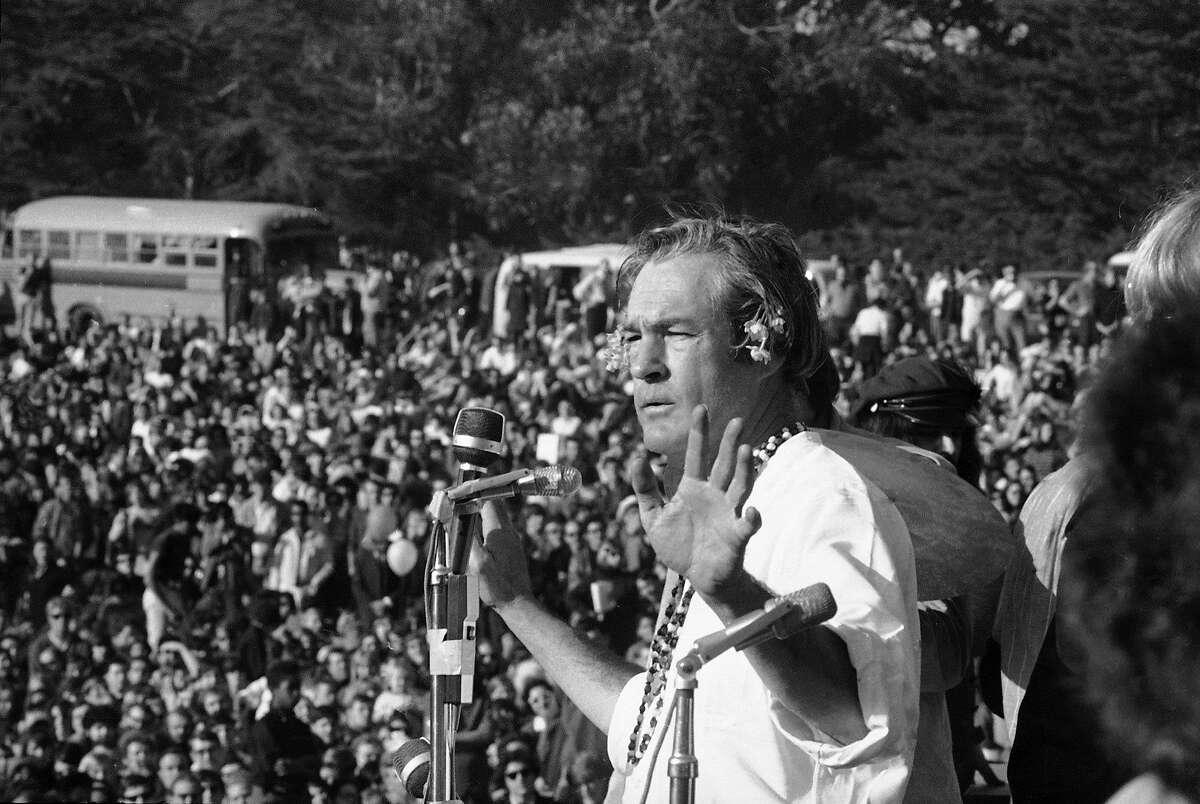
Fashioning himself as a religious figure, he urged youth to eat acid as part of a spiritual-communal ritual. The Grateful Dead and other San Francisco rock bands played at the be-in and increased the bandwagon effect to encourage “tripping.”
Descriptions of the event reported that only Jerry Rubin and Allen Ginsberg talked about protesting the Vietnam War and that they were largely ignored.[44]
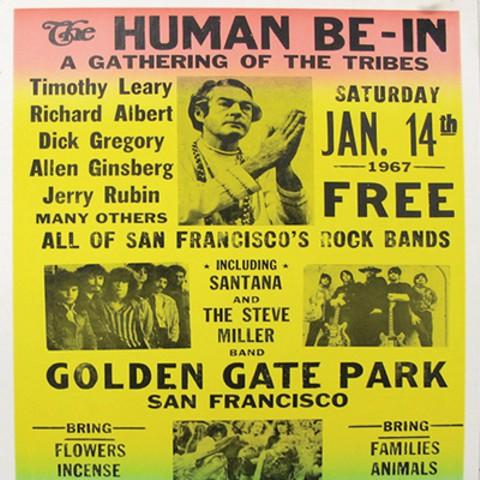
The Human Be-in created an overriding theme around the idea of expanding consciousness through LSD and other drug taking, rather than organizing Middle America to end the Vietnam War and humanize the policies of the American government, as Martin Luther King, Jr., SDS and serious political activists were then advocating.[45]
A RAND Corporation study reported on declining “dogmatism and political motivation of LSD users” while suggesting that it “may be possible to obtain additional behavioral measures in terms of the number resigning or becoming inactive.”[46]
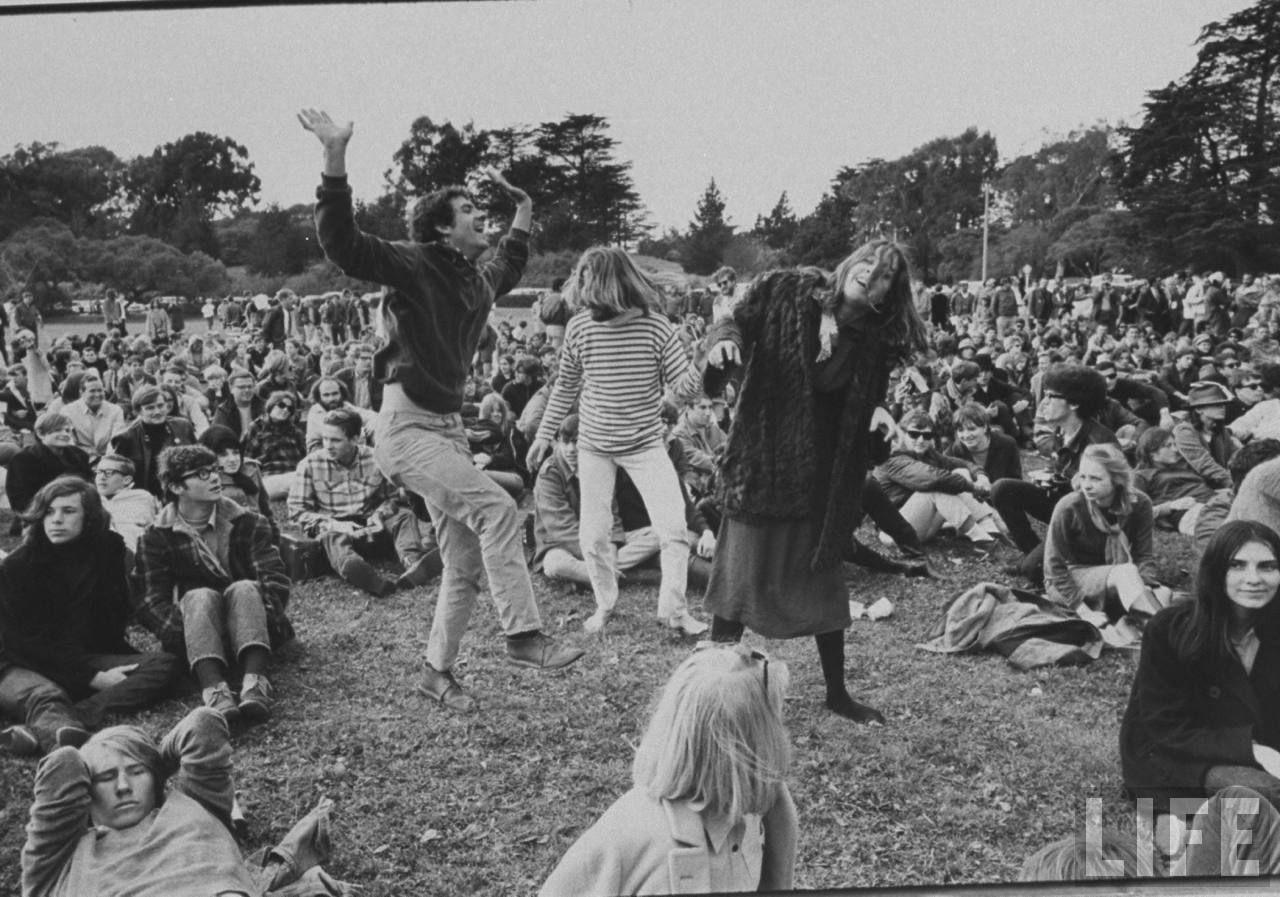
Ironically, when LSD became illegal in October 1966, supplies of the drug dried up and were replaced with other kinds of chemicals, including veterinary tranquilizers and heroin mixed with amphetamines, which youth were taking thinking it was LSD.
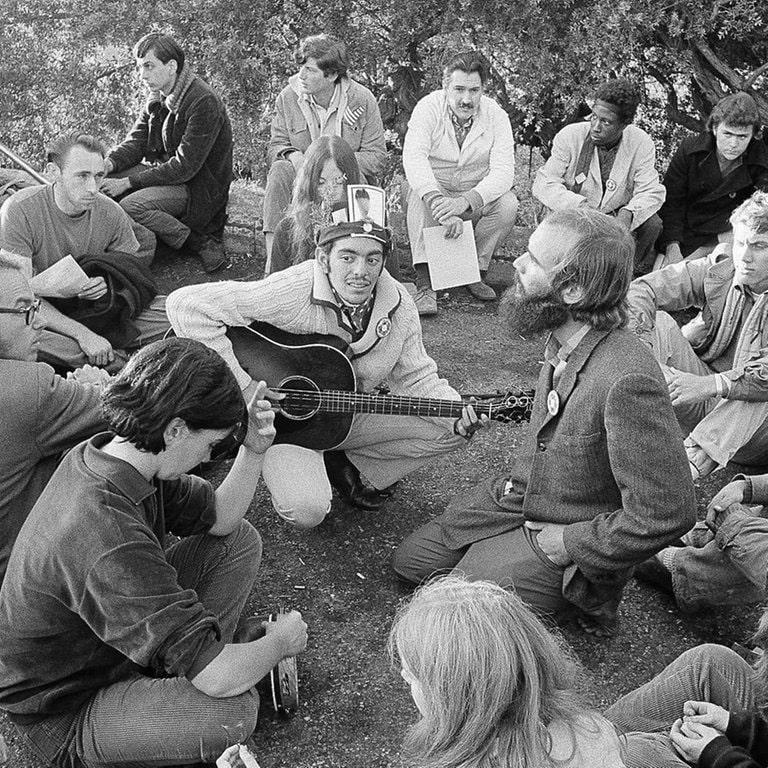
Dismissing student activists as “young men with menopausal minds” who were “repeating the same dreary quarrels and conflicts for power of the thirties and forties of the trade union movement, of Trotskyism and so forth,” Leary told youth at a press conference “don’t vote, don’t politic. You can’t do anything about America politically….the choice is between being rebellious and being religious.”[47]
The latter statements marked the transition between the “we generation” of the 1960s to the “me generation” of the 1970s, which focused much of its energy on achieving spiritual growth through drug use and later eastern religions, yoga, meditation or something else.
This generation, in turn, abandoned any effort to build working-class and anti-imperialist political movements along the model of the so-called Old Left, which was seen to be passé.
The Progressive Labor Party (PL), rooted in the Old Left, accused Leary of being a CIA agent who pushed acid on the “movement” as part of an imperialist plot. PL castigated SDS regulars for being “escapist” and “objectively counterrevolutionary” when they spoke in favor of turning on. [48]
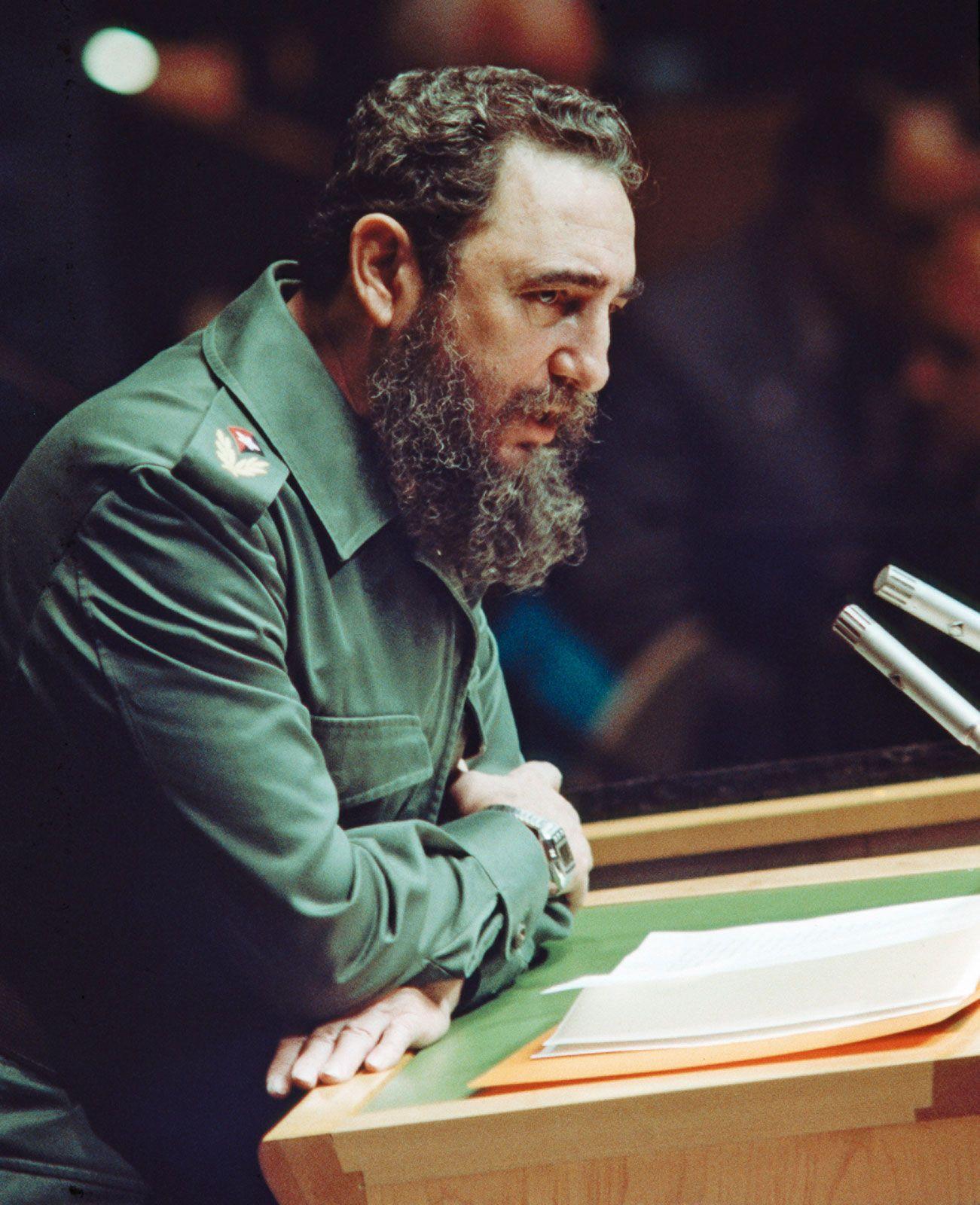
In a column in Granma in the 2000s, Fidel Castro wrote “both in the U.S. and in Europe the big outdoor rock concert were used to stop the increasing discontent among the population…according to recently released CIA documents (thanks to the Freedom of Information Act), Allen Dulles purchased over 100 million doses of LSD—almost all of which flooded the streets of the United States during the late 1960s….Thousands of graduate students served as guinea pigs. Soon they were synthesizing their own acid…The overwhelming majority of anti-war protesters went into SDS (Students for a Democratic Society) on the basis of outrage at the developments in Vietnam. But once caught in the environment defined by the Tavistock Institute’s [which Huxley and Osmond were part of] psychological warfare experts, [they became depoliticized]”[49]
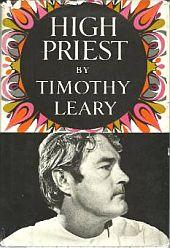
In his 1968 book The Politics of Ecstasy, Leary spoke about the advent of a “post-political society based on ecstasy” in which rebellious youth did not aim to change the U.S. political structure but rather to change the individual mind.[50]
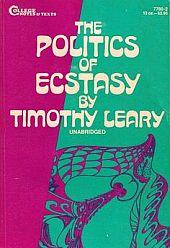
This was convenient for America’s power elite, which could continue with business as usual, unperturbed by the wave of youth dropouts living on the margins of society.
The contempt for traditional American culture and destructive nature of the drug culture, furthermore, could be expected to produce a political backlash—as it did—that would re-empower conservative forces and move the country rightward.
The San Francisco-based Ramparts magazine—a key New Left publication—compared Leary to Elmer Gantry, a hypocritical preacher in a Sinclair Lewis novel who led members of his congregation astray.
Mary Jo Worth depicted Leary in The Village Voice as a “Madison Avenue huckster” who was a front for Hitchcock’s money. The entire psychedelic movement, she wrote, was “nothing more than a scam perpetrated by a power hungry clique.”[51]
Indeed, though Leary had developed some innovative ideas early in his career, including that environmental factors shaped people’s experience with drugs, his claim that LSD could open up new circuits of the brain and induce elevated human intelligence, creativity, sensuality and consciousness and spread pacifist ideals was not grounded in scientific evidence or lived reality for most LSD users, some of whom experienced severe adverse effects from the drug.
A Pale Version of Upton Sinclair
Rather slow to criticize the Vietnam War, Leary urged SDS activists not to disrupt the 1968 Democratic Party convention in Chicago as he preferred the election of Hubert Humphrey over Richard Nixon, who was intent on waging a War on Drugs and putting him in jail.[52]
While opposing Governor Ronald Reagan’s tear-gassing of students when he ran for governor of California in 1969, Leary proposed few traditionally left-wing policies hated by the CIA, but said that he would “do as little as possible” and that to quell campus protests he would turn all state colleges and universities over to private enterprise.[53]
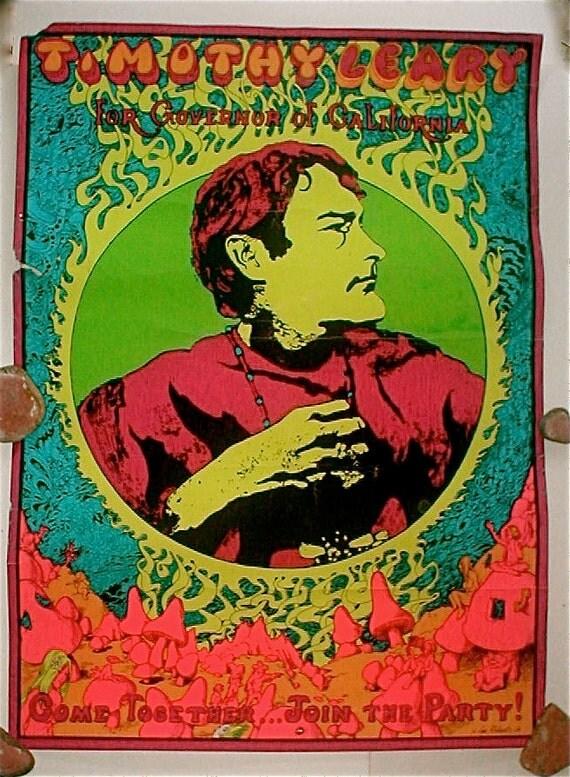
Leary’s attempt to compare his campaign with Upton Sinclair’s run for California governor in 1934 was off-base since Sinclair had developed a socialist program that endeared him to a wide swath of the population calling for higher taxes on the wealthy, a new pension system and a government takeover of idle factories.
Leary’s platform, by contrast, called for eliminating taxes, legalizing drugs, and converting not only schools but also prisons into for-profit institutions.[54]
Leading a Generation on a Path to Destruction
At the peak of Leary’s fame, his daughter Susan—who lived a troubled life after her mother committed suicide—wrote a letter to him telling him that he appeared to have lost his sanity seeking to save humanity by teaching them about chemicals and was leading a generation on a path to destruction.[55]
The Millbrook Estate at this time had become, according to Leary’s Harvard colleague Ralph Metzner, an “Addams family house of horrors,” filled with “decadence and depravity and dabbling black arts,” with “lost souls wandering the premises in permanently drugged states,” provoking sometimes “vicious conflicts that led to violence.”[56]

This mirrored the Haight-Ashbury scene writ large, which one CIA agent referred to as a “human guinea pig farm.”[57]
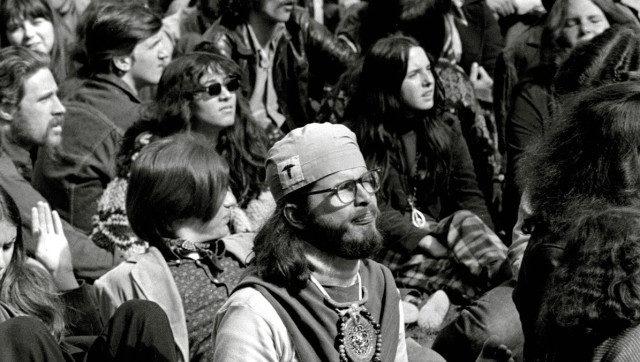
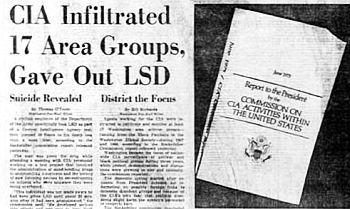
For their book Acid Dreams, Lee and Shlain interviewed a former CIA contract employer who said “CIA personnel helped underground chemists set up LSD laboratories in the Bay Area during the summer of love to monitor events in the acid ghetto.”[58]
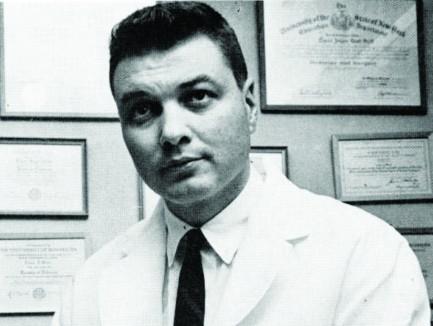
Dr. Jolyon West, an important figure in the CIA’s Operation MK-ULTRA who treated Jack Ruby after the JFK assassination and other CIA assassins, rented an apartment at the Haight for monitoring purposes.[59]
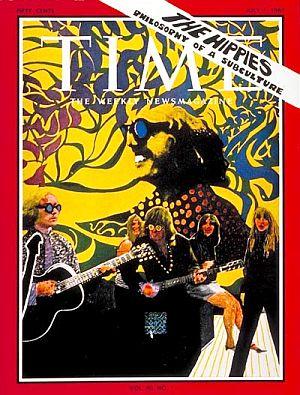
In 1967, Time magazine had a big spread on the hippies. Time Inc.’s vice president, C. D. Jackson, had headed psychological warfare operations for the CIA during the Eisenhower administration.
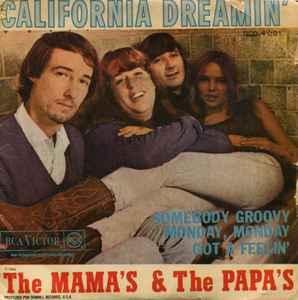
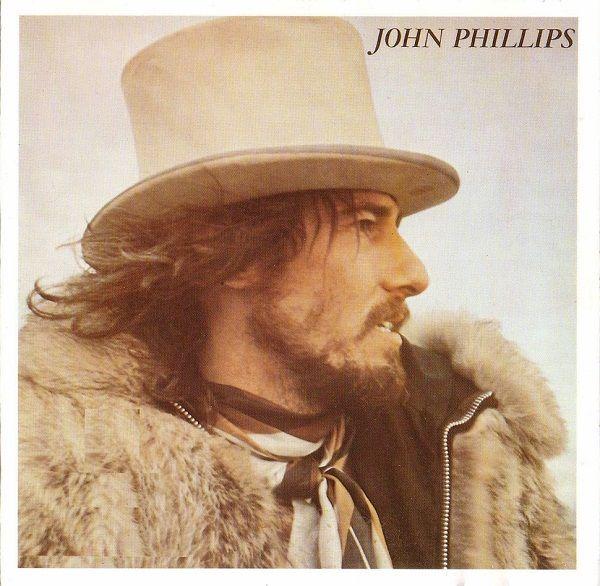
Along with constant media coverage, one of the most popular songs of the time, “San Francisco” by John Phillips of The Mamas and the Papas, led young people to flock to Haight-Ashbury to become part of the hippie scene. Researcher Dave McGowan found that Phillips, not coincidentally, had come from an intelligence family.[60]
Key suppliers of LSD to the hippie scene, such as Owsley Stanley III and Ronald Stark, were found to have ties to U.S. intelligence.[61]
The “Johnny Appleseed of LSD,” Colonel Al Hubbard, was also involved in Operation MK-ULTRA and frequently spoke to Leary and supplied him with LSD.[62]
Hubbard interceded to prevent Leary from going to prison after Texas authorities were intent on giving him a 30-year prison sentence for smuggling marijuana across the Texas-Mexico border.
At a reunion between LSD pioneers in February 1979 at the home of Dr. Oscar Janiger[63] in Los Angeles, Leary turned to the 77-year-old Hubbard and said: “The galactic center sent you down just at the right moment.” Hubbard responded: “You sure as heck played your part.”
This exchange suggests a conspiracy between the two men that was behind the so-called psychedelic revolution, which is reinforced by the fact that Hubbard received a birthday greeting from Ronald Reagan, whose political views he may have been in alignment with.
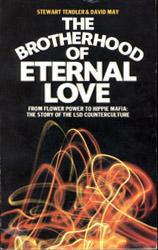
In the late 1960s, Leary’s drug proselytizing and experiments were financed by the Brotherhood of Eternal Love, which was headed by another CIA operative, Ronald Stark.[64]
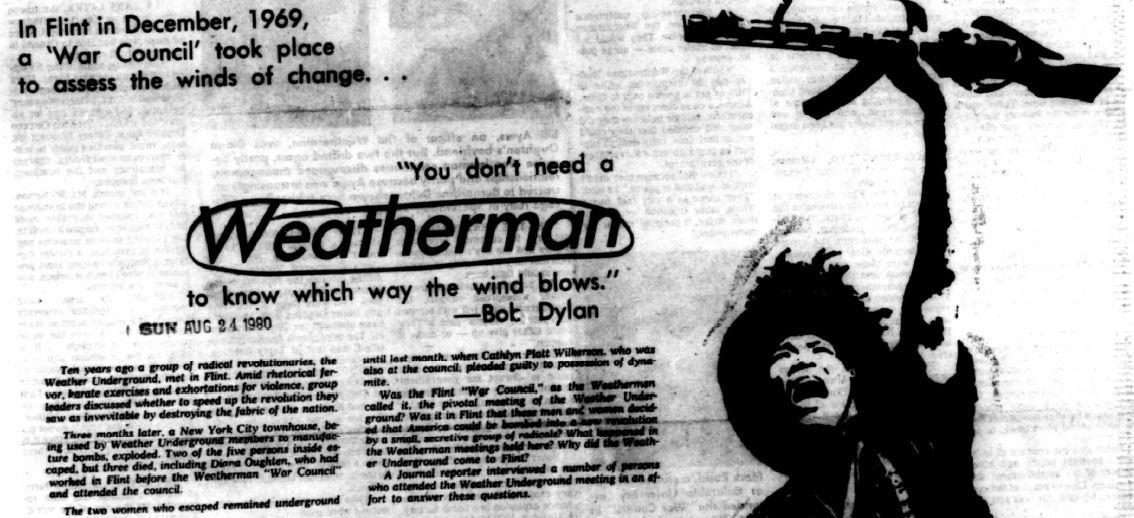
The destructiveness of the drug culture became apparent when leaders of the Weather Underground, who took copious amounts of acid, celebrated the Manson killings, carried out violent terroristic acts and disbanded SDS after taking its name.
At its peak, SDS had established over 300 campus chapters and had over 100,000 members. The organization could have evolved into a dynamic force in American politics to challenge the corporate takeover of both major political parties and the U.S. empire’s war machine.
A Name Worse Than Benedict Arnold
In September 1970, members of the Weather Underground helped Leary break out of the San Luis Obispo prison after he had been incarcerated on drug charges.
Leary had pledged his solidarity with Weather Underground in a “POW Statement,” which read: “Listen Americans! Your government is an instrument of totally lethal evil. Resist actively, sabotage, jam the computer… hijack planes, trash every lethal machine in the land….To shoot a genocidal robot policeman in the defense of life is a sacred act….Total war is upon us….WARNING: I am armed and should be considered dangerous!”
This deliberately inflammatory communiqué had the effect of re-establishing Leary’s bona fides in the radical underground, and turning American opinion farther against the New Left through its over-the-top rhetoric and calls to kill police and carry out other crimes.
After his prison escape, Leary went into exile in Algeria where he briefly linked up with members of the Black Panther Party.
Declassified documents reveal that the CIA had a CHAOS agent—with “particularly good entree into the highest levels of the domestic radical community”—providing “extremely personal data” who had been instructed to infiltrate the overseas office of the Black Panthers.
This agent is thought to have been Leary, whose escape from prison and exile to Algeria may have provided him with a cover story.[65] A CIA memo recorded its Panther informant being overseas precisely when Leary was in Algeria.
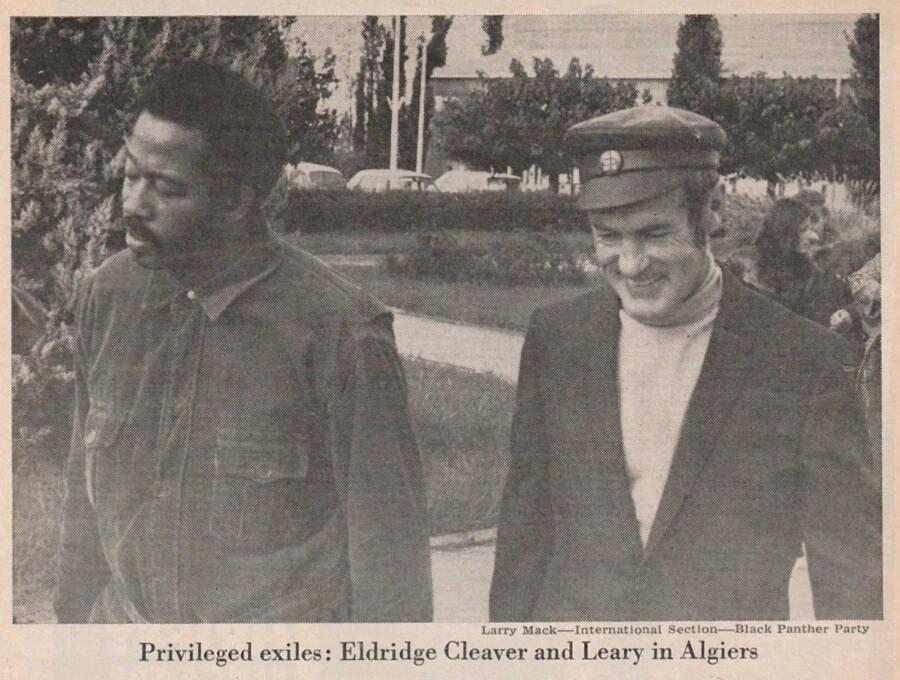
The Panthers were little impressed with Leary. Panther leader Eldridge Cleaver stated that, “although he had no pretension of being a psychologist,” it was clear to him that there was “something seriously wrong with both Dr. Leary and his wife’s brains” as a result of them taking an “uncountable number of acid trips,” and that both were “nonfunctional in a political context.”[66]
The same was true of much of the New Left at this time—in part due to false prophets like Leary having led it astray.
From Algeria, Leary went to Switzerland supposedly with the help of a CIA agent. How he got the funding to travel and live in this most expensive European country remains suspicious.
Captured subsequently as a fugitive, Leary was imprisoned again at Folsom, and then released in April 1976 by California Governor Jerry Brown after he became an FBI informant.[67]
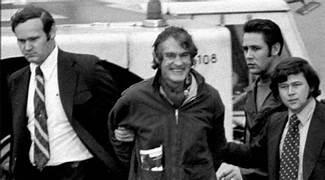
For a period during his incarceration in 1973, Leary was sent to the California Medical Facility at Vacaville, which was involved in CIA mind-control experiments, including one that led to the creation of the CIA cut-out Symbionese Liberation Army (SLA), an ultra-radical left-wing cult that adopted outlandish rhetoric and carried out criminal acts as part of the effort to discredit left-wing politics.[68]
Leary wrote suggestively that, when he went to Vacaville, “I was not there as a patient, but as a worker on the trusty staff.”[69]
These comments lend the impression that Leary was continuously working for the CIA in mind-control projects that were designed to destroy the 1960s movement and political left.
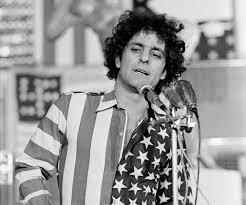
People in the movement suspicious of Leary formed a group calling itself People Investigating Leary’s Lies (PILL). Yippie founder Abbie Hoffmann declared that “Timothy Leary is a name worse than Benedict Arnold,” while Allen Ginsberg said that Leary was “like Zabbath Zvi, false Messiah, accepted by millions of Jews centuries ago.”[70]
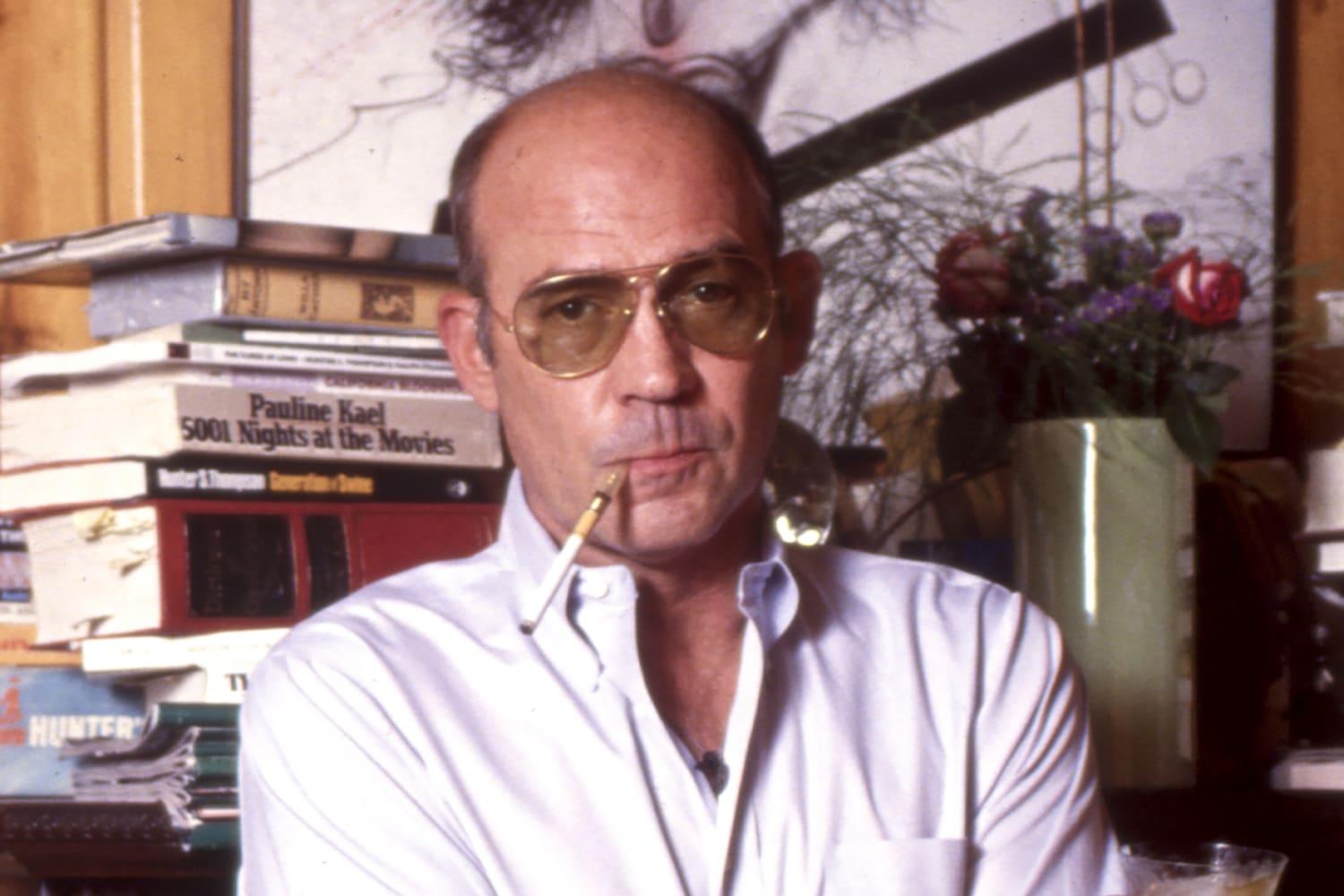
Some years later, Hunter S. Thompson, said “Every time I think of Tim Leary I get angry. He was a liar and a quack and a worse human being than Richard Nixon. For the last twenty-six years of his life he worked as an informant for the FBI and turned his friends into the police and betrayed the peace symbol he hid behind.”
The End of an Illusion
After Leary got out of prison in 1976, he stopped proselytizing for LSD and never again was involved in progressive politics in any way.
Just before his release, not coincidentally it seems, he wrote an article in the right-wing National Review attacking counter-cultural figures including John Lennon as a sell-out and phony in terms later adopted by Lennon’s assassin Mark David Chapman after he had been subjected to CIA mind control.[71]
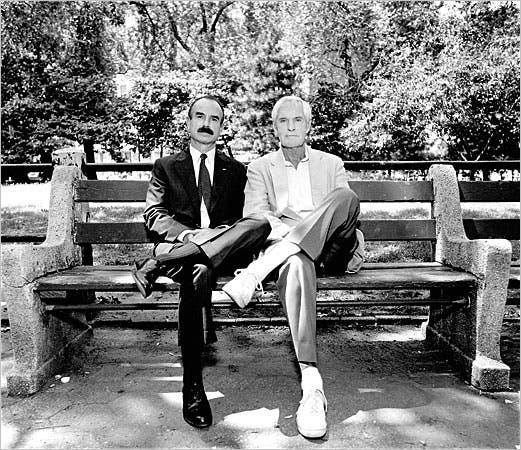
In the 1980s, Leary went on a speaking tour with Watergate felon G. Gordon Liddy, who had arrested him and shut down the Millbrook Estate, earning him at least $2,500 per appearance.
Leary also began designing computer software and hailed the coming of the information highway and potential for space travel before his death in 1996.[72]
One of the organizations with which Leary was involved—the L5 Society, which promoted space colonization and establishment of private enterprise in space—was financed by a retired military officer with known intelligence connections.
Somehow, by this time, he had become wealthy despite not having any gainful employment since his firing from Harvard in 1963.[73]
There is evidence that Leary, while in prison, was placed in prolonged solitary confinement, underwent a lobotomy and may have been subjected to the same kinds of mind-control experiments he had been involved in during the 1950s and early 1960s which, according to one former inmate, “broke him.”[74]
Leary’s career generally embodies how the so-called “deep state” effectively co-opted the youth movements of the 1960s and helped steer it into a destructive, non-political path.
The consequences have been cataclysmic, with the implosion of the 1960s left setting the groundwork for today’s dystopian political environment with two right wing parties that have supported endless war and the gutting of the social safety net.

John L. Potash, Drugs As Weapons Against Us: The CIA’s Murderous Targeting of SDS, Panthers, Hendrix, Lennon, Cobain, Tupac, and Other Activists (Walterville, OR: Trine Day, 2015), 73; Walter H. Bowart, “Lords of the Revolution: Timothy Leary and the CIA…The Spy Who Came In From the (Ergot) Mold,” Whale. ↑
Martin A. Lee and Bruce Shlain, Acid Dreams: The CIA, LSD, and the Sixties Rebellion (New York: Grove Press, 1985), 73. Jan Irvin is among the contemporary researchers to argue that the CIA helped trigger the psychedelic revolution. See Jan Irvin, “Spies in Academic Clothing: The Untold History of MKULTRA and the Counterculture—And How the Intelligence Community Misleads the 99%,” Gnostic Media, May 13, 2015. ↑
Tote became an alcoholic and abandoned his dental practice, Timothy and his mother when Timothy was a teenager. He re-connected with Tote only at the end of his father’s life in the mid-1950s. ↑
Robert Greenfield, Timothy Leary: A Biography (New York: Houghton Mifflin Harcourt, 2006), 79. ↑
Greenfield, Timothy Leary, 90; Timothy Leary, The Politics of Ecstasy, rev. ed. (Berkeley, CA: Ronin Publishing, 1980), 38. Leary’s views correlated in many aspects with the anti-psychiatry movement, which was critical of the conventional relationship between doctor and patient and largely attributed mental illness to societal pathologies. Leary described mental hospitals as “Kafkaesque Orwellian prison camps.” ↑
Key figures in the anti-psychiatry movement included R. D. Laing, co-author of the book Sanity, Madness and the Family: Families of Schizophrenics (New York: Penguin, 1964), with Aaron Esterson, among others, and Thomas S. Szasz, who wrote The Myth of Mental Illness: Foundations of a Theory of Personal Conduct (New York: Harper & Row, 1961). ↑
Greenfield, Timothy Leary, 90; Don Lattin, The Harvard Psychedelic Club: How Timothy Leary, Ram Dass, Huston Smith and Andrew Weil Killed the Fifties and Ushered in a New Age for America (New York: Harper One, 2010), 19. The Annual Review of Psychology called The Interpersonal Diagnosis of Personality the “most important book on psychotherapy of the year [for 1957].” ↑
Timothy Leary, Flashbacks: An Autobiography: A Personal and Cultural History of an Era (New York: Tarcher, 1983), 19, 20, 154. ↑
Bowart, “Lords of the Revolution: Timothy Leary and the CIA…The Spy Who Came In From the (Ergot) Mold.” ↑
Greenfield, Timothy Leary, 70; Leary, Flashbacks, 151. In his memoir, Leary claimed to have been repelled both by people on the left, who took a “pro-Soviet course,” and obsessive anti-communists on the right, who, he said, “became fanatically obsessed with Cold War paranoias.” ↑
Leary, Flashbacks, 151. Leary said that Meyer’s “fears of communist takeover were not unfounded.” ↑
Nina Burleigh, A Very Private Woman: The Life and Unsolved Murder of Presidential Mistress Mary Meyer (New York: Bantam Books, 1998), 170. ↑
Greenfield, Timothy Leary, 186; Leary, Flashbacks. ↑
One theory holds that Mary Pinchot Meyer was some kind of courier between Leary—with whom she had an affair—and the CIA. ↑
Leary, Flashbacks, 154. ↑
Leary, Flashbacks, 155. ↑
Peter Conners, White Hand Society: The Psychedelic Partnership of Timothy Leary & Allen Ginsberg (San Francisco: City Lights Publishers, 2010), 60, 61. Jim Keith, Mind Control, World Control (Illinois: Adventures Unlimited Press, 1997), 96, 97, 99, 100. Keith suggests that Huxley first met Leary while at Stanford in the mid 1950s where Huxley coordinated projects where students were dosed with hallucinogens. Leary was then on the faculty at UC Berkeley. He received National Institute of Mental Health (NIMH) funding for projects associated with Huxley and became Huxley’s protégé. Michael Hollingshead, a friend of Huxley’s who had a background in British intelligence, became very close to Leary and was considered another one of his gurus. ↑
John Marks, The Search for the Manchurian Candidate: The CIA and Mind Control (New York: W.W. Norton, 1991). Huxley also wrote a dystopian novel Brave New World, where citizens in a futuristic society are genetically engineered, psychologically conditioned and drugged into a case-based society. The book influenced the 1960s counterculture in its critique of consumer culture. ↑
Irvin, “Spies in Academic Clothing.” Hubbard obtained the LSD from its original manufacturer, Dr. Albert Hofmann. ↑
Jay Stevens, Storming Heaven: LSD and the American Dream (New York: Grove Press, 1998). Charles Slack, a psychology instructor with Leary at Harvard and frequent drinking partner, concluded that one of Leary’s most powerful drives was his desire to “escape the middle class…his whole career was a flight from middle-class values, relationships, people, scenes, everything.” ↑
Potash, Drugs ss Weapons Against U.S., 72; Bowart, interview; Alfred W. McCoy, A Question of Torture: CIA Interrogation from the Cold War to the War on Terror (New York: Metropolitan Books, 2005). Jan Irvin emphasizes that Huxley and Osmond were the ones to place Leary on the faculty at Harvard. ↑
Walter H. Bowart, “How the CIA Planned the Drugging of America,” Gallery, September 1979. ↑
Serving as an army medic in Europe during World War II, Barron was known for his work studying the psychology of creative people. A New York Times obituary stated that Barron, a graduate school classmate of Leary’s at UC Berkeley, had conducted some of the earliest experiments with psychedelic drugs, including psilocybin and LSD. Barron’s friends included Allen Ginsberg. ↑
Lee and Shlain, Acid Dreams, 74; Leary, Flashbacks, 37. A devotee of the famous Swiss psychologist Carl Jung, Murray was believed to have worked for the CIA on MK-ULTRA experiments. According to Wikipedia, one of those students subjected to Murray’s unethical experiments was Ted Kaczynski, later known as the Unabomber. ↑
Bowart, “Lords of the Revolution: Timothy Leary and the CIA…The Spy Who Came In From the (Ergot) Mold.” ↑
Stephen Kinzer, Poisoner in Chief: Sidney Gottlieb and the CIA Search for Mind Control (New York Henry Holt, 2019). LSD was developed in 1938 by Albert Hofmann, a chemist at Sandoz, a Swiss pharmaceutical house. After 1946, the latter was owned by S.G. Warburg, a British investment bank with connections to the British Intelligence Service. ↑
Bowart, “Lords of the Revolution: Timothy Leary and the CIA…The Spy Who Came In From the (Ergot) Mold.” ↑
Bowart, “Lords of the Revolution: Timothy Leary and the CIA…The Spy Who Came In From the (Ergot) Mold.” ↑
The Uris Brothers Foundation was run by billionaire real estate moguls in New York City. ↑
See, e.g., Norman E. Zinberg, Drug, Set, and Setting: The Basis for Controlled Intoxicant Use (New Haven, CT: Yale University Press, 1986). ↑
Bowart recounts the story of when Boston Globe reporter Al Larkin interviewed Dr. Robert Lashbrook, who was closely associated with MK-ULTRA projects in Massachusetts; Lashbrook became livid when Larkin mentioned Leary’s name and claimed that the agency “never gave him anything.” Bowart says Lashbrook’s behavior reflected that of a “good CIA patriot.” ↑
In the official story, told in Lattin’s book, The Harvard Psychedelic Club, the person who allegedly prompted the firing by exposing Leary and Alpert’s unethical experimentation with undergraduates was Dr. Andrew Weil, who became famous as a natural medicine guru. See Irvin, “Spies in Academic Clothing.”Lee and Shlain, Acid Dreams, 97. ↑
Lee and Shlain, Acid Dreams, 66-73, 246. ↑
Lee and Shlain, Acid Dreams, 245. Castle Bank played a key role in dispensing funds for the CIA’s secret war on Cuba in the 1960s. “Deep state” researcher Russ Winter wrote that, “in the early 1960s, Billy Mellen Hitchcock almost singlehandedly bankrolled mass production and distribution of LSD (which hardly coincidence, was at the time the subject of testing by the CIA’s secret MK-ULTRA program)—financing this effort through known CIA fronts like Castle Bank in the Bahamas [founded by Watergate burglar E. Howard Hunt’s one-time boss Paul Helliwell, paymaster for the Bay of Pigs invasion], the Meyer Lansky syndicate’s bank of choice for its money laundering.” According to Jim Keith, Hitchcock was also an associate of Bernie Cornfield and Seymour Lazare, directors of the Swiss-based Investors Overseas Services (IOS), another money laundering front for Third World dictators and the CIA. Its assets at one point were transferred to Robert Vesco whose network of corporations were alleged to have been a CIA front. ↑
Lee and Shlain, Acid Dreams, 97. Hitchcock lived nearby and would periodically partake in the festivities, as would his sister Peggy Hitchcock who was, for a time, Timothy Leary’s lover. ↑
Irvin, “Spies in Academic Clothing.” Cohen also wrote: “These professors had been using hallucinogenic drugs in experiments involving undergraduate students…Drs. Albert and Leary had set up an organization known as the International Federation for Internal Freedom (IFIF), which obviously was a cover for additional experimental work in the hallucinogenic drugs.” ↑
Greenfield, Timothy Leary, 125, 138; Conners, White Hand Society, 91, 92. ↑
Lattin, The Harvard Psychedelic Club, 123; Conners, White Hand Society; Leary, Flashbacks, 252; Bill Minutaglio and Steven L. Davis, The Most Dangerous Man in America: Timothy Leary, Richard Nixon, and the Hunt for the Fugitive King of LSD (New York: Hachette Book Group, 2018). McLuhan was author of the book Understanding Media: The Extensions of Man and co-wrote a book in 1967 titled The Medium Is the Massage, a play on his famous phrase. Over lunch at New York’s Plaza Hotel, McLuhan told Leary to keep his message positive; to stress the religious aspects of psychedelic drugs, and to always be pictured smiling. ↑
Lattin, The Harvard Psychedelic Club, 124. ↑
During the 1966 hearings Leary actually advocated for controlled use of LSD and government regulation of the drug, in line with what Congress had advocated for at this time. According to Jan Irvin, this may have been a trick designed to ensure that taking LSD assumed a rebellious connotation since it was illegal. ↑
According to Jan Irvin, two individuals associated with The Grateful Dead —a key rock group in the rise of America’s drug counterculture—were once employees of the CIA’s MK-ULTRA program—band member and lyricist Robert Hunter and author Ken Kesey, whose “Merry Pranksters” were often at Grateful Dead shows promoting LSD use to the “Deadheads.” Grateful Dead song writer John Perry Barlow, in 2002, also admitted in a Forbes magazine interview, ironically titled “Why Spy?” that he spent time at CIA headquarters at Langley. ↑
Keith, Mind Control, World Control, 97, 98. ↑
Potash, Drugs As Weapons Against Us, 115. The term “Deadhead,” used to describe Grateful Dead followers, is an equivocation for a “dead mind” or “a drugged, thoughtless person.” ↑
Potash, Drugs As Weapons Against Us, 76. ↑
Keith, Mind Control, World Control, 108. ↑
Greenfield, Timothy Leary, 302, 303; Conners, White Hand Society, 208. ↑
Lee and Shlain, Acid Dreams, 229. PL, additionally, criticized propaganda tactics like guerrilla theater and rock bands at rallies as “creeping carnivalism.” ↑
Castro quoted in Caleb T. Maupin, Trotsky and the Neoconervatives: The Whole Story (Center for Political Innovation, 2025), 80, 81. ↑
Leary, The Politics of Ecstasy. ↑
Greenfield, Timothy Leary, 307; Lee and Shlain, Acid Dreams, 278. Penn State University Professor Jerome E. Singer considered Leary the worst offender in a 1965 book that Leary co-edited, The Psychedelic Reader, that Singer said contained a “melange of hucksterism.” Jerome Singer, “Review: The Psychedelic Reader,” American Sociological Review, 31, 2 (April 1966), 284. ↑
Leary, Flashbacks, 22. Leary was against Governor Reagan’s tear-gassing of students at UC Berkeley who had tried to establish a communal park (“People’s Park”) on university land. He said he would send love gases and flowers from helicopters and not war gases. ↑
Greenfield, Timothy Leary, 355; Leary, The Politics of Ecstasy, 10. If elected, Leary said he would “do as little as possible” because “managing a state” was like “managing a baseball team. The function of the coach is to motivate, tutor, counsel, to promote teamwork. To stay out of the limelight and let the performers be the stars.” ↑
Leary, Flashbacks, 279. Leary stated that one of his heroes was famed aviator Charles Lindbergh, a right-wing libertarian who, in the 1930s, joined the anti-war America First Committee and warned about the establishment of overseas U.S. military bases in World War II, though was also given a distinguished medal by Adolf Hitler’s Nazi government in 1937, which deservedly ruined his reputation in progressive circles. ↑
Greenfield, Timothy Leary, 308. ↑
Greenfield, Timothy Leary, 232. ↑
Potash, Drugs As Weapons Against Us, 117. ↑
Lee and Shlain, Acid Dreams. ↑
Potash, Drugs As Weapons Against Us, 117; Lee and Shlain, Acid Dreams, 189. ↑
David McGowan, Weird Scenes Inside The Canyon: Laurel Canyon, Covert Ops & the Dark Heart of the Hippie Dream (London: Headpress, 2014), 16; Potash, Drugs As Weapons Against Us, 120. Phillips’s father was a Marine Corps captain who had served with U.S. occupation forces in Haiti and his wife’s father did cloak-and-dagger work for the Air Force in Vienna. John himself attended the U.S. Naval Academy and curiously went to Cuba at the height of the Cuban Revolution, claiming to have wanted to “fight for Castro.” Doors singer Jim Morrison’s father Stephen commanded the naval vessel involved in the Gulf of Tonkin false flag that led the U.S. to expand its involvement in Vietnam. While the conventional view is that counter-cultural singers rebelled against their conservative parents, McGowan raises questions as to whether some key ones were actually part of the same intelligence operation as Leary that was designed to lure anti-war youth into the political dead end of sex, drugs and rock ’n’ roll. ↑
Lee and Schlain, Acid Dreams; McGowan, Weird Scenes Inside the Canyon, 102, 103; Keith, Mind Control, World Control, 101. ↑
Potash, Drugs As Weapons Against Us, 75. Hubbard is depicted in some sources as a key founder of the CIA’s Operation MK-ULTRA. ↑
Janiger was Allen Ginsberg’s cousin and a well-respected psychiatrist at the University of California at Irvine, known for his research on psychedelic drugs. Allegedly, he was the one to introduce Aldous Huxley, and also actor Cary Grant and other celebrities, to LSD. In 1986, he formed the Albert Hofmann Foundation for psychedelic research, named after the chemist who first synthesized LSD. ↑
Victor Thorn, New World Order Assassins (Washington, D.C.: American Free Press, 2011), 57, 58. ↑
Black Panther Party leader Eldridge Cleaver accused Leary of being a CIA agent. Bowart said that Leary may have been lured away from Algeria when the CIA instructed him that Cleaver was trying to kill him. ↑
Minutaglio and Davis, The Most Dangerous Man in America, 183. ↑
Leary’s lover at this time, Joanna Harcourt-Smith suggests in Tripping the Bardo with Timothy Leary: My Psychedelic Love Story (CreateSpace Independent Publishing, 2013) that Leary was tortured in prison, which is what led him to become an informant, and to renounce his LSD proselytizing. ↑
See Brad Schreiber, Revolution’s End: The Patty Hearst Kidnapping, Mind Control, and the Secret History of Donald DeFreeze and the SLA (New York: Skyhorse, 2016). Bowart noted that one of the horrendous experiments carried out at Vacaville involved “Anectine therapy,” which was conducted on non-volunteer inmates under CIA covert guidance. Anectine stops the respiratory functions of the body and the “subject” feels as if they are dying. Bowart, “Lords of the Revolution: Timothy Leary and the CIA…The Spy Who Came In From the (Ergot) Mold.” ↑
Greenfield, Timothy Leary, 415. A prisoner said that, when Leary was in Vacaville, Leary had the best job in the educational wing and “was making it with a pretty little blond nurse.” ↑
After being given LSD in a clinical environment in Palo Alto, Ginsberg stated “I thoght I was trapped in a giant web or network of forces beyond my control that were perhaps experimenting with me or were perhaps from another planet or were from some super-government or cosmic military or science fiction Big Brother.” In Keith, Mind Control, World Control, 104. ↑
Greenfield, Timothy Leary, 522; Minutaglio and Davis, The Most Dangerous Man in America, 345, 346. Fenton Bresler, Who Killed John Lennon? (London: St. Martin’s Press, 1989). Leary’s National Review article criticized Mick Jagger and Bob Dylan for never having stood on the barricades with striking workers and gotten beaten by police and for not having stood with protesters who got tear-gassed in Chicago. Leary, of course, never did those things either. In the article, Leary further criticized radical attorneys and the Weather Underground, which he described as a “bewildered fugitive band of terrorists now cut off from their culture and condemned to underground resistance.” It was no accident, he added, that “they got their name from a depressing Dylan song.” ↑
Minutaglio and Davis, The Most Dangerous Man in America, 347. Leary wrote in his memoir Flashbacks (p. 372) that, after his release from prison, he wrote six books and 50 articles on topics ranging from experimental dying to exo-psychology, neuro-politics and bio-computer theory along with the liberating advantages of word processors and video games. ↑
In 1993, Leary appeared in an ad for The Gap. He was known for eating at a trendy restaurant owned by Jack Nicholson and lived in a stately home in Beverly Hills. ↑
Browart, interview. Leary was placed for a long period in solitary confinement and given drugs. An inmate imprisoned with Leary and who knew him after they both were released from prison, told Browart: “They did everything they could to break his mind, and they succeeded. Look at him now.” ↑
CovertAction Magazine is made possible by subscriptions, orders and donations from readers like you.
Blow the Whistle on U.S. Imperialism
Click the whistle and donate
When you donate to CovertAction Magazine, you are supporting investigative journalism. Your contributions go directly to supporting the development, production, editing, and dissemination of the Magazine.
CovertAction Magazine does not receive corporate or government sponsorship. Yet, we hold a steadfast commitment to providing compensation for writers, editorial and technical support. Your support helps facilitate this compensation as well as increase the caliber of this work.
Please make a donation by clicking on the donate logo above and enter the amount and your credit or debit card information.
CovertAction Institute, Inc. (CAI) is a 501(c)(3) non-profit organization and your gift is tax-deductible for federal income purposes. CAI’s tax-exempt ID number is 87-2461683.
We sincerely thank you for your support.
Disclaimer: The contents of this article are the sole responsibility of the author(s). CovertAction Institute, Inc. (CAI), including its Board of Directors (BD), Editorial Board (EB), Advisory Board (AB), staff, volunteers and its projects (including CovertAction Magazine) are not responsible for any inaccurate or incorrect statement in this article. This article also does not necessarily represent the views the BD, the EB, the AB, staff, volunteers, or any members of its projects.
Differing viewpoints: CAM publishes articles with differing viewpoints in an effort to nurture vibrant debate and thoughtful critical analysis. Feel free to comment on the articles in the comment section and/or send your letters to the Editors, which we will publish in the Letters column.
Copyrighted Material: This web site may contain copyrighted material the use of which has not always been specifically authorized by the copyright owner. As a not-for-profit charitable organization incorporated in the State of New York, we are making such material available in an effort to advance the understanding of humanity’s problems and hopefully to help find solutions for those problems. We believe this constitutes a ‘fair use’ of any such copyrighted material as provided for in section 107 of the US Copyright Law. You can read more about ‘fair use’ and US Copyright Law at the Legal Information Institute of Cornell Law School.
Republishing: CovertAction Magazine (CAM) grants permission to cross-post CAM articles on not-for-profit community internet sites as long as the source is acknowledged together with a hyperlink to the original CovertAction Magazine article. Also, kindly let us know at info@CovertActionMagazine.com. For publication of CAM articles in print or other forms including commercial internet sites, contact: info@CovertActionMagazine.com.
By using this site, you agree to these terms above.
About the Author
Jeremy Kuzmarov holds a Ph.D. in American history from Brandeis University and has taught at numerous colleges across the United States. He is regularly sought out as an expert on U.S. history and politics and co-hosts a radio show on New York Public Radio and on Progressive Radio News Network called “Uncontrolled Opposition.”
He is Managing Editor of CovertAction Magazine and is the author of eight books, including Obama’s Unending Wars (Clarity Press, 2019), The Russians Are Coming, Again, with John Marciano (Monthly Review Press, 2018), Warmonger. How Clinton’s Malign Foreign Policy Launched the U.S. Trajectory From Bush II to Biden (Clarity Press, 2023); with Dan Kovalik, Syria: Anatomy of Regime Change (Baraka Books, 2025), and Political Assassinations in America: The Intricate Nexus of Deep State Crime (Clarity Press, 2026).
Besides these books, Kuzmarov has published hundreds of articles and contributed to numerous edited volumes, including one in the prestigious Oxford History of Counterinsurgency .
He can be reached at jkuzmarov2@gmail.com and found on substack here.



Fantastic coverage! So much that I never knew or suspected! I was pretty naïve in the 50’s and 60’s, but although I was pretty much the kind of person that Timothy Leary was supposed to “divert”, he never “passed the smell test” for me. I thought that a person would have to be pretty stupid to jump on his bandwagon. Thus, I ignored him and his “message”. Reading this, I feel that my instincts at a young age were pretty good. But I had no idea that he was a treacherous bastard. I just thought that he was a misguided charlatan. Nowadays, when my vision is much clearer, I see just how many people are really treacherous bastards. Now I can add Timothy Leary to my list. Thanks!
A good lesson for everyone to follow:
“Never say more than necessary.” This approach ensures your words carry more weight and protects you from the inaccuracies that creep in when you talk too much.
I learned a lot from your revisionist 1960s article, Jeremy! Great researching. No question the 1960s generation was infiltrated by various CIA ops, from psychedelic experiments to coopting radicals (especially Venceremos) with groups like the SLA and getting Jews to not participate in anti Vietnam actions (via Meir Kahane). I think the Jesus movement was also involved in co-opting youth.
After 1963 and the return of the OSS to heading the CIA all sorts of operations were possible. I’d say, from my own experience, the main thing youth experienced in the 1960s was confusion and disorientation.
But the results were more complicated than the CIA hoped. LSD did not make people violent and often it led to antiwar activism.
I knew Leary was Mary Meyer’s LSD guru but didn’t know how involved he was with Cord Meyer. Mary was surrounded by enemies of truth and love whom she thought were her friends, even including Leary. She appealed to him for help when she figured out her close friends were involved in JFK’s assassination. Instead, he went on a trip to Europe, and she too was assassinated.
Peter Janney is involved in making a film about Mary Meyer. He denies any involvement of Israel in the JFK assassination: a limited hangout. One of Janney’s principal interviewees was an Israeli agent, which role he does not mention. I told him I hoped he got a different director than Stone did for his film JFK. Stone’s film is so far the most successful limited hangout film out there, just topping The Godfather and Exodus.
One thing of interest: for various reasons, despite Dewey’s connections, organized crime did decide to back Truman in 1948 and the Zionist lobby made his campaign viable with necessary funding. Hence forth Truman belonged to “Israel” and made sure it got recognized by the UN.
I have read that many antiwar activists (including leaders) were motivated by the feeling of peace and brotherhood they got from taking LSD. In fact, I believe that the LSD JFK took with Mary Meyer inspired the poetic courage of his American University speech.
I don’t doubt CIA involvement and motivation in promoting LSD but I don’t think they were very successful.
Similarly, with the Manson Family, they couldn’t get LSD takers to commit violent crimes. They were on other drugs.
I don’t think Aldous Huxley is portrayed quite correctly here. He’s much more famous as a novelist even a philosopher than as an academic. (His novel Eyeless in Gaza [!] is about his political consciousness development.) He was certainly a personal believer in mystical experiences that in the 1960s were recognized as akin to Hindu meditative states.
A substantial cohort of 60s-early70s protesters never went in for the drug cult. This article substantiates the part of that movement that went full throttle for the drug trip. A friend from that period claims she didn’t know whether, while on a road trip, iwe were in Canada or on Cape Cod. Drugs were pretty effective in achieving that loss of grounding and political commitment.
I took a lot of LSD starting about 1966 when I returned from Europe and continued into 1967. But there was nothing about the psychedelic revolution that prevented me from becoming a Draft Resistor and full-time anti-Vietnam War activist. Many of my comrades had the same kind of drug experience that liberated us from conventional thinking and caused us to turn against the imperialist government we lived under, so if the CIA intention was to bury the Movement, it failed.
In fact the Anti War movement was so successful that the US hasnt been in any war since Vietnam !
I think one should actually track down and source any actual FBI memo naming Jerry Garcia as an asset before making such a claim. The source provided here is Jim Keith’s ‘Mind Control, World Control’, which I’ve checked out and doesn’t exactly look like the most serious book (it’s in a catalog that includes ‘Ether Technology’, ‘Vimana Aircraft of Ancient India & Atlantis’, and ‘Anti-Gravity & the Unified Field’). It doesn’t provide any evidence for such a memo, but lists another (dubious-looking) reference as a source, Carol White’s ‘The New Dark Ages Conspiracy: Britain’s Plot to Destroy Civilization’, which makes no mention of such a memo at all.
I’ve been noticing a lot of baseless claims along these lines which have never gone beyond speculation and personal distaste for artists that don’t wear their politics on their sleeves. So many people keep trying to implicate the Grateful Dead without any solid evidence or sources. Which is curious odd to me as the purported real leads in mind control experimentation – by way of Bluebird and Artichoke – had more to do with use of hypnotism and alter personalities, leading then to the launching of Operation Dormouse to keep more of the public attention on the psychedelic experiments, which were fruitless as far as helping induce mind control states.
Thanks for both your comments. I would also like to track down the original of that memo. best, JK
My father was a classmate of Leary’s at West Point and knew him well as the two were among the few Catholic cadets at the time. Leary’s leaving the academy followed his getting drunk on a trip to an Army-Navy football game and then lying about it, a violation of the cadets’ “code of honor.” As a result, he was “silenced,” with no one allowed to speak to him. The isolation and social censure proved too much for him to stay.
i’m curious about the origin of the alleged 1968 fbi memo that mentions jerry garcia. i borrowed the keiths book from archive.org, and that memo with the same quote appears twice, citing an issue of paranoia magazine from winter 1995/1996, which is not online. i’ve also looked up the text in quotes but that’s just a way to walk around in circles.