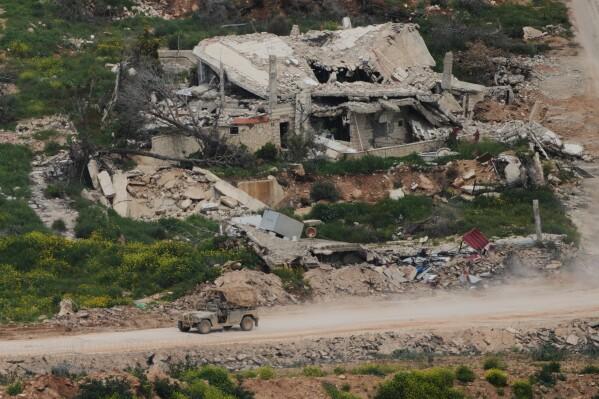
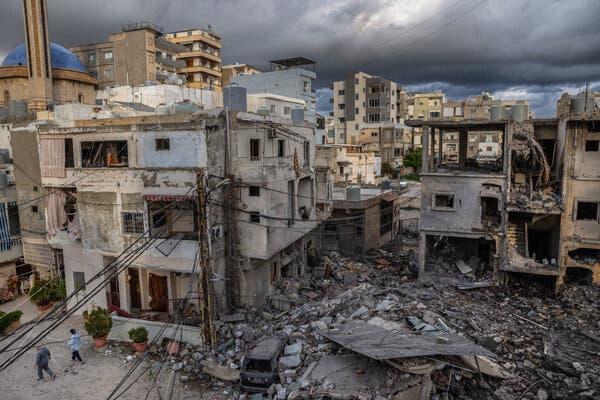
On March 22, Israeli Defense Minister Israel Katz ordered the Israel Defense Forces (IDF) to “accelerate the destruction of Lebanese homes” near the Israeli border based on the “model in Gaza” as part of its campaign against Hezbollah.
Since October 2023, the IDF has destroyed 250,000 homes in southern Lebanon, according to Ziad Abu-Rish, associate professor of Middle East Studies at Bard College and author of The State of Lebanon: Popular Politics and Institution Building in the Wake of Independence (Redwood City, CA: Stanford University Press, 2026).
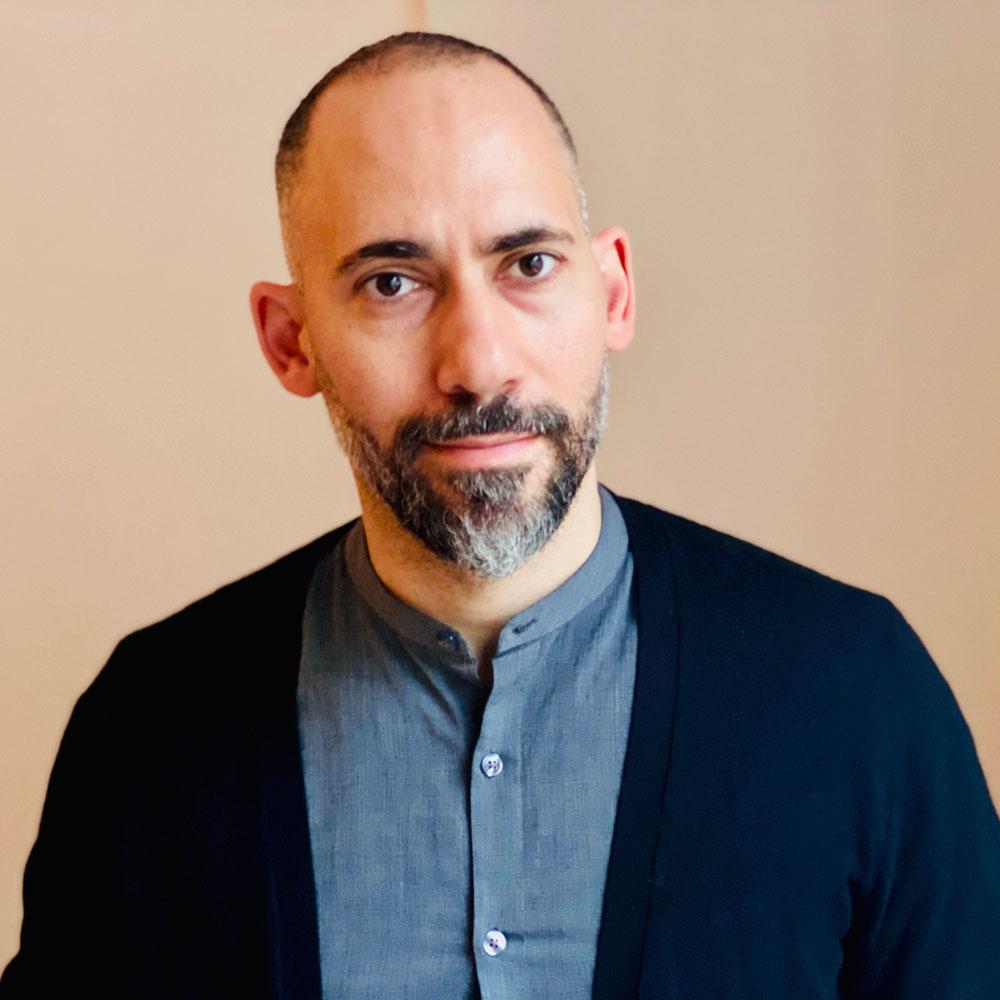
On May 21, Abu-Rish was a featured guest on Uncontrolled Opposition, a radio program co-hosted by CovertAction Magazine (CAM) editor Jeremy Kuzmarov with CAM writer Gloria Guillo, where he discussed the U.S.-Israeli war on Lebanon and its terrible humanitarian costs.
At the time of the interview, Abu-Rish was staying in Beirut, where he said the electricity is constantly going out and there are visible signs of the war everywhere. “Daily life for most people is a grind. Water and other public utilities have become more and more expensive and scarce and the health care system is facing collapse, a trend that has been accelerated by the IDF’s targeting of health care workers.”
Noting that Israel had violated a cease-fire agreement hundreds of times, Abu-Rish continued: “One out of every five people in southern Lebanon has been displaced. You can see signs of this everywhere in the streets. One-room apartments in Beirut are being occupied by three families. Many schools also closed because they are being used as bomb shelters. Additionally, you have generational trauma. There is a constant humming of Israeli drones and constant fear and anticipation of Israel resuming air strikes. People who have been displaced can’t return to their villages and help bury their loved ones; some people have to be buried alone because nobody is allowed to accompany members of their family back to their village and they are not able to have a proper funeral. The natural practices of how people come to terms with death and loss is being upended.”[1]
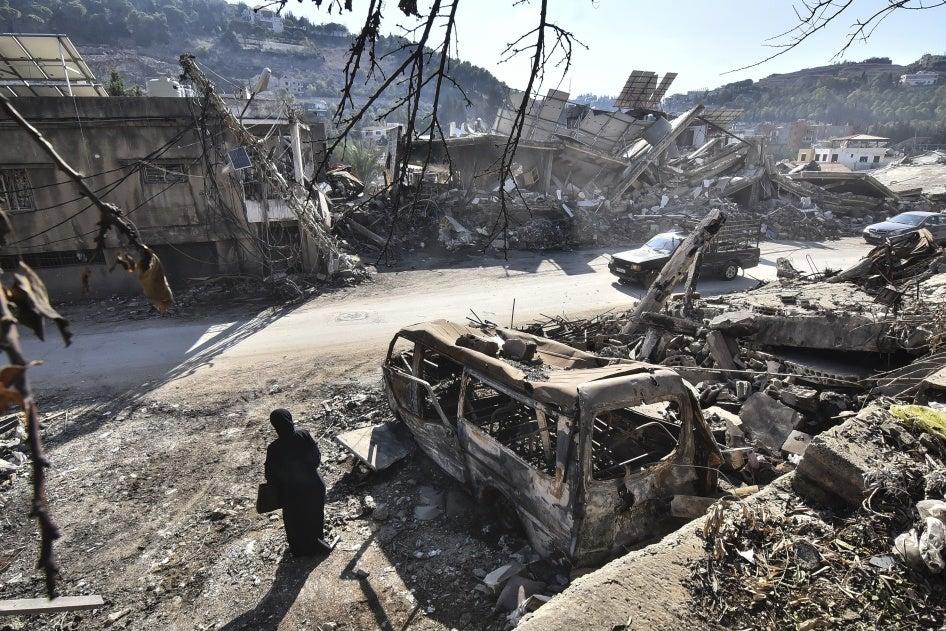
The widescale displacement in Lebanon is not something new; Abu-Rish said that more than one million Lebanese have been displaced since the Israeli invasion of Lebanon in 2006.
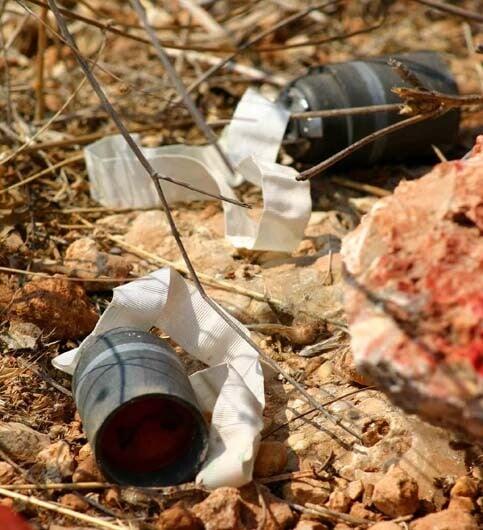
At that time, the Israelis dropped cluster bombs which continue to make life in southern Lebanon dangerous: They have killed 400 people since then, primarily children who picked up undetonated bomblets because they thought they were toys.[2]
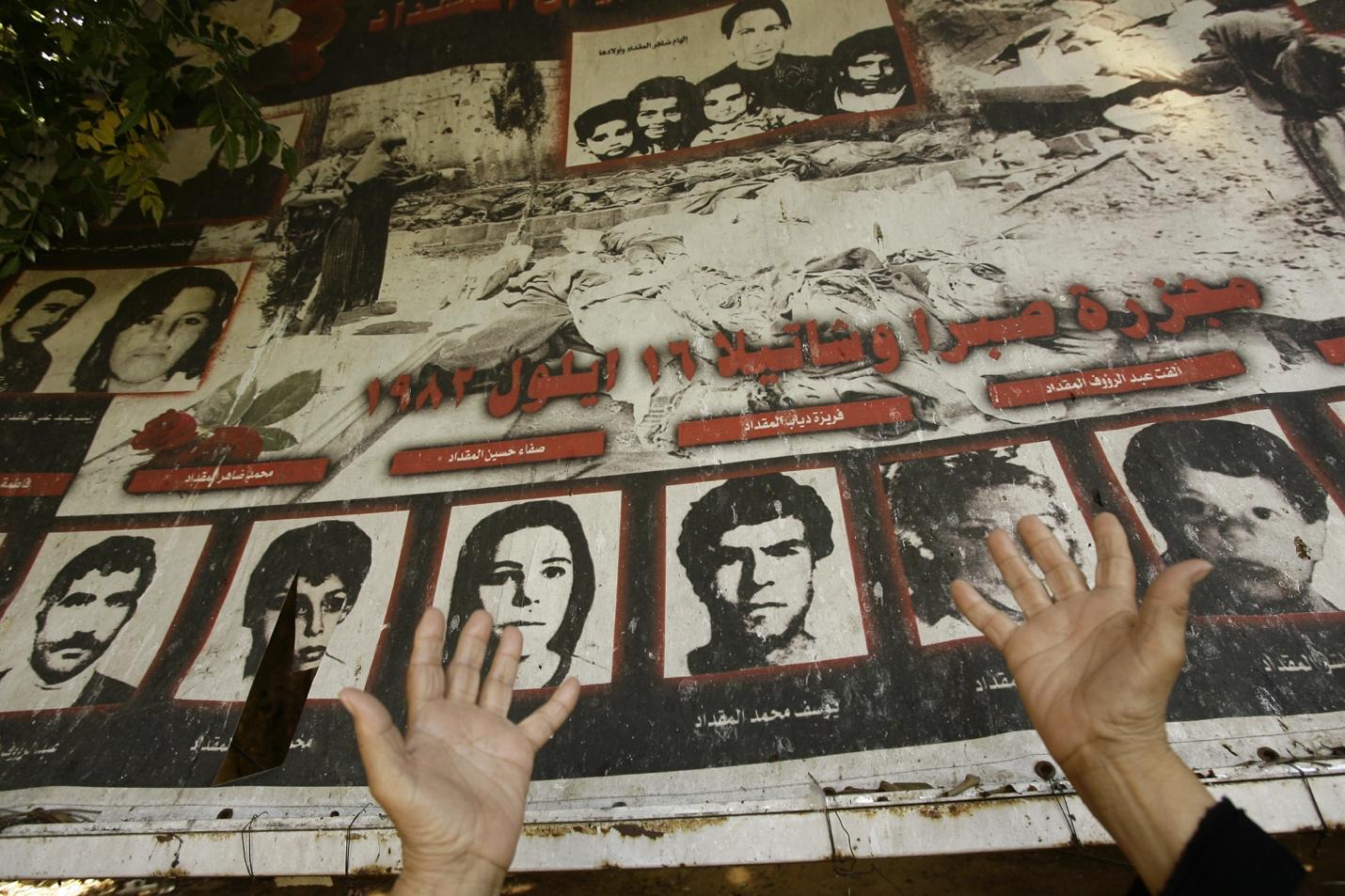
During the 1982 Operation Peace for Galilee, Israel committed large-scale, Vietnam-style atrocities and slaughtered Palestinian refugees in the notorious Sabra and Shatila massacre overseen by future Israeli Prime Minister Ariel Sharon.[3]
Abu-Rish said that Lebanese today are not only coping with the deadly consequences of war but the decay of the country’s infrastructure and collapse of Lebanon’s financial and economic system. Since 2019, the Lebanese lira has lost 90% of its value, and 80% of the country is living below the poverty line.
The horrible situation, Abu-Rish said, has been provoked by a home-grown banking elite who “has been robbing the people in a vast Ponzi scheme” and “have never been held accountable.”
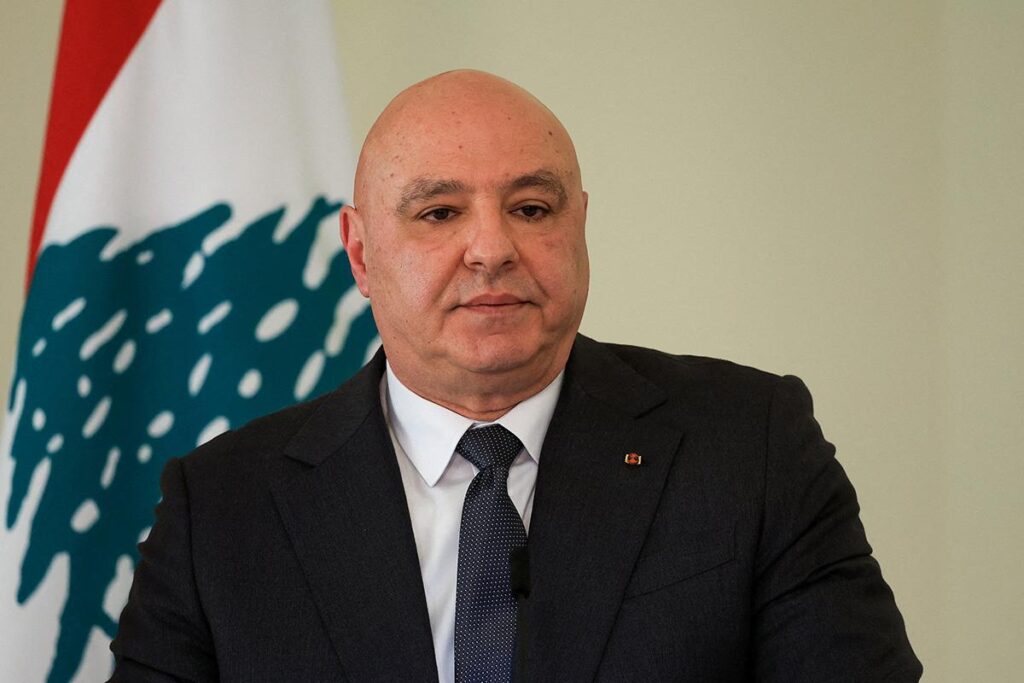
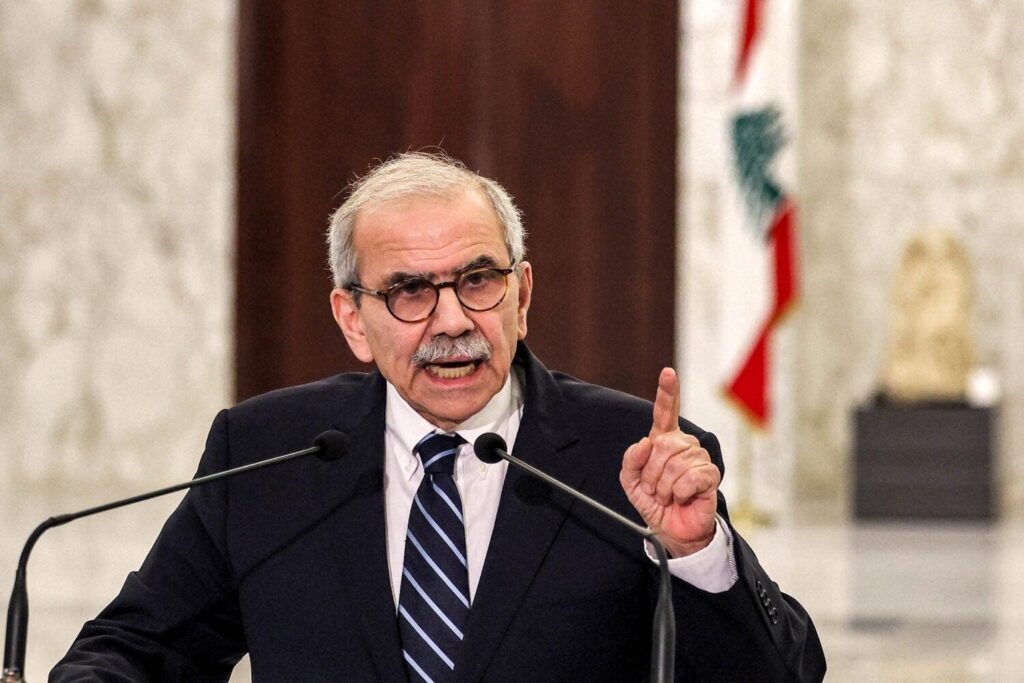
According to Abu-Rish, Lebanon’s current government, headed by President Joseph Aoun, claims to be reformist but has hitched its wagon to the U.S. There has been little progress in rectifying Lebanon’s economic crisis or challenge to the predatory banking elite.
Aoun and Prime Minister Nawaf Salam have also tried to placate Israel by disarming Hezbollah, which emerged as the primary resistance force against IDF aggression in the 1980s.
Abu-Rish said that the Lebanese army proved unwilling to defend southern Lebanon against Israeli incursions, which led much of the local population to turn to Hezbollah for their defense.
Viewed by Israel as an “Iranian terror army” that launches rockets and has forced the evacuation of Israeli towns, Hezbollah provides social services to the people in southern Lebanon, is a political party with 13 elected representatives in Lebanon’s parliament, and runs schools.
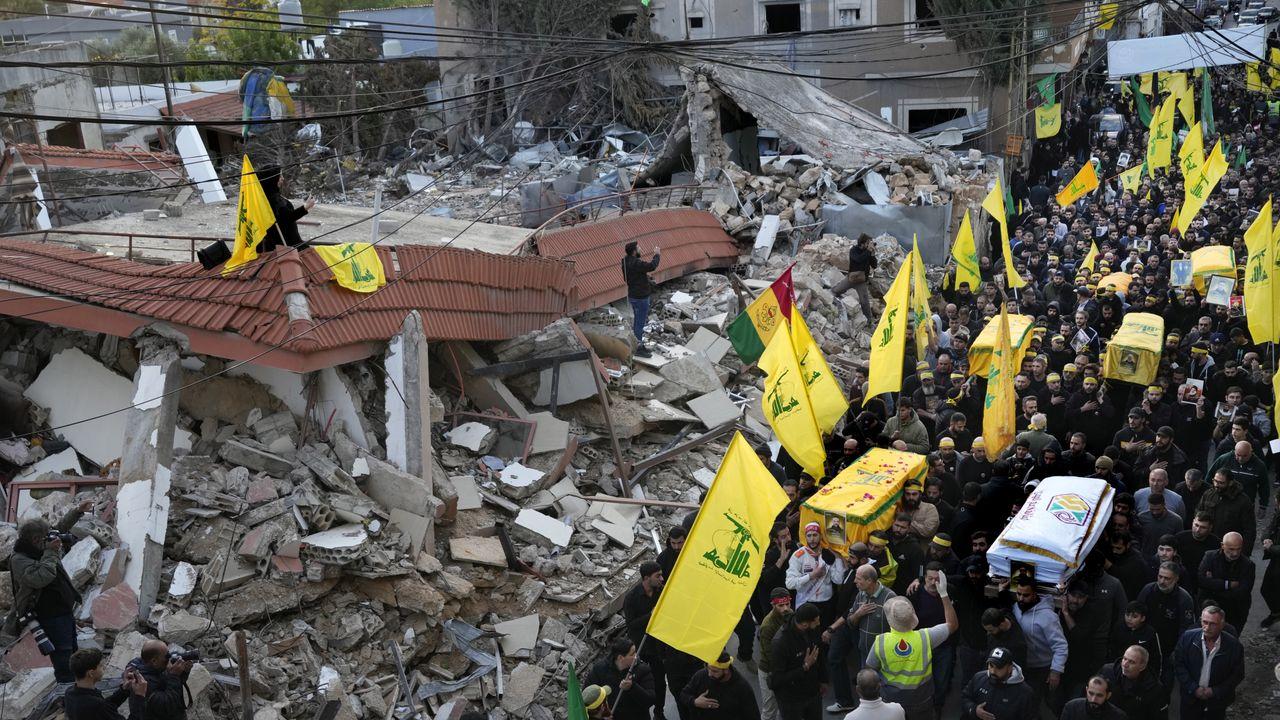
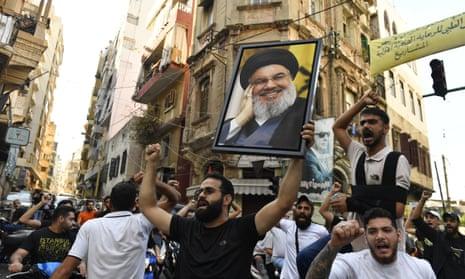
Abu-Rish said that the Israelis appear to have miscalculated in believing that Hezbollah was weakened and would be unable to mount effective resistance following the assassination of long-time leader Hassan Nasrallah in September 2024.[4]
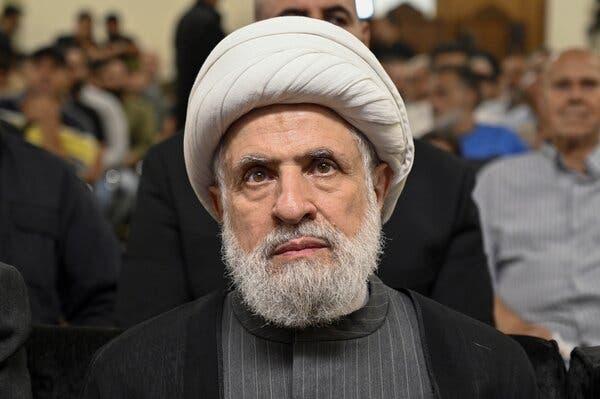
According to Abu-Rish, while Nasrallah’s successor Naim Qassem, does not come close to Nasrallah as far as his personal charisma or strategic thinking, he was part of Hezbollah’s top echelon of leaders and is helping to sustain the organization.[5]
Besides the assassination of Nasrallah, the Israeli government was emboldened as a result of the September 2024 pager attack in which Mossad secretly integrated explosives into hand-held radio sets and pagers purchased by Hezbollah for communications through a shell company and took out at least 1,500 Hezbollah fighters.

Additionally, Israel believed it had effectively cut off Iranian support for Hezbollah because of the fall of the Assad government in December 2024, which had been assisted by the CIA’s largest covert operation since the 1980s Afghanistan War (Operation Timber Sycamore).
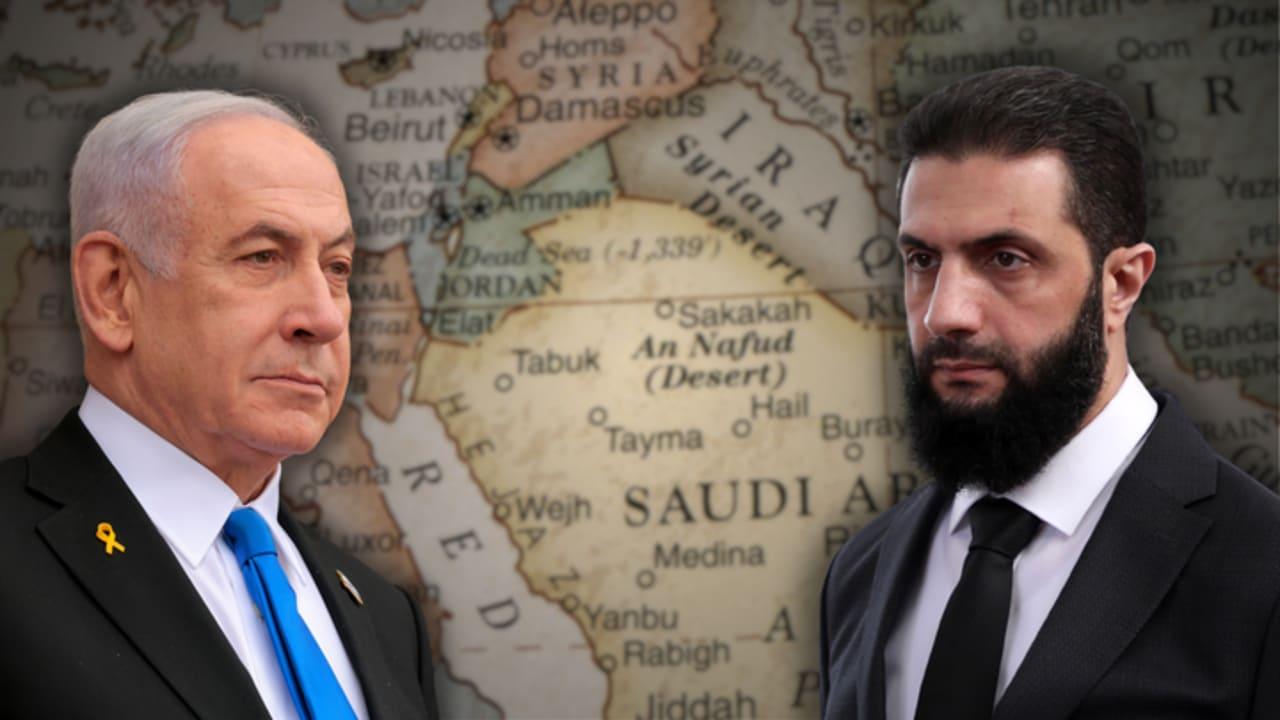
Assad’s successor, Ahmed al-Sharaa, a former al-Qaeda operative implicated in large-scale ethnic cleansing operations, is “committed not to allowing Hezbollah to use Syria’s territory to obtain weaponry or for any other purpose.”
Abu-Rish said that Iran is nevertheless still finding ways to support Hezbollah, which receives much of its funding from wealthy business people living in the diaspora and Islamic charities. Hezbollah has also been able to effectively produce drones that can be manufactured within Lebanon for less than $500. According to Abu-Rish, these drones are “forcing the IDF to operate primarily at night and to withdraw from certain regions of southern Lebanon.”
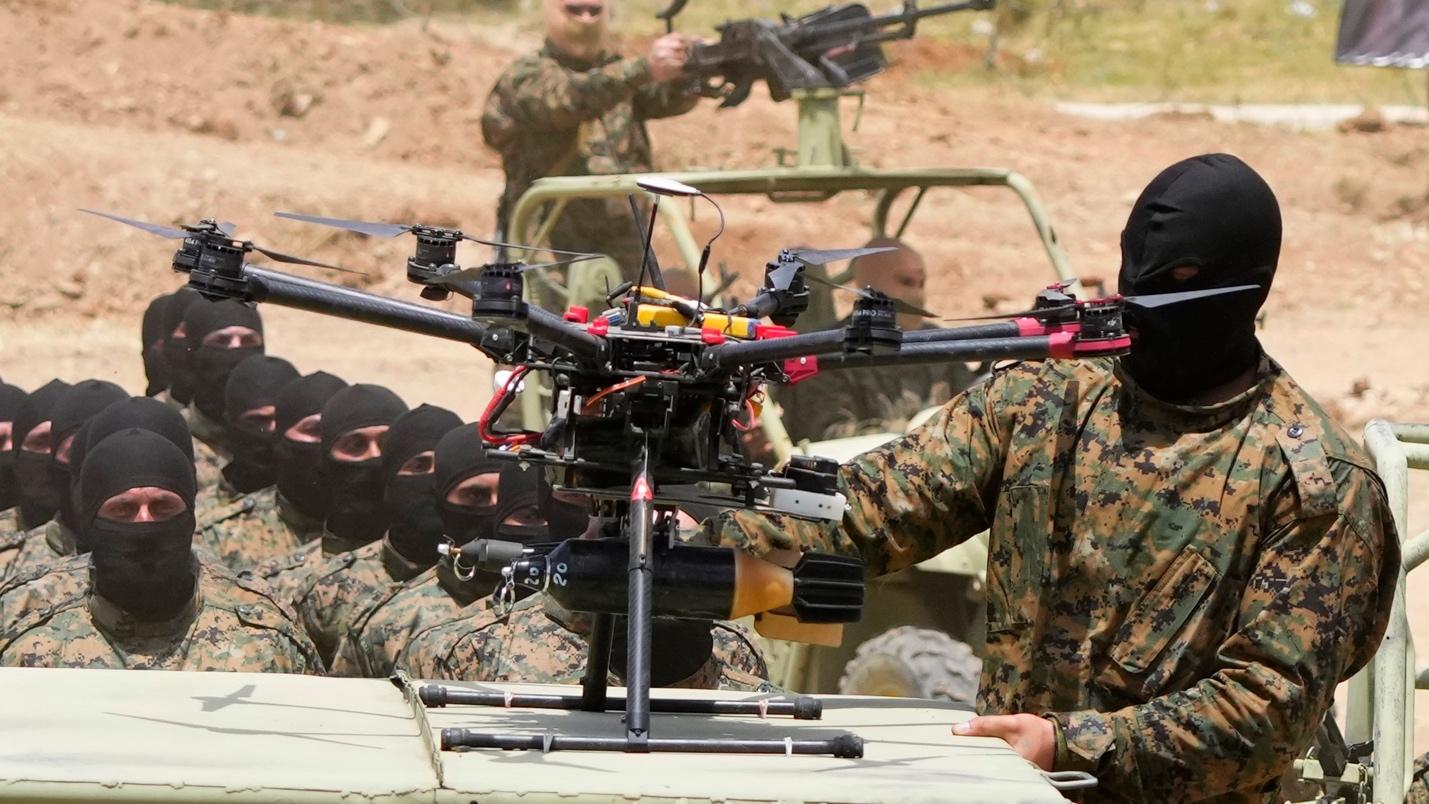
Abu-Rish says that Israeli soldiers are becoming demoralized with casualties mounting. Though the Israeli military is “tight-lipped about its losses,” a “cursory reading of the Israeli press” makes clear that the IDF is “facing real military resistance,” according to Abu-Rish.
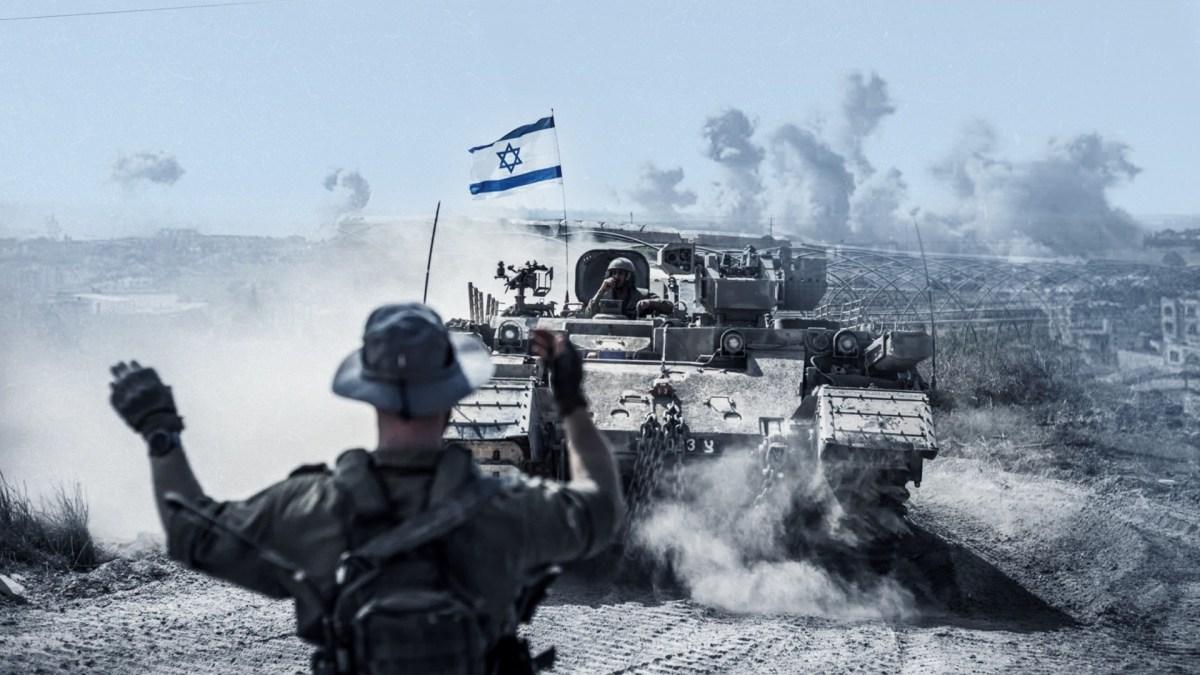
Nevertheless, on May 25, Israeli Prime Minister Benjamin Netanyahu said he instructed the IDF to “press the pedal even harder” against Hezbollah, after a U.S. official signalled Washington would approve a larger operation.[6] Israeli warplanes bombed 47 towns and villages in southern Lebanon, killing at least 31 people, including 2 children.[7]
Strikes near ancient ruins in the port city of Tyre that turned the city into a ghost town, according to Israeli media sources, have raised concerns about potential damage to historical landmarks.
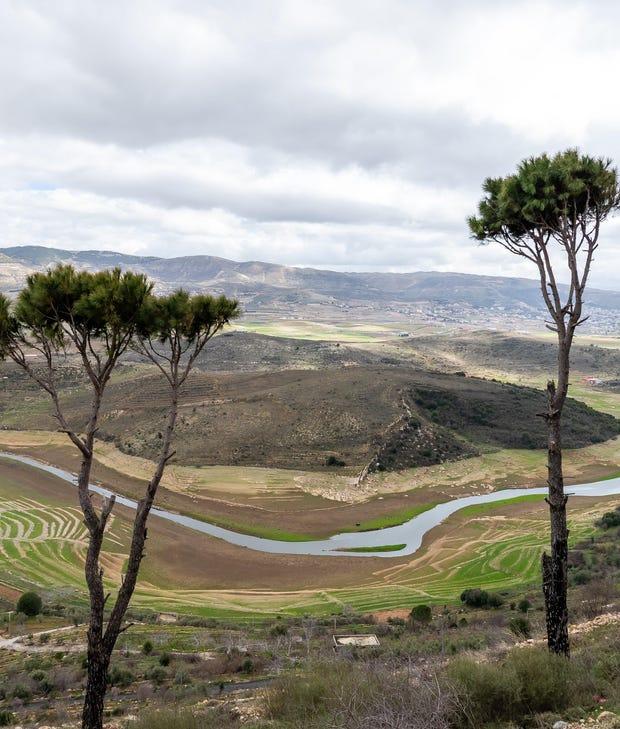
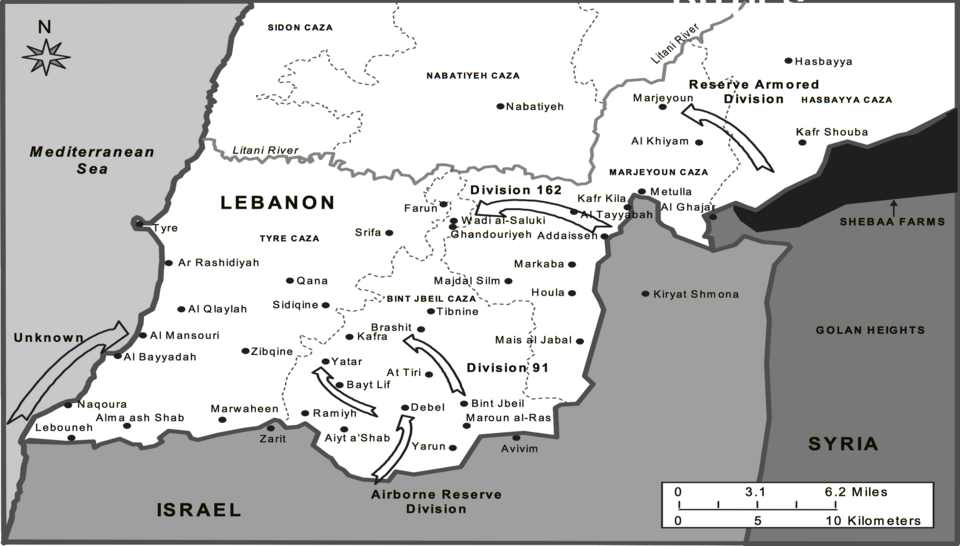
As far as motive, Abu-Rish said that Israeli leaders have long envisioned Israel’s borders being expanded up to the Litani River.[8] This is part of the messianic Greater Israel project that has been a basis for Israeli settlers trying to occupy Lebanese lands.
The U.S. has supported the Greater Israel project and Israeli aggression in Lebanon because it seeks to use Israel as a proxy for dominating the Middle East.
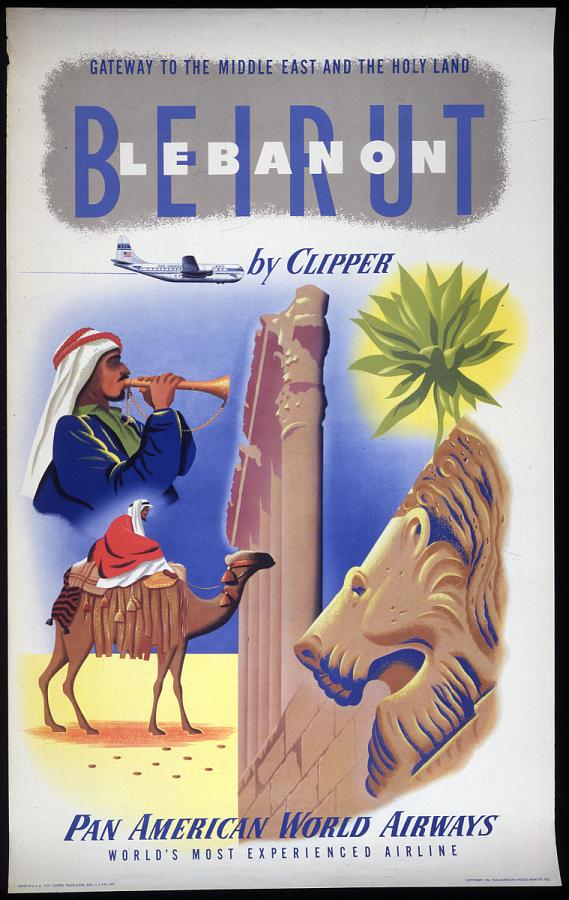
Additionally, Abu-Rish said that the U.S. has long had interest in controlling Lebanon’s aviation industry, with Pan American World Airways having expanded there; has major trade interests in Lebanon; and interest in two major oil pipelines passing through Lebanon.
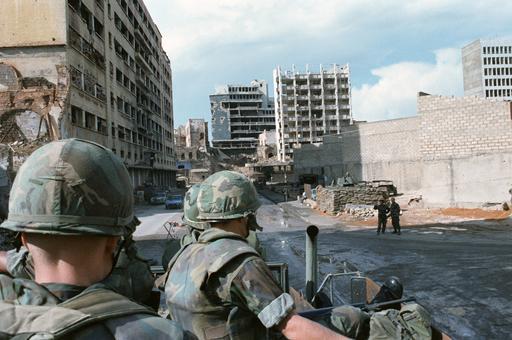
Historically, the U.S. Embassy in Lebanon has served as a hub for regional intelligence gathering and communication.[9] In the 1980s, Abu-Rish said that more than 14,000 U.S. Marines were stationed in Lebanon and the U.S. Navy has also made use of Lebanon’s naval port.
Jean Shaoul reported last year that U.S. troops were stationed in Lebanon at air strips not far from Beirut, and that the U.S. was building a $1.2 billion fortified embassy on a 43-acre site near Beirut whose declared purpose was to counter the “Axis of Resistance,” meaning Iran. Shaoul wrote that the embassy’s “scale, out of all proportion to the country’s size, is indicative of U.S. geo-political interests in Lebanon, with its strategic location and newly found sources of gas and oil under the eastern Mediterranean Sea.”[10]

Historically, the U.S. has tried to exhibit control in Lebanon through Maronite Christian factions.[11] Under Lebanon’s current constitution, the president has to be a Maronite Christian while other members of the Cabinet have to be Sunni or Shia.
Abu-Rish emphasized that the Israeli assault on Lebanon could not have occurred without U.S. arms shipments to Israel and military support. U.S.-made weapons have, indeed, been repeatedly found amidst the rubble in Beirut. For this reason, Lebanon should be considered another war of both U.S. and Israeli aggression.

Ramzi Kaiss, a Lebanon researcher at Human Rights Watch, reported that “Israel’s deliberate demolition of civilian homes and infrastructure and its use of explosive weapons in populated areas are making it impossible for many residents to return to their villages and houses. Even if their houses are still there, how can they return when there is no water, electricity, telecommunications or health infrastructure?” ↑
The Israelis are again accused of dropping cluster bombs in the current war. On April 8, the World Socialist Web Site reported on the Israeli operation “Eternal Darkness” in which 50 Israeli aircraft dropped 160 bombs, killing hundreds of people. Associated Press journalists reported seeing charred bodies in vehicles and on the ground at one of Beirut’s busiest intersections in the Corniche al-Mazraa neighborhood. Reuters and other outlets reported that Israel destroyed bridges over the Litani River and accelerated demolitions of homes in border villages, indicating a deliberate campaign against civilian infrastructure, which is a war crime. ↑
See Noam Chomsky, Fateful Triangle: The United States, Israel & the Palestinans, rev ed. (Boston: South End Press, 1999). In 1996, Shimon Peres’s government launched Operation Grapes of Wrath, a large-scale air and artillery assault. One of the most infamous incidents of that campaign occurred in the village of Qana, where Israeli artillery shells struck a UN compound sheltering civilians, killing more than 100 people. ↑
In the same month as Nasrallah’s assassination, the IDF killed Ibrahim Aqil, another top Hezbollah operative, and Hashem Safieddine, Nasrallah’s cousin, who was being groomed as his successor, and bombed Hezbollah’s financial, administrative and media facilities and much of its weaponry and missile stockpiles extending into Syria. This gave Israel further confidence. ↑
According to The New York Times, Qassem has been involved with Hezbollah since its creation in the 1980s. In the early 1990s, he was appointed Nasrallah’s deputy. ↑
“We are at war with Hezbollah. Just in recent weeks, our brave fighters have eliminated more than 600 terrorists,” Netanyahu said in a video statement. “But we are not taking our foot off the gas. On the contrary, I have instructed them to press the pedal even harder. We will strike them. Yes, they are attacking us with drones, cyber-enabled drones, and we have a special team working on this — and we will solve that too…But what this requires from us now is to intensify the blows, increase the force. We will strike them decisively,” the premier says. ↑
The Israeli army ordered the entire city of Nabatiyeh, the second-largest in southern Lebanon, to evacuate amidst the onslaught, along with 21 additional towns and villages. At the village of Qaraoun, near Lebanon’s largest dam, an Israeli drone struck a man on a motorcycle. A civil defense rescuer, Kamel Youssef Zein, drove past, left his family in the car and ran to administer first aid. A second Israeli strike hit the same spot and killed him. ↑
In a 1918 essay, Israel’s founding father, David Ben-Gurion, wrote that the natural northern border of the Land of Israel is the Litani River in southern Lebanon. Avi Abelow, host of a popular podcast and CEO of the 12 Tribe Film Foundation, which produces media content highlighting Israel’s biblical, historical and strategic importance to the Jewish people and the world, wrote recently in The Jerusalem Post that “the only way to ensure the safety of Israel’s northern communities is exactly what Ben-Gurion understood over a century ago: Israel must control the territory up to the Litani River and resettle it with Jewish communities.” Dr. Amnon Kartin, a geographer at Tel Aviv University, is among those to view the Israeli drive to extend its borders to the Litani River as a “messianic fantasy.” Dr. Michael Braier, an architect who teaches at The Hebrew University, said that, “In Lebanon [like with the Palestinians,] there seems to be an assumption that populations can be manipulated, displaced and uprooted. It is frightening that such ideas have become normalized in Israeli discourse.” ↑
The American University of Beirut was historically used for spying operations. Professors there often worked under cover as intelligence agents. Daniel Dennett, America’s first Middle Eastern master spy, wrote in a memo in the World War II era that the American University of Beirut was “the best listening post for political information of a nationalistic sort for all the countries of the region…free of indoctrination by the French, or British, or any one else. [It] is sympathetic to nationalism, democracy, independence.” Charlotte Dennett, Follow the Pipelines: Uncovering the Mystery of a Lost Spy and the Deadly Politics of the Great Game for Oil, foreword by Daniel Dennett (White River Junction, VT: Green River Publishing, 2020), 284. ↑
Shaoul also discussed how the U.S. had funded Lebanese security forces since 2006 and that, in January 2023, the Biden administration announced that it would provide addiitonal military hardware and would pay most Lebanese army salaries in U.S. dollars, at a cost of $72 million. ↑
In 1958, the U.S. Marines invaded Lebanon to protect the Christian Maronite regime of Camille Chamoun and helped contain the threat of left-wing Nasserism (spawned by Egyptian leader Gamal Abdel Nasser). See Irene L. Gendzier, Notes from the Minefield: United States Intervention in Lebanon, 1945-1958 (New York: Columbia University Press, 2006). ↑
CovertAction Magazine is made possible by subscriptions, orders and donations from readers like you.
Blow the Whistle on U.S. Imperialism

Click the whistle and donate
When you donate to CovertAction Magazine, you are supporting investigative journalism. Your contributions go directly to supporting the development, production, editing, and dissemination of the Magazine.
CovertAction Magazine does not receive corporate or government sponsorship. Yet, we hold a steadfast commitment to providing compensation for writers, editorial and technical support. Your support helps facilitate this compensation as well as increase the caliber of this work.
Please make a donation by clicking on the donate logo above and enter the amount and your credit or debit card information.
CovertAction Institute, Inc. (CAI) is a 501(c)(3) non-profit organization and your gift is tax-deductible for federal income purposes. CAI’s tax-exempt ID number is 87-2461683.
We sincerely thank you for your support.
Disclaimer: The contents of this article are the sole responsibility of the author(s). CovertAction Institute, Inc. (CAI), including its Board of Directors (BD), Editorial Board (EB), Advisory Board (AB), staff, volunteers and its projects (including CovertAction Magazine) are not responsible for any inaccurate or incorrect statement in this article. This article also does not necessarily represent the views the BD, the EB, the AB, staff, volunteers, or any members of its projects.
Differing viewpoints: CAM publishes articles with differing viewpoints in an effort to nurture vibrant debate and thoughtful critical analysis. Feel free to comment on the articles in the comment section and/or send your letters to the Editors, which we will publish in the Letters column.
Copyrighted Material: This web site may contain copyrighted material the use of which has not always been specifically authorized by the copyright owner. As a not-for-profit charitable organization incorporated in the State of New York, we are making such material available in an effort to advance the understanding of humanity’s problems and hopefully to help find solutions for those problems. We believe this constitutes a ‘fair use’ of any such copyrighted material as provided for in section 107 of the US Copyright Law. You can read more about ‘fair use’ and US Copyright Law at the Legal Information Institute of Cornell Law School.
Republishing: CovertAction Magazine (CAM) grants permission to cross-post CAM articles on not-for-profit community internet sites as long as the source is acknowledged together with a hyperlink to the original CovertAction Magazine article. Also, kindly let us know at info@CovertActionMagazine.com. For publication of CAM articles in print or other forms including commercial internet sites, contact: info@CovertActionMagazine.com.
By using this site, you agree to these terms above.
About the Author
Jeremy Kuzmarov holds a Ph.D. in American history from Brandeis University and has taught at numerous colleges across the United States. He is regularly sought out as an expert on U.S. history and politics and co-hosts a radio show on New York Public Radio and on Progressive Radio News Network called “Uncontrolled Opposition.”
He is Managing Editor of CovertAction Magazine and is the author of eight books, including Obama’s Unending Wars (Clarity Press, 2019), The Russians Are Coming, Again, with John Marciano (Monthly Review Press, 2018), Warmonger. How Clinton’s Malign Foreign Policy Launched the U.S. Trajectory From Bush II to Biden (Clarity Press, 2023); with Dan Kovalik, Syria: Anatomy of Regime Change (Baraka Books, 2025), and Political Assassinations in America: The Intricate Nexus of Deep State Crime (Clarity Press, 2026).
Besides these books, Kuzmarov has published hundreds of articles and contributed to numerous edited volumes, including one in the prestigious Oxford History of Counterinsurgency .
He can be reached at jkuzmarov2@gmail.com and found on substack here.



All this is happening because Putin killed Prigozhin and Utkin, Trump killed Soleimani and Netanyahu killed Nasrallah.
Delcy Rodriguez betrayed Alex Saab and the HTS gang is in power in Syria with the blessing of Putin, Trump and Netanyahu.
I hope the invoice comes and Delcy Rodriguez, Trump, Putin and Netanyahu are issued a proper payment order.
Because these people need to be put on the right side of the balance sheet.
Nikol Pashinyan and Volodymyr Zelensky may be able to put Putin on the right side of the balance sheet, Leopoldo Lopez and Juan Guaido will definitely put Delcy Rodriguez on the prisoners’ account for Netanyahu and Trump I’m worried that they won’t be properly put on the right side of balance sheet.
I myself am critical of Israel, but I would also like to point out that between the period of October 7, 2023 to October 31, 2024 Hezbollah has launched over 12,000 rockets, missiles and drones at cities and towns across Israel, causing significant casualties and property destruction. One of Hezbollah’s primary stated goals is the destruction of the state of Israel,